

Optimisus
1.2k පෝස්ටු

Optimisus
වාර්තා කරන්න
පරිශීලක අවහිර කරන්න
Optimisus is a dubai-based read-to-earn media platform, covering crypto, NFT, blockchain, and Fintech news influencing the crypto industry

Level 1 Creator
31 හඹා යමින්
35.7K+ හඹා යන්නන්
5.5K+ කැමති විය
1 ලාංජනය
පෝස්ටු
සියල්ල
උපුටා දැක්වීම්
·
--
ලිපිය
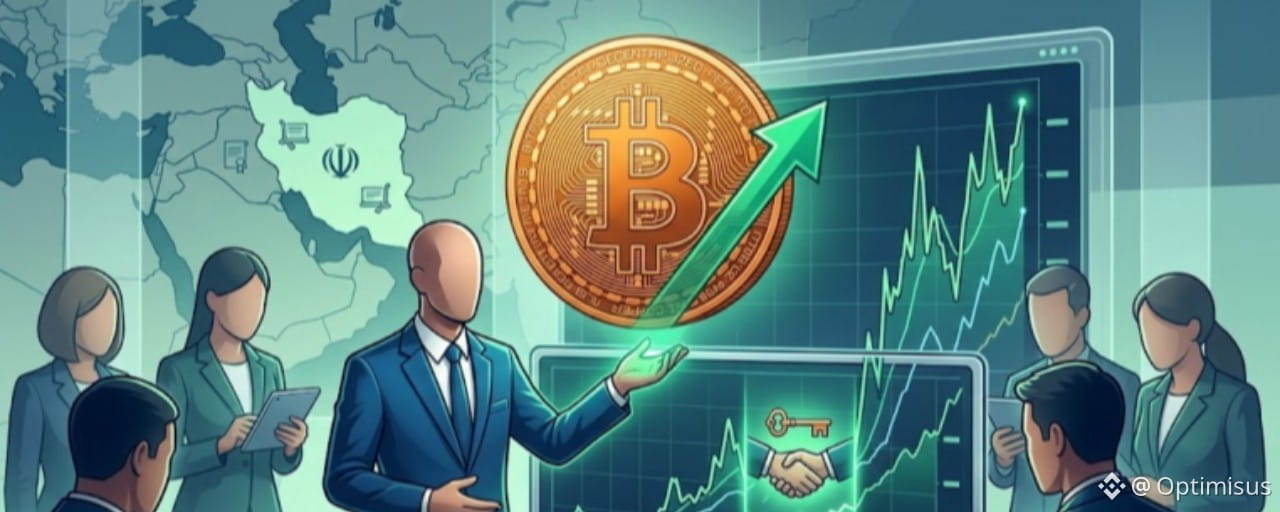
Bitcoin rallied to $66,000 on the Iran deal. Here Is the Part Nobody Is Talking AboutA US-Iran peace framework sent Bitcoin above $66,000 on June 15, 2026. Brent crude fell 4%. Asian equities jumped 5%. It looked like the trade everyone had been waiting for. Standard Chartered called $60,000 the cycle low. Coinbase CEO Brian Armstrong said the same thing publicly. But the Fear and Greed Index sat at 20. Over $4.8 billion exited Bitcoin ETFs in the preceding five weeks. And analysts who have watched this exact geopolitical-rally pattern play out twice already this year are asking the obvious question: is this different, or is this the third time the same trade unwinds?
What Actually Happened on June 15
The catalyst was a US-Iran peace framework announced on June 14, 2026. The 60-day memorandum of understanding covered Iran’s nuclear enrichment programme, sanctions relief, frozen Iranian funds, and the reopening of the Strait of Hormuz. Pakistan’s prime minister independently confirmed the deal before Trump posted about it on Truth Social, which is part of why the market took the announcement more seriously than previous ceasefire reports.
Bitcoin climbed to a high of around $66,683 on June 15, up approximately 3.78 percent on the day. Ethereum rose 2.5 percent. Solana gained 3.6 percent. The move came alongside a classic risk-on rotation: Brent crude fell 4.26 percent as the geopolitical premium unwound, Asian equities jumped more than 5 percent, and Strategy’s Michael Saylor disclosed in an 8-K filing that the company had purchased 1,587 more Bitcoin for roughly $100 million between June 8 and June 14, bringing its total holdings to 846,842 BTC.
On-chain data from CryptoQuant showed whale selling pressure cooling near the lows. Wallets holding between 100,000 and 1 million BTC added close to 11,000 BTC between June 11 and June 13, roughly $700 million at current prices. More than 11,400 BTC were moved from exchanges into cold storage on June 14, suggesting large holders were accumulating rather than distributing. Binance and Coinbase bought aggressively enough to trigger $135 million in short liquidations in a single 24-hour window on June 15.
The April deal collapsed. US strikes broke a second truce on June 9, and Bitcoin gave back the entire relief move both times. The market is treating the June 19 signing in Switzerland as the real timestamp, not Sunday’s headlines. Nicolai Sondergaard, research analyst, Nansen, June 15, 2026.
The Part That Makes This Different From the Previous Two Ceasefire Bounces
This is where the honest analysis gets complicated. The April 21 truce briefly carried Bitcoin to $78,000 before collapsing entirely. US strikes broke a second ceasefire on June 9, and Bitcoin gave back the move immediately both times. Analysts cited by Decrypt specifically noted that traders had watched the same geopolitical pattern play out at least twice before and were approaching the June 15 move with documented skepticism.
What is genuinely different this time is structural rather than narrative. Pakistan’s prime minister independently confirming the deal before Trump’s social media posts is a higher-confidence signal than previous announcements that came purely through US government channels. The deal involves a formal 60-day memorandum of understanding with a scheduled signing in Switzerland on June 19, rather than a social media announcement of a verbal agreement. And the on-chain accumulation data suggests institutional buying that preceded the rally, rather than reactive retail buying in response to headlines.
What is not different is the macro structure underneath Bitcoin. US interest rate cut expectations remain muted. The Federal Reserve’s first meeting under new chair Warsh was approaching at the time of writing, and analysts were treating that meeting as a potential risk event rather than a catalyst. Retail has not returned to the market with real money. The Fear and Greed Index at 20 is consistent with a market where sophisticated buyers accumulate while ordinary investors remain on the sidelines or in net negative sentiment.
The Nansen analyst who made the most-cited observation about the June 15 move was direct about the threshold that matters: the market is treating the June 19 signing in Switzerland as the real timestamp. If the deal is formally signed on June 19, the next test is whether Bitcoin can hold $65,000 and push toward $68,000 to $70,000, the resistance zone that would represent the beginning of a meaningful recovery. If the deal stalls or collapses again before signing, the previous pattern suggests an immediate reversal.
What This Means for UAE Crypto Holders Specifically
The UAE has a specific relationship with this geopolitical story that most global crypto commentary misses. The Strait of Hormuz, at the centre of the US-Iran deal, runs through UAE territorial waters. The geopolitical premium embedded in energy and financial markets during the peak of the Iran tensions was not an abstract global risk for UAE residents. It was a direct factor in energy pricing, shipping costs, and regional business sentiment.
The reopening of the Strait and the easing of the regional conflict removes a genuine near-term headwind for UAE-based businesses and investors. For the crypto market specifically, the correlation between regional stability and risk-on asset appetite is well established. The same risk-on move that lifted Bitcoin on June 15 also lifted regional equity markets and signalled reduced risk premiums on UAE-denominated investments.
Standard Chartered’s call that the crypto market has hit its cycle low, published in the same week as the Iran deal, is notable for UAE crypto holders because Standard Chartered has significant UAE operations and is among the banks that has most actively engaged with the country’s virtual asset sector. Its cycle low call is not a UAE-specific forecast, but coming from an institution with direct regional exposure, it carries weight beyond a generic analyst note.
For UAE residents who have been holding through the 30 percent year-to-date drawdown in Bitcoin, the combination of institutional accumulation at the lows, the $60,000 bottom call from multiple credible voices, reduced regional geopolitical risk, and the VARA regulatory clarity from the June 12 guidance all point in the same direction. The structural case for owning Bitcoin in the UAE is arguably stronger in June 2026 than it was at the start of the year, even if the price has not yet reflected that.
Bitcoin rallied to $66,000 on the Iran deal. Here Is the Part Nobody Is Talking About
A US-Iran peace framework sent Bitcoin above $66,000 on June 15, 2026. Brent crude fell 4%. Asian equities jumped 5%. It looked like the trade everyone had been waiting for. Standard Chartered called $60,000 the cycle low. Coinbase CEO Brian Armstrong said the same thing publicly. But the Fear and Greed Index sat at 20. Over $4.8 billion exited Bitcoin ETFs in the preceding five weeks. And analysts who have watched this exact geopolitical-rally pattern play out twice already this year are asking the obvious question: is this different, or is this the third time the same trade unwinds?
What Actually Happened on June 15
The catalyst was a US-Iran peace framework announced on June 14, 2026. The 60-day memorandum of understanding covered Iran’s nuclear enrichment programme, sanctions relief, frozen Iranian funds, and the reopening of the Strait of Hormuz. Pakistan’s prime minister independently confirmed the deal before Trump posted about it on Truth Social, which is part of why the market took the announcement more seriously than previous ceasefire reports.
Bitcoin climbed to a high of around $66,683 on June 15, up approximately 3.78 percent on the day. Ethereum rose 2.5 percent. Solana gained 3.6 percent. The move came alongside a classic risk-on rotation: Brent crude fell 4.26 percent as the geopolitical premium unwound, Asian equities jumped more than 5 percent, and Strategy’s Michael Saylor disclosed in an 8-K filing that the company had purchased 1,587 more Bitcoin for roughly $100 million between June 8 and June 14, bringing its total holdings to 846,842 BTC.
On-chain data from CryptoQuant showed whale selling pressure cooling near the lows. Wallets holding between 100,000 and 1 million BTC added close to 11,000 BTC between June 11 and June 13, roughly $700 million at current prices. More than 11,400 BTC were moved from exchanges into cold storage on June 14, suggesting large holders were accumulating rather than distributing. Binance and Coinbase bought aggressively enough to trigger $135 million in short liquidations in a single 24-hour window on June 15.
The April deal collapsed. US strikes broke a second truce on June 9, and Bitcoin gave back the entire relief move both times. The market is treating the June 19 signing in Switzerland as the real timestamp, not Sunday’s headlines. Nicolai Sondergaard, research analyst, Nansen, June 15, 2026.
The Part That Makes This Different From the Previous Two Ceasefire Bounces
This is where the honest analysis gets complicated. The April 21 truce briefly carried Bitcoin to $78,000 before collapsing entirely. US strikes broke a second ceasefire on June 9, and Bitcoin gave back the move immediately both times. Analysts cited by Decrypt specifically noted that traders had watched the same geopolitical pattern play out at least twice before and were approaching the June 15 move with documented skepticism.
What is genuinely different this time is structural rather than narrative. Pakistan’s prime minister independently confirming the deal before Trump’s social media posts is a higher-confidence signal than previous announcements that came purely through US government channels. The deal involves a formal 60-day memorandum of understanding with a scheduled signing in Switzerland on June 19, rather than a social media announcement of a verbal agreement. And the on-chain accumulation data suggests institutional buying that preceded the rally, rather than reactive retail buying in response to headlines.
What is not different is the macro structure underneath Bitcoin. US interest rate cut expectations remain muted. The Federal Reserve’s first meeting under new chair Warsh was approaching at the time of writing, and analysts were treating that meeting as a potential risk event rather than a catalyst. Retail has not returned to the market with real money. The Fear and Greed Index at 20 is consistent with a market where sophisticated buyers accumulate while ordinary investors remain on the sidelines or in net negative sentiment.
The Nansen analyst who made the most-cited observation about the June 15 move was direct about the threshold that matters: the market is treating the June 19 signing in Switzerland as the real timestamp. If the deal is formally signed on June 19, the next test is whether Bitcoin can hold $65,000 and push toward $68,000 to $70,000, the resistance zone that would represent the beginning of a meaningful recovery. If the deal stalls or collapses again before signing, the previous pattern suggests an immediate reversal.
What This Means for UAE Crypto Holders Specifically
The UAE has a specific relationship with this geopolitical story that most global crypto commentary misses. The Strait of Hormuz, at the centre of the US-Iran deal, runs through UAE territorial waters. The geopolitical premium embedded in energy and financial markets during the peak of the Iran tensions was not an abstract global risk for UAE residents. It was a direct factor in energy pricing, shipping costs, and regional business sentiment.
The reopening of the Strait and the easing of the regional conflict removes a genuine near-term headwind for UAE-based businesses and investors. For the crypto market specifically, the correlation between regional stability and risk-on asset appetite is well established. The same risk-on move that lifted Bitcoin on June 15 also lifted regional equity markets and signalled reduced risk premiums on UAE-denominated investments.
Standard Chartered’s call that the crypto market has hit its cycle low, published in the same week as the Iran deal, is notable for UAE crypto holders because Standard Chartered has significant UAE operations and is among the banks that has most actively engaged with the country’s virtual asset sector. Its cycle low call is not a UAE-specific forecast, but coming from an institution with direct regional exposure, it carries weight beyond a generic analyst note.
For UAE residents who have been holding through the 30 percent year-to-date drawdown in Bitcoin, the combination of institutional accumulation at the lows, the $60,000 bottom call from multiple credible voices, reduced regional geopolitical risk, and the VARA regulatory clarity from the June 12 guidance all point in the same direction. The structural case for owning Bitcoin in the UAE is arguably stronger in June 2026 than it was at the start of the year, even if the price has not yet reflected that.
What Actually Happened on June 15
The catalyst was a US-Iran peace framework announced on June 14, 2026. The 60-day memorandum of understanding covered Iran’s nuclear enrichment programme, sanctions relief, frozen Iranian funds, and the reopening of the Strait of Hormuz. Pakistan’s prime minister independently confirmed the deal before Trump posted about it on Truth Social, which is part of why the market took the announcement more seriously than previous ceasefire reports.
Bitcoin climbed to a high of around $66,683 on June 15, up approximately 3.78 percent on the day. Ethereum rose 2.5 percent. Solana gained 3.6 percent. The move came alongside a classic risk-on rotation: Brent crude fell 4.26 percent as the geopolitical premium unwound, Asian equities jumped more than 5 percent, and Strategy’s Michael Saylor disclosed in an 8-K filing that the company had purchased 1,587 more Bitcoin for roughly $100 million between June 8 and June 14, bringing its total holdings to 846,842 BTC.
On-chain data from CryptoQuant showed whale selling pressure cooling near the lows. Wallets holding between 100,000 and 1 million BTC added close to 11,000 BTC between June 11 and June 13, roughly $700 million at current prices. More than 11,400 BTC were moved from exchanges into cold storage on June 14, suggesting large holders were accumulating rather than distributing. Binance and Coinbase bought aggressively enough to trigger $135 million in short liquidations in a single 24-hour window on June 15.
The April deal collapsed. US strikes broke a second truce on June 9, and Bitcoin gave back the entire relief move both times. The market is treating the June 19 signing in Switzerland as the real timestamp, not Sunday’s headlines. Nicolai Sondergaard, research analyst, Nansen, June 15, 2026.
The Part That Makes This Different From the Previous Two Ceasefire Bounces
This is where the honest analysis gets complicated. The April 21 truce briefly carried Bitcoin to $78,000 before collapsing entirely. US strikes broke a second ceasefire on June 9, and Bitcoin gave back the move immediately both times. Analysts cited by Decrypt specifically noted that traders had watched the same geopolitical pattern play out at least twice before and were approaching the June 15 move with documented skepticism.
What is genuinely different this time is structural rather than narrative. Pakistan’s prime minister independently confirming the deal before Trump’s social media posts is a higher-confidence signal than previous announcements that came purely through US government channels. The deal involves a formal 60-day memorandum of understanding with a scheduled signing in Switzerland on June 19, rather than a social media announcement of a verbal agreement. And the on-chain accumulation data suggests institutional buying that preceded the rally, rather than reactive retail buying in response to headlines.
What is not different is the macro structure underneath Bitcoin. US interest rate cut expectations remain muted. The Federal Reserve’s first meeting under new chair Warsh was approaching at the time of writing, and analysts were treating that meeting as a potential risk event rather than a catalyst. Retail has not returned to the market with real money. The Fear and Greed Index at 20 is consistent with a market where sophisticated buyers accumulate while ordinary investors remain on the sidelines or in net negative sentiment.
The Nansen analyst who made the most-cited observation about the June 15 move was direct about the threshold that matters: the market is treating the June 19 signing in Switzerland as the real timestamp. If the deal is formally signed on June 19, the next test is whether Bitcoin can hold $65,000 and push toward $68,000 to $70,000, the resistance zone that would represent the beginning of a meaningful recovery. If the deal stalls or collapses again before signing, the previous pattern suggests an immediate reversal.
What This Means for UAE Crypto Holders Specifically
The UAE has a specific relationship with this geopolitical story that most global crypto commentary misses. The Strait of Hormuz, at the centre of the US-Iran deal, runs through UAE territorial waters. The geopolitical premium embedded in energy and financial markets during the peak of the Iran tensions was not an abstract global risk for UAE residents. It was a direct factor in energy pricing, shipping costs, and regional business sentiment.
The reopening of the Strait and the easing of the regional conflict removes a genuine near-term headwind for UAE-based businesses and investors. For the crypto market specifically, the correlation between regional stability and risk-on asset appetite is well established. The same risk-on move that lifted Bitcoin on June 15 also lifted regional equity markets and signalled reduced risk premiums on UAE-denominated investments.
Standard Chartered’s call that the crypto market has hit its cycle low, published in the same week as the Iran deal, is notable for UAE crypto holders because Standard Chartered has significant UAE operations and is among the banks that has most actively engaged with the country’s virtual asset sector. Its cycle low call is not a UAE-specific forecast, but coming from an institution with direct regional exposure, it carries weight beyond a generic analyst note.
For UAE residents who have been holding through the 30 percent year-to-date drawdown in Bitcoin, the combination of institutional accumulation at the lows, the $60,000 bottom call from multiple credible voices, reduced regional geopolitical risk, and the VARA regulatory clarity from the June 12 guidance all point in the same direction. The structural case for owning Bitcoin in the UAE is arguably stronger in June 2026 than it was at the start of the year, even if the price has not yet reflected that.
236
·
--
ලිපිය
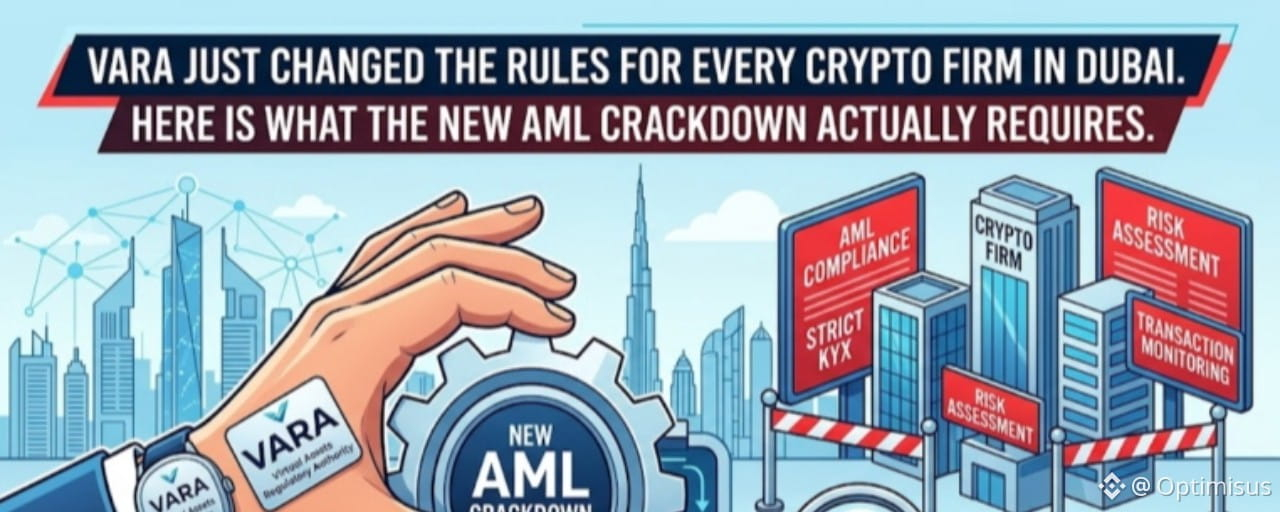
VARA Just Changed the Rules for Every Crypto Firm in Dubai. Here Is What the New AML CrackdownOn June 12, 2026, Dubai’s Virtual Assets Regulatory Authority published new anti-money laundering guidance that applies to every licensed crypto firm in the emirate. Quarterly risk reviews. Real-time FATF blacklist screening. Senior management held personally accountable for compliance failures. And a pointed warning about AI-related risks that most of the industry has been ignoring. If you hold a VARA licence or are thinking about one, this is what changed.
What VARA Published and Why It Matters
The Virtual Assets Regulatory Authority is Dubai’s dedicated crypto regulator, covering all virtual asset activity in the emirate outside the DIFC. It has issued licences to more than 100 virtual asset service providers across exchanges, custodians, and broker-dealers since it was established under Dubai Law No. 4 of 2022. It is one of the most active crypto licensing jurisdictions anywhere in the world.
The June 12 guidance came directly out of VARA’s 2026 Business Risk Assessment thematic review, a regulatory audit that examined how licensed firms were actually implementing their anti-money laundering and counter-terrorist financing controls. The review found two systemic gaps across the industry: firms were not using real operational data to drive their compliance decisions, and governance of those decisions was not sitting at a senior enough level. The new guidance is VARA’s response to both gaps.
Between August 2024 and August 2025, VARA issued enforcement notices against 36 separate firms for violations including unlicensed virtual asset activities and AML failures. The June 12 guidance is the regulator signalling that enforcement posture is tightening, not softening.
The AI Risk Warning That Most Coverage Missed
One element of the June 12 guidance received almost no attention in the initial industry coverage: VARA’s explicit flagging of artificial intelligence as an emerging compliance risk category.
The regulator specifically urged firms to update their controls to address AI-related risks and anonymity-enhancing transactions, naming these alongside sanctions, proliferation financing, and terrorism financing as areas requiring enhanced monitoring. This is not boilerplate language. It reflects something real that is happening in crypto compliance: AI tools are being used both by firms trying to detect financial crime and by bad actors trying to evade detection, and the guidance VARA issued is asking firms to be explicit about how they are managing both sides of that dynamic.
The concern about anonymity-enhancing transactions sits alongside this. Privacy coins, mixing services, and zero-knowledge proof-based transactions have always been a regulatory sensitivity in the UAE. The June 12 guidance reinforces that Dubai-licensed firms cannot treat these transaction types as routine without having documented controls around them. Privacy-enhancing assets and transactions are receiving what VARA describes as closer scrutiny because of their AML implications.
VARA is asking firms to treat AI as both a compliance tool and a compliance risk. That is a more sophisticated regulatory position than most jurisdictions have reached publicly. It is also a direct signal that the regulator is watching how AI is being used inside the firms it licenses.
The Broader Context: AED 370 Million in Penalties Since Early 2025
The June 12 guidance does not exist in isolation. It follows a period of intensified enforcement across the UAE financial sector that has not been limited to crypto. Since early 2025, the UAE Central Bank has imposed more than AED 370 million, equivalent to over 100 million dollars, in AML and counter-terrorist financing penalties on financial institutions across the country, covering banks, exchange houses, insurers, and finance companies.
The message is consistent across regulators and asset classes: the UAE is actively shedding the perception that it is a soft-touch jurisdiction for financial crime. The FATF grey listing period, which the UAE exited in 2024 after implementing a comprehensive national AML reform programme, clearly left a lasting mark on how aggressively the country’s regulators are now approaching compliance standards.
For VARA specifically, the direction of travel is explicit. Dubai remains one of the most open crypto licensing environments in the world. More than 100 licences across VARA, ADGM, DFSA, CBUAE, and CMA represent a genuine commitment to being a regulated crypto hub. But open does not mean permissive. The June 12 guidance is the clearest signal yet that access to Dubai’s crypto market comes with operational obligations that are being enforced rather than merely stated.
What This Means If You Hold a VARA Licence
Review your Business Risk Assessment immediately if it has not been updated in the last three months. Under the new guidance, a BRA that was last updated six months ago is already non-compliant with VARA’s quarterly expectation.Audit your FATF screening integration. If your transaction monitoring system pulls jurisdiction risk data from a weekly or monthly feed, check whether that feed covers FATF’s grey and black lists and confirm how quickly updates propagate into live screening. Real-time is now the expectation, not a best practice.Document your AI-related controls explicitly. If your firm uses any AI tool in its compliance, transaction monitoring, or onboarding processes, the guidance implies those tools’ capabilities and limitations should be documented and reviewed as part of your risk assessment. An AI-powered KYC tool that has not been assessed for its own failure modes does not satisfy the spirit of what VARA is asking for.Escalate accountability structures. If compliance sign-off on risk assessments currently sits below C-suite level, the personal accountability language in the June 12 guidance is a clear signal to change that before the next regulatory examination.Engage a VARA-familiar compliance adviser if you have not already. The specificity of the June 12 requirements, particularly around data-driven risk models and AI risk integration, is detailed enough that generic AML compliance experience is not sufficient to implement it correctly.
VARA’s June 12 guidance is not a warning shot. It is a detailed specification of what compliant crypto operation in Dubai now looks like, backed by a regulator that has already issued 36 enforcement notices in a single year. The firms that take this seriously and update their systems now are in a significantly better position than the ones that wait for a regulatory examination to find the gaps for them.
VARA Just Changed the Rules for Every Crypto Firm in Dubai. Here Is What the New AML Crackdown
On June 12, 2026, Dubai’s Virtual Assets Regulatory Authority published new anti-money laundering guidance that applies to every licensed crypto firm in the emirate. Quarterly risk reviews. Real-time FATF blacklist screening. Senior management held personally accountable for compliance failures. And a pointed warning about AI-related risks that most of the industry has been ignoring. If you hold a VARA licence or are thinking about one, this is what changed.
What VARA Published and Why It Matters
The Virtual Assets Regulatory Authority is Dubai’s dedicated crypto regulator, covering all virtual asset activity in the emirate outside the DIFC. It has issued licences to more than 100 virtual asset service providers across exchanges, custodians, and broker-dealers since it was established under Dubai Law No. 4 of 2022. It is one of the most active crypto licensing jurisdictions anywhere in the world.
The June 12 guidance came directly out of VARA’s 2026 Business Risk Assessment thematic review, a regulatory audit that examined how licensed firms were actually implementing their anti-money laundering and counter-terrorist financing controls. The review found two systemic gaps across the industry: firms were not using real operational data to drive their compliance decisions, and governance of those decisions was not sitting at a senior enough level. The new guidance is VARA’s response to both gaps.
Between August 2024 and August 2025, VARA issued enforcement notices against 36 separate firms for violations including unlicensed virtual asset activities and AML failures. The June 12 guidance is the regulator signalling that enforcement posture is tightening, not softening.
The AI Risk Warning That Most Coverage Missed
One element of the June 12 guidance received almost no attention in the initial industry coverage: VARA’s explicit flagging of artificial intelligence as an emerging compliance risk category.
The regulator specifically urged firms to update their controls to address AI-related risks and anonymity-enhancing transactions, naming these alongside sanctions, proliferation financing, and terrorism financing as areas requiring enhanced monitoring. This is not boilerplate language. It reflects something real that is happening in crypto compliance: AI tools are being used both by firms trying to detect financial crime and by bad actors trying to evade detection, and the guidance VARA issued is asking firms to be explicit about how they are managing both sides of that dynamic.
The concern about anonymity-enhancing transactions sits alongside this. Privacy coins, mixing services, and zero-knowledge proof-based transactions have always been a regulatory sensitivity in the UAE. The June 12 guidance reinforces that Dubai-licensed firms cannot treat these transaction types as routine without having documented controls around them. Privacy-enhancing assets and transactions are receiving what VARA describes as closer scrutiny because of their AML implications.
VARA is asking firms to treat AI as both a compliance tool and a compliance risk. That is a more sophisticated regulatory position than most jurisdictions have reached publicly. It is also a direct signal that the regulator is watching how AI is being used inside the firms it licenses.
The Broader Context: AED 370 Million in Penalties Since Early 2025
The June 12 guidance does not exist in isolation. It follows a period of intensified enforcement across the UAE financial sector that has not been limited to crypto. Since early 2025, the UAE Central Bank has imposed more than AED 370 million, equivalent to over 100 million dollars, in AML and counter-terrorist financing penalties on financial institutions across the country, covering banks, exchange houses, insurers, and finance companies.
The message is consistent across regulators and asset classes: the UAE is actively shedding the perception that it is a soft-touch jurisdiction for financial crime. The FATF grey listing period, which the UAE exited in 2024 after implementing a comprehensive national AML reform programme, clearly left a lasting mark on how aggressively the country’s regulators are now approaching compliance standards.
For VARA specifically, the direction of travel is explicit. Dubai remains one of the most open crypto licensing environments in the world. More than 100 licences across VARA, ADGM, DFSA, CBUAE, and CMA represent a genuine commitment to being a regulated crypto hub. But open does not mean permissive. The June 12 guidance is the clearest signal yet that access to Dubai’s crypto market comes with operational obligations that are being enforced rather than merely stated.
What This Means If You Hold a VARA Licence
Review your Business Risk Assessment immediately if it has not been updated in the last three months. Under the new guidance, a BRA that was last updated six months ago is already non-compliant with VARA’s quarterly expectation.Audit your FATF screening integration. If your transaction monitoring system pulls jurisdiction risk data from a weekly or monthly feed, check whether that feed covers FATF’s grey and black lists and confirm how quickly updates propagate into live screening. Real-time is now the expectation, not a best practice.Document your AI-related controls explicitly. If your firm uses any AI tool in its compliance, transaction monitoring, or onboarding processes, the guidance implies those tools’ capabilities and limitations should be documented and reviewed as part of your risk assessment. An AI-powered KYC tool that has not been assessed for its own failure modes does not satisfy the spirit of what VARA is asking for.Escalate accountability structures. If compliance sign-off on risk assessments currently sits below C-suite level, the personal accountability language in the June 12 guidance is a clear signal to change that before the next regulatory examination.Engage a VARA-familiar compliance adviser if you have not already. The specificity of the June 12 requirements, particularly around data-driven risk models and AI risk integration, is detailed enough that generic AML compliance experience is not sufficient to implement it correctly.
VARA’s June 12 guidance is not a warning shot. It is a detailed specification of what compliant crypto operation in Dubai now looks like, backed by a regulator that has already issued 36 enforcement notices in a single year. The firms that take this seriously and update their systems now are in a significantly better position than the ones that wait for a regulatory examination to find the gaps for them.
What VARA Published and Why It Matters
The Virtual Assets Regulatory Authority is Dubai’s dedicated crypto regulator, covering all virtual asset activity in the emirate outside the DIFC. It has issued licences to more than 100 virtual asset service providers across exchanges, custodians, and broker-dealers since it was established under Dubai Law No. 4 of 2022. It is one of the most active crypto licensing jurisdictions anywhere in the world.
The June 12 guidance came directly out of VARA’s 2026 Business Risk Assessment thematic review, a regulatory audit that examined how licensed firms were actually implementing their anti-money laundering and counter-terrorist financing controls. The review found two systemic gaps across the industry: firms were not using real operational data to drive their compliance decisions, and governance of those decisions was not sitting at a senior enough level. The new guidance is VARA’s response to both gaps.
Between August 2024 and August 2025, VARA issued enforcement notices against 36 separate firms for violations including unlicensed virtual asset activities and AML failures. The June 12 guidance is the regulator signalling that enforcement posture is tightening, not softening.
The AI Risk Warning That Most Coverage Missed
One element of the June 12 guidance received almost no attention in the initial industry coverage: VARA’s explicit flagging of artificial intelligence as an emerging compliance risk category.
The regulator specifically urged firms to update their controls to address AI-related risks and anonymity-enhancing transactions, naming these alongside sanctions, proliferation financing, and terrorism financing as areas requiring enhanced monitoring. This is not boilerplate language. It reflects something real that is happening in crypto compliance: AI tools are being used both by firms trying to detect financial crime and by bad actors trying to evade detection, and the guidance VARA issued is asking firms to be explicit about how they are managing both sides of that dynamic.
The concern about anonymity-enhancing transactions sits alongside this. Privacy coins, mixing services, and zero-knowledge proof-based transactions have always been a regulatory sensitivity in the UAE. The June 12 guidance reinforces that Dubai-licensed firms cannot treat these transaction types as routine without having documented controls around them. Privacy-enhancing assets and transactions are receiving what VARA describes as closer scrutiny because of their AML implications.
VARA is asking firms to treat AI as both a compliance tool and a compliance risk. That is a more sophisticated regulatory position than most jurisdictions have reached publicly. It is also a direct signal that the regulator is watching how AI is being used inside the firms it licenses.
The Broader Context: AED 370 Million in Penalties Since Early 2025
The June 12 guidance does not exist in isolation. It follows a period of intensified enforcement across the UAE financial sector that has not been limited to crypto. Since early 2025, the UAE Central Bank has imposed more than AED 370 million, equivalent to over 100 million dollars, in AML and counter-terrorist financing penalties on financial institutions across the country, covering banks, exchange houses, insurers, and finance companies.
The message is consistent across regulators and asset classes: the UAE is actively shedding the perception that it is a soft-touch jurisdiction for financial crime. The FATF grey listing period, which the UAE exited in 2024 after implementing a comprehensive national AML reform programme, clearly left a lasting mark on how aggressively the country’s regulators are now approaching compliance standards.
For VARA specifically, the direction of travel is explicit. Dubai remains one of the most open crypto licensing environments in the world. More than 100 licences across VARA, ADGM, DFSA, CBUAE, and CMA represent a genuine commitment to being a regulated crypto hub. But open does not mean permissive. The June 12 guidance is the clearest signal yet that access to Dubai’s crypto market comes with operational obligations that are being enforced rather than merely stated.
What This Means If You Hold a VARA Licence
Review your Business Risk Assessment immediately if it has not been updated in the last three months. Under the new guidance, a BRA that was last updated six months ago is already non-compliant with VARA’s quarterly expectation.Audit your FATF screening integration. If your transaction monitoring system pulls jurisdiction risk data from a weekly or monthly feed, check whether that feed covers FATF’s grey and black lists and confirm how quickly updates propagate into live screening. Real-time is now the expectation, not a best practice.Document your AI-related controls explicitly. If your firm uses any AI tool in its compliance, transaction monitoring, or onboarding processes, the guidance implies those tools’ capabilities and limitations should be documented and reviewed as part of your risk assessment. An AI-powered KYC tool that has not been assessed for its own failure modes does not satisfy the spirit of what VARA is asking for.Escalate accountability structures. If compliance sign-off on risk assessments currently sits below C-suite level, the personal accountability language in the June 12 guidance is a clear signal to change that before the next regulatory examination.Engage a VARA-familiar compliance adviser if you have not already. The specificity of the June 12 requirements, particularly around data-driven risk models and AI risk integration, is detailed enough that generic AML compliance experience is not sufficient to implement it correctly.
VARA’s June 12 guidance is not a warning shot. It is a detailed specification of what compliant crypto operation in Dubai now looks like, backed by a regulator that has already issued 36 enforcement notices in a single year. The firms that take this seriously and update their systems now are in a significantly better position than the ones that wait for a regulatory examination to find the gaps for them.
258
·
--
සත්යායනය කළ

ලිපිය
Orbs Launches On-Chain Execution Infrastructure for Institutional Crypto TradingOrbs, the decentralized Layer-3 blockchain infrastructure focused on advanced on-chain trading, today announced Orbs Institutional, a new offering that provides trading desks, OTC firms, treasuries, custodians and financial platforms with direct access to its on-chain execution infrastructure.
The launch builds on technology that has processed more than $2.5 billion in spot trading volume since 2023 across more than 30 decentralized exchange integrations and over 10 blockchain networks. Previously available through leading decentralized trading venues including PancakeSwap, SushiSwap, QuickSwap and THENA, the infrastructure is now being made directly accessible to institutional market participants.
As institutional adoption of decentralized finance continues to grow, firms are increasingly exploring on-chain execution as part of their trading operations. However, many institutions still face challenges around execution quality, custody requirements, and transparency when operating in decentralized markets.
"Institutions shouldn't have to choose between the efficiency of decentralized markets and the standards they expect from professional trading infrastructure," said Ran Hammer, Chief Business Officer at Orbs. "We've spent years building and refining execution technology that now powers some of the most active trading venues in DeFi. With Orbs Institutional, we're making that infrastructure directly accessible to trading desks, treasuries, custodians and platforms looking to execute on-chain with greater transparency, competitive pricing and full control over their assets."
At the center of the offering is Liquidity Hub, Orbs' liquidity aggregation protocol, which sources liquidity from decentralized exchanges and professional market makers through a private RFQ layer designed to improve execution quality while reducing exposure to MEV and front-running. Institutions also gain access to Orbs' suite of execution tools, including dTWAP, dLIMIT and dSLTP.
Assets remain under client control throughout the execution lifecycle and orders can be signed using existing custody, treasury or MPC infrastructure that supports the EIP-712 standard. The protocol operates through audited smart contracts with no admin keys and has remained live in production since 2017 without any known exploits.
Orbs Institutional supports two primary integration paths. Institutional users can connect directly through APIs to access the execution stack, while wallets, custodians, exchanges, MPC providers and prime brokers can integrate Orbs' execution capabilities into their existing products through white-label or co-branded deployments.
As institutional participation in digital asset markets continues to expand, Orbs expects demand for transparent, self-custodied and automated execution infrastructure to increase. The company believes the next phase of DeFi adoption will be driven by professional market participants seeking direct access to on-chain liquidity and execution tools.
About Orbs
Orbs is a decentralized Layer 3 blockchain designed for advanced on-chain trading. Using a Proof-of-Stake consensus, Orbs acts as a supplementary execution layer, enabling complex logic and scripts beyond the capabilities of standard smart contracts. Orbs-powered protocols, including dLIMIT, dTWAP, Liquidity Hub, and Perpetual Hub, bring CeFi-level execution to decentralized markets. With a global team spanning multiple locations, Orbs continues to innovate at the frontier of blockchain infrastructure. Learn more at www.orbs.com.
Orbs Launches On-Chain Execution Infrastructure for Institutional Crypto Trading
Orbs, the decentralized Layer-3 blockchain infrastructure focused on advanced on-chain trading, today announced Orbs Institutional, a new offering that provides trading desks, OTC firms, treasuries, custodians and financial platforms with direct access to its on-chain execution infrastructure.
The launch builds on technology that has processed more than $2.5 billion in spot trading volume since 2023 across more than 30 decentralized exchange integrations and over 10 blockchain networks. Previously available through leading decentralized trading venues including PancakeSwap, SushiSwap, QuickSwap and THENA, the infrastructure is now being made directly accessible to institutional market participants.
As institutional adoption of decentralized finance continues to grow, firms are increasingly exploring on-chain execution as part of their trading operations. However, many institutions still face challenges around execution quality, custody requirements, and transparency when operating in decentralized markets.
"Institutions shouldn't have to choose between the efficiency of decentralized markets and the standards they expect from professional trading infrastructure," said Ran Hammer, Chief Business Officer at Orbs. "We've spent years building and refining execution technology that now powers some of the most active trading venues in DeFi. With Orbs Institutional, we're making that infrastructure directly accessible to trading desks, treasuries, custodians and platforms looking to execute on-chain with greater transparency, competitive pricing and full control over their assets."
At the center of the offering is Liquidity Hub, Orbs' liquidity aggregation protocol, which sources liquidity from decentralized exchanges and professional market makers through a private RFQ layer designed to improve execution quality while reducing exposure to MEV and front-running. Institutions also gain access to Orbs' suite of execution tools, including dTWAP, dLIMIT and dSLTP.
Assets remain under client control throughout the execution lifecycle and orders can be signed using existing custody, treasury or MPC infrastructure that supports the EIP-712 standard. The protocol operates through audited smart contracts with no admin keys and has remained live in production since 2017 without any known exploits.
Orbs Institutional supports two primary integration paths. Institutional users can connect directly through APIs to access the execution stack, while wallets, custodians, exchanges, MPC providers and prime brokers can integrate Orbs' execution capabilities into their existing products through white-label or co-branded deployments.
As institutional participation in digital asset markets continues to expand, Orbs expects demand for transparent, self-custodied and automated execution infrastructure to increase. The company believes the next phase of DeFi adoption will be driven by professional market participants seeking direct access to on-chain liquidity and execution tools.
About Orbs
Orbs is a decentralized Layer 3 blockchain designed for advanced on-chain trading. Using a Proof-of-Stake consensus, Orbs acts as a supplementary execution layer, enabling complex logic and scripts beyond the capabilities of standard smart contracts. Orbs-powered protocols, including dLIMIT, dTWAP, Liquidity Hub, and Perpetual Hub, bring CeFi-level execution to decentralized markets. With a global team spanning multiple locations, Orbs continues to innovate at the frontier of blockchain infrastructure. Learn more at www.orbs.com.
The launch builds on technology that has processed more than $2.5 billion in spot trading volume since 2023 across more than 30 decentralized exchange integrations and over 10 blockchain networks. Previously available through leading decentralized trading venues including PancakeSwap, SushiSwap, QuickSwap and THENA, the infrastructure is now being made directly accessible to institutional market participants.
As institutional adoption of decentralized finance continues to grow, firms are increasingly exploring on-chain execution as part of their trading operations. However, many institutions still face challenges around execution quality, custody requirements, and transparency when operating in decentralized markets.
"Institutions shouldn't have to choose between the efficiency of decentralized markets and the standards they expect from professional trading infrastructure," said Ran Hammer, Chief Business Officer at Orbs. "We've spent years building and refining execution technology that now powers some of the most active trading venues in DeFi. With Orbs Institutional, we're making that infrastructure directly accessible to trading desks, treasuries, custodians and platforms looking to execute on-chain with greater transparency, competitive pricing and full control over their assets."
At the center of the offering is Liquidity Hub, Orbs' liquidity aggregation protocol, which sources liquidity from decentralized exchanges and professional market makers through a private RFQ layer designed to improve execution quality while reducing exposure to MEV and front-running. Institutions also gain access to Orbs' suite of execution tools, including dTWAP, dLIMIT and dSLTP.
Assets remain under client control throughout the execution lifecycle and orders can be signed using existing custody, treasury or MPC infrastructure that supports the EIP-712 standard. The protocol operates through audited smart contracts with no admin keys and has remained live in production since 2017 without any known exploits.
Orbs Institutional supports two primary integration paths. Institutional users can connect directly through APIs to access the execution stack, while wallets, custodians, exchanges, MPC providers and prime brokers can integrate Orbs' execution capabilities into their existing products through white-label or co-branded deployments.
As institutional participation in digital asset markets continues to expand, Orbs expects demand for transparent, self-custodied and automated execution infrastructure to increase. The company believes the next phase of DeFi adoption will be driven by professional market participants seeking direct access to on-chain liquidity and execution tools.
About Orbs
Orbs is a decentralized Layer 3 blockchain designed for advanced on-chain trading. Using a Proof-of-Stake consensus, Orbs acts as a supplementary execution layer, enabling complex logic and scripts beyond the capabilities of standard smart contracts. Orbs-powered protocols, including dLIMIT, dTWAP, Liquidity Hub, and Perpetual Hub, bring CeFi-level execution to decentralized markets. With a global team spanning multiple locations, Orbs continues to innovate at the frontier of blockchain infrastructure. Learn more at www.orbs.com.
193
·
--
සත්යායනය කළ
ලිපිය
AIPayWithCrypto Secures $10 Million Financing With Participation From Multiple InstitutionsAIPayWithCrypto has officially closed a $10 million Series A financing round. The round was led by Animoca Brands, with follow-on investments from Titans Ventures, Castrum Capital, Adaverse, and M2M Capital.
Beyond the capital injection, all parties have reached in-depth strategic consensus. They will jointly build the future integration of AI and payment, improve supporting infrastructure, and serve global users and AI economic entities. Going forward, APC will launch its brand-new AI-payment ecosystem on the market and consolidate its core competitiveness in the payment sector.
The financing marks an important milestone in APC's next stage of growth and will support several strategic initiatives across the ecosystem, including:
• Accelerated development of the AI Agent Marketplace
• Native payment integrations across gaming and digital collectibles
• Expanded ecosystem access through Animoca Brands' global portfolio
These initiatives are expected to strengthen APC's position at the intersection of AI, payments, digital assets, and intelligent commerce while creating new opportunities for ecosystem participants worldwide.
The company is already working with payment providers, merchants, and ecosystem partners across several markets and expects those relationships to deepen as new products are rolled out.
The team sees a simple reality emerging. AI systems are getting better at making decisions. Eventually, some of those decisions will involve money. When that happens, someone needs to provide the rails that allow those transactions to happen safely and predictably.
The new funding will support product development, ecosystem expansion, and merchant connectivity as APC prepares to bring its AI-payment ecosystem to market. The company is focused on building the infrastructure required for both human-driven and machine-driven transactions.
Looking ahead, APC remains focused on building practical payment infrastructure for a future where humans and intelligent systems increasingly participate in the same economy.
About APC
AIPayWithCrypto (APC) is building payment infrastructure for the AI economy. The company combines payment routing, merchant connectivity, digital asset infrastructure, and AI-compatible transaction systems to enable commerce between humans, businesses, and intelligent autonomous systems.
APC — Infrastructure for the Age of Intelligent Commerce.
Disclaimer: Any information written in this press release does not constitute investment advice. Optimisus does not, and will not endorse any information about any company or individual on this page. Readers are encouraged to do their own research and base any actions on their own findings, not on any content written in this press release. Optimisus is and will not be responsible for any damage or loss caused directly or indirectly by the use of any content, product, or service mentioned in this press release.
AIPayWithCrypto Secures $10 Million Financing With Participation From Multiple Institutions
AIPayWithCrypto has officially closed a $10 million Series A financing round. The round was led by Animoca Brands, with follow-on investments from Titans Ventures, Castrum Capital, Adaverse, and M2M Capital.
Beyond the capital injection, all parties have reached in-depth strategic consensus. They will jointly build the future integration of AI and payment, improve supporting infrastructure, and serve global users and AI economic entities. Going forward, APC will launch its brand-new AI-payment ecosystem on the market and consolidate its core competitiveness in the payment sector.
The financing marks an important milestone in APC's next stage of growth and will support several strategic initiatives across the ecosystem, including:
• Accelerated development of the AI Agent Marketplace
• Native payment integrations across gaming and digital collectibles
• Expanded ecosystem access through Animoca Brands' global portfolio
These initiatives are expected to strengthen APC's position at the intersection of AI, payments, digital assets, and intelligent commerce while creating new opportunities for ecosystem participants worldwide.
The company is already working with payment providers, merchants, and ecosystem partners across several markets and expects those relationships to deepen as new products are rolled out.
The team sees a simple reality emerging. AI systems are getting better at making decisions. Eventually, some of those decisions will involve money. When that happens, someone needs to provide the rails that allow those transactions to happen safely and predictably.
The new funding will support product development, ecosystem expansion, and merchant connectivity as APC prepares to bring its AI-payment ecosystem to market. The company is focused on building the infrastructure required for both human-driven and machine-driven transactions.
Looking ahead, APC remains focused on building practical payment infrastructure for a future where humans and intelligent systems increasingly participate in the same economy.
About APC
AIPayWithCrypto (APC) is building payment infrastructure for the AI economy. The company combines payment routing, merchant connectivity, digital asset infrastructure, and AI-compatible transaction systems to enable commerce between humans, businesses, and intelligent autonomous systems.
APC — Infrastructure for the Age of Intelligent Commerce.
Disclaimer: Any information written in this press release does not constitute investment advice. Optimisus does not, and will not endorse any information about any company or individual on this page. Readers are encouraged to do their own research and base any actions on their own findings, not on any content written in this press release. Optimisus is and will not be responsible for any damage or loss caused directly or indirectly by the use of any content, product, or service mentioned in this press release.
Beyond the capital injection, all parties have reached in-depth strategic consensus. They will jointly build the future integration of AI and payment, improve supporting infrastructure, and serve global users and AI economic entities. Going forward, APC will launch its brand-new AI-payment ecosystem on the market and consolidate its core competitiveness in the payment sector.
The financing marks an important milestone in APC's next stage of growth and will support several strategic initiatives across the ecosystem, including:
• Accelerated development of the AI Agent Marketplace
• Native payment integrations across gaming and digital collectibles
• Expanded ecosystem access through Animoca Brands' global portfolio
These initiatives are expected to strengthen APC's position at the intersection of AI, payments, digital assets, and intelligent commerce while creating new opportunities for ecosystem participants worldwide.
The company is already working with payment providers, merchants, and ecosystem partners across several markets and expects those relationships to deepen as new products are rolled out.
The team sees a simple reality emerging. AI systems are getting better at making decisions. Eventually, some of those decisions will involve money. When that happens, someone needs to provide the rails that allow those transactions to happen safely and predictably.
The new funding will support product development, ecosystem expansion, and merchant connectivity as APC prepares to bring its AI-payment ecosystem to market. The company is focused on building the infrastructure required for both human-driven and machine-driven transactions.
Looking ahead, APC remains focused on building practical payment infrastructure for a future where humans and intelligent systems increasingly participate in the same economy.
About APC
AIPayWithCrypto (APC) is building payment infrastructure for the AI economy. The company combines payment routing, merchant connectivity, digital asset infrastructure, and AI-compatible transaction systems to enable commerce between humans, businesses, and intelligent autonomous systems.
APC — Infrastructure for the Age of Intelligent Commerce.
Disclaimer: Any information written in this press release does not constitute investment advice. Optimisus does not, and will not endorse any information about any company or individual on this page. Readers are encouraged to do their own research and base any actions on their own findings, not on any content written in this press release. Optimisus is and will not be responsible for any damage or loss caused directly or indirectly by the use of any content, product, or service mentioned in this press release.
1
1
13
825
·
--
Bitcoin $BTC is showing massive resilience today, consolidating tightly in the $62,500–$64,000 zone. While the retail market is shaking, the underlying data reveals an incredibly bullish divergence.
🔍 What’s Happening Under the Hood?
Peak Retail Fear: The Fear & Greed Index has plunged down to 10 (Extreme Fear). Historically, this level of panic often signals a local macro bottom rather than a top.
Institutional Buying: While weak hands panic, the giants are stepping in. Michael Saylor’s Strategy just bought the dip with another 1,550 BTC accumulation (~$101M).
ETF Inflows Return: After a brutal outflow streak earlier in June, positive net inflows are finally returning to spot Bitcoin ETFs, helping establish a solid price floor.
📉 Key Levels to Watch
Sellers are actively trying to cap the upside momentum near $64,000. If the bulls can cleanly reclaim and hold above this zone, expect a fast continuation back toward $65,000+. On the downside, $60,000 remains the ultimate line in the sand.
💡 Square Takeaway: This isn't capitulation—it's a massive liquidity rotation. When the crowd sells out of fear and institutions buy the dip, the smart money usually wins.
Are you buying this dip or waiting for lower levels? 👇
#BTC #Bitcoin #CryptoMarket #BinanceSquare #WhaleAlert
Bitcoin $BTC is showing massive resilience today, consolidating tightly in the $62,500–$64,000 zone. While the retail market is shaking, the underlying data reveals an incredibly bullish divergence.
🔍 What’s Happening Under the Hood?
Peak Retail Fear: The Fear & Greed Index has plunged down to 10 (Extreme Fear). Historically, this level of panic often signals a local macro bottom rather than a top.
Institutional Buying: While weak hands panic, the giants are stepping in. Michael Saylor’s Strategy just bought the dip with another 1,550 BTC accumulation (~$101M).
ETF Inflows Return: After a brutal outflow streak earlier in June, positive net inflows are finally returning to spot Bitcoin ETFs, helping establish a solid price floor.
📉 Key Levels to Watch
Sellers are actively trying to cap the upside momentum near $64,000. If the bulls can cleanly reclaim and hold above this zone, expect a fast continuation back toward $65,000+. On the downside, $60,000 remains the ultimate line in the sand.
💡 Square Takeaway: This isn't capitulation—it's a massive liquidity rotation. When the crowd sells out of fear and institutions buy the dip, the smart money usually wins.
Are you buying this dip or waiting for lower levels? 👇
#BTC #Bitcoin #CryptoMarket #BinanceSquare #WhaleAlert
🔍 What’s Happening Under the Hood?
Peak Retail Fear: The Fear & Greed Index has plunged down to 10 (Extreme Fear). Historically, this level of panic often signals a local macro bottom rather than a top.
Institutional Buying: While weak hands panic, the giants are stepping in. Michael Saylor’s Strategy just bought the dip with another 1,550 BTC accumulation (~$101M).
ETF Inflows Return: After a brutal outflow streak earlier in June, positive net inflows are finally returning to spot Bitcoin ETFs, helping establish a solid price floor.
📉 Key Levels to Watch
Sellers are actively trying to cap the upside momentum near $64,000. If the bulls can cleanly reclaim and hold above this zone, expect a fast continuation back toward $65,000+. On the downside, $60,000 remains the ultimate line in the sand.
💡 Square Takeaway: This isn't capitulation—it's a massive liquidity rotation. When the crowd sells out of fear and institutions buy the dip, the smart money usually wins.
Are you buying this dip or waiting for lower levels? 👇
#BTC #Bitcoin #CryptoMarket #BinanceSquare #WhaleAlert
215
·
--
$BTC is now hovering at the exact level where EVERY bull trap ends. Will we see another bearish rejection that will send $BTC back to ~$53,000?
$BTC is now hovering at the exact level where EVERY bull trap ends. Will we see another bearish rejection that will send $BTC back to ~$53,000?
247
·
--
සත්යායනය කළ
ලිපිය
From Holding to Spending: Why PayFi Could Become the Next 100x Narrative — And Why XCP May Be OneEvery crypto cycle has one major explosive narrative.
DeFi created yield. NFTs created digital ownership. Meme coins created community speculation. RWA brought real-world assets on-chain.
But the next major narrative may be even bigger:
PayFi — the bridge between crypto and real-world spending.
For years, crypto users have been holding, trading, staking, and speculating. But the next billion users may not enter crypto through trading charts. They may enter through something much simpler:
Payment.
This is why PayFi matters. PayFi is not just “paying with crypto.” It is the combination of payment, finance, stablecoins, merchant settlement, rewards, real-world transactions, and ecosystem growth.
In simple terms:
DeFi made crypto earnable.
RWA made crypto institutional.
PayFi may make crypto usable.
And usability is where mass adoption truly begins.
Today, millions of users already hold stablecoins like USDT. But the biggest question remains:
Where can they actually spend them?
This is exactly the gap PayWithCrypto, also known as PWCT, is trying to solve.
PWCT is building a real-world PayFi ecosystem through its non-custodial SuperApp, Scan-to-Pay experience, stablecoin payment model, merchant settlement infrastructure, travel utility, and community-driven economy.
Its goal is simple:
Turn crypto from something people only hold into something people can actually spend.
This is where XCP becomes interesting.
XCP is not just another token chasing hype. It is positioned as the ecosystem token behind a PayFi infrastructure that is connected to real users, real transactions, merchant adoption, payment demand, platform rewards, and community growth.
Most tokens rely mainly on attention.
Meme tokens rely on hype.
DeFi tokens rely on yield.
GameFi tokens rely on players.
But a strong PayFi token can be connected to daily financial behavior. That is the potential value of XCP.
If PWCT continues expanding its Scan-to-Pay network, SuperApp utility, merchant ecosystem, stablecoin payment usage, travel features, and community adoption, XCP could gain value from something the market loves:
real ecosystem activity.
This gives XCP several powerful upside drivers.
First, XCP is tied to real-world utility. It is connected to payment usage, not only speculation.
Second, XCP sits inside the PayFi narrative. If PayFi becomes the next major crypto trend, the market will search for tokens that represent this sector.
Third, PWCT has a real product direction. The SuperApp, Scan-to-Pay, merchant settlement, stablecoin spending, rewards, and travel utility all create a clear ecosystem.
Fourth, XCP benefits from community distribution.
In Web3, community is not just marketing. Community is liquidity, belief, growth, and adoption.
Fifth, XCP is still early. And in crypto, early narratives often create the biggest opportunities.
This is why XCP has the potential to become one of the strongest PayFi tokens in the market.
A “100x narrative” does not come only from price speculation.
It comes when a small sector becomes a massive category.
Before DeFi exploded, many ignored it.
Before NFTs exploded, many laughed at it.
Before RWA became hot, many underestimated it.
Now PayFi may be entering that early stage.
And if PayFi becomes the next major narrative, early PayFi tokens with real utility, community power, and payment infrastructure could receive massive market attention.
That is why XCP may have the potential to become one of the next 100x PayFi tokens.
Because XCP is not only built around a story.
It is built around a possible spending economy.
More users create more transactions.
More transactions create more payment volume.
More payment volume attracts more merchants.
More merchants create more utility.
More utility strengthens the ecosystem.
And a stronger ecosystem can create stronger token demand.
This is the flywheel that could make XCP powerful.
From holding to spending.
From speculation to utility.
From wallet balances to real transactions.
From digital assets to daily life.
That is the future PayFi is trying to unlock.
And PWCT is positioning XCP directly inside that future.
The market often wakes up late.
First, builders create infrastructure.
Then, users create transaction volume.
Then, merchants join the network.
Then, the narrative becomes obvious.
PayFi is still early.
PWCT is still early.
XCP is still early.
But early does not mean small.
Early means the market has not fully priced the story yet.
If real-world crypto payment becomes the next major adoption wave, XCP may become one of the strongest tokens to watch in the PayFi race.
#PayFi #CryptoPayment #Stablecoin #Web3 #PWCT #XCP #BNBChain
From Holding to Spending: Why PayFi Could Become the Next 100x Narrative — And Why XCP May Be One
Every crypto cycle has one major explosive narrative.
DeFi created yield. NFTs created digital ownership. Meme coins created community speculation. RWA brought real-world assets on-chain.
But the next major narrative may be even bigger:
PayFi — the bridge between crypto and real-world spending.
For years, crypto users have been holding, trading, staking, and speculating. But the next billion users may not enter crypto through trading charts. They may enter through something much simpler:
Payment.
This is why PayFi matters. PayFi is not just “paying with crypto.” It is the combination of payment, finance, stablecoins, merchant settlement, rewards, real-world transactions, and ecosystem growth.
In simple terms:
DeFi made crypto earnable.
RWA made crypto institutional.
PayFi may make crypto usable.
And usability is where mass adoption truly begins.
Today, millions of users already hold stablecoins like USDT. But the biggest question remains:
Where can they actually spend them?
This is exactly the gap PayWithCrypto, also known as PWCT, is trying to solve.
PWCT is building a real-world PayFi ecosystem through its non-custodial SuperApp, Scan-to-Pay experience, stablecoin payment model, merchant settlement infrastructure, travel utility, and community-driven economy.
Its goal is simple:
Turn crypto from something people only hold into something people can actually spend.
This is where XCP becomes interesting.
XCP is not just another token chasing hype. It is positioned as the ecosystem token behind a PayFi infrastructure that is connected to real users, real transactions, merchant adoption, payment demand, platform rewards, and community growth.
Most tokens rely mainly on attention.
Meme tokens rely on hype.
DeFi tokens rely on yield.
GameFi tokens rely on players.
But a strong PayFi token can be connected to daily financial behavior. That is the potential value of XCP.
If PWCT continues expanding its Scan-to-Pay network, SuperApp utility, merchant ecosystem, stablecoin payment usage, travel features, and community adoption, XCP could gain value from something the market loves:
real ecosystem activity.
This gives XCP several powerful upside drivers.
First, XCP is tied to real-world utility. It is connected to payment usage, not only speculation.
Second, XCP sits inside the PayFi narrative. If PayFi becomes the next major crypto trend, the market will search for tokens that represent this sector.
Third, PWCT has a real product direction. The SuperApp, Scan-to-Pay, merchant settlement, stablecoin spending, rewards, and travel utility all create a clear ecosystem.
Fourth, XCP benefits from community distribution.
In Web3, community is not just marketing. Community is liquidity, belief, growth, and adoption.
Fifth, XCP is still early. And in crypto, early narratives often create the biggest opportunities.
This is why XCP has the potential to become one of the strongest PayFi tokens in the market.
A “100x narrative” does not come only from price speculation.
It comes when a small sector becomes a massive category.
Before DeFi exploded, many ignored it.
Before NFTs exploded, many laughed at it.
Before RWA became hot, many underestimated it.
Now PayFi may be entering that early stage.
And if PayFi becomes the next major narrative, early PayFi tokens with real utility, community power, and payment infrastructure could receive massive market attention.
That is why XCP may have the potential to become one of the next 100x PayFi tokens.
Because XCP is not only built around a story.
It is built around a possible spending economy.
More users create more transactions.
More transactions create more payment volume.
More payment volume attracts more merchants.
More merchants create more utility.
More utility strengthens the ecosystem.
And a stronger ecosystem can create stronger token demand.
This is the flywheel that could make XCP powerful.
From holding to spending.
From speculation to utility.
From wallet balances to real transactions.
From digital assets to daily life.
That is the future PayFi is trying to unlock.
And PWCT is positioning XCP directly inside that future.
The market often wakes up late.
First, builders create infrastructure.
Then, users create transaction volume.
Then, merchants join the network.
Then, the narrative becomes obvious.
PayFi is still early.
PWCT is still early.
XCP is still early.
But early does not mean small.
Early means the market has not fully priced the story yet.
If real-world crypto payment becomes the next major adoption wave, XCP may become one of the strongest tokens to watch in the PayFi race.
#PayFi #CryptoPayment #Stablecoin #Web3 #PWCT #XCP #BNBChain
DeFi created yield. NFTs created digital ownership. Meme coins created community speculation. RWA brought real-world assets on-chain.
But the next major narrative may be even bigger:
PayFi — the bridge between crypto and real-world spending.
For years, crypto users have been holding, trading, staking, and speculating. But the next billion users may not enter crypto through trading charts. They may enter through something much simpler:
Payment.
This is why PayFi matters. PayFi is not just “paying with crypto.” It is the combination of payment, finance, stablecoins, merchant settlement, rewards, real-world transactions, and ecosystem growth.
In simple terms:
DeFi made crypto earnable.
RWA made crypto institutional.
PayFi may make crypto usable.
And usability is where mass adoption truly begins.
Today, millions of users already hold stablecoins like USDT. But the biggest question remains:
Where can they actually spend them?
This is exactly the gap PayWithCrypto, also known as PWCT, is trying to solve.
PWCT is building a real-world PayFi ecosystem through its non-custodial SuperApp, Scan-to-Pay experience, stablecoin payment model, merchant settlement infrastructure, travel utility, and community-driven economy.
Its goal is simple:
Turn crypto from something people only hold into something people can actually spend.
This is where XCP becomes interesting.
XCP is not just another token chasing hype. It is positioned as the ecosystem token behind a PayFi infrastructure that is connected to real users, real transactions, merchant adoption, payment demand, platform rewards, and community growth.
Most tokens rely mainly on attention.
Meme tokens rely on hype.
DeFi tokens rely on yield.
GameFi tokens rely on players.
But a strong PayFi token can be connected to daily financial behavior. That is the potential value of XCP.
If PWCT continues expanding its Scan-to-Pay network, SuperApp utility, merchant ecosystem, stablecoin payment usage, travel features, and community adoption, XCP could gain value from something the market loves:
real ecosystem activity.
This gives XCP several powerful upside drivers.
First, XCP is tied to real-world utility. It is connected to payment usage, not only speculation.
Second, XCP sits inside the PayFi narrative. If PayFi becomes the next major crypto trend, the market will search for tokens that represent this sector.
Third, PWCT has a real product direction. The SuperApp, Scan-to-Pay, merchant settlement, stablecoin spending, rewards, and travel utility all create a clear ecosystem.
Fourth, XCP benefits from community distribution.
In Web3, community is not just marketing. Community is liquidity, belief, growth, and adoption.
Fifth, XCP is still early. And in crypto, early narratives often create the biggest opportunities.
This is why XCP has the potential to become one of the strongest PayFi tokens in the market.
A “100x narrative” does not come only from price speculation.
It comes when a small sector becomes a massive category.
Before DeFi exploded, many ignored it.
Before NFTs exploded, many laughed at it.
Before RWA became hot, many underestimated it.
Now PayFi may be entering that early stage.
And if PayFi becomes the next major narrative, early PayFi tokens with real utility, community power, and payment infrastructure could receive massive market attention.
That is why XCP may have the potential to become one of the next 100x PayFi tokens.
Because XCP is not only built around a story.
It is built around a possible spending economy.
More users create more transactions.
More transactions create more payment volume.
More payment volume attracts more merchants.
More merchants create more utility.
More utility strengthens the ecosystem.
And a stronger ecosystem can create stronger token demand.
This is the flywheel that could make XCP powerful.
From holding to spending.
From speculation to utility.
From wallet balances to real transactions.
From digital assets to daily life.
That is the future PayFi is trying to unlock.
And PWCT is positioning XCP directly inside that future.
The market often wakes up late.
First, builders create infrastructure.
Then, users create transaction volume.
Then, merchants join the network.
Then, the narrative becomes obvious.
PayFi is still early.
PWCT is still early.
XCP is still early.
But early does not mean small.
Early means the market has not fully priced the story yet.
If real-world crypto payment becomes the next major adoption wave, XCP may become one of the strongest tokens to watch in the PayFi race.
#PayFi #CryptoPayment #Stablecoin #Web3 #PWCT #XCP #BNBChain
3
15
1.3k
·
--
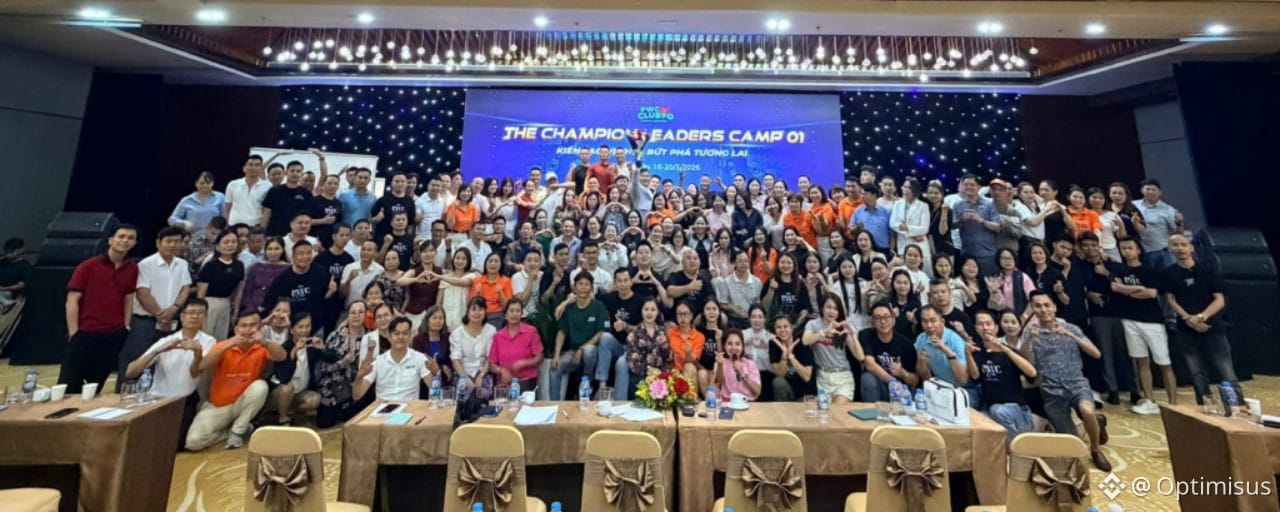
ලිපිය
PWC CLUB Vietnam Leader Camp 2026 Ends with a Bang: Vietnam Officially Enters a Full AccelerationThree days. One high-intensity gathering. One major upgrade of the leadership system.
PWC CLUB Vietnam Leader Camp 2026 was successfully held in Ho Tram, Vietnam, from March 18 to March 20, 2026, bringing together core leaders, market builders, and company representatives from across different regions for a powerful convergence around strategy, ecosystem development, team building, execution, and the path toward the next stage of breakout growth.
This was not an ordinary meeting. And it was far more than a simple training session. This was a collective realignment before the next major breakout phase of PWC in Vietnam.
This was the key moment when the leadership system moved from growth to acceleration. More importantly, it was a strong signal that, within PWC’s Southeast Asian expansion map, Vietnam has officially entered a powerful upward cycle.
Vietnam Is No Longer Just a Market It Is Becoming a Growth Engine That PWC’s Global Strategy Cannot Ignore
While many Web3 projects are still stuck in narratives, airdrops, short-term traffic, and market sentiment swings, PWC is focused on something very different:
building an ecosystem, building systems, training leaders, and capturing markets.
The signals released from this Leader Camp were extremely clear:
The company is placing strong strategic attention on the Vietnamese marketVietnam’s leadership system is maturing rapidlyThe community’s organizational power, execution power, and replication power are all rising at the same timeThe next phase of market expansion is no longer just an idea — it has entered real deployment mode
Across Southeast Asia, Vietnam has long been one of the region’s most promising growth markets.
Its young population, high digital adoption, strong community virality, entrepreneurial energy, and rapidly growing Web3 awareness give it a natural advantage. And now, PWC CLUB Vietnam is transforming those advantages into real system-level strength.
Jackson’s Presence in Vietnam: This Was More Than Support — It Was a Public Endorsement of the Future
One of the biggest highlights of this Leader Camp was the presence ofJackson, Global Marketing Director and Company Representative, who personally traveled to Vietnam to attend and deliver a major keynote session.
In the Web3 industry, many projects claim to value a market. But the signals that truly matter are never just slogans.
They come down to whether senior leadership is willing to show up in person, speak directly, and make a visible long-term commitment.
Jackson’s visit gave the Vietnamese community a very strong answer.
At the event, he shared why he accepted the invitation to come to Vietnam, why he is optimistic about PWC CLUB Vietnam, how he became involved in the PWC ecosystem, and why he chose to participate in the platform’s long-term development at a deeper level.
Most importantly, his session made one thing very clear to everyone in the room:
Vietnam is not a side market.
Vietnam is a strategically important piece of PWC’s future global expansion puzzle.
Global Marketing Director Jackson attended the event in person, sending a strong global strategy signal and further reinforcing market confidence.
Gold Nguyen Opens the Camp: A True Leader Does Not Follow Trends — A True Leader Creates Them
At the opening ceremony of the Leader Camp, Gold Nguyen, Chairman of PWC CLUB Vietnam, delivered a highly energizing welcome speech and officially kicked off the entire program.
He emphasized that the purpose of Leader Camp was never simply to “hold a meeting, take photos, and shout a few slogans.”
This was a leadership upgrade initiative designed specifically for the core leadership system.
It was an accelerated training program to help leaders move from building markets to building systems. And more importantly, it was a key action aimed at preparing real backbone leaders for the next stage of PWC Vietnam’s development. Because in any ecosystem that is built to grow at scale, the most important thing is never short-term hype.
What truly matters is whether there is a group of people who deeply understand the direction, can work in sync, can lead teams, and can replicate results.
And that is exactly what this Leader Camp was designed to do: align thinking, upgrade vision, strengthen connection, and prepare for breakout growth.
Gold Nguyen delivered a powerful opening speech, setting a higher target for the next stage of PWC CLUB Vietnam’s development.
From the PWC Ecosystem to the SuperApp: What the Market Really Lacks Is Not Narrative — It Is Execution
One of the central focuses of this Leader Camp was a full breakdown of the strategic positioning of the PWC ecosystem and the SuperApp.
The market today is not short on narratives. What is truly scarce is the ability to turn a narrative into a use case, a use case into users, and users into long-term network effects.
PWC is not trying to build just a single product. It is building a system with the ability to connect, enable payments, expand, and create ecosystem-level closed-loop value.
During the sessions, the core discussions focused on:
The overall strategic blueprint of the PWC ecosystemThe key role of the SuperApp in the crypto payments sectorThe expansion direction for merchant networks and payment scenariosThe real opportunities across Southeast AsiaThe platform’s future growth roadmap and global expansion logic
This made many leaders on-site realize something important:
PWC is not chasing a short-term trend.
PWC is positioning itself in a long-term track that could connect payments, merchants, users, and global markets.
And when a project begins to simultaneously possess ecosystem logic, a business loop, regional expansion capability, a community system, and an execution-driven team, its ceiling becomes fundamentally different.
Explaining the Mechanism Means Explaining the Opportunity: The Earlier You Understand It, the Better Positioned You Are
Beyond strategic understanding, this Leader Camp also systematically explained the growth mechanisms and development pathways that participants were most eager to understand, including:
The Pool Share (PosKey) structureEnergy DividendTeam development incentive mechanismsExpansion opportunities in the Vietnamese marketThe critical role of leaders in the next growth phaseThe strategic advantage window for early participants
This section was especially important. Because what truly drives a market breakout is not just that “a project has a good story,” but whether participants can clearly see their position, their path, and their upside within the system.
When a leader starts to understand:
why they should act nowwhy their team is worth expanding furtherwhy the market may be entering a new cycleand how their position in the system can scale their level of action changes completely.
That is what Leader Camp did. It turned vagueness into clarity.
It turned “this sounds promising” into “I know exactly what to do.”
It turned “seeing an opportunity” into “capturing an opportunity.”
Afternoon Practical Sessions: Not Just Inspiration, But Immediate Execution Mode
The problem with many events is simple: the stage feels powerful, but nothing concrete is left behind. This Leader Camp was clearly different.
In the afternoon practical sessions, the organizing committee guided leaders into real-world discussion and action planning, including:
Practical team-building exercisesDiscussions on growth pathways for teamsExperience sharing from strong leadersResource connection and future collaborationPost-camp action plan development
This means the entire event did not stop at content input. It moved directly into strategy output and execution planning.
For any market that truly wants to scale, what matters most is never passion alone.
What matters is whether, after the passion, there is a method; after the heat, there is action; and after the understanding, there is execution. And that is exactly what made this Leader Camp so valuable.
One Thing Is Becoming Increasingly Clear: PWC Vietnam Has Entered a New Stage
If Vietnam in the past was still in a stage of accumulation, preparation, and groundwork, then from this Leader Camp onward, the outside market can now clearly see:
PWC Vietnam has entered a brand-new acceleration zone.
This is not being driven by a single factor. It is the result of multiple key elements coming into place at the same time:
Greater attention from the companySupport from senior representatives on the groundA stronger and more mature local leadership systemMore unified market rhythmIncreasingly standardized team-building methodsStronger community cohesion
And when these factors begin to stack together, anyone familiar with the Web3 market knows what that usually means: real growth does not always happen when the market is loudest.
It often happens when the system is finally ready — and then suddenly accelerates.
The Biggest Opportunities Often Belong to Those Who Position Early, Before the System Fully Forms
The market never announces loudly in advance, “The opportunity is here.”
It usually only sends signals. And this Leader Camp was one of those very clear signals. It showed that:
Vietnam’s strategic importance is risingPWC is strengthening its local leadership structureThe connection between the company and the community is becoming deeperThe next stage will not be about vision alone — it will be about execution and expansion
For the broader community, the most important takeaway from this event is not just how energetic the atmosphere was on site.
It is what the event represents underneath the surface:
PWC has not stopped.
PWC is building momentum.
And Vietnam is already becoming one of the first frontlines where that momentum is likely to break out.
Conclusion: The Next Wave of Growth Will Not Wait for Everyone to Be Ready
The successful completion of PWC CLUB Vietnam Leader Camp 2026 is not the finish line.
If anything, it feels more like the sound of a starting gun. When the leadership system becomes clearer, when team methods become more mature, when market rhythm becomes more unified, and when confidence, understanding, and execution begin to align at the same time — growth is no longer just a possibility. It becomes a high-probability outcome. The story of the Vietnamese market is only just beginning. And PWC CLUB Vietnam is clearly no longer satisfied with merely participating in growth.
What they are doing now is this:
defining growth. driving growth. amplifying growth.
The next stage is worth watching very closely.
Because the biggest market moves often begin with the people who prepared before everyone else.
Short Public Community Copy
Version 1: Telegram / Facebook / Community Announcement
PWC CLUB Vietnam Leader Camp 2026 has concluded successfully!
From March 18 to March 20, 2026, PWC CLUB Vietnam successfully hosted its core Leader training camp in Ho Tram. Company representative Jackson attended in person and joined forces with Vietnam’s core leadership system to deliver in-depth sharing around the PWC ecosystem, SuperApp, market strategy, team growth, and future development direction.
This was not just a training event — it was an important signal that PWC Vietnam is entering its next acceleration phase.
The direction is clearer, the system is more mature, and the team is stronger.
PWC Vietnam is moving forward at full speed.
Version 2: More Explosive
Three days of gathering. Full ignition.
PWC CLUB Vietnam Leader Camp 2026 has officially concluded in Ho Tram.
This was not an ordinary event, but a major milestone marking the full upgrade of Vietnam’s leadership system and the market’s formal move into acceleration mode.
With senior company representatives on-site, core leaders aligned in depth, and strategy meeting execution, one thing is becoming increasingly clear:
PWC Vietnam has entered a new stage.
Version 3: Highest FOMO Energy
While many are still watching the market, others are already positioning inside it.
The successful completion of PWC CLUB Vietnam Leader Camp 2026 marks the official beginning of a new acceleration phase for the Vietnamese market.
Senior leadership showed up. The system leveled up. Leaders gathered. Strategy aligned. Action landed.
This is not just excitement.
This is a signal.
Vietnam is becoming one of the most important frontlines to watch in PWC’s next wave of growth.
PWC CLUB Vietnam Leader Camp 2026 Ends with a Bang: Vietnam Officially Enters a Full Acceleration
Three days. One high-intensity gathering. One major upgrade of the leadership system.
PWC CLUB Vietnam Leader Camp 2026 was successfully held in Ho Tram, Vietnam, from March 18 to March 20, 2026, bringing together core leaders, market builders, and company representatives from across different regions for a powerful convergence around strategy, ecosystem development, team building, execution, and the path toward the next stage of breakout growth.
This was not an ordinary meeting. And it was far more than a simple training session. This was a collective realignment before the next major breakout phase of PWC in Vietnam.
This was the key moment when the leadership system moved from growth to acceleration. More importantly, it was a strong signal that, within PWC’s Southeast Asian expansion map, Vietnam has officially entered a powerful upward cycle.
Vietnam Is No Longer Just a Market It Is Becoming a Growth Engine That PWC’s Global Strategy Cannot Ignore
While many Web3 projects are still stuck in narratives, airdrops, short-term traffic, and market sentiment swings, PWC is focused on something very different:
building an ecosystem, building systems, training leaders, and capturing markets.
The signals released from this Leader Camp were extremely clear:
The company is placing strong strategic attention on the Vietnamese marketVietnam’s leadership system is maturing rapidlyThe community’s organizational power, execution power, and replication power are all rising at the same timeThe next phase of market expansion is no longer just an idea — it has entered real deployment mode
Across Southeast Asia, Vietnam has long been one of the region’s most promising growth markets.
Its young population, high digital adoption, strong community virality, entrepreneurial energy, and rapidly growing Web3 awareness give it a natural advantage. And now, PWC CLUB Vietnam is transforming those advantages into real system-level strength.
Jackson’s Presence in Vietnam: This Was More Than Support — It Was a Public Endorsement of the Future
One of the biggest highlights of this Leader Camp was the presence ofJackson, Global Marketing Director and Company Representative, who personally traveled to Vietnam to attend and deliver a major keynote session.
In the Web3 industry, many projects claim to value a market. But the signals that truly matter are never just slogans.
They come down to whether senior leadership is willing to show up in person, speak directly, and make a visible long-term commitment.
Jackson’s visit gave the Vietnamese community a very strong answer.
At the event, he shared why he accepted the invitation to come to Vietnam, why he is optimistic about PWC CLUB Vietnam, how he became involved in the PWC ecosystem, and why he chose to participate in the platform’s long-term development at a deeper level.
Most importantly, his session made one thing very clear to everyone in the room:
Vietnam is not a side market.
Vietnam is a strategically important piece of PWC’s future global expansion puzzle.
Global Marketing Director Jackson attended the event in person, sending a strong global strategy signal and further reinforcing market confidence.
Gold Nguyen Opens the Camp: A True Leader Does Not Follow Trends — A True Leader Creates Them
At the opening ceremony of the Leader Camp, Gold Nguyen, Chairman of PWC CLUB Vietnam, delivered a highly energizing welcome speech and officially kicked off the entire program.
He emphasized that the purpose of Leader Camp was never simply to “hold a meeting, take photos, and shout a few slogans.”
This was a leadership upgrade initiative designed specifically for the core leadership system.
It was an accelerated training program to help leaders move from building markets to building systems. And more importantly, it was a key action aimed at preparing real backbone leaders for the next stage of PWC Vietnam’s development. Because in any ecosystem that is built to grow at scale, the most important thing is never short-term hype.
What truly matters is whether there is a group of people who deeply understand the direction, can work in sync, can lead teams, and can replicate results.
And that is exactly what this Leader Camp was designed to do: align thinking, upgrade vision, strengthen connection, and prepare for breakout growth.
Gold Nguyen delivered a powerful opening speech, setting a higher target for the next stage of PWC CLUB Vietnam’s development.
From the PWC Ecosystem to the SuperApp: What the Market Really Lacks Is Not Narrative — It Is Execution
One of the central focuses of this Leader Camp was a full breakdown of the strategic positioning of the PWC ecosystem and the SuperApp.
The market today is not short on narratives. What is truly scarce is the ability to turn a narrative into a use case, a use case into users, and users into long-term network effects.
PWC is not trying to build just a single product. It is building a system with the ability to connect, enable payments, expand, and create ecosystem-level closed-loop value.
During the sessions, the core discussions focused on:
The overall strategic blueprint of the PWC ecosystemThe key role of the SuperApp in the crypto payments sectorThe expansion direction for merchant networks and payment scenariosThe real opportunities across Southeast AsiaThe platform’s future growth roadmap and global expansion logic
This made many leaders on-site realize something important:
PWC is not chasing a short-term trend.
PWC is positioning itself in a long-term track that could connect payments, merchants, users, and global markets.
And when a project begins to simultaneously possess ecosystem logic, a business loop, regional expansion capability, a community system, and an execution-driven team, its ceiling becomes fundamentally different.
Explaining the Mechanism Means Explaining the Opportunity: The Earlier You Understand It, the Better Positioned You Are
Beyond strategic understanding, this Leader Camp also systematically explained the growth mechanisms and development pathways that participants were most eager to understand, including:
The Pool Share (PosKey) structureEnergy DividendTeam development incentive mechanismsExpansion opportunities in the Vietnamese marketThe critical role of leaders in the next growth phaseThe strategic advantage window for early participants
This section was especially important. Because what truly drives a market breakout is not just that “a project has a good story,” but whether participants can clearly see their position, their path, and their upside within the system.
When a leader starts to understand:
why they should act nowwhy their team is worth expanding furtherwhy the market may be entering a new cycleand how their position in the system can scale their level of action changes completely.
That is what Leader Camp did. It turned vagueness into clarity.
It turned “this sounds promising” into “I know exactly what to do.”
It turned “seeing an opportunity” into “capturing an opportunity.”
Afternoon Practical Sessions: Not Just Inspiration, But Immediate Execution Mode
The problem with many events is simple: the stage feels powerful, but nothing concrete is left behind. This Leader Camp was clearly different.
In the afternoon practical sessions, the organizing committee guided leaders into real-world discussion and action planning, including:
Practical team-building exercisesDiscussions on growth pathways for teamsExperience sharing from strong leadersResource connection and future collaborationPost-camp action plan development
This means the entire event did not stop at content input. It moved directly into strategy output and execution planning.
For any market that truly wants to scale, what matters most is never passion alone.
What matters is whether, after the passion, there is a method; after the heat, there is action; and after the understanding, there is execution. And that is exactly what made this Leader Camp so valuable.
One Thing Is Becoming Increasingly Clear: PWC Vietnam Has Entered a New Stage
If Vietnam in the past was still in a stage of accumulation, preparation, and groundwork, then from this Leader Camp onward, the outside market can now clearly see:
PWC Vietnam has entered a brand-new acceleration zone.
This is not being driven by a single factor. It is the result of multiple key elements coming into place at the same time:
Greater attention from the companySupport from senior representatives on the groundA stronger and more mature local leadership systemMore unified market rhythmIncreasingly standardized team-building methodsStronger community cohesion
And when these factors begin to stack together, anyone familiar with the Web3 market knows what that usually means: real growth does not always happen when the market is loudest.
It often happens when the system is finally ready — and then suddenly accelerates.
The Biggest Opportunities Often Belong to Those Who Position Early, Before the System Fully Forms
The market never announces loudly in advance, “The opportunity is here.”
It usually only sends signals. And this Leader Camp was one of those very clear signals. It showed that:
Vietnam’s strategic importance is risingPWC is strengthening its local leadership structureThe connection between the company and the community is becoming deeperThe next stage will not be about vision alone — it will be about execution and expansion
For the broader community, the most important takeaway from this event is not just how energetic the atmosphere was on site.
It is what the event represents underneath the surface:
PWC has not stopped.
PWC is building momentum.
And Vietnam is already becoming one of the first frontlines where that momentum is likely to break out.
Conclusion: The Next Wave of Growth Will Not Wait for Everyone to Be Ready
The successful completion of PWC CLUB Vietnam Leader Camp 2026 is not the finish line.
If anything, it feels more like the sound of a starting gun. When the leadership system becomes clearer, when team methods become more mature, when market rhythm becomes more unified, and when confidence, understanding, and execution begin to align at the same time — growth is no longer just a possibility. It becomes a high-probability outcome. The story of the Vietnamese market is only just beginning. And PWC CLUB Vietnam is clearly no longer satisfied with merely participating in growth.
What they are doing now is this:
defining growth. driving growth. amplifying growth.
The next stage is worth watching very closely.
Because the biggest market moves often begin with the people who prepared before everyone else.
Short Public Community Copy
Version 1: Telegram / Facebook / Community Announcement
PWC CLUB Vietnam Leader Camp 2026 has concluded successfully!
From March 18 to March 20, 2026, PWC CLUB Vietnam successfully hosted its core Leader training camp in Ho Tram. Company representative Jackson attended in person and joined forces with Vietnam’s core leadership system to deliver in-depth sharing around the PWC ecosystem, SuperApp, market strategy, team growth, and future development direction.
This was not just a training event — it was an important signal that PWC Vietnam is entering its next acceleration phase.
The direction is clearer, the system is more mature, and the team is stronger.
PWC Vietnam is moving forward at full speed.
Version 2: More Explosive
Three days of gathering. Full ignition.
PWC CLUB Vietnam Leader Camp 2026 has officially concluded in Ho Tram.
This was not an ordinary event, but a major milestone marking the full upgrade of Vietnam’s leadership system and the market’s formal move into acceleration mode.
With senior company representatives on-site, core leaders aligned in depth, and strategy meeting execution, one thing is becoming increasingly clear:
PWC Vietnam has entered a new stage.
Version 3: Highest FOMO Energy
While many are still watching the market, others are already positioning inside it.
The successful completion of PWC CLUB Vietnam Leader Camp 2026 marks the official beginning of a new acceleration phase for the Vietnamese market.
Senior leadership showed up. The system leveled up. Leaders gathered. Strategy aligned. Action landed.
This is not just excitement.
This is a signal.
Vietnam is becoming one of the most important frontlines to watch in PWC’s next wave of growth.
PWC CLUB Vietnam Leader Camp 2026 was successfully held in Ho Tram, Vietnam, from March 18 to March 20, 2026, bringing together core leaders, market builders, and company representatives from across different regions for a powerful convergence around strategy, ecosystem development, team building, execution, and the path toward the next stage of breakout growth.
This was not an ordinary meeting. And it was far more than a simple training session. This was a collective realignment before the next major breakout phase of PWC in Vietnam.
This was the key moment when the leadership system moved from growth to acceleration. More importantly, it was a strong signal that, within PWC’s Southeast Asian expansion map, Vietnam has officially entered a powerful upward cycle.
Vietnam Is No Longer Just a Market It Is Becoming a Growth Engine That PWC’s Global Strategy Cannot Ignore
While many Web3 projects are still stuck in narratives, airdrops, short-term traffic, and market sentiment swings, PWC is focused on something very different:
building an ecosystem, building systems, training leaders, and capturing markets.
The signals released from this Leader Camp were extremely clear:
The company is placing strong strategic attention on the Vietnamese marketVietnam’s leadership system is maturing rapidlyThe community’s organizational power, execution power, and replication power are all rising at the same timeThe next phase of market expansion is no longer just an idea — it has entered real deployment mode
Across Southeast Asia, Vietnam has long been one of the region’s most promising growth markets.
Its young population, high digital adoption, strong community virality, entrepreneurial energy, and rapidly growing Web3 awareness give it a natural advantage. And now, PWC CLUB Vietnam is transforming those advantages into real system-level strength.
Jackson’s Presence in Vietnam: This Was More Than Support — It Was a Public Endorsement of the Future
One of the biggest highlights of this Leader Camp was the presence ofJackson, Global Marketing Director and Company Representative, who personally traveled to Vietnam to attend and deliver a major keynote session.
In the Web3 industry, many projects claim to value a market. But the signals that truly matter are never just slogans.
They come down to whether senior leadership is willing to show up in person, speak directly, and make a visible long-term commitment.
Jackson’s visit gave the Vietnamese community a very strong answer.
At the event, he shared why he accepted the invitation to come to Vietnam, why he is optimistic about PWC CLUB Vietnam, how he became involved in the PWC ecosystem, and why he chose to participate in the platform’s long-term development at a deeper level.
Most importantly, his session made one thing very clear to everyone in the room:
Vietnam is not a side market.
Vietnam is a strategically important piece of PWC’s future global expansion puzzle.
Global Marketing Director Jackson attended the event in person, sending a strong global strategy signal and further reinforcing market confidence.
Gold Nguyen Opens the Camp: A True Leader Does Not Follow Trends — A True Leader Creates Them
At the opening ceremony of the Leader Camp, Gold Nguyen, Chairman of PWC CLUB Vietnam, delivered a highly energizing welcome speech and officially kicked off the entire program.
He emphasized that the purpose of Leader Camp was never simply to “hold a meeting, take photos, and shout a few slogans.”
This was a leadership upgrade initiative designed specifically for the core leadership system.
It was an accelerated training program to help leaders move from building markets to building systems. And more importantly, it was a key action aimed at preparing real backbone leaders for the next stage of PWC Vietnam’s development. Because in any ecosystem that is built to grow at scale, the most important thing is never short-term hype.
What truly matters is whether there is a group of people who deeply understand the direction, can work in sync, can lead teams, and can replicate results.
And that is exactly what this Leader Camp was designed to do: align thinking, upgrade vision, strengthen connection, and prepare for breakout growth.
Gold Nguyen delivered a powerful opening speech, setting a higher target for the next stage of PWC CLUB Vietnam’s development.
From the PWC Ecosystem to the SuperApp: What the Market Really Lacks Is Not Narrative — It Is Execution
One of the central focuses of this Leader Camp was a full breakdown of the strategic positioning of the PWC ecosystem and the SuperApp.
The market today is not short on narratives. What is truly scarce is the ability to turn a narrative into a use case, a use case into users, and users into long-term network effects.
PWC is not trying to build just a single product. It is building a system with the ability to connect, enable payments, expand, and create ecosystem-level closed-loop value.
During the sessions, the core discussions focused on:
The overall strategic blueprint of the PWC ecosystemThe key role of the SuperApp in the crypto payments sectorThe expansion direction for merchant networks and payment scenariosThe real opportunities across Southeast AsiaThe platform’s future growth roadmap and global expansion logic
This made many leaders on-site realize something important:
PWC is not chasing a short-term trend.
PWC is positioning itself in a long-term track that could connect payments, merchants, users, and global markets.
And when a project begins to simultaneously possess ecosystem logic, a business loop, regional expansion capability, a community system, and an execution-driven team, its ceiling becomes fundamentally different.
Explaining the Mechanism Means Explaining the Opportunity: The Earlier You Understand It, the Better Positioned You Are
Beyond strategic understanding, this Leader Camp also systematically explained the growth mechanisms and development pathways that participants were most eager to understand, including:
The Pool Share (PosKey) structureEnergy DividendTeam development incentive mechanismsExpansion opportunities in the Vietnamese marketThe critical role of leaders in the next growth phaseThe strategic advantage window for early participants
This section was especially important. Because what truly drives a market breakout is not just that “a project has a good story,” but whether participants can clearly see their position, their path, and their upside within the system.
When a leader starts to understand:
why they should act nowwhy their team is worth expanding furtherwhy the market may be entering a new cycleand how their position in the system can scale their level of action changes completely.
That is what Leader Camp did. It turned vagueness into clarity.
It turned “this sounds promising” into “I know exactly what to do.”
It turned “seeing an opportunity” into “capturing an opportunity.”
Afternoon Practical Sessions: Not Just Inspiration, But Immediate Execution Mode
The problem with many events is simple: the stage feels powerful, but nothing concrete is left behind. This Leader Camp was clearly different.
In the afternoon practical sessions, the organizing committee guided leaders into real-world discussion and action planning, including:
Practical team-building exercisesDiscussions on growth pathways for teamsExperience sharing from strong leadersResource connection and future collaborationPost-camp action plan development
This means the entire event did not stop at content input. It moved directly into strategy output and execution planning.
For any market that truly wants to scale, what matters most is never passion alone.
What matters is whether, after the passion, there is a method; after the heat, there is action; and after the understanding, there is execution. And that is exactly what made this Leader Camp so valuable.
One Thing Is Becoming Increasingly Clear: PWC Vietnam Has Entered a New Stage
If Vietnam in the past was still in a stage of accumulation, preparation, and groundwork, then from this Leader Camp onward, the outside market can now clearly see:
PWC Vietnam has entered a brand-new acceleration zone.
This is not being driven by a single factor. It is the result of multiple key elements coming into place at the same time:
Greater attention from the companySupport from senior representatives on the groundA stronger and more mature local leadership systemMore unified market rhythmIncreasingly standardized team-building methodsStronger community cohesion
And when these factors begin to stack together, anyone familiar with the Web3 market knows what that usually means: real growth does not always happen when the market is loudest.
It often happens when the system is finally ready — and then suddenly accelerates.
The Biggest Opportunities Often Belong to Those Who Position Early, Before the System Fully Forms
The market never announces loudly in advance, “The opportunity is here.”
It usually only sends signals. And this Leader Camp was one of those very clear signals. It showed that:
Vietnam’s strategic importance is risingPWC is strengthening its local leadership structureThe connection between the company and the community is becoming deeperThe next stage will not be about vision alone — it will be about execution and expansion
For the broader community, the most important takeaway from this event is not just how energetic the atmosphere was on site.
It is what the event represents underneath the surface:
PWC has not stopped.
PWC is building momentum.
And Vietnam is already becoming one of the first frontlines where that momentum is likely to break out.
Conclusion: The Next Wave of Growth Will Not Wait for Everyone to Be Ready
The successful completion of PWC CLUB Vietnam Leader Camp 2026 is not the finish line.
If anything, it feels more like the sound of a starting gun. When the leadership system becomes clearer, when team methods become more mature, when market rhythm becomes more unified, and when confidence, understanding, and execution begin to align at the same time — growth is no longer just a possibility. It becomes a high-probability outcome. The story of the Vietnamese market is only just beginning. And PWC CLUB Vietnam is clearly no longer satisfied with merely participating in growth.
What they are doing now is this:
defining growth. driving growth. amplifying growth.
The next stage is worth watching very closely.
Because the biggest market moves often begin with the people who prepared before everyone else.
Short Public Community Copy
Version 1: Telegram / Facebook / Community Announcement
PWC CLUB Vietnam Leader Camp 2026 has concluded successfully!
From March 18 to March 20, 2026, PWC CLUB Vietnam successfully hosted its core Leader training camp in Ho Tram. Company representative Jackson attended in person and joined forces with Vietnam’s core leadership system to deliver in-depth sharing around the PWC ecosystem, SuperApp, market strategy, team growth, and future development direction.
This was not just a training event — it was an important signal that PWC Vietnam is entering its next acceleration phase.
The direction is clearer, the system is more mature, and the team is stronger.
PWC Vietnam is moving forward at full speed.
Version 2: More Explosive
Three days of gathering. Full ignition.
PWC CLUB Vietnam Leader Camp 2026 has officially concluded in Ho Tram.
This was not an ordinary event, but a major milestone marking the full upgrade of Vietnam’s leadership system and the market’s formal move into acceleration mode.
With senior company representatives on-site, core leaders aligned in depth, and strategy meeting execution, one thing is becoming increasingly clear:
PWC Vietnam has entered a new stage.
Version 3: Highest FOMO Energy
While many are still watching the market, others are already positioning inside it.
The successful completion of PWC CLUB Vietnam Leader Camp 2026 marks the official beginning of a new acceleration phase for the Vietnamese market.
Senior leadership showed up. The system leveled up. Leaders gathered. Strategy aligned. Action landed.
This is not just excitement.
This is a signal.
Vietnam is becoming one of the most important frontlines to watch in PWC’s next wave of growth.
2
722
·
--
ලිපිය
Encrypt Is Coming to Solana to Power Encrypted Capital MarketsEncrypt brings FHE to Solana to enable fast, fully confidential, and composable applications on Solana
Encrypt is coming to Solana with a clear vision: Encrypted Capital Markets.
Solana is the number one ecosystem for blockchain developers and the most used blockchain in the world. It is where the fastest teams ship, where breakout consumer products launch, and where Internet Capital Markets are being built in real time.
Encrypt introduces a new cryptographic capability to the Solana ecosystem: Fully Homomorphic Encryption (FHE). This enables developers and institutions to build applications that can perform computations directly on encrypted data. In practical terms, this allows data to remain private while application logic is executed onchain.
With Encrypt, developers and institutions are building high-performance financial applications on Solana, can add native cryptographic privacy to those applications natively. These may include use cases such as trading venues, lending markets, auctions, prediction markets, and other application categories that previously faced difficulties on public blockchains due to privacy limitations.
Encrypted Capital Markets
Blockchains are recognized for their composability, though they have historically faced limitations in supporting data privacy.
Most existing approaches to onchain privacy force tradeoffs. Some rely on trusted operators or specialized hardware, others can hide information for a single user, but do not allow applications shared by multiple users to be confidential, and some sacrifice composability between applications. Additionally, many privacy systems are simply too slow or too limited for real financial applications.
Encrypt changes that model by bringing FHE to Solana.
FHE is a breakthrough cryptographic primitive that allows computation to happen on encrypted data without decrypting it first. Instead of exposing balances, positions, orders, or application state to the public, developers can build programs where sensitive information remains encrypted throughout execution.
This opens the door to a new design space for Solana builders: financial applications that are fast, composable and confidential by default.
Confidential trading, hidden liquidity, private collateral, sealed-bid auctions, private prediction markets, encrypted strategy vaults, FHE-TLS application with confidential and verifiable read/write API calls, and other privacy-preserving applications can now be built in a way that feels native to Solana’s execution environment.
“Solana already has the performance, developer energy, and market structure to become the home of the next generation of onchain finance,” said Dolev Mutzari, Co-Founder of Encrypt. “Encrypt adds a missing primitive: the ability to build applications that keep sensitive data encrypted while still running on a public blockchain. That is what Encrypted Capital Markets means.”
A New Primitive for Solana Developers
At the core of Encrypt is a developer platform that allows teams to write encrypted Solana programs.
Instead of treating privacy as a bolt-on feature, Encrypt makes confidentiality part of the application itself. Developers and institutions can build programs that operate on encrypted inputs and encrypted state, while preserving the composability and programmability that make Solana powerful.
For users, that means public blockchains no longer need to mean fully public financial behavior.
For developers, it means entirely new product categories become practical on Solana: markets with hidden intent, lending systems with confidential positions, marketplaces with sealed bidding, and applications where privacy is part of the user experience rather than a compromise.
For institutions, it removes one of the biggest barriers to adoption, allowing the institution to enjoy the benefits of a public, permissionless and composable blockchain, without having to share or reveal sensitive data.
Just as importantly, Encrypt is designed for real applications, not just demos. Its architecture is built to make confidential execution practical for the kinds of high-throughput, low-latency composable environments that modern onchain markets require.
Why It Matters
Today, much of crypto finance still assumes that every action, position, and strategy must be visible by default.
That transparency has benefits, but it also creates clear limitations. Traders expose intent before execution. Liquidity providers reveal positions. Institutions face barriers to participating in public markets where every move is immediately visible. And many applications that require confidential shared state simply cannot exist in a fully transparent environment.
Encrypt gives Solana builders a way to overcome those limits without sacrificing the openness and composability of public blockchains.
That is the foundation for Encrypted Capital Markets: a world where sensitive financial logic can move onchain without forcing users, institutions, and applications to reveal everything in public.
“Solana has already proven that markets can move onchain,” said David Lachmish, Co-Founder of Encrypt. “The next frontier is cryptographic guarantees for private state on a public blockchain, and Encrypt brings FHE to Solana to make confidentiality a native building block for composable applications.”
With Encrypt, Solana can support a future where markets are still onchain, programmable, and globally accessible, but where confidentiality becomes part of the infrastructure. Encrypt will be live on Solana devnet in early Q2, and will launch on mainnet later this year.
About Encrypt
Encrypt is building the infrastructure for Encrypted Capital Markets on Solana. By bringing Fully Homomorphic Encryption to the Solana Virtual Machine, Encrypt enables developers to build applications that compute on encrypted data directly onchain, unlocking a new generation of confidential DeFi, markets, and financial applications.
Encrypt is built by the team behind Ika, and uses Ika as infrastructure on Solana as part of its broader vision for next-generation onchain financial systems. Users can learn more here.
Encrypt Is Coming to Solana to Power Encrypted Capital Markets
Encrypt brings FHE to Solana to enable fast, fully confidential, and composable applications on Solana
Encrypt is coming to Solana with a clear vision: Encrypted Capital Markets.
Solana is the number one ecosystem for blockchain developers and the most used blockchain in the world. It is where the fastest teams ship, where breakout consumer products launch, and where Internet Capital Markets are being built in real time.
Encrypt introduces a new cryptographic capability to the Solana ecosystem: Fully Homomorphic Encryption (FHE). This enables developers and institutions to build applications that can perform computations directly on encrypted data. In practical terms, this allows data to remain private while application logic is executed onchain.
With Encrypt, developers and institutions are building high-performance financial applications on Solana, can add native cryptographic privacy to those applications natively. These may include use cases such as trading venues, lending markets, auctions, prediction markets, and other application categories that previously faced difficulties on public blockchains due to privacy limitations.
Encrypted Capital Markets
Blockchains are recognized for their composability, though they have historically faced limitations in supporting data privacy.
Most existing approaches to onchain privacy force tradeoffs. Some rely on trusted operators or specialized hardware, others can hide information for a single user, but do not allow applications shared by multiple users to be confidential, and some sacrifice composability between applications. Additionally, many privacy systems are simply too slow or too limited for real financial applications.
Encrypt changes that model by bringing FHE to Solana.
FHE is a breakthrough cryptographic primitive that allows computation to happen on encrypted data without decrypting it first. Instead of exposing balances, positions, orders, or application state to the public, developers can build programs where sensitive information remains encrypted throughout execution.
This opens the door to a new design space for Solana builders: financial applications that are fast, composable and confidential by default.
Confidential trading, hidden liquidity, private collateral, sealed-bid auctions, private prediction markets, encrypted strategy vaults, FHE-TLS application with confidential and verifiable read/write API calls, and other privacy-preserving applications can now be built in a way that feels native to Solana’s execution environment.
“Solana already has the performance, developer energy, and market structure to become the home of the next generation of onchain finance,” said Dolev Mutzari, Co-Founder of Encrypt. “Encrypt adds a missing primitive: the ability to build applications that keep sensitive data encrypted while still running on a public blockchain. That is what Encrypted Capital Markets means.”
A New Primitive for Solana Developers
At the core of Encrypt is a developer platform that allows teams to write encrypted Solana programs.
Instead of treating privacy as a bolt-on feature, Encrypt makes confidentiality part of the application itself. Developers and institutions can build programs that operate on encrypted inputs and encrypted state, while preserving the composability and programmability that make Solana powerful.
For users, that means public blockchains no longer need to mean fully public financial behavior.
For developers, it means entirely new product categories become practical on Solana: markets with hidden intent, lending systems with confidential positions, marketplaces with sealed bidding, and applications where privacy is part of the user experience rather than a compromise.
For institutions, it removes one of the biggest barriers to adoption, allowing the institution to enjoy the benefits of a public, permissionless and composable blockchain, without having to share or reveal sensitive data.
Just as importantly, Encrypt is designed for real applications, not just demos. Its architecture is built to make confidential execution practical for the kinds of high-throughput, low-latency composable environments that modern onchain markets require.
Why It Matters
Today, much of crypto finance still assumes that every action, position, and strategy must be visible by default.
That transparency has benefits, but it also creates clear limitations. Traders expose intent before execution. Liquidity providers reveal positions. Institutions face barriers to participating in public markets where every move is immediately visible. And many applications that require confidential shared state simply cannot exist in a fully transparent environment.
Encrypt gives Solana builders a way to overcome those limits without sacrificing the openness and composability of public blockchains.
That is the foundation for Encrypted Capital Markets: a world where sensitive financial logic can move onchain without forcing users, institutions, and applications to reveal everything in public.
“Solana has already proven that markets can move onchain,” said David Lachmish, Co-Founder of Encrypt. “The next frontier is cryptographic guarantees for private state on a public blockchain, and Encrypt brings FHE to Solana to make confidentiality a native building block for composable applications.”
With Encrypt, Solana can support a future where markets are still onchain, programmable, and globally accessible, but where confidentiality becomes part of the infrastructure. Encrypt will be live on Solana devnet in early Q2, and will launch on mainnet later this year.
About Encrypt
Encrypt is building the infrastructure for Encrypted Capital Markets on Solana. By bringing Fully Homomorphic Encryption to the Solana Virtual Machine, Encrypt enables developers to build applications that compute on encrypted data directly onchain, unlocking a new generation of confidential DeFi, markets, and financial applications.
Encrypt is built by the team behind Ika, and uses Ika as infrastructure on Solana as part of its broader vision for next-generation onchain financial systems. Users can learn more here.
Encrypt is coming to Solana with a clear vision: Encrypted Capital Markets.
Solana is the number one ecosystem for blockchain developers and the most used blockchain in the world. It is where the fastest teams ship, where breakout consumer products launch, and where Internet Capital Markets are being built in real time.
Encrypt introduces a new cryptographic capability to the Solana ecosystem: Fully Homomorphic Encryption (FHE). This enables developers and institutions to build applications that can perform computations directly on encrypted data. In practical terms, this allows data to remain private while application logic is executed onchain.
With Encrypt, developers and institutions are building high-performance financial applications on Solana, can add native cryptographic privacy to those applications natively. These may include use cases such as trading venues, lending markets, auctions, prediction markets, and other application categories that previously faced difficulties on public blockchains due to privacy limitations.
Encrypted Capital Markets
Blockchains are recognized for their composability, though they have historically faced limitations in supporting data privacy.
Most existing approaches to onchain privacy force tradeoffs. Some rely on trusted operators or specialized hardware, others can hide information for a single user, but do not allow applications shared by multiple users to be confidential, and some sacrifice composability between applications. Additionally, many privacy systems are simply too slow or too limited for real financial applications.
Encrypt changes that model by bringing FHE to Solana.
FHE is a breakthrough cryptographic primitive that allows computation to happen on encrypted data without decrypting it first. Instead of exposing balances, positions, orders, or application state to the public, developers can build programs where sensitive information remains encrypted throughout execution.
This opens the door to a new design space for Solana builders: financial applications that are fast, composable and confidential by default.
Confidential trading, hidden liquidity, private collateral, sealed-bid auctions, private prediction markets, encrypted strategy vaults, FHE-TLS application with confidential and verifiable read/write API calls, and other privacy-preserving applications can now be built in a way that feels native to Solana’s execution environment.
“Solana already has the performance, developer energy, and market structure to become the home of the next generation of onchain finance,” said Dolev Mutzari, Co-Founder of Encrypt. “Encrypt adds a missing primitive: the ability to build applications that keep sensitive data encrypted while still running on a public blockchain. That is what Encrypted Capital Markets means.”
A New Primitive for Solana Developers
At the core of Encrypt is a developer platform that allows teams to write encrypted Solana programs.
Instead of treating privacy as a bolt-on feature, Encrypt makes confidentiality part of the application itself. Developers and institutions can build programs that operate on encrypted inputs and encrypted state, while preserving the composability and programmability that make Solana powerful.
For users, that means public blockchains no longer need to mean fully public financial behavior.
For developers, it means entirely new product categories become practical on Solana: markets with hidden intent, lending systems with confidential positions, marketplaces with sealed bidding, and applications where privacy is part of the user experience rather than a compromise.
For institutions, it removes one of the biggest barriers to adoption, allowing the institution to enjoy the benefits of a public, permissionless and composable blockchain, without having to share or reveal sensitive data.
Just as importantly, Encrypt is designed for real applications, not just demos. Its architecture is built to make confidential execution practical for the kinds of high-throughput, low-latency composable environments that modern onchain markets require.
Why It Matters
Today, much of crypto finance still assumes that every action, position, and strategy must be visible by default.
That transparency has benefits, but it also creates clear limitations. Traders expose intent before execution. Liquidity providers reveal positions. Institutions face barriers to participating in public markets where every move is immediately visible. And many applications that require confidential shared state simply cannot exist in a fully transparent environment.
Encrypt gives Solana builders a way to overcome those limits without sacrificing the openness and composability of public blockchains.
That is the foundation for Encrypted Capital Markets: a world where sensitive financial logic can move onchain without forcing users, institutions, and applications to reveal everything in public.
“Solana has already proven that markets can move onchain,” said David Lachmish, Co-Founder of Encrypt. “The next frontier is cryptographic guarantees for private state on a public blockchain, and Encrypt brings FHE to Solana to make confidentiality a native building block for composable applications.”
With Encrypt, Solana can support a future where markets are still onchain, programmable, and globally accessible, but where confidentiality becomes part of the infrastructure. Encrypt will be live on Solana devnet in early Q2, and will launch on mainnet later this year.
About Encrypt
Encrypt is building the infrastructure for Encrypted Capital Markets on Solana. By bringing Fully Homomorphic Encryption to the Solana Virtual Machine, Encrypt enables developers to build applications that compute on encrypted data directly onchain, unlocking a new generation of confidential DeFi, markets, and financial applications.
Encrypt is built by the team behind Ika, and uses Ika as infrastructure on Solana as part of its broader vision for next-generation onchain financial systems. Users can learn more here.
274
·
--
ලිපිය
The integration creates a direct fiat bridge to the Canton Network, the privacy-preserving blockchaiThe integration creates a direct fiat bridge to the Canton Network, the privacy-preserving blockchain gaining widespread adoption among Wall Street institutions.
Transak, the regulated payments infrastructure provider, today announced its integration with the Canton Network, the only public, permissionless blockchain with configurable privacy built for institutional finance.
The integration expands fiat-based access to the Canton Network’s native utility token, Canton Coin (CC). Users and institutions can now acquire Canton Coin directly through Transak integrated wallets and applications using credit cards, bank transfers, and a wide range of local payment methods. By providing seamless on-ramps to the network, the integration removes one of the last friction points between traditional finance and Canton’s rapidly expanding ecosystem.
Bringing a Seamless On-Ramp to Canton’s $8 Trillion Network
Canton Network is rapidly becoming core infrastructure for institutional on-chain finance. Built by Digital Asset, the network allows institutions to move on-chain without exposing sensitive positions, counterparties, or transaction activity on a fully transparent public chain. Canton now supports more than $8 trillion in tokenized real-world assets, with major institutions using the network for live financial activity.
Canton Coin is used to pay transaction fees on the network, and now that Canton Coin is listed on Transak, wallets and applications connected to Canton can offer direct access to Canton Coin through familiar payment methods, including cards, bank transfers, and local payment rails..
“Canton represents exactly the kind of infrastructure we built Transak to serve,” said Sami Start, Founder and CEO of Transak. “We’re making sure the on-ramp infrastructure is ready for institutions to run live financial workflows on a blockchain”
Expanding Enterprise Access to Private On-Chain Finance
The integration is designed to support the needs of financial institutions and enterprises entering on-chain markets, while making it simpler for wallets, fintech applications, and other ecosystem platforms to embed compliant fiat access directly into their products.
“Canton is moving capital markets and enterprise finance on-chain, and this integration adds deeper payment infrastructure and regulatory coverage, helping further adoption as the network scales,” said Melvis Langyintuo, Executive Director, Canton Foundation.
Supporting Canton’s Synchronized Finance Model
Canton’s architecture is designed for synchronized finance, where assets, data, and contractual logic move together in real time across institutions. For that model to work in practice, payments need to move just as seamlessly.
By embedding compliant fiat access directly into the payment flow, Transak helps bring network access more in line with Canton’s real-time design, making it easier for institutions, fintechs, and treasury platforms to access Canton’s privacy-preserving rails, without introducing the delays and operational friction that traditional fiat infrastructure can create.
About Transak
Transak builds the payments infrastructure that connects traditional money with stablecoins and crypto. Through a single API, wallets, fintechs, remittance companies, payroll platforms, marketplaces, and financial institutions can enable users to onboard, fund, and withdraw using stablecoins or crypto directly inside their products.
Transak handles licensing, compliance, identity verification, fraud monitoring, and global payment coverage. Today more than 600 applications trust Transak, serving over 10 million users worldwide.
Headquartered in Miami, Transak operates globally with offices in London, Bengaluru, Dubai, and Hong Kong.
Learn more at transak.com or follow us on X and LinkedIn.
About the Canton Network
The Canton Network is the only public, permissionless blockchain purpose-built for institutional finance–uniquely combining privacy, compliance, and scalability. Governed by the Canton Foundation with participation from leading global financial institutions, Canton enables real-time, secure synchronization and settlement across multiple asset classes on a shared, interoperable infrastructure. The open-sourced network is powered by its native token, Canton Coin, and supports decentralized governance and collaborative application development. It’s the proven link between the promise of blockchain and the power of global finance, making finance flow the way it should. Learn more at: canton.network.
The integration creates a direct fiat bridge to the Canton Network, the privacy-preserving blockchai
The integration creates a direct fiat bridge to the Canton Network, the privacy-preserving blockchain gaining widespread adoption among Wall Street institutions.
Transak, the regulated payments infrastructure provider, today announced its integration with the Canton Network, the only public, permissionless blockchain with configurable privacy built for institutional finance.
The integration expands fiat-based access to the Canton Network’s native utility token, Canton Coin (CC). Users and institutions can now acquire Canton Coin directly through Transak integrated wallets and applications using credit cards, bank transfers, and a wide range of local payment methods. By providing seamless on-ramps to the network, the integration removes one of the last friction points between traditional finance and Canton’s rapidly expanding ecosystem.
Bringing a Seamless On-Ramp to Canton’s $8 Trillion Network
Canton Network is rapidly becoming core infrastructure for institutional on-chain finance. Built by Digital Asset, the network allows institutions to move on-chain without exposing sensitive positions, counterparties, or transaction activity on a fully transparent public chain. Canton now supports more than $8 trillion in tokenized real-world assets, with major institutions using the network for live financial activity.
Canton Coin is used to pay transaction fees on the network, and now that Canton Coin is listed on Transak, wallets and applications connected to Canton can offer direct access to Canton Coin through familiar payment methods, including cards, bank transfers, and local payment rails..
“Canton represents exactly the kind of infrastructure we built Transak to serve,” said Sami Start, Founder and CEO of Transak. “We’re making sure the on-ramp infrastructure is ready for institutions to run live financial workflows on a blockchain”
Expanding Enterprise Access to Private On-Chain Finance
The integration is designed to support the needs of financial institutions and enterprises entering on-chain markets, while making it simpler for wallets, fintech applications, and other ecosystem platforms to embed compliant fiat access directly into their products.
“Canton is moving capital markets and enterprise finance on-chain, and this integration adds deeper payment infrastructure and regulatory coverage, helping further adoption as the network scales,” said Melvis Langyintuo, Executive Director, Canton Foundation.
Supporting Canton’s Synchronized Finance Model
Canton’s architecture is designed for synchronized finance, where assets, data, and contractual logic move together in real time across institutions. For that model to work in practice, payments need to move just as seamlessly.
By embedding compliant fiat access directly into the payment flow, Transak helps bring network access more in line with Canton’s real-time design, making it easier for institutions, fintechs, and treasury platforms to access Canton’s privacy-preserving rails, without introducing the delays and operational friction that traditional fiat infrastructure can create.
About Transak
Transak builds the payments infrastructure that connects traditional money with stablecoins and crypto. Through a single API, wallets, fintechs, remittance companies, payroll platforms, marketplaces, and financial institutions can enable users to onboard, fund, and withdraw using stablecoins or crypto directly inside their products.
Transak handles licensing, compliance, identity verification, fraud monitoring, and global payment coverage. Today more than 600 applications trust Transak, serving over 10 million users worldwide.
Headquartered in Miami, Transak operates globally with offices in London, Bengaluru, Dubai, and Hong Kong.
Learn more at transak.com or follow us on X and LinkedIn.
About the Canton Network
The Canton Network is the only public, permissionless blockchain purpose-built for institutional finance–uniquely combining privacy, compliance, and scalability. Governed by the Canton Foundation with participation from leading global financial institutions, Canton enables real-time, secure synchronization and settlement across multiple asset classes on a shared, interoperable infrastructure. The open-sourced network is powered by its native token, Canton Coin, and supports decentralized governance and collaborative application development. It’s the proven link between the promise of blockchain and the power of global finance, making finance flow the way it should. Learn more at: canton.network.
Transak, the regulated payments infrastructure provider, today announced its integration with the Canton Network, the only public, permissionless blockchain with configurable privacy built for institutional finance.
The integration expands fiat-based access to the Canton Network’s native utility token, Canton Coin (CC). Users and institutions can now acquire Canton Coin directly through Transak integrated wallets and applications using credit cards, bank transfers, and a wide range of local payment methods. By providing seamless on-ramps to the network, the integration removes one of the last friction points between traditional finance and Canton’s rapidly expanding ecosystem.
Bringing a Seamless On-Ramp to Canton’s $8 Trillion Network
Canton Network is rapidly becoming core infrastructure for institutional on-chain finance. Built by Digital Asset, the network allows institutions to move on-chain without exposing sensitive positions, counterparties, or transaction activity on a fully transparent public chain. Canton now supports more than $8 trillion in tokenized real-world assets, with major institutions using the network for live financial activity.
Canton Coin is used to pay transaction fees on the network, and now that Canton Coin is listed on Transak, wallets and applications connected to Canton can offer direct access to Canton Coin through familiar payment methods, including cards, bank transfers, and local payment rails..
“Canton represents exactly the kind of infrastructure we built Transak to serve,” said Sami Start, Founder and CEO of Transak. “We’re making sure the on-ramp infrastructure is ready for institutions to run live financial workflows on a blockchain”
Expanding Enterprise Access to Private On-Chain Finance
The integration is designed to support the needs of financial institutions and enterprises entering on-chain markets, while making it simpler for wallets, fintech applications, and other ecosystem platforms to embed compliant fiat access directly into their products.
“Canton is moving capital markets and enterprise finance on-chain, and this integration adds deeper payment infrastructure and regulatory coverage, helping further adoption as the network scales,” said Melvis Langyintuo, Executive Director, Canton Foundation.
Supporting Canton’s Synchronized Finance Model
Canton’s architecture is designed for synchronized finance, where assets, data, and contractual logic move together in real time across institutions. For that model to work in practice, payments need to move just as seamlessly.
By embedding compliant fiat access directly into the payment flow, Transak helps bring network access more in line with Canton’s real-time design, making it easier for institutions, fintechs, and treasury platforms to access Canton’s privacy-preserving rails, without introducing the delays and operational friction that traditional fiat infrastructure can create.
About Transak
Transak builds the payments infrastructure that connects traditional money with stablecoins and crypto. Through a single API, wallets, fintechs, remittance companies, payroll platforms, marketplaces, and financial institutions can enable users to onboard, fund, and withdraw using stablecoins or crypto directly inside their products.
Transak handles licensing, compliance, identity verification, fraud monitoring, and global payment coverage. Today more than 600 applications trust Transak, serving over 10 million users worldwide.
Headquartered in Miami, Transak operates globally with offices in London, Bengaluru, Dubai, and Hong Kong.
Learn more at transak.com or follow us on X and LinkedIn.
About the Canton Network
The Canton Network is the only public, permissionless blockchain purpose-built for institutional finance–uniquely combining privacy, compliance, and scalability. Governed by the Canton Foundation with participation from leading global financial institutions, Canton enables real-time, secure synchronization and settlement across multiple asset classes on a shared, interoperable infrastructure. The open-sourced network is powered by its native token, Canton Coin, and supports decentralized governance and collaborative application development. It’s the proven link between the promise of blockchain and the power of global finance, making finance flow the way it should. Learn more at: canton.network.
226
·
--
ලිපිය
Lantern Finance Lowers Bitcoin Backed Loan Rate to 8 Percent for U.S. BorrowersLantern Finance, Inc. today announced a significant reduction in its Bitcoin-backed loan rate, lowering the annual interest rate from 13% to 8% for one-year loans. Combined with a 2% upfront fee, this rate represents the lowest available for Bitcoin-backed loans in the United States backed by an institutional-grade custody solution. The new rate is effective immediately.
The reduction makes Lantern’s Bitcoin-backed loans among the most accessible in the market, allowing U.S. crypto holders to unlock liquidity against their Bitcoin holdings without selling, avoiding taxable events, and preserving long-term upside at a cost that has historically been out of reach for most borrowers.
Unlike other lenders that apply tiered pricing based on loan size, Lantern offers an 8 percent rate that applies uniformly across all borrowing amounts. The same rate is applied regardless of whether the loan amount is 1,000 dollars or 1,000,000 dollars, without volume minimums, size-based tiers, or additional conditions.
Lantern’s Bitcoin loans are fully custodied through BitGo, one of the most trusted names in digital asset security, with $250 million in insurance coverage and assets held in cold storage. Borrowers benefit from institutional-grade protection that most competing lenders cannot match without paying the premium that has traditionally come with it.
“Our borrowers deserve the best of both worlds real protection for their assets and a rate that doesn’t eat into their returns,” said Prince Jindal, Co-Founder of Lantern Finance. “Dropping to 8 percent is a statement: we believe crypto-backed lending should be affordable and safe, not a tradeoff between the two. This is the rate the market has been waiting for.”
“Security has always been our foundation, and now we’re making it the most cost-competitive option as well,” said Jung Won Kim, Co-Founder of Lantern Finance. “With BitGo’s custody infrastructure behind every loan, we’re proud to offer U.S. borrowers a product that sets a new standard for what a Bitcoin-backed loan should look like.”
Lantern Finance continues to expand its crypto-backed lending platform across the United States, supporting 12 digital assets and offering borrowers a seamless, fully regulated path to liquidity. The company’s conservative risk model — including a 50% maximum LTV, 72-hour grace periods, and human oversight during market stress — has kept its borrowers protected through multiple volatile market events.
For more information or to apply for a Bitcoin-backed loan, users can visit lantern.finance.
About Lantern Finance
Lantern Finance is a financial services and technology company built for crypto investors. Its mission is to simplify crypto finance by offering a safe, seamless platform where users can do more with their digital assets. Lantern’s primary offering is a crypto-backed loan product, which allows clients to safely access loans against their crypto holdings without selling.
Website: https://lantern.finance/
Lantern Finance Lowers Bitcoin Backed Loan Rate to 8 Percent for U.S. Borrowers
Lantern Finance, Inc. today announced a significant reduction in its Bitcoin-backed loan rate, lowering the annual interest rate from 13% to 8% for one-year loans. Combined with a 2% upfront fee, this rate represents the lowest available for Bitcoin-backed loans in the United States backed by an institutional-grade custody solution. The new rate is effective immediately.
The reduction makes Lantern’s Bitcoin-backed loans among the most accessible in the market, allowing U.S. crypto holders to unlock liquidity against their Bitcoin holdings without selling, avoiding taxable events, and preserving long-term upside at a cost that has historically been out of reach for most borrowers.
Unlike other lenders that apply tiered pricing based on loan size, Lantern offers an 8 percent rate that applies uniformly across all borrowing amounts. The same rate is applied regardless of whether the loan amount is 1,000 dollars or 1,000,000 dollars, without volume minimums, size-based tiers, or additional conditions.
Lantern’s Bitcoin loans are fully custodied through BitGo, one of the most trusted names in digital asset security, with $250 million in insurance coverage and assets held in cold storage. Borrowers benefit from institutional-grade protection that most competing lenders cannot match without paying the premium that has traditionally come with it.
“Our borrowers deserve the best of both worlds real protection for their assets and a rate that doesn’t eat into their returns,” said Prince Jindal, Co-Founder of Lantern Finance. “Dropping to 8 percent is a statement: we believe crypto-backed lending should be affordable and safe, not a tradeoff between the two. This is the rate the market has been waiting for.”
“Security has always been our foundation, and now we’re making it the most cost-competitive option as well,” said Jung Won Kim, Co-Founder of Lantern Finance. “With BitGo’s custody infrastructure behind every loan, we’re proud to offer U.S. borrowers a product that sets a new standard for what a Bitcoin-backed loan should look like.”
Lantern Finance continues to expand its crypto-backed lending platform across the United States, supporting 12 digital assets and offering borrowers a seamless, fully regulated path to liquidity. The company’s conservative risk model — including a 50% maximum LTV, 72-hour grace periods, and human oversight during market stress — has kept its borrowers protected through multiple volatile market events.
For more information or to apply for a Bitcoin-backed loan, users can visit lantern.finance.
About Lantern Finance
Lantern Finance is a financial services and technology company built for crypto investors. Its mission is to simplify crypto finance by offering a safe, seamless platform where users can do more with their digital assets. Lantern’s primary offering is a crypto-backed loan product, which allows clients to safely access loans against their crypto holdings without selling.
Website: https://lantern.finance/
The reduction makes Lantern’s Bitcoin-backed loans among the most accessible in the market, allowing U.S. crypto holders to unlock liquidity against their Bitcoin holdings without selling, avoiding taxable events, and preserving long-term upside at a cost that has historically been out of reach for most borrowers.
Unlike other lenders that apply tiered pricing based on loan size, Lantern offers an 8 percent rate that applies uniformly across all borrowing amounts. The same rate is applied regardless of whether the loan amount is 1,000 dollars or 1,000,000 dollars, without volume minimums, size-based tiers, or additional conditions.
Lantern’s Bitcoin loans are fully custodied through BitGo, one of the most trusted names in digital asset security, with $250 million in insurance coverage and assets held in cold storage. Borrowers benefit from institutional-grade protection that most competing lenders cannot match without paying the premium that has traditionally come with it.
“Our borrowers deserve the best of both worlds real protection for their assets and a rate that doesn’t eat into their returns,” said Prince Jindal, Co-Founder of Lantern Finance. “Dropping to 8 percent is a statement: we believe crypto-backed lending should be affordable and safe, not a tradeoff between the two. This is the rate the market has been waiting for.”
“Security has always been our foundation, and now we’re making it the most cost-competitive option as well,” said Jung Won Kim, Co-Founder of Lantern Finance. “With BitGo’s custody infrastructure behind every loan, we’re proud to offer U.S. borrowers a product that sets a new standard for what a Bitcoin-backed loan should look like.”
Lantern Finance continues to expand its crypto-backed lending platform across the United States, supporting 12 digital assets and offering borrowers a seamless, fully regulated path to liquidity. The company’s conservative risk model — including a 50% maximum LTV, 72-hour grace periods, and human oversight during market stress — has kept its borrowers protected through multiple volatile market events.
For more information or to apply for a Bitcoin-backed loan, users can visit lantern.finance.
About Lantern Finance
Lantern Finance is a financial services and technology company built for crypto investors. Its mission is to simplify crypto finance by offering a safe, seamless platform where users can do more with their digital assets. Lantern’s primary offering is a crypto-backed loan product, which allows clients to safely access loans against their crypto holdings without selling.
Website: https://lantern.finance/
146
·
--
උසබ තත්ත්වය
$BTC looking for an uptrend until $76k in the coming days
$BTC looking for an uptrend until $76k in the coming days
128
·
--
ලිපිය
WEMADE’s Legend of YMIR Launches on Steam April 7 with New Combat ClassLeading global game developer WEMADE, parent company of the global blockchain ecosystem WEMIX, has announced that the highly anticipated global version of its flagship MMORPG, Legend of YMIR, will officially launch on the PC gaming platform Steam on April 7, 2026, at 10:00 AM KST.
The launch on Steam represents a pivotal milestone in the Legend of YMIR global expansion strategy. Circumventing traditional platform constraints, WEMADE aims to tap into the massive Steam ecosystem to secure a sustainable, long-term user base and enhance accessibility for players worldwide. By leveraging Steam’s robust global infrastructure, this move is designed not only as a platform addition but a core component of a broader effort to establish Legend of YMIR as a premier global PC franchise.
To coincide with the Steam launch, a massive content expansion will introduce a new combat class, the “Rune Fighter”, a formidable new hero that wields the ancient power of runes to deliver a unique and versatile combat style. Unlike standard content patches, this update is designed to expand the game’s tactical depth to attract new players while providing significant fresh content to incentivize the return of veteran users.
Michael Kim, Head of Game Business Division, WEMADE, said: “Our goal is to provide a premium PC gaming experience that lives up to the standards of the Steam community. Launching on a new platform alongside the ‘Rune Fighter’ expansion marks the beginning of a new era for our players.”
Earlier this month, WEMADE and leading gaming lifestyle brand Razer partnered to host the inaugural YMIR Cup World Championship, bringing together elite talent from across the globe. Following the event’s success as well as a Steam debut and major expansion on the horizon, WEMADE continues to scale the Norse mythology-inspired title into a long-term competitive IP built to support its global audience.
For more information about Legend of YMIR, please visit https://www.legendofymir.com. Pre-register on Steam and join the community today via the official Discord, YouTube, and Facebook channels for real-time updates and interaction.
About WEMADE
WEMADE is the only company combining over two decades of AAA game development success with a fully operational, game-proven blockchain ecosystem-built entirely on its proprietary Layer-1 mainnet, WEMIX3.0. Known for global hits such as The Legend of Mir, MIR4, NIGHT CROWS and Legend of YMIR, WEMADE is leading the industry in seamlessly integrating gameplay, tokenomics, NFTs, stablecoin payments, and blockchain infrastructure. Through WEMIX PLAY, WEMADE delivers a unified digital economy where players, creators, and investors can own, trade, and benefit from digital assets-powering the next generation of interactive entertainment and driving the evolution of Web3 gaming. For more information, please visit https://wemade.com/
WEMADE’s Legend of YMIR Launches on Steam April 7 with New Combat Class
Leading global game developer WEMADE, parent company of the global blockchain ecosystem WEMIX, has announced that the highly anticipated global version of its flagship MMORPG, Legend of YMIR, will officially launch on the PC gaming platform Steam on April 7, 2026, at 10:00 AM KST.
The launch on Steam represents a pivotal milestone in the Legend of YMIR global expansion strategy. Circumventing traditional platform constraints, WEMADE aims to tap into the massive Steam ecosystem to secure a sustainable, long-term user base and enhance accessibility for players worldwide. By leveraging Steam’s robust global infrastructure, this move is designed not only as a platform addition but a core component of a broader effort to establish Legend of YMIR as a premier global PC franchise.
To coincide with the Steam launch, a massive content expansion will introduce a new combat class, the “Rune Fighter”, a formidable new hero that wields the ancient power of runes to deliver a unique and versatile combat style. Unlike standard content patches, this update is designed to expand the game’s tactical depth to attract new players while providing significant fresh content to incentivize the return of veteran users.
Michael Kim, Head of Game Business Division, WEMADE, said: “Our goal is to provide a premium PC gaming experience that lives up to the standards of the Steam community. Launching on a new platform alongside the ‘Rune Fighter’ expansion marks the beginning of a new era for our players.”
Earlier this month, WEMADE and leading gaming lifestyle brand Razer partnered to host the inaugural YMIR Cup World Championship, bringing together elite talent from across the globe. Following the event’s success as well as a Steam debut and major expansion on the horizon, WEMADE continues to scale the Norse mythology-inspired title into a long-term competitive IP built to support its global audience.
For more information about Legend of YMIR, please visit https://www.legendofymir.com. Pre-register on Steam and join the community today via the official Discord, YouTube, and Facebook channels for real-time updates and interaction.
About WEMADE
WEMADE is the only company combining over two decades of AAA game development success with a fully operational, game-proven blockchain ecosystem-built entirely on its proprietary Layer-1 mainnet, WEMIX3.0. Known for global hits such as The Legend of Mir, MIR4, NIGHT CROWS and Legend of YMIR, WEMADE is leading the industry in seamlessly integrating gameplay, tokenomics, NFTs, stablecoin payments, and blockchain infrastructure. Through WEMIX PLAY, WEMADE delivers a unified digital economy where players, creators, and investors can own, trade, and benefit from digital assets-powering the next generation of interactive entertainment and driving the evolution of Web3 gaming. For more information, please visit https://wemade.com/
The launch on Steam represents a pivotal milestone in the Legend of YMIR global expansion strategy. Circumventing traditional platform constraints, WEMADE aims to tap into the massive Steam ecosystem to secure a sustainable, long-term user base and enhance accessibility for players worldwide. By leveraging Steam’s robust global infrastructure, this move is designed not only as a platform addition but a core component of a broader effort to establish Legend of YMIR as a premier global PC franchise.
To coincide with the Steam launch, a massive content expansion will introduce a new combat class, the “Rune Fighter”, a formidable new hero that wields the ancient power of runes to deliver a unique and versatile combat style. Unlike standard content patches, this update is designed to expand the game’s tactical depth to attract new players while providing significant fresh content to incentivize the return of veteran users.
Michael Kim, Head of Game Business Division, WEMADE, said: “Our goal is to provide a premium PC gaming experience that lives up to the standards of the Steam community. Launching on a new platform alongside the ‘Rune Fighter’ expansion marks the beginning of a new era for our players.”
Earlier this month, WEMADE and leading gaming lifestyle brand Razer partnered to host the inaugural YMIR Cup World Championship, bringing together elite talent from across the globe. Following the event’s success as well as a Steam debut and major expansion on the horizon, WEMADE continues to scale the Norse mythology-inspired title into a long-term competitive IP built to support its global audience.
For more information about Legend of YMIR, please visit https://www.legendofymir.com. Pre-register on Steam and join the community today via the official Discord, YouTube, and Facebook channels for real-time updates and interaction.
About WEMADE
WEMADE is the only company combining over two decades of AAA game development success with a fully operational, game-proven blockchain ecosystem-built entirely on its proprietary Layer-1 mainnet, WEMIX3.0. Known for global hits such as The Legend of Mir, MIR4, NIGHT CROWS and Legend of YMIR, WEMADE is leading the industry in seamlessly integrating gameplay, tokenomics, NFTs, stablecoin payments, and blockchain infrastructure. Through WEMIX PLAY, WEMADE delivers a unified digital economy where players, creators, and investors can own, trade, and benefit from digital assets-powering the next generation of interactive entertainment and driving the evolution of Web3 gaming. For more information, please visit https://wemade.com/
196
·
--
Igra Network Announces IGRA Public Token Sale via Continuous Clearing Auction Proven at $59M ScaleZAP (Zealous Auctions Protocol) brings transparent, on-chain price discovery to the IGRA token sale using the same continuous clearing auction mechanism that processed $59 million from 17,000 bidders across 191 countries during Aztec’s token launch. 3.5 percent of total IGRA supply is allocated with a $0.006 floor price and no lockup cliff.
Igra Labs has announced the launch of ZAP (Zealous Auctions Protocol), a public auction for the IGRA governance and security token. The auction takes place on Igra Network on March 26, 2026 and is open to all participants holding iKAS on the network.
ZAP implements a continuous clearing auction mechanism based on Uniswap’s CCA framework (https://docs.uniswap.org/contracts/liquidity-launchpad/CCA). The same design powered Aztec’s December 2025 token sale, which processed $59 million from approximately 17,000 bidders across 191 countries. In that auction, 96% of bidders contributed under $10,000 each, the sale cleared at 60% above the floor price, and no instances of sniping or automated price manipulation were detected.
The mechanism was designed to address structural failures in conventional token launches. Fixed-price sales create priority races that favor bots over people. Dutch auctions reward professional timing over genuine valuation. One-shot auctions invite last-minute sniping and demand suppression. Continuous clearing eliminates these dynamics by distributing tokens gradually over the auction period and determining price through sustained demand rather than speed.
Participants submit bids specifying a maximum price and total budget. Each block, the protocol determines a single market-clearing price: the highest price at which all tokens allocated for that block can be sold. Every participant filling in a given block pays that same clearing price, following uniform-price auction logic. Bids with higher maximum prices fill first, with remaining supply at the clearing price distributed pro-rata.
Early participation carries a structural advantage. Because bids are automatically spread across remaining auction blocks, earlier bids gain greater exposure to blocks where clearing prices are lower, producing more favorable average pricing. The mechanism rewards conviction and valuation over transaction speed.
3.5 percent of the total IGRA supply is allocated to the public sale, with a floor price of $0.006 per token. Tokens carry no lockup cliff or vesting schedule and are immediately available after claiming them from the auction. Auction proceeds will seed initial on-chain liquidity for secondary trading.
IGRA serves as both the security and governance token for Igra Network. Attesters stake IGRA to validate network execution state and earn a share of Layer 2 transaction fees generated by network activity. Fee revenue is derived entirely from actual network usage rather than inflationary token emissions. Governance authority over protocol upgrades, bridge parameters, and treasury allocation will transition to a fully decentralized autonomous organization within 24 months of launch.
“Most token launches are designed around the interests of insiders. ZAP is designed around the interests of participants,” said Pavel Emdin, CEO of Igra Labs. “Price discovery happens entirely on-chain. There is no negotiated pricing, no preferential allocation, and no offchain deals. The market determines the outcome in the open.”
“Aztec proved that continuous clearing works at real scale, with 17,000 people across 191 countries participating on fair terms,” said Ashton Wood, Head of Ecosystem and Business Development at Igra Labs. “That is exactly the kind of mechanism and participant base that a network built on proof-of-work decentralization should launch with.”
You can participate in the IGRA Auction at https://auctions.zealousswap.com/auctions/igra. Following the auction, IGRA will be available for secondary trading on centralized exchanges, as well as ZealousSwap (https://zealousswap.com), a decentralized exchange native to Igra Network.
Igra Network launched its public mainnet in March 2026 as the first decentralized EVM-compatible execution layer on Kaspa’s proof-of-work BlockDAG. The network delivers over 3,000 transactions per second with sub-second finality and architectural MEV resistance. A security audit by Sigma Prime completed clean with no unresolved issues.
About Igra Network
Igra Network is a based rollup on Kaspa’s proof-of-work BlockDAG delivering full EVM compatibility, 3,000+ TPS, sub-second finality, and architectural MEV resistance without a centralized sequencer. Users can learn more at igralabs.com (https://igralabs.com).
Igra Network Announces IGRA Public Token Sale via Continuous Clearing Auction Proven at $59M Scale
ZAP (Zealous Auctions Protocol) brings transparent, on-chain price discovery to the IGRA token sale using the same continuous clearing auction mechanism that processed $59 million from 17,000 bidders across 191 countries during Aztec’s token launch. 3.5 percent of total IGRA supply is allocated with a $0.006 floor price and no lockup cliff.
Igra Labs has announced the launch of ZAP (Zealous Auctions Protocol), a public auction for the IGRA governance and security token. The auction takes place on Igra Network on March 26, 2026 and is open to all participants holding iKAS on the network.
ZAP implements a continuous clearing auction mechanism based on Uniswap’s CCA framework (https://docs.uniswap.org/contracts/liquidity-launchpad/CCA). The same design powered Aztec’s December 2025 token sale, which processed $59 million from approximately 17,000 bidders across 191 countries. In that auction, 96% of bidders contributed under $10,000 each, the sale cleared at 60% above the floor price, and no instances of sniping or automated price manipulation were detected.
The mechanism was designed to address structural failures in conventional token launches. Fixed-price sales create priority races that favor bots over people. Dutch auctions reward professional timing over genuine valuation. One-shot auctions invite last-minute sniping and demand suppression. Continuous clearing eliminates these dynamics by distributing tokens gradually over the auction period and determining price through sustained demand rather than speed.
Participants submit bids specifying a maximum price and total budget. Each block, the protocol determines a single market-clearing price: the highest price at which all tokens allocated for that block can be sold. Every participant filling in a given block pays that same clearing price, following uniform-price auction logic. Bids with higher maximum prices fill first, with remaining supply at the clearing price distributed pro-rata.
Early participation carries a structural advantage. Because bids are automatically spread across remaining auction blocks, earlier bids gain greater exposure to blocks where clearing prices are lower, producing more favorable average pricing. The mechanism rewards conviction and valuation over transaction speed.
3.5 percent of the total IGRA supply is allocated to the public sale, with a floor price of $0.006 per token. Tokens carry no lockup cliff or vesting schedule and are immediately available after claiming them from the auction. Auction proceeds will seed initial on-chain liquidity for secondary trading.
IGRA serves as both the security and governance token for Igra Network. Attesters stake IGRA to validate network execution state and earn a share of Layer 2 transaction fees generated by network activity. Fee revenue is derived entirely from actual network usage rather than inflationary token emissions. Governance authority over protocol upgrades, bridge parameters, and treasury allocation will transition to a fully decentralized autonomous organization within 24 months of launch.
“Most token launches are designed around the interests of insiders. ZAP is designed around the interests of participants,” said Pavel Emdin, CEO of Igra Labs. “Price discovery happens entirely on-chain. There is no negotiated pricing, no preferential allocation, and no offchain deals. The market determines the outcome in the open.”
“Aztec proved that continuous clearing works at real scale, with 17,000 people across 191 countries participating on fair terms,” said Ashton Wood, Head of Ecosystem and Business Development at Igra Labs. “That is exactly the kind of mechanism and participant base that a network built on proof-of-work decentralization should launch with.”
You can participate in the IGRA Auction at https://auctions.zealousswap.com/auctions/igra. Following the auction, IGRA will be available for secondary trading on centralized exchanges, as well as ZealousSwap (https://zealousswap.com), a decentralized exchange native to Igra Network.
Igra Network launched its public mainnet in March 2026 as the first decentralized EVM-compatible execution layer on Kaspa’s proof-of-work BlockDAG. The network delivers over 3,000 transactions per second with sub-second finality and architectural MEV resistance. A security audit by Sigma Prime completed clean with no unresolved issues.
About Igra Network
Igra Network is a based rollup on Kaspa’s proof-of-work BlockDAG delivering full EVM compatibility, 3,000+ TPS, sub-second finality, and architectural MEV resistance without a centralized sequencer. Users can learn more at igralabs.com (https://igralabs.com).
Igra Labs has announced the launch of ZAP (Zealous Auctions Protocol), a public auction for the IGRA governance and security token. The auction takes place on Igra Network on March 26, 2026 and is open to all participants holding iKAS on the network.
ZAP implements a continuous clearing auction mechanism based on Uniswap’s CCA framework (https://docs.uniswap.org/contracts/liquidity-launchpad/CCA). The same design powered Aztec’s December 2025 token sale, which processed $59 million from approximately 17,000 bidders across 191 countries. In that auction, 96% of bidders contributed under $10,000 each, the sale cleared at 60% above the floor price, and no instances of sniping or automated price manipulation were detected.
The mechanism was designed to address structural failures in conventional token launches. Fixed-price sales create priority races that favor bots over people. Dutch auctions reward professional timing over genuine valuation. One-shot auctions invite last-minute sniping and demand suppression. Continuous clearing eliminates these dynamics by distributing tokens gradually over the auction period and determining price through sustained demand rather than speed.
Participants submit bids specifying a maximum price and total budget. Each block, the protocol determines a single market-clearing price: the highest price at which all tokens allocated for that block can be sold. Every participant filling in a given block pays that same clearing price, following uniform-price auction logic. Bids with higher maximum prices fill first, with remaining supply at the clearing price distributed pro-rata.
Early participation carries a structural advantage. Because bids are automatically spread across remaining auction blocks, earlier bids gain greater exposure to blocks where clearing prices are lower, producing more favorable average pricing. The mechanism rewards conviction and valuation over transaction speed.
3.5 percent of the total IGRA supply is allocated to the public sale, with a floor price of $0.006 per token. Tokens carry no lockup cliff or vesting schedule and are immediately available after claiming them from the auction. Auction proceeds will seed initial on-chain liquidity for secondary trading.
IGRA serves as both the security and governance token for Igra Network. Attesters stake IGRA to validate network execution state and earn a share of Layer 2 transaction fees generated by network activity. Fee revenue is derived entirely from actual network usage rather than inflationary token emissions. Governance authority over protocol upgrades, bridge parameters, and treasury allocation will transition to a fully decentralized autonomous organization within 24 months of launch.
“Most token launches are designed around the interests of insiders. ZAP is designed around the interests of participants,” said Pavel Emdin, CEO of Igra Labs. “Price discovery happens entirely on-chain. There is no negotiated pricing, no preferential allocation, and no offchain deals. The market determines the outcome in the open.”
“Aztec proved that continuous clearing works at real scale, with 17,000 people across 191 countries participating on fair terms,” said Ashton Wood, Head of Ecosystem and Business Development at Igra Labs. “That is exactly the kind of mechanism and participant base that a network built on proof-of-work decentralization should launch with.”
You can participate in the IGRA Auction at https://auctions.zealousswap.com/auctions/igra. Following the auction, IGRA will be available for secondary trading on centralized exchanges, as well as ZealousSwap (https://zealousswap.com), a decentralized exchange native to Igra Network.
Igra Network launched its public mainnet in March 2026 as the first decentralized EVM-compatible execution layer on Kaspa’s proof-of-work BlockDAG. The network delivers over 3,000 transactions per second with sub-second finality and architectural MEV resistance. A security audit by Sigma Prime completed clean with no unresolved issues.
About Igra Network
Igra Network is a based rollup on Kaspa’s proof-of-work BlockDAG delivering full EVM compatibility, 3,000+ TPS, sub-second finality, and architectural MEV resistance without a centralized sequencer. Users can learn more at igralabs.com (https://igralabs.com).
507
·
--
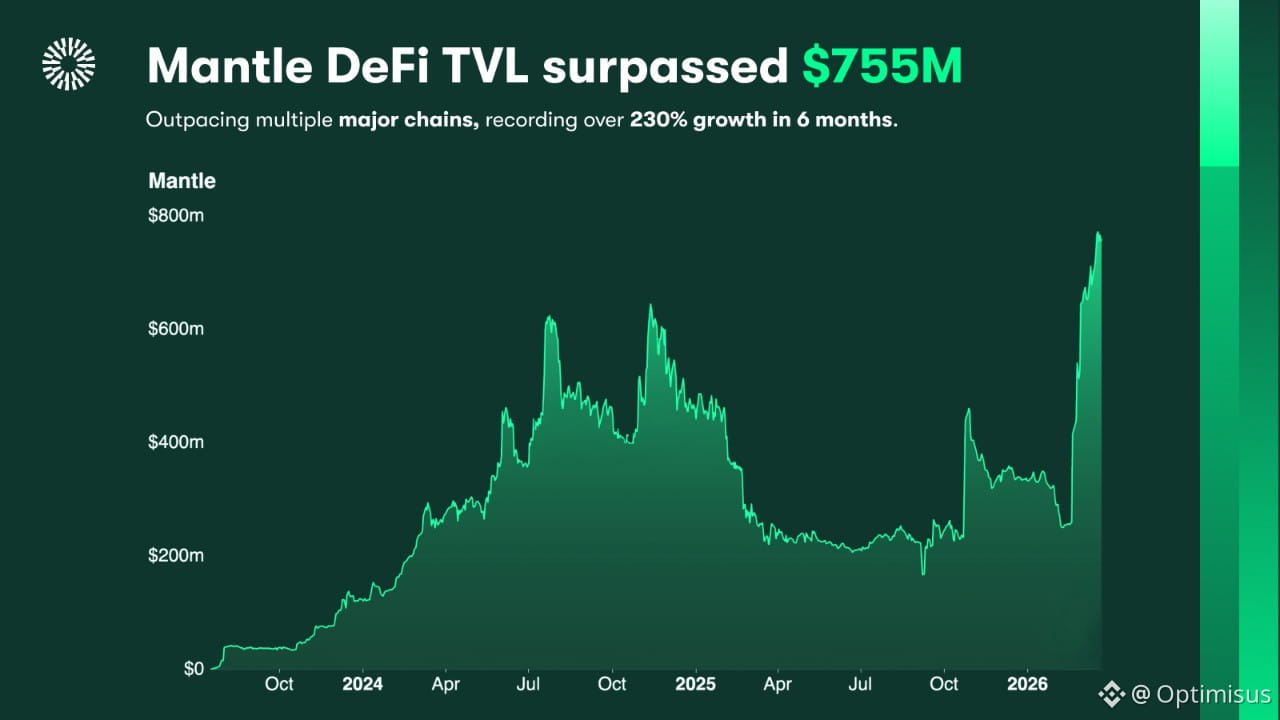
ලිපිය
Mantle DeFi TVL Surpasses Avalanche and Sui, Crossing $755M With +230% Growth in 6 MonthsMantle, the high-performance premier distribution for real-world assets connecting traditional finance and on-chain liquidity, today announced it has crossed $755 million in total DeFi TVL, according to DeFiLlama. This milestone represents 230% growth over six months, establishing Mantle as one of the fastest-growing networks in the current market cycle and surpassing several major Layer 1 chains like Avalanche and Sui in total DeFi TVL.
A Masterclass in Resilience
What makes this milestone particularly significant is the context in which it was achieved. In September 2025, Mantle’s Total Value Locked (TVL) ranged from $160M to $200M. Over six months, and despite navigating one of the most challenging and “coldest” market cycles in years, the ecosystem has achieved a growth rate approaching nearly a 300% increase.
While many protocols struggled to maintain liquidity, Mantle’s fast expansion reflects a flight to quality and utility among DeFi participants. This growth is not the result of short-term liquidity incentives or mercenary capital. It is the compound effect of deliberate ecosystem building, structural infrastructure advantages, and the unique distribution flywheel created by Mantle’s strategic alignment with Bybit, one of the world’s largest centralized exchanges with over 80 million users globally.
Two Strategic Levers: RWA and CeDeFi
Mantle’s ecosystem is currently focused on two strategic, high-conviction growth levers.
Real World Assets (RWA): Mantle has positioned itself as the primary destination for the next generation of on-chain finance. By optimizing infrastructure for tokenized treasury bills, credit, and real estate, Mantle is ready to capture the massive liquidity influx as institutional RWA TVL begins to flow.The CeDeFi Flywheel: Through a strategic and deep collaboration with Bybit, Mantle continues to bridge the gap between centralized and decentralized finance. This “CeDeFi” narrative provides users with the security of on-chain transparency coupled with the liquidity and ease of use found in top-tier exchanges.
Mantle’s Ecosystem Momentum
The $755M milestone was accelerated by a series of recent ecosystem integrations and milestones:
Mantle x Aave: Mantle has crossed $1.34 billion in total lending and borrowing on Aave in just over a month since deployment, making it the third-largest Aave market globally, trailing only Plasma and Ethereum.Mantle Vault Expansion: Bybit’s Mantle Vault, now running directly on Mantle Network and powered by CIAN Protocol and Aave, has crossed $150M in AUM, serving as a direct CeFi-to-DeFi gateway for Bybit’s user base.Bybit Alpha Integration: Four Mantle-native assets are now live and tradeable on Bybit Alpha, giving 80M+ Bybit users seamless access to Mantle’s on-chain ecosystem.Capital Efficiency for MNT: 3Jane, a credit protocol on Ethereum backed by Paradigm, has whitelisted $MNT, $mETH, and $cmETH for unsecured USDC credit lines, expanding the capital utility of Mantle’s native assets.Frictionless Access via Everclear: Users can now deposit stablecoins from any supported chain directly into Aave on Mantle in a single transaction, with no manual bridging required.
“Surpassing major L1s like Avalanche and Sui is just the beginning,” said Emily Bao, Head of Spot at Bybit and Key Advisor at Mantle. “Our 230% growth despite the current “cold” market conditions and ongoing political tensions proves that our infrastructure is built for builders who value sustainability and scale. As RWA becomes the backbone of DeFi, Mantle will be the engine accelerating it.”
The Road to Top 10: RWAs as the Next Growth Lever
Mantle’s $755 million TVL milestone is a proof point, not an endpoint. The network’s roadmap is oriented around a clear thesis: as tokenized real-world assets begin flowing on-chain in earnest, Mantle is positioned to capture a disproportionate share of that activity.
The infrastructure is already in place. A deeply liquid lending market on Aave provides the yield and borrowing layer. The Bybit distribution flywheel provides the capital access. Mantle provides the RWA protocol foundation. With tokenized gold and further institutional-grade RWAs in the pipeline, Mantle’s TVL trajectory is structurally positioned to continue its upward path.
A top 10 ranking in global DeFi TVL is not a distant ambition. It is the natural outcome of a distribution layer that is already connecting the world’s largest CeFi ecosystem to on-chain liquidity at scale.
About Mantle
Mantle positions itself as the premier distribution layer and gateway for institutions and TradFi to connect with on-chain liquidity and access real-world assets, powering how real-world finance flows.
With over $4B+ in community-owned assets, Mantle combines credibility, liquidity and scalability with institutional-grade infrastructure to support large-scale adoption. The ecosystem is anchored by $MNT within Bybit, and built out through core ecosystem projects like mETH, fBTC, MI4 and more. This is complemented by Mantle Network’s partnerships with leading issuers and protocols such as Ethena USDe, Ondo USDY, and OP-Succinct.
For more information about Mantle, please visit: mantle.xyz
For more social updates, please follow: Mantle Official X & Mantle Community Channel
Mantle DeFi TVL Surpasses Avalanche and Sui, Crossing $755M With +230% Growth in 6 Months
Mantle, the high-performance premier distribution for real-world assets connecting traditional finance and on-chain liquidity, today announced it has crossed $755 million in total DeFi TVL, according to DeFiLlama. This milestone represents 230% growth over six months, establishing Mantle as one of the fastest-growing networks in the current market cycle and surpassing several major Layer 1 chains like Avalanche and Sui in total DeFi TVL.
A Masterclass in Resilience
What makes this milestone particularly significant is the context in which it was achieved. In September 2025, Mantle’s Total Value Locked (TVL) ranged from $160M to $200M. Over six months, and despite navigating one of the most challenging and “coldest” market cycles in years, the ecosystem has achieved a growth rate approaching nearly a 300% increase.
While many protocols struggled to maintain liquidity, Mantle’s fast expansion reflects a flight to quality and utility among DeFi participants. This growth is not the result of short-term liquidity incentives or mercenary capital. It is the compound effect of deliberate ecosystem building, structural infrastructure advantages, and the unique distribution flywheel created by Mantle’s strategic alignment with Bybit, one of the world’s largest centralized exchanges with over 80 million users globally.
Two Strategic Levers: RWA and CeDeFi
Mantle’s ecosystem is currently focused on two strategic, high-conviction growth levers.
Real World Assets (RWA): Mantle has positioned itself as the primary destination for the next generation of on-chain finance. By optimizing infrastructure for tokenized treasury bills, credit, and real estate, Mantle is ready to capture the massive liquidity influx as institutional RWA TVL begins to flow.The CeDeFi Flywheel: Through a strategic and deep collaboration with Bybit, Mantle continues to bridge the gap between centralized and decentralized finance. This “CeDeFi” narrative provides users with the security of on-chain transparency coupled with the liquidity and ease of use found in top-tier exchanges.
Mantle’s Ecosystem Momentum
The $755M milestone was accelerated by a series of recent ecosystem integrations and milestones:
Mantle x Aave: Mantle has crossed $1.34 billion in total lending and borrowing on Aave in just over a month since deployment, making it the third-largest Aave market globally, trailing only Plasma and Ethereum.Mantle Vault Expansion: Bybit’s Mantle Vault, now running directly on Mantle Network and powered by CIAN Protocol and Aave, has crossed $150M in AUM, serving as a direct CeFi-to-DeFi gateway for Bybit’s user base.Bybit Alpha Integration: Four Mantle-native assets are now live and tradeable on Bybit Alpha, giving 80M+ Bybit users seamless access to Mantle’s on-chain ecosystem.Capital Efficiency for MNT: 3Jane, a credit protocol on Ethereum backed by Paradigm, has whitelisted $MNT, $mETH, and $cmETH for unsecured USDC credit lines, expanding the capital utility of Mantle’s native assets.Frictionless Access via Everclear: Users can now deposit stablecoins from any supported chain directly into Aave on Mantle in a single transaction, with no manual bridging required.
“Surpassing major L1s like Avalanche and Sui is just the beginning,” said Emily Bao, Head of Spot at Bybit and Key Advisor at Mantle. “Our 230% growth despite the current “cold” market conditions and ongoing political tensions proves that our infrastructure is built for builders who value sustainability and scale. As RWA becomes the backbone of DeFi, Mantle will be the engine accelerating it.”
The Road to Top 10: RWAs as the Next Growth Lever
Mantle’s $755 million TVL milestone is a proof point, not an endpoint. The network’s roadmap is oriented around a clear thesis: as tokenized real-world assets begin flowing on-chain in earnest, Mantle is positioned to capture a disproportionate share of that activity.
The infrastructure is already in place. A deeply liquid lending market on Aave provides the yield and borrowing layer. The Bybit distribution flywheel provides the capital access. Mantle provides the RWA protocol foundation. With tokenized gold and further institutional-grade RWAs in the pipeline, Mantle’s TVL trajectory is structurally positioned to continue its upward path.
A top 10 ranking in global DeFi TVL is not a distant ambition. It is the natural outcome of a distribution layer that is already connecting the world’s largest CeFi ecosystem to on-chain liquidity at scale.
About Mantle
Mantle positions itself as the premier distribution layer and gateway for institutions and TradFi to connect with on-chain liquidity and access real-world assets, powering how real-world finance flows.
With over $4B+ in community-owned assets, Mantle combines credibility, liquidity and scalability with institutional-grade infrastructure to support large-scale adoption. The ecosystem is anchored by $MNT within Bybit, and built out through core ecosystem projects like mETH, fBTC, MI4 and more. This is complemented by Mantle Network’s partnerships with leading issuers and protocols such as Ethena USDe, Ondo USDY, and OP-Succinct.
For more information about Mantle, please visit: mantle.xyz
For more social updates, please follow: Mantle Official X & Mantle Community Channel
A Masterclass in Resilience
What makes this milestone particularly significant is the context in which it was achieved. In September 2025, Mantle’s Total Value Locked (TVL) ranged from $160M to $200M. Over six months, and despite navigating one of the most challenging and “coldest” market cycles in years, the ecosystem has achieved a growth rate approaching nearly a 300% increase.
While many protocols struggled to maintain liquidity, Mantle’s fast expansion reflects a flight to quality and utility among DeFi participants. This growth is not the result of short-term liquidity incentives or mercenary capital. It is the compound effect of deliberate ecosystem building, structural infrastructure advantages, and the unique distribution flywheel created by Mantle’s strategic alignment with Bybit, one of the world’s largest centralized exchanges with over 80 million users globally.
Two Strategic Levers: RWA and CeDeFi
Mantle’s ecosystem is currently focused on two strategic, high-conviction growth levers.
Real World Assets (RWA): Mantle has positioned itself as the primary destination for the next generation of on-chain finance. By optimizing infrastructure for tokenized treasury bills, credit, and real estate, Mantle is ready to capture the massive liquidity influx as institutional RWA TVL begins to flow.The CeDeFi Flywheel: Through a strategic and deep collaboration with Bybit, Mantle continues to bridge the gap between centralized and decentralized finance. This “CeDeFi” narrative provides users with the security of on-chain transparency coupled with the liquidity and ease of use found in top-tier exchanges.
Mantle’s Ecosystem Momentum
The $755M milestone was accelerated by a series of recent ecosystem integrations and milestones:
Mantle x Aave: Mantle has crossed $1.34 billion in total lending and borrowing on Aave in just over a month since deployment, making it the third-largest Aave market globally, trailing only Plasma and Ethereum.Mantle Vault Expansion: Bybit’s Mantle Vault, now running directly on Mantle Network and powered by CIAN Protocol and Aave, has crossed $150M in AUM, serving as a direct CeFi-to-DeFi gateway for Bybit’s user base.Bybit Alpha Integration: Four Mantle-native assets are now live and tradeable on Bybit Alpha, giving 80M+ Bybit users seamless access to Mantle’s on-chain ecosystem.Capital Efficiency for MNT: 3Jane, a credit protocol on Ethereum backed by Paradigm, has whitelisted $MNT, $mETH, and $cmETH for unsecured USDC credit lines, expanding the capital utility of Mantle’s native assets.Frictionless Access via Everclear: Users can now deposit stablecoins from any supported chain directly into Aave on Mantle in a single transaction, with no manual bridging required.
“Surpassing major L1s like Avalanche and Sui is just the beginning,” said Emily Bao, Head of Spot at Bybit and Key Advisor at Mantle. “Our 230% growth despite the current “cold” market conditions and ongoing political tensions proves that our infrastructure is built for builders who value sustainability and scale. As RWA becomes the backbone of DeFi, Mantle will be the engine accelerating it.”
The Road to Top 10: RWAs as the Next Growth Lever
Mantle’s $755 million TVL milestone is a proof point, not an endpoint. The network’s roadmap is oriented around a clear thesis: as tokenized real-world assets begin flowing on-chain in earnest, Mantle is positioned to capture a disproportionate share of that activity.
The infrastructure is already in place. A deeply liquid lending market on Aave provides the yield and borrowing layer. The Bybit distribution flywheel provides the capital access. Mantle provides the RWA protocol foundation. With tokenized gold and further institutional-grade RWAs in the pipeline, Mantle’s TVL trajectory is structurally positioned to continue its upward path.
A top 10 ranking in global DeFi TVL is not a distant ambition. It is the natural outcome of a distribution layer that is already connecting the world’s largest CeFi ecosystem to on-chain liquidity at scale.
About Mantle
Mantle positions itself as the premier distribution layer and gateway for institutions and TradFi to connect with on-chain liquidity and access real-world assets, powering how real-world finance flows.
With over $4B+ in community-owned assets, Mantle combines credibility, liquidity and scalability with institutional-grade infrastructure to support large-scale adoption. The ecosystem is anchored by $MNT within Bybit, and built out through core ecosystem projects like mETH, fBTC, MI4 and more. This is complemented by Mantle Network’s partnerships with leading issuers and protocols such as Ethena USDe, Ondo USDY, and OP-Succinct.
For more information about Mantle, please visit: mantle.xyz
For more social updates, please follow: Mantle Official X & Mantle Community Channel
308
·
--
ලිපිය
The Sandbox opens pre-registration for The Sandbox NEXT mobile playtest built on Unreal Engine The Sandbox, an immersive gaming platform and subsidiary of Animoca Brands, today opened pre-registration for the playtest of The Sandbox NEXT, marking for the franchise a going back to its roots after 40 million historical downloads on mobile. The Sandbox NEXT is built by Unreal Engine, a significant technical shift for The Sandbox, which has historically run on Unity. Register for free at sandbox.game/next.
The Sandbox NEXT offers a multiplayer extraction and survival mobile gameplay in which players carry over their identity, progression, and all the voxel assets from The Sandbox game platform, including UGC and branded ones. The Sandbox NEXT provides players with a fast-paced, replayable PvP experience that connects intense and skill-demanding gameplay with the broader player-driven ecosystem of The Sandbox, where player avatars from over 56 collections of branded Avatars (Snoop Dogg, Attack on Titan, Smiley, Steve Aoki, Paris Hilton, Smurf, etc) extend beyond a single match.
Players of The Sandbox NEXT are dropped into the Desert, an open-terrain environment built around sightlines and long-range combat, or the City, a vertical, close-quarters map that rewards adaptability. Matches support solo play or multiplayer groups of up to 20 players per instance.
The Sandbox NEXT will serve as a new entry point into The Sandbox, where playing, collecting, and expressing identity all converge. The mobile launch represents a major step for one of web3’s most established entertainment brands, with more than 400 brand and IP partners spanning gaming, music, fashion and culture, including Warner Music Group, Gucci, Ubisoft, Snoop Dogg and Lacoste.
Season 7 of The Sandbox, which is currently ongoing, introduced three browser-based games as a frictionless entry point to The Sandbox ecosystem. Now, with The Sandbox NEXT playtest, The Sandbox is taking steps to integrate additional experiences via mobile.
“Like our recent launch of WebGL games, The Sandbox NEXT is part of our plan to increase the reach of The Sandbox so players can discover, play and come back more often, whether they’re on desktop or on their phone,” said Robby Yung, CEO of The Sandbox. “The goal is to meet people where they spend their time. A native mobile experience in addition to the desktop version makes that possible in a way browser access alone can’t.”
Registration for The Sandbox NEXT playtest is now open until 25 March 2026 at 2 p.m. (UTC), with limited spots assigned on a first-come first-served basis. The playtest begins on 26 March, with additional features rolling out as The Sandbox NEXT evolves. Register now at sandbox.game/next.
For more information about The Sandbox NEXT mobile app playtest, visit sandbox.game/blog and follow The Sandbox on X, Discord, and Instagram for regular updates.
About The Sandbox
The Sandbox, a subsidiary of Animoca Brands, is an immersive metaverse platform in which users play, create, and monetize unique experiences alongside their favorite brands, IPs, and celebrities across gaming, entertainment, music, art, and more. The Sandbox leverages web3 technologies to fully enable end-user creation and creator economies, disrupting existing platforms by providing both Players and Creators with true ownership of their assets, creations, and rewards as non-fungible tokens (NFTs). Over 400 partners have joined The Sandbox, including Warner Music Group, Gucci, Ubisoft, Paris Hilton, Attack on Titan, Snoop Dogg, Lacoste, Steve Aoki, The Smurfs, and many more. For more information, please visit www.sandbox.game and follow the regular updates on X, Medium, and Discord.
About Animoca Brands
Animoca Brands Corporation Limited (ACN: 122 921 813) is a global digital assets leader building and investing in impactful technologies and ecosystems to reimagine future economies. It has received broad industry and market recognition including Fortune Crypto 40, Top 50 Blockchain Game Companies 2025, Financial Times’ High Growth Companies Asia-Pacific, and Deloitte Tech Fast. Animoca Brands is recognized for building digital asset platforms such as the Moca Network, Open Campus, Anichess, and The Sandbox, as well as institutional-grade platforms; providing digital asset services to help Web3 companies launch and grow; and investing in frontier Web3 technology, with a portfolio of over 600 companies and digital assets. For more information visit www.animocabrands.com or follow on X, YouTube, Instagram, LinkedIn, Facebook, and TikTok.
The Sandbox opens pre-registration for The Sandbox NEXT mobile playtest built on Unreal Engine
The Sandbox, an immersive gaming platform and subsidiary of Animoca Brands, today opened pre-registration for the playtest of The Sandbox NEXT, marking for the franchise a going back to its roots after 40 million historical downloads on mobile. The Sandbox NEXT is built by Unreal Engine, a significant technical shift for The Sandbox, which has historically run on Unity. Register for free at sandbox.game/next.
The Sandbox NEXT offers a multiplayer extraction and survival mobile gameplay in which players carry over their identity, progression, and all the voxel assets from The Sandbox game platform, including UGC and branded ones. The Sandbox NEXT provides players with a fast-paced, replayable PvP experience that connects intense and skill-demanding gameplay with the broader player-driven ecosystem of The Sandbox, where player avatars from over 56 collections of branded Avatars (Snoop Dogg, Attack on Titan, Smiley, Steve Aoki, Paris Hilton, Smurf, etc) extend beyond a single match.
Players of The Sandbox NEXT are dropped into the Desert, an open-terrain environment built around sightlines and long-range combat, or the City, a vertical, close-quarters map that rewards adaptability. Matches support solo play or multiplayer groups of up to 20 players per instance.
The Sandbox NEXT will serve as a new entry point into The Sandbox, where playing, collecting, and expressing identity all converge. The mobile launch represents a major step for one of web3’s most established entertainment brands, with more than 400 brand and IP partners spanning gaming, music, fashion and culture, including Warner Music Group, Gucci, Ubisoft, Snoop Dogg and Lacoste.
Season 7 of The Sandbox, which is currently ongoing, introduced three browser-based games as a frictionless entry point to The Sandbox ecosystem. Now, with The Sandbox NEXT playtest, The Sandbox is taking steps to integrate additional experiences via mobile.
“Like our recent launch of WebGL games, The Sandbox NEXT is part of our plan to increase the reach of The Sandbox so players can discover, play and come back more often, whether they’re on desktop or on their phone,” said Robby Yung, CEO of The Sandbox. “The goal is to meet people where they spend their time. A native mobile experience in addition to the desktop version makes that possible in a way browser access alone can’t.”
Registration for The Sandbox NEXT playtest is now open until 25 March 2026 at 2 p.m. (UTC), with limited spots assigned on a first-come first-served basis. The playtest begins on 26 March, with additional features rolling out as The Sandbox NEXT evolves. Register now at sandbox.game/next.
For more information about The Sandbox NEXT mobile app playtest, visit sandbox.game/blog and follow The Sandbox on X, Discord, and Instagram for regular updates.
About The Sandbox
The Sandbox, a subsidiary of Animoca Brands, is an immersive metaverse platform in which users play, create, and monetize unique experiences alongside their favorite brands, IPs, and celebrities across gaming, entertainment, music, art, and more. The Sandbox leverages web3 technologies to fully enable end-user creation and creator economies, disrupting existing platforms by providing both Players and Creators with true ownership of their assets, creations, and rewards as non-fungible tokens (NFTs). Over 400 partners have joined The Sandbox, including Warner Music Group, Gucci, Ubisoft, Paris Hilton, Attack on Titan, Snoop Dogg, Lacoste, Steve Aoki, The Smurfs, and many more. For more information, please visit www.sandbox.game and follow the regular updates on X, Medium, and Discord.
About Animoca Brands
Animoca Brands Corporation Limited (ACN: 122 921 813) is a global digital assets leader building and investing in impactful technologies and ecosystems to reimagine future economies. It has received broad industry and market recognition including Fortune Crypto 40, Top 50 Blockchain Game Companies 2025, Financial Times’ High Growth Companies Asia-Pacific, and Deloitte Tech Fast. Animoca Brands is recognized for building digital asset platforms such as the Moca Network, Open Campus, Anichess, and The Sandbox, as well as institutional-grade platforms; providing digital asset services to help Web3 companies launch and grow; and investing in frontier Web3 technology, with a portfolio of over 600 companies and digital assets. For more information visit www.animocabrands.com or follow on X, YouTube, Instagram, LinkedIn, Facebook, and TikTok.
The Sandbox NEXT offers a multiplayer extraction and survival mobile gameplay in which players carry over their identity, progression, and all the voxel assets from The Sandbox game platform, including UGC and branded ones. The Sandbox NEXT provides players with a fast-paced, replayable PvP experience that connects intense and skill-demanding gameplay with the broader player-driven ecosystem of The Sandbox, where player avatars from over 56 collections of branded Avatars (Snoop Dogg, Attack on Titan, Smiley, Steve Aoki, Paris Hilton, Smurf, etc) extend beyond a single match.
Players of The Sandbox NEXT are dropped into the Desert, an open-terrain environment built around sightlines and long-range combat, or the City, a vertical, close-quarters map that rewards adaptability. Matches support solo play or multiplayer groups of up to 20 players per instance.
The Sandbox NEXT will serve as a new entry point into The Sandbox, where playing, collecting, and expressing identity all converge. The mobile launch represents a major step for one of web3’s most established entertainment brands, with more than 400 brand and IP partners spanning gaming, music, fashion and culture, including Warner Music Group, Gucci, Ubisoft, Snoop Dogg and Lacoste.
Season 7 of The Sandbox, which is currently ongoing, introduced three browser-based games as a frictionless entry point to The Sandbox ecosystem. Now, with The Sandbox NEXT playtest, The Sandbox is taking steps to integrate additional experiences via mobile.
“Like our recent launch of WebGL games, The Sandbox NEXT is part of our plan to increase the reach of The Sandbox so players can discover, play and come back more often, whether they’re on desktop or on their phone,” said Robby Yung, CEO of The Sandbox. “The goal is to meet people where they spend their time. A native mobile experience in addition to the desktop version makes that possible in a way browser access alone can’t.”
Registration for The Sandbox NEXT playtest is now open until 25 March 2026 at 2 p.m. (UTC), with limited spots assigned on a first-come first-served basis. The playtest begins on 26 March, with additional features rolling out as The Sandbox NEXT evolves. Register now at sandbox.game/next.
For more information about The Sandbox NEXT mobile app playtest, visit sandbox.game/blog and follow The Sandbox on X, Discord, and Instagram for regular updates.
About The Sandbox
The Sandbox, a subsidiary of Animoca Brands, is an immersive metaverse platform in which users play, create, and monetize unique experiences alongside their favorite brands, IPs, and celebrities across gaming, entertainment, music, art, and more. The Sandbox leverages web3 technologies to fully enable end-user creation and creator economies, disrupting existing platforms by providing both Players and Creators with true ownership of their assets, creations, and rewards as non-fungible tokens (NFTs). Over 400 partners have joined The Sandbox, including Warner Music Group, Gucci, Ubisoft, Paris Hilton, Attack on Titan, Snoop Dogg, Lacoste, Steve Aoki, The Smurfs, and many more. For more information, please visit www.sandbox.game and follow the regular updates on X, Medium, and Discord.
About Animoca Brands
Animoca Brands Corporation Limited (ACN: 122 921 813) is a global digital assets leader building and investing in impactful technologies and ecosystems to reimagine future economies. It has received broad industry and market recognition including Fortune Crypto 40, Top 50 Blockchain Game Companies 2025, Financial Times’ High Growth Companies Asia-Pacific, and Deloitte Tech Fast. Animoca Brands is recognized for building digital asset platforms such as the Moca Network, Open Campus, Anichess, and The Sandbox, as well as institutional-grade platforms; providing digital asset services to help Web3 companies launch and grow; and investing in frontier Web3 technology, with a portfolio of over 600 companies and digital assets. For more information visit www.animocabrands.com or follow on X, YouTube, Instagram, LinkedIn, Facebook, and TikTok.
1
164
·
--

ලිපිය
The PayFi Supercycle Is Closer Than You Think — And Most of the Market Still Isn’t PositionedFor the last few years, crypto has been trapped in the same loop.
New token.
New narrative.
New hype.
Same question:
“What pumps next?”
But the biggest money is rarely made by people chasing what is already loud.
It is made by people who catch the infrastructure shift before the crowd realizes the game has changed.
That is exactly why PayFi matters now.
Because while most of the market is still staring at charts, the rails for the next breakout phase of crypto are already being built in plain sight: stablecoins, on-chain settlement, wallet-native payments, cross-border money movement, and real-world merchant utility. This is not a theory anymore. It is not “maybe someday.” The numbers are already screaming it. Visa says stablecoins are becoming increasingly integrated into mainstream payments, and even states that every financial institution should have a stablecoin strategy.
Let that sink in.
When a global payments giant is no longer asking whether stablecoins matter, but instead telling banks they need a strategy, that is not a niche crypto signal. That is a market transition signal. And most people still are not treating it like one. Visa’s recent materials also point to stablecoin circulation above $270 billion, while Reuters reported in January 2026 that Visa’s crypto leadership sees the category growing fast even if merchant acceptance is still early.
This is where the real FOMO should begin.
Because the biggest mistake in every cycle is underestimating the layer that looks “boring” before it becomes essential. DeFi looked niche before it exploded. Stablecoins looked like side tools before they became systemically important. And now PayFi is at that same dangerous stage — the stage where smart builders are moving, while latecomers still think it is too early.
Look at the volume.
(https://a16zcrypto.com/posts/article/state-of-crypto-report-2025)
a16z’s State of Crypto 2025 says stablecoins processed $9 trillion in adjusted annual transaction volume, up 87% year over year, with monthly adjusted volume approaching $1.25 trillion in September 2025 alone. That is not small. That is not experimental. That is a financial rail scaling at a speed most people still do not fully understand.
And here is the part the market keeps missing:
When transaction infrastructure starts compounding before the narrative fully matures, the upside does not wait for consensus.
By the time consensus arrives, positioning is already expensive.
That is why PayFi is dangerous — in the best way possible.
Dangerous for people who ignore it.
Dangerous for projects that move too slowly.
Dangerous for anyone still thinking crypto’s future is only about speculation.
Because the next wave is not just about holding digital assets.
It is about using them.
And the addressable market is already massive.
(https://www.triple-a.io/blog/crypto-ownership-report)
Triple-A estimates that 562 million people worldwide owned crypto in 2024, equal to about 6.8% of the global population, up 34% from 2023. Asia alone accounted for 326.8 million crypto holders. That is not a fringe user base anymore. That is a massive, globally distributed, digitally native capital base already primed for the next behavior shift.
Now combine that with where the highest-opportunity users are actually living.
(https://www.binance.com/en/square/post/2024-05-31-2024-5-62-8829064451881)
The UAE has one of the highest crypto ownership rates in the world. Singapore is among the global leaders too. These are not random markets. These are international business hubs, mobility hubs, wealth hubs, travel hubs, and payment innovation hubs. In other words, they are exactly the kind of environments where USDT, stablecoin payments, borderless spending, and wallet-based finance can move from niche behavior to daily habit much faster than people expect.
Then add the lifestyle layer — the one most analysts still underprice.
MBO Partners says the number of American digital nomads reached 18.5 million in 2025, up 153% from 2019. Read that again: 153% growth. That is not a trend. That is a structural shift in how people live, work, earn, and move.
And what do borderless people need?
They do not need another theory.
They need faster rails.
They need to earn globally, hold globally, spend globally, and move capital globally — without getting destroyed by settlement delays, banking fragmentation, unnecessary conversion friction, or outdated payment systems. That is where PayFi stops being a nice idea and starts becoming an inevitable product category.
Because the pain is still there.
The World Bank says the global average cost of sending remittances was still about 6.49% in Q1 2025, far above the UN target of 3%. Think about how insane that is. In 2025, the world still accepts a system where moving money across borders is expensive enough to eat into salaries, freelance income, family support flows, and small business margins. That is not efficiency. That is a giant market inefficiency waiting to be attacked.
And whenever a giant inefficiency meets a scaling new rail, history gets very interesting.
That is exactly what Messari’s PayFi Ecosystem Analysis points toward. Messari frames PayFi as a multi-layer infrastructure opportunity addressing global payment and financing inefficiencies, and notes that monthly stablecoin transfer volume jumped from $1 trillion to $2.6 trillion in 2024. That kind of acceleration does not happen because a market is “curious.” It happens because demand is already forming underneath the surface.
So ask yourself the real question:
If stablecoin rails are already processing trillions…
If global crypto ownership is already in the hundreds of millions…
If digital nomad and borderless work culture keeps rising…
If cross-border payment friction is still painfully high…
If major financial institutions are telling the world to prepare stablecoin strategies…
What exactly are people waiting for?
Permission?
Consensus?
Another buzzword?
That is how people get left behind.
The market loves to pretend it wants innovation early. In reality, most people only believe once the move is obvious. But obvious is late. Obvious is crowded. Obvious is where retail comes after the groundwork has already been laid by builders, operators, and ecosystems that moved when the signals were still asymmetric.
That is why PayFi feels like one of the most explosive setups in Web3 right now.
Not because everyone already gets it.
But because they do not.
And that gap between reality and recognition is where the biggest upside usually lives.
To be clear, this does not mean the whole stablecoin economy is already pure checkout payments today. Reuters reported that JPMorgan pushed back on the most aggressive long-term forecasts and argued only a relatively small share of current stablecoin demand is directly tied to payments, with much of the rest still concentrated in trading, DeFi, and collateral flows.
But that is exactly why this moment matters.
If the category is already processing enormous volume, already gaining institutional attention, already aligning with borderless user behavior, and still has early penetration in actual payment usage, then the upside is not gone — it may be just beginning.
That is the asymmetry.
The rails are maturing.
The users are forming.
The pain is real.
The market still underprices the shift.
And that is where PayWithCrypto can hit differently.
Because the winners of the next cycle may not be the ones with the loudest slogans. They may be the ones who make USDT spending, QR payments, wallet utility, merchant adoption, and cross-border settlement feel so seamless that users stop calling it “crypto” and start calling it normal.
That is when sectors stop being narratives and start becoming defaults.
That is when habits form.
That is when retention compounds.
That is when distribution matters more than noise.
That is when the real moat begins.
So yes — people can keep chasing the next shiny token.
They can keep waiting until PayFi is “confirmed.”
They can keep pretending stablecoins are just parking tools.
But history is usually brutal to people who confuse early with risky and obvious with safe.
The market has already spent years proving that people are willing to buy digital assets.
The next and much bigger race is about who will help the world use them.
And when that shift fully hits,
the projects that moved first will not be asking for attention.
The next chapter of Web3 will not be won by noise alone.
It will be won by utility.
By repetition.
By daily usage.
By becoming part of how people actually live, spend, move, and transact.
That is why the rise of PayFi matters so much.
Because when stablecoins stop being something people only hold, and start becoming something people use every single day, the entire market changes.
At that point, the winners will not simply be platforms.
They will be infrastructure.
They will be habit.
They will be the rails beneath a new global economy.
And when that moment arrives, PayWithCrypto should not just be participating in the movement.
It should be leading it.
Because the future does not wait for permission —
it belongs to the builders bold enough to create it first.
The PayFi Supercycle Is Closer Than You Think — And Most of the Market Still Isn’t Positioned
For the last few years, crypto has been trapped in the same loop.
New token.
New narrative.
New hype.
Same question:
“What pumps next?”
But the biggest money is rarely made by people chasing what is already loud.
It is made by people who catch the infrastructure shift before the crowd realizes the game has changed.
That is exactly why PayFi matters now.
Because while most of the market is still staring at charts, the rails for the next breakout phase of crypto are already being built in plain sight: stablecoins, on-chain settlement, wallet-native payments, cross-border money movement, and real-world merchant utility. This is not a theory anymore. It is not “maybe someday.” The numbers are already screaming it. Visa says stablecoins are becoming increasingly integrated into mainstream payments, and even states that every financial institution should have a stablecoin strategy.
Let that sink in.
When a global payments giant is no longer asking whether stablecoins matter, but instead telling banks they need a strategy, that is not a niche crypto signal. That is a market transition signal. And most people still are not treating it like one. Visa’s recent materials also point to stablecoin circulation above $270 billion, while Reuters reported in January 2026 that Visa’s crypto leadership sees the category growing fast even if merchant acceptance is still early.
This is where the real FOMO should begin.
Because the biggest mistake in every cycle is underestimating the layer that looks “boring” before it becomes essential. DeFi looked niche before it exploded. Stablecoins looked like side tools before they became systemically important. And now PayFi is at that same dangerous stage — the stage where smart builders are moving, while latecomers still think it is too early.
Look at the volume.
(https://a16zcrypto.com/posts/article/state-of-crypto-report-2025)
a16z’s State of Crypto 2025 says stablecoins processed $9 trillion in adjusted annual transaction volume, up 87% year over year, with monthly adjusted volume approaching $1.25 trillion in September 2025 alone. That is not small. That is not experimental. That is a financial rail scaling at a speed most people still do not fully understand.
And here is the part the market keeps missing:
When transaction infrastructure starts compounding before the narrative fully matures, the upside does not wait for consensus.
By the time consensus arrives, positioning is already expensive.
That is why PayFi is dangerous — in the best way possible.
Dangerous for people who ignore it.
Dangerous for projects that move too slowly.
Dangerous for anyone still thinking crypto’s future is only about speculation.
Because the next wave is not just about holding digital assets.
It is about using them.
And the addressable market is already massive.
(https://www.triple-a.io/blog/crypto-ownership-report)
Triple-A estimates that 562 million people worldwide owned crypto in 2024, equal to about 6.8% of the global population, up 34% from 2023. Asia alone accounted for 326.8 million crypto holders. That is not a fringe user base anymore. That is a massive, globally distributed, digitally native capital base already primed for the next behavior shift.
Now combine that with where the highest-opportunity users are actually living.
(https://www.binance.com/en/square/post/2024-05-31-2024-5-62-8829064451881)
The UAE has one of the highest crypto ownership rates in the world. Singapore is among the global leaders too. These are not random markets. These are international business hubs, mobility hubs, wealth hubs, travel hubs, and payment innovation hubs. In other words, they are exactly the kind of environments where USDT, stablecoin payments, borderless spending, and wallet-based finance can move from niche behavior to daily habit much faster than people expect.
Then add the lifestyle layer — the one most analysts still underprice.
MBO Partners says the number of American digital nomads reached 18.5 million in 2025, up 153% from 2019. Read that again: 153% growth. That is not a trend. That is a structural shift in how people live, work, earn, and move.
And what do borderless people need?
They do not need another theory.
They need faster rails.
They need to earn globally, hold globally, spend globally, and move capital globally — without getting destroyed by settlement delays, banking fragmentation, unnecessary conversion friction, or outdated payment systems. That is where PayFi stops being a nice idea and starts becoming an inevitable product category.
Because the pain is still there.
The World Bank says the global average cost of sending remittances was still about 6.49% in Q1 2025, far above the UN target of 3%. Think about how insane that is. In 2025, the world still accepts a system where moving money across borders is expensive enough to eat into salaries, freelance income, family support flows, and small business margins. That is not efficiency. That is a giant market inefficiency waiting to be attacked.
And whenever a giant inefficiency meets a scaling new rail, history gets very interesting.
That is exactly what Messari’s PayFi Ecosystem Analysis points toward. Messari frames PayFi as a multi-layer infrastructure opportunity addressing global payment and financing inefficiencies, and notes that monthly stablecoin transfer volume jumped from $1 trillion to $2.6 trillion in 2024. That kind of acceleration does not happen because a market is “curious.” It happens because demand is already forming underneath the surface.
So ask yourself the real question:
If stablecoin rails are already processing trillions…
If global crypto ownership is already in the hundreds of millions…
If digital nomad and borderless work culture keeps rising…
If cross-border payment friction is still painfully high…
If major financial institutions are telling the world to prepare stablecoin strategies…
What exactly are people waiting for?
Permission?
Consensus?
Another buzzword?
That is how people get left behind.
The market loves to pretend it wants innovation early. In reality, most people only believe once the move is obvious. But obvious is late. Obvious is crowded. Obvious is where retail comes after the groundwork has already been laid by builders, operators, and ecosystems that moved when the signals were still asymmetric.
That is why PayFi feels like one of the most explosive setups in Web3 right now.
Not because everyone already gets it.
But because they do not.
And that gap between reality and recognition is where the biggest upside usually lives.
To be clear, this does not mean the whole stablecoin economy is already pure checkout payments today. Reuters reported that JPMorgan pushed back on the most aggressive long-term forecasts and argued only a relatively small share of current stablecoin demand is directly tied to payments, with much of the rest still concentrated in trading, DeFi, and collateral flows.
But that is exactly why this moment matters.
If the category is already processing enormous volume, already gaining institutional attention, already aligning with borderless user behavior, and still has early penetration in actual payment usage, then the upside is not gone — it may be just beginning.
That is the asymmetry.
The rails are maturing.
The users are forming.
The pain is real.
The market still underprices the shift.
And that is where PayWithCrypto can hit differently.
Because the winners of the next cycle may not be the ones with the loudest slogans. They may be the ones who make USDT spending, QR payments, wallet utility, merchant adoption, and cross-border settlement feel so seamless that users stop calling it “crypto” and start calling it normal.
That is when sectors stop being narratives and start becoming defaults.
That is when habits form.
That is when retention compounds.
That is when distribution matters more than noise.
That is when the real moat begins.
So yes — people can keep chasing the next shiny token.
They can keep waiting until PayFi is “confirmed.”
They can keep pretending stablecoins are just parking tools.
But history is usually brutal to people who confuse early with risky and obvious with safe.
The market has already spent years proving that people are willing to buy digital assets.
The next and much bigger race is about who will help the world use them.
And when that shift fully hits,
the projects that moved first will not be asking for attention.
The next chapter of Web3 will not be won by noise alone.
It will be won by utility.
By repetition.
By daily usage.
By becoming part of how people actually live, spend, move, and transact.
That is why the rise of PayFi matters so much.
Because when stablecoins stop being something people only hold, and start becoming something people use every single day, the entire market changes.
At that point, the winners will not simply be platforms.
They will be infrastructure.
They will be habit.
They will be the rails beneath a new global economy.
And when that moment arrives, PayWithCrypto should not just be participating in the movement.
It should be leading it.
Because the future does not wait for permission —
it belongs to the builders bold enough to create it first.
New token.
New narrative.
New hype.
Same question:
“What pumps next?”
But the biggest money is rarely made by people chasing what is already loud.
It is made by people who catch the infrastructure shift before the crowd realizes the game has changed.
That is exactly why PayFi matters now.
Because while most of the market is still staring at charts, the rails for the next breakout phase of crypto are already being built in plain sight: stablecoins, on-chain settlement, wallet-native payments, cross-border money movement, and real-world merchant utility. This is not a theory anymore. It is not “maybe someday.” The numbers are already screaming it. Visa says stablecoins are becoming increasingly integrated into mainstream payments, and even states that every financial institution should have a stablecoin strategy.
Let that sink in.
When a global payments giant is no longer asking whether stablecoins matter, but instead telling banks they need a strategy, that is not a niche crypto signal. That is a market transition signal. And most people still are not treating it like one. Visa’s recent materials also point to stablecoin circulation above $270 billion, while Reuters reported in January 2026 that Visa’s crypto leadership sees the category growing fast even if merchant acceptance is still early.
This is where the real FOMO should begin.
Because the biggest mistake in every cycle is underestimating the layer that looks “boring” before it becomes essential. DeFi looked niche before it exploded. Stablecoins looked like side tools before they became systemically important. And now PayFi is at that same dangerous stage — the stage where smart builders are moving, while latecomers still think it is too early.
Look at the volume.
(https://a16zcrypto.com/posts/article/state-of-crypto-report-2025)
a16z’s State of Crypto 2025 says stablecoins processed $9 trillion in adjusted annual transaction volume, up 87% year over year, with monthly adjusted volume approaching $1.25 trillion in September 2025 alone. That is not small. That is not experimental. That is a financial rail scaling at a speed most people still do not fully understand.
And here is the part the market keeps missing:
When transaction infrastructure starts compounding before the narrative fully matures, the upside does not wait for consensus.
By the time consensus arrives, positioning is already expensive.
That is why PayFi is dangerous — in the best way possible.
Dangerous for people who ignore it.
Dangerous for projects that move too slowly.
Dangerous for anyone still thinking crypto’s future is only about speculation.
Because the next wave is not just about holding digital assets.
It is about using them.
And the addressable market is already massive.
(https://www.triple-a.io/blog/crypto-ownership-report)
Triple-A estimates that 562 million people worldwide owned crypto in 2024, equal to about 6.8% of the global population, up 34% from 2023. Asia alone accounted for 326.8 million crypto holders. That is not a fringe user base anymore. That is a massive, globally distributed, digitally native capital base already primed for the next behavior shift.
Now combine that with where the highest-opportunity users are actually living.
(https://www.binance.com/en/square/post/2024-05-31-2024-5-62-8829064451881)
The UAE has one of the highest crypto ownership rates in the world. Singapore is among the global leaders too. These are not random markets. These are international business hubs, mobility hubs, wealth hubs, travel hubs, and payment innovation hubs. In other words, they are exactly the kind of environments where USDT, stablecoin payments, borderless spending, and wallet-based finance can move from niche behavior to daily habit much faster than people expect.
Then add the lifestyle layer — the one most analysts still underprice.
MBO Partners says the number of American digital nomads reached 18.5 million in 2025, up 153% from 2019. Read that again: 153% growth. That is not a trend. That is a structural shift in how people live, work, earn, and move.
And what do borderless people need?
They do not need another theory.
They need faster rails.
They need to earn globally, hold globally, spend globally, and move capital globally — without getting destroyed by settlement delays, banking fragmentation, unnecessary conversion friction, or outdated payment systems. That is where PayFi stops being a nice idea and starts becoming an inevitable product category.
Because the pain is still there.
The World Bank says the global average cost of sending remittances was still about 6.49% in Q1 2025, far above the UN target of 3%. Think about how insane that is. In 2025, the world still accepts a system where moving money across borders is expensive enough to eat into salaries, freelance income, family support flows, and small business margins. That is not efficiency. That is a giant market inefficiency waiting to be attacked.
And whenever a giant inefficiency meets a scaling new rail, history gets very interesting.
That is exactly what Messari’s PayFi Ecosystem Analysis points toward. Messari frames PayFi as a multi-layer infrastructure opportunity addressing global payment and financing inefficiencies, and notes that monthly stablecoin transfer volume jumped from $1 trillion to $2.6 trillion in 2024. That kind of acceleration does not happen because a market is “curious.” It happens because demand is already forming underneath the surface.
So ask yourself the real question:
If stablecoin rails are already processing trillions…
If global crypto ownership is already in the hundreds of millions…
If digital nomad and borderless work culture keeps rising…
If cross-border payment friction is still painfully high…
If major financial institutions are telling the world to prepare stablecoin strategies…
What exactly are people waiting for?
Permission?
Consensus?
Another buzzword?
That is how people get left behind.
The market loves to pretend it wants innovation early. In reality, most people only believe once the move is obvious. But obvious is late. Obvious is crowded. Obvious is where retail comes after the groundwork has already been laid by builders, operators, and ecosystems that moved when the signals were still asymmetric.
That is why PayFi feels like one of the most explosive setups in Web3 right now.
Not because everyone already gets it.
But because they do not.
And that gap between reality and recognition is where the biggest upside usually lives.
To be clear, this does not mean the whole stablecoin economy is already pure checkout payments today. Reuters reported that JPMorgan pushed back on the most aggressive long-term forecasts and argued only a relatively small share of current stablecoin demand is directly tied to payments, with much of the rest still concentrated in trading, DeFi, and collateral flows.
But that is exactly why this moment matters.
If the category is already processing enormous volume, already gaining institutional attention, already aligning with borderless user behavior, and still has early penetration in actual payment usage, then the upside is not gone — it may be just beginning.
That is the asymmetry.
The rails are maturing.
The users are forming.
The pain is real.
The market still underprices the shift.
And that is where PayWithCrypto can hit differently.
Because the winners of the next cycle may not be the ones with the loudest slogans. They may be the ones who make USDT spending, QR payments, wallet utility, merchant adoption, and cross-border settlement feel so seamless that users stop calling it “crypto” and start calling it normal.
That is when sectors stop being narratives and start becoming defaults.
That is when habits form.
That is when retention compounds.
That is when distribution matters more than noise.
That is when the real moat begins.
So yes — people can keep chasing the next shiny token.
They can keep waiting until PayFi is “confirmed.”
They can keep pretending stablecoins are just parking tools.
But history is usually brutal to people who confuse early with risky and obvious with safe.
The market has already spent years proving that people are willing to buy digital assets.
The next and much bigger race is about who will help the world use them.
And when that shift fully hits,
the projects that moved first will not be asking for attention.
The next chapter of Web3 will not be won by noise alone.
It will be won by utility.
By repetition.
By daily usage.
By becoming part of how people actually live, spend, move, and transact.
That is why the rise of PayFi matters so much.
Because when stablecoins stop being something people only hold, and start becoming something people use every single day, the entire market changes.
At that point, the winners will not simply be platforms.
They will be infrastructure.
They will be habit.
They will be the rails beneath a new global economy.
And when that moment arrives, PayWithCrypto should not just be participating in the movement.
It should be leading it.
Because the future does not wait for permission —
it belongs to the builders bold enough to create it first.
226
·
--
Strategy currently has a $6,100,000,000 unrealized loss on its Bitcoin investment as $BTC drops to $66k
Strategy currently has a $6,100,000,000 unrealized loss on its Bitcoin investment as $BTC drops to $66k
274
·
--
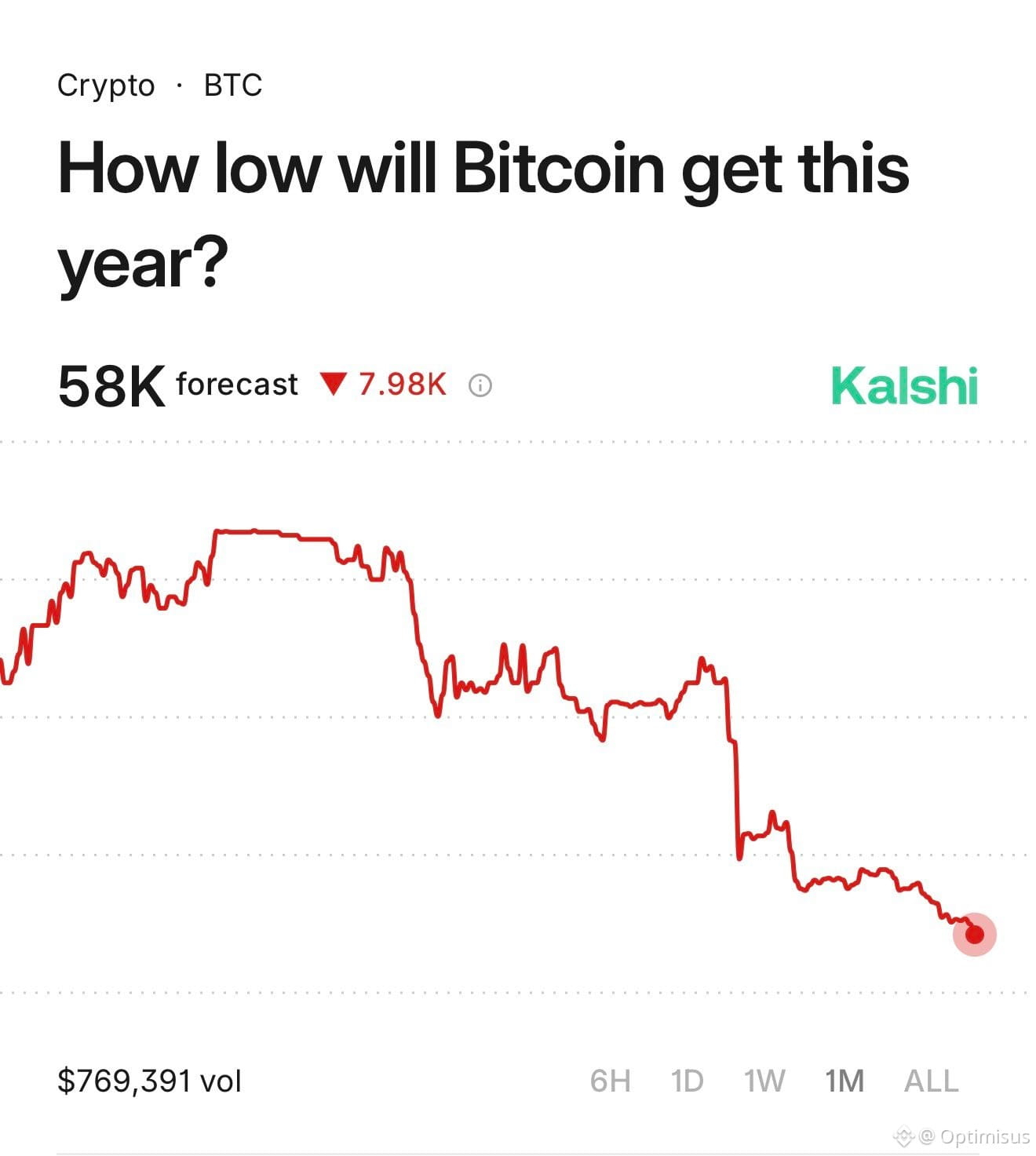
182
තවත් අන්තර්ගතයන් ගවේෂණය කිරීමට ඇතුල් වන්න
Binance චතුරශ්රය හි ගෝලීය ක්රිප්ටෝ පරිශීලකයින් හා එක්වන්න
⚡️ ක්රිප්ටෝ පිළිබඳ නවතම සහ ප්රයෝජනවත් තොරතුරු ලබා ගන්න.
💬 ලොව විශාලතම ක්රිප්ටෝ හුවමාරුව මගින් විශ්වාස කෙරේ.
👍 සත්යායනය කරන ලද නිර්මාණකරුවන්ගෙන් සැබෑ විදසුන් සොයා ගන්න.
විද්යුත් තැපෑල / දුරකථන අංකය
නැගී එන මාතෘකා
NFPWatch
10.8M views
19,089 සාකච්ඡා කරමින්
Crypto News | Bitcoin Rises Toward $85K as Treasury Yields Fall Ahead of U.S. NFP Report
Binance News
·37 කැමත්ත දැක්වීම්
·48.2k views
BitcoinFundingRateTriplesTo10%
134,739 views
1,058 සාකච්ඡා කරමින්
BitcoinSurpasses$86KUp2.99%
42,107 views
105 සාකච්ඡා කරමින්