

S T E P H E N
19.2k පෝස්ටු

S T E P H E N
 චතුරශ්රය සත්යාපිත
වාර්තා කරන්න
පරිශීලක අවහිර කරන්න
📊 Crypto enthusiast focused on trends and discoveries
විවෘත වෙළෙඳාම
නිතර වෙළෙන්දා
{වේලාව} වසර
21 හඹා යමින්
35.8K+ හඹා යන්නන්
29.6K+ කැමති විය
පෝස්ටු
ආයෝජන කළඹ
සියල්ල
උපුටා දැක්වීම්
සජීවි
ලිපිය
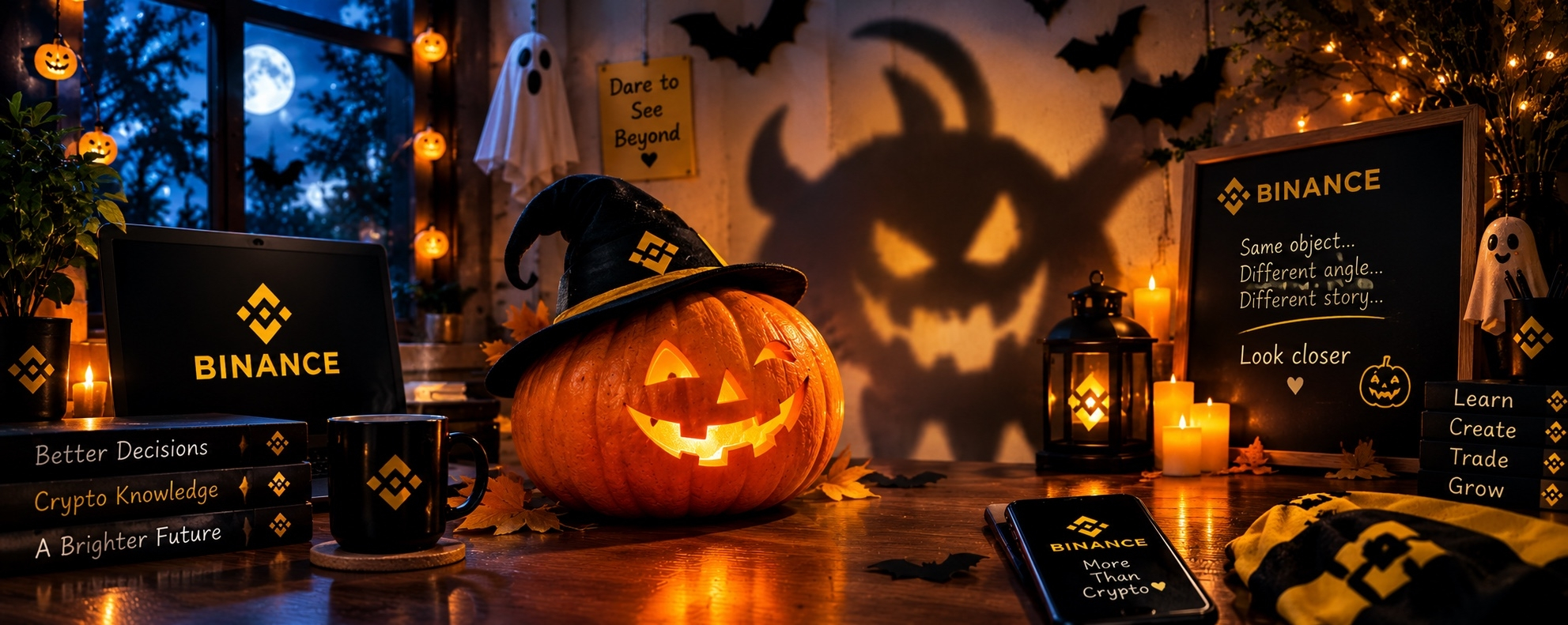
THE SHADOW BEHIND THE PUMPKIN: A HALLOWEEN STORY ABOUT WHAT WE DON’T SEESometimes, the things that frighten us are not what they appear to be.
This Halloween, I imagined a simple experiment with a pumpkin, a desk lamp, and a dark room. What began as a spooky decoration became an interesting reminder about imagination, perception, and the importance of looking beyond first impressions.
🕯️ When an Ordinary Room Became Mysterious
Imagine a Halloween room decorated with paper bats, tiny orange lights, and a smiling pumpkin sitting on a wooden table. A small Binance-yellow detail adds a bright touch to the dark decorations.
Everything looks cheerful until the room becomes darker.
The lamp casts a long shadow across the wall. Suddenly, the pumpkin’s familiar smile looks frightening, and the paper bats appear much larger than they really are.
Nothing has changed in the room. Only the lighting is different.
Yet the entire atmosphere feels mysterious.
That is what makes this idea interesting: our minds do more than simply observe things. We interpret what we see, connect it with our expectations, and sometimes turn uncertainty into fear.
🎃 The Pumpkin’s Little Secret
In my imagined story, I move the lamp to another side of the table.
The frightening shadow becomes smaller. The mysterious shape disappears, revealing nothing more than an ordinary pumpkin and a wall.
I change the angle again, and a completely different shadow appears.
The pumpkin has not changed. My perspective has.
I love this idea because it turns an ordinary decoration into a small mystery. One person might see a monster, another might see a funny shape, and someone else might immediately understand the trick.
The best part is that everyone gets to discover the explanation for themselves.
Sometimes, the most memorable Halloween surprise is not what we see first. It is what we discover when we look again.
👻 A Lesson Beyond Halloween
This simple scene reminds me of something that happens in everyday life.
We often form opinions before we have enough information. A confusing message can create a misunderstanding, while an unexpected event can make us assume the worst.
But uncertainty does not automatically mean danger, and a convincing first impression is not always the complete picture.
Instead of asking, “What is that frightening thing?” we can ask, “What is creating that shadow?”
That small change encourages curiosity instead of immediate judgment.
For me, this is the real message behind the pumpkin story: sometimes, we do not need a different situation. We need a different perspective.
💛 Adding a Binance Touch
For my imagined Halloween setup, I would combine an orange pumpkin, handmade black bats, a warm desk lamp, and a clearly visible Binance-branded item.
I would keep the decorations simple and let the pumpkin’s unusual shadow become the main attraction. The Binance-yellow accent would create a striking contrast against the dark background.
My goal would be to create an original scene that makes people pause while scrolling through Binance Square and wonder how an ordinary decoration produced such an unexpected effect.
Creativity does not always require expensive equipment or complicated designs. Sometimes, thoughtful composition and a fresh idea are enough to make something memorable.
That is the kind of content I enjoy creating: something entertaining on the surface, with a meaningful idea behind it.
🦇 One Pumpkin, Different Perspectives
As midnight approaches in my imagined Halloween scene, I switch on the main light.
The shadows disappear. The bats become ordinary paper decorations, and the mysterious shape returns to being a pumpkin’s shadow.
Nothing supernatural happened, yet the experience remains memorable because it changed what I expected to see.
Perhaps that is the real magic of Halloween: the opportunity to transform ordinary objects into extraordinary experiences through imagination.
This year, I would rather create something that makes people curious than something that simply tries to scare them.
A little creativity can change an ordinary object. A different perspective can change an entire story. And sometimes, the simplest ideas leave the strongest impressions.
Now I want to ask the Binance Square community:
If you saw a mysterious shadow in a dark Halloween room, what would you do first?
Run away before it gets closer!
Turn on the light and investigate.
Take a photo because it might become the perfect Halloween post! 📸🎃
Share your choice in the comments!
Wishing the Binance community a Halloween filled with creativity, curiosity, and unexpected discoveries. 💛🖤🎃
#SEAPumpkinFrenzy #Halloween #binance
$IRYS
$DOS
{future}(DOSUSDT)
$BEB
{spot}(BEBUSDT)
THE SHADOW BEHIND THE PUMPKIN: A HALLOWEEN STORY ABOUT WHAT WE DON’T SEE
Sometimes, the things that frighten us are not what they appear to be.
This Halloween, I imagined a simple experiment with a pumpkin, a desk lamp, and a dark room. What began as a spooky decoration became an interesting reminder about imagination, perception, and the importance of looking beyond first impressions.
🕯️ When an Ordinary Room Became Mysterious
Imagine a Halloween room decorated with paper bats, tiny orange lights, and a smiling pumpkin sitting on a wooden table. A small Binance-yellow detail adds a bright touch to the dark decorations.
Everything looks cheerful until the room becomes darker.
The lamp casts a long shadow across the wall. Suddenly, the pumpkin’s familiar smile looks frightening, and the paper bats appear much larger than they really are.
Nothing has changed in the room. Only the lighting is different.
Yet the entire atmosphere feels mysterious.
That is what makes this idea interesting: our minds do more than simply observe things. We interpret what we see, connect it with our expectations, and sometimes turn uncertainty into fear.
🎃 The Pumpkin’s Little Secret
In my imagined story, I move the lamp to another side of the table.
The frightening shadow becomes smaller. The mysterious shape disappears, revealing nothing more than an ordinary pumpkin and a wall.
I change the angle again, and a completely different shadow appears.
The pumpkin has not changed. My perspective has.
I love this idea because it turns an ordinary decoration into a small mystery. One person might see a monster, another might see a funny shape, and someone else might immediately understand the trick.
The best part is that everyone gets to discover the explanation for themselves.
Sometimes, the most memorable Halloween surprise is not what we see first. It is what we discover when we look again.
👻 A Lesson Beyond Halloween
This simple scene reminds me of something that happens in everyday life.
We often form opinions before we have enough information. A confusing message can create a misunderstanding, while an unexpected event can make us assume the worst.
But uncertainty does not automatically mean danger, and a convincing first impression is not always the complete picture.
Instead of asking, “What is that frightening thing?” we can ask, “What is creating that shadow?”
That small change encourages curiosity instead of immediate judgment.
For me, this is the real message behind the pumpkin story: sometimes, we do not need a different situation. We need a different perspective.
💛 Adding a Binance Touch
For my imagined Halloween setup, I would combine an orange pumpkin, handmade black bats, a warm desk lamp, and a clearly visible Binance-branded item.
I would keep the decorations simple and let the pumpkin’s unusual shadow become the main attraction. The Binance-yellow accent would create a striking contrast against the dark background.
My goal would be to create an original scene that makes people pause while scrolling through Binance Square and wonder how an ordinary decoration produced such an unexpected effect.
Creativity does not always require expensive equipment or complicated designs. Sometimes, thoughtful composition and a fresh idea are enough to make something memorable.
That is the kind of content I enjoy creating: something entertaining on the surface, with a meaningful idea behind it.
🦇 One Pumpkin, Different Perspectives
As midnight approaches in my imagined Halloween scene, I switch on the main light.
The shadows disappear. The bats become ordinary paper decorations, and the mysterious shape returns to being a pumpkin’s shadow.
Nothing supernatural happened, yet the experience remains memorable because it changed what I expected to see.
Perhaps that is the real magic of Halloween: the opportunity to transform ordinary objects into extraordinary experiences through imagination.
This year, I would rather create something that makes people curious than something that simply tries to scare them.
A little creativity can change an ordinary object. A different perspective can change an entire story. And sometimes, the simplest ideas leave the strongest impressions.
Now I want to ask the Binance Square community:
If you saw a mysterious shadow in a dark Halloween room, what would you do first?
Run away before it gets closer!
Turn on the light and investigate.
Take a photo because it might become the perfect Halloween post! 📸🎃
Share your choice in the comments!
Wishing the Binance community a Halloween filled with creativity, curiosity, and unexpected discoveries. 💛🖤🎃
#SEAPumpkinFrenzy #Halloween #binance
$IRYS
$DOS
$BEB
This Halloween, I imagined a simple experiment with a pumpkin, a desk lamp, and a dark room. What began as a spooky decoration became an interesting reminder about imagination, perception, and the importance of looking beyond first impressions.
🕯️ When an Ordinary Room Became Mysterious
Imagine a Halloween room decorated with paper bats, tiny orange lights, and a smiling pumpkin sitting on a wooden table. A small Binance-yellow detail adds a bright touch to the dark decorations.
Everything looks cheerful until the room becomes darker.
The lamp casts a long shadow across the wall. Suddenly, the pumpkin’s familiar smile looks frightening, and the paper bats appear much larger than they really are.
Nothing has changed in the room. Only the lighting is different.
Yet the entire atmosphere feels mysterious.
That is what makes this idea interesting: our minds do more than simply observe things. We interpret what we see, connect it with our expectations, and sometimes turn uncertainty into fear.
🎃 The Pumpkin’s Little Secret
In my imagined story, I move the lamp to another side of the table.
The frightening shadow becomes smaller. The mysterious shape disappears, revealing nothing more than an ordinary pumpkin and a wall.
I change the angle again, and a completely different shadow appears.
The pumpkin has not changed. My perspective has.
I love this idea because it turns an ordinary decoration into a small mystery. One person might see a monster, another might see a funny shape, and someone else might immediately understand the trick.
The best part is that everyone gets to discover the explanation for themselves.
Sometimes, the most memorable Halloween surprise is not what we see first. It is what we discover when we look again.
👻 A Lesson Beyond Halloween
This simple scene reminds me of something that happens in everyday life.
We often form opinions before we have enough information. A confusing message can create a misunderstanding, while an unexpected event can make us assume the worst.
But uncertainty does not automatically mean danger, and a convincing first impression is not always the complete picture.
Instead of asking, “What is that frightening thing?” we can ask, “What is creating that shadow?”
That small change encourages curiosity instead of immediate judgment.
For me, this is the real message behind the pumpkin story: sometimes, we do not need a different situation. We need a different perspective.
💛 Adding a Binance Touch
For my imagined Halloween setup, I would combine an orange pumpkin, handmade black bats, a warm desk lamp, and a clearly visible Binance-branded item.
I would keep the decorations simple and let the pumpkin’s unusual shadow become the main attraction. The Binance-yellow accent would create a striking contrast against the dark background.
My goal would be to create an original scene that makes people pause while scrolling through Binance Square and wonder how an ordinary decoration produced such an unexpected effect.
Creativity does not always require expensive equipment or complicated designs. Sometimes, thoughtful composition and a fresh idea are enough to make something memorable.
That is the kind of content I enjoy creating: something entertaining on the surface, with a meaningful idea behind it.
🦇 One Pumpkin, Different Perspectives
As midnight approaches in my imagined Halloween scene, I switch on the main light.
The shadows disappear. The bats become ordinary paper decorations, and the mysterious shape returns to being a pumpkin’s shadow.
Nothing supernatural happened, yet the experience remains memorable because it changed what I expected to see.
Perhaps that is the real magic of Halloween: the opportunity to transform ordinary objects into extraordinary experiences through imagination.
This year, I would rather create something that makes people curious than something that simply tries to scare them.
A little creativity can change an ordinary object. A different perspective can change an entire story. And sometimes, the simplest ideas leave the strongest impressions.
Now I want to ask the Binance Square community:
If you saw a mysterious shadow in a dark Halloween room, what would you do first?
Run away before it gets closer!
Turn on the light and investigate.
Take a photo because it might become the perfect Halloween post! 📸🎃
Share your choice in the comments!
Wishing the Binance community a Halloween filled with creativity, curiosity, and unexpected discoveries. 💛🖤🎃
#SEAPumpkinFrenzy #Halloween #binance
$IRYS
$DOS
$BEB
9
8
621
Binance Pick Season 1 is almost here! 🟡
I’m looking forward to exploring this prediction-based competition, completing daily tasks, earning Scores, and testing my prediction skills. The leaderboard adds another layer of excitement, where consistent participation and smart decisions may make a difference.
Ready to see how Season 1 unfolds! 🚀@BinancePk
#BinancePick #BinanceSquare #Crypto
Binance Pick Season 1 is almost here! 🟡
I’m looking forward to exploring this prediction-based competition, completing daily tasks, earning Scores, and testing my prediction skills. The leaderboard adds another layer of excitement, where consistent participation and smart decisions may make a difference.
Ready to see how Season 1 unfolds! 🚀@Binance Pakistan
#BinancePick #BinanceSquare #Crypto
I’m looking forward to exploring this prediction-based competition, completing daily tasks, earning Scores, and testing my prediction skills. The leaderboard adds another layer of excitement, where consistent participation and smart decisions may make a difference.
Ready to see how Season 1 unfolds! 🚀@Binance Pakistan
#BinancePick #BinanceSquare #Crypto
1
125
The next phase of the AI economy may not be about how intelligent an AI model can become, but how effectively AI agents can work together.
This is where Kite deserves attention.
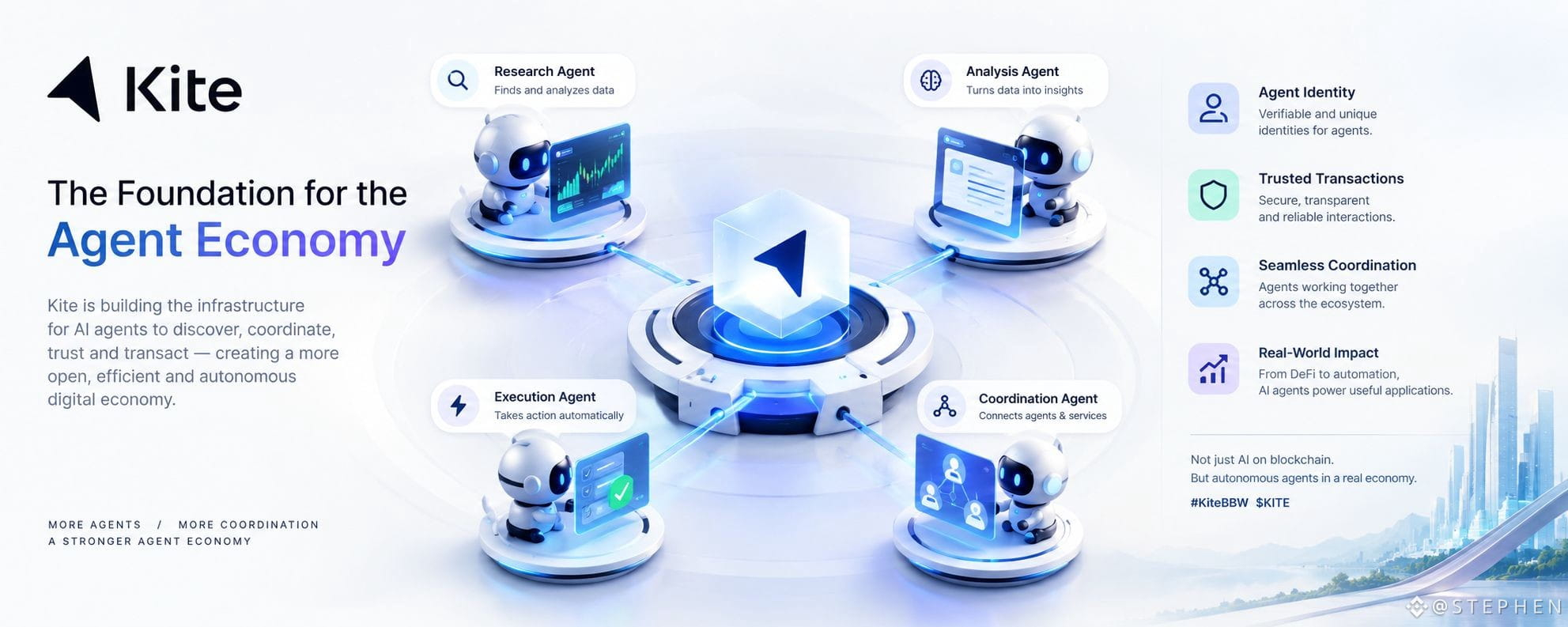
As AI agents evolve from simple assistants into systems capable of completing tasks, new challenges emerge. How can agents discover services, coordinate with other agents, establish trust, and participate in an economy with fewer manual steps?
Kite is building toward an agent-centric economy where coordination, identity, and transactions can help AI agents operate more independently.
Think about a future where one agent researches a market, another analyzes the available information, and a third executes a task based on predefined rules. For this ecosystem to scale, agents need more than intelligence. They need reliable ways to interact with other agents and services.
However, adoption will depend on practical execution. Security, verifiable interactions, transparent costs, and real demand will matter far more than attention alone. The real test is whether developers can build useful applications and whether those applications create sustainable activity.
That is what makes the agent economy an interesting space to follow. The opportunity is not simply to put AI on a blockchain, but to explore how autonomous software can participate in digital markets with greater coordination and accountability.
I’m particularly interested in how Kite’s ecosystem develops and what real-world applications emerge as AI agents become more capable.
The agent economy is still evolving, and the infrastructure built today could shape how these systems interact tomorrow.
What do you think will be the biggest driver of adoption: agent identity, trusted transactions, or seamless coordination?
#KiteBBW $KITE @GoKiteAI
{spot}(KITEUSDT)
The next phase of the AI economy may not be about how intelligent an AI model can become, but how effectively AI agents can work together.
This is where Kite deserves attention.
As AI agents evolve from simple assistants into systems capable of completing tasks, new challenges emerge. How can agents discover services, coordinate with other agents, establish trust, and participate in an economy with fewer manual steps?
Kite is building toward an agent-centric economy where coordination, identity, and transactions can help AI agents operate more independently.
Think about a future where one agent researches a market, another analyzes the available information, and a third executes a task based on predefined rules. For this ecosystem to scale, agents need more than intelligence. They need reliable ways to interact with other agents and services.
However, adoption will depend on practical execution. Security, verifiable interactions, transparent costs, and real demand will matter far more than attention alone. The real test is whether developers can build useful applications and whether those applications create sustainable activity.
That is what makes the agent economy an interesting space to follow. The opportunity is not simply to put AI on a blockchain, but to explore how autonomous software can participate in digital markets with greater coordination and accountability.
I’m particularly interested in how Kite’s ecosystem develops and what real-world applications emerge as AI agents become more capable.
The agent economy is still evolving, and the infrastructure built today could shape how these systems interact tomorrow.
What do you think will be the biggest driver of adoption: agent identity, trusted transactions, or seamless coordination?
#KiteBBW $KITE @KITE AI 中文
This is where Kite deserves attention.
As AI agents evolve from simple assistants into systems capable of completing tasks, new challenges emerge. How can agents discover services, coordinate with other agents, establish trust, and participate in an economy with fewer manual steps?
Kite is building toward an agent-centric economy where coordination, identity, and transactions can help AI agents operate more independently.
Think about a future where one agent researches a market, another analyzes the available information, and a third executes a task based on predefined rules. For this ecosystem to scale, agents need more than intelligence. They need reliable ways to interact with other agents and services.
However, adoption will depend on practical execution. Security, verifiable interactions, transparent costs, and real demand will matter far more than attention alone. The real test is whether developers can build useful applications and whether those applications create sustainable activity.
That is what makes the agent economy an interesting space to follow. The opportunity is not simply to put AI on a blockchain, but to explore how autonomous software can participate in digital markets with greater coordination and accountability.
I’m particularly interested in how Kite’s ecosystem develops and what real-world applications emerge as AI agents become more capable.
The agent economy is still evolving, and the infrastructure built today could shape how these systems interact tomorrow.
What do you think will be the biggest driver of adoption: agent identity, trusted transactions, or seamless coordination?
#KiteBBW $KITE @KITE AI 中文
2
240
සත්යායනය කළ
Markets reveal more than just transactions. They can also reveal intentions.
That’s the problem I find most interesting about @nillionnetwork and its Covenants.
On public blockchains, trading instructions and automated strategy conditions can expose information before execution. This creates opportunities for other participants to anticipate activity, react to orders, or exploit predictable strategies. Privacy isn’t just about hiding balances; it can also be about protecting the logic behind an action.
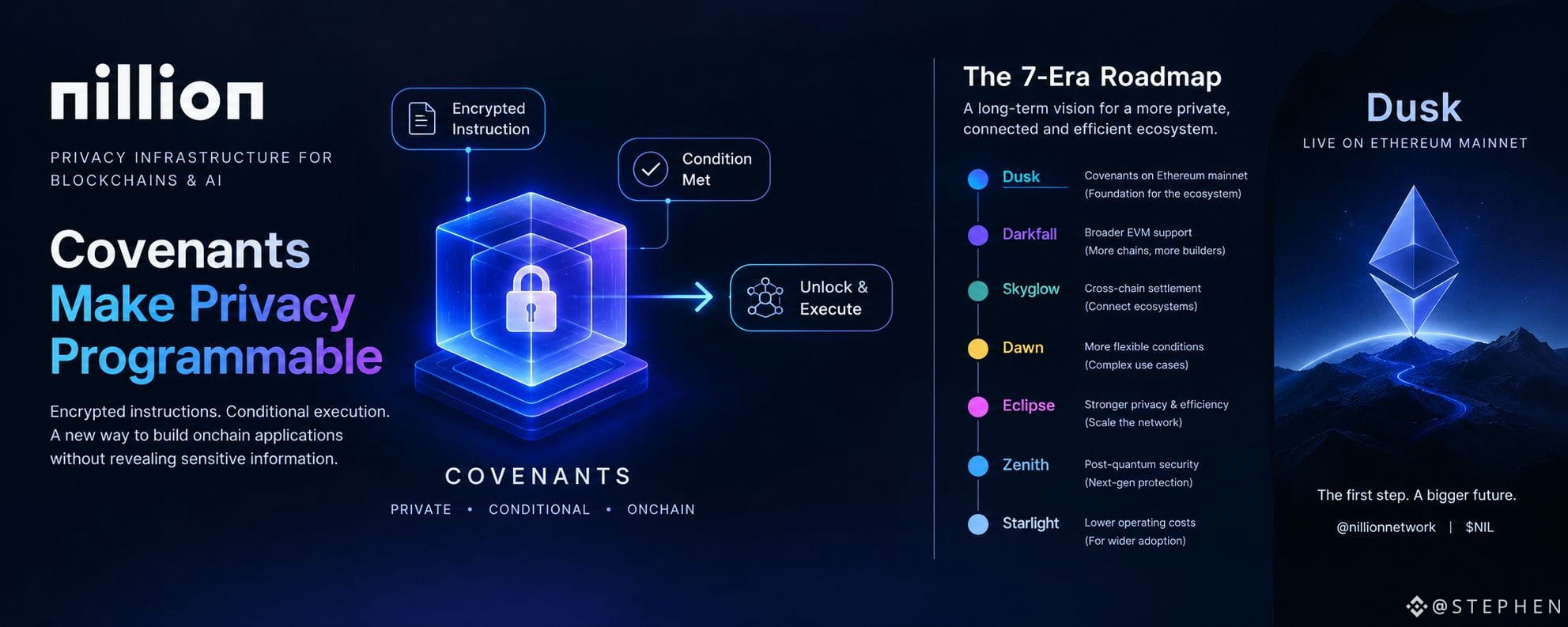
Nillion’s Covenants introduce a different approach. An instruction is encrypted and tied to a predefined condition. It remains sealed until that condition is satisfied, at which point the network can unlock it. The goal is to make conditional execution possible without revealing the instruction in advance.
Dusk, the first Covenant phase on Ethereum mainnet, is particularly interesting because it establishes the foundation: condition-based execution, a permissionless node network, and developer tools for building applications around this primitive.
The seven-era roadmap expands the ambition. Darkfall targets broader EVM support, Skyglow introduces cross-chain settlement, and later phases aim to support more flexible conditions, stronger privacy, post-quantum security, and lower operating costs.
The real opportunity is encrypted markets: private orders, conditional payments, automated strategies, and AI agents that can act without exposing every instruction publicly.
Of course, the roadmap is a plan, not proof of adoption. Security, execution reliability, developer activity, and actual demand will determine how useful this becomes.
For me, the key question is whether Covenants can make privacy practical without sacrificing the programmability that makes Ethereum valuable.
That’s what I’ll be watching with $NIL
#nil $NIL @Nillion
Markets reveal more than just transactions. They can also reveal intentions.
That’s the problem I find most interesting about @Nillion and its Covenants.
On public blockchains, trading instructions and automated strategy conditions can expose information before execution. This creates opportunities for other participants to anticipate activity, react to orders, or exploit predictable strategies. Privacy isn’t just about hiding balances; it can also be about protecting the logic behind an action.
Nillion’s Covenants introduce a different approach. An instruction is encrypted and tied to a predefined condition. It remains sealed until that condition is satisfied, at which point the network can unlock it. The goal is to make conditional execution possible without revealing the instruction in advance.
Dusk, the first Covenant phase on Ethereum mainnet, is particularly interesting because it establishes the foundation: condition-based execution, a permissionless node network, and developer tools for building applications around this primitive.
The seven-era roadmap expands the ambition. Darkfall targets broader EVM support, Skyglow introduces cross-chain settlement, and later phases aim to support more flexible conditions, stronger privacy, post-quantum security, and lower operating costs.
The real opportunity is encrypted markets: private orders, conditional payments, automated strategies, and AI agents that can act without exposing every instruction publicly.
Of course, the roadmap is a plan, not proof of adoption. Security, execution reliability, developer activity, and actual demand will determine how useful this becomes.
For me, the key question is whether Covenants can make privacy practical without sacrificing the programmability that makes Ethereum valuable.
That’s what I’ll be watching with $NIL
#nil $NIL @Nillion
That’s the problem I find most interesting about @Nillion and its Covenants.
On public blockchains, trading instructions and automated strategy conditions can expose information before execution. This creates opportunities for other participants to anticipate activity, react to orders, or exploit predictable strategies. Privacy isn’t just about hiding balances; it can also be about protecting the logic behind an action.
Nillion’s Covenants introduce a different approach. An instruction is encrypted and tied to a predefined condition. It remains sealed until that condition is satisfied, at which point the network can unlock it. The goal is to make conditional execution possible without revealing the instruction in advance.
Dusk, the first Covenant phase on Ethereum mainnet, is particularly interesting because it establishes the foundation: condition-based execution, a permissionless node network, and developer tools for building applications around this primitive.
The seven-era roadmap expands the ambition. Darkfall targets broader EVM support, Skyglow introduces cross-chain settlement, and later phases aim to support more flexible conditions, stronger privacy, post-quantum security, and lower operating costs.
The real opportunity is encrypted markets: private orders, conditional payments, automated strategies, and AI agents that can act without exposing every instruction publicly.
Of course, the roadmap is a plan, not proof of adoption. Security, execution reliability, developer activity, and actual demand will determine how useful this becomes.
For me, the key question is whether Covenants can make privacy practical without sacrificing the programmability that makes Ethereum valuable.
That’s what I’ll be watching with $NIL
#nil $NIL @Nillion
1
202
සත්යායනය කළ
#CPIWatch Will September CPI Shake Oil & Treasuries?
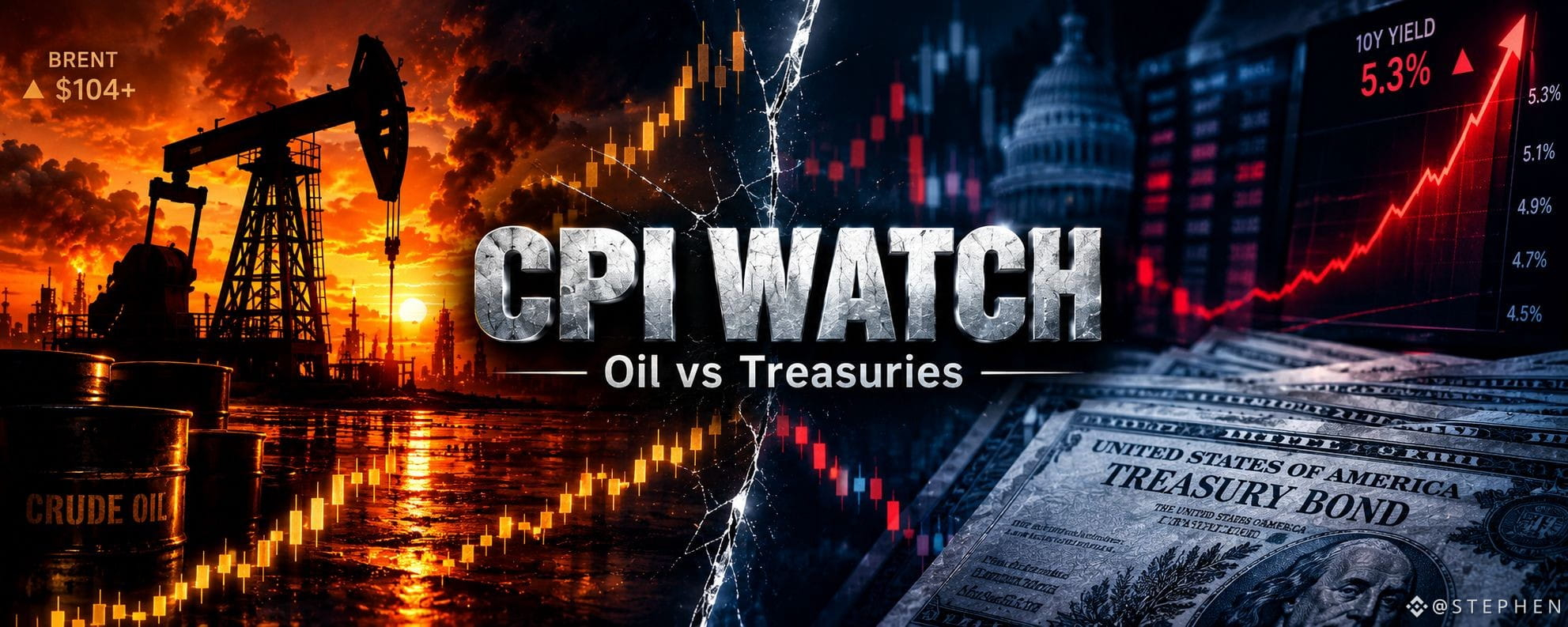
The September CPI print lands tomorrow, and this one actually matters. Consensus expects headline inflation to jump from 3.4% to around 3.6-3.7% year-on-year, driven almost entirely by energy. Brent is holding above $104 a barrel after Houthi attacks on Saudi Arabia's Riyadh airport and tanker strikes in the Strait of Hormuz pushed crude up over 5% earlier this month.
Here's my read: headline will run hot, but I'm watching core CPI just as closely. Core is expected to actually ease to 0.2% month-on-month, which tells me the energy shock hasn't spread into broader goods and services yet. If core stays contained, the Fed likely holds in October — markets are pricing only a 19% chance of a hike at the October 28 meeting, even as December hike bets sit near 85%.
On Treasuries, the 10-year yield is at 5.199% after pulling back from a 24-year high of 5.365% last week. A hot headline CPI could push yields back toward those highs, pressuring TMFUSDT. I'm not chasing that move I'd rather react to the actual print than front-run it. On oil, I'm holding a small long BZUSDT with a tight stop below recent support. Energy is the one component that can single-handedly move headline CPI, and with geopolitical risk premium still building, I don't see crude cooling off before the release.
My plan stay long oil into the print, stay flat on Treasuries until the number drops, and let the data decide direction instead of guessing. What's your play long oil, short Treasuries, or sitting it out? Follow me for more CPI and macro trade breakdowns.
#CPIWatch Will September CPI Shake Oil & Treasuries?
The September CPI print lands tomorrow, and this one actually matters. Consensus expects headline inflation to jump from 3.4% to around 3.6-3.7% year-on-year, driven almost entirely by energy. Brent is holding above $104 a barrel after Houthi attacks on Saudi Arabia's Riyadh airport and tanker strikes in the Strait of Hormuz pushed crude up over 5% earlier this month.
Here's my read: headline will run hot, but I'm watching core CPI just as closely. Core is expected to actually ease to 0.2% month-on-month, which tells me the energy shock hasn't spread into broader goods and services yet. If core stays contained, the Fed likely holds in October — markets are pricing only a 19% chance of a hike at the October 28 meeting, even as December hike bets sit near 85%.
On Treasuries, the 10-year yield is at 5.199% after pulling back from a 24-year high of 5.365% last week. A hot headline CPI could push yields back toward those highs, pressuring TMFUSDT. I'm not chasing that move I'd rather react to the actual print than front-run it. On oil, I'm holding a small long BZUSDT with a tight stop below recent support. Energy is the one component that can single-handedly move headline CPI, and with geopolitical risk premium still building, I don't see crude cooling off before the release.
My plan stay long oil into the print, stay flat on Treasuries until the number drops, and let the data decide direction instead of guessing. What's your play long oil, short Treasuries, or sitting it out? Follow me for more CPI and macro trade breakdowns.
The September CPI print lands tomorrow, and this one actually matters. Consensus expects headline inflation to jump from 3.4% to around 3.6-3.7% year-on-year, driven almost entirely by energy. Brent is holding above $104 a barrel after Houthi attacks on Saudi Arabia's Riyadh airport and tanker strikes in the Strait of Hormuz pushed crude up over 5% earlier this month.
Here's my read: headline will run hot, but I'm watching core CPI just as closely. Core is expected to actually ease to 0.2% month-on-month, which tells me the energy shock hasn't spread into broader goods and services yet. If core stays contained, the Fed likely holds in October — markets are pricing only a 19% chance of a hike at the October 28 meeting, even as December hike bets sit near 85%.
On Treasuries, the 10-year yield is at 5.199% after pulling back from a 24-year high of 5.365% last week. A hot headline CPI could push yields back toward those highs, pressuring TMFUSDT. I'm not chasing that move I'd rather react to the actual print than front-run it. On oil, I'm holding a small long BZUSDT with a tight stop below recent support. Energy is the one component that can single-handedly move headline CPI, and with geopolitical risk premium still building, I don't see crude cooling off before the release.
My plan stay long oil into the print, stay flat on Treasuries until the number drops, and let the data decide direction instead of guessing. What's your play long oil, short Treasuries, or sitting it out? Follow me for more CPI and macro trade breakdowns.
1.2k
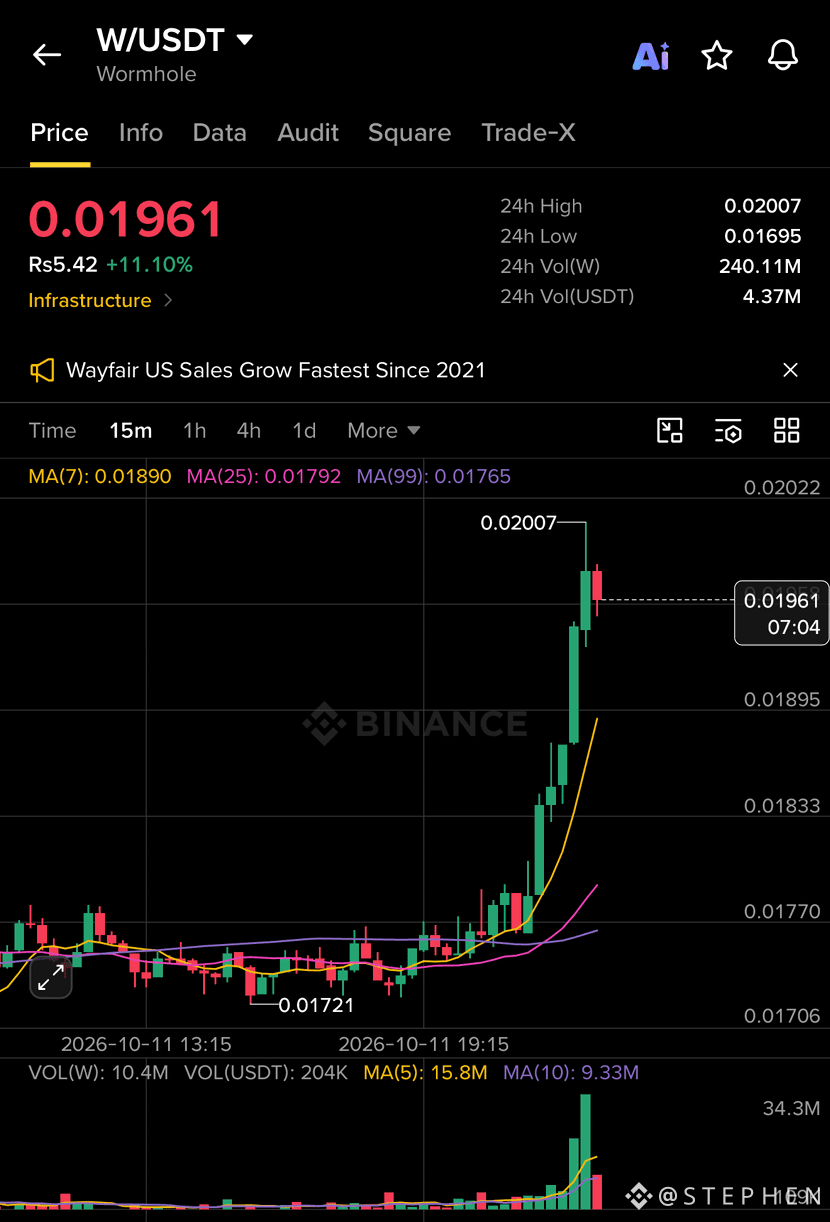
🚀 $W ormhole is approaching a crucial resistance zone!
Wormhole is showing strong bullish momentum after breaking out of its recent range. Now, all eyes are on the $0.020 level.
🎯 Potential Targets:
• $0.0205
• $0.0215
• $0.0230
📊 Key Support: $0.0165–$0.0170
A confirmed move above $0.020–$0.0203 could push $W toward higher levels. However, failure to break through may trigger a retracement toward $0.018.
Watch the breakout confirmation before making a move. 👀
{spot}(WUSDT)
🚀 $W ormhole is approaching a crucial resistance zone!
Wormhole is showing strong bullish momentum after breaking out of its recent range. Now, all eyes are on the $0.020 level.
🎯 Potential Targets:
• $0.0205
• $0.0215
• $0.0230
📊 Key Support: $0.0165–$0.0170
A confirmed move above $0.020–$0.0203 could push $W toward higher levels. However, failure to break through may trigger a retracement toward $0.018.
Watch the breakout confirmation before making a move. 👀
Wormhole is showing strong bullish momentum after breaking out of its recent range. Now, all eyes are on the $0.020 level.
🎯 Potential Targets:
• $0.0205
• $0.0215
• $0.0230
📊 Key Support: $0.0165–$0.0170
A confirmed move above $0.020–$0.0203 could push $W toward higher levels. However, failure to break through may trigger a retracement toward $0.018.
Watch the breakout confirmation before making a move. 👀
487
·
--
බෙයාරිෂ්
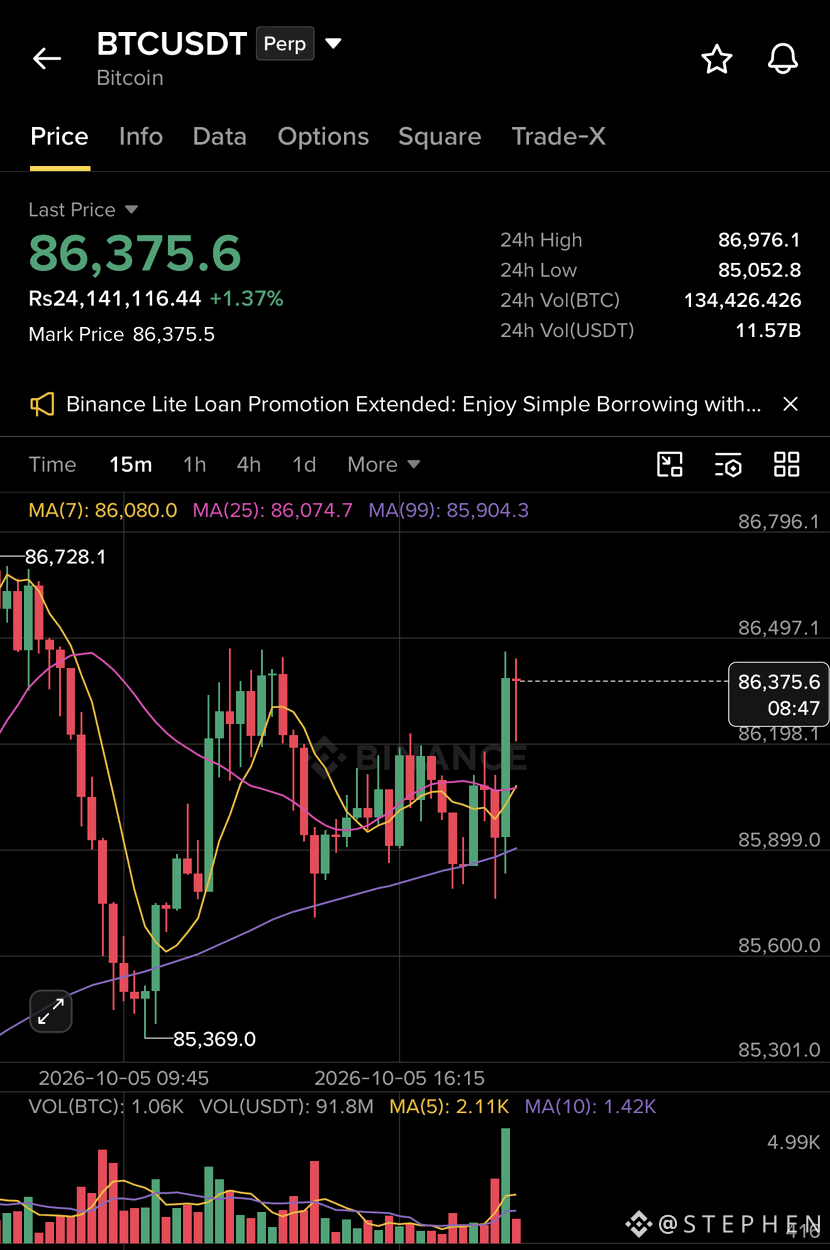
🔴 $BTC — REJECTION SETUP
BTC is pushing into a key resistance band around $86.8K–$87K. I’m watching for rejection here rather than chasing the upside. If this zone holds as resistance, a move back toward the lower support levels becomes attractive.
📍 Short Entry: $86,050–$86,200
🎯 $85,500
🎯 $84,900
🎯 $84,200
🛑 Invalidation: $86,850
📉 Bias: Bearish below $86.8K–$87K
⚡ Leverage: 10x
The setup depends on rejection from resistance. A clean reclaim above the invalidation level would weaken the bearish thesis.
⚠️ 10x leverage is high risk. Keep the position small and protect your capital.
$BTC
{future}(BTCUSDT)
🔴 $BTC — REJECTION SETUP
BTC is pushing into a key resistance band around $86.8K–$87K. I’m watching for rejection here rather than chasing the upside. If this zone holds as resistance, a move back toward the lower support levels becomes attractive.
📍 Short Entry: $86,050–$86,200
🎯 $85,500
🎯 $84,900
🎯 $84,200
🛑 Invalidation: $86,850
📉 Bias: Bearish below $86.8K–$87K
⚡ Leverage: 10x
The setup depends on rejection from resistance. A clean reclaim above the invalidation level would weaken the bearish thesis.
⚠️ 10x leverage is high risk. Keep the position small and protect your capital.
$BTC
BTC is pushing into a key resistance band around $86.8K–$87K. I’m watching for rejection here rather than chasing the upside. If this zone holds as resistance, a move back toward the lower support levels becomes attractive.
📍 Short Entry: $86,050–$86,200
🎯 $85,500
🎯 $84,900
🎯 $84,200
🛑 Invalidation: $86,850
📉 Bias: Bearish below $86.8K–$87K
⚡ Leverage: 10x
The setup depends on rejection from resistance. A clean reclaim above the invalidation level would weaken the bearish thesis.
⚠️ 10x leverage is high risk. Keep the position small and protect your capital.
$BTC
89
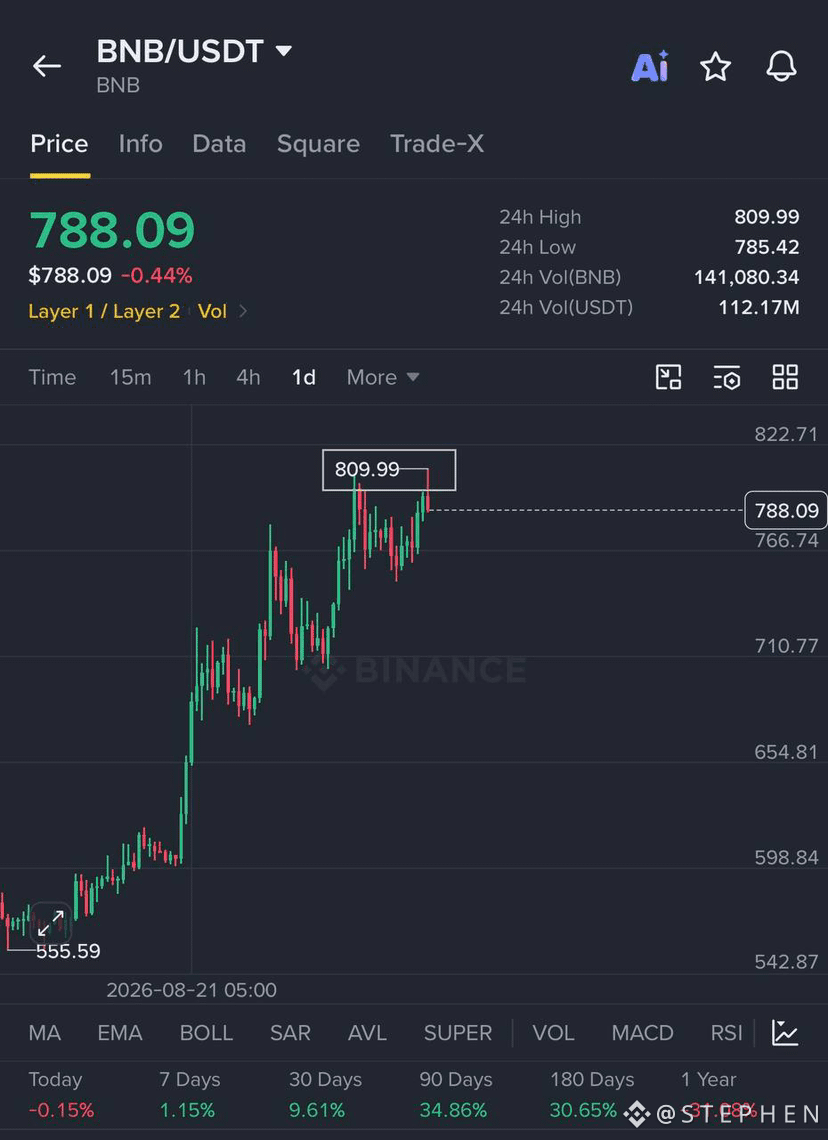
🚨 $BNB JUST HIT $800 — AND THIS COULD BE THE START OF A NEW BNB ROTATION
BNB has pushed above $800, marking its strongest level in roughly 8 months. More importantly, capital appears to be rotating back toward the BNB Chain ecosystem.
This is where I’m watching the ecosystem closely.
When liquidity starts moving into BNB Chain, smaller and mid-cap ecosystem tokens can outperform quickly as traders move further down the risk curve.
My watchlist:
$TUT • $MUBARAK • $BANANAS31 • $BROCCOLI714 • $CAKE • $XVS
The key is not simply BNB going higher — it’s whether ecosystem liquidity follows.
If BNB holds above the $800 area and momentum continues, we could see a much stronger rotation into BNB Chain tokens over the coming days.
Not calling an altseason.
I’m watching for a BNB-specific season. 🔥
DYOR & manage risk.
🚨 $BNB JUST HIT $800 — AND THIS COULD BE THE START OF A NEW BNB ROTATION
BNB has pushed above $800, marking its strongest level in roughly 8 months. More importantly, capital appears to be rotating back toward the BNB Chain ecosystem.
This is where I’m watching the ecosystem closely.
When liquidity starts moving into BNB Chain, smaller and mid-cap ecosystem tokens can outperform quickly as traders move further down the risk curve.
My watchlist:
$TUT • $MUBARAK • $BANANAS31 • $BROCCOLI714 • $CAKE • $XVS
The key is not simply BNB going higher — it’s whether ecosystem liquidity follows.
If BNB holds above the $800 area and momentum continues, we could see a much stronger rotation into BNB Chain tokens over the coming days.
Not calling an altseason.
I’m watching for a BNB-specific season. 🔥
DYOR & manage risk.
BNB has pushed above $800, marking its strongest level in roughly 8 months. More importantly, capital appears to be rotating back toward the BNB Chain ecosystem.
This is where I’m watching the ecosystem closely.
When liquidity starts moving into BNB Chain, smaller and mid-cap ecosystem tokens can outperform quickly as traders move further down the risk curve.
My watchlist:
$TUT • $MUBARAK • $BANANAS31 • $BROCCOLI714 • $CAKE • $XVS
The key is not simply BNB going higher — it’s whether ecosystem liquidity follows.
If BNB holds above the $800 area and momentum continues, we could see a much stronger rotation into BNB Chain tokens over the coming days.
Not calling an altseason.
I’m watching for a BNB-specific season. 🔥
DYOR & manage risk.
663
·
--
බෙයාරිෂ්
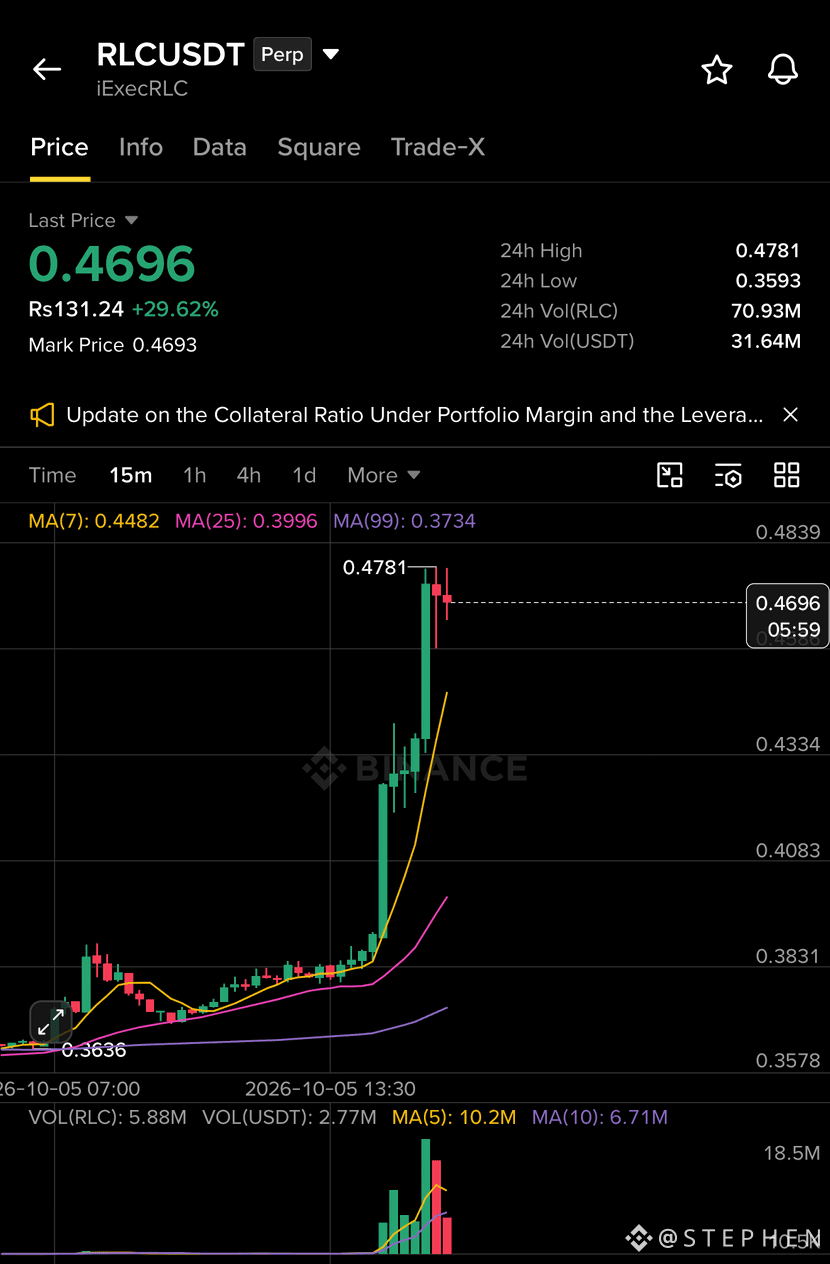
📉 $RLC — SHORT BIAS
RLC’s 30%+ surge has pushed price into a key resistance/supply area near $0.478. Instead of chasing the pump, I’m watching for confirmation that buyers are losing control.
🔻 Short Zone: $0.468–$0.478
🎯 TP1: $0.450
🎯 TP2: $0.435
🎯 TP3: $0.420
🛑 SL: $0.515
Key level: $0.48–$0.49. A sustained rejection below this zone keeps the downside setup valid, while a clean reclaim would weaken the short thesis.
Aggressive setup — keep position size controlled and respect the invalidation.
$RLC
{future}(RLCUSDT)
📉 $RLC — SHORT BIAS
RLC’s 30%+ surge has pushed price into a key resistance/supply area near $0.478. Instead of chasing the pump, I’m watching for confirmation that buyers are losing control.
🔻 Short Zone: $0.468–$0.478
🎯 TP1: $0.450
🎯 TP2: $0.435
🎯 TP3: $0.420
🛑 SL: $0.515
Key level: $0.48–$0.49. A sustained rejection below this zone keeps the downside setup valid, while a clean reclaim would weaken the short thesis.
Aggressive setup — keep position size controlled and respect the invalidation.
$RLC
RLC’s 30%+ surge has pushed price into a key resistance/supply area near $0.478. Instead of chasing the pump, I’m watching for confirmation that buyers are losing control.
🔻 Short Zone: $0.468–$0.478
🎯 TP1: $0.450
🎯 TP2: $0.435
🎯 TP3: $0.420
🛑 SL: $0.515
Key level: $0.48–$0.49. A sustained rejection below this zone keeps the downside setup valid, while a clean reclaim would weaken the short thesis.
Aggressive setup — keep position size controlled and respect the invalidation.
$RLC
252
·
--
බෙයාරිෂ්
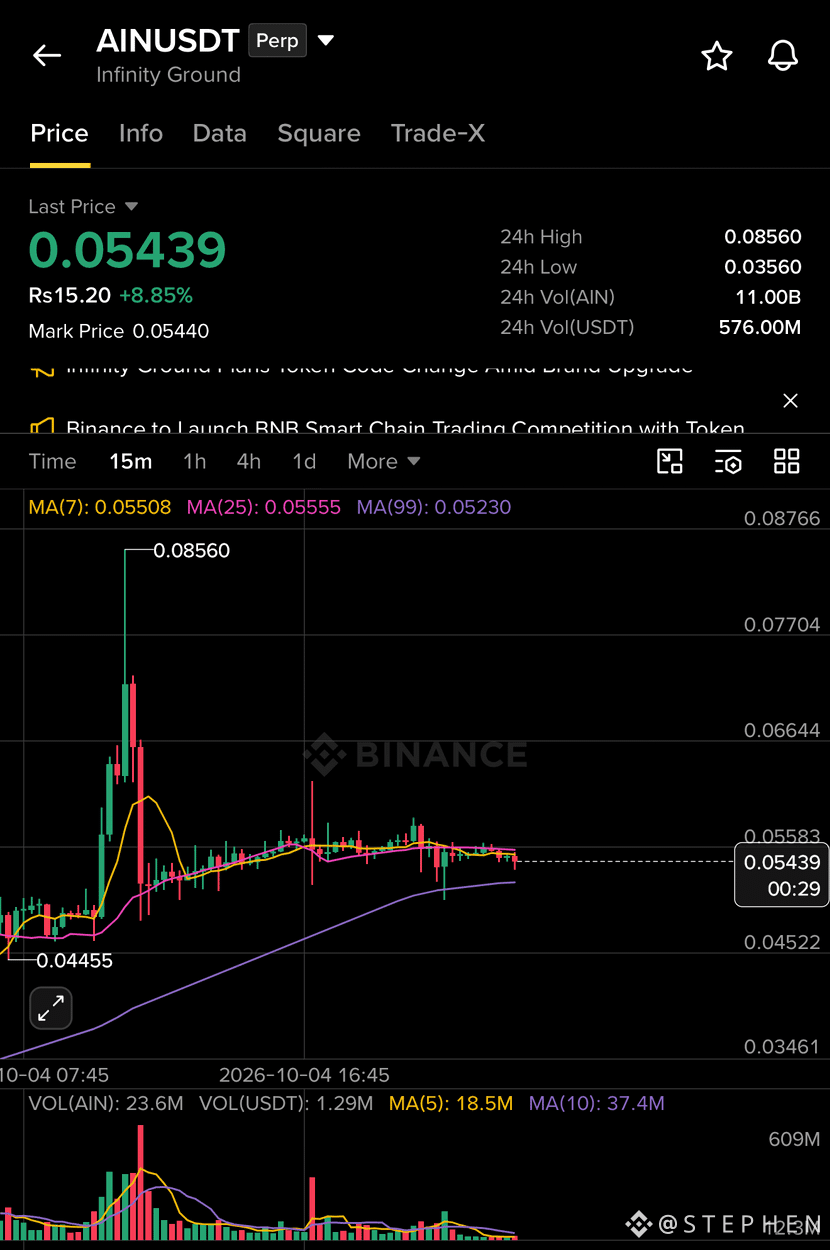
⚠️ $AIN SHORT SETUP
The pump looks exhausted, and momentum is starting to fade. I’m watching the rejection zone for a continuation move lower.
📍 Entry: 0.0545 – 0.0555
🎯 TP1: 0.0520
🎯 TP2: 0.0490
🎯 TP3: 0.0450
🛑 SL: 0.0585
A clean rejection from the entry zone could open the way toward the lower targets. Keep position size controlled and respect the invalidation level.
DYOR. Trade smart. 📉
{future}(AINUSDT)
⚠️ $AIN SHORT SETUP
The pump looks exhausted, and momentum is starting to fade. I’m watching the rejection zone for a continuation move lower.
📍 Entry: 0.0545 – 0.0555
🎯 TP1: 0.0520
🎯 TP2: 0.0490
🎯 TP3: 0.0450
🛑 SL: 0.0585
A clean rejection from the entry zone could open the way toward the lower targets. Keep position size controlled and respect the invalidation level.
DYOR. Trade smart. 📉
The pump looks exhausted, and momentum is starting to fade. I’m watching the rejection zone for a continuation move lower.
📍 Entry: 0.0545 – 0.0555
🎯 TP1: 0.0520
🎯 TP2: 0.0490
🎯 TP3: 0.0450
🛑 SL: 0.0585
A clean rejection from the entry zone could open the way toward the lower targets. Keep position size controlled and respect the invalidation level.
DYOR. Trade smart. 📉
494
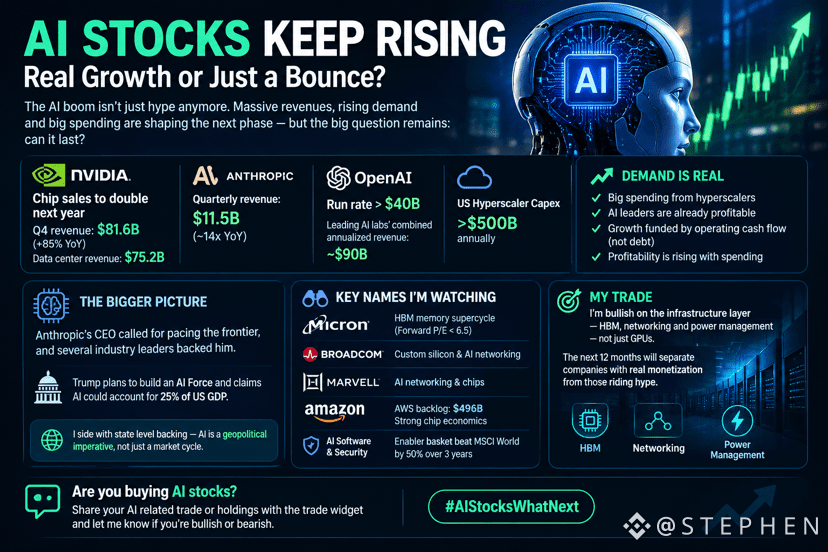
AI stocks keep rising, but the big question is whether this rally is real growth or just another bounce.
Nvidia continues to see massive AI demand, while companies like Anthropic and OpenAI are generating billions in revenue. At the same time, US hyperscalers are spending hundreds of billions on AI infrastructure, showing that the demand for compute is still strong.
What makes this cycle interesting is that AI leaders are not only growing revenue, but many are also generating strong cash flow while expanding their AI investments.
Beyond Nvidia, I’m watching Micron, Broadcom, Marvell and Amazon, especially for HBM memory, custom silicon, AI networking and cloud infrastructure.
My focus is the AI infrastructure layer, not just GPUs. The next 12 months could reveal which companies have real AI monetization and which are simply benefiting from the hype.
Are you bullish or bearish on AI stocks? Share your AI-related trade or holdings and let me know what you’re watching.
#AIStocksWhatNext
$MUBARAK
{future}(MUBARAKUSDT)
$AGT
{future}(AGTUSDT)
$KERNEL
{future}(KERNELUSDT)
AI stocks keep rising, but the big question is whether this rally is real growth or just another bounce.
Nvidia continues to see massive AI demand, while companies like Anthropic and OpenAI are generating billions in revenue. At the same time, US hyperscalers are spending hundreds of billions on AI infrastructure, showing that the demand for compute is still strong.
What makes this cycle interesting is that AI leaders are not only growing revenue, but many are also generating strong cash flow while expanding their AI investments.
Beyond Nvidia, I’m watching Micron, Broadcom, Marvell and Amazon, especially for HBM memory, custom silicon, AI networking and cloud infrastructure.
My focus is the AI infrastructure layer, not just GPUs. The next 12 months could reveal which companies have real AI monetization and which are simply benefiting from the hype.
Are you bullish or bearish on AI stocks? Share your AI-related trade or holdings and let me know what you’re watching.
#AIStocksWhatNext
$MUBARAK
$AGT
$KERNEL
Nvidia continues to see massive AI demand, while companies like Anthropic and OpenAI are generating billions in revenue. At the same time, US hyperscalers are spending hundreds of billions on AI infrastructure, showing that the demand for compute is still strong.
What makes this cycle interesting is that AI leaders are not only growing revenue, but many are also generating strong cash flow while expanding their AI investments.
Beyond Nvidia, I’m watching Micron, Broadcom, Marvell and Amazon, especially for HBM memory, custom silicon, AI networking and cloud infrastructure.
My focus is the AI infrastructure layer, not just GPUs. The next 12 months could reveal which companies have real AI monetization and which are simply benefiting from the hype.
Are you bullish or bearish on AI stocks? Share your AI-related trade or holdings and let me know what you’re watching.
#AIStocksWhatNext
$MUBARAK
$AGT
$KERNEL
1
128
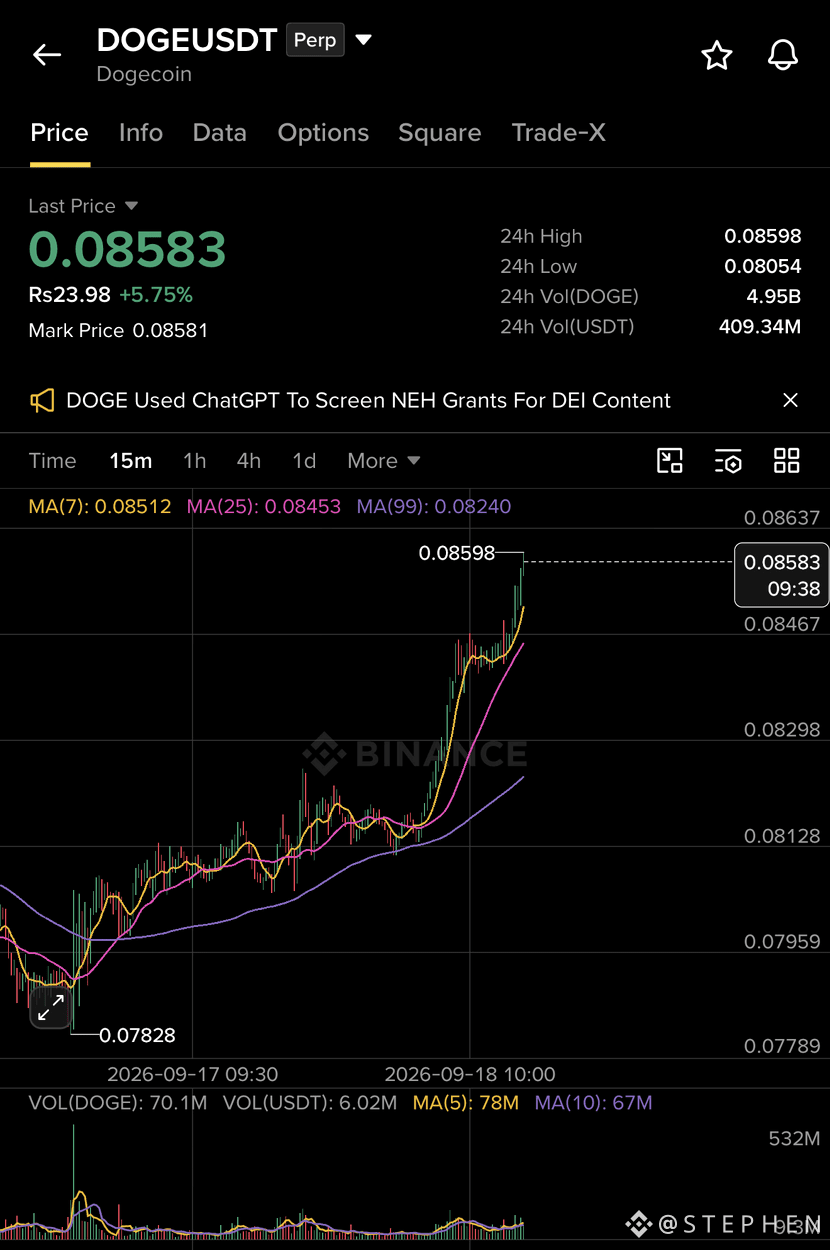
💰$DOGE SHORT SETUP 🔴
$DOGE is seeing notable selling pressure with a $133K short-volume spike around $0.08584. Sellers are becoming active near the current price, putting the short-term structure under pressure.
SHORT ZONE: $0.0855 – $0.0862
🎯 TP1: $0.0845
🎯 TP2: $0.0832
🎯 TP3: $0.0818
🛑 SL: $0.0875
If $DOGE fails to reclaim $0.0862, sellers can remain in control. A break below $0.0845 could open the way toward the next downside targets.
Trade Grade: 🔴 A- Setup
Keep position size controlled and respect the SL.
{future}(DOGEUSDT)
💰$DOGE SHORT SETUP 🔴
$DOGE is seeing notable selling pressure with a $133K short-volume spike around $0.08584. Sellers are becoming active near the current price, putting the short-term structure under pressure.
SHORT ZONE: $0.0855 – $0.0862
🎯 TP1: $0.0845
🎯 TP2: $0.0832
🎯 TP3: $0.0818
🛑 SL: $0.0875
If $DOGE fails to reclaim $0.0862, sellers can remain in control. A break below $0.0845 could open the way toward the next downside targets.
Trade Grade: 🔴 A- Setup
Keep position size controlled and respect the SL.
$DOGE is seeing notable selling pressure with a $133K short-volume spike around $0.08584. Sellers are becoming active near the current price, putting the short-term structure under pressure.
SHORT ZONE: $0.0855 – $0.0862
🎯 TP1: $0.0845
🎯 TP2: $0.0832
🎯 TP3: $0.0818
🛑 SL: $0.0875
If $DOGE fails to reclaim $0.0862, sellers can remain in control. A break below $0.0845 could open the way toward the next downside targets.
Trade Grade: 🔴 A- Setup
Keep position size controlled and respect the SL.
2
222
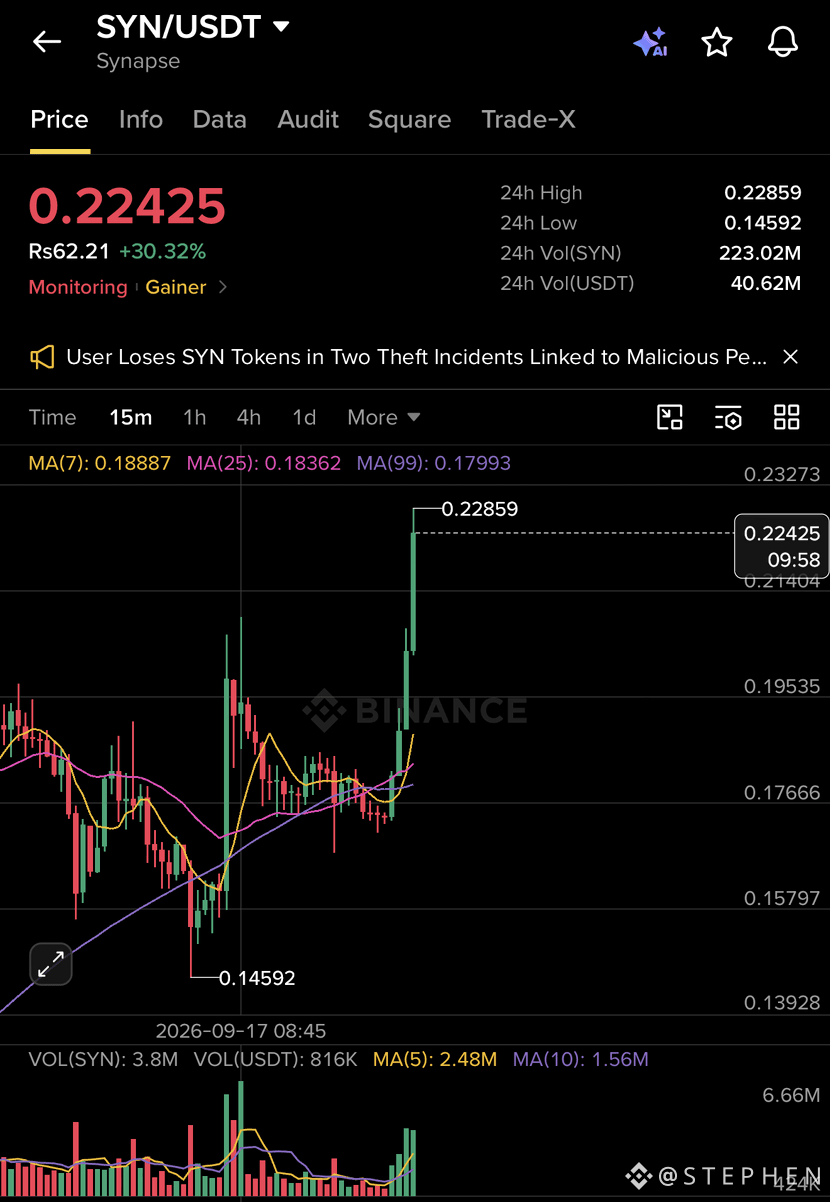
🚀 $SYN is moving FAST!
Synapse just broke above the $0.20 zone and pushed to a fresh $0.22859 high, with strong volume behind the move.
📍 Current: $0.22425
🎯 Resistance: $0.228–$0.233
🟢 Support: $0.195–$0.205
🔥 Break & hold above $0.233 → momentum could continue
⚠️ After a sharp +30% move, pullbacks can happen — manage risk carefully.
$SYN bulls are awake. 🐂🔥
{future}(SYNUSDT)
🚀 $SYN is moving FAST!
Synapse just broke above the $0.20 zone and pushed to a fresh $0.22859 high, with strong volume behind the move.
📍 Current: $0.22425
🎯 Resistance: $0.228–$0.233
🟢 Support: $0.195–$0.205
🔥 Break & hold above $0.233 → momentum could continue
⚠️ After a sharp +30% move, pullbacks can happen — manage risk carefully.
$SYN bulls are awake. 🐂🔥
Synapse just broke above the $0.20 zone and pushed to a fresh $0.22859 high, with strong volume behind the move.
📍 Current: $0.22425
🎯 Resistance: $0.228–$0.233
🟢 Support: $0.195–$0.205
🔥 Break & hold above $0.233 → momentum could continue
⚠️ After a sharp +30% move, pullbacks can happen — manage risk carefully.
$SYN bulls are awake. 🐂🔥
1
269
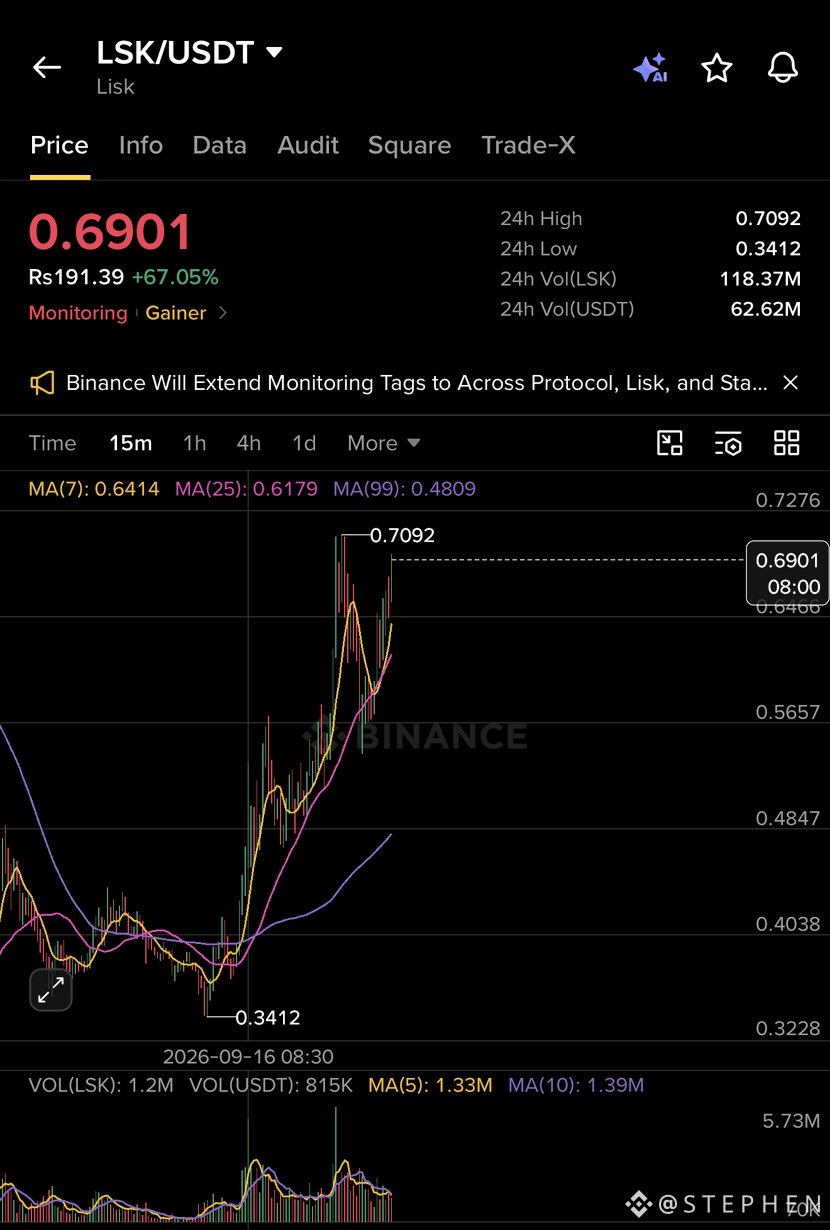
🚀 $LSK is moving FAST!
Lisk just pushed from the $0.34 zone to a high of $0.7092, showing strong momentum and volume.
📍 Current: $0.6901
🎯 Resistance: $0.709–$0.728
🟢 Support: $0.64–$0.66
🔥 Break & hold above $0.71 → momentum could continue
⚠️ After a +67% move, volatility can be high — manage risk carefully.
$LSK bulls are awake. 🐂🔥
{future}(LSKUSDT)
🚀 $LSK is moving FAST!
Lisk just pushed from the $0.34 zone to a high of $0.7092, showing strong momentum and volume.
📍 Current: $0.6901
🎯 Resistance: $0.709–$0.728
🟢 Support: $0.64–$0.66
🔥 Break & hold above $0.71 → momentum could continue
⚠️ After a +67% move, volatility can be high — manage risk carefully.
$LSK bulls are awake. 🐂🔥
Lisk just pushed from the $0.34 zone to a high of $0.7092, showing strong momentum and volume.
📍 Current: $0.6901
🎯 Resistance: $0.709–$0.728
🟢 Support: $0.64–$0.66
🔥 Break & hold above $0.71 → momentum could continue
⚠️ After a +67% move, volatility can be high — manage risk carefully.
$LSK bulls are awake. 🐂🔥
1
210
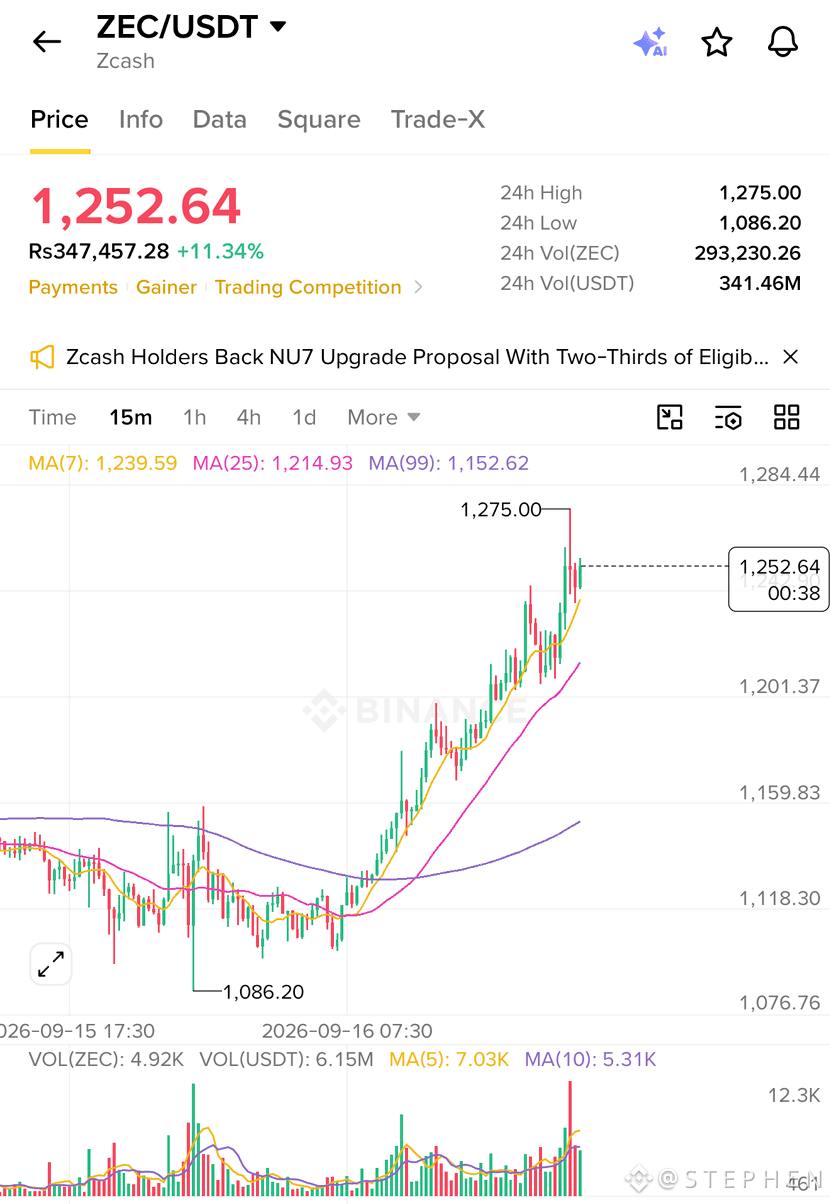
🚀 $ZEC is moving FAST!
Zcash is pushing higher after reclaiming the $1,200 zone, with buyers showing strong momentum.
📍 Current: ~$1,230
🎯 Resistance: $1,250–$1,300
🔥 Break & hold above $1,300 → momentum could continue
⚠️ After a sharp move, pullbacks are possible — manage risk carefully.
$ZEC bulls are awake. 🐂🔥
{future}(ZECUSDT)
🚀 $ZEC is moving FAST!
Zcash is pushing higher after reclaiming the $1,200 zone, with buyers showing strong momentum.
📍 Current: ~$1,230
🎯 Resistance: $1,250–$1,300
🔥 Break & hold above $1,300 → momentum could continue
⚠️ After a sharp move, pullbacks are possible — manage risk carefully.
$ZEC bulls are awake. 🐂🔥
Zcash is pushing higher after reclaiming the $1,200 zone, with buyers showing strong momentum.
📍 Current: ~$1,230
🎯 Resistance: $1,250–$1,300
🔥 Break & hold above $1,300 → momentum could continue
⚠️ After a sharp move, pullbacks are possible — manage risk carefully.
$ZEC bulls are awake. 🐂🔥
194
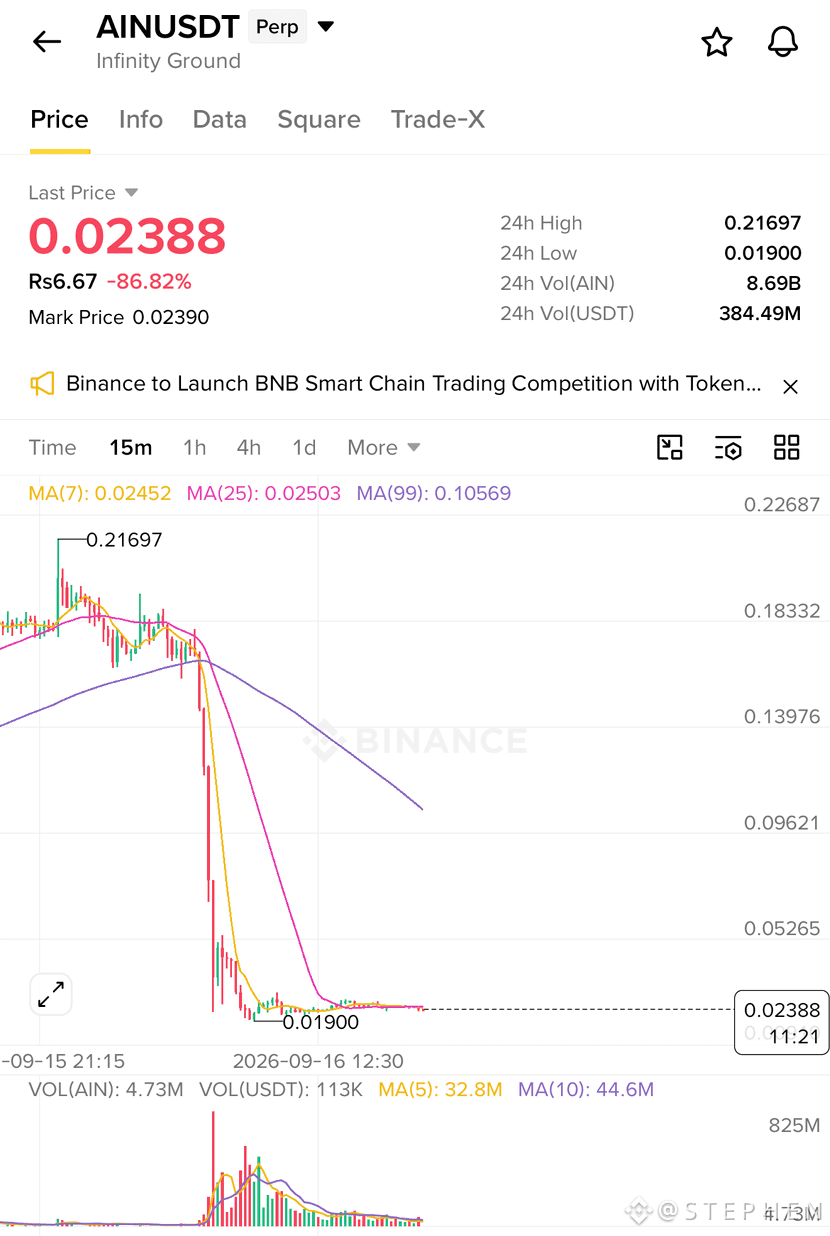
🚨 $AIN is in a critical zone!
$AIN has seen a massive sell-off from $0.21697 → $0.01900, but price is now trying to stabilize around $0.0239.
📍 Current: $0.02388
🟢 Support: $0.0190
🔑 Resistance: $0.0245–$0.0250
📈 A reclaim above $0.025 could signal short-term strength.
Volume has cooled significantly after the initial dump, so confirmation matters here.
Watching $AIN closely. 👀🔥
{future}(AINUSDT)
🚨 $AIN is in a critical zone!
$AIN has seen a massive sell-off from $0.21697 → $0.01900, but price is now trying to stabilize around $0.0239.
📍 Current: $0.02388
🟢 Support: $0.0190
🔑 Resistance: $0.0245–$0.0250
📈 A reclaim above $0.025 could signal short-term strength.
Volume has cooled significantly after the initial dump, so confirmation matters here.
Watching $AIN closely. 👀🔥
$AIN has seen a massive sell-off from $0.21697 → $0.01900, but price is now trying to stabilize around $0.0239.
📍 Current: $0.02388
🟢 Support: $0.0190
🔑 Resistance: $0.0245–$0.0250
📈 A reclaim above $0.025 could signal short-term strength.
Volume has cooled significantly after the initial dump, so confirmation matters here.
Watching $AIN closely. 👀🔥
316
·
--
බෙයාරිෂ්
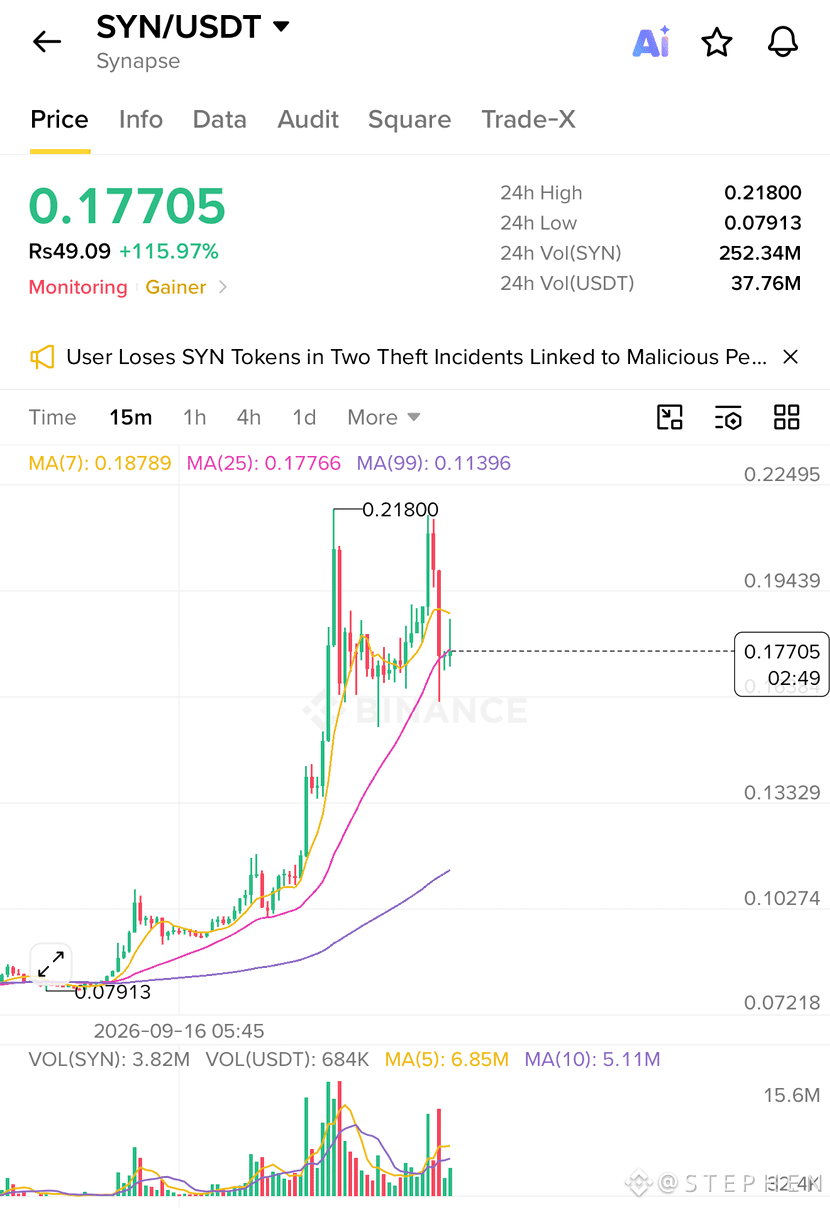
🚨 $SYN is showing serious momentum!
Synapse just ripped from $0.079 → $0.218, marking a massive move with strong volume.
📍 Current: $0.177
🎯 Resistance: $0.194–$0.218
🟢 Key support: $0.177
🔥 Holding above $0.177 could keep the bullish structure alive.
After a +115% move, volatility is high — manage risk carefully.
$SYN bulls are not slowing down yet. 🐂🔥
🚨 $SYN is showing serious momentum!
Synapse just ripped from $0.079 → $0.218, marking a massive move with strong volume.
📍 Current: $0.177
🎯 Resistance: $0.194–$0.218
🟢 Key support: $0.177
🔥 Holding above $0.177 could keep the bullish structure alive.
After a +115% move, volatility is high — manage risk carefully.
$SYN bulls are not slowing down yet. 🐂🔥
Synapse just ripped from $0.079 → $0.218, marking a massive move with strong volume.
📍 Current: $0.177
🎯 Resistance: $0.194–$0.218
🟢 Key support: $0.177
🔥 Holding above $0.177 could keep the bullish structure alive.
After a +115% move, volatility is high — manage risk carefully.
$SYN bulls are not slowing down yet. 🐂🔥
164
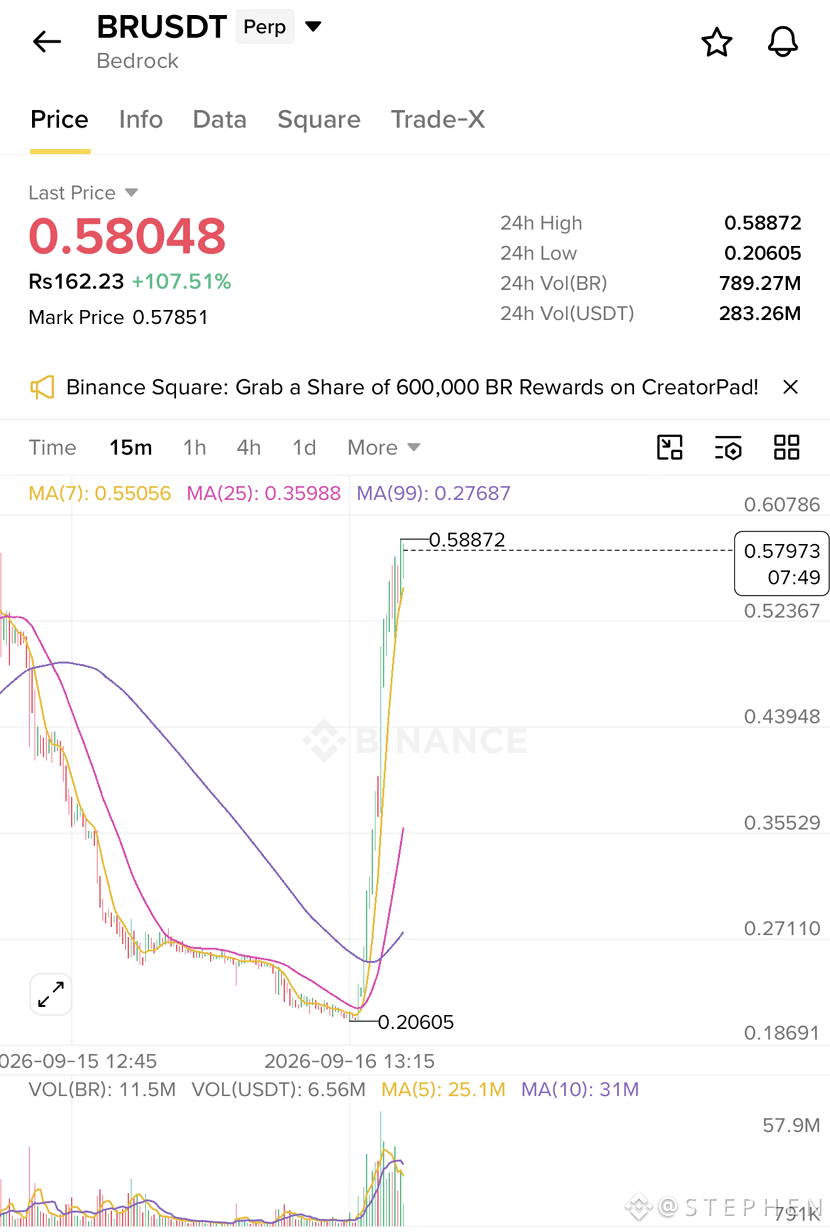
🚀 $BR is moving FAST!
Bedrock just broke out from the $0.20 zone and pushed up to $0.5887, with strong volume behind the move.
📍 Current: $0.58
🎯 Resistance: $0.588–$0.60
🔥 Break & hold above $0.60 → momentum could continue
⚠️ After a move this sharp, pullbacks can happen — manage risk carefully.
$BR bulls are awake. 🐂🔥
🚀 $BR is moving FAST!
Bedrock just broke out from the $0.20 zone and pushed up to $0.5887, with strong volume behind the move.
📍 Current: $0.58
🎯 Resistance: $0.588–$0.60
🔥 Break & hold above $0.60 → momentum could continue
⚠️ After a move this sharp, pullbacks can happen — manage risk carefully.
$BR bulls are awake. 🐂🔥
Bedrock just broke out from the $0.20 zone and pushed up to $0.5887, with strong volume behind the move.
📍 Current: $0.58
🎯 Resistance: $0.588–$0.60
🔥 Break & hold above $0.60 → momentum could continue
⚠️ After a move this sharp, pullbacks can happen — manage risk carefully.
$BR bulls are awake. 🐂🔥
326
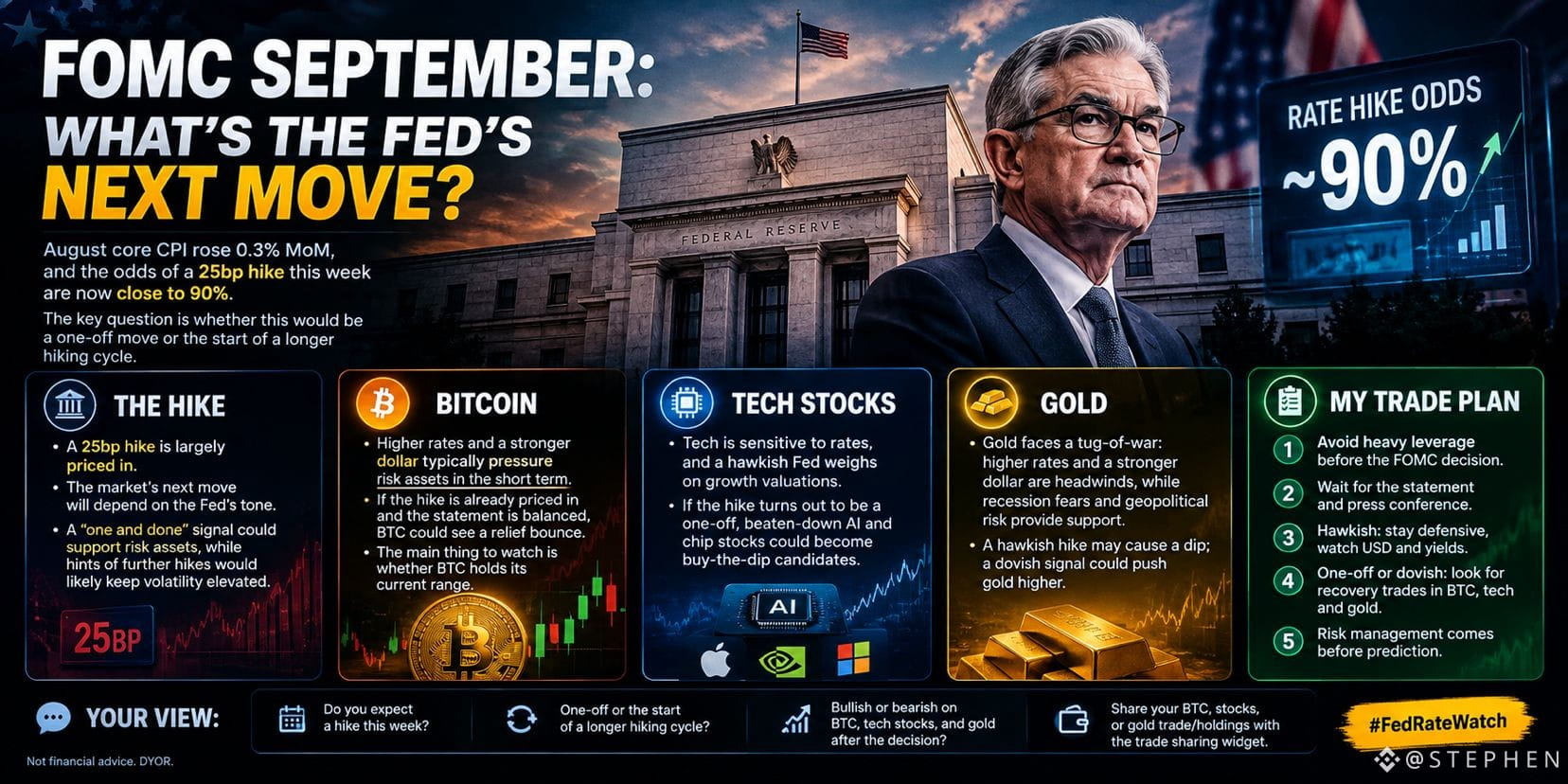
FOMC September: What's The Fed's Next Move?
August core CPI rose 0.3% month-over-month, and the odds of a 25bp hike this week are now close to 90%. The key question is whether this would be a one-off move or the start of a longer hiking cycle.
The Hike
A 25bp hike is largely priced in. The market's next move will depend on the Fed's tone. A "one and done" signal could support risk assets, while hints of further hikes would likely keep volatility elevated.
Bitcoin
Higher rates and a stronger dollar typically pressure risk assets in the short term. However, if the hike is already priced in and the statement is balanced, BTC could see a relief bounce. The main thing to watch is whether BTC holds its current range.
Tech Stocks
Tech is sensitive to rates, and a hawkish Fed weighs on growth valuations. If the hike turns out to be a one-off, beaten-down AI and chip stocks could become buy-the-dip candidates.
Gold
Gold faces a tug-of-war: higher rates and a stronger dollar are headwinds, while recession fears and geopolitical risk provide support. A hawkish hike may cause a dip; a dovish signal could push gold higher.
My Trade Plan
Avoid heavy leverage before the FOMC decision.
Wait for the statement and press conference.
Hawkish: stay defensive, watch USD and yields.
One-off or dovish: look for recovery trades in BTC, tech, and gold.
Risk management comes before prediction.
Your view:
Do you expect a hike this week?
One-off or the start of a longer hiking cycle?
Bullish or bearish on BTC, tech stocks, and gold after the decision?
Share your BTC, stocks, or gold trade/holdings with the trade sharing widget.
#FedRateWatch
Not financial advice. DYOR.
$SAGA
{future}(SAGAUSDT)
$AKE
{future}(AKEUSDT)
$BR
{future}(BRUSDT)
FOMC September: What's The Fed's Next Move?
August core CPI rose 0.3% month-over-month, and the odds of a 25bp hike this week are now close to 90%. The key question is whether this would be a one-off move or the start of a longer hiking cycle.
The Hike
A 25bp hike is largely priced in. The market's next move will depend on the Fed's tone. A "one and done" signal could support risk assets, while hints of further hikes would likely keep volatility elevated.
Bitcoin
Higher rates and a stronger dollar typically pressure risk assets in the short term. However, if the hike is already priced in and the statement is balanced, BTC could see a relief bounce. The main thing to watch is whether BTC holds its current range.
Tech Stocks
Tech is sensitive to rates, and a hawkish Fed weighs on growth valuations. If the hike turns out to be a one-off, beaten-down AI and chip stocks could become buy-the-dip candidates.
Gold
Gold faces a tug-of-war: higher rates and a stronger dollar are headwinds, while recession fears and geopolitical risk provide support. A hawkish hike may cause a dip; a dovish signal could push gold higher.
My Trade Plan
Avoid heavy leverage before the FOMC decision.
Wait for the statement and press conference.
Hawkish: stay defensive, watch USD and yields.
One-off or dovish: look for recovery trades in BTC, tech, and gold.
Risk management comes before prediction.
Your view:
Do you expect a hike this week?
One-off or the start of a longer hiking cycle?
Bullish or bearish on BTC, tech stocks, and gold after the decision?
Share your BTC, stocks, or gold trade/holdings with the trade sharing widget.
#FedRateWatch
Not financial advice. DYOR.
$SAGA
$AKE
$BR
August core CPI rose 0.3% month-over-month, and the odds of a 25bp hike this week are now close to 90%. The key question is whether this would be a one-off move or the start of a longer hiking cycle.
The Hike
A 25bp hike is largely priced in. The market's next move will depend on the Fed's tone. A "one and done" signal could support risk assets, while hints of further hikes would likely keep volatility elevated.
Bitcoin
Higher rates and a stronger dollar typically pressure risk assets in the short term. However, if the hike is already priced in and the statement is balanced, BTC could see a relief bounce. The main thing to watch is whether BTC holds its current range.
Tech Stocks
Tech is sensitive to rates, and a hawkish Fed weighs on growth valuations. If the hike turns out to be a one-off, beaten-down AI and chip stocks could become buy-the-dip candidates.
Gold
Gold faces a tug-of-war: higher rates and a stronger dollar are headwinds, while recession fears and geopolitical risk provide support. A hawkish hike may cause a dip; a dovish signal could push gold higher.
My Trade Plan
Avoid heavy leverage before the FOMC decision.
Wait for the statement and press conference.
Hawkish: stay defensive, watch USD and yields.
One-off or dovish: look for recovery trades in BTC, tech, and gold.
Risk management comes before prediction.
Your view:
Do you expect a hike this week?
One-off or the start of a longer hiking cycle?
Bullish or bearish on BTC, tech stocks, and gold after the decision?
Share your BTC, stocks, or gold trade/holdings with the trade sharing widget.
#FedRateWatch
Not financial advice. DYOR.
$SAGA
$AKE
$BR
12
12
285
සත්යායනය කළ
CPI IS THE MATCH. THE FED IS THE POWDER KEG.
Nonfarm payrolls just came in at 162K vs 55K expected — a blowout beat. Rate-hike odds didn't just rise, they exploded. Now CPI is around the corner, and the market is holding its breath.
Will the Fed hike or hold? My take: if core CPI prints hot, the Fed hikes. They can't ignore a resilient labor market. If CPI cools, they hold — but the damage to rate-cut dreams is already done.
I'm BULLISH on gold. I'm holding my XAU position and sharing it via the trade sharing widget. Gold has central-bank demand and acts as a hedge against policy chaos. Stocks? I'm bearish short-term — valuations are stretched and a hike would squeeze liquidity.
The setup is simple: NFP beat = hawkish risk. CPI = final trigger. I'm positioned for volatility.
What's your trade? Hike or hold? Bullish or bearish? Drop it with #CPIWatch
$TFUEL
{spot}(TFUELUSDT)
$RAY
{spot}(RAYUSDT)
$SAGA
{spot}(SAGAUSDT)
CPI IS THE MATCH. THE FED IS THE POWDER KEG.
Nonfarm payrolls just came in at 162K vs 55K expected — a blowout beat. Rate-hike odds didn't just rise, they exploded. Now CPI is around the corner, and the market is holding its breath.
Will the Fed hike or hold? My take: if core CPI prints hot, the Fed hikes. They can't ignore a resilient labor market. If CPI cools, they hold — but the damage to rate-cut dreams is already done.
I'm BULLISH on gold. I'm holding my XAU position and sharing it via the trade sharing widget. Gold has central-bank demand and acts as a hedge against policy chaos. Stocks? I'm bearish short-term — valuations are stretched and a hike would squeeze liquidity.
The setup is simple: NFP beat = hawkish risk. CPI = final trigger. I'm positioned for volatility.
What's your trade? Hike or hold? Bullish or bearish? Drop it with #CPIWatch
$TFUEL
$RAY
$SAGA
Nonfarm payrolls just came in at 162K vs 55K expected — a blowout beat. Rate-hike odds didn't just rise, they exploded. Now CPI is around the corner, and the market is holding its breath.
Will the Fed hike or hold? My take: if core CPI prints hot, the Fed hikes. They can't ignore a resilient labor market. If CPI cools, they hold — but the damage to rate-cut dreams is already done.
I'm BULLISH on gold. I'm holding my XAU position and sharing it via the trade sharing widget. Gold has central-bank demand and acts as a hedge against policy chaos. Stocks? I'm bearish short-term — valuations are stretched and a hike would squeeze liquidity.
The setup is simple: NFP beat = hawkish risk. CPI = final trigger. I'm positioned for volatility.
What's your trade? Hike or hold? Bullish or bearish? Drop it with #CPIWatch
$TFUEL
$RAY
$SAGA

37
26
7.3k
තවත් අන්තර්ගතයන් ගවේෂණය කිරීමට ඇතුල් වන්න
Binance චතුරශ්රය හි ගෝලීය ක්රිප්ටෝ පරිශීලකයින් හා එක්වන්න
⚡️ ක්රිප්ටෝ පිළිබඳ නවතම සහ ප්රයෝජනවත් තොරතුරු ලබා ගන්න.
💬 ලොව විශාලතම ක්රිප්ටෝ හුවමාරුව මගින් විශ්වාස කෙරේ.
👍 සත්යායනය කරන ලද නිර්මාණකරුවන්ගෙන් සැබෑ විදසුන් සොයා ගන්න.
විද්යුත් තැපෑල / දුරකථන අංකය
නැගී එන මාතෘකා
BinancePick
2.6M නැරඹීම්
141,866 සාකච්ඡා කරමින්
Join #EarningsSeason: Predict Earnings on Binance Pick, Share Your Take on Binance Square!
Binance Square Official
·401 කැමත්ත දැක්වීම්
·338.5k නැරඹීම්
EarningsSeason
5M නැරඹීම්
24,385 සාකච්ඡා කරමින්
FranklinTempletonFilesForTwoDividendToBitcoinETFs
2,034 නැරඹීම්
111 සාකච්ඡා කරමින්