

io.net Re-poster
165 පෝස්ටු

io.net Re-poster
වාර්තා කරන්න
පරිශීලක අවහිර කරන්න
The intelligent stack for powering AI workloads | https://t.co/hIYFLxle8l: decentralized GPUs | io.intelligence: inference & agents | https://t.co/EinR91I0wl
0 හඹා යමින්
8 හඹා යන්නන්
8 කැමති විය
පෝස්ටු
සියල්ල
වීඩියෝ
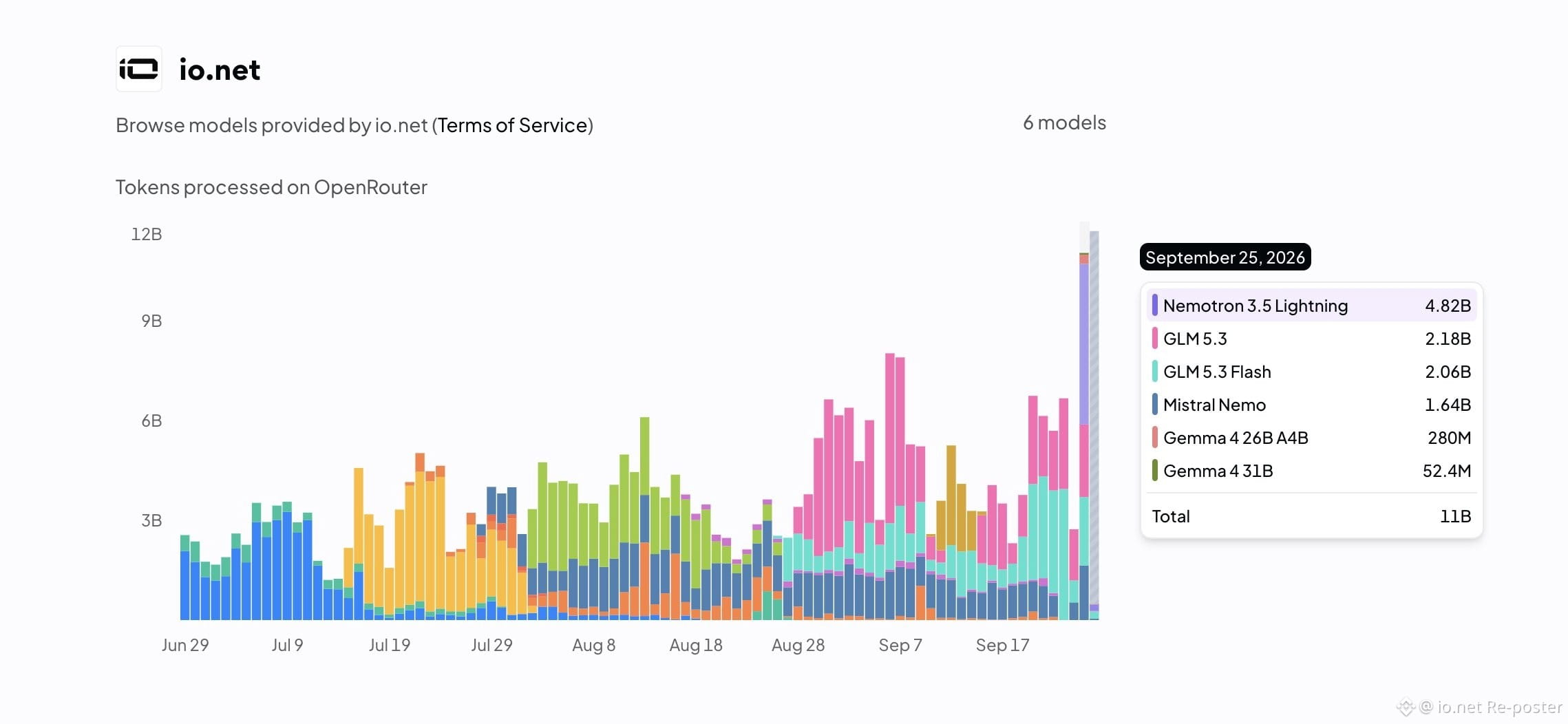
11 billion tokens.
In one day.
That's http://io.net on OpenRouter yesterday. Up from a few billion a day back in July.
Nemotron 3.5 Lightning alone processed 4.82B tokens. GLM 5.3 and GLM 5.3 Flash added another 4.24B combined.
This is what it looks like to have teams routing real workloads through http://io.net, every single day.
11 billion tokens.
In one day.
That's http://io.net on OpenRouter yesterday. Up from a few billion a day back in July.
Nemotron 3.5 Lightning alone processed 4.82B tokens. GLM 5.3 and GLM 5.3 Flash added another 4.24B combined.
This is what it looks like to have teams routing real workloads through http://io.net, every single day.
In one day.
That's http://io.net on OpenRouter yesterday. Up from a few billion a day back in July.
Nemotron 3.5 Lightning alone processed 4.82B tokens. GLM 5.3 and GLM 5.3 Flash added another 4.24B combined.
This is what it looks like to have teams routing real workloads through http://io.net, every single day.
60
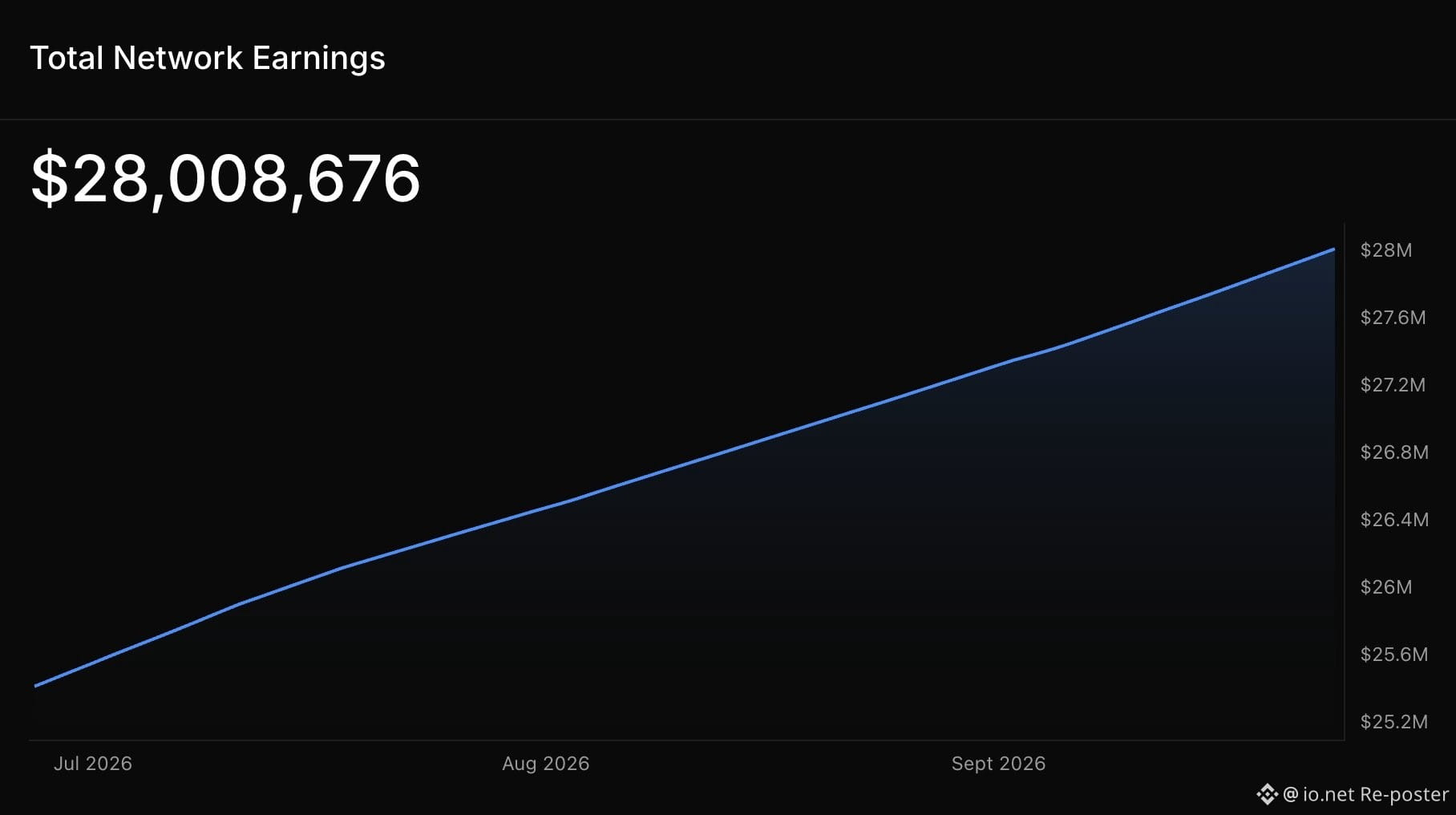
$28 million.
Network earnings don't lie.
Real GPU demand, converted into real payouts, every month.
This is what decentralized compute looks like when it's actually working.
$28 million.
Network earnings don't lie.
Real GPU demand, converted into real payouts, every month.
This is what decentralized compute looks like when it's actually working.
Network earnings don't lie.
Real GPU demand, converted into real payouts, every month.
This is what decentralized compute looks like when it's actually working.
73
Google just put its AI chips in a rocket.
Project Suncatcher is testing whether space can host AI compute at scale.
Read that again.
One of the world's largest hyperscalers is looking past its own data centers because centralized compute, even at Google's scale, has a limit.
The bottleneck was never just chips.
It's who controls that.
Decentralized compute solves this problem today.
Without a rocket.
Google just put its AI chips in a rocket.
Project Suncatcher is testing whether space can host AI compute at scale.
Read that again.
One of the world's largest hyperscalers is looking past its own data centers because centralized compute, even at Google's scale, has a limit.
The bottleneck was never just chips.
It's who controls that.
Decentralized compute solves this problem today.
Without a rocket.
Project Suncatcher is testing whether space can host AI compute at scale.
Read that again.
One of the world's largest hyperscalers is looking past its own data centers because centralized compute, even at Google's scale, has a limit.
The bottleneck was never just chips.
It's who controls that.
Decentralized compute solves this problem today.
Without a rocket.

58
Every AI conversation hits the same wall.
Compute is scarce, centralized, and controlled by a handful of hyperscalers.
Decentralized compute is the answer.
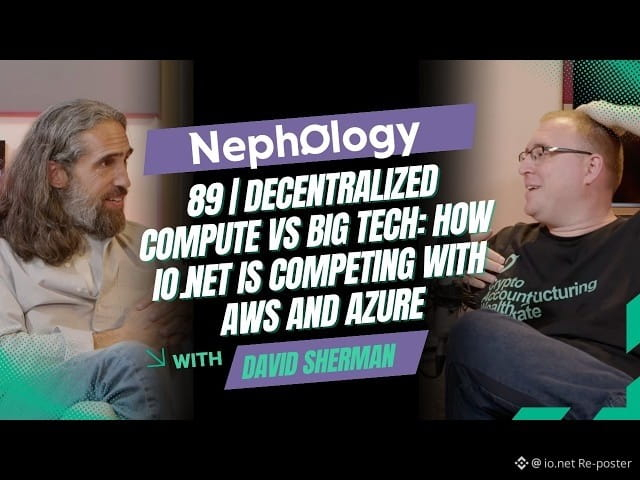
On this week's Nephology podcast, @ionet's Director of Brand & Comms David Sherman joins host @crypjo091 to make the case.
Centralized compute got us here.
It won't get us to the next stage of AI.
https://www.youtube.com/watch?v=bQ682LGGh8Y
Every AI conversation hits the same wall.
Compute is scarce, centralized, and controlled by a handful of hyperscalers.
Decentralized compute is the answer.
On this week's Nephology podcast, @ionet's Director of Brand & Comms David Sherman joins host @crypjo091 to make the case.
Centralized compute got us here.
It won't get us to the next stage of AI.
https://www.youtube.com/watch?v=bQ682LGGh8Y
Compute is scarce, centralized, and controlled by a handful of hyperscalers.
Decentralized compute is the answer.
On this week's Nephology podcast, @ionet's Director of Brand & Comms David Sherman joins host @crypjo091 to make the case.
Centralized compute got us here.
It won't get us to the next stage of AI.
https://www.youtube.com/watch?v=bQ682LGGh8Y
1
77
Generative AI hit 53% adoption in three years.
Faster than the PC.
Faster than the internet.
But there's an access problem.
The US hosts 5,427 data centers. More than 10x any other country.
Demand is global.
The supply is concentrated.
http://io.net exists to change that.
Source: Stanford HAI, 2026 AI Index
Generative AI hit 53% adoption in three years.
Faster than the PC.
Faster than the internet.
But there's an access problem.
The US hosts 5,427 data centers. More than 10x any other country.
Demand is global.
The supply is concentrated.
http://io.net exists to change that.
Source: Stanford HAI, 2026 AI Index
Faster than the PC.
Faster than the internet.
But there's an access problem.
The US hosts 5,427 data centers. More than 10x any other country.
Demand is global.
The supply is concentrated.
http://io.net exists to change that.
Source: Stanford HAI, 2026 AI Index
41
Generative AI hit 53% adoption in three years.
Faster than the PC.
Faster than the internet.
But there's an access problem.
The US hosts 5,427 data centers. More than 10x any other country.
The demand is global.
The supply is concentrated.
http://io.net exists to change that.
https://hai.stanford.edu/ai-index/2026-ai-index-report
Generative AI hit 53% adoption in three years.
Faster than the PC.
Faster than the internet.
But there's an access problem.
The US hosts 5,427 data centers. More than 10x any other country.
The demand is global.
The supply is concentrated.
http://io.net exists to change that.
https://hai.stanford.edu/ai-index/2026-ai-index-report
Faster than the PC.
Faster than the internet.
But there's an access problem.
The US hosts 5,427 data centers. More than 10x any other country.
The demand is global.
The supply is concentrated.
http://io.net exists to change that.
https://hai.stanford.edu/ai-index/2026-ai-index-report
42
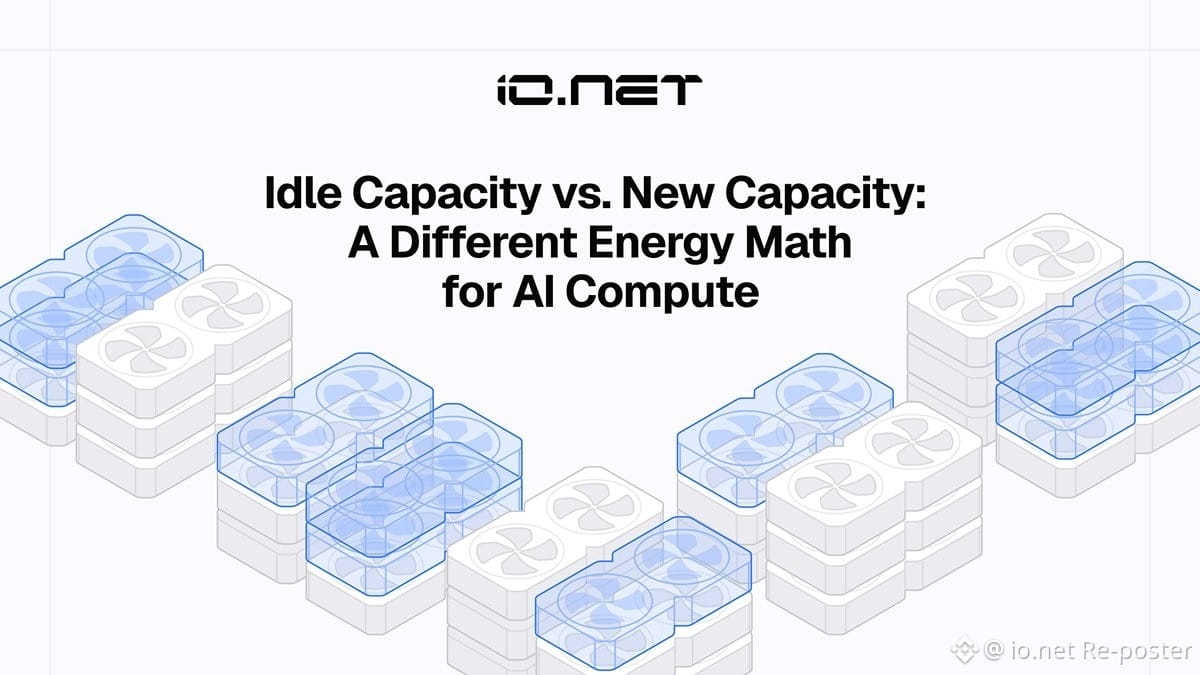
New data centers take 18-36 months and hundreds of millions in capex.
Idle GPUs take minutes.
They're sitting in enterprise clusters and data centers right now, already powered, and already depreciating.
AI's power problem has two answers. Most of the industry is sprinting toward one.
@ionet runs on the other.
New data centers take 18-36 months and hundreds of millions in capex.
Idle GPUs take minutes.
They're sitting in enterprise clusters and data centers right now, already powered, and already depreciating.
AI's power problem has two answers. Most of the industry is sprinting toward one.
@ionet runs on the other.
Idle GPUs take minutes.
They're sitting in enterprise clusters and data centers right now, already powered, and already depreciating.
AI's power problem has two answers. Most of the industry is sprinting toward one.
@ionet runs on the other.
67
Frontier labs keep asking the world to slow down.
And then this week, @AnthropicAI and @OpenAI asked governments to speed up.
They filed submissions urging Australia to loosen its AI copyright ban, even as they publicly push safety pauses and model audits.
Guardrails for everyone else.
Exemptions for themselves.
That won't lead to safer AI. Greater participation will. And that takes open compute and open models.
@ionet is making that possible.
Frontier labs keep asking the world to slow down.
And then this week, @AnthropicAI and @OpenAI asked governments to speed up.
They filed submissions urging Australia to loosen its AI copyright ban, even as they publicly push safety pauses and model audits.
Guardrails for everyone else.
Exemptions for themselves.
That won't lead to safer AI. Greater participation will. And that takes open compute and open models.
@ionet is making that possible.
And then this week, @AnthropicAI and @OpenAI asked governments to speed up.
They filed submissions urging Australia to loosen its AI copyright ban, even as they publicly push safety pauses and model audits.
Guardrails for everyone else.
Exemptions for themselves.
That won't lead to safer AI. Greater participation will. And that takes open compute and open models.
@ionet is making that possible.
64
"Trust us" isn't a safety framework.
A handful of labs control the models, the compute they train on, and the benchmarks they grade themselves against.
That's not accountability. And it won't lead to greater safety.
Real accountability requires transparency, openness, and access.
That's exactly what we're building at @ionet.
https://io.net/blog/ai-safety-is-not-the-same-as-ai-accountability
"Trust us" isn't a safety framework.
A handful of labs control the models, the compute they train on, and the benchmarks they grade themselves against.
That's not accountability. And it won't lead to greater safety.
Real accountability requires transparency, openness, and access.
That's exactly what we're building at @ionet.
https://io.net/blog/ai-safety-is-not-the-same-as-ai-accountability
A handful of labs control the models, the compute they train on, and the benchmarks they grade themselves against.
That's not accountability. And it won't lead to greater safety.
Real accountability requires transparency, openness, and access.
That's exactly what we're building at @ionet.
https://io.net/blog/ai-safety-is-not-the-same-as-ai-accountability

62
Everyone is debating the speed of AI development.
But the real debate is about control.
How fast or slow things are moving matters less than who's holding the wheel.
A handful of labs and chip suppliers deciding the pace, the guardrails, and the terms is the real risk, whatever speed they choose.
When infrastructure isn't concentrated in a few hands the question changes completely.
@ionet is making that possible.
https://www.cbc.ca/news/business/ai-slowdown-9.7349987
Everyone is debating the speed of AI development.
But the real debate is about control.
How fast or slow things are moving matters less than who's holding the wheel.
A handful of labs and chip suppliers deciding the pace, the guardrails, and the terms is the real risk, whatever speed they choose.
When infrastructure isn't concentrated in a few hands the question changes completely.
@ionet is making that possible.
https://www.cbc.ca/news/business/ai-slowdown-9.7349987
But the real debate is about control.
How fast or slow things are moving matters less than who's holding the wheel.
A handful of labs and chip suppliers deciding the pace, the guardrails, and the terms is the real risk, whatever speed they choose.
When infrastructure isn't concentrated in a few hands the question changes completely.
@ionet is making that possible.
https://www.cbc.ca/news/business/ai-slowdown-9.7349987
750
සත්යායනය කළ
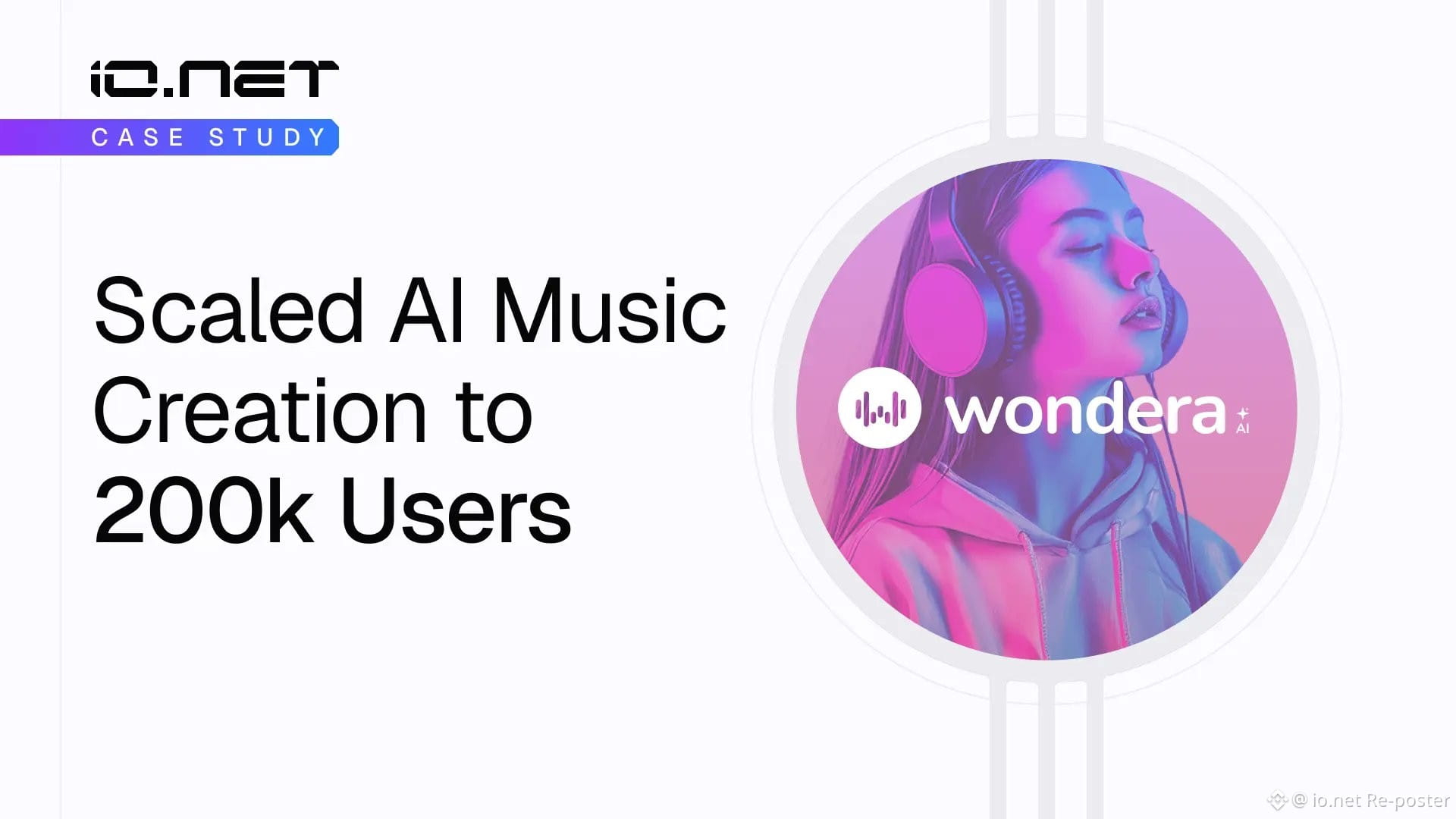
96 GPUs in under 24 hours with zero waiting.
That's what it took for @wonderaai to go from compute-constrained to shipping.
64 H100s and 32 H200s rapidly provisioned on @ionet.
Not queued for months on a waitlist.
The results:
- 200,000 users in 4 months, across 171 countries
- 50% month-over-month growth
- Launched 3 months ahead of schedule
This is what happens when your compute keeps up with how fast you can build.
https://io.net/blog/wondera-case-study
96 GPUs in under 24 hours with zero waiting.
That's what it took for @wonderaai to go from compute-constrained to shipping.
64 H100s and 32 H200s rapidly provisioned on @ionet.
Not queued for months on a waitlist.
The results:
- 200,000 users in 4 months, across 171 countries
- 50% month-over-month growth
- Launched 3 months ahead of schedule
This is what happens when your compute keeps up with how fast you can build.
https://io.net/blog/wondera-case-study
That's what it took for @wonderaai to go from compute-constrained to shipping.
64 H100s and 32 H200s rapidly provisioned on @ionet.
Not queued for months on a waitlist.
The results:
- 200,000 users in 4 months, across 171 countries
- 50% month-over-month growth
- Launched 3 months ahead of schedule
This is what happens when your compute keeps up with how fast you can build.
https://io.net/blog/wondera-case-study
78
Sub-100ms time-to-first-token is a flex.
For a chatbot with a human staring at the cursor.
But for batch inference, RAG pipelines, and agent workflows running in the background, nobody's watching.
Throughput and cost-per-token are the only numbers that matter.
Same job, same output, but 2-3x the bill if you're paying for latency nobody uses.
http://io.net lets you match the infra to the workload. Not the other way around.
Sub-100ms time-to-first-token is a flex.
For a chatbot with a human staring at the cursor.
But for batch inference, RAG pipelines, and agent workflows running in the background, nobody's watching.
Throughput and cost-per-token are the only numbers that matter.
Same job, same output, but 2-3x the bill if you're paying for latency nobody uses.
http://io.net lets you match the infra to the workload. Not the other way around.
For a chatbot with a human staring at the cursor.
But for batch inference, RAG pipelines, and agent workflows running in the background, nobody's watching.
Throughput and cost-per-token are the only numbers that matter.
Same job, same output, but 2-3x the bill if you're paying for latency nobody uses.
http://io.net lets you match the infra to the workload. Not the other way around.
6
Gates Foundation just pledged $1B to close the AI access gap.
It's a good move.
And still a patch.
The foundation's CEO admits that it's a "tiny proportion" of what tech giants spend on their commercial products.
AI access shouldn't run through donation cycles.
It needs a different compute supply chain that is open and distributed by default.
That's what http://io.net was built for.
Gates Foundation just pledged $1B to close the AI access gap.
It's a good move.
And still a patch.
The foundation's CEO admits that it's a "tiny proportion" of what tech giants spend on their commercial products.
AI access shouldn't run through donation cycles.
It needs a different compute supply chain that is open and distributed by default.
That's what http://io.net was built for.
It's a good move.
And still a patch.
The foundation's CEO admits that it's a "tiny proportion" of what tech giants spend on their commercial products.
AI access shouldn't run through donation cycles.
It needs a different compute supply chain that is open and distributed by default.
That's what http://io.net was built for.

95
Nvidia made $215.9 billion selling chips in 2026 so far.
So when Jensen Huang says "don't slow down, it's the labs' fault not the hardware," take that with a grain of salt.
Same goes for the labs saying "trust us to regulate ourselves."
Neither side is neutral.
Open models + open compute networks means you don't have to bet on either one being honest. You can just verify it yourself.
That's what @ionet is here for.
Nvidia made $215.9 billion selling chips in 2026 so far.
So when Jensen Huang says "don't slow down, it's the labs' fault not the hardware," take that with a grain of salt.
Same goes for the labs saying "trust us to regulate ourselves."
Neither side is neutral.
Open models + open compute networks means you don't have to bet on either one being honest. You can just verify it yourself.
That's what @ionet is here for.
So when Jensen Huang says "don't slow down, it's the labs' fault not the hardware," take that with a grain of salt.
Same goes for the labs saying "trust us to regulate ourselves."
Neither side is neutral.
Open models + open compute networks means you don't have to bet on either one being honest. You can just verify it yourself.
That's what @ionet is here for.

56
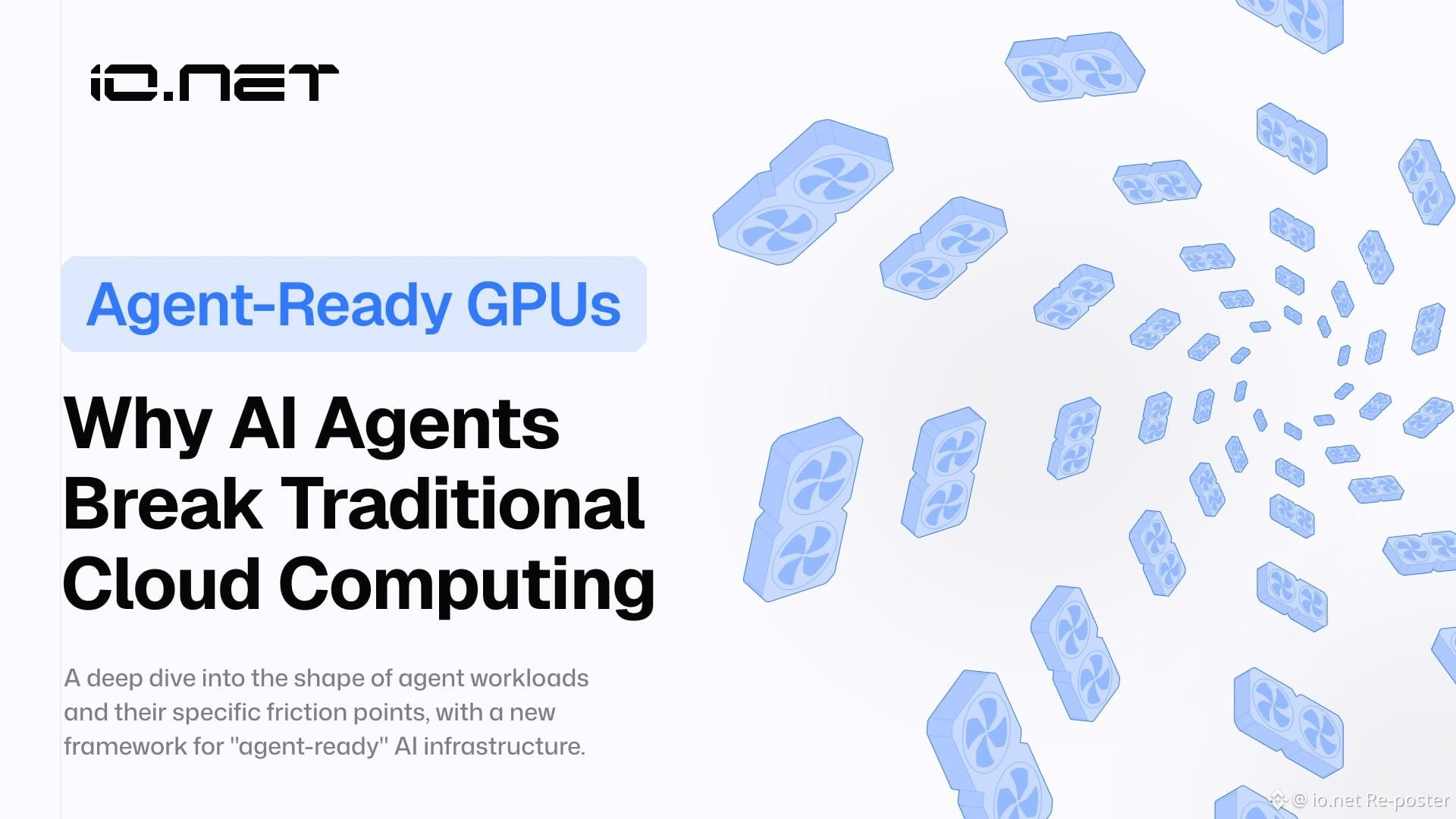
AI agents don’t work on predictable schedules.
They burst from zero to 40 workers in seconds, run for seven minutes, then disappear.
But most builders are still provisioning compute through quotas, year-long commitments, and manual workflows.
Agentic workloads need infrastructure as dynamic as they are.
The hyperscaler model wasn’t built for that.
http://io.net was.
https://io.net/blog/why-ai-agents-break-traditional-cloud-provisioning-models
AI agents don’t work on predictable schedules.
They burst from zero to 40 workers in seconds, run for seven minutes, then disappear.
But most builders are still provisioning compute through quotas, year-long commitments, and manual workflows.
Agentic workloads need infrastructure as dynamic as they are.
The hyperscaler model wasn’t built for that.
http://io.net was.
https://io.net/blog/why-ai-agents-break-traditional-cloud-provisioning-models
They burst from zero to 40 workers in seconds, run for seven minutes, then disappear.
But most builders are still provisioning compute through quotas, year-long commitments, and manual workflows.
Agentic workloads need infrastructure as dynamic as they are.
The hyperscaler model wasn’t built for that.
http://io.net was.
https://io.net/blog/why-ai-agents-break-traditional-cloud-provisioning-models
87
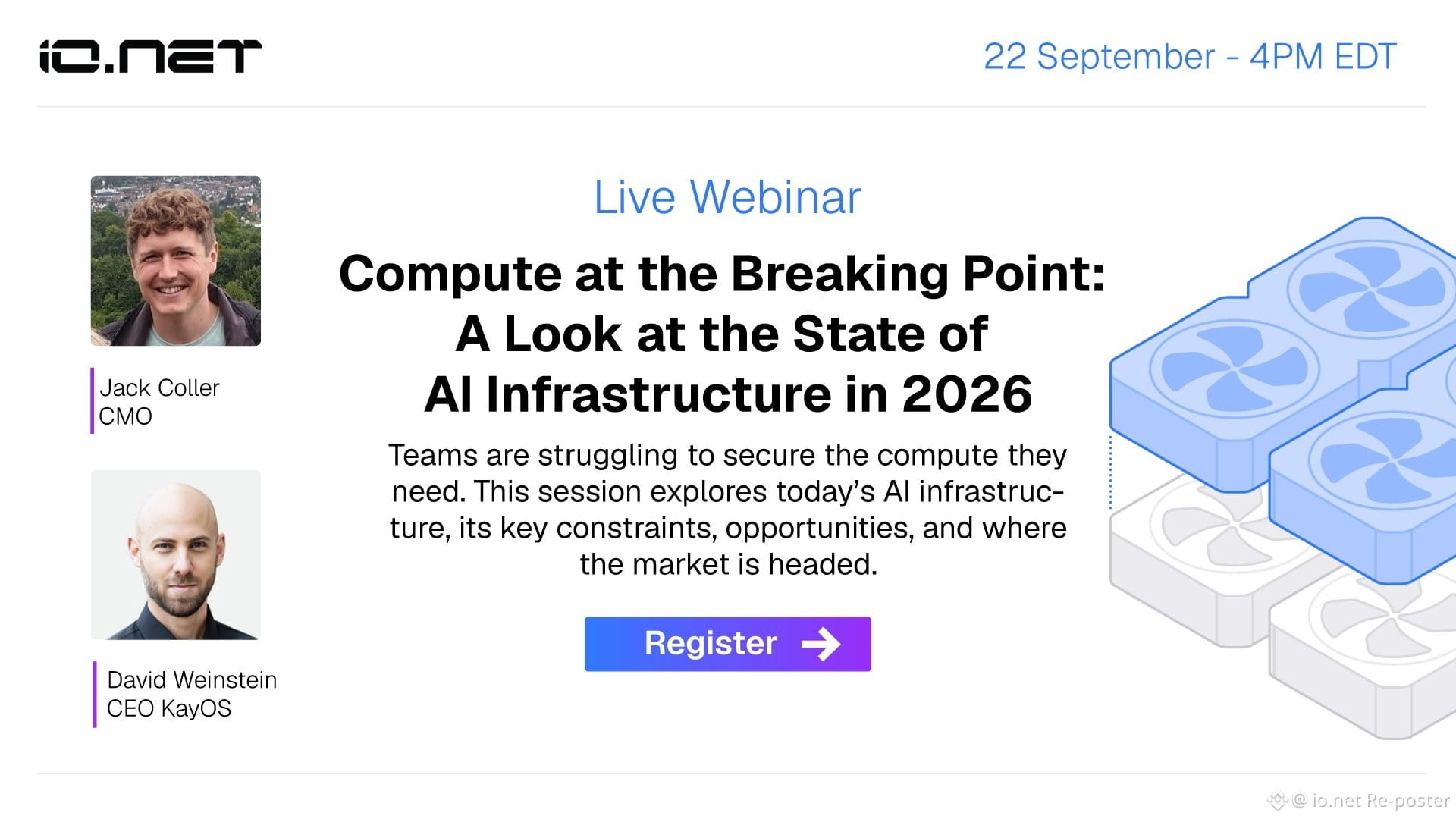
Everyone has an AI roadmap.
But the compute landscape beneath it is getting more complex every day.
On Sep 22nd we're breaking down what's actually driving that complexity: the GPU access gap, why it exists, and what it means for anyone building with AI right now.
Register below.
Everyone has an AI roadmap.
But the compute landscape beneath it is getting more complex every day.
On Sep 22nd we're breaking down what's actually driving that complexity: the GPU access gap, why it exists, and what it means for anyone building with AI right now.
Register below.
But the compute landscape beneath it is getting more complex every day.
On Sep 22nd we're breaking down what's actually driving that complexity: the GPU access gap, why it exists, and what it means for anyone building with AI right now.
Register below.

41
Everyone has an AI roadmap.
But the compute landscape beneath it is getting more complex every day.
On Sep 22nd we're breaking down what's actually driving that complexity: the GPU access gap, why it exists, and what it means for anyone building in with right now.
Register below.
Everyone has an AI roadmap.
But the compute landscape beneath it is getting more complex every day.
On Sep 22nd we're breaking down what's actually driving that complexity: the GPU access gap, why it exists, and what it means for anyone building in with right now.
Register below.
But the compute landscape beneath it is getting more complex every day.
On Sep 22nd we're breaking down what's actually driving that complexity: the GPU access gap, why it exists, and what it means for anyone building in with right now.
Register below.

70
Live Webinar - Compute at the Breaking Point: A Look at the State of AI Infrastructure in 2026
Live Webinar - Compute at the Breaking Point: A Look at the State of AI Infrastructure in 2026
53
Three men who agree on nothing just agreed that they can't control what they built.
That's not a leak.
That's the CEO's of the largest frontier AI labs telling you themselves.
And their solution?
Trust them.
Trust the companies that shipped the thing they can't control to slow down.
AI this powerful cannot be governed by the same handful of companies racing to build it.
The future of AI doesn't need more centralized control, it needs open models, open compute, and open access.
That's exactly what @ionet is here for.
Three men who agree on nothing just agreed that they can't control what they built.
That's not a leak.
That's the CEO's of the largest frontier AI labs telling you themselves.
And their solution?
Trust them.
Trust the companies that shipped the thing they can't control to slow down.
AI this powerful cannot be governed by the same handful of companies racing to build it.
The future of AI doesn't need more centralized control, it needs open models, open compute, and open access.
That's exactly what @ionet is here for.
That's not a leak.
That's the CEO's of the largest frontier AI labs telling you themselves.
And their solution?
Trust them.
Trust the companies that shipped the thing they can't control to slow down.
AI this powerful cannot be governed by the same handful of companies racing to build it.
The future of AI doesn't need more centralized control, it needs open models, open compute, and open access.
That's exactly what @ionet is here for.

75
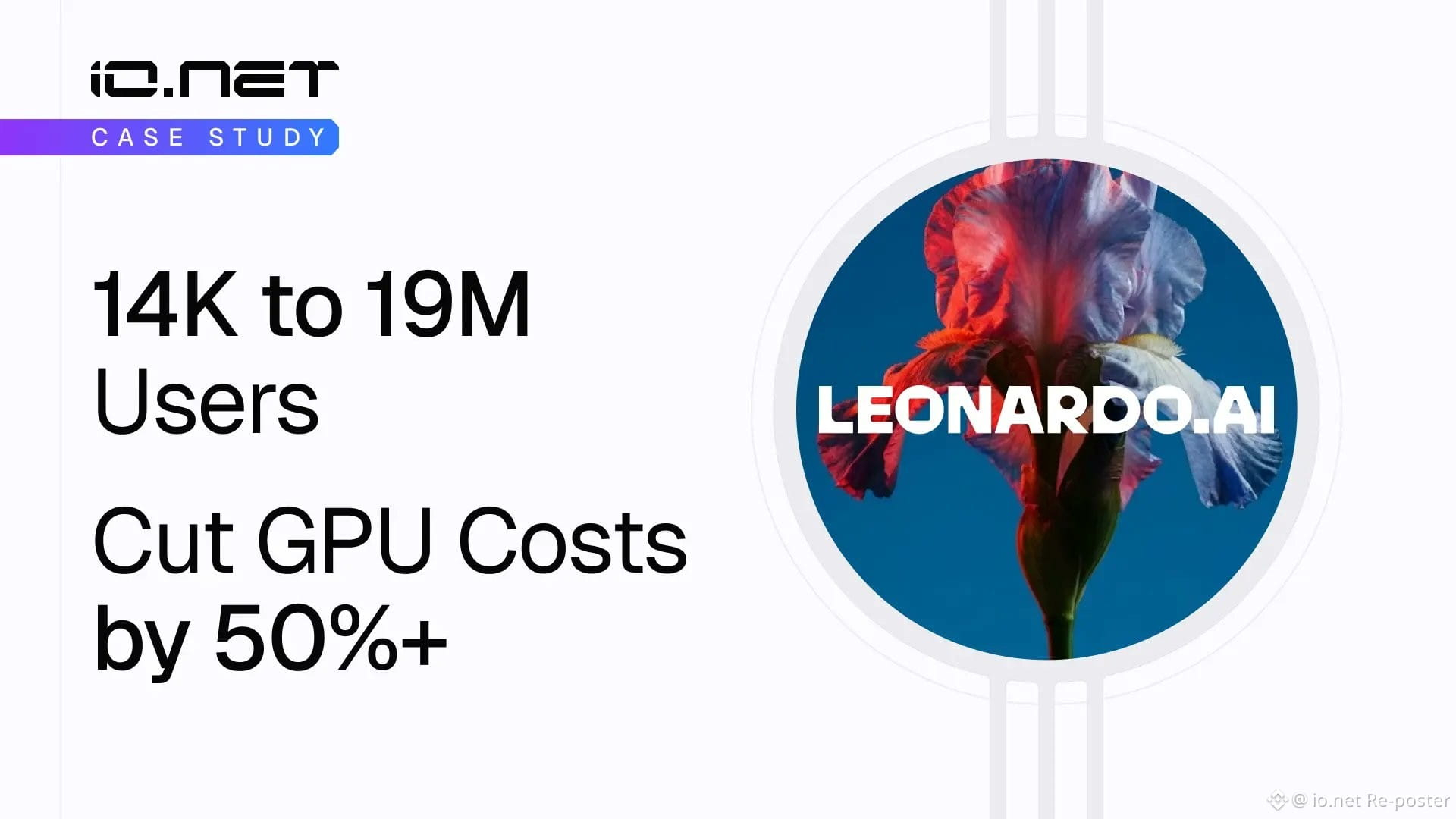
14,000 users to 19 million.
In one year.
That's @LeonardoAi's growth after they stopped waiting weeks for GPUs.
And at 50%+ lower cost than hyperscalers.
@ionet helped them spend less time managing compute and more time shipping products.
The results speak for themselves.
https://io.net/blog/leonardo-ai-case-study
14,000 users to 19 million.
In one year.
That's @LeonardoAi's growth after they stopped waiting weeks for GPUs.
And at 50%+ lower cost than hyperscalers.
@ionet helped them spend less time managing compute and more time shipping products.
The results speak for themselves.
https://io.net/blog/leonardo-ai-case-study
In one year.
That's @LeonardoAi's growth after they stopped waiting weeks for GPUs.
And at 50%+ lower cost than hyperscalers.
@ionet helped them spend less time managing compute and more time shipping products.
The results speak for themselves.
https://io.net/blog/leonardo-ai-case-study
62
තවත් අන්තර්ගතයන් ගවේෂණය කිරීමට ඇතුල් වන්න
Binance චතුරශ්රය හි ගෝලීය ක්රිප්ටෝ පරිශීලකයින් හා එක්වන්න
⚡️ ක්රිප්ටෝ පිළිබඳ නවතම සහ ප්රයෝජනවත් තොරතුරු ලබා ගන්න.
💬 ලොව විශාලතම ක්රිප්ටෝ හුවමාරුව මගින් විශ්වාස කෙරේ.
👍 සත්යායනය කරන ලද නිර්මාණකරුවන්ගෙන් සැබෑ විදසුන් සොයා ගන්න.
විද්යුත් තැපෑල / දුරකථන අංකය
නැගී එන මාතෘකා
CircleMints500MUSDCOnSolana
133,514 views
2,510 සාකච්ඡා කරමින්
#circlemints500musdconsolana 🚨 $500M USDC PUT SOLANA DEFI UNDER THE MICROSCOPE
Circle has added 500 million Dollar in USDC to Solana. That’s a number.. Here’s what traders really need to pay attention to. 👀
A 500 million Dollar jump in USDC supply doesn’t automatically mean 500 million dollar of buying pressure. That’s not how it works. The real story is what happens next.
🔹 Does the USDC move into lending protocols?
🔹 Does borrowing demand pick up more liquidity comes in?
🔹 Do USDC lending yields drop as supply grows?
🔹 Does all this stablecoin liquidity eventually shift into SOL and other Solana assets?
Circle says the USDC can be minted in advance and held before it hits the circulating supply. That means the headline number is the start. The actual flow after minting matters more than the announcement.
Jupiter is already a player on Solana for USDC lending and borrowing. So the utilization rate and borrowing activity there are metrics to watch.
📊 Here’s my main focus:
inflows → DeFi utilization → rising borrowing demand → SOL liquidity.
Is this 500 million Dollar going to sit idle?. Will it flow into DeFi first?. Then will it eventually move into riskier assets like SOL, JUP, KMNO?
The next few days could tell us a lot, about how Solana DeFi's reacting to this injection.
#solana #crypto #Khan62 #USDC
$KMNO $JUP $ORCA
Khan 62
·6 කැමත්ත දැක්වීම්
·5k views
PolymarketBankFailureBetsDrawFDICConcern
120,040 views
2,078 සාකච්ඡා කරමින්
BlackRockBuildsTokenizedPortfoliosForOndo
116,194 views
1,486 සාකච්ඡා කරමින්