

Dcprosan
13 පෝස්ටු
Dcprosan
වාර්තා කරන්න
පරිශීලක අවහිර කරන්න

{ටෝකන්} දරන්නා
නිතර වෙළෙන්දා
{වේලාව} වසර
9 හඹා යමින්
21 හඹා යන්නන්
22 කැමති විය
පෝස්ටු
සියල්ල
වීඩියෝ
·
--
Binance Pumpkin Camp is coming! 🎃
Who says learning crypto has to be scary? This Halloween, we are making it a treat:
🚀10 days to Level up your XP and Knowledge
🏆Quests, Badges, and a Graduation Card waiting for you at the finish line!
🎁 A 6,000 USDC prize pool for the top 2,000 participants on the leaderboard.
No tricks - just treats! Learning with Binance daily is not scary.
🎃Stay tuned! #BinancePumpkinCamp
Campaign Period: Oct 24 - Nov 02, 2026
Disclaimer: Digital assets are volatile; you may lose some or all of your investment. NFA. See our Terms of Use and Risk Warning.
Binance Pumpkin Camp is coming! 🎃
Who says learning crypto has to be scary? This Halloween, we are making it a treat:
🚀10 days to Level up your XP and Knowledge
🏆Quests, Badges, and a Graduation Card waiting for you at the finish line!
🎁 A 6,000 USDC prize pool for the top 2,000 participants on the leaderboard.
No tricks - just treats! Learning with Binance daily is not scary.
🎃Stay tuned! #BinancePumpkinCamp
Campaign Period: Oct 24 - Nov 02, 2026
Disclaimer: Digital assets are volatile; you may lose some or all of your investment. NFA. See our Terms of Use and Risk Warning.
Who says learning crypto has to be scary? This Halloween, we are making it a treat:
🚀10 days to Level up your XP and Knowledge
🏆Quests, Badges, and a Graduation Card waiting for you at the finish line!
🎁 A 6,000 USDC prize pool for the top 2,000 participants on the leaderboard.
No tricks - just treats! Learning with Binance daily is not scary.
🎃Stay tuned! #BinancePumpkinCamp
Campaign Period: Oct 24 - Nov 02, 2026
Disclaimer: Digital assets are volatile; you may lose some or all of your investment. NFA. See our Terms of Use and Risk Warning.
1
83
·
--
🎓 Another step in understanding financial markets.
I've completed Binance Academy's Understanding Bonds course!
One fundamental relationship explains so much financial news: when interest rates rise, bond prices generally fall. But understanding the relationship is only the beginning—bond markets can influence everything from portfolio valuations to broader market sentiment.
The more I learn about traditional finance, the better I can connect the dots across markets.
Always learning. Always improving. 📚
#BinanceAcademyCourse #BinanceAcademy
🎓 Another step in understanding financial markets.
I've completed Binance Academy's Understanding Bonds course!
One fundamental relationship explains so much financial news: when interest rates rise, bond prices generally fall. But understanding the relationship is only the beginning—bond markets can influence everything from portfolio valuations to broader market sentiment.
The more I learn about traditional finance, the better I can connect the dots across markets.
Always learning. Always improving. 📚
#BinanceAcademyCourse #BinanceAcademy
I've completed Binance Academy's Understanding Bonds course!
One fundamental relationship explains so much financial news: when interest rates rise, bond prices generally fall. But understanding the relationship is only the beginning—bond markets can influence everything from portfolio valuations to broader market sentiment.
The more I learn about traditional finance, the better I can connect the dots across markets.
Always learning. Always improving. 📚
#BinanceAcademyCourse #BinanceAcademy
70
·
--
Apakah Binance Legal di Indonesia? Memahami Binance.com, Tokocrypto, dan Regulasi KriptoBinance.com adalah platform cryptocurrency global. Binance memiliki kehadiran dalam ekosistem kripto Indonesia melalui Tokocrypto, bursa lokal berizin dan diawasi oleh Otoritas Jasa Keuangan (OJK) yang berada dalam grup Binance. Namun, untuk memahami pertanyaan “Apakah Binance legal di Indonesia?”, penting untuk membedakan platform global, entitas lokal, dan izin yang berlaku bagi masing-masing layanan.
Indonesia memiliki kerangka regulasi untuk perdagangan aset keuangan digital, termasuk aset kripto. Sejak Januari 2025, pengaturan dan pengawasan perdagangan aset keuangan digital, termasuk aset kripto, dialihkan dari Bappebti kepada OJK sesuai ketentuan yang berlaku. Masa transisi tersebut secara resmi berakhir pada Januari 2026.
Karena itu, pengguna perlu memahami bukan hanya apakah perdagangan kripto diperbolehkan, tetapi juga entitas mana yang menyediakan layanan dan ketentuan apa yang berlaku bagi platform tersebut.
Apakah Binance Beroperasi di Indonesia?
Binance.com merupakan platform cryptocurrency global, sedangkan Tokocrypto melayani pasar aset kripto Indonesia dalam kerangka regulasi lokal.
Keduanya memiliki hubungan dalam ekosistem Binance, tetapi tidak boleh dianggap sebagai platform atau entitas hukum yang identik. Izin yang dimiliki suatu perusahaan berlaku sesuai ruang lingkup entitas dan kegiatan yang tercakup dalam izin tersebut.
Dengan demikian, status perizinan Tokocrypto tidak secara otomatis menentukan status regulasi Binance.com. Begitu pula, hubungan antara kedua platform tidak boleh dijadikan satu-satunya dasar untuk menyimpulkan bahwa semua layanan atau produk yang tersedia pada Binance.com memiliki status perizinan yang sama di Indonesia.
Bagi pengguna yang sedang mencari informasi mengenai Binance Indonesia, langkah yang tepat adalah memeriksa informasi resmi mengenai entitas penyedia layanan, ketentuan penggunaan, ketersediaan produk, dan persyaratan regional yang berlaku.
Apakah Perdagangan Cryptocurrency Legal di Indonesia?
Perdagangan aset kripto diperbolehkan di Indonesia dalam kerangka peraturan yang berlaku, dengan ketentuan mengenai penyelenggara, aktivitas perdagangan, dan perlindungan konsumen.
OJK menerbitkan daftar atau whitelist penyelenggara perdagangan aset keuangan digital yang berizin dan calon penyelenggara yang terdaftar. Daftar tersebut menjadi salah satu rujukan resmi bagi masyarakat untuk memeriksa entitas dan platform yang telah memperoleh izin atau penetapan sesuai ketentuan OJK.
OJK juga menekankan pentingnya mencocokkan nama badan usaha, nama platform, dan alamat situs web dengan informasi resmi yang tercantum dalam daftar tersebut. Pemeriksaan ini membantu pengguna menghindari situs tiruan, tautan tidak resmi, dan layanan yang keliru dikaitkan dengan suatu perusahaan.
Perlu diingat bahwa legalitas perdagangan aset kripto tidak otomatis berarti setiap platform internasional dapat menyediakan semua layanan kepada pengguna di Indonesia. Status setiap penyedia layanan perlu dinilai berdasarkan entitas, kegiatan, dan ketentuan yang relevan.
Referensi: Whitelist penyelenggara aset keuangan digital OJK.
Apakah Crypto Diperbolehkan di Indonesia?
Ya, aset kripto dapat diperdagangkan dalam kerangka regulasi yang berlaku di Indonesia. Namun, penting untuk membedakan perdagangan aset kripto dari penggunaannya sebagai alat pembayaran.
Rupiah merupakan alat pembayaran yang sah di Indonesia. Perdagangan atau kepemilikan aset kripto tidak berarti bahwa aset tersebut dapat digunakan sebagai pengganti Rupiah untuk pembayaran yang tunduk pada ketentuan penggunaan mata uang nasional.
Pengguna juga perlu memahami bahwa aset kripto memiliki risiko yang signifikan. Harganya dapat berubah dengan cepat, transaksi tertentu mungkin tidak dapat dibatalkan, dan kerugian dapat terjadi akibat volatilitas pasar, kesalahan transaksi, maupun risiko operasional.
Sebelum melakukan transaksi, pastikan Anda memahami karakteristik aset, ketentuan layanan, biaya, dan risiko yang relevan.
Referensi: Bank Indonesia — Rupiah sebagai alat pembayaran yang sah.
Bagaimana Cara Mengakses Binance dari Indonesia?
Bagi pengguna di Indonesia yang ingin mempelajari atau mempertimbangkan penggunaan Binance.com, langkah pertama adalah memeriksa ketentuan penggunaan terbaru dan persyaratan kelayakan regional yang berlaku.
Ada beberapa hal yang perlu diperhatikan:
1. Periksa ketersediaan layanan. Produk dan fitur dapat memiliki persyaratan akses yang berbeda berdasarkan yurisdiksi. Jangan mengasumsikan semua fitur global tersedia bagi setiap pengguna.
2. Bedakan platform dan entitas. Binance.com dan Tokocrypto perlu dinilai berdasarkan ketentuan, entitas penyedia, dan informasi regulasi masing-masing.
3. Periksa informasi resmi. Gunakan kanal resmi untuk membaca ketentuan layanan dan informasi legal yang relevan. Jangan menyimpulkan status perizinan hanya berdasarkan nama merek, afiliasi perusahaan, atau kemampuan mengakses sebuah situs.
4. Pahami risiko transaksi. Perhatikan volatilitas harga, biaya, keamanan akun, jaringan deposit dan penarikan, serta kemungkinan transaksi tidak dapat dipulihkan.
5. Utamakan informasi yang terverifikasi. Untuk konteks Indonesia, gunakan sumber resmi OJK dan Bank Indonesia sesuai ranah kewenangannya.
Mengakses sebuah situs web tidak dengan sendirinya menjawab seluruh pertanyaan mengenai status regulasi atau ketersediaan produk. Pemeriksaan tetap perlu dilakukan terhadap layanan yang benar-benar akan digunakan.
Apa Itu Tokocrypto dan Bagaimana Hubungannya dengan Binance?
Tokocrypto merupakan bursa aset kripto yang melayani pasar Indonesia dan menjadi bagian dari grup Binance.
Dalam konteks regulasi, Tokocrypto beroperasi sebagai entitas lokal yang tunduk pada kerangka perizinan dan pengawasan yang berlaku di Indonesia. OJK mencantumkan Tokocrypto, dengan nama badan usaha PT Aset Digital Berkat, dalam daftar penyelenggara perdagangan aset keuangan digital yang dipublikasikan pada 2025.
Namun, hubungan perusahaan dan izin regulator merupakan dua hal yang berbeda. Izin yang diberikan kepada satu badan usaha tidak otomatis berlaku bagi badan usaha lain, situs web lain, atau seluruh produk yang terkait dengan grup perusahaan yang sama.
Karena itu, ketika mengevaluasi Binance.com dan Tokocrypto, pengguna sebaiknya memeriksa informasi resmi mengenai masing-masing layanan secara terpisah.
Tujuannya bukan sekadar membedakan nama platform, tetapi memahami dengan tepat siapa penyedia layanan, ketentuan apa yang berlaku, dan ruang lingkup izin apa yang relevan.
Referensi: Daftar penyelenggara aset keuangan digital OJK.
Pertanyaan yang Sering Diajukan
Apakah Binance legal di Indonesia?
Jawabannya bergantung pada platform, entitas hukum, dan layanan yang dimaksud. Binance.com merupakan platform cryptocurrency global, sedangkan Tokocrypto merupakan bursa lokal berizin dan diawasi OJK dalam grup Binance. Status perizinan Tokocrypto tidak otomatis menentukan status regulasi Binance.com. Pengguna perlu merujuk pada informasi resmi yang berlaku bagi layanan yang ingin digunakan.
Apakah Binance.com diawasi oleh OJK Indonesia?
Status regulasi Binance.com perlu dinilai secara terpisah dari perizinan Tokocrypto. Hubungan antara kedua platform tidak otomatis memperluas izin Tokocrypto kepada Binance.com. Untuk menilai status yang berlaku, periksa informasi legal resmi, persyaratan regional, dan ketentuan layanan untuk entitas serta aktivitas yang relevan.
Apakah kripto diperbolehkan di Indonesia?
Aset kripto dapat diperdagangkan dalam kerangka regulasi yang berlaku. Namun, Rupiah tetap merupakan alat pembayaran yang sah di Indonesia. Pengguna perlu membedakan antara perdagangan aset kripto dan penggunaan aset kripto sebagai alat pembayaran, sekaligus memeriksa status penyedia layanan yang dipilih.
Kesimpulan
Pertanyaan “Apakah Binance legal di Indonesia?” membutuhkan pemahaman yang lebih luas daripada sekadar melihat nama merek atau hubungan antarperusahaan.
Perdagangan aset kripto memiliki kerangka regulasi di Indonesia. Pada saat yang sama, status perizinan harus dinilai berdasarkan entitas hukum, platform, kegiatan, dan layanan yang relevan.
Binance.com merupakan platform global, sementara Tokocrypto adalah bursa lokal berizin dan diawasi OJK dalam grup Binance. Hubungan di antara keduanya tidak berarti bahwa status regulasi atau izin satu platform otomatis berlaku bagi platform lainnya.
Sebelum menggunakan layanan cryptocurrency, periksa ketentuan resmi, ketersediaan produk, dan informasi regulator yang relevan. Memahami perbedaan tersebut merupakan langkah penting untuk mengambil keputusan yang lebih terinformasi.
Artikel ini bertujuan untuk edukasi dan informasi umum, bukan nasihat hukum atau keuangan. Status regulasi, ketentuan, dan ketersediaan layanan dapat berubah. Verifikasi informasi melalui sumber resmi sebelum publikasi dan penggunaan layanan.
Apakah Binance Legal di Indonesia? Memahami Binance.com, Tokocrypto, dan Regulasi Kripto
Binance.com adalah platform cryptocurrency global. Binance memiliki kehadiran dalam ekosistem kripto Indonesia melalui Tokocrypto, bursa lokal berizin dan diawasi oleh Otoritas Jasa Keuangan (OJK) yang berada dalam grup Binance. Namun, untuk memahami pertanyaan “Apakah Binance legal di Indonesia?”, penting untuk membedakan platform global, entitas lokal, dan izin yang berlaku bagi masing-masing layanan.
Indonesia memiliki kerangka regulasi untuk perdagangan aset keuangan digital, termasuk aset kripto. Sejak Januari 2025, pengaturan dan pengawasan perdagangan aset keuangan digital, termasuk aset kripto, dialihkan dari Bappebti kepada OJK sesuai ketentuan yang berlaku. Masa transisi tersebut secara resmi berakhir pada Januari 2026.
Karena itu, pengguna perlu memahami bukan hanya apakah perdagangan kripto diperbolehkan, tetapi juga entitas mana yang menyediakan layanan dan ketentuan apa yang berlaku bagi platform tersebut.
Apakah Binance Beroperasi di Indonesia?
Binance.com merupakan platform cryptocurrency global, sedangkan Tokocrypto melayani pasar aset kripto Indonesia dalam kerangka regulasi lokal.
Keduanya memiliki hubungan dalam ekosistem Binance, tetapi tidak boleh dianggap sebagai platform atau entitas hukum yang identik. Izin yang dimiliki suatu perusahaan berlaku sesuai ruang lingkup entitas dan kegiatan yang tercakup dalam izin tersebut.
Dengan demikian, status perizinan Tokocrypto tidak secara otomatis menentukan status regulasi Binance.com. Begitu pula, hubungan antara kedua platform tidak boleh dijadikan satu-satunya dasar untuk menyimpulkan bahwa semua layanan atau produk yang tersedia pada Binance.com memiliki status perizinan yang sama di Indonesia.
Bagi pengguna yang sedang mencari informasi mengenai Binance Indonesia, langkah yang tepat adalah memeriksa informasi resmi mengenai entitas penyedia layanan, ketentuan penggunaan, ketersediaan produk, dan persyaratan regional yang berlaku.
Apakah Perdagangan Cryptocurrency Legal di Indonesia?
Perdagangan aset kripto diperbolehkan di Indonesia dalam kerangka peraturan yang berlaku, dengan ketentuan mengenai penyelenggara, aktivitas perdagangan, dan perlindungan konsumen.
OJK menerbitkan daftar atau whitelist penyelenggara perdagangan aset keuangan digital yang berizin dan calon penyelenggara yang terdaftar. Daftar tersebut menjadi salah satu rujukan resmi bagi masyarakat untuk memeriksa entitas dan platform yang telah memperoleh izin atau penetapan sesuai ketentuan OJK.
OJK juga menekankan pentingnya mencocokkan nama badan usaha, nama platform, dan alamat situs web dengan informasi resmi yang tercantum dalam daftar tersebut. Pemeriksaan ini membantu pengguna menghindari situs tiruan, tautan tidak resmi, dan layanan yang keliru dikaitkan dengan suatu perusahaan.
Perlu diingat bahwa legalitas perdagangan aset kripto tidak otomatis berarti setiap platform internasional dapat menyediakan semua layanan kepada pengguna di Indonesia. Status setiap penyedia layanan perlu dinilai berdasarkan entitas, kegiatan, dan ketentuan yang relevan.
Referensi: Whitelist penyelenggara aset keuangan digital OJK.
Apakah Crypto Diperbolehkan di Indonesia?
Ya, aset kripto dapat diperdagangkan dalam kerangka regulasi yang berlaku di Indonesia. Namun, penting untuk membedakan perdagangan aset kripto dari penggunaannya sebagai alat pembayaran.
Rupiah merupakan alat pembayaran yang sah di Indonesia. Perdagangan atau kepemilikan aset kripto tidak berarti bahwa aset tersebut dapat digunakan sebagai pengganti Rupiah untuk pembayaran yang tunduk pada ketentuan penggunaan mata uang nasional.
Pengguna juga perlu memahami bahwa aset kripto memiliki risiko yang signifikan. Harganya dapat berubah dengan cepat, transaksi tertentu mungkin tidak dapat dibatalkan, dan kerugian dapat terjadi akibat volatilitas pasar, kesalahan transaksi, maupun risiko operasional.
Sebelum melakukan transaksi, pastikan Anda memahami karakteristik aset, ketentuan layanan, biaya, dan risiko yang relevan.
Referensi: Bank Indonesia — Rupiah sebagai alat pembayaran yang sah.
Bagaimana Cara Mengakses Binance dari Indonesia?
Bagi pengguna di Indonesia yang ingin mempelajari atau mempertimbangkan penggunaan Binance.com, langkah pertama adalah memeriksa ketentuan penggunaan terbaru dan persyaratan kelayakan regional yang berlaku.
Ada beberapa hal yang perlu diperhatikan:
1. Periksa ketersediaan layanan. Produk dan fitur dapat memiliki persyaratan akses yang berbeda berdasarkan yurisdiksi. Jangan mengasumsikan semua fitur global tersedia bagi setiap pengguna.
2. Bedakan platform dan entitas. Binance.com dan Tokocrypto perlu dinilai berdasarkan ketentuan, entitas penyedia, dan informasi regulasi masing-masing.
3. Periksa informasi resmi. Gunakan kanal resmi untuk membaca ketentuan layanan dan informasi legal yang relevan. Jangan menyimpulkan status perizinan hanya berdasarkan nama merek, afiliasi perusahaan, atau kemampuan mengakses sebuah situs.
4. Pahami risiko transaksi. Perhatikan volatilitas harga, biaya, keamanan akun, jaringan deposit dan penarikan, serta kemungkinan transaksi tidak dapat dipulihkan.
5. Utamakan informasi yang terverifikasi. Untuk konteks Indonesia, gunakan sumber resmi OJK dan Bank Indonesia sesuai ranah kewenangannya.
Mengakses sebuah situs web tidak dengan sendirinya menjawab seluruh pertanyaan mengenai status regulasi atau ketersediaan produk. Pemeriksaan tetap perlu dilakukan terhadap layanan yang benar-benar akan digunakan.
Apa Itu Tokocrypto dan Bagaimana Hubungannya dengan Binance?
Tokocrypto merupakan bursa aset kripto yang melayani pasar Indonesia dan menjadi bagian dari grup Binance.
Dalam konteks regulasi, Tokocrypto beroperasi sebagai entitas lokal yang tunduk pada kerangka perizinan dan pengawasan yang berlaku di Indonesia. OJK mencantumkan Tokocrypto, dengan nama badan usaha PT Aset Digital Berkat, dalam daftar penyelenggara perdagangan aset keuangan digital yang dipublikasikan pada 2025.
Namun, hubungan perusahaan dan izin regulator merupakan dua hal yang berbeda. Izin yang diberikan kepada satu badan usaha tidak otomatis berlaku bagi badan usaha lain, situs web lain, atau seluruh produk yang terkait dengan grup perusahaan yang sama.
Karena itu, ketika mengevaluasi Binance.com dan Tokocrypto, pengguna sebaiknya memeriksa informasi resmi mengenai masing-masing layanan secara terpisah.
Tujuannya bukan sekadar membedakan nama platform, tetapi memahami dengan tepat siapa penyedia layanan, ketentuan apa yang berlaku, dan ruang lingkup izin apa yang relevan.
Referensi: Daftar penyelenggara aset keuangan digital OJK.
Pertanyaan yang Sering Diajukan
Apakah Binance legal di Indonesia?
Jawabannya bergantung pada platform, entitas hukum, dan layanan yang dimaksud. Binance.com merupakan platform cryptocurrency global, sedangkan Tokocrypto merupakan bursa lokal berizin dan diawasi OJK dalam grup Binance. Status perizinan Tokocrypto tidak otomatis menentukan status regulasi Binance.com. Pengguna perlu merujuk pada informasi resmi yang berlaku bagi layanan yang ingin digunakan.
Apakah Binance.com diawasi oleh OJK Indonesia?
Status regulasi Binance.com perlu dinilai secara terpisah dari perizinan Tokocrypto. Hubungan antara kedua platform tidak otomatis memperluas izin Tokocrypto kepada Binance.com. Untuk menilai status yang berlaku, periksa informasi legal resmi, persyaratan regional, dan ketentuan layanan untuk entitas serta aktivitas yang relevan.
Apakah kripto diperbolehkan di Indonesia?
Aset kripto dapat diperdagangkan dalam kerangka regulasi yang berlaku. Namun, Rupiah tetap merupakan alat pembayaran yang sah di Indonesia. Pengguna perlu membedakan antara perdagangan aset kripto dan penggunaan aset kripto sebagai alat pembayaran, sekaligus memeriksa status penyedia layanan yang dipilih.
Kesimpulan
Pertanyaan “Apakah Binance legal di Indonesia?” membutuhkan pemahaman yang lebih luas daripada sekadar melihat nama merek atau hubungan antarperusahaan.
Perdagangan aset kripto memiliki kerangka regulasi di Indonesia. Pada saat yang sama, status perizinan harus dinilai berdasarkan entitas hukum, platform, kegiatan, dan layanan yang relevan.
Binance.com merupakan platform global, sementara Tokocrypto adalah bursa lokal berizin dan diawasi OJK dalam grup Binance. Hubungan di antara keduanya tidak berarti bahwa status regulasi atau izin satu platform otomatis berlaku bagi platform lainnya.
Sebelum menggunakan layanan cryptocurrency, periksa ketentuan resmi, ketersediaan produk, dan informasi regulator yang relevan. Memahami perbedaan tersebut merupakan langkah penting untuk mengambil keputusan yang lebih terinformasi.
Artikel ini bertujuan untuk edukasi dan informasi umum, bukan nasihat hukum atau keuangan. Status regulasi, ketentuan, dan ketersediaan layanan dapat berubah. Verifikasi informasi melalui sumber resmi sebelum publikasi dan penggunaan layanan.
Indonesia memiliki kerangka regulasi untuk perdagangan aset keuangan digital, termasuk aset kripto. Sejak Januari 2025, pengaturan dan pengawasan perdagangan aset keuangan digital, termasuk aset kripto, dialihkan dari Bappebti kepada OJK sesuai ketentuan yang berlaku. Masa transisi tersebut secara resmi berakhir pada Januari 2026.
Karena itu, pengguna perlu memahami bukan hanya apakah perdagangan kripto diperbolehkan, tetapi juga entitas mana yang menyediakan layanan dan ketentuan apa yang berlaku bagi platform tersebut.
Apakah Binance Beroperasi di Indonesia?
Binance.com merupakan platform cryptocurrency global, sedangkan Tokocrypto melayani pasar aset kripto Indonesia dalam kerangka regulasi lokal.
Keduanya memiliki hubungan dalam ekosistem Binance, tetapi tidak boleh dianggap sebagai platform atau entitas hukum yang identik. Izin yang dimiliki suatu perusahaan berlaku sesuai ruang lingkup entitas dan kegiatan yang tercakup dalam izin tersebut.
Dengan demikian, status perizinan Tokocrypto tidak secara otomatis menentukan status regulasi Binance.com. Begitu pula, hubungan antara kedua platform tidak boleh dijadikan satu-satunya dasar untuk menyimpulkan bahwa semua layanan atau produk yang tersedia pada Binance.com memiliki status perizinan yang sama di Indonesia.
Bagi pengguna yang sedang mencari informasi mengenai Binance Indonesia, langkah yang tepat adalah memeriksa informasi resmi mengenai entitas penyedia layanan, ketentuan penggunaan, ketersediaan produk, dan persyaratan regional yang berlaku.
Apakah Perdagangan Cryptocurrency Legal di Indonesia?
Perdagangan aset kripto diperbolehkan di Indonesia dalam kerangka peraturan yang berlaku, dengan ketentuan mengenai penyelenggara, aktivitas perdagangan, dan perlindungan konsumen.
OJK menerbitkan daftar atau whitelist penyelenggara perdagangan aset keuangan digital yang berizin dan calon penyelenggara yang terdaftar. Daftar tersebut menjadi salah satu rujukan resmi bagi masyarakat untuk memeriksa entitas dan platform yang telah memperoleh izin atau penetapan sesuai ketentuan OJK.
OJK juga menekankan pentingnya mencocokkan nama badan usaha, nama platform, dan alamat situs web dengan informasi resmi yang tercantum dalam daftar tersebut. Pemeriksaan ini membantu pengguna menghindari situs tiruan, tautan tidak resmi, dan layanan yang keliru dikaitkan dengan suatu perusahaan.
Perlu diingat bahwa legalitas perdagangan aset kripto tidak otomatis berarti setiap platform internasional dapat menyediakan semua layanan kepada pengguna di Indonesia. Status setiap penyedia layanan perlu dinilai berdasarkan entitas, kegiatan, dan ketentuan yang relevan.
Referensi: Whitelist penyelenggara aset keuangan digital OJK.
Apakah Crypto Diperbolehkan di Indonesia?
Ya, aset kripto dapat diperdagangkan dalam kerangka regulasi yang berlaku di Indonesia. Namun, penting untuk membedakan perdagangan aset kripto dari penggunaannya sebagai alat pembayaran.
Rupiah merupakan alat pembayaran yang sah di Indonesia. Perdagangan atau kepemilikan aset kripto tidak berarti bahwa aset tersebut dapat digunakan sebagai pengganti Rupiah untuk pembayaran yang tunduk pada ketentuan penggunaan mata uang nasional.
Pengguna juga perlu memahami bahwa aset kripto memiliki risiko yang signifikan. Harganya dapat berubah dengan cepat, transaksi tertentu mungkin tidak dapat dibatalkan, dan kerugian dapat terjadi akibat volatilitas pasar, kesalahan transaksi, maupun risiko operasional.
Sebelum melakukan transaksi, pastikan Anda memahami karakteristik aset, ketentuan layanan, biaya, dan risiko yang relevan.
Referensi: Bank Indonesia — Rupiah sebagai alat pembayaran yang sah.
Bagaimana Cara Mengakses Binance dari Indonesia?
Bagi pengguna di Indonesia yang ingin mempelajari atau mempertimbangkan penggunaan Binance.com, langkah pertama adalah memeriksa ketentuan penggunaan terbaru dan persyaratan kelayakan regional yang berlaku.
Ada beberapa hal yang perlu diperhatikan:
1. Periksa ketersediaan layanan. Produk dan fitur dapat memiliki persyaratan akses yang berbeda berdasarkan yurisdiksi. Jangan mengasumsikan semua fitur global tersedia bagi setiap pengguna.
2. Bedakan platform dan entitas. Binance.com dan Tokocrypto perlu dinilai berdasarkan ketentuan, entitas penyedia, dan informasi regulasi masing-masing.
3. Periksa informasi resmi. Gunakan kanal resmi untuk membaca ketentuan layanan dan informasi legal yang relevan. Jangan menyimpulkan status perizinan hanya berdasarkan nama merek, afiliasi perusahaan, atau kemampuan mengakses sebuah situs.
4. Pahami risiko transaksi. Perhatikan volatilitas harga, biaya, keamanan akun, jaringan deposit dan penarikan, serta kemungkinan transaksi tidak dapat dipulihkan.
5. Utamakan informasi yang terverifikasi. Untuk konteks Indonesia, gunakan sumber resmi OJK dan Bank Indonesia sesuai ranah kewenangannya.
Mengakses sebuah situs web tidak dengan sendirinya menjawab seluruh pertanyaan mengenai status regulasi atau ketersediaan produk. Pemeriksaan tetap perlu dilakukan terhadap layanan yang benar-benar akan digunakan.
Apa Itu Tokocrypto dan Bagaimana Hubungannya dengan Binance?
Tokocrypto merupakan bursa aset kripto yang melayani pasar Indonesia dan menjadi bagian dari grup Binance.
Dalam konteks regulasi, Tokocrypto beroperasi sebagai entitas lokal yang tunduk pada kerangka perizinan dan pengawasan yang berlaku di Indonesia. OJK mencantumkan Tokocrypto, dengan nama badan usaha PT Aset Digital Berkat, dalam daftar penyelenggara perdagangan aset keuangan digital yang dipublikasikan pada 2025.
Namun, hubungan perusahaan dan izin regulator merupakan dua hal yang berbeda. Izin yang diberikan kepada satu badan usaha tidak otomatis berlaku bagi badan usaha lain, situs web lain, atau seluruh produk yang terkait dengan grup perusahaan yang sama.
Karena itu, ketika mengevaluasi Binance.com dan Tokocrypto, pengguna sebaiknya memeriksa informasi resmi mengenai masing-masing layanan secara terpisah.
Tujuannya bukan sekadar membedakan nama platform, tetapi memahami dengan tepat siapa penyedia layanan, ketentuan apa yang berlaku, dan ruang lingkup izin apa yang relevan.
Referensi: Daftar penyelenggara aset keuangan digital OJK.
Pertanyaan yang Sering Diajukan
Apakah Binance legal di Indonesia?
Jawabannya bergantung pada platform, entitas hukum, dan layanan yang dimaksud. Binance.com merupakan platform cryptocurrency global, sedangkan Tokocrypto merupakan bursa lokal berizin dan diawasi OJK dalam grup Binance. Status perizinan Tokocrypto tidak otomatis menentukan status regulasi Binance.com. Pengguna perlu merujuk pada informasi resmi yang berlaku bagi layanan yang ingin digunakan.
Apakah Binance.com diawasi oleh OJK Indonesia?
Status regulasi Binance.com perlu dinilai secara terpisah dari perizinan Tokocrypto. Hubungan antara kedua platform tidak otomatis memperluas izin Tokocrypto kepada Binance.com. Untuk menilai status yang berlaku, periksa informasi legal resmi, persyaratan regional, dan ketentuan layanan untuk entitas serta aktivitas yang relevan.
Apakah kripto diperbolehkan di Indonesia?
Aset kripto dapat diperdagangkan dalam kerangka regulasi yang berlaku. Namun, Rupiah tetap merupakan alat pembayaran yang sah di Indonesia. Pengguna perlu membedakan antara perdagangan aset kripto dan penggunaan aset kripto sebagai alat pembayaran, sekaligus memeriksa status penyedia layanan yang dipilih.
Kesimpulan
Pertanyaan “Apakah Binance legal di Indonesia?” membutuhkan pemahaman yang lebih luas daripada sekadar melihat nama merek atau hubungan antarperusahaan.
Perdagangan aset kripto memiliki kerangka regulasi di Indonesia. Pada saat yang sama, status perizinan harus dinilai berdasarkan entitas hukum, platform, kegiatan, dan layanan yang relevan.
Binance.com merupakan platform global, sementara Tokocrypto adalah bursa lokal berizin dan diawasi OJK dalam grup Binance. Hubungan di antara keduanya tidak berarti bahwa status regulasi atau izin satu platform otomatis berlaku bagi platform lainnya.
Sebelum menggunakan layanan cryptocurrency, periksa ketentuan resmi, ketersediaan produk, dan informasi regulator yang relevan. Memahami perbedaan tersebut merupakan langkah penting untuk mengambil keputusan yang lebih terinformasi.
Artikel ini bertujuan untuk edukasi dan informasi umum, bukan nasihat hukum atau keuangan. Status regulasi, ketentuan, dan ketersediaan layanan dapat berubah. Verifikasi informasi melalui sumber resmi sebelum publikasi dan penggunaan layanan.
87
·
--
What Makes bStocks Interesting? The Market Doesn't Wait for Wall Street to OpenAs someone who follows macroeconomic developments and US equities, one thing has always stood out to me: important news doesn't necessarily arrive during regular US market hours.
A Federal Reserve announcement, a major geopolitical development, or an earnings-related update can change market expectations while traditional stock markets are closed.
That is why the 24/7 trading capability of bStocks is the use case I find most interesting.
The Market Hours Problem
Traditional US stock markets operate on a fixed schedule. For investors in Indonesia, the time difference can make it even less convenient to follow the market.
Imagine that important macroeconomic news breaks after the US session has closed. With traditional stocks, investors generally have to wait until the next session to trade.
By then, market expectations may already have changed.
bStocks offers a different approach. Eligible users can trade tokenized securities on Binance Spot around the clock, including outside regular US market hours.
This does not guarantee better execution or a profitable opportunity, but it changes when users can participate.
The Numbers Behind the Trend
According to Binance's October 15, 2026 update, bStocks surpassed $1 billion in assets under management approximately four months after launch.
The same update reported that around 62% of bStocks trading volume occurred outside regular US market hours.
That figure is interesting because it suggests that access beyond the traditional US trading session is more than just a theoretical feature. A substantial share of activity happens when the underlying US stock market is closed.
For global users, particularly those following US equities from different time zones, that flexibility can matter.
How I Would Think About This Use Case
Consider a hypothetical scenario: a company releases important news after the regular US session closes.
A trader following that company might want to reassess the position before the next session.
With eligible access to bStocks, the trader can explore whether the market is repricing that information rather than necessarily waiting for the next US market opening.
However, 24/7 availability does not mean 24/7 liquidity at the same level. Spreads, execution prices, and volatility can differ outside regular market hours. A price gap is not automatically an arbitrage opportunity, and reacting immediately is not always the best decision.
The point is flexibility, not guaranteed profit.
My Takeaway
What makes bStocks interesting to me is not simply that traditional financial exposure is becoming tokenized.
It is that the trading experience is evolving beyond the traditional market calendar.
For macro-driven traders, the ability to respond to information outside regular US market hours could be useful, provided they understand the liquidity and product risks.
The market may close on its traditional schedule, but the information influencing it never really stops.
That is the bStocks use case worth watching.
#BinanceAngels #bStocks
Educational content, not financial advice. bStocks are tokenized securities, not direct ownership of the underlying shares. Availability is restricted to eligible users in permitted jurisdictions. Check Binance's current product terms and local eligibility requirements before trading.
What Makes bStocks Interesting? The Market Doesn't Wait for Wall Street to Open
As someone who follows macroeconomic developments and US equities, one thing has always stood out to me: important news doesn't necessarily arrive during regular US market hours.
A Federal Reserve announcement, a major geopolitical development, or an earnings-related update can change market expectations while traditional stock markets are closed.
That is why the 24/7 trading capability of bStocks is the use case I find most interesting.
The Market Hours Problem
Traditional US stock markets operate on a fixed schedule. For investors in Indonesia, the time difference can make it even less convenient to follow the market.
Imagine that important macroeconomic news breaks after the US session has closed. With traditional stocks, investors generally have to wait until the next session to trade.
By then, market expectations may already have changed.
bStocks offers a different approach. Eligible users can trade tokenized securities on Binance Spot around the clock, including outside regular US market hours.
This does not guarantee better execution or a profitable opportunity, but it changes when users can participate.
The Numbers Behind the Trend
According to Binance's October 15, 2026 update, bStocks surpassed $1 billion in assets under management approximately four months after launch.
The same update reported that around 62% of bStocks trading volume occurred outside regular US market hours.
That figure is interesting because it suggests that access beyond the traditional US trading session is more than just a theoretical feature. A substantial share of activity happens when the underlying US stock market is closed.
For global users, particularly those following US equities from different time zones, that flexibility can matter.
How I Would Think About This Use Case
Consider a hypothetical scenario: a company releases important news after the regular US session closes.
A trader following that company might want to reassess the position before the next session.
With eligible access to bStocks, the trader can explore whether the market is repricing that information rather than necessarily waiting for the next US market opening.
However, 24/7 availability does not mean 24/7 liquidity at the same level. Spreads, execution prices, and volatility can differ outside regular market hours. A price gap is not automatically an arbitrage opportunity, and reacting immediately is not always the best decision.
The point is flexibility, not guaranteed profit.
My Takeaway
What makes bStocks interesting to me is not simply that traditional financial exposure is becoming tokenized.
It is that the trading experience is evolving beyond the traditional market calendar.
For macro-driven traders, the ability to respond to information outside regular US market hours could be useful, provided they understand the liquidity and product risks.
The market may close on its traditional schedule, but the information influencing it never really stops.
That is the bStocks use case worth watching.
#BinanceAngels #bStocks
Educational content, not financial advice. bStocks are tokenized securities, not direct ownership of the underlying shares. Availability is restricted to eligible users in permitted jurisdictions. Check Binance's current product terms and local eligibility requirements before trading.
A Federal Reserve announcement, a major geopolitical development, or an earnings-related update can change market expectations while traditional stock markets are closed.
That is why the 24/7 trading capability of bStocks is the use case I find most interesting.
The Market Hours Problem
Traditional US stock markets operate on a fixed schedule. For investors in Indonesia, the time difference can make it even less convenient to follow the market.
Imagine that important macroeconomic news breaks after the US session has closed. With traditional stocks, investors generally have to wait until the next session to trade.
By then, market expectations may already have changed.
bStocks offers a different approach. Eligible users can trade tokenized securities on Binance Spot around the clock, including outside regular US market hours.
This does not guarantee better execution or a profitable opportunity, but it changes when users can participate.
The Numbers Behind the Trend
According to Binance's October 15, 2026 update, bStocks surpassed $1 billion in assets under management approximately four months after launch.
The same update reported that around 62% of bStocks trading volume occurred outside regular US market hours.
That figure is interesting because it suggests that access beyond the traditional US trading session is more than just a theoretical feature. A substantial share of activity happens when the underlying US stock market is closed.
For global users, particularly those following US equities from different time zones, that flexibility can matter.
How I Would Think About This Use Case
Consider a hypothetical scenario: a company releases important news after the regular US session closes.
A trader following that company might want to reassess the position before the next session.
With eligible access to bStocks, the trader can explore whether the market is repricing that information rather than necessarily waiting for the next US market opening.
However, 24/7 availability does not mean 24/7 liquidity at the same level. Spreads, execution prices, and volatility can differ outside regular market hours. A price gap is not automatically an arbitrage opportunity, and reacting immediately is not always the best decision.
The point is flexibility, not guaranteed profit.
My Takeaway
What makes bStocks interesting to me is not simply that traditional financial exposure is becoming tokenized.
It is that the trading experience is evolving beyond the traditional market calendar.
For macro-driven traders, the ability to respond to information outside regular US market hours could be useful, provided they understand the liquidity and product risks.
The market may close on its traditional schedule, but the information influencing it never really stops.
That is the bStocks use case worth watching.
#BinanceAngels #bStocks
Educational content, not financial advice. bStocks are tokenized securities, not direct ownership of the underlying shares. Availability is restricted to eligible users in permitted jurisdictions. Check Binance's current product terms and local eligibility requirements before trading.
1
76
·
--
ලිපිය
I Just Tested Binance AI: My Honest FeedbackI finally tried two Binance AI features that caught my attention: Master Traders and Macro Insights. Here’s what I found.
1. Master Traders: Learn from How Big Investors Allocate Capital
One feature I find genuinely interesting is Master Traders.
It gives me a way to explore portfolios associated with major investors and hedge funds. Instead of only looking at individual stocks or crypto assets, I can study how these investors allocate their capital and which holdings make up their portfolios.
For someone like me who enjoys fundamental analysis, this provides another starting point for research.
I can explore an investor’s holdings, identify companies that catch my attention, and investigate the underlying business or investment thesis myself.
Of course, a famous investor’s portfolio isn't automatically a buy signal. I still need to do my own research.
2. Macro Insights: A Quick Overview of What’s Moving the Market
The second feature I tried was Macro Insights.
I usually prefer to connect macroeconomic developments with market movements, so I was interested in seeing how Binance AI summarizes current news and develops broader market theses.
My impression is that it does a decent job of presenting macro information in an accessible format. It gives traders a starting point to understand what is happening and why it might matter.
However, there is room for improvement.
Personally, I would like to see deeper analysis supported by more numerical data, charts, and visualizations. These would help me evaluate a thesis instead of relying primarily on a written summary.
Still, for the average trader who needs a quick overview without spending hours reading research, I think Macro Insights can already be useful.
3. My Favorite Detail: TL;DR
The feature that stood out to me most was TL;DR.
Let's be honest: not everyone has the time or patience to read lengthy market reports every day.
A concise summary that gets straight to the point can make market information much easier to digest. It gives users a quick overview before they decide whether a particular topic deserves a deeper investigation.
For me, this is one of the more practical aspects of AI-powered financial research.
My Verdict
Binance AI has potential as a research companion, particularly for exploring investor portfolios and getting a quick overview of macro developments.
It's not perfect, and I would like to see more data-driven macro analysis and better visualizations. But the ability to summarize information clearly is already valuable.
My ideal workflow would be: use TL;DR to get the overview, explore the thesis, then verify it with data before making a decision.
AI can help me process information faster. The responsibility for evaluating the evidence and making investment decisions remains mine.
What matters isn't just how much information AI can give us, but how effectively it helps us understand that information.
#BinanceAI #BinanceAngels @Binance_Angels
I Just Tested Binance AI: My Honest Feedback
I finally tried two Binance AI features that caught my attention: Master Traders and Macro Insights. Here’s what I found.
1. Master Traders: Learn from How Big Investors Allocate Capital
One feature I find genuinely interesting is Master Traders.
It gives me a way to explore portfolios associated with major investors and hedge funds. Instead of only looking at individual stocks or crypto assets, I can study how these investors allocate their capital and which holdings make up their portfolios.
For someone like me who enjoys fundamental analysis, this provides another starting point for research.
I can explore an investor’s holdings, identify companies that catch my attention, and investigate the underlying business or investment thesis myself.
Of course, a famous investor’s portfolio isn't automatically a buy signal. I still need to do my own research.
2. Macro Insights: A Quick Overview of What’s Moving the Market
The second feature I tried was Macro Insights.
I usually prefer to connect macroeconomic developments with market movements, so I was interested in seeing how Binance AI summarizes current news and develops broader market theses.
My impression is that it does a decent job of presenting macro information in an accessible format. It gives traders a starting point to understand what is happening and why it might matter.
However, there is room for improvement.
Personally, I would like to see deeper analysis supported by more numerical data, charts, and visualizations. These would help me evaluate a thesis instead of relying primarily on a written summary.
Still, for the average trader who needs a quick overview without spending hours reading research, I think Macro Insights can already be useful.
3. My Favorite Detail: TL;DR
The feature that stood out to me most was TL;DR.
Let's be honest: not everyone has the time or patience to read lengthy market reports every day.
A concise summary that gets straight to the point can make market information much easier to digest. It gives users a quick overview before they decide whether a particular topic deserves a deeper investigation.
For me, this is one of the more practical aspects of AI-powered financial research.
My Verdict
Binance AI has potential as a research companion, particularly for exploring investor portfolios and getting a quick overview of macro developments.
It's not perfect, and I would like to see more data-driven macro analysis and better visualizations. But the ability to summarize information clearly is already valuable.
My ideal workflow would be: use TL;DR to get the overview, explore the thesis, then verify it with data before making a decision.
AI can help me process information faster. The responsibility for evaluating the evidence and making investment decisions remains mine.
What matters isn't just how much information AI can give us, but how effectively it helps us understand that information.
#BinanceAI #BinanceAngels @Binance Angels
1. Master Traders: Learn from How Big Investors Allocate Capital
One feature I find genuinely interesting is Master Traders.
It gives me a way to explore portfolios associated with major investors and hedge funds. Instead of only looking at individual stocks or crypto assets, I can study how these investors allocate their capital and which holdings make up their portfolios.
For someone like me who enjoys fundamental analysis, this provides another starting point for research.
I can explore an investor’s holdings, identify companies that catch my attention, and investigate the underlying business or investment thesis myself.
Of course, a famous investor’s portfolio isn't automatically a buy signal. I still need to do my own research.
2. Macro Insights: A Quick Overview of What’s Moving the Market
The second feature I tried was Macro Insights.
I usually prefer to connect macroeconomic developments with market movements, so I was interested in seeing how Binance AI summarizes current news and develops broader market theses.
My impression is that it does a decent job of presenting macro information in an accessible format. It gives traders a starting point to understand what is happening and why it might matter.
However, there is room for improvement.
Personally, I would like to see deeper analysis supported by more numerical data, charts, and visualizations. These would help me evaluate a thesis instead of relying primarily on a written summary.
Still, for the average trader who needs a quick overview without spending hours reading research, I think Macro Insights can already be useful.
3. My Favorite Detail: TL;DR
The feature that stood out to me most was TL;DR.
Let's be honest: not everyone has the time or patience to read lengthy market reports every day.
A concise summary that gets straight to the point can make market information much easier to digest. It gives users a quick overview before they decide whether a particular topic deserves a deeper investigation.
For me, this is one of the more practical aspects of AI-powered financial research.
My Verdict
Binance AI has potential as a research companion, particularly for exploring investor portfolios and getting a quick overview of macro developments.
It's not perfect, and I would like to see more data-driven macro analysis and better visualizations. But the ability to summarize information clearly is already valuable.
My ideal workflow would be: use TL;DR to get the overview, explore the thesis, then verify it with data before making a decision.
AI can help me process information faster. The responsibility for evaluating the evidence and making investment decisions remains mine.
What matters isn't just how much information AI can give us, but how effectively it helps us understand that information.
#BinanceAI #BinanceAngels @Binance Angels
1
98
·
--
From Holding to Using: Why Tokenized Stocks Are Changing On-Chain FinanceFor years, the idea of putting traditional stocks on a blockchain sounded futuristic.
You could imagine owning a digital representation of a stock, but the real question was always:
What can you actually do with it?
That question is becoming much more interesting in 2026.
According to the latest Binance Research report, tokenized stocks crossed US$3 billion in market capitalization in the fourth week of September 2026, making them the fastest-growing RWA category this year.
But the number that caught my attention is not the US$3 billion.
It is the activity behind it.
US$100B moved on-chain in Q3
On-chain transfers of tokenized stocks, including trading volume, exceeded US$100 billion in Q3 2026.
In Q1, the figure was only around US$6 billion.
That means quarterly transfer activity increased by more than 16 times in just a few months.
For me, this changes the way we should think about tokenized stocks.
This is no longer only about creating a blockchain version of an existing financial asset.
It is increasingly about using that asset on blockchain rails.
Once tokenized stocks exist on-chain, they can participate in a broader digital financial ecosystem. Binance Research highlights examples such as trading, liquidity pools and lending, including the use of tokenized stocks as collateral.
That is an important distinction.
A traditional brokerage position is primarily something you hold.
A tokenized asset can potentially become a programmable financial building block.
Why BNB Chain matters
This is where BNB Chain becomes particularly interesting.
BNB Chain currently leads the tokenized-stock market by both market capitalization and holder count.
As of mid-September, it hosted around US$1 billion of tokenized stocks, representing approximately 34% of the market.
More significantly, BNB Chain had around 1.8 million tokenized-stock holders, or approximately 45% of total holders.
Holder count matters because market capitalization can sometimes be concentrated in a relatively small number of wallets.
A larger holder base provides a different signal: more users are actually gaining exposure to tokenized equities.
Binance Research also points to BNB Chain's low transaction costs and proximity to Binance's global user base as factors supporting its role as a distribution rail for tokenized equity.
Then there is bStocks
bStocks is one of the clearest examples of how quickly this market is developing.
Launched in June 2026, bStocks reached around US$0.8 billion in market capitalization in less than four months — roughly a quarter of the tokenized-stock market.
More importantly, Binance Research identifies bStocks as the fastest-growing tokenized-stock product of 2026 and the most transferred tokenized stock on-chain.
That second point is particularly interesting to me.
It suggests that the story is not simply:
“People are putting stocks on blockchain.”
It is becoming:
“People are actually moving and using those stocks on blockchain.”
From crypto-native assets to a broader financial network
This is the bigger shift I see happening.
The infrastructure originally developed around crypto-native assets is increasingly being used for real-world financial assets.
Stablecoins, tokenized stocks and other RWAs can exist within the same broader on-chain environment.
That creates a different vision of what blockchain finance can become.
Instead of having completely separate worlds for crypto and traditional finance, we could increasingly have financial assets operating across shared, always-on digital rails.
That is why I think the US$100 billion figure matters more than the US$3 billion headline.
Market capitalization tells us how much exists.
Transfer activity tells us how much is being used.
And in 2026, the usage is starting to become impossible to ignore.
The “cyberpunk” idea of on-chain finance is becoming something much more practical:
a global financial network where traditional and digital assets can interact on the same rails.
And right now, BNB Chain is one of the clearest places where that transition is happening.
#Binance #BNBChain #bStocks #RWA #BinanceAngels
Data referenced from Binance Research, RWA.xyz and DeFiLlama, as of September 28, 2026. Tokenized securities and bStocks are subject to jurisdiction, eligibility and product restrictions. [References](https://www.binance.com/en/research/analysis/rewriting-the-on-chain-economy)
From Holding to Using: Why Tokenized Stocks Are Changing On-Chain Finance
For years, the idea of putting traditional stocks on a blockchain sounded futuristic.
You could imagine owning a digital representation of a stock, but the real question was always:
What can you actually do with it?
That question is becoming much more interesting in 2026.
According to the latest Binance Research report, tokenized stocks crossed US$3 billion in market capitalization in the fourth week of September 2026, making them the fastest-growing RWA category this year.
But the number that caught my attention is not the US$3 billion.
It is the activity behind it.
US$100B moved on-chain in Q3
On-chain transfers of tokenized stocks, including trading volume, exceeded US$100 billion in Q3 2026.
In Q1, the figure was only around US$6 billion.
That means quarterly transfer activity increased by more than 16 times in just a few months.
For me, this changes the way we should think about tokenized stocks.
This is no longer only about creating a blockchain version of an existing financial asset.
It is increasingly about using that asset on blockchain rails.
Once tokenized stocks exist on-chain, they can participate in a broader digital financial ecosystem. Binance Research highlights examples such as trading, liquidity pools and lending, including the use of tokenized stocks as collateral.
That is an important distinction.
A traditional brokerage position is primarily something you hold.
A tokenized asset can potentially become a programmable financial building block.
Why BNB Chain matters
This is where BNB Chain becomes particularly interesting.
BNB Chain currently leads the tokenized-stock market by both market capitalization and holder count.
As of mid-September, it hosted around US$1 billion of tokenized stocks, representing approximately 34% of the market.
More significantly, BNB Chain had around 1.8 million tokenized-stock holders, or approximately 45% of total holders.
Holder count matters because market capitalization can sometimes be concentrated in a relatively small number of wallets.
A larger holder base provides a different signal: more users are actually gaining exposure to tokenized equities.
Binance Research also points to BNB Chain's low transaction costs and proximity to Binance's global user base as factors supporting its role as a distribution rail for tokenized equity.
Then there is bStocks
bStocks is one of the clearest examples of how quickly this market is developing.
Launched in June 2026, bStocks reached around US$0.8 billion in market capitalization in less than four months — roughly a quarter of the tokenized-stock market.
More importantly, Binance Research identifies bStocks as the fastest-growing tokenized-stock product of 2026 and the most transferred tokenized stock on-chain.
That second point is particularly interesting to me.
It suggests that the story is not simply:
“People are putting stocks on blockchain.”
It is becoming:
“People are actually moving and using those stocks on blockchain.”
From crypto-native assets to a broader financial network
This is the bigger shift I see happening.
The infrastructure originally developed around crypto-native assets is increasingly being used for real-world financial assets.
Stablecoins, tokenized stocks and other RWAs can exist within the same broader on-chain environment.
That creates a different vision of what blockchain finance can become.
Instead of having completely separate worlds for crypto and traditional finance, we could increasingly have financial assets operating across shared, always-on digital rails.
That is why I think the US$100 billion figure matters more than the US$3 billion headline.
Market capitalization tells us how much exists.
Transfer activity tells us how much is being used.
And in 2026, the usage is starting to become impossible to ignore.
The “cyberpunk” idea of on-chain finance is becoming something much more practical:
a global financial network where traditional and digital assets can interact on the same rails.
And right now, BNB Chain is one of the clearest places where that transition is happening.
#Binance #BNBChain #bStocks #RWA #BinanceAngels
Data referenced from Binance Research, RWA.xyz and DeFiLlama, as of September 28, 2026. Tokenized securities and bStocks are subject to jurisdiction, eligibility and product restrictions. References
You could imagine owning a digital representation of a stock, but the real question was always:
What can you actually do with it?
That question is becoming much more interesting in 2026.
According to the latest Binance Research report, tokenized stocks crossed US$3 billion in market capitalization in the fourth week of September 2026, making them the fastest-growing RWA category this year.
But the number that caught my attention is not the US$3 billion.
It is the activity behind it.
US$100B moved on-chain in Q3
On-chain transfers of tokenized stocks, including trading volume, exceeded US$100 billion in Q3 2026.
In Q1, the figure was only around US$6 billion.
That means quarterly transfer activity increased by more than 16 times in just a few months.
For me, this changes the way we should think about tokenized stocks.
This is no longer only about creating a blockchain version of an existing financial asset.
It is increasingly about using that asset on blockchain rails.
Once tokenized stocks exist on-chain, they can participate in a broader digital financial ecosystem. Binance Research highlights examples such as trading, liquidity pools and lending, including the use of tokenized stocks as collateral.
That is an important distinction.
A traditional brokerage position is primarily something you hold.
A tokenized asset can potentially become a programmable financial building block.
Why BNB Chain matters
This is where BNB Chain becomes particularly interesting.
BNB Chain currently leads the tokenized-stock market by both market capitalization and holder count.
As of mid-September, it hosted around US$1 billion of tokenized stocks, representing approximately 34% of the market.
More significantly, BNB Chain had around 1.8 million tokenized-stock holders, or approximately 45% of total holders.
Holder count matters because market capitalization can sometimes be concentrated in a relatively small number of wallets.
A larger holder base provides a different signal: more users are actually gaining exposure to tokenized equities.
Binance Research also points to BNB Chain's low transaction costs and proximity to Binance's global user base as factors supporting its role as a distribution rail for tokenized equity.
Then there is bStocks
bStocks is one of the clearest examples of how quickly this market is developing.
Launched in June 2026, bStocks reached around US$0.8 billion in market capitalization in less than four months — roughly a quarter of the tokenized-stock market.
More importantly, Binance Research identifies bStocks as the fastest-growing tokenized-stock product of 2026 and the most transferred tokenized stock on-chain.
That second point is particularly interesting to me.
It suggests that the story is not simply:
“People are putting stocks on blockchain.”
It is becoming:
“People are actually moving and using those stocks on blockchain.”
From crypto-native assets to a broader financial network
This is the bigger shift I see happening.
The infrastructure originally developed around crypto-native assets is increasingly being used for real-world financial assets.
Stablecoins, tokenized stocks and other RWAs can exist within the same broader on-chain environment.
That creates a different vision of what blockchain finance can become.
Instead of having completely separate worlds for crypto and traditional finance, we could increasingly have financial assets operating across shared, always-on digital rails.
That is why I think the US$100 billion figure matters more than the US$3 billion headline.
Market capitalization tells us how much exists.
Transfer activity tells us how much is being used.
And in 2026, the usage is starting to become impossible to ignore.
The “cyberpunk” idea of on-chain finance is becoming something much more practical:
a global financial network where traditional and digital assets can interact on the same rails.
And right now, BNB Chain is one of the clearest places where that transition is happening.
#Binance #BNBChain #bStocks #RWA #BinanceAngels
Data referenced from Binance Research, RWA.xyz and DeFiLlama, as of September 28, 2026. Tokenized securities and bStocks are subject to jurisdiction, eligibility and product restrictions. References
2
82
·
--
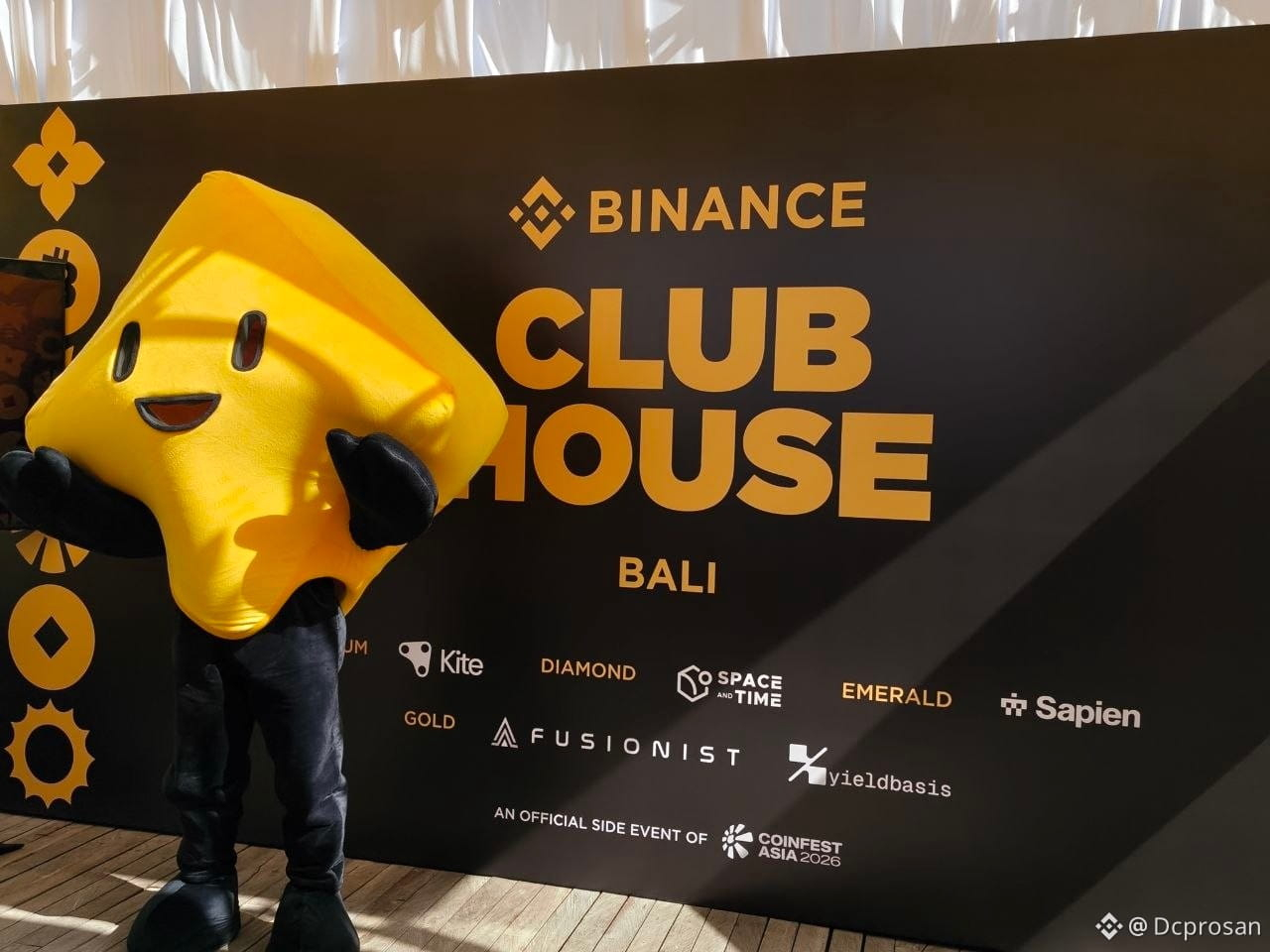
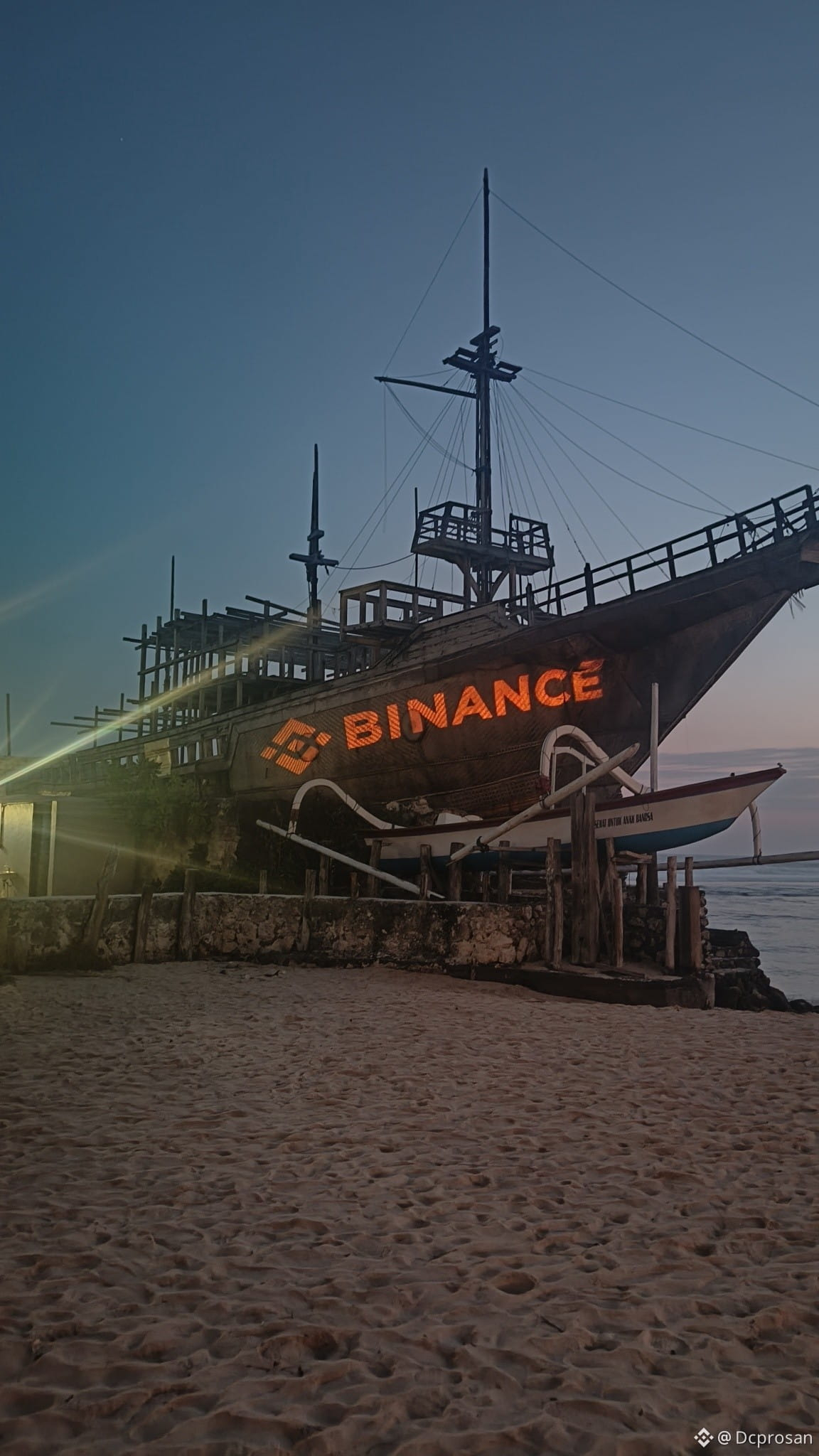
From Melasti Beach to Minoo Beach Club for #BinanceClubhouse
This year the event was on fire with all
@Binance_Angels
From Melasti Beach to Minoo Beach Club for #BinanceClubhouse
This year the event was on fire with all
@Binance Angels
This year the event was on fire with all
@Binance Angels


3
98
·
--
සත්යායනය කළ
$500M AUM in just 7 weeks.
To me, this milestone isn't just about assets under management—it's about what it represents.
Tokenized stocks are changing how investors access traditional markets. Instead of moving between banks, brokers, and crypto exchanges, everything can now exist within a single ecosystem.
The momentum speaks for itself:
📈 Over $500M AUM in just seven weeks.
🌍 24/7 trading, so investors can react whenever news breaks—not just when Wall Street opens.
🚀 More than 41% of bStocks users gained their first exposure to traditional equities through tokenized stocks, while Gen Z accounts for 44% of trading activity.
To me, this isn't simply product growth.
It's a shift toward a more connected financial system, where access becomes easier, markets become more global, and the line between TradFi and crypto continues to fade.
Capital has always searched for the most efficient path. Tokenization may simply be the next evolution of how global capital moves.
It's connecting both.
Read more: [Binance Blog](https://www.binance.com/en/blog/markets/7525835566366636853)
#Binance #bStocks #Tokenization #FinancialInclusion
$500M AUM in just 7 weeks.
To me, this milestone isn't just about assets under management—it's about what it represents.
Tokenized stocks are changing how investors access traditional markets. Instead of moving between banks, brokers, and crypto exchanges, everything can now exist within a single ecosystem.
The momentum speaks for itself:
📈 Over $500M AUM in just seven weeks.
🌍 24/7 trading, so investors can react whenever news breaks—not just when Wall Street opens.
🚀 More than 41% of bStocks users gained their first exposure to traditional equities through tokenized stocks, while Gen Z accounts for 44% of trading activity.
To me, this isn't simply product growth.
It's a shift toward a more connected financial system, where access becomes easier, markets become more global, and the line between TradFi and crypto continues to fade.
Capital has always searched for the most efficient path. Tokenization may simply be the next evolution of how global capital moves.
It's connecting both.
Read more: Binance Blog
#Binance #bStocks #Tokenization #FinancialInclusion
To me, this milestone isn't just about assets under management—it's about what it represents.
Tokenized stocks are changing how investors access traditional markets. Instead of moving between banks, brokers, and crypto exchanges, everything can now exist within a single ecosystem.
The momentum speaks for itself:
📈 Over $500M AUM in just seven weeks.
🌍 24/7 trading, so investors can react whenever news breaks—not just when Wall Street opens.
🚀 More than 41% of bStocks users gained their first exposure to traditional equities through tokenized stocks, while Gen Z accounts for 44% of trading activity.
To me, this isn't simply product growth.
It's a shift toward a more connected financial system, where access becomes easier, markets become more global, and the line between TradFi and crypto continues to fade.
Capital has always searched for the most efficient path. Tokenization may simply be the next evolution of how global capital moves.
It's connecting both.
Read more: Binance Blog
#Binance #bStocks #Tokenization #FinancialInclusion
5
81
·
--
Stablecoins: The Missing Layer Between Crypto and Traditional Finance
When people hear “stablecoin”, many still think:
“Just another crypto trading pair.”
But that view is outdated.
The bigger story is that stablecoins are becoming financial infrastructure.
Money has three important functions:
- store of value
- medium of exchange
- settlement mechanism
Stablecoins are starting to fulfill all three.
Imagine a world where your capital is not trapped by banking hours.
Where you can:
- hold digital dollars
- earn yield
- transfer globally
- access financial markets
all from the same ecosystem.
That is the direction finance is moving.
Binance's role is interesting because exchanges are no longer only trading venues.
They are becoming financial infrastructure.
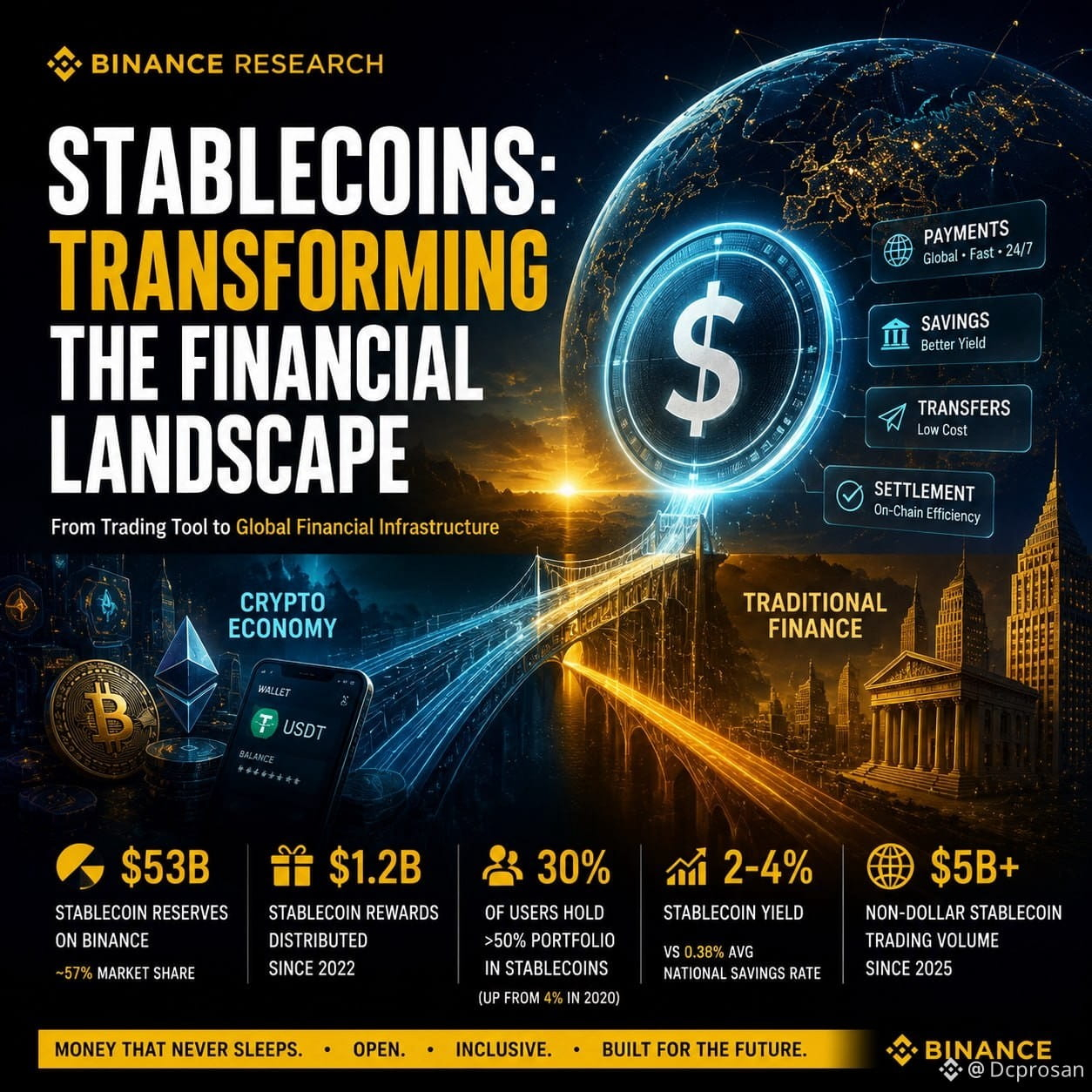
The report highlights Binance as a major stablecoin hub, with approximately US$53B in reserves and a 57% share of exchange stablecoin reserves.
The important point:
Stablecoins are not replacing traditional finance.
They are connecting it.
Crypto-native capital can now interact with traditional assets in a faster and more accessible way.
The future financial system may not be purely decentralized or centralized.
It may be a combination.
The next evolution of money is not about speculation.
It is about removing friction.
Faster settlement.
Global access.
24/7 financial markets.
Stablecoins may become the bridge that connects the crypto economy with the global financial system.
#BinanceAngels #StablecoinsReport
Full Binance Research : https://www.binance.com/en/research/analysis/stablecoins-transforming-the-financial-landscape
Stablecoins: The Missing Layer Between Crypto and Traditional Finance
When people hear “stablecoin”, many still think:
“Just another crypto trading pair.”
But that view is outdated.
The bigger story is that stablecoins are becoming financial infrastructure.
Money has three important functions:
- store of value
- medium of exchange
- settlement mechanism
Stablecoins are starting to fulfill all three.
Imagine a world where your capital is not trapped by banking hours.
Where you can:
- hold digital dollars
- earn yield
- transfer globally
- access financial markets
all from the same ecosystem.
That is the direction finance is moving.
Binance's role is interesting because exchanges are no longer only trading venues.
They are becoming financial infrastructure.
The report highlights Binance as a major stablecoin hub, with approximately US$53B in reserves and a 57% share of exchange stablecoin reserves.
The important point:
Stablecoins are not replacing traditional finance.
They are connecting it.
Crypto-native capital can now interact with traditional assets in a faster and more accessible way.
The future financial system may not be purely decentralized or centralized.
It may be a combination.
The next evolution of money is not about speculation.
It is about removing friction.
Faster settlement.
Global access.
24/7 financial markets.
Stablecoins may become the bridge that connects the crypto economy with the global financial system.
#BinanceAngels #StablecoinsReport
Full Binance Research : https://www.binance.com/en/research/analysis/stablecoins-transforming-the-financial-landscape
When people hear “stablecoin”, many still think:
“Just another crypto trading pair.”
But that view is outdated.
The bigger story is that stablecoins are becoming financial infrastructure.
Money has three important functions:
- store of value
- medium of exchange
- settlement mechanism
Stablecoins are starting to fulfill all three.
Imagine a world where your capital is not trapped by banking hours.
Where you can:
- hold digital dollars
- earn yield
- transfer globally
- access financial markets
all from the same ecosystem.
That is the direction finance is moving.
Binance's role is interesting because exchanges are no longer only trading venues.
They are becoming financial infrastructure.
The report highlights Binance as a major stablecoin hub, with approximately US$53B in reserves and a 57% share of exchange stablecoin reserves.
The important point:
Stablecoins are not replacing traditional finance.
They are connecting it.
Crypto-native capital can now interact with traditional assets in a faster and more accessible way.
The future financial system may not be purely decentralized or centralized.
It may be a combination.
The next evolution of money is not about speculation.
It is about removing friction.
Faster settlement.
Global access.
24/7 financial markets.
Stablecoins may become the bridge that connects the crypto economy with the global financial system.
#BinanceAngels #StablecoinsReport
Full Binance Research : https://www.binance.com/en/research/analysis/stablecoins-transforming-the-financial-landscape
2
98
·
--
සත්යායනය කළ
After a month stocks on Binance went live, it's already live on my region and I can see all of the list stocks.
My reaction was wild after seeing that, Binance turns out have almost complete all of the stocks and ETF that I know as a trader.
It blews my mind where I won't have to open another stocks broker overseas that are completely complicated and having trust issue due to unknown transactional succeed whether I can deposit it and withdraw it or not.
I have been using Binance for more than 3 years and I have no issue with the transaction at all, this build me a deep trust to diversified more to Binance with the stocks or ETF that I have been looking for.
Today, crypto is not just about coin or token, it's evolving into tokenized stocks. Stocks are now part of the crypto world and became one with the future financial system.
#BinanceStocks
After a month stocks on Binance went live, it's already live on my region and I can see all of the list stocks.
My reaction was wild after seeing that, Binance turns out have almost complete all of the stocks and ETF that I know as a trader.
It blews my mind where I won't have to open another stocks broker overseas that are completely complicated and having trust issue due to unknown transactional succeed whether I can deposit it and withdraw it or not.
I have been using Binance for more than 3 years and I have no issue with the transaction at all, this build me a deep trust to diversified more to Binance with the stocks or ETF that I have been looking for.
Today, crypto is not just about coin or token, it's evolving into tokenized stocks. Stocks are now part of the crypto world and became one with the future financial system.
#BinanceStocks
My reaction was wild after seeing that, Binance turns out have almost complete all of the stocks and ETF that I know as a trader.
It blews my mind where I won't have to open another stocks broker overseas that are completely complicated and having trust issue due to unknown transactional succeed whether I can deposit it and withdraw it or not.
I have been using Binance for more than 3 years and I have no issue with the transaction at all, this build me a deep trust to diversified more to Binance with the stocks or ETF that I have been looking for.
Today, crypto is not just about coin or token, it's evolving into tokenized stocks. Stocks are now part of the crypto world and became one with the future financial system.
#BinanceStocks
3
115
·
--
Most people see Stocks on Binance as a product launch.
I see it as a capital flow story.
For years, crypto investors and stock investors operated in separate ecosystems. Moving capital between digital assets and traditional markets required different platforms, accounts, and layers of friction.
With Stocks on Binance, users can access 7,000+ U.S. stocks and ETFs, starting from just $5, using the same ecosystem where they already hold Bitcoin, Ethereum, and stablecoins.
The real significance is not the stocks themselves.
It is the bridge.
A new generation of investors built wealth through crypto. Now they have a direct pathway into companies like Apple, NVIDIA, Microsoft, and broad-market ETFs without leaving the Binance ecosystem.
This changes accessibility.
It changes capital mobility.
And over time, it may change how global investors allocate capital across asset classes.
That is why I believe Stocks on Binance is the final piece of the Financial Super App vision.
Not because Binance added stocks.
But because it connected two financial worlds that were previously separated.
#BinanceStocks #Binance #Crypto #Stocks #Investing
Most people see Stocks on Binance as a product launch.
I see it as a capital flow story.
For years, crypto investors and stock investors operated in separate ecosystems. Moving capital between digital assets and traditional markets required different platforms, accounts, and layers of friction.
With Stocks on Binance, users can access 7,000+ U.S. stocks and ETFs, starting from just $5, using the same ecosystem where they already hold Bitcoin, Ethereum, and stablecoins.
The real significance is not the stocks themselves.
It is the bridge.
A new generation of investors built wealth through crypto. Now they have a direct pathway into companies like Apple, NVIDIA, Microsoft, and broad-market ETFs without leaving the Binance ecosystem.
This changes accessibility.
It changes capital mobility.
And over time, it may change how global investors allocate capital across asset classes.
That is why I believe Stocks on Binance is the final piece of the Financial Super App vision.
Not because Binance added stocks.
But because it connected two financial worlds that were previously separated.
#BinanceStocks #Binance #Crypto #Stocks #Investing
I see it as a capital flow story.
For years, crypto investors and stock investors operated in separate ecosystems. Moving capital between digital assets and traditional markets required different platforms, accounts, and layers of friction.
With Stocks on Binance, users can access 7,000+ U.S. stocks and ETFs, starting from just $5, using the same ecosystem where they already hold Bitcoin, Ethereum, and stablecoins.
The real significance is not the stocks themselves.
It is the bridge.
A new generation of investors built wealth through crypto. Now they have a direct pathway into companies like Apple, NVIDIA, Microsoft, and broad-market ETFs without leaving the Binance ecosystem.
This changes accessibility.
It changes capital mobility.
And over time, it may change how global investors allocate capital across asset classes.
That is why I believe Stocks on Binance is the final piece of the Financial Super App vision.
Not because Binance added stocks.
But because it connected two financial worlds that were previously separated.
#BinanceStocks #Binance #Crypto #Stocks #Investing
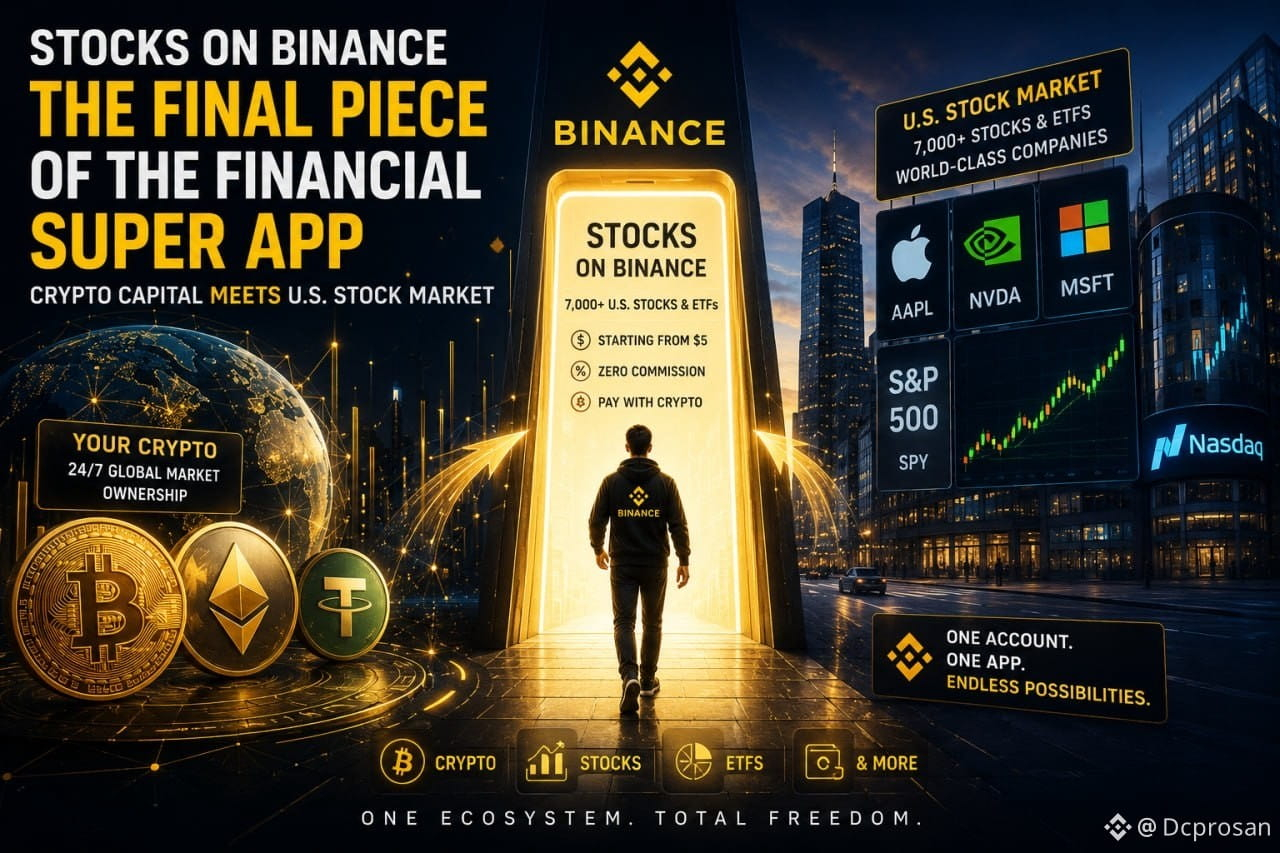
3
115
·
--
Today is Bitcoin Pizza Day, let's celebrate it with Binance and some Pizza 🍕
#BinancePizza
#TeamPineapple
@Binance_Angels
Today is Bitcoin Pizza Day, let's celebrate it with Binance and some Pizza 🍕
#BinancePizza
#TeamPineapple
@Binance Angels
#BinancePizza
#TeamPineapple
@Binance Angels
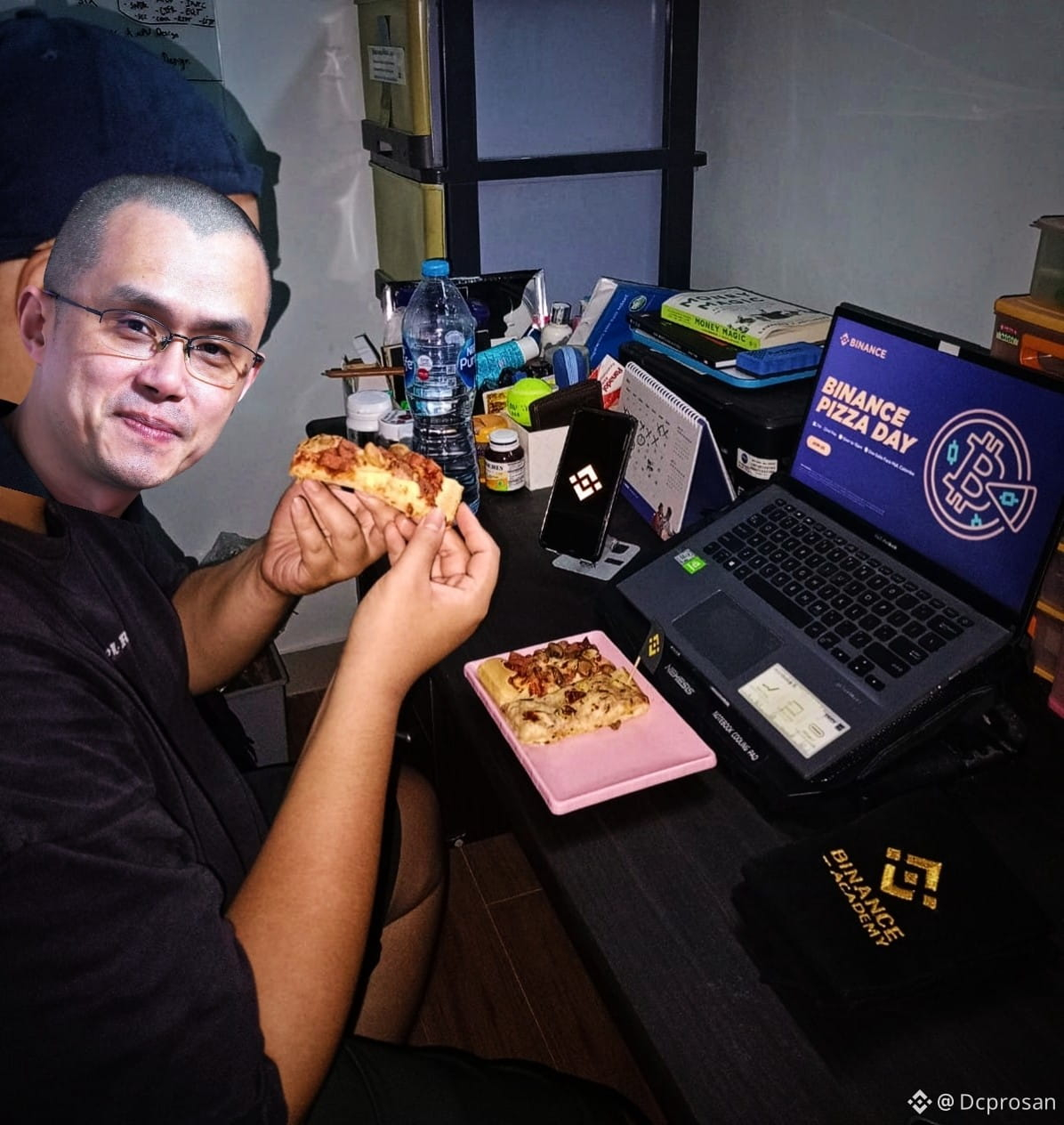
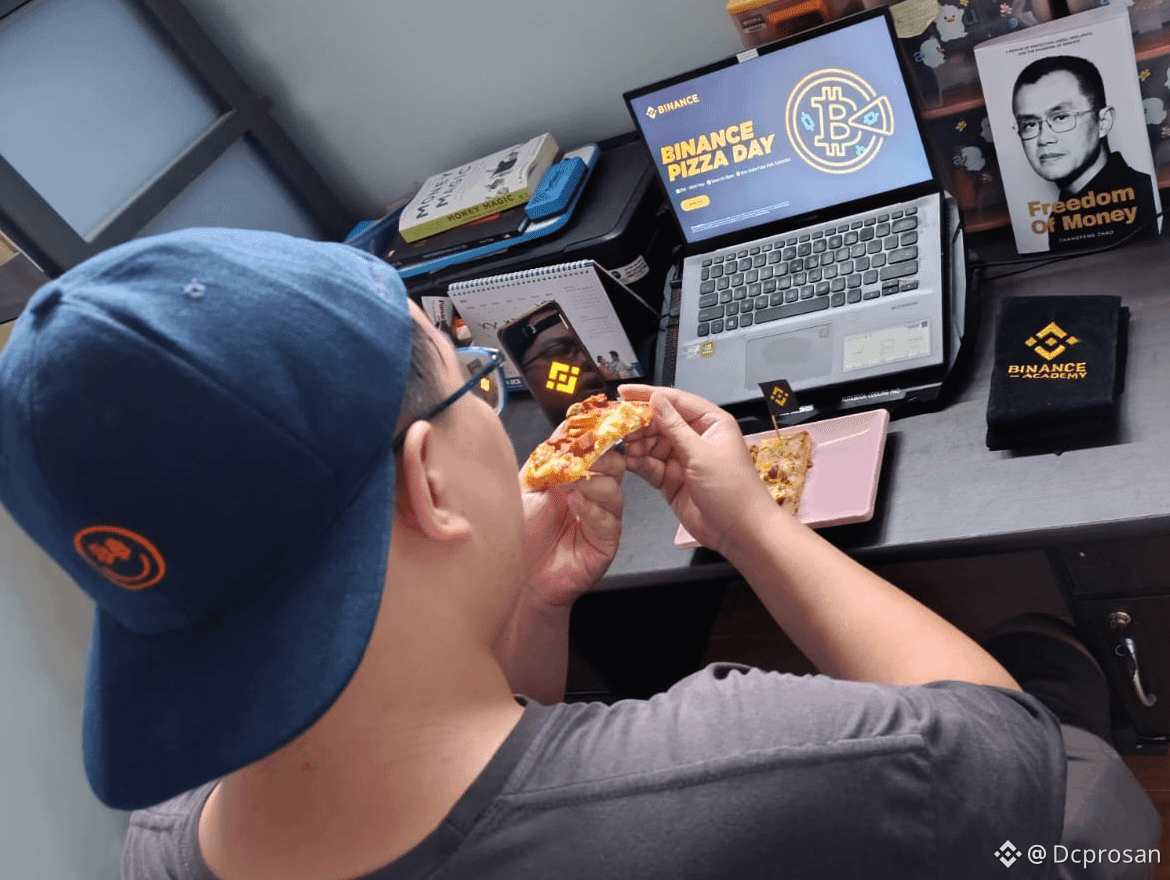
164
තවත් අන්තර්ගතයන් ගවේෂණය කිරීමට ඇතුල් වන්න
Binance චතුරශ්රය හි ගෝලීය ක්රිප්ටෝ පරිශීලකයින් හා එක්වන්න
⚡️ ක්රිප්ටෝ පිළිබඳ නවතම සහ ප්රයෝජනවත් තොරතුරු ලබා ගන්න.
💬 ලොව විශාලතම ක්රිප්ටෝ හුවමාරුව මගින් විශ්වාස කෙරේ.
👍 සත්යායනය කරන ලද නිර්මාණකරුවන්ගෙන් සැබෑ විදසුන් සොයා ගන්න.
විද්යුත් තැපෑල / දුරකථන අංකය
නැගී එන මාතෘකා
CanMicrosoftDeliverOnAI
74,501 නැරඹීම්
726 සාකච්ඡා කරමින්
Earnings Season Session 3: Will Google & Microsoft Beat Earnings Expectations?
Binance Square Official
·64 කැමත්ත දැක්වීම්
·16.1k නැරඹීම්
CanGoogleDefindItsCore
39,037 නැරඹීම්
539 සාකච්ඡා කරමින්
FOMCWatch
9.1M නැරඹීම්
27,933 සාකච්ඡා කරමින්