Binance Square

SALAR_ETH

Crypto enthusit | Crypto Lover | Binnace $BTC $ETH $BNB
විවෘත වෙළෙඳාම
අධි-සංඛ්‍යාත වෙළෙන්දා
{වේලාව} වසර
551 හඹා යමින්
25.4K+ හඹා යන්නන්
18.5K+ කැමති විය
736 බෙදා ගත්
පෝස්ටු
ආයෝජන කළඹ
·
--
VANAR, HYPE, AND THE REAL TEST OF BLOCKCHAIN Here’s the question I always ask: would a normal person care? Not a trader. Not a developer. Just someone who plays games, uses apps, and doesn’t want to think about infrastructure. Most blockchains fail right there. Vanar at least tries to start from the user side — gaming, digital experiences, AI, brand interactions — places where people already spend time. That’s smarter than leading with tech specs no one outside crypto understands. But let’s be honest. I’ve seen dozens of L1 projects promise adoption. Vision is easy. Execution is where they fall apart. If Vanar ends up powering real experiences people enjoy without forcing them to “learn Web3,” it has a shot. If it turns into another token-first ecosystem chasing attention, it’ll fade like the rest. The future isn’t loud blockchain. It’s blockchain so invisible nobody talks about it because it just works. @Vanar $VANRY #vanar
VANAR, HYPE, AND THE REAL TEST OF BLOCKCHAIN

Here’s the question I always ask: would a normal person care?

Not a trader. Not a developer. Just someone who plays games, uses apps, and doesn’t want to think about infrastructure. Most blockchains fail right there.

Vanar at least tries to start from the user side — gaming, digital experiences, AI, brand interactions — places where people already spend time. That’s smarter than leading with tech specs no one outside crypto understands.

But let’s be honest. I’ve seen dozens of L1 projects promise adoption. Vision is easy. Execution is where they fall apart.

If Vanar ends up powering real experiences people enjoy without forcing them to “learn Web3,” it has a shot. If it turns into another token-first ecosystem chasing attention, it’ll fade like the rest.

The future isn’t loud blockchain.

It’s blockchain so invisible nobody talks about it because it just works.

@Vanarchain $VANRY #vanar
VANAR AND THE UNCOMFORTABLE TRUTH ABOUT BLOCKCHAIN ADOPTIONWhenever someone pitches me a new blockchain, I run a quick mental test. Would my non-crypto friends care? Not the developers. Not the traders glued to charts. I’m talking about the people I have dinner with — the ones who use whatever app is easiest, play whatever game their friends are playing, and forget passwords every other week. The real world. Most blockchain projects don’t survive that question. Not even close. They open with performance stats, consensus diagrams, technical flexing. I’ve sat through these presentations at conferences from Singapore to Lisbon. Same rhythm every time. Slides full of numbers. Big promises. And then you ask one simple thing: “What problem does this solve for a normal person?” That’s usually where the energy drops. Vanar, at least from what I’ve seen, starts from a different angle. Less “look at our tech,” more “here’s where people already spend their time.” Gaming. Entertainment. AI tools. Brand ecosystems. It’s a subtle shift. But it matters. I’ve been covering this industry long enough to remember when every new chain was labeled the next Ethereum killer. EOS had the hype. So did Solana in its early days. Even projects most people don’t remember now raised millions and promised to reshape the internet. Some had real tech. Most didn’t have real users. That’s the graveyard this space doesn’t like to talk about. Vanar’s core idea isn’t flashy: build around things people already care about instead of expecting them to suddenly care about blockchain. No ideological pitch. No lecture about decentralization. Just… plug into existing behavior. Honestly? That’s how every successful technology has spread. Nobody adopted smartphones because they admired the processors. They adopted them because messaging got easier, photos got instant, and life got more convenient. The tech followed the habit, not the other way around. Blockchain still hasn’t fully learned that lesson. It’s still loud. Still self-conscious. Still trying a bit too hard. Vanar seems to be aiming for the opposite — quieter integration. Infrastructure that sits behind gaming platforms, virtual spaces, digital experiences tied to brands. Places where people are already spending hours and money without thinking about what powers the backend. And that’s where things get interesting. Take gaming. I’ve watched kids spend hundreds on in-game skins in titles like Fortnite and Valorant. Real money. Real attachment. And yet, technically, they own nothing. Accounts get banned, servers shut down, assets disappear. There’s a real problem there. A human one. Blockchain could solve it — in theory — by letting players actually own what they buy. Move it. Sell it. Keep it independent of a single platform. But here’s the thing I’ve learned after talking to gamers for years: they don’t care about ownership frameworks. They care about fun. The second you make them open wallets, deal with fees, or learn new systems… they’re out. No debate. No patience. I’ve seen promising blockchain games collapse because onboarding felt like filing taxes. So yes, the opportunity is real. But the tolerance for friction is near zero. The same pattern shows up with digital brand experiences and virtual environments. Fans don’t want “Web3.” They want access. Status. Community. Maybe something collectible that feels meaningful instead of disposable. If blockchain quietly improves that, it sticks. If it complicates it, it disappears. Vanar’s token, VANRY, sits right in the middle of this. And like every token I’ve covered over the past decade, it faces one simple, brutal question: does it get used, or just traded? Because those are two completely different futures. I’ve watched this movie too many times. Token launches. Price spikes. Everyone talks about ecosystem growth. Then months later, you check activity — and it’s mostly speculation. Real usage never showed up. The air leaks out slowly. Then suddenly. If VANRY ends up embedded in actual experiences — gaming economies, AI services, digital identity layers — it survives. If it lives mostly on exchanges, it becomes background noise like hundreds before it. No middle ground. To Vanar’s credit, their focus areas make sense. Gaming, AI, entertainment — these are environments where digital interaction already feels normal. People spend, create, socialize, experiment. You’re not forcing new behavior. You’re layering new capability onto existing habits. Still… I’ve learned to be cautious. Infrastructure alone doesn’t change anything. I’ve seen technically brilliant systems fail because nobody built compelling products on top. And I’ve seen messy, imperfect platforms win because they hosted something people loved. Experiences beat architecture every time. Always have. The next wave of adoption won’t arrive because a blockchain is faster or cheaper. It’ll arrive because a game feels worth playing. Because an app solves something annoying. Because a digital space feels alive. And most users won’t even know blockchain is involved. That’s the real endgame. Technology that disappears into the background. We saw this happen with cloud computing. At first, everyone talked about it. Now nobody does. It’s just… there. Powering everything quietly. That’s where blockchain needs to go. Vanar seems to understand this, at least philosophically. Their approach leans toward embedding into existing ecosystems rather than trying to invent entirely new digital cultures from scratch. It’s less glamorous. More practical. Also risky. Because now you’re not just competing with other blockchains — you’re competing with platforms that already dominate gaming, media, and online communities. Companies with scale, resources, and loyal users who don’t feel any urgent need to switch. Convincing people to try something new is hard. Keeping them is harder. Making the experience feel natural? Hardest of all. And timing matters. The hype phase of Web3 has cooled. You can feel it at events. Fewer grand declarations. More cautious conversations. Investors ask tougher questions. Users roll their eyes at buzzwords. Honestly, that’s healthy. It forces projects to prove usefulness instead of riding momentum. Vanar’s opportunity sits right there — not in promising transformation, but in quietly shipping things people enjoy using. If a game runs better. If digital ownership starts to feel normal instead of experimental. If brands create experiences that feel less transactional and more participatory. Then something real is happening. If not… it joins the long list of well-intentioned Layer-1s that never broke out of the crypto bubble. I don’t say that cynically. I say it because I’ve watched this industry grow up in real time. The early years were about possibility. The middle years were about speculation. Now we’re entering the phase where usefulness decides everything. The tech that survives won’t be the loudest or the most complex. It’ll be the stuff that fades into daily life. Boring, dependable, almost invisible. The systems powering games, digital communities, creative platforms — quietly doing their job without asking users to understand them. Vanar is trying to move in that direction. I respect that. It’s the right direction to aim. But direction isn’t outcome. What matters now is what gets built, who shows up, and whether the experience feels natural enough that people stop thinking about the underlying technology altogether. Because that’s the milestone this industry still hasn’t fully reached. The moment when nobody asks what chain something runs on. They just use it. @Vanar $VANRY #vanar

VANAR AND THE UNCOMFORTABLE TRUTH ABOUT BLOCKCHAIN ADOPTION

Whenever someone pitches me a new blockchain, I run a quick mental test.

Would my non-crypto friends care?

Not the developers. Not the traders glued to charts. I’m talking about the people I have dinner with — the ones who use whatever app is easiest, play whatever game their friends are playing, and forget passwords every other week. The real world.

Most blockchain projects don’t survive that question. Not even close.

They open with performance stats, consensus diagrams, technical flexing. I’ve sat through these presentations at conferences from Singapore to Lisbon. Same rhythm every time. Slides full of numbers. Big promises. And then you ask one simple thing: “What problem does this solve for a normal person?”

That’s usually where the energy drops.

Vanar, at least from what I’ve seen, starts from a different angle. Less “look at our tech,” more “here’s where people already spend their time.” Gaming. Entertainment. AI tools. Brand ecosystems.

It’s a subtle shift. But it matters.

I’ve been covering this industry long enough to remember when every new chain was labeled the next Ethereum killer. EOS had the hype. So did Solana in its early days. Even projects most people don’t remember now raised millions and promised to reshape the internet.

Some had real tech.

Most didn’t have real users.

That’s the graveyard this space doesn’t like to talk about.

Vanar’s core idea isn’t flashy: build around things people already care about instead of expecting them to suddenly care about blockchain. No ideological pitch. No lecture about decentralization. Just… plug into existing behavior.

Honestly? That’s how every successful technology has spread.

Nobody adopted smartphones because they admired the processors. They adopted them because messaging got easier, photos got instant, and life got more convenient. The tech followed the habit, not the other way around.

Blockchain still hasn’t fully learned that lesson.

It’s still loud. Still self-conscious. Still trying a bit too hard.

Vanar seems to be aiming for the opposite — quieter integration. Infrastructure that sits behind gaming platforms, virtual spaces, digital experiences tied to brands. Places where people are already spending hours and money without thinking about what powers the backend.

And that’s where things get interesting.

Take gaming. I’ve watched kids spend hundreds on in-game skins in titles like Fortnite and Valorant. Real money. Real attachment. And yet, technically, they own nothing. Accounts get banned, servers shut down, assets disappear.

There’s a real problem there. A human one.

Blockchain could solve it — in theory — by letting players actually own what they buy. Move it. Sell it. Keep it independent of a single platform. But here’s the thing I’ve learned after talking to gamers for years: they don’t care about ownership frameworks.

They care about fun.

The second you make them open wallets, deal with fees, or learn new systems… they’re out. No debate. No patience.

I’ve seen promising blockchain games collapse because onboarding felt like filing taxes.

So yes, the opportunity is real. But the tolerance for friction is near zero.

The same pattern shows up with digital brand experiences and virtual environments. Fans don’t want “Web3.” They want access. Status. Community. Maybe something collectible that feels meaningful instead of disposable.

If blockchain quietly improves that, it sticks.

If it complicates it, it disappears.

Vanar’s token, VANRY, sits right in the middle of this. And like every token I’ve covered over the past decade, it faces one simple, brutal question: does it get used, or just traded?

Because those are two completely different futures.

I’ve watched this movie too many times. Token launches. Price spikes. Everyone talks about ecosystem growth. Then months later, you check activity — and it’s mostly speculation. Real usage never showed up.

The air leaks out slowly. Then suddenly.

If VANRY ends up embedded in actual experiences — gaming economies, AI services, digital identity layers — it survives. If it lives mostly on exchanges, it becomes background noise like hundreds before it.

No middle ground.

To Vanar’s credit, their focus areas make sense. Gaming, AI, entertainment — these are environments where digital interaction already feels normal. People spend, create, socialize, experiment. You’re not forcing new behavior. You’re layering new capability onto existing habits.

Still… I’ve learned to be cautious.

Infrastructure alone doesn’t change anything.

I’ve seen technically brilliant systems fail because nobody built compelling products on top. And I’ve seen messy, imperfect platforms win because they hosted something people loved. Experiences beat architecture every time.

Always have.

The next wave of adoption won’t arrive because a blockchain is faster or cheaper. It’ll arrive because a game feels worth playing. Because an app solves something annoying. Because a digital space feels alive.

And most users won’t even know blockchain is involved.

That’s the real endgame. Technology that disappears into the background.

We saw this happen with cloud computing. At first, everyone talked about it. Now nobody does. It’s just… there. Powering everything quietly.

That’s where blockchain needs to go.

Vanar seems to understand this, at least philosophically. Their approach leans toward embedding into existing ecosystems rather than trying to invent entirely new digital cultures from scratch.

It’s less glamorous. More practical.

Also risky.

Because now you’re not just competing with other blockchains — you’re competing with platforms that already dominate gaming, media, and online communities. Companies with scale, resources, and loyal users who don’t feel any urgent need to switch.

Convincing people to try something new is hard. Keeping them is harder. Making the experience feel natural? Hardest of all.

And timing matters.

The hype phase of Web3 has cooled. You can feel it at events. Fewer grand declarations. More cautious conversations. Investors ask tougher questions. Users roll their eyes at buzzwords.

Honestly, that’s healthy.

It forces projects to prove usefulness instead of riding momentum.

Vanar’s opportunity sits right there — not in promising transformation, but in quietly shipping things people enjoy using. If a game runs better. If digital ownership starts to feel normal instead of experimental. If brands create experiences that feel less transactional and more participatory.

Then something real is happening.

If not… it joins the long list of well-intentioned Layer-1s that never broke out of the crypto bubble.

I don’t say that cynically. I say it because I’ve watched this industry grow up in real time. The early years were about possibility. The middle years were about speculation. Now we’re entering the phase where usefulness decides everything.

The tech that survives won’t be the loudest or the most complex.

It’ll be the stuff that fades into daily life.

Boring, dependable, almost invisible.

The systems powering games, digital communities, creative platforms — quietly doing their job without asking users to understand them.

Vanar is trying to move in that direction. I respect that. It’s the right direction to aim.

But direction isn’t outcome.

What matters now is what gets built, who shows up, and whether the experience feels natural enough that people stop thinking about the underlying technology altogether.

Because that’s the milestone this industry still hasn’t fully reached.

The moment when nobody asks what chain something runs on.

They just use it.

@Vanarchain $VANRY #vanar
·
--
උසබ තත්ත්වය
·
--
බෙයාරිෂ්
$PAXG /USDT is heating up. Pressure building. Bears pushing, bulls refusing to break. Price sitting at a tension zone — the kind that usually explodes. Support: 4,925 Resistance: 4,950 Target zone: 4,980–5,020 TP area: 4,980+ momentum push Stop-loss zone: below 4,910 Market feels tight. Energy coiling. One sharp move could ignite volatility fast. Eyes on the levels — this setup looks ready to snap. #PEPEBrokeThroughDowntrendLine #WriteToEarnUpgrade #USJobsData $PAXG {spot}(PAXGUSDT)
$PAXG /USDT is heating up. Pressure building. Bears pushing, bulls refusing to break. Price sitting at a tension zone — the kind that usually explodes.

Support: 4,925
Resistance: 4,950

Target zone: 4,980–5,020
TP area: 4,980+ momentum push
Stop-loss zone: below 4,910

Market feels tight. Energy coiling. One sharp move could ignite volatility fast. Eyes on the levels — this setup looks ready to snap.
#PEPEBrokeThroughDowntrendLine #WriteToEarnUpgrade #USJobsData
$PAXG
·
--
බෙයාරිෂ්
·
--
බෙයාරිෂ්
$SOL /USDT is tightening… pressure building… momentum whispering before the move. Market feels coiled. Volatility loading. Eyes on the next push. Support: 85.0 / 84.5 Resistance: 86.1 Upside target zone: 87 → 88 TP zones traders watching: 87.0 / 88.2 Stop-loss area often monitored: 84.3 Calm before the storm. The chart is breathing. The next candle decides the mood. #OpenClawFounderJoinsOpenAI #WriteToEarnUpgrade #USJobsData $SOL {spot}(SOLUSDT)
$SOL /USDT is tightening… pressure building… momentum whispering before the move.
Market feels coiled. Volatility loading. Eyes on the next push.

Support: 85.0 / 84.5
Resistance: 86.1

Upside target zone: 87 → 88
TP zones traders watching: 87.0 / 88.2
Stop-loss area often monitored: 84.3

Calm before the storm. The chart is breathing. The next candle decides the mood.
#OpenClawFounderJoinsOpenAI #WriteToEarnUpgrade #USJobsData
$SOL
·
--
උසබ තත්ත්වය
·
--
උසබ තත්ත්වය
$PEPE is heating up. Quiet candles… tight range… pressure building. This kind of silence usually comes before a loud move. Support: 0.00000438 – 0.00000439 Resistance: 0.00000444 – 0.00000445 If momentum pushes: Target zone: 0.00000452 TP area: 0.00000450+ Stop-loss zone: below 0.00000436 Eyes on the chart. Energy rising. Volatility loading. PEPE looks ready for a dramatic breakout moment. #OpenClawFounderJoinsOpenAI #PEPEBrokeThroughDowntrendLine #BTC100kNext? $PEPE {spot}(PEPEUSDT)
$PEPE is heating up. Quiet candles… tight range… pressure building.
This kind of silence usually comes before a loud move.

Support: 0.00000438 – 0.00000439
Resistance: 0.00000444 – 0.00000445

If momentum pushes:
Target zone: 0.00000452
TP area: 0.00000450+
Stop-loss zone: below 0.00000436

Eyes on the chart. Energy rising. Volatility loading.
PEPE looks ready for a dramatic breakout moment.
#OpenClawFounderJoinsOpenAI #PEPEBrokeThroughDowntrendLine #BTC100kNext?
$PEPE
·
--
උසබ තත්ත්වය
FOGO IS TRYING TO MAKE BLOCKCHAIN BORING — AND THAT’S A GOOD THING Most people don’t care how a blockchain works. They care if payments go through instantly, apps don’t freeze, and fees don’t jump for no reason. That’s it. Fogo’s approach is simple: use a system that’s already proven it can handle heavy usage, then build a network that stays stable when real users show up. Not flashy. Just practical. I’ve seen too many “next big chains” collapse under hype. Vision is easy. Keeping things running when traffic spikes is the hard part. If Fogo succeeds, nobody will talk about it much. Developers will just build. Users will just use apps. Transactions will feel normal. And honestly, that’s the real goal — tech so reliable it fades into the background. @fogo #fogo $FOGO {spot}(FOGOUSDT)
FOGO IS TRYING TO MAKE BLOCKCHAIN BORING — AND THAT’S A GOOD THING

Most people don’t care how a blockchain works. They care if payments go through instantly, apps don’t freeze, and fees don’t jump for no reason. That’s it.

Fogo’s approach is simple: use a system that’s already proven it can handle heavy usage, then build a network that stays stable when real users show up. Not flashy. Just practical.

I’ve seen too many “next big chains” collapse under hype. Vision is easy. Keeping things running when traffic spikes is the hard part.

If Fogo succeeds, nobody will talk about it much. Developers will just build. Users will just use apps. Transactions will feel normal.

And honestly, that’s the real goal — tech so reliable it fades into the background.

@Fogo Official #fogo $FOGO
FOGO AND THE QUIET FUTURE OF BLOCKCHAINS PEOPLE DON’T HAVE TO THINK ABOUT,Let me start somewhere that actually matters. Not with performance charts. Not with architecture diagrams. And definitely not with whatever acronym crypto Twitter is obsessed with this week. Ask a simpler question: why would any normal person care? My cousin runs a small online clothing store. She doesn’t know what a validator is. She doesn’t want to know. What she cares about is whether payments go through instantly and whether fees suddenly spike and eat into her margins. If a system slows down during a sale, she loses money. That’s the whole equation. That’s the lens I use when I look at Fogo. People outside this bubble don’t want “innovation.” They want reliability. They want things to work quietly in the background. Like Wi-Fi. Like card payments. Like sending a message on WhatsApp without wondering which server handled it. Crypto still hasn’t nailed that feeling. I’ve been covering this space long enough to remember when EOS was supposed to dominate everything. When “Ethereum killer” headlines popped up every quarter. When whitepapers promised the moon and delivered a testnet and a Discord server. Some projects survived. Most faded into footnotes. Because here’s the truth most founders won’t say out loud: infrastructure wins when it becomes boring. Dependable beats impressive. Every time. Fogo is another Layer-1, yes. But what caught my attention isn’t speed claims or marketing polish. It’s the decision to build around something that’s already been stress-tested in the wild—the Solana Virtual Machine—and try to make a network that can keep its footing when usage actually spikes. Simple idea. Hard to pull off. And this industry is littered with projects that died somewhere between those two points. Strip away the branding and the ambition sounds almost… unglamorous. Make blockchain apps feel normal. Not “Web3 normal.” Just normal. The kind where users don’t pause before clicking a button because they’re worried about fees, delays, or some obscure wallet error. That’s where most projects stumble. They design for benchmarks instead of human behavior. Users don’t care about block structure. They care if a payment fails. If a game freezes. If something that worked yesterday suddenly costs five times more today. Consistency. That’s the whole game. This is where Fogo leaning on the Solana execution model actually matters. Not as a talking point, but as a practical decision. That system is built to process multiple things at once rather than forcing everything through a single queue. In human terms: it’s built for crowds. And crowds are where most chains break. We saw it during NFT surges. We saw it when DeFi exploded in 2020 and Ethereum gas fees went insane. I remember trying to mint something back then—transaction pending for minutes, fees climbing by the second, Discord chats melting down. It felt less like finance and more like trying to buy concert tickets on a crashing website. That’s the kind of experience people don’t forget. So Fogo’s bet is straightforward: take a system designed for heavy activity, build a stable environment around it, and give developers a place where their apps won’t implode the moment users show up. Nothing flashy. Just… practical. And practicality doesn’t trend well in crypto. But it’s what actually sticks. Developers don’t move because of narratives. They move because of friction. If tools are easier to use somewhere else, if deployment takes less time, if debugging isn’t a nightmare—they’ll try it. Every time. If you’ve already built in the Solana ecosystem, Fogo probably feels familiar. Same logic patterns. Similar development flow. Less relearning. That matters more than marketing ever will. Builders follow momentum. But they stay for stability. Still, let’s not get carried away. New Layer-1 networks have brutal survival rates. Network effects are real and unforgiving. Liquidity sticks to a few places. Users go where apps already are. Apps go where users already live. Breaking that cycle isn’t just difficult—it’s slow and expensive. I’ve seen technically brilliant chains disappear because no one bothered to build anything meaningful on top of them. Not because they were bad. Because they were unnecessary. Or mistimed. Or simply too complicated to justify the effort. Fogo will run into that same wall. Everyone says they’re faster. Everyone says they’re cheaper. Everyone promises a better developer experience. At this point, those claims are background noise. The real test is simple: do teams deploy? Do they stay? Do real users show up? Usage is the only metric that counts. There’s also a bigger shift happening underneath all of this. The idea that one chain will dominate everything is fading. Instead, ecosystems are forming around shared execution models. Ethereum has its gravitational pull. Solana has its own orbit. Fogo fits into a growing cluster built around similar infrastructure rather than trying to invent a completely new one. That’s a smart move. History backs it up. Look at how Android didn’t reinvent computing—it built around a familiar foundation and scaled through accessibility. Or how AWS didn’t invent the internet; it made deploying on it easier and more predictable. You don’t always win by inventing something new. Sometimes you win by making something usable. For developers, this creates breathing room. Deploy in multiple places. Test assumptions. Shift when something breaks. Nobody wants to be locked into a single chain anymore. Not after the outages, not after the fee spikes, not after the governance chaos we’ve seen over the years. Flexibility isn’t a feature now. It’s insurance. But familiarity brings its own risk. If Fogo feels too similar to what already exists, the obvious question pops up: why move at all? And that’s fair. The answer can’t be theoretical performance. It has to show up in daily experience. Reliability. Costs. Support. Opportunity. Otherwise, inertia wins. And inertia is brutally hard to fight. Zoom out, and this isn’t really just about Fogo. It’s about where infrastructure is heading. The best technology eventually disappears from conversation. Nobody praises the electricity grid. No one posts about cloud architecture at dinner. Systems that work fade into the background because they don’t demand attention. That’s where blockchain needs to go. Not louder. Quieter. Not more complex. More invisible. If Fogo succeeds, people won’t hype it endlessly. Developers will just build there because it’s stable. Users will interact with apps without thinking about what chain they’re on. Transactions will happen like they do in any modern app—fast, predictable, uneventful. Honestly, uneventful is the dream. But getting there takes time. Infrastructure adoption doesn’t follow a straight line. It comes in waves, usually triggered by frustration somewhere else. A network congests. Fees jump. Policies shift. Developers start looking around. That’s when alternatives get their shot. If Fogo hits that moment, it could gain traction quickly. If not, it’ll need patience. And capital. And stubborn persistence. Because infrastructure is a long, slow grind. What I find most interesting isn’t the tech stack. It’s the mindset. Don’t reinvent everything. Don’t promise magic. Just build something fast, stable, and usable. It sounds obvious. It rarely happens. Crypto has spent years chasing spectacle—new tokens, new architectures, new slogans. Meanwhile, the projects that quietly improved reliability and developer experience kept moving forward while everyone else argued on Twitter. Not exciting. Just effective. So where does Fogo sit right now? Somewhere in the messy middle. Between potential and proof. The ingredients are there: familiar execution logic, performance focus, and a path to attract builders who don’t want to start from zero. But ingredients don’t make an ecosystem. Time does. So does persistence. So does surviving the boring phases when no one’s paying attention. And yes, failure is still very possible. I’m skeptical by nature because this industry teaches you to be. I’ve watched hype cycles inflate and collapse more times than I can count. Big promises. Massive funding rounds. Quiet disappearances a year later. But I’ve also seen real progress sneak in quietly. Not through dramatic breakthroughs, but through iteration. Through teams refining what already works and making it easier to use somewhere else. If Fogo can pull that off—if it can turn blockchain infrastructure into something dependable instead of experimental—it’ll matter. Not because it’s loud. Because it works. And the day blockchain stops feeling like a science project and starts feeling like plumbing… that’s the day it finally grows up. @fogo #fogo $FOGO {spot}(FOGOUSDT)

FOGO AND THE QUIET FUTURE OF BLOCKCHAINS PEOPLE DON’T HAVE TO THINK ABOUT

,Let me start somewhere that actually matters.

Not with performance charts. Not with architecture diagrams. And definitely not with whatever acronym crypto Twitter is obsessed with this week.

Ask a simpler question: why would any normal person care?

My cousin runs a small online clothing store. She doesn’t know what a validator is. She doesn’t want to know. What she cares about is whether payments go through instantly and whether fees suddenly spike and eat into her margins. If a system slows down during a sale, she loses money. That’s the whole equation.

That’s the lens I use when I look at Fogo.

People outside this bubble don’t want “innovation.” They want reliability. They want things to work quietly in the background. Like Wi-Fi. Like card payments. Like sending a message on WhatsApp without wondering which server handled it.

Crypto still hasn’t nailed that feeling.

I’ve been covering this space long enough to remember when EOS was supposed to dominate everything. When “Ethereum killer” headlines popped up every quarter. When whitepapers promised the moon and delivered a testnet and a Discord server. Some projects survived. Most faded into footnotes.

Because here’s the truth most founders won’t say out loud: infrastructure wins when it becomes boring.

Dependable beats impressive. Every time.

Fogo is another Layer-1, yes. But what caught my attention isn’t speed claims or marketing polish. It’s the decision to build around something that’s already been stress-tested in the wild—the Solana Virtual Machine—and try to make a network that can keep its footing when usage actually spikes.

Simple idea.

Hard to pull off.

And this industry is littered with projects that died somewhere between those two points.

Strip away the branding and the ambition sounds almost… unglamorous. Make blockchain apps feel normal. Not “Web3 normal.” Just normal. The kind where users don’t pause before clicking a button because they’re worried about fees, delays, or some obscure wallet error.

That’s where most projects stumble. They design for benchmarks instead of human behavior.

Users don’t care about block structure. They care if a payment fails. If a game freezes. If something that worked yesterday suddenly costs five times more today.

Consistency. That’s the whole game.

This is where Fogo leaning on the Solana execution model actually matters. Not as a talking point, but as a practical decision. That system is built to process multiple things at once rather than forcing everything through a single queue.

In human terms: it’s built for crowds.

And crowds are where most chains break.

We saw it during NFT surges. We saw it when DeFi exploded in 2020 and Ethereum gas fees went insane. I remember trying to mint something back then—transaction pending for minutes, fees climbing by the second, Discord chats melting down. It felt less like finance and more like trying to buy concert tickets on a crashing website.

That’s the kind of experience people don’t forget.

So Fogo’s bet is straightforward: take a system designed for heavy activity, build a stable environment around it, and give developers a place where their apps won’t implode the moment users show up.

Nothing flashy.

Just… practical.

And practicality doesn’t trend well in crypto. But it’s what actually sticks.

Developers don’t move because of narratives. They move because of friction. If tools are easier to use somewhere else, if deployment takes less time, if debugging isn’t a nightmare—they’ll try it. Every time.

If you’ve already built in the Solana ecosystem, Fogo probably feels familiar. Same logic patterns. Similar development flow. Less relearning. That matters more than marketing ever will.

Builders follow momentum. But they stay for stability.

Still, let’s not get carried away.

New Layer-1 networks have brutal survival rates. Network effects are real and unforgiving. Liquidity sticks to a few places. Users go where apps already are. Apps go where users already live. Breaking that cycle isn’t just difficult—it’s slow and expensive.

I’ve seen technically brilliant chains disappear because no one bothered to build anything meaningful on top of them. Not because they were bad. Because they were unnecessary. Or mistimed. Or simply too complicated to justify the effort.

Fogo will run into that same wall.

Everyone says they’re faster. Everyone says they’re cheaper. Everyone promises a better developer experience. At this point, those claims are background noise.

The real test is simple: do teams deploy? Do they stay? Do real users show up?

Usage is the only metric that counts.

There’s also a bigger shift happening underneath all of this. The idea that one chain will dominate everything is fading. Instead, ecosystems are forming around shared execution models. Ethereum has its gravitational pull. Solana has its own orbit. Fogo fits into a growing cluster built around similar infrastructure rather than trying to invent a completely new one.

That’s a smart move.

History backs it up. Look at how Android didn’t reinvent computing—it built around a familiar foundation and scaled through accessibility. Or how AWS didn’t invent the internet; it made deploying on it easier and more predictable.

You don’t always win by inventing something new. Sometimes you win by making something usable.

For developers, this creates breathing room. Deploy in multiple places. Test assumptions. Shift when something breaks. Nobody wants to be locked into a single chain anymore. Not after the outages, not after the fee spikes, not after the governance chaos we’ve seen over the years.

Flexibility isn’t a feature now. It’s insurance.

But familiarity brings its own risk. If Fogo feels too similar to what already exists, the obvious question pops up: why move at all?

And that’s fair.

The answer can’t be theoretical performance. It has to show up in daily experience. Reliability. Costs. Support. Opportunity.

Otherwise, inertia wins. And inertia is brutally hard to fight.

Zoom out, and this isn’t really just about Fogo. It’s about where infrastructure is heading. The best technology eventually disappears from conversation.

Nobody praises the electricity grid. No one posts about cloud architecture at dinner. Systems that work fade into the background because they don’t demand attention.

That’s where blockchain needs to go.

Not louder. Quieter.

Not more complex. More invisible.

If Fogo succeeds, people won’t hype it endlessly. Developers will just build there because it’s stable. Users will interact with apps without thinking about what chain they’re on. Transactions will happen like they do in any modern app—fast, predictable, uneventful.

Honestly, uneventful is the dream.

But getting there takes time. Infrastructure adoption doesn’t follow a straight line. It comes in waves, usually triggered by frustration somewhere else. A network congests. Fees jump. Policies shift. Developers start looking around.

That’s when alternatives get their shot.

If Fogo hits that moment, it could gain traction quickly. If not, it’ll need patience. And capital. And stubborn persistence.

Because infrastructure is a long, slow grind.

What I find most interesting isn’t the tech stack. It’s the mindset. Don’t reinvent everything. Don’t promise magic. Just build something fast, stable, and usable.

It sounds obvious.

It rarely happens.

Crypto has spent years chasing spectacle—new tokens, new architectures, new slogans. Meanwhile, the projects that quietly improved reliability and developer experience kept moving forward while everyone else argued on Twitter.

Not exciting. Just effective.

So where does Fogo sit right now?

Somewhere in the messy middle. Between potential and proof.

The ingredients are there: familiar execution logic, performance focus, and a path to attract builders who don’t want to start from zero. But ingredients don’t make an ecosystem. Time does. So does persistence. So does surviving the boring phases when no one’s paying attention.

And yes, failure is still very possible.

I’m skeptical by nature because this industry teaches you to be. I’ve watched hype cycles inflate and collapse more times than I can count. Big promises. Massive funding rounds. Quiet disappearances a year later.

But I’ve also seen real progress sneak in quietly. Not through dramatic breakthroughs, but through iteration. Through teams refining what already works and making it easier to use somewhere else.

If Fogo can pull that off—if it can turn blockchain infrastructure into something dependable instead of experimental—it’ll matter.

Not because it’s loud.

Because it works.

And the day blockchain stops feeling like a science project and starts feeling like plumbing… that’s the day it finally grows up.

@Fogo Official #fogo $FOGO
·
--
බෙයාරිෂ්
·
--
බෙයාරිෂ්
$ETH coiling. Quiet… but loaded. Every move feels like a buildup before impact. Buyers stepping in on dips. Structure holding. Momentum waiting for a spark. Support: 1,940 – 1,970 Resistance: 2,000 – 2,015 Target zone: 2,080 TP: 2,020 / 2,080 Stop-loss: 1,920 Break resistance — expansion. Lose support — fast drop. ETH looks ready for a violent move. #OpenClawFounderJoinsOpenAI #PEPEBrokeThroughDowntrendLine #BTCVSGOLD $ETH {spot}(ETHUSDT)
$ETH coiling. Quiet… but loaded. Every move feels like a buildup before impact.

Buyers stepping in on dips. Structure holding. Momentum waiting for a spark.

Support: 1,940 – 1,970
Resistance: 2,000 – 2,015

Target zone: 2,080
TP: 2,020 / 2,080
Stop-loss: 1,920

Break resistance — expansion.
Lose support — fast drop.
ETH looks ready for a violent move.

#OpenClawFounderJoinsOpenAI #PEPEBrokeThroughDowntrendLine #BTCVSGOLD
$ETH
·
--
බෙයාරිෂ්
$BTC holding tension. Tight range. Heavy energy building. One push and the market reacts fast. Dips getting bought. Pressure stacking near resistance. Momentum feels loaded. Support: 66,600 – 67,000 Resistance: 67,450 – 68,000 Target zone: 69,200 TP: 68,200 / 69,200 Stop-loss: 66,200 Break the ceiling — acceleration. Lose support — sharp shakeout. This range won’t stay quiet for long. #OpenClawFounderJoinsOpenAI #PEPEBrokeThroughDowntrendLine #BTC100kNext? $BTC {spot}(BTCUSDT)
$BTC holding tension. Tight range. Heavy energy building. One push and the market reacts fast.

Dips getting bought. Pressure stacking near resistance. Momentum feels loaded.

Support: 66,600 – 67,000
Resistance: 67,450 – 68,000

Target zone: 69,200
TP: 68,200 / 69,200
Stop-loss: 66,200

Break the ceiling — acceleration.
Lose support — sharp shakeout.
This range won’t stay quiet for long.

#OpenClawFounderJoinsOpenAI #PEPEBrokeThroughDowntrendLine #BTC100kNext?
$BTC
·
--
බෙයාරිෂ්
$BNB is heating up. Pressure building. Momentum tightening. The chart looks ready to snap. Buyers keep defending dips. Sellers keep getting absorbed. Energy is rising. Support: 609 – 612 Resistance: 618 – 630 Target zone: 640 TP: 632 / 640 Stop-loss: 605 Volatility creeping in. Break above resistance could trigger a fast expansion. Lose support and the mood flips instantly. Eyes on the levels. The next move won’t be quiet. #OpenClawFounderJoinsOpenAI #PEPEBrokeThroughDowntrendLine #BTCVSGOLD $BNB {spot}(BNBUSDT)
$BNB is heating up. Pressure building. Momentum tightening. The chart looks ready to snap.

Buyers keep defending dips. Sellers keep getting absorbed. Energy is rising.

Support: 609 – 612
Resistance: 618 – 630

Target zone: 640
TP: 632 / 640
Stop-loss: 605

Volatility creeping in. Break above resistance could trigger a fast expansion. Lose support and the mood flips instantly.
Eyes on the levels. The next move won’t be quiet.

#OpenClawFounderJoinsOpenAI #PEPEBrokeThroughDowntrendLine #BTCVSGOLD
$BNB
·
--
උසබ තත්ත්වය
$CYBER /USDT is waking up. Momentum is climbing, candles pushing higher, pressure building near the highs. The market feels tense… like it’s loading for a move. Key zones (short & sharp): Support: 0.742 → 0.730 → 0.722 Resistance: 0.768 → 0.771 Watch targets: 0.80 → 0.85 if momentum keeps heating. Trader watch levels: TP zones: 0.80 / 0.85 SL zone: below 0.722 Energy is rising. Structure is tightening. Eyes on the breakout. #OpenClawFounderJoinsOpenAI #PEPEBrokeThroughDowntrendLine #BTCVSGOLD $CYBER {spot}(CYBERUSDT)
$CYBER /USDT is waking up. Momentum is climbing, candles pushing higher, pressure building near the highs. The market feels tense… like it’s loading for a move.

Key zones (short & sharp):
Support: 0.742 → 0.730 → 0.722
Resistance: 0.768 → 0.771

Watch targets: 0.80 → 0.85 if momentum keeps heating.

Trader watch levels:
TP zones: 0.80 / 0.85
SL zone: below 0.722

Energy is rising. Structure is tightening. Eyes on the breakout.

#OpenClawFounderJoinsOpenAI #PEPEBrokeThroughDowntrendLine #BTCVSGOLD
$CYBER
·
--
බෙයාරිෂ්
$SENT /USDT is heating up. Pressure building. Momentum tightening. Price hovering near 0.02180 — market looks ready for a sharp move. Support: 0.02173 — 0.02160 Resistance: 0.02193 — 0.02200 Upside watch zone / target: 0.02230 – 0.02250 TP zone (traders watching): around 0.02210 / 0.02240 Stop-loss area (risk control level): below 0.02160 Volatility rising. Structure compressing. Next move could be fast. Sudden. Aggressive. #OpenClawFounderJoinsOpenAI #TradeCryptosOnX #ZAMAPreTGESale $SENT {spot}(SENTUSDT)
$SENT /USDT is heating up. Pressure building. Momentum tightening.
Price hovering near 0.02180 — market looks ready for a sharp move.

Support: 0.02173 — 0.02160
Resistance: 0.02193 — 0.02200

Upside watch zone / target: 0.02230 – 0.02250
TP zone (traders watching): around 0.02210 / 0.02240
Stop-loss area (risk control level): below 0.02160

Volatility rising. Structure compressing.
Next move could be fast. Sudden. Aggressive.

#OpenClawFounderJoinsOpenAI #TradeCryptosOnX #ZAMAPreTGESale
$SENT
·
--
බෙයාරිෂ්
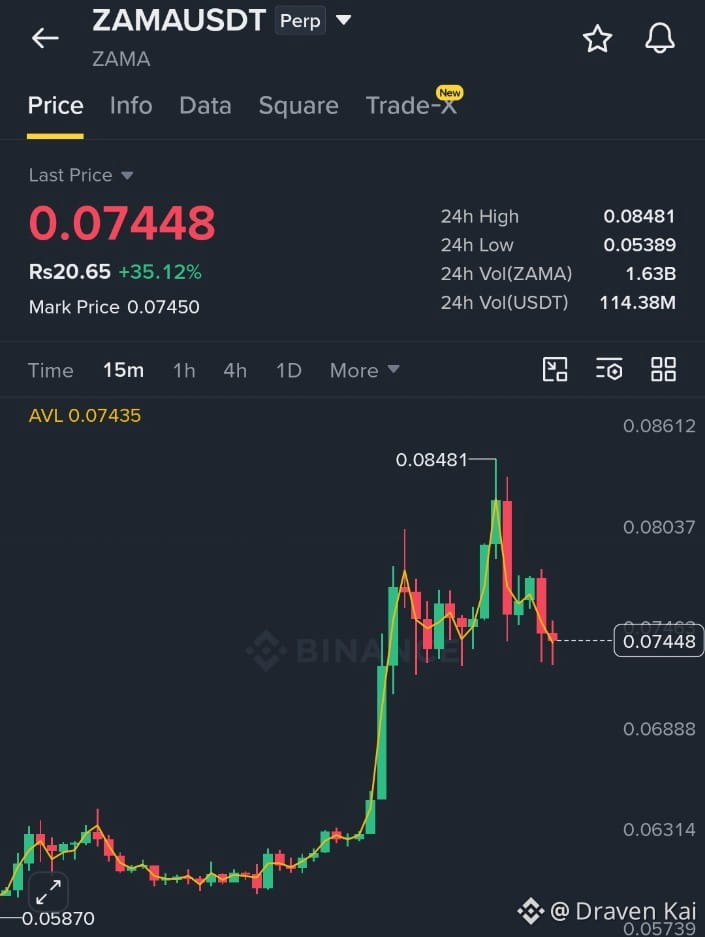
$ZAMA /USDT just snapped back with force. Momentum flipped fast. Energy rising. Buyers stepping in and pressure building near highs. Support: 0.01825 Resistance: 0.01870 Target zone: 0.01920 – 0.02000 TP: 0.01910 / 0.01980 Stop-loss: 0.01800 Structure tightening. Volatility loading. A clean push above resistance could trigger sharp movement. Eyes locked — this setup feels electric. #OpenClawFounderJoinsOpenAI #PEPEBrokeThroughDowntrendLine #USJobsData $ZAMA {spot}(ZAMAUSDT)
$ZAMA /USDT just snapped back with force. Momentum flipped fast. Energy rising. Buyers stepping in and pressure building near highs.

Support: 0.01825
Resistance: 0.01870

Target zone: 0.01920 – 0.02000
TP: 0.01910 / 0.01980
Stop-loss: 0.01800

Structure tightening. Volatility loading. A clean push above resistance could trigger sharp movement. Eyes locked — this setup feels electric.
#OpenClawFounderJoinsOpenAI #PEPEBrokeThroughDowntrendLine #USJobsData
$ZAMA
·
--
බෙයාරිෂ්
$ESP /USDT is heating up. Momentum is building. The chart is waking up after the dip — tension is rising and volatility is loading. Support: 0.0590 Resistance: 0.0612 Target zone: 0.0630 – 0.0650 TP: 0.0625 / 0.0640 Stop-loss: 0.0578 Pressure is stacking near support, buyers stepping in, structure tightening. A break above resistance could ignite fast movement. Eyes on the levels. The next move looks explosive. #OpenClawFounderJoinsOpenAI #PEPEBrokeThroughDowntrendLine #CPIWatch $ESP {spot}(ESPUSDT)
$ESP /USDT is heating up. Momentum is building. The chart is waking up after the dip — tension is rising and volatility is loading.

Support: 0.0590
Resistance: 0.0612

Target zone: 0.0630 – 0.0650
TP: 0.0625 / 0.0640
Stop-loss: 0.0578

Pressure is stacking near support, buyers stepping in, structure tightening. A break above resistance could ignite fast movement. Eyes on the levels. The next move looks explosive.

#OpenClawFounderJoinsOpenAI #PEPEBrokeThroughDowntrendLine #CPIWatch
$ESP
තවත් අන්තර්ගතයන් ගවේෂණය කිරීමට පිවිසෙන්න
නවතම ක්‍රිප්ටෝ පුවත් ගවේෂණය කරන්න
⚡️ ක්‍රිප්ටෝ හි නවතම සාකච්ඡා වල කොටස්කරුවෙකු වන්න
💬 ඔබේ ප්‍රියතම නිර්මාණකරුවන් සමග අන්තර් ක්‍රියා කරන්න
👍 ඔබට උනන්දුවක් දක්වන අන්තර්ගතය භුක්ති විඳින්න
විද්‍යුත් තැපෑල / දුරකථන අංකය
අඩවි සිතියම
කුකී මනාපයන්
වේදිකා කොන්දේසි සහ නියමයන්