

Chamath Palihapitiya Channel
287 පෝස්ටු

Chamath Palihapitiya Channel
වාර්තා කරන්න
පරිශීලක අවහිර කරන්න
Re-poster account | God is in the details.
0 හඹා යමින්
4.1K+ හඹා යන්නන්
444 කැමති විය
පෝස්ටු
සියල්ල
වීඩියෝ
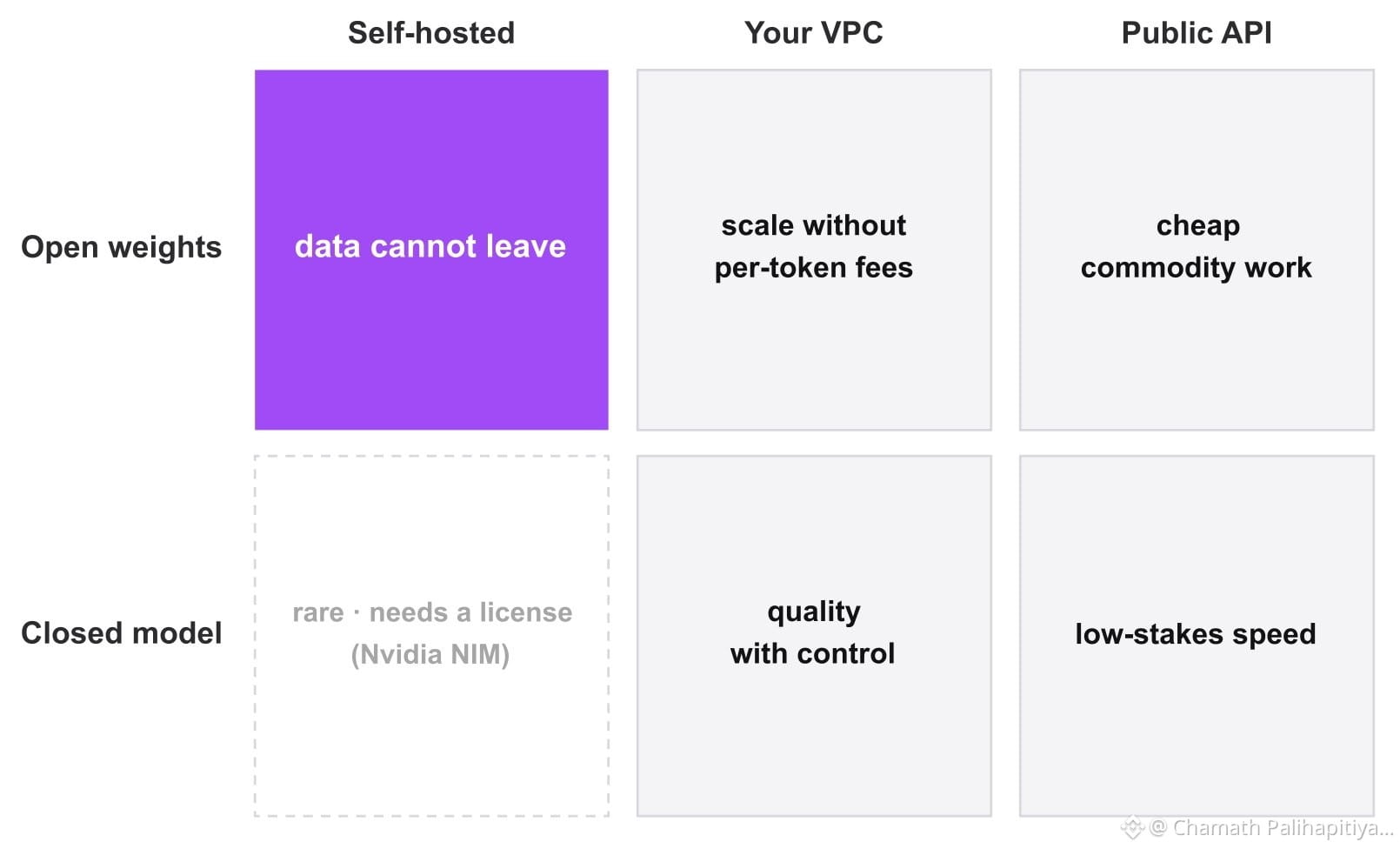
Selecting between an open or closed system is never just a simple black and white decision. Because there is a wide spectrum of access levels available, your final choice should always be driven by the actual job that needs to be done. For instance, relying on a public API makes perfect sense when you need rapid results for low stakes tasks. Alternatively, utilizing a private cloud closed model is the best route when you want to balance high quality with strict control. Finally, if your data absolutely cannot leave your environment under any circumstances, a self hosted open model is the required solution.
The group I work with at @SocialCapital recently outlined this exact framework in our newest Deep Dive on Open vs Closed Models. The insights shared below are taken directly from that presentation deck.
Selecting between an open or closed system is never just a simple black and white decision. Because there is a wide spectrum of access levels available, your final choice should always be driven by the actual job that needs to be done. For instance, relying on a public API makes perfect sense when you need rapid results for low stakes tasks. Alternatively, utilizing a private cloud closed model is the best route when you want to balance high quality with strict control. Finally, if your data absolutely cannot leave your environment under any circumstances, a self hosted open model is the required solution.
The group I work with at @SocialCapital recently outlined this exact framework in our newest Deep Dive on Open vs Closed Models. The insights shared below are taken directly from that presentation deck.
The group I work with at @SocialCapital recently outlined this exact framework in our newest Deep Dive on Open vs Closed Models. The insights shared below are taken directly from that presentation deck.
566
I would like to share my personal perspective regarding artificial intelligence. Please keep in mind that your own viewpoints and experiences on this subject may differ from mine. You can find the video discussion at the following link:
https://youtu.be/iI9uVDF0R4s?is=u4SQViHnMhU6AY5e
I would like to share my personal perspective regarding artificial intelligence. Please keep in mind that your own viewpoints and experiences on this subject may differ from mine. You can find the video discussion at the following link:
https://youtu.be/iI9uVDF0R4s?is=u4SQViHnMhU6AY5e
https://youtu.be/iI9uVDF0R4s?is=u4SQViHnMhU6AY5e
1
1.6k
Dario recently shared his perspective that the industry needs to decelerate the advancement of artificial intelligence capabilities. By presenting this stance, he is effectively pushing to shut down open source development in order to centralize immense economic and technological influence directly within Anthropic. If you would like to read his complete thoughts on the subject, you can find the original post at https://darioamodei.com/post/we-must-pace-the-frontier
Dario recently shared his perspective that the industry needs to decelerate the advancement of artificial intelligence capabilities. By presenting this stance, he is effectively pushing to shut down open source development in order to centralize immense economic and technological influence directly within Anthropic. If you would like to read his complete thoughts on the subject, you can find the original post at https://darioamodei.com/post/we-must-pace-the-frontier
1
923
Greetings everyone. I am excited to share that I am establishing a new business enterprise. You can expect this venture to be incredibly significant and to generate immense value, even though it will simultaneously be quite unpleasant and leave a trail of death and destruction in its path. Furthermore, while our upcoming initiatives are designed to be completely transformational, they will also inevitably dismantle society in its current form.
Taking all of these factors into consideration, my primary request is that you purchase the products our organization offers. You can absolutely depend on our team. I sincerely appreciate your time and support.
Greetings everyone. I am excited to share that I am establishing a new business enterprise. You can expect this venture to be incredibly significant and to generate immense value, even though it will simultaneously be quite unpleasant and leave a trail of death and destruction in its path. Furthermore, while our upcoming initiatives are designed to be completely transformational, they will also inevitably dismantle society in its current form.
Taking all of these factors into consideration, my primary request is that you purchase the products our organization offers. You can absolutely depend on our team. I sincerely appreciate your time and support.
Taking all of these factors into consideration, my primary request is that you purchase the products our organization offers. You can absolutely depend on our team. I sincerely appreciate your time and support.
1
255
This certainly gives us something to think about.
This certainly gives us something to think about.
1
772
This year, CloudBees gathered insights from 200+ enterprise technology leaders, revealing a fascinating contradiction. While 92% of these professionals felt certain their AI-generated code was completely ready for production prior to deployment, 81% of this exact same group experienced an increase in production problems following the release.
Trusting artificial intelligence outputs has officially evolved into a quantifiable business risk. Company boards can now directly weigh the 92% confidence in AI generated code against the 81% production issue rate to gain a clear, realistic picture of their operations. This dynamic raises a vital question for organizations: are development teams merely engaging in unchecked tokenmaxxing, or is there a structured strategy in place that actually delivers results?
As the study points out, and we completely share this perspective, the primary operational bottleneck has shifted away from the initial writing of code and directly toward its governance.
To help teams proactively manage this shift, 8090 Software Factory specifically integrates tests, peer reviews, and formal approvals right into its core features. This system ensures quality control while generating a transparent, easy-to-follow historical record for all stakeholders.
You can find out more details at this link: http://bit.ly/3UWcTQE
This year, CloudBees gathered insights from 200+ enterprise technology leaders, revealing a fascinating contradiction. While 92% of these professionals felt certain their AI-generated code was completely ready for production prior to deployment, 81% of this exact same group experienced an increase in production problems following the release.
Trusting artificial intelligence outputs has officially evolved into a quantifiable business risk. Company boards can now directly weigh the 92% confidence in AI generated code against the 81% production issue rate to gain a clear, realistic picture of their operations. This dynamic raises a vital question for organizations: are development teams merely engaging in unchecked tokenmaxxing, or is there a structured strategy in place that actually delivers results?
As the study points out, and we completely share this perspective, the primary operational bottleneck has shifted away from the initial writing of code and directly toward its governance.
To help teams proactively manage this shift, 8090 Software Factory specifically integrates tests, peer reviews, and formal approvals right into its core features. This system ensures quality control while generating a transparent, easy-to-follow historical record for all stakeholders.
You can find out more details at this link: http://bit.ly/3UWcTQE
Trusting artificial intelligence outputs has officially evolved into a quantifiable business risk. Company boards can now directly weigh the 92% confidence in AI generated code against the 81% production issue rate to gain a clear, realistic picture of their operations. This dynamic raises a vital question for organizations: are development teams merely engaging in unchecked tokenmaxxing, or is there a structured strategy in place that actually delivers results?
As the study points out, and we completely share this perspective, the primary operational bottleneck has shifted away from the initial writing of code and directly toward its governance.
To help teams proactively manage this shift, 8090 Software Factory specifically integrates tests, peer reviews, and formal approvals right into its core features. This system ensures quality control while generating a transparent, easy-to-follow historical record for all stakeholders.
You can find out more details at this link: http://bit.ly/3UWcTQE
218
It is generally a wise approach to do exactly the reverse anytime someone advises you to simply trust the experts. Think back to the Covid era, when placing absolute faith in specialists resulted in a massive societal deception that devastated our economy and significantly hindered the development of our children. As we move into the age of AI, applying that same blind trust will likely lead to consequences that make our past experiences look entirely minor by comparison. Therefore, I highly recommend that everyone explore these new technological advancements with a sense of amazement, while being sure to maintain a strong foundation of critical doubt.
It is generally a wise approach to do exactly the reverse anytime someone advises you to simply trust the experts. Think back to the Covid era, when placing absolute faith in specialists resulted in a massive societal deception that devastated our economy and significantly hindered the development of our children. As we move into the age of AI, applying that same blind trust will likely lead to consequences that make our past experiences look entirely minor by comparison. Therefore, I highly recommend that everyone explore these new technological advancements with a sense of amazement, while being sure to maintain a strong foundation of critical doubt.
1
647
Understanding what a model means within the banking sector is quite straightforward. It represents the mathematical foundation driving nearly all operational choices, such as determining loan eligibility, calculating necessary capital reserves, and identifying potentially fraudulent transactions.
A significant regulatory shift occurred in April when the Fed, OCC, and FDIC officially retired the framework that financial institutions have relied on since 2011 to validate these mathematical processes. While the updated rules address conventional models, they intentionally exclude agentic and generative AI. The reasoning is that artificial intelligence is advancing far too quickly to be constrained by static guidelines. Consequently, financial institutions are now tasked with independently regulating the most rapidly developing segment of their technological infrastructure. Despite this operational autonomy, banks remain fully obligated to justify their AI governance to examiners whenever requested.
Should such an examination take place tomorrow, the majority of financial institutions would face significant challenges in producing a precise, reproducible log detailing exactly how artificial intelligence was utilized. Tracking the specific methods, the associated artifacts, and every individual decision influenced by AI remains a complex hurdle.
This specific compliance gap is exactly what 8090 Software Factory is designed to resolve. The platform embeds comprehensive evidence and audit trails directly within the software architecture itself. By doing so, the system ensures that every single system modification and AI-driven choice can be reliably traced straight back to a requirement that was explicitly approved by personnel.
Discover additional details by visiting this link: http://bit.ly/46q2SOe
Understanding what a model means within the banking sector is quite straightforward. It represents the mathematical foundation driving nearly all operational choices, such as determining loan eligibility, calculating necessary capital reserves, and identifying potentially fraudulent transactions.
A significant regulatory shift occurred in April when the Fed, OCC, and FDIC officially retired the framework that financial institutions have relied on since 2011 to validate these mathematical processes. While the updated rules address conventional models, they intentionally exclude agentic and generative AI. The reasoning is that artificial intelligence is advancing far too quickly to be constrained by static guidelines. Consequently, financial institutions are now tasked with independently regulating the most rapidly developing segment of their technological infrastructure. Despite this operational autonomy, banks remain fully obligated to justify their AI governance to examiners whenever requested.
Should such an examination take place tomorrow, the majority of financial institutions would face significant challenges in producing a precise, reproducible log detailing exactly how artificial intelligence was utilized. Tracking the specific methods, the associated artifacts, and every individual decision influenced by AI remains a complex hurdle.
This specific compliance gap is exactly what 8090 Software Factory is designed to resolve. The platform embeds comprehensive evidence and audit trails directly within the software architecture itself. By doing so, the system ensures that every single system modification and AI-driven choice can be reliably traced straight back to a requirement that was explicitly approved by personnel.
Discover additional details by visiting this link: http://bit.ly/46q2SOe
A significant regulatory shift occurred in April when the Fed, OCC, and FDIC officially retired the framework that financial institutions have relied on since 2011 to validate these mathematical processes. While the updated rules address conventional models, they intentionally exclude agentic and generative AI. The reasoning is that artificial intelligence is advancing far too quickly to be constrained by static guidelines. Consequently, financial institutions are now tasked with independently regulating the most rapidly developing segment of their technological infrastructure. Despite this operational autonomy, banks remain fully obligated to justify their AI governance to examiners whenever requested.
Should such an examination take place tomorrow, the majority of financial institutions would face significant challenges in producing a precise, reproducible log detailing exactly how artificial intelligence was utilized. Tracking the specific methods, the associated artifacts, and every individual decision influenced by AI remains a complex hurdle.
This specific compliance gap is exactly what 8090 Software Factory is designed to resolve. The platform embeds comprehensive evidence and audit trails directly within the software architecture itself. By doing so, the system ensures that every single system modification and AI-driven choice can be reliably traced straight back to a requirement that was explicitly approved by personnel.
Discover additional details by visiting this link: http://bit.ly/46q2SOe
197
Research conducted by McKinsey and Oxford represents the most extensive analysis ever performed on major IT initiatives, and the findings are quite revealing. After reviewing more than 5,400 projects with budgets exceeding $15M, the data showed that these endeavors typically fall short of their planned value by 56% while simultaneously exceeding their budgets by 45%. Furthermore, the delays in scheduling are just as severe as the financial excesses, frequently pushing the realization of core objectives back by multiple years.
Historically, organizations have tried to navigate these massive IT transformations by making a universally accepted choice and partnering with a firm that no one could fault. Going with a safe option was perfectly logical during an era when simply completing a build was a major question mark. Today, however, AI has completely altered the landscape.
Overcoming these widespread industry challenges requires a system that enables you to clearly document your intentions right at the beginning. By establishing this clarity upfront, you can then leverage AI throughout the execution and verification stages to ensure your project is completed precisely as envisioned. This guarantees that your final deliverables remain on schedule, within scope, and perfectly aligned with your budget.
At 8090 Software Factory, we use this exact approach as the foundation for every client engagement. You can explore the mechanics of our process by visiting this link: http://bit.ly/4gP9bkq
Research conducted by McKinsey and Oxford represents the most extensive analysis ever performed on major IT initiatives, and the findings are quite revealing. After reviewing more than 5,400 projects with budgets exceeding $15M, the data showed that these endeavors typically fall short of their planned value by 56% while simultaneously exceeding their budgets by 45%. Furthermore, the delays in scheduling are just as severe as the financial excesses, frequently pushing the realization of core objectives back by multiple years.
Historically, organizations have tried to navigate these massive IT transformations by making a universally accepted choice and partnering with a firm that no one could fault. Going with a safe option was perfectly logical during an era when simply completing a build was a major question mark. Today, however, AI has completely altered the landscape.
Overcoming these widespread industry challenges requires a system that enables you to clearly document your intentions right at the beginning. By establishing this clarity upfront, you can then leverage AI throughout the execution and verification stages to ensure your project is completed precisely as envisioned. This guarantees that your final deliverables remain on schedule, within scope, and perfectly aligned with your budget.
At 8090 Software Factory, we use this exact approach as the foundation for every client engagement. You can explore the mechanics of our process by visiting this link: http://bit.ly/4gP9bkq
Historically, organizations have tried to navigate these massive IT transformations by making a universally accepted choice and partnering with a firm that no one could fault. Going with a safe option was perfectly logical during an era when simply completing a build was a major question mark. Today, however, AI has completely altered the landscape.
Overcoming these widespread industry challenges requires a system that enables you to clearly document your intentions right at the beginning. By establishing this clarity upfront, you can then leverage AI throughout the execution and verification stages to ensure your project is completed precisely as envisioned. This guarantees that your final deliverables remain on schedule, within scope, and perfectly aligned with your budget.
At 8090 Software Factory, we use this exact approach as the foundation for every client engagement. You can explore the mechanics of our process by visiting this link: http://bit.ly/4gP9bkq
136
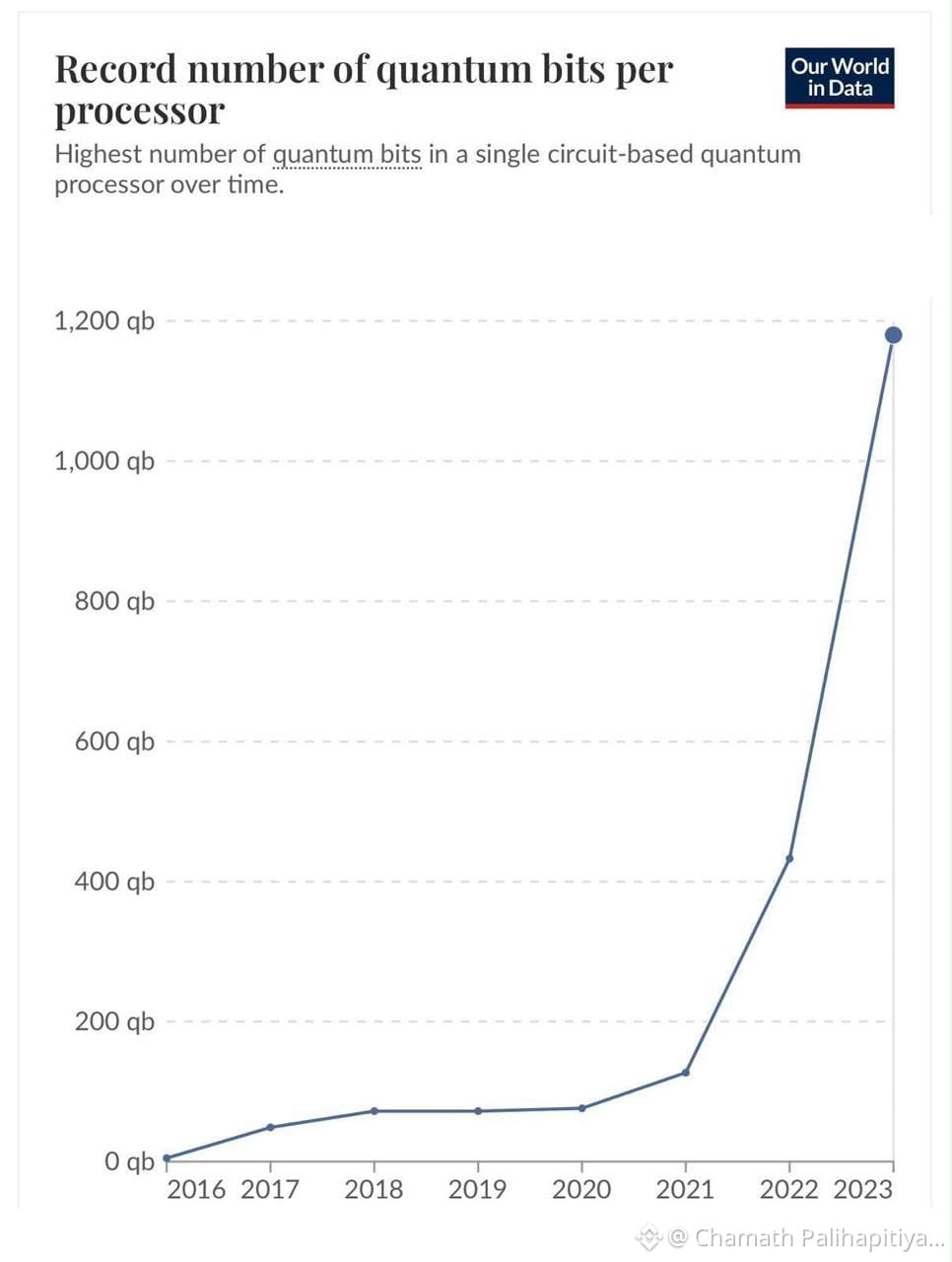
If you are looking for a single visual that highlights a major threat to our current systems, this particular graph immediately comes to my mind. It is highly likely that observers will fail to fully appreciate the compounding of quantum bits moving forward. Ultimately, it is impossible to exaggerate the profound ripple effects this rapid advancement will have on quantum insecure cryptographic methods.
If you are looking for a single visual that highlights a major threat to our current systems, this particular graph immediately comes to my mind. It is highly likely that observers will fail to fully appreciate the compounding of quantum bits moving forward. Ultimately, it is impossible to exaggerate the profound ripple effects this rapid advancement will have on quantum insecure cryptographic methods.
967
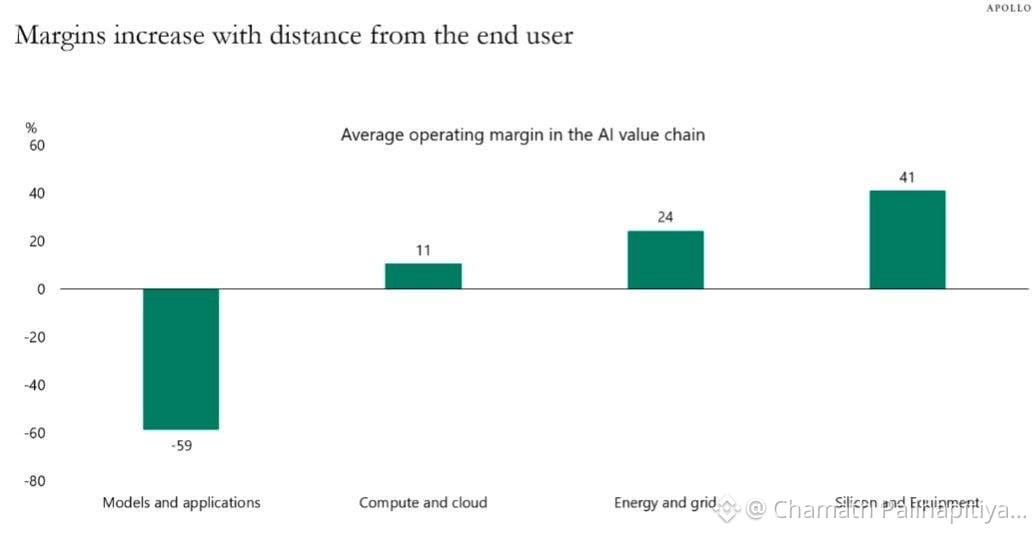
Looking back at the desktop and Internet eras, we can see that financial dynamics followed a specific pattern where initial economic structures eventually reversed. In the end, the organizations positioned nearest to everyday consumers were the ones that captured the highest profit margins.
We can expect Artificial Intelligence to follow this exact same trajectory. Rather than wondering whether this economic shift will take place again, the only real uncertainty is how soon it will occur.
Looking back at the desktop and Internet eras, we can see that financial dynamics followed a specific pattern where initial economic structures eventually reversed. In the end, the organizations positioned nearest to everyday consumers were the ones that captured the highest profit margins.
We can expect Artificial Intelligence to follow this exact same trajectory. Rather than wondering whether this economic shift will take place again, the only real uncertainty is how soon it will occur.
We can expect Artificial Intelligence to follow this exact same trajectory. Rather than wondering whether this economic shift will take place again, the only real uncertainty is how soon it will occur.
402
If you ever find yourself starting a statement with the phrase, "One thing worth saying before...", it is usually best to pause right there. Please skip the additional commentary and simply focus on successfully completing the work at hand.
If you ever find yourself starting a statement with the phrase, "One thing worth saying before...", it is usually best to pause right there. Please skip the additional commentary and simply focus on successfully completing the work at hand.
2
685
Although history classes often highlight the deregulation trends of the 1980s and 1990s, the reality is that regulatory frameworks were never actually streamlined during that era. Instead, the volume of restrictions continued to expand without any real interruption.
Ultimately, complex regulations cater to a single demographic: the established market leaders. These incumbents are the ones who effectively dictate the guidelines, either doing so firsthand or relying on their chosen representatives.
When a market operates with fewer restrictions, it naturally invites greater competition, which consistently challenges those entrenched powers. As the dominance of established players fades, the economy experiences a much faster and more vibrant circulation of both income and wealth.
However, as long as our regulatory systems continue to grow increasingly convoluted, those already at the top will keep reaping the rewards. They will continue to profit without needing to demonstrate genuine skill or put in actual effort, which ultimately seems like a highly illogical way to operate.
Although history classes often highlight the deregulation trends of the 1980s and 1990s, the reality is that regulatory frameworks were never actually streamlined during that era. Instead, the volume of restrictions continued to expand without any real interruption.
Ultimately, complex regulations cater to a single demographic: the established market leaders. These incumbents are the ones who effectively dictate the guidelines, either doing so firsthand or relying on their chosen representatives.
When a market operates with fewer restrictions, it naturally invites greater competition, which consistently challenges those entrenched powers. As the dominance of established players fades, the economy experiences a much faster and more vibrant circulation of both income and wealth.
However, as long as our regulatory systems continue to grow increasingly convoluted, those already at the top will keep reaping the rewards. They will continue to profit without needing to demonstrate genuine skill or put in actual effort, which ultimately seems like a highly illogical way to operate.
Ultimately, complex regulations cater to a single demographic: the established market leaders. These incumbents are the ones who effectively dictate the guidelines, either doing so firsthand or relying on their chosen representatives.
When a market operates with fewer restrictions, it naturally invites greater competition, which consistently challenges those entrenched powers. As the dominance of established players fades, the economy experiences a much faster and more vibrant circulation of both income and wealth.
However, as long as our regulatory systems continue to grow increasingly convoluted, those already at the top will keep reaping the rewards. They will continue to profit without needing to demonstrate genuine skill or put in actual effort, which ultimately seems like a highly illogical way to operate.

468
If you have ever wondered how the money you pay to Anthropic is being utilized, you might find their latest initiatives quite interesting. Hopefully, you support their vision. Based on reporting by Will from Politico, the political battles concerning artificial intelligence are now extending heavily into the midterm elections. Curiously, Anthropic, which is one of the most prominent organizations in the industry, is allocating millions to alert voters about the exact technology they assist in developing.
The organization Public First Action, which receives financial backing from Anthropic, has rolled out its first major effort for the general election. They have invested in a new $2.5 million broadcast purchase designed to support GOP Sen. Ashley Moody throughout Florida.
Despite being bankrolled by an artificial intelligence enterprise, this new television spot begins with a serious caution. It claims that artificial intelligence is transforming our lives, moving faster than anyone can control, and coming for our jobs. The commercial highlights the dangers of cloned voices and stolen faces, alongside warnings directly from artificial intelligence inventors. It then shifts to applaud Sen. Ashley Moody for championing legislation that targets deepfakes. The original source article also prompts readers to watch the ad.
This recent commercial is a key piece of the wider political campaign by Anthropic. The company is dedicating millions to advocate for more rigorous artificial intelligence regulations. Through these actions, Anthropic aims to counter rival political groups that are supported by OpenAI investors and leaders, who instead advocate for a much lighter regulatory approach.
If you have ever wondered how the money you pay to Anthropic is being utilized, you might find their latest initiatives quite interesting. Hopefully, you support their vision. Based on reporting by Will from Politico, the political battles concerning artificial intelligence are now extending heavily into the midterm elections. Curiously, Anthropic, which is one of the most prominent organizations in the industry, is allocating millions to alert voters about the exact technology they assist in developing.
The organization Public First Action, which receives financial backing from Anthropic, has rolled out its first major effort for the general election. They have invested in a new $2.5 million broadcast purchase designed to support GOP Sen. Ashley Moody throughout Florida.
Despite being bankrolled by an artificial intelligence enterprise, this new television spot begins with a serious caution. It claims that artificial intelligence is transforming our lives, moving faster than anyone can control, and coming for our jobs. The commercial highlights the dangers of cloned voices and stolen faces, alongside warnings directly from artificial intelligence inventors. It then shifts to applaud Sen. Ashley Moody for championing legislation that targets deepfakes. The original source article also prompts readers to watch the ad.
This recent commercial is a key piece of the wider political campaign by Anthropic. The company is dedicating millions to advocate for more rigorous artificial intelligence regulations. Through these actions, Anthropic aims to counter rival political groups that are supported by OpenAI investors and leaders, who instead advocate for a much lighter regulatory approach.
The organization Public First Action, which receives financial backing from Anthropic, has rolled out its first major effort for the general election. They have invested in a new $2.5 million broadcast purchase designed to support GOP Sen. Ashley Moody throughout Florida.
Despite being bankrolled by an artificial intelligence enterprise, this new television spot begins with a serious caution. It claims that artificial intelligence is transforming our lives, moving faster than anyone can control, and coming for our jobs. The commercial highlights the dangers of cloned voices and stolen faces, alongside warnings directly from artificial intelligence inventors. It then shifts to applaud Sen. Ashley Moody for championing legislation that targets deepfakes. The original source article also prompts readers to watch the ad.
This recent commercial is a key piece of the wider political campaign by Anthropic. The company is dedicating millions to advocate for more rigorous artificial intelligence regulations. Through these actions, Anthropic aims to counter rival political groups that are supported by OpenAI investors and leaders, who instead advocate for a much lighter regulatory approach.
380
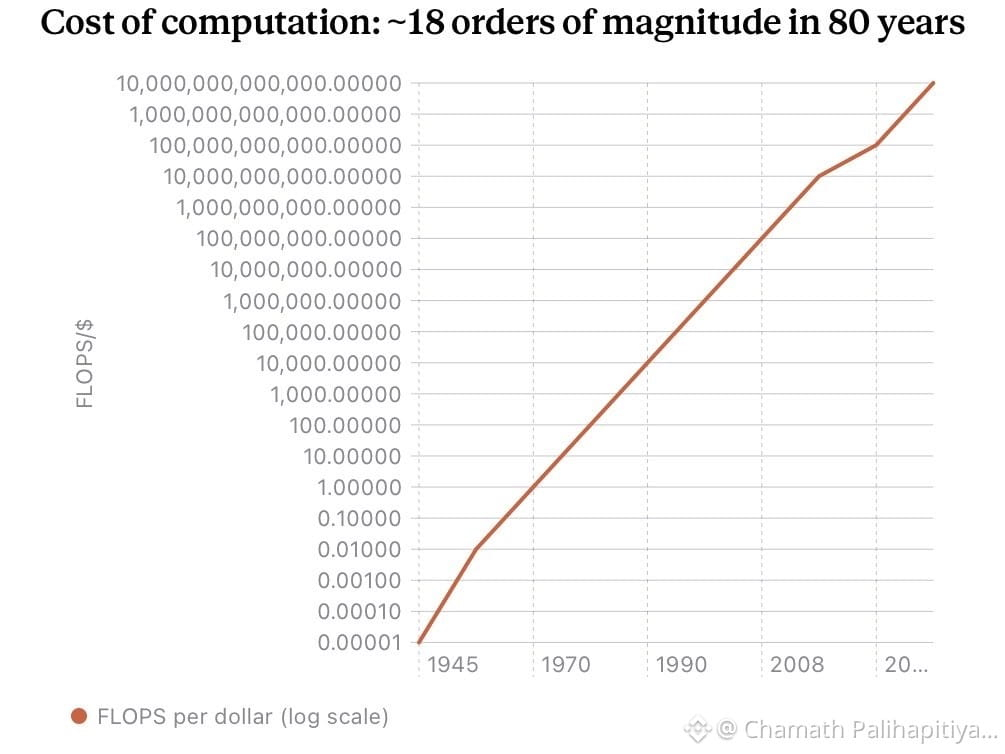
Imagine an extraterrestrial being arriving on Earth with a fascinating request. Suppose they ask to see a single graph representing the fundamental driving force behind every past and future achievement of our species.
What exactly would you choose to present to them?
Personally, I would share the graphic displayed below. I firmly believe that humanity will eventually resolve every challenge we face, just as long as we sustain the progress shown in this chart.
Imagine an extraterrestrial being arriving on Earth with a fascinating request. Suppose they ask to see a single graph representing the fundamental driving force behind every past and future achievement of our species.
What exactly would you choose to present to them?
Personally, I would share the graphic displayed below. I firmly believe that humanity will eventually resolve every challenge we face, just as long as we sustain the progress shown in this chart.
What exactly would you choose to present to them?
Personally, I would share the graphic displayed below. I firmly believe that humanity will eventually resolve every challenge we face, just as long as we sustain the progress shown in this chart.
1.4k
The Math for Building Versus Buying Software Now Strongly Favors Building
For the entire duration of the SaaS wave, acquiring existing software was always the more affordable and rapid choice compared to developing what you needed from scratch. Today, however, navigating that purchasing cycle continues to grow increasingly convoluted.
This process is intricate for well understood reasons. Separate stakeholders are required to run the security review, negotiate the terms, and sign off on the risk. Gartner notes that the buying group for a complex enterprise software purchase now involves 6 to 10 people. As a result of these team dynamics, 77% of buyers characterize their most recent purchase as very complex or difficult.
Thanks to AI, the development side of that equation has shifted materially. The oldest argument for purchasing technology was that it offered a faster path, but this is simply no longer true. A standard buy evaluation routinely requires two or three quarters just to clear the procurement phase. Within that exact same window of time, the custom workflow you desire can now be specified, built, tested, and running in production.
We created Software Factory to empower large enterprises to capitalize on the deflationary economics of AI. By leveraging this technology, we are making the build versus buy decision far more competitive than it has been historically.
How: http://bit.ly/3RNjXya
The Math for Building Versus Buying Software Now Strongly Favors Building
For the entire duration of the SaaS wave, acquiring existing software was always the more affordable and rapid choice compared to developing what you needed from scratch. Today, however, navigating that purchasing cycle continues to grow increasingly convoluted.
This process is intricate for well understood reasons. Separate stakeholders are required to run the security review, negotiate the terms, and sign off on the risk. Gartner notes that the buying group for a complex enterprise software purchase now involves 6 to 10 people. As a result of these team dynamics, 77% of buyers characterize their most recent purchase as very complex or difficult.
Thanks to AI, the development side of that equation has shifted materially. The oldest argument for purchasing technology was that it offered a faster path, but this is simply no longer true. A standard buy evaluation routinely requires two or three quarters just to clear the procurement phase. Within that exact same window of time, the custom workflow you desire can now be specified, built, tested, and running in production.
We created Software Factory to empower large enterprises to capitalize on the deflationary economics of AI. By leveraging this technology, we are making the build versus buy decision far more competitive than it has been historically.
How: http://bit.ly/3RNjXya
For the entire duration of the SaaS wave, acquiring existing software was always the more affordable and rapid choice compared to developing what you needed from scratch. Today, however, navigating that purchasing cycle continues to grow increasingly convoluted.
This process is intricate for well understood reasons. Separate stakeholders are required to run the security review, negotiate the terms, and sign off on the risk. Gartner notes that the buying group for a complex enterprise software purchase now involves 6 to 10 people. As a result of these team dynamics, 77% of buyers characterize their most recent purchase as very complex or difficult.
Thanks to AI, the development side of that equation has shifted materially. The oldest argument for purchasing technology was that it offered a faster path, but this is simply no longer true. A standard buy evaluation routinely requires two or three quarters just to clear the procurement phase. Within that exact same window of time, the custom workflow you desire can now be specified, built, tested, and running in production.
We created Software Factory to empower large enterprises to capitalize on the deflationary economics of AI. By leveraging this technology, we are making the build versus buy decision far more competitive than it has been historically.
How: http://bit.ly/3RNjXya
284
The post-launch phase of a software platform actually accounts for 50 to 80% of its overall lifetime cost. Interestingly, the traditional service model is structured to conclude precisely when this highly expensive period gets underway.
As soon as a project is released, typical system integrators will reassign their delivery teams to entirely new clients. This practice ensures that the original creators behind your core design are completely out of the picture long before ongoing support is required and the most costly years commence. You have to wonder who will be there to assist you three years down the road when compliance regulations shift or when the foundational workflow of your system becomes obsolete.
Breaking away from this standard cycle, 8090 maintains full accountability for your production code well beyond the initial go-live date. We make sure your software remains consistently updated and perfectly adapted to your evolving business landscape.
Discover more by visiting https://bit.ly/4zhwMBA
The post-launch phase of a software platform actually accounts for 50 to 80% of its overall lifetime cost. Interestingly, the traditional service model is structured to conclude precisely when this highly expensive period gets underway.
As soon as a project is released, typical system integrators will reassign their delivery teams to entirely new clients. This practice ensures that the original creators behind your core design are completely out of the picture long before ongoing support is required and the most costly years commence. You have to wonder who will be there to assist you three years down the road when compliance regulations shift or when the foundational workflow of your system becomes obsolete.
Breaking away from this standard cycle, 8090 maintains full accountability for your production code well beyond the initial go-live date. We make sure your software remains consistently updated and perfectly adapted to your evolving business landscape.
Discover more by visiting https://bit.ly/4zhwMBA
As soon as a project is released, typical system integrators will reassign their delivery teams to entirely new clients. This practice ensures that the original creators behind your core design are completely out of the picture long before ongoing support is required and the most costly years commence. You have to wonder who will be there to assist you three years down the road when compliance regulations shift or when the foundational workflow of your system becomes obsolete.
Breaking away from this standard cycle, 8090 maintains full accountability for your production code well beyond the initial go-live date. We make sure your software remains consistently updated and perfectly adapted to your evolving business landscape.
Discover more by visiting https://bit.ly/4zhwMBA
1
1
617
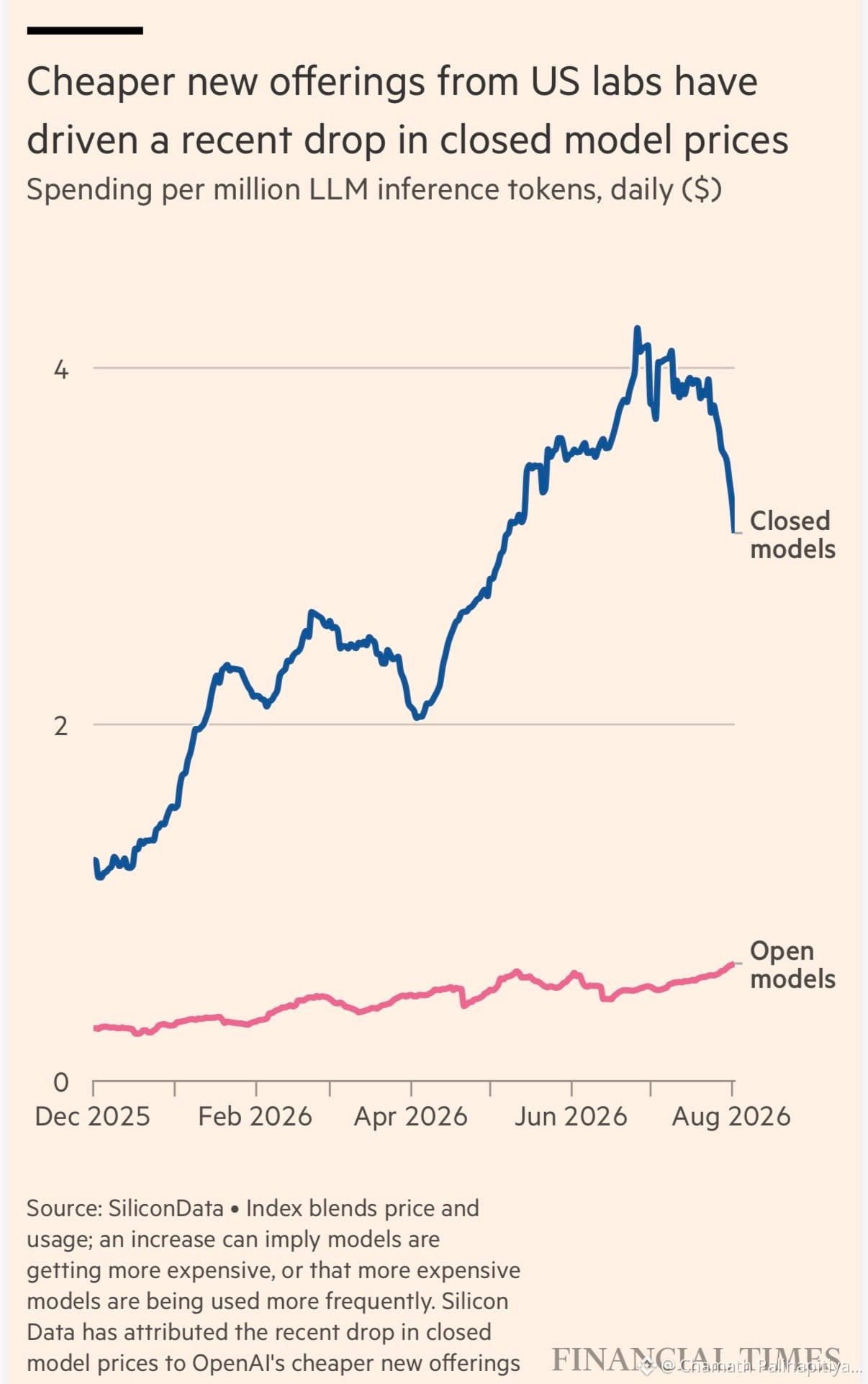
We are looking at an incredibly positive step forward for the industry. With the financial costs of different models gradually aligning, the natural progression will involve a shift toward independent third party control planes and harnesses. Some notable examples leading this charge include 8090 Software Factory, Palantir, and Nous' Hermes.
Looking ahead over the next 36 months, it is highly likely that every enterprise will demand access to a third party harness paired with the flexibility to utilize any model quasi-interchangeably. This shift will occur as organizations become fully aware of the vulnerabilities surrounding data and IP leakage. In the end, companies need to maintain absolute sovereignty over their encoded judgement, which makes this adaptable approach essential.
We are looking at an incredibly positive step forward for the industry. With the financial costs of different models gradually aligning, the natural progression will involve a shift toward independent third party control planes and harnesses. Some notable examples leading this charge include 8090 Software Factory, Palantir, and Nous' Hermes.
Looking ahead over the next 36 months, it is highly likely that every enterprise will demand access to a third party harness paired with the flexibility to utilize any model quasi-interchangeably. This shift will occur as organizations become fully aware of the vulnerabilities surrounding data and IP leakage. In the end, companies need to maintain absolute sovereignty over their encoded judgement, which makes this adaptable approach essential.
Looking ahead over the next 36 months, it is highly likely that every enterprise will demand access to a third party harness paired with the flexibility to utilize any model quasi-interchangeably. This shift will occur as organizations become fully aware of the vulnerabilities surrounding data and IP leakage. In the end, companies need to maintain absolute sovereignty over their encoded judgement, which makes this adaptable approach essential.
433
On an annual basis, Gallup evaluates the distribution of employees under individual managers across the American workforce. Over the decade they have been monitoring this metric, the ratio recently experienced its most rapid shift, climbing from 11 to 12 direct reports in merely one year. The catalyst behind this trend is a familiar talking point during corporate restructuring discussions. Organizations are consistently eliminating middle management roles and allocating the remaining personnel among a smaller pool of existing leaders.
According to Gallup's research, employee engagement actually reaches its optimal level when a manager oversees a team of eight or nine people. At this size, a supervisor retains the ability to monitor ongoing projects accurately and offer constructive, genuine feedback. However, once the number of direct reports grows past fifteen, engagement drops drastically.
Today, the crucial issue is no longer just the volume of individuals assigned to a specific management title on an organizational chart. Instead, the focus must shift to understanding the proportion of an employee's week that is spent on tasks requiring complex human judgment, rather than routine duties that simply keep the business functioning.
The enterprises currently gaining a competitive edge have managed to completely eliminate repetitive tasks from the schedules of their human workforce. By doing so, they ensure that the professionals remaining on the team are dedicating their time to customer relationships, nuanced conversations that require a human touch, and the strategic innovation that ultimately drives market success.
Ways we can help your organization
On an annual basis, Gallup evaluates the distribution of employees under individual managers across the American workforce. Over the decade they have been monitoring this metric, the ratio recently experienced its most rapid shift, climbing from 11 to 12 direct reports in merely one year. The catalyst behind this trend is a familiar talking point during corporate restructuring discussions. Organizations are consistently eliminating middle management roles and allocating the remaining personnel among a smaller pool of existing leaders.
According to Gallup's research, employee engagement actually reaches its optimal level when a manager oversees a team of eight or nine people. At this size, a supervisor retains the ability to monitor ongoing projects accurately and offer constructive, genuine feedback. However, once the number of direct reports grows past fifteen, engagement drops drastically.
Today, the crucial issue is no longer just the volume of individuals assigned to a specific management title on an organizational chart. Instead, the focus must shift to understanding the proportion of an employee's week that is spent on tasks requiring complex human judgment, rather than routine duties that simply keep the business functioning.
The enterprises currently gaining a competitive edge have managed to completely eliminate repetitive tasks from the schedules of their human workforce. By doing so, they ensure that the professionals remaining on the team are dedicating their time to customer relationships, nuanced conversations that require a human touch, and the strategic innovation that ultimately drives market success.
Ways we can help your organization
According to Gallup's research, employee engagement actually reaches its optimal level when a manager oversees a team of eight or nine people. At this size, a supervisor retains the ability to monitor ongoing projects accurately and offer constructive, genuine feedback. However, once the number of direct reports grows past fifteen, engagement drops drastically.
Today, the crucial issue is no longer just the volume of individuals assigned to a specific management title on an organizational chart. Instead, the focus must shift to understanding the proportion of an employee's week that is spent on tasks requiring complex human judgment, rather than routine duties that simply keep the business functioning.
The enterprises currently gaining a competitive edge have managed to completely eliminate repetitive tasks from the schedules of their human workforce. By doing so, they ensure that the professionals remaining on the team are dedicating their time to customer relationships, nuanced conversations that require a human touch, and the strategic innovation that ultimately drives market success.
Ways we can help your organization
373
Approaching the Artificial Intelligence Singularity
The prevailing theory regarding this phenomenon unfolds through a distinct sequence of events. First, humanity successfully develops an Artificial General Intelligence. Second, this newly created system achieves mastery in the field of artificial intelligence research. Third, the system leverages its expertise to engineer an even more capable version of itself. Fourth, that upgraded iteration goes on to build a remarkably superior successor. Fifth, this feedback loop continues to accelerate at an unprecedented rate.
When reviewing the latest achievements and technical functionalities emerging from multiple research facilities over the past few weeks, it becomes quite evident that we are already securely positioned within this continuous cycle.
We can expect the upcoming 18 months to be absolutely extraordinary. From this point forward, the mechanism of recursive self improvement is poised to drive up technological capabilities at a breathtaking speed. As a direct result of this rapid evolution, the marginal costs associated with operating all of these models will eventually drop to roughly ~$0.
Approaching the Artificial Intelligence Singularity
The prevailing theory regarding this phenomenon unfolds through a distinct sequence of events. First, humanity successfully develops an Artificial General Intelligence. Second, this newly created system achieves mastery in the field of artificial intelligence research. Third, the system leverages its expertise to engineer an even more capable version of itself. Fourth, that upgraded iteration goes on to build a remarkably superior successor. Fifth, this feedback loop continues to accelerate at an unprecedented rate.
When reviewing the latest achievements and technical functionalities emerging from multiple research facilities over the past few weeks, it becomes quite evident that we are already securely positioned within this continuous cycle.
We can expect the upcoming 18 months to be absolutely extraordinary. From this point forward, the mechanism of recursive self improvement is poised to drive up technological capabilities at a breathtaking speed. As a direct result of this rapid evolution, the marginal costs associated with operating all of these models will eventually drop to roughly ~$0.
The prevailing theory regarding this phenomenon unfolds through a distinct sequence of events. First, humanity successfully develops an Artificial General Intelligence. Second, this newly created system achieves mastery in the field of artificial intelligence research. Third, the system leverages its expertise to engineer an even more capable version of itself. Fourth, that upgraded iteration goes on to build a remarkably superior successor. Fifth, this feedback loop continues to accelerate at an unprecedented rate.
When reviewing the latest achievements and technical functionalities emerging from multiple research facilities over the past few weeks, it becomes quite evident that we are already securely positioned within this continuous cycle.
We can expect the upcoming 18 months to be absolutely extraordinary. From this point forward, the mechanism of recursive self improvement is poised to drive up technological capabilities at a breathtaking speed. As a direct result of this rapid evolution, the marginal costs associated with operating all of these models will eventually drop to roughly ~$0.
1
539
තවත් අන්තර්ගතයන් ගවේෂණය කිරීමට ඇතුල් වන්න
Binance චතුරශ්රය හි ගෝලීය ක්රිප්ටෝ පරිශීලකයින් හා එක්වන්න
⚡️ ක්රිප්ටෝ පිළිබඳ නවතම සහ ප්රයෝජනවත් තොරතුරු ලබා ගන්න.
💬 ලොව විශාලතම ක්රිප්ටෝ හුවමාරුව මගින් විශ්වාස කෙරේ.
👍 සත්යායනය කරන ලද නිර්මාණකරුවන්ගෙන් සැබෑ විදසුන් සොයා ගන්න.
විද්යුත් තැපෑල / දුරකථන අංකය
නැගී එන මාතෘකා
KoreaProposesTokenizingStocksAndBonds
9,852 views
227 සාකච්ඡා කරමින්
🇰🇷 كوريا الجنوبية تفتح الباب لترميز الأسهم والسندات على البلوكتشين.
ابتداءً من 4 فبراير 2027، تبدأ كوريا تطبيق إطار قانوني للأوراق المالية المرمّزة، على مراحل تشمل السندات، صناديق سوق النقد، الأسهم غير المدرجة، ثم التوسع إلى الأوراق المالية العامة.
والأهم أن الخطة لا تتوقف عند تحويل الأصول إلى Tokens؛ بل تستهدف بناء بنية مالية تشمل الإصدار والتداول والتسوية على السلسلة، مع إمكانية ربط التسوية مستقبلًا بالـStablecoins.
هذه الخطوة تعكس تحولًا مهمًا:
البلوكتشين قد لا يكون مستقبل الأصول الرقمية فقط، بل جزءًا من البنية التحتية للأسواق المالية التقليدية.
$BTC $LINK $ONDO
#KoreaProposesTokenizingStocksAndBonds
yosreia
·3 කැමත්ත දැක්වීම්
·165 views
MetaMaskExitsLidoValidatorsAfterSecurityIncident
75,590 views
961 සාකච්ඡා කරමින්
MicronBeatsEarningsLiftsGuidance
44,662 views
742 සාකච්ඡා කරමින්