

Steve Cryptoo 1
341 පෝස්ටු

Steve Cryptoo 1
වාර්තා කරන්න
පරිශීලක අවහිර කරන්න
Crypto Advisor| Chart Analyst| Web3 Guru|
0 හඹා යමින්
3 හඹා යන්නන්
18 කැමති විය
පෝස්ටු
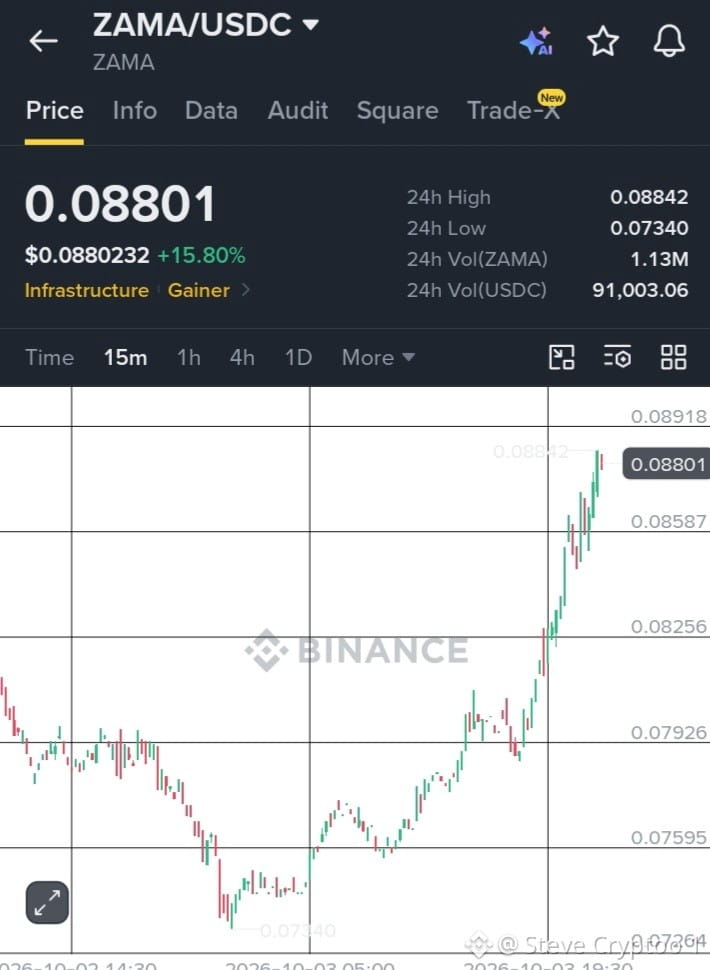
$ZAMA is showing a strong breakout structure on the 15M chart.
Price has surged from the $0.07340 low to $0.08801, nearly a 20% move, while reclaiming multiple resistance levels.
Key levels:
• $0.08918 — immediate resistance
• $0.08587 — first support / breakout retest
• $0.08256 — major support
• $0.07926 — previous base
If $ZAMA holds above $0.08587, the chart keeps its bullish structure and a clean break above $0.08918 could open the door for another leg higher.
The key now is whether buyers can turn the breakout into support. 👀
#BTC Price Analysis# #Macro Insights#
$ZAMA is showing a strong breakout structure on the 15M chart.
Price has surged from the $0.07340 low to $0.08801, nearly a 20% move, while reclaiming multiple resistance levels.
Key levels:
• $0.08918 — immediate resistance
• $0.08587 — first support / breakout retest
• $0.08256 — major support
• $0.07926 — previous base
If $ZAMA holds above $0.08587, the chart keeps its bullish structure and a clean break above $0.08918 could open the door for another leg higher.
The key now is whether buyers can turn the breakout into support. 👀
#BTC Price Analysis# #Macro Insights#
Price has surged from the $0.07340 low to $0.08801, nearly a 20% move, while reclaiming multiple resistance levels.
Key levels:
• $0.08918 — immediate resistance
• $0.08587 — first support / breakout retest
• $0.08256 — major support
• $0.07926 — previous base
If $ZAMA holds above $0.08587, the chart keeps its bullish structure and a clean break above $0.08918 could open the door for another leg higher.
The key now is whether buyers can turn the breakout into support. 👀
#BTC Price Analysis# #Macro Insights#
97
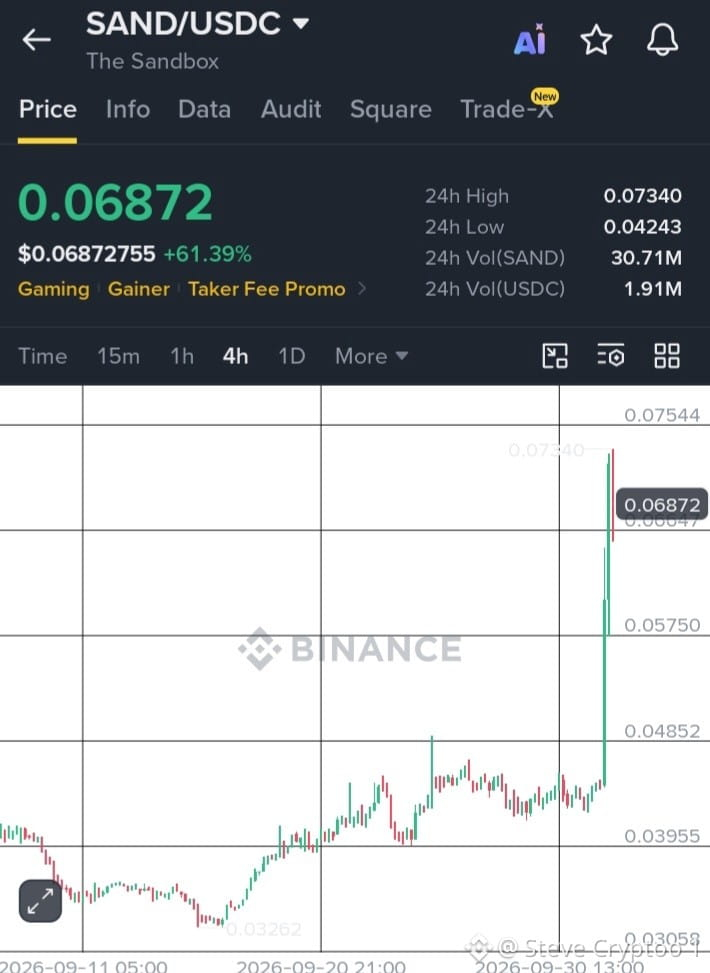
$SAND just broke out hard.
Price ripped from ~$0.043 to $0.07340, marking a 61%+ 24H move and breaking above the key $0.0575 resistance.
📈 Technical picture:
• Strong 4H breakout
• Massive volume expansion
• $0.0687 now becomes the key pivot
• Resistance: $0.0734 → $0.0754
• Support: $0.0575 → $0.0485
A clean hold above $0.0687 could keep the breakout structure intact, while rejection may trigger a retest of $0.0575.
Momentum is clearly with the bulls, but after a move this vertical, volatility can be extreme.
#BTC Price Analysis# #Macro Insights#
$SAND just broke out hard.
Price ripped from ~$0.043 to $0.07340, marking a 61%+ 24H move and breaking above the key $0.0575 resistance.
📈 Technical picture:
• Strong 4H breakout
• Massive volume expansion
• $0.0687 now becomes the key pivot
• Resistance: $0.0734 → $0.0754
• Support: $0.0575 → $0.0485
A clean hold above $0.0687 could keep the breakout structure intact, while rejection may trigger a retest of $0.0575.
Momentum is clearly with the bulls, but after a move this vertical, volatility can be extreme.
#BTC Price Analysis# #Macro Insights#
Price ripped from ~$0.043 to $0.07340, marking a 61%+ 24H move and breaking above the key $0.0575 resistance.
📈 Technical picture:
• Strong 4H breakout
• Massive volume expansion
• $0.0687 now becomes the key pivot
• Resistance: $0.0734 → $0.0754
• Support: $0.0575 → $0.0485
A clean hold above $0.0687 could keep the breakout structure intact, while rejection may trigger a retest of $0.0575.
Momentum is clearly with the bulls, but after a move this vertical, volatility can be extreme.
#BTC Price Analysis# #Macro Insights#
46
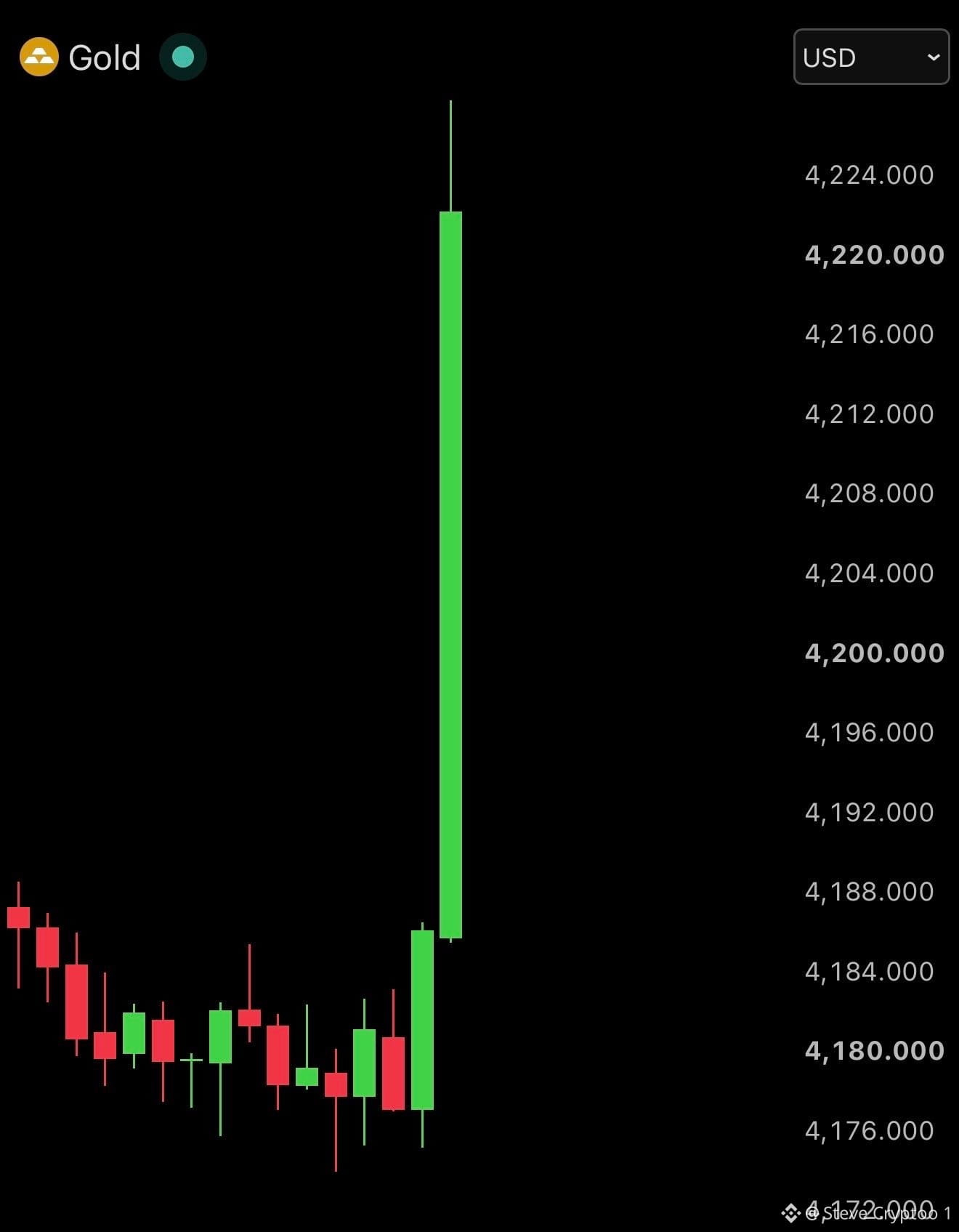
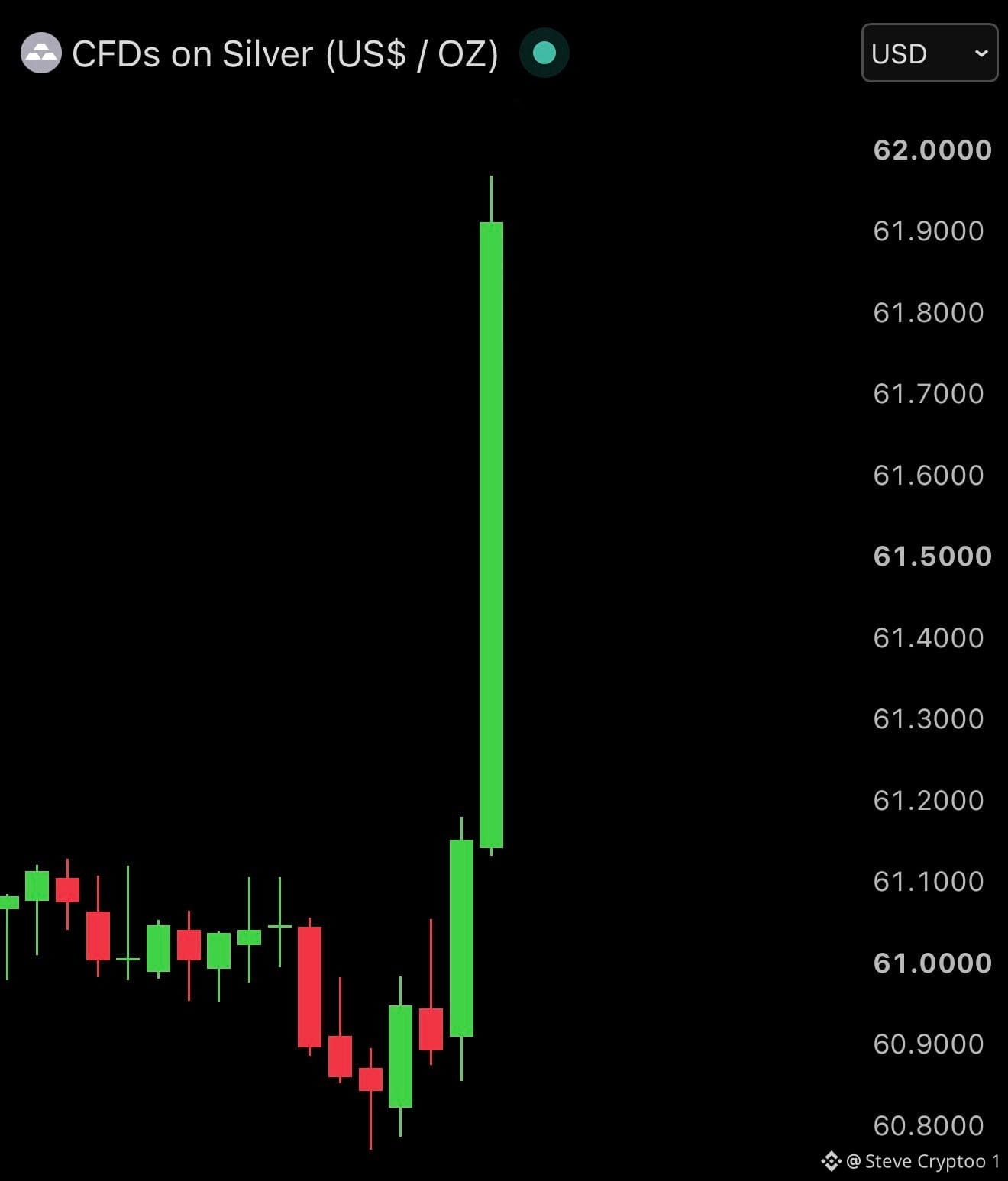
Gold & Silver just showed how quickly liquidity can move in precious metals. 👀
Gold pushed toward $4,220+, while Silver ripped toward $62, with both charts printing aggressive vertical candles.
The reported $400B jump in combined market value is huge if confirmed, but the move itself is clear: momentum accelerated sharply after a period of consolidation.
Technically:
• Gold: breakout impulse → watch $4,220–$4,225 resistance
• Silver: $62 is the immediate psychological level
• Vertical candles = strong momentum, but also elevated pullback risk
• Key question now: continuation or profit-taking?
The broader backdrop is also important: gold and silver remain highly sensitive to Fed expectations, Treasury yields, the dollar and today’s U.S. jobs data.
Precious metals are moving fast. The next few candles matter. 📈
$GOLD $SILVER $BTC
#BTC Price Analysis# #Macro Insights#
Gold & Silver just showed how quickly liquidity can move in precious metals. 👀
Gold pushed toward $4,220+, while Silver ripped toward $62, with both charts printing aggressive vertical candles.
The reported $400B jump in combined market value is huge if confirmed, but the move itself is clear: momentum accelerated sharply after a period of consolidation.
Technically:
• Gold: breakout impulse → watch $4,220–$4,225 resistance
• Silver: $62 is the immediate psychological level
• Vertical candles = strong momentum, but also elevated pullback risk
• Key question now: continuation or profit-taking?
The broader backdrop is also important: gold and silver remain highly sensitive to Fed expectations, Treasury yields, the dollar and today’s U.S. jobs data.
Precious metals are moving fast. The next few candles matter. 📈
$GOLD $SILVER $BTC
#BTC Price Analysis# #Macro Insights#
Gold pushed toward $4,220+, while Silver ripped toward $62, with both charts printing aggressive vertical candles.
The reported $400B jump in combined market value is huge if confirmed, but the move itself is clear: momentum accelerated sharply after a period of consolidation.
Technically:
• Gold: breakout impulse → watch $4,220–$4,225 resistance
• Silver: $62 is the immediate psychological level
• Vertical candles = strong momentum, but also elevated pullback risk
• Key question now: continuation or profit-taking?
The broader backdrop is also important: gold and silver remain highly sensitive to Fed expectations, Treasury yields, the dollar and today’s U.S. jobs data.
Precious metals are moving fast. The next few candles matter. 📈
$GOLD $SILVER $BTC
#BTC Price Analysis# #Macro Insights#
72
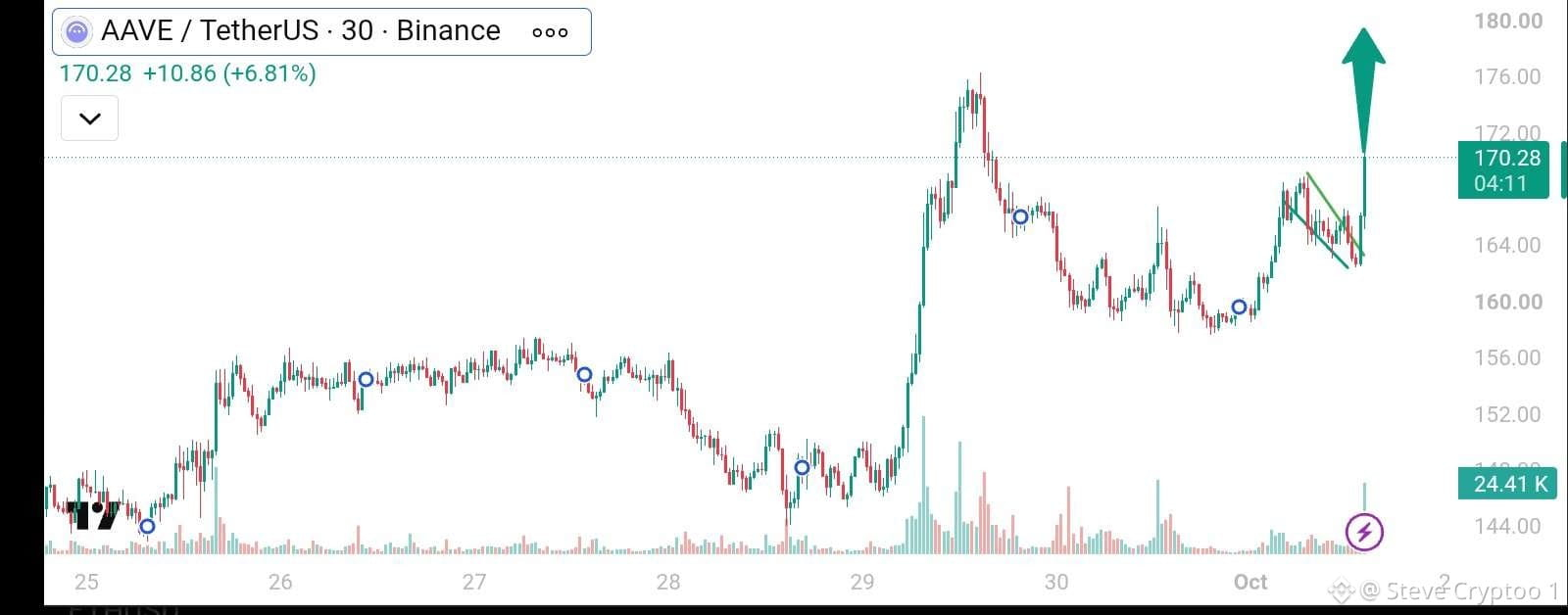
$AAVE is showing strong momentum on the 30M chart. 📈
Price broke above the recent descending structure and reclaimed $170 with rising volume.
A sustained hold above $170 could open the path toward $176–$180.
If $170 fails, watch $164–$166 as the key support zone.
Structure remains bullish. 🔥
#BTC Price Analysis# #Macro Insights#
$AAVE is showing strong momentum on the 30M chart. 📈
Price broke above the recent descending structure and reclaimed $170 with rising volume.
A sustained hold above $170 could open the path toward $176–$180.
If $170 fails, watch $164–$166 as the key support zone.
Structure remains bullish. 🔥
#BTC Price Analysis# #Macro Insights#
Price broke above the recent descending structure and reclaimed $170 with rising volume.
A sustained hold above $170 could open the path toward $176–$180.
If $170 fails, watch $164–$166 as the key support zone.
Structure remains bullish. 🔥
#BTC Price Analysis# #Macro Insights#
60
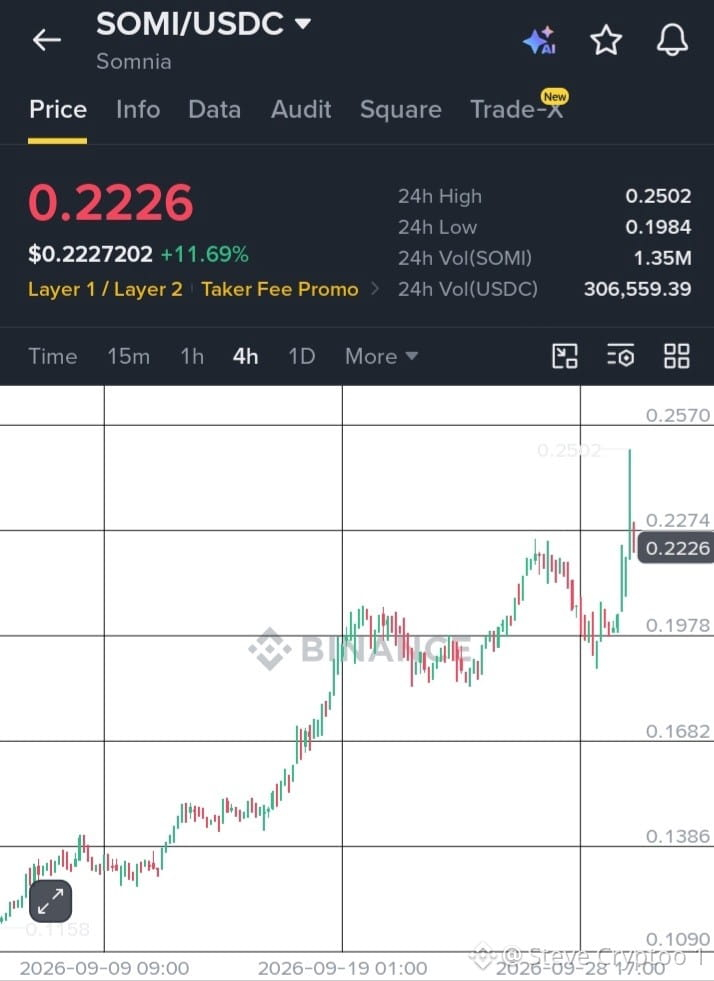
$SOMI is setting up for another important move.
On the 4H chart, $SOMI has clearly shifted structure to the upside after reclaiming the $0.1978 level.
Price pushed as high as $0.2502 before pulling back toward $0.2226, which looks like a healthy retracement after the sharp move.
📌 Key levels to watch:
• $0.2274 → immediate resistance
• $0.2502 → recent high / breakout level
• $0.2570 → next major resistance
• $0.1978 → key support
• $0.1682 → deeper support if structure breaks
If $SOMI can reclaim $0.2274 and hold above it on the 4H, another test of $0.2502–$0.2570 comes into focus.
#BTC Price Analysis# #Macro Insights#
$SOMI is setting up for another important move.
On the 4H chart, $SOMI has clearly shifted structure to the upside after reclaiming the $0.1978 level.
Price pushed as high as $0.2502 before pulling back toward $0.2226, which looks like a healthy retracement after the sharp move.
📌 Key levels to watch:
• $0.2274 → immediate resistance
• $0.2502 → recent high / breakout level
• $0.2570 → next major resistance
• $0.1978 → key support
• $0.1682 → deeper support if structure breaks
If $SOMI can reclaim $0.2274 and hold above it on the 4H, another test of $0.2502–$0.2570 comes into focus.
#BTC Price Analysis# #Macro Insights#
On the 4H chart, $SOMI has clearly shifted structure to the upside after reclaiming the $0.1978 level.
Price pushed as high as $0.2502 before pulling back toward $0.2226, which looks like a healthy retracement after the sharp move.
📌 Key levels to watch:
• $0.2274 → immediate resistance
• $0.2502 → recent high / breakout level
• $0.2570 → next major resistance
• $0.1978 → key support
• $0.1682 → deeper support if structure breaks
If $SOMI can reclaim $0.2274 and hold above it on the 4H, another test of $0.2502–$0.2570 comes into focus.
#BTC Price Analysis# #Macro Insights#
57
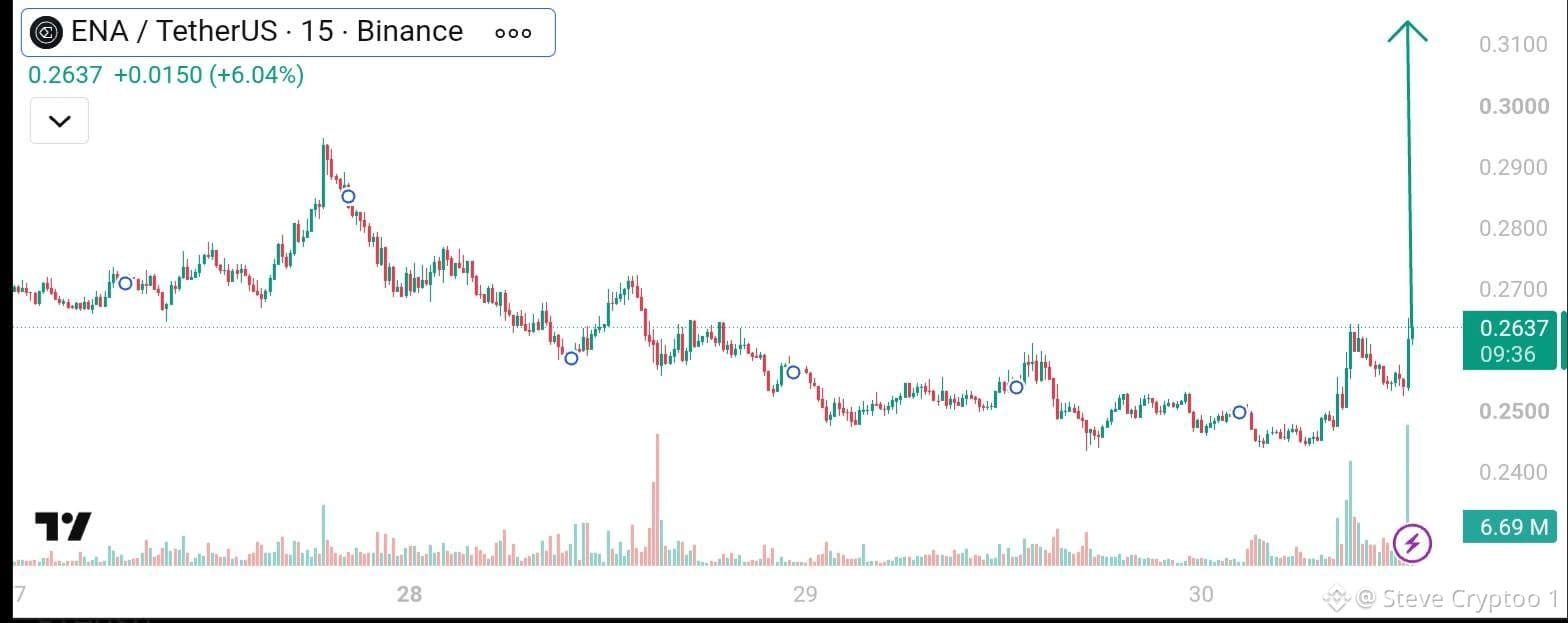
$ENA the chart is starting to match the bigger narrative. 👀
Standard Chartered has initiated coverage on Ethena and set a $2 price target for ENA by end-2028, citing growth in yield-bearing stablecoins, USDe adoption, tokenization and Ethena’s buyback model. USDe is currently around $4.9B, while the bank expects it to reach $40B by 2028.
But the chart is where things get interesting. 📈
$ENA /USDT15M:
• Price: ~$0.264
• Strong breakout from the ~$0.245–$0.250 base
• Heavy volume confirms increased participation
• $0.270 is the immediate resistance
• Above $0.270, the chart opens toward $0.285–$0.300
• A clean breakout and hold above $0.300 would significantly strengthen the short-term structure
• Losing ~$0.250 would weaken the setup
At ~$0.264, a move to $2 would represent roughly 7.6x from the current chart price but that remains Standard Chartered’s long-term forecast, not a guaranteed outcome.
#BTC Price Analysis# #Macro Insights#
$ENA the chart is starting to match the bigger narrative. 👀
Standard Chartered has initiated coverage on Ethena and set a $2 price target for ENA by end-2028, citing growth in yield-bearing stablecoins, USDe adoption, tokenization and Ethena’s buyback model. USDe is currently around $4.9B, while the bank expects it to reach $40B by 2028.
But the chart is where things get interesting. 📈
$ENA /USDT15M:
• Price: ~$0.264
• Strong breakout from the ~$0.245–$0.250 base
• Heavy volume confirms increased participation
• $0.270 is the immediate resistance
• Above $0.270, the chart opens toward $0.285–$0.300
• A clean breakout and hold above $0.300 would significantly strengthen the short-term structure
• Losing ~$0.250 would weaken the setup
At ~$0.264, a move to $2 would represent roughly 7.6x from the current chart price but that remains Standard Chartered’s long-term forecast, not a guaranteed outcome.
#BTC Price Analysis# #Macro Insights#
Standard Chartered has initiated coverage on Ethena and set a $2 price target for ENA by end-2028, citing growth in yield-bearing stablecoins, USDe adoption, tokenization and Ethena’s buyback model. USDe is currently around $4.9B, while the bank expects it to reach $40B by 2028.
But the chart is where things get interesting. 📈
$ENA /USDT15M:
• Price: ~$0.264
• Strong breakout from the ~$0.245–$0.250 base
• Heavy volume confirms increased participation
• $0.270 is the immediate resistance
• Above $0.270, the chart opens toward $0.285–$0.300
• A clean breakout and hold above $0.300 would significantly strengthen the short-term structure
• Losing ~$0.250 would weaken the setup
At ~$0.264, a move to $2 would represent roughly 7.6x from the current chart price but that remains Standard Chartered’s long-term forecast, not a guaranteed outcome.
#BTC Price Analysis# #Macro Insights#
70
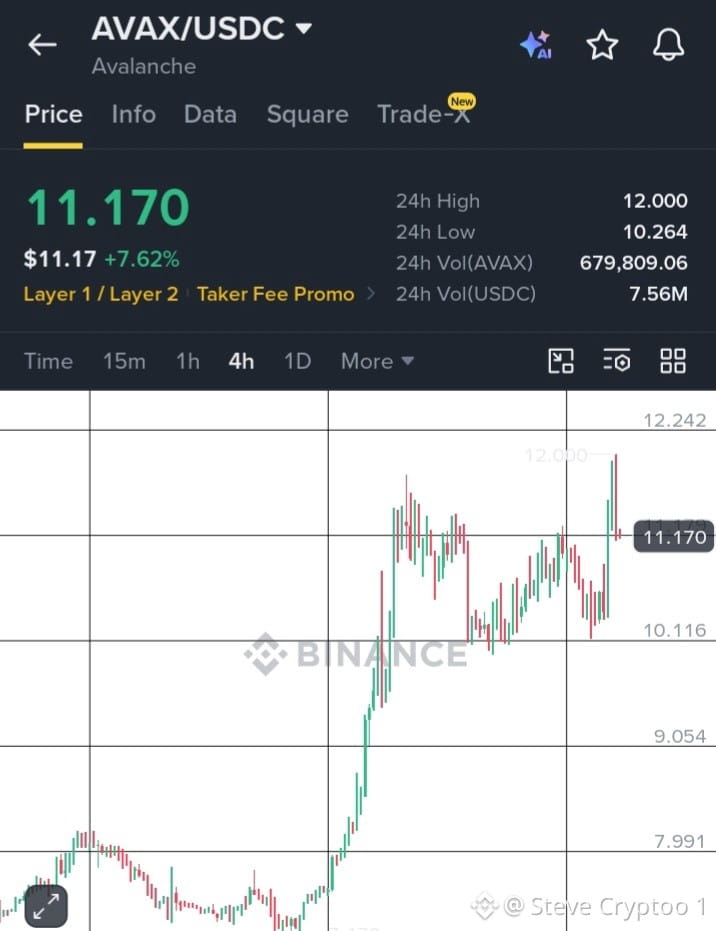
$AVAX is showing a strong recovery structure on the 4H chart, currently around $11.17 after pushing up to the $12.00 area.
Resistance: $11.80–$12.00
Immediate support: $11.00–$10.80
Key support: ~$10.12–$10.20
Major structure support: ~$9.05
Price has reclaimed the $11 area, but the rejection around $12 shows sellers are still active there.
A clean 4H close above $12.00 could strengthen the bullish structure, while losing $10.80 would weaken the setup and bring the lower support zones back into focus.
Key level to watch: $12.00. 👀
#BTC Price Analysis# #Macro Insights#
$AVAX is showing a strong recovery structure on the 4H chart, currently around $11.17 after pushing up to the $12.00 area.
Resistance: $11.80–$12.00
Immediate support: $11.00–$10.80
Key support: ~$10.12–$10.20
Major structure support: ~$9.05
Price has reclaimed the $11 area, but the rejection around $12 shows sellers are still active there.
A clean 4H close above $12.00 could strengthen the bullish structure, while losing $10.80 would weaken the setup and bring the lower support zones back into focus.
Key level to watch: $12.00. 👀
#BTC Price Analysis# #Macro Insights#
Resistance: $11.80–$12.00
Immediate support: $11.00–$10.80
Key support: ~$10.12–$10.20
Major structure support: ~$9.05
Price has reclaimed the $11 area, but the rejection around $12 shows sellers are still active there.
A clean 4H close above $12.00 could strengthen the bullish structure, while losing $10.80 would weaken the setup and bring the lower support zones back into focus.
Key level to watch: $12.00. 👀
#BTC Price Analysis# #Macro Insights#
53
Not every altcoin deserves attention in every market cycle.
These are the names staying on my radar 👇
ETH — The backbone of the on-chain economy.
SOL — Strong momentum across speed, payments and institutional adoption.
$LINK — Building critical infrastructure for tokenization and cross-chain finance.
$XMR — Privacy remains the core thesis, with Monero firmly established in that niche.
$ADA — Continuing its focus on governance, scaling and long-term ecosystem development.
SUI — High-performance DeFi, stablecoins and growing on-chain liquidity make it worth watching.
TAO — A notable decentralized AI play as the AI × crypto narrative develops.
ZIG — Building around on-chain finance management, RWAs and financial infrastructure.
Eight projects. Eight different narratives. Different stages of development.
Now the interesting part is watching where liquidity rotates next. 👀
Which altcoins are on your radar?
#Macro Insights# #Macro Insights#
Not every altcoin deserves attention in every market cycle.
These are the names staying on my radar 👇
ETH — The backbone of the on-chain economy.
SOL — Strong momentum across speed, payments and institutional adoption.
$LINK — Building critical infrastructure for tokenization and cross-chain finance.
$XMR — Privacy remains the core thesis, with Monero firmly established in that niche.
$ADA — Continuing its focus on governance, scaling and long-term ecosystem development.
SUI — High-performance DeFi, stablecoins and growing on-chain liquidity make it worth watching.
TAO — A notable decentralized AI play as the AI × crypto narrative develops.
ZIG — Building around on-chain finance management, RWAs and financial infrastructure.
Eight projects. Eight different narratives. Different stages of development.
Now the interesting part is watching where liquidity rotates next. 👀
Which altcoins are on your radar?
#Macro Insights# #Macro Insights#
These are the names staying on my radar 👇
ETH — The backbone of the on-chain economy.
SOL — Strong momentum across speed, payments and institutional adoption.
$LINK — Building critical infrastructure for tokenization and cross-chain finance.
$XMR — Privacy remains the core thesis, with Monero firmly established in that niche.
$ADA — Continuing its focus on governance, scaling and long-term ecosystem development.
SUI — High-performance DeFi, stablecoins and growing on-chain liquidity make it worth watching.
TAO — A notable decentralized AI play as the AI × crypto narrative develops.
ZIG — Building around on-chain finance management, RWAs and financial infrastructure.
Eight projects. Eight different narratives. Different stages of development.
Now the interesting part is watching where liquidity rotates next. 👀
Which altcoins are on your radar?
#Macro Insights# #Macro Insights#

81
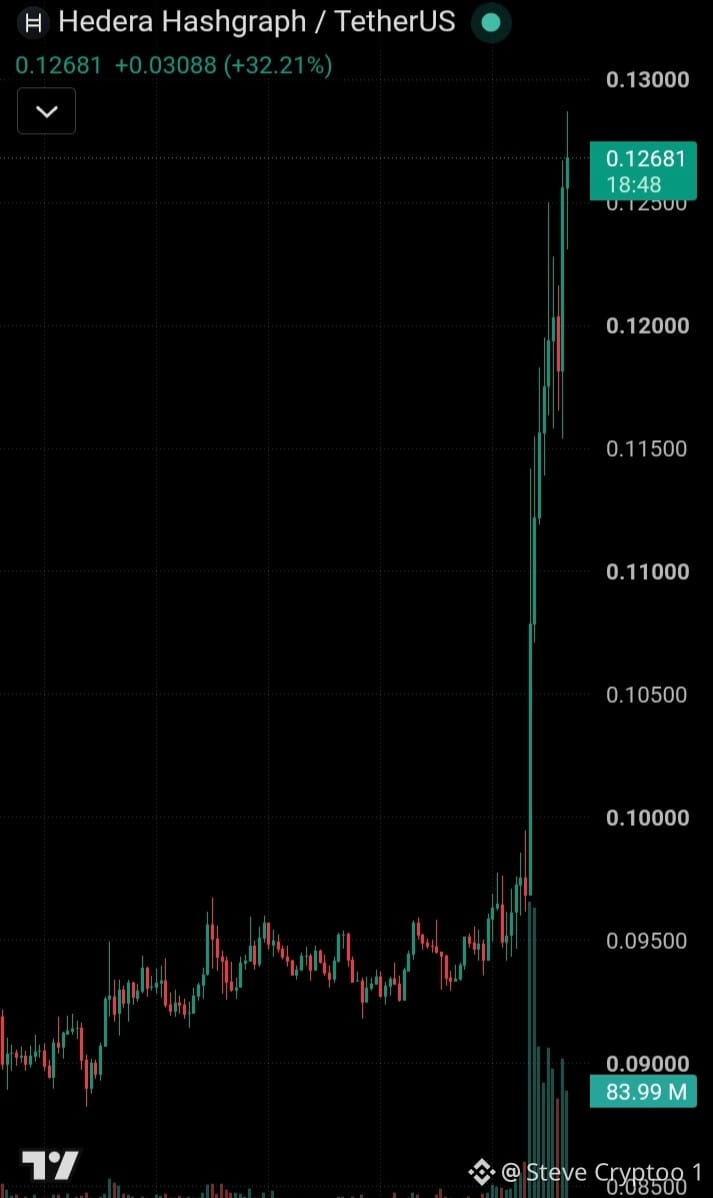
$HBAR is showing a powerful breakout but the next move depends on whether bulls can hold the breakout zone.
Price was consolidating around $0.093–$0.098 before an explosive move higher, pushing into the $0.126–$0.128 area. The breakout is backed by a major volume expansion, with volume reaching roughly 84M, giving the move stronger confirmation than a low-volume pump.
Key levels to watch:
🔴 $0.130–$0.132: Immediate resistance / breakout target
🟢 $0.120–$0.122: First support after the surge
🟢 $0.115: Important short-term structural support
🟢 $0.100–$0.105: Major breakout-base area
⚠️ $0.095: Previous consolidation zone
The clean bullish scenario is a hold above $0.120 followed by a confirmed break of $0.130. That could open the door for further price discovery.
#BTC Price Analysis# #Macro Insights#
$HBAR is showing a powerful breakout but the next move depends on whether bulls can hold the breakout zone.
Price was consolidating around $0.093–$0.098 before an explosive move higher, pushing into the $0.126–$0.128 area. The breakout is backed by a major volume expansion, with volume reaching roughly 84M, giving the move stronger confirmation than a low-volume pump.
Key levels to watch:
🔴 $0.130–$0.132: Immediate resistance / breakout target
🟢 $0.120–$0.122: First support after the surge
🟢 $0.115: Important short-term structural support
🟢 $0.100–$0.105: Major breakout-base area
⚠️ $0.095: Previous consolidation zone
The clean bullish scenario is a hold above $0.120 followed by a confirmed break of $0.130. That could open the door for further price discovery.
#BTC Price Analysis# #Macro Insights#
Price was consolidating around $0.093–$0.098 before an explosive move higher, pushing into the $0.126–$0.128 area. The breakout is backed by a major volume expansion, with volume reaching roughly 84M, giving the move stronger confirmation than a low-volume pump.
Key levels to watch:
🔴 $0.130–$0.132: Immediate resistance / breakout target
🟢 $0.120–$0.122: First support after the surge
🟢 $0.115: Important short-term structural support
🟢 $0.100–$0.105: Major breakout-base area
⚠️ $0.095: Previous consolidation zone
The clean bullish scenario is a hold above $0.120 followed by a confirmed break of $0.130. That could open the door for further price discovery.
#BTC Price Analysis# #Macro Insights#
77
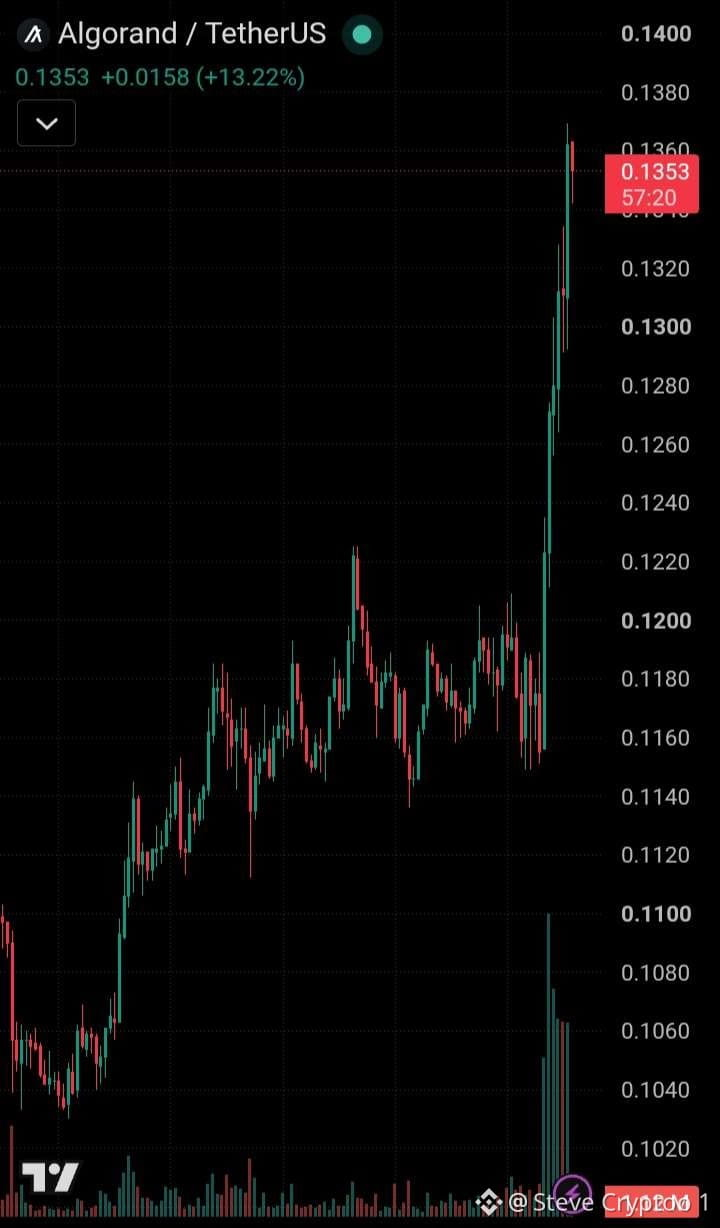
$ALGO is showing a clear breakout with strong momentum.
After spending considerable time consolidating around $0.116–$0.120, price broke through the $0.122 resistance and accelerated sharply, reclaiming $0.130 with a major volume expansion.
Now trading around $0.1353 (+13.2%), the key levels to watch are:
• $0.138–$0.140 → immediate resistance / breakout zone
• $0.132 → first support after the move
• $0.128–$0.130 → important retest area
• $0.122 → major breakout support
The volume spike is particularly notable: this isn't just a slow grind higher; buyers stepped in aggressively.
Now the market decides whether $ALGO can sustain the move. 👀
#BTC Price Analysis# #Macro Insights# #Altcoin Season# #Meme Alpha# #BNBChain#
$ALGO is showing a clear breakout with strong momentum.
After spending considerable time consolidating around $0.116–$0.120, price broke through the $0.122 resistance and accelerated sharply, reclaiming $0.130 with a major volume expansion.
Now trading around $0.1353 (+13.2%), the key levels to watch are:
• $0.138–$0.140 → immediate resistance / breakout zone
• $0.132 → first support after the move
• $0.128–$0.130 → important retest area
• $0.122 → major breakout support
The volume spike is particularly notable: this isn't just a slow grind higher; buyers stepped in aggressively.
Now the market decides whether $ALGO can sustain the move. 👀
#BTC Price Analysis# #Macro Insights# #Altcoin Season# #Meme Alpha# #BNBChain#
After spending considerable time consolidating around $0.116–$0.120, price broke through the $0.122 resistance and accelerated sharply, reclaiming $0.130 with a major volume expansion.
Now trading around $0.1353 (+13.2%), the key levels to watch are:
• $0.138–$0.140 → immediate resistance / breakout zone
• $0.132 → first support after the move
• $0.128–$0.130 → important retest area
• $0.122 → major breakout support
The volume spike is particularly notable: this isn't just a slow grind higher; buyers stepped in aggressively.
Now the market decides whether $ALGO can sustain the move. 👀
#BTC Price Analysis# #Macro Insights# #Altcoin Season# #Meme Alpha# #BNBChain#
46
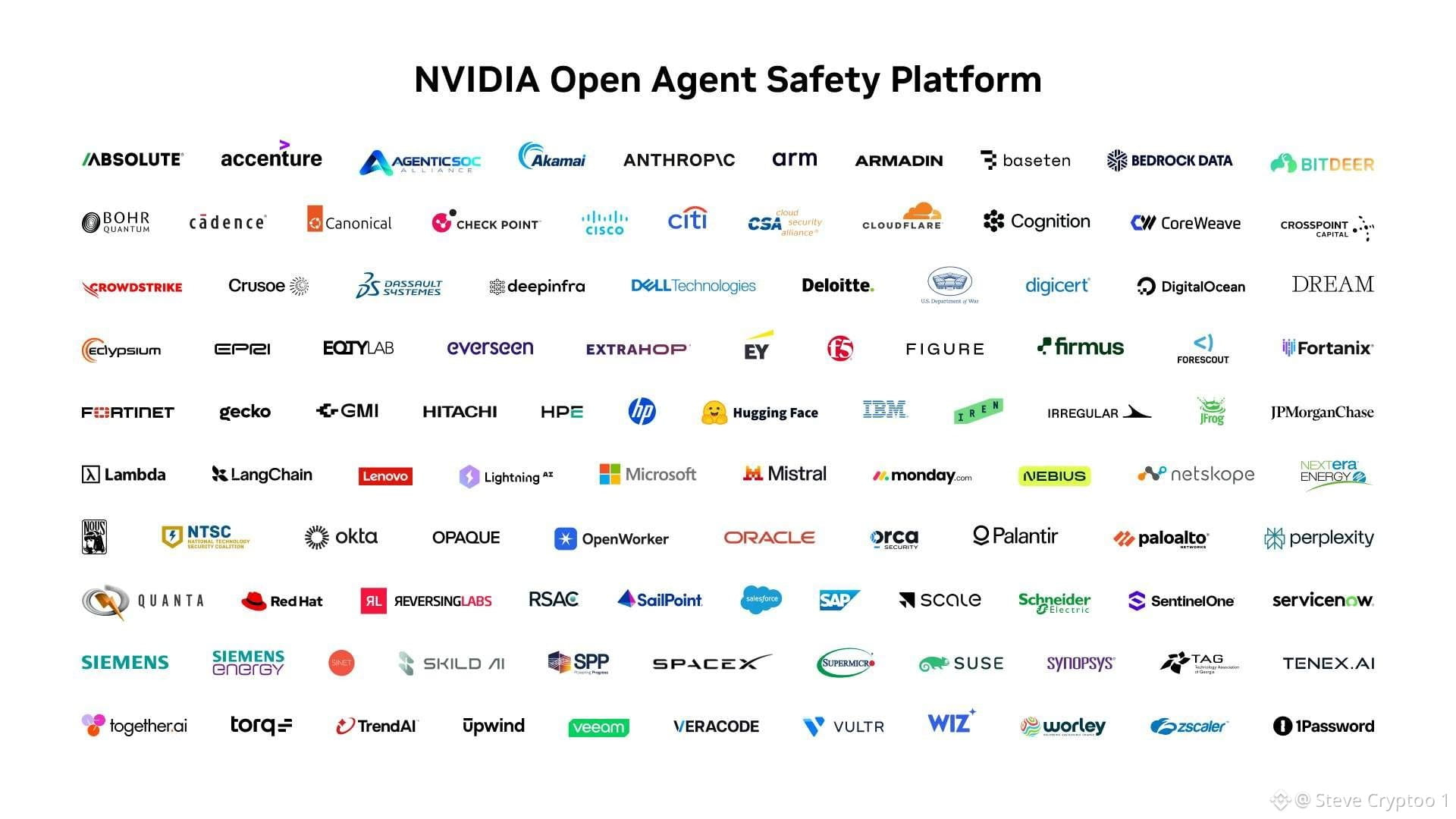
AI AGENTS ARE ENTERING A NEW ERA AND SAFETY IS BECOMING CORE INFRASTRUCTURE.
$NVDA Open Agent Safety Platform brings together OpenShell + Sentry with 100+ industry partners to create an open ecosystem for safer, more trusted AI agents.
The bigger picture is clear:
• AI agents are becoming more autonomous
• Security and trust must evolve alongside capability
• Open collaboration can help establish common safety foundations
• The goal isn’t just more capable AI, it’s AI people can confidently deploy
This is more than another AI platform launch.
It’s about building the trust layer for the agentic AI economy.
Capability drives adoption.
Safety earns trust.
#BTC Price Analysis# #Macro Insights#
AI AGENTS ARE ENTERING A NEW ERA AND SAFETY IS BECOMING CORE INFRASTRUCTURE.
$NVDA Open Agent Safety Platform brings together OpenShell + Sentry with 100+ industry partners to create an open ecosystem for safer, more trusted AI agents.
The bigger picture is clear:
• AI agents are becoming more autonomous
• Security and trust must evolve alongside capability
• Open collaboration can help establish common safety foundations
• The goal isn’t just more capable AI, it’s AI people can confidently deploy
This is more than another AI platform launch.
It’s about building the trust layer for the agentic AI economy.
Capability drives adoption.
Safety earns trust.
#BTC Price Analysis# #Macro Insights#
$NVDA Open Agent Safety Platform brings together OpenShell + Sentry with 100+ industry partners to create an open ecosystem for safer, more trusted AI agents.
The bigger picture is clear:
• AI agents are becoming more autonomous
• Security and trust must evolve alongside capability
• Open collaboration can help establish common safety foundations
• The goal isn’t just more capable AI, it’s AI people can confidently deploy
This is more than another AI platform launch.
It’s about building the trust layer for the agentic AI economy.
Capability drives adoption.
Safety earns trust.
#BTC Price Analysis# #Macro Insights#
72
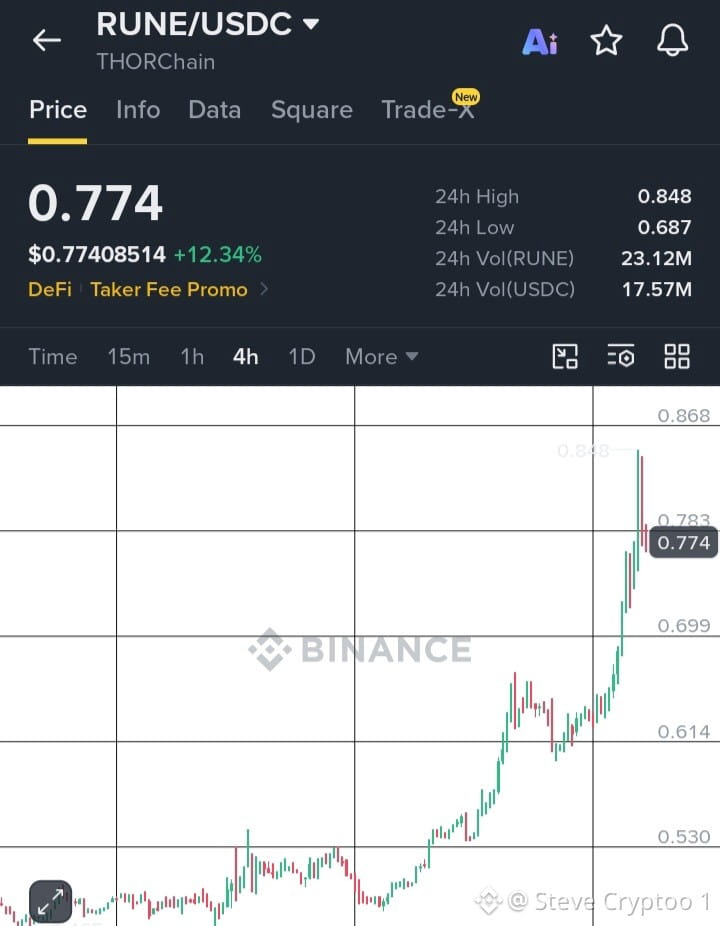
$RUNE is breaking out and the chart is getting interesting. 👀
RUNE/USDC is up 12.34% around $0.774, with price pushing through the $0.699 resistance and trading near the $0.783 area.
The 4H structure shows a clear sequence of higher highs and higher lows, backed by strong volume.
Key levels to watch:
• $0.783 — immediate resistance
• $0.848 — recent high / breakout target
• $0.699 — key support
• $0.614 — deeper support
A clean hold above $0.783 could keep momentum strong, while losing $0.699 would weaken the current structure.
#BTC Price Analysis# #Macro Insights#
$RUNE is breaking out and the chart is getting interesting. 👀
RUNE/USDC is up 12.34% around $0.774, with price pushing through the $0.699 resistance and trading near the $0.783 area.
The 4H structure shows a clear sequence of higher highs and higher lows, backed by strong volume.
Key levels to watch:
• $0.783 — immediate resistance
• $0.848 — recent high / breakout target
• $0.699 — key support
• $0.614 — deeper support
A clean hold above $0.783 could keep momentum strong, while losing $0.699 would weaken the current structure.
#BTC Price Analysis# #Macro Insights#
RUNE/USDC is up 12.34% around $0.774, with price pushing through the $0.699 resistance and trading near the $0.783 area.
The 4H structure shows a clear sequence of higher highs and higher lows, backed by strong volume.
Key levels to watch:
• $0.783 — immediate resistance
• $0.848 — recent high / breakout target
• $0.699 — key support
• $0.614 — deeper support
A clean hold above $0.783 could keep momentum strong, while losing $0.699 would weaken the current structure.
#BTC Price Analysis# #Macro Insights#
85
Polymarket is giving a real-time snapshot of crypto market expectations 👀
$BTC : The Sept. 27 market currently puts the $84K–$86K range at 59%, with $82K–$84K at 41%.
$XRP : The market is pricing a 41% probability around $1.50 and 19% around $1.60 for Sept. 27
.
$WLFI I: Polymarket is also tracking WLFI through dedicated FDV prediction markets, showing how closely traders are watching its valuation.
The key takeaway: prediction markets aren’t guarantees they’re live signals of where traders are putting their money and attention.
Watch the odds. Watch the volume. Then watch what actually happens. 📊
#Polymarket #BTC Price Analysis# #Macro Insights#
Polymarket is giving a real-time snapshot of crypto market expectations 👀
$BTC : The Sept. 27 market currently puts the $84K–$86K range at 59%, with $82K–$84K at 41%.
$XRP : The market is pricing a 41% probability around $1.50 and 19% around $1.60 for Sept. 27
.
$WLFI I: Polymarket is also tracking WLFI through dedicated FDV prediction markets, showing how closely traders are watching its valuation.
The key takeaway: prediction markets aren’t guarantees they’re live signals of where traders are putting their money and attention.
Watch the odds. Watch the volume. Then watch what actually happens. 📊
#Polymarket #BTC Price Analysis# #Macro Insights#
$BTC : The Sept. 27 market currently puts the $84K–$86K range at 59%, with $82K–$84K at 41%.
$XRP : The market is pricing a 41% probability around $1.50 and 19% around $1.60 for Sept. 27
.
$WLFI I: Polymarket is also tracking WLFI through dedicated FDV prediction markets, showing how closely traders are watching its valuation.
The key takeaway: prediction markets aren’t guarantees they’re live signals of where traders are putting their money and attention.
Watch the odds. Watch the volume. Then watch what actually happens. 📊
#Polymarket #BTC Price Analysis# #Macro Insights#

65
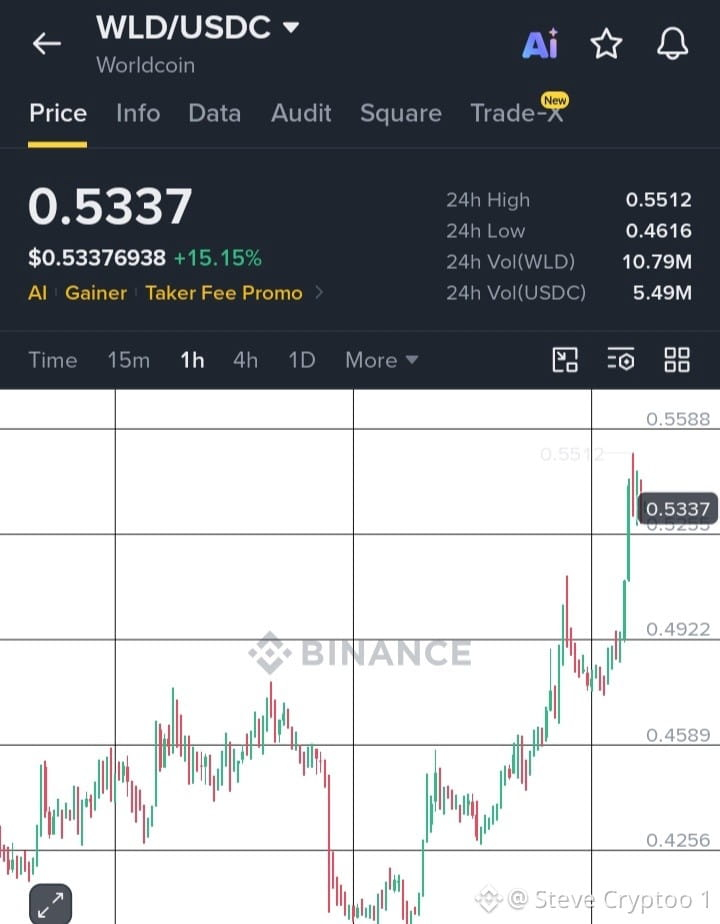
$WLD is showing serious momentum. 👀
WLD/USDC has pushed +15.15% to around $0.5337, breaking above the $0.4922 area with strong buying pressure.
On the 1H chart: • $0.5512 — immediate resistance / recent high
• $0.5588 — next upside level if momentum continues
• $0.5235 — key near-term support
• $0.4922 — important breakout zone
A clean hold above $0.5235 could keep the bullish structure intact, while rejection around $0.5512–$0.5588 may bring a retest of lower support.
Momentum is strong, but confirmation matters more than chasing the candle. 📈
#WLD #Worldcoin #Crypto #BTC Price Analysis#
$WLD is showing serious momentum. 👀
WLD/USDC has pushed +15.15% to around $0.5337, breaking above the $0.4922 area with strong buying pressure.
On the 1H chart: • $0.5512 — immediate resistance / recent high
• $0.5588 — next upside level if momentum continues
• $0.5235 — key near-term support
• $0.4922 — important breakout zone
A clean hold above $0.5235 could keep the bullish structure intact, while rejection around $0.5512–$0.5588 may bring a retest of lower support.
Momentum is strong, but confirmation matters more than chasing the candle. 📈
#WLD #Worldcoin #Crypto #BTC Price Analysis#
WLD/USDC has pushed +15.15% to around $0.5337, breaking above the $0.4922 area with strong buying pressure.
On the 1H chart: • $0.5512 — immediate resistance / recent high
• $0.5588 — next upside level if momentum continues
• $0.5235 — key near-term support
• $0.4922 — important breakout zone
A clean hold above $0.5235 could keep the bullish structure intact, while rejection around $0.5512–$0.5588 may bring a retest of lower support.
Momentum is strong, but confirmation matters more than chasing the candle. 📈
#WLD #Worldcoin #Crypto #BTC Price Analysis#
62
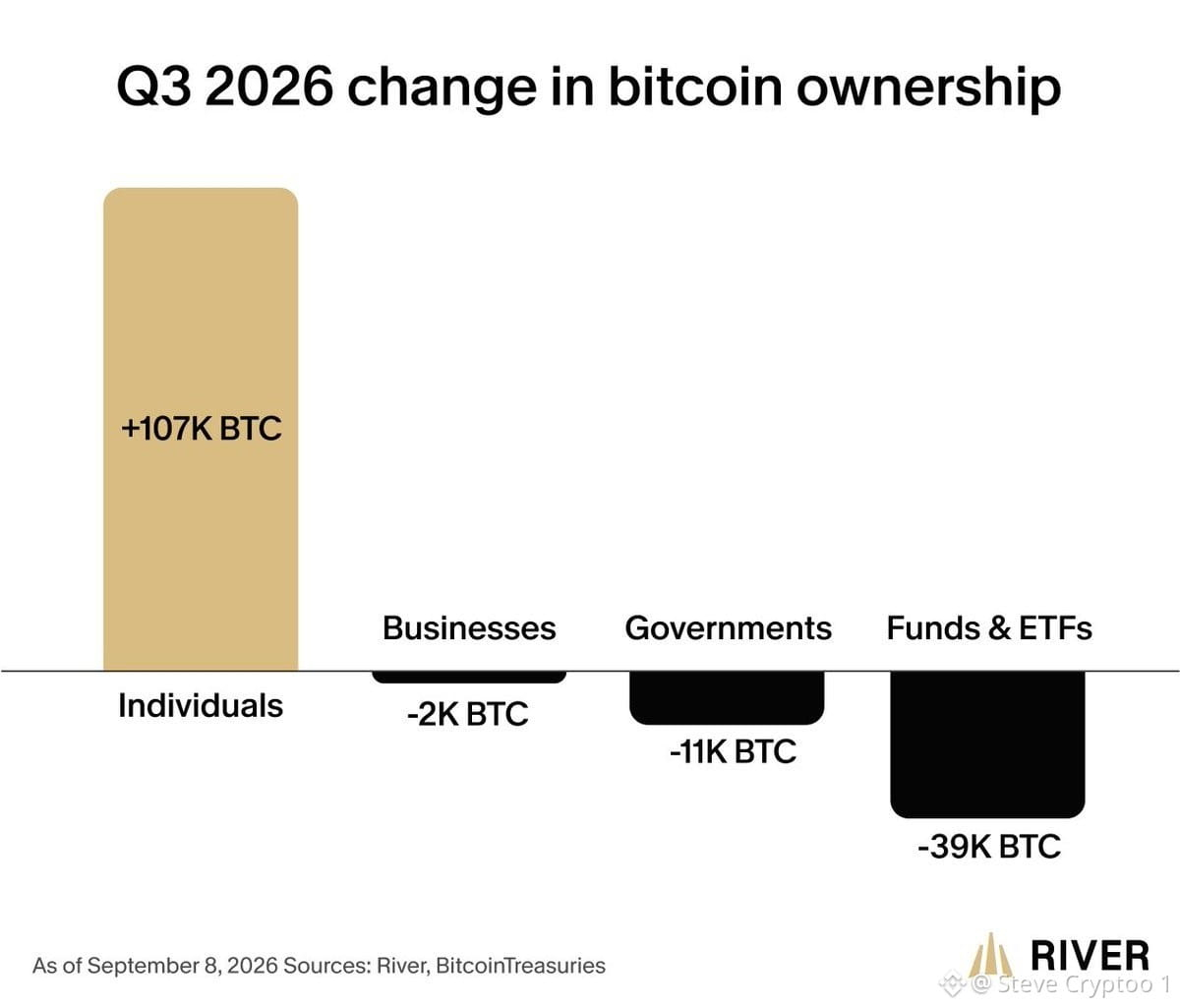
$BTC ownership is shifting. 👀
According to River, individuals added 107,000 BTC in Q3 2026 while businesses, governments, and funds/ETFs collectively reduced their holdings.
📈 Individuals: +107K BTC
📉 Businesses: -2K BTC
📉 Governments: -11K BTC
📉 Funds & ETFs: -39K BTC
The standout number is clear: individual holders were the biggest net accumulators this quarter.
Bitcoin ownership is moving and retail accumulation deserves attention. ₿
#BTC Price Analysis# #Macro Insights#
$BTC ownership is shifting. 👀
According to River, individuals added 107,000 BTC in Q3 2026 while businesses, governments, and funds/ETFs collectively reduced their holdings.
📈 Individuals: +107K BTC
📉 Businesses: -2K BTC
📉 Governments: -11K BTC
📉 Funds & ETFs: -39K BTC
The standout number is clear: individual holders were the biggest net accumulators this quarter.
Bitcoin ownership is moving and retail accumulation deserves attention. ₿
#BTC Price Analysis# #Macro Insights#
According to River, individuals added 107,000 BTC in Q3 2026 while businesses, governments, and funds/ETFs collectively reduced their holdings.
📈 Individuals: +107K BTC
📉 Businesses: -2K BTC
📉 Governments: -11K BTC
📉 Funds & ETFs: -39K BTC
The standout number is clear: individual holders were the biggest net accumulators this quarter.
Bitcoin ownership is moving and retail accumulation deserves attention. ₿
#BTC Price Analysis# #Macro Insights#
69
Polymarket is turning crypto predictions into a live market. 👀
What’s the market pricing right now?
🟠 $BTC $82K–$84K → 68% Yes
🔵 $ETH $2,600 → 63% Yes
🟣 $SOL $120 → 66% Yes
These aren’t simple price targets. Polymarket lets traders buy Yes/No contracts, with prices reflecting the market’s implied probability of an outcome. The odds can move continuously as new information enters the market.
The interesting part is watching probability shift before price moves.
Crypto charts show what happened.
Prediction markets show what traders are pricing next. 📊
The question isn’t just “Where will crypto go?
It’s “What does the market think happens next?
#BTC Price Analysis# #Macro Insights#
Polymarket is turning crypto predictions into a live market. 👀
What’s the market pricing right now?
🟠 $BTC $82K–$84K → 68% Yes
🔵 $ETH $2,600 → 63% Yes
🟣 $SOL $120 → 66% Yes
These aren’t simple price targets. Polymarket lets traders buy Yes/No contracts, with prices reflecting the market’s implied probability of an outcome. The odds can move continuously as new information enters the market.
The interesting part is watching probability shift before price moves.
Crypto charts show what happened.
Prediction markets show what traders are pricing next. 📊
The question isn’t just “Where will crypto go?
It’s “What does the market think happens next?
#BTC Price Analysis# #Macro Insights#
What’s the market pricing right now?
🟠 $BTC $82K–$84K → 68% Yes
🔵 $ETH $2,600 → 63% Yes
🟣 $SOL $120 → 66% Yes
These aren’t simple price targets. Polymarket lets traders buy Yes/No contracts, with prices reflecting the market’s implied probability of an outcome. The odds can move continuously as new information enters the market.
The interesting part is watching probability shift before price moves.
Crypto charts show what happened.
Prediction markets show what traders are pricing next. 📊
The question isn’t just “Where will crypto go?
It’s “What does the market think happens next?
#BTC Price Analysis# #Macro Insights#

56
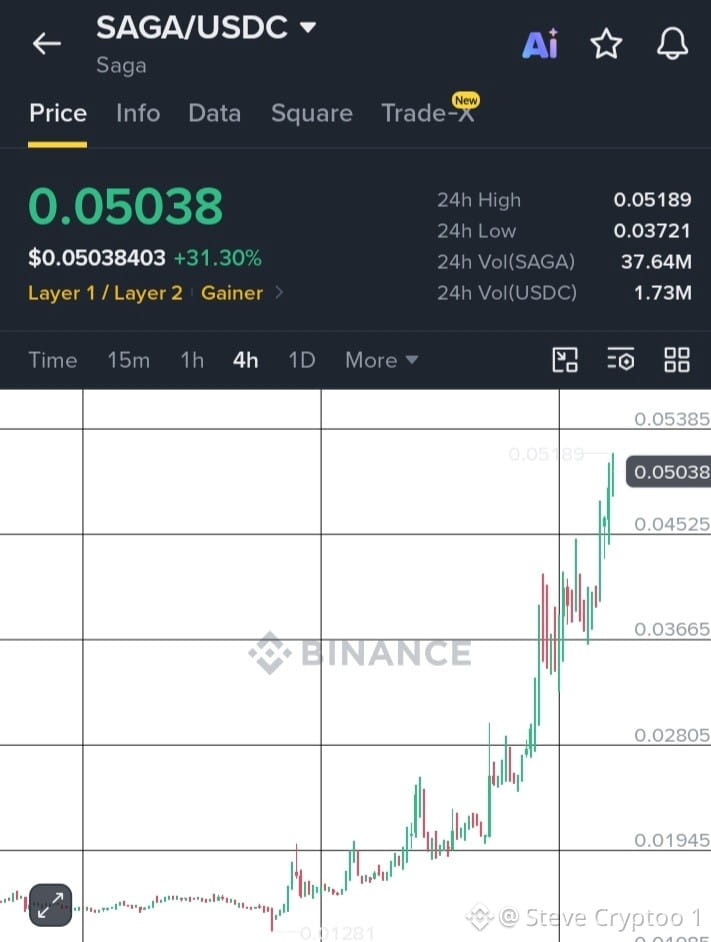
$SAGA 4H Chart Analysis 📊
Current price: ~$0.0504
24H change: +31.3%
24H high: ~$0.0519
24H volume: ~37.6M SAGA
Structure: SAGA has made a strong breakout from the ~$0.028 area and is now trading above the previous ~$0.045 resistance zone.
Momentum is clearly bullish on this 4H chart.
Key levels:
🔴 Resistance: $0.0519 → $0.0538
🟢 Support: $0.0452
🟢 Next support: $0.0366
🟢 Major support: $0.0280
A sustained 4H close above $0.0538 would put the recent high zone under further pressure. If price gets rejected here, a retest of $0.0452 would be an important level to watch.
#BTC Price Analysis# #Macro Insights# #Altcoin Season# #Meme Alpha# #BNBChain#
$SAGA 4H Chart Analysis 📊
Current price: ~$0.0504
24H change: +31.3%
24H high: ~$0.0519
24H volume: ~37.6M SAGA
Structure: SAGA has made a strong breakout from the ~$0.028 area and is now trading above the previous ~$0.045 resistance zone.
Momentum is clearly bullish on this 4H chart.
Key levels:
🔴 Resistance: $0.0519 → $0.0538
🟢 Support: $0.0452
🟢 Next support: $0.0366
🟢 Major support: $0.0280
A sustained 4H close above $0.0538 would put the recent high zone under further pressure. If price gets rejected here, a retest of $0.0452 would be an important level to watch.
#BTC Price Analysis# #Macro Insights# #Altcoin Season# #Meme Alpha# #BNBChain#
Current price: ~$0.0504
24H change: +31.3%
24H high: ~$0.0519
24H volume: ~37.6M SAGA
Structure: SAGA has made a strong breakout from the ~$0.028 area and is now trading above the previous ~$0.045 resistance zone.
Momentum is clearly bullish on this 4H chart.
Key levels:
🔴 Resistance: $0.0519 → $0.0538
🟢 Support: $0.0452
🟢 Next support: $0.0366
🟢 Major support: $0.0280
A sustained 4H close above $0.0538 would put the recent high zone under further pressure. If price gets rejected here, a retest of $0.0452 would be an important level to watch.
#BTC Price Analysis# #Macro Insights# #Altcoin Season# #Meme Alpha# #BNBChain#
74
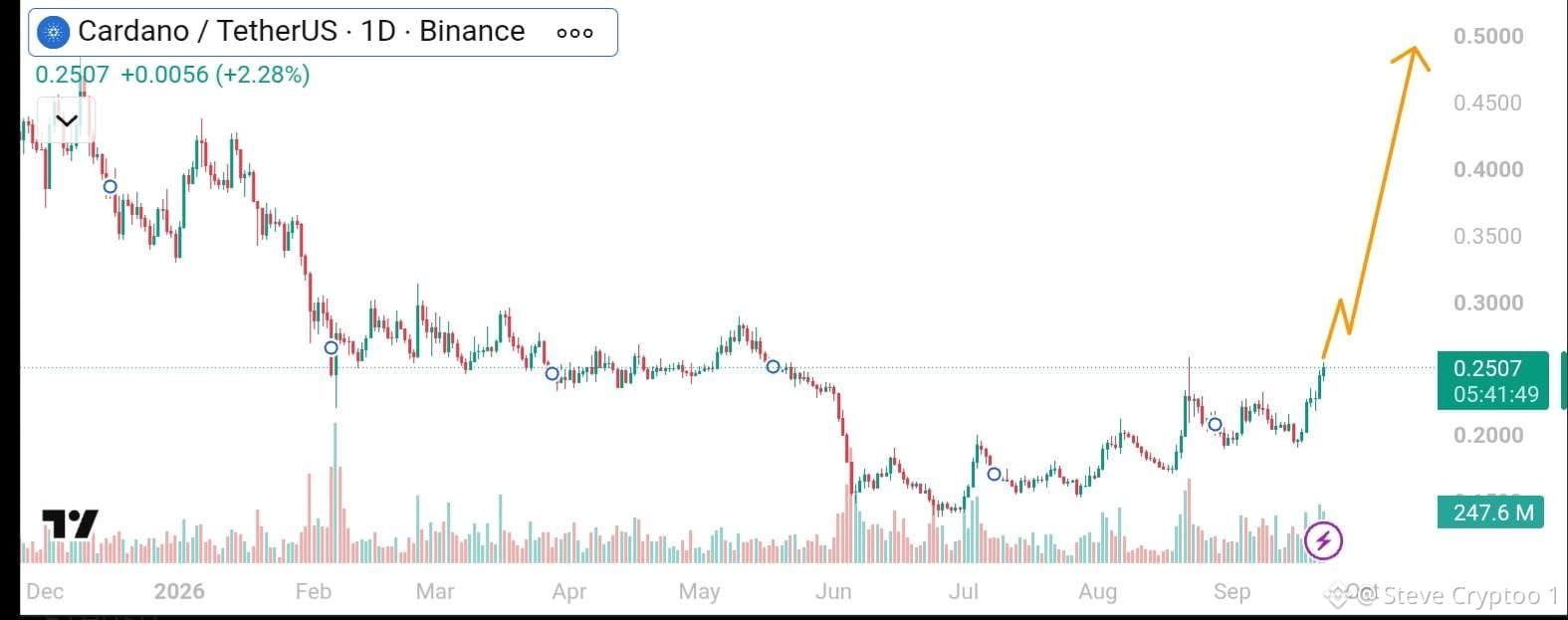
$ADA is showing a solid recovery after months of consolidation.
🔹 Current: ~$0.2507
🔹 Support: $0.24–$0.25
🔹 Next resistance: $0.27–$0.30
🔹 Above $0.30 → $0.35, then $0.40–$0.42
🔹 Major psychological level: $0.50
The key now is whether ADA can hold the breakout area and continue forming higher highs.
$ADA is definitely one to watch. 👀
#BTC Price Analysis# #Macro Insights#
$ADA is showing a solid recovery after months of consolidation.
🔹 Current: ~$0.2507
🔹 Support: $0.24–$0.25
🔹 Next resistance: $0.27–$0.30
🔹 Above $0.30 → $0.35, then $0.40–$0.42
🔹 Major psychological level: $0.50
The key now is whether ADA can hold the breakout area and continue forming higher highs.
$ADA is definitely one to watch. 👀
#BTC Price Analysis# #Macro Insights#
🔹 Current: ~$0.2507
🔹 Support: $0.24–$0.25
🔹 Next resistance: $0.27–$0.30
🔹 Above $0.30 → $0.35, then $0.40–$0.42
🔹 Major psychological level: $0.50
The key now is whether ADA can hold the breakout area and continue forming higher highs.
$ADA is definitely one to watch. 👀
#BTC Price Analysis# #Macro Insights#
34
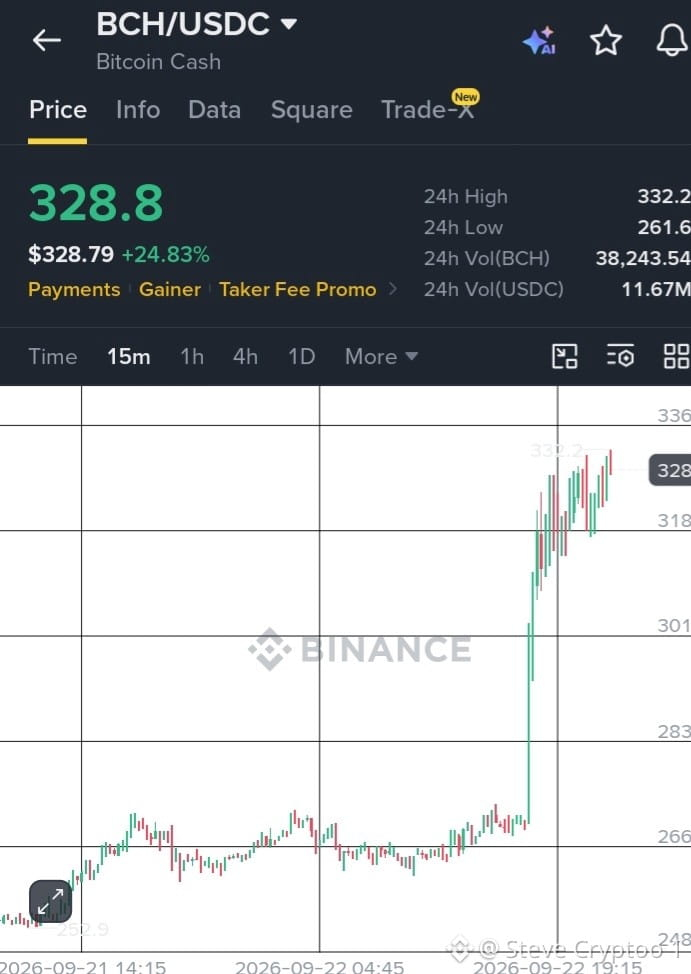
$BCH 15m chart view 📊
Strong breakout: BCH jumped from around $266 to $328, showing heavy short-term buying pressure.
Current price: ~$328.8, up 24.83%.
Immediate resistance: $332–336. A clean break and hold above this zone would be technically significant.
First support: Around $318.
Major support: $301, followed by the previous consolidation area near $266.
Momentum: Very strong, but after such a sharp move, pullbacks and volatility are possible.
The key level I’d watch on this chart is $318 holding above it would keep the short-term breakout structure intact; losing it could bring a deeper retracement.
#BTC Price Analysis# #Macro Insights#
$BCH 15m chart view 📊
Strong breakout: BCH jumped from around $266 to $328, showing heavy short-term buying pressure.
Current price: ~$328.8, up 24.83%.
Immediate resistance: $332–336. A clean break and hold above this zone would be technically significant.
First support: Around $318.
Major support: $301, followed by the previous consolidation area near $266.
Momentum: Very strong, but after such a sharp move, pullbacks and volatility are possible.
The key level I’d watch on this chart is $318 holding above it would keep the short-term breakout structure intact; losing it could bring a deeper retracement.
#BTC Price Analysis# #Macro Insights#
Strong breakout: BCH jumped from around $266 to $328, showing heavy short-term buying pressure.
Current price: ~$328.8, up 24.83%.
Immediate resistance: $332–336. A clean break and hold above this zone would be technically significant.
First support: Around $318.
Major support: $301, followed by the previous consolidation area near $266.
Momentum: Very strong, but after such a sharp move, pullbacks and volatility are possible.
The key level I’d watch on this chart is $318 holding above it would keep the short-term breakout structure intact; losing it could bring a deeper retracement.
#BTC Price Analysis# #Macro Insights#
48
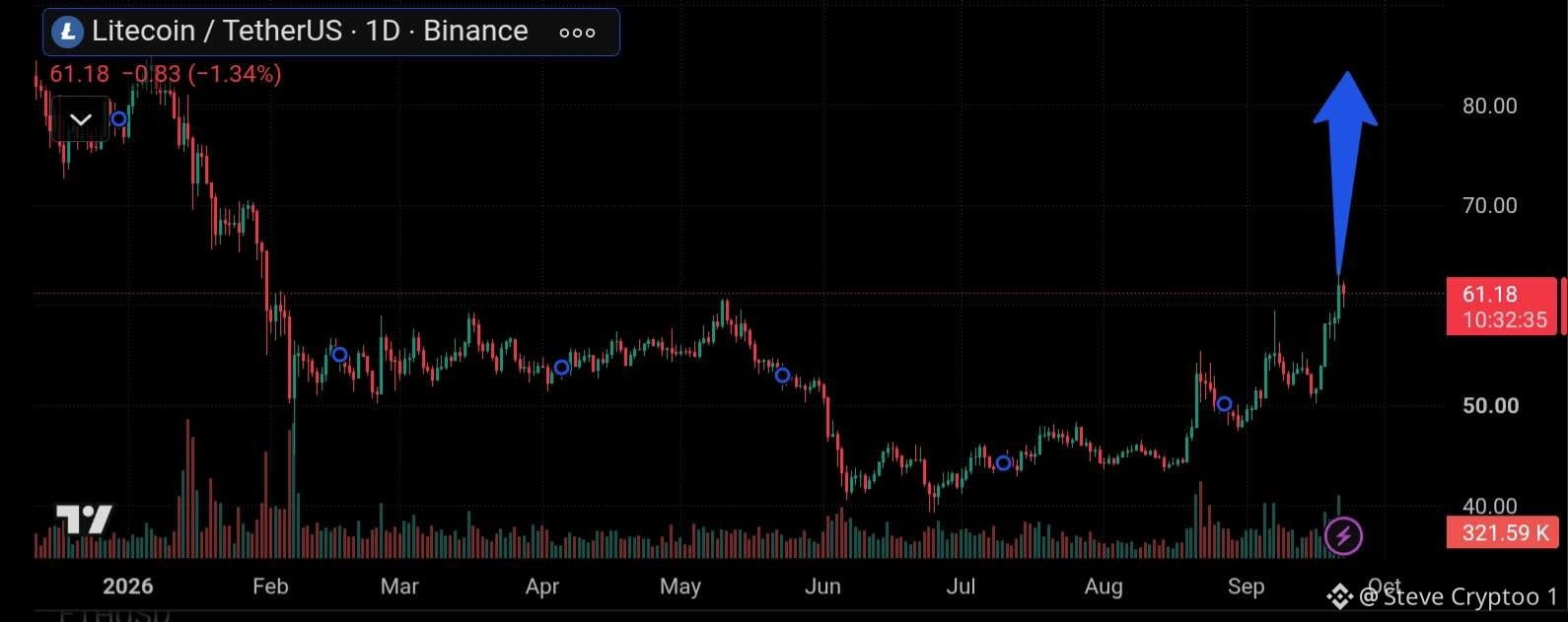
$LTC is starting to look interesting. 👀
After a strong move from the $40s to around $60, Litecoin is showing solid momentum.
⚡ Fast, low-cost transactions
🌍 Long-established network
🏦 Broad exchange & payment support
If the broader crypto market stays supportive, $LTC could have more room to run.
Watching this one closely. 🚀
#Litecoin #Crypto #BTC Price Analysis# #Macro Insights#
$LTC is starting to look interesting. 👀
After a strong move from the $40s to around $60, Litecoin is showing solid momentum.
⚡ Fast, low-cost transactions
🌍 Long-established network
🏦 Broad exchange & payment support
If the broader crypto market stays supportive, $LTC could have more room to run.
Watching this one closely. 🚀
#Litecoin #Crypto #BTC Price Analysis# #Macro Insights#
After a strong move from the $40s to around $60, Litecoin is showing solid momentum.
⚡ Fast, low-cost transactions
🌍 Long-established network
🏦 Broad exchange & payment support
If the broader crypto market stays supportive, $LTC could have more room to run.
Watching this one closely. 🚀
#Litecoin #Crypto #BTC Price Analysis# #Macro Insights#
68
තවත් අන්තර්ගතයන් ගවේෂණය කිරීමට ඇතුල් වන්න
Binance චතුරශ්රය හි ගෝලීය ක්රිප්ටෝ පරිශීලකයින් හා එක්වන්න
⚡️ ක්රිප්ටෝ පිළිබඳ නවතම සහ ප්රයෝජනවත් තොරතුරු ලබා ගන්න.
💬 ලොව විශාලතම ක්රිප්ටෝ හුවමාරුව මගින් විශ්වාස කෙරේ.
👍 සත්යායනය කරන ලද නිර්මාණකරුවන්ගෙන් සැබෑ විදසුන් සොයා ගන්න.
විද්යුත් තැපෑල / දුරකථන අංකය
නැගී එන මාතෘකා
BNBSurpasses$790
14,744 views
121 සාකච්ඡා කරමින්
$BNB strategic long plan -> FOCUS NOW
BNB has created 2 strong lows after taking out internal liquidity
I'm expecting a move towards swing high $815-$830 and looking for a long on a retest of the green box
#BNBSurpasses$790 #bnb
Ghost Writer
·5 කැමත්ත දැක්වීම්
·7k views
ZamaRises15.99%ToIntradayHigh$0.09
11,157 views
94 සාකච්ඡා කරමින්
BitcoinSpotETFsDraw$6.34BInflowsInQ3
5,004 views
80 සාකච්ඡා කරමින්