

Bin Ishaq 1
118 පෝස්ටු

Bin Ishaq 1
වාර්තා කරන්න
පරිශීලක අවහිර කරන්න
Web3 Strategist
0 හඹා යමින්
0 හඹා යන්නන්
1 කැමති විය
පෝස්ටු
·
--
What happens when a self-custody wallet needs a reliable swap layer? United Network has integrated STON.fi for TON swaps, giving its users access to TON liquidity directly within their wallet experience. It’s a practical example of how DeFi infrastructure can sit quietly behind a product while users interact with a familiar interface. About United Network United Network develops hardware wallets in a card form factor. Users manage their wallets through a mobile app or browser, while assets remain secured by the device's EAL6+ secure chip. The wallet supports multiple networks, including Ethereum, Solana, Bitcoin, and TON. Integration With the integration, TON swaps within United Network can use STON.fi ’s liquidity infrastructure without requiring users to leave their wallet environment. This connects the wallet experience with STON.fi ’s existing swap and liquidity infrastructure. Why it matters For wallet developers, using existing DeFi infrastructure can reduce the need to build liquidity, routing, and swap execution systems independently. For users, it creates a simpler path to on-chain swapping while keeping assets in their own wallet. Developer Perspective This also shows how STON.fi SDK and Omniston can serve as infrastructure for wallets, mini-apps, and other TON products. Developers can build the user experience while relying on established swap infrastructure underneath. Insight The deeper point is the separation between interface and infrastructure: a wallet can focus on its user experience while specialized protocols handle liquidity and swap execution in the background. For developers exploring this model, the STON.fi SDK and Omniston documentation provide the starting point for integrating TON swap functionality. $BTC $PUMP
What happens when a self-custody wallet needs a reliable swap layer? United Network has integrated STON.fi for TON swaps, giving its users access to TON liquidity directly within their wallet experience. It’s a practical example of how DeFi infrastructure can sit quietly behind a product while users interact with a familiar interface. About United Network United Network develops hardware wallets in a card form factor. Users manage their wallets through a mobile app or browser, while assets remain secured by the device's EAL6+ secure chip. The wallet supports multiple networks, including Ethereum, Solana, Bitcoin, and TON. Integration With the integration, TON swaps within United Network can use STON.fi ’s liquidity infrastructure without requiring users to leave their wallet environment. This connects the wallet experience with STON.fi ’s existing swap and liquidity infrastructure. Why it matters For wallet developers, using existing DeFi infrastructure can reduce the need to build liquidity, routing, and swap execution systems independently. For users, it creates a simpler path to on-chain swapping while keeping assets in their own wallet. Developer Perspective This also shows how STON.fi SDK and Omniston can serve as infrastructure for wallets, mini-apps, and other TON products. Developers can build the user experience while relying on established swap infrastructure underneath. Insight The deeper point is the separation between interface and infrastructure: a wallet can focus on its user experience while specialized protocols handle liquidity and swap execution in the background. For developers exploring this model, the STON.fi SDK and Omniston documentation provide the starting point for integrating TON swap functionality. $BTC $PUMP
1
518
·
--
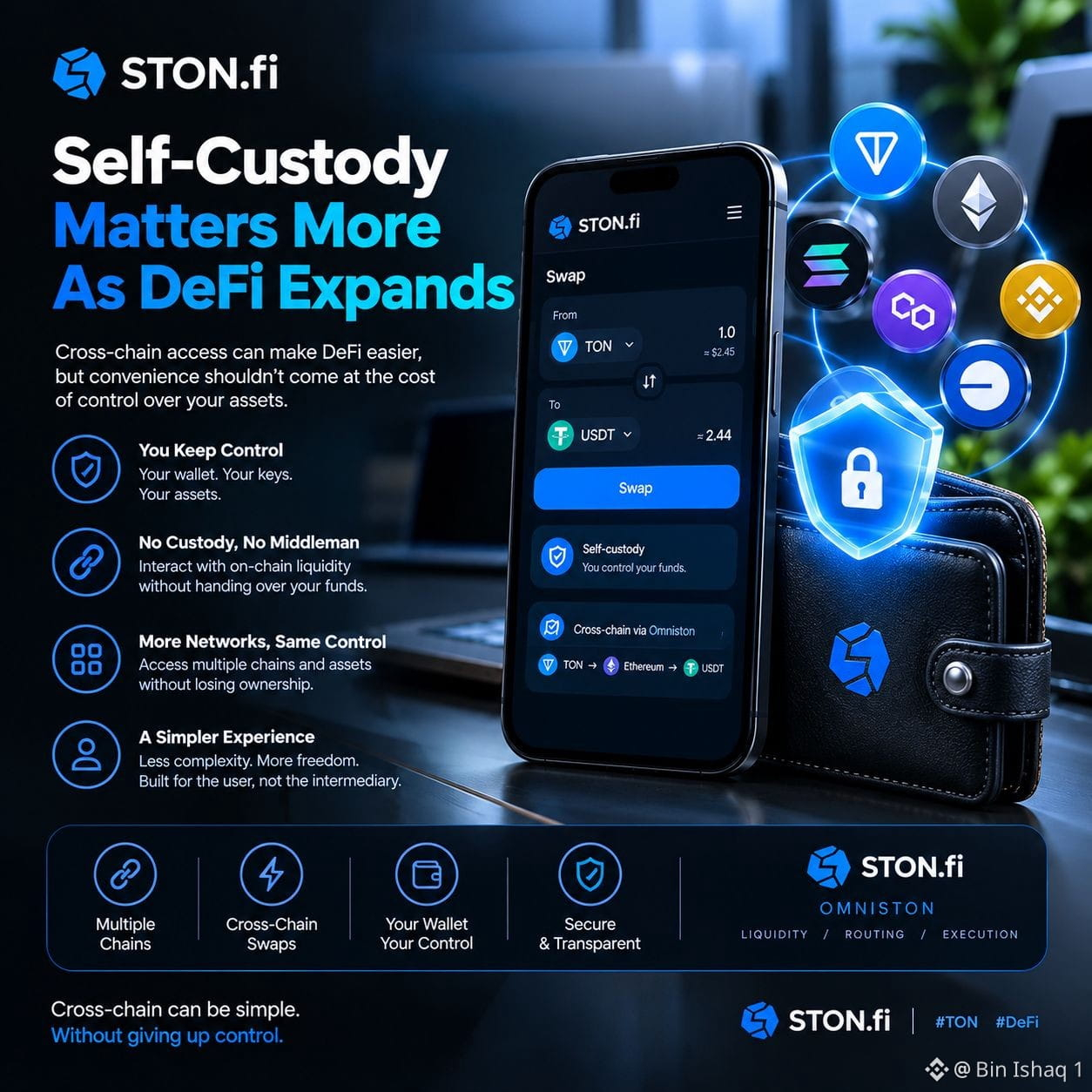
Stonfi Self-custody Matters More As Defi Expands Cross-chain access can make DeFi easier, but convenience shouldn’t come at the cost of control over your assets. In a self-custodial model, users keep control of their wallets while transactions interact with on-chain infrastructure. The application provides the interface, but ownership remains with the user. STON.fi is built around this approach, allowing users to interact with liquidity and execute swaps without handing custody of their assets to a centralized intermediary. That distinction becomes more important as DeFi expands across more networks. A smoother experience should reduce complexity without changing who controls the funds. For users, the goal is simple: better infrastructure should make DeFi easier to use while preserving the ownership model that makes DeFi different. Cross-chain UX can improve without giving up self-custody. $CRV $GRAM
Stonfi Self-custody Matters More As Defi Expands Cross-chain access can make DeFi easier, but convenience shouldn’t come at the cost of control over your assets. In a self-custodial model, users keep control of their wallets while transactions interact with on-chain infrastructure. The application provides the interface, but ownership remains with the user. STON.fi is built around this approach, allowing users to interact with liquidity and execute swaps without handing custody of their assets to a centralized intermediary. That distinction becomes more important as DeFi expands across more networks. A smoother experience should reduce complexity without changing who controls the funds. For users, the goal is simple: better infrastructure should make DeFi easier to use while preserving the ownership model that makes DeFi different. Cross-chain UX can improve without giving up self-custody. $CRV $GRAM
38
·
--
LStonfi The Best Cross-chain Experience Hides Complexity Cross-chain trading becomes harder when users have to understand everything happening underneath the transaction. Which network holds the liquidity? Which route is being used? Where does the asset need to move before the swap can complete? These are infrastructure questions, but users often end up dealing with them directly. STON.fi’s Omniston moves much of that complexity into the infrastructure layer, connecting supported networks and handling the routing and execution required for cross-chain swaps. That creates a cleaner division of responsibility: users focus on the trade, while the infrastructure handles the coordination behind it. For wallets and DeFi applications, this can make cross-chain functionality easier to integrate without exposing users to every technical step. The strongest abstraction is often the one users barely notice. $QNT $BTC
LStonfi The Best Cross-chain Experience Hides Complexity Cross-chain trading becomes harder when users have to understand everything happening underneath the transaction. Which network holds the liquidity? Which route is being used? Where does the asset need to move before the swap can complete? These are infrastructure questions, but users often end up dealing with them directly. STON.fi’s Omniston moves much of that complexity into the infrastructure layer, connecting supported networks and handling the routing and execution required for cross-chain swaps. That creates a cleaner division of responsibility: users focus on the trade, while the infrastructure handles the coordination behind it. For wallets and DeFi applications, this can make cross-chain functionality easier to integrate without exposing users to every technical step. The strongest abstraction is often the one users barely notice. $QNT $BTC
45
·
--
Stonfi The Best Cross-chain Experience Hides Complexity Cross-chain trading becomes harder when users have to understand everything happening underneath the transaction. Which network holds the liquidity? Which route is being used? Where does the asset need to move before the swap can complete? These are infrastructure questions, but users often end up dealing with them directly. STON.fi’s Omniston moves much of that complexity into the infrastructure layer, connecting supported networks and handling the routing and execution required for cross-chain swaps. That creates a cleaner division of responsibility: users focus on the trade, while the infrastructure handles the coordination behind it. For wallets and DeFi applications, this can make cross-chain functionality easier to integrate without exposing users to every technical step. The strongest abstraction is often the one users barely notice. $LINK $BTC
Stonfi The Best Cross-chain Experience Hides Complexity Cross-chain trading becomes harder when users have to understand everything happening underneath the transaction. Which network holds the liquidity? Which route is being used? Where does the asset need to move before the swap can complete? These are infrastructure questions, but users often end up dealing with them directly. STON.fi’s Omniston moves much of that complexity into the infrastructure layer, connecting supported networks and handling the routing and execution required for cross-chain swaps. That creates a cleaner division of responsibility: users focus on the trade, while the infrastructure handles the coordination behind it. For wallets and DeFi applications, this can make cross-chain functionality easier to integrate without exposing users to every technical step. The strongest abstraction is often the one users barely notice. $LINK $BTC

95
·
--
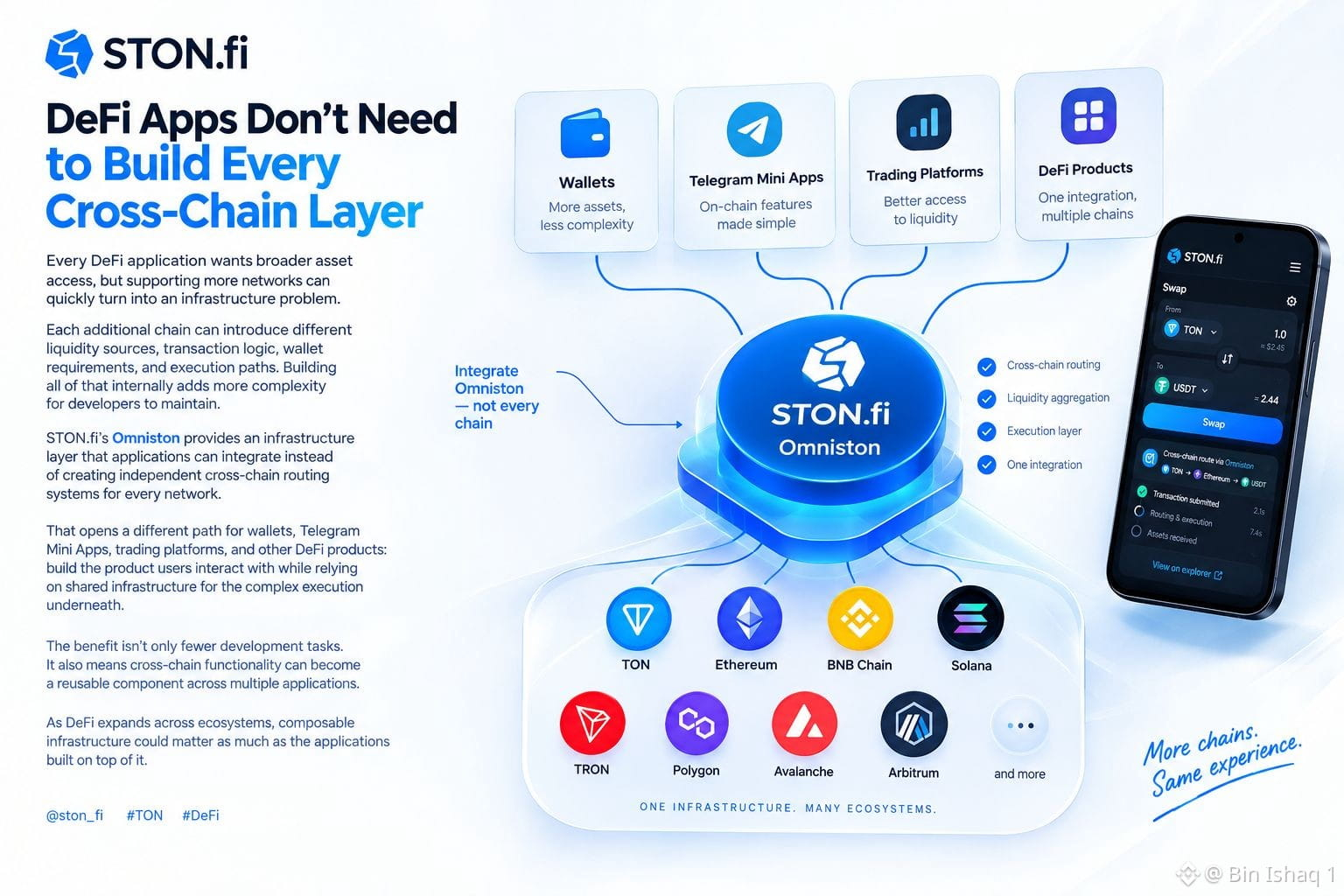
Stonfi Defi Apps Don’t Need To Build Every Cross-chain Layer Every DeFi application wants broader asset access, but supporting more networks can quickly turn into an infrastructure problem. Each additional chain can introduce different liquidity sources, transaction logic, wallet requirements, and execution paths. Building all of that internally adds more complexity for developers to maintain. STON.fi’s Omniston provides an infrastructure layer that applications can integrate instead of creating independent cross-chain routing systems for every network. That opens a different path for wallets, Telegram Mini Apps, trading platforms, and other DeFi products: build the product users interact with while relying on shared infrastructure for the complex execution underneath. The benefit isn’t only fewer development tasks. It also means cross-chain functionality can become a reusable component across multiple applications. As DeFi expands across ecosystems, composable infrastructure could matter as much as the applications built on top of it. $QNT $XRP
Stonfi Defi Apps Don’t Need To Build Every Cross-chain Layer Every DeFi application wants broader asset access, but supporting more networks can quickly turn into an infrastructure problem. Each additional chain can introduce different liquidity sources, transaction logic, wallet requirements, and execution paths. Building all of that internally adds more complexity for developers to maintain. STON.fi’s Omniston provides an infrastructure layer that applications can integrate instead of creating independent cross-chain routing systems for every network. That opens a different path for wallets, Telegram Mini Apps, trading platforms, and other DeFi products: build the product users interact with while relying on shared infrastructure for the complex execution underneath. The benefit isn’t only fewer development tasks. It also means cross-chain functionality can become a reusable component across multiple applications. As DeFi expands across ecosystems, composable infrastructure could matter as much as the applications built on top of it. $QNT $XRP
34
·
--
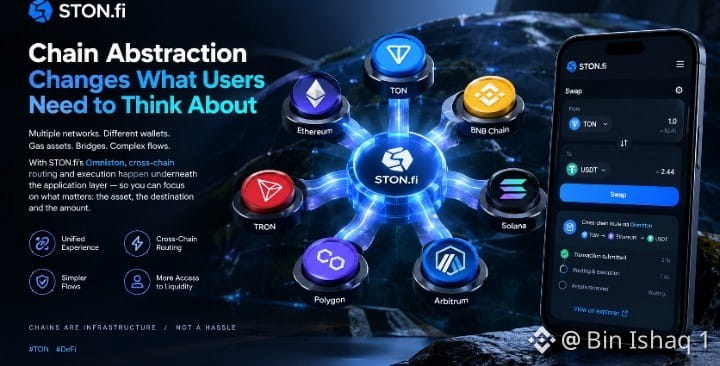
Stonfi Chain Abstraction Changes What Users Need To Think About Using multiple networks often means managing different wallets, gas assets, bridges, and transaction flows. Chain abstraction takes a different approach: keep the underlying networks separate while making the user experience feel more unified. STON.fi ’s Omniston fits into this model by handling cross-chain routing and execution underneath the application layer. Users can focus on the asset they want, the destination, and the amount rather than manually coordinating every step. For wallets and DeFi applications, this creates another advantage. They can give users access to assets and liquidity across networks without turning every cross-chain action into a separate workflow. The deeper shift is that chains become infrastructure instead of something users constantly have to manage. As more liquidity and applications spread across ecosystems, reducing that coordination burden becomes increasingly important for DeFi UX. $BTC $QNT
Stonfi Chain Abstraction Changes What Users Need To Think About Using multiple networks often means managing different wallets, gas assets, bridges, and transaction flows. Chain abstraction takes a different approach: keep the underlying networks separate while making the user experience feel more unified. STON.fi ’s Omniston fits into this model by handling cross-chain routing and execution underneath the application layer. Users can focus on the asset they want, the destination, and the amount rather than manually coordinating every step. For wallets and DeFi applications, this creates another advantage. They can give users access to assets and liquidity across networks without turning every cross-chain action into a separate workflow. The deeper shift is that chains become infrastructure instead of something users constantly have to manage. As more liquidity and applications spread across ecosystems, reducing that coordination burden becomes increasingly important for DeFi UX. $BTC $QNT
53
·
--
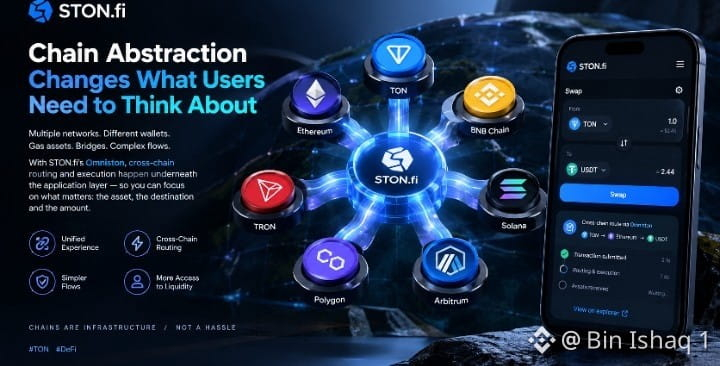
Stonfi Chain Abstraction Changes What Users Need To Think About Using multiple networks often means managing different wallets, gas assets, bridges, and transaction flows. Chain abstraction takes a different approach: keep the underlying networks separate while making the user experience feel more unified. STON.fi ’s Omniston fits into this model by handling cross-chain routing and execution underneath the application layer. Users can focus on the asset they want, the destination, and the amount rather than manually coordinating every step. For wallets and DeFi applications, this creates another advantage. They can give users access to assets and liquidity across networks without turning every cross-chain action into a separate workflow. The deeper shift is that chains become infrastructure instead of something users constantly have to manage. As more liquidity and applications spread across ecosystems, reducing that coordination burden becomes increasingly important for DeFi UX. $QNT $PUMP
Stonfi Chain Abstraction Changes What Users Need To Think About Using multiple networks often means managing different wallets, gas assets, bridges, and transaction flows. Chain abstraction takes a different approach: keep the underlying networks separate while making the user experience feel more unified. STON.fi ’s Omniston fits into this model by handling cross-chain routing and execution underneath the application layer. Users can focus on the asset they want, the destination, and the amount rather than manually coordinating every step. For wallets and DeFi applications, this creates another advantage. They can give users access to assets and liquidity across networks without turning every cross-chain action into a separate workflow. The deeper shift is that chains become infrastructure instead of something users constantly have to manage. As more liquidity and applications spread across ecosystems, reducing that coordination burden becomes increasingly important for DeFi UX. $QNT $PUMP
79
·
--
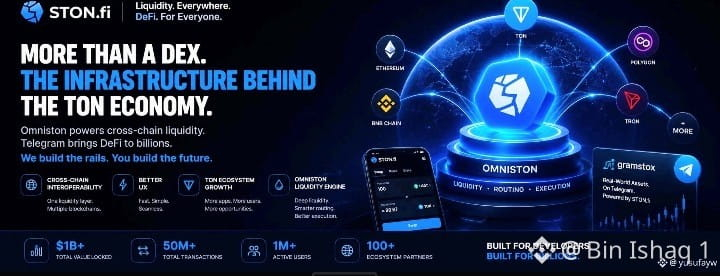
Stonfi Routing Is Becoming The Real Defi Infrastructure Liquidity can exist across dozens of pools and networks, but users still need an efficient path to access it. That makes routing a core part of the trading experience. The difference between having liquidity available and actually reaching it efficiently happens in the execution layer. STON.fi ’s Omniston is built around that layer, connecting liquidity across supported networks and finding routes for cross-chain swaps behind the application interface. This also changes the role of wallets and DeFi apps. Instead of building separate routing systems for every network they support, applications can integrate infrastructure that handles more of the complexity underneath. As DeFi becomes more fragmented, liquidity alone won’t define the quality of an execution experience. Access, routing and settlement are becoming equally important. $BTC $XRP
Stonfi Routing Is Becoming The Real Defi Infrastructure Liquidity can exist across dozens of pools and networks, but users still need an efficient path to access it. That makes routing a core part of the trading experience. The difference between having liquidity available and actually reaching it efficiently happens in the execution layer. STON.fi ’s Omniston is built around that layer, connecting liquidity across supported networks and finding routes for cross-chain swaps behind the application interface. This also changes the role of wallets and DeFi apps. Instead of building separate routing systems for every network they support, applications can integrate infrastructure that handles more of the complexity underneath. As DeFi becomes more fragmented, liquidity alone won’t define the quality of an execution experience. Access, routing and settlement are becoming equally important. $BTC $XRP
40
·
--
Stonfi The Swap Doesn’t End When You Click “Swap” A lot of DeFi attention goes into the price and the button that starts the transaction. But the experience after that click matters too. You still need to know whether the transaction was submitted, what route is being used, what you should receive, and whether the assets have actually reached the destination. STON.fi is building its swap experience around more than token selection. The infrastructure behind the transaction handles routing and execution while the interface gives the user the information needed to understand what is happening. That matters even more when a swap involves multiple liquidity sources or networks. More moving parts means more opportunities for confusion if the user cannot see what is happening. A good DeFi interface shouldn’t make users guess whether a transaction worked. The execution should be understandable from the moment you confirm until the assets arrive. That’s an important part of making on-chain trading feel mature: not only making swaps possible, but making the entire transaction easier to follow. $GRAM $QNT
Stonfi The Swap Doesn’t End When You Click “Swap” A lot of DeFi attention goes into the price and the button that starts the transaction. But the experience after that click matters too. You still need to know whether the transaction was submitted, what route is being used, what you should receive, and whether the assets have actually reached the destination. STON.fi is building its swap experience around more than token selection. The infrastructure behind the transaction handles routing and execution while the interface gives the user the information needed to understand what is happening. That matters even more when a swap involves multiple liquidity sources or networks. More moving parts means more opportunities for confusion if the user cannot see what is happening. A good DeFi interface shouldn’t make users guess whether a transaction worked. The execution should be understandable from the moment you confirm until the assets arrive. That’s an important part of making on-chain trading feel mature: not only making swaps possible, but making the entire transaction easier to follow. $GRAM $QNT
40
·
--
Stonfi When Staking Becomes A Voice STONfi governance goes beyond holding a token. Users who stake STON receive ARKENSTON, which represents their voting power in the DAO. That voting power can be used to participate in proposals, discuss changes, and vote on decisions that can shape the protocol’s development, rewards, integrations, and priorities. The process is designed to happen on-chain. Proposals go through a discussion period before voting, while the results are recorded publicly and approved proposals can move toward implementation. What makes this interesting is the connection between staking and governance. Your STON isn’t only sitting in a wallet; staking it can give you a role in how the protocol evolves. For a DeFi protocol, governance becomes more important as the ecosystem grows. More integrations, liquidity, builders, and users create more decisions that need a transparent process. So STON.fi DAO is another layer of the ecosystem: swaps provide the utility, liquidity supports the markets, and governance gives stakers a voice in what comes next. $QNT $GRAM
Stonfi When Staking Becomes A Voice STONfi governance goes beyond holding a token. Users who stake STON receive ARKENSTON, which represents their voting power in the DAO. That voting power can be used to participate in proposals, discuss changes, and vote on decisions that can shape the protocol’s development, rewards, integrations, and priorities. The process is designed to happen on-chain. Proposals go through a discussion period before voting, while the results are recorded publicly and approved proposals can move toward implementation. What makes this interesting is the connection between staking and governance. Your STON isn’t only sitting in a wallet; staking it can give you a role in how the protocol evolves. For a DeFi protocol, governance becomes more important as the ecosystem grows. More integrations, liquidity, builders, and users create more decisions that need a transparent process. So STON.fi DAO is another layer of the ecosystem: swaps provide the utility, liquidity supports the markets, and governance gives stakers a voice in what comes next. $QNT $GRAM
34
·
--
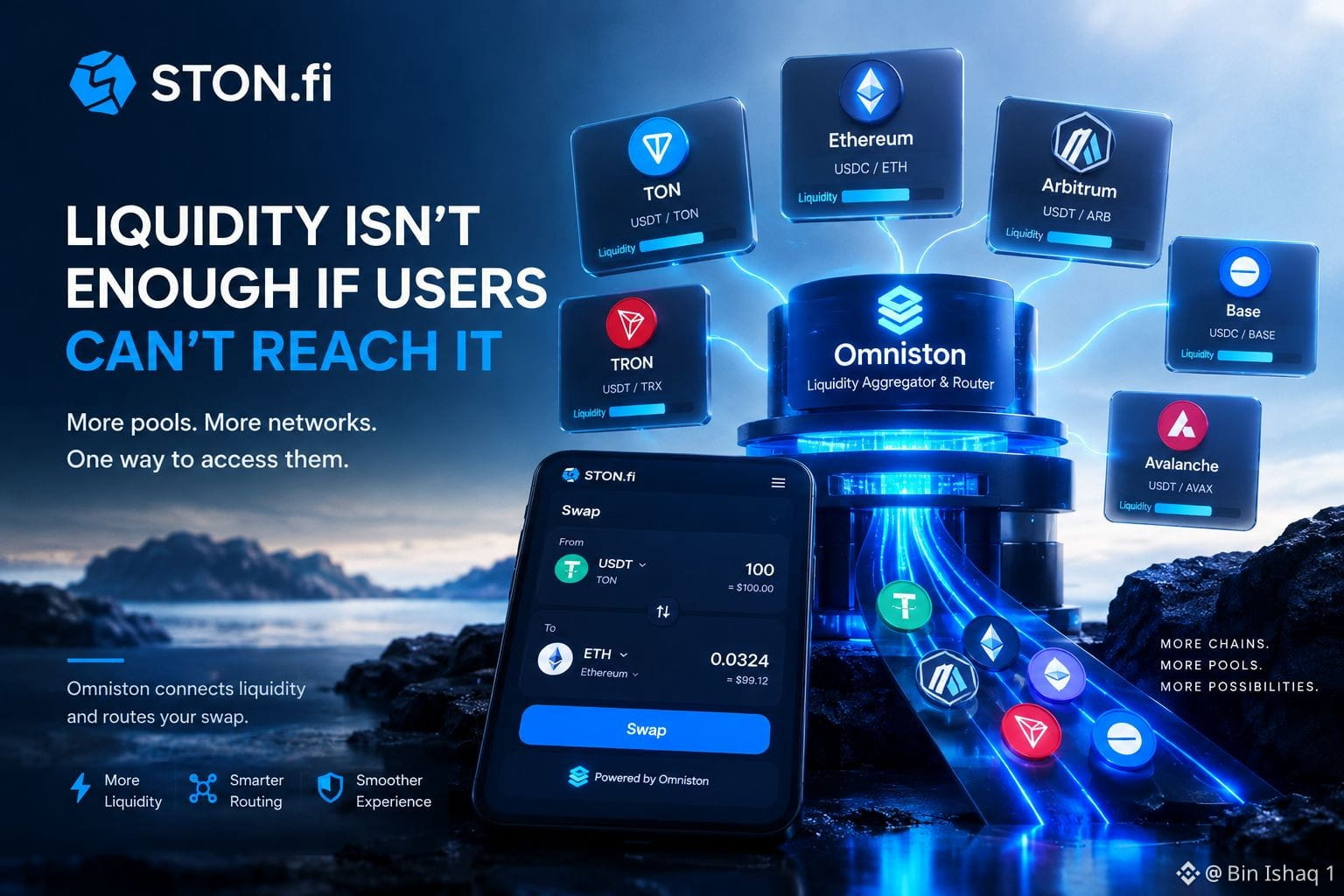
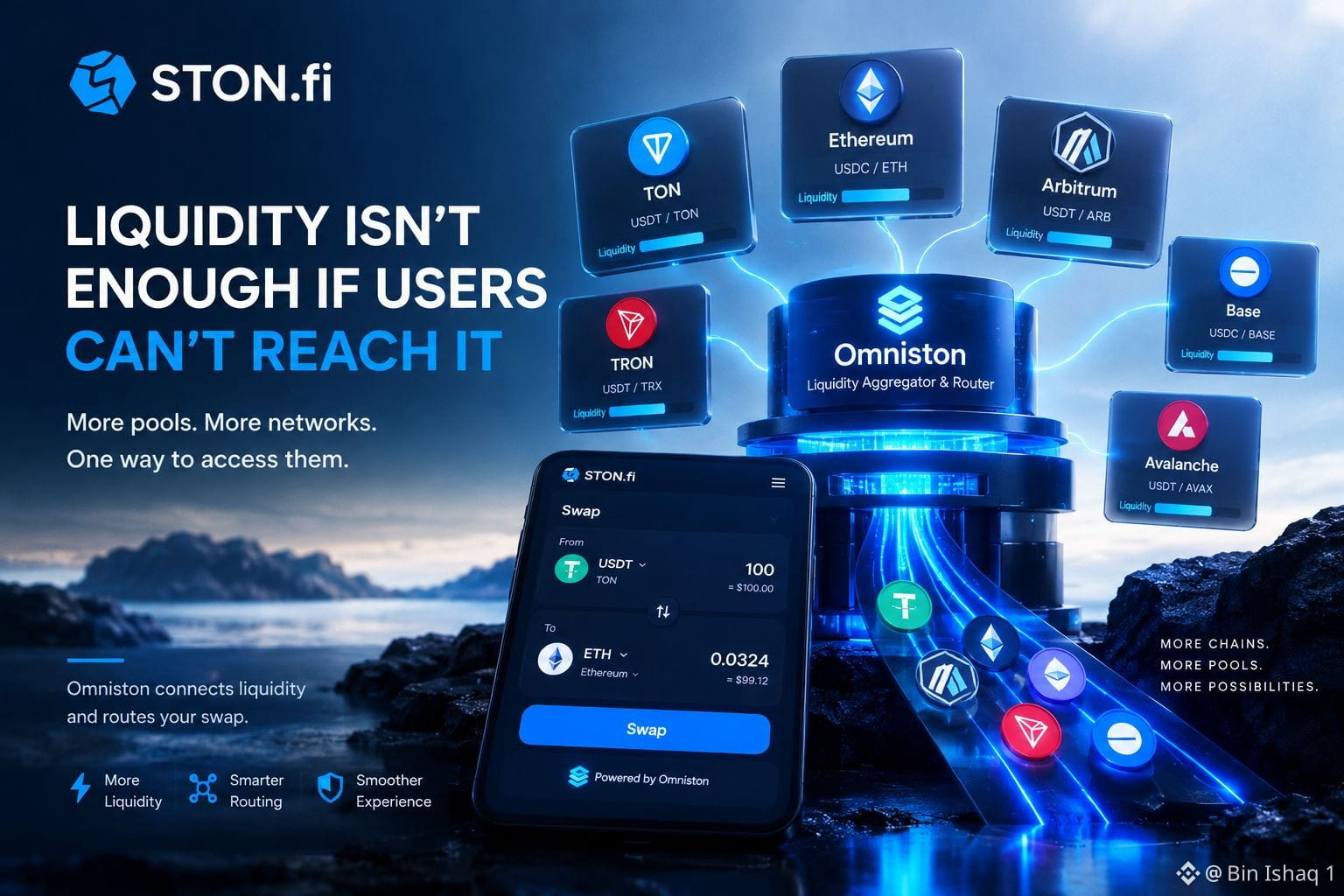
LIQUIDITY ISN’T ENOUGH IF USERS CAN’T REACH IT A DeFi protocol can have liquidity sitting across multiple pools, but that doesn’t automatically make that liquidity useful to everyone. The challenge is access. Users shouldn’t have to compare different pools, switch networks, search for routes, and figure out where the best execution might come from before every swap. STON.fi approaches this through infrastructure that connects liquidity and routes swaps across available markets. Omniston works underneath the interface, so applications can give users access to more liquidity without exposing all the complexity behind it. That creates an important distinction: liquidity is the resource, but routing is what makes the resource accessible. As more wallets, Telegram apps and DeFi products integrate this infrastructure, liquidity can become easier to reach without every application building its own routing system. For DeFi, that means the next layer of competition may not only be about who has more liquidity, but how efficiently that liquidity can be accessed. $XRP $BANK
LIQUIDITY ISN’T ENOUGH IF USERS CAN’T REACH IT A DeFi protocol can have liquidity sitting across multiple pools, but that doesn’t automatically make that liquidity useful to everyone. The challenge is access. Users shouldn’t have to compare different pools, switch networks, search for routes, and figure out where the best execution might come from before every swap. STON.fi approaches this through infrastructure that connects liquidity and routes swaps across available markets. Omniston works underneath the interface, so applications can give users access to more liquidity without exposing all the complexity behind it. That creates an important distinction: liquidity is the resource, but routing is what makes the resource accessible. As more wallets, Telegram apps and DeFi products integrate this infrastructure, liquidity can become easier to reach without every application building its own routing system. For DeFi, that means the next layer of competition may not only be about who has more liquidity, but how efficiently that liquidity can be accessed. $XRP $BANK
72
·
--
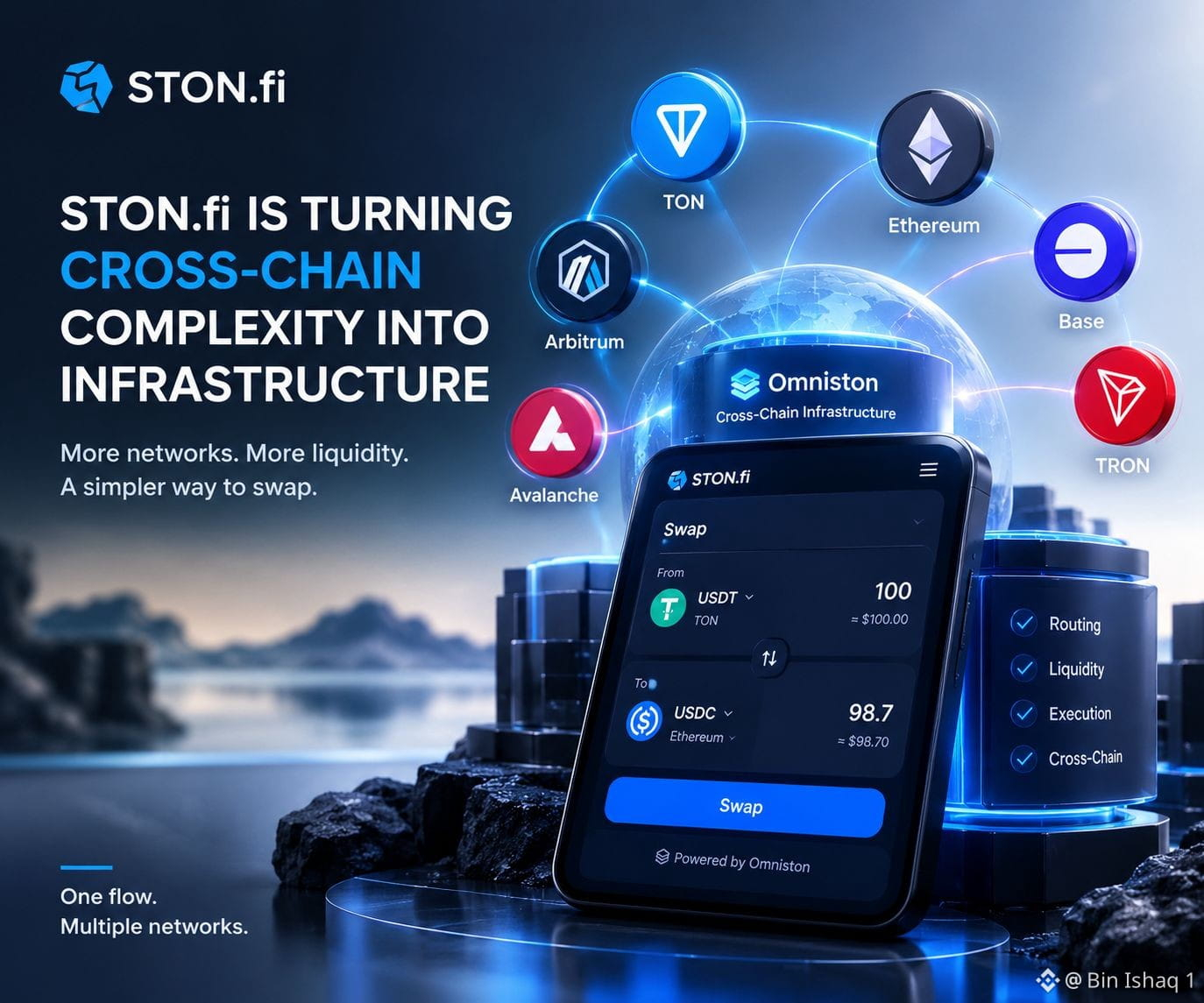
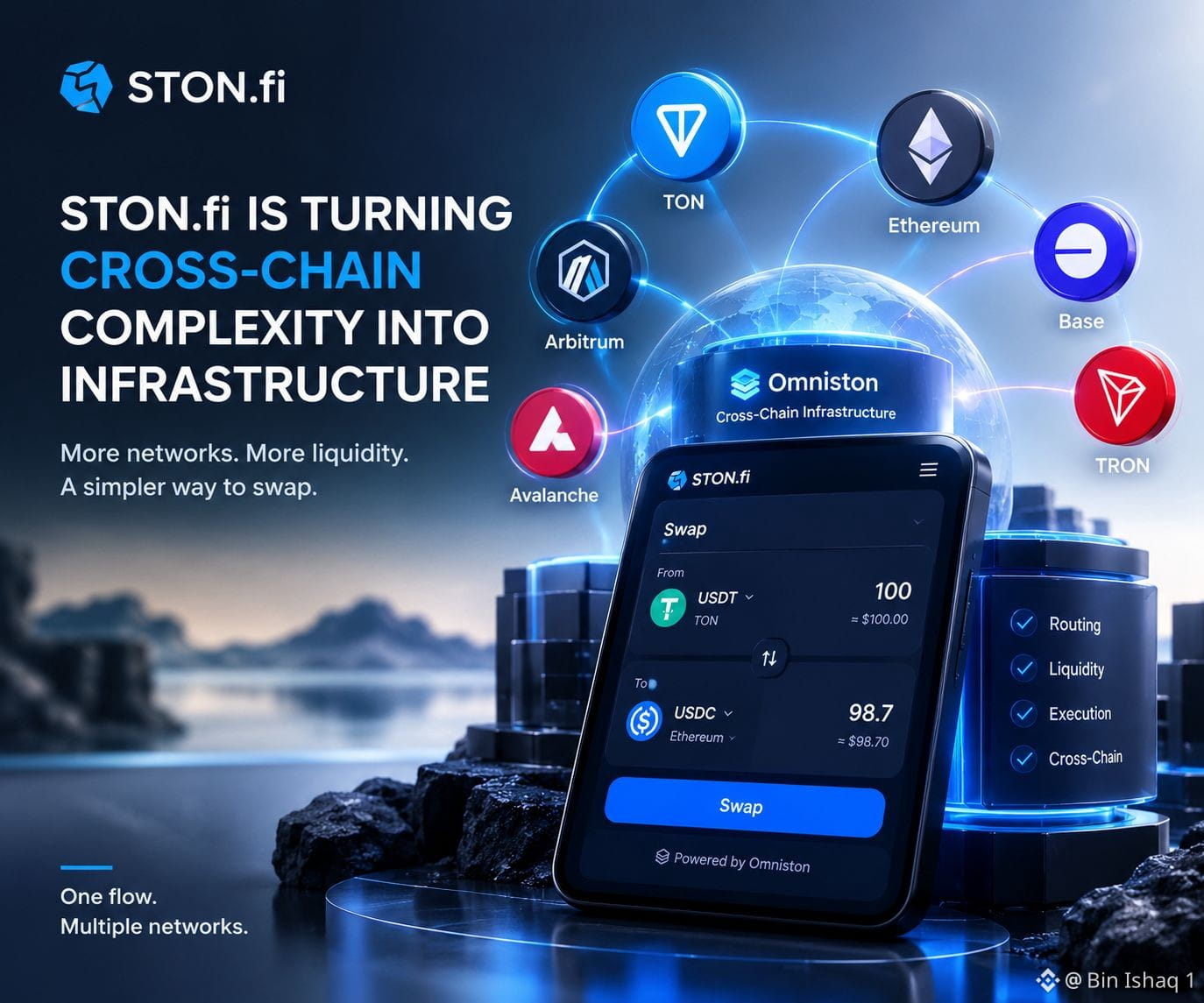
STONfi IS TURNING CROSS-CHAIN COMPLEXITY INTO INFRASTRUCTURE Cross-chain swaps become difficult when users have to manage every part of the transaction themselves. Different networks mean different liquidity sources, gas requirements, wallets and execution paths. The more chains involved, the more decisions the user has to make. STON.fi ’s Omniston handles much of that complexity behind the swap, connecting liquidity and managing the route while keeping the user-facing experience simpler. That creates an important shift in how cross-chain infrastructure can work. The goal isn’t to make users understand more infrastructure. It’s to make better infrastructure require less attention from them. For DeFi applications, that also creates a useful integration layer. Wallets, Telegram apps and other products can access cross-chain functionality without building every route independently. As liquidity becomes increasingly fragmented across ecosystems, the infrastructure connecting those liquidity pools may become as important as the pools themselves. $ONDO $LINK
STONfi IS TURNING CROSS-CHAIN COMPLEXITY INTO INFRASTRUCTURE Cross-chain swaps become difficult when users have to manage every part of the transaction themselves. Different networks mean different liquidity sources, gas requirements, wallets and execution paths. The more chains involved, the more decisions the user has to make. STON.fi ’s Omniston handles much of that complexity behind the swap, connecting liquidity and managing the route while keeping the user-facing experience simpler. That creates an important shift in how cross-chain infrastructure can work. The goal isn’t to make users understand more infrastructure. It’s to make better infrastructure require less attention from them. For DeFi applications, that also creates a useful integration layer. Wallets, Telegram apps and other products can access cross-chain functionality without building every route independently. As liquidity becomes increasingly fragmented across ecosystems, the infrastructure connecting those liquidity pools may become as important as the pools themselves. $ONDO $LINK
68
·
--
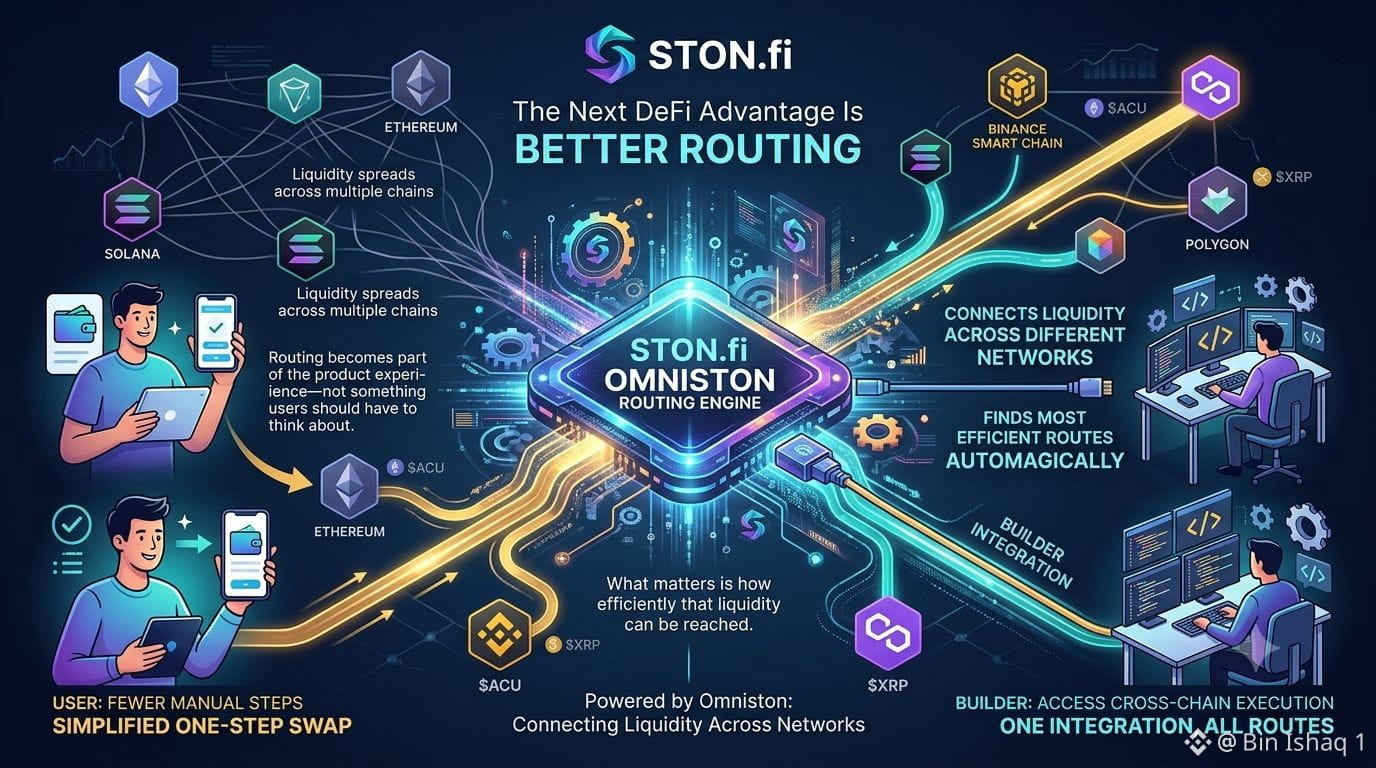
The Next Defi Advantage Is Better Routing Liquidity alone doesn’t guarantee a better swap. What matters is how efficiently that liquidity can be reached. STON.fi ’s Omniston approaches this by connecting liquidity across different networks and finding routes that can execute a cross-chain swap without forcing users to manage every step themselves. That changes the role of a DEX. Instead of competing only on the liquidity inside one ecosystem, the infrastructure can become a gateway to liquidity spread across multiple chains. For users, the difference is simple: fewer manual steps. For builders, it means access to cross-chain execution without having to build and maintain every route independently. As more networks and applications connect, routing becomes part of the product experience—not something users should have to think about. $ACU $XRP
The Next Defi Advantage Is Better Routing Liquidity alone doesn’t guarantee a better swap. What matters is how efficiently that liquidity can be reached. STON.fi ’s Omniston approaches this by connecting liquidity across different networks and finding routes that can execute a cross-chain swap without forcing users to manage every step themselves. That changes the role of a DEX. Instead of competing only on the liquidity inside one ecosystem, the infrastructure can become a gateway to liquidity spread across multiple chains. For users, the difference is simple: fewer manual steps. For builders, it means access to cross-chain execution without having to build and maintain every route independently. As more networks and applications connect, routing becomes part of the product experience—not something users should have to think about. $ACU $XRP
61
·
--
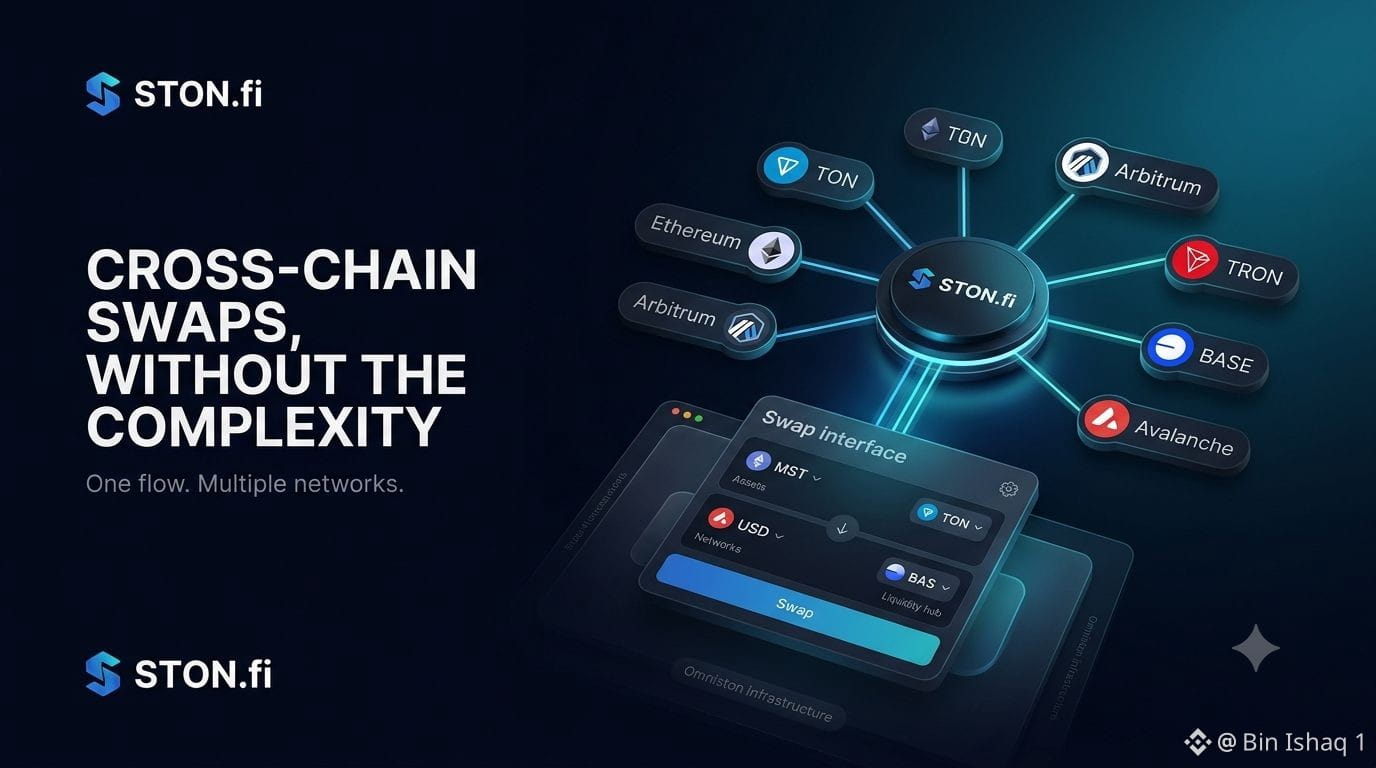
WHY CROSS-CHAIN SWAPS DON’T NEED TO FEEL COMPLICATED Moving tokens between different networks usually means dealing with bridges, destination wallets, gas tokens and multiple transactions. STON.fi ’s Omniston takes a different approach. Instead of making users manage each part of the process separately, the cross-chain flow can handle routing and execution behind the interface. You choose the asset, destination network and amount. The infrastructure takes care of the complicated part in the background. That matters because cross-chain adoption isn’t only about connecting more chains. It’s about removing the friction created by those chains. As more wallets and applications integrate this type of infrastructure, users can interact with assets across ecosystems without needing to understand every step happening underneath. The best cross-chain experience may eventually be the one where users barely notice that multiple networks are involved. $ETH $XRP
WHY CROSS-CHAIN SWAPS DON’T NEED TO FEEL COMPLICATED Moving tokens between different networks usually means dealing with bridges, destination wallets, gas tokens and multiple transactions. STON.fi ’s Omniston takes a different approach. Instead of making users manage each part of the process separately, the cross-chain flow can handle routing and execution behind the interface. You choose the asset, destination network and amount. The infrastructure takes care of the complicated part in the background. That matters because cross-chain adoption isn’t only about connecting more chains. It’s about removing the friction created by those chains. As more wallets and applications integrate this type of infrastructure, users can interact with assets across ecosystems without needing to understand every step happening underneath. The best cross-chain experience may eventually be the one where users barely notice that multiple networks are involved. $ETH $XRP
29
·
--
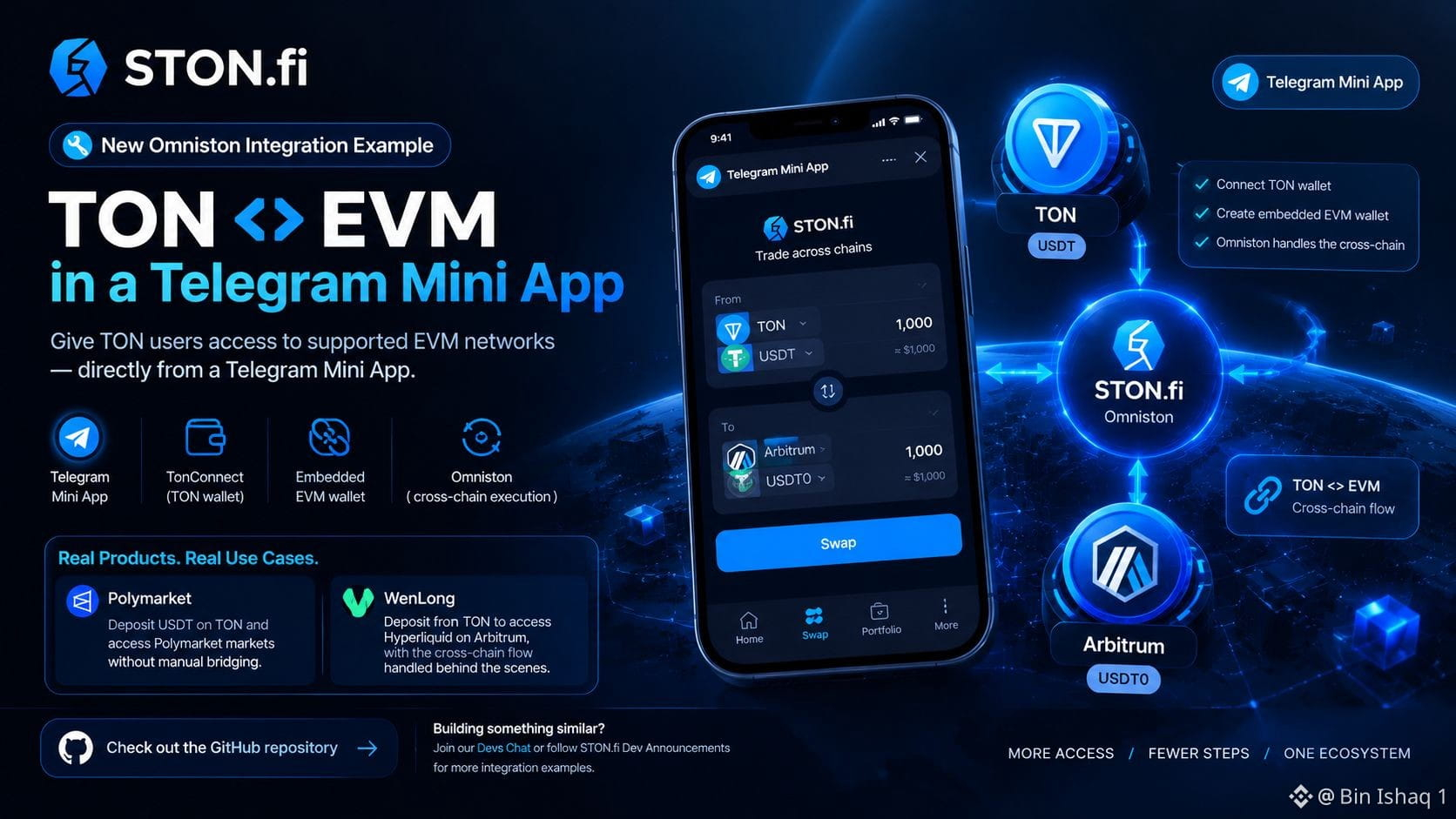
Making TON <> EVM Easier in Telegram STONfi has released a new open-source integration example showing how builders can bring EVM-based products to TON users directly through a Telegram Mini App. The setup connects a TON wallet through TonConnect while an embedded EVM wallet is created in the background. Omniston handles the cross-chain execution, with the reference flow supporting TON USDT ↔ Arbitrum USDT0. The interesting part is what this means for builders. EVM-native protocols can now give TON users access to their products without rebuilding the entire experience for TON or forcing users through manual bridging steps. We’re already seeing this approach in products like Predict with Polymarket and WenLong, where users can move from TON into EVM-based applications while the cross-chain complexity stays behind the interface. By packaging the setup as an open-source reference integration, STON.fi is making it easier for developers to build similar TON <> EVM experiences inside Telegram Mini Apps. For builders, the opportunity is bigger than a single integration: TON users can become accessible to EVM-native products without those products becoming TON-native themselves. $BTC $XRP
Making TON <> EVM Easier in Telegram STONfi has released a new open-source integration example showing how builders can bring EVM-based products to TON users directly through a Telegram Mini App. The setup connects a TON wallet through TonConnect while an embedded EVM wallet is created in the background. Omniston handles the cross-chain execution, with the reference flow supporting TON USDT ↔ Arbitrum USDT0. The interesting part is what this means for builders. EVM-native protocols can now give TON users access to their products without rebuilding the entire experience for TON or forcing users through manual bridging steps. We’re already seeing this approach in products like Predict with Polymarket and WenLong, where users can move from TON into EVM-based applications while the cross-chain complexity stays behind the interface. By packaging the setup as an open-source reference integration, STON.fi is making it easier for developers to build similar TON <> EVM experiences inside Telegram Mini Apps. For builders, the opportunity is bigger than a single integration: TON users can become accessible to EVM-native products without those products becoming TON-native themselves. $BTC $XRP
50
·
--
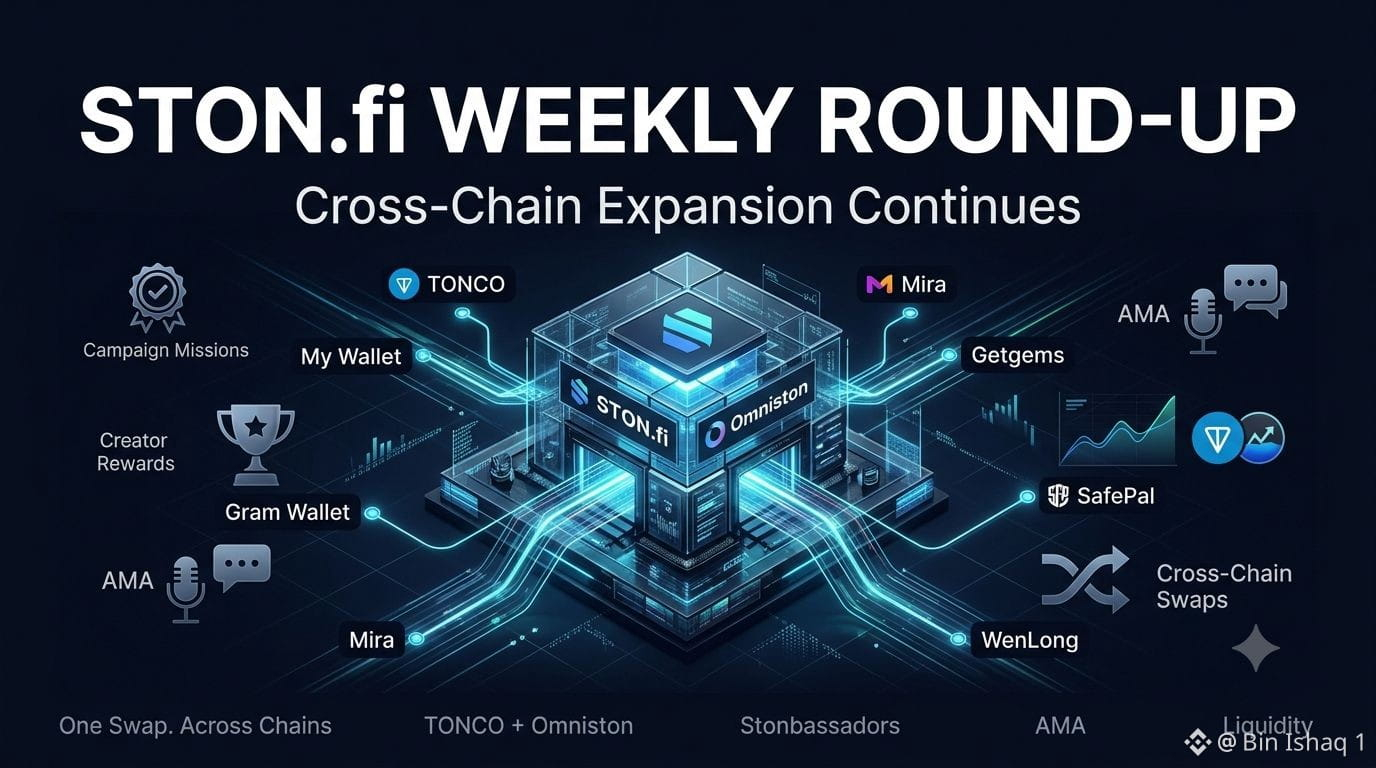
This Week’s Cross-Chain Expansion STONfi had a busy week, with the “One Swap. Across Chains” campaign entering its 6-week main stage, new Omniston integrations, the August Stonbassadors results, and a live AMA with the STON.fi Dev team. The campaign is now running cross-chain swap and partner missions with My Wallet, Gram Wallet, Mira, Getgems, SafePal, and WenLong. Participants can collect miles through these activities and unlock weekly limited Flight Deals. Another key development is TONCO integrating Omniston for cross-chain swaps. TONCO users can now access cross-chain functionality directly through its interface, showing how TON DeFi products can connect to cross-chain execution without building the infrastructure themselves. The creator side also had a strong update, with 12,406 STON distributed among August Stonbassadors, including larger rewards for 30 participants. The week also brought new content around cross-chain fears, atomic execution, self-custody, and chain abstraction through a new MPost interview with STON.fi Dev CMO & CBDO Andrey Fedorov. The upcoming “Inside the Cross-Chain Flight” AMA will give the community a chance to ask the STON.fi Dev team about the campaign and cross-chain swaps. On the liquidity side, active farms currently show up to 90% APR on USD₮/JETTON, 55% on GRAM/JETTON, and 13% on STON/USD₮, with Boost Farm APR reaching 27%. Weekly metrics: $11.6M swap volume, $25.8M TVL, and approximately $23,000 earned by liquidity providers. $BTC $ZEC
This Week’s Cross-Chain Expansion STONfi had a busy week, with the “One Swap. Across Chains” campaign entering its 6-week main stage, new Omniston integrations, the August Stonbassadors results, and a live AMA with the STON.fi Dev team. The campaign is now running cross-chain swap and partner missions with My Wallet, Gram Wallet, Mira, Getgems, SafePal, and WenLong. Participants can collect miles through these activities and unlock weekly limited Flight Deals. Another key development is TONCO integrating Omniston for cross-chain swaps. TONCO users can now access cross-chain functionality directly through its interface, showing how TON DeFi products can connect to cross-chain execution without building the infrastructure themselves. The creator side also had a strong update, with 12,406 STON distributed among August Stonbassadors, including larger rewards for 30 participants. The week also brought new content around cross-chain fears, atomic execution, self-custody, and chain abstraction through a new MPost interview with STON.fi Dev CMO & CBDO Andrey Fedorov. The upcoming “Inside the Cross-Chain Flight” AMA will give the community a chance to ask the STON.fi Dev team about the campaign and cross-chain swaps. On the liquidity side, active farms currently show up to 90% APR on USD₮/JETTON, 55% on GRAM/JETTON, and 13% on STON/USD₮, with Boost Farm APR reaching 27%. Weekly metrics: $11.6M swap volume, $25.8M TVL, and approximately $23,000 earned by liquidity providers. $BTC $ZEC
56
·
--
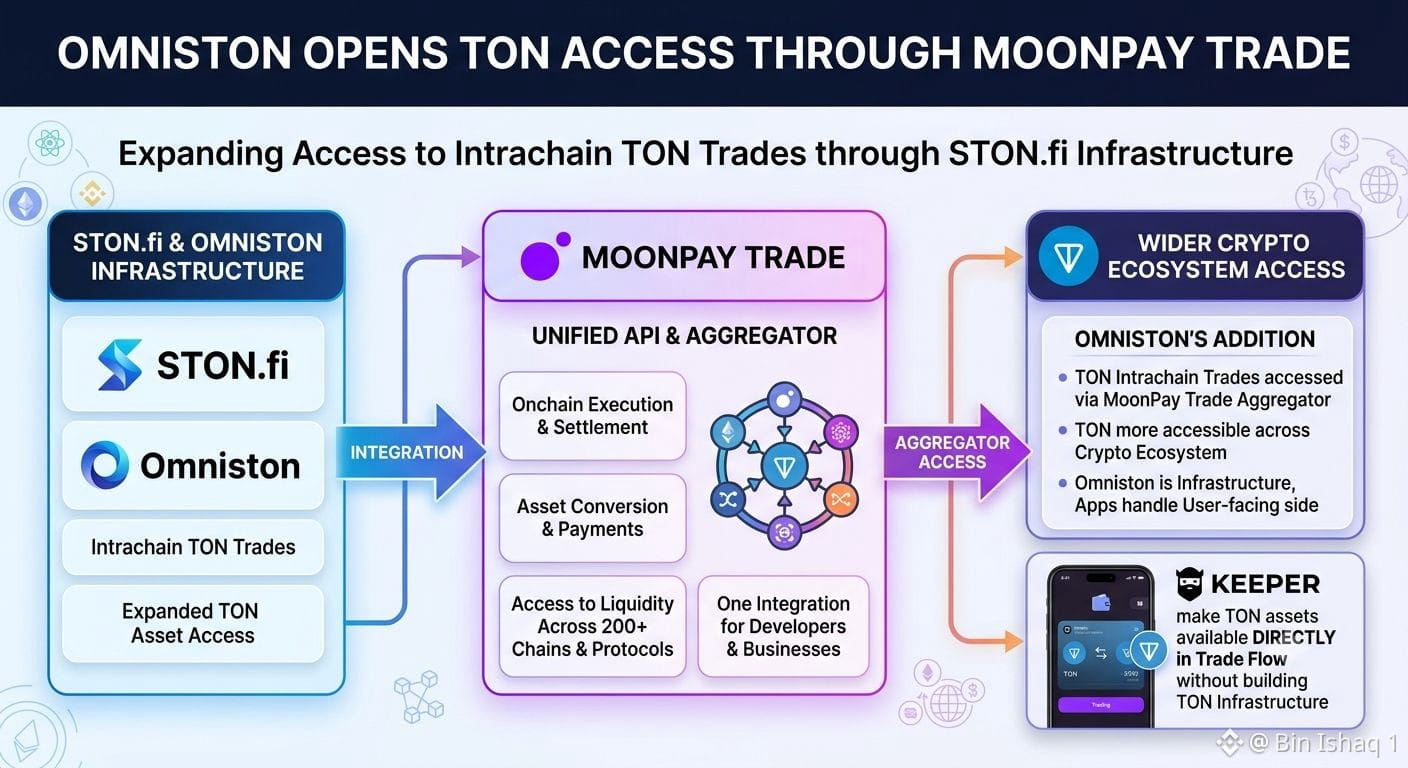
Omniston Opens TON Access Through MoonPay Trade STONfi’s Omniston is now integrated into MoonPay Trade, expanding access to intrachain TON trades through STON.fi infrastructure. MoonPay Trade provides a unified API for onchain execution, settlement, asset conversion, and payments, giving developers and businesses access to liquidity and blockchain infrastructure across 200+ chains and protocols through one integration. The interesting part is what Omniston adds: intrachain TON trades can now be accessed through MoonPay Trade’s aggregator, allowing supported wallets and applications to bring TON assets into their existing trading experience. For example, MoonPay Trade partners such as Keeper can make TON assets available directly within their own trade flow, without having to build separate TON trading infrastructure from scratch. This is another step toward making TON more accessible across the wider crypto ecosystem, with Omniston providing the infrastructure behind the trading experience while applications handle the user-facing side. $BTC $BCH
Omniston Opens TON Access Through MoonPay Trade STONfi’s Omniston is now integrated into MoonPay Trade, expanding access to intrachain TON trades through STON.fi infrastructure. MoonPay Trade provides a unified API for onchain execution, settlement, asset conversion, and payments, giving developers and businesses access to liquidity and blockchain infrastructure across 200+ chains and protocols through one integration. The interesting part is what Omniston adds: intrachain TON trades can now be accessed through MoonPay Trade’s aggregator, allowing supported wallets and applications to bring TON assets into their existing trading experience. For example, MoonPay Trade partners such as Keeper can make TON assets available directly within their own trade flow, without having to build separate TON trading infrastructure from scratch. This is another step toward making TON more accessible across the wider crypto ecosystem, with Omniston providing the infrastructure behind the trading experience while applications handle the user-facing side. $BTC $BCH
62
·
--
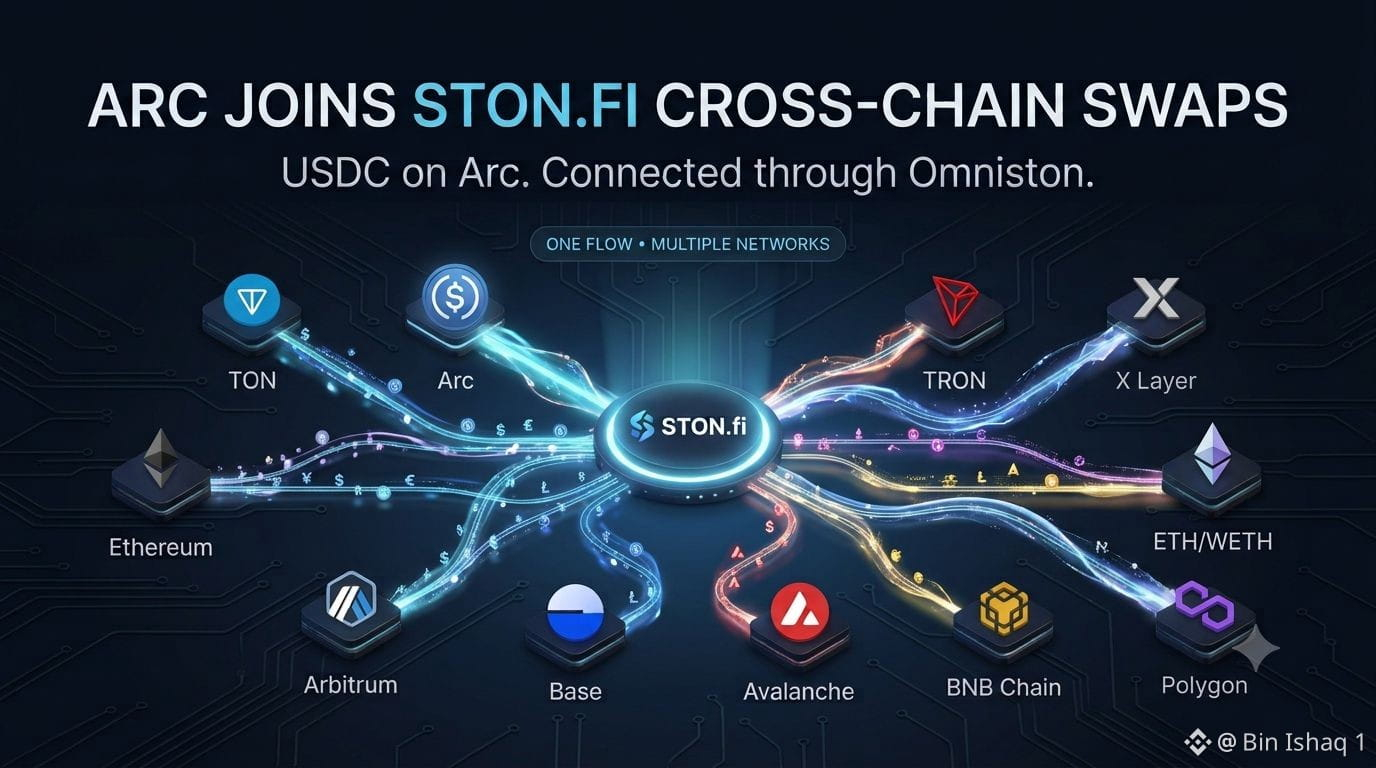
Arc Is Now Connected to Cross-Chain Swaps STONfi is expanding Omniston’s cross-chain reach with Arc, Circle’s new EVM-compatible Layer-1 built around stablecoin-based finance. STON.fi now supports USDC on Arc, allowing users to swap between Arc and other supported networks through the same cross-chain flow. Omniston handles the routing and settlement layer behind the transaction, so users don’t need to manage each chain separately. The bigger point is the infrastructure model. As more networks connect to the same liquidity layer, applications can offer broader asset access without building independent cross-chain systems for every new chain. Supported stablecoin routes now include TON, TRON, Ethereum, BNB Chain, Base, Avalanche, Arbitrum, Polygon, Robinhood Chain, X Layer, and Arc. For the initial Arc integration, swaps are temporarily limited to $1,000 per transaction. The direction is clear: more connected networks, fewer fragmented user experiences. $XRP $BTC
Arc Is Now Connected to Cross-Chain Swaps STONfi is expanding Omniston’s cross-chain reach with Arc, Circle’s new EVM-compatible Layer-1 built around stablecoin-based finance. STON.fi now supports USDC on Arc, allowing users to swap between Arc and other supported networks through the same cross-chain flow. Omniston handles the routing and settlement layer behind the transaction, so users don’t need to manage each chain separately. The bigger point is the infrastructure model. As more networks connect to the same liquidity layer, applications can offer broader asset access without building independent cross-chain systems for every new chain. Supported stablecoin routes now include TON, TRON, Ethereum, BNB Chain, Base, Avalanche, Arbitrum, Polygon, Robinhood Chain, X Layer, and Arc. For the initial Arc integration, swaps are temporarily limited to $1,000 per transaction. The direction is clear: more connected networks, fewer fragmented user experiences. $XRP $BTC
31
·
--
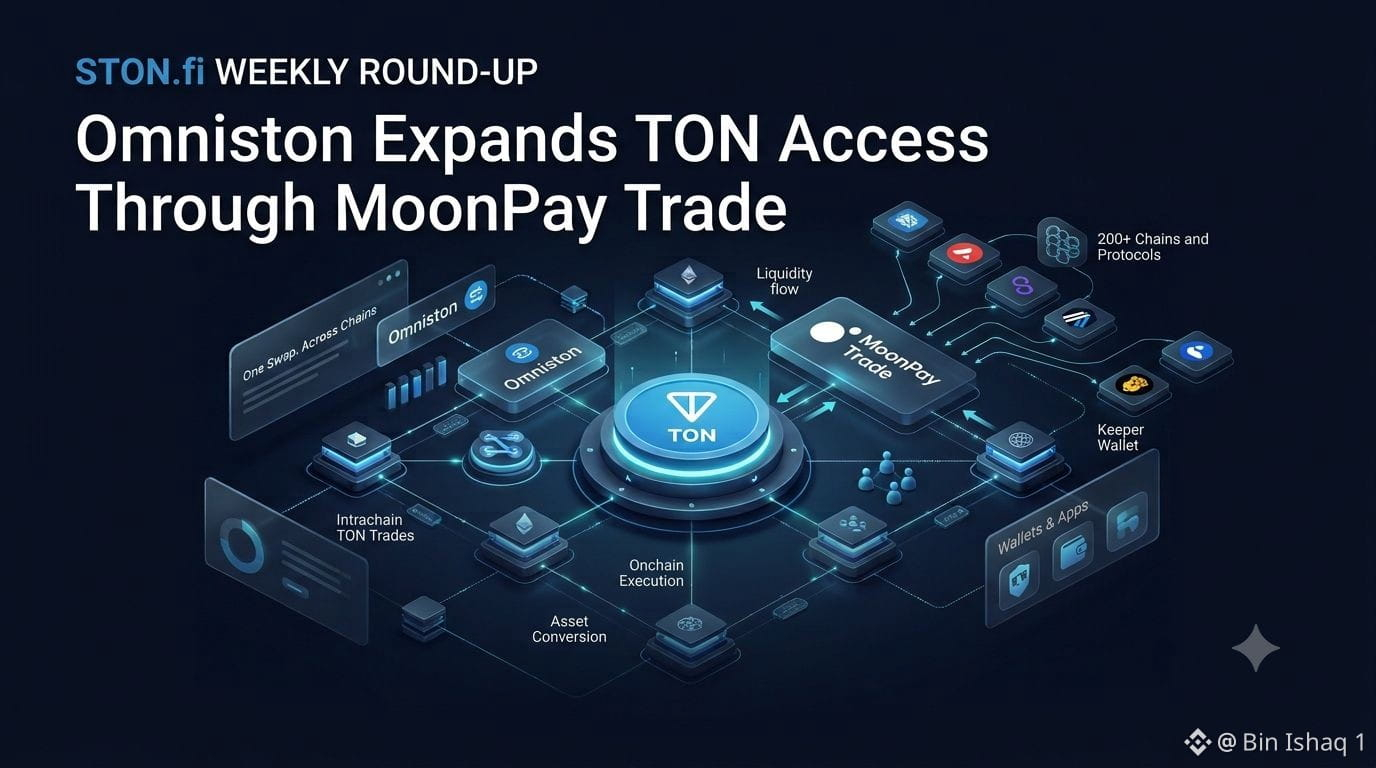
Omniston Expands TON Access Through MoonPay Trade STONfi is extending the reach of TON liquidity through a new integration with MoonPay Trade. MoonPay Trade provides a unified API for onchain execution, settlement, asset conversion, and payments across 200+ chains and protocols. With Omniston integrated into its aggregator, MoonPay Trade can now provide intrachain TON trades through STON.fi infrastructure. The important part is the distribution layer. Wallets and apps using MoonPay Trade, including examples such as Keeper, can integrate TON asset trading into their existing experience without having to build the underlying TON liquidity infrastructure themselves. For STON.fi , this is another example of Omniston working behind the scenes: instead of asking every application to build its own trading infrastructure, the same liquidity layer can serve multiple products and user experiences. The result is simple for the user: more places where TON assets can be accessed, while the complexity stays underneath the interface. $BTC $XRP #Bitcoin Price Prediction: What is Bitcoins next move?#
Omniston Expands TON Access Through MoonPay Trade STONfi is extending the reach of TON liquidity through a new integration with MoonPay Trade. MoonPay Trade provides a unified API for onchain execution, settlement, asset conversion, and payments across 200+ chains and protocols. With Omniston integrated into its aggregator, MoonPay Trade can now provide intrachain TON trades through STON.fi infrastructure. The important part is the distribution layer. Wallets and apps using MoonPay Trade, including examples such as Keeper, can integrate TON asset trading into their existing experience without having to build the underlying TON liquidity infrastructure themselves. For STON.fi , this is another example of Omniston working behind the scenes: instead of asking every application to build its own trading infrastructure, the same liquidity layer can serve multiple products and user experiences. The result is simple for the user: more places where TON assets can be accessed, while the complexity stays underneath the interface. $BTC $XRP #Bitcoin Price Prediction: What is Bitcoins next move?#
50
·
--
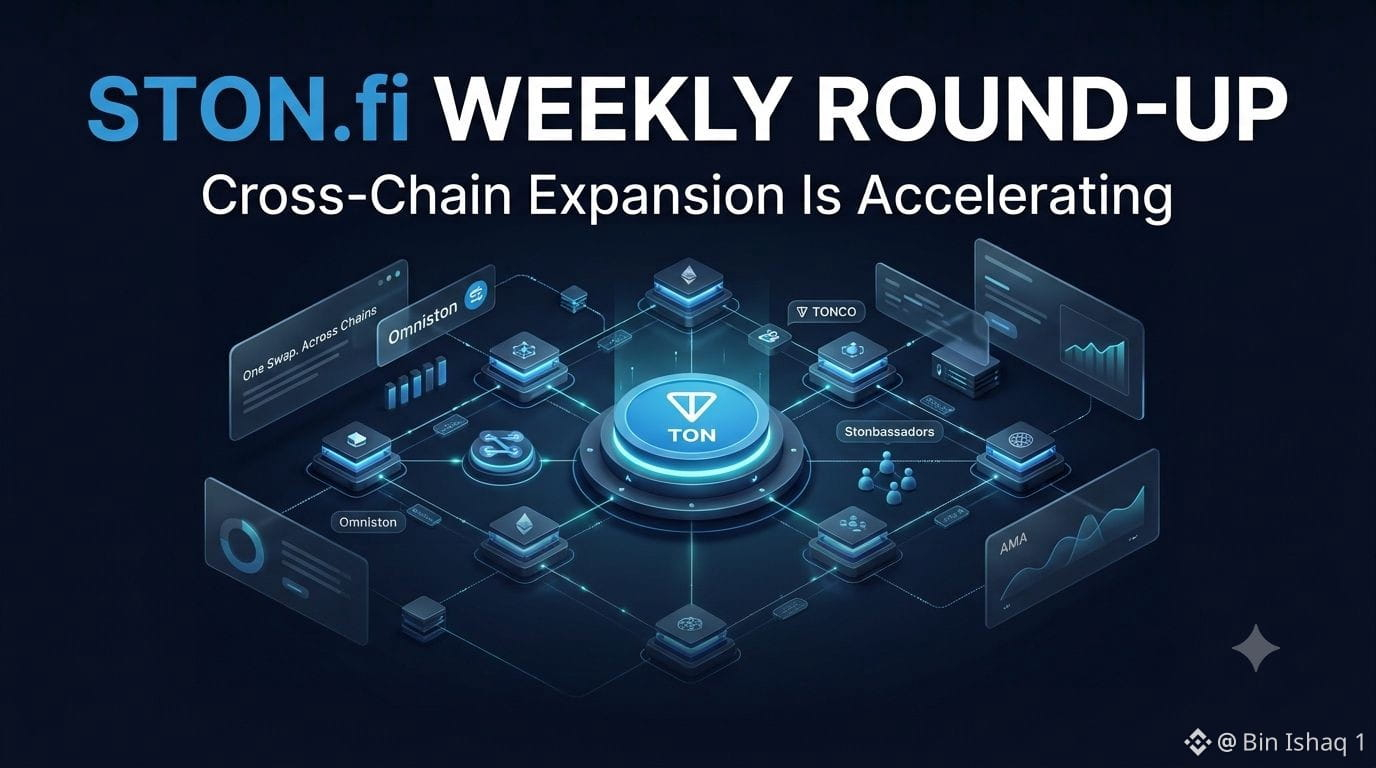
This Week’s Cross-Chain Expansion STONfi had a busy week, with the “One Swap. Across Chains” campaign entering its 6-week main stage, new Omniston integrations, creator rewards, and a live AMA coming up. The campaign now includes cross-chain swap missions and partner quests with My Wallet, Gram Wallet, Mira, Getgems, SafePal, and WenLong, giving participants more ways to explore the ecosystem while collecting miles and unlocking weekly Flight Deals. Another important development is TONCO integrating Omniston. TONCO users can now access cross-chain swaps directly through its interface, showing how TON applications can add cross-chain functionality without building the full execution infrastructure themselves. The week also brought the August Stonbassadors results, with 12,406 STON distributed among participants, alongside new research on cross-chain fears and chain abstraction. And on September 23 at 3:00 PM UTC, the STON.fi Dev team will host a live AMA to answer community questions about cross-chain swaps and the campaign. The bigger picture: STON.fi is moving beyond being a swap interface. Its infrastructure is increasingly becoming something other TON products can build into their own user experience. 📊 This week • Swap volume: $11.6M • TVL: $25.8M • LP earnings: ~$23,000 $BTC $XRP
This Week’s Cross-Chain Expansion STONfi had a busy week, with the “One Swap. Across Chains” campaign entering its 6-week main stage, new Omniston integrations, creator rewards, and a live AMA coming up. The campaign now includes cross-chain swap missions and partner quests with My Wallet, Gram Wallet, Mira, Getgems, SafePal, and WenLong, giving participants more ways to explore the ecosystem while collecting miles and unlocking weekly Flight Deals. Another important development is TONCO integrating Omniston. TONCO users can now access cross-chain swaps directly through its interface, showing how TON applications can add cross-chain functionality without building the full execution infrastructure themselves. The week also brought the August Stonbassadors results, with 12,406 STON distributed among participants, alongside new research on cross-chain fears and chain abstraction. And on September 23 at 3:00 PM UTC, the STON.fi Dev team will host a live AMA to answer community questions about cross-chain swaps and the campaign. The bigger picture: STON.fi is moving beyond being a swap interface. Its infrastructure is increasingly becoming something other TON products can build into their own user experience. 📊 This week • Swap volume: $11.6M • TVL: $25.8M • LP earnings: ~$23,000 $BTC $XRP
63
තවත් අන්තර්ගතයන් ගවේෂණය කිරීමට ඇතුල් වන්න
Binance චතුරශ්රය හි ගෝලීය ක්රිප්ටෝ පරිශීලකයින් හා එක්වන්න
⚡️ ක්රිප්ටෝ පිළිබඳ නවතම සහ ප්රයෝජනවත් තොරතුරු ලබා ගන්න.
💬 ලොව විශාලතම ක්රිප්ටෝ හුවමාරුව මගින් විශ්වාස කෙරේ.
👍 සත්යායනය කරන ලද නිර්මාණකරුවන්ගෙන් සැබෑ විදසුන් සොයා ගන්න.
විද්යුත් තැපෑල / දුරකථන අංකය
නැගී එන මාතෘකා
BinanceLaunchesBinanceIntelligence
94,147 views
1,040 සාකච්ඡා කරමින්
BINANCE ĐANG ĐƯA AI VÀO GIAO DỊCH
Một cập nhật khá đáng chú ý từ Binance.
Giờ đây người dùng có thể mô tả ý tưởng giao dịch bằng ngôn ngữ bình thường, Binance AI Pro sẽ tự xây dựng thành một chiến lược hoàn chỉnh.
Không cần code.
Người dùng vẫn phải duyệt trước khi chiến lược được thực hiện. Mỗi chiến lược giao dịch thật cũng chạy trong một tài khoản phụ riêng và AI không được tự ý chuyển tiền.
Phần xem trước chiến lược được miễn phí.
Còn nếu muốn giao dịch thật thì gói Premium dự kiến có giá 19,99 USDC/tháng, bắt đầu triển khai từ nửa cuối tháng 10.
Điểm Mây thấy thú vị nhất là Binance đang biến việc xây bot giao dịch thành thứ dễ tiếp cận hơn rất nhiều.
Trước đây muốn tự động hóa chiến lược thường phải biết code. Giờ chỉ cần mô tả mình muốn hệ thống làm gì.
Nhưng AI vẫn là AI. Chiến lược được tạo ra không đồng nghĩa với chiến lược sẽ có lợi nhuận.
Mây nghĩ đây sẽ là một xu hướng rất đáng theo dõi trong thời gian tới khi AI bắt đầu tham gia sâu hơn vào trading.
Follow Mây để cập nhật thêm những thay đổi đáng chú ý trong crypto nhé. #binancelaunchesbinanceintelligence #TinFed #TheoDõiFOMC #ETHUp70%InQ3ButLiquidityFalls $BTC $ETH $BNB
Mây Làm Crypto
·10 කැමත්ත දැක්වීම්
·9.7k views
StriveBuys2000BTCFor$169M
2,423 views
46 සාකච්ඡා කරමින්
EvernorthXRPTreasuryCompletesSPACMerger
66,025 views
707 සාකච්ඡා කරමින්