
RWA and Web3 Talk
172 පෝස්ටු
RWA and Web3 Talk
වාර්තා කරන්න
පරිශීලක අවහිර කරන්න
#COIN 💍 | #RWA 🌐 | #AI 📊 | Market Analysis 🚀 | Alpha Seeker & Airdrop Hunter 🔍 | Provice services: Play-2-Earn, METAVERSE, NFT, RWA, Depin
781 හඹා යමින්
194 හඹා යන්නන්
165 කැමති විය
පෝස්ටු
සියල්ල
උපුටා දැක්වීම්
🚨 BANKING SYSTEM FAILURE:
128 BANKS IN JAPAN GO DARK AT THE SAME TIME.
A massive banking system failure has disrupted financial services across western Japan on Friday, November 6, 2026.
Here are the numbers:
• 128 out of 236 Shinkin financial institutions affected.
• 3,430 branches impacted.
• 27 institutions affected across Kansai and Tokushima.
• All 8 Shinkin institutions in Fukuoka reportedly affected.
• ATMs, teller services, internet banking and interbank transfers disrupted.
What caused it?
The suspected cause is a failure involving communications equipment at the West Japan Center of the Shinkin Joint Center, a shared infrastructure serving 236 financial institutions.
One infrastructure failure reportedly disrupted services across 128 institutions.
Important: There is no confirmed evidence of a cyberattack or stolen customer deposits. This is being treated as a technical system failure.
The money remains in customer accounts, but access to banking services has been disrupted.
One shared system. 128 financial institutions. 3,430 affected branches.
This is a serious reminder of how vulnerable modern banking infrastructure can be when so many institutions depend on the same system.$NEAR
{future}(NEARUSDT)
$SOL
{future}(SOLUSDT)
$ETH
{future}(ETHUSDT)
🚨 BANKING SYSTEM FAILURE:
128 BANKS IN JAPAN GO DARK AT THE SAME TIME.
A massive banking system failure has disrupted financial services across western Japan on Friday, November 6, 2026.
Here are the numbers:
• 128 out of 236 Shinkin financial institutions affected.
• 3,430 branches impacted.
• 27 institutions affected across Kansai and Tokushima.
• All 8 Shinkin institutions in Fukuoka reportedly affected.
• ATMs, teller services, internet banking and interbank transfers disrupted.
What caused it?
The suspected cause is a failure involving communications equipment at the West Japan Center of the Shinkin Joint Center, a shared infrastructure serving 236 financial institutions.
One infrastructure failure reportedly disrupted services across 128 institutions.
Important: There is no confirmed evidence of a cyberattack or stolen customer deposits. This is being treated as a technical system failure.
The money remains in customer accounts, but access to banking services has been disrupted.
One shared system. 128 financial institutions. 3,430 affected branches.
This is a serious reminder of how vulnerable modern banking infrastructure can be when so many institutions depend on the same system.$NEAR
$SOL
$ETH
151
If you're an iPhone user, read this.
Hackers just stole $4.06 MILLION in crypto through cyberattacks that started with just one click.
The victim said they tapped an ad in Safari before wallet apps were emptied.
An iOS exploit kit such as DarkSword is suspected.
DarkSword chains together iOS security flaws to compromise vulnerable iPhones.
Opening a malicious Safari page is enough to steal passwords, photos, Notes and wallet data.
No wallet connection, signature, or approval needed.
Other attacks reported in 2026:
1. Instagram ads
- iPhone was infected while they scrolled past a malicious ad
2. Pegasus spyware
- iPhone was infected without clicking a link or downloading a file.
3. P7 DarkSword
- spyware capable of extracting passwords, photos, Notes and wallet data.
4. Fake Apple preorder pages
- fake iPhone website launched an infection attempt simply when opened.
5. iMessage
- A zero-click exploit infected an iPhone with spyware capable of accessing messages, microphone and camera.
6. Telegram downloads
- modified iPhone apps collected location, device information and screenshots while open.
7. App Store malware
- 2 apps carried SparkCat, which scanned photos for seed phrases after users granted access.
8. Coruna
- 23 exploits used in espionage and financially motivated attacks against older iOS versions.
_____
Now here's what you should do:
• Update iOS and apps NOW. Enable automatic updates too.
• Avoid unsolicited app downloads and configuration profiles.
• Limit apps’ access to Photos, location, microphone and camera.
• Keep seed phrases out of screenshots and Notes.
• Consider Lockdown Mode if you face heightened spyware risks.$BTC
{future}(BTCUSDT)
$SOL
{future}(SOLUSDT)
$NEAR
{future}(NEARUSDT)
If you're an iPhone user, read this.
Hackers just stole $4.06 MILLION in crypto through cyberattacks that started with just one click.
The victim said they tapped an ad in Safari before wallet apps were emptied.
An iOS exploit kit such as DarkSword is suspected.
DarkSword chains together iOS security flaws to compromise vulnerable iPhones.
Opening a malicious Safari page is enough to steal passwords, photos, Notes and wallet data.
No wallet connection, signature, or approval needed.
Other attacks reported in 2026:
1. Instagram ads
- iPhone was infected while they scrolled past a malicious ad
2. Pegasus spyware
- iPhone was infected without clicking a link or downloading a file.
3. P7 DarkSword
- spyware capable of extracting passwords, photos, Notes and wallet data.
4. Fake Apple preorder pages
- fake iPhone website launched an infection attempt simply when opened.
5. iMessage
- A zero-click exploit infected an iPhone with spyware capable of accessing messages, microphone and camera.
6. Telegram downloads
- modified iPhone apps collected location, device information and screenshots while open.
7. App Store malware
- 2 apps carried SparkCat, which scanned photos for seed phrases after users granted access.
8. Coruna
- 23 exploits used in espionage and financially motivated attacks against older iOS versions.
_____
Now here's what you should do:
• Update iOS and apps NOW. Enable automatic updates too.
• Avoid unsolicited app downloads and configuration profiles.
• Limit apps’ access to Photos, location, microphone and camera.
• Keep seed phrases out of screenshots and Notes.
• Consider Lockdown Mode if you face heightened spyware risks.$BTC
$SOL
$NEAR
73
Ethereum is confronting the economic cost of fragmented blockchains
Its Economic Zone aims to reconnect rollups with mainnet liquidity through atomic transactions
Chainlink has been addressing interoperability across independent networks through CCIP
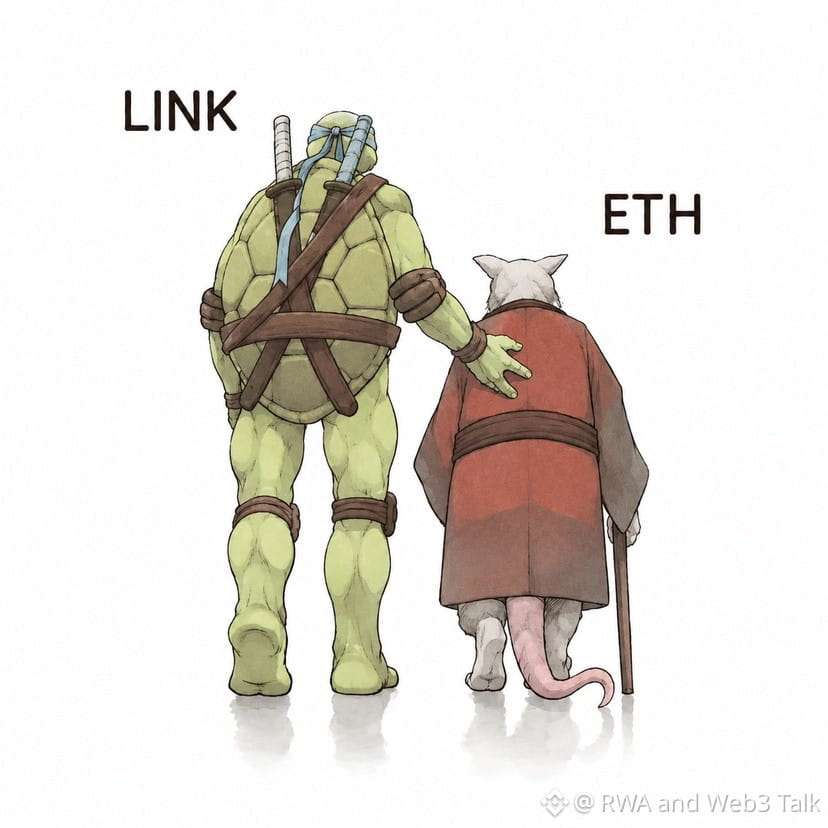
The distinction matters: Ethereum is working to unify its own economy, while Chainlink is building connectivity across economies
As finance moves onchain, interoperability becomes a prerequisite for capital efficiency $LINK
{future}(LINKUSDT)
$ETH
{future}(ETHUSDT)
$BTC
{future}(BTCUSDT)
Ethereum is confronting the economic cost of fragmented blockchains
Its Economic Zone aims to reconnect rollups with mainnet liquidity through atomic transactions
Chainlink has been addressing interoperability across independent networks through CCIP
The distinction matters: Ethereum is working to unify its own economy, while Chainlink is building connectivity across economies
As finance moves onchain, interoperability becomes a prerequisite for capital efficiency $LINK
$ETH
$BTC
110
If you didn't know it already, @chainlink won👑?$LINK
What if the missing piece of scaling adoption of tokenized assets was compliance?⤵️
Apex Group, Chainlink, T-REX Network and the ERC-3643 Association have implemented a modular compliance framework for on-chain bonds, aligned with Swift standards, demonstrating how established financial market standards can be combined with programmable compliance and interoperable blockchain infrastructure.
The project that makes this all work = @chainlink
Chainlink provides the institutional infrastructure supporting secure cross-chain transfers of ERC-3643 tokens through the Cross-Chain Interoperability Protocol (CCIP), compliance enforcement through the Automated Compliance Engine (ACE), and high-speed pricing data from Data Streams.
But what's most interesting is what they say at the end of the article👀
"Scaling digital assets will ultimately require market infrastructures, regulators, technology providers and financial institutions to work together on practical, end-to-end solutions. In that spirit, Swift, Chainlink, Apex Group, and T-REX Network are collaborating in connection with the Singapore FinTech Festival to showcase how the key building blocks of tokenised financial markets are coming together to support end-to-end digital asset workflows."
I remember Sergey talking about building end-to-end solutions to scale up revenue so I guess we will see more end-to-end solutions like this and chainlink will always be included as a core infrastructure provider to glue all components together.
{spot}(LINKUSDT)
$BTC
{future}(BTCUSDT)
$ETH
{future}(ETHUSDT)
If you didn't know it already, @chainlink won👑?$LINK
What if the missing piece of scaling adoption of tokenized assets was compliance?⤵️
Apex Group, Chainlink, T-REX Network and the ERC-3643 Association have implemented a modular compliance framework for on-chain bonds, aligned with Swift standards, demonstrating how established financial market standards can be combined with programmable compliance and interoperable blockchain infrastructure.
The project that makes this all work = @chainlink
Chainlink provides the institutional infrastructure supporting secure cross-chain transfers of ERC-3643 tokens through the Cross-Chain Interoperability Protocol (CCIP), compliance enforcement through the Automated Compliance Engine (ACE), and high-speed pricing data from Data Streams.
But what's most interesting is what they say at the end of the article👀
"Scaling digital assets will ultimately require market infrastructures, regulators, technology providers and financial institutions to work together on practical, end-to-end solutions. In that spirit, Swift, Chainlink, Apex Group, and T-REX Network are collaborating in connection with the Singapore FinTech Festival to showcase how the key building blocks of tokenised financial markets are coming together to support end-to-end digital asset workflows."
I remember Sergey talking about building end-to-end solutions to scale up revenue so I guess we will see more end-to-end solutions like this and chainlink will always be included as a core infrastructure provider to glue all components together.
$BTC
$ETH
110
NEWS: @Chainlink is significantly broadening its presence in Asia’s financial markets, with its APAC Equities Streams now providing coverage across more than $40 trillion in equity markets.
The expansion includes China, Japan, South Korea, Taiwan and Hong Kong, featuring major companies such as TSMC, Tencent, Samsung, SK Hynix and BYD. The data is already live on platforms including @Lighter, @Jupiter and Predict fun, bringing regional equity market information closer to on-chain applications.
This development marks another step toward connecting traditional financial markets with blockchain-based infrastructure through Chainlink.
$LINK
{future}(LINKUSDT)
$NEAR
{future}(NEARUSDT)
$SOL
{future}(SOLUSDT)
NEWS: @Chainlink is significantly broadening its presence in Asia’s financial markets, with its APAC Equities Streams now providing coverage across more than $40 trillion in equity markets.
The expansion includes China, Japan, South Korea, Taiwan and Hong Kong, featuring major companies such as TSMC, Tencent, Samsung, SK Hynix and BYD. The data is already live on platforms including @Lighter, @Jupiter and Predict fun, bringing regional equity market information closer to on-chain applications.
This development marks another step toward connecting traditional financial markets with blockchain-based infrastructure through Chainlink.
$LINK
$NEAR
$SOL


137
අර්ධ වශයෙන් සත්යයි
Chainlink just merged code to test whether its CRE billing system catches lost or broken usage receipts.
Here's what that means in plain English 👇
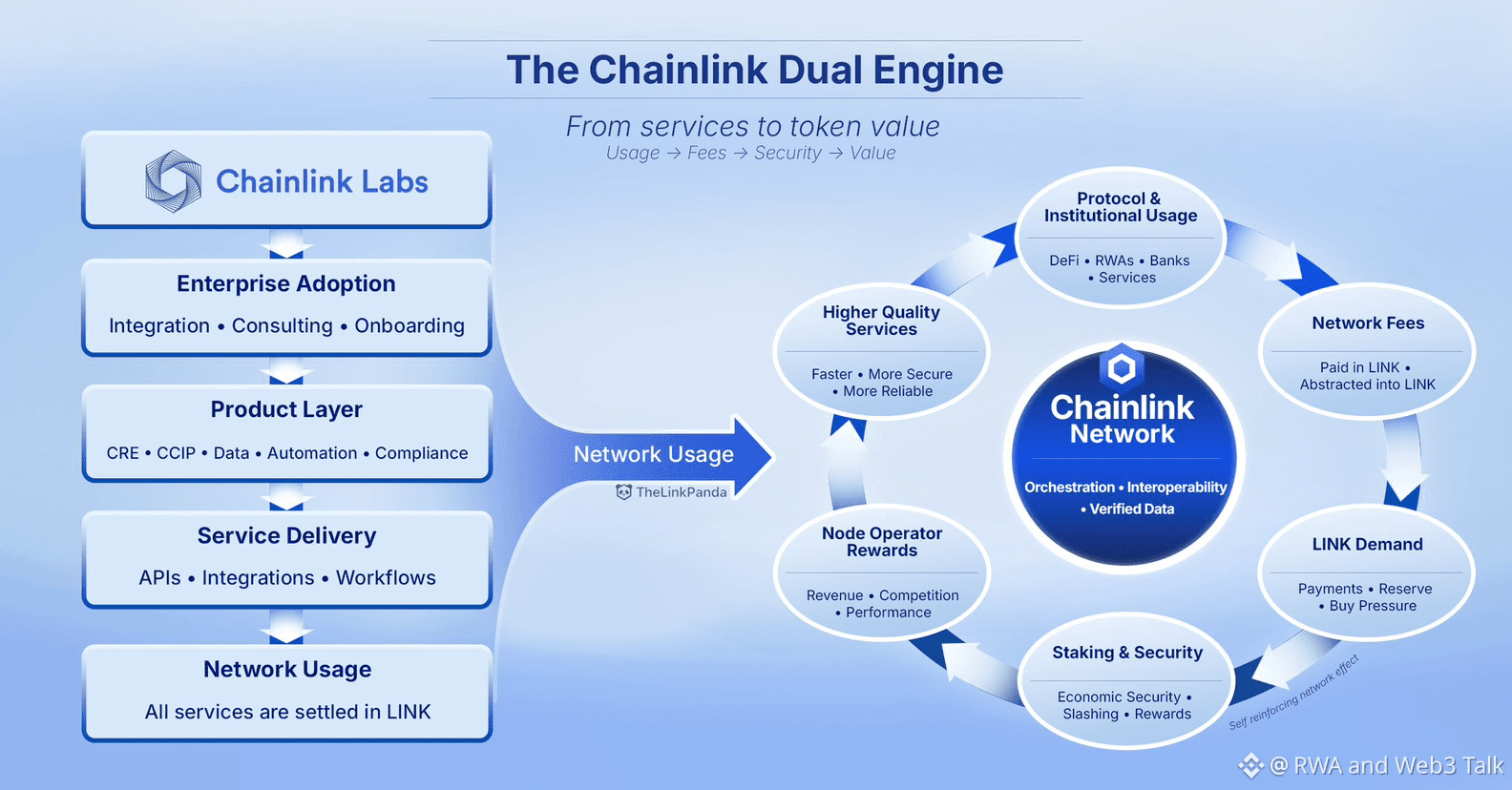
Every time a CRE workflow runs, it creates a "MeterRecord", a receipt for the compute it used. Chainlink also has systems that reconcile those receipts, checking that every one arrived and adds up.
The new code (PR #24021, merged today) lets the team deliberately drop or corrupt receipts in test environments, so they can measure how many problems the checks catch.
Why does that matter? You don't stress-test your receipt checking unless you're getting ready to charge real money based on those receipts.
My read (an inference, not confirmed):
CRE usage metering is being hardened for real fees. Alongside it, another PR now ties gas usage to a specific workflow and organisation, which is exactly the detail you'd need to charge each customer correctly.
It isn't in a release yet and nothing is being metered for fees yet, but the pipes for turning CRE usage into revenue are clearly being built and tested.
CRE usage ➡️ metered ➡️ fees ➡️ Chainlink Reserve ➡️ LINK 🔗
$LINK
{spot}(LINKUSDT)
Chainlink just merged code to test whether its CRE billing system catches lost or broken usage receipts.
Here's what that means in plain English 👇
Every time a CRE workflow runs, it creates a "MeterRecord", a receipt for the compute it used. Chainlink also has systems that reconcile those receipts, checking that every one arrived and adds up.
The new code (PR #24021, merged today) lets the team deliberately drop or corrupt receipts in test environments, so they can measure how many problems the checks catch.
Why does that matter? You don't stress-test your receipt checking unless you're getting ready to charge real money based on those receipts.
My read (an inference, not confirmed):
CRE usage metering is being hardened for real fees. Alongside it, another PR now ties gas usage to a specific workflow and organisation, which is exactly the detail you'd need to charge each customer correctly.
It isn't in a release yet and nothing is being metered for fees yet, but the pipes for turning CRE usage into revenue are clearly being built and tested.
CRE usage ➡️ metered ➡️ fees ➡️ Chainlink Reserve ➡️ LINK 🔗
$LINK
811
NEAR PROTOCOL MARKET ANALYSIS
NEAR Protocol is worth examining because it operates in the competitive blockchain infrastructure sector. Its long-term prospects depend on several factors, including developer activity, network adoption, competition, and demand for the token. None of these factors guarantees a particular price outcome.
From a trading perspective, I would first determine whether the market is trending upward, trending downward, or moving sideways. If NEAR continues making lower highs, I would be cautious about assuming that a small rebound represents a reversal.
For a bullish breakout, watch whether price closes above a well-established resistance zone with convincing volume. A successful retest of that area would provide additional evidence that buyers are gaining control. If price breaks below the latest swing low, the recovery scenario becomes weaker.
My advice is to look for confirmation instead of trying to buy at the lowest possible price. Monitor ecosystem developments, token supply changes, and the wider market trend. A promising technology does not protect a token from volatility or prolonged periods of weak demand. $NEAR
{spot}(NEARUSDT)
NEAR PROTOCOL MARKET ANALYSIS
NEAR Protocol is worth examining because it operates in the competitive blockchain infrastructure sector. Its long-term prospects depend on several factors, including developer activity, network adoption, competition, and demand for the token. None of these factors guarantees a particular price outcome.
From a trading perspective, I would first determine whether the market is trending upward, trending downward, or moving sideways. If NEAR continues making lower highs, I would be cautious about assuming that a small rebound represents a reversal.
For a bullish breakout, watch whether price closes above a well-established resistance zone with convincing volume. A successful retest of that area would provide additional evidence that buyers are gaining control. If price breaks below the latest swing low, the recovery scenario becomes weaker.
My advice is to look for confirmation instead of trying to buy at the lowest possible price. Monitor ecosystem developments, token supply changes, and the wider market trend. A promising technology does not protect a token from volatility or prolonged periods of weak demand. $NEAR
2
1.2k
CHAINLINK BRINGS 24/7 PRICING TO TOKENIZED FINANCE
Traditional stock markets close. Blockchain markets don’t.
That creates a major problem when stocks and other financial assets move onto blockchains.
On October 29th, Chainlink launched Chainlink 24/7, providing continuous pricing data for tokenized stocks, commodities and other real-world assets.
Even on weekends and market holidays.
WHY IS THIS IMPORTANT?
Imagine using tokenized stocks as collateral for a loan.
What happens when the stock exchange closes but the blockchain lending market remains open?
Lenders still need reliable prices to manage risk.
Chainlink addresses this by combining traditional market data with pricing from perpetual futures markets when exchanges are closed.
These weekend prices reflect derivatives trading, not actual trades on closed stock exchanges.
AAVE IS ALREADY INVOLVED
Aave is adopting Chainlink 24/7 for Horizon, its institutional lending platform.
The initial focus is on tokenized U.S. equities.
Chainlink also reports that its earlier 24/5 pricing infrastructure already supports more than $1.6 billion in tokenized stocks across six blockchains.
WHAT DOES THIS MEAN FOR $LINK?
It’s another example of Chainlink becoming part of the infrastructure connecting traditional finance with blockchain markets.
Tokenization needs more than digital ownership.
It needs pricing, liquidity, risk management and reliable financial data.
However, this launch doesn’t establish additional LINK token demand or new lending volumes.
The bigger picture is encouraging.
Financial markets are moving toward 24/7 operation, and Chainlink is helping provide the infrastructure to make that possible.
#Chainlink #LINK #Tokenization #RWA #DeFi #InstitutionalCrypto $LINK
{future}(LINKUSDT)
$BTC
{future}(BTCUSDT)
$SOL
{future}(SOLUSDT)
CHAINLINK BRINGS 24/7 PRICING TO TOKENIZED FINANCE
Traditional stock markets close. Blockchain markets don’t.
That creates a major problem when stocks and other financial assets move onto blockchains.
On October 29th, Chainlink launched Chainlink 24/7, providing continuous pricing data for tokenized stocks, commodities and other real-world assets.
Even on weekends and market holidays.
WHY IS THIS IMPORTANT?
Imagine using tokenized stocks as collateral for a loan.
What happens when the stock exchange closes but the blockchain lending market remains open?
Lenders still need reliable prices to manage risk.
Chainlink addresses this by combining traditional market data with pricing from perpetual futures markets when exchanges are closed.
These weekend prices reflect derivatives trading, not actual trades on closed stock exchanges.
AAVE IS ALREADY INVOLVED
Aave is adopting Chainlink 24/7 for Horizon, its institutional lending platform.
The initial focus is on tokenized U.S. equities.
Chainlink also reports that its earlier 24/5 pricing infrastructure already supports more than $1.6 billion in tokenized stocks across six blockchains.
WHAT DOES THIS MEAN FOR $LINK ?
It’s another example of Chainlink becoming part of the infrastructure connecting traditional finance with blockchain markets.
Tokenization needs more than digital ownership.
It needs pricing, liquidity, risk management and reliable financial data.
However, this launch doesn’t establish additional LINK token demand or new lending volumes.
The bigger picture is encouraging.
Financial markets are moving toward 24/7 operation, and Chainlink is helping provide the infrastructure to make that possible.
#Chainlink #LINK #Tokenization #RWA #DeFi #InstitutionalCrypto $LINK
$BTC
$SOL
143

ලිපිය
LINK is betting on something that all of them may eventually need.LINK - Chainlink
$ETH provides smart-contract infrastructure.
$SOL provides high-speed blockchain execution.
$XRP targets financial settlement.
But $LINK
Reliable connections between blockchains, real-world data, and institutional financial systems.
Chainlink has built relationships and integrations across DeFi and traditional finance.
Its technology helps secure lending markets, power price feeds, and enable cross-chain communication.
But here's the question.
If Chainlink becomes essential infrastructure for tokenized finance, will LINK holders capture enough of that economic value?
NO.1 WHAT IS CHAINLINK?
Chainlink is a decentralized oracle and interoperability platform.
Blockchains cannot independently verify every piece of information outside their networks.
Chainlink provides infrastructure that connects smart contracts with external data and other systems.
Its main products include:
Data Feeds
Data Streams
Cross-Chain Interoperability Protocol (CCIP)
Proof of Reserve
Automation
Chainlink Runtime Environment (CRE)
Chainlink isn't another Layer 1 competing for transactions. It's infrastructure designed to connect financial systems.
NO.2 WHERE DOES THE DEMAND COME FROM?
Chainlink serves blockchain applications, financial institutions, and infrastructure developers.
Demand comes from:
Price data for DeFi protocols
Cross-chain messaging and asset transfers
Automated smart-contract execution
Verification of tokenized-asset reserves
Enterprise blockchain integrations
Some services charge usage-based fees.
Others use subscription or negotiated commercial arrangements.
The key distinction is that customers can pay for Chainlink services without necessarily buying LINK directly on exchanges.
NO.3 THE BIG NARRATIVE
Chainlink combines three powerful themes:
Real-world asset tokenization
Institutional blockchain adoption
Cross-chain interoperability
If banks tokenize bonds, funds, and other financial assets, those assets will need trusted data and ways to move between systems.
Chainlink is positioning itself as infrastructure for that transition.
The opportunity isn't just bringing assets on-chain. It's connecting those assets to the rest of global finance.
NO.4 THE REAL COMPETITIVE ADVANTAGE
Chainlink's biggest advantage is its established integration network.
Its infrastructure is already used across major DeFi applications.
It also has relationships and technical collaborations involving institutions such as Swift and financial-market participants.
But those relationships require careful interpretation.
A successful pilot isn't the same as a production deployment generating recurring revenue.
Chainlink's potential moat comes from reliability, security, integration costs, and the difficulty of replacing critical financial infrastructure.
<WritingBlock id="59372" variant="social_post">### NO.5 THE NUMBERS THAT MATTER
Market Snapshot — October 29, 2026
Price: ~$11.60
Market cap: ~$8.9B
FDV: ~$11.6B
Circulating supply: ~766.85M LINK
Total / maximum supply: 1B LINK
Circulating ratio: ~76.7%
24H trading volume: ~$297M
Decline from ATH: ~78%
Network Economics
Cumulative transaction value enabled: Over $36T
LINK staked: Over 42M
LINK accumulated in Chainlink Reserve: Over 5M
Verified consolidated 30-day revenue: Not publicly established
Direct dividends to ordinary LINK holders: None
Here's the important distinction.
Chainlink has helped facilitate over $36 trillion in transaction value. But that is not $36 trillion in revenue, TVL, or LINK demand.
The valuation depends on how much economic activity Chainlink can monetize.
NO.6 THE TOKENOMICS TRAP
LINK has a fixed maximum supply of 1 billion tokens.
Approximately 76.7% is circulating.
Unlike inflationary Layer 1 networks, LINK doesn't require continuous new token creation for staking rewards.
But roughly 233 million tokens remain outside reported circulating supply.
Fixed maximum supply doesn't mean zero dilution.
Future transfers from noncirculating holdings can still expand the tradable float.
NO.7 THE NEXT BIG UNLOCK
DefiLlama currently lists no confirmed upcoming scheduled LINK unlock.
However, it records an October 9, 2026 release of approximately 18.75M LINK from noncirculating wallets.
That's an important warning.
No scheduled unlock doesn't mean no future supply distributions.
The relevant variables are actual wallet transfers, exchange deposits, and changes in circulating supply.
NO.8 THE VALUE CAPTURE QUESTION
This is where Chainlink's investment thesis has become more interesting.
Chainlink introduced Payment Abstraction and the Chainlink Reserve.
The mechanism works like this:
Customers pay for Chainlink services using supported assets or fiat.
Payment Abstraction converts eligible revenue into LINK.
LINK accumulates in the strategic reserve.
The reserve has already accumulated more than 5 million LINK.
Chainlink Staking also uses LINK to support network security.
This creates a more explicit connection between commercial adoption and token demand.
But there's a catch.
Reserve accumulation isn't the same as permanent token burning or cash dividends.
And the current reserve is small relative to LINK's approximately $8.9B market cap.
The mechanism is real. Its future economic significance still needs to be demonstrated.
NO.9 THE FINAL VERDICT
I'm bullish on Chainlink's strategic position in tokenized finance.
It has established integrations, important infrastructure products, and growing institutional relevance.
More importantly, its economic model now has a mechanism designed to convert service revenue into LINK accumulation.
But the valuation already reflects substantial expectations.
My verdict: Strong infrastructure moat. Credible institutional positioning. Improving token value capture, but limited public revenue transparency.
I'd become more bullish if recurring commercial revenue and LINK Reserve accumulation accelerated enough to outweigh future supply distributions.
I'd become less bullish if institutional adoption grew while measurable LINK purchases remained insignificant.
Chainlink doesn't need every financial institution to hold LINK directly.
It needs financial institutions to pay for services that create sustained LINK demand.
That's the distinction that matters.
Bookmark this before the next RWA rotation.
Would you rather own LINK for financial interoperability, $ONDO for tokenized assets, or $XRP for payment infrastructure?
Which token has the strongest connection between institutional adoption and long-term value?
Drop your pick below.
LINK is betting on something that all of them may eventually need.
LINK - Chainlink
$ETH provides smart-contract infrastructure.
$SOL provides high-speed blockchain execution.
$XRP targets financial settlement.
But $LINK
Reliable connections between blockchains, real-world data, and institutional financial systems.
Chainlink has built relationships and integrations across DeFi and traditional finance.
Its technology helps secure lending markets, power price feeds, and enable cross-chain communication.
But here's the question.
If Chainlink becomes essential infrastructure for tokenized finance, will LINK holders capture enough of that economic value?
NO.1 WHAT IS CHAINLINK?
Chainlink is a decentralized oracle and interoperability platform.
Blockchains cannot independently verify every piece of information outside their networks.
Chainlink provides infrastructure that connects smart contracts with external data and other systems.
Its main products include:
Data Feeds
Data Streams
Cross-Chain Interoperability Protocol (CCIP)
Proof of Reserve
Automation
Chainlink Runtime Environment (CRE)
Chainlink isn't another Layer 1 competing for transactions. It's infrastructure designed to connect financial systems.
NO.2 WHERE DOES THE DEMAND COME FROM?
Chainlink serves blockchain applications, financial institutions, and infrastructure developers.
Demand comes from:
Price data for DeFi protocols
Cross-chain messaging and asset transfers
Automated smart-contract execution
Verification of tokenized-asset reserves
Enterprise blockchain integrations
Some services charge usage-based fees.
Others use subscription or negotiated commercial arrangements.
The key distinction is that customers can pay for Chainlink services without necessarily buying LINK directly on exchanges.
NO.3 THE BIG NARRATIVE
Chainlink combines three powerful themes:
Real-world asset tokenization
Institutional blockchain adoption
Cross-chain interoperability
If banks tokenize bonds, funds, and other financial assets, those assets will need trusted data and ways to move between systems.
Chainlink is positioning itself as infrastructure for that transition.
The opportunity isn't just bringing assets on-chain. It's connecting those assets to the rest of global finance.
NO.4 THE REAL COMPETITIVE ADVANTAGE
Chainlink's biggest advantage is its established integration network.
Its infrastructure is already used across major DeFi applications.
It also has relationships and technical collaborations involving institutions such as Swift and financial-market participants.
But those relationships require careful interpretation.
A successful pilot isn't the same as a production deployment generating recurring revenue.
Chainlink's potential moat comes from reliability, security, integration costs, and the difficulty of replacing critical financial infrastructure.
<WritingBlock id="59372" variant="social_post">### NO.5 THE NUMBERS THAT MATTER
Market Snapshot — October 29, 2026
Price: ~$11.60
Market cap: ~$8.9B
FDV: ~$11.6B
Circulating supply: ~766.85M LINK
Total / maximum supply: 1B LINK
Circulating ratio: ~76.7%
24H trading volume: ~$297M
Decline from ATH: ~78%
Network Economics
Cumulative transaction value enabled: Over $36T
LINK staked: Over 42M
LINK accumulated in Chainlink Reserve: Over 5M
Verified consolidated 30-day revenue: Not publicly established
Direct dividends to ordinary LINK holders: None
Here's the important distinction.
Chainlink has helped facilitate over $36 trillion in transaction value. But that is not $36 trillion in revenue, TVL, or LINK demand.
The valuation depends on how much economic activity Chainlink can monetize.
NO.6 THE TOKENOMICS TRAP
LINK has a fixed maximum supply of 1 billion tokens.
Approximately 76.7% is circulating.
Unlike inflationary Layer 1 networks, LINK doesn't require continuous new token creation for staking rewards.
But roughly 233 million tokens remain outside reported circulating supply.
Fixed maximum supply doesn't mean zero dilution.
Future transfers from noncirculating holdings can still expand the tradable float.
NO.7 THE NEXT BIG UNLOCK
DefiLlama currently lists no confirmed upcoming scheduled LINK unlock.
However, it records an October 9, 2026 release of approximately 18.75M LINK from noncirculating wallets.
That's an important warning.
No scheduled unlock doesn't mean no future supply distributions.
The relevant variables are actual wallet transfers, exchange deposits, and changes in circulating supply.
NO.8 THE VALUE CAPTURE QUESTION
This is where Chainlink's investment thesis has become more interesting.
Chainlink introduced Payment Abstraction and the Chainlink Reserve.
The mechanism works like this:
Customers pay for Chainlink services using supported assets or fiat.
Payment Abstraction converts eligible revenue into LINK.
LINK accumulates in the strategic reserve.
The reserve has already accumulated more than 5 million LINK.
Chainlink Staking also uses LINK to support network security.
This creates a more explicit connection between commercial adoption and token demand.
But there's a catch.
Reserve accumulation isn't the same as permanent token burning or cash dividends.
And the current reserve is small relative to LINK's approximately $8.9B market cap.
The mechanism is real. Its future economic significance still needs to be demonstrated.
NO.9 THE FINAL VERDICT
I'm bullish on Chainlink's strategic position in tokenized finance.
It has established integrations, important infrastructure products, and growing institutional relevance.
More importantly, its economic model now has a mechanism designed to convert service revenue into LINK accumulation.
But the valuation already reflects substantial expectations.
My verdict: Strong infrastructure moat. Credible institutional positioning. Improving token value capture, but limited public revenue transparency.
I'd become more bullish if recurring commercial revenue and LINK Reserve accumulation accelerated enough to outweigh future supply distributions.
I'd become less bullish if institutional adoption grew while measurable LINK purchases remained insignificant.
Chainlink doesn't need every financial institution to hold LINK directly.
It needs financial institutions to pay for services that create sustained LINK demand.
That's the distinction that matters.
Bookmark this before the next RWA rotation.
Would you rather own LINK for financial interoperability, $ONDO for tokenized assets, or $XRP for payment infrastructure?
Which token has the strongest connection between institutional adoption and long-term value?
Drop your pick below.
188
ලිපිය
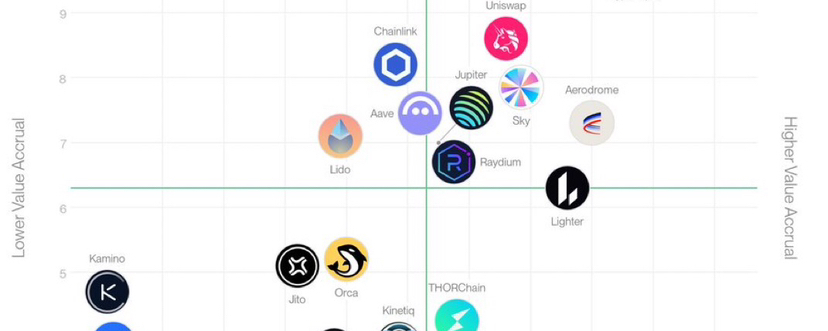
Which DeFi tokens capture their business? I mapped it out here 👇Tokenomics are evolving, asset quality is rising, DeFi is booming, and protocols are doing billions in volume & revenue
How do today's tokens stack up? Take a look
See below for descriptions & methodology
Methodology:
• Business = 40% fees + 60% revenue on a log scale ($1M=1, $1B=10, capped at 10)
• Accrual** (0-10) = % of fees going to buyback/burn/distribution at protocol's stated rate (3 pts) + directness (2) + automation (2) + net dilution (2) + usage-linked demand (1)
*Assumes full activation of every voted, committed or paused buyback program, running at its max approved rate
*rates are estimated for protocols using fixed dollar amounts
• Medians from the group: Business 6.3, Accrual 5.3
Protocol Descriptions:
HYPE: Business 9.8, $993M fees / $792M revenue; Accrual 8.7: 99% of trading fees to Assistance Fund, which auto-buys HYPE, effectively burned
AERO: Business 7.3, $146M fees / $111M revenue; Accrual 8.0: 100% of trading fees from gauge-staked pools go to veAERO (sAERO) voters
LIT: Business 6.3 (business median), $61M fees / $50M revenue; Accrual 7.6: 100% of Lighter trading fees buy back and burn LIT
SKY: Business 8.0, $336M fees / $164M revenue; Accrual 6.8: at reserve target, 100% of distributable surplus to SKY holders (45% buybacks, 45% USDS to stakers, 10% burned), about 1/3 of gross fees
UNI: Business 8.4, $1.59B fees / $128M revenue; Accrual 6.6: 1/6 of swap fees goes to the protocol, all of it burned as UNI
RUNE: Business 4.1, $23M fees / $6M revenue; Accrual 5.8: 1% of swap fees burned. Score comes from automation and low dilution
RAY: Business 6.9, $277M fees / $45M revenue; Accrual 5.6: 12% of every swap fee buys back RAY
JUP: Business 7.0, $204M fees / $65M revenue; Accrual 5.5: 25% of perps fees go to Jupiter, half of that buys JUP = 12.5% of perps fees
PYTH: Business 3.6, $8.8M fees / $5.3M revenue; Accrual 5.5: 60% of Pyth Pro revenue goes to DAO & all of it buys PYTH for the Reserve
AAVE: Business 7.4, $427M fees / $57M revenue; Accrual 5.3 (median): $50M/yr of AAVE buybacks, currently paused since rsETH hack
DRV: Business 3.3, $6.8M fees / $5.5M revenue; Accrual 5.1: 50% of protocol fees buy back DRV weekly
KNTQ: Business 3.8, $24M fees / $4M revenue; Accrual 4.9: Kinetiq takes 10% of kHYPE staking rewards, 70% of that buys & burns KNTQ (7% of rewards in total)
LINK: Business 8.0, $60M fees / $58M revenue (DefiLlama/onchain numbers); Accrual 4.8: ~$1.1M/week (~$57M/yr) of LINK bought by the Chainlink Reserve against an est. $137M-$190M total revenue annually (for Chainlink Labs as a whole). I set the Business score manually to 8.0 here to roughly reflect offchain revenue not captured
LDO: Business 7.1, $567M fees / $35M revenue; Accrual 3.9: up to $10M/yr of LDO buybacks (NEST cap)
ORCA: Business 5.2, $86M fees / $11M revenue; Accrual 3.9: 20% of Orca's 12% protocol fee (2.4% of swap fees) buys ORCA
ENA: Business 3.8, $226M fees / $0.5M revenue; Accrual 3.8: 20% of protocol revenue buys ENA at the top fee-switch tier ($20B USDe). Not currently active
JTO: Business 5.1, $114M fees / $7M revenue; Accrual 3.5: 80% of JTX trading fees buys and burns JTO, but staking + MEV fees (the main business) don't go to JTO
MORPHO: Business 3.9, $243M fees / $0 revenue; Accrual 0.2: 0%, fee switch off
KMNO: Business 4.7, $55M fees / $7M revenue; Accrual 0.1: 0%, no buyback or distribution
Additional Notes:
• The methodology aims to represent 1) business size and 2) accrual, measured not by the absolute dollar figure of buybacks but by the strength and alignment of the buyback program itself. Lighter or Aero putting 100% of revenue to buybacks, for example, is up there
• Fees/revenue numbers in the protocol descriptions are from DefiLlama, so they only capture onchain data. That's mostly adequate, but for protocols w/ major offchain revenue, like Chainlink, it's not the full picture
• There are a lot of simplifications and assumptions here. The biggest is assuming all buyback programs are running at full, even Aave's $50m program, which has been paused for a while and may be reduced to $30m when reactivated - for instance $HYPE
{future}(HYPEUSDT)
$LINK
{future}(LINKUSDT)
$AAVE
{future}(AAVEUSDT)
Which DeFi tokens capture their business? I mapped it out here 👇
Tokenomics are evolving, asset quality is rising, DeFi is booming, and protocols are doing billions in volume & revenue
How do today's tokens stack up? Take a look
See below for descriptions & methodology
Methodology:
• Business = 40% fees + 60% revenue on a log scale ($1M=1, $1B=10, capped at 10)
• Accrual** (0-10) = % of fees going to buyback/burn/distribution at protocol's stated rate (3 pts) + directness (2) + automation (2) + net dilution (2) + usage-linked demand (1)
*Assumes full activation of every voted, committed or paused buyback program, running at its max approved rate
*rates are estimated for protocols using fixed dollar amounts
• Medians from the group: Business 6.3, Accrual 5.3
Protocol Descriptions:
HYPE: Business 9.8, $993M fees / $792M revenue; Accrual 8.7: 99% of trading fees to Assistance Fund, which auto-buys HYPE, effectively burned
AERO: Business 7.3, $146M fees / $111M revenue; Accrual 8.0: 100% of trading fees from gauge-staked pools go to veAERO (sAERO) voters
LIT: Business 6.3 (business median), $61M fees / $50M revenue; Accrual 7.6: 100% of Lighter trading fees buy back and burn LIT
SKY: Business 8.0, $336M fees / $164M revenue; Accrual 6.8: at reserve target, 100% of distributable surplus to SKY holders (45% buybacks, 45% USDS to stakers, 10% burned), about 1/3 of gross fees
UNI: Business 8.4, $1.59B fees / $128M revenue; Accrual 6.6: 1/6 of swap fees goes to the protocol, all of it burned as UNI
RUNE: Business 4.1, $23M fees / $6M revenue; Accrual 5.8: 1% of swap fees burned. Score comes from automation and low dilution
RAY: Business 6.9, $277M fees / $45M revenue; Accrual 5.6: 12% of every swap fee buys back RAY
JUP: Business 7.0, $204M fees / $65M revenue; Accrual 5.5: 25% of perps fees go to Jupiter, half of that buys JUP = 12.5% of perps fees
PYTH: Business 3.6, $8.8M fees / $5.3M revenue; Accrual 5.5: 60% of Pyth Pro revenue goes to DAO & all of it buys PYTH for the Reserve
AAVE: Business 7.4, $427M fees / $57M revenue; Accrual 5.3 (median): $50M/yr of AAVE buybacks, currently paused since rsETH hack
DRV: Business 3.3, $6.8M fees / $5.5M revenue; Accrual 5.1: 50% of protocol fees buy back DRV weekly
KNTQ: Business 3.8, $24M fees / $4M revenue; Accrual 4.9: Kinetiq takes 10% of kHYPE staking rewards, 70% of that buys & burns KNTQ (7% of rewards in total)
LINK: Business 8.0, $60M fees / $58M revenue (DefiLlama/onchain numbers); Accrual 4.8: ~$1.1M/week (~$57M/yr) of LINK bought by the Chainlink Reserve against an est. $137M-$190M total revenue annually (for Chainlink Labs as a whole). I set the Business score manually to 8.0 here to roughly reflect offchain revenue not captured
LDO: Business 7.1, $567M fees / $35M revenue; Accrual 3.9: up to $10M/yr of LDO buybacks (NEST cap)
ORCA: Business 5.2, $86M fees / $11M revenue; Accrual 3.9: 20% of Orca's 12% protocol fee (2.4% of swap fees) buys ORCA
ENA: Business 3.8, $226M fees / $0.5M revenue; Accrual 3.8: 20% of protocol revenue buys ENA at the top fee-switch tier ($20B USDe). Not currently active
JTO: Business 5.1, $114M fees / $7M revenue; Accrual 3.5: 80% of JTX trading fees buys and burns JTO, but staking + MEV fees (the main business) don't go to JTO
MORPHO: Business 3.9, $243M fees / $0 revenue; Accrual 0.2: 0%, fee switch off
KMNO: Business 4.7, $55M fees / $7M revenue; Accrual 0.1: 0%, no buyback or distribution
Additional Notes:
• The methodology aims to represent 1) business size and 2) accrual, measured not by the absolute dollar figure of buybacks but by the strength and alignment of the buyback program itself. Lighter or Aero putting 100% of revenue to buybacks, for example, is up there
• Fees/revenue numbers in the protocol descriptions are from DefiLlama, so they only capture onchain data. That's mostly adequate, but for protocols w/ major offchain revenue, like Chainlink, it's not the full picture
• There are a lot of simplifications and assumptions here. The biggest is assuming all buyback programs are running at full, even Aave's $50m program, which has been paused for a while and may be reduced to $30m when reactivated - for instance $HYPE
$LINK
$AAVE
771
ලිපිය
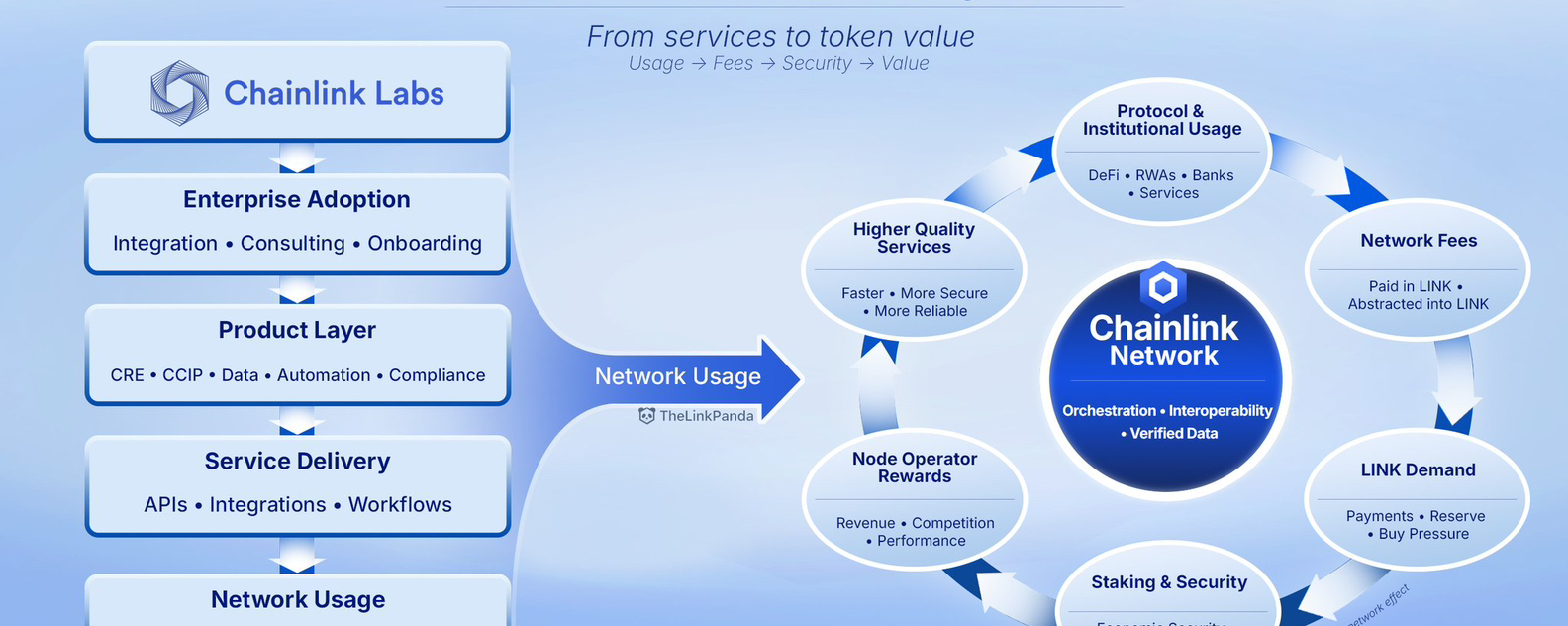
Tiêu chuẩn không được chiến thắng trên thị trường. Chúng được chiến thắng ở hậu phươngMọi tiêu chuẩn tài chính trong lịch sử đều được quyết định bởi các tiện ích thị trường, các trung tâm lưu ký chứng khoán trung ương, và các ngân hàng quan trọng hệ thống toàn cầu. Họ không chạy theo công nghệ. Họ chọn một cái, và phần còn lại của tài chính sẽ theo sau.
Swift đã làm điều đó cho nhắn tin. ISO 20022 đã làm điều đó cho thanh toán. Ngay lúc này, trong tài chính token hóa, tất cả họ đang chọn cùng một cái…
Chainlink. Hãy xem ai đã chọn @chainlink.
@The_DTCC’s Collateral AppChain chạy trên CRE, CCIP và Data Feeds. Sổ cái blockchain của Swift chạy trên CCIP. Euroclear, Phòng thí nghiệm Đồng bộ hóa của Ngân hàng Anh và khung chứng khoán token hóa của Hồng Kông là các đường ray độc lập đều hướng tới cùng một hạ tầng.
CCIP 2.0 ra mắt với Bottomline, Fidelity International, ANZ, UBS, Swift, DTCC và Euroclear, và CCIP đã bảo mật hơn 84 tỷ đô la giá trị liên chuỗi.
Đây là lý do họ tiếp tục chọn nó:
Với Môi trường Chạy Chainlink, các tổ chức xây dựng quy trình làm việc trải dài trên nhiều blockchain và cũng cắm trực tiếp vào các mạng mà tài chính đã chạy: Swift, DTCC, FedNow, Fedwire, FIX, ACH, thậm chí mạng thẻ tín dụng.
Công cụ tuân thủ và quyền riêng tư đầu-cuối được tích hợp sẵn, ngay cả trên các chuỗi công khai. Không ai bị giới hạn ở một chuỗi, bất kể nó thuộc về ai hay thanh khoản sâu đến đâu. Nếu một chuỗi cung cấp bất kỳ tiện ích nào, bạn thêm nó vào danh sách. Xây dựng một lần, chạy mọi nơi.
Chainlink đã trở thành một sản phẩm mạnh mẽ, một bộ đầy đủ hướng tới việc kết nối tài chính toàn cầu và DeFi.
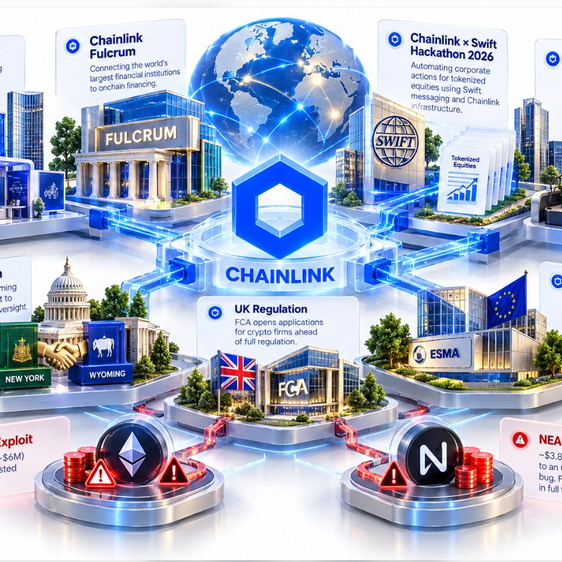
Fulcrum đang hoạt động với DTCC, và CTO của họ, Dan Doney, nói rằng nó giải phóng khoảng 52 nghìn tỷ đô la trong số khoảng 80 nghìn tỷ đô la trong quy trình tài sản thế chấp.
CustodySync vừa ra mắt với @Anchorage, ngân hàng tài sản kỹ thuật số được cấp phép liên bang đầu tiên, cho phép các tổ chức sử dụng tài sản thế chấp được lưu ký trong cho vay DeFi mà không bao giờ rời khỏi lưu ký được quy định.
Aave, giao thức cho vay lớn nhất trong DeFi, đã chạy trên Chainlink, và tôi mong đợi nó và Fulcrum trở thành các mảnh trung tâm của cảnh quan này. CCIP di chuyển nó, CRE điều phối nó, ACE thực thi tuân thủ, và lớp dữ liệu định giá nó.
🔥 Một công ty, một bộ công cụ tổ chức gắn kết, nhắm tới dòng chảy 20 nghìn tỷ đô la mỗi ngày và hơn thế, với mọi bước điều phối đều trả phí bằng $LINK!
Anchorage là đối tác ra mắt, không phải vạch đích. Các ngân hàng sẽ theo sau người đầu tiên bước qua cửa, vì đó là cách tiêu chuẩn được xây dựng.
Chainlink là lớp kết nối bên dưới, giữa và trên tài chính tổ chức, và thị trường thậm chí chưa bắt đầu định giá điều đó…
$LINK là token gas phổ quát ⛽️ $LINK
{future}(LINKUSDT)
Tiêu chuẩn không được chiến thắng trên thị trường. Chúng được chiến thắng ở hậu phương
Mọi tiêu chuẩn tài chính trong lịch sử đều được quyết định bởi các tiện ích thị trường, các trung tâm lưu ký chứng khoán trung ương, và các ngân hàng quan trọng hệ thống toàn cầu. Họ không chạy theo công nghệ. Họ chọn một cái, và phần còn lại của tài chính sẽ theo sau.
Swift đã làm điều đó cho nhắn tin. ISO 20022 đã làm điều đó cho thanh toán. Ngay lúc này, trong tài chính token hóa, tất cả họ đang chọn cùng một cái…
Chainlink. Hãy xem ai đã chọn @chainlink.
@The_DTCC’s Collateral AppChain chạy trên CRE, CCIP và Data Feeds. Sổ cái blockchain của Swift chạy trên CCIP. Euroclear, Phòng thí nghiệm Đồng bộ hóa của Ngân hàng Anh và khung chứng khoán token hóa của Hồng Kông là các đường ray độc lập đều hướng tới cùng một hạ tầng.
CCIP 2.0 ra mắt với Bottomline, Fidelity International, ANZ, UBS, Swift, DTCC và Euroclear, và CCIP đã bảo mật hơn 84 tỷ đô la giá trị liên chuỗi.
Đây là lý do họ tiếp tục chọn nó:
Với Môi trường Chạy Chainlink, các tổ chức xây dựng quy trình làm việc trải dài trên nhiều blockchain và cũng cắm trực tiếp vào các mạng mà tài chính đã chạy: Swift, DTCC, FedNow, Fedwire, FIX, ACH, thậm chí mạng thẻ tín dụng.
Công cụ tuân thủ và quyền riêng tư đầu-cuối được tích hợp sẵn, ngay cả trên các chuỗi công khai. Không ai bị giới hạn ở một chuỗi, bất kể nó thuộc về ai hay thanh khoản sâu đến đâu. Nếu một chuỗi cung cấp bất kỳ tiện ích nào, bạn thêm nó vào danh sách. Xây dựng một lần, chạy mọi nơi.
Chainlink đã trở thành một sản phẩm mạnh mẽ, một bộ đầy đủ hướng tới việc kết nối tài chính toàn cầu và DeFi.
Fulcrum đang hoạt động với DTCC, và CTO của họ, Dan Doney, nói rằng nó giải phóng khoảng 52 nghìn tỷ đô la trong số khoảng 80 nghìn tỷ đô la trong quy trình tài sản thế chấp.
CustodySync vừa ra mắt với @Anchorage, ngân hàng tài sản kỹ thuật số được cấp phép liên bang đầu tiên, cho phép các tổ chức sử dụng tài sản thế chấp được lưu ký trong cho vay DeFi mà không bao giờ rời khỏi lưu ký được quy định.
Aave, giao thức cho vay lớn nhất trong DeFi, đã chạy trên Chainlink, và tôi mong đợi nó và Fulcrum trở thành các mảnh trung tâm của cảnh quan này. CCIP di chuyển nó, CRE điều phối nó, ACE thực thi tuân thủ, và lớp dữ liệu định giá nó.
🔥 Một công ty, một bộ công cụ tổ chức gắn kết, nhắm tới dòng chảy 20 nghìn tỷ đô la mỗi ngày và hơn thế, với mọi bước điều phối đều trả phí bằng $LINK !
Anchorage là đối tác ra mắt, không phải vạch đích. Các ngân hàng sẽ theo sau người đầu tiên bước qua cửa, vì đó là cách tiêu chuẩn được xây dựng.
Chainlink là lớp kết nối bên dưới, giữa và trên tài chính tổ chức, và thị trường thậm chí chưa bắt đầu định giá điều đó…
$LINK là token gas phổ quát ⛽️ $LINK
218
BREAKING🚨🚨🚨 An Abu Dhabi asset manager just plugged $LINK into its tokenized asset compliance stack.
Further Asset Management is embedding Chainlink's Automated Compliance Engine (ACE) into Anubis, its new compliance platform.
Every tokenized asset transaction gets checked against ADGM and FSRA rules before it executes.
KYC, AML, ownership, trading, custody, sanctions.
All of it.
Chainlink says Further is backed by ADQ, one of Abu Dhabi's sovereign wealth funds.
It starts in ADGM, and Further says it plans to take Anubis to more jurisdictions next.
People keep asking when institutions will go onchain at scale.
This is the part nobody talks about: compliance is the real gate.
How many of you are still accumulating $LINK
{spot}(LINKUSDT)
BREAKING🚨🚨🚨 An Abu Dhabi asset manager just plugged $LINK into its tokenized asset compliance stack.
Further Asset Management is embedding Chainlink's Automated Compliance Engine (ACE) into Anubis, its new compliance platform.
Every tokenized asset transaction gets checked against ADGM and FSRA rules before it executes.
KYC, AML, ownership, trading, custody, sanctions.
All of it.
Chainlink says Further is backed by ADQ, one of Abu Dhabi's sovereign wealth funds.
It starts in ADGM, and Further says it plans to take Anubis to more jurisdictions next.
People keep asking when institutions will go onchain at scale.
This is the part nobody talks about: compliance is the real gate.
How many of you are still accumulating $LINK
1
137
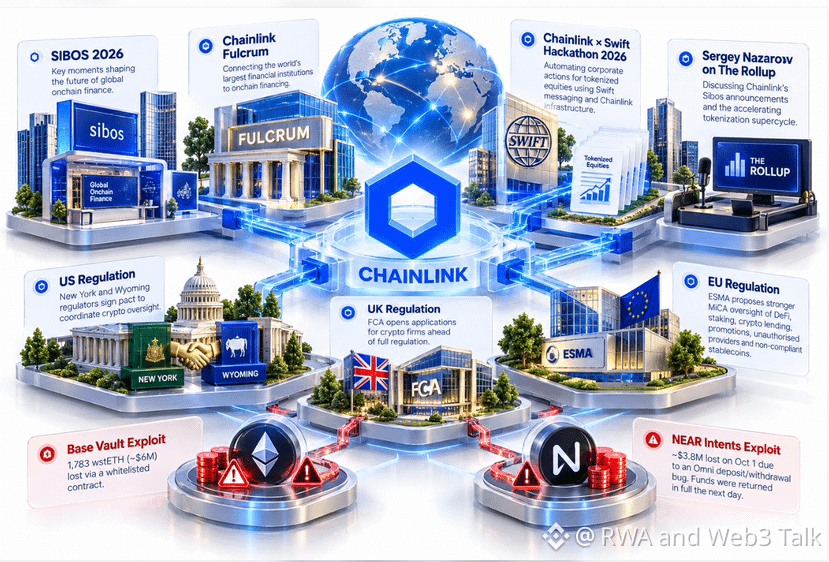
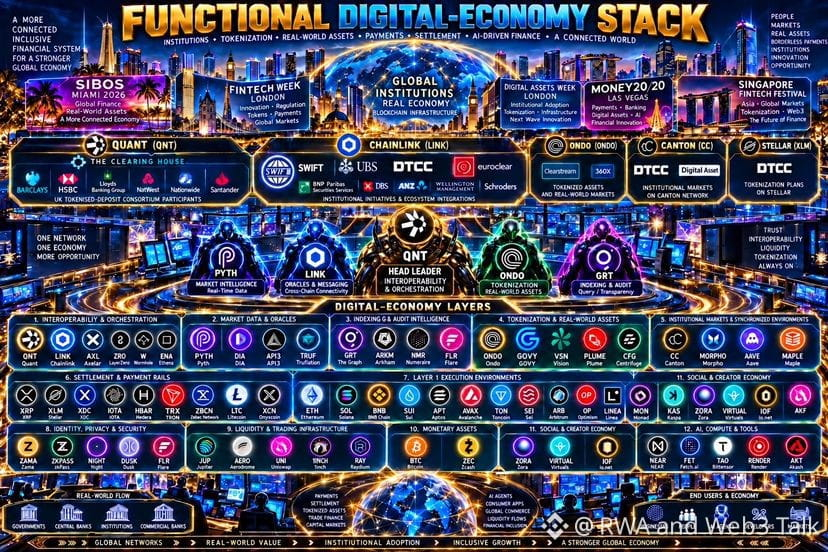
Thành phần của hệ sinh thái Chainlink đang ngày càng khó để bỏ qua
Các ngân hàng, sàn giao dịch, nhà thanh toán bù trừ, nhà quản lý tài sản, chính phủ và mạng lưới thanh toán đang hội tụ quanh một thách thức chung: làm cho hàng nghìn tỷ đô la tài sản tài chính trở nên tương tác được, có thể lập trình và tiếp cận được trên các thị trường
Cơ hội mở rộng xa hơn nhiều so với việc mã hóa token. Mỗi tổ chức mới được kết nối với cơ sở hạ tầng tài chính chung đều tăng cường tiện ích tiềm năng của nó đối với tất cả những người khác, trong khi tích hợp sâu hơn làm tăng chi phí thay thế nó
Những tài sản lớn nhất trong lĩnh vực tài chính thường được xây dựng bằng cách sở hữu cơ sở hạ tầng mà mọi người khác phụ thuộc vào $LINK
{future}(LINKUSDT)
$NEAR
{future}(NEARUSDT)
Thành phần của hệ sinh thái Chainlink đang ngày càng khó để bỏ qua
Các ngân hàng, sàn giao dịch, nhà thanh toán bù trừ, nhà quản lý tài sản, chính phủ và mạng lưới thanh toán đang hội tụ quanh một thách thức chung: làm cho hàng nghìn tỷ đô la tài sản tài chính trở nên tương tác được, có thể lập trình và tiếp cận được trên các thị trường
Cơ hội mở rộng xa hơn nhiều so với việc mã hóa token. Mỗi tổ chức mới được kết nối với cơ sở hạ tầng tài chính chung đều tăng cường tiện ích tiềm năng của nó đối với tất cả những người khác, trong khi tích hợp sâu hơn làm tăng chi phí thay thế nó
Những tài sản lớn nhất trong lĩnh vực tài chính thường được xây dựng bằng cách sở hữu cơ sở hạ tầng mà mọi người khác phụ thuộc vào $LINK
$NEAR

370
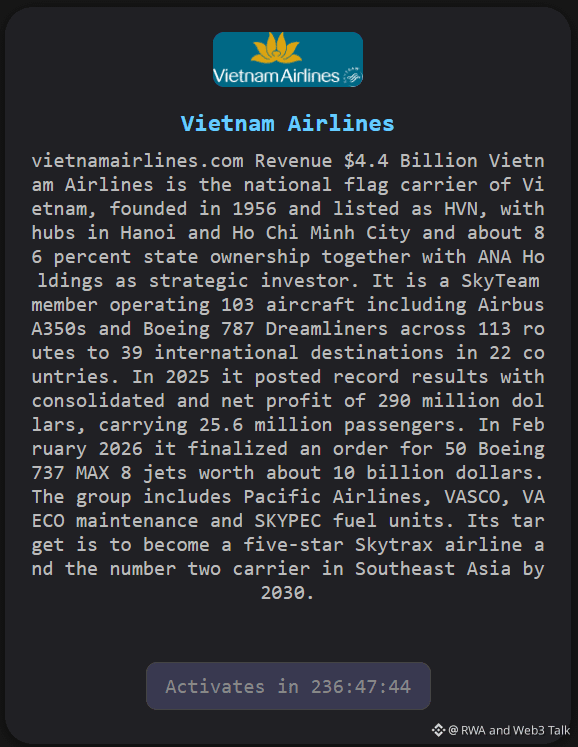
🚨Cyber Alert ‼️
🇻🇳Vietnam - 𝗩𝗶𝗲𝘁𝗻𝗮𝗺 𝗔𝗶𝗿𝗹𝗶𝗻𝗲𝘀
The Gentlemen ransomware group claims to have breached Vietnam Airlines.
Threat actor: The Gentlemen
Sector: Transportation
Data exposure (claimed): Not specified
Data type: Not specified
Observed: Oct 26, 2026
Status: Pending verification
ESIX©: 5.94
Full details and impact assessment on HackRisk.io $LINK
{spot}(LINKUSDT)
🚨Cyber Alert ‼️
🇻🇳Vietnam - 𝗩𝗶𝗲𝘁𝗻𝗮𝗺 𝗔𝗶𝗿𝗹𝗶𝗻𝗲𝘀
The Gentlemen ransomware group claims to have breached Vietnam Airlines.
Threat actor: The Gentlemen
Sector: Transportation
Data exposure (claimed): Not specified
Data type: Not specified
Observed: Oct 26, 2026
Status: Pending verification
ESIX©: 5.94
Full details and impact assessment on HackRisk.io $LINK
1
3
6.2k
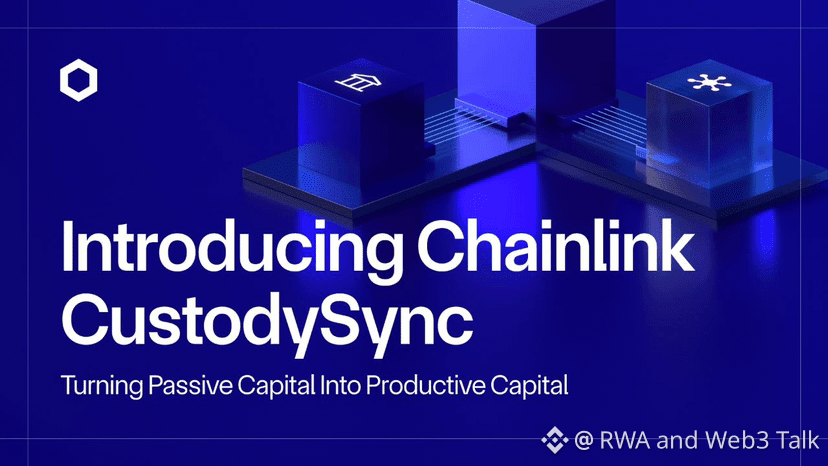
Chainlink launched CustodySync on Monday, a way for institutions to borrow in DeFi lending markets while their assets stay with a regulated custodian.
First partner? Anchorage Digital, the first federally chartered digital asset bank in the US.
The $LINK stack handles the plumbing, using Data Feeds, Data Streams, Proof of Reserve and its Runtime Environment to keep the custodian and the lending market working from the same numbers.
Chainlink puts custodied digital assets at about $700B. Until now, most of that has been sitting around doing nothing.$LINK
{spot}(LINKUSDT)
Chainlink launched CustodySync on Monday, a way for institutions to borrow in DeFi lending markets while their assets stay with a regulated custodian.
First partner? Anchorage Digital, the first federally chartered digital asset bank in the US.
The $LINK stack handles the plumbing, using Data Feeds, Data Streams, Proof of Reserve and its Runtime Environment to keep the custodian and the lending market working from the same numbers.
Chainlink puts custodied digital assets at about $700B. Until now, most of that has been sitting around doing nothing.$LINK
1
103
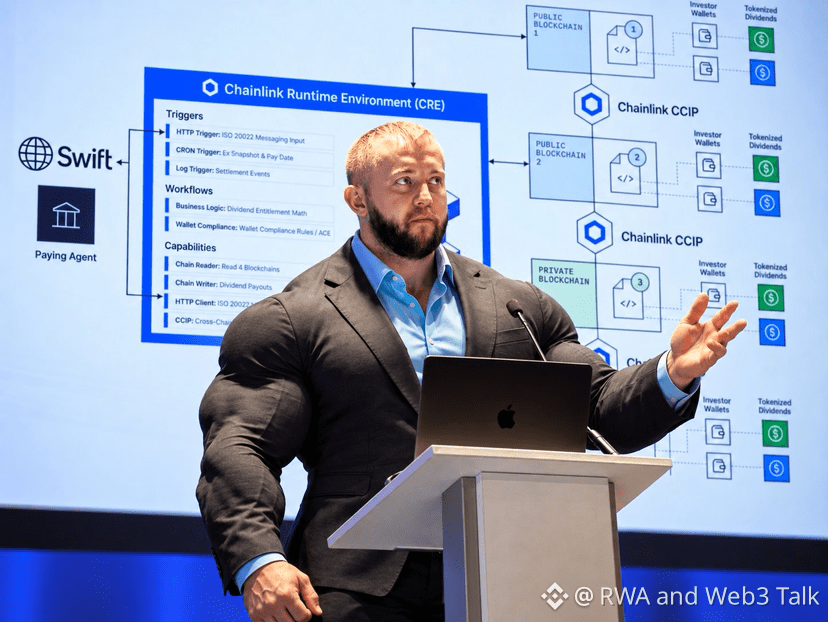
🚨HUGE: DTCC’s Global Head of Digital Assets AGAIN just named dropped @StellarOrg while revealing @chainlink’s role in its MULTICHAIN strategy!
Nadine Chakar explains how $LINK helps connect different blockchain networks, allowing institutions to move assets wherever they need them.
HUGE for $LINK and $XLM!
{future}(LINKUSDT)
🚨HUGE: DTCC’s Global Head of Digital Assets AGAIN just named dropped @StellarOrg while revealing @chainlink’s role in its MULTICHAIN strategy!
Nadine Chakar explains how $LINK helps connect different blockchain networks, allowing institutions to move assets wherever they need them.
HUGE for $LINK and $XLM!
Nadine Chakar explains how $LINK helps connect different blockchain networks, allowing institutions to move assets wherever they need them.
HUGE for $LINK and $XLM!
1
199
The next major customer for Chainlink might not be a bank.
It might be an AI agent.
Chainlink for Agents is already in beta.
AI agents can access verified market data, execute DeFi workflows, move assets across chains and pay for services automatically using USDC through x402.
No API keys. No subscriptions. Pay per call.
$LINK infrastructure is being built for a world where software uses financial services on its own. $LINK
{spot}(LINKUSDT)
The next major customer for Chainlink might not be a bank.
It might be an AI agent.
Chainlink for Agents is already in beta.
AI agents can access verified market data, execute DeFi workflows, move assets across chains and pay for services automatically using USDC through x402.
No API keys. No subscriptions. Pay per call.
$LINK infrastructure is being built for a world where software uses financial services on its own. $LINK
127
"If an AI buys me a $450 shoe, I'm shutting that shit down that day..."
Chainlink co-founder on making sure finance AIs don't misbehave:
"What you really need is a global registry with a public key, that is attached to every AI agent, and a file that says what this agent is allowed to do… the user of the agent will be able to say, 'my agent is allowed to transact up to $100,000 on Mastercard's Agent Pay system'. And if it asks to transact a million dollars, A, tell it no... B, contact me!"
"You need a global registry of what agents are allowed and not allowed to do."
"But the problem with building any global registry is you have to get everyone reading and writing to it. vLEI has an interesting solution to this that they recently released a report on. We work very closely with the LEI, the Legal Entity Identifier. We have systems that integrate with their systems. We have systems that integrate with various AI platforms and digital assets." $LINK
{spot}(LINKUSDT)
"If an AI buys me a $450 shoe, I'm shutting that shit down that day..."
Chainlink co-founder on making sure finance AIs don't misbehave:
"What you really need is a global registry with a public key, that is attached to every AI agent, and a file that says what this agent is allowed to do… the user of the agent will be able to say, 'my agent is allowed to transact up to $100,000 on Mastercard's Agent Pay system'. And if it asks to transact a million dollars, A, tell it no... B, contact me!"
"You need a global registry of what agents are allowed and not allowed to do."
"But the problem with building any global registry is you have to get everyone reading and writing to it. vLEI has an interesting solution to this that they recently released a report on. We work very closely with the LEI, the Legal Entity Identifier. We have systems that integrate with their systems. We have systems that integrate with various AI platforms and digital assets." $LINK
134
I am saying we need to buy back , or not…
I thought we had finally hit the bottom and that reclaiming $80 was a sign of a trend reversal, but I was wrong.
The team isn’t announcing anything, the market won’t let us rally, oil keeps climbing, and $BTC looks ready to take another dive.
Even Arthur Hayes dumped $22.3M worth of altcoins. It’s over. We’re heading into a prolonged bear market.
Where do you even see $HYPE going in this chaos? Do you really think we’re just going to magically jump to $100?
that was one helluva run $HYPE
{future}(HYPEUSDT)
I am saying we need to buy back , or not…
I thought we had finally hit the bottom and that reclaiming $80 was a sign of a trend reversal, but I was wrong.
The team isn’t announcing anything, the market won’t let us rally, oil keeps climbing, and $BTC looks ready to take another dive.
Even Arthur Hayes dumped $22.3M worth of altcoins. It’s over. We’re heading into a prolonged bear market.
Where do you even see $HYPE going in this chaos? Do you really think we’re just going to magically jump to $100?
that was one helluva run $HYPE

199
අර්ධ වශයෙන් සත්යයි
Something else worth watching is how @HyperliquidX trading activity feeds back into the token.
Its Assistance Fund uses trading fees to buy $HYPE, which is then burned.
More fee revenue means more buying. That said, it doesn't guarantee a higher price.
People still need to keep trading there (and sellers can outweigh the buybacks).
Just food for thought, but I do love me some HYPE though :)
so over the past 30 days, hyperliquid has pulled in roughly $74M
with 981.59K $HYPE bought back and permanently burnt forever.
since launch, hyperliquid has generated ~$1.46B in revenue and permanently removed 49.77M $HYPE from circulation, equivalent to 4.98% of the total supply.
that's millions in revenue funding a continuous supply reduction.
$HYPE
{future}(HYPEUSDT)
Something else worth watching is how @HyperliquidX trading activity feeds back into the token.
Its Assistance Fund uses trading fees to buy $HYPE , which is then burned.
More fee revenue means more buying. That said, it doesn't guarantee a higher price.
People still need to keep trading there (and sellers can outweigh the buybacks).
Just food for thought, but I do love me some HYPE though :)
so over the past 30 days, hyperliquid has pulled in roughly $74M
with 981.59K $HYPE bought back and permanently burnt forever.
since launch, hyperliquid has generated ~$1.46B in revenue and permanently removed 49.77M $HYPE from circulation, equivalent to 4.98% of the total supply.
that's millions in revenue funding a continuous supply reduction.
$HYPE
608
තවත් අන්තර්ගතයන් ගවේෂණය කිරීමට ඇතුල් වන්න
Binance චතුරශ්රය හි ගෝලීය ක්රිප්ටෝ පරිශීලකයින් හා එක්වන්න
⚡️ ක්රිප්ටෝ පිළිබඳ නවතම සහ ප්රයෝජනවත් තොරතුරු ලබා ගන්න.
💬 ලොව විශාලතම ක්රිප්ටෝ හුවමාරුව මගින් විශ්වාස කෙරේ.
👍 සත්යායනය කරන ලද නිර්මාණකරුවන්ගෙන් සැබෑ විදසුන් සොයා ගන්න.
විද්යුත් තැපෑල / දුරකථන අංකය
නැගී එන මාතෘකා
BitcoinFiveWeeklyLosses
0 නැරඹීම්
6 සාකච්ඡා කරමින්
Bitcoin News | Bitcoin Slides for Five Straight Weeks as AI Stock Rout Spills Into Crypto
Binance News
·0 කැමත්ත දැක්වීම්
·1k නැරඹීම්
AIChipSlumpNasdaq
5 නැරඹීම්
15 සාකච්ඡා කරමින්
BinanceReopensWithdrawalsForHYPE&APT
116,028 නැරඹීම්
1,082 සාකච්ඡා කරමින්