
ChainBowy
631 පෝස්ටු

ChainBowy
වාර්තා කරන්න
පරිශීලක අවහිර කරන්න
Web3 Strategist || Social Media Specialist || Content Writer
0 හඹා යමින්
66 හඹා යන්නන්
66 කැමති විය
පෝස්ටු
·
--
Michael Saylor says banks are bringing $BTC closer to their clients, and recent figures from Wells Fargo support that development.
Two of the bank’s brokerage businesses reported holding 42 million shares of BlackRock’s spot Bitcoin ETF (IBIT) at the end of September, up from 20 million shares in June.
That is more than double the previous position in just three months, indicating growing institutional access to Bitcoin through traditional financial institutions.
Banks offering Bitcoin investment products could make it easier for more investors to gain exposure to BTC without directly managing wallets or private keys.
Saylor has also been advocating for banks to provide Bitcoin custody and loans backed by BTC holdings.
As traditional finance expands its digital asset services, Bitcoin is gaining more access to established financial channels, potentially bringing a wider range of investors into the market.
#Bitcoin #BitcoinETFs #Macro Insights#
57
·
--
$LINEA is stepping into a new phase to bring more users, developers and institutions into its ecosystem through useful applications and better financial opportunities.
The Linea Consortium will guide the public network, shared security and native applications, while working with Consensys to attract institutional partners.
One major focus is expanding Linea utility by connecting it to products and services, starting with access to native yield and gradually extending across the ecosystem.
Linea's Yield Boost initiative also aims to make bridged ETH more productive by generating staking rewards that can support DeFi liquidity.
Security remains central to this expansion. Linea plans to reduce trust requirements, improve independent withdrawal options for users and strengthen its connection with Ethereum through continuous security monitoring and testing.
More adoption will depend on the products people actually use and the value they bring to the network. Linea is Ethereum Extended.
#LINEA #Ethereum #Altcoin Season#
·
--
A $GNO Safe wallet has reportedly lost approximately $6.45 million in a suspected security breach.
On-chain investigators reported that the stolen funds included about $4.3 million in USDC and $1.7 million in syrupUSDC.
Initial findings suggest the attacker may have exploited permissions linked to the wallet's Zodiac Roles module, which allows approved addresses to execute certain transactions.
After draining the wallet, the attacker began converting the stolen funds into other cryptocurrencies, including Monero (XMR), through platforms such as Wagyu and Hyperliquid.
#Gnosis #Macro Insights# #Altcoin Season#
·
--
Zelle is expanding its stablecoin plans through $SOL to make international payments faster and more efficient.
At Solana Breakpoint on November 16, Zelle demonstrated a $1.25 million transfer using its dollar-backed stablecoin, ZelleUSD (ZLUSD).
The transaction kept the amount private while still allowing it to be verified on the network. The demonstration used Solana's Token-2022 technology on a test network.
This development could create new opportunities for faster and more private international payments.
#Solana #Macro Insights# #Altcoin Season#
69
·
--
Ethereum Foundation-linked $ETH sales are continuing as the market faces another wave of selling pressure.
Wallet 0x5CBC has reportedly sold 5,000 ETH worth approximately $9.92 million over five days, according to Lookonchain.
The latest reported transaction involved another 1,000 ETH worth around $1.9 million on November 14.
Cumulative sales from this wallet have reached 7,785 ETH since October 26, adding another development for ETH holders to monitor.
Regardless, these wallet sales alone do not explain the market decline or confirm the Foundation's reason for selling.
#Ethereum #Macro Insights# #Altcoin Season#
39
·
--
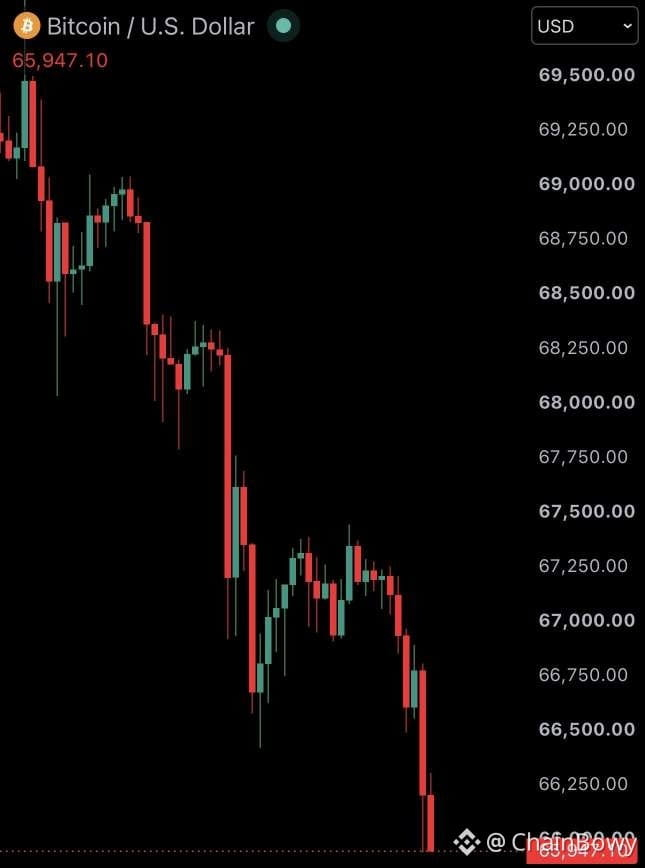
$BTC has fallen below $66,000 as selling pressure continues across the crypto market.
Around $205 million in leveraged positions were reportedly liquidated within 60 minutes, adding more pressure to prices.
Many traders who borrowed funds to open larger positions were forced out as the market dropped.
Bitcoin's next move will depend on whether buyers step in at current levels or selling continues.
Recent ETF outflows have also added pressure, while traders are watching closely for signs of a market recovery.
#Bitcoin Price Prediction: What is Bitcoins next move?# #BTC Price Analysis#
47
·
--
A major institutional investment has brought fresh attention to Hyperliquid $HYPE after the Healthcare of Ontario Pension Plan Trust Fund reportedly disclosed a $35 million position in the cryptocurrency.
The pension fund, which has a reported investment portfolio worth around $62 billion, is gaining attention because of its exposure to a crypto project known for its decentralized perpetual futures exchange.
One important detail is that institutional filings can provide a useful view of how large investment managers are approaching emerging markets.
Though, a reported $35 million position should not automatically be interpreted as a direct purchase of HYPE tokens or proof of a long-term commitment. The exact security listed in the filing matters.
#Hyperliquid #Macro Insights# #Altcoin Season#
68
·
--
$MANTRA Chain has paused all OM token unbonding for seven days after hackers reportedly withdrew users’ staked tokens without their permission.
The team introduced the temporary suspension to prevent further unauthorized withdrawals while investigating the security breach involving Web3Auth and Keplr wallets.
The issue mainly affected some Keplr wallets created through Google and Apple sign-ins. Users with recovery phrases or hardware wallets were not affected by the reported issue.
MANTRA has also advised affected users with tokens already being unstaked to redelegate them before the unbonding period ends.
#MantraChain #Altcoin Season#
27
·
--
A Bitcoin address that had remained dormant for 16.2 years has suddenly become active, moving 50 $BTC now worth approximately $3.44 million.
Back in 2010, those coins were worth only around $3. The transaction was recorded on November 13, 2026, according to Whale Alert.
It is another example of how early Bitcoin holders who kept their coins through multiple market cycles are now sitting on enormous gains.
The transaction sent the 50 BTC to two separate addresses, with approximately 48.99 BTC going to one address and 1 BTC to another.
Still, there is no confirmed evidence that the holder intends to sell. Such movements can be related to wallet upgrades, security changes, custody transfers or preparation for a sale.
#Bitcoin Price Prediction: What is Bitcoins next move?# #BTC, is the correction enough?#
56
·
--
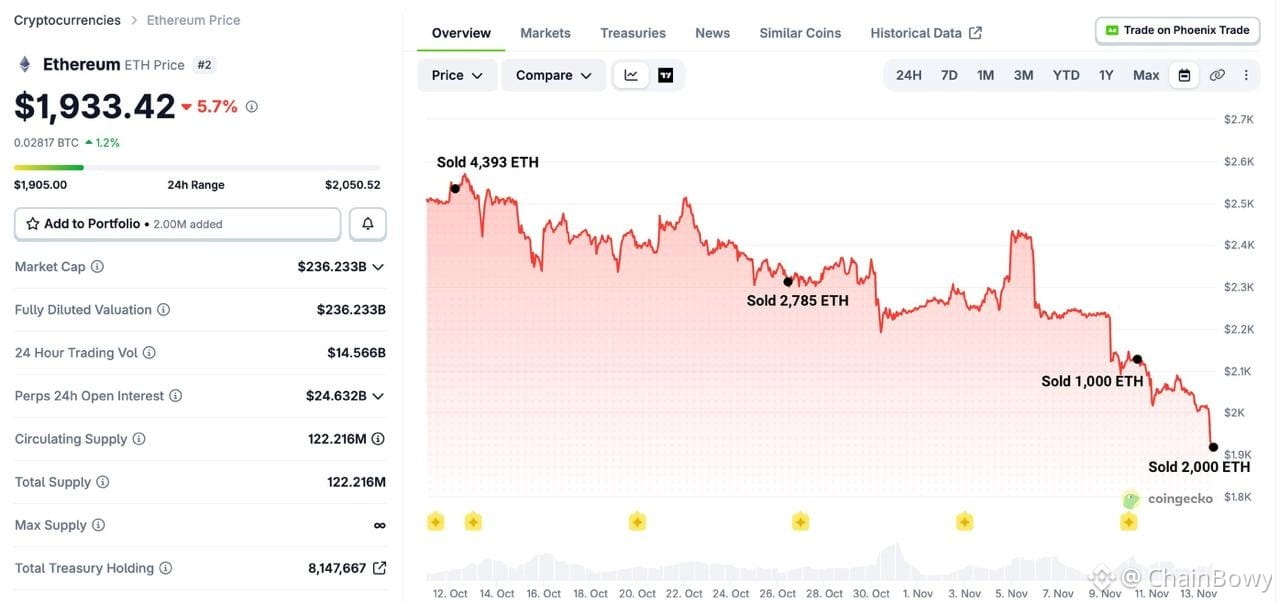
Ethereum Foundation-linked wallets are drawing attention again after an address identified as 0x5CBC sold another 2,000 $ETH worth approximately $3.87 million.
According to on-chain reports, the transaction was executed through CoW Protocol, converting the ETH into USDS.
Since October 26, the wallet has reportedly sold 6,785 ETH worth around $14.45 million, while still holding approximately 21,247 ETH.
These transactions are adding to concerns about selling pressure on Ethereum, especially as ETH has fallen below $2,000.
The Ethereum Foundation has an established treasury policy that allows periodic ETH sales to fund operations and maintain financial reserves.
#Ethereum #Macro Insights# #Altcoin Season#
56
·
--
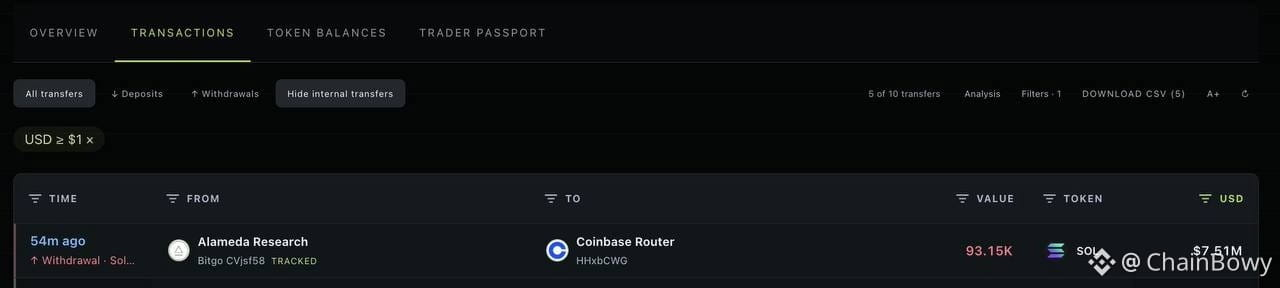
FTX and Alameda Research-linked wallets have moved another significant amount of Solana into the market, with 93,150 $SOL worth approximately $7.51 million transferred to Coinbase, according to Onchain Lens.
The transaction follows another major move yesterday, when FTX/Alameda-linked addresses unstaked 204,044 SOL valued at around $16.89 million.
Coinbase deposits often attract attention because they can precede selling activity, although the transfer alone does not confirm that a sale has taken place.
FTX's remaining crypto assets continue to be monitored as part of its bankruptcy estate proceedings, making large wallet movements important to watch.
Any further transfers or confirmed sales could add short-term selling pressure on SOL, so tracking where the remaining unstaked tokens move will be important.
#Solana #Macro Insights# #Altcoin Season#
70
·
--
DTCC, one of the major institutions supporting the U.S. financial market, plans to connect its Tokenization Service to the $SOL blockchain in the second half of 2027.
This will allow traditional financial assets such as stocks, ETFs and U.S. Treasury securities to be represented as digital tokens on Solana.
These tokenized assets will maintain the same ownership rights, investor protections and regulatory standards as traditional securities.
Considering the huge volume of securities DTCC handles, this development could help bring more traditional financial activities onto blockchain and make asset transfers easier and faster.
#Solana #Macro Insights# #Altcoin Season#
58
·
--
$XRP is seeing steady growth in larger holder wallets, even as its market price faces pressure.
According to on-chain analytics firm Santiment, wallets holding at least 10,000 XRP reached approximately 343,500 as of November 11, 2026.
That represents an increase of 16,815 wallets or 5.15%, over nine months. Interestingly, this growth continued while XRP experienced a roughly 30% price decline over seven weeks.
Growing wallet numbers suggest that more addresses are maintaining significant XRP balances during the market downturn.
This could point to continued accumulation and long-term interest from larger holders.
#Ripple #XRP #Altcoin Season# #Macro Insights#
73
·
--
Pavel Durov, Telegram’s founder has pointed out that $GRAM gained 12% while most cryptocurrencies were losing value.
In a post on his Telegram channel, Durov linked the rise to Gram’s connection with Telegram’s social ecosystem, where users can access crypto services, wallets and blockchain-based features.
He believes this connection gives the coin a practical advantage because it brings cryptocurrency closer to an existing community of millions of users.
Durov also described Gram as undervalued, saying he believes it has the potential to rank among the top three cryptocurrencies on CoinMarketCap in the future.
If you are watching this out then pay attention to how much real usage, adoption and demand Gram can generate through it's connection with Telegram.
#Telegram #Toncoin #Macro Insights# #Altcoin Season#
60
·
--
Tom Lee's BitMine has reported a $6.3 billion annual net loss following Ethereum's price decline.
$ETH dropped around 44% during the company's financial year, reducing the market value of its large holdings.
Most of the loss came from unrealized losses, meaning BitMine did not necessarily sell its ETH at a loss.
Despite the setback, BitMine continues to accumulate Ethereum, with over 6 million ETH in its treasury. The company is also earning revenue through ETH staking and validation.
Its strategy remains focused on long-term Ethereum exposure, but its financial performance will continue to depend heavily on ETH's market price.
#Ethereum #Macro Insights# #Altcoin Season#
76
·
--
BlackRock is making it easier for large Bitcoin holders to move their $BTC into its iShares Bitcoin Trust (IBIT).
The minimum conversion amount has dropped from roughly $30 million to around $1 million to $2 million, opening the door to more wealthy investors and institutions.
Through a process called in-kind conversion, eligible holders can exchange their Bitcoin directly for IBIT shares without first selling their BTC for cash.
Security concerns are becoming a major reason behind the move, as some Bitcoin whales prefer institutional custody amid rising reports of hacks, wallet compromises and physical attacks targeting crypto holders.
BlackRock has reportedly processed billions of dollars in these conversions, with demand reaching record levels.
#BitcoinETFs #ETFsOnFire #ETFs
42
·
--
The New York Stock Exchange (NYSE) has selected Avalanche $AVAX to power the clearing and settlement process of its upcoming tokenized securities platform.
Announced on November 9, 2026, the partnership will use Avalanche's blockchain to record and settle transactions.
The platform aims to support stock trading 24 hours a day, seven days a week, subject to regulatory approval. This is another step towards bringing traditional financial markets onto blockchain technology.
The platform will support tokenized stocks issued across multiple blockchains, while Avalanche will handle the transaction settlement system.
NYSE also plans to combine its existing trading technology with blockchain infrastructure to make stock transactions faster and more accessible.
#Avalanche #Macro Insights# #Altcoin Season#
47
·
--
BlackRock has moved another significant amount of cryptocurrency to Coinbase, transferring 5,320 $BTC worth approximately $396.49 million and 40,720 $ETH valued at $86.17 million.
According to on-chain tracker Onchain Lens, the transactions bring the combined value of the assets moved to approximately $482.66 million.
The movement, reported on November 9, 2026, puts another major institutional crypto transaction under market watch as investors monitor how large financial institutions manage their digital asset holdings.
One important detail is that transfers to Coinbase do not automatically mean BlackRock is preparing to sell its holdings.
Coinbase Prime provides institutional custody, trading and ETF-related settlement services, meaning such movements can also be connected to fund operations, portfolio adjustments or investor redemptions.
A similar BlackRock-linked movement involving approximately $702 million in BTC and ETH was reported on November 3.
The actual purpose of the latest transfer remains unconfirmed, making subsequent wallet movements and ETF flow data important to watch.
#Bitcoin Price Prediction: What is Bitcoins next move?# #ETFsOnFire #BitcoinETFs #EthereumETFs
66
·
--
Core Scientific CORZ Is preparing to exit $BTC mining completely by the fourth quarter of 2026, a major shift in the company's business direction.
This would bring an end to its mining operations, which have been part of its business for years, as the company focuses more heavily on high-performance computing (HPC) and AI infrastructure.
Core Scientific has already been moving in this direction. Its Bitcoin mining contribution fell from 78% of total revenue in the first nine months of 2025 to just 12% during the same period in 2026.
The company is now prioritizing data-center infrastructure, with major agreements involving CoreWeave and AMD to support AI and high-performance computing.
#Macro Insights# #BTC, is the correction enough?#
61
·
--
Polygon Labs is considering a hard fork to recover approximately 70.49 million $POL worth $6.5 million stolen from Polymarket and Binance.
A Polygon team member has proposed removing the stolen tokens from five hacker-controlled wallets and returning them to verified recovery wallets belonging to the affected platforms.
Validators have already blocked transactions from these wallets, preventing the funds from moving.
The proposal will be discussed on November 5 and could take about two weeks to develop and test if approved.
#polygon #MATIC #Altcoin Season# #Macro Insights#
52
තවත් අන්තර්ගතයන් ගවේෂණය කිරීමට ඇතුල් වන්න
Binance චතුරශ්රය හි ගෝලීය ක්රිප්ටෝ පරිශීලකයින් හා එක්වන්න
⚡️ ක්රිප්ටෝ පිළිබඳ නවතම සහ ප්රයෝජනවත් තොරතුරු ලබා ගන්න.
💬 ලොව විශාලතම ක්රිප්ටෝ හුවමාරුව මගින් විශ්වාස කෙරේ.
👍 සත්යායනය කරන ලද නිර්මාණකරුවන්ගෙන් සැබෑ විදසුන් සොයා ගන්න.
විද්යුත් තැපෑල / දුරකථන අංකය
නැගී එන මාතෘකා
NvidiaBeatsEstimatesWith$130BQ4Outlook
1,651 නැරඹීම්
39 සාකච්ඡා කරමින්
Nvidia Beats With $115.8 Billion in Revenue, Guides to $130 Billion and Adds $150 Billion Buyback
Binance News
·24 කැමත්ත දැක්වීම්
·27.1k නැරඹීම්
AnthropicIPOPriceCouldExceed$80
3,538 නැරඹීම්
49 සාකච්ඡා කරමින්
CanNvidia’sDataCenterGrowthContinue?
7,477 නැරඹීම්
167 සාකච්ඡා කරමින්