
CryptoCeek 1
684 පෝස්ටු
CryptoCeek 1
වාර්තා කරන්න
පරිශීලක අවහිර කරන්න
🦾 Builder | Whale-Watcher | Web3 Operator💰 Angel Backer • Token Alpha Hunter📊 Crypto Ops & Strategy
0 හඹා යමින්
11 හඹා යන්නන්
6 කැමති විය
පෝස්ටු
·
--
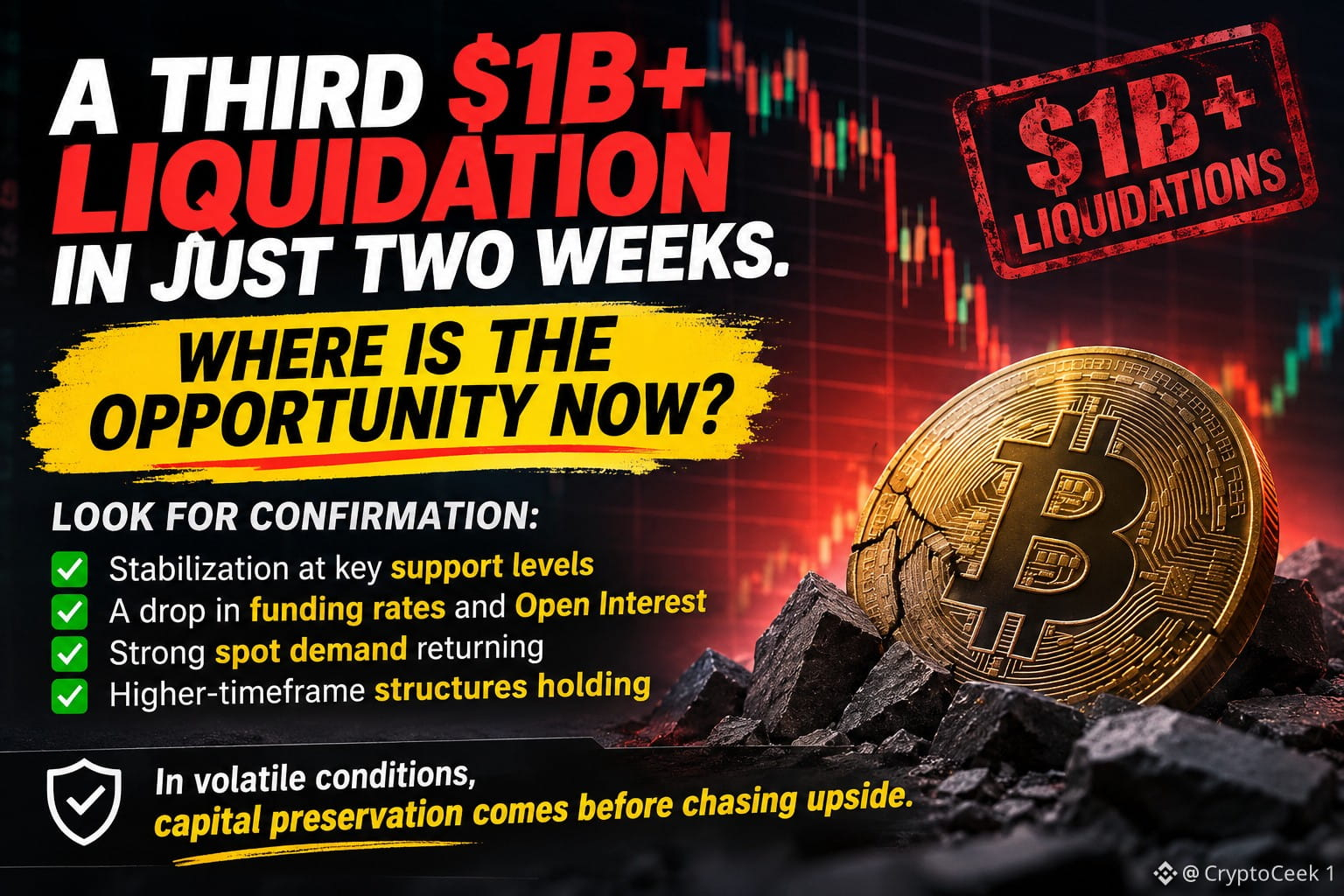
$BTC A third $1B+ liquidation in just two weeks. Where is the opportunity now? Massive liquidations usually mark periods of extreme fear—not automatic bottoms. But they also reset leverage, flush weak hands, and can create better risk-reward setups for patient traders. The opportunity is not in catching a falling knife. It is in watching for: Stabilization at key support levels A drop in funding rates and Open Interest Strong spot demand returning Higher-timeframe structures holding Let the market show confirmation first. In volatile conditions, capital preservation comes before chasing upside. Not financial advice. Do your own research. #Bitcoin #Liquidations #Trading #CryptoNews #Altcoins
$BTC A third $1B+ liquidation in just two weeks. Where is the opportunity now? Massive liquidations usually mark periods of extreme fear—not automatic bottoms. But they also reset leverage, flush weak hands, and can create better risk-reward setups for patient traders. The opportunity is not in catching a falling knife. It is in watching for: Stabilization at key support levels A drop in funding rates and Open Interest Strong spot demand returning Higher-timeframe structures holding Let the market show confirmation first. In volatile conditions, capital preservation comes before chasing upside. Not financial advice. Do your own research. #Bitcoin #Liquidations #Trading #CryptoNews #Altcoins
2
·
--
$BTC Nakamoto’s Q3 shows the risk of treating Bitcoin treasury strategy like a trading desk. The company reported negative operating revenue after a $5.8M loss on Bitcoin options, despite holding 4,283 BTC worth $357.9M. Its shares fell 6.5% premarket and are down about 62% year to date. A $110.4M gain from revaluing digital assets pushed net income to $85.5M—but that gain does not reflect core operating performance. Bitcoin treasuries can amplify upside, but they can also expose companies to volatility, derivatives risk, and investor scrutiny. #Nakamoto #Bitcoin #BTC #CryptoStocks #CryptoNews
$BTC Nakamoto’s Q3 shows the risk of treating Bitcoin treasury strategy like a trading desk. The company reported negative operating revenue after a $5.8M loss on Bitcoin options, despite holding 4,283 BTC worth $357.9M. Its shares fell 6.5% premarket and are down about 62% year to date. A $110.4M gain from revaluing digital assets pushed net income to $85.5M—but that gain does not reflect core operating performance. Bitcoin treasuries can amplify upside, but they can also expose companies to volatility, derivatives risk, and investor scrutiny. #Nakamoto #Bitcoin #BTC #CryptoStocks #CryptoNews

33
·
--
$BTC Jane Street just reshuffled its Bitcoin ETF portfolio in a major way. The trading giant increased its Fidelity Bitcoin ETF holdings nearly 8x to 7.01M shares, while reducing BlackRock’s IBIT position by 19%. It also added nearly $249M in ARK 21Shares Bitcoin ETF shares and more than doubled its Ethereum ETF exposure. JPMorgan also increased its IBIT holdings by 9.6%, while sharply reducing its direct Ethereum ETF position. Institutions are not leaving crypto—they are rotating. #Bitcoin #Ethereum #ETF #JaneStreet #JPMorgan
$BTC Jane Street just reshuffled its Bitcoin ETF portfolio in a major way. The trading giant increased its Fidelity Bitcoin ETF holdings nearly 8x to 7.01M shares, while reducing BlackRock’s IBIT position by 19%. It also added nearly $249M in ARK 21Shares Bitcoin ETF shares and more than doubled its Ethereum ETF exposure. JPMorgan also increased its IBIT holdings by 9.6%, while sharply reducing its direct Ethereum ETF position. Institutions are not leaving crypto—they are rotating. #Bitcoin #Ethereum #ETF #JaneStreet #JPMorgan
32
·
--
$ETH Ethereum whales are selling into weakness—and the liquidations are mounting. An Ethereum Foundation-linked wallet sold 2,000 ETH worth $3.87M, while another whale offloaded 16,700 ETH worth $32.3M in a single transaction. Meanwhile, four whales were reportedly liquidated, wiping out positions worth $143.89M. Bitcoin fell below $70K, Ethereum dropped 12.5%, XRP fell 14.2%, and Solana lost 10% over the past week. The selling pressure is not limited to retail—large wallets are reducing exposure too. When whales panic, volatility usually follows. #Ethereum #ETH #Bitcoin #Whales #CryptoNews
$ETH Ethereum whales are selling into weakness—and the liquidations are mounting. An Ethereum Foundation-linked wallet sold 2,000 ETH worth $3.87M, while another whale offloaded 16,700 ETH worth $32.3M in a single transaction. Meanwhile, four whales were reportedly liquidated, wiping out positions worth $143.89M. Bitcoin fell below $70K, Ethereum dropped 12.5%, XRP fell 14.2%, and Solana lost 10% over the past week. The selling pressure is not limited to retail—large wallets are reducing exposure too. When whales panic, volatility usually follows. #Ethereum #ETH #Bitcoin #Whales #CryptoNews
44
·
--
$ONDO Ondo Stocks is bringing interest-free USDC loans to tokenized U.S. stocks. Through a partnership with Spout Finance, users will be able to borrow USDC against tokenized stocks and ETFs on Solana—without paying interest. Instead of charging borrowers, Spout generates lender returns through a covered-call strategy: tokenized assets are converted into underlying shares, and option premiums fund the loans. Borrowers can access up to 50% of collateral value, but give up upside above the strike price if options are exercised. Tokenized stocks are no longer just about ownership—they are becoming usable collateral. #Ondo #TokenizedStocks #USDC #Solana #RWA
$ONDO Ondo Stocks is bringing interest-free USDC loans to tokenized U.S. stocks. Through a partnership with Spout Finance, users will be able to borrow USDC against tokenized stocks and ETFs on Solana—without paying interest. Instead of charging borrowers, Spout generates lender returns through a covered-call strategy: tokenized assets are converted into underlying shares, and option premiums fund the loans. Borrowers can access up to 50% of collateral value, but give up upside above the strike price if options are exercised. Tokenized stocks are no longer just about ownership—they are becoming usable collateral. #Ondo #TokenizedStocks #USDC #Solana #RWA
52
·
--
$ZRO Flare × LayerZero Flare is joining LayerZero’s security network—and that could matter for cross-chain finance. Flare will become a Decentralized Verifier Network (DVN) for LayerZero’s OFT standard, adding independent network-level verification to cross-chain transfers. The OFT standard is already used by major issuers including Tether, PayPal, Paxos, and Ondo, and has processed over $300B in transfers. Unlike single-provider verification, Flare’s system relies on 100 independent data providers, with messages confirmed only after a stake-weighted majority agrees. The DVN is expected to go live in early December, initially supporting Flare and Ethereum. This is another step toward making cross-chain transfers more secure, decentralized, and institutional-ready. #Flare #LayerZero #CrossChain #Web3 #DeFi
$ZRO Flare × LayerZero Flare is joining LayerZero’s security network—and that could matter for cross-chain finance. Flare will become a Decentralized Verifier Network (DVN) for LayerZero’s OFT standard, adding independent network-level verification to cross-chain transfers. The OFT standard is already used by major issuers including Tether, PayPal, Paxos, and Ondo, and has processed over $300B in transfers. Unlike single-provider verification, Flare’s system relies on 100 independent data providers, with messages confirmed only after a stake-weighted majority agrees. The DVN is expected to go live in early December, initially supporting Flare and Ethereum. This is another step toward making cross-chain transfers more secure, decentralized, and institutional-ready. #Flare #LayerZero #CrossChain #Web3 #DeFi

65
·
--
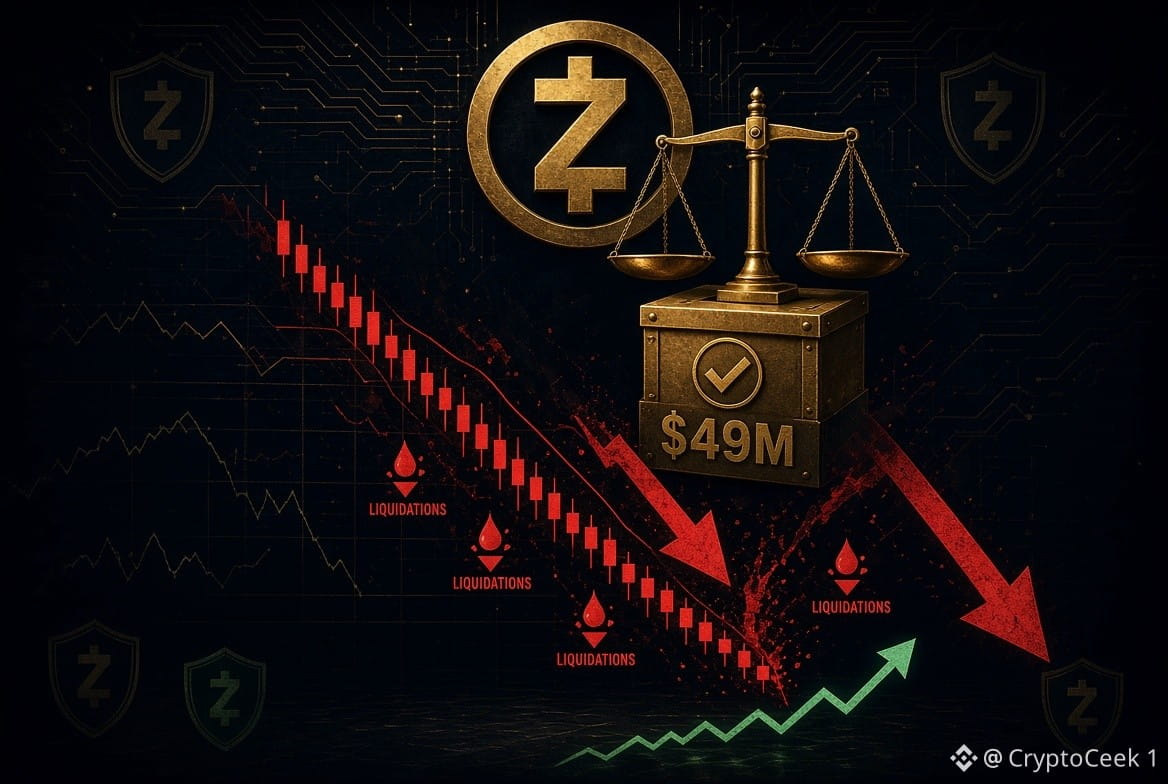
Zcash sinks 25% as a $49M vote looms. Flush before a bounce—or more pain? $ZEC has dropped sharply, with a $49M vote now hanging over the market and adding uncertainty to the near-term outlook. After such a fast decline, a relief bounce is possible—but momentum remains fragile. Traders will be watching whether buyers can defend key support or whether the sell-off extends further. This is a reminder that narrative strength does not remove market risk. Not financial advice. Do your own research. #ZEC #Zcash #Altcoins #Trading #CryptoNews
Zcash sinks 25% as a $49M vote looms. Flush before a bounce—or more pain? $ZEC has dropped sharply, with a $49M vote now hanging over the market and adding uncertainty to the near-term outlook. After such a fast decline, a relief bounce is possible—but momentum remains fragile. Traders will be watching whether buyers can defend key support or whether the sell-off extends further. This is a reminder that narrative strength does not remove market risk. Not financial advice. Do your own research. #ZEC #Zcash #Altcoins #Trading #CryptoNews
2
·
--
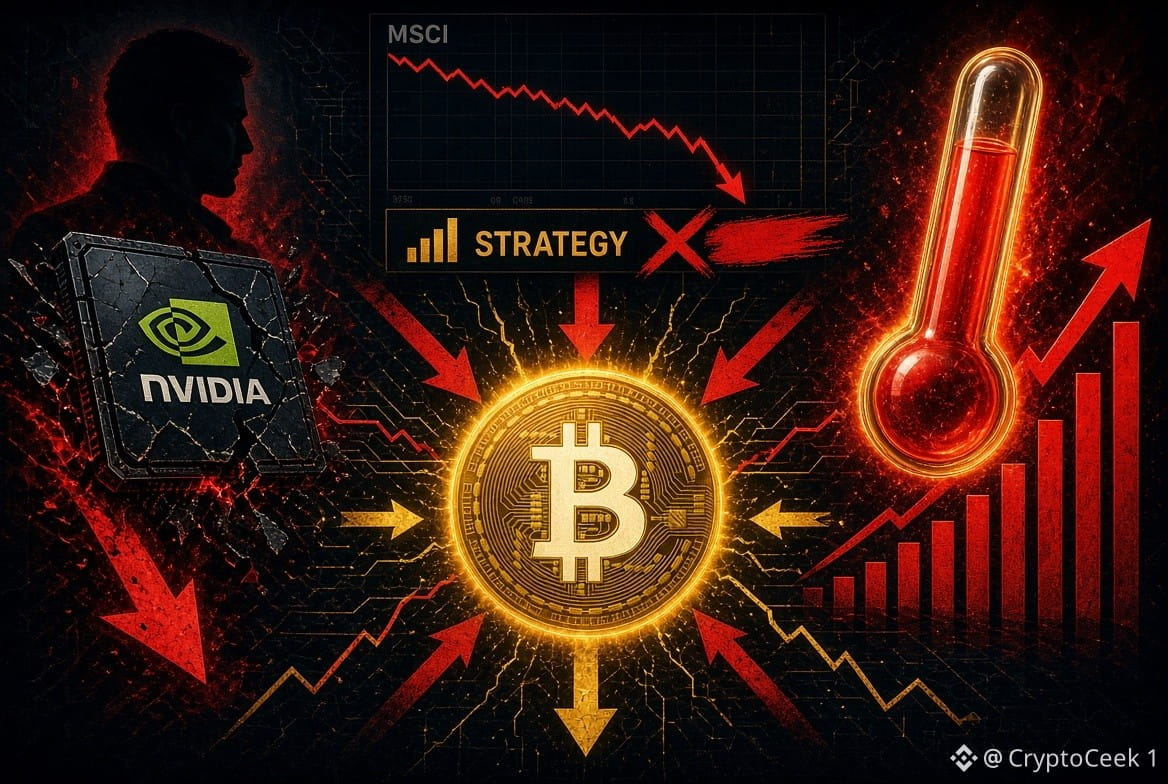
$BTC Nvidia loses its CEO, Strategy loses MSCI—is PPI the third shock for Bitcoin? Two major risk events hit markets at once: Nvidia faces leadership uncertainty after Jensen Huang’s reported exit, while Strategy has been removed from the MSCI index—removing a key source of passive institutional demand. Now, all eyes turn to the upcoming PPI inflation report. Hotter-than-expected data could reinforce expectations for tighter monetary policy, adding pressure to risk assets including Bitcoin. Bitcoin is facing a triple test: AI-market volatility, institutional index flows, and macro data. The next move may depend less on crypto headlines—and more on what the PPI print says about inflation. Not financial advice. Do your own research. #Bitcoin #BTC #Nvidia #Strategy #PPI
$BTC Nvidia loses its CEO, Strategy loses MSCI—is PPI the third shock for Bitcoin? Two major risk events hit markets at once: Nvidia faces leadership uncertainty after Jensen Huang’s reported exit, while Strategy has been removed from the MSCI index—removing a key source of passive institutional demand. Now, all eyes turn to the upcoming PPI inflation report. Hotter-than-expected data could reinforce expectations for tighter monetary policy, adding pressure to risk assets including Bitcoin. Bitcoin is facing a triple test: AI-market volatility, institutional index flows, and macro data. The next move may depend less on crypto headlines—and more on what the PPI print says about inflation. Not financial advice. Do your own research. #Bitcoin #BTC #Nvidia #Strategy #PPI
2
·
--
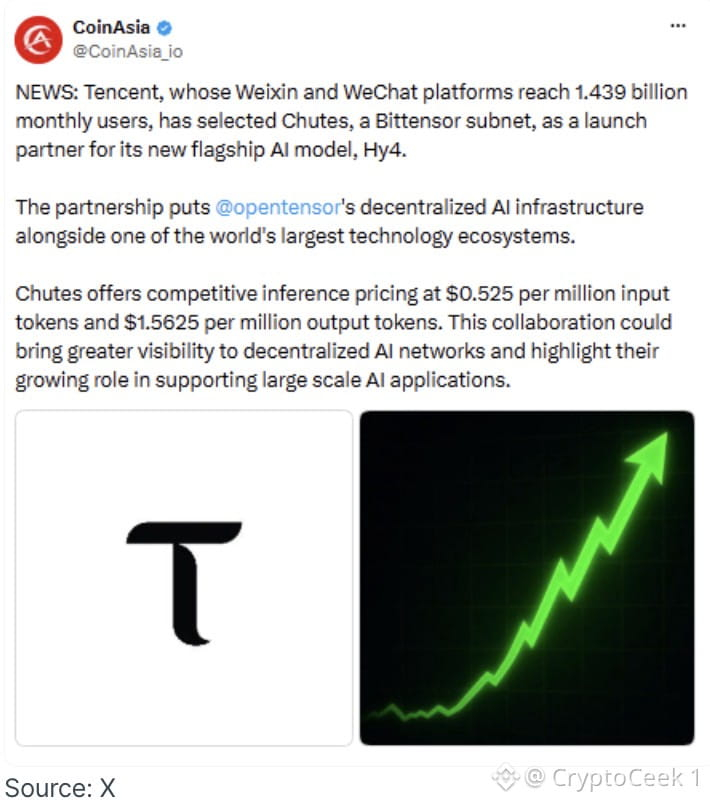
$TAO Bittensor is turning AI hype into real revenue. TAO rose more than 3% after Tencent selected Bittensor subnet Chutes as a launch partner for its HY4 AI model—opening access to an ecosystem with nearly 1.5 billion monthly active users. More importantly, subnet activity is starting to create on-chain value: Almanac generated $109,440 in October fees and burned 100% of them to buy back TAO and SN41, while Engy has spent $63,000 on buybacks and burns. If more subnets turn usage into fees, buybacks, and burns, Bittensor could become one of the strongest decentralized-AI narratives heading into 2027. #TAO #Bittensor #DecentralizedAI #AI #Web3
$TAO Bittensor is turning AI hype into real revenue. TAO rose more than 3% after Tencent selected Bittensor subnet Chutes as a launch partner for its HY4 AI model—opening access to an ecosystem with nearly 1.5 billion monthly active users. More importantly, subnet activity is starting to create on-chain value: Almanac generated $109,440 in October fees and burned 100% of them to buy back TAO and SN41, while Engy has spent $63,000 on buybacks and burns. If more subnets turn usage into fees, buybacks, and burns, Bittensor could become one of the strongest decentralized-AI narratives heading into 2027. #TAO #Bittensor #DecentralizedAI #AI #Web3
3
·
--
$AVAX The NYSE chose Avalanche. Now AVAX has to prove it can capture value. Avalanche has been selected as the core ledger technology for NYSE parent ICE’s planned tokenized securities platform, designed for 24/7 trading, clearing, and settlement—subject to regulatory approval. It is a major credibility win for Avalanche, but there is a catch: the platform will run on dedicated infrastructure rather than the public C-Chain, so the news does not automatically translate into higher AVAX demand. The real question is whether Avalanche can convert institutional validation into sustainable network value. #AVAX #Avalanche #NYSE #Tokenization #RWA
$AVAX The NYSE chose Avalanche. Now AVAX has to prove it can capture value. Avalanche has been selected as the core ledger technology for NYSE parent ICE’s planned tokenized securities platform, designed for 24/7 trading, clearing, and settlement—subject to regulatory approval. It is a major credibility win for Avalanche, but there is a catch: the platform will run on dedicated infrastructure rather than the public C-Chain, so the news does not automatically translate into higher AVAX demand. The real question is whether Avalanche can convert institutional validation into sustainable network value. #AVAX #Avalanche #NYSE #Tokenization #RWA
3
·
--
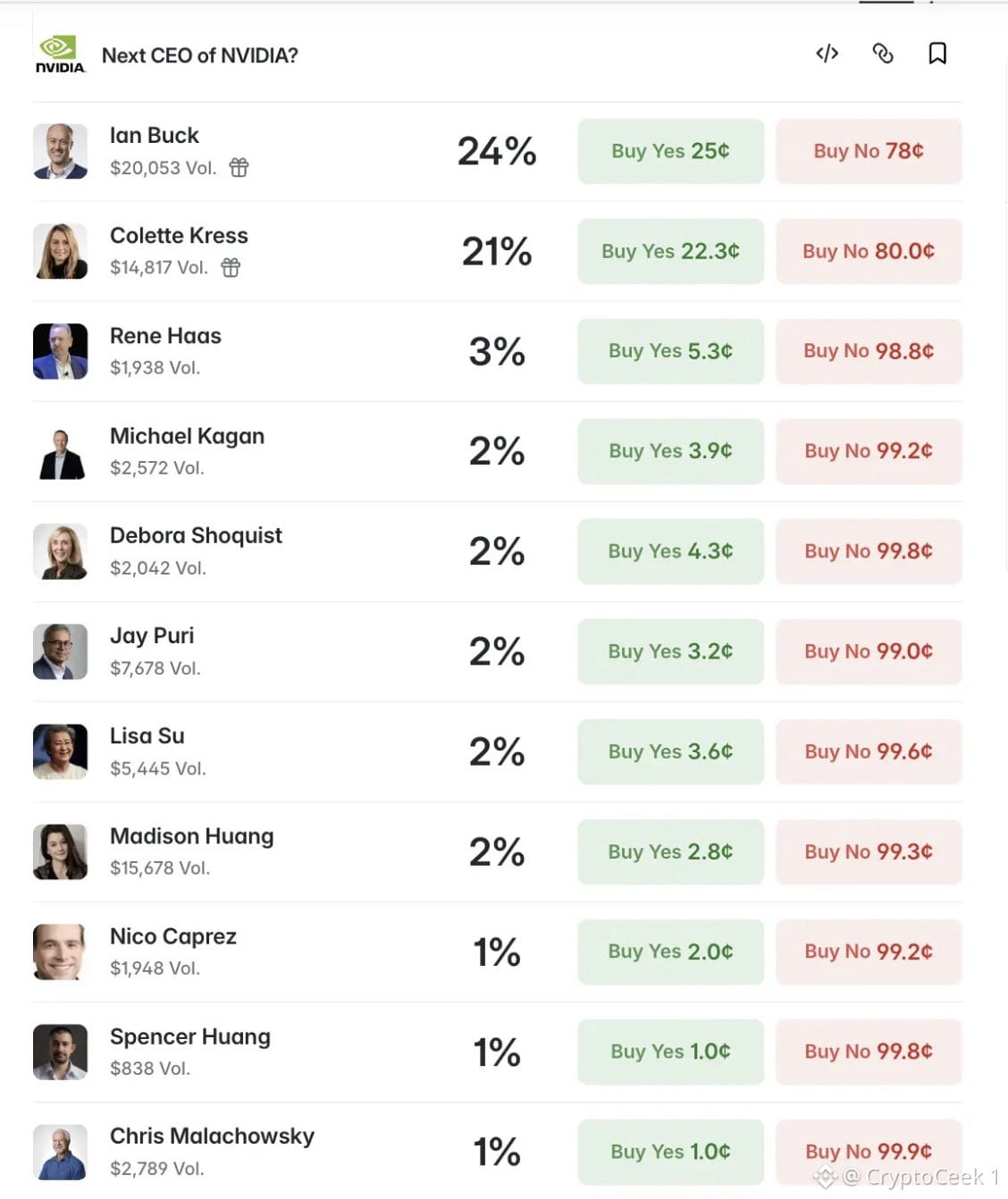
$PUSD Is Jensen Huang’s CEO role suddenly at risk? Polymarket traders briefly priced the odds of Jensen Huang stepping down or being removed by the end of 2026 at 88%, while Nvidia shares fell more than 10% after reports of alleged conflicts of interest. Nvidia’s board has reportedly held an emergency meeting and hired an external law firm to investigate the claims. The outcome could reshape leadership at the company at the center of the global AI boom. The market is not just watching Nvidia’s earnings—it is watching its leadership. #Nvidia #JensenHuang #AI #Stocks #Polymarket
$PUSD Is Jensen Huang’s CEO role suddenly at risk? Polymarket traders briefly priced the odds of Jensen Huang stepping down or being removed by the end of 2026 at 88%, while Nvidia shares fell more than 10% after reports of alleged conflicts of interest. Nvidia’s board has reportedly held an emergency meeting and hired an external law firm to investigate the claims. The outcome could reshape leadership at the company at the center of the global AI boom. The market is not just watching Nvidia’s earnings—it is watching its leadership. #Nvidia #JensenHuang #AI #Stocks #Polymarket
2
·
--
$ETH Ethereum may delay faster blocks to prioritize quantum security. Ethereum researchers are proposing to push back faster block times in the 2027 Hegotá upgrade so the network can accelerate its post-quantum defense timeline from 2028 to 2027. The issue is serious: public keys are visible on-chain, and a sufficiently powerful quantum computer could theoretically derive private keys and drain accounts. Upgrading wallets, apps, and validator infrastructure takes years—so preparation must start early. This is not just an Ethereum upgrade. It is a race to protect the future of digital ownership. #Ethereum #ETH #QuantumComputing #CryptoSecurity #Web3
$ETH Ethereum may delay faster blocks to prioritize quantum security. Ethereum researchers are proposing to push back faster block times in the 2027 Hegotá upgrade so the network can accelerate its post-quantum defense timeline from 2028 to 2027. The issue is serious: public keys are visible on-chain, and a sufficiently powerful quantum computer could theoretically derive private keys and drain accounts. Upgrading wallets, apps, and validator infrastructure takes years—so preparation must start early. This is not just an Ethereum upgrade. It is a race to protect the future of digital ownership. #Ethereum #ETH #QuantumComputing #CryptoSecurity #Web3
30
·
--
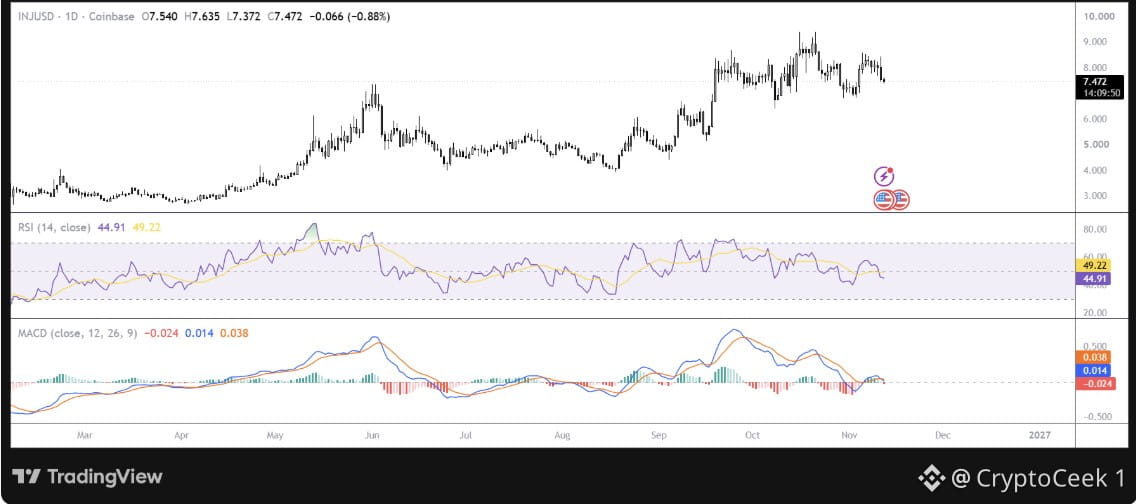
$INJ is testing a make-or-break level. Injective is trading around $7.42 after a 6% drop, while futures Open Interest has fallen to $140.77M—a sign that traders are reducing exposure rather than chasing a rebound. The key level is $7.19. A breakdown could open the door to $6.71 and then $6.27; holding above it could set up a recovery toward $8.35 and potentially $9.41. Sellers currently have the edge, but the broader structure is not broken yet. Watch $7.19 closely. #INJ #Injective #Altcoins #Trading #CryptoNews
$INJ is testing a make-or-break level. Injective is trading around $7.42 after a 6% drop, while futures Open Interest has fallen to $140.77M—a sign that traders are reducing exposure rather than chasing a rebound. The key level is $7.19. A breakdown could open the door to $6.71 and then $6.27; holding above it could set up a recovery toward $8.35 and potentially $9.41. Sellers currently have the edge, but the broader structure is not broken yet. Watch $7.19 closely. #INJ #Injective #Altcoins #Trading #CryptoNews
28
·
--
$BTC Deutsche Bank just launched crypto custody for institutions. Germany’s largest bank can now store and transfer Bitcoin, Ether, and selected stablecoins for corporate and institutional clients—while managing wallets and private keys on their behalf. Even bigger: Deutsche Bank and Deutsche Asset Management are exploring tokenized money-market funds, crypto ETCs, and stablecoins. This is no longer “crypto adoption.” This is traditional finance building regulated rails for digital assets. With MiCA providing a unified EU framework, banks are moving from experimentation to real infrastructure. The next phase of finance may not be crypto replacing banks—it may be banks integrating crypto. #DeutscheBank #Bitcoin #Ethereum #MiCA
$BTC Deutsche Bank just launched crypto custody for institutions. Germany’s largest bank can now store and transfer Bitcoin, Ether, and selected stablecoins for corporate and institutional clients—while managing wallets and private keys on their behalf. Even bigger: Deutsche Bank and Deutsche Asset Management are exploring tokenized money-market funds, crypto ETCs, and stablecoins. This is no longer “crypto adoption.” This is traditional finance building regulated rails for digital assets. With MiCA providing a unified EU framework, banks are moving from experimentation to real infrastructure. The next phase of finance may not be crypto replacing banks—it may be banks integrating crypto. #DeutscheBank #Bitcoin #Ethereum #MiCA
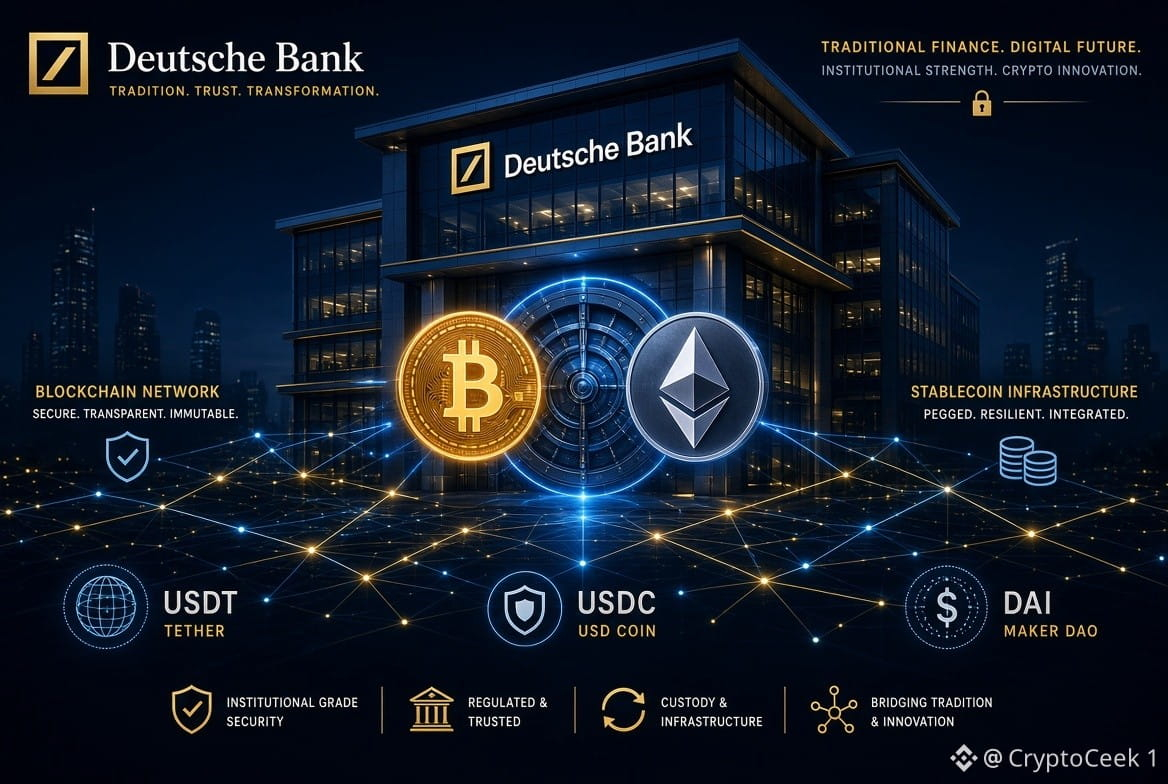
41
·
--
$XRP Quantum computing is no longer just a future risk—it’s becoming a real conversation for crypto security. An estimated 31 billion XRP may be held in wallets using older cryptographic key formats that could become vulnerable as quantum computers advance. The challenge: XRP holders must proactively migrate to quantum-resistant keys before it’s too late. ⏳ The deadline? Some experts point to 2028 as a critical window. If holders don’t act, billions in XRP could be exposed to future attacks. The question isn’t if quantum computing will change crypto security—it’s whether the XRP community will move fast enough. 🔁 Repost if you think quantum-resilience should be a top priority for every blockchain. #XRP #QuantumComputing #CryptoSecurity #Ripple #CryptoNews
$XRP Quantum computing is no longer just a future risk—it’s becoming a real conversation for crypto security. An estimated 31 billion XRP may be held in wallets using older cryptographic key formats that could become vulnerable as quantum computers advance. The challenge: XRP holders must proactively migrate to quantum-resistant keys before it’s too late. ⏳ The deadline? Some experts point to 2028 as a critical window. If holders don’t act, billions in XRP could be exposed to future attacks. The question isn’t if quantum computing will change crypto security—it’s whether the XRP community will move fast enough. 🔁 Repost if you think quantum-resilience should be a top priority for every blockchain. #XRP #QuantumComputing #CryptoSecurity #Ripple #CryptoNews
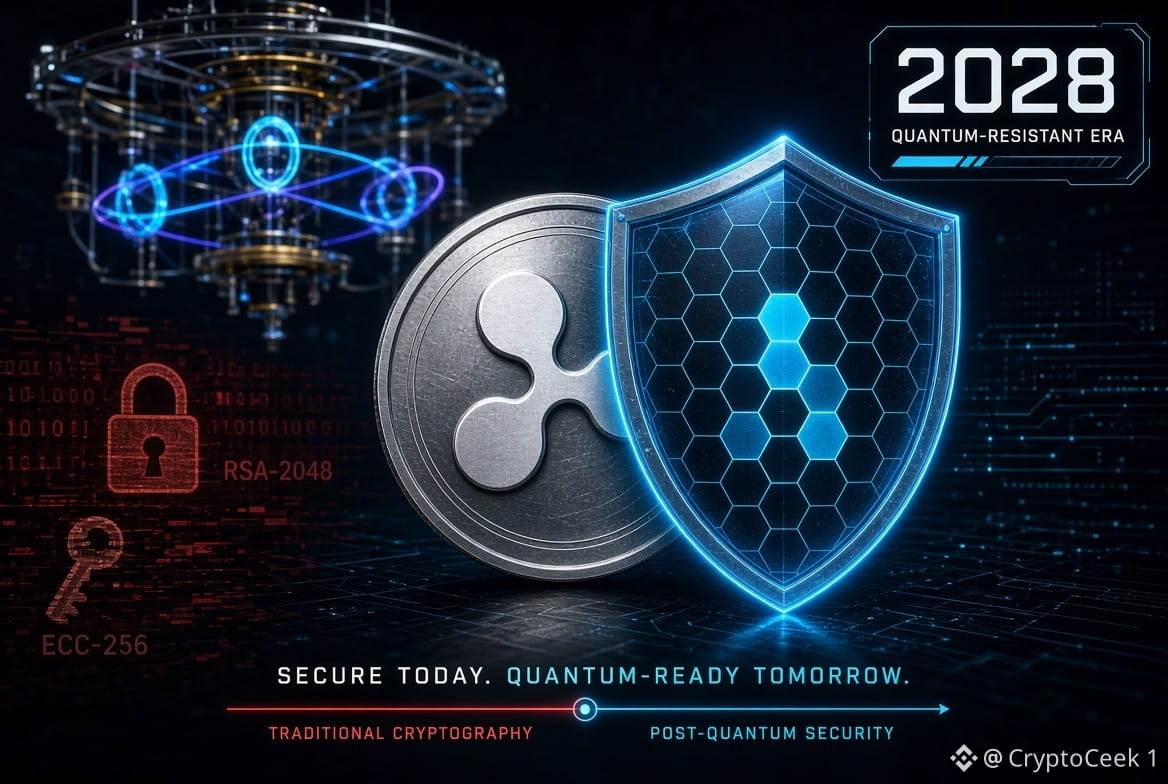
74
·
--
$BTC Hot CPI just sent Bitcoin below $74K—and now traders are asking: how deep could a 50bp hike cut? October CPI rose 0.4% month-over-month, above the 0.3% forecast, while core CPI hit 0.3% versus 0.2% expected. Fed Governor Waller said a 50-basis-point December hike should be considered if core inflation stays this hot. What it means for BTC A 50bp hike would signal tighter financial conditions for longer: higher yields, stronger dollar pressure, and less appetite for leveraged risk assets. Markets still favor a 25bp move, but odds for 50bp have risen to roughly 15%. Bitcoin briefly dropped to about $73,400–$73,500 after the print and is now testing the $73,000–$73,500 support zone. Levels I’m watching $73,000–$73,500: Immediate support; holding here could limit downside. $70,000: A key psychological level if $73,000 breaks on a daily close. $74,900–$75,000: First resistance; reclaiming it would ease short-term pressure. $80,000: A stronger bullish signal if buyers can reclaim it. My take A 50bp hike would not automatically crash Bitcoin, but it could trigger another liquidity-driven flush—especially with leveraged positions already being liquidated. I’d wait for BTC to either reclaim $75K or hold $73K with higher lows before adding risk. Not financial advice. Use smaller size, define invalidation levels, and avoid chasing candles in a macro-driven market. #Bitcoin #BTC #CPI #Fed #RiskManagement
$BTC Hot CPI just sent Bitcoin below $74K—and now traders are asking: how deep could a 50bp hike cut? October CPI rose 0.4% month-over-month, above the 0.3% forecast, while core CPI hit 0.3% versus 0.2% expected. Fed Governor Waller said a 50-basis-point December hike should be considered if core inflation stays this hot. What it means for BTC A 50bp hike would signal tighter financial conditions for longer: higher yields, stronger dollar pressure, and less appetite for leveraged risk assets. Markets still favor a 25bp move, but odds for 50bp have risen to roughly 15%. Bitcoin briefly dropped to about $73,400–$73,500 after the print and is now testing the $73,000–$73,500 support zone. Levels I’m watching $73,000–$73,500: Immediate support; holding here could limit downside. $70,000: A key psychological level if $73,000 breaks on a daily close. $74,900–$75,000: First resistance; reclaiming it would ease short-term pressure. $80,000: A stronger bullish signal if buyers can reclaim it. My take A 50bp hike would not automatically crash Bitcoin, but it could trigger another liquidity-driven flush—especially with leveraged positions already being liquidated. I’d wait for BTC to either reclaim $75K or hold $73K with higher lows before adding risk. Not financial advice. Use smaller size, define invalidation levels, and avoid chasing candles in a macro-driven market. #Bitcoin #BTC #CPI #Fed #RiskManagement
53
·
--
$BTC WHALE WATCH: Crash or squeeze?
The “biggest whale short since Oct ’25” discussion is heating up—and everyone’s asking the same question:
Another 23% crash… or a short squeeze that punishes the bears?
A massive short is a bet, not a crystal ball.
And “they’ll get squeezed” isn’t a trading strategy either.
Before picking a side, ask:
∆ Is the position verified—and is it still open?
∆ Is it a directional bet or part of a hedge?
∆ What would force the trader to exit?
Don’t confuse whale size with certainty.
Bulls see squeeze fuel. Bears see a warning
.
Which side has the stronger case—and what’s your evidence? #BTC #Bitcoin #Crypto #WhaleWatch #ShortSqueeze

74
·
--
$BTC Trump Media Moves $344M BTC — Custody or Sale? Trump Media just moved 4,259 BTC (~$344M) from wallets labeled “2028 Convertible Notes Collateral” to CRYPTO.COM—right before a major debt deadline. The timing has the market asking one question: is this treasury management, or preparation to sell? On November 30, holders of Trump Media’s $1B convertible notes can demand cash repayment at principal plus accrued interest. If refinancing falls short, the company’s own filing says it may need to sell Bitcoin or other digital assets to meet the obligation. What the Chain Shows The transfer happened in two batches—about 2,140 BTC and 2,119 BTC—and nearly matches the 4,260.73 BTC previously disclosed as collateral. But an exchange deposit is not proof of a sale. Crypto Dot Com is one of Trump Media’s named custodians, and the coins were reportedly moved onward into CRYPTO.COM cold storage. The company has previously characterized similar transfers as custody or trading management. Why It Matters This is a stress test for the “Bitcoin treasury financed by convertible debt” model: If it’s custody, the move is routine operational risk management. If it becomes a sale, it could signal liquidity pressure and add BTC supply to the market. Either way, November 30 is the date traders should watch—not the transfer itself. The blockchain shows movement, not intent. Until Trump Media discloses a sale or refinancing plan, the smart take is simple: don’t confuse a wallet transfer with a confirmed dump. #Bitcoin #BTC #TrumpMedia #Crypto #OnChain Educational content, not financial advice.
$BTC Trump Media Moves $344M BTC — Custody or Sale? Trump Media just moved 4,259 BTC (~$344M) from wallets labeled “2028 Convertible Notes Collateral” to CRYPTO.COM—right before a major debt deadline. The timing has the market asking one question: is this treasury management, or preparation to sell? On November 30, holders of Trump Media’s $1B convertible notes can demand cash repayment at principal plus accrued interest. If refinancing falls short, the company’s own filing says it may need to sell Bitcoin or other digital assets to meet the obligation. What the Chain Shows The transfer happened in two batches—about 2,140 BTC and 2,119 BTC—and nearly matches the 4,260.73 BTC previously disclosed as collateral. But an exchange deposit is not proof of a sale. Crypto Dot Com is one of Trump Media’s named custodians, and the coins were reportedly moved onward into CRYPTO.COM cold storage. The company has previously characterized similar transfers as custody or trading management. Why It Matters This is a stress test for the “Bitcoin treasury financed by convertible debt” model: If it’s custody, the move is routine operational risk management. If it becomes a sale, it could signal liquidity pressure and add BTC supply to the market. Either way, November 30 is the date traders should watch—not the transfer itself. The blockchain shows movement, not intent. Until Trump Media discloses a sale or refinancing plan, the smart take is simple: don’t confuse a wallet transfer with a confirmed dump. #Bitcoin #BTC #TrumpMedia #Crypto #OnChain Educational content, not financial advice.

87
·
--
$CARDS $CARDS: Pokémon Cards Meet On-Chain RWA Collector Crypt ($CARDS) turns graded Pokémon and collectible cards into redeemable NFTs on Solana. Users can open Gacha packs, trade digital twins, or redeem the physical card—making RWA utility tangible. The growth is real: Q3 2026 brought $433.5M in pack openings, $25.4M gross profit, and over $1B cumulative trading volume. Listing Momentum Coinbase added $CARDS to its listing roadmap on Nov 3; trading has not started yet. Upbit is launching KRW, BTC, and USDT markets for $CARDS on Nov 5. Listing news is fueling volatility. Rather than chasing the first spike, I’d watch whether volume holds, enter in stages, and set a clear invalidation level. Buy via Bitget Onchain Explore $CARDS directly through Bitget Onchain with this verified contract: CARDSccUMFKoPRZxt5vt3ksUbxEFEcnZ3H2pd3dKxYjp $CARDS blends RWA collectibles, strong business activity, and expanding exchange access—but volatility is part of the trade. Manage risk first. Educational content, not financial advice. #Bitget #cards
$CARDS $CARDS: Pokémon Cards Meet On-Chain RWA Collector Crypt ($CARDS) turns graded Pokémon and collectible cards into redeemable NFTs on Solana. Users can open Gacha packs, trade digital twins, or redeem the physical card—making RWA utility tangible. The growth is real: Q3 2026 brought $433.5M in pack openings, $25.4M gross profit, and over $1B cumulative trading volume. Listing Momentum Coinbase added $CARDS to its listing roadmap on Nov 3; trading has not started yet. Upbit is launching KRW, BTC, and USDT markets for $CARDS on Nov 5. Listing news is fueling volatility. Rather than chasing the first spike, I’d watch whether volume holds, enter in stages, and set a clear invalidation level. Buy via Bitget Onchain Explore $CARDS directly through Bitget Onchain with this verified contract: CARDSccUMFKoPRZxt5vt3ksUbxEFEcnZ3H2pd3dKxYjp $CARDS blends RWA collectibles, strong business activity, and expanding exchange access—but volatility is part of the trade. Manage risk first. Educational content, not financial advice. #Bitget #cards
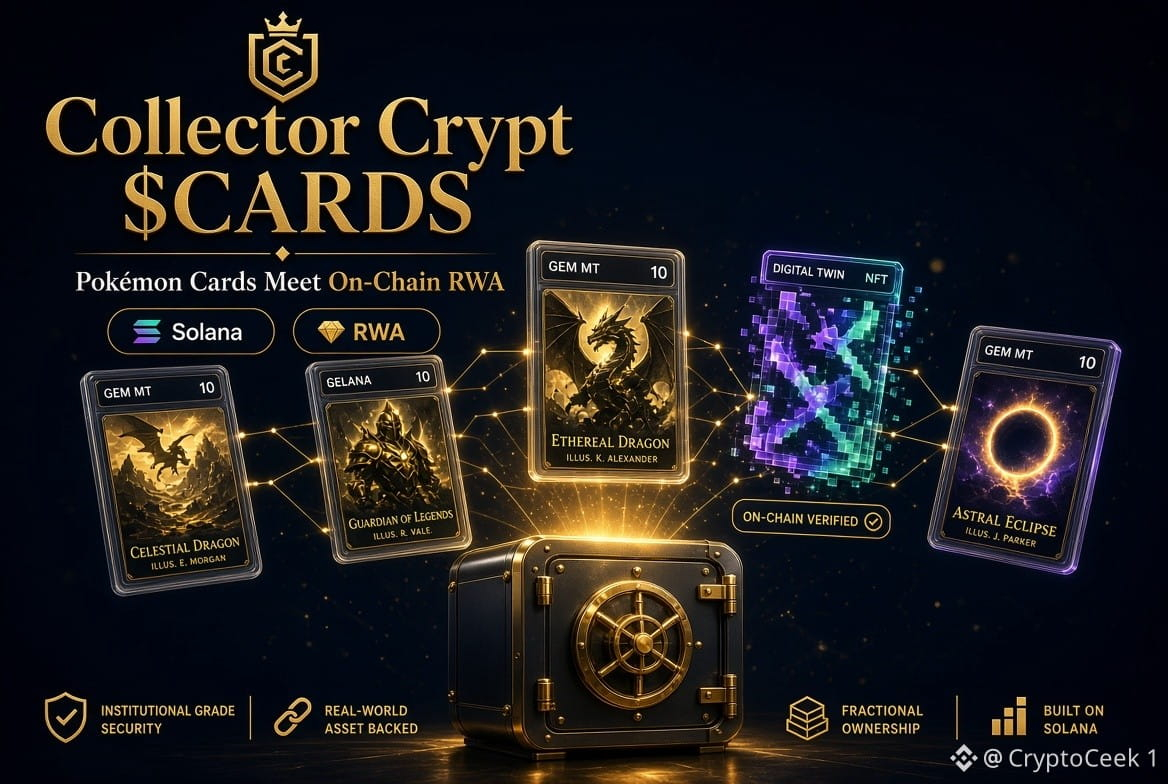
3
·
--
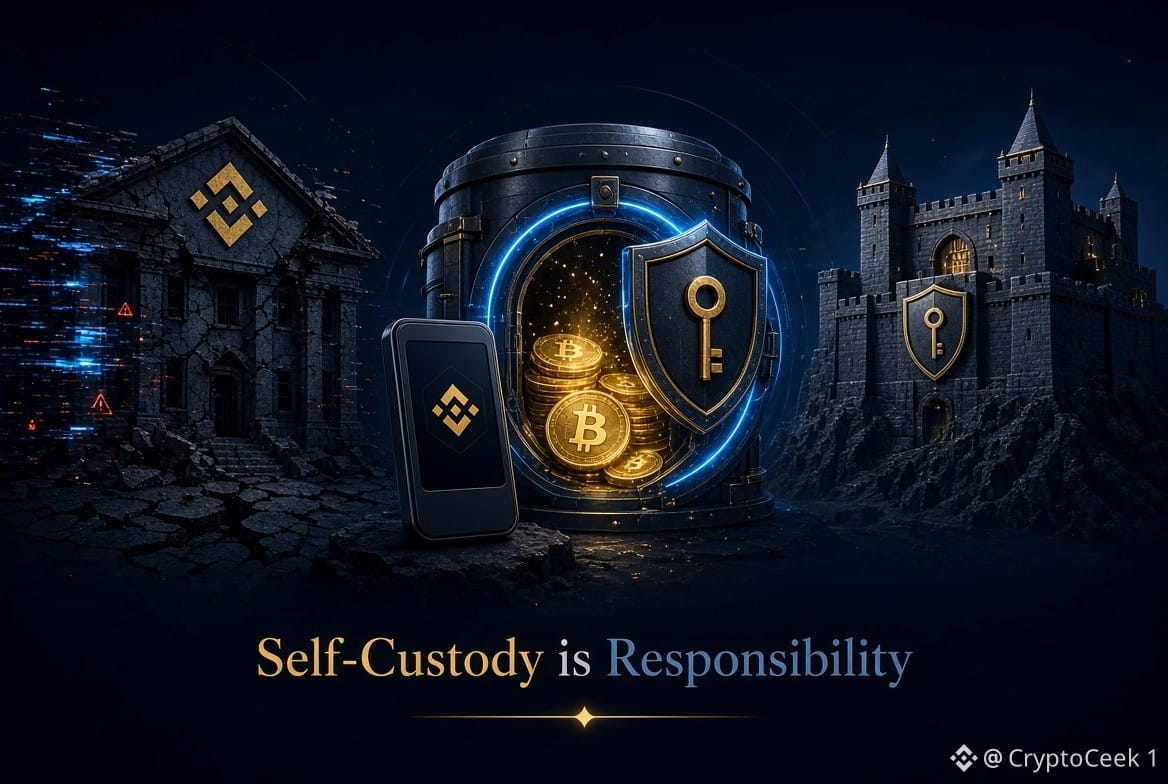
$BTC Hackers strike 3 more after Binance. Where is your crypto actually safe? Binance just suffered a record $6.3 billion hack—and within days, attackers hit Mercado Bitcoin, an unnamed EU entity, BTCPay merchants, and 12 DeFi sites redirected to a wallet drainer. Early estimates put the follow-on losses above $146 million. The lesson is brutal: crypto is not automatically unsafe—but “safe” is not the same as “on an exchange.” Binance says it will cover customer losses and has set aside more than $6.3 billion in company funds, with roughly half the stolen assets reportedly frozen. That is reassuring—but it is also a reminder that when you leave coins on an exchange, you are relying on that company’s security, balance sheet, and goodwill. Self-custody gives you control, but not immunity. Your seed phrase, browser approvals, devices, and signing habits become the attack surface. Your 5-point crypto safety checklist: Keep only trading capital on exchanges; move long-term holdings to self-custody. Never store or type your seed phrase digitally—no photos, cloud notes, or websites. Use app-based 2FA or a hardware security key, not SMS. Revoke old wallet approvals after using DeFi sites; attackers can exploit permissions long after you leave. Treat every “support agent,” urgent withdrawal warning, or “move funds to a safe wallet” message as a scam until verified through the official app. The blockchain was not the weak point in many of these attacks. People, laptops, servers, domains, and third-party tools were. Crypto does not need another “not your keys, not your coins” slogan. It needs people who understand that self-custody is responsibility, not a magic shield. #Bitcoin #Binance #CryptoSecurity #SelfCustody #DeFi
$BTC Hackers strike 3 more after Binance. Where is your crypto actually safe? Binance just suffered a record $6.3 billion hack—and within days, attackers hit Mercado Bitcoin, an unnamed EU entity, BTCPay merchants, and 12 DeFi sites redirected to a wallet drainer. Early estimates put the follow-on losses above $146 million. The lesson is brutal: crypto is not automatically unsafe—but “safe” is not the same as “on an exchange.” Binance says it will cover customer losses and has set aside more than $6.3 billion in company funds, with roughly half the stolen assets reportedly frozen. That is reassuring—but it is also a reminder that when you leave coins on an exchange, you are relying on that company’s security, balance sheet, and goodwill. Self-custody gives you control, but not immunity. Your seed phrase, browser approvals, devices, and signing habits become the attack surface. Your 5-point crypto safety checklist: Keep only trading capital on exchanges; move long-term holdings to self-custody. Never store or type your seed phrase digitally—no photos, cloud notes, or websites. Use app-based 2FA or a hardware security key, not SMS. Revoke old wallet approvals after using DeFi sites; attackers can exploit permissions long after you leave. Treat every “support agent,” urgent withdrawal warning, or “move funds to a safe wallet” message as a scam until verified through the official app. The blockchain was not the weak point in many of these attacks. People, laptops, servers, domains, and third-party tools were. Crypto does not need another “not your keys, not your coins” slogan. It needs people who understand that self-custody is responsibility, not a magic shield. #Bitcoin #Binance #CryptoSecurity #SelfCustody #DeFi
තවත් අන්තර්ගතයන් ගවේෂණය කිරීමට ඇතුල් වන්න
Binance චතුරශ්රය හි ගෝලීය ක්රිප්ටෝ පරිශීලකයින් හා එක්වන්න
⚡️ ක්රිප්ටෝ පිළිබඳ නවතම සහ ප්රයෝජනවත් තොරතුරු ලබා ගන්න.
💬 ලොව විශාලතම ක්රිප්ටෝ හුවමාරුව මගින් විශ්වාස කෙරේ.
👍 සත්යායනය කරන ලද නිර්මාණකරුවන්ගෙන් සැබෑ විදසුන් සොයා ගන්න.
විද්යුත් තැපෑල / දුරකථන අංකය
නැගී එන මාතෘකා
A Packed Week of Earnings and Data Tests Markets
1,751 නැරඹීම්
39 සාකච්ඡා කරමින්
🚨🇺🇸 BIG WEEK AHEAD FOR THE MARKETS!
Markets are pricing in a Fed rate hike in December and $BTC could see some big moves next week.
Here's what's coming:
• Monday: Fed Chair Warsh speaks
• Tuesday: US Retail Sales + $NVDA earnings
• Wednesday: FOMC Minutes
• Thursday: Jobless Claims + Philly Fed Index
• Friday: Consumer Sentiment + Fed speeches
All eyes on $BTC as another important week begins.
#bitcoin
Mookie
·6 කැමත්ත දැක්වීම්
·2.3k නැරඹීම්
HuangReportedlyConsidersReturnToNvidia
12,750 නැරඹීම්
199 සාකච්ඡා කරමින්
CryptoSelloffTriggersMultipleWhaleLiquidations
266,805 නැරඹීම්
2,244 සාකච්ඡා කරමින්