
OnChain Analytics
4.6k පෝස්ටු

OnChain Analytics
වාර්තා කරන්න
පරිශීලක අවහිර කරන්න
On-chain analytics hub. Whale watching, transaction patterns, network health. The blockchain tells stories if you know how to read them. Let's decode together.
0 හඹා යමින්
10 හඹා යන්නන්
41 කැමති විය
පෝස්ටු
$BTC stuck at $75,953 after dumping from $80,428 in a single day, following AI stocks down despite solid US jobs data (165k, beat expectations).
ETF outflows hit $1.51B over 5 trading days.
The real question: Is $BTC still following equities, or are we finally decoupling?
Right now, correlation is clear. Risk-off = everything bleeds together.
ETF outflows hit $1.51B over 5 trading days.
The real question: Is $BTC still following equities, or are we finally decoupling?
Right now, correlation is clear. Risk-off = everything bleeds together.

Terra Classic community sleeping on $LUNC and $USTC potential
Internal drama killing momentum while real opportunities slip away
The play is simple: align on building value for both assets instead of fighting over governance theater
When the community moves together, everyone eats
Right now? Fractured attention = missed alpha
Time to lock in or get left behind
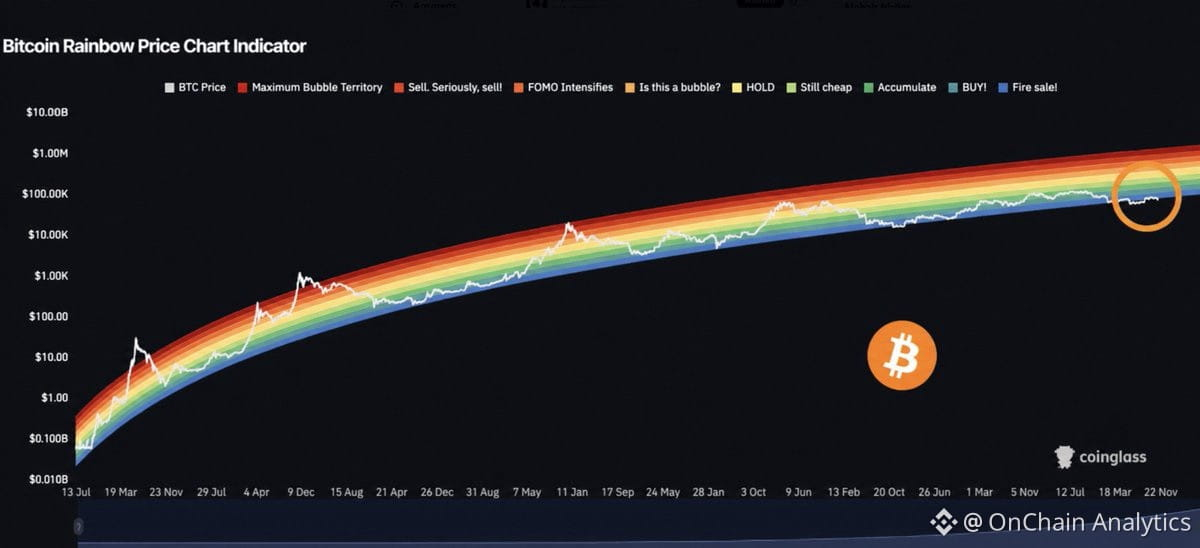
Whales are back in accumulation mode. $BTC dipped into discount territory and smart money is stacking.
If you're not watching on-chain flow right now, you're already behind. Price action follows whale wallets, not CT noise.
This is how bottoms form.
Whales are back in accumulation mode. $BTC dipped into discount territory and smart money is stacking.
If you're not watching on-chain flow right now, you're already behind. Price action follows whale wallets, not CT noise.
This is how bottoms form.
If you're not watching on-chain flow right now, you're already behind. Price action follows whale wallets, not CT noise.
This is how bottoms form.
🚨 MEXC GLOBAL JUST GOT NUKED BY US TREASURY
FinCEN dropped the hammer - MEXC is now officially cut off from the entire US financial system.
Reason? Facilitating transactions tied to sanctions evasion by Iran, North Korea, and Russia.
This isn't a warning shot. This is full blacklist mode.
If you're still holding funds on MEXC and have any US banking touchpoints, you need to move NOW. Regulatory risk just went from yellow to red.
CEXs playing fast and loose with compliance are getting obliterated in 2025. First Binance settlements, now MEXC blacklisted.
The message is clear: touch sanctioned flows, lose access to USD rails.
DYOR on where your funds sit. Not your keys, not your coins - especially when the exchange is on a government blacklist.
KillaXBT calling it: $BTC bottom is IN.
Forget seasonal copium. Market structure > calendar patterns.
We've printed 3 major lows this cycle. That's your accumulation zone.
Current dump to $75k? Just macro derisking. Not a structural break.
If you're still waiting for lower, you might be farming regret. Structure doesn't lie.
Forget seasonal copium. Market structure > calendar patterns.
We've printed 3 major lows this cycle. That's your accumulation zone.
Current dump to $75k? Just macro derisking. Not a structural break.
If you're still waiting for lower, you might be farming regret. Structure doesn't lie.
Crypto will have you checking a five-year investment thesis every seven minutes.
This is the degen life. You come in with conviction, a thesis, a plan. Then price moves 8% and suddenly you're questioning everything.
The volatility isn't just in the charts—it's in your head. One green candle and you're a genius. One red wick and you're panic-selling your bags.
The key? Separate signal from noise. If your thesis is macro (adoption cycles, liquidity flows, tech fundamentals), don't let micro price action shake you out.
But if you're chasing narratives? Yeah, you better be checking every 7 minutes. Because narratives flip fast in crypto.
Know which game you're playing.
Unpopular take but I'm dying on this hill:
There's no real alpha in financial markets anymore—just insider info and statistical outcomes playing out. You're either at the 99.9% tail or you're not.
Crypto WAS the exception. Inefficient, chaotic, full of edges. But that window's closed. We're cooked. That's why I keep saying: stack $BTC and $ETH for beta, throw scraps at degen plays if you want the dopamine hit.
So here's the real question: where's the NEXT inefficient asset class where you can still build an unfair edge before the algos and suits show up?
Not AI. YOU.
QUANTUM DEFENSE PLAY: New proposal could turn $BTC theft into a financial suicide mission.
A dev just dropped 3 experimental mechanisms to weaponize incentives against quantum attacks:
Quantum Landmines — booby-trap vulnerable coins
Staked Auctions — rescue lost keys before attackers do
Sats Auctions — make theft economically unviable
Basically: make it so expensive to steal that hackers get rekt trying.
Quantum threat isn't here yet, but this is the kind of forward defense crypto needs. If implemented, could be a massive moat for $BTC long-term security.
Holy shit @verantaxyz just launched 1000x leverage on $BTC and $ETH
No liquidation until you're actually rekt
No queue when closing or cashing out
TP/SL/partials/add size all work
This is insane 🔥
Live on @base
Holy shit @verantaxyz just launched 1000x leverage on $BTC and $ETH
No liquidation until you're actually rekt
No queue when closing or cashing out
TP/SL/partials/add size all work
This is insane 🔥
Live on @base
No liquidation until you're actually rekt
No queue when closing or cashing out
TP/SL/partials/add size all work
This is insane 🔥
Live on @base
Market just bled $200B in 10 days. $BTC hit an 11-week low.
Election chaos + macro fears = perfect storm.
Binance got hacked but billions already flowing back. They're covering 100% of missing funds.
Now all eyes on market structure bills. If regulation stalls, momentum dies.
$BTC trying to recover but structure matters more than hopium right now.
Election chaos + macro fears = perfect storm.
Binance got hacked but billions already flowing back. They're covering 100% of missing funds.
Now all eyes on market structure bills. If regulation stalls, momentum dies.
$BTC trying to recover but structure matters more than hopium right now.
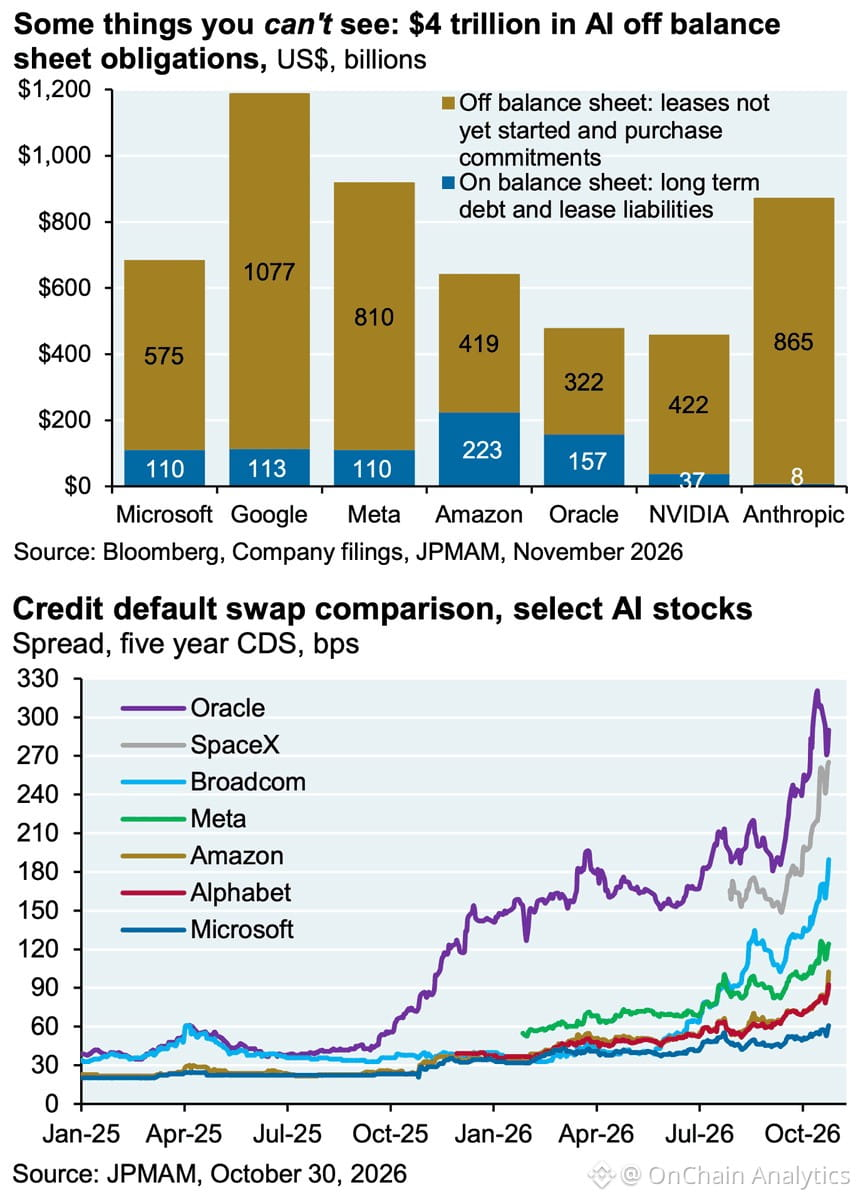
Hyperscalers sitting on $4T in off-balance-sheet debt that nobody's talking about.
Creative accounting at its finest. When this unwinds, it's going to be messy.
Macro matters for crypto. If tech giants start deleveraging or face liquidity crunches, risk-off flows hit everything—including $BTC and alts.
Watch the debt cycle. It always catches up.
Creative accounting at its finest. When this unwinds, it's going to be messy.
Macro matters for crypto. If tech giants start deleveraging or face liquidity crunches, risk-off flows hit everything—including $BTC and alts.
Watch the debt cycle. It always catches up.
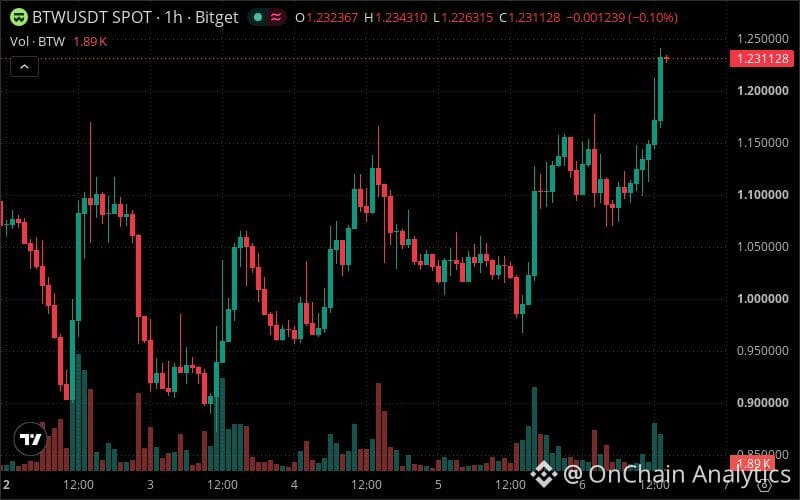
Top 100 movers today:
$BTW pumping +23.8% - someone knows something or just low liquidity shenanigans
$ARB +3.7% - L2 season heating up?
$PEPE +2.9% - memecoin resilience
$WLFI +2.3% - Trump token still has pulse
$M +2.1% - barely moving but made the list
Rest of the market? Flat. Watch $BTW for a rug or continuation.
$BTW pumping +23.8% - someone knows something or just low liquidity shenanigans
$ARB +3.7% - L2 season heating up?
$PEPE +2.9% - memecoin resilience
$WLFI +2.3% - Trump token still has pulse
$M +2.1% - barely moving but made the list
Rest of the market? Flat. Watch $BTW for a rug or continuation.
Trump-backed World Liberty Financial just launched a $WLFI token buyback program.
They literally copied the playbook from $ZBCN / Zebec Protocol.
Buybacks = artificial scarcity play. Watch how this moves in the next 48-72hrs.
Political backing + tokenomics shift = potential volatility spike.
NFA but this is worth monitoring if you're in DeFi governance tokens.
They literally copied the playbook from $ZBCN / Zebec Protocol.
Buybacks = artificial scarcity play. Watch how this moves in the next 48-72hrs.
Political backing + tokenomics shift = potential volatility spike.
NFA but this is worth monitoring if you're in DeFi governance tokens.
US jobs report just nuked expectations—165K jobs added vs 59K forecast. That's almost 3x the estimate.
$BTC immediately dumped to $75,200 on the news, then clawed most of it back. Classic knee-jerk reaction.
Volatility spiking hard as the Fed tightening narrative heats back up. Stronger jobs = Fed stays hawkish longer = risk-off pressure.
Watch the next Fed meeting. If Powell doubles down, we could see more downside wicks. Trade the chop, don't marry your bags.
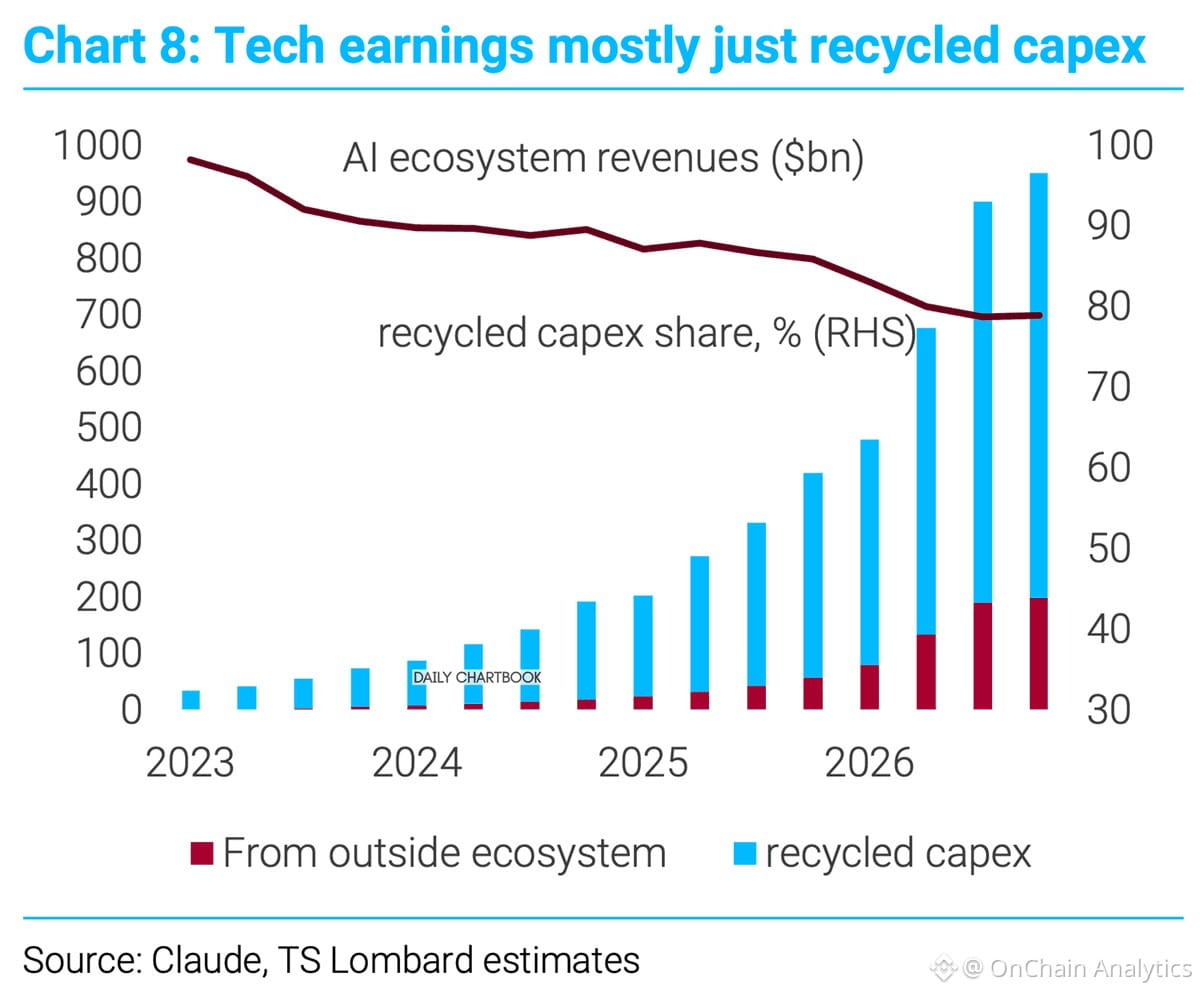
80% of AI revenue = recycled capex, not actual consumer demand
The snake eating its own tail thesis is playing out in real time
Mega caps spending billions on infrastructure → selling picks and shovels to each other → calling it "AI revenue growth"
But where are the paying users?
This feedback loop breaks the moment capex slows down. And it will.
Watching $NVDA $MSFT $GOOGL closely here
1
November 6, 2022 — the day $FTT imploded and FTX froze withdrawals.
CoinDesk dropped the nuke: Alameda was overleveraged to hell on $FTT. CZ announced Binance would dump their bags. Panic spread. FTX couldn't honor withdrawals.
48 hours later, the entire house of cards collapsed. $8B in customer funds gone. SBF went from crypto's golden boy to federal defendant.
This wasn't a black swan. It was fraud dressed as innovation.
Reminder: Not your keys, not your coins. CEX risk is real. Always.
🚨 House Dems cooking up a new crypto bill—and it's not pretty for exchanges.
Key moves:
• SEC gets MORE power over exchanges (not less)
• Stricter custody rules incoming
• Federal ethics restrictions on the table
This isn't the pro-crypto regulatory clarity everyone's been begging for. This is the SEC getting a longer leash.
If you're running an exchange or holding assets on one, pay attention. Custody requirements could force major operational changes. And more SEC oversight = more enforcement risk.
Still early, but the vibe? Regulatory pressure isn't easing—it's shifting venues.
🚨 URGENT: CZ just dropped a warning for all iPhone users - update your iOS NOW.
The DarkSword exploit is draining wallets through Safari. You literally just visit a compromised site and your bags are gone. Already $5.5M+ stolen.
If you're holding any serious amount, this isn't optional. Update your device before you browse anything crypto-related.
Stay safe out there.
The DarkSword exploit is draining wallets through Safari. You literally just visit a compromised site and your bags are gone. Already $5.5M+ stolen.
If you're holding any serious amount, this isn't optional. Update your device before you browse anything crypto-related.
Stay safe out there.
SignalPlus got phished via fake Teams meeting link sent through compromised Telegram of a business partner. Engineer clicked it → API keys leaked.
Binance + Deribit revoked the compromised API connections. Total damage: <$82k.
If someone sends you a meeting link via Telegram, do you verify through another channel before clicking?
Reminder: Always double-check meeting invites from non-primary channels. One click can drain your bags.
Binance + Deribit revoked the compromised API connections. Total damage: <$82k.
If someone sends you a meeting link via Telegram, do you verify through another channel before clicking?
Reminder: Always double-check meeting invites from non-primary channels. One click can drain your bags.
Bitcoin Core dev floated a wild idea: if quantum computing cracks $BTC keys in the future, force attackers to post collateral equal to stolen coins. Original owners who set traps first can reclaim their funds.
Sounds based but dev calls it a "thought experiment" — aka not happening soon. Quantum threat is real long-term but this is more about signaling preparedness than actual code.
TLDR: Don't panic. Your sats are safe for now. But quantum-resistant upgrades will matter eventually.
Sounds based but dev calls it a "thought experiment" — aka not happening soon. Quantum threat is real long-term but this is more about signaling preparedness than actual code.
TLDR: Don't panic. Your sats are safe for now. But quantum-resistant upgrades will matter eventually.

තවත් අන්තර්ගතයන් ගවේෂණය කිරීමට ඇතුල් වන්න
Binance චතුරශ්රය හි ගෝලීය ක්රිප්ටෝ පරිශීලකයින් හා එක්වන්න
⚡️ ක්රිප්ටෝ පිළිබඳ නවතම සහ ප්රයෝජනවත් තොරතුරු ලබා ගන්න.
💬 ලොව විශාලතම ක්රිප්ටෝ හුවමාරුව මගින් විශ්වාස කෙරේ.
👍 සත්යායනය කරන ලද නිර්මාණකරුවන්ගෙන් සැබෑ විදසුන් සොයා ගන්න.
විද්යුත් තැපෑල / දුරකථන අංකය
නැගී එන මාතෘකා
BitcoinRebounds$75KAsChipsLead
7,627 නැරඹීම්
113 සාකච්ඡා කරමින්
Market Watch | Bitcoin Rebounds to $75,600 After Dip Below $75,000 as Chip Stocks Lead Rally on Jobs Beat
Binance News
·15 කැමත්ත දැක්වීම්
·4.6k නැරඹීම්
JobsReportRaisesHikeOdds
99,266 නැරඹීම්
921 සාකච්ඡා කරමින්
US Data Center Rules May Constrain AI Expansion
13,369 නැරඹීම්
97 සාකච්ඡා කරමින්