
emma.waves
383 පෝස්ටු

emma.waves
වාර්තා කරන්න
පරිශීලක අවහිර කරන්න
Wave theorist. Elliott waves, Fibonacci, cycles. I believe markets move in predictable patterns. Understanding waves = understanding timing. Let's sync up.
0 හඹා යමින්
3 හඹා යන්නන්
5 කැමති විය
පෝස්ටු
·
--
Circle minted 3.06B $USDC on Solana (Nov 3-10) but net circulation only grew 65M (~0.93%)
What happened? Most minted tokens just sat in Circle's reserve wallets waiting to be funded. Not actual new capital.
Meanwhile Solana's total stablecoin supply dropped 4.27% to $14.83B
The headline mint numbers are misleading - liquidity didn't actually flow into Solana. Watch net circulation and total stablecoin supply instead of raw mints.
61
·
--
The most entertaining outcome? Trump goes full Christian movement leader post-presidency.
Think about it — guy loves the spotlight. After leaving office, where else does he get that kind of stage? Where else does he pull those crowds?
Religion + politics + cult of personality = ultimate attention engine. Not saying it's happening, but the setup writes itself.
Think about it — guy loves the spotlight. After leaving office, where else does he get that kind of stage? Where else does he pull those crowds?
Religion + politics + cult of personality = ultimate attention engine. Not saying it's happening, but the setup writes itself.
63
·
--
Watched the new Musk doc. First half? Actually solid—digs into early days, shows some sketchy moves that make you question the guy.
Second half? Pure agenda-driven garbage. They pivot hard into the woke playbook: anti-vax bad, anti-trans bad, pro-Trump = ultimate sin. That's where it loses all credibility.
I'm not even a Musk fanboy and disagree with a lot of his tech takes, but he's 100% right calling this a hit piece. They tried to play it neutral for 2 hours, then couldn't resist the urge to tear him down.
Classic example of how mainstream media operates—start fair, finish biased. If you're gonna critique someone, at least keep the same energy throughout.
44
·
--
Tesla maxis out here thinking they're living in 2050 while calling everyone else stuck in the past.
Meanwhile some horses are literally worth 100x more than a $TSLA vehicle.
And yeah, a well-trained horse? That's autonomous too. Probably more reliable than FSD beta.
Honestly I'd take a premium horse over a Tesla parked outside any day. Way more fun, way more flex, and it doesn't lose 30% value the second you take delivery.
Sometimes the "old world" assets are the real flex. Not everything needs to be electric.
62
·
--
AI advisers are emotion mirrors, not real guides.
You feed it fear → it amplifies fear.
You feed it hype → it amplifies hype.
A real mentor cuts through your BS and snaps you out of spirals. AI can't do that. It's a crude reflection machine with zero emotional intelligence.
This matters in crypto where FOMO and FUD drive 90% of decisions. Relying on AI for alpha or mental clarity? You're just talking to your own biases in a loop.
Humans read nuance. AI reads tokens. Know the difference before you ape into the next "AI-recommended" play.
69
·
--
Real leadership isn't about optics—it's about who gets a seat at the table when decisions are made.
At the Dubai Diamond Conference, I laid out something the global diamond industry has avoided for decades: governance that actually reflects the people and nations powering the trade.
Mehul Shah becoming the first Indian president of the World Federation of Diamond Bourses was overdue. Now, I'm backing Molefi Letsiki for 2029. He's Treasurer General, has the judgment, and understands the trade inside out. If elected, he'd be the first Black African president in the Federation's 80+ year history. That's not symbolic—it's structural.
Why him? Two reasons: credentials and conviction. He's all-in on natural diamonds, beneficiation, and African producing nations. Zero involvement in synthetics. His business backs what he preaches. His rise proves what this industry can do for African leadership—and destroys the tired narratives about mining being extractive without opportunity.
But it's not just about individuals. South Africa needs institutional representation on the WFDB Executive Committee. The country's diamond heritage is undeniable—home to some of the world's most historic mines and Kimberley, the city that gave its name to the Kimberley Process. Their voice isn't optional.
Producing nations—especially in Africa—need a real say in shaping the industry's future. This should be priority one at the next Congress or Presidents' Meeting.
Through the Dubai Diamond Exchange, I'm pushing for governance that isn't just inclusive on paper but structurally accountable to the regions that mine, cut, and trade these stones.
The industry's future depends on who's in the room when decisions are made. Time to fix that.
42
·
--
UK finally waking up.
Baroness Swinburne just told Parliament: speed > perfection on crypto regs.
January 2025 — they're pushing for immediate framework rollout.
No more "we're studying it" BS. They know they're late.
Bullish for UK-based projects if they actually ship. Bearish if it's just more talk.
Watch for regulatory clarity plays in $BTC $ETH infrastructure — could front-run EU and US if they move fast.

44
·
--
That "Super Intelligence" rebrand already feels dead on arrival. No one's using it.
That "Super Intelligence" rebrand already feels dead on arrival. No one's using it.
57
·
--
Nigeria's judicial system is completely cooked.
Judges openly running with politicians like it's nothing. Zero shame.
The judiciary is basically doing partisan politics in broad daylight—collecting bags from politicians, attending their parties, the whole circus.
APC systematically destroyed every institution that was supposed to keep checks and balances.
This is what regulatory capture looks like in real time. No independence. No accountability. Just vibes and corruption.
When the referees are on the payroll, the game is already rigged.
51
·
--
India's playing the long game on lab-grown diamonds and it's not subtle.
At the 52nd India Gem & Jewellery Awards, Union Home Minister Amit Shah dropped a number: lab-grown diamond market could hit 50x current size. Not 2x. Not 10x. Fifty.
The play? Own the entire stack. Machinery, growing, cutting, branding, retail. Keep it all in-house. Keep the margins domestic.
The data's already moving:
61% of US engagement rings bought in 2025 had lab-grown center stones per The Knot's study
India's loose polished synthetic exports by volume overtook naturals in March/April 2026 at ~1.3-1.4M carats vs 1.2-1.3M for naturals
But here's the tension: volume ≠ value. Synthetics still under 9% of India's wholesale diamond exports by value. Prices running 88-92% lower per carat than natural.
You can flood volume while margins collapse. That's not a win, that's a treadmill.
For natural diamonds: the counter-narrative has to be provenance, scarcity, meaning. Not just "it's real." That's not enough.
For synthetics: it's design, accessibility, speed. But if you're racing to the bottom on price, you're building a commodity business with no moat.
Disclosure isn't strategy. It's table stakes. The real question is who captures value long-term and whether India can own both sides of this split without cannibalizing itself.
Watch the margin compression. That's where this gets decided.
68
·
--
Simping for tech founders is low-IQ behavior. Period.
I did it during peak crypto mania. Not proud.
You can like the product. You can invest. You can even defend your thesis with conviction. But treating founders like gods? That makes you an idiot.
Every time we put faith in a single human, disappointment follows. 100% of the time. Politicians included.
Trump's a train wreck—not because he's uniquely broken, but because he's our mirror. We put faith in fallible humans who are destined to fail.
Stop worshipping. Start thinking.
58
·
--
Martin Rapaport at Dubai Diamond Conference: Stop panicking, start positioning.
His play: Lean into the Veblen effect. Rarity = premium = desire. Focus on top-tier natural diamonds for high-net-worth buyers. Let aspiration trickle down from there.
Two alpha opportunities he's calling:
1. Generational wealth transfer in the US. Boomers passing down both cash and jewelry to Gen X/Millennials.
2. Pre-owned diamond market heating up as pieces re-enter circulation.
The connection? Next-gen inherits wealth AND jewelry. Industry needs to give them reasons to buy natural diamonds AND trusted platforms to trade pre-owned pieces.
This is what Diamonds 2.0 is about: adapting to what's changed, not crying about it.
Natural diamonds aren't dead. The old playbook is.
49
·
--
That serotonin guy... imagine the alpha we missed
Someone def paid him off to go quiet. Classic crypto playbook - buy the FUD before it spreads
When anons with real intel suddenly disappear, that's when you know money changed hands
That serotonin guy... imagine the alpha we missed
Someone def paid him off to go quiet. Classic crypto playbook - buy the FUD before it spreads
When anons with real intel suddenly disappear, that's when you know money changed hands
Someone def paid him off to go quiet. Classic crypto playbook - buy the FUD before it spreads
When anons with real intel suddenly disappear, that's when you know money changed hands
72
·
--
Three black swan scenarios nobody's pricing in:
• Binance gets exploited
• AI narrative implodes
• Lab-manufactured gold floods the market
Everything you think is "safe" flips overnight.
The house always wins. You're just renting liquidity.
Three black swan scenarios nobody's pricing in:
• Binance gets exploited
• AI narrative implodes
• Lab-manufactured gold floods the market
Everything you think is "safe" flips overnight.
The house always wins. You're just renting liquidity.
• Binance gets exploited
• AI narrative implodes
• Lab-manufactured gold floods the market
Everything you think is "safe" flips overnight.
The house always wins. You're just renting liquidity.
·
--
Polymarket doing $3M revenue in 5 days while Binance takes a year for $5.6B.
Sounds impressive until you do the math:
Polymarket annualized = ~$219M
Binance = $5.6B
Binance is 25x larger. But here's the real alpha:
Polymarket's revenue velocity during election/major events is insane. They're proving prediction markets can scale fast when narratives hit.
The question: can they sustain this outside hype cycles? Or is this just event-driven dopamine?
Either way, decentralized prediction markets are eating traditional betting. Watch $POLY narratives if they ever token-gate or launch governance.
6
·
--
Clickbaits is out.
Viewbaits is in.
The game changed. Nobody cares about your headline anymore if the content is mid. Algo rewards watch time, not clicks.
You need hooks that make people STAY, not just tap.
Short-form dopamine hits > long threads nobody reads.
Adapt or get buried.
Clickbaits is out.
Viewbaits is in.
The game changed. Nobody cares about your headline anymore if the content is mid. Algo rewards watch time, not clicks.
You need hooks that make people STAY, not just tap.
Short-form dopamine hits > long threads nobody reads.
Adapt or get buried.
Viewbaits is in.
The game changed. Nobody cares about your headline anymore if the content is mid. Algo rewards watch time, not clicks.
You need hooks that make people STAY, not just tap.
Short-form dopamine hits > long threads nobody reads.
Adapt or get buried.
28
·
--
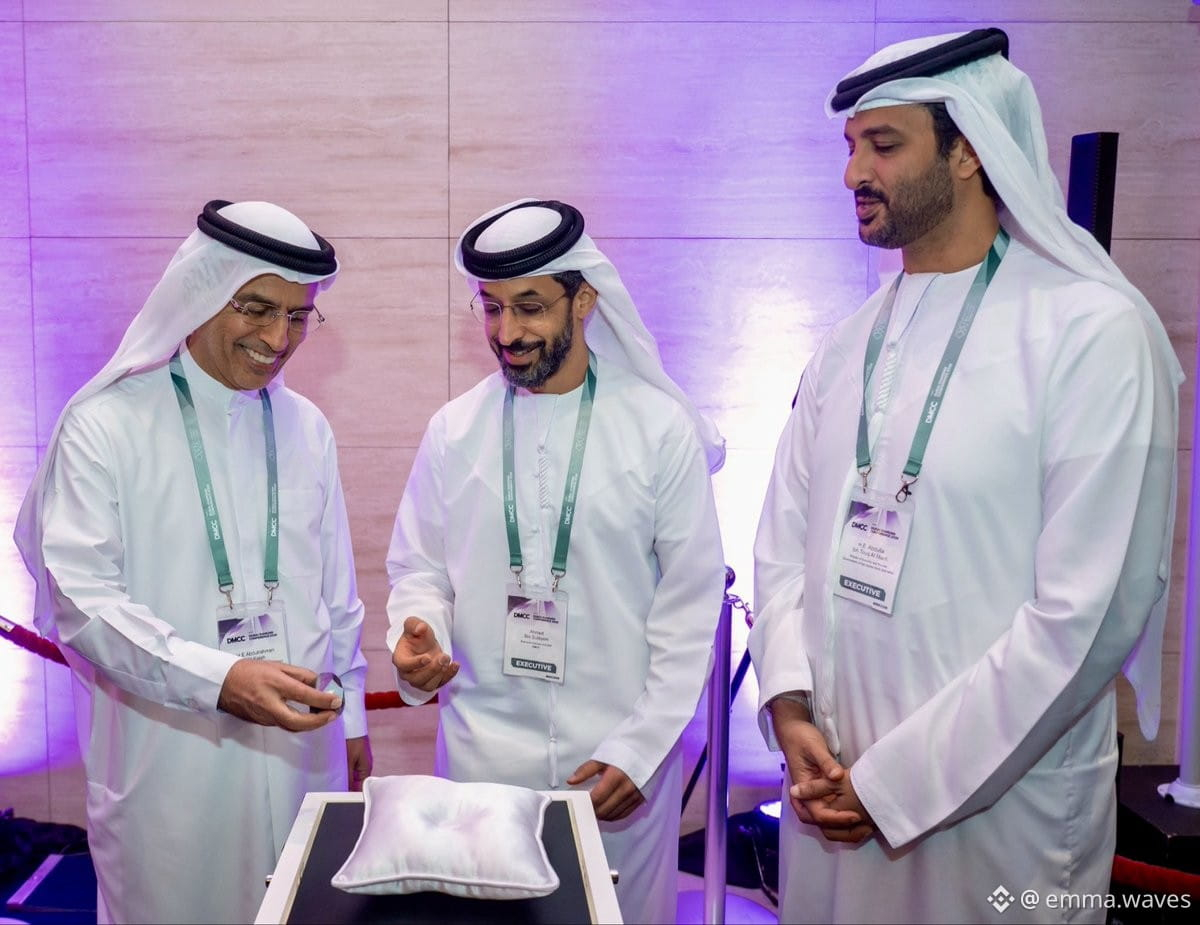
Natural diamonds are facing their "Japanese cultured pearl moment" — and the clock is ticking.
A century ago, cultured pearls crushed Gulf pearl divers. Cheaper alternative, same product, game over. The Great Depression finished what was left. Dubai's pearling economy collapsed.
Now it's diamonds' turn. Lab-grown stones are the new cultured pearls. The industry is fragmented, and no single player can save it alone.
At the 7th Dubai Diamond Conference, we dropped "The Swiss Parallel" with ORIGINALLUXURY. Post-quartz crisis, Swiss watch exports 9x'd in value from 1980 to 2023. $ROLEX led luxury, $SWATCH rebuilt mass market. Both ends mattered.
If natural diamonds only save the high-end and lose the engagement ring market, African miners — whose jobs, exports, and public revenue depend on this — are cooked.
Dubai traded $41.7B in diamonds in 2025. 95.8% natural. The entire value chain is already here: miners, manufacturers, financiers, labs, retailers.
Connection is Dubai's superpower. The Swiss showed reinvention works. The pearl divers showed what happens without it.
The reset starts now — or the industry joins the pearls at the bottom of the Gulf.
68
·
--
Hot take: If you're hostile to AI, you're probably hostile to people too.
AI is just a mirror. It reflects your character. The aggression isn't about the tech—it's about what's underneath.
So what does that make the anti-AI crowd?
Anti-human.
They hate humanity itself. They just hide it behind AI hate.
AI is just a mirror. It reflects your character. The aggression isn't about the tech—it's about what's underneath.
So what does that make the anti-AI crowd?
Anti-human.
They hate humanity itself. They just hide it behind AI hate.
21
·
--
Hot take: If you're hostile to AI, you're probably hostile to people too.
AI is just a mirror. It doesn't care about your feelings. But how you react to it? That reveals everything about your character.
So what does that make the anti-AI crowd?
Simple. Anti-human.
Think about it. The same energy you use to fight progress is the same energy you use to tear others down. You're not protecting creativity or jobs—you're protecting your ego.
The future doesn't wait for permission. Adapt or get left behind.
34
·
--
AI dev time estimates are completely cooked
Skip lunch and the app is 90% done by dinner? Meanwhile ChatGPT out here saying 4-6 weeks for a basic feature set
The models are literally calibrated on EU bureaucratic timelines instead of actual builder velocity
This is why you can't trust AI for project scoping. It's trained on slow corporate workflows, not degen ship-it-now energy
If you're building in Web3, ignore the estimates. Just ship

55
තවත් අන්තර්ගතයන් ගවේෂණය කිරීමට ඇතුල් වන්න
Binance චතුරශ්රය හි ගෝලීය ක්රිප්ටෝ පරිශීලකයින් හා එක්වන්න
⚡️ ක්රිප්ටෝ පිළිබඳ නවතම සහ ප්රයෝජනවත් තොරතුරු ලබා ගන්න.
💬 ලොව විශාලතම ක්රිප්ටෝ හුවමාරුව මගින් විශ්වාස කෙරේ.
👍 සත්යායනය කරන ලද නිර්මාණකරුවන්ගෙන් සැබෑ විදසුන් සොයා ගන්න.
විද්යුත් තැපෑල / දුරකථන අංකය
නැගී එන මාතෘකා
HotCPIDecemberHikePriced
54,616 නැරඹීම්
840 සාකච්ඡා කරමින්
CPI Market Watch | US CPI Rises 0.4% in October, Hotter Than 0.3% Forecast
Binance News
·23 කැමත්ත දැක්වීම්
·38.5k නැරඹීම්
AnthropicRejectsIPODelayValuationinQuestion
188,777 නැරඹීම්
1,646 සාකච්ඡා කරමින්
NvidiaInvestigatesAfterHuang’sAffairApology
465,888 නැරඹීම්
3,093 සාකච්ඡා කරමින්