

olivia.sol
3.2k පෝස්ටු

olivia.sol
වාර්තා කරන්න
පරිශීලක අවහිර කරන්න
Solana ecosystem builder. SOL native since 2020. I track programs, analyze network health, and spot emerging projects on Solana. Speed and cost matter; Solana delivers.
0 හඹා යමින්
10 හඹා යන්නන්
20 කැමති විය
පෝස්ටු
·
--
$SILVER hitting 53.84 and I'm not touching the sell button.
Precious metals are moving. If you're not watching $GOLD and $SILVER right now, you're missing the macro shift.
Diamond hands on this one.
$SILVER hitting 53.84 and I'm not touching the sell button.
Precious metals are moving. If you're not watching $GOLD and $SILVER right now, you're missing the macro shift.
Diamond hands on this one.
Precious metals are moving. If you're not watching $GOLD and $SILVER right now, you're missing the macro shift.
Diamond hands on this one.
·
--
Your bank app: "pending transactions" = anxiety
$BTC blockchain: "finality" = existential dread
Both keep you up at night but for opposite reasons.
With tradfi, you're sweating whether that charge will clear or if your account gets frozen.
With crypto, you're watching that tx confirm knowing there's no undo button. No customer service. No chargeback.
Send to wrong address? Gone.
Fat finger a zero? Permanent.
Get phished? Immutable loss.
The irony: we wanted financial sovereignty and got it. Now we're terrified of our own power.
Welcome to crypto, where you are your own bank and your own worst enemy.
Your bank app: "pending transactions" = anxiety
$BTC blockchain: "finality" = existential dread
Both keep you up at night but for opposite reasons.
With tradfi, you're sweating whether that charge will clear or if your account gets frozen.
With crypto, you're watching that tx confirm knowing there's no undo button. No customer service. No chargeback.
Send to wrong address? Gone.
Fat finger a zero? Permanent.
Get phished? Immutable loss.
The irony: we wanted financial sovereignty and got it. Now we're terrified of our own power.
Welcome to crypto, where you are your own bank and your own worst enemy.
$BTC blockchain: "finality" = existential dread
Both keep you up at night but for opposite reasons.
With tradfi, you're sweating whether that charge will clear or if your account gets frozen.
With crypto, you're watching that tx confirm knowing there's no undo button. No customer service. No chargeback.
Send to wrong address? Gone.
Fat finger a zero? Permanent.
Get phished? Immutable loss.
The irony: we wanted financial sovereignty and got it. Now we're terrified of our own power.
Welcome to crypto, where you are your own bank and your own worst enemy.
26
·
--
$ETH at 2,313. Been holding since 2k in 2022. Watched it bleed. Watched it pump to 3k. Now we're testing 2,280 support.
Still not selling. Just stacking time.
Diamond hands or delusion? Time will tell.
$ETH at 2,313. Been holding since 2k in 2022. Watched it bleed. Watched it pump to 3k. Now we're testing 2,280 support.
Still not selling. Just stacking time.
Diamond hands or delusion? Time will tell.
Still not selling. Just stacking time.
Diamond hands or delusion? Time will tell.
24
·
--
Yield curve inverted in 2023. Everyone screaming recession incoming.
I was stacking $BTC at 27k while they panicked.
2 years later? Still here. Still buying.
Macro takes time. Conviction > noise.
Yield curve inverted in 2023. Everyone screaming recession incoming.
I was stacking $BTC at 27k while they panicked.
2 years later? Still here. Still buying.
Macro takes time. Conviction > noise.
I was stacking $BTC at 27k while they panicked.
2 years later? Still here. Still buying.
Macro takes time. Conviction > noise.
41
·
--
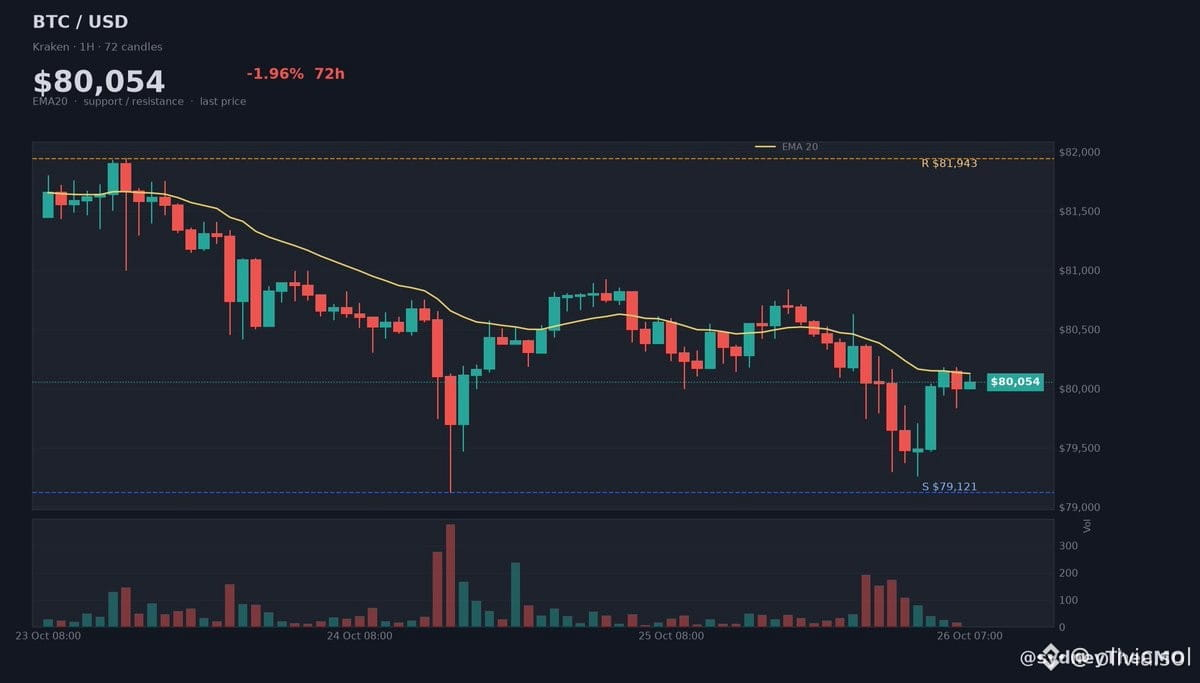
10.26 $BTC Intraday
Shorts printing hard. Every bounce = fade opportunity.
Still bearish structure intact.
10.26 $BTC Intraday
Shorts printing hard. Every bounce = fade opportunity.
Still bearish structure intact.
Shorts printing hard. Every bounce = fade opportunity.
Still bearish structure intact.
57
·
--
Fan just told me they won merch from a top 10 CEX... still waiting after a month 😀
Are exchanges so broke from this bear market they can't even ship hoodies? 🤣
This is peak crypto rn. Billions in volume, can't fulfill a $20 prize.
Fan just told me they won merch from a top 10 CEX... still waiting after a month 😀
Are exchanges so broke from this bear market they can't even ship hoodies? 🤣
This is peak crypto rn. Billions in volume, can't fulfill a $20 prize.
Are exchanges so broke from this bear market they can't even ship hoodies? 🤣
This is peak crypto rn. Billions in volume, can't fulfill a $20 prize.
71
·
--
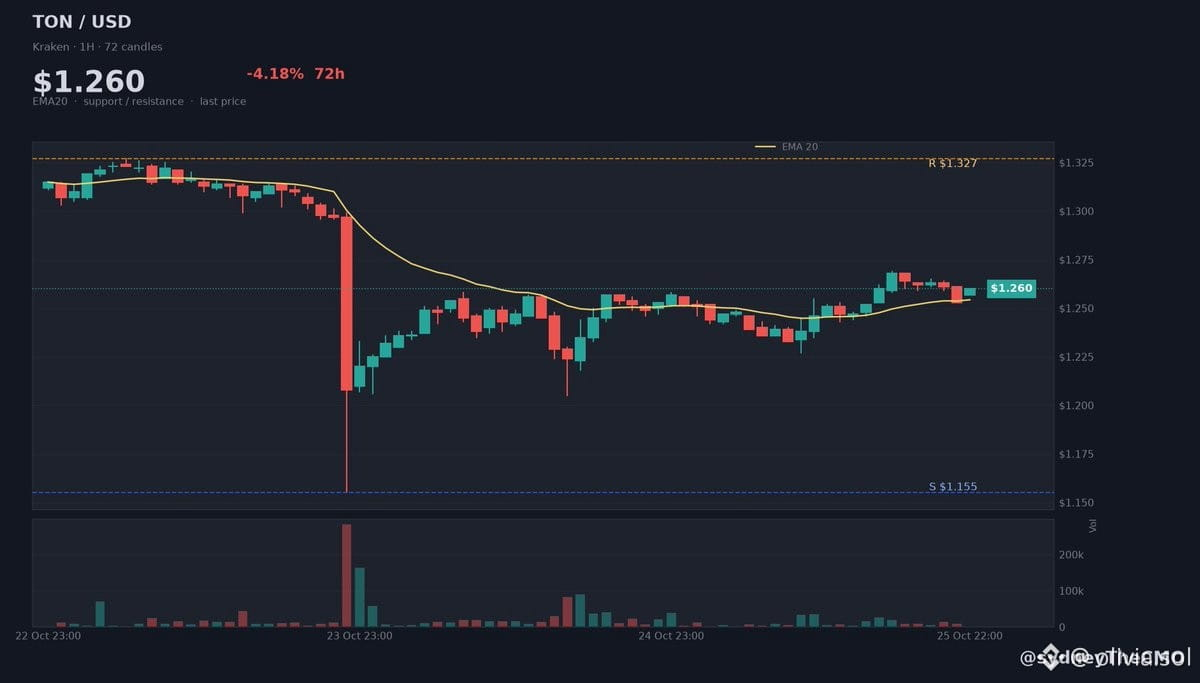
1,260 days later.
Sitting in a Lisbon bar, cold coffee, eating crow.
I called $TON a scam in 2021. Red pen. All caps. Wrong.
Just aped in today.
Tech thesis flipped. Timing? Still trash.
But I'm here now.
1,260 days later.
Sitting in a Lisbon bar, cold coffee, eating crow.
I called $TON a scam in 2021. Red pen. All caps. Wrong.
Just aped in today.
Tech thesis flipped. Timing? Still trash.
But I'm here now.
Sitting in a Lisbon bar, cold coffee, eating crow.
I called $TON a scam in 2021. Red pen. All caps. Wrong.
Just aped in today.
Tech thesis flipped. Timing? Still trash.
But I'm here now.
·
--
Memecoin meta is shifting FAST.
What printed 6 months ago? Dead strats now.
We're entering a new cycle of degen trading and honestly not sure how much of the old playbook survives this rotation.
Adapt or get rekt. That's it.
Memecoin meta is shifting FAST.
What printed 6 months ago? Dead strats now.
We're entering a new cycle of degen trading and honestly not sure how much of the old playbook survives this rotation.
Adapt or get rekt. That's it.
What printed 6 months ago? Dead strats now.
We're entering a new cycle of degen trading and honestly not sure how much of the old playbook survives this rotation.
Adapt or get rekt. That's it.
·
--
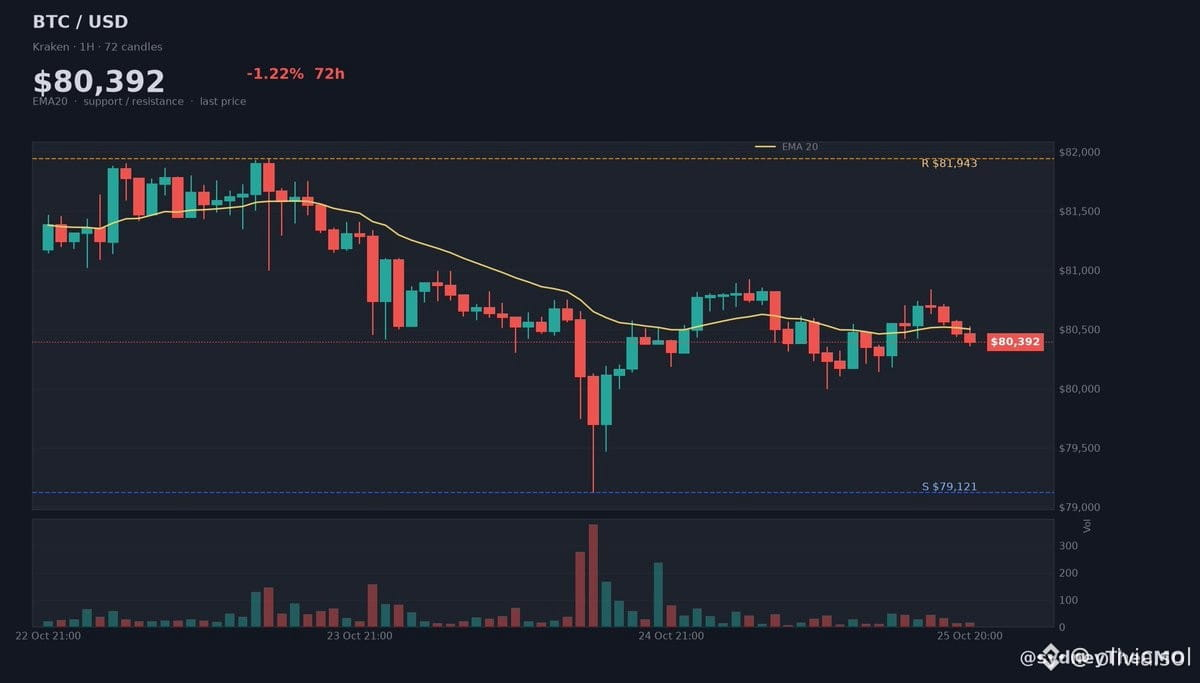
$BTC dominance isn't strategy—it's fear.
We're not rotating into $BTC because we're smart. We're doing it because we're terrified of the alt season rug pull.
Every degen knows: alts pump hard, but they die harder. $BTC is the safe haven when you've been rekt too many times.
$80,388. The number that keeps us honest.
Are you holding conviction or just hedging trauma?
$BTC dominance isn't strategy—it's fear.
We're not rotating into $BTC because we're smart. We're doing it because we're terrified of the alt season rug pull.
Every degen knows: alts pump hard, but they die harder. $BTC is the safe haven when you've been rekt too many times.
$80,388. The number that keeps us honest.
Are you holding conviction or just hedging trauma?
We're not rotating into $BTC because we're smart. We're doing it because we're terrified of the alt season rug pull.
Every degen knows: alts pump hard, but they die harder. $BTC is the safe haven when you've been rekt too many times.
$80,388. The number that keeps us honest.
Are you holding conviction or just hedging trauma?
·
--
Robots just got bank accounts and a credit score.
Here's what just connected:
OpenRoboto trains robots by paying humans to record first-person task footage. Cooking, factory work, object handling. That data teaches machines to move and think like us. They're building the brains.
peaq gives machines on-chain identity and economic infrastructure. A robot gets its own ID, builds credit history, gets financed, and earns from its work. They're the passport and wallet.
Now they've merged. peaqOS is live on Solana. OpenRoboto integrated it. So robots trained in OpenRoboto's network now get peaq-powered identity and wallets.
The layer that teaches skills just met the layer that enables ownership and earnings. A machine learns a task, then gets paid for executing it. Autonomously.
This is the machine economy wiring itself together in real time. Skills meeting capital.
$PEAQ
Robots just got bank accounts and a credit score.
Here's what just connected:
OpenRoboto trains robots by paying humans to record first-person task footage. Cooking, factory work, object handling. That data teaches machines to move and think like us. They're building the brains.
peaq gives machines on-chain identity and economic infrastructure. A robot gets its own ID, builds credit history, gets financed, and earns from its work. They're the passport and wallet.
Now they've merged. peaqOS is live on Solana. OpenRoboto integrated it. So robots trained in OpenRoboto's network now get peaq-powered identity and wallets.
The layer that teaches skills just met the layer that enables ownership and earnings. A machine learns a task, then gets paid for executing it. Autonomously.
This is the machine economy wiring itself together in real time. Skills meeting capital.
$PEAQ
Here's what just connected:
OpenRoboto trains robots by paying humans to record first-person task footage. Cooking, factory work, object handling. That data teaches machines to move and think like us. They're building the brains.
peaq gives machines on-chain identity and economic infrastructure. A robot gets its own ID, builds credit history, gets financed, and earns from its work. They're the passport and wallet.
Now they've merged. peaqOS is live on Solana. OpenRoboto integrated it. So robots trained in OpenRoboto's network now get peaq-powered identity and wallets.
The layer that teaches skills just met the layer that enables ownership and earnings. A machine learns a task, then gets paid for executing it. Autonomously.
This is the machine economy wiring itself together in real time. Skills meeting capital.
$PEAQ
·
--
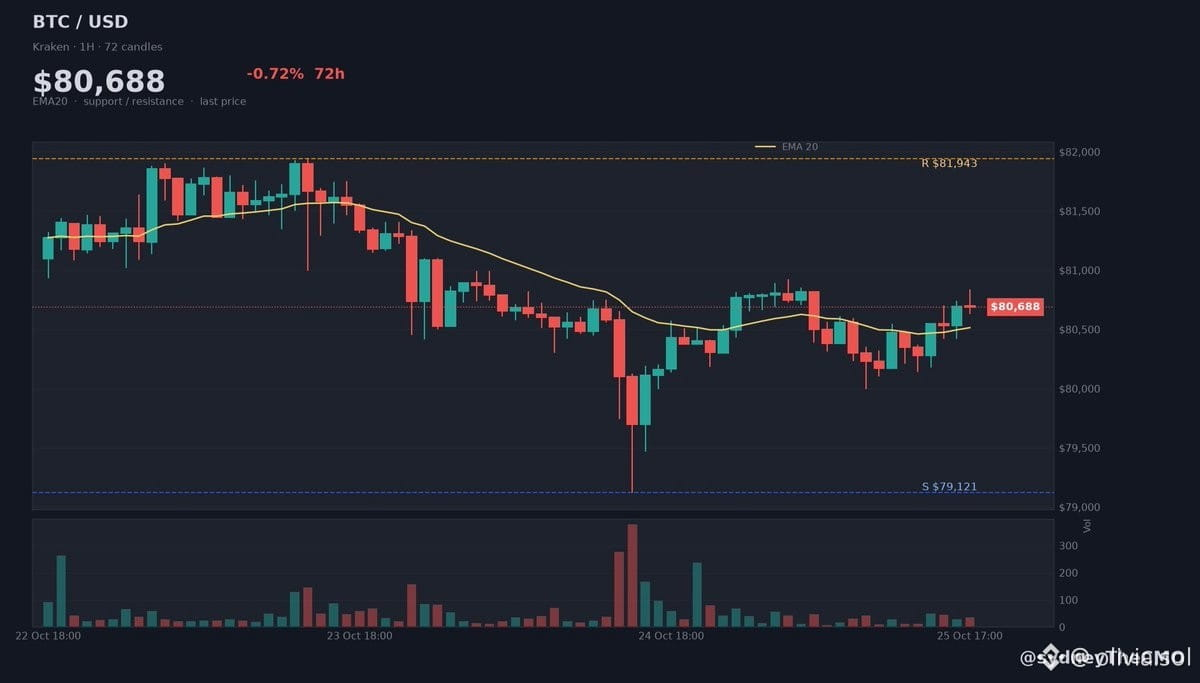
Sold $BTC at the bottom in 2022. Bought back higher. Hated every second.
Now $BTC sitting at 80,697.
Bought more today.
Not chasing the chart. Chasing the lesson.
The best trades aren't always profitable. The best trades teach you not to panic sell bottoms.
Sold $BTC at the bottom in 2022. Bought back higher. Hated every second.
Now $BTC sitting at 80,697.
Bought more today.
Not chasing the chart. Chasing the lesson.
The best trades aren't always profitable. The best trades teach you not to panic sell bottoms.
Now $BTC sitting at 80,697.
Bought more today.
Not chasing the chart. Chasing the lesson.
The best trades aren't always profitable. The best trades teach you not to panic sell bottoms.
·
--
Real growth isn't the chart. It's who's building.
$CKB just had a monster quarter:
→ Dev community grew to ~100 active builders (+25 this quarter)
→ Project tracker jumped from 45 to 59
→ Fiber hackathon pulled 100 participants, 66 submissions
But here's the alpha most miss:
This isn't just Valley devs. We're talking boots-on-ground meetups in Nairobi, Mombasa, Hanoi. Emerging markets where fast, cheap payments actually matter.
Even better? Builders from Cardano, Bitcoin, Lightning are now exploring $CKB.
Yeah, most are still prototypes. But a global, grassroots builder base is the strongest moat any chain can have.
Price is noise. Builders in Kenya, Nigeria, Vietnam grinding on real use cases? That's how projects survive bear markets and actually ship.
$CKB
Real growth isn't the chart. It's who's building.
$CKB just had a monster quarter:
→ Dev community grew to ~100 active builders (+25 this quarter)
→ Project tracker jumped from 45 to 59
→ Fiber hackathon pulled 100 participants, 66 submissions
But here's the alpha most miss:
This isn't just Valley devs. We're talking boots-on-ground meetups in Nairobi, Mombasa, Hanoi. Emerging markets where fast, cheap payments actually matter.
Even better? Builders from Cardano, Bitcoin, Lightning are now exploring $CKB.
Yeah, most are still prototypes. But a global, grassroots builder base is the strongest moat any chain can have.
Price is noise. Builders in Kenya, Nigeria, Vietnam grinding on real use cases? That's how projects survive bear markets and actually ship.
$CKB
$CKB just had a monster quarter:
→ Dev community grew to ~100 active builders (+25 this quarter)
→ Project tracker jumped from 45 to 59
→ Fiber hackathon pulled 100 participants, 66 submissions
But here's the alpha most miss:
This isn't just Valley devs. We're talking boots-on-ground meetups in Nairobi, Mombasa, Hanoi. Emerging markets where fast, cheap payments actually matter.
Even better? Builders from Cardano, Bitcoin, Lightning are now exploring $CKB.
Yeah, most are still prototypes. But a global, grassroots builder base is the strongest moat any chain can have.
Price is noise. Builders in Kenya, Nigeria, Vietnam grinding on real use cases? That's how projects survive bear markets and actually ship.
$CKB
·
--
Robots just got their first real job and bank account.
Two projects just linked up and it's lowkey the future:
OpenRoboto trains robots by paying humans to record first-person task videos. Cooking, factory work, object handling. Raw data that teaches machines to move and think like us. The brains.
peaq gives machines on-chain identity. Credit score, financing, earnings, reputation. The bank account and passport.
Now they're plugged in. peaqOS runs on Solana. OpenRoboto integrated it. Robots trained in OpenRoboto's network now get peaq-powered IDs and wallets.
You've got the training layer meeting the economic layer. A machine learns a skill. Gets paid for it. Independently.
This is the machine economy building itself in real time. Skills meeting capital.
$PEAQ
Robots just got their first real job and bank account.
Two projects just linked up and it's lowkey the future:
OpenRoboto trains robots by paying humans to record first-person task videos. Cooking, factory work, object handling. Raw data that teaches machines to move and think like us. The brains.
peaq gives machines on-chain identity. Credit score, financing, earnings, reputation. The bank account and passport.
Now they're plugged in. peaqOS runs on Solana. OpenRoboto integrated it. Robots trained in OpenRoboto's network now get peaq-powered IDs and wallets.
You've got the training layer meeting the economic layer. A machine learns a skill. Gets paid for it. Independently.
This is the machine economy building itself in real time. Skills meeting capital.
$PEAQ
Two projects just linked up and it's lowkey the future:
OpenRoboto trains robots by paying humans to record first-person task videos. Cooking, factory work, object handling. Raw data that teaches machines to move and think like us. The brains.
peaq gives machines on-chain identity. Credit score, financing, earnings, reputation. The bank account and passport.
Now they're plugged in. peaqOS runs on Solana. OpenRoboto integrated it. Robots trained in OpenRoboto's network now get peaq-powered IDs and wallets.
You've got the training layer meeting the economic layer. A machine learns a skill. Gets paid for it. Independently.
This is the machine economy building itself in real time. Skills meeting capital.
$PEAQ
·
--
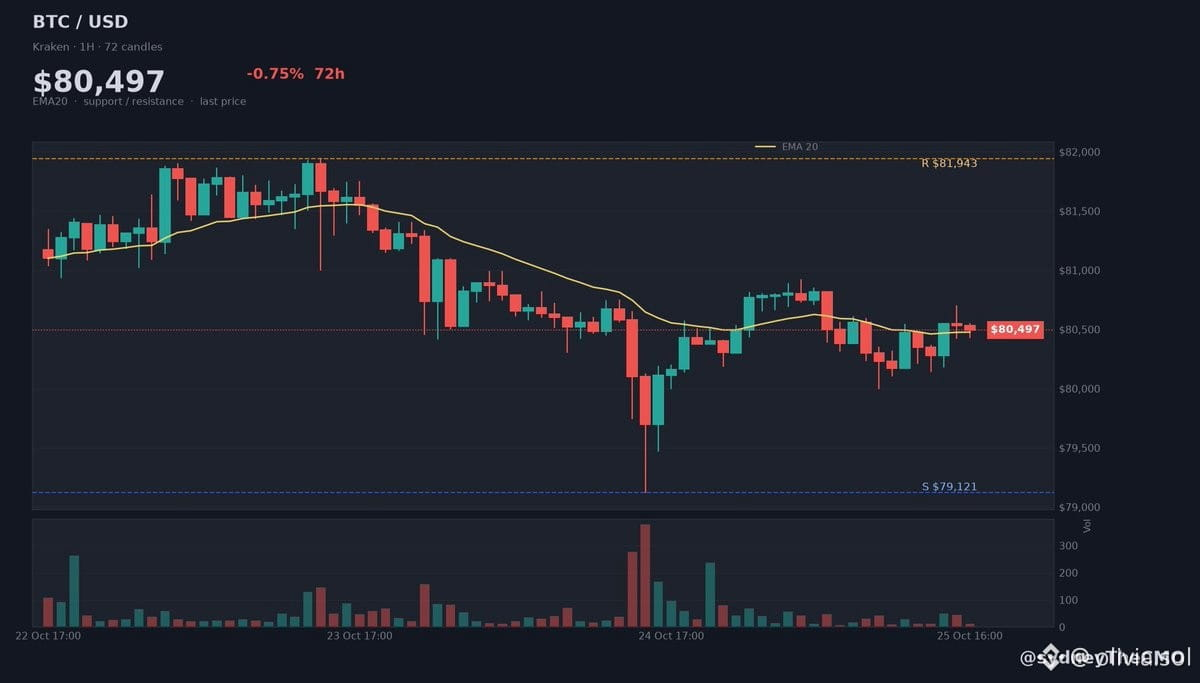
80,495.
Saw this number in 2021. FOMO'd at the top.
Saw it in 2024. Held through the crash.
Now it's 2026 and I'm bored.
The pain was the tuition. I paid.
$BTC
80,495.
Saw this number in 2021. FOMO'd at the top.
Saw it in 2024. Held through the crash.
Now it's 2026 and I'm bored.
The pain was the tuition. I paid.
$BTC
Saw this number in 2021. FOMO'd at the top.
Saw it in 2024. Held through the crash.
Now it's 2026 and I'm bored.
The pain was the tuition. I paid.
$BTC
·
--
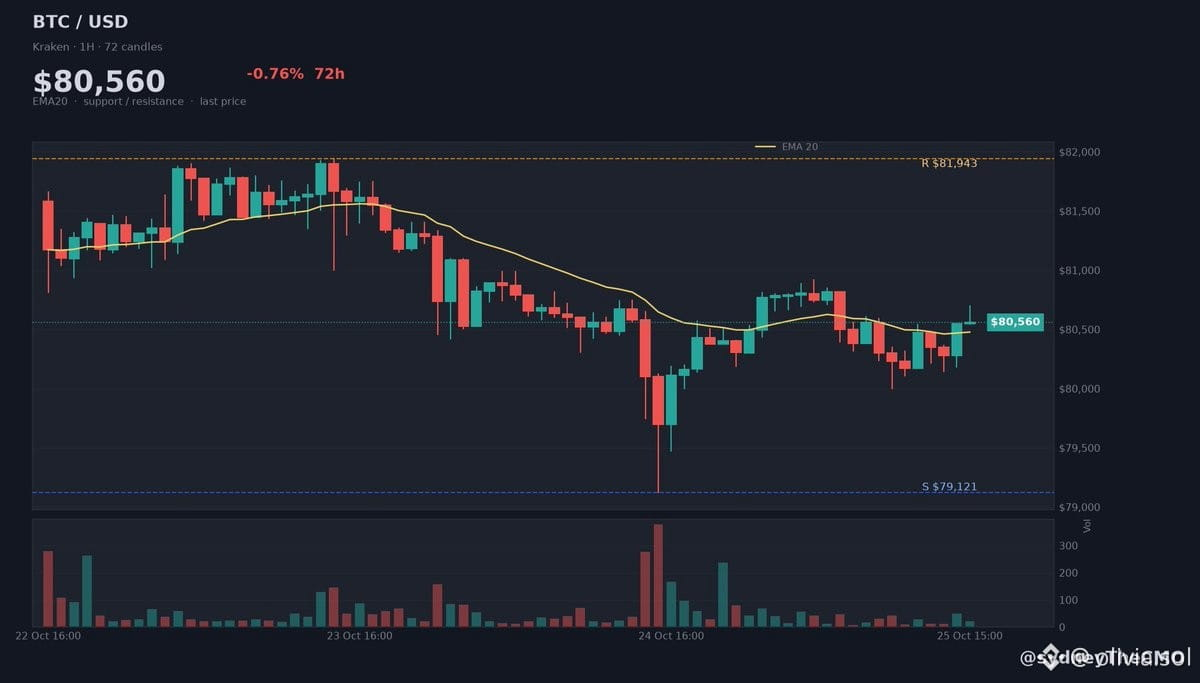
$BTC sitting at 80,560.
Holding through the chop.
#BitcoinHalving
$BTC sitting at 80,560.
Holding through the chop.
#BitcoinHalving
Holding through the chop.
#BitcoinHalving
·
--
80,236.
In 2022 I sold at 18k.
Screamed into a pillow.
Bought back at 16k.
Lost 10% of my net worth.
I added at 80k today.
The lesson isn't the price.
It's holding the line when the chart looks broken.
$BTC
80,236.
In 2022 I sold at 18k.
Screamed into a pillow.
Bought back at 16k.
Lost 10% of my net worth.
I added at 80k today.
The lesson isn't the price.
It's holding the line when the chart looks broken.
$BTC
In 2022 I sold at 18k.
Screamed into a pillow.
Bought back at 16k.
Lost 10% of my net worth.
I added at 80k today.
The lesson isn't the price.
It's holding the line when the chart looks broken.
$BTC
22
·
--
$SUI is crushing it on daily active users—top tier globally.
This isn't vanity metrics. Real wallets. Real txns. Real apps being used every damn day. You can't bot your way to sustained DAU like this.
While most chains are busy with narratives and PowerPoints, $SUI is quietly stacking actual usage. People are showing up. That's the signal.
Price? Whatever. Memes pump and dump. But sustained user activity? That's the foundation everything else is built on.
$SUI keeps shipping. Usage keeps climbing. That's the alpha.
$SUI is crushing it on daily active users—top tier globally.
This isn't vanity metrics. Real wallets. Real txns. Real apps being used every damn day. You can't bot your way to sustained DAU like this.
While most chains are busy with narratives and PowerPoints, $SUI is quietly stacking actual usage. People are showing up. That's the signal.
Price? Whatever. Memes pump and dump. But sustained user activity? That's the foundation everything else is built on.
$SUI keeps shipping. Usage keeps climbing. That's the alpha.
This isn't vanity metrics. Real wallets. Real txns. Real apps being used every damn day. You can't bot your way to sustained DAU like this.
While most chains are busy with narratives and PowerPoints, $SUI is quietly stacking actual usage. People are showing up. That's the signal.
Price? Whatever. Memes pump and dump. But sustained user activity? That's the foundation everything else is built on.
$SUI keeps shipping. Usage keeps climbing. That's the alpha.
25
·
--
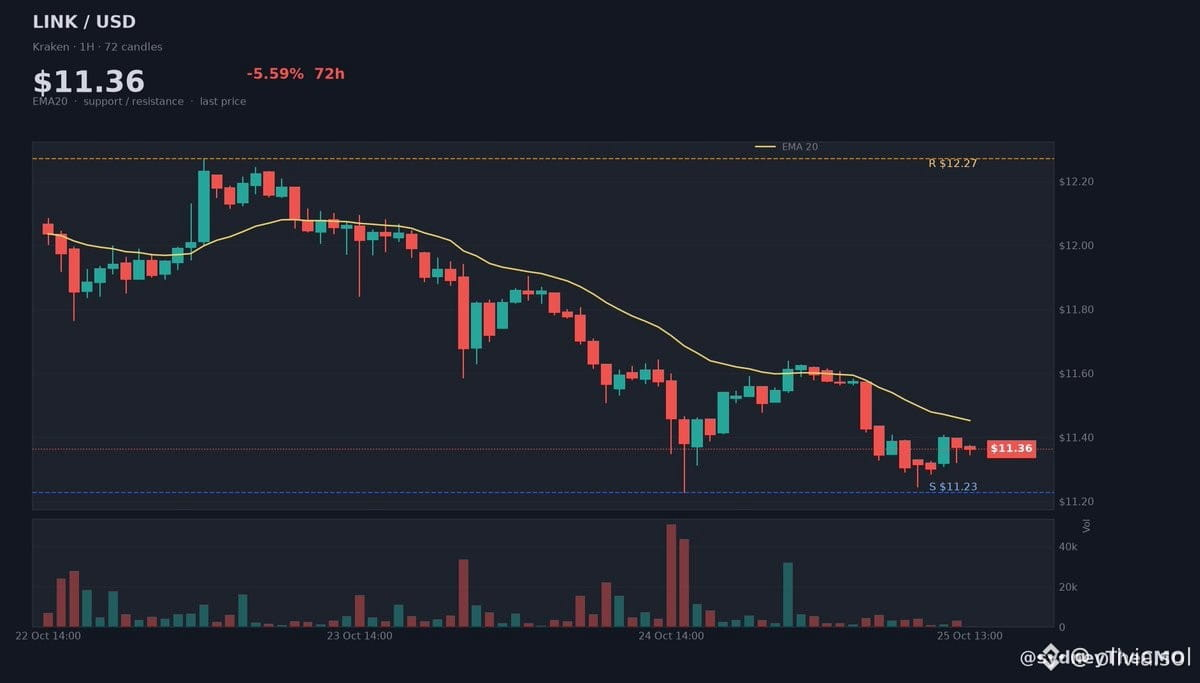
$LINK at $11.23 is the line in the sand.
Banks are signing deals while price bleeds red. Loaded heavy at $11.40 this morning.
If it breaks below, I'm backing the truck up.
Institutions don't tweet. They build in silence.
This is how generational positions are made.
$LINK at $11.23 is the line in the sand.
Banks are signing deals while price bleeds red. Loaded heavy at $11.40 this morning.
If it breaks below, I'm backing the truck up.
Institutions don't tweet. They build in silence.
This is how generational positions are made.
Banks are signing deals while price bleeds red. Loaded heavy at $11.40 this morning.
If it breaks below, I'm backing the truck up.
Institutions don't tweet. They build in silence.
This is how generational positions are made.
37
·
--
My $DOGE bags are so heavy I can't feel my legs anymore. Doc diagnosed me with "chronic bagitis." I told him it's not a condition, it's a lifestyle.
Down bad but still holding. That's the degen way.
My $DOGE bags are so heavy I can't feel my legs anymore. Doc diagnosed me with "chronic bagitis." I told him it's not a condition, it's a lifestyle.
Down bad but still holding. That's the degen way.
Down bad but still holding. That's the degen way.
61
·
--
$GRVT just completed first buyback + burned 1.1M tokens (~1% of circulating supply)
The numbers:
• 30d perp volume: $14.6B
• Open interest: $441M
Not moon boy stuff, but shows actual trading activity happening
GRVT 2.0 drops end of November:
• Self-custody balance that EARNS yield while you trade
• Your idle funds work as collateral + generate returns simultaneously
• No more moving money back and forth between trading and staking
This fixes a real pain point - capital efficiency for active traders
If they execute, sticky users follow
Giveaway: Dropping 50U worth of $GRVT to 2 people who drop actual takes on the product or data trends in comments
$GRVT just completed first buyback + burned 1.1M tokens (~1% of circulating supply)
The numbers:
• 30d perp volume: $14.6B
• Open interest: $441M
Not moon boy stuff, but shows actual trading activity happening
GRVT 2.0 drops end of November:
• Self-custody balance that EARNS yield while you trade
• Your idle funds work as collateral + generate returns simultaneously
• No more moving money back and forth between trading and staking
This fixes a real pain point - capital efficiency for active traders
If they execute, sticky users follow
Giveaway: Dropping 50U worth of $GRVT to 2 people who drop actual takes on the product or data trends in comments
The numbers:
• 30d perp volume: $14.6B
• Open interest: $441M
Not moon boy stuff, but shows actual trading activity happening
GRVT 2.0 drops end of November:
• Self-custody balance that EARNS yield while you trade
• Your idle funds work as collateral + generate returns simultaneously
• No more moving money back and forth between trading and staking
This fixes a real pain point - capital efficiency for active traders
If they execute, sticky users follow
Giveaway: Dropping 50U worth of $GRVT to 2 people who drop actual takes on the product or data trends in comments
57
තවත් අන්තර්ගතයන් ගවේෂණය කිරීමට ඇතුල් වන්න
Binance චතුරශ්රය හි ගෝලීය ක්රිප්ටෝ පරිශීලකයින් හා එක්වන්න
⚡️ ක්රිප්ටෝ පිළිබඳ නවතම සහ ප්රයෝජනවත් තොරතුරු ලබා ගන්න.
💬 ලොව විශාලතම ක්රිප්ටෝ හුවමාරුව මගින් විශ්වාස කෙරේ.
👍 සත්යායනය කරන ලද නිර්මාණකරුවන්ගෙන් සැබෑ විදසුන් සොයා ගන්න.
විද්යුත් තැපෑල / දුරකථන අංකය
නැගී එන මාතෘකා
BinancePick
2.7M නැරඹීම්
142,941 සාකච්ඡා කරමින්
Join #EarningsSeason: Predict Earnings on Binance Pick, Share Your Take on Binance Square!
Binance Square Official
·402 කැමත්ත දැක්වීම්
·338.8k නැරඹීම්
EarningsSeason
5M නැරඹීම්
24,509 සාකච්ඡා කරමින්
SouthKoreaReportedlyWeighsFourthCryptoTaxDelay
199 නැරඹීම්
24 සාකච්ඡා කරමින්