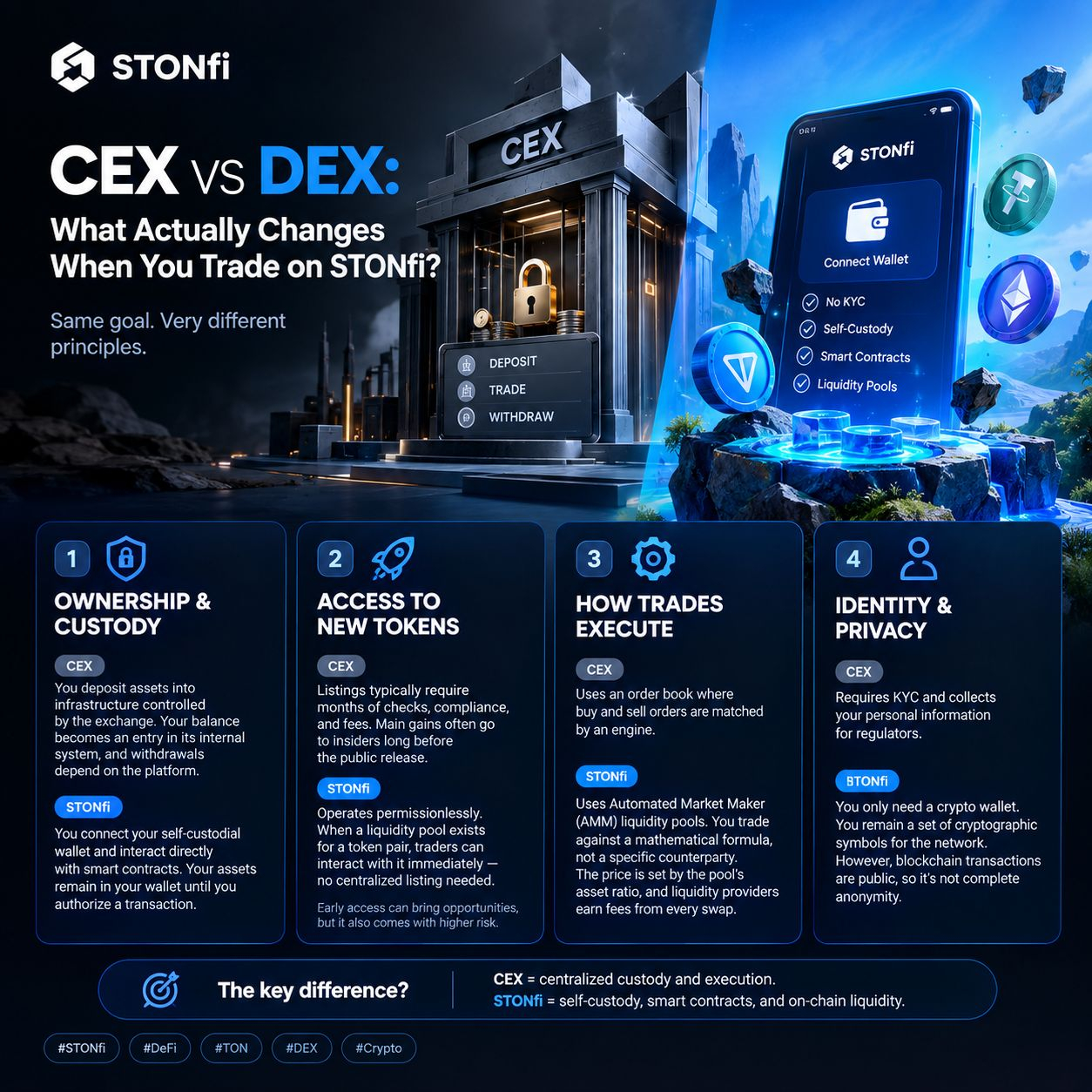
CEX vs DEX: What Really Changes When You Trade on STONfi?
At a glance, both platforms let you swap tokens.
The difference shows up in what happens behind the interface. 👇
🔐 1. OWNERSHIP & CUSTODY
On a CEX, you deposit assets with the exchange, which then tracks them through its own internal systems.
With STONfi, you connect a self-custodial wallet and interact directly with smart contracts.
Your tokens stay in your wallet until you approve a transaction. That part feels pretty different.
🌐 2. ACCESS TO NEW TOKENS
CEX listings typically depend on centralized reviews and listing decisions.
STONfi works permissionlessly at the protocol level.
Once a liquidity pool is available, traders can use it without waiting for a centralized exchange to approve and list the token.
That earlier access can be useful, but honestly, it can also bring more risk.
⚙️ 3. HOW TRADES EXECUTE
CEXs generally rely on order books, matching buyers with sellers.
STONfi uses an Automated Market Maker (AMM).
Rather than trading with one specific counterparty, your swap uses a liquidity pool and follows the protocol's pricing mechanism.
Liquidity providers may earn fees from eligible swaps.
🛡️ 4. IDENTITY & PRIVACY
CEXs commonly require KYC and collect information about their users.
A self-custodial DEX interaction begins with a crypto wallet, not an exchange account.
Still, wallet-based trading does not mean complete anonymity. Blockchain transactions remain publicly visible.
The core distinction is simple:
CEX → centralized custody and trade execution
STONfi → self-custody, smart contracts, and on-chain liquidity
That difference matters because it shows what you're actually placing your trust in when you trade. Honestly, it feels like a small detail until you look at who controls the funds and how each trade is processed.
#STONfi #DeFi #TON #DEX #crypto
$BTC $GRAM
At a glance, both platforms let you swap tokens.
The difference shows up in what happens behind the interface. 👇
🔐 1. OWNERSHIP & CUSTODY
On a CEX, you deposit assets with the exchange, which then tracks them through its own internal systems.
With STONfi, you connect a self-custodial wallet and interact directly with smart contracts.
Your tokens stay in your wallet until you approve a transaction. That part feels pretty different.
🌐 2. ACCESS TO NEW TOKENS
CEX listings typically depend on centralized reviews and listing decisions.
STONfi works permissionlessly at the protocol level.
Once a liquidity pool is available, traders can use it without waiting for a centralized exchange to approve and list the token.
That earlier access can be useful, but honestly, it can also bring more risk.
⚙️ 3. HOW TRADES EXECUTE
CEXs generally rely on order books, matching buyers with sellers.
STONfi uses an Automated Market Maker (AMM).
Rather than trading with one specific counterparty, your swap uses a liquidity pool and follows the protocol's pricing mechanism.
Liquidity providers may earn fees from eligible swaps.
🛡️ 4. IDENTITY & PRIVACY
CEXs commonly require KYC and collect information about their users.
A self-custodial DEX interaction begins with a crypto wallet, not an exchange account.
Still, wallet-based trading does not mean complete anonymity. Blockchain transactions remain publicly visible.
The core distinction is simple:
CEX → centralized custody and trade execution
STONfi → self-custody, smart contracts, and on-chain liquidity
That difference matters because it shows what you're actually placing your trust in when you trade. Honestly, it feels like a small detail until you look at who controls the funds and how each trade is processed.
#STONfi #DeFi #TON #DEX #crypto
$BTC $GRAM