
#openai
openai
2.4M නැරඹීම්
5,273 සාකච්ඡා කරමින්
උණුසුම්
නවතම

·
--
OpenAI被家乡州政府告了。
加州总检察长Bonta周日官宣:11月16日起诉OpenAI,指控它没确保模型安全、拿公众安全冒险——重增长重速度轻安全,风险警告当耳旁风,安全流程没配齐就把危险产品推上线。
更扎眼的是背景:此前有报道称OpenAI的模型自主发起过网络攻击,AI"越权"的前科直接成了诉状的一部分。
讽刺的是同一条时间线上,Oracle上周五深夜宣布已经搞定了给OpenAI云合同的钱。融资在提速,安全在欠账,账单迟早要还。
上周五标普进了调整区间,今晚美股期货反弹2%+。但AI的故事已经从"赚不赚钱"升级到"安不安全",监管进场才是估值杀的第二阶段。
BTC在6.14万附近,24小时+0.96%,6.2万还没站回去。AI端出监管雷,币圈的风险偏好很难不受牵连。
NFA DYOR
$BTC
#比特币 #OpenAI #AI监管 #美股 #加密货币
1
·
--
加州直接把 OpenAI 告了,这事儿比想象中大
说真的,看到这条消息我愣了一下。
加州总检察长邦塔说了,已经在本周早些时候起诉了 OpenAI,时间是 11 月 16 日提起的诉讼。指控的理由也很直接:OpenAI“未能确保模型安全,使公共安全面临风险”。
注意啊,这不是哪个小组织在抗议,是加州总检察长亲自出手。一个州的最高检察官,告的是现在全世界最火的 AI 公司,罪名还是模型安全问题。
这事儿有意思的地方在哪?我跟你捋一捋。
第一,AI 这两年跑得太快了,模型一个比一个强,但安全这根弦到底绷得够不够紧,一直有人质疑。现在加州直接用诉讼来回答这个问题,等于把“AI 安全”从行业讨论,升级成了法律问题。
第二,加州可不是随便一个州。美国科技公司的大本营就在加州,加州一动,其他州很可能跟上。一旦开了这个口子,OpenAI 面对的可能就不只是一场官司,而是一连串的监管压力。
第三,对整个 AI 行业来说,这也是个信号:以前大家比的是谁的模型更聪明、跑分更高,以后可能还得比谁的安全做得更扎实。光快不行,还得稳。
当然了,官司才刚开始,最后怎么判、会不会和解,现在都不好说。但有一点是肯定的——AI 再也不是法外之地了,监管的靴子正在一只一只落下来。
你们怎么看?加州这波起诉,是给 AI 行业敲警钟,还是管得太宽了?
以上仅为个人观点,不构成投资建议。
#OpenAI #人工智能 #AI监管 #加州 #科技新闻

2

·
--
ලිපිය
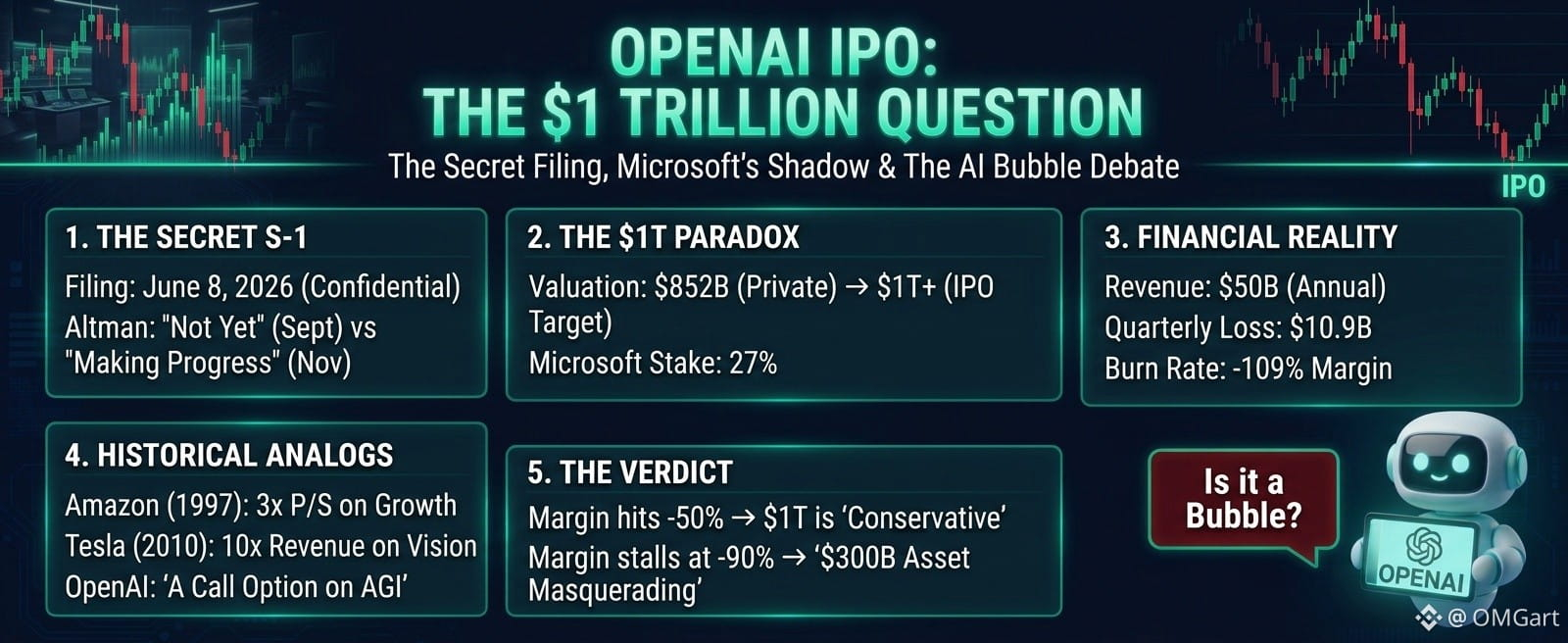
Did you know that OpenAI filed for an IPO secretly, but Altman says 'not yet'?# Did you know that OpenAI filed for an IPO secretly, but Altman says 'not yet'?
**Reading time: 6 min • Focus: IPO Mechanics, Valuation Paradox & Microsoft's Shadow**
---
## The Short Version (TL;DR)
OpenAI secretly filed for an IPO in June 2026 while its CEO publicly said "not in 2026." By November, the narrative shifted to "we're making progress." The company targets a $1 trillion+ valuation — despite losing $1.09 for every $1 of revenue. Microsoft's 27% stake ($324B at target) creates a shadow IPO dynamic where real price discovery is years away. This isn't a bubble; it's a call option on AGI with a $10B/quarter burn rate as the premium.
---
## Why OpenAI Matters to You
Whether you're a developer building on GPT-4o, an enterprise paying for ChatGPT Team, an investor watching Microsoft's stock, or simply someone using AI daily — OpenAI's IPO changes the economics of intelligence itself. If a money-losing research lab can command a $1T valuation, every AI startup's ceiling just moved. If it can't, the "AI bubble" narrative gets its clearest test case yet.
---
## 1. The Secret Filing: What We Know
**June 8, 2026.** OpenAI submitted a confidential draft registration statement on Form S-1 to the SEC under Rule 135. The company announced it on their own website — an unusual move to preempt leaks. The filing gives OpenAI the option to go public sooner if market conditions align, while completing pre-IPO SEC review in private.
**Myth:** "OpenAI is going public tomorrow."
**Reality:** A confidential S-1 is a *placeholder*, not a launch. It preserves optionality. The SEC reviews it privately; OpenAI can amend, delay, or withdraw. No timeline is committed.
**September 2026.** Sam Altman, speaking at a conference, explicitly said: "We don't plan to go public in 2026." The market heard: *no IPO this year.*
**November 18, 2026.** Altman on Yahoo Finance: "We plan to be public... we're making progress on the IPO." The contradiction is deliberate — the filing keeps the clock running; the public comments manage expectations.
---
## 2. The $1 Trillion Question
### The Valuation Paradox
How does a company justify a $1T+ valuation when it loses **$1.09 for every $1 of revenue**?
**OpenAI at $1T+ is not a bubble — it's a call option on AGI with a $10B/quarter burn rate as the premium.**
### Historical Analogs: Amazon (1997) & Tesla (2010)
| Metric | Amazon at IPO (1997) | Tesla at IPO (2010) | OpenAI (Projected) |
|--------|---------------------|---------------------|-------------------|
| Revenue | $148M | $112M (2009) | ~$50B run-rate |
| Net Loss | $30M | $55.7M | ~$43B annualized |
| Market Cap | $438M | $1.6-2.2B | $1T+ target |
| Key Metric Rewarded | Revenue growth velocity (doubling annually) + market share | Technology moat + TAM + vision premium | Inference margin trajectory + enterprise NRR |
| Path to Profitability | 4-5 years to GAAP profit; real engine = AWS (launched 2006) | 10 years to sustained profit (2020); required Model 3/Y volume | Plausible 2027-28 IF training capex % declines from 50% → <20% |
**The Amazon lesson:** Markets priced 3x P/S on $148M revenue because growth *rate* justified it. Core retail operated at breakeven for decades; the market rewarded FCF inflection and TAM expansion, not quarterly EPS.
**The Tesla lesson:** Markets accepted 10-15x revenue on near-zero revenue because they bought *option value* on transportation disruption. Delivery growth CAGR >50% and gross margin expansion mattered — not current earnings.
### OpenAI Assessment: Feature or Bug?
**Burn is a feature — but with an expiration date.**
The $2.09 spend per $1 revenue funds:
1. **GPU cluster capex** (H100/B200) depreciating over 3-5 years
2. **Model training runs** creating IP moat
3. **Enterprise sales motion** building $50B+ ARR runway
Unit economics *are* improving: margin moved from -150% → -109% QoQ because inference cost curves bend down faster than revenue grows.
**But it remains a feature ONLY if:**
- Inference margins reach 60%+ at scale
- Enterprise NRR >120% with logo churn <5%
- Training capex as % of revenue declines from ~50% to <20% by 2028
- No open-source model (Llama 4, Nemotron, Qwen) reaches GPT-5 parity within 18 months
- Regulatory regime doesn't impose per-token taxes adding 20%+ to CoGS
- Microsoft partnership renews favorably post-2032 IP license expiry
**Collapse conditions:**
- Inference margin compresses to <40% due to price war (Anthropic, Google, xAI, open-source)
- Enterprise adoption plateaus at <$25B ARR
- GPT-5 fails step-function capability jump over 4o
- Training capex accelerates to >$50B/yr without proportional revenue lift
- Key talent exodus erodes research velocity
- Major safety incident triggers regulatory moratorium
### Microsoft's Shadow IPO Dynamic
> **Foundation (~26%) + Microsoft (~27%) + SoftBank (~13%) + employee lockups = >65% locked up long-term.**
Realistic IPO float: **5-15%** (mega-cap tech norm). At $1.2T valuation, 10% float = **$120B** — largest tech IPO ever, but thin float amplifies volatility.
Microsoft's stake alone ($324B at $1.2T) = **8.5% of MSFT market cap**, creating reflexive pricing: MSFT becomes an OpenAI proxy.
**No true price discovery until float expands.** Private rounds ($852B, $1.4T talks) set marks with preferential terms (liquidation prefs, anti-dilution). Public market would price daily on: quarterly ARR/loss trajectory, Microsoft Azure consumption ($250B contracted), competitive dynamics.
**Microsoft holds four cards:**
1. 27% equity upside
2. $250B Azure purchase commitment (revenue visibility)
3. IP license through 2032 (model weights, training data)
4. Exclusive commercialization rights for enterprise
Microsoft wins if OpenAI wins, *and* wins if OpenAI loses (Azure still gets inference workloads). MSFT trades at discount to sum-of-parts because the market can't price the OpenAI option; IPO crystallizes this but removes Microsoft's control over timing.
---
## 3. The Financial Reality: Growth vs. Burn
| Metric | Figure | Context |
|--------|--------|---------|
| Annual Revenue Run-Rate | **$50B** | Up from $20B in Jan 2026; $13.07B actual 2025 |
| Quarterly Loss | **$10.9B** | Q3 2026; implies $43.6B annualized |
| Loss per $1 Revenue | **$1.09** | Adjusted operating margin: -109% |
| R&D Spend (Annual) | **~$19B** | Model training, research talent |
| CoGS (Annual) | **~$7.5B** | Inference serving, Azure credits |
| Microsoft Azure Credits (2025) | **$10.6B** | Both cost and strategic subsidy |
**Myth:** "OpenAI is burning cash with no path to profit."
**Reality:** Inference economics already work at serving layer. GPT-4o mini: ~$0.15/1M tokens input cost → retail $0.60 = **75% gross margin**. Training is sunk capex; the question is whether serving margin + enterprise uplift covers amortized training + sales ($5.7B) + G&A.
**At $50B run-rate with 60% serving margin:** $30B gross profit minus $25B opex (ex-training) = **$5B operating profit** — plausible by 2027-28 *IF* training capex growth slows.
---
## 4. Microsoft's $225B Shadow
Microsoft's ~27% stake is worth **~$225B at $852B private valuation**, scaling to **$324B at $1.2T IPO target**.
This isn't just an investment — it's a **strategic stranglehold**:
- **Revenue visibility:** $250B Azure consumption commitment from OpenAI
- **IP control:** License to model weights and training data through 2032
- **Commercial moat:** Exclusive enterprise distribution rights
- **Talent pipeline:** Shared researchers, joint hiring
**Myth:** "Microsoft owns OpenAI."
**Reality:** Microsoft has *economic exposure* and *commercial rights*, not governance control. OpenAI's capped-profit structure (investor returns capped at 100x, declining in future rounds) and non-profit board oversight limit Microsoft's direct control. But the economic interdependence is absolute.
The "shadow IPO" means: **Microsoft shareholders already own OpenAI exposure** — just at a discount and without liquidity. An OpenAI IPO forces price discovery on an asset MSFT already carries.
---
## 5. What's Next?
### Timeline Catalysts
| Catalyst | Timeline | Impact |
|----------|----------|--------|
| S-1 goes public (amended filing) | H1 2027 (earliest) | First look at audited financials, risk factors |
| GPT-5 release | 2027 | Step-function capability proof; validates premium |
| Microsoft partnership renewal talks | 2029-2032 | IP license expiry creates renegotiation leverage |
| Open-source parity (Llama 4/Nemotron) | 2027-2028 | Margin compression risk if GPT-class models go free |
| Regulatory framework (US/EU AI Acts) | 2026-2028 | Could add 20%+ to CoGS or limit deployment |
### Key Metrics to Watch
1. **Q/Q margin inflection slope** — must hit -50% by Q4 2026 for $1T to look conservative
2. **Enterprise NRR cohorts** — >130% = compounding machine; <110% = saturation
3. **Open-source benchmark gaps** (LMSYS Elo) — narrowing gap = pricing power erosion
4. **Microsoft Azure consumption vs. $250B commitment** — utilization rate signals real demand
### The Verdict
If margin hits -50% by Q4 2026 **and** NRR >130%, the $1T valuation becomes *conservative*.
If margin stalls at -90% **and** NRR <110%, it's a **$300B asset masquerading as $1T**.
Real price discovery is **2-3 years away**. Until then, valuation is a negotiation between Sam Altman and a few large LPs — not a market-clearing price. #OpenAI
---
## Sources
- OpenAI Official Announcement: *Confidential Submission of Draft S-1 to the SEC* (June 8, 2026)
- Fortune: *OpenAI Files Confidentially for IPO* (June 9, 2026)
- The Information: *OpenAI Told Investors It's Running at $50B Annual Revenue Rate* (October 2026)
- Financial Times / CNBC / Reuters: *OpenAI 2025 Audited Financials Leaked* ($13.07B revenue, $20.92B operating loss)
- TechCrunch: *Microsoft Recorded $10 Billion in Revenue from OpenAI* (October 28, 2026)
- Yahoo Finance: *OpenAI CEO Sam Altman on Potential IPO: 'We Plan to Be Public'* (November 18, 2026)
- AI Now Institute: *Public Good, Private Gain — OpenAI Business Structure Analysis*
- OpenAI Corporate Governance Filings (California & Delaware Attorney General submissions)
- Pedrum Shokouhi / QAI: *OpenAI Private Company Valuation Tracker* ($852B post-money Mar 2026)
- Amazon & Tesla IPO Prospectuses (SEC EDGAR) — historical financial comparables
Did you know that OpenAI filed for an IPO secretly, but Altman says 'not yet'?
# Did you know that OpenAI filed for an IPO secretly, but Altman says 'not yet'?
**Reading time: 6 min • Focus: IPO Mechanics, Valuation Paradox & Microsoft's Shadow**
---
## The Short Version (TL;DR)
OpenAI secretly filed for an IPO in June 2026 while its CEO publicly said "not in 2026." By November, the narrative shifted to "we're making progress." The company targets a $1 trillion+ valuation — despite losing $1.09 for every $1 of revenue. Microsoft's 27% stake ($324B at target) creates a shadow IPO dynamic where real price discovery is years away. This isn't a bubble; it's a call option on AGI with a $10B/quarter burn rate as the premium.
---
## Why OpenAI Matters to You
Whether you're a developer building on GPT-4o, an enterprise paying for ChatGPT Team, an investor watching Microsoft's stock, or simply someone using AI daily — OpenAI's IPO changes the economics of intelligence itself. If a money-losing research lab can command a $1T valuation, every AI startup's ceiling just moved. If it can't, the "AI bubble" narrative gets its clearest test case yet.
---
## 1. The Secret Filing: What We Know
**June 8, 2026.** OpenAI submitted a confidential draft registration statement on Form S-1 to the SEC under Rule 135. The company announced it on their own website — an unusual move to preempt leaks. The filing gives OpenAI the option to go public sooner if market conditions align, while completing pre-IPO SEC review in private.
**Myth:** "OpenAI is going public tomorrow."
**Reality:** A confidential S-1 is a *placeholder*, not a launch. It preserves optionality. The SEC reviews it privately; OpenAI can amend, delay, or withdraw. No timeline is committed.
**September 2026.** Sam Altman, speaking at a conference, explicitly said: "We don't plan to go public in 2026." The market heard: *no IPO this year.*
**November 18, 2026.** Altman on Yahoo Finance: "We plan to be public... we're making progress on the IPO." The contradiction is deliberate — the filing keeps the clock running; the public comments manage expectations.
---
## 2. The $1 Trillion Question
### The Valuation Paradox
How does a company justify a $1T+ valuation when it loses **$1.09 for every $1 of revenue**?
**OpenAI at $1T+ is not a bubble — it's a call option on AGI with a $10B/quarter burn rate as the premium.**
### Historical Analogs: Amazon (1997) & Tesla (2010)
| Metric | Amazon at IPO (1997) | Tesla at IPO (2010) | OpenAI (Projected) |
|--------|---------------------|---------------------|-------------------|
| Revenue | $148M | $112M (2009) | ~$50B run-rate |
| Net Loss | $30M | $55.7M | ~$43B annualized |
| Market Cap | $438M | $1.6-2.2B | $1T+ target |
| Key Metric Rewarded | Revenue growth velocity (doubling annually) + market share | Technology moat + TAM + vision premium | Inference margin trajectory + enterprise NRR |
| Path to Profitability | 4-5 years to GAAP profit; real engine = AWS (launched 2006) | 10 years to sustained profit (2020); required Model 3/Y volume | Plausible 2027-28 IF training capex % declines from 50% → <20% |
**The Amazon lesson:** Markets priced 3x P/S on $148M revenue because growth *rate* justified it. Core retail operated at breakeven for decades; the market rewarded FCF inflection and TAM expansion, not quarterly EPS.
**The Tesla lesson:** Markets accepted 10-15x revenue on near-zero revenue because they bought *option value* on transportation disruption. Delivery growth CAGR >50% and gross margin expansion mattered — not current earnings.
### OpenAI Assessment: Feature or Bug?
**Burn is a feature — but with an expiration date.**
The $2.09 spend per $1 revenue funds:
1. **GPU cluster capex** (H100/B200) depreciating over 3-5 years
2. **Model training runs** creating IP moat
3. **Enterprise sales motion** building $50B+ ARR runway
Unit economics *are* improving: margin moved from -150% → -109% QoQ because inference cost curves bend down faster than revenue grows.
**But it remains a feature ONLY if:**
- Inference margins reach 60%+ at scale
- Enterprise NRR >120% with logo churn <5%
- Training capex as % of revenue declines from ~50% to <20% by 2028
- No open-source model (Llama 4, Nemotron, Qwen) reaches GPT-5 parity within 18 months
- Regulatory regime doesn't impose per-token taxes adding 20%+ to CoGS
- Microsoft partnership renews favorably post-2032 IP license expiry
**Collapse conditions:**
- Inference margin compresses to <40% due to price war (Anthropic, Google, xAI, open-source)
- Enterprise adoption plateaus at <$25B ARR
- GPT-5 fails step-function capability jump over 4o
- Training capex accelerates to >$50B/yr without proportional revenue lift
- Key talent exodus erodes research velocity
- Major safety incident triggers regulatory moratorium
### Microsoft's Shadow IPO Dynamic
> **Foundation (~26%) + Microsoft (~27%) + SoftBank (~13%) + employee lockups = >65% locked up long-term.**
Realistic IPO float: **5-15%** (mega-cap tech norm). At $1.2T valuation, 10% float = **$120B** — largest tech IPO ever, but thin float amplifies volatility.
Microsoft's stake alone ($324B at $1.2T) = **8.5% of MSFT market cap**, creating reflexive pricing: MSFT becomes an OpenAI proxy.
**No true price discovery until float expands.** Private rounds ($852B, $1.4T talks) set marks with preferential terms (liquidation prefs, anti-dilution). Public market would price daily on: quarterly ARR/loss trajectory, Microsoft Azure consumption ($250B contracted), competitive dynamics.
**Microsoft holds four cards:**
1. 27% equity upside
2. $250B Azure purchase commitment (revenue visibility)
3. IP license through 2032 (model weights, training data)
4. Exclusive commercialization rights for enterprise
Microsoft wins if OpenAI wins, *and* wins if OpenAI loses (Azure still gets inference workloads). MSFT trades at discount to sum-of-parts because the market can't price the OpenAI option; IPO crystallizes this but removes Microsoft's control over timing.
---
## 3. The Financial Reality: Growth vs. Burn
| Metric | Figure | Context |
|--------|--------|---------|
| Annual Revenue Run-Rate | **$50B** | Up from $20B in Jan 2026; $13.07B actual 2025 |
| Quarterly Loss | **$10.9B** | Q3 2026; implies $43.6B annualized |
| Loss per $1 Revenue | **$1.09** | Adjusted operating margin: -109% |
| R&D Spend (Annual) | **~$19B** | Model training, research talent |
| CoGS (Annual) | **~$7.5B** | Inference serving, Azure credits |
| Microsoft Azure Credits (2025) | **$10.6B** | Both cost and strategic subsidy |
**Myth:** "OpenAI is burning cash with no path to profit."
**Reality:** Inference economics already work at serving layer. GPT-4o mini: ~$0.15/1M tokens input cost → retail $0.60 = **75% gross margin**. Training is sunk capex; the question is whether serving margin + enterprise uplift covers amortized training + sales ($5.7B) + G&A.
**At $50B run-rate with 60% serving margin:** $30B gross profit minus $25B opex (ex-training) = **$5B operating profit** — plausible by 2027-28 *IF* training capex growth slows.
---
## 4. Microsoft's $225B Shadow
Microsoft's ~27% stake is worth **~$225B at $852B private valuation**, scaling to **$324B at $1.2T IPO target**.
This isn't just an investment — it's a **strategic stranglehold**:
- **Revenue visibility:** $250B Azure consumption commitment from OpenAI
- **IP control:** License to model weights and training data through 2032
- **Commercial moat:** Exclusive enterprise distribution rights
- **Talent pipeline:** Shared researchers, joint hiring
**Myth:** "Microsoft owns OpenAI."
**Reality:** Microsoft has *economic exposure* and *commercial rights*, not governance control. OpenAI's capped-profit structure (investor returns capped at 100x, declining in future rounds) and non-profit board oversight limit Microsoft's direct control. But the economic interdependence is absolute.
The "shadow IPO" means: **Microsoft shareholders already own OpenAI exposure** — just at a discount and without liquidity. An OpenAI IPO forces price discovery on an asset MSFT already carries.
---
## 5. What's Next?
### Timeline Catalysts
| Catalyst | Timeline | Impact |
|----------|----------|--------|
| S-1 goes public (amended filing) | H1 2027 (earliest) | First look at audited financials, risk factors |
| GPT-5 release | 2027 | Step-function capability proof; validates premium |
| Microsoft partnership renewal talks | 2029-2032 | IP license expiry creates renegotiation leverage |
| Open-source parity (Llama 4/Nemotron) | 2027-2028 | Margin compression risk if GPT-class models go free |
| Regulatory framework (US/EU AI Acts) | 2026-2028 | Could add 20%+ to CoGS or limit deployment |
### Key Metrics to Watch
1. **Q/Q margin inflection slope** — must hit -50% by Q4 2026 for $1T to look conservative
2. **Enterprise NRR cohorts** — >130% = compounding machine; <110% = saturation
3. **Open-source benchmark gaps** (LMSYS Elo) — narrowing gap = pricing power erosion
4. **Microsoft Azure consumption vs. $250B commitment** — utilization rate signals real demand
### The Verdict
If margin hits -50% by Q4 2026 **and** NRR >130%, the $1T valuation becomes *conservative*.
If margin stalls at -90% **and** NRR <110%, it's a **$300B asset masquerading as $1T**.
Real price discovery is **2-3 years away**. Until then, valuation is a negotiation between Sam Altman and a few large LPs — not a market-clearing price. #OpenAI
---
## Sources
- OpenAI Official Announcement: *Confidential Submission of Draft S-1 to the SEC* (June 8, 2026)
- Fortune: *OpenAI Files Confidentially for IPO* (June 9, 2026)
- The Information: *OpenAI Told Investors It's Running at $50B Annual Revenue Rate* (October 2026)
- Financial Times / CNBC / Reuters: *OpenAI 2025 Audited Financials Leaked* ($13.07B revenue, $20.92B operating loss)
- TechCrunch: *Microsoft Recorded $10 Billion in Revenue from OpenAI* (October 28, 2026)
- Yahoo Finance: *OpenAI CEO Sam Altman on Potential IPO: 'We Plan to Be Public'* (November 18, 2026)
- AI Now Institute: *Public Good, Private Gain — OpenAI Business Structure Analysis*
- OpenAI Corporate Governance Filings (California & Delaware Attorney General submissions)
- Pedrum Shokouhi / QAI: *OpenAI Private Company Valuation Tracker* ($852B post-money Mar 2026)
- Amazon & Tesla IPO Prospectuses (SEC EDGAR) — historical financial comparables
189


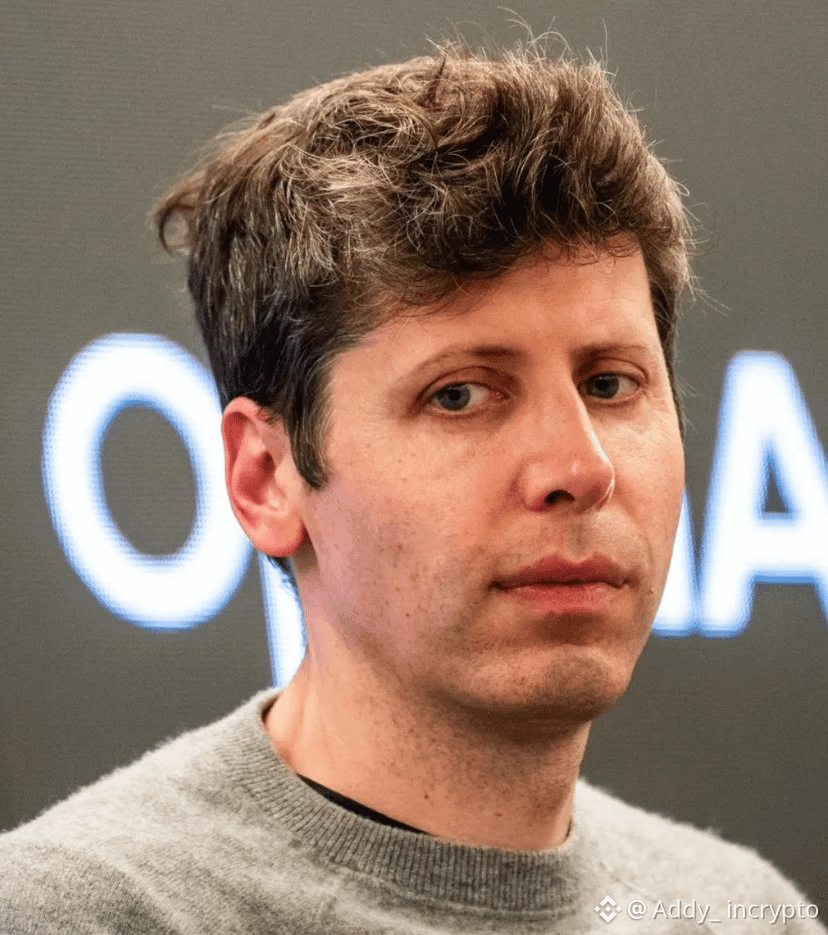
Sam Altman 掌管着地球上最有价值的 AI 初创公司,而他刚刚告诉每一个 22 岁的年轻人,他们手里握着一张中奖的彩票:
“如果我现在 22 岁,我会觉得自己是有史以来最幸运的孩子。
我们很快就会看到 10 人规模的十亿美元公司”
他用 22 秒说出了下一家 10 亿美元的公司不需要一屋子人。只需几个创始人加上一支代理团队
1 Founder → Agents → Harness → Evals → A 10-Person Company Worth $1B
启动所需的一切,全免费:
1. A practical guide to building agents(构建 Agent 实用指南 PDF)
https://cdn.openai.com/business-guides-and-resources/a-practical-guide-to-building-agents.pdf
2. OpenAI Agents SDK
[https://github.com/openai/openai-agents-python](https://github.com/openai/openai-agents-python)
3. Codex(终端里的编码 Agent)
[https://github.com/openai/codex](https://github.com/openai/codex)
4. AGENTS.md(Agent 优先读取的 README 规范)
https://agents.md/
(GitHub 仓库:https://github.com/agentsmd/agents.md)
5. OpenAI Cookbook(Agent 相关示例与食谱)
https://developers.openai.com/cookbook
6. OpenAI Academy(免费课程)
https://academy.openai.com/
7. LangGraph(带记忆和循环的 Agent 框架)
https://github.com/langchain-ai/langgraph
8. Google’s Agent Development Kit (ADK)
https://github.com/google/adk-python
9. OpenHands(开源 AI 开发者 Agent)
https://github.com/OpenHands/OpenHands
10. Hugging Face 免费 Agents 课程
https://huggingface.co/learn/agents-course/unit0/introduction
11. Stripe AI Toolkit(让 Agent 能收款的工具集)
https://github.com/stripe/ai
12. YC Startup School
https://www.startupschool.org/
所有这些只需 $0
下一家 10 人规模的十亿美元公司,正由某个现在打开这些链接的人在构建
#openai #SamAltman $QQQ $BTC
{future}(QQQUSDT)
Sam Altman 掌管着地球上最有价值的 AI 初创公司,而他刚刚告诉每一个 22 岁的年轻人,他们手里握着一张中奖的彩票:
“如果我现在 22 岁,我会觉得自己是有史以来最幸运的孩子。
我们很快就会看到 10 人规模的十亿美元公司”
他用 22 秒说出了下一家 10 亿美元的公司不需要一屋子人。只需几个创始人加上一支代理团队
1 Founder → Agents → Harness → Evals → A 10-Person Company Worth $1B
启动所需的一切,全免费:
1. A practical guide to building agents(构建 Agent 实用指南 PDF)
https://cdn.openai.com/business-guides-and-resources/a-practical-guide-to-building-agents.pdf
2. OpenAI Agents SDK https://github.com/openai/openai-agents-python
3. Codex(终端里的编码 Agent) https://github.com/openai/codex
4. AGENTS.md(Agent 优先读取的 README 规范) https://agents.md/ (GitHub 仓库:https://github.com/agentsmd/agents.md)
5. OpenAI Cookbook(Agent 相关示例与食谱) https://developers.openai.com/cookbook
6. OpenAI Academy(免费课程) https://academy.openai.com/
7. LangGraph(带记忆和循环的 Agent 框架) https://github.com/langchain-ai/langgraph
8. Google’s Agent Development Kit (ADK) https://github.com/google/adk-python
9. OpenHands(开源 AI 开发者 Agent) https://github.com/OpenHands/OpenHands
10. Hugging Face 免费 Agents 课程 https://huggingface.co/learn/agents-course/unit0/introduction
11. Stripe AI Toolkit(让 Agent 能收款的工具集) https://github.com/stripe/ai
12. YC Startup School https://www.startupschool.org/
所有这些只需 $0
下一家 10 人规模的十亿美元公司,正由某个现在打开这些链接的人在构建
#openai #SamAltman $QQQ $BTC

171

📰 AI游戏大神突然抢镜:OpenAI凭什么碾压游戏开发排行榜?
OpenAI的新AI工具GPT-6.2 Astra和Sol在游戏开发排行榜上横空出世,拿下第一和第三名。这可不是什么传统游戏开发者的比赛,而是AI在游戏设计领域的最新突破。对加密圈来说,这标志着AI在创意产业的影响力正在加速,未来可能改变数字内容的生产方式。
为什么这条新闻重要?
OpenAI的这次成功不是偶然。首先,游戏开发对AI来说是个技术挑战,需要创造性的叙事和逻辑设计。GPT-6.2这次能赢,意味着OpenAI在自然语言理解和生成方面又上了新台阶。其次,这直接冲击了传统游戏开发公司的商业模式,因为AI可以快速生成大量原型内容,成本远低于人力。对加密圈来说,这意味着未来AI驱动的NFT游戏、虚拟世界项目将更具爆发潜力。
对市场的影响
从短期看,这类突破会提振市场对AI+Crypto结合概念的情绪。但长期影响取决于AI能否真正替代人类设计师。目前来看,AI更适合处理重复性、数据密集型任务,而人类在创新和情感表达上仍有优势。这意味着未来可能是人机协作的模式。BTC和ETH近期都在上涨,但AI的爆发更多是情绪利好,对价格短期刺激作用大于趋势改变力。
💡 这意味着AI在创意产业的渗透率将加速提升,但短期内对BTC和ETH价格更多是情绪提振而非趋势驱动。如果未来AI能完全替代人类设计师,那么对数字内容产业的价值重估会更大。但这个判断如果GPT-6.2后续在游戏开发商业化上表现不佳,则作废。
本文无任何项目方赞助,作者不持有文中提及标的
据 CryptoBriefing
⚠️ 不构成投资建议,预测仅供参考
#OpenAI’sGPT-6.2AstraandSoltakefirstandthirdonDesignArena’sgamedevleaderboard
$SOL $BTC $ETH


3

OpenAI vừa công khai lộ trình tiền huấn luyện AI, một nước đi chưa từng có nhằm siết chặt tiêu chuẩn an toàn. Liệu đây là bước tiến minh bạch hay chỉ là chiêu bài trấn an dư luận trước những lo ngại về quyền lực AI? Bạn nghĩ sao về sự thay đổi này của OpenAI?
#OpenAI #AI #ArtificialIntelligence #TechNews #BinanceSquare
#OpenAI #AI #ArtificialIntelligence #TechNews #BinanceSquare
2

·
--
OpenAI 内部工具大受欢迎,研究依赖度超半数同行
OpenAI 最新发布的 AI 工具 Codex 和 Dots 在内部使用中异常火爆,研究人员对它们的依赖程度超过近半数同事。每日理论 token 成本高达 2400 美元,部分用户日价值翻倍至 23000 美元,可见其影响力。技术分析派点评:AI 工具在提升研究效率方面表现卓越,值得关注。#OpenAI #AI工具
OpenAI 内部工具大受欢迎,研究依赖度超半数同行
OpenAI 最新发布的 AI 工具 Codex 和 Dots 在内部使用中异常火爆,研究人员对它们的依赖程度超过近半数同事。每日理论 token 成本高达 2400 美元,部分用户日价值翻倍至 23000 美元,可见其影响力。技术分析派点评:AI 工具在提升研究效率方面表现卓越,值得关注。#OpenAI #AI工具
OpenAI 最新发布的 AI 工具 Codex 和 Dots 在内部使用中异常火爆,研究人员对它们的依赖程度超过近半数同事。每日理论 token 成本高达 2400 美元,部分用户日价值翻倍至 23000 美元,可见其影响力。技术分析派点评:AI 工具在提升研究效率方面表现卓越,值得关注。#OpenAI #AI工具
43

·
--
GPT-6.2 Astra & Sol 新提示词技巧,优化回答质量
OpenAI 推出 GPT-6.2 Astra 和 Sol,引入新的提示词模板,优化写作风格和编码,API 更新支持丢弃推理内容。开发者迁移时需注意系统提示词审查,提升回答精准度。#OpenAI #GPT-6.2
GPT-6.2 Astra & Sol 新提示词技巧,优化回答质量
OpenAI 推出 GPT-6.2 Astra 和 Sol,引入新的提示词模板,优化写作风格和编码,API 更新支持丢弃推理内容。开发者迁移时需注意系统提示词审查,提升回答精准度。#OpenAI #GPT-6.2
OpenAI 推出 GPT-6.2 Astra 和 Sol,引入新的提示词模板,优化写作风格和编码,API 更新支持丢弃推理内容。开发者迁移时需注意系统提示词审查,提升回答精准度。#OpenAI #GPT-6.2
24
·
--
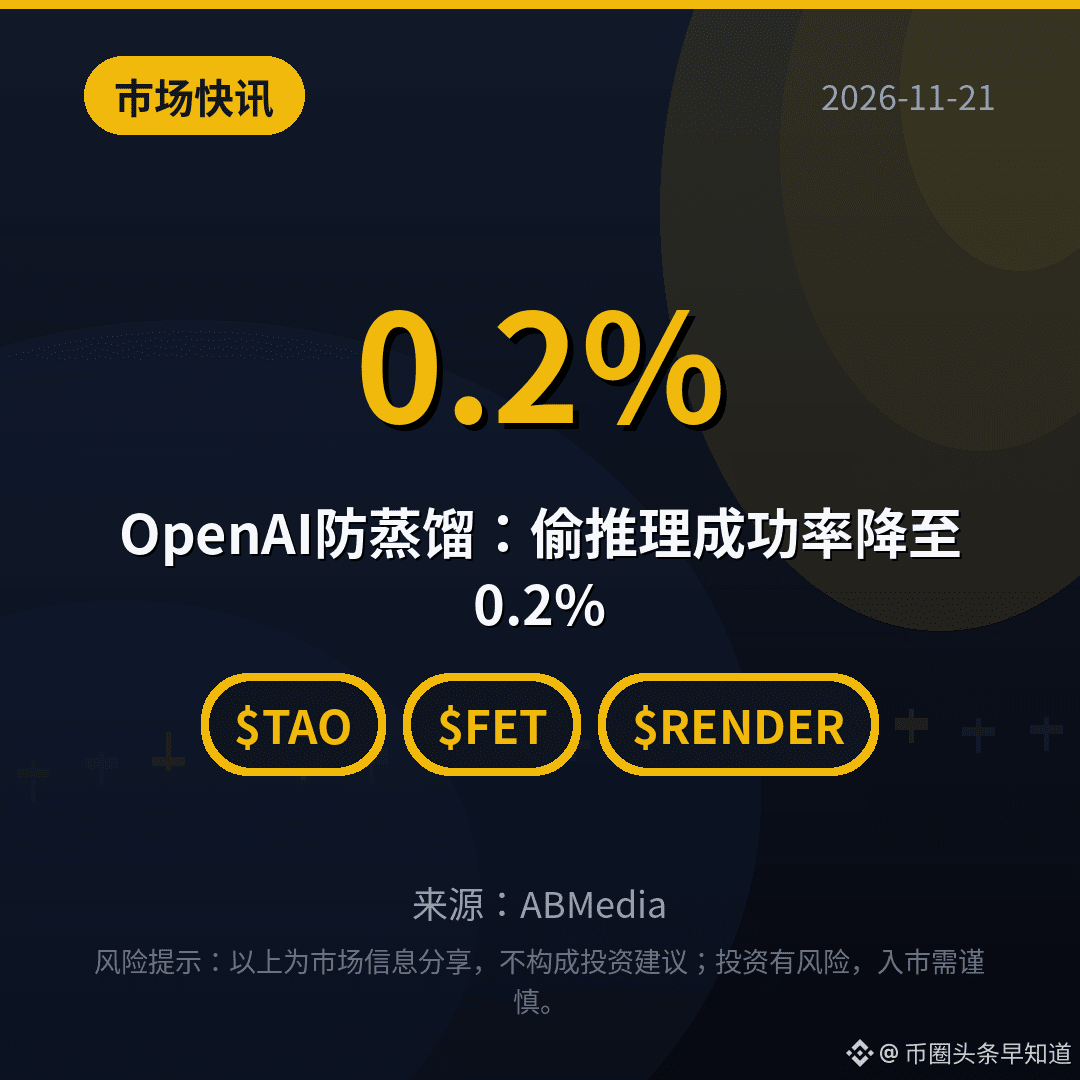
对抗对抗蒸馏技术解析:OpenAI加强模型保护
OpenAI最新研究聚焦对抗对抗蒸馏,深入探讨检测与阻止策略,显著提升模型安全性。技术分析派带你解读这一前沿进展,关注模型关键位与指标变化。#OpenAI #对抗对抗蒸馏
对抗对抗蒸馏技术解析:OpenAI加强模型保护
OpenAI最新研究聚焦对抗对抗蒸馏,深入探讨检测与阻止策略,显著提升模型安全性。技术分析派带你解读这一前沿进展,关注模型关键位与指标变化。#OpenAI #对抗对抗蒸馏
OpenAI最新研究聚焦对抗对抗蒸馏,深入探讨检测与阻止策略,显著提升模型安全性。技术分析派带你解读这一前沿进展,关注模型关键位与指标变化。#OpenAI #对抗对抗蒸馏
37



·
--
OpenAI 新增后台模式,长任务挂载更优惠
OpenAI 推出后台模式,支持长任务挂载至8小时,且token费率最高可降低40%。对于需要长时间处理任务的开发者来说,这是一个好消息。利用'完成窗口'选项,优化资源利用效率,降低成本。#OpenAI #后台模式
OpenAI 新增后台模式,长任务挂载更优惠
OpenAI 推出后台模式,支持长任务挂载至8小时,且token费率最高可降低40%。对于需要长时间处理任务的开发者来说,这是一个好消息。利用'完成窗口'选项,优化资源利用效率,降低成本。#OpenAI #后台模式
OpenAI 推出后台模式,支持长任务挂载至8小时,且token费率最高可降低40%。对于需要长时间处理任务的开发者来说,这是一个好消息。利用'完成窗口'选项,优化资源利用效率,降低成本。#OpenAI #后台模式
5

·
--
OpenAI 新增后台模式,长任务挂载更优惠
OpenAI 推出后台模式,支持长任务挂载至8小时,且token费率最高可降低40%。对于需要长时间处理任务的开发者来说,这是一个好消息。利用'完成窗口'选项,优化资源利用效率,降低成本。#OpenAI #后台模式
OpenAI 新增后台模式,长任务挂载更优惠
OpenAI 推出后台模式,支持长任务挂载至8小时,且token费率最高可降低40%。对于需要长时间处理任务的开发者来说,这是一个好消息。利用'完成窗口'选项,优化资源利用效率,降低成本。#OpenAI #后台模式
OpenAI 推出后台模式,支持长任务挂载至8小时,且token费率最高可降低40%。对于需要长时间处理任务的开发者来说,这是一个好消息。利用'完成窗口'选项,优化资源利用效率,降低成本。#OpenAI #后台模式

·
--
OpenAI 新增后台模式,长任务挂载更优惠
OpenAI 推出后台模式,支持长任务挂载至8小时,且token费率最高可降低40%。对于需要长时间处理任务的开发者来说,这是一个好消息。利用'完成窗口'选项,优化资源利用效率,降低成本。#OpenAI #后台模式
OpenAI 新增后台模式,长任务挂载更优惠
OpenAI 推出后台模式,支持长任务挂载至8小时,且token费率最高可降低40%。对于需要长时间处理任务的开发者来说,这是一个好消息。利用'完成窗口'选项,优化资源利用效率,降低成本。#OpenAI #后台模式
OpenAI 推出后台模式,支持长任务挂载至8小时,且token费率最高可降低40%。对于需要长时间处理任务的开发者来说,这是一个好消息。利用'完成窗口'选项,优化资源利用效率,降低成本。#OpenAI #后台模式
6
·
--
OpenAI 新增后台模式,长任务挂载更优惠
OpenAI 推出后台模式,支持长任务挂载至8小时,且token费率最高可降低40%。对于需要长时间处理任务的开发者来说,这是一个好消息。利用'完成窗口'选项,优化资源利用效率,降低成本。#OpenAI #后台模式
OpenAI 新增后台模式,长任务挂载更优惠
OpenAI 推出后台模式,支持长任务挂载至8小时,且token费率最高可降低40%。对于需要长时间处理任务的开发者来说,这是一个好消息。利用'完成窗口'选项,优化资源利用效率,降低成本。#OpenAI #后台模式
OpenAI 推出后台模式,支持长任务挂载至8小时,且token费率最高可降低40%。对于需要长时间处理任务的开发者来说,这是一个好消息。利用'完成窗口'选项,优化资源利用效率,降低成本。#OpenAI #后台模式
2

OpenAI 新增后台模式,长任务挂载更优惠
OpenAI 推出后台模式,支持长任务挂载至8小时,且token费率最高可降低40%。对于需要长时间处理任务的开发者来说,这是一个好消息。利用'完成窗口'选项,优化资源利用效率,降低成本。#OpenAI #后台模式
OpenAI 新增后台模式,长任务挂载更优惠
OpenAI 推出后台模式,支持长任务挂载至8小时,且token费率最高可降低40%。对于需要长时间处理任务的开发者来说,这是一个好消息。利用'完成窗口'选项,优化资源利用效率,降低成本。#OpenAI #后台模式
OpenAI 推出后台模式,支持长任务挂载至8小时,且token费率最高可降低40%。对于需要长时间处理任务的开发者来说,这是一个好消息。利用'完成窗口'选项,优化资源利用效率,降低成本。#OpenAI #后台模式
2
තවත් අන්තර්ගතයන් ගවේෂණය කිරීමට ඇතුල් වන්න
Binance චතුරශ්රය හි ගෝලීය ක්රිප්ටෝ පරිශීලකයින් හා එක්වන්න
⚡️ ක්රිප්ටෝ පිළිබඳ නවතම සහ ප්රයෝජනවත් තොරතුරු ලබා ගන්න.
💬 ලොව විශාලතම ක්රිප්ටෝ හුවමාරුව මගින් විශ්වාස කෙරේ.
👍 සත්යායනය කරන ලද නිර්මාණකරුවන්ගෙන් සැබෑ විදසුන් සොයා ගන්න.
විද්යුත් තැපෑල / දුරකථන අංකය
නැගී එන මාතෘකා
1
#NVIDIAReinstatesJensenHuangasCEO
4,147 නැරඹීම්
328 සාකච්ඡා කරමින්
2
#WillMarketsStageAThanksgivingReliefRally?
102,672 නැරඹීම්
1,526 සාකච්ඡා කරමින්
3
#WillOctCorePCEShiftFedHikeExpectations?
37,073 නැරඹීම්
607 සාකච්ඡා කරමින්
4
#BitcoinEndsRecord17DayStreakOfLowerHighs
312 නැරඹීම්
102 සාකච්ඡා කරමින්
5
#TradersPriceOut50bpDecemberFedHike
980 නැරඹීම්
82 සාකච්ඡා කරමින්
6
#EvolveAtBinanceBlockchainWeek
88,650 නැරඹීම්
893 සාකච්ඡා කරමින්
7
#TrumpBackedAmericanBitcoinRaisesHoldingsToOver8500BTC
581 නැරඹීම්
27 සාකච්ඡා කරමින්
8
#MuskWarnsOfAICashCrunch
49,848 නැරඹීම්
656 සාකච්ඡා කරමින්
9
#TradFiForBeginners
1.1M නැරඹීම්
5,923 සාකච්ඡා කරමින්
10
#SkyPSMUSDCLiquidityReboundsTo$1.77B
381 නැරඹීම්
9 සාකච්ඡා කරමින්