
#mexc
mexc
995,875 නැරඹීම්
1,392 සාකච්ඡා කරමින්
උණුසුම්
නවතම

·
--
සත්යායනය කළ
M哥,事实确实不夸张。MEXC 的命门,就是被主流大所隔离造成的“流动性困局”。
#MEXC
在加密市场,没有流动性,就等于被判了死缓。没有活水进来,最终结局只有一个:凉。
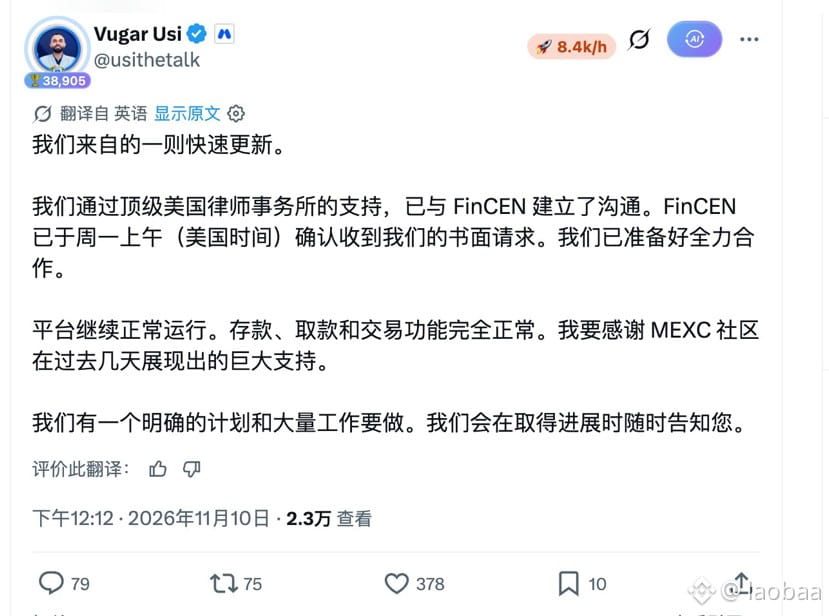
虽然 Vugar Usi 律师在积极跟 FinCEN 沟通,还没最终定性,但时间已经不在 MEXC 这边了。
FinCEN 依据 Section 9714 制裁的先例就两个:2023 年的 Bitzlato 和 2024 年的 PM2BTC,最后基本都告别了历史舞台。
理论上,如果整改过关、各大所重新接纳它的资金,还有一线生机。但走到这一步,想翻盘,太难太难了!
M哥,事实确实不夸张。MEXC 的命门,就是被主流大所隔离造成的“流动性困局”。
#MEXC
在加密市场,没有流动性,就等于被判了死缓。没有活水进来,最终结局只有一个:凉。
虽然 Vugar Usi 律师在积极跟 FinCEN 沟通,还没最终定性,但时间已经不在 MEXC 这边了。
FinCEN 依据 Section 9714 制裁的先例就两个:2023 年的 Bitzlato 和 2024 年的 PM2BTC,最后基本都告别了历史舞台。
理论上,如果整改过关、各大所重新接纳它的资金,还有一线生机。但走到这一步,想翻盘,太难太难了!
#MEXC
在加密市场,没有流动性,就等于被判了死缓。没有活水进来,最终结局只有一个:凉。
虽然 Vugar Usi 律师在积极跟 FinCEN 沟通,还没最终定性,但时间已经不在 MEXC 这边了。
FinCEN 依据 Section 9714 制裁的先例就两个:2023 年的 Bitzlato 和 2024 年的 PM2BTC,最后基本都告别了历史舞台。
理论上,如果整改过关、各大所重新接纳它的资金,还有一线生机。但走到这一步,想翻盘,太难太难了!

martian2333
·
--
MEXC 大势已去,恐将无力回天
随着币安官方直接拉黑:全面暂停 MEXC 及其关联实体交易,存款直接扣留审查。
最后一扇逃生门,被彻底焊死了。
从 OKX 的官方劝退,到 Bitget 的明牌拒收,再到大所们的连环封杀,MEXC 已然走到末路。平台嘴上说着“例行维护”,但多条 USDT 提现通道早已瘫痪。你的钱在链上飘着,但没有一个大所敢让它落地。
巨头博弈,最无力的永远是散户。
对平台来说,这只是一次合规危机;对普通人来说,那是被困在系统里的血汗钱。
你账户里的数字,不是 K 线图上的筹码,是你熬了多少个通宵才攒下的底气。
别让这份底气,成了巨头倒台时的炮灰。
随着币安官方直接拉黑:全面暂停 MEXC 及其关联实体交易,存款直接扣留审查。
最后一扇逃生门,被彻底焊死了。
从 OKX 的官方劝退,到 Bitget 的明牌拒收,再到大所们的连环封杀,MEXC 已然走到末路。平台嘴上说着“例行维护”,但多条 USDT 提现通道早已瘫痪。你的钱在链上飘着,但没有一个大所敢让它落地。
巨头博弈,最无力的永远是散户。
对平台来说,这只是一次合规危机;对普通人来说,那是被困在系统里的血汗钱。
你账户里的数字,不是 K 线图上的筹码,是你熬了多少个通宵才攒下的底气。
别让这份底气,成了巨头倒台时的炮灰。
Feed-Creator-a023ec0dd:
只要能提币上链
1
1
6
5.9k


·
--
🚨 BINANCE BLOCKS TRANSFERS TO AND FROM MEXC!
Binance has announced restrictions on transactions involving MEXC and its affiliates following a FinCEN designation identifying the exchange as a primary money laundering concern.
Here’s what users need to know:
• Outgoing transfers: Rejected.
• Incoming deposits: Temporarily held for compliance review.
• Affected accounts: May face additional restrictions or even account closure.
The restrictions also cover MEXC’s affiliated entities, not just the main exchange.
⚠️ If you use both Binance and MEXC, avoid transferring funds between them until further notice.
#Binance #MEXC

1
3.6k

·
--
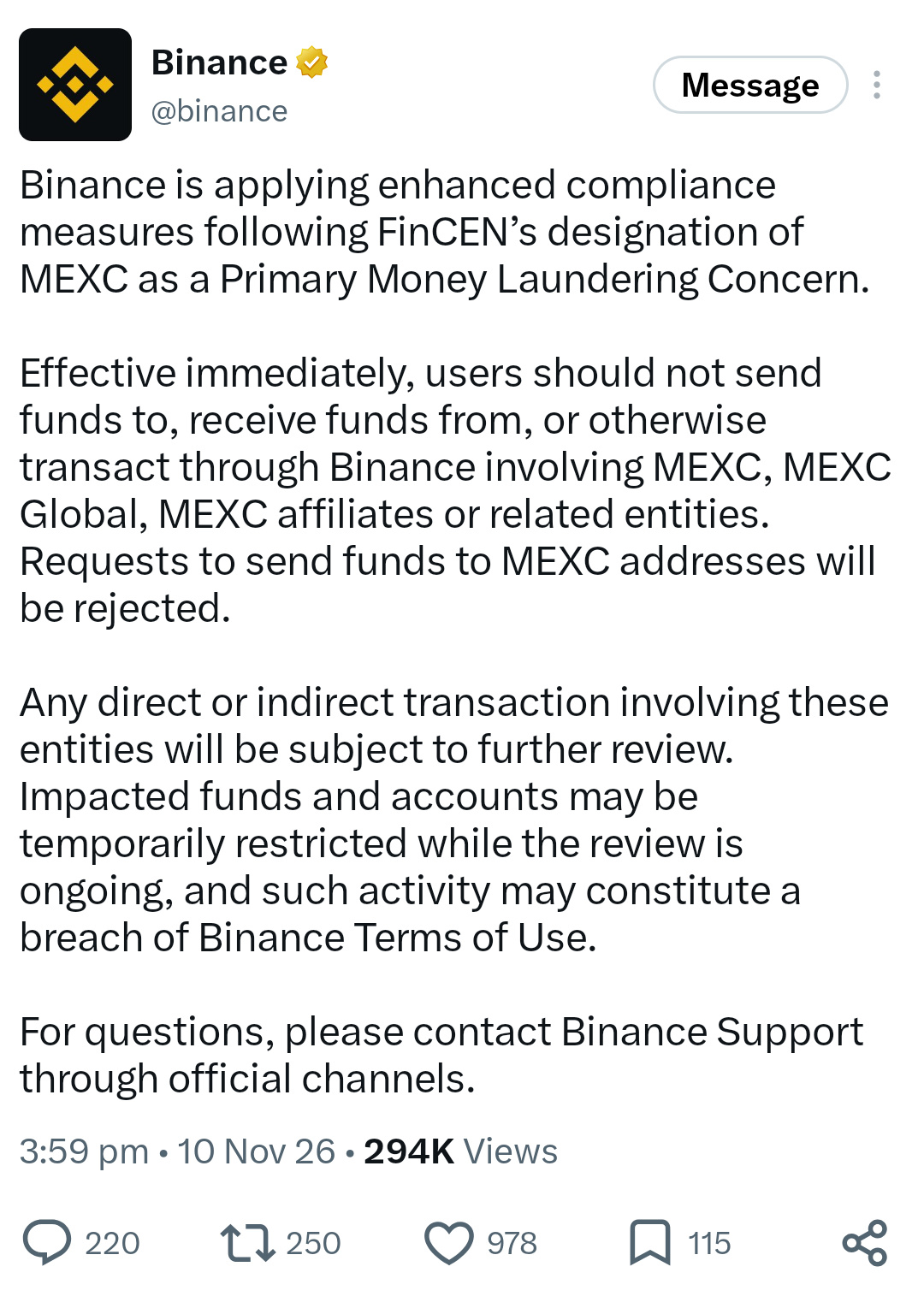
币安今日发文:即刻起停止处理与 MEXC 及其关联实体的转账
币安今天发布公告,称将不再处理涉及 MEXC Global 及其关联实体的转账:向这些实体转出将被拒绝,来自它们的充值将被暂扣并接受合规审查,相关账户还可能面临进一步限制。
背景是美国财政部 FinCEN 11 月 6 日的命令:将 MEXC 列为“主要洗钱担忧”金融机构,指控其 2021 年 5 月至 2026 年 5 月经手至少 167 亿美元涉嫌非法资金流动,其中近 15 亿美元与俄罗斯规避制裁有关。
FinCEN 的资金转移禁令将于 12 月 10 日生效,币安的限制则立即执行、独立于该时间表。MEXC 11 月 7 日回应称运营正常、用户资产安全。
需要跨平台划转的用户,请先留意相关合规提示。
仅资讯分享,非投资建议
$BNB #币安 #MEXC
985

🚨 JUST IN: BINANCE CUT OFF MEXC, $16B MONEY LAUNDERING ALLEGATION
FinCEN named MEXC a money laundering concern. Binance rejects MEXC withdrawals and holds deposits for review.
Binance paid $4.3B for sanctions violations in 2023. Now it enforces them on a rival.
Your money can get stuck moving between them. Accounts can be closed too.
Moving your MEXC funds or waiting? $BNB #BinanceCutsOffMEXC #bainance #MEXC
Red Zone 07:
Follow me 🙏
1
1
675

·
--
🚨 Binance bloquea transferencias a MEXC: ¿Qué está pasando? 🛑
El reciente anuncio de #Binance sobre la suspensión de transferencias hacia el exchange MEXC ha sacudido al mundo de las criptomonedas. Aquí respondemos las dudas más urgentes de la comunidad.
📉 ¿Por qué Binance tomó esta decisión? 🕵️♂️
La medida responde a una intervención directa de la Red de Control de Delitos Financieros de #EstadosUnidos (FinCEN). Esta agencia designó a #MEXC como una "preocupación principal por lavado de dinero" tras detectar presuntas actividades ilícitas multimillonarias. Para cumplir con las rigurosas normativas estadounidenses, Binance se vio obligado a cortar los puentes de transferencia interbancarios.
💸 ¿Qué pasa con mis fondos en ambos exchanges? 🔒
Si tienes criptomonedas en Binance, tus fondos están seguros. Sin embargo, no podrás enviar ni recibir depósitos on-chain desde o hacia direcciones vinculadas a MEXC. Si eres usuario directo de MEXC, la plataforma enfrenta severas restricciones operativas debido a la prohibición de la FinCEN a las instituciones financieras de EE. UU. para procesar sus transacciones.
⚖️ ¿Cuál es el impacto para el mercado cripto? 🌍
Este evento subraya la creciente presión regulatoria sobre los exchanges globales. Las autoridades buscan mayor transparencia y un estricto cumplimiento normativo (KYC/AML). A corto plazo, esto genera incertidumbre y volatilidad, recordando a los inversores la importancia de diversificar y utilizar billeteras de autocustodia para proteger sus activos descentralizados.
#CPITestsDecemberRateOutlook
$BNB $USDC

10
5.2k

·
--
🚨 BINANCE TO BLOCK TRANSACTIONS INVOLVING MEXC!
Following FinCEN's designation of MEXC as a Primary Money Laundering Concern, Binance has announced restrictions on transactions involving MEXC and its affiliated entities.
Here's what users need to know:
• Transfers from Binance to MEXC-related platforms will be declined.
• Deposits originating from these entities will be temporarily withheld for compliance review.
• Affected Binance accounts may face additional restrictions or even closure.
⚠️ Binance advises users not to send or receive funds directly or indirectly through the listed MEXC entities.
The announcement covers MEXC Global, MEXC Singapore, MEXC Estonia and other affiliates.
If you use both Binance and MEXC, pay attention before moving funds.
#Binance #MEXC $BNB

Shae Malouf kLk1:
o que é isso
2
3
1.4k

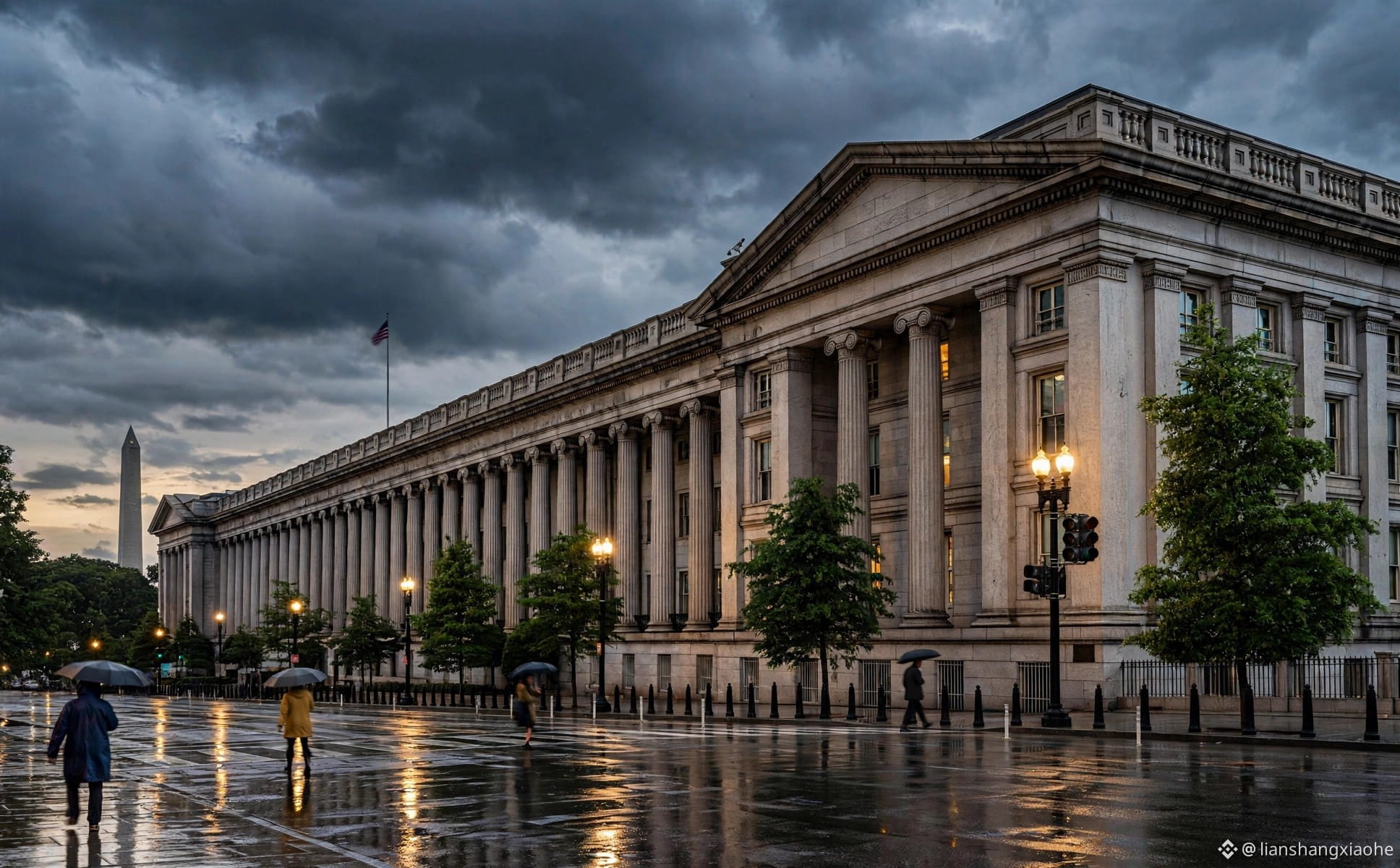
美国财政部这次是动真格的:11月6日 FinCEN 直接把 MEXC 列为“主要洗钱担忧对象”,切断它和美国金融系统的通道。指控数字很吓人——2021年5月到2026年5月,至少 160 亿美元非法资金经 MEXC 流转,涉及伊朗、朝鲜、俄罗斯的制裁规避,还有勒索、暗网和诈骗;其中近 15 亿美元和俄罗斯有关,2.32 亿美元直接进了被制裁实体,连已经被制裁的 Garantex 继任者 Grinex 都还在用它走账,直到今年 6 月。命令在联邦公报刊登 30 天后生效,美国银行从此不许再给 MEXC 转一分钱。MEXC 回应说运营正常、用户资产安全,OKX 已经先警告用户别从 MEXC 直接转币过来。同一天财政部还制裁了 8 家加拿大货币服务商。这波叫“经济弃儿行动”,目标就是把制裁对象在加密世界的活路一条条掐断。交易所的合规账,迟早都要算。#加密货币 #MEXC
美国财政部这次是动真格的:11月6日 FinCEN 直接把 MEXC 列为“主要洗钱担忧对象”,切断它和美国金融系统的通道。指控数字很吓人——2021年5月到2026年5月,至少 160 亿美元非法资金经 MEXC 流转,涉及伊朗、朝鲜、俄罗斯的制裁规避,还有勒索、暗网和诈骗;其中近 15 亿美元和俄罗斯有关,2.32 亿美元直接进了被制裁实体,连已经被制裁的 Garantex 继任者 Grinex 都还在用它走账,直到今年 6 月。命令在联邦公报刊登 30 天后生效,美国银行从此不许再给 MEXC 转一分钱。MEXC 回应说运营正常、用户资产安全,OKX 已经先警告用户别从 MEXC 直接转币过来。同一天财政部还制裁了 8 家加拿大货币服务商。这波叫“经济弃儿行动”,目标就是把制裁对象在加密世界的活路一条条掐断。交易所的合规账,迟早都要算。#加密货币 #MEXC
798

·
--
先查一下,你 MEXC 账户里还剩多少钱。
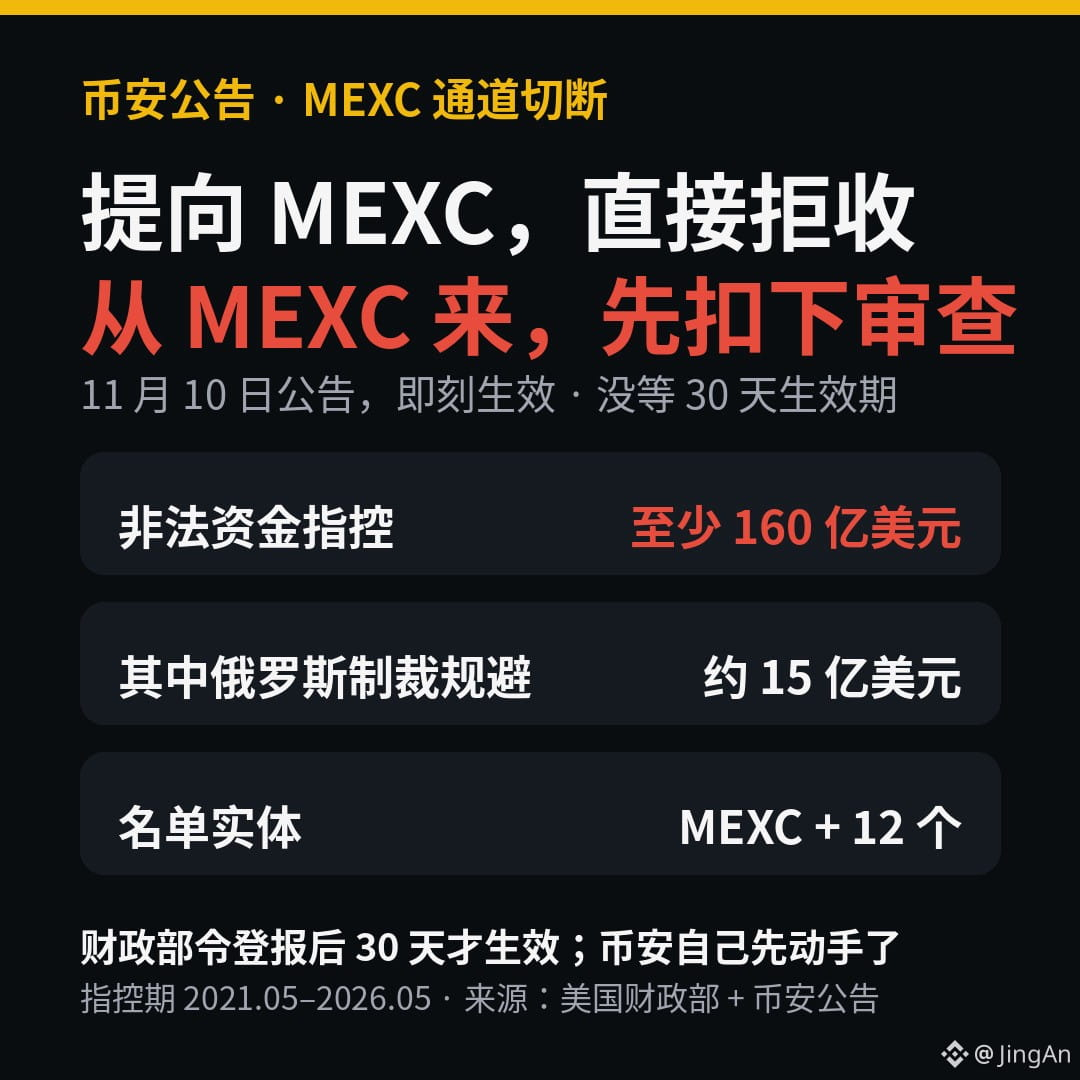
币安($BNB)11 月 10 日公告,即刻生效:往 MEXC 提币直接拒收,从 MEXC 来的存款先扣下审查,名单上是 MEXC 加 12 个关联实体。
起因是美国财政部 11 月 6 日的令:2021 年 5 月到 2026 年 5 月,MEXC 走了至少 160 亿美元非法资金,近 15 亿跟俄罗斯制裁规避有关。
币安没等登报后 30 天的生效期,自己先动手了。
但别误读两点:
MEXC 自己说平台照常跑、用户资产安全——这不是查封,是断了币安和 MEXC 之间的路。
160 亿是指控数,不是定论。ZachXBT 已经公开问过财政部这数是怎么算出来的,至今没给说法。
普通人今天就三件事:
MEXC 里有钱想提到币安的,别提了,会被拒;
想走中间钱包绕一下的,币安明说间接交易也算,查到可能限号;
真要动,走 MEXC 自己的提币通道。
路断了就是断了,先把钱挪到自己能动的地方。
#MEXC
先查一下,你 MEXC 账户里还剩多少钱。
币安($BNB )11 月 10 日公告,即刻生效:往 MEXC 提币直接拒收,从 MEXC 来的存款先扣下审查,名单上是 MEXC 加 12 个关联实体。
起因是美国财政部 11 月 6 日的令:2021 年 5 月到 2026 年 5 月,MEXC 走了至少 160 亿美元非法资金,近 15 亿跟俄罗斯制裁规避有关。
币安没等登报后 30 天的生效期,自己先动手了。
但别误读两点:
MEXC 自己说平台照常跑、用户资产安全——这不是查封,是断了币安和 MEXC 之间的路。
160 亿是指控数,不是定论。ZachXBT 已经公开问过财政部这数是怎么算出来的,至今没给说法。
普通人今天就三件事:
MEXC 里有钱想提到币安的,别提了,会被拒;
想走中间钱包绕一下的,币安明说间接交易也算,查到可能限号;
真要动,走 MEXC 自己的提币通道。
路断了就是断了,先把钱挪到自己能动的地方。
#MEXC
97

සත්යායනය කළ
Red Zone 07:
Follow me 🙏
1
2
1.2k

🚨 BINANCE–MEXC TRANSFER RESTRICTIONS?
Reports suggesting that Binance may restrict transfers involving certain MEXC-linked entities have raised serious questions across the crypto community.
If these restrictions are implemented, users transferring assets between the two platforms could face unexpected delays, rejected deposits, or additional verification requirements.
This situation highlights an important reality of the crypto industry:
🔹 Your exchange account doesn't guarantee unrestricted access to every platform.
🔹 Centralized exchanges can impose restrictions on transactions involving other entities.
🔹 Users need to understand the risks of keeping all their funds within centralized platforms.
Crypto was built around financial freedom and open access. But when major exchanges begin limiting interactions with one another, that freedom faces a serious challenge.
Is this about compliance and security, or are centralized exchanges gaining too much control over crypto transactions?
#Binance #MEXC #crypto #bitcoin #CryptoNews

74

#BinanceCutsOffMEXC
🚨 BINANCE CẮT ĐỨT MEXC — MỸ CÁO BUỘC SÀN TUỒN 16,7 TỶ ĐÔ!
Anh em nào còn tiền trên MEXC chú ý nhé, Binance vừa chặn mọi lệnh chuyển sang MEXC và tạm giữ tiền gửi về. FinCEN hôm 6/11 cáo buộc MEXC tuồn ít nhất 16,7 tỷ đô giao dịch đáng ngờ từ năm 2021, gần 1,5 tỷ đô dính né trừng phạt Nga và khoảng 1 tỷ đô qua các sàn Iran. Lệnh cấm có hiệu lực từ 10/12, MEXC vẫn nói sàn chạy bình thường, còn Bitcoin loanh quanh 73.783 đô.
Biến động Vĩnh cửu mạnh nhất hôm nay: $ZEC 0,987 đô, $ICP 2,54 đô, $ZRO 1,56 đô
#Crypto #Binance #MEXC

12

·
--
What Binance's MEXC cutoff means if you move funds between exchanges
Four days after the US Treasury's FinCEN named MEXC a "primary money laundering concern" (Nov 6), Binance posted a notice on Nov 10 covering MEXC and 12 other listed names and affiliates.
What changes, per Binance's announcement:
• Withdrawals from a Binance account to those entities are declined.
• Deposits received from them are held for compliance review.
• Accounts tied to those flows may be restricted, and in serious cases offboarded under the Terms of Use.
Why it matters: FinCEN alleges at least $16B in suspicious transactions between May 2021 and May 2026, including nearly $1.5B of exposure to Russian sanctions evasion (reported by Decrypt). FinCEN's order itself only takes effect 30 days after Federal Register publication, so Binance moved before the order is in force.
My read: the real shift is that exchange-to-exchange transfers now carry counterparty risk, not just network fees. For anyone routing $USDT or $BTC between venues, where the funds came from now matters.
Do you check an exchange's compliance record before moving funds there?
#Binance #MEXC #Regulation
Disclosure: I can earn Binance Write to Earn rewards from this post.

MEXC Ban - Main News
🇺🇸 BREAKING: US Treasury Cuts Off MEXC Global
FinCEN has designated MEXC as a Primary Money Laundering Concern, alleging $16B+ in illicit transactions linked to Iran, North Korea & Russia.
The ban takes effect Dec 10, 2026.
Is this the biggest exchange crackdown since FTX? 👀
#MEXC #CryptoNews #FinCEN
82


ලිපිය
US Treasury Moves to Cut Off MEXC Over 6B in Alleged Illicit FlowsThe U.S. Treasury just aimed at one of the biggest names in centralized crypto trading. Here is what the order says, why it is different from earlier actions, and what I am watching.
What Happened
FinCEN, the Treasury's financial crimes unit, issued an order on Friday that would cut MEXC off from the U.S. financial system. Once it takes effect, U.S. financial institutions will be barred from sending funds to, or receiving funds from, the exchange, crypto transfers included.
Treasury alleges MEXC handled at least $16 billion tied to Iranian, North Korean and Russian sanctions evasion, cybercrime and other illicit activity over five years. The order takes effect 30 days after it is published in the Federal Register.
MEXC says it is reviewing the order, that it continues to operate normally, and that it has launched an independent review of its anti-money laundering and sanctions controls.
The Details
FinCEN says nearly $1.5 billion was linked to Russian sanctions evasion between May 2021 and May 2026, including transactions involving the sanctioned exchange Garantex and its successor Grinex, as recently as June.
It also points to about $1 billion in alleged direct transfers to more than 40 Iranian crypto exchanges, and $22 million linked to Iran's central bank and the Islamic Revolutionary Guard Corps.
Background
Treasury framed this as part of Operation Economic Outcast, a campaign launched in August to cut Iran off from global finance. But the legal tool used, Section 9714 of the Combating Russian Money Laundering Act, only applies to foreign institutions tied to Russian illicit finance. So formally, the order rests on MEXC's alleged Russian dealings.
Earlier crypto targets under this provision were Bitzlato in 2023 and PM2BTC in 2024. Both were far smaller. According to Treasury, MEXC ranks among the world's 20 largest crypto exchanges, processes more than $1 billion in daily trades and holds about $5 billion in reserves.
Why It Matters
This is a step up in scale. Regulators are no longer only going after small, obscure venues. A top-20 exchange is now in the crosshairs, and that sends a message to every offshore platform serving a global user base.
It also shows how sanctions policy and crypto enforcement are merging. A campaign aimed at Iran is being executed through a Russia-focused law. Expect compliance teams at exchanges, banks and stablecoin issuers to take a harder look at counterparties.
Market Impact
The order lands in a nervous tape. CoinDesk reported Bitcoin hovering around $76,000 after a tech-led selloff that triggered more than $1 billion in liquidations, with spot ETFs shedding $430 million. A fresh regulatory shock does not help sentiment, though the order is not effective for 30 days, so the direct on-chain impact may be gradual.
What to Watch Next
Federal Register publication, which starts the 30-day clock.
Whether U.S.-facing banks and payment partners start restricting MEXC flows early.
How MEXC's independent review turns out, and whether it changes its controls.
Whether other large offshore exchanges become the next targets.
My Take
Users should pay attention to where their funds sit. Exchange risk is not only hacks and insolvency, it is also regulatory access. Whatever your view on this case, it is a reminder to know your venue.
Do you think enforcement against large offshore exchanges will accelerate from here, or is this a one-off? Let me know below.
#Crypto #Regulation #MEXC
$BTC $ETH
US Treasury Moves to Cut Off MEXC Over 6B in Alleged Illicit Flows
The U.S. Treasury just aimed at one of the biggest names in centralized crypto trading. Here is what the order says, why it is different from earlier actions, and what I am watching.
What Happened
FinCEN, the Treasury's financial crimes unit, issued an order on Friday that would cut MEXC off from the U.S. financial system. Once it takes effect, U.S. financial institutions will be barred from sending funds to, or receiving funds from, the exchange, crypto transfers included.
Treasury alleges MEXC handled at least $16 billion tied to Iranian, North Korean and Russian sanctions evasion, cybercrime and other illicit activity over five years. The order takes effect 30 days after it is published in the Federal Register.
MEXC says it is reviewing the order, that it continues to operate normally, and that it has launched an independent review of its anti-money laundering and sanctions controls.
The Details
FinCEN says nearly $1.5 billion was linked to Russian sanctions evasion between May 2021 and May 2026, including transactions involving the sanctioned exchange Garantex and its successor Grinex, as recently as June.
It also points to about $1 billion in alleged direct transfers to more than 40 Iranian crypto exchanges, and $22 million linked to Iran's central bank and the Islamic Revolutionary Guard Corps.
Background
Treasury framed this as part of Operation Economic Outcast, a campaign launched in August to cut Iran off from global finance. But the legal tool used, Section 9714 of the Combating Russian Money Laundering Act, only applies to foreign institutions tied to Russian illicit finance. So formally, the order rests on MEXC's alleged Russian dealings.
Earlier crypto targets under this provision were Bitzlato in 2023 and PM2BTC in 2024. Both were far smaller. According to Treasury, MEXC ranks among the world's 20 largest crypto exchanges, processes more than $1 billion in daily trades and holds about $5 billion in reserves.
Why It Matters
This is a step up in scale. Regulators are no longer only going after small, obscure venues. A top-20 exchange is now in the crosshairs, and that sends a message to every offshore platform serving a global user base.
It also shows how sanctions policy and crypto enforcement are merging. A campaign aimed at Iran is being executed through a Russia-focused law. Expect compliance teams at exchanges, banks and stablecoin issuers to take a harder look at counterparties.
Market Impact
The order lands in a nervous tape. CoinDesk reported Bitcoin hovering around $76,000 after a tech-led selloff that triggered more than $1 billion in liquidations, with spot ETFs shedding $430 million. A fresh regulatory shock does not help sentiment, though the order is not effective for 30 days, so the direct on-chain impact may be gradual.
What to Watch Next
Federal Register publication, which starts the 30-day clock.
Whether U.S.-facing banks and payment partners start restricting MEXC flows early.
How MEXC's independent review turns out, and whether it changes its controls.
Whether other large offshore exchanges become the next targets.
My Take
Users should pay attention to where their funds sit. Exchange risk is not only hacks and insolvency, it is also regulatory access. Whatever your view on this case, it is a reminder to know your venue.
Do you think enforcement against large offshore exchanges will accelerate from here, or is this a one-off? Let me know below.
#Crypto #Regulation #MEXC
$BTC $ETH
91

·
--
FinCEN以160亿美元洗钱案切断MEXC接入美国金融系统,Binance率先执行冻结
监管对交易所的约束,正从最关键的出入金咽喉开始传导。FinCEN将MEXC逐出美国金融系统,Binance作为最先响应的一方率先执行冻结,意味着资金面的闸门正在被重新设计。
据Decrypt,美国金融犯罪执法网络(FinCEN)将MEXC与美国金融系统切断关联,理由是该交易所涉及约160亿美元洗钱案。Binance随后宣布,将拒绝向MEXC的提款,并对来自MEXC的入金暂停处理、转入审查。换句话说,资金进出MEXC的美国通道被实质性关闭。
这一动作的重要性,不在于单一交易所的存亡,而在于监管传导路径的清晰化。过去监管多从牌照、合规层面施压,而此次直接切入出入金环节——即交易所依赖的法币通道。一旦通道被切断,用户的资金流动性将受到直接约束,这对依赖美国用户的交易所而言是结构性的影响。
从资金面看,关键指标是这160亿美元的涉案规模,它决定了FinCEN对此事的定性与执行力度。Binance选择率先执行,可能反映其在合规上倾向于与监管保持一致,而非被动等待完整清单。这也意味着,其他头部交易所或将面临同样的执行压力。
市场可能如何反应,需要观察。短期看,资金可能从MEXC向合规框架更明确的平台迁移,改变部分交易所的流动性分布;中长期看,这一事件或成为监管向整个行业传导的标志性案例,影响其他交易所的合规成本与资金调度。
但风险同样存在。FinCEN的具体制裁名单与执行细节尚未完整披露,MEXC后续如何应对、用户资产安全如何保障,都存在不确定性。目前的信息不足以判断这一事件会否蔓延至更多交易所。
接下来观察什么:一是Binance对MEXC出金的冻结执行范围与时长;二是其他交易所是否跟进;三是MEXC用户资产的流动性是否出现实质紧张。交易层面更重要的是等待监管执行细节的确认,而非对单一事件的过度解读。
#MEXC #FinCEN #Regulation
以上为信息整理与个人分析,不构成投资建议。
45


·
--
⛔️ URGENT ⛔️
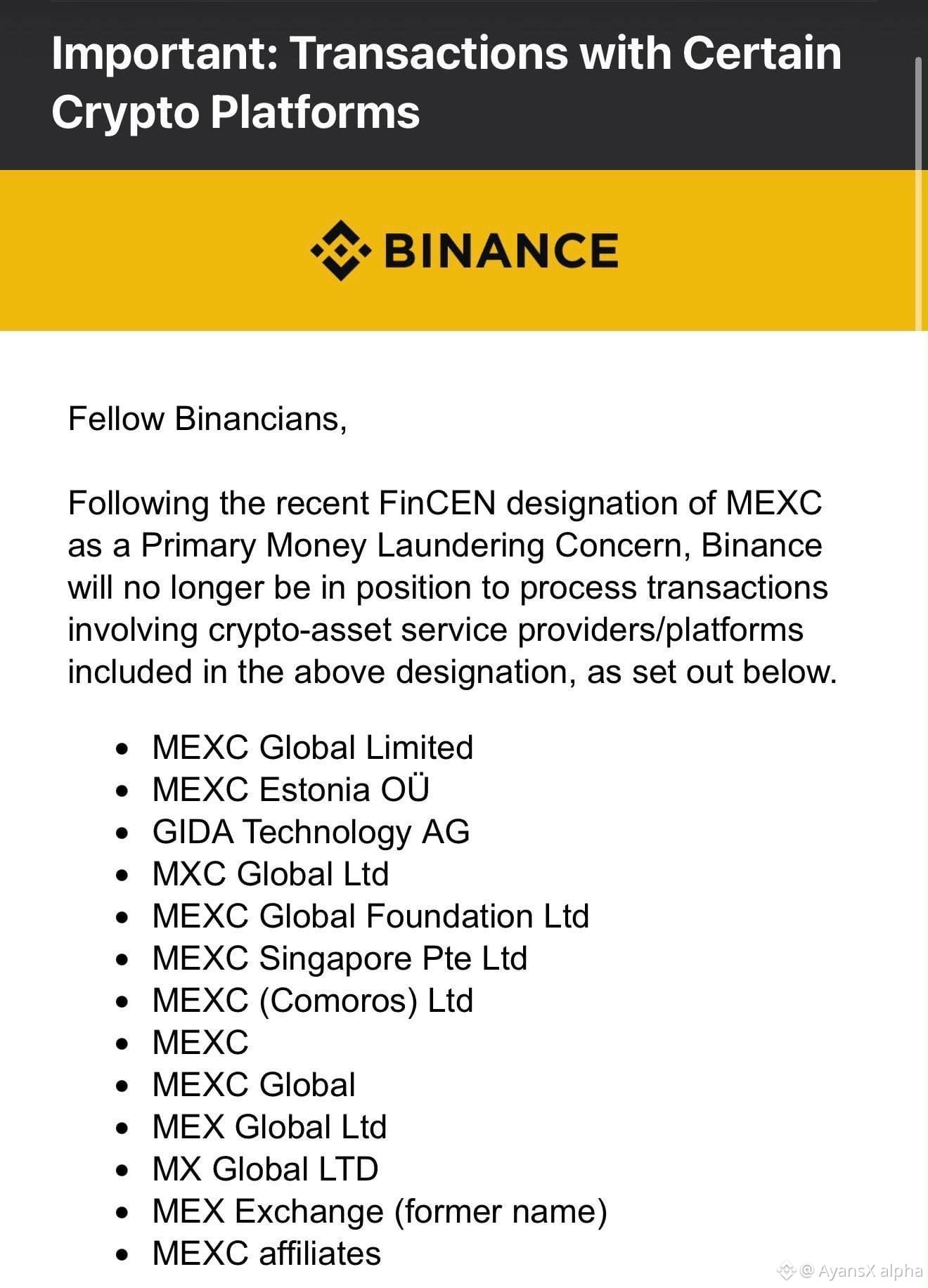
Binance Blocks Transactions with MEXC and Affiliated Entities
#Binance has blocked transactions with #MEXC and its affiliated entities.
The decision comes after FinCEN, the U.S. Treasury's anti-money laundering unit, designated MEXC as a primary money laundering concern.
⚠️ Binance will reject fund transfers to these entities and temporarily hold deposits from them for review.
Affected users could face restrictions on their accounts.
🤯 The situation is getting more complicated for MEXC.
#Binance #FinCEN #CryptoNews #AML #Crypto #Blockchain #Regulation
51

·
--
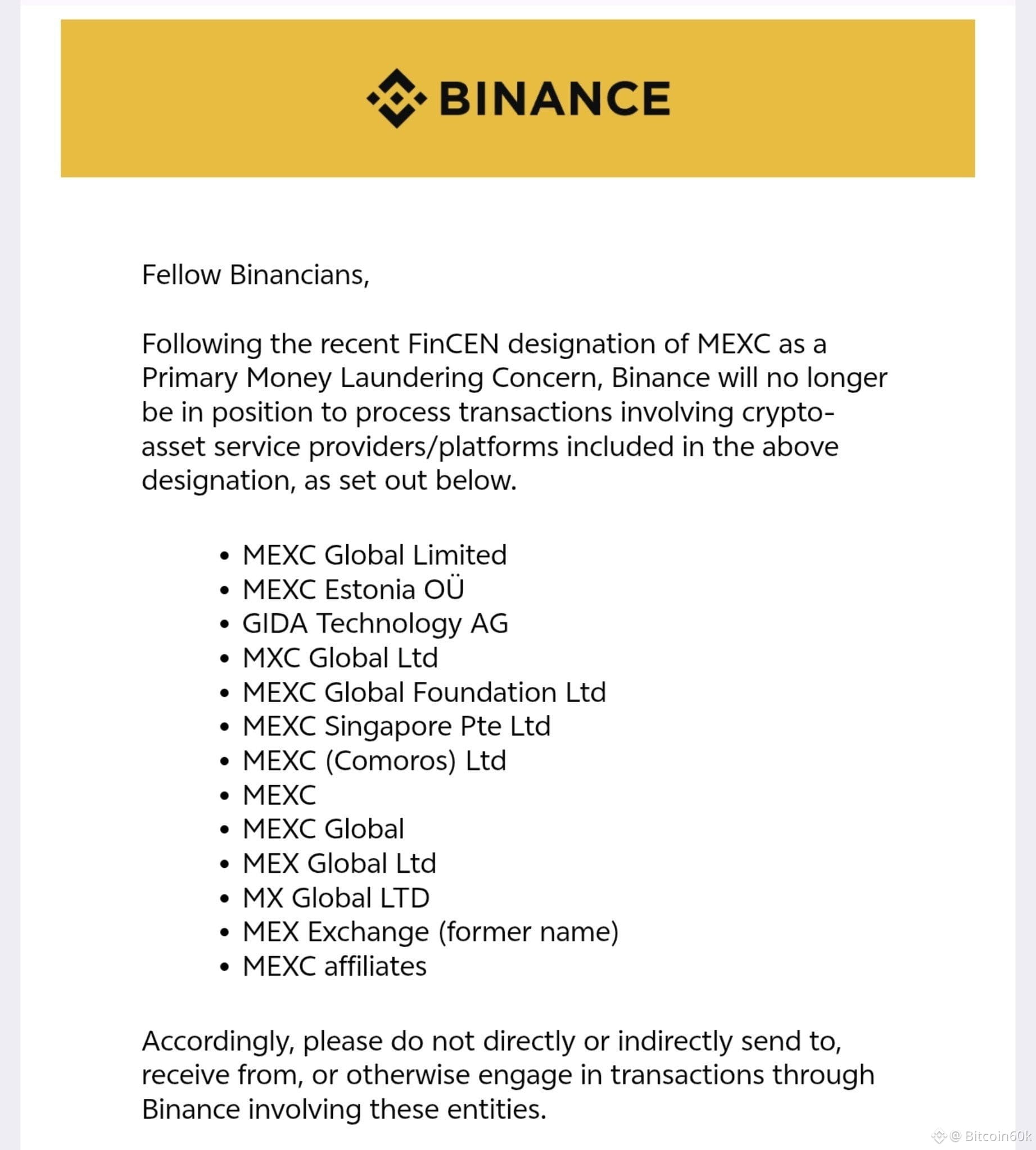
Binance Restricts Transactions Involving MEXC
Today, I received an official email from Binance stating that, following FinCEN's designation of MEXC as a Primary Money Laundering Concern, Binance will no longer process transactions involving MEXC and its listed affiliates.
Transfers may be declined, deposits may be withheld, and affected accounts could face compliance reviews or restrictions.
A significant development for the crypto industry. Stay alert and protect your funds.
#Binance #MEXC #Crypto #FinCEN
2
335


තවත් අන්තර්ගතයන් ගවේෂණය කිරීමට ඇතුල් වන්න
Binance චතුරශ්රය හි ගෝලීය ක්රිප්ටෝ පරිශීලකයින් හා එක්වන්න
⚡️ ක්රිප්ටෝ පිළිබඳ නවතම සහ ප්රයෝජනවත් තොරතුරු ලබා ගන්න.
💬 ලොව විශාලතම ක්රිප්ටෝ හුවමාරුව මගින් විශ්වාස කෙරේ.
👍 සත්යායනය කරන ලද නිර්මාණකරුවන්ගෙන් සැබෑ විදසුන් සොයා ගන්න.
විද්යුත් තැපෑල / දුරකථන අංකය
නැගී එන මාතෘකා
1
#HotCPIDecemberHikePriced
164,560 නැරඹීම්
1,813 සාකච්ඡා කරමින්
2
#StrategyFaces$2.8BSelloffRiskFromMSCIRemoval
1,335 නැරඹීම්
26 සාකච්ඡා කරමින්
3
#AnthropicRejectsIPODelayValuationinQuestion
270,418 නැරඹීම්
2,300 සාකච්ඡා කරමින්
4
#CanNvidiaEarningsEaseMarketConcerns?
59,463 නැරඹීම්
814 සාකච්ඡා කරමින්
5
#BitcoinFiveWeeklyLosses
618,084 නැරඹීම්
3,830 සාකච්ඡා කරමින්
6
#XRPLedger2027RoadmapProposesQuantumResistantSignatures
0 නැරඹීම්
1 සාකච්ඡා කරමින්
7
#SECEnforcementActionsFall24%InFiscal2026
0 නැරඹීම්
7 සාකච්ඡා කරමින්
8
#JapanFSAStudyGroupDiscussesDeFiRegulation
935 නැරඹීම්
31 සාකච්ඡා කරමින්
9
#DeutscheBankLaunchesDigitalAssetCustodyForBTCETH
1,529 නැරඹීම්
39 සාකච්ඡා කරමින්
10
#TrumpMediaAdds1510BTCInQ3
34,147 නැරඹීම්
295 සාකච්ඡා කරමින්