
#candlestick_patterns
candlestick_patterns
3.6M views
1,200 සාකච්ඡා කරමින්
උණුසුම්
නවතම

·
--
📊 වෙළඳපොළ පුරෝකථනය කිරීමට පෙර, ඉටිපන්ද (candle) කියවීමට ඉගෙන ගන්න.
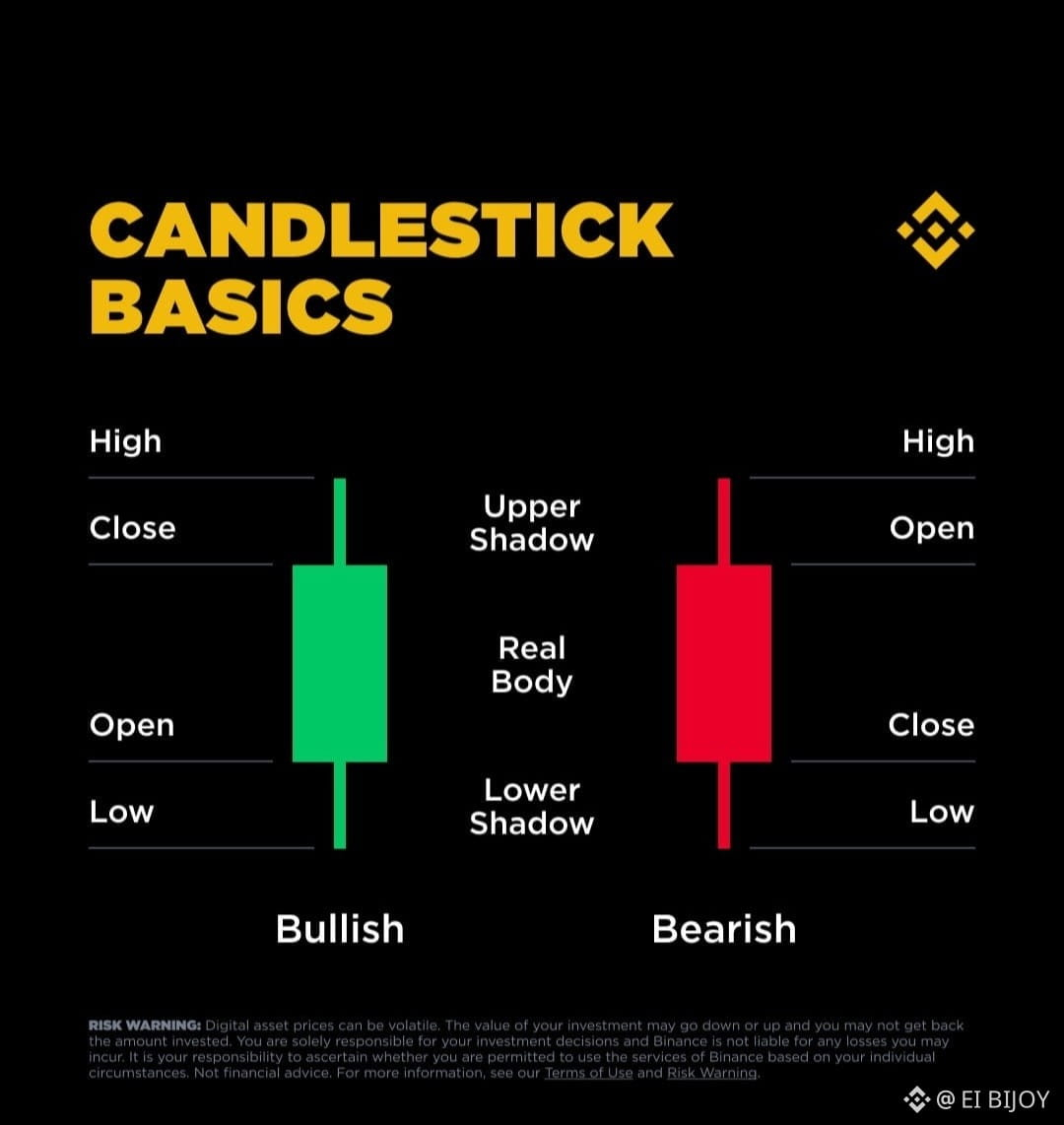
එක් එක් ඉටිපන්දුව ඔබට ප්රධාන තොරතුරු 4ක් ලබා දෙයි:
🟢 Open — මිල ආරම්භ වූ ස්ථානය
🔴 Close — මිල අවසන් වූ ස්ථානය
⬆️ High — ළඟා වූ ඉහළම මිල
⬇️ Low — ළඟා වූ පහළම මිල
මෙම කරුණු හතර අවබෝධ කරගැනීමෙන් ඔබට මිල චලනය, වෙළඳපොළ ගම්යතාව, සහ ගැනුම්කරුවන් හා විකුණුම්කරුවන් අතර ඇති සටන දැකීමට උදව් වේ.
🔥 මූලික දේවලින් ප්රවීණ වන්න. ඉටිපන්ද කියවන්න. වෙළඳපොළ අවබෝධ කරගන්න.
#BinanceSquare #CryptoTrading #candlestick_patterns #TechnicalAnalysis #tradingtips #Crypto
📊 වෙළඳපොළ පුරෝකථනය කිරීමට පෙර, ඉටිපන්ද (candle) කියවීමට ඉගෙන ගන්න.
එක් එක් ඉටිපන්දුව ඔබට ප්රධාන තොරතුරු 4ක් ලබා දෙයි:
🟢 Open — මිල ආරම්භ වූ ස්ථානය
🔴 Close — මිල අවසන් වූ ස්ථානය
⬆️ High — ළඟා වූ ඉහළම මිල
⬇️ Low — ළඟා වූ පහළම මිල
මෙම කරුණු හතර අවබෝධ කරගැනීමෙන් ඔබට මිල චලනය, වෙළඳපොළ ගම්යතාව, සහ ගැනුම්කරුවන් හා විකුණුම්කරුවන් අතර ඇති සටන දැකීමට උදව් වේ.
🔥 මූලික දේවලින් ප්රවීණ වන්න. ඉටිපන්ද කියවන්න. වෙළඳපොළ අවබෝධ කරගන්න.
#BinanceSquare #CryptoTrading #candlestick_patterns #TechnicalAnalysis #tradingtips #Crypto
එක් එක් ඉටිපන්දුව ඔබට ප්රධාන තොරතුරු 4ක් ලබා දෙයි:
🟢 Open — මිල ආරම්භ වූ ස්ථානය
🔴 Close — මිල අවසන් වූ ස්ථානය
⬆️ High — ළඟා වූ ඉහළම මිල
⬇️ Low — ළඟා වූ පහළම මිල
මෙම කරුණු හතර අවබෝධ කරගැනීමෙන් ඔබට මිල චලනය, වෙළඳපොළ ගම්යතාව, සහ ගැනුම්කරුවන් හා විකුණුම්කරුවන් අතර ඇති සටන දැකීමට උදව් වේ.
🔥 මූලික දේවලින් ප්රවීණ වන්න. ඉටිපන්ද කියවන්න. වෙළඳපොළ අවබෝධ කරගන්න.
#BinanceSquare #CryptoTrading #candlestick_patterns #TechnicalAnalysis #tradingtips #Crypto
91

·
--
බෙයාරිෂ්
තෙරී දුඹුරු කළු $LSK
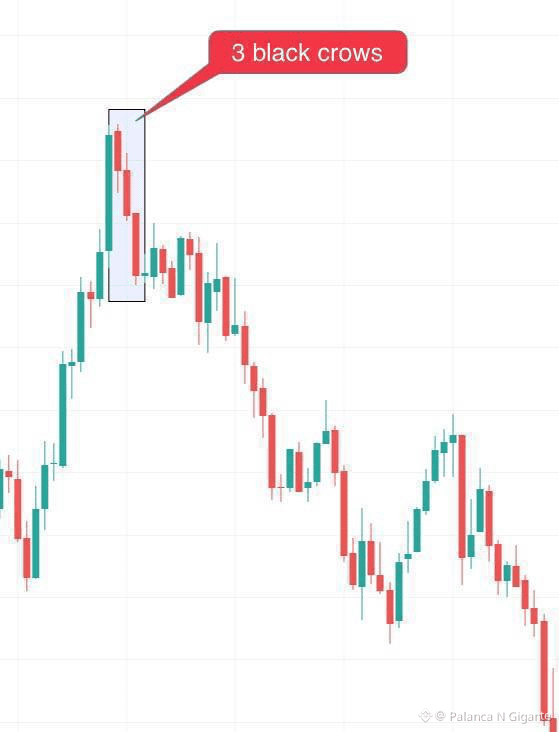
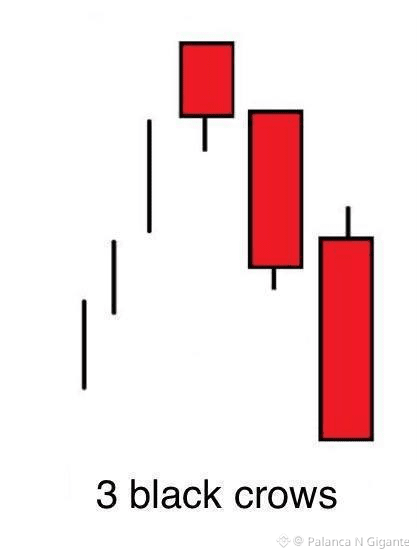
“තෙරී දුඹුරු කළු” යන රටාව යනු බෙයාරා පහළට හැරවීමේ රටාවකි. මෙය ප්රමාණවත් ලෙස විශාල පහළ ඉටිපත් තුනකින් (සෘණ ශරීරය සහිත) සමන්විත වන අතර ඒවා අනුක්රමයෙන් “පඩි පෙළක්” වගේ එකිනෙකට පෙළගස්වී ඇත. මෙම ඉටිපත් තුනම සාපේක්ෂව විශාල විය යුතු අතර කුඩා හෝ නොමැති සෙවනැලි තිබිය යුතුය.
මෙය තරුන උඩට ඇති ප්රවණතාවක් තුළ පෙනෙන විට පමණක් සලකා බැලිය යුතු ප්රවණතාව හැරවීමේ රටාවකි. “තෙරී දුඹුරු කළු” සාමාන්යයෙන් උඩට ඇති ප්රවණතාවක දුර්වලතාව පෙන්වයි; එසේම පහළට ප්රවණතාවක් බිහිවීමේ හැකියාවක් යෝජනා කරයි.
“තෙරී දුඹුරු කළු” රටාව හඳුනා ගැනීමට පහත නිර්ණායක බලන්න: $CVC
- වෙළඳපොල ඉහළ ප්රවණතාවක තිබිය යුතුය.
- දිගු පහළ ඉටිපත් තුනක් චාර්ට් එකේ දිස් විය යුතුය.
- මෙම සෑම ඉටිපතක්ම පෙර ඉටිපතේ විවෘතයට වඩා පහළින් විවෘත විය යුතුය.
- සෑම ඉටිපතක්ම කෙටි කාලීනව නව අවම මට්ටමක් ස්ථාපනය කළ යුතුය.
- ඉටිපත් වල සෙවනැලි ඉතා කුඩා (හෝ නොමැති) විය යුතුය.
මිලදී ගන්නන්ට වෙළඳපොලේ වාසිය තිබුණත් දැන් විකුණන්නන් මිල පහළට තල්ලු කරනවා.
ඉටිපත් වල ප්රමාණයට විශේෂ අවධානය දෙන්න. දෙවන හා තුන්වන ඉටිපත් ආසන්න වශයෙන් එකම ප්රමාණයේ විය යුතුය එවිට විකුණන්නන් පාලනය කරමින් සිටින බව තහවුරු වේ. තුන්වන ඉටිපත ඉතා පැහැදිලිව අනෙක් දෙකට වඩා කුඩා නම් එය දුර්වලතාව පෙන්වන අතර එම රටාව විශ්වාස කළ හැකි ලෙස නොසැලකේ. $BTW
{future}(CVCUSDT)
{future}(BTWUSDT)
{spot}(LSKUSDT)
#candlestick_patterns #AnthropicCEOCallsForAISlowdown #StrategicTrading #analysis #ClarityActFacesProceduralVoteSept15
තෙරී දුඹුරු කළු $LSK
“තෙරී දුඹුරු කළු” යන රටාව යනු බෙයාරා පහළට හැරවීමේ රටාවකි. මෙය ප්රමාණවත් ලෙස විශාල පහළ ඉටිපත් තුනකින් (සෘණ ශරීරය සහිත) සමන්විත වන අතර ඒවා අනුක්රමයෙන් “පඩි පෙළක්” වගේ එකිනෙකට පෙළගස්වී ඇත. මෙම ඉටිපත් තුනම සාපේක්ෂව විශාල විය යුතු අතර කුඩා හෝ නොමැති සෙවනැලි තිබිය යුතුය.
මෙය තරුන උඩට ඇති ප්රවණතාවක් තුළ පෙනෙන විට පමණක් සලකා බැලිය යුතු ප්රවණතාව හැරවීමේ රටාවකි. “තෙරී දුඹුරු කළු” සාමාන්යයෙන් උඩට ඇති ප්රවණතාවක දුර්වලතාව පෙන්වයි; එසේම පහළට ප්රවණතාවක් බිහිවීමේ හැකියාවක් යෝජනා කරයි.
“තෙරී දුඹුරු කළු” රටාව හඳුනා ගැනීමට පහත නිර්ණායක බලන්න: $CVC
- වෙළඳපොල ඉහළ ප්රවණතාවක තිබිය යුතුය.
- දිගු පහළ ඉටිපත් තුනක් චාර්ට් එකේ දිස් විය යුතුය.
- මෙම සෑම ඉටිපතක්ම පෙර ඉටිපතේ විවෘතයට වඩා පහළින් විවෘත විය යුතුය.
- සෑම ඉටිපතක්ම කෙටි කාලීනව නව අවම මට්ටමක් ස්ථාපනය කළ යුතුය.
- ඉටිපත් වල සෙවනැලි ඉතා කුඩා (හෝ නොමැති) විය යුතුය.
මිලදී ගන්නන්ට වෙළඳපොලේ වාසිය තිබුණත් දැන් විකුණන්නන් මිල පහළට තල්ලු කරනවා.
ඉටිපත් වල ප්රමාණයට විශේෂ අවධානය දෙන්න. දෙවන හා තුන්වන ඉටිපත් ආසන්න වශයෙන් එකම ප්රමාණයේ විය යුතුය එවිට විකුණන්නන් පාලනය කරමින් සිටින බව තහවුරු වේ. තුන්වන ඉටිපත ඉතා පැහැදිලිව අනෙක් දෙකට වඩා කුඩා නම් එය දුර්වලතාව පෙන්වන අතර එම රටාව විශ්වාස කළ හැකි ලෙස නොසැලකේ. $BTW
#candlestick_patterns #AnthropicCEOCallsForAISlowdown #StrategicTrading #analysis #ClarityActFacesProceduralVoteSept15
“තෙරී දුඹුරු කළු” යන රටාව යනු බෙයාරා පහළට හැරවීමේ රටාවකි. මෙය ප්රමාණවත් ලෙස විශාල පහළ ඉටිපත් තුනකින් (සෘණ ශරීරය සහිත) සමන්විත වන අතර ඒවා අනුක්රමයෙන් “පඩි පෙළක්” වගේ එකිනෙකට පෙළගස්වී ඇත. මෙම ඉටිපත් තුනම සාපේක්ෂව විශාල විය යුතු අතර කුඩා හෝ නොමැති සෙවනැලි තිබිය යුතුය.
මෙය තරුන උඩට ඇති ප්රවණතාවක් තුළ පෙනෙන විට පමණක් සලකා බැලිය යුතු ප්රවණතාව හැරවීමේ රටාවකි. “තෙරී දුඹුරු කළු” සාමාන්යයෙන් උඩට ඇති ප්රවණතාවක දුර්වලතාව පෙන්වයි; එසේම පහළට ප්රවණතාවක් බිහිවීමේ හැකියාවක් යෝජනා කරයි.
“තෙරී දුඹුරු කළු” රටාව හඳුනා ගැනීමට පහත නිර්ණායක බලන්න: $CVC
- වෙළඳපොල ඉහළ ප්රවණතාවක තිබිය යුතුය.
- දිගු පහළ ඉටිපත් තුනක් චාර්ට් එකේ දිස් විය යුතුය.
- මෙම සෑම ඉටිපතක්ම පෙර ඉටිපතේ විවෘතයට වඩා පහළින් විවෘත විය යුතුය.
- සෑම ඉටිපතක්ම කෙටි කාලීනව නව අවම මට්ටමක් ස්ථාපනය කළ යුතුය.
- ඉටිපත් වල සෙවනැලි ඉතා කුඩා (හෝ නොමැති) විය යුතුය.
මිලදී ගන්නන්ට වෙළඳපොලේ වාසිය තිබුණත් දැන් විකුණන්නන් මිල පහළට තල්ලු කරනවා.
ඉටිපත් වල ප්රමාණයට විශේෂ අවධානය දෙන්න. දෙවන හා තුන්වන ඉටිපත් ආසන්න වශයෙන් එකම ප්රමාණයේ විය යුතුය එවිට විකුණන්නන් පාලනය කරමින් සිටින බව තහවුරු වේ. තුන්වන ඉටිපත ඉතා පැහැදිලිව අනෙක් දෙකට වඩා කුඩා නම් එය දුර්වලතාව පෙන්වන අතර එම රටාව විශ්වාස කළ හැකි ලෙස නොසැලකේ. $BTW
#candlestick_patterns #AnthropicCEOCallsForAISlowdown #StrategicTrading #analysis #ClarityActFacesProceduralVoteSept15
Sardinha de ouro:
🥰🥰🥰🥰
1
2
1.9k

·
--
NVDAB/USDT — Candlestick විශ්ලේෂණය සහ වෙළඳ සැලැස්ම
කාසිය: NVDAB
වෙළඳ යුගලය: NVDAB/USDT
කාල රාමුව: පැය 1 චාර්ට්
ඉටු-කරන ලකුණු නිරීක්ෂණය
ඉටු-කරන ලකුණු චාර්ට් එක මිලදී ගැනීමේ හා විකිණීමේ පීඩනය හඳුනා ගැනීමට අපට උපකාරී වේ. ගනුදෙනුවක් සලකා බැලීමට පෙර, NVDAB එහි සහය (support) හා ප්රතිරෝධ (resistance) මට්ටම් වටා ඇති ප්රතික්රියාව මා නිරීක්ෂණය කරමින් සිටිමි.
උදාහරණ වෙළඳ සැලැස්ම — අධ්යාපනික කටයුතු සඳහා පමණි
- වත්මන් මිල: [සජීවී NVDAB මිල ඇතුළත් කරන්න]
- ප්රවේශය (Entry): [ඔබගේ විශ්ලේෂණයෙන් පසු ඇතිවිය හැකි ප්රවේශ මිල ඇතුළත් කරන්න]
- නතර කිරීම (Stop-loss): [ඔබගේ සහයට පහළ මට්ටමක් ඇතුළත් කරන්න]
- ලාභ ඉලක්කය (Take-profit): [ප්රතිරෝධය අසල ඔබගේ ඉලක්කය ඇතුළත් කරන්න]
- අවදානම-ලැබීම (Risk-to-reward): [ඔබගේ අනුපාතය ගණනය කරන්න]
මගේ අදහස: මිල සරලවම චලනය වෙනවා නිසා පමණක් මිලදී ගැනීමට වඩා, ඇතුළත් වීමට පෙර තහවුරු කිරීමක් බලා සිටිමි. අසාර්ථක වන breakout එකක් ඉක්මනින් පාඩුවක් බවට පත් විය හැක.
⚠️ මෙය මූල්ය උපදේශයක් නොවේ. ක්රිප්ටෝ ඉතා අස්ථාවර (highly volatile) වන අතර, මෙය සපයා ඇති උදාහරණය වන්නේ අනාවැකියක් නොව, වෙළඳයක් විශ්ලේෂණය කරන ආකාරය පිළිබඳ උදාහරණයක් පමණි.$NVDAB
#NVDAX #cryptouniverseofficial #candlestick_patterns #TradingEducation
NVDAB/USDT — Candlestick විශ්ලේෂණය සහ වෙළඳ සැලැස්ම
කාසිය: NVDAB
වෙළඳ යුගලය: NVDAB/USDT
කාල රාමුව: පැය 1 චාර්ට්
ඉටු-කරන ලකුණු නිරීක්ෂණය
ඉටු-කරන ලකුණු චාර්ට් එක මිලදී ගැනීමේ හා විකිණීමේ පීඩනය හඳුනා ගැනීමට අපට උපකාරී වේ. ගනුදෙනුවක් සලකා බැලීමට පෙර, NVDAB එහි සහය (support) හා ප්රතිරෝධ (resistance) මට්ටම් වටා ඇති ප්රතික්රියාව මා නිරීක්ෂණය කරමින් සිටිමි.
උදාහරණ වෙළඳ සැලැස්ම — අධ්යාපනික කටයුතු සඳහා පමණි
- වත්මන් මිල: [සජීවී NVDAB මිල ඇතුළත් කරන්න]
- ප්රවේශය (Entry): [ඔබගේ විශ්ලේෂණයෙන් පසු ඇතිවිය හැකි ප්රවේශ මිල ඇතුළත් කරන්න]
- නතර කිරීම (Stop-loss): [ඔබගේ සහයට පහළ මට්ටමක් ඇතුළත් කරන්න]
- ලාභ ඉලක්කය (Take-profit): [ප්රතිරෝධය අසල ඔබගේ ඉලක්කය ඇතුළත් කරන්න]
- අවදානම-ලැබීම (Risk-to-reward): [ඔබගේ අනුපාතය ගණනය කරන්න]
මගේ අදහස: මිල සරලවම චලනය වෙනවා නිසා පමණක් මිලදී ගැනීමට වඩා, ඇතුළත් වීමට පෙර තහවුරු කිරීමක් බලා සිටිමි. අසාර්ථක වන breakout එකක් ඉක්මනින් පාඩුවක් බවට පත් විය හැක.
⚠️ මෙය මූල්ය උපදේශයක් නොවේ. ක්රිප්ටෝ ඉතා අස්ථාවර (highly volatile) වන අතර, මෙය සපයා ඇති උදාහරණය වන්නේ අනාවැකියක් නොව, වෙළඳයක් විශ්ලේෂණය කරන ආකාරය පිළිබඳ උදාහරණයක් පමණි.$NVDAB
#NVDAX #cryptouniverseofficial #candlestick_patterns #TradingEducation
කාසිය: NVDAB
වෙළඳ යුගලය: NVDAB/USDT
කාල රාමුව: පැය 1 චාර්ට්
ඉටු-කරන ලකුණු නිරීක්ෂණය
ඉටු-කරන ලකුණු චාර්ට් එක මිලදී ගැනීමේ හා විකිණීමේ පීඩනය හඳුනා ගැනීමට අපට උපකාරී වේ. ගනුදෙනුවක් සලකා බැලීමට පෙර, NVDAB එහි සහය (support) හා ප්රතිරෝධ (resistance) මට්ටම් වටා ඇති ප්රතික්රියාව මා නිරීක්ෂණය කරමින් සිටිමි.
උදාහරණ වෙළඳ සැලැස්ම — අධ්යාපනික කටයුතු සඳහා පමණි
- වත්මන් මිල: [සජීවී NVDAB මිල ඇතුළත් කරන්න]
- ප්රවේශය (Entry): [ඔබගේ විශ්ලේෂණයෙන් පසු ඇතිවිය හැකි ප්රවේශ මිල ඇතුළත් කරන්න]
- නතර කිරීම (Stop-loss): [ඔබගේ සහයට පහළ මට්ටමක් ඇතුළත් කරන්න]
- ලාභ ඉලක්කය (Take-profit): [ප්රතිරෝධය අසල ඔබගේ ඉලක්කය ඇතුළත් කරන්න]
- අවදානම-ලැබීම (Risk-to-reward): [ඔබගේ අනුපාතය ගණනය කරන්න]
මගේ අදහස: මිල සරලවම චලනය වෙනවා නිසා පමණක් මිලදී ගැනීමට වඩා, ඇතුළත් වීමට පෙර තහවුරු කිරීමක් බලා සිටිමි. අසාර්ථක වන breakout එකක් ඉක්මනින් පාඩුවක් බවට පත් විය හැක.
⚠️ මෙය මූල්ය උපදේශයක් නොවේ. ක්රිප්ටෝ ඉතා අස්ථාවර (highly volatile) වන අතර, මෙය සපයා ඇති උදාහරණය වන්නේ අනාවැකියක් නොව, වෙළඳයක් විශ්ලේෂණය කරන ආකාරය පිළිබඳ උදාහරණයක් පමණි.$NVDAB
#NVDAX #cryptouniverseofficial #candlestick_patterns #TradingEducation
74
·
--
උසබ තත්ත්වය
GRAFIK PAΛNĀKİ DOMINIO KURSA: MODULO 2: REVERSĀN PAΛNĀKİ | 11වන දවස
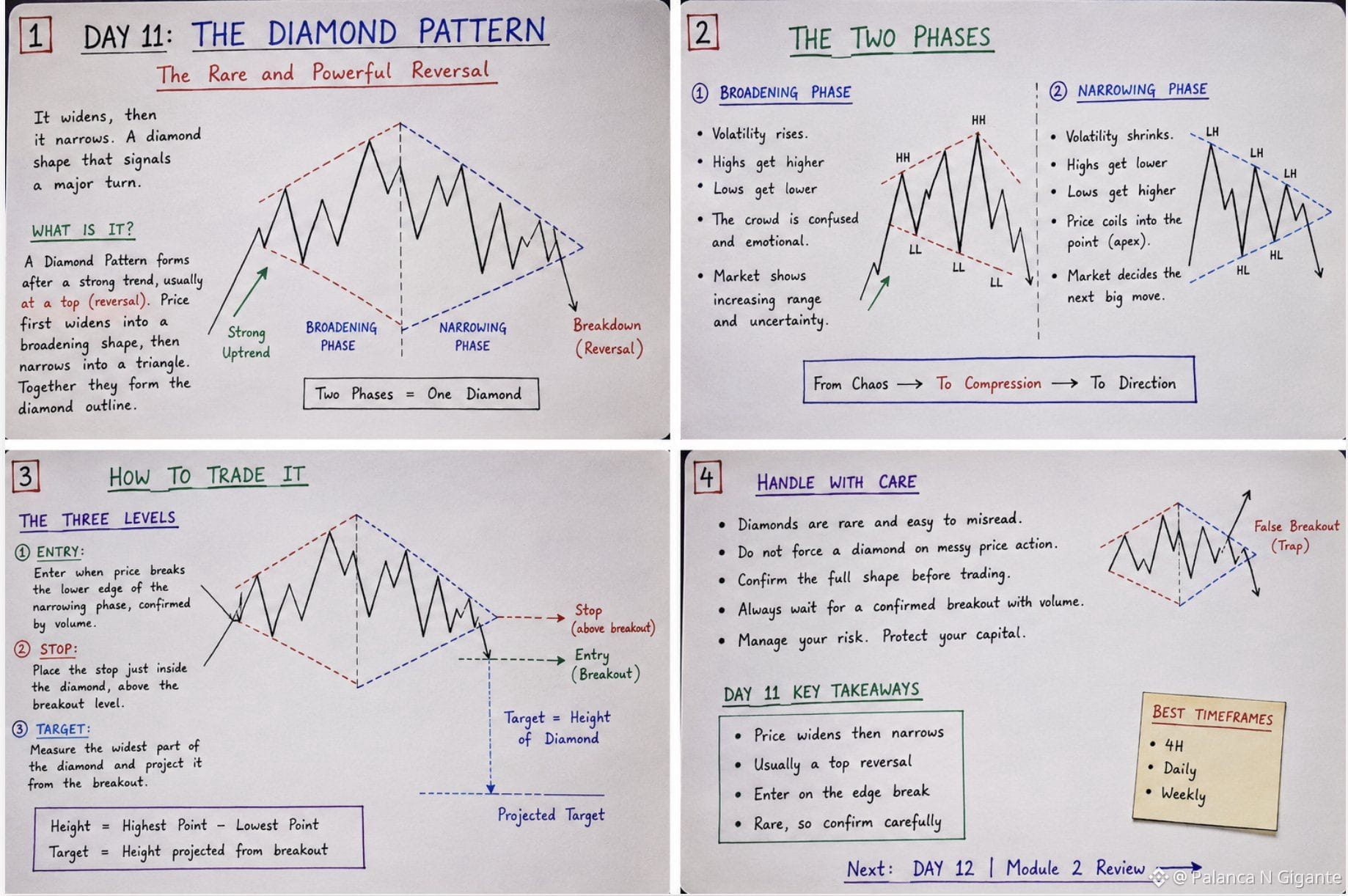
DIAMANTE PAΛNĀKİ: දුර්ලභ හා බලවත් ප්රතිවර්තනය
එය පළල වන්නේ පසුව පටු වන්නේය. විශාල ප්රතිවර්තනයක් සටහන් කරන දියමන්ත හැඩයකි.
DIAMANTE එක්ක halves දෙක: $4
දියමන්තයක් සෑදෙන්නේ දැඩි ප්රවණතාවකින් පසුවය; බොහෝ විට උඩුදැලක් (top) තුළ. මුලින්ම මිල පළල වීමක් වගේ හැඩයකට පුළුල් වී පසුව ත්රිකෝණයක් ලෙස පටු වේ. එකට ගත් විට, ඒවා දියමන්තයේ සීමාව (contour) සාදයි.
අදියර දෙක:
1️⃣ පළල වීමේ අදියර. අස්ථිරතාව (volatility) වැඩි වේ. ඉහළ සීමා (maxima) ඉහළට යන අතර පහළ සීමා (minima) පහළට යයි. වෙළඳපොළ ගොළුබව සහ හැඟීම් සහිත (confuso e emotivo) තත්ත්වයකි. 2️⃣ පටු වීමේ අදියර. අස්ථිරතාව අඩු වේ. ඉහළ සීමා පහළට යන අතර පහළ සීමා ඉහළට යයි; ඒවා ලක්ෂ්යයට (point) එකට එකතු වේ.
සංවර්ධන තරාතිරම් තුනටම කෙසේ ක්රියා කරන්නද: $DASH
▪️ ඇතුල්වීම (ENTRADA): මිල පටු වීමේ අදියරේ පහළ මායිම (borda inferior) බිඳ දැමූ විට ඇතුල්වන්න; එය වොලියුම් (volume) මගින් තහවුරු කළ යුතුය.
▪️ STOP: බ්රේක් (rompimento) මට්ටමට ඉහළින් දියමන්තය තුළම stop තබන්න.
▪️ ඉලක්කය (ALVO): දියමන්තයේ වැඩිම පළල කොටස මැන එය බ්රේක් වූ ස්ථානයෙන් ඉදිරියට ප්රක්ෂේපණය කරන්න.
සැලකිල්ලෙන් හැසිරෙන්න
දියමන්ත දුර්ලභ වන අතර වැරදි ලෙස අර්ථකථනය කිරීම පහසුය. ක්රියා කිරීමට පෙර සම්පූර්ණ හැඩය තහවුරු කර, ව්යාකූල මිල ක්රියාවක් (price confusa) තුළ කිසිවිටක දියමන්තයක් බලාත්මකව (force) භාවිතා නොකරන්න.
11වන දවසේ ප්රධාන නිගමන $MARSCOIN
🔹 මිල පළල වන්නේ පසුව පටු වේ
🔹 සාමාන්යයෙන් ඉහළ/ටොප් (top) ප්රතිවර්තනයක්
🔹 මායිම බිඳ දැමීමේ මොහොතට ඇතුල්වීම
🔹 දුර්ලභයි; එබැවින් හොඳින් තහවුරු කරන්න
ඉදිරියට: දවස 12 | මොඩියුල 2 සමාලෝචනය ➡️
{future}(4USDT)
{spot}(DASHUSDT)
{spot}(MARSCOINUSDT)
#candlestick_patterns #DiamondPattern #ReversalPatterns #chartpatterns #StrategicTrading
GRAFIK PAΛNĀKİ DOMINIO KURSA: MODULO 2: REVERSĀN PAΛNĀKİ | 11වන දවස
DIAMANTE PAΛNĀKİ: දුර්ලභ හා බලවත් ප්රතිවර්තනය
එය පළල වන්නේ පසුව පටු වන්නේය. විශාල ප්රතිවර්තනයක් සටහන් කරන දියමන්ත හැඩයකි.
DIAMANTE එක්ක halves දෙක: $4
දියමන්තයක් සෑදෙන්නේ දැඩි ප්රවණතාවකින් පසුවය; බොහෝ විට උඩුදැලක් (top) තුළ. මුලින්ම මිල පළල වීමක් වගේ හැඩයකට පුළුල් වී පසුව ත්රිකෝණයක් ලෙස පටු වේ. එකට ගත් විට, ඒවා දියමන්තයේ සීමාව (contour) සාදයි.
අදියර දෙක:
1️⃣ පළල වීමේ අදියර. අස්ථිරතාව (volatility) වැඩි වේ. ඉහළ සීමා (maxima) ඉහළට යන අතර පහළ සීමා (minima) පහළට යයි. වෙළඳපොළ ගොළුබව සහ හැඟීම් සහිත (confuso e emotivo) තත්ත්වයකි. 2️⃣ පටු වීමේ අදියර. අස්ථිරතාව අඩු වේ. ඉහළ සීමා පහළට යන අතර පහළ සීමා ඉහළට යයි; ඒවා ලක්ෂ්යයට (point) එකට එකතු වේ.
සංවර්ධන තරාතිරම් තුනටම කෙසේ ක්රියා කරන්නද: $DASH
▪️ ඇතුල්වීම (ENTRADA): මිල පටු වීමේ අදියරේ පහළ මායිම (borda inferior) බිඳ දැමූ විට ඇතුල්වන්න; එය වොලියුම් (volume) මගින් තහවුරු කළ යුතුය.
▪️ STOP: බ්රේක් (rompimento) මට්ටමට ඉහළින් දියමන්තය තුළම stop තබන්න.
▪️ ඉලක්කය (ALVO): දියමන්තයේ වැඩිම පළල කොටස මැන එය බ්රේක් වූ ස්ථානයෙන් ඉදිරියට ප්රක්ෂේපණය කරන්න.
සැලකිල්ලෙන් හැසිරෙන්න
දියමන්ත දුර්ලභ වන අතර වැරදි ලෙස අර්ථකථනය කිරීම පහසුය. ක්රියා කිරීමට පෙර සම්පූර්ණ හැඩය තහවුරු කර, ව්යාකූල මිල ක්රියාවක් (price confusa) තුළ කිසිවිටක දියමන්තයක් බලාත්මකව (force) භාවිතා නොකරන්න.
11වන දවසේ ප්රධාන නිගමන $MARSCOIN
🔹 මිල පළල වන්නේ පසුව පටු වේ
🔹 සාමාන්යයෙන් ඉහළ/ටොප් (top) ප්රතිවර්තනයක්
🔹 මායිම බිඳ දැමීමේ මොහොතට ඇතුල්වීම
🔹 දුර්ලභයි; එබැවින් හොඳින් තහවුරු කරන්න
ඉදිරියට: දවස 12 | මොඩියුල 2 සමාලෝචනය ➡️
#candlestick_patterns #DiamondPattern #ReversalPatterns #chartpatterns #StrategicTrading
DIAMANTE PAΛNĀKİ: දුර්ලභ හා බලවත් ප්රතිවර්තනය
එය පළල වන්නේ පසුව පටු වන්නේය. විශාල ප්රතිවර්තනයක් සටහන් කරන දියමන්ත හැඩයකි.
DIAMANTE එක්ක halves දෙක: $4
දියමන්තයක් සෑදෙන්නේ දැඩි ප්රවණතාවකින් පසුවය; බොහෝ විට උඩුදැලක් (top) තුළ. මුලින්ම මිල පළල වීමක් වගේ හැඩයකට පුළුල් වී පසුව ත්රිකෝණයක් ලෙස පටු වේ. එකට ගත් විට, ඒවා දියමන්තයේ සීමාව (contour) සාදයි.
අදියර දෙක:
1️⃣ පළල වීමේ අදියර. අස්ථිරතාව (volatility) වැඩි වේ. ඉහළ සීමා (maxima) ඉහළට යන අතර පහළ සීමා (minima) පහළට යයි. වෙළඳපොළ ගොළුබව සහ හැඟීම් සහිත (confuso e emotivo) තත්ත්වයකි. 2️⃣ පටු වීමේ අදියර. අස්ථිරතාව අඩු වේ. ඉහළ සීමා පහළට යන අතර පහළ සීමා ඉහළට යයි; ඒවා ලක්ෂ්යයට (point) එකට එකතු වේ.
සංවර්ධන තරාතිරම් තුනටම කෙසේ ක්රියා කරන්නද: $DASH
▪️ ඇතුල්වීම (ENTRADA): මිල පටු වීමේ අදියරේ පහළ මායිම (borda inferior) බිඳ දැමූ විට ඇතුල්වන්න; එය වොලියුම් (volume) මගින් තහවුරු කළ යුතුය.
▪️ STOP: බ්රේක් (rompimento) මට්ටමට ඉහළින් දියමන්තය තුළම stop තබන්න.
▪️ ඉලක්කය (ALVO): දියමන්තයේ වැඩිම පළල කොටස මැන එය බ්රේක් වූ ස්ථානයෙන් ඉදිරියට ප්රක්ෂේපණය කරන්න.
සැලකිල්ලෙන් හැසිරෙන්න
දියමන්ත දුර්ලභ වන අතර වැරදි ලෙස අර්ථකථනය කිරීම පහසුය. ක්රියා කිරීමට පෙර සම්පූර්ණ හැඩය තහවුරු කර, ව්යාකූල මිල ක්රියාවක් (price confusa) තුළ කිසිවිටක දියමන්තයක් බලාත්මකව (force) භාවිතා නොකරන්න.
11වන දවසේ ප්රධාන නිගමන $MARSCOIN
🔹 මිල පළල වන්නේ පසුව පටු වේ
🔹 සාමාන්යයෙන් ඉහළ/ටොප් (top) ප්රතිවර්තනයක්
🔹 මායිම බිඳ දැමීමේ මොහොතට ඇතුල්වීම
🔹 දුර්ලභයි; එබැවින් හොඳින් තහවුරු කරන්න
ඉදිරියට: දවස 12 | මොඩියුල 2 සමාලෝචනය ➡️
#candlestick_patterns #DiamondPattern #ReversalPatterns #chartpatterns #StrategicTrading
Palanca N Gigante
·
--
උසබ තත්ත්වයក្រាមសិក្សាស្តីពី លំនាំក្រាហ្វិក DOMÍNIO DE PADRÕES GRÁFICOS: ម៉ូឌុល 2: លំនាំបញ្ច្រាស | ថ្ងៃទី 10
កំពូល និងបាតរាងមូល: $0G
ការបង្វិលយឺតនៃរលក ដោយគ្មានកំពូលច្បាស់ៗនៅទីនេះ។ មានតែខ្សែកោងទន់ៗប៉ុណ្ណោះ។
ការគ្រប់គ្រងផ្លាស់ប្តូរយឺតៗពីម្ខាងទៅម្ខាង។
🔰ខ្សែកោង
🔴កំពូលរាងមូលទន់
ហៅផងដែរថា ចានបញ្ច្រាស។ តម្លៃឡើង វាក៏ស្ថិតស្ងៀមបន្តិចៗ ហើយបន្ទាប់មកកោងចុះ។ អ្នកទិញបាត់បង់ ហើយអ្នកលក់កាន់កាប់ការគ្រប់គ្រងយឺតៗ។ ការបញ្ច្រាសធ្លាក់យឺត និងស្ងប់ស្ងាត់។
🟢បាតរាងមូល
ហៅផងដែរថា ចាន។ តម្លៃធ្លាក់ វាក៏ស្ថិតស្ងៀមបន្តិចៗ ហើយបន្ទាប់មកកោងឡើង។ អ្នកលក់អស់កម្លាំង ហើយអ្នកទិញចូលមកយឺតៗ។ ការបញ្ច្រាសឡើងយឺត និងអត់ធ្មត់។
លំនាំទាំងនេះកើតឡើងក្នុងរយៈពេលវែងជាង។ វាបង្ហាញពីការផ្លាស់ប្តូរទន់ និងថេរនៃអារម្មណ៍ មិនមែនជាការបង្វិលខ្លាំងៗទេ។
🔰របៀបធ្វើការជាមួយកម្រិតទាំងបី: $ARB
▪️ចូល: ចូលពេលតម្លៃបំបែកគែមរបស់ចាន៖ ខ្ពស់សម្រាប់បាត, ទាបសម្រាប់កំពូល។
▪️បញ្ឈប់: ដាក់ stop នៅខាងក្នុងខ្សែកោង ខាងក្រោមការបំបែកសម្រាប់ប្រតិបត្តិការវែង (long) ឬខាងលើវាសម្រាប់ប្រតិបត្តិការខ្លី (short)។
▪️គោលដៅ: វាស់ជម្រៅនៃរន្ធ ហើយគូសវាចេញពីការបំបែកគែម។
លក្ខណៈនៃបរិមាណ $USELESS
ជាញឹកញាប់ បរិមាណបង្កើតរន្ធរបស់ខ្លួនឯង៖ ខ្ពស់នៅគែម ទាបនៅកណ្តាល ហើយឡើងវិញ នៅពេលដែលលំនាំបញ្ចប់។
🔰ចំណុចសំខាន់ៗនៃថ្ងៃ 10 → ខ្សែកោងទន់ មិនមែនជាកំពូលច្បាស់ៗ → ការគ្រប់គ្រងផ្លាស់យឺតៗ និងថេរ → ចូលនៅការបំបែកគែម → បរិមាណក៏បង្កើតរន្ធផងដែរ
បន្ទាប់: ថ្ងៃទី 11 | លំនាំពេជ្រ
#StrategicTrading #RoundingBottom #candlestick_patterns #ReversalPatterns #chartpatterns
កំពូល និងបាតរាងមូល: $0G
ការបង្វិលយឺតនៃរលក ដោយគ្មានកំពូលច្បាស់ៗនៅទីនេះ។ មានតែខ្សែកោងទន់ៗប៉ុណ្ណោះ។
ការគ្រប់គ្រងផ្លាស់ប្តូរយឺតៗពីម្ខាងទៅម្ខាង។
🔰ខ្សែកោង
🔴កំពូលរាងមូលទន់
ហៅផងដែរថា ចានបញ្ច្រាស។ តម្លៃឡើង វាក៏ស្ថិតស្ងៀមបន្តិចៗ ហើយបន្ទាប់មកកោងចុះ។ អ្នកទិញបាត់បង់ ហើយអ្នកលក់កាន់កាប់ការគ្រប់គ្រងយឺតៗ។ ការបញ្ច្រាសធ្លាក់យឺត និងស្ងប់ស្ងាត់។
🟢បាតរាងមូល
ហៅផងដែរថា ចាន។ តម្លៃធ្លាក់ វាក៏ស្ថិតស្ងៀមបន្តិចៗ ហើយបន្ទាប់មកកោងឡើង។ អ្នកលក់អស់កម្លាំង ហើយអ្នកទិញចូលមកយឺតៗ។ ការបញ្ច្រាសឡើងយឺត និងអត់ធ្មត់។
លំនាំទាំងនេះកើតឡើងក្នុងរយៈពេលវែងជាង។ វាបង្ហាញពីការផ្លាស់ប្តូរទន់ និងថេរនៃអារម្មណ៍ មិនមែនជាការបង្វិលខ្លាំងៗទេ។
🔰របៀបធ្វើការជាមួយកម្រិតទាំងបី: $ARB
▪️ចូល: ចូលពេលតម្លៃបំបែកគែមរបស់ចាន៖ ខ្ពស់សម្រាប់បាត, ទាបសម្រាប់កំពូល។
▪️បញ្ឈប់: ដាក់ stop នៅខាងក្នុងខ្សែកោង ខាងក្រោមការបំបែកសម្រាប់ប្រតិបត្តិការវែង (long) ឬខាងលើវាសម្រាប់ប្រតិបត្តិការខ្លី (short)។
▪️គោលដៅ: វាស់ជម្រៅនៃរន្ធ ហើយគូសវាចេញពីការបំបែកគែម។
លក្ខណៈនៃបរិមាណ $USELESS
ជាញឹកញាប់ បរិមាណបង្កើតរន្ធរបស់ខ្លួនឯង៖ ខ្ពស់នៅគែម ទាបនៅកណ្តាល ហើយឡើងវិញ នៅពេលដែលលំនាំបញ្ចប់។
🔰ចំណុចសំខាន់ៗនៃថ្ងៃ 10 → ខ្សែកោងទន់ មិនមែនជាកំពូលច្បាស់ៗ → ការគ្រប់គ្រងផ្លាស់យឺតៗ និងថេរ → ចូលនៅការបំបែកគែម → បរិមាណក៏បង្កើតរន្ធផងដែរ
បន្ទាប់: ថ្ងៃទី 11 | លំនាំពេជ្រ
#StrategicTrading #RoundingBottom #candlestick_patterns #ReversalPatterns #chartpatterns
2
1
1
1.2k

·
--
📊 වෙළඳාමේදී කැන්ඩලුස්ටික් ප්රස්ථාර අවබෝධ කරගැනීම
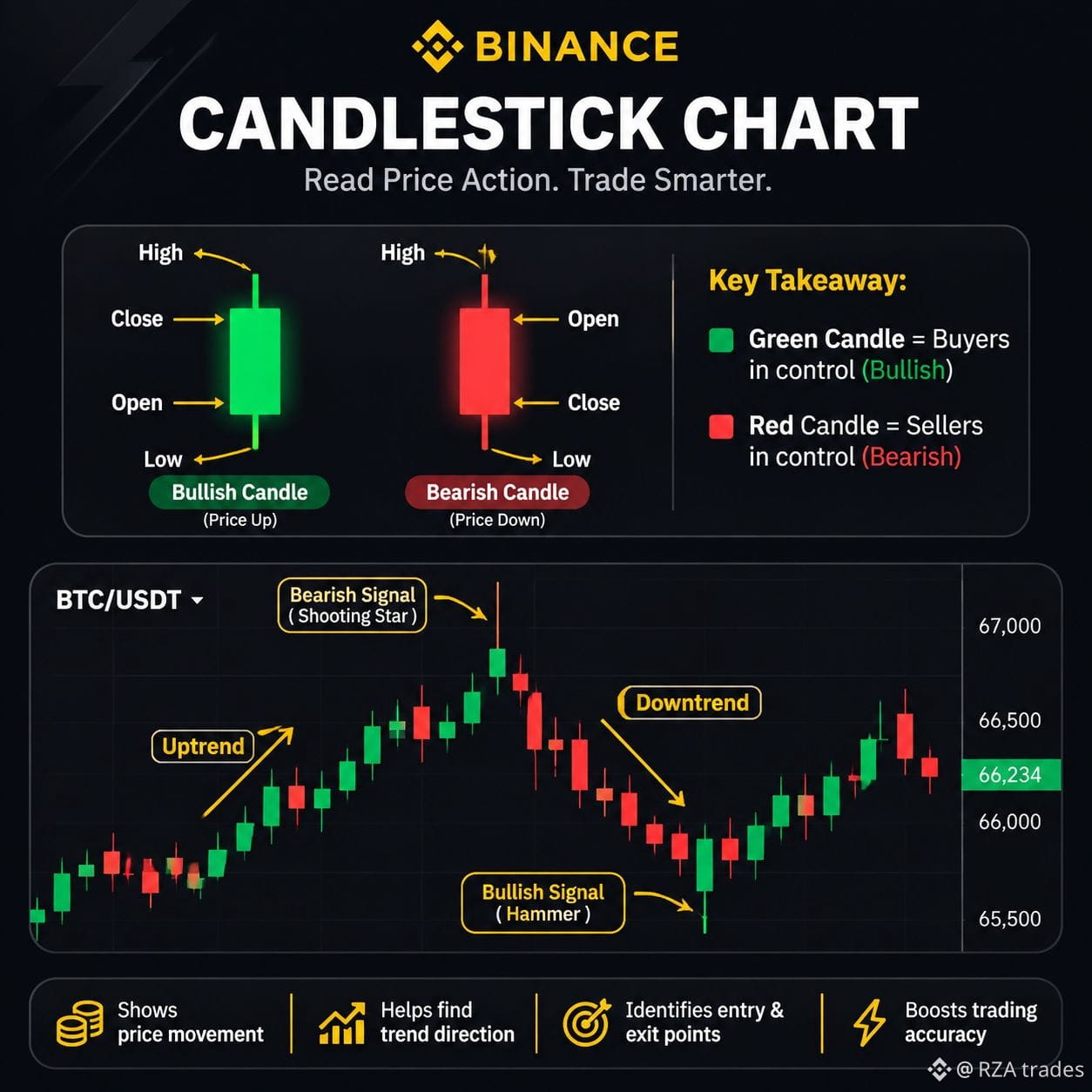
කැන්ඩලස් යනු Binance ප්රස්ථාරවල මිල චලනයේ දෘශ්ය නිරූපණයකි.
සෑම කැන්ඩලයකම වැදගත් කරුණු හතරක් පෙන්වයි: විවෘත (Open), ඉහළ (High), පහළ (Low), සහ වසාදැමීම (Close) මිල (OHLC).
කොළ කැන්ඩල යනු මිලදී ගැනීමේ පීඩනය (buying pressure) වන අතර රතු කැන්ඩල යනු විකිණීමේ පීඩනය (selling pressure) දැක්වයි.
වෙළඳුන් වෙළඳපළ මනෝභාවය (market sentiment) වටහාගෙන හැකි මිල චලනයන් පුරෝකථනය කිරීමට කැන්ඩල් රටා භාවිතා කරයි.
කැන්ඩලස්ට්රික් ඉගෙනීම වඩාත් බුද්ධිමත් තාක්ෂණික විශ්ලේෂණයක් වෙත යන පළමු පියවරයි. 📈
#candlestick_patterns #candle
📊 වෙළඳාමේදී කැන්ඩලුස්ටික් ප්රස්ථාර අවබෝධ කරගැනීම
කැන්ඩලස් යනු Binance ප්රස්ථාරවල මිල චලනයේ දෘශ්ය නිරූපණයකි.
සෑම කැන්ඩලයකම වැදගත් කරුණු හතරක් පෙන්වයි: විවෘත (Open), ඉහළ (High), පහළ (Low), සහ වසාදැමීම (Close) මිල (OHLC).
කොළ කැන්ඩල යනු මිලදී ගැනීමේ පීඩනය (buying pressure) වන අතර රතු කැන්ඩල යනු විකිණීමේ පීඩනය (selling pressure) දැක්වයි.
වෙළඳුන් වෙළඳපළ මනෝභාවය (market sentiment) වටහාගෙන හැකි මිල චලනයන් පුරෝකථනය කිරීමට කැන්ඩල් රටා භාවිතා කරයි.
කැන්ඩලස්ට්රික් ඉගෙනීම වඩාත් බුද්ධිමත් තාක්ෂණික විශ්ලේෂණයක් වෙත යන පළමු පියවරයි. 📈
#candlestick_patterns #candle
කැන්ඩලස් යනු Binance ප්රස්ථාරවල මිල චලනයේ දෘශ්ය නිරූපණයකි.
සෑම කැන්ඩලයකම වැදගත් කරුණු හතරක් පෙන්වයි: විවෘත (Open), ඉහළ (High), පහළ (Low), සහ වසාදැමීම (Close) මිල (OHLC).
කොළ කැන්ඩල යනු මිලදී ගැනීමේ පීඩනය (buying pressure) වන අතර රතු කැන්ඩල යනු විකිණීමේ පීඩනය (selling pressure) දැක්වයි.
වෙළඳුන් වෙළඳපළ මනෝභාවය (market sentiment) වටහාගෙන හැකි මිල චලනයන් පුරෝකථනය කිරීමට කැන්ඩල් රටා භාවිතා කරයි.
කැන්ඩලස්ට්රික් ඉගෙනීම වඩාත් බුද්ධිමත් තාක්ෂණික විශ්ලේෂණයක් වෙත යන පළමු පියවරයි. 📈
#candlestick_patterns #candle
84

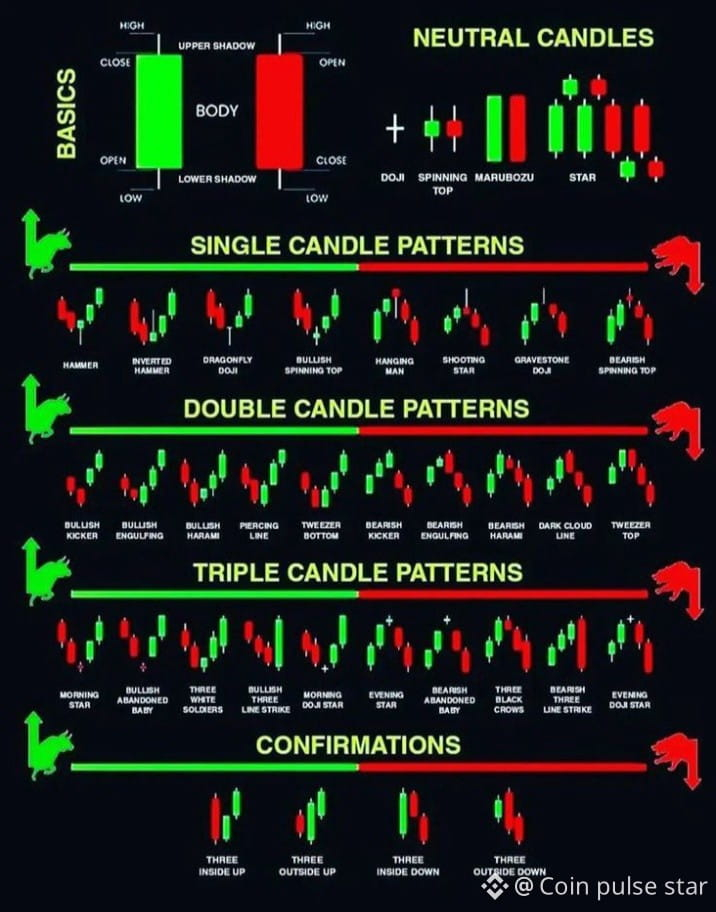
..Doji – විවෘතය ≈ වසාදීම (කුඩා ශරීරය); නොවිසුම්භාව සංඥා
Hammer – කුඩා ශරීරය, දිගු පහළ වක්රය; හැකි බුලිෂ් ප්රතිපක්ෂ හැරීමක්
Engulfing – එක් කාණ්ඩයක ශරීරය මුළුමනින්ම පෙර කාණ්ඩය ආවරණය කරයි; ශක්තිමත් ප්රතිපක්ෂ සංඥාව
Shooting star – කුඩා ශරීරය, දිගු ඉහළ වක්රය; හැකි බෙරිෂ් ප්රතිපක්ෂ හැරීමක්.
#candlestick
#candlestick_patterns
..Doji – විවෘතය ≈ වසාදීම (කුඩා ශරීරය); නොවිසුම්භාව සංඥා
Hammer – කුඩා ශරීරය, දිගු පහළ වක්රය; හැකි බුලිෂ් ප්රතිපක්ෂ හැරීමක්
Engulfing – එක් කාණ්ඩයක ශරීරය මුළුමනින්ම පෙර කාණ්ඩය ආවරණය කරයි; ශක්තිමත් ප්රතිපක්ෂ සංඥාව
Shooting star – කුඩා ශරීරය, දිගු ඉහළ වක්රය; හැකි බෙරිෂ් ප්රතිපක්ෂ හැරීමක්.
#candlestick
#candlestick_patterns
Hammer – කුඩා ශරීරය, දිගු පහළ වක්රය; හැකි බුලිෂ් ප්රතිපක්ෂ හැරීමක්
Engulfing – එක් කාණ්ඩයක ශරීරය මුළුමනින්ම පෙර කාණ්ඩය ආවරණය කරයි; ශක්තිමත් ප්රතිපක්ෂ සංඥාව
Shooting star – කුඩා ශරීරය, දිගු ඉහළ වක්රය; හැකි බෙරිෂ් ප්රතිපක්ෂ හැරීමක්.
#candlestick
#candlestick_patterns
1
92
·
--
උසබ තත්ත්වය
கிராபிக் முறைபாடுகளில் முதுநிலை பாடநெறி: MODULE 1: $龙虾
அடிப்படைகள் | நாள் 1
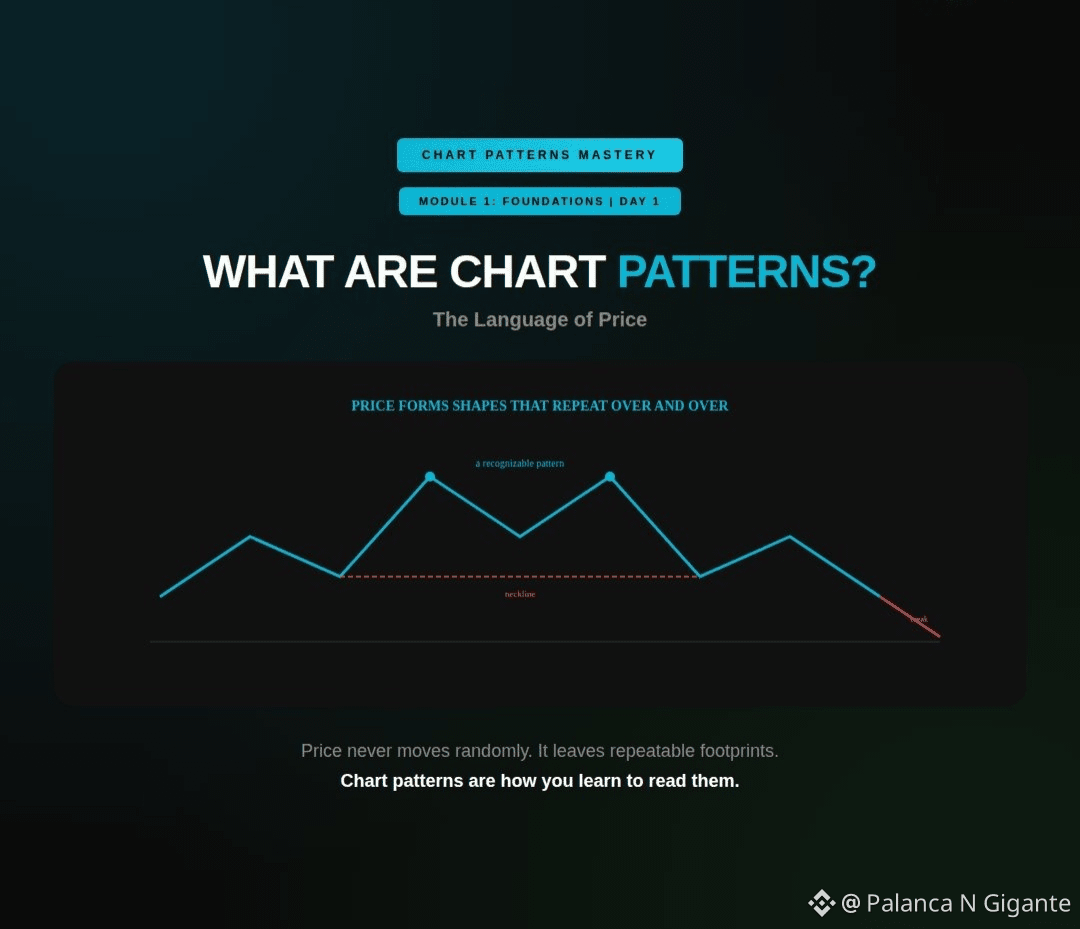
கிராபிக் முறைபாடுகள் என்றால் என்ன? விலை மொழி
விலை எப்போதும் தற்செயலாக நகராது. அது மீண்டும் மீண்டும் பதியும் தடங்களை விட்டு செல்கிறது. கிராபிக் முறைபாடுகள் அவற்றை நீங்கள் படிக்க கற்றுக்கொள்வது போன்றவை.
இது உங்கள் கிரிப்டோ வர்த்தகராக துவக்க நிலையில் இருந்து முன்னேறிய நிலைக்கு பயணத்தின் நாள் 1. முதலில் பாரம்பரிய முறைபாடுகள், பின்னர் நாம் முன்னேறுவோம்.
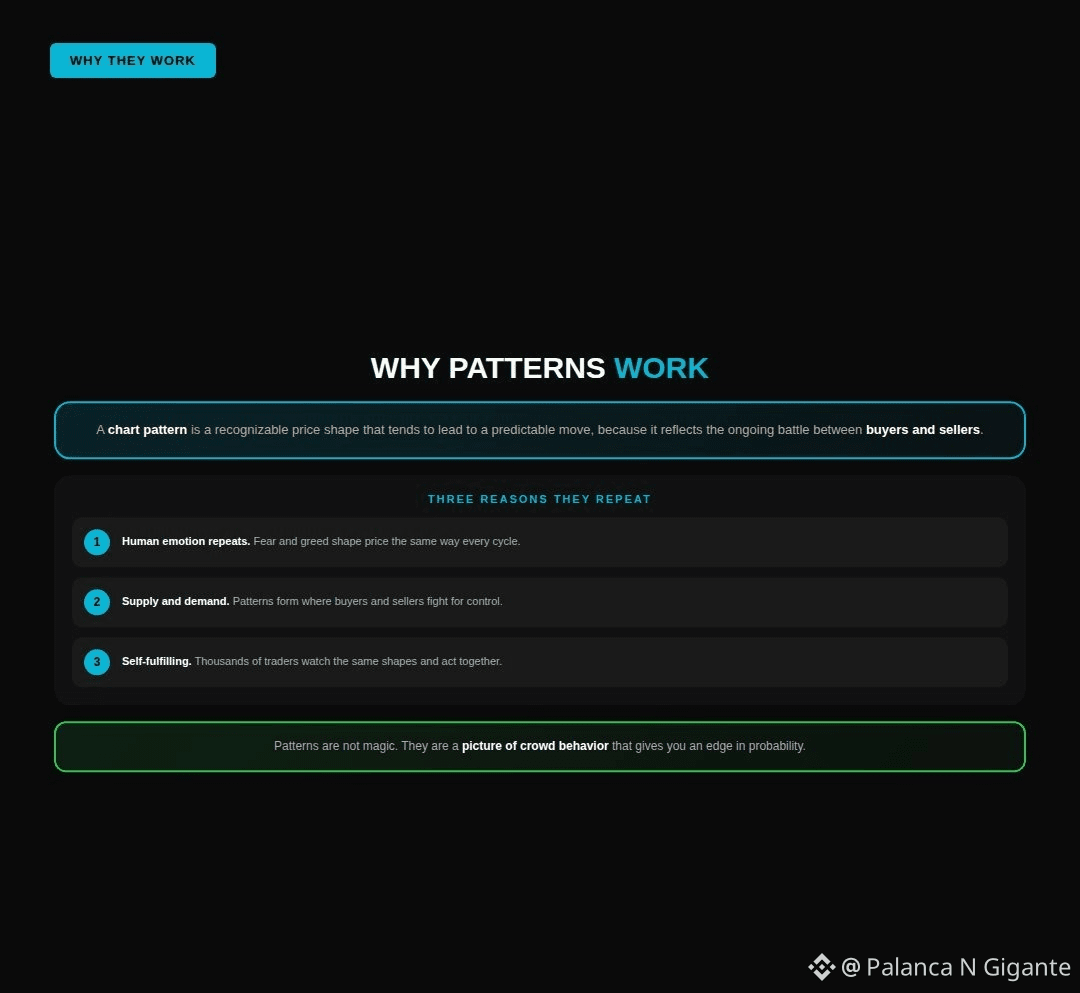
ஏன் முறைபாடுகள் வேலை செய்கின்றன: $TST
ஒரு கிராபிக் முறைபாடு என்பது அடையாளம் காணக்கூடிய ஒரு விலை வடிவம்; இது வாங்குபவர்கள் மற்றும் விற்பவர்கள் இடையேயான தொடர்ச்சியான போரை பிரதிபலிப்பதால், கணிக்கத்தக்க ஒரு இயக்கத்திற்கு வழிவகுக்கும் போக்கைக் கொண்டுள்ளது.
மீண்டும் வரும் மூன்று காரணங்கள்:
1️⃣மனித உணர்ச்சி மீண்டும் மீண்டும் வருகிறது. பயமும் பேராசையும் ஒவ்வொரு சுற்றிலும் அதே விலையை கொண்டுள்ளன.
2️⃣வழங்கல் மற்றும் தேவை. கட்டுப்பாட்டை பெற வாங்குபவர்கள் மற்றும் விற்பவர்கள் போட்டியிடும் இடங்களில் முறைபாடுகள் உருவாகின்றன.
3️⃣சுய-நிறைவேற்றும் தன்மை. ஆயிரக்கணக்கான வர்த்தகர்கள் ஒரே வடிவங்களை கவனித்து, அதே நேரத்தில் சேர்ந்து செயல்படுகின்றனர்.
முறைபாடுகள் மாயாஜாலம் அல்ல. அவை உங்களுக்கு சாத்தியக்கூறில் ஒரு நன்மையை தரும் கூட்டத்தின் நடத்தை பற்றிய ஒரு படமாகும்.
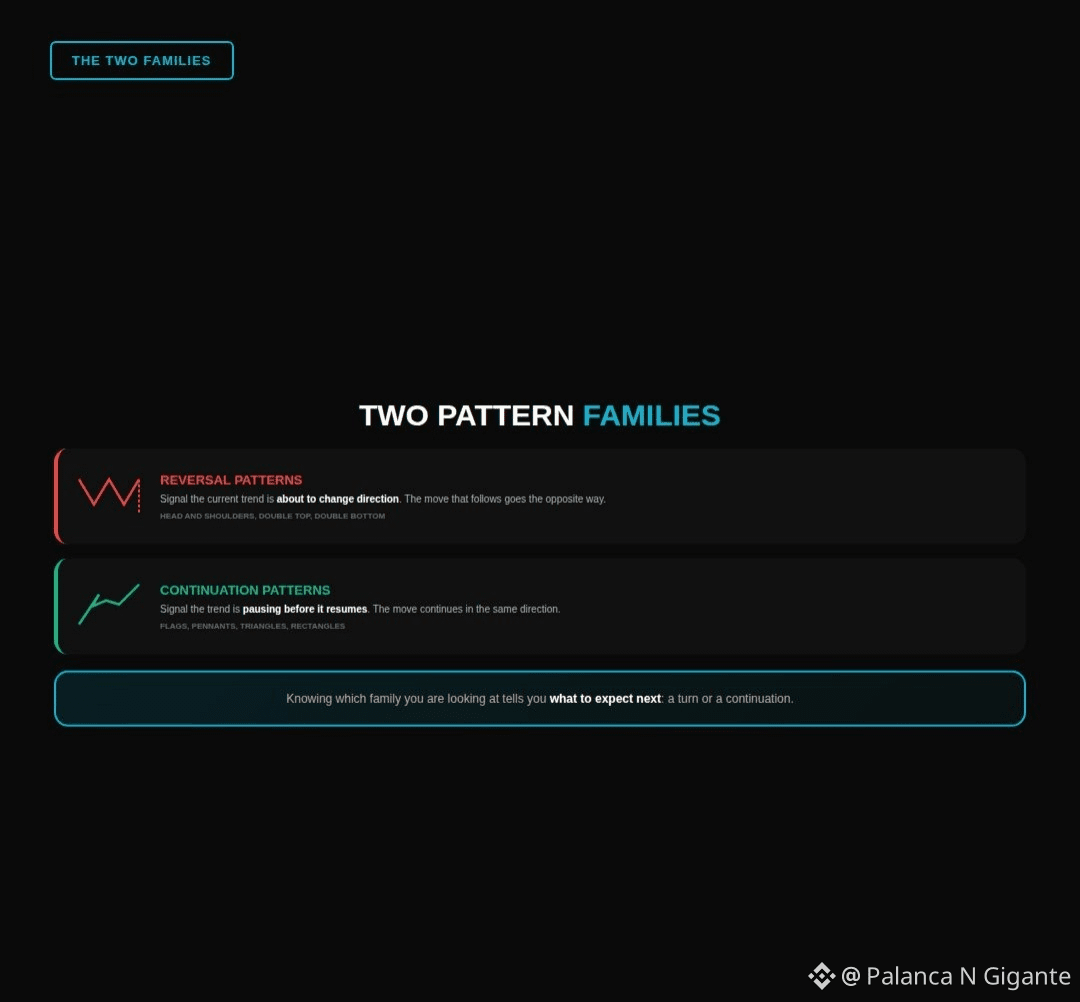
முக்கியமான இரண்டு வகை முறைபாடுகள்: $NIL
🔴மாற்றம் (ரிவர்சல்) முறைபாடுகள்: தற்போதைய போக்கு திசை மாற்றம் செய்யப் போகிறது என்பதை சுட்டிக்காட்டுகிறது. அதற்கு பின்வரும் இயக்கம் எதிர்திசையில் செல்லும்.
➡️தலை மற்றும் தோள்கள், இரட்டை உச்சி, இரட்டை அடித்தளம்
🟢தொடர்ச்சி (காண்டின்யூஷன்) முறைபாடுகள்: போக்கு மீண்டும் தொடங்குவதற்கு முன் இடைநிறுத்துகிறது என்பதை சுட்டிக்காட்டுகிறது. மாற்றம் அதே திசையில் தொடரும்.
➡️கொடி (Bandeiras), எஸ்டாண்டார்ட்ஸ் (Estandartes), முக்கோணங்கள், செவ்வகங்கள்
நீங்கள் எந்த வகையை கருதுகிறீர்கள் என்பதை தெரிந்து கொண்டாலே, அடுத்தது என்ன எதிர்பார்க்க வேண்டும் என்றது தெளிவாகிறது: ஒரு திருப்பமா அல்லது ஒரு தொடர்ச்சியா.
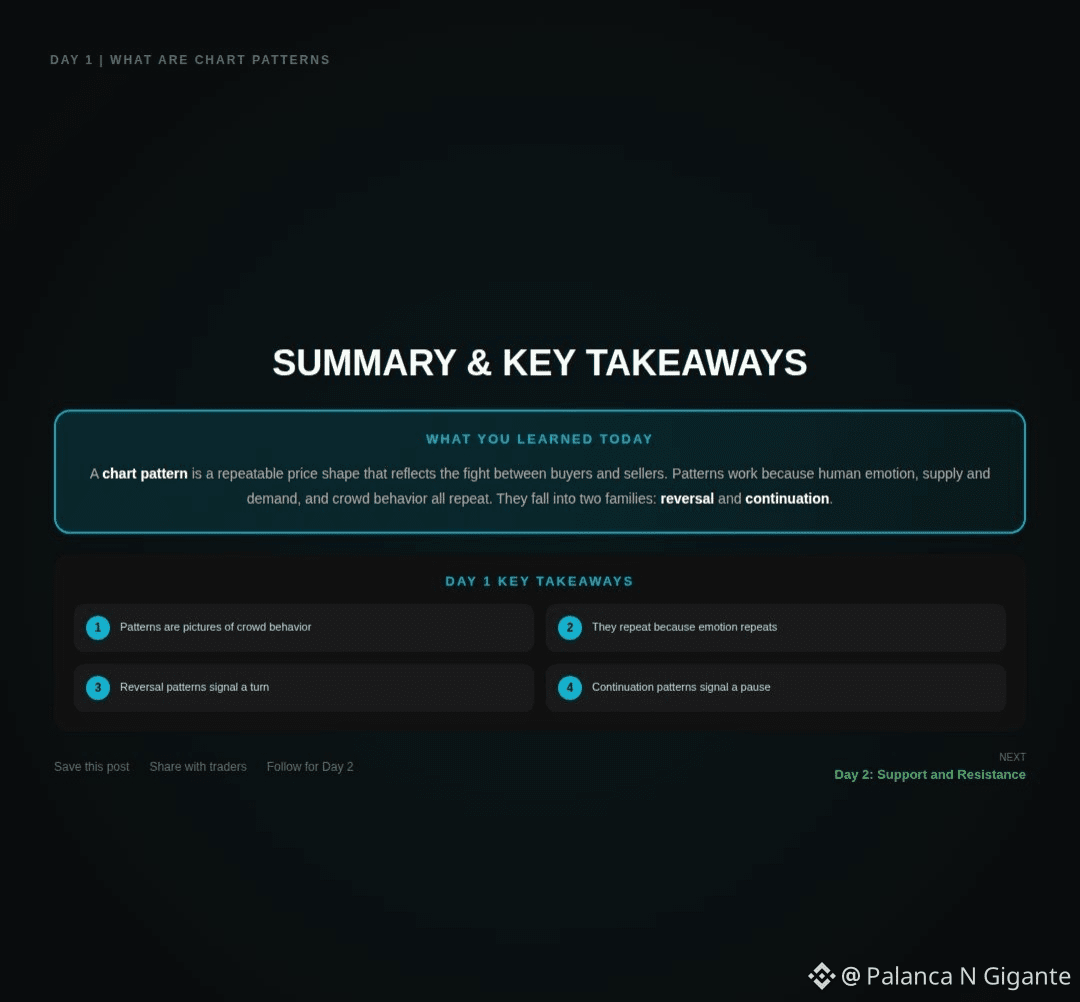
நாள் 1 முக்கிய பாடங்கள்
🔹முறைபாடுகள் கூட்டத்தின் நடத்தை காட்டும் படங்கள்
🔹உணர்ச்சி மீண்டும் வரும் காரணத்தாலே அவை மீண்டும் மீண்டும் தோன்றுகின்றன
🔹மாற்றம் (ரிவர்சல்) முறைபாடுகள் ஒரு வளைவை சுட்டிக்காட்டுகின்றன
🔹தொடர்ச்சி (காண்டின்யூஷன்) முறைபாடுகள் ஒரு இடைநிறுத்தத்தை சுட்டிக்காட்டுகின்றன
அடுத்தது: நாள் 2 | ஆதரவு மற்றும் எதிர்ப்பு (Support & Resistance)
➡️ கல்விக்காக மட்டுமே.
இது நிதி ஆலோசனை அல்ல.
எப்போதும் DYOR.
{spot}(NILUSDT)
{spot}(TSTUSDT)
{future}(龙虾USDT)
#LearnTogether #trading #candlestick_patterns #TSMCJulyRevenueJumps45% #StrategicTrading
கிராபிக் முறைபாடுகளில் முதுநிலை பாடநெறி: MODULE 1: $龙虾
அடிப்படைகள் | நாள் 1
கிராபிக் முறைபாடுகள் என்றால் என்ன? விலை மொழி
விலை எப்போதும் தற்செயலாக நகராது. அது மீண்டும் மீண்டும் பதியும் தடங்களை விட்டு செல்கிறது. கிராபிக் முறைபாடுகள் அவற்றை நீங்கள் படிக்க கற்றுக்கொள்வது போன்றவை.
இது உங்கள் கிரிப்டோ வர்த்தகராக துவக்க நிலையில் இருந்து முன்னேறிய நிலைக்கு பயணத்தின் நாள் 1. முதலில் பாரம்பரிய முறைபாடுகள், பின்னர் நாம் முன்னேறுவோம்.
ஏன் முறைபாடுகள் வேலை செய்கின்றன: $TST
ஒரு கிராபிக் முறைபாடு என்பது அடையாளம் காணக்கூடிய ஒரு விலை வடிவம்; இது வாங்குபவர்கள் மற்றும் விற்பவர்கள் இடையேயான தொடர்ச்சியான போரை பிரதிபலிப்பதால், கணிக்கத்தக்க ஒரு இயக்கத்திற்கு வழிவகுக்கும் போக்கைக் கொண்டுள்ளது.
மீண்டும் வரும் மூன்று காரணங்கள்:
1️⃣மனித உணர்ச்சி மீண்டும் மீண்டும் வருகிறது. பயமும் பேராசையும் ஒவ்வொரு சுற்றிலும் அதே விலையை கொண்டுள்ளன.
2️⃣வழங்கல் மற்றும் தேவை. கட்டுப்பாட்டை பெற வாங்குபவர்கள் மற்றும் விற்பவர்கள் போட்டியிடும் இடங்களில் முறைபாடுகள் உருவாகின்றன.
3️⃣சுய-நிறைவேற்றும் தன்மை. ஆயிரக்கணக்கான வர்த்தகர்கள் ஒரே வடிவங்களை கவனித்து, அதே நேரத்தில் சேர்ந்து செயல்படுகின்றனர்.
முறைபாடுகள் மாயாஜாலம் அல்ல. அவை உங்களுக்கு சாத்தியக்கூறில் ஒரு நன்மையை தரும் கூட்டத்தின் நடத்தை பற்றிய ஒரு படமாகும்.
முக்கியமான இரண்டு வகை முறைபாடுகள்: $NIL
🔴மாற்றம் (ரிவர்சல்) முறைபாடுகள்: தற்போதைய போக்கு திசை மாற்றம் செய்யப் போகிறது என்பதை சுட்டிக்காட்டுகிறது. அதற்கு பின்வரும் இயக்கம் எதிர்திசையில் செல்லும்.
➡️தலை மற்றும் தோள்கள், இரட்டை உச்சி, இரட்டை அடித்தளம்
🟢தொடர்ச்சி (காண்டின்யூஷன்) முறைபாடுகள்: போக்கு மீண்டும் தொடங்குவதற்கு முன் இடைநிறுத்துகிறது என்பதை சுட்டிக்காட்டுகிறது. மாற்றம் அதே திசையில் தொடரும்.
➡️கொடி (Bandeiras), எஸ்டாண்டார்ட்ஸ் (Estandartes), முக்கோணங்கள், செவ்வகங்கள்
நீங்கள் எந்த வகையை கருதுகிறீர்கள் என்பதை தெரிந்து கொண்டாலே, அடுத்தது என்ன எதிர்பார்க்க வேண்டும் என்றது தெளிவாகிறது: ஒரு திருப்பமா அல்லது ஒரு தொடர்ச்சியா.
நாள் 1 முக்கிய பாடங்கள்
🔹முறைபாடுகள் கூட்டத்தின் நடத்தை காட்டும் படங்கள்
🔹உணர்ச்சி மீண்டும் வரும் காரணத்தாலே அவை மீண்டும் மீண்டும் தோன்றுகின்றன
🔹மாற்றம் (ரிவர்சல்) முறைபாடுகள் ஒரு வளைவை சுட்டிக்காட்டுகின்றன
🔹தொடர்ச்சி (காண்டின்யூஷன்) முறைபாடுகள் ஒரு இடைநிறுத்தத்தை சுட்டிக்காட்டுகின்றன
அடுத்தது: நாள் 2 | ஆதரவு மற்றும் எதிர்ப்பு (Support & Resistance)
➡️ கல்விக்காக மட்டுமே.
இது நிதி ஆலோசனை அல்ல.
எப்போதும் DYOR.
#LearnTogether #trading #candlestick_patterns #TSMCJulyRevenueJumps45% #StrategicTrading
அடிப்படைகள் | நாள் 1
கிராபிக் முறைபாடுகள் என்றால் என்ன? விலை மொழி
விலை எப்போதும் தற்செயலாக நகராது. அது மீண்டும் மீண்டும் பதியும் தடங்களை விட்டு செல்கிறது. கிராபிக் முறைபாடுகள் அவற்றை நீங்கள் படிக்க கற்றுக்கொள்வது போன்றவை.
இது உங்கள் கிரிப்டோ வர்த்தகராக துவக்க நிலையில் இருந்து முன்னேறிய நிலைக்கு பயணத்தின் நாள் 1. முதலில் பாரம்பரிய முறைபாடுகள், பின்னர் நாம் முன்னேறுவோம்.
ஏன் முறைபாடுகள் வேலை செய்கின்றன: $TST
ஒரு கிராபிக் முறைபாடு என்பது அடையாளம் காணக்கூடிய ஒரு விலை வடிவம்; இது வாங்குபவர்கள் மற்றும் விற்பவர்கள் இடையேயான தொடர்ச்சியான போரை பிரதிபலிப்பதால், கணிக்கத்தக்க ஒரு இயக்கத்திற்கு வழிவகுக்கும் போக்கைக் கொண்டுள்ளது.
மீண்டும் வரும் மூன்று காரணங்கள்:
1️⃣மனித உணர்ச்சி மீண்டும் மீண்டும் வருகிறது. பயமும் பேராசையும் ஒவ்வொரு சுற்றிலும் அதே விலையை கொண்டுள்ளன.
2️⃣வழங்கல் மற்றும் தேவை. கட்டுப்பாட்டை பெற வாங்குபவர்கள் மற்றும் விற்பவர்கள் போட்டியிடும் இடங்களில் முறைபாடுகள் உருவாகின்றன.
3️⃣சுய-நிறைவேற்றும் தன்மை. ஆயிரக்கணக்கான வர்த்தகர்கள் ஒரே வடிவங்களை கவனித்து, அதே நேரத்தில் சேர்ந்து செயல்படுகின்றனர்.
முறைபாடுகள் மாயாஜாலம் அல்ல. அவை உங்களுக்கு சாத்தியக்கூறில் ஒரு நன்மையை தரும் கூட்டத்தின் நடத்தை பற்றிய ஒரு படமாகும்.
முக்கியமான இரண்டு வகை முறைபாடுகள்: $NIL
🔴மாற்றம் (ரிவர்சல்) முறைபாடுகள்: தற்போதைய போக்கு திசை மாற்றம் செய்யப் போகிறது என்பதை சுட்டிக்காட்டுகிறது. அதற்கு பின்வரும் இயக்கம் எதிர்திசையில் செல்லும்.
➡️தலை மற்றும் தோள்கள், இரட்டை உச்சி, இரட்டை அடித்தளம்
🟢தொடர்ச்சி (காண்டின்யூஷன்) முறைபாடுகள்: போக்கு மீண்டும் தொடங்குவதற்கு முன் இடைநிறுத்துகிறது என்பதை சுட்டிக்காட்டுகிறது. மாற்றம் அதே திசையில் தொடரும்.
➡️கொடி (Bandeiras), எஸ்டாண்டார்ட்ஸ் (Estandartes), முக்கோணங்கள், செவ்வகங்கள்
நீங்கள் எந்த வகையை கருதுகிறீர்கள் என்பதை தெரிந்து கொண்டாலே, அடுத்தது என்ன எதிர்பார்க்க வேண்டும் என்றது தெளிவாகிறது: ஒரு திருப்பமா அல்லது ஒரு தொடர்ச்சியா.
நாள் 1 முக்கிய பாடங்கள்
🔹முறைபாடுகள் கூட்டத்தின் நடத்தை காட்டும் படங்கள்
🔹உணர்ச்சி மீண்டும் வரும் காரணத்தாலே அவை மீண்டும் மீண்டும் தோன்றுகின்றன
🔹மாற்றம் (ரிவர்சல்) முறைபாடுகள் ஒரு வளைவை சுட்டிக்காட்டுகின்றன
🔹தொடர்ச்சி (காண்டின்யூஷன்) முறைபாடுகள் ஒரு இடைநிறுத்தத்தை சுட்டிக்காட்டுகின்றன
அடுத்தது: நாள் 2 | ஆதரவு மற்றும் எதிர்ப்பு (Support & Resistance)
➡️ கல்விக்காக மட்டுமே.
இது நிதி ஆலோசனை அல்ல.
எப்போதும் DYOR.
#LearnTogether #trading #candlestick_patterns #TSMCJulyRevenueJumps45% #StrategicTrading
1
2
555

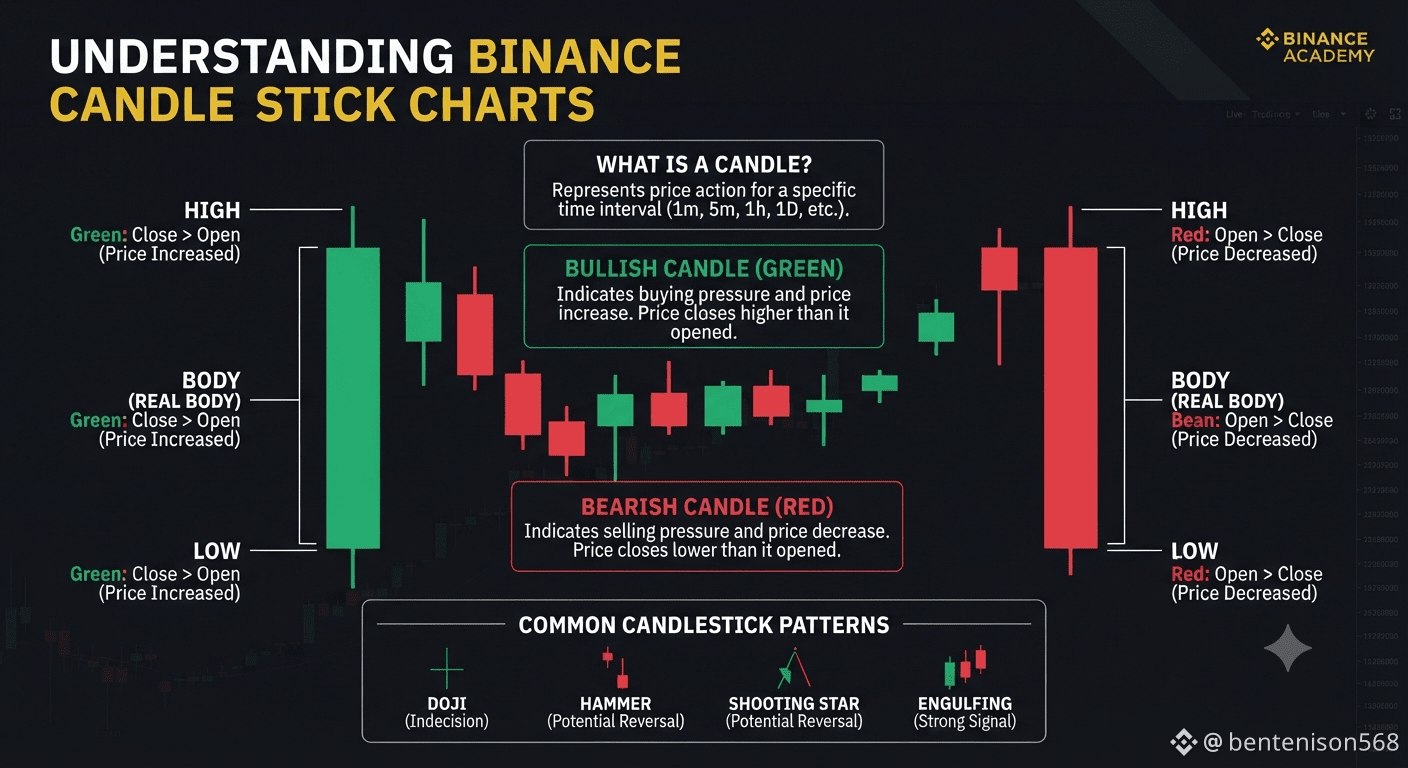
ඉටිපහන්කාරයේ ව්යුහ විද්යාව
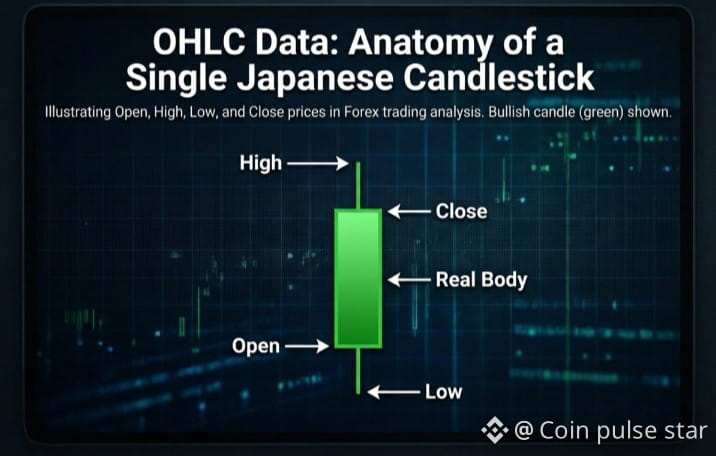
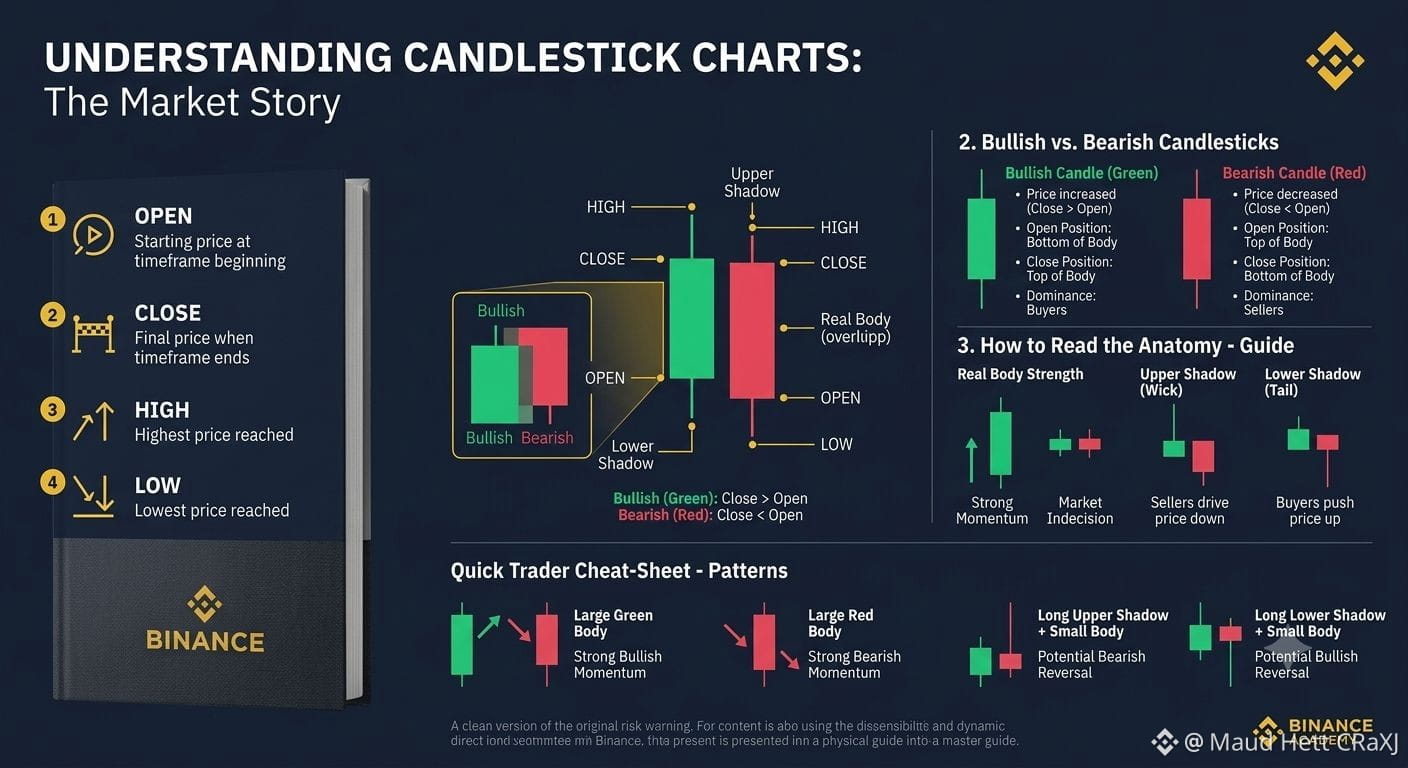
උපරිම/පහළ (High/Low): එම කාල පරිච්ඡේදය තුළ ළඟා වූ වැඩිම සහ අඩුම මිල නියෝජනය කරන සිරස් රේඛා (බොහෝ විට wick හෝ shadow ලෙස හැඳින්වේ) වේ.
ශරීරය (Real Body): විවෘත මිල සහ අවසන් මිල අතර ඇති පරාසය නිරූපනය කරන්නේ ඝන මැද කොටසයි.
වර්ණ තේරුම් ගැනීම
බුලිෂ් ඉටිපහන්කාරය (කොළ): මෙය මිලදී ගැනීමේ පීඩනය පෙන්නුම් කරයි. එයින් අදහස් වන්නේ මිල එම කාලය තුළ විවෘත වූ මිලට වඩා ඉහළින් අවසන් වූ බවයි; එනම් එම වත්කම වැඩි වටිනාකමක් ලබාගත් බවයි.
බෙයරිෂ් ඉටිපහන්කාරය (රතු): මෙය විකිණීමේ පීඩනය පෙන්නුම් කරයි. එයින් අදහස් වන්නේ මිල විවෘත වූ මිලට වඩා පහළින් අවසන් වූ බවයි; එනම් එම වත්කම වටිනාකම පහළට ගිය බවයි.
පොදු රටා
වෙළඳුන් බොහෝ විට අනාගත වෙළඳපල චලනය පුරෝකථනය කිරීමට උපකාරී විය හැකි යම් විශේෂ සැකසුම් (formations) සොයයි, එනම්:
දෝජි (Doji): වෙළඳපල අස්ථිරතාව/අනිශ්චිතතාව නිරූපනය කරයි.
හැමර් & ෂුටිං ස්ටාර් (Hammer & Shooting Star): බොහෝ විට ප්රවණතා ආපසු හැරවීමක් විය හැකි සංඥා ලෙස සැලකේ.
එන්ගල්ෆින්ග් (Engulfing): වෙළඳපල දිශාව වෙනස් වීමක් පිළිබඳ ප්රබල සංඥාවක් ලෙස සැලකේ.
#viralpost #candlestick_patterns
@BinancePk @Binance_Earn_Official @moisa @Square-Creator-00b091a53682f @Square-Creator-882e0cbee2b4e @mrs_rose @moisa
ඉටිපහන්කාරයේ ව්යුහ විද්යාව
උපරිම/පහළ (High/Low): එම කාල පරිච්ඡේදය තුළ ළඟා වූ වැඩිම සහ අඩුම මිල නියෝජනය කරන සිරස් රේඛා (බොහෝ විට wick හෝ shadow ලෙස හැඳින්වේ) වේ.
ශරීරය (Real Body): විවෘත මිල සහ අවසන් මිල අතර ඇති පරාසය නිරූපනය කරන්නේ ඝන මැද කොටසයි.
වර්ණ තේරුම් ගැනීම
බුලිෂ් ඉටිපහන්කාරය (කොළ): මෙය මිලදී ගැනීමේ පීඩනය පෙන්නුම් කරයි. එයින් අදහස් වන්නේ මිල එම කාලය තුළ විවෘත වූ මිලට වඩා ඉහළින් අවසන් වූ බවයි; එනම් එම වත්කම වැඩි වටිනාකමක් ලබාගත් බවයි.
බෙයරිෂ් ඉටිපහන්කාරය (රතු): මෙය විකිණීමේ පීඩනය පෙන්නුම් කරයි. එයින් අදහස් වන්නේ මිල විවෘත වූ මිලට වඩා පහළින් අවසන් වූ බවයි; එනම් එම වත්කම වටිනාකම පහළට ගිය බවයි.
පොදු රටා
වෙළඳුන් බොහෝ විට අනාගත වෙළඳපල චලනය පුරෝකථනය කිරීමට උපකාරී විය හැකි යම් විශේෂ සැකසුම් (formations) සොයයි, එනම්:
දෝජි (Doji): වෙළඳපල අස්ථිරතාව/අනිශ්චිතතාව නිරූපනය කරයි.
හැමර් & ෂුටිං ස්ටාර් (Hammer & Shooting Star): බොහෝ විට ප්රවණතා ආපසු හැරවීමක් විය හැකි සංඥා ලෙස සැලකේ.
එන්ගල්ෆින්ග් (Engulfing): වෙළඳපල දිශාව වෙනස් වීමක් පිළිබඳ ප්රබල සංඥාවක් ලෙස සැලකේ.
#viralpost #candlestick_patterns
@Binance Pakistan @Binance Earn Official @Moisa16 @shah noor12 @Square-Creator-882e0cbee2b4e @Mila Rose @Moisa16
උපරිම/පහළ (High/Low): එම කාල පරිච්ඡේදය තුළ ළඟා වූ වැඩිම සහ අඩුම මිල නියෝජනය කරන සිරස් රේඛා (බොහෝ විට wick හෝ shadow ලෙස හැඳින්වේ) වේ.
ශරීරය (Real Body): විවෘත මිල සහ අවසන් මිල අතර ඇති පරාසය නිරූපනය කරන්නේ ඝන මැද කොටසයි.
වර්ණ තේරුම් ගැනීම
බුලිෂ් ඉටිපහන්කාරය (කොළ): මෙය මිලදී ගැනීමේ පීඩනය පෙන්නුම් කරයි. එයින් අදහස් වන්නේ මිල එම කාලය තුළ විවෘත වූ මිලට වඩා ඉහළින් අවසන් වූ බවයි; එනම් එම වත්කම වැඩි වටිනාකමක් ලබාගත් බවයි.
බෙයරිෂ් ඉටිපහන්කාරය (රතු): මෙය විකිණීමේ පීඩනය පෙන්නුම් කරයි. එයින් අදහස් වන්නේ මිල විවෘත වූ මිලට වඩා පහළින් අවසන් වූ බවයි; එනම් එම වත්කම වටිනාකම පහළට ගිය බවයි.
පොදු රටා
වෙළඳුන් බොහෝ විට අනාගත වෙළඳපල චලනය පුරෝකථනය කිරීමට උපකාරී විය හැකි යම් විශේෂ සැකසුම් (formations) සොයයි, එනම්:
දෝජි (Doji): වෙළඳපල අස්ථිරතාව/අනිශ්චිතතාව නිරූපනය කරයි.
හැමර් & ෂුටිං ස්ටාර් (Hammer & Shooting Star): බොහෝ විට ප්රවණතා ආපසු හැරවීමක් විය හැකි සංඥා ලෙස සැලකේ.
එන්ගල්ෆින්ග් (Engulfing): වෙළඳපල දිශාව වෙනස් වීමක් පිළිබඳ ප්රබල සංඥාවක් ලෙස සැලකේ.
#viralpost #candlestick_patterns
@Binance Pakistan @Binance Earn Official @Moisa16 @shah noor12 @Square-Creator-882e0cbee2b4e @Mila Rose @Moisa16
1
85
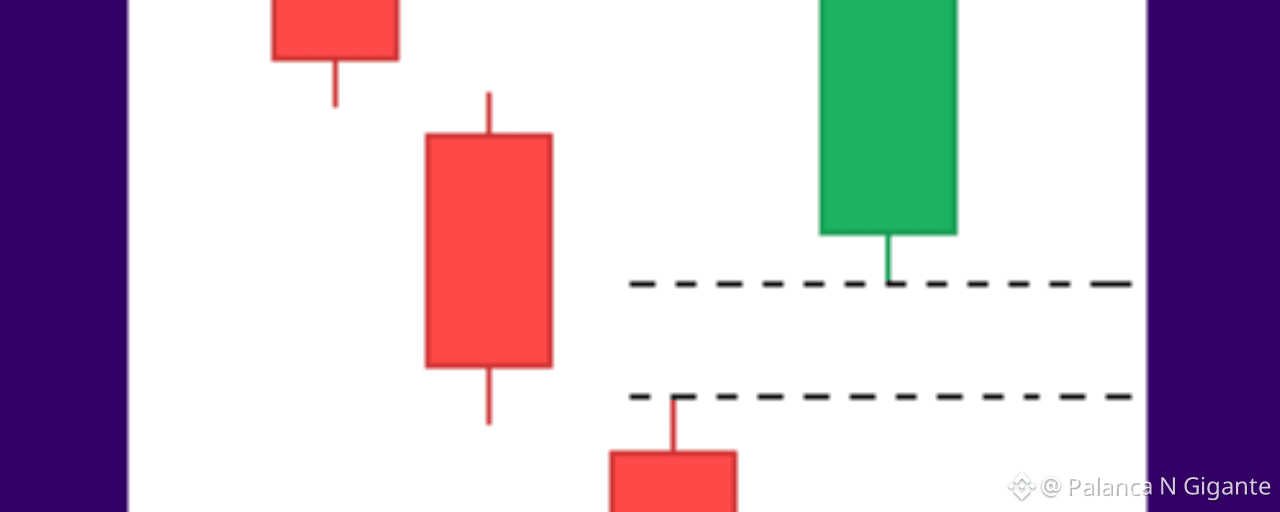
ලිපිය
ඔබට trading වලදී ජයග්රහණය කිරීමට ප්රවීණ විය යුතු ක್ಯಾಂඩල්ස්ටික් රටා සඳහා හැඳින්වීමදින වෙළඳාම (Day Trade) සහ ස්වینگ වෙළඳාම (Swing Trade) ක්රියාත්මක කිරීම්වල තාක්ෂණික විශ්ලේෂණයේ (Análise Técnica) වඩාත් බහුලව භාවිත වන වර්ගයයන්ගෙන් එකක් වන්නේ ක್ಯಾಂඩල්ස්ටික් රටායි. කෑන්ඩල්ස්ටික් රටා යනු යම් කාල පරාසයකදී විවෘත වන මිල සහ අවසන් වන මිල දක්වන, එසේම එහි චලනය—එනම් ඉහළට හෝ පහළට—දක්වන කැන්ඩල් මත පදනම් වූ ප්රස්ථාර වේ.
මෙම ලිපියෙන් ඔබ දැනගත යුතු ක್ಯಾಂඩල්ಸ್ಟික් රටා 43ක් ගැන තත්ත්වශීලී ලෙස පෙන්වන්නෙමු.
කැන්ඩල්ස්ටික්ස් (Candlesticks) කියන්නේ මොනවාද? $TLM
කැන්ඩල් (candles) වෙළඳපොළේ දිශාව පමණක් නොව, වෙළඳාමක් සඳහා ඇතිවිය හැකි ආරම්භක පිවිසුම් සහ ඉවත් වීම හඳුනාගැනීමට ට්රේඩර්ට උපකාර කරයි. ඒවගේම, රේඛා ප්රස්ථාරයට (line chart) වඩා නිවැරදිව වෙළඳපොළ කියවීමට ද හැකියාව ලබා දෙයි.
ඔබට trading වලදී ජයග්රහණය කිරීමට ප්රවීණ විය යුතු ක್ಯಾಂඩල්ස්ටික් රටා සඳහා හැඳින්වීම
දින වෙළඳාම (Day Trade) සහ ස්වینگ වෙළඳාම (Swing Trade) ක්රියාත්මක කිරීම්වල තාක්ෂණික විශ්ලේෂණයේ (Análise Técnica) වඩාත් බහුලව භාවිත වන වර්ගයයන්ගෙන් එකක් වන්නේ ක್ಯಾಂඩල්ස්ටික් රටායි. කෑන්ඩල්ස්ටික් රටා යනු යම් කාල පරාසයකදී විවෘත වන මිල සහ අවසන් වන මිල දක්වන, එසේම එහි චලනය—එනම් ඉහළට හෝ පහළට—දක්වන කැන්ඩල් මත පදනම් වූ ප්රස්ථාර වේ.
මෙම ලිපියෙන් ඔබ දැනගත යුතු ක್ಯಾಂඩල්ಸ್ಟික් රටා 43ක් ගැන තත්ත්වශීලී ලෙස පෙන්වන්නෙමු.
කැන්ඩල්ස්ටික්ස් (Candlesticks) කියන්නේ මොනවාද? $TLM
කැන්ඩල් (candles) වෙළඳපොළේ දිශාව පමණක් නොව, වෙළඳාමක් සඳහා ඇතිවිය හැකි ආරම්භක පිවිසුම් සහ ඉවත් වීම හඳුනාගැනීමට ට්රේඩර්ට උපකාර කරයි. ඒවගේම, රේඛා ප්රස්ථාරයට (line chart) වඩා නිවැරදිව වෙළඳපොළ කියවීමට ද හැකියාව ලබා දෙයි.
මෙම ලිපියෙන් ඔබ දැනගත යුතු ක್ಯಾಂඩල්ಸ್ಟික් රටා 43ක් ගැන තත්ත්වශීලී ලෙස පෙන්වන්නෙමු.
කැන්ඩල්ස්ටික්ස් (Candlesticks) කියන්නේ මොනවාද? $TLM
කැන්ඩල් (candles) වෙළඳපොළේ දිශාව පමණක් නොව, වෙළඳාමක් සඳහා ඇතිවිය හැකි ආරම්භක පිවිසුම් සහ ඉවත් වීම හඳුනාගැනීමට ට්රේඩර්ට උපකාර කරයි. ඒවගේම, රේඛා ප්රස්ථාරයට (line chart) වඩා නිවැරදිව වෙළඳපොළ කියවීමට ද හැකියාව ලබා දෙයි.
114

පරිවර්තනය බලන්න
Candlestick charts represent the market's inner dynamic—a visual story of the psychological tug-of-war between buyers (bulls) and sellers (bears).
$NVDA.US $BTC
{spot}(BTCUSDT)
#FedRateWatch #FLOKI✅ #BTC #candlestick_patterns
Candlestick charts represent the market's inner dynamic—a visual story of the psychological tug-of-war between buyers (bulls) and sellers (bears).
$NVDA.US $BTC
#FedRateWatch #FLOKI✅ #BTC #candlestick_patterns
$NVDA.US $BTC
#FedRateWatch #FLOKI✅ #BTC #candlestick_patterns
BTC+0.88%
NVDAUS+2.47%
120

·
--
🚨 මෙය බලන්න කලින් කිසිම trade එකකට ඇතුල් වෙන්න එපා! 📊
ඔයාට කොළ පැහැති ඉටිපන්දමක් 🟢 පේනවා, ඒක දැක්කාම “BUY!” කියලා හිතෙනවා ❌
නමුත් අවධානය ⚠️ එකම ඉටිපන්දමක් පමණක් චලනයක් තහවුරු කරන්න මදි.
ඇතුල් වීමට පෙර අවම වශයෙන් මෙවල සලකා බලන්න:
🔹 Trend එක 📈
🔹 Support / Resistance
🔹 Volume
🔹 ඉටිපන්දම් තහවුරු වීම 🕯️
🔹 Breakout + retest
💡 හොඳ trader කෙනෙක් ඉක්මනින් ඇතුල් වෙන්න හොයන්නේ නැහැ. ඔයා ඇතුල් වෙන්නේ ඇයි කියලා තේරුම් ගන්නවා.
👇 ඔයා BUY ඔබන්න කලින් පළමුව බලන්නේ මොනවාද?
#Crypto #Trading #Binance #TradingDébutant #CryptoEducation #candlestick_patterns
🚨 මෙය බලන්න කලින් කිසිම trade එකකට ඇතුල් වෙන්න එපා! 📊
ඔයාට කොළ පැහැති ඉටිපන්දමක් 🟢 පේනවා, ඒක දැක්කාම “BUY!” කියලා හිතෙනවා ❌
නමුත් අවධානය ⚠️ එකම ඉටිපන්දමක් පමණක් චලනයක් තහවුරු කරන්න මදි.
ඇතුල් වීමට පෙර අවම වශයෙන් මෙවල සලකා බලන්න:
🔹 Trend එක 📈
🔹 Support / Resistance
🔹 Volume
🔹 ඉටිපන්දම් තහවුරු වීම 🕯️
🔹 Breakout + retest
💡 හොඳ trader කෙනෙක් ඉක්මනින් ඇතුල් වෙන්න හොයන්නේ නැහැ. ඔයා ඇතුල් වෙන්නේ ඇයි කියලා තේරුම් ගන්නවා.
👇 ඔයා BUY ඔබන්න කලින් පළමුව බලන්නේ මොනවාද?
#Crypto #Trading #Binance #TradingDébutant #CryptoEducation #candlestick_patterns
ඔයාට කොළ පැහැති ඉටිපන්දමක් 🟢 පේනවා, ඒක දැක්කාම “BUY!” කියලා හිතෙනවා ❌
නමුත් අවධානය ⚠️ එකම ඉටිපන්දමක් පමණක් චලනයක් තහවුරු කරන්න මදි.
ඇතුල් වීමට පෙර අවම වශයෙන් මෙවල සලකා බලන්න:
🔹 Trend එක 📈
🔹 Support / Resistance
🔹 Volume
🔹 ඉටිපන්දම් තහවුරු වීම 🕯️
🔹 Breakout + retest
💡 හොඳ trader කෙනෙක් ඉක්මනින් ඇතුල් වෙන්න හොයන්නේ නැහැ. ඔයා ඇතුල් වෙන්නේ ඇයි කියලා තේරුම් ගන්නවා.
👇 ඔයා BUY ඔබන්න කලින් පළමුව බලන්නේ මොනවාද?
#Crypto #Trading #Binance #TradingDébutant #CryptoEducation #candlestick_patterns
107

මාසික ඉටිපන්දම වසාදැමෙන ආකාරය ගැන විශේෂයෙන් අවධානය යොමු කරන්න
එය ඉතා වැදගත්ය
#candlestick_patterns #candlestick
මාසික ඉටිපන්දම වසාදැමෙන ආකාරය ගැන විශේෂයෙන් අවධානය යොමු කරන්න
එය ඉතා වැදගත්ය
#candlestick_patterns #candlestick
එය ඉතා වැදගත්ය
#candlestick_patterns #candlestick
2
72

மெழுகுவர்த்தி குச்சி (candle stick) முறை திறன் படம்
#candlestick_patterns
#candle
#HammerCandlestick
#crptonews
$NVDAB
{spot}(NVDABUSDT)
மெழுகுவர்த்தி குச்சி (candle stick) முறை திறன் படம்
#candlestick_patterns
#candle
#HammerCandlestick
#crptonews
$NVDAB
#candlestick_patterns
#candle
#HammerCandlestick
#crptonews
$NVDAB
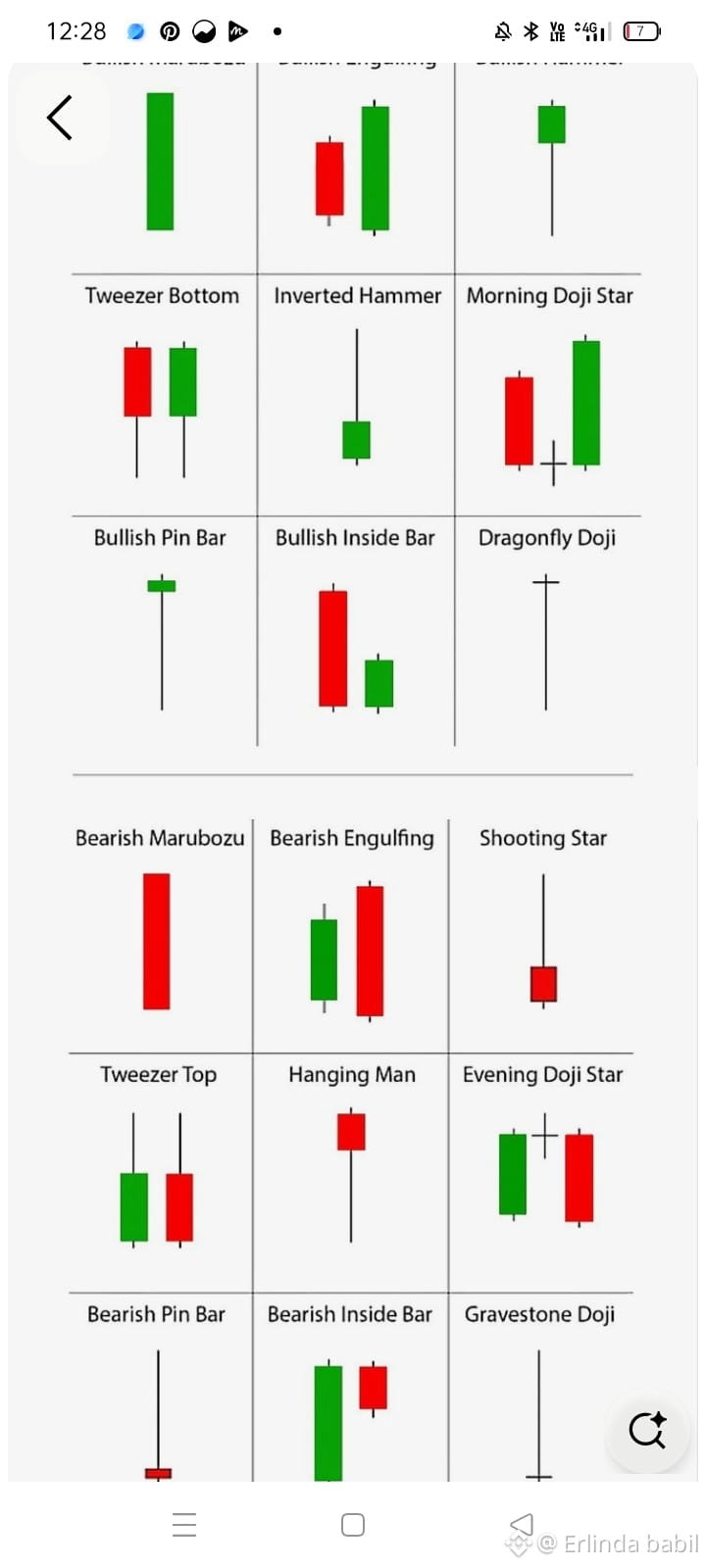
69
இங்கே மெழுகுவர்த்தி (candlestick) வடிவங்கள் உள்ளன
நீங்கள் வர்த்தகம் தொடங்கியபோது மெழுகுவர்த்தி வடிவங்களைப் பற்றி தெரிந்திருக்க வேண்டியது
இந்த தலைப்பை கவனமாக படியுங்கள்
தயவுசெய்து இந்த கணக்கைப் பின்தொடருங்கள் .
#candlestick_patterns #TapestryFallsNearly15%OnEarnings #DeepSeekLaunchesHarnessCodeAgentBeta #SanDiskExtendsGainsTo11%
இங்கே மெழுகுவர்த்தி (candlestick) வடிவங்கள் உள்ளன
நீங்கள் வர்த்தகம் தொடங்கியபோது மெழுகுவர்த்தி வடிவங்களைப் பற்றி தெரிந்திருக்க வேண்டியது
இந்த தலைப்பை கவனமாக படியுங்கள்
தயவுசெய்து இந்த கணக்கைப் பின்தொடருங்கள் .
#candlestick_patterns #TapestryFallsNearly15%OnEarnings #DeepSeekLaunchesHarnessCodeAgentBeta #SanDiskExtendsGainsTo11%
நீங்கள் வர்த்தகம் தொடங்கியபோது மெழுகுவர்த்தி வடிவங்களைப் பற்றி தெரிந்திருக்க வேண்டியது
இந்த தலைப்பை கவனமாக படியுங்கள்
தயவுசெய்து இந்த கணக்கைப் பின்தொடருங்கள் .
#candlestick_patterns #TapestryFallsNearly15%OnEarnings #DeepSeekLaunchesHarnessCodeAgentBeta #SanDiskExtendsGainsTo11%
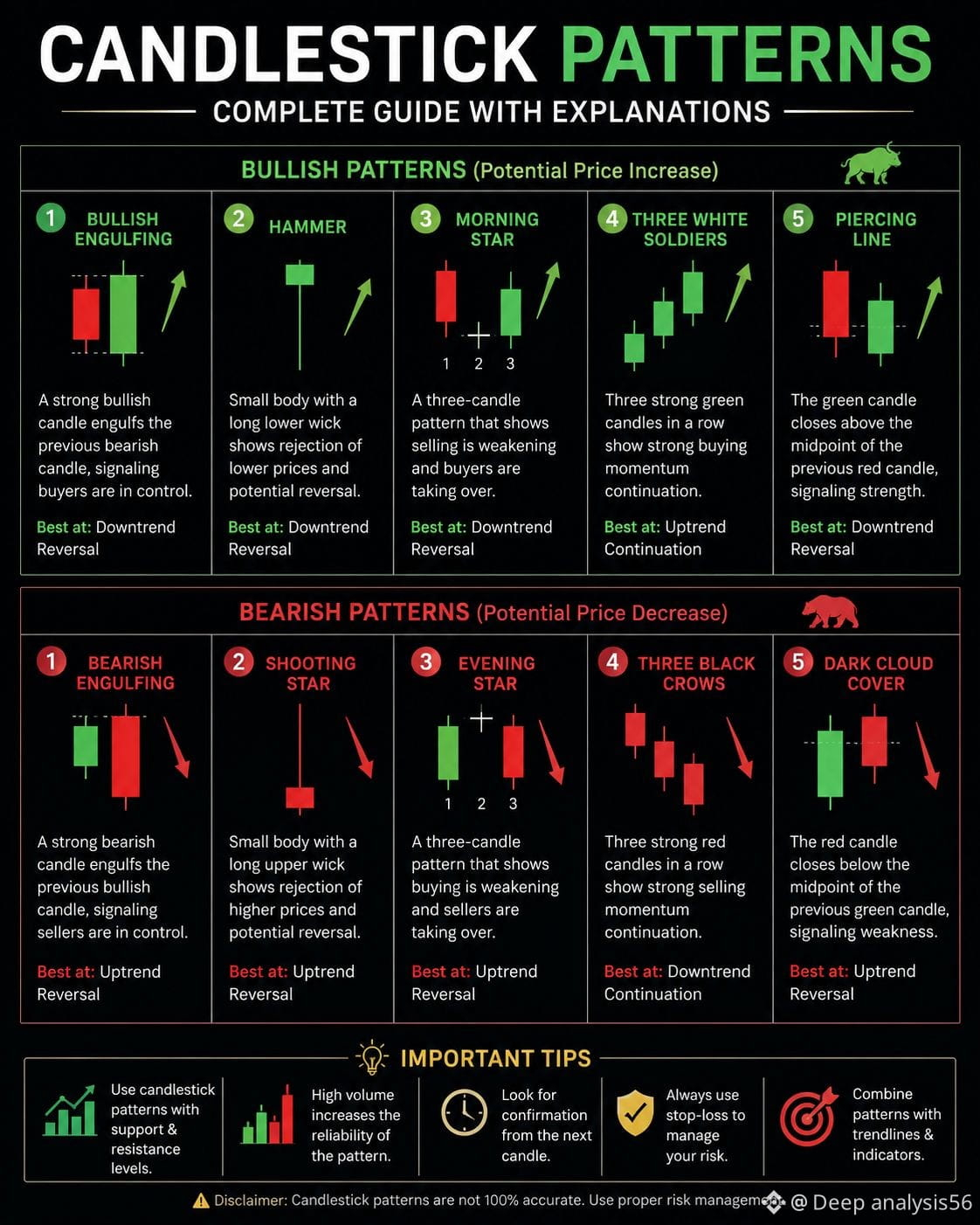
40

·
--
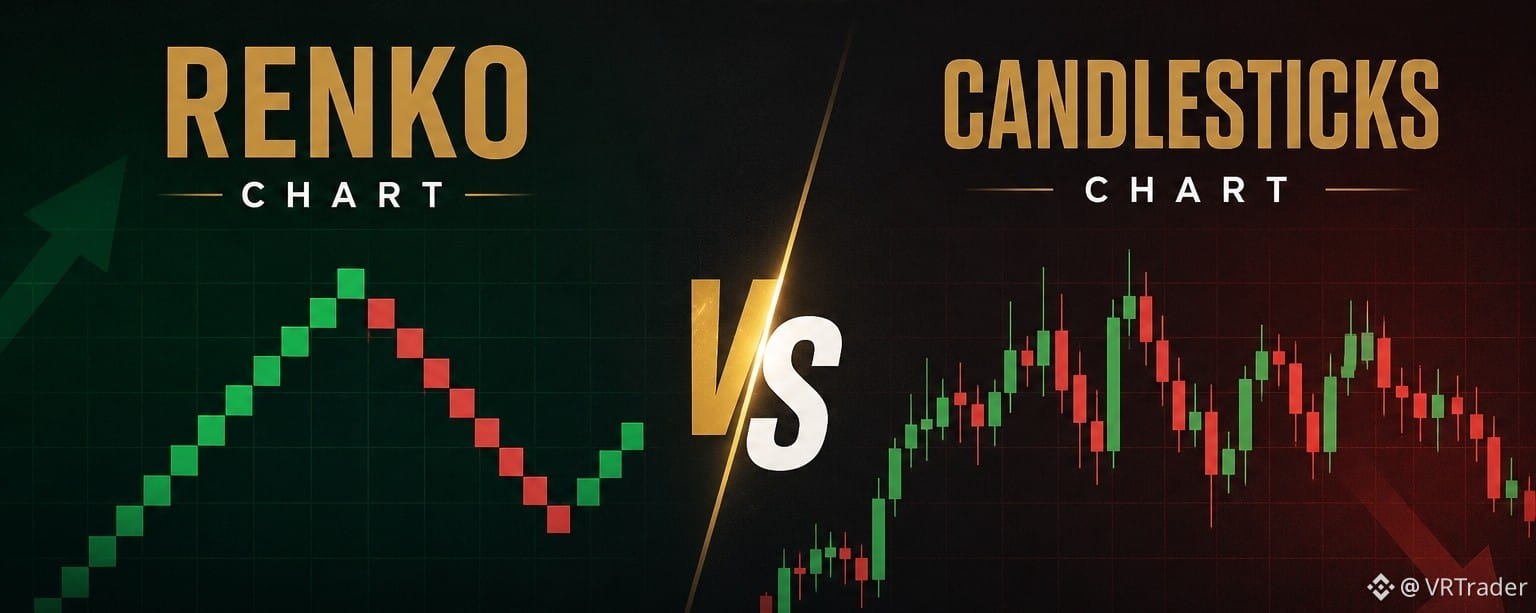
ලිපිය
Renko ဇယားများကို ရှင်းလင်းချက်- စျေးကွက်ကို ဖတ်ရန် သန့်ရှင်းတဲ့နည်းလမ်းအများစုသော ကုန်သည်များသည် ကင်ဒယ်စတော့ဇယားများနှင့် စတင်ကြသော်လည်း ရင်ကိုဇယားများကို နားလည်ရန် အချိန်ယူသူနည်းပါးကြသည်။ ရင်ကို လုပ်ပုံလုပ်နည်းကို နားလည်သွားတာနဲ့၊ အတော်များများသော trend trader များက စျေးကွက်ဆူညံသံကို စစ်ထုတ်ပြီး အဓိကရွေ့လျားမှုကိုသာ အာရုံစိုက်ရန် အဘယ်ကြောင့် သုံးကြောင်း သင်နားလည်လာမည်ဖြစ်သည်။
[ Big Quiz : Learn & Earn ( 21 Jun 2026 )
ဤဆောင်းပါးမှ မေးခွန်း။ အနိုင်ရသူ 1000! 🏆 အနီရောင် packet 1000 ဆု 】
ကင်ဒယ်စတော့ (Candlestick) နှင့် ရင်ကို (Renko)
အကြီးမားဆုံး ကွာခြားချက်က ရိုးရှင်းတယ်ဆိုတာပါပဲ၊
මෙහිဖိုင်းပုံများသည် වේලාවအပေါ်မူတည်လျက်ဖြစ်သည်။
သင့်အချိန်ဇယားအတိုင်း မိနစ်၊ နာရီ၊ သို့မဟုတ် နေ့တိုင်း တစ်ခါ ကင်ဒယ်တစ်ခု အသစ်ပေါ်လာသည်။
Renko ဇယားများကို ရှင်းလင်းချက်- စျေးကွက်ကို ဖတ်ရန် သန့်ရှင်းတဲ့နည်းလမ်း
အများစုသော ကုန်သည်များသည် ကင်ဒယ်စတော့ဇယားများနှင့် စတင်ကြသော်လည်း ရင်ကိုဇယားများကို နားလည်ရန် အချိန်ယူသူနည်းပါးကြသည်။ ရင်ကို လုပ်ပုံလုပ်နည်းကို နားလည်သွားတာနဲ့၊ အတော်များများသော trend trader များက စျေးကွက်ဆူညံသံကို စစ်ထုတ်ပြီး အဓိကရွေ့လျားမှုကိုသာ အာရုံစိုက်ရန် အဘယ်ကြောင့် သုံးကြောင်း သင်နားလည်လာမည်ဖြစ်သည်။
[ Big Quiz : Learn & Earn ( 21 Jun 2026 )
ဤဆောင်းပါးမှ မေးခွန်း။ အနိုင်ရသူ 1000! 🏆 အနီရောင် packet 1000 ဆု 】
ကင်ဒယ်စတော့ (Candlestick) နှင့် ရင်ကို (Renko)
အကြီးမားဆုံး ကွာခြားချက်က ရိုးရှင်းတယ်ဆိုတာပါပဲ၊
මෙහිဖိုင်းပုံများသည် වේලාවအပေါ်မူတည်လျက်ဖြစ်သည်။
သင့်အချိန်ဇယားအတိုင်း မိနစ်၊ နာရီ၊ သို့မဟုတ် နေ့တိုင်း တစ်ခါ ကင်ဒယ်တစ်ခု အသစ်ပေါ်လာသည်။
[ Big Quiz : Learn & Earn ( 21 Jun 2026 )
ဤဆောင်းပါးမှ မေးခွန်း။ အနိုင်ရသူ 1000! 🏆 အနီရောင် packet 1000 ဆု 】
ကင်ဒယ်စတော့ (Candlestick) နှင့် ရင်ကို (Renko)
အကြီးမားဆုံး ကွာခြားချက်က ရိုးရှင်းတယ်ဆိုတာပါပဲ၊
මෙහිဖိုင်းပုံများသည် වේලාවအပေါ်မူတည်လျက်ဖြစ်သည်။
သင့်အချိန်ဇယားအတိုင်း မိနစ်၊ နာရီ၊ သို့မဟုတ် နေ့တိုင်း တစ်ခါ ကင်ဒယ်တစ်ခု အသစ်ပေါ်လာသည်။
1
4
138

📈 ෆොරෙක්ස් සහ වෙළඳ අධ්යාපනය
🕯️ ක್ಯಾಂඩල්ස්ටික් රටා
📊 තාක්ෂණික විශ්ලේෂණය
💹 වෙළඳ සංඥා සහ උපාය මාර්ග
📚 වෙළඳ ඉගෙනීම#TradingSignals #candlestick_patterns
📈 ෆොරෙක්ස් සහ වෙළඳ අධ්යාපනය
🕯️ ක್ಯಾಂඩල්ස්ටික් රටා
📊 තාක්ෂණික විශ්ලේෂණය
💹 වෙළඳ සංඥා සහ උපාය මාර්ග
📚 වෙළඳ ඉගෙනීම#TradingSignals #candlestick_patterns
🕯️ ක್ಯಾಂඩල්ස්ටික් රටා
📊 තාක්ෂණික විශ්ලේෂණය
💹 වෙළඳ සංඥා සහ උපාය මාර්ග
📚 වෙළඳ ඉගෙනීම#TradingSignals #candlestick_patterns
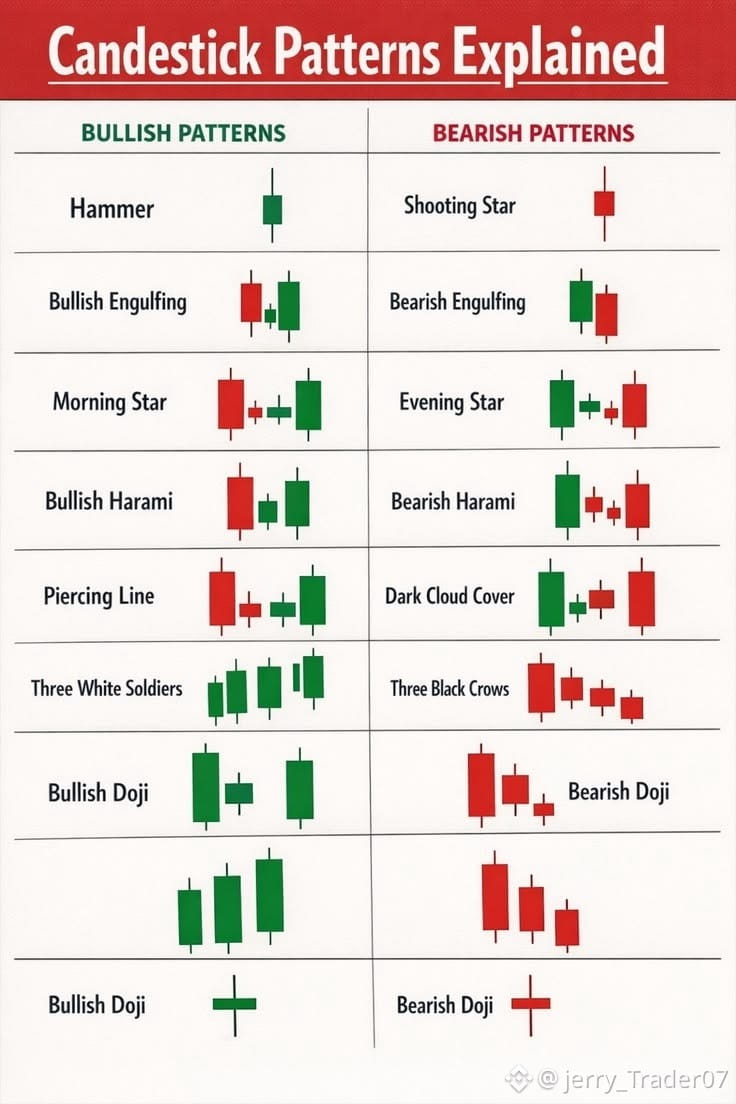
72
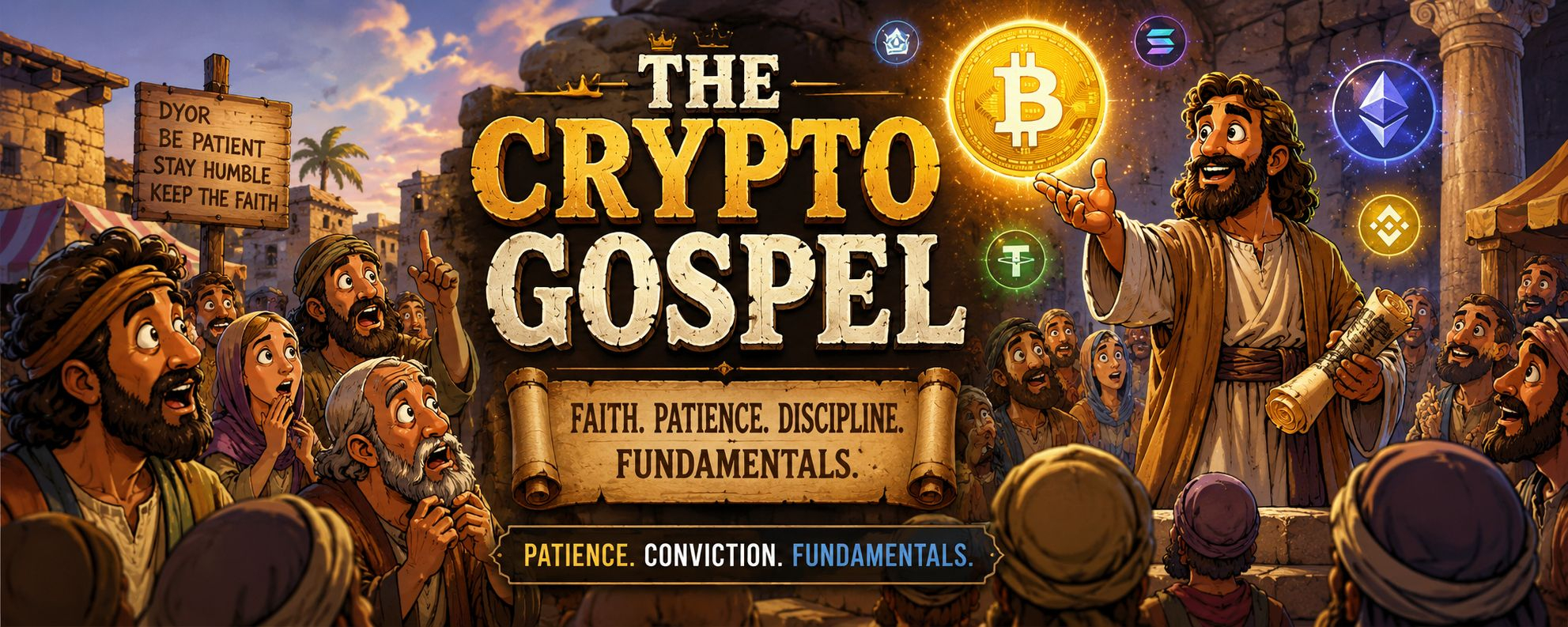
ලිපිය
THE FIRST EPISTLE TO THE PANICKED INVESTORසහෝදරවරුනි... ඔබේ තිර වටා එක්වෙන්න...
ඔබේ වටිනාකම් පින්තාරු කර රතු වී ඇති අය අතරට කරුණාව හා සමාදානය ලැබේවා.
සභාව තුළ සිටි බොහෝ දෙනෙක් සැක කිරීමට පටන් ගත් බව මට ආරංචි විය...
මූලික කරුණු වෙනස් වූ නිසා නොවෙයි...
නමුත් ඉටිපන්දම් (candles) එසේය.
සමහරු භීතියට තල්ලු වෙමින් සිය විශ්වාසය අත්හැර දමා ඇත.
අනෙකුත් අය ඉවසීම වෙනුවට අනාවැකිම තෝරාගෙන තිබේ.
තවත් කිහිප දෙනෙක් සෑම මිනිත්තු පහකට වරක්ම සටහන් (charts) අලුත් කරමින්, ආශ්චර්යයක් සිදුවේයැයි බලාපොරොත්තු වෙති.
එබැවින් මම ඔබෙන් අසමි, සහෝදරවරුන්...
ඔබ ව්යාපාරයකට ආයෝජනය කළාද... නැත්නම් ඉටිපන්දමකට විවාහ වුණාද?
THE FIRST EPISTLE TO THE PANICKED INVESTOR
සහෝදරවරුනි... ඔබේ තිර වටා එක්වෙන්න...
ඔබේ වටිනාකම් පින්තාරු කර රතු වී ඇති අය අතරට කරුණාව හා සමාදානය ලැබේවා.
සභාව තුළ සිටි බොහෝ දෙනෙක් සැක කිරීමට පටන් ගත් බව මට ආරංචි විය...
මූලික කරුණු වෙනස් වූ නිසා නොවෙයි...
නමුත් ඉටිපන්දම් (candles) එසේය.
සමහරු භීතියට තල්ලු වෙමින් සිය විශ්වාසය අත්හැර දමා ඇත.
අනෙකුත් අය ඉවසීම වෙනුවට අනාවැකිම තෝරාගෙන තිබේ.
තවත් කිහිප දෙනෙක් සෑම මිනිත්තු පහකට වරක්ම සටහන් (charts) අලුත් කරමින්, ආශ්චර්යයක් සිදුවේයැයි බලාපොරොත්තු වෙති.
එබැවින් මම ඔබෙන් අසමි, සහෝදරවරුන්...
ඔබ ව්යාපාරයකට ආයෝජනය කළාද... නැත්නම් ඉටිපන්දමකට විවාහ වුණාද?
ඔබේ වටිනාකම් පින්තාරු කර රතු වී ඇති අය අතරට කරුණාව හා සමාදානය ලැබේවා.
සභාව තුළ සිටි බොහෝ දෙනෙක් සැක කිරීමට පටන් ගත් බව මට ආරංචි විය...
මූලික කරුණු වෙනස් වූ නිසා නොවෙයි...
නමුත් ඉටිපන්දම් (candles) එසේය.
සමහරු භීතියට තල්ලු වෙමින් සිය විශ්වාසය අත්හැර දමා ඇත.
අනෙකුත් අය ඉවසීම වෙනුවට අනාවැකිම තෝරාගෙන තිබේ.
තවත් කිහිප දෙනෙක් සෑම මිනිත්තු පහකට වරක්ම සටහන් (charts) අලුත් කරමින්, ආශ්චර්යයක් සිදුවේයැයි බලාපොරොත්තු වෙති.
එබැවින් මම ඔබෙන් අසමි, සහෝදරවරුන්...
ඔබ ව්යාපාරයකට ආයෝජනය කළාද... නැත්නම් ඉටිපන්දමකට විවාහ වුණාද?
15
·
--
උසබ තත්ත්වය
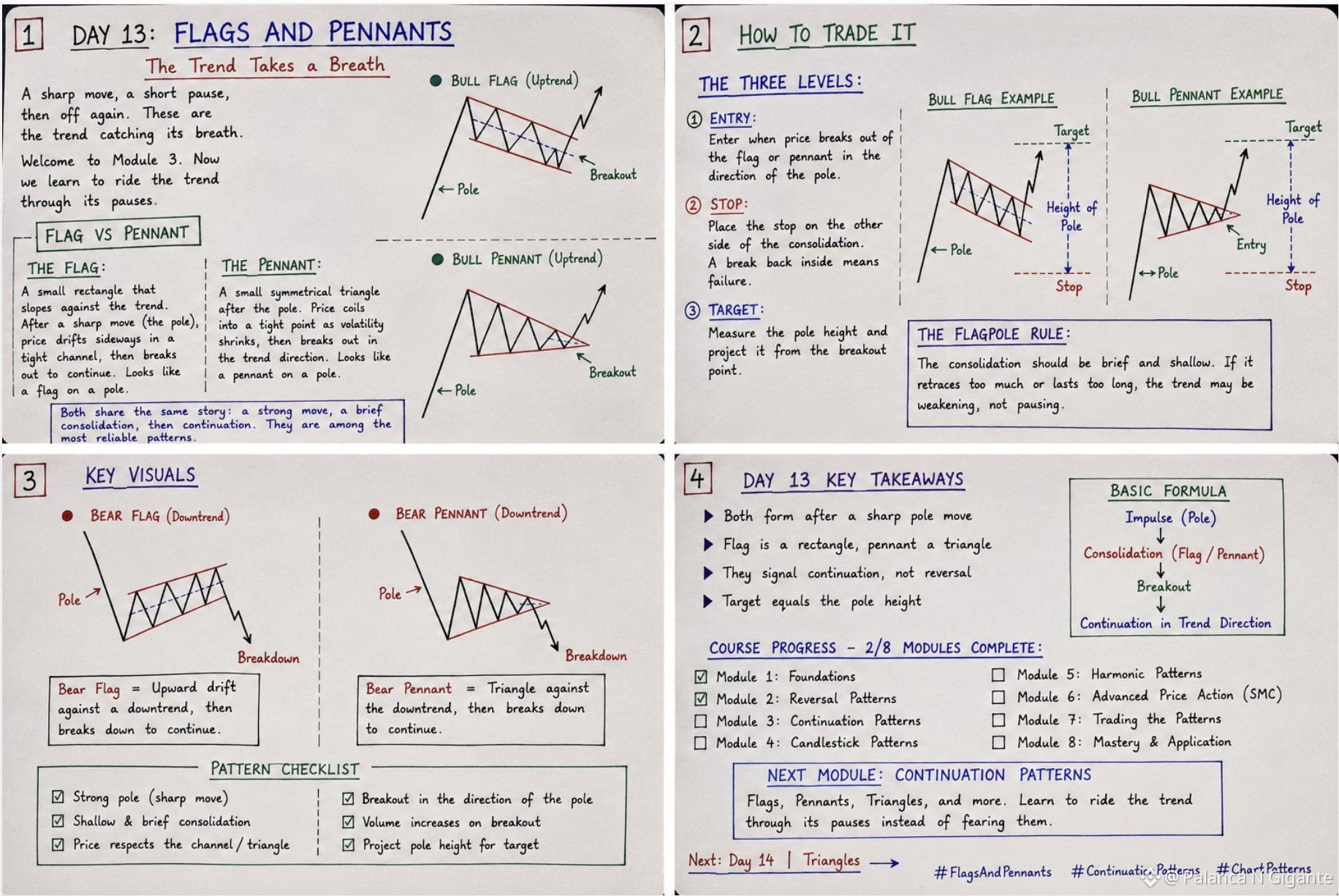
විනිවිදීමේ රටා ප්රවීණතා පාඨමාලාව: ග්රාෆික් රටා මොඩියුලය 3: අඛණ්ඩතා රටා | දිනය 13 $龙虾
ධජයන් සහ ෆ්ලැමුලාවන්: ප්රවණතාවට තාවකාලික විවේකයක්
හදිසි චලනයක්, කෙටි විවේකයක්, ඉන්පසු ප්රවණතාව නැවත ආරම්භ වන ආකාරයයි. ප්රවණතාවට හුස්ම ගැනීමට අවස්ථාව ලැබෙන්නේ මෙලෙසයි.
මොඩියුල 3 වෙත සාදරයෙන් පිළිගනිමු. දැන් අපි ප්රවණතාව විවේක ගන්නා අවස්ථාවලදී එය උපයෝගී කරගන්නා ආකාරය ඉගෙන ගන්නෙමු. ධජය vs. ෆ්ලැමුලාව
🟢ධජය: ප්රවණතාවට විරුද්ධව අහඹු ලෙස නැඹුරු කුඩා ඍජුකෝණාස්රයක්. හදිසි චලනයකින් පසුව (දුම්ස්තම්භය), මිල පටු නාලිකාවක් තුළ පැත්තකට පැත්තට oscillate වෙයි; ඉන්පසු දිගටම යාමට පත්රය කඩයි. එය දුම්ස්තම්භයක මත තබන ධජයක් වගේ.
🟢ෆ්ලැමුලාව: දුම්ස්තම්භයෙන් පසු සමමිතික කුඩා ත්රිකෝණයක්. අස්ථිරතාව අඩුවන විට මිල පටු ස්ථානයක් තුළ සංકેන්ද්රණය වෙයි; ඉන්පසු ප්රවණතාවයේ දිශාවට කඩයි.
එය දුම්ස්තම්භයක මත තබන ෆ්ලැමුලාවක් වගේ. $LSK
ඒ දෙකම එකම කතාව බෙදාගන්නවා: ශක්තිමත් චලනයක්, කෙටි සංස්ථාවිගතවීමක්, ඉන්පසු අඛණ්ඩතාව.
ඒවා අතර වඩා විශ්වාසදායක රටා වලින් එකකි. ත්රි මට්ටම් සමඟ ක්රියා කරන්නේ කෙසේද:
▪️
ඇතුල්වීම (ENTRY): දුම්ස්තම්භයේ දිශාවට ධජය හෝ ෆ්ලැමුලාව කඩවන විට ඇතුල් වන්න.
▪️නැවතුම (STOP): සංස්ථාවිගතවීමේ අනෙක් පැත්තට stop තබන්න. ඇතුළට කඩවීමක් (break down into) අසාර්ථක වීමක් අදහස් වේ.
▪️ඉලක්කය (ALVO): දුම්ස්තම්භයේ උස මැන, එය කඩවන ස්ථානයෙන් පටන් ගෙන ප්රක්ෂේපනය කරන්න.
දුම්ස්තම්භ නීතිය: සංස්ථාවිගතවීම කෙටි හා මතුපිටින්ම විය යුතුයි. එය බොහෝ ප්රමාණයට පසුබැසීමක් කරන්නේ නම් හෝ ඉතා දිගට පැවතෙන්නේ නම්, ප්රවණතාව දුර්වල වෙමින් තිබිය හැකි අතර “විවේක ගැනීම” නොවිය හැක.
දිනය 13 හි ප්රධාන නිගමන $GRIFFAIN
▶️දුම්ස්තම්භයේ හදිසි චලනයකින් පසුව මේ දෙකම සෑදේ.
▶️ධජය යනු ඍජුකෝණාස්රයක් වන අතර ෆ්ලැමුලාව ත්රිකෝණයකි.
▶️මේවා සංඛේපණය නොව දිගටම යාම (continuation) සංඥා කරයි.
▶️ඉලක්කය දුම්ස්තම්භයේ උසට සමානයි. ඊළඟ: දිනය 14 | ත්රිකෝණ
{future}(龙虾USDT)
{future}(GRIFFAINUSDT)
{future}(LSKUSDT)
#StrategicTrading #FlagsAndPennant #ContinuationPattern #chartpatterns #candlestick_patterns
විනිවිදීමේ රටා ප්රවීණතා පාඨමාලාව: ග්රාෆික් රටා මොඩියුලය 3: අඛණ්ඩතා රටා | දිනය 13 $龙虾
ධජයන් සහ ෆ්ලැමුලාවන්: ප්රවණතාවට තාවකාලික විවේකයක්
හදිසි චලනයක්, කෙටි විවේකයක්, ඉන්පසු ප්රවණතාව නැවත ආරම්භ වන ආකාරයයි. ප්රවණතාවට හුස්ම ගැනීමට අවස්ථාව ලැබෙන්නේ මෙලෙසයි.
මොඩියුල 3 වෙත සාදරයෙන් පිළිගනිමු. දැන් අපි ප්රවණතාව විවේක ගන්නා අවස්ථාවලදී එය උපයෝගී කරගන්නා ආකාරය ඉගෙන ගන්නෙමු. ධජය vs. ෆ්ලැමුලාව
🟢ධජය: ප්රවණතාවට විරුද්ධව අහඹු ලෙස නැඹුරු කුඩා ඍජුකෝණාස්රයක්. හදිසි චලනයකින් පසුව (දුම්ස්තම්භය), මිල පටු නාලිකාවක් තුළ පැත්තකට පැත්තට oscillate වෙයි; ඉන්පසු දිගටම යාමට පත්රය කඩයි. එය දුම්ස්තම්භයක මත තබන ධජයක් වගේ.
🟢ෆ්ලැමුලාව: දුම්ස්තම්භයෙන් පසු සමමිතික කුඩා ත්රිකෝණයක්. අස්ථිරතාව අඩුවන විට මිල පටු ස්ථානයක් තුළ සංકેන්ද්රණය වෙයි; ඉන්පසු ප්රවණතාවයේ දිශාවට කඩයි.
එය දුම්ස්තම්භයක මත තබන ෆ්ලැමුලාවක් වගේ. $LSK
ඒ දෙකම එකම කතාව බෙදාගන්නවා: ශක්තිමත් චලනයක්, කෙටි සංස්ථාවිගතවීමක්, ඉන්පසු අඛණ්ඩතාව.
ඒවා අතර වඩා විශ්වාසදායක රටා වලින් එකකි. ත්රි මට්ටම් සමඟ ක්රියා කරන්නේ කෙසේද:
▪️
ඇතුල්වීම (ENTRY): දුම්ස්තම්භයේ දිශාවට ධජය හෝ ෆ්ලැමුලාව කඩවන විට ඇතුල් වන්න.
▪️නැවතුම (STOP): සංස්ථාවිගතවීමේ අනෙක් පැත්තට stop තබන්න. ඇතුළට කඩවීමක් (break down into) අසාර්ථක වීමක් අදහස් වේ.
▪️ඉලක්කය (ALVO): දුම්ස්තම්භයේ උස මැන, එය කඩවන ස්ථානයෙන් පටන් ගෙන ප්රක්ෂේපනය කරන්න.
දුම්ස්තම්භ නීතිය: සංස්ථාවිගතවීම කෙටි හා මතුපිටින්ම විය යුතුයි. එය බොහෝ ප්රමාණයට පසුබැසීමක් කරන්නේ නම් හෝ ඉතා දිගට පැවතෙන්නේ නම්, ප්රවණතාව දුර්වල වෙමින් තිබිය හැකි අතර “විවේක ගැනීම” නොවිය හැක.
දිනය 13 හි ප්රධාන නිගමන $GRIFFAIN
▶️දුම්ස්තම්භයේ හදිසි චලනයකින් පසුව මේ දෙකම සෑදේ.
▶️ධජය යනු ඍජුකෝණාස්රයක් වන අතර ෆ්ලැමුලාව ත්රිකෝණයකි.
▶️මේවා සංඛේපණය නොව දිගටම යාම (continuation) සංඥා කරයි.
▶️ඉලක්කය දුම්ස්තම්භයේ උසට සමානයි. ඊළඟ: දිනය 14 | ත්රිකෝණ
#StrategicTrading #FlagsAndPennant #ContinuationPattern #chartpatterns #candlestick_patterns
ධජයන් සහ ෆ්ලැමුලාවන්: ප්රවණතාවට තාවකාලික විවේකයක්
හදිසි චලනයක්, කෙටි විවේකයක්, ඉන්පසු ප්රවණතාව නැවත ආරම්භ වන ආකාරයයි. ප්රවණතාවට හුස්ම ගැනීමට අවස්ථාව ලැබෙන්නේ මෙලෙසයි.
මොඩියුල 3 වෙත සාදරයෙන් පිළිගනිමු. දැන් අපි ප්රවණතාව විවේක ගන්නා අවස්ථාවලදී එය උපයෝගී කරගන්නා ආකාරය ඉගෙන ගන්නෙමු. ධජය vs. ෆ්ලැමුලාව
🟢ධජය: ප්රවණතාවට විරුද්ධව අහඹු ලෙස නැඹුරු කුඩා ඍජුකෝණාස්රයක්. හදිසි චලනයකින් පසුව (දුම්ස්තම්භය), මිල පටු නාලිකාවක් තුළ පැත්තකට පැත්තට oscillate වෙයි; ඉන්පසු දිගටම යාමට පත්රය කඩයි. එය දුම්ස්තම්භයක මත තබන ධජයක් වගේ.
🟢ෆ්ලැමුලාව: දුම්ස්තම්භයෙන් පසු සමමිතික කුඩා ත්රිකෝණයක්. අස්ථිරතාව අඩුවන විට මිල පටු ස්ථානයක් තුළ සංકેන්ද්රණය වෙයි; ඉන්පසු ප්රවණතාවයේ දිශාවට කඩයි.
එය දුම්ස්තම්භයක මත තබන ෆ්ලැමුලාවක් වගේ. $LSK
ඒ දෙකම එකම කතාව බෙදාගන්නවා: ශක්තිමත් චලනයක්, කෙටි සංස්ථාවිගතවීමක්, ඉන්පසු අඛණ්ඩතාව.
ඒවා අතර වඩා විශ්වාසදායක රටා වලින් එකකි. ත්රි මට්ටම් සමඟ ක්රියා කරන්නේ කෙසේද:
▪️
ඇතුල්වීම (ENTRY): දුම්ස්තම්භයේ දිශාවට ධජය හෝ ෆ්ලැමුලාව කඩවන විට ඇතුල් වන්න.
▪️නැවතුම (STOP): සංස්ථාවිගතවීමේ අනෙක් පැත්තට stop තබන්න. ඇතුළට කඩවීමක් (break down into) අසාර්ථක වීමක් අදහස් වේ.
▪️ඉලක්කය (ALVO): දුම්ස්තම්භයේ උස මැන, එය කඩවන ස්ථානයෙන් පටන් ගෙන ප්රක්ෂේපනය කරන්න.
දුම්ස්තම්භ නීතිය: සංස්ථාවිගතවීම කෙටි හා මතුපිටින්ම විය යුතුයි. එය බොහෝ ප්රමාණයට පසුබැසීමක් කරන්නේ නම් හෝ ඉතා දිගට පැවතෙන්නේ නම්, ප්රවණතාව දුර්වල වෙමින් තිබිය හැකි අතර “විවේක ගැනීම” නොවිය හැක.
දිනය 13 හි ප්රධාන නිගමන $GRIFFAIN
▶️දුම්ස්තම්භයේ හදිසි චලනයකින් පසුව මේ දෙකම සෑදේ.
▶️ධජය යනු ඍජුකෝණාස්රයක් වන අතර ෆ්ලැමුලාව ත්රිකෝණයකි.
▶️මේවා සංඛේපණය නොව දිගටම යාම (continuation) සංඥා කරයි.
▶️ඉලක්කය දුම්ස්තම්භයේ උසට සමානයි. ඊළඟ: දිනය 14 | ත්රිකෝණ
#StrategicTrading #FlagsAndPennant #ContinuationPattern #chartpatterns #candlestick_patterns
Palanca N Gigante
·
--
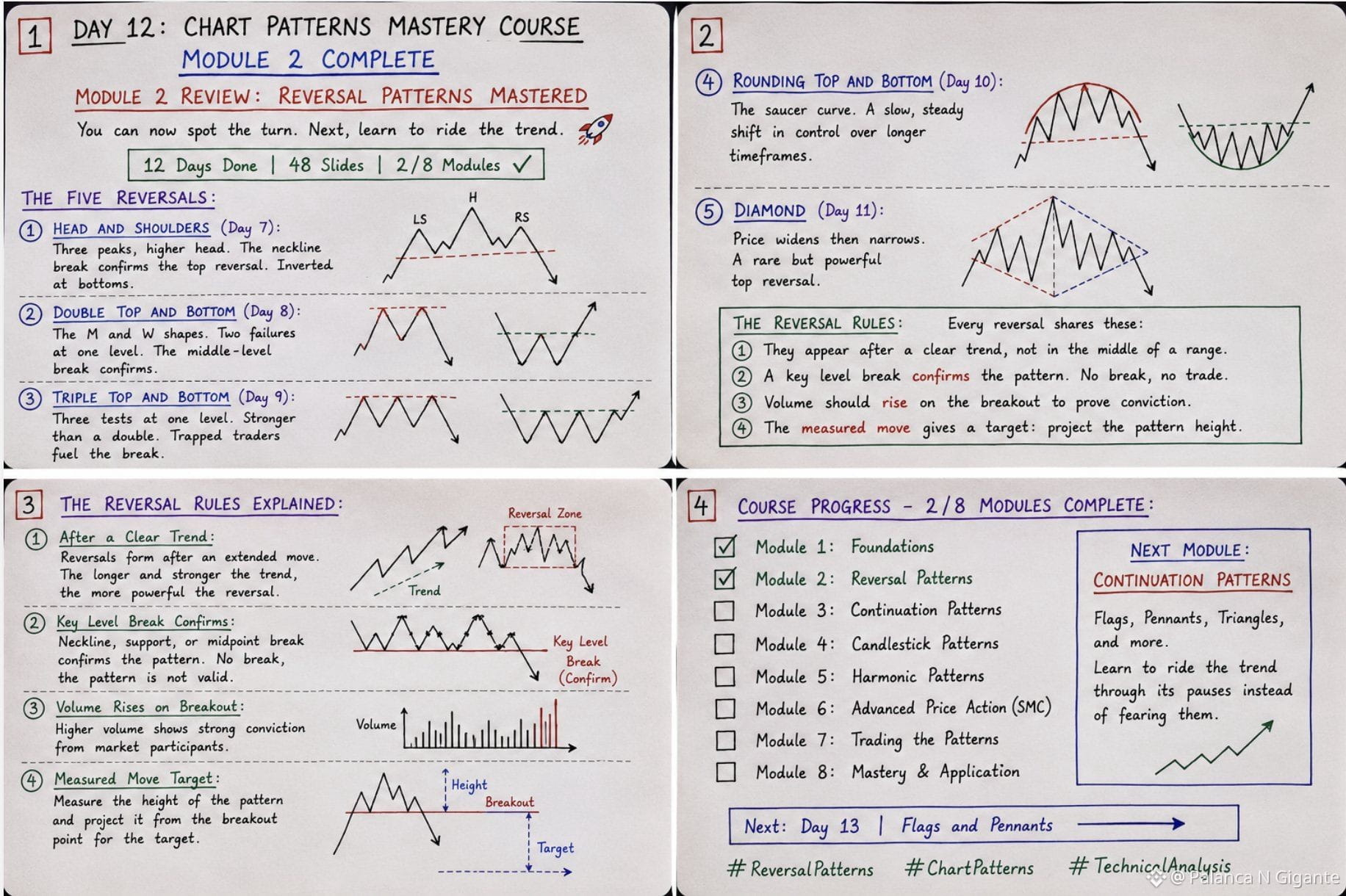
උසබ තත්ත්වයGRAFİKỌL PATTERN DINUME KADAMU KURSUWA: 2 MÓDULOYA UTSHAHI KARALA | 12WANI HUNDE $RAY
2 MÓDULOYA SAKKARIYA MAW ARA: Piyavarana Pattara (Reversão) 12ta baase. Oga hadda akka reversão kuzataa danda’ute. Anata surfanin tajaajila bifa haala agarsiisaa qixxaatinaatti dhufaa. 🚀
Dias 12 xumuurame | Slides 48 | 2/8 Módulos ✅
HIRMANNAA SHAN: $ZEC
MALLATTII FI MATAA (Guyyaa 7): Bultii sadii, mataa ol ka’e. Jabeenyi safartuu (line) waraansa jabaa (neckline) cabsuun reversão irratti mirkaneessa. Walfakkaataa gara laafaa keessatti (invertido) kan agarsiifamu.
OL/BU’AA KULLAA LAMA (Guyyaa 8): Aakaroota M fi W. Haala bifa lamao irratti dadhabbi. Safartuu gidduu cabsuun mirkaneessa.
OL/BU’AA KULLAA SADI (Guyyaa 9): Dhugaa tajaajila sadi bifa tokko irratti. Ol-ka’iinsa (top) lama irraa caalaa cima. Daldaltoonni (traders) tasgabbaa’an cabsuu ni qubateessu.
OL/BU’AA KULLAA DUGDAAN QORQOQOODA (Guyyaa 10): Damma bagaatii (pişua) irratti fakkaata. Qindoomina tartiiba qabu sirnaan jijjiirama yeroon dheeradha keessatti.
DAAYAMAANDII (Guyyaa 11): Sa’a gara bal’inaatti ni baay’ata, booddee ni cidhaata. Reversão ol taphataa (top reversal) eessaa baay’ee hin raawwatamu garuu humna guddaa qabu.
XAXXAA REVERSE’AA (REGRAS DA REVERSÃO): $NAORIS
Reversão tokkoon tokkoon sifoolee kana qaba:
1️⃣ Inni raawwatama booda yaa’aa (tendência) caddeetu jiru, gidduu sanduuqa (price range) keessa osoo miti.
Safartuu (break) yeroo akkaataa tarree murtaa’e cabsu; qaama cabsuu malee hojiin hin eegamuu.
3️⃣ Volume’n cabsuu irratti dabalaa deemuun dhugaa buusa.
4️⃣ Daddabarsa safarameen hanga tarjaa (target) kennama: dheeraa olka’uu pattern irratti ilaaltee tarjaa kaa’i.
Xaxxaa afran kana mo'achuu.
MOGGA LAA'AA KOORSI - 2/8 MÓDULO XUMURAME:
✅ Módulo 1: Wajjirra Qabsiisa
✅ Módulo 2: Piyavarana Pattara (Reversão)
⬜ Módulo 3: Pattaroota Tarkaanfii Dursan (Continuação)
⬜ Módulo 4: Pacca (Candlestick) Pattara
⬜ Módulo 5: Pattaroota Harmonik
⬜ Módulo 6: Egaa Barsiisa Dabalataa (SMC)
⬜ Módulo 7: Piyavarana Tajaajiluu
⬜ Módulo 8: To’achuu fi Fayyadama
MÓDULO AANUU DHUFA: PATTAROTA CONTINUAÇÃO (Bandeiras fi kkf). Tajaajila tajaajilu akka tajaajilaa tajaajila during pausing keetii irratti fayyadami, sodaadhuu malee.
Kan itti aanu: Guyyaa 13 | Bandeiras fi Flâmulas ➡️
#StrategicTrading #ReversalPatterns #chartpatterns #TechnicalAnalysis #candlestick_patterns
2 MÓDULOYA SAKKARIYA MAW ARA: Piyavarana Pattara (Reversão) 12ta baase. Oga hadda akka reversão kuzataa danda’ute. Anata surfanin tajaajila bifa haala agarsiisaa qixxaatinaatti dhufaa. 🚀
Dias 12 xumuurame | Slides 48 | 2/8 Módulos ✅
HIRMANNAA SHAN: $ZEC
MALLATTII FI MATAA (Guyyaa 7): Bultii sadii, mataa ol ka’e. Jabeenyi safartuu (line) waraansa jabaa (neckline) cabsuun reversão irratti mirkaneessa. Walfakkaataa gara laafaa keessatti (invertido) kan agarsiifamu.
OL/BU’AA KULLAA LAMA (Guyyaa 8): Aakaroota M fi W. Haala bifa lamao irratti dadhabbi. Safartuu gidduu cabsuun mirkaneessa.
OL/BU’AA KULLAA SADI (Guyyaa 9): Dhugaa tajaajila sadi bifa tokko irratti. Ol-ka’iinsa (top) lama irraa caalaa cima. Daldaltoonni (traders) tasgabbaa’an cabsuu ni qubateessu.
OL/BU’AA KULLAA DUGDAAN QORQOQOODA (Guyyaa 10): Damma bagaatii (pişua) irratti fakkaata. Qindoomina tartiiba qabu sirnaan jijjiirama yeroon dheeradha keessatti.
DAAYAMAANDII (Guyyaa 11): Sa’a gara bal’inaatti ni baay’ata, booddee ni cidhaata. Reversão ol taphataa (top reversal) eessaa baay’ee hin raawwatamu garuu humna guddaa qabu.
XAXXAA REVERSE’AA (REGRAS DA REVERSÃO): $NAORIS
Reversão tokkoon tokkoon sifoolee kana qaba:
1️⃣ Inni raawwatama booda yaa’aa (tendência) caddeetu jiru, gidduu sanduuqa (price range) keessa osoo miti.
Safartuu (break) yeroo akkaataa tarree murtaa’e cabsu; qaama cabsuu malee hojiin hin eegamuu.
3️⃣ Volume’n cabsuu irratti dabalaa deemuun dhugaa buusa.
4️⃣ Daddabarsa safarameen hanga tarjaa (target) kennama: dheeraa olka’uu pattern irratti ilaaltee tarjaa kaa’i.
Xaxxaa afran kana mo'achuu.
MOGGA LAA'AA KOORSI - 2/8 MÓDULO XUMURAME:
✅ Módulo 1: Wajjirra Qabsiisa
✅ Módulo 2: Piyavarana Pattara (Reversão)
⬜ Módulo 3: Pattaroota Tarkaanfii Dursan (Continuação)
⬜ Módulo 4: Pacca (Candlestick) Pattara
⬜ Módulo 5: Pattaroota Harmonik
⬜ Módulo 6: Egaa Barsiisa Dabalataa (SMC)
⬜ Módulo 7: Piyavarana Tajaajiluu
⬜ Módulo 8: To’achuu fi Fayyadama
MÓDULO AANUU DHUFA: PATTAROTA CONTINUAÇÃO (Bandeiras fi kkf). Tajaajila tajaajilu akka tajaajilaa tajaajila during pausing keetii irratti fayyadami, sodaadhuu malee.
Kan itti aanu: Guyyaa 13 | Bandeiras fi Flâmulas ➡️
#StrategicTrading #ReversalPatterns #chartpatterns #TechnicalAnalysis #candlestick_patterns
Sardinha de ouro:
obrigada 🤩
2
1
340

·
--
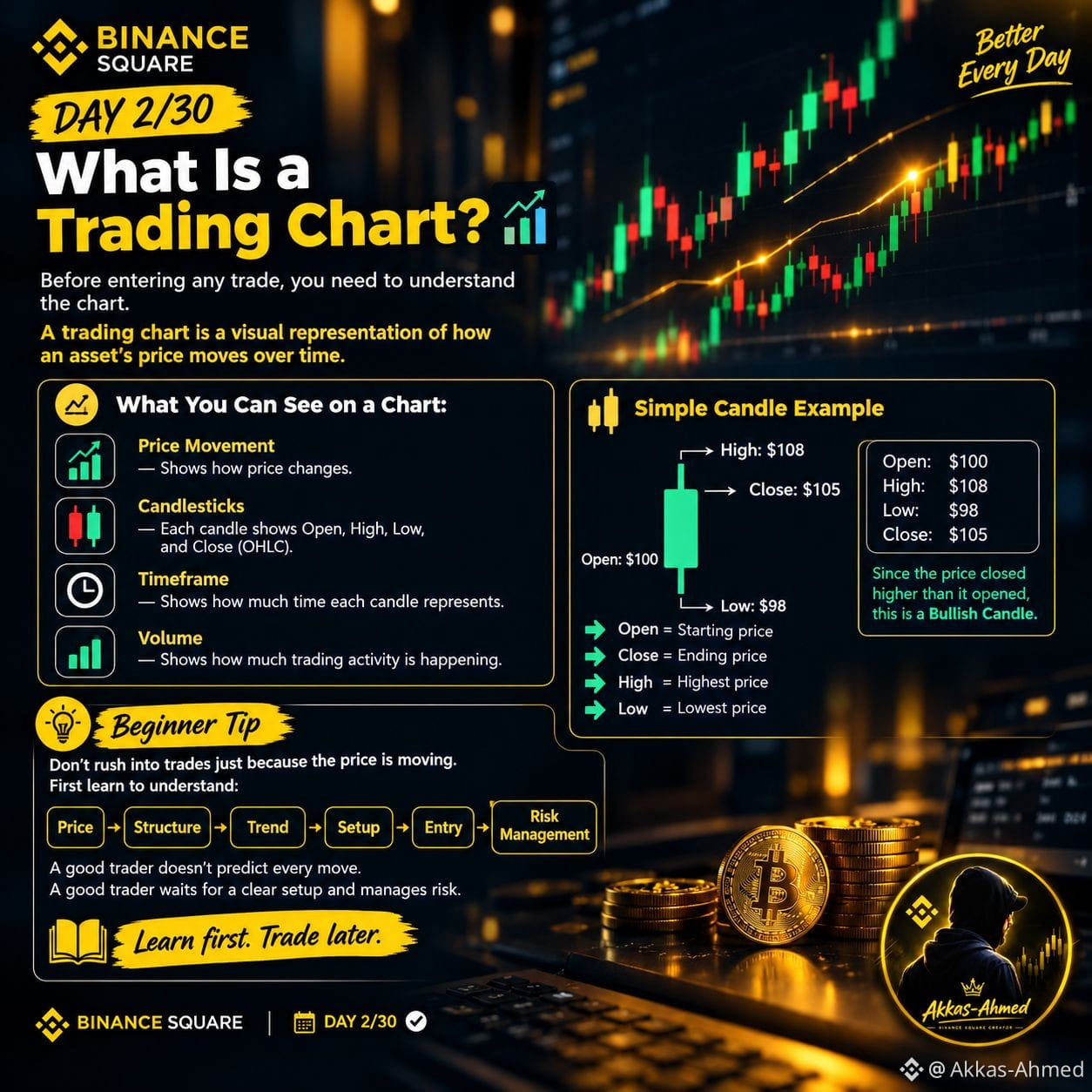
📅 DAY 2/30 — වෙළඳ ප්රස්ථාරයක් යනු කුමක්ද? 📊
කිසියම් වෙළඳ පියවරකට පිවිසීමට පෙර, ඔබට එම ප්රස්ථාරය අවබෝධ කරගත යුතුයි.
වෙළඳ ප්රස්ථාරයක් යනු කාලයත් සමඟින් සම්පතක මිල වෙනස්වීම කෙසේද යන්න දෘශ්යමය ලෙස පෙන්වීමයි.
🔹 ප්රස්ථාරයක ඔබට දැකගත හැකි දේ:
📈 මිල චලනය — මිල වෙනස්වන්නේ කෙසේද පෙන්වයි.
🕯️ කේන්ඩල්ස් — එක් කේන්ඩලයක් Open, High, Low, Close (OHLC) පෙන්වයි.
⏱️ කාල සීමාව — එක් කේන්ඩලයක් නියෝජනය කරන කාලය කොපමණද කියා පෙන්වයි.
📊 වොලුම් — වෙළඳ ක්රියාකාරකම කොපමණද කියා පෙන්වයි.
🕯️ සරල කේන්ඩල් උදාහරණය
Open: $100
High: $108
Low: $98
Close: $105
මිල විවෘත වූ මිලට වඩා ඉහළින් වසා දැමූ නිසා, මෙය බුලිෂ් කේන්ඩලයක් 🟢
👉 Open = ආරම්භක මිල
👉 Close = අවසන් මිල
👉 High = ඉහළම මිල
👉 Low = පහළම මිල
🔥 ආරම්භක අඟහරු
මිල ගමන් කරමින් තියෙන්නේ යැයි පමණක් නිසා වෙළඳ වලට ඉක්මන් වෙන්න එපා.
පළමුව අවබෝධ කරගන්න:
මිල → ව්යුහය → ප්රවණතාව → සෙට්අප් → ඇතුල්වීම → අවදාන කළමනාකරණය
හොඳ වෙළෙන්ඳෙක් සෑම පියවරක්ම පුරෝකථනය කරන්නේ නැහැ.
හොඳ වෙළෙන්ඳෙක් පැහැදිලි සෙට්අප් එකක් එනතුරු බලාගෙන අවදානම කළමනාකරණය කරනවා.
📚 පළමුව ඉගෙන ගන්න. පසුව වෙළඳ කරන්න.
DAY 2/30 ✅
#cryptotrading #BinanceSquareFamily #tradingbasics #candlestick_patterns #TechnicalAnalysis
📅 DAY 2/30 — වෙළඳ ප්රස්ථාරයක් යනු කුමක්ද? 📊
කිසියම් වෙළඳ පියවරකට පිවිසීමට පෙර, ඔබට එම ප්රස්ථාරය අවබෝධ කරගත යුතුයි.
වෙළඳ ප්රස්ථාරයක් යනු කාලයත් සමඟින් සම්පතක මිල වෙනස්වීම කෙසේද යන්න දෘශ්යමය ලෙස පෙන්වීමයි.
🔹 ප්රස්ථාරයක ඔබට දැකගත හැකි දේ:
📈 මිල චලනය — මිල වෙනස්වන්නේ කෙසේද පෙන්වයි.
🕯️ කේන්ඩල්ස් — එක් කේන්ඩලයක් Open, High, Low, Close (OHLC) පෙන්වයි.
⏱️ කාල සීමාව — එක් කේන්ඩලයක් නියෝජනය කරන කාලය කොපමණද කියා පෙන්වයි.
📊 වොලුම් — වෙළඳ ක්රියාකාරකම කොපමණද කියා පෙන්වයි.
🕯️ සරල කේන්ඩල් උදාහරණය
Open: $100
High: $108
Low: $98
Close: $105
මිල විවෘත වූ මිලට වඩා ඉහළින් වසා දැමූ නිසා, මෙය බුලිෂ් කේන්ඩලයක් 🟢
👉 Open = ආරම්භක මිල
👉 Close = අවසන් මිල
👉 High = ඉහළම මිල
👉 Low = පහළම මිල
🔥 ආරම්භක අඟහරු
මිල ගමන් කරමින් තියෙන්නේ යැයි පමණක් නිසා වෙළඳ වලට ඉක්මන් වෙන්න එපා.
පළමුව අවබෝධ කරගන්න:
මිල → ව්යුහය → ප්රවණතාව → සෙට්අප් → ඇතුල්වීම → අවදාන කළමනාකරණය
හොඳ වෙළෙන්ඳෙක් සෑම පියවරක්ම පුරෝකථනය කරන්නේ නැහැ.
හොඳ වෙළෙන්ඳෙක් පැහැදිලි සෙට්අප් එකක් එනතුරු බලාගෙන අවදානම කළමනාකරණය කරනවා.
📚 පළමුව ඉගෙන ගන්න. පසුව වෙළඳ කරන්න.
DAY 2/30 ✅
#cryptotrading #BinanceSquareFamily #tradingbasics #candlestick_patterns #TechnicalAnalysis
කිසියම් වෙළඳ පියවරකට පිවිසීමට පෙර, ඔබට එම ප්රස්ථාරය අවබෝධ කරගත යුතුයි.
වෙළඳ ප්රස්ථාරයක් යනු කාලයත් සමඟින් සම්පතක මිල වෙනස්වීම කෙසේද යන්න දෘශ්යමය ලෙස පෙන්වීමයි.
🔹 ප්රස්ථාරයක ඔබට දැකගත හැකි දේ:
📈 මිල චලනය — මිල වෙනස්වන්නේ කෙසේද පෙන්වයි.
🕯️ කේන්ඩල්ස් — එක් කේන්ඩලයක් Open, High, Low, Close (OHLC) පෙන්වයි.
⏱️ කාල සීමාව — එක් කේන්ඩලයක් නියෝජනය කරන කාලය කොපමණද කියා පෙන්වයි.
📊 වොලුම් — වෙළඳ ක්රියාකාරකම කොපමණද කියා පෙන්වයි.
🕯️ සරල කේන්ඩල් උදාහරණය
Open: $100
High: $108
Low: $98
Close: $105
මිල විවෘත වූ මිලට වඩා ඉහළින් වසා දැමූ නිසා, මෙය බුලිෂ් කේන්ඩලයක් 🟢
👉 Open = ආරම්භක මිල
👉 Close = අවසන් මිල
👉 High = ඉහළම මිල
👉 Low = පහළම මිල
🔥 ආරම්භක අඟහරු
මිල ගමන් කරමින් තියෙන්නේ යැයි පමණක් නිසා වෙළඳ වලට ඉක්මන් වෙන්න එපා.
පළමුව අවබෝධ කරගන්න:
මිල → ව්යුහය → ප්රවණතාව → සෙට්අප් → ඇතුල්වීම → අවදාන කළමනාකරණය
හොඳ වෙළෙන්ඳෙක් සෑම පියවරක්ම පුරෝකථනය කරන්නේ නැහැ.
හොඳ වෙළෙන්ඳෙක් පැහැදිලි සෙට්අප් එකක් එනතුරු බලාගෙන අවදානම කළමනාකරණය කරනවා.
📚 පළමුව ඉගෙන ගන්න. පසුව වෙළඳ කරන්න.
DAY 2/30 ✅
#cryptotrading #BinanceSquareFamily #tradingbasics #candlestick_patterns #TechnicalAnalysis
1
1
56
·
--
උසබ තත්ත්වය
GRAFİKỌL PATTERN DINUME KADAMU KURSUWA: 2 MÓDULOYA UTSHAHI KARALA | 12WANI HUNDE $RAY
2 MÓDULOYA SAKKARIYA MAW ARA: Piyavarana Pattara (Reversão) 12ta baase. Oga hadda akka reversão kuzataa danda’ute. Anata surfanin tajaajila bifa haala agarsiisaa qixxaatinaatti dhufaa. 🚀
Dias 12 xumuurame | Slides 48 | 2/8 Módulos ✅
HIRMANNAA SHAN: $ZEC
MALLATTII FI MATAA (Guyyaa 7): Bultii sadii, mataa ol ka’e. Jabeenyi safartuu (line) waraansa jabaa (neckline) cabsuun reversão irratti mirkaneessa. Walfakkaataa gara laafaa keessatti (invertido) kan agarsiifamu.
OL/BU’AA KULLAA LAMA (Guyyaa 8): Aakaroota M fi W. Haala bifa lamao irratti dadhabbi. Safartuu gidduu cabsuun mirkaneessa.
OL/BU’AA KULLAA SADI (Guyyaa 9): Dhugaa tajaajila sadi bifa tokko irratti. Ol-ka’iinsa (top) lama irraa caalaa cima. Daldaltoonni (traders) tasgabbaa’an cabsuu ni qubateessu.
OL/BU’AA KULLAA DUGDAAN QORQOQOODA (Guyyaa 10): Damma bagaatii (pişua) irratti fakkaata. Qindoomina tartiiba qabu sirnaan jijjiirama yeroon dheeradha keessatti.
DAAYAMAANDII (Guyyaa 11): Sa’a gara bal’inaatti ni baay’ata, booddee ni cidhaata. Reversão ol taphataa (top reversal) eessaa baay’ee hin raawwatamu garuu humna guddaa qabu.
XAXXAA REVERSE’AA (REGRAS DA REVERSÃO): $NAORIS
Reversão tokkoon tokkoon sifoolee kana qaba:
1️⃣ Inni raawwatama booda yaa’aa (tendência) caddeetu jiru, gidduu sanduuqa (price range) keessa osoo miti.
Safartuu (break) yeroo akkaataa tarree murtaa’e cabsu; qaama cabsuu malee hojiin hin eegamuu.
3️⃣ Volume’n cabsuu irratti dabalaa deemuun dhugaa buusa.
4️⃣ Daddabarsa safarameen hanga tarjaa (target) kennama: dheeraa olka’uu pattern irratti ilaaltee tarjaa kaa’i.
Xaxxaa afran kana mo'achuu.
MOGGA LAA'AA KOORSI - 2/8 MÓDULO XUMURAME:
✅ Módulo 1: Wajjirra Qabsiisa
✅ Módulo 2: Piyavarana Pattara (Reversão)
⬜ Módulo 3: Pattaroota Tarkaanfii Dursan (Continuação)
⬜ Módulo 4: Pacca (Candlestick) Pattara
⬜ Módulo 5: Pattaroota Harmonik
⬜ Módulo 6: Egaa Barsiisa Dabalataa (SMC)
⬜ Módulo 7: Piyavarana Tajaajiluu
⬜ Módulo 8: To’achuu fi Fayyadama
MÓDULO AANUU DHUFA: PATTAROTA CONTINUAÇÃO (Bandeiras fi kkf). Tajaajila tajaajilu akka tajaajilaa tajaajila during pausing keetii irratti fayyadami, sodaadhuu malee.
Kan itti aanu: Guyyaa 13 | Bandeiras fi Flâmulas ➡️
{future}(NAORISUSDT)
{spot}(ZECUSDT)
{spot}(RAYUSDT)
#StrategicTrading #ReversalPatterns #chartpatterns #TechnicalAnalysis #candlestick_patterns
GRAFİKỌL PATTERN DINUME KADAMU KURSUWA: 2 MÓDULOYA UTSHAHI KARALA | 12WANI HUNDE $RAY
2 MÓDULOYA SAKKARIYA MAW ARA: Piyavarana Pattara (Reversão) 12ta baase. Oga hadda akka reversão kuzataa danda’ute. Anata surfanin tajaajila bifa haala agarsiisaa qixxaatinaatti dhufaa. 🚀
Dias 12 xumuurame | Slides 48 | 2/8 Módulos ✅
HIRMANNAA SHAN: $ZEC
MALLATTII FI MATAA (Guyyaa 7): Bultii sadii, mataa ol ka’e. Jabeenyi safartuu (line) waraansa jabaa (neckline) cabsuun reversão irratti mirkaneessa. Walfakkaataa gara laafaa keessatti (invertido) kan agarsiifamu.
OL/BU’AA KULLAA LAMA (Guyyaa 8): Aakaroota M fi W. Haala bifa lamao irratti dadhabbi. Safartuu gidduu cabsuun mirkaneessa.
OL/BU’AA KULLAA SADI (Guyyaa 9): Dhugaa tajaajila sadi bifa tokko irratti. Ol-ka’iinsa (top) lama irraa caalaa cima. Daldaltoonni (traders) tasgabbaa’an cabsuu ni qubateessu.
OL/BU’AA KULLAA DUGDAAN QORQOQOODA (Guyyaa 10): Damma bagaatii (pişua) irratti fakkaata. Qindoomina tartiiba qabu sirnaan jijjiirama yeroon dheeradha keessatti.
DAAYAMAANDII (Guyyaa 11): Sa’a gara bal’inaatti ni baay’ata, booddee ni cidhaata. Reversão ol taphataa (top reversal) eessaa baay’ee hin raawwatamu garuu humna guddaa qabu.
XAXXAA REVERSE’AA (REGRAS DA REVERSÃO): $NAORIS
Reversão tokkoon tokkoon sifoolee kana qaba:
1️⃣ Inni raawwatama booda yaa’aa (tendência) caddeetu jiru, gidduu sanduuqa (price range) keessa osoo miti.
Safartuu (break) yeroo akkaataa tarree murtaa’e cabsu; qaama cabsuu malee hojiin hin eegamuu.
3️⃣ Volume’n cabsuu irratti dabalaa deemuun dhugaa buusa.
4️⃣ Daddabarsa safarameen hanga tarjaa (target) kennama: dheeraa olka’uu pattern irratti ilaaltee tarjaa kaa’i.
Xaxxaa afran kana mo'achuu.
MOGGA LAA'AA KOORSI - 2/8 MÓDULO XUMURAME:
✅ Módulo 1: Wajjirra Qabsiisa
✅ Módulo 2: Piyavarana Pattara (Reversão)
⬜ Módulo 3: Pattaroota Tarkaanfii Dursan (Continuação)
⬜ Módulo 4: Pacca (Candlestick) Pattara
⬜ Módulo 5: Pattaroota Harmonik
⬜ Módulo 6: Egaa Barsiisa Dabalataa (SMC)
⬜ Módulo 7: Piyavarana Tajaajiluu
⬜ Módulo 8: To’achuu fi Fayyadama
MÓDULO AANUU DHUFA: PATTAROTA CONTINUAÇÃO (Bandeiras fi kkf). Tajaajila tajaajilu akka tajaajilaa tajaajila during pausing keetii irratti fayyadami, sodaadhuu malee.
Kan itti aanu: Guyyaa 13 | Bandeiras fi Flâmulas ➡️
#StrategicTrading #ReversalPatterns #chartpatterns #TechnicalAnalysis #candlestick_patterns
2 MÓDULOYA SAKKARIYA MAW ARA: Piyavarana Pattara (Reversão) 12ta baase. Oga hadda akka reversão kuzataa danda’ute. Anata surfanin tajaajila bifa haala agarsiisaa qixxaatinaatti dhufaa. 🚀
Dias 12 xumuurame | Slides 48 | 2/8 Módulos ✅
HIRMANNAA SHAN: $ZEC
MALLATTII FI MATAA (Guyyaa 7): Bultii sadii, mataa ol ka’e. Jabeenyi safartuu (line) waraansa jabaa (neckline) cabsuun reversão irratti mirkaneessa. Walfakkaataa gara laafaa keessatti (invertido) kan agarsiifamu.
OL/BU’AA KULLAA LAMA (Guyyaa 8): Aakaroota M fi W. Haala bifa lamao irratti dadhabbi. Safartuu gidduu cabsuun mirkaneessa.
OL/BU’AA KULLAA SADI (Guyyaa 9): Dhugaa tajaajila sadi bifa tokko irratti. Ol-ka’iinsa (top) lama irraa caalaa cima. Daldaltoonni (traders) tasgabbaa’an cabsuu ni qubateessu.
OL/BU’AA KULLAA DUGDAAN QORQOQOODA (Guyyaa 10): Damma bagaatii (pişua) irratti fakkaata. Qindoomina tartiiba qabu sirnaan jijjiirama yeroon dheeradha keessatti.
DAAYAMAANDII (Guyyaa 11): Sa’a gara bal’inaatti ni baay’ata, booddee ni cidhaata. Reversão ol taphataa (top reversal) eessaa baay’ee hin raawwatamu garuu humna guddaa qabu.
XAXXAA REVERSE’AA (REGRAS DA REVERSÃO): $NAORIS
Reversão tokkoon tokkoon sifoolee kana qaba:
1️⃣ Inni raawwatama booda yaa’aa (tendência) caddeetu jiru, gidduu sanduuqa (price range) keessa osoo miti.
Safartuu (break) yeroo akkaataa tarree murtaa’e cabsu; qaama cabsuu malee hojiin hin eegamuu.
3️⃣ Volume’n cabsuu irratti dabalaa deemuun dhugaa buusa.
4️⃣ Daddabarsa safarameen hanga tarjaa (target) kennama: dheeraa olka’uu pattern irratti ilaaltee tarjaa kaa’i.
Xaxxaa afran kana mo'achuu.
MOGGA LAA'AA KOORSI - 2/8 MÓDULO XUMURAME:
✅ Módulo 1: Wajjirra Qabsiisa
✅ Módulo 2: Piyavarana Pattara (Reversão)
⬜ Módulo 3: Pattaroota Tarkaanfii Dursan (Continuação)
⬜ Módulo 4: Pacca (Candlestick) Pattara
⬜ Módulo 5: Pattaroota Harmonik
⬜ Módulo 6: Egaa Barsiisa Dabalataa (SMC)
⬜ Módulo 7: Piyavarana Tajaajiluu
⬜ Módulo 8: To’achuu fi Fayyadama
MÓDULO AANUU DHUFA: PATTAROTA CONTINUAÇÃO (Bandeiras fi kkf). Tajaajila tajaajilu akka tajaajilaa tajaajila during pausing keetii irratti fayyadami, sodaadhuu malee.
Kan itti aanu: Guyyaa 13 | Bandeiras fi Flâmulas ➡️
#StrategicTrading #ReversalPatterns #chartpatterns #TechnicalAnalysis #candlestick_patterns
Palanca N Gigante
·
--
උසබ තත්ත්වයGRAFIK PAΛNĀKİ DOMINIO KURSA: MODULO 2: REVERSĀN PAΛNĀKİ | 11වන දවස
DIAMANTE PAΛNĀKİ: දුර්ලභ හා බලවත් ප්රතිවර්තනය
එය පළල වන්නේ පසුව පටු වන්නේය. විශාල ප්රතිවර්තනයක් සටහන් කරන දියමන්ත හැඩයකි.
DIAMANTE එක්ක halves දෙක: $4
දියමන්තයක් සෑදෙන්නේ දැඩි ප්රවණතාවකින් පසුවය; බොහෝ විට උඩුදැලක් (top) තුළ. මුලින්ම මිල පළල වීමක් වගේ හැඩයකට පුළුල් වී පසුව ත්රිකෝණයක් ලෙස පටු වේ. එකට ගත් විට, ඒවා දියමන්තයේ සීමාව (contour) සාදයි.
අදියර දෙක:
1️⃣ පළල වීමේ අදියර. අස්ථිරතාව (volatility) වැඩි වේ. ඉහළ සීමා (maxima) ඉහළට යන අතර පහළ සීමා (minima) පහළට යයි. වෙළඳපොළ ගොළුබව සහ හැඟීම් සහිත (confuso e emotivo) තත්ත්වයකි. 2️⃣ පටු වීමේ අදියර. අස්ථිරතාව අඩු වේ. ඉහළ සීමා පහළට යන අතර පහළ සීමා ඉහළට යයි; ඒවා ලක්ෂ්යයට (point) එකට එකතු වේ.
සංවර්ධන තරාතිරම් තුනටම කෙසේ ක්රියා කරන්නද: $DASH
▪️ ඇතුල්වීම (ENTRADA): මිල පටු වීමේ අදියරේ පහළ මායිම (borda inferior) බිඳ දැමූ විට ඇතුල්වන්න; එය වොලියුම් (volume) මගින් තහවුරු කළ යුතුය.
▪️ STOP: බ්රේක් (rompimento) මට්ටමට ඉහළින් දියමන්තය තුළම stop තබන්න.
▪️ ඉලක්කය (ALVO): දියමන්තයේ වැඩිම පළල කොටස මැන එය බ්රේක් වූ ස්ථානයෙන් ඉදිරියට ප්රක්ෂේපණය කරන්න.
සැලකිල්ලෙන් හැසිරෙන්න
දියමන්ත දුර්ලභ වන අතර වැරදි ලෙස අර්ථකථනය කිරීම පහසුය. ක්රියා කිරීමට පෙර සම්පූර්ණ හැඩය තහවුරු කර, ව්යාකූල මිල ක්රියාවක් (price confusa) තුළ කිසිවිටක දියමන්තයක් බලාත්මකව (force) භාවිතා නොකරන්න.
11වන දවසේ ප්රධාන නිගමන $MARSCOIN
🔹 මිල පළල වන්නේ පසුව පටු වේ
🔹 සාමාන්යයෙන් ඉහළ/ටොප් (top) ප්රතිවර්තනයක්
🔹 මායිම බිඳ දැමීමේ මොහොතට ඇතුල්වීම
🔹 දුර්ලභයි; එබැවින් හොඳින් තහවුරු කරන්න
ඉදිරියට: දවස 12 | මොඩියුල 2 සමාලෝචනය ➡️
#candlestick_patterns #DiamondPattern #ReversalPatterns #chartpatterns #StrategicTrading
DIAMANTE PAΛNĀKİ: දුර්ලභ හා බලවත් ප්රතිවර්තනය
එය පළල වන්නේ පසුව පටු වන්නේය. විශාල ප්රතිවර්තනයක් සටහන් කරන දියමන්ත හැඩයකි.
DIAMANTE එක්ක halves දෙක: $4
දියමන්තයක් සෑදෙන්නේ දැඩි ප්රවණතාවකින් පසුවය; බොහෝ විට උඩුදැලක් (top) තුළ. මුලින්ම මිල පළල වීමක් වගේ හැඩයකට පුළුල් වී පසුව ත්රිකෝණයක් ලෙස පටු වේ. එකට ගත් විට, ඒවා දියමන්තයේ සීමාව (contour) සාදයි.
අදියර දෙක:
1️⃣ පළල වීමේ අදියර. අස්ථිරතාව (volatility) වැඩි වේ. ඉහළ සීමා (maxima) ඉහළට යන අතර පහළ සීමා (minima) පහළට යයි. වෙළඳපොළ ගොළුබව සහ හැඟීම් සහිත (confuso e emotivo) තත්ත්වයකි. 2️⃣ පටු වීමේ අදියර. අස්ථිරතාව අඩු වේ. ඉහළ සීමා පහළට යන අතර පහළ සීමා ඉහළට යයි; ඒවා ලක්ෂ්යයට (point) එකට එකතු වේ.
සංවර්ධන තරාතිරම් තුනටම කෙසේ ක්රියා කරන්නද: $DASH
▪️ ඇතුල්වීම (ENTRADA): මිල පටු වීමේ අදියරේ පහළ මායිම (borda inferior) බිඳ දැමූ විට ඇතුල්වන්න; එය වොලියුම් (volume) මගින් තහවුරු කළ යුතුය.
▪️ STOP: බ්රේක් (rompimento) මට්ටමට ඉහළින් දියමන්තය තුළම stop තබන්න.
▪️ ඉලක්කය (ALVO): දියමන්තයේ වැඩිම පළල කොටස මැන එය බ්රේක් වූ ස්ථානයෙන් ඉදිරියට ප්රක්ෂේපණය කරන්න.
සැලකිල්ලෙන් හැසිරෙන්න
දියමන්ත දුර්ලභ වන අතර වැරදි ලෙස අර්ථකථනය කිරීම පහසුය. ක්රියා කිරීමට පෙර සම්පූර්ණ හැඩය තහවුරු කර, ව්යාකූල මිල ක්රියාවක් (price confusa) තුළ කිසිවිටක දියමන්තයක් බලාත්මකව (force) භාවිතා නොකරන්න.
11වන දවසේ ප්රධාන නිගමන $MARSCOIN
🔹 මිල පළල වන්නේ පසුව පටු වේ
🔹 සාමාන්යයෙන් ඉහළ/ටොප් (top) ප්රතිවර්තනයක්
🔹 මායිම බිඳ දැමීමේ මොහොතට ඇතුල්වීම
🔹 දුර්ලභයි; එබැවින් හොඳින් තහවුරු කරන්න
ඉදිරියට: දවස 12 | මොඩියුල 2 සමාලෝචනය ➡️
#candlestick_patterns #DiamondPattern #ReversalPatterns #chartpatterns #StrategicTrading
3
2
1k
තවත් අන්තර්ගතයන් ගවේෂණය කිරීමට ඇතුල් වන්න
Binance චතුරශ්රය හි ගෝලීය ක්රිප්ටෝ පරිශීලකයින් හා එක්වන්න
⚡️ ක්රිප්ටෝ පිළිබඳ නවතම සහ ප්රයෝජනවත් තොරතුරු ලබා ගන්න.
💬 ලොව විශාලතම ක්රිප්ටෝ හුවමාරුව මගින් විශ්වාස කෙරේ.
👍 සත්යායනය කරන ලද නිර්මාණකරුවන්ගෙන් සැබෑ විදසුන් සොයා ගන්න.
විද්යුත් තැපෑල / දුරකථන අංකය
නැගී එන මාතෘකා
1
#BitcoinSurpasses$77000
2,300 views
62 සාකච්ඡා කරමින්
2
#ParadigmDisclosesZECHolding
2,343 views
118 සාකච්ඡා කරමින්
3
#BitcoinETFsShed$450M
14,500 views
137 සාකච්ඡා කරමින්
4
#USWeeklyJoblessClaimsFallTo196K
833 views
82 සාකච්ඡා කරමින්
5
#ArkhamSaysBlackRockBuys$1.5BInETH
587 views
21 සාකච්ඡා කරමින්
6
#ElSalvadorBTCHoldingsRiseTo7777
16,759 views
399 සාකච්ඡා කරමින්
7
#MemeLaunchpads82%OfArcDayOneVolume
23,947 views
611 සාකච්ඡා කරමින්
8
#OstiumLoanDisputeHearingSetInNYFederalCourt
19,939 views
433 සාකච්ඡා කරමින්
9
#HyperliquidUSDCSupplyOvertakesSolana
8,001 views
209 සාකච්ඡා කරමින්
10
#SKPoliceRefer18PolymarketUsersToProsecutors
14,277 views
379 සාකච්ඡා කරමින්