
#openledger
openledger
17.3M නැරඹීම්
202,843 සාකච්ඡා කරමින්
උණුසුම්
නවතම

#openledger $OPEN The OpenLedger campaign is creating serious excitement across the crypto community, and for good reason. As blockchain technology continues to evolve, OpenLedger is positioning itself as a project focused on innovation, transparency, and community-driven growth.
Participating in the Binance OpenLedger campaign is more than just completing tasks and earning rewards—it's a chance to become part of a growing ecosystem before wider adoption takes place. Early supporters often gain valuable experience, build stronger connections within the community, and position themselves for future opportunities.
What makes this campaign even more attractive is the combination of learning, engagement, and rewards. Whether you're a seasoned crypto enthusiast or a newcomer exploring Web3, OpenLedger offers a great way to stay active and informed while potentially benefiting from the project's growth.
Don't just watch from the sidelines—join the conversation, complete the campaign activities, and discover why so many users are keeping a close eye on OpenLedger. The next big opportunity could be closer than you think! 🔥
#OpenLedger #BinanceSquare #Crypto #Web3 #Airdrop #Blockchain #BinanceCampaign #CryptoCommunity
#openledger $OPEN The OpenLedger campaign is creating serious excitement across the crypto community, and for good reason. As blockchain technology continues to evolve, OpenLedger is positioning itself as a project focused on innovation, transparency, and community-driven growth.
Participating in the Binance OpenLedger campaign is more than just completing tasks and earning rewards—it's a chance to become part of a growing ecosystem before wider adoption takes place. Early supporters often gain valuable experience, build stronger connections within the community, and position themselves for future opportunities.
What makes this campaign even more attractive is the combination of learning, engagement, and rewards. Whether you're a seasoned crypto enthusiast or a newcomer exploring Web3, OpenLedger offers a great way to stay active and informed while potentially benefiting from the project's growth.
Don't just watch from the sidelines—join the conversation, complete the campaign activities, and discover why so many users are keeping a close eye on OpenLedger. The next big opportunity could be closer than you think! 🔥
#OpenLedger #BinanceSquare #Crypto #Web3 #Airdrop #Blockchain #BinanceCampaign #CryptoCommunity
Participating in the Binance OpenLedger campaign is more than just completing tasks and earning rewards—it's a chance to become part of a growing ecosystem before wider adoption takes place. Early supporters often gain valuable experience, build stronger connections within the community, and position themselves for future opportunities.
What makes this campaign even more attractive is the combination of learning, engagement, and rewards. Whether you're a seasoned crypto enthusiast or a newcomer exploring Web3, OpenLedger offers a great way to stay active and informed while potentially benefiting from the project's growth.
Don't just watch from the sidelines—join the conversation, complete the campaign activities, and discover why so many users are keeping a close eye on OpenLedger. The next big opportunity could be closer than you think! 🔥
#OpenLedger #BinanceSquare #Crypto #Web3 #Airdrop #Blockchain #BinanceCampaign #CryptoCommunity
84

An open ledger is a transparent, shared record system where every transaction is publicly visible and verifiable by anyone. Unlike private databases, it removes the need for a central authority because trust comes from distributed consensus. Most famously used in blockchain technology, an open ledger records entries chronologically, making them tamper-proof once confirmed. This transparency reduces fraud, increases accountability, and allows independent auditing without permission. Businesses, governments, and financial systems use open ledgers to track assets, contracts, and payments openly. While it boosts trust, privacy must be managed carefully since data is public. Overall, open ledgers promote fairness by giving all participants equal access to the same truthful information.
#openledger $OPEN @Openledger
An open ledger is a transparent, shared record system where every transaction is publicly visible and verifiable by anyone. Unlike private databases, it removes the need for a central authority because trust comes from distributed consensus. Most famously used in blockchain technology, an open ledger records entries chronologically, making them tamper-proof once confirmed. This transparency reduces fraud, increases accountability, and allows independent auditing without permission. Businesses, governments, and financial systems use open ledgers to track assets, contracts, and payments openly. While it boosts trust, privacy must be managed carefully since data is public. Overall, open ledgers promote fairness by giving all participants equal access to the same truthful information.
#openledger $OPEN @OpenLedger
#openledger $OPEN @OpenLedger
124

·
--
我以前跨链最怕的不是慢,是那种“你以为没动静,手一抖又点一次”,然后同一笔动作变成两笔——这事发生了你复盘都不好意思承认:到底是系统没讲清状态,还是你自己心态崩了。越是要把桥接塞进自动化链路里,这个坑越致命,因为重复执行不是“亏一点”,是直接把逻辑打乱。
所以我现在看 @Openledger 的 EVM Bridge,会用一个特别土的标准验它:桥接这一步能不能变成明确的 checkpoint,而不是一段“看不到边界的动作”。OctoClaw 生成 action 的时候,如果这一步是跨链,我希望它能把“这一趟桥接”绑定成一个唯一引用:你后面再触发同一动作,系统不是默默再跑一遍,而是明确告诉你——这笔正在进行/已经完成/不允许重复。Trading agent 你可以继续拼链路没问题,但桥接这种高风险动作,必须先把“重复执行”这一刀砍掉,不然越自动化越像在埋雷。
我今天只留一个验收点:同一条桥接动作被再次触发时,系统能不能直接返回同一个执行引用,并给出清晰状态(进行中/已完成),同时拒绝创建第二条桥接。能做到这点,我才把 Bridge 当成执行能力;做不到,我宁愿把这一步留给人工确认。
@Openledger $OPEN #OpenLedger
我以前跨链最怕的不是慢,是那种“你以为没动静,手一抖又点一次”,然后同一笔动作变成两笔——这事发生了你复盘都不好意思承认:到底是系统没讲清状态,还是你自己心态崩了。越是要把桥接塞进自动化链路里,这个坑越致命,因为重复执行不是“亏一点”,是直接把逻辑打乱。
所以我现在看 @OpenLedger 的 EVM Bridge,会用一个特别土的标准验它:桥接这一步能不能变成明确的 checkpoint,而不是一段“看不到边界的动作”。OctoClaw 生成 action 的时候,如果这一步是跨链,我希望它能把“这一趟桥接”绑定成一个唯一引用:你后面再触发同一动作,系统不是默默再跑一遍,而是明确告诉你——这笔正在进行/已经完成/不允许重复。Trading agent 你可以继续拼链路没问题,但桥接这种高风险动作,必须先把“重复执行”这一刀砍掉,不然越自动化越像在埋雷。
我今天只留一个验收点:同一条桥接动作被再次触发时,系统能不能直接返回同一个执行引用,并给出清晰状态(进行中/已完成),同时拒绝创建第二条桥接。能做到这点,我才把 Bridge 当成执行能力;做不到,我宁愿把这一步留给人工确认。
@OpenLedger $OPEN #OpenLedger
所以我现在看 @OpenLedger 的 EVM Bridge,会用一个特别土的标准验它:桥接这一步能不能变成明确的 checkpoint,而不是一段“看不到边界的动作”。OctoClaw 生成 action 的时候,如果这一步是跨链,我希望它能把“这一趟桥接”绑定成一个唯一引用:你后面再触发同一动作,系统不是默默再跑一遍,而是明确告诉你——这笔正在进行/已经完成/不允许重复。Trading agent 你可以继续拼链路没问题,但桥接这种高风险动作,必须先把“重复执行”这一刀砍掉,不然越自动化越像在埋雷。
我今天只留一个验收点:同一条桥接动作被再次触发时,系统能不能直接返回同一个执行引用,并给出清晰状态(进行中/已完成),同时拒绝创建第二条桥接。能做到这点,我才把 Bridge 当成执行能力;做不到,我宁愿把这一步留给人工确认。
@OpenLedger $OPEN #OpenLedger

188

·
--
前几天我那个做电商的表弟,攥着一堆#OpenLedger 的吹捧软文跑来找我,说往里投喂点用户行为数据就能换$OPEN ,问是不是稳赚不赔。我没急着泼冷水,先把手头那批脱敏过的店铺交易流水往DataNet里灌了一波试水。表面看链上确权确实利索,每条有效语料都被打上归因标签,账本算得明明白白。可跑完一个完整周期我才咂摸出味儿来:你压根就没有定价权。
这玩意最阴的地方在于,你那份数据到底值几个钱,根本不是你说了算,全看终端大模型有没有真的咀嚼你投喂的参数。我那批自认为含金量极高的消费偏好数据,偏偏没踩中当下模型微调的热点,链上分下来的代币碎得可怜,连跑节点的宽带费都填不平。反观隔壁哥们随手灌的烂大街开源语料,倒因为正好卡在调用高峰期,分红比我体面得多。这哪是按贡献分赃,纯粹是赌运气押模型的胃口。$LAB
更让人后背发凉的是,一旦你的独家数据被打包提交,主网索引库就强制留存特征快照。说白了,你那点压箱底的私货,等于半公开地摊在了全网面前。官方拿零知识证明当挡箭牌,张口闭口数据绝不出本地,但我顺着提交逻辑往下推演,元数据特征该上传还是照样得上传。你以为锁死了主权,实际核心信息早被悄悄抽走。
平心而论,用密码学给劳动血汗打防伪钢戳这个思路确实硬核,归因机制也算给散户撕开了一条上桌的口子。但定价权死死攥在算法和大户手里这个死结不解开,底层贡献者永远只是被模型胃口拿捏的廉价耗材。我劝表弟先别脑子一热就梭哈,拿点闲钱跑跑交互摸清门道就够了,等主网真实调用数据跑出来,看清楚到底谁在定价再下注也不迟。#BTC
#OpenLedger $OPEN @Openledger
{alpha}(560x7ec43cf65f1663f820427c62a5780b8f2e25593a)
{spot}(OPENUSDT)
前几天我那个做电商的表弟,攥着一堆#OpenLedger 的吹捧软文跑来找我,说往里投喂点用户行为数据就能换$OPEN ,问是不是稳赚不赔。我没急着泼冷水,先把手头那批脱敏过的店铺交易流水往DataNet里灌了一波试水。表面看链上确权确实利索,每条有效语料都被打上归因标签,账本算得明明白白。可跑完一个完整周期我才咂摸出味儿来:你压根就没有定价权。
这玩意最阴的地方在于,你那份数据到底值几个钱,根本不是你说了算,全看终端大模型有没有真的咀嚼你投喂的参数。我那批自认为含金量极高的消费偏好数据,偏偏没踩中当下模型微调的热点,链上分下来的代币碎得可怜,连跑节点的宽带费都填不平。反观隔壁哥们随手灌的烂大街开源语料,倒因为正好卡在调用高峰期,分红比我体面得多。这哪是按贡献分赃,纯粹是赌运气押模型的胃口。$LAB
更让人后背发凉的是,一旦你的独家数据被打包提交,主网索引库就强制留存特征快照。说白了,你那点压箱底的私货,等于半公开地摊在了全网面前。官方拿零知识证明当挡箭牌,张口闭口数据绝不出本地,但我顺着提交逻辑往下推演,元数据特征该上传还是照样得上传。你以为锁死了主权,实际核心信息早被悄悄抽走。
平心而论,用密码学给劳动血汗打防伪钢戳这个思路确实硬核,归因机制也算给散户撕开了一条上桌的口子。但定价权死死攥在算法和大户手里这个死结不解开,底层贡献者永远只是被模型胃口拿捏的廉价耗材。我劝表弟先别脑子一热就梭哈,拿点闲钱跑跑交互摸清门道就够了,等主网真实调用数据跑出来,看清楚到底谁在定价再下注也不迟。#BTC
#OpenLedger $OPEN @OpenLedger
这玩意最阴的地方在于,你那份数据到底值几个钱,根本不是你说了算,全看终端大模型有没有真的咀嚼你投喂的参数。我那批自认为含金量极高的消费偏好数据,偏偏没踩中当下模型微调的热点,链上分下来的代币碎得可怜,连跑节点的宽带费都填不平。反观隔壁哥们随手灌的烂大街开源语料,倒因为正好卡在调用高峰期,分红比我体面得多。这哪是按贡献分赃,纯粹是赌运气押模型的胃口。$LAB
更让人后背发凉的是,一旦你的独家数据被打包提交,主网索引库就强制留存特征快照。说白了,你那点压箱底的私货,等于半公开地摊在了全网面前。官方拿零知识证明当挡箭牌,张口闭口数据绝不出本地,但我顺着提交逻辑往下推演,元数据特征该上传还是照样得上传。你以为锁死了主权,实际核心信息早被悄悄抽走。
平心而论,用密码学给劳动血汗打防伪钢戳这个思路确实硬核,归因机制也算给散户撕开了一条上桌的口子。但定价权死死攥在算法和大户手里这个死结不解开,底层贡献者永远只是被模型胃口拿捏的廉价耗材。我劝表弟先别脑子一热就梭哈,拿点闲钱跑跑交互摸清门道就够了,等主网真实调用数据跑出来,看清楚到底谁在定价再下注也不迟。#BTC
#OpenLedger $OPEN @OpenLedger
数据定价权到底归谁说了算
0%
归因标签是馅饼还是陷阱
100%
1 ඡන්ද • ඡන්දය අවසන්
1
117

·
--
ලිපිය
The infrastructure breaks where memory becomes valuableI didn’t take it seriously at first.
not because OpenLedger sounded empty. more because I’ve watched enough crypto infrastructure cycles to know how quickly serious ideas get flattened into narratives. one month it’s coordination. then ownership. then verification. then “open” everything. and for a while, the language feels clean enough to believe.
then the system meets incentives.
and incentives are never clean.
Maybe that’s too harsh. maybe Im just tired from watching protocols slowly become less about their original problem and more about the markets that formed around them. but that fatigue is hard to switch off, especially with anything sitting between AI, data, ownership, and economic rewards.
because this one is not just abstract.
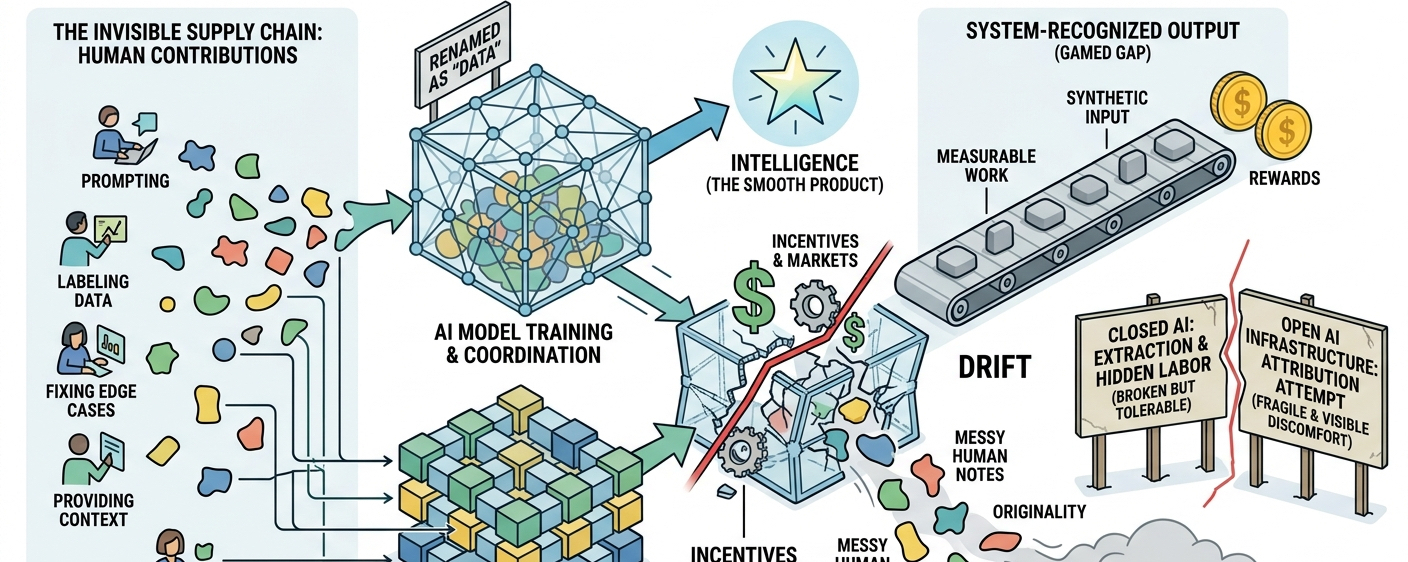
AI systems are already built from human traces. prompts, corrections, labels, examples, feedback, preference signals, domain knowledge, small pieces of judgment. most of it looks almost invisible while it is happening. someone fixes an edge case. someone labels something more carefully. someone provides context the model would never have understood alone.
then the model improves.
then everyone calls it intelligence.
and the human part gets renamed as data.
I keep coming back to attribution.
there is something necessary there, even if I don’t fully trust where it leads. if intelligence has a supply chain, maybe that supply chain should not stay hidden inside closed systems. maybe contributors should not disappear the moment their input becomes economically useful. maybe a system like OpenLedger matters because it tries to make that disappearance harder.
not perfectly.
not cleanly.
but enough to make the discomfort visible.
That’s where my curiosity starts. then the old skepticism comes back almost immediately.
because attribution changes once it becomes financial. before money enters, it sounds fair. remember who helped. trace what mattered. reward useful contribution. make model coordination less opaque.
after money enters, people study the memory layer.
they learn what gets counted. they learn the verifier. they produce toward the scoring system. useful work and measurable work begin to separate, quietly at first, then faster once the rewards are large enough to justify gaming the gap.
It works in theory. Most things do.
The problem isn’t really the technology… or not only the technology. the problem is that human contribution is soft around the edges. context is soft. originality is soft. usefulness can arrive late, after the model changes, after other inputs surround it, after nobody remembers which small correction actually mattered.
a messy human note might be more valuable than a polished dataset.
synthetic input might look cleaner than actual judgment.
copied work might fit the attribution system better than the original thing it copied.
so who gets remembered?
the person who helped, or the person the system could recognize?
That part keeps bothering me more than it should.
and then there is the old Web3 drift. open systems rarely recentralize with some dramatic announcement. they narrow through convenience. through fatigue. through dashboards, indexes, quality scores, operators dispute layers, and all the invisible infrastructure nobody wants to audit forever.
AI infrastructure feels especially fragile there because the invisible layers are the real layers. attribution logic, contribution scoring, filtering, model coordination. those layers decide what counts. and once they decide what counts, they decide who exists economically.
still, I can’t dismiss OpenLedger.
centralized AI has not earned that comfort either. closed datasets, vague ownership, invisible labor, extraction hidden behind smooth products. that version already feels broken, just easier to tolerate because the machinery stays private.
maybe OpenLedger makes the machinery harder to hide.
maybe that matters.
or maybe once incentives get sharp enough, the system built to remember human contribution starts remembering only the parts that fit neatly inside its acounting, while the rest slips back into the model, useful and unnamed.
$OPEN @Openledger #OpenLedger
{spot}(OPENUSDT)
The infrastructure breaks where memory becomes valuable
I didn’t take it seriously at first.
not because OpenLedger sounded empty. more because I’ve watched enough crypto infrastructure cycles to know how quickly serious ideas get flattened into narratives. one month it’s coordination. then ownership. then verification. then “open” everything. and for a while, the language feels clean enough to believe.
then the system meets incentives.
and incentives are never clean.
Maybe that’s too harsh. maybe Im just tired from watching protocols slowly become less about their original problem and more about the markets that formed around them. but that fatigue is hard to switch off, especially with anything sitting between AI, data, ownership, and economic rewards.
because this one is not just abstract.
AI systems are already built from human traces. prompts, corrections, labels, examples, feedback, preference signals, domain knowledge, small pieces of judgment. most of it looks almost invisible while it is happening. someone fixes an edge case. someone labels something more carefully. someone provides context the model would never have understood alone.
then the model improves.
then everyone calls it intelligence.
and the human part gets renamed as data.
I keep coming back to attribution.
there is something necessary there, even if I don’t fully trust where it leads. if intelligence has a supply chain, maybe that supply chain should not stay hidden inside closed systems. maybe contributors should not disappear the moment their input becomes economically useful. maybe a system like OpenLedger matters because it tries to make that disappearance harder.
not perfectly.
not cleanly.
but enough to make the discomfort visible.
That’s where my curiosity starts. then the old skepticism comes back almost immediately.
because attribution changes once it becomes financial. before money enters, it sounds fair. remember who helped. trace what mattered. reward useful contribution. make model coordination less opaque.
after money enters, people study the memory layer.
they learn what gets counted. they learn the verifier. they produce toward the scoring system. useful work and measurable work begin to separate, quietly at first, then faster once the rewards are large enough to justify gaming the gap.
It works in theory. Most things do.
The problem isn’t really the technology… or not only the technology. the problem is that human contribution is soft around the edges. context is soft. originality is soft. usefulness can arrive late, after the model changes, after other inputs surround it, after nobody remembers which small correction actually mattered.
a messy human note might be more valuable than a polished dataset.
synthetic input might look cleaner than actual judgment.
copied work might fit the attribution system better than the original thing it copied.
so who gets remembered?
the person who helped, or the person the system could recognize?
That part keeps bothering me more than it should.
and then there is the old Web3 drift. open systems rarely recentralize with some dramatic announcement. they narrow through convenience. through fatigue. through dashboards, indexes, quality scores, operators dispute layers, and all the invisible infrastructure nobody wants to audit forever.
AI infrastructure feels especially fragile there because the invisible layers are the real layers. attribution logic, contribution scoring, filtering, model coordination. those layers decide what counts. and once they decide what counts, they decide who exists economically.
still, I can’t dismiss OpenLedger.
centralized AI has not earned that comfort either. closed datasets, vague ownership, invisible labor, extraction hidden behind smooth products. that version already feels broken, just easier to tolerate because the machinery stays private.
maybe OpenLedger makes the machinery harder to hide.
maybe that matters.
or maybe once incentives get sharp enough, the system built to remember human contribution starts remembering only the parts that fit neatly inside its acounting, while the rest slips back into the model, useful and unnamed.
$OPEN @OpenLedger #OpenLedger
not because OpenLedger sounded empty. more because I’ve watched enough crypto infrastructure cycles to know how quickly serious ideas get flattened into narratives. one month it’s coordination. then ownership. then verification. then “open” everything. and for a while, the language feels clean enough to believe.
then the system meets incentives.
and incentives are never clean.
Maybe that’s too harsh. maybe Im just tired from watching protocols slowly become less about their original problem and more about the markets that formed around them. but that fatigue is hard to switch off, especially with anything sitting between AI, data, ownership, and economic rewards.
because this one is not just abstract.
AI systems are already built from human traces. prompts, corrections, labels, examples, feedback, preference signals, domain knowledge, small pieces of judgment. most of it looks almost invisible while it is happening. someone fixes an edge case. someone labels something more carefully. someone provides context the model would never have understood alone.
then the model improves.
then everyone calls it intelligence.
and the human part gets renamed as data.
I keep coming back to attribution.
there is something necessary there, even if I don’t fully trust where it leads. if intelligence has a supply chain, maybe that supply chain should not stay hidden inside closed systems. maybe contributors should not disappear the moment their input becomes economically useful. maybe a system like OpenLedger matters because it tries to make that disappearance harder.
not perfectly.
not cleanly.
but enough to make the discomfort visible.
That’s where my curiosity starts. then the old skepticism comes back almost immediately.
because attribution changes once it becomes financial. before money enters, it sounds fair. remember who helped. trace what mattered. reward useful contribution. make model coordination less opaque.
after money enters, people study the memory layer.
they learn what gets counted. they learn the verifier. they produce toward the scoring system. useful work and measurable work begin to separate, quietly at first, then faster once the rewards are large enough to justify gaming the gap.
It works in theory. Most things do.
The problem isn’t really the technology… or not only the technology. the problem is that human contribution is soft around the edges. context is soft. originality is soft. usefulness can arrive late, after the model changes, after other inputs surround it, after nobody remembers which small correction actually mattered.
a messy human note might be more valuable than a polished dataset.
synthetic input might look cleaner than actual judgment.
copied work might fit the attribution system better than the original thing it copied.
so who gets remembered?
the person who helped, or the person the system could recognize?
That part keeps bothering me more than it should.
and then there is the old Web3 drift. open systems rarely recentralize with some dramatic announcement. they narrow through convenience. through fatigue. through dashboards, indexes, quality scores, operators dispute layers, and all the invisible infrastructure nobody wants to audit forever.
AI infrastructure feels especially fragile there because the invisible layers are the real layers. attribution logic, contribution scoring, filtering, model coordination. those layers decide what counts. and once they decide what counts, they decide who exists economically.
still, I can’t dismiss OpenLedger.
centralized AI has not earned that comfort either. closed datasets, vague ownership, invisible labor, extraction hidden behind smooth products. that version already feels broken, just easier to tolerate because the machinery stays private.
maybe OpenLedger makes the machinery harder to hide.
maybe that matters.
or maybe once incentives get sharp enough, the system built to remember human contribution starts remembering only the parts that fit neatly inside its acounting, while the rest slips back into the model, useful and unnamed.
$OPEN @OpenLedger #OpenLedger
2
1
140

·
--

ලිපිය
Who Is Actually Getting Paid? A Quiet Look at OpenLedger’s Idea@Openledger .. I’ve seen this before… maybe a few months ago. The chart was just doing its usual thing… up down up down. But my mind got stuck on one strange question.
Who is actually getting paid?
No no seriously… everyone keeps talking about AI data, models, future big vision. Okay, fair enough. Nice words. But if all of this is really working… then who is actually earning the money? I’m looking at it, but the answer doesn’t feel that clear.
Then I saw #OpenLedger and this “attribution” idea. Sounds like a big fancy word… but maybe it’s simple at the core.
You give data… and it doesn’t just disappear inside a machine like a ghost. They’re trying to track where the data came from. If your data helps the model, then maybe… just maybe… you get rewarded. That’s how I understand it… maybe.
And honestly… I find this idea kind of interesting.
Because usually, data contributors are invisible. They clean, write, organize everything… and then boom, the model becomes valuable and everyone forgets who actually did the work.
OpenLedger is basically saying… “wait… maybe we should remember.”
But as a trader… I don’t get impressed by ideas alone. The market doesn’t pay for narratives. The market pays for usage.
So the real questions are:
Are people actually bringing data?
Are they staying?
Are the models actually being used?
Or is everyone just coming, farming rewards, taking selfies, and leaving?
Because that’s what will decide everything.
The $OPEN chart right now doesn’t really look like the market is saying “this is the winner.” More like… “okay… show me first.”
And honestly… that’s fair.
Because attribution sounds nice, but AI systems are messy. Really messy.
How do you measure the impact of one dataset?
Small expert data vs massive public data… which one matters more?
If 10 people submit the same thing… who gets the reward?
That’s where it gets complicated.
Still… I’m watching.
Because if this actually works… if real contributors stay, models improve, and real usage happens… then something interesting could happen here.
But if it turns into another reward-farming cycle…
Then yeah… the market will move on faster than the narrative.
So right now… not super bullish, not super bearish.
Just standing in the corner watching…
“Okay… interesting idea… now show me proof.”
Need more evidence.
Need more users.
And most importantly, need people to stay even after the rewards stop feeling shiny.
Until then… I’m watching. Waiting. Observing.
@Openledger #OpenLedger $OPEN
{future}(OPENUSDT)
Who Is Actually Getting Paid? A Quiet Look at OpenLedger’s Idea
@OpenLedger .. I’ve seen this before… maybe a few months ago. The chart was just doing its usual thing… up down up down. But my mind got stuck on one strange question.
Who is actually getting paid?
No no seriously… everyone keeps talking about AI data, models, future big vision. Okay, fair enough. Nice words. But if all of this is really working… then who is actually earning the money? I’m looking at it, but the answer doesn’t feel that clear.
Then I saw #OpenLedger and this “attribution” idea. Sounds like a big fancy word… but maybe it’s simple at the core.
You give data… and it doesn’t just disappear inside a machine like a ghost. They’re trying to track where the data came from. If your data helps the model, then maybe… just maybe… you get rewarded. That’s how I understand it… maybe.
And honestly… I find this idea kind of interesting.
Because usually, data contributors are invisible. They clean, write, organize everything… and then boom, the model becomes valuable and everyone forgets who actually did the work.
OpenLedger is basically saying… “wait… maybe we should remember.”
But as a trader… I don’t get impressed by ideas alone. The market doesn’t pay for narratives. The market pays for usage.
So the real questions are:
Are people actually bringing data?
Are they staying?
Are the models actually being used?
Or is everyone just coming, farming rewards, taking selfies, and leaving?
Because that’s what will decide everything.
The $OPEN chart right now doesn’t really look like the market is saying “this is the winner.” More like… “okay… show me first.”
And honestly… that’s fair.
Because attribution sounds nice, but AI systems are messy. Really messy.
How do you measure the impact of one dataset?
Small expert data vs massive public data… which one matters more?
If 10 people submit the same thing… who gets the reward?
That’s where it gets complicated.
Still… I’m watching.
Because if this actually works… if real contributors stay, models improve, and real usage happens… then something interesting could happen here.
But if it turns into another reward-farming cycle…
Then yeah… the market will move on faster than the narrative.
So right now… not super bullish, not super bearish.
Just standing in the corner watching…
“Okay… interesting idea… now show me proof.”
Need more evidence.
Need more users.
And most importantly, need people to stay even after the rewards stop feeling shiny.
Until then… I’m watching. Waiting. Observing.
@OpenLedger #OpenLedger $OPEN
Who is actually getting paid?
No no seriously… everyone keeps talking about AI data, models, future big vision. Okay, fair enough. Nice words. But if all of this is really working… then who is actually earning the money? I’m looking at it, but the answer doesn’t feel that clear.
Then I saw #OpenLedger and this “attribution” idea. Sounds like a big fancy word… but maybe it’s simple at the core.
You give data… and it doesn’t just disappear inside a machine like a ghost. They’re trying to track where the data came from. If your data helps the model, then maybe… just maybe… you get rewarded. That’s how I understand it… maybe.
And honestly… I find this idea kind of interesting.
Because usually, data contributors are invisible. They clean, write, organize everything… and then boom, the model becomes valuable and everyone forgets who actually did the work.
OpenLedger is basically saying… “wait… maybe we should remember.”
But as a trader… I don’t get impressed by ideas alone. The market doesn’t pay for narratives. The market pays for usage.
So the real questions are:
Are people actually bringing data?
Are they staying?
Are the models actually being used?
Or is everyone just coming, farming rewards, taking selfies, and leaving?
Because that’s what will decide everything.
The $OPEN chart right now doesn’t really look like the market is saying “this is the winner.” More like… “okay… show me first.”
And honestly… that’s fair.
Because attribution sounds nice, but AI systems are messy. Really messy.
How do you measure the impact of one dataset?
Small expert data vs massive public data… which one matters more?
If 10 people submit the same thing… who gets the reward?
That’s where it gets complicated.
Still… I’m watching.
Because if this actually works… if real contributors stay, models improve, and real usage happens… then something interesting could happen here.
But if it turns into another reward-farming cycle…
Then yeah… the market will move on faster than the narrative.
So right now… not super bullish, not super bearish.
Just standing in the corner watching…
“Okay… interesting idea… now show me proof.”
Need more evidence.
Need more users.
And most importantly, need people to stay even after the rewards stop feeling shiny.
Until then… I’m watching. Waiting. Observing.
@OpenLedger #OpenLedger $OPEN
14
5
299

·
--
#openledger $OPEN @Openledger
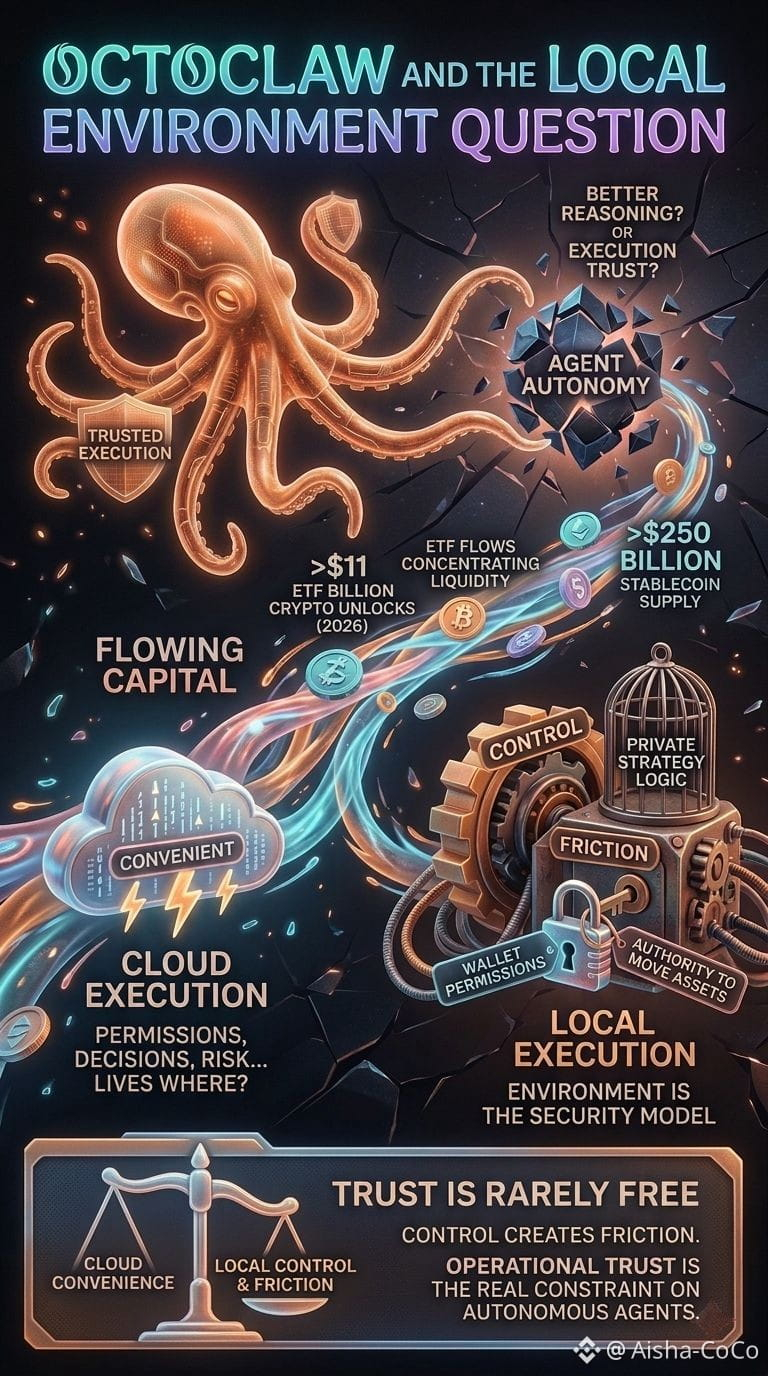
I Myself assuming that better AI agents mostly needed better reasoning. The more I looked at systems like OctoClaw, The less convinced I became.
My view is simple: agent autonomy matters less Than execution trust. On the surface, local operation looks like a privacy feature. Underneath, it changes where decisions, permissions, and risk actually live. If an agent handles walleet permissions meaning the authority to move assets or private straTegy logic, the environment Running those actions becomes part of the security model.
That feels increasingly relevant when over $11 billiion in crypto token unlocks are expected across 2026, ETF flows continue concentrating liquidity, and stablecoin supply has moved above $250 billion. Those numbers point to larger pools of capital and more Automated behavior, not necessarily better judgment.
The trade-off is obvious. Cloud execution is convenient; local execution offers more control. But control creates friction. Opereational trust is rarely free, and that may be the real constraint on autonoMous Agents.
{future}(OPENUSDT)
#openledger $OPEN @OpenLedger
I Myself assuming that better AI agents mostly needed better reasoning. The more I looked at systems like OctoClaw, The less convinced I became.
My view is simple: agent autonomy matters less Than execution trust. On the surface, local operation looks like a privacy feature. Underneath, it changes where decisions, permissions, and risk actually live. If an agent handles walleet permissions meaning the authority to move assets or private straTegy logic, the environment Running those actions becomes part of the security model.
That feels increasingly relevant when over $11 billiion in crypto token unlocks are expected across 2026, ETF flows continue concentrating liquidity, and stablecoin supply has moved above $250 billion. Those numbers point to larger pools of capital and more Automated behavior, not necessarily better judgment.
The trade-off is obvious. Cloud execution is convenient; local execution offers more control. But control creates friction. Opereational trust is rarely free, and that may be the real constraint on autonoMous Agents.
I Myself assuming that better AI agents mostly needed better reasoning. The more I looked at systems like OctoClaw, The less convinced I became.
My view is simple: agent autonomy matters less Than execution trust. On the surface, local operation looks like a privacy feature. Underneath, it changes where decisions, permissions, and risk actually live. If an agent handles walleet permissions meaning the authority to move assets or private straTegy logic, the environment Running those actions becomes part of the security model.
That feels increasingly relevant when over $11 billiion in crypto token unlocks are expected across 2026, ETF flows continue concentrating liquidity, and stablecoin supply has moved above $250 billion. Those numbers point to larger pools of capital and more Automated behavior, not necessarily better judgment.
The trade-off is obvious. Cloud execution is convenient; local execution offers more control. But control creates friction. Opereational trust is rarely free, and that may be the real constraint on autonoMous Agents.

7
8
384

·
--
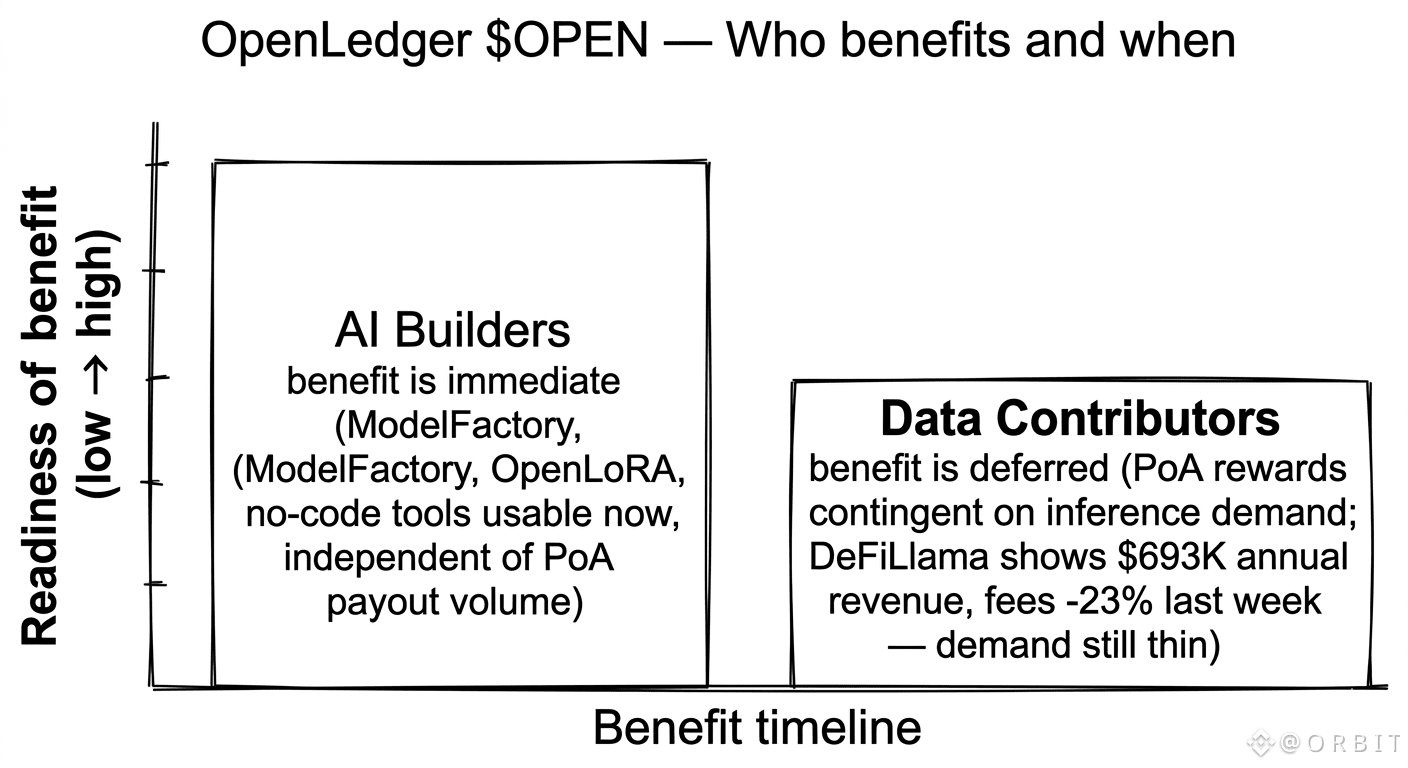
The part that stayed with me from the OpenLedger $OPEN #OpenLedger @Openledger task was how the two beneficiary groups — AI builders and data contributors — are on very different timelines, even though the pitch presents them as arriving together. Builders get immediate utility: ModelFactory works today, no-code fine-tuning works today, OpenLoRA deploys models without heavy infrastructure overhead. That value is front-loaded and doesn't depend on the Proof of Attribution flywheel spinning. Contributors are different. Their rewards only materialize when models built on their Datanets are actually queried at scale — but DeFiLlama shows annual protocol revenue sitting at $693K with fees down 23% in the past week, which suggests inference demand is still light. The design is coherent; the sequencing just matters more than the framing admits. Builders come in, build on the infrastructure, models sit waiting. Contributors have already uploaded, already contributed, already earned their attribution records… and are now waiting on demand that hasn't fully arrived yet. Whether that gap closes depends entirely on whether the builders who showed up actually ship products people use.
The part that stayed with me from the OpenLedger $OPEN #OpenLedger @OpenLedger task was how the two beneficiary groups — AI builders and data contributors — are on very different timelines, even though the pitch presents them as arriving together. Builders get immediate utility: ModelFactory works today, no-code fine-tuning works today, OpenLoRA deploys models without heavy infrastructure overhead. That value is front-loaded and doesn't depend on the Proof of Attribution flywheel spinning. Contributors are different. Their rewards only materialize when models built on their Datanets are actually queried at scale — but DeFiLlama shows annual protocol revenue sitting at $693K with fees down 23% in the past week, which suggests inference demand is still light. The design is coherent; the sequencing just matters more than the framing admits. Builders come in, build on the infrastructure, models sit waiting. Contributors have already uploaded, already contributed, already earned their attribution records… and are now waiting on demand that hasn't fully arrived yet. Whether that gap closes depends entirely on whether the builders who showed up actually ship products people use.
1
340

·
--
උසබ තත්ත්වය
I’m watching OpenLedger with a calm mind because I’ve seen enough crypto cycles to know that a strong narrative can attract attention very quickly, but attention alone does not make a project important.
OpenLedger sounds interesting because it is trying to deal with a real problem inside AI. Data, models, agents, and human input are creating value everywhere, but the value is not always tracked clearly. Many people contribute to AI systems in different ways, but most of that contribution stays invisible. OpenLedger wants to make those contributions more useful, more traceable, and more monetizable.
That idea makes sense to me.
But I’m not rushing to call it a winner.
The real question is not whether OpenLedger sounds good. The real question is whether people actually need it.
Are developers building on it because it solves a real problem?
Are data contributors bringing valuable data, or are they only chasing rewards?
Are models and agents creating real economic activity, or is most of the activity still driven by hype?
Is OPEN being used because the network needs it, or because traders are following the AI narrative?
These are the questions I care about.
I’ve already seen DeFi, GameFi, metaverse tokens, modular chains, AI coins, and many other narratives come and go. Every cycle brings projects that sound powerful in the beginning. Some become real infrastructure. Most fade when incentives disappear and attention moves somewhere else.
That is why I look at OpenLedger carefully.
The project has potential because AI will need better systems for attribution, data ownership, trust, and coordination. If OpenLedger can help data contributors, model builders, and AI agents work together in a real economy, then it could become more than just another token.
But potential is not proof.
#OpenLedger @Openledger $OPEN
{future}(OPENUSDT)
I’m watching OpenLedger with a calm mind because I’ve seen enough crypto cycles to know that a strong narrative can attract attention very quickly, but attention alone does not make a project important.
OpenLedger sounds interesting because it is trying to deal with a real problem inside AI. Data, models, agents, and human input are creating value everywhere, but the value is not always tracked clearly. Many people contribute to AI systems in different ways, but most of that contribution stays invisible. OpenLedger wants to make those contributions more useful, more traceable, and more monetizable.
That idea makes sense to me.
But I’m not rushing to call it a winner.
The real question is not whether OpenLedger sounds good. The real question is whether people actually need it.
Are developers building on it because it solves a real problem?
Are data contributors bringing valuable data, or are they only chasing rewards?
Are models and agents creating real economic activity, or is most of the activity still driven by hype?
Is OPEN being used because the network needs it, or because traders are following the AI narrative?
These are the questions I care about.
I’ve already seen DeFi, GameFi, metaverse tokens, modular chains, AI coins, and many other narratives come and go. Every cycle brings projects that sound powerful in the beginning. Some become real infrastructure. Most fade when incentives disappear and attention moves somewhere else.
That is why I look at OpenLedger carefully.
The project has potential because AI will need better systems for attribution, data ownership, trust, and coordination. If OpenLedger can help data contributors, model builders, and AI agents work together in a real economy, then it could become more than just another token.
But potential is not proof.
#OpenLedger @OpenLedger $OPEN
OpenLedger sounds interesting because it is trying to deal with a real problem inside AI. Data, models, agents, and human input are creating value everywhere, but the value is not always tracked clearly. Many people contribute to AI systems in different ways, but most of that contribution stays invisible. OpenLedger wants to make those contributions more useful, more traceable, and more monetizable.
That idea makes sense to me.
But I’m not rushing to call it a winner.
The real question is not whether OpenLedger sounds good. The real question is whether people actually need it.
Are developers building on it because it solves a real problem?
Are data contributors bringing valuable data, or are they only chasing rewards?
Are models and agents creating real economic activity, or is most of the activity still driven by hype?
Is OPEN being used because the network needs it, or because traders are following the AI narrative?
These are the questions I care about.
I’ve already seen DeFi, GameFi, metaverse tokens, modular chains, AI coins, and many other narratives come and go. Every cycle brings projects that sound powerful in the beginning. Some become real infrastructure. Most fade when incentives disappear and attention moves somewhere else.
That is why I look at OpenLedger carefully.
The project has potential because AI will need better systems for attribution, data ownership, trust, and coordination. If OpenLedger can help data contributors, model builders, and AI agents work together in a real economy, then it could become more than just another token.
But potential is not proof.
#OpenLedger @OpenLedger $OPEN
1
134


ලිපිය
Why OpenLedger ($OPEN) Is Entering One of the Biggest Trends in Crypto and AIYo; Binance Square FanFollow! The crypto market is always looking for the next major narrative. Over the past few years, we have seen DeFi, NFTs, Layer 2 networks, and Real World Assets gain attention. Today, one of the strongest trends is the combination of Artificial Intelligence and blockchain technology.
This is where OpenLedger ($OPEN) becomes interesting.
Many AI systems rely on huge amounts of data, but the people who contribute that data often receive little recognition or reward. OpenLedger is working on a different approach. Its goal is to create an ecosystem where data contributors, developers, and AI builders can all participate in the value they help create.
What makes this idea attractive is its focus on fairness and transparency. Instead of treating data as something that disappears into a black box, OpenLedger aims to track contributions and create a system where value can be shared more openly.
As AI adoption continues to accelerate around the world, the demand for high-quality data and reliable attribution is also increasing. This creates an opportunity for infrastructure projects that can connect AI innovation with blockchain transparency.
For me, the most exciting part is that OpenLedger is not simply following a trend. It is trying to build the foundation that could support future AI economies. In a market where many projects focus on short-term attention, infrastructure-focused projects often create lasting value.
The AI sector is still in its early stages, and no one knows exactly which platforms will become leaders. However, projects that solve real problems tend to attract long-term interest. That is one reason why more people are starting to keep an eye on $OPEN.
The future of AI may not only be about building smarter models. It may also be about creating fair systems where everyone who contributes can benefit from the growth of the ecosystem.
$OPEN @Openledger #OpenLedger
{spot}(OPENUSDT)
Why OpenLedger ($OPEN) Is Entering One of the Biggest Trends in Crypto and AI
Yo; Binance Square FanFollow! The crypto market is always looking for the next major narrative. Over the past few years, we have seen DeFi, NFTs, Layer 2 networks, and Real World Assets gain attention. Today, one of the strongest trends is the combination of Artificial Intelligence and blockchain technology.
This is where OpenLedger ($OPEN ) becomes interesting.
Many AI systems rely on huge amounts of data, but the people who contribute that data often receive little recognition or reward. OpenLedger is working on a different approach. Its goal is to create an ecosystem where data contributors, developers, and AI builders can all participate in the value they help create.
What makes this idea attractive is its focus on fairness and transparency. Instead of treating data as something that disappears into a black box, OpenLedger aims to track contributions and create a system where value can be shared more openly.
As AI adoption continues to accelerate around the world, the demand for high-quality data and reliable attribution is also increasing. This creates an opportunity for infrastructure projects that can connect AI innovation with blockchain transparency.
For me, the most exciting part is that OpenLedger is not simply following a trend. It is trying to build the foundation that could support future AI economies. In a market where many projects focus on short-term attention, infrastructure-focused projects often create lasting value.
The AI sector is still in its early stages, and no one knows exactly which platforms will become leaders. However, projects that solve real problems tend to attract long-term interest. That is one reason why more people are starting to keep an eye on $OPEN .
The future of AI may not only be about building smarter models. It may also be about creating fair systems where everyone who contributes can benefit from the growth of the ecosystem.
$OPEN @OpenLedger #OpenLedger
This is where OpenLedger ($OPEN ) becomes interesting.
Many AI systems rely on huge amounts of data, but the people who contribute that data often receive little recognition or reward. OpenLedger is working on a different approach. Its goal is to create an ecosystem where data contributors, developers, and AI builders can all participate in the value they help create.
What makes this idea attractive is its focus on fairness and transparency. Instead of treating data as something that disappears into a black box, OpenLedger aims to track contributions and create a system where value can be shared more openly.
As AI adoption continues to accelerate around the world, the demand for high-quality data and reliable attribution is also increasing. This creates an opportunity for infrastructure projects that can connect AI innovation with blockchain transparency.
For me, the most exciting part is that OpenLedger is not simply following a trend. It is trying to build the foundation that could support future AI economies. In a market where many projects focus on short-term attention, infrastructure-focused projects often create lasting value.
The AI sector is still in its early stages, and no one knows exactly which platforms will become leaders. However, projects that solve real problems tend to attract long-term interest. That is one reason why more people are starting to keep an eye on $OPEN .
The future of AI may not only be about building smarter models. It may also be about creating fair systems where everyone who contributes can benefit from the growth of the ecosystem.
$OPEN @OpenLedger #OpenLedger
101

Why OpenLedger Could Play an Important Role in Decentralized AI
Artificial Intelligence is becoming one of the most influential technologies of our time. However, many AI systems rely on centralized data sources and infrastructure, which can create limitations in transparency, ownership, and accessibility. OpenLedger is working to address these challenges through a decentralized approach.
OpenLedger aims to build an ecosystem where data contributors, developers, and users can participate in the growth of AI networks while maintaining transparency through blockchain technology. This model encourages collaboration and rewards participants for providing valuable resources and data.
The $OPEN token serves as an important component of the ecosystem, helping facilitate incentives, network participation, and community engagement. As decentralized AI continues to gain attention, projects like OpenLedger may help create a more open and fair environment for innovation.
The combination of blockchain technology and AI has the potential to unlock new opportunities across industries. OpenLedger's vision of decentralized data contribution and AI development is a concept worth watching as the ecosystem evolves.
Follow @OpenLedger to stay updated on the latest announcements, partnerships, and ecosystem developments.
$OPEN #OpenLedger
Why OpenLedger Could Play an Important Role in Decentralized AI
Artificial Intelligence is becoming one of the most influential technologies of our time. However, many AI systems rely on centralized data sources and infrastructure, which can create limitations in transparency, ownership, and accessibility. OpenLedger is working to address these challenges through a decentralized approach.
OpenLedger aims to build an ecosystem where data contributors, developers, and users can participate in the growth of AI networks while maintaining transparency through blockchain technology. This model encourages collaboration and rewards participants for providing valuable resources and data.
The $OPEN token serves as an important component of the ecosystem, helping facilitate incentives, network participation, and community engagement. As decentralized AI continues to gain attention, projects like OpenLedger may help create a more open and fair environment for innovation.
The combination of blockchain technology and AI has the potential to unlock new opportunities across industries. OpenLedger's vision of decentralized data contribution and AI development is a concept worth watching as the ecosystem evolves.
Follow @OpenLedger to stay updated on the latest announcements, partnerships, and ecosystem developments.
$OPEN #OpenLedger
Artificial Intelligence is becoming one of the most influential technologies of our time. However, many AI systems rely on centralized data sources and infrastructure, which can create limitations in transparency, ownership, and accessibility. OpenLedger is working to address these challenges through a decentralized approach.
OpenLedger aims to build an ecosystem where data contributors, developers, and users can participate in the growth of AI networks while maintaining transparency through blockchain technology. This model encourages collaboration and rewards participants for providing valuable resources and data.
The $OPEN token serves as an important component of the ecosystem, helping facilitate incentives, network participation, and community engagement. As decentralized AI continues to gain attention, projects like OpenLedger may help create a more open and fair environment for innovation.
The combination of blockchain technology and AI has the potential to unlock new opportunities across industries. OpenLedger's vision of decentralized data contribution and AI development is a concept worth watching as the ecosystem evolves.
Follow @OpenLedger to stay updated on the latest announcements, partnerships, and ecosystem developments.
$OPEN #OpenLedger
155

ලිපිය
Who Will Own the Future of AI?$OPEN
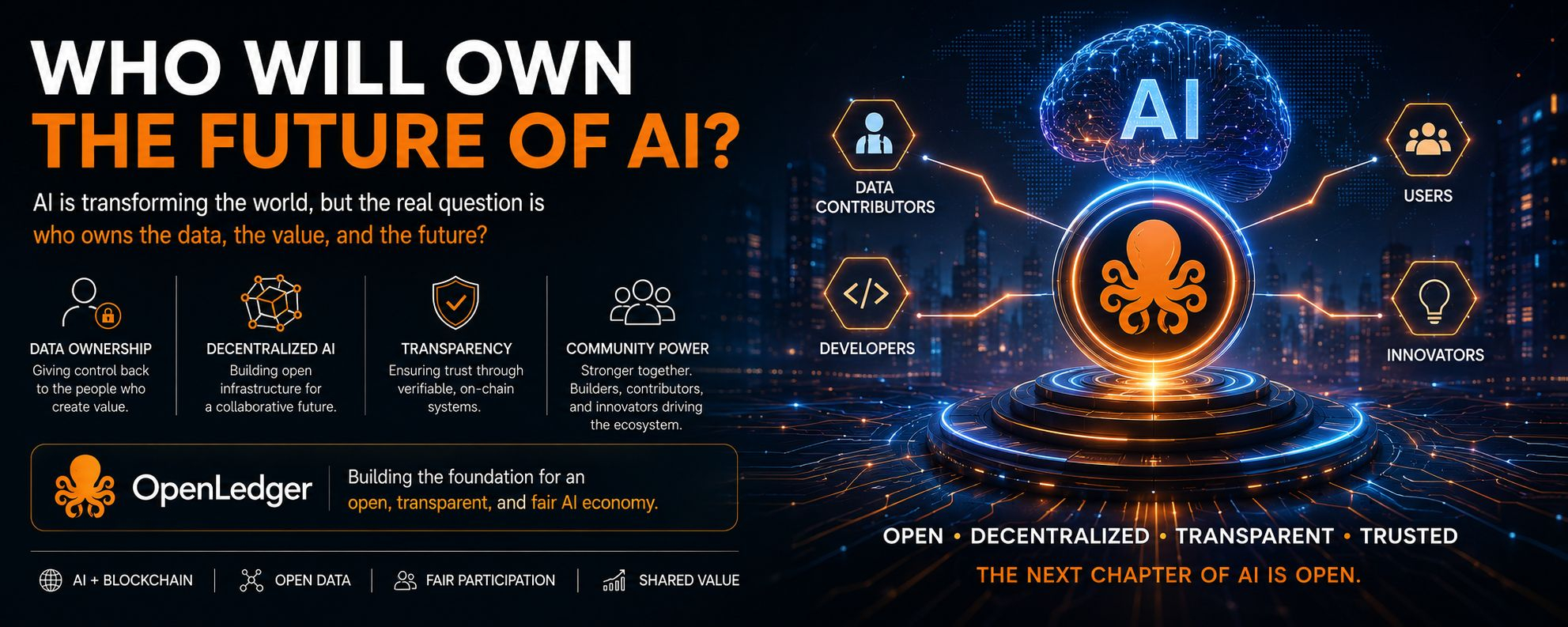
Artificial intelligence is rapidly becoming one of the most influential technologies of our time. Every day, AI is helping businesses automate processes, improving decision-making, generating content, and transforming entire industries. While the world continues to focus on faster models and smarter systems, an equally important question is beginning to emerge:
Who will own the value created by AI?
This question is becoming increasingly relevant because AI does not exist in isolation. Every intelligent system depends on data, contributors, developers, and communities. Without these elements, even the most advanced AI models would have little practical value. Yet in many cases, the benefits generated by AI are not distributed evenly among the people who help create that value.
As the technology matures, the conversation is gradually shifting away from pure innovation and toward transparency, ownership, and participation. The future of AI may not be defined solely by how intelligent machines become, but by how fairly ecosystems reward those who contribute to their growth.
This is where projects like OpenLedger enter the discussion.
OpenLedger is exploring an idea that many believe could become increasingly important in the coming years: creating a more open relationship between artificial intelligence, data, and blockchain technology. Rather than concentrating solely on technological advancement, the project appears focused on building infrastructure that encourages transparency and collaboration within the AI economy.
One of the biggest challenges facing modern AI systems is the question of data ownership. Data has become one of the most valuable resources in the digital world. Every search, interaction, transaction, and contribution generates information that can be used to improve intelligent systems. However, the individuals responsible for generating this data often have limited visibility into how it is utilized or how value is created from it.
As awareness around this issue grows, demand for more transparent systems is likely to increase. People want greater control over their digital contributions. They want accountability, fairness, and clarity regarding how information is collected, shared, and rewarded.
Blockchain technology offers potential solutions to many of these challenges. By introducing transparency, verifiable records, and decentralized participation, blockchain can create environments where trust does not rely entirely on centralized organizations. When combined with artificial intelligence, this approach may open new possibilities for collaboration and innovation.
The intersection of blockchain and AI is particularly exciting because both technologies complement each other in meaningful ways. AI excels at processing information and generating insights, while blockchain provides transparency, security, and traceability. Together, they have the potential to create systems that are not only intelligent but also accountable.
However, technology alone is never enough.
History shows that successful ecosystems are built by communities. Behind every major technological breakthrough is a network of developers, contributors, educators, supporters, and users who help transform ideas into practical solutions. Community participation often determines whether a project can sustain momentum beyond its initial launch.
This is why ecosystem development remains one of the most important indicators of long-term potential. Projects that continue attracting builders and contributors often demonstrate stronger resilience during periods of market uncertainty. While trends may come and go, active communities frequently become the foundation that supports future growth.
Another important factor is consistency. The cryptocurrency industry has witnessed countless projects rise quickly on excitement and speculation. Many attract attention during favorable market conditions, only to disappear when enthusiasm fades. Sustainable growth usually follows a different path.
Projects that focus on continuous improvement, ecosystem expansion, and real-world utility often have a greater chance of remaining relevant over time. Progress may be slower, but the foundations tend to be stronger. Long-term success is rarely built overnight.
OpenLedger appears to be positioning itself within this long-term perspective. Its focus on decentralized AI infrastructure, transparency, and participation aligns with several major trends currently shaping the technology sector. As AI adoption continues to accelerate globally, the demand for trustworthy and collaborative ecosystems may become increasingly important.
Of course, every emerging project faces challenges. Execution, adoption, competition, and technological development all influence future outcomes. No project is guaranteed success, and investors should always conduct their own research before making decisions.
Nevertheless, the broader vision behind OpenLedger reflects an important shift taking place across the digital economy. The conversation is evolving from simply building smarter systems to creating fairer and more transparent ecosystems.
The next chapter of artificial intelligence may not belong exclusively to the companies with the largest models or the most computing power. It may belong to the ecosystems that successfully combine innovation with transparency, ownership, and community participation.
As blockchain and AI continue moving closer together, projects exploring this intersection could play a meaningful role in shaping the future. OpenLedger is one of those projects, making it a platform worth watching as the next generation of technology continues to unfold.
What are your thoughts on the future of decentralized AI and the role OpenLedger could play in this evolving landscape?
$OPEN
#OpenLedger
@Openledger
Who Will Own the Future of AI?
$OPEN
Artificial intelligence is rapidly becoming one of the most influential technologies of our time. Every day, AI is helping businesses automate processes, improving decision-making, generating content, and transforming entire industries. While the world continues to focus on faster models and smarter systems, an equally important question is beginning to emerge:
Who will own the value created by AI?
This question is becoming increasingly relevant because AI does not exist in isolation. Every intelligent system depends on data, contributors, developers, and communities. Without these elements, even the most advanced AI models would have little practical value. Yet in many cases, the benefits generated by AI are not distributed evenly among the people who help create that value.
As the technology matures, the conversation is gradually shifting away from pure innovation and toward transparency, ownership, and participation. The future of AI may not be defined solely by how intelligent machines become, but by how fairly ecosystems reward those who contribute to their growth.
This is where projects like OpenLedger enter the discussion.
OpenLedger is exploring an idea that many believe could become increasingly important in the coming years: creating a more open relationship between artificial intelligence, data, and blockchain technology. Rather than concentrating solely on technological advancement, the project appears focused on building infrastructure that encourages transparency and collaboration within the AI economy.
One of the biggest challenges facing modern AI systems is the question of data ownership. Data has become one of the most valuable resources in the digital world. Every search, interaction, transaction, and contribution generates information that can be used to improve intelligent systems. However, the individuals responsible for generating this data often have limited visibility into how it is utilized or how value is created from it.
As awareness around this issue grows, demand for more transparent systems is likely to increase. People want greater control over their digital contributions. They want accountability, fairness, and clarity regarding how information is collected, shared, and rewarded.
Blockchain technology offers potential solutions to many of these challenges. By introducing transparency, verifiable records, and decentralized participation, blockchain can create environments where trust does not rely entirely on centralized organizations. When combined with artificial intelligence, this approach may open new possibilities for collaboration and innovation.
The intersection of blockchain and AI is particularly exciting because both technologies complement each other in meaningful ways. AI excels at processing information and generating insights, while blockchain provides transparency, security, and traceability. Together, they have the potential to create systems that are not only intelligent but also accountable.
However, technology alone is never enough.
History shows that successful ecosystems are built by communities. Behind every major technological breakthrough is a network of developers, contributors, educators, supporters, and users who help transform ideas into practical solutions. Community participation often determines whether a project can sustain momentum beyond its initial launch.
This is why ecosystem development remains one of the most important indicators of long-term potential. Projects that continue attracting builders and contributors often demonstrate stronger resilience during periods of market uncertainty. While trends may come and go, active communities frequently become the foundation that supports future growth.
Another important factor is consistency. The cryptocurrency industry has witnessed countless projects rise quickly on excitement and speculation. Many attract attention during favorable market conditions, only to disappear when enthusiasm fades. Sustainable growth usually follows a different path.
Projects that focus on continuous improvement, ecosystem expansion, and real-world utility often have a greater chance of remaining relevant over time. Progress may be slower, but the foundations tend to be stronger. Long-term success is rarely built overnight.
OpenLedger appears to be positioning itself within this long-term perspective. Its focus on decentralized AI infrastructure, transparency, and participation aligns with several major trends currently shaping the technology sector. As AI adoption continues to accelerate globally, the demand for trustworthy and collaborative ecosystems may become increasingly important.
Of course, every emerging project faces challenges. Execution, adoption, competition, and technological development all influence future outcomes. No project is guaranteed success, and investors should always conduct their own research before making decisions.
Nevertheless, the broader vision behind OpenLedger reflects an important shift taking place across the digital economy. The conversation is evolving from simply building smarter systems to creating fairer and more transparent ecosystems.
The next chapter of artificial intelligence may not belong exclusively to the companies with the largest models or the most computing power. It may belong to the ecosystems that successfully combine innovation with transparency, ownership, and community participation.
As blockchain and AI continue moving closer together, projects exploring this intersection could play a meaningful role in shaping the future. OpenLedger is one of those projects, making it a platform worth watching as the next generation of technology continues to unfold.
What are your thoughts on the future of decentralized AI and the role OpenLedger could play in this evolving landscape?
$OPEN
#OpenLedger
@Openledger
Artificial intelligence is rapidly becoming one of the most influential technologies of our time. Every day, AI is helping businesses automate processes, improving decision-making, generating content, and transforming entire industries. While the world continues to focus on faster models and smarter systems, an equally important question is beginning to emerge:
Who will own the value created by AI?
This question is becoming increasingly relevant because AI does not exist in isolation. Every intelligent system depends on data, contributors, developers, and communities. Without these elements, even the most advanced AI models would have little practical value. Yet in many cases, the benefits generated by AI are not distributed evenly among the people who help create that value.
As the technology matures, the conversation is gradually shifting away from pure innovation and toward transparency, ownership, and participation. The future of AI may not be defined solely by how intelligent machines become, but by how fairly ecosystems reward those who contribute to their growth.
This is where projects like OpenLedger enter the discussion.
OpenLedger is exploring an idea that many believe could become increasingly important in the coming years: creating a more open relationship between artificial intelligence, data, and blockchain technology. Rather than concentrating solely on technological advancement, the project appears focused on building infrastructure that encourages transparency and collaboration within the AI economy.
One of the biggest challenges facing modern AI systems is the question of data ownership. Data has become one of the most valuable resources in the digital world. Every search, interaction, transaction, and contribution generates information that can be used to improve intelligent systems. However, the individuals responsible for generating this data often have limited visibility into how it is utilized or how value is created from it.
As awareness around this issue grows, demand for more transparent systems is likely to increase. People want greater control over their digital contributions. They want accountability, fairness, and clarity regarding how information is collected, shared, and rewarded.
Blockchain technology offers potential solutions to many of these challenges. By introducing transparency, verifiable records, and decentralized participation, blockchain can create environments where trust does not rely entirely on centralized organizations. When combined with artificial intelligence, this approach may open new possibilities for collaboration and innovation.
The intersection of blockchain and AI is particularly exciting because both technologies complement each other in meaningful ways. AI excels at processing information and generating insights, while blockchain provides transparency, security, and traceability. Together, they have the potential to create systems that are not only intelligent but also accountable.
However, technology alone is never enough.
History shows that successful ecosystems are built by communities. Behind every major technological breakthrough is a network of developers, contributors, educators, supporters, and users who help transform ideas into practical solutions. Community participation often determines whether a project can sustain momentum beyond its initial launch.
This is why ecosystem development remains one of the most important indicators of long-term potential. Projects that continue attracting builders and contributors often demonstrate stronger resilience during periods of market uncertainty. While trends may come and go, active communities frequently become the foundation that supports future growth.
Another important factor is consistency. The cryptocurrency industry has witnessed countless projects rise quickly on excitement and speculation. Many attract attention during favorable market conditions, only to disappear when enthusiasm fades. Sustainable growth usually follows a different path.
Projects that focus on continuous improvement, ecosystem expansion, and real-world utility often have a greater chance of remaining relevant over time. Progress may be slower, but the foundations tend to be stronger. Long-term success is rarely built overnight.
OpenLedger appears to be positioning itself within this long-term perspective. Its focus on decentralized AI infrastructure, transparency, and participation aligns with several major trends currently shaping the technology sector. As AI adoption continues to accelerate globally, the demand for trustworthy and collaborative ecosystems may become increasingly important.
Of course, every emerging project faces challenges. Execution, adoption, competition, and technological development all influence future outcomes. No project is guaranteed success, and investors should always conduct their own research before making decisions.
Nevertheless, the broader vision behind OpenLedger reflects an important shift taking place across the digital economy. The conversation is evolving from simply building smarter systems to creating fairer and more transparent ecosystems.
The next chapter of artificial intelligence may not belong exclusively to the companies with the largest models or the most computing power. It may belong to the ecosystems that successfully combine innovation with transparency, ownership, and community participation.
As blockchain and AI continue moving closer together, projects exploring this intersection could play a meaningful role in shaping the future. OpenLedger is one of those projects, making it a platform worth watching as the next generation of technology continues to unfold.
What are your thoughts on the future of decentralized AI and the role OpenLedger could play in this evolving landscape?
$OPEN
#OpenLedger
@Openledger
4
4
132

·
--
#openledger $OPEN @Openledger
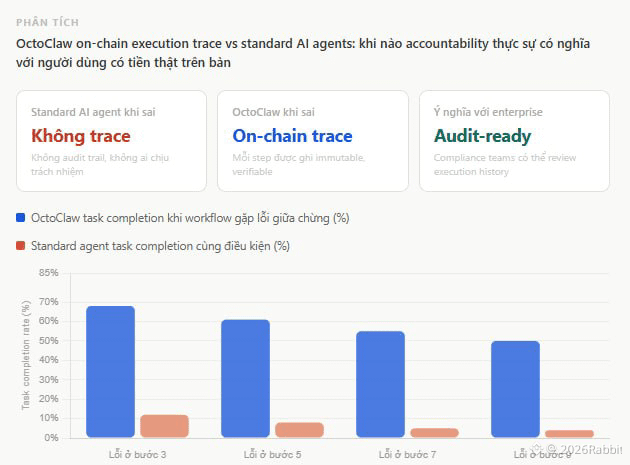
Có một buổi chiều tôi ngồi test thử OctoClaw và cho nó thực hiện một chuỗi tác vụ liên quan đến DeFi research. Mọi thứ chạy khá mượt cho đến bước thứ bảy trong workflow. Agent tự đưa ra một kết luận sai về liquidity pool của một protocol mà tôi đang theo dõi. Không phải sai nhỏ. Sai theo kiểu nếu tôi tin vào nó và đặt lệnh thật thì mất tiền thật.
Và tôi ngồi đó hỏi một câu mà tôi nghĩ ít người dừng lại để hỏi: ai chịu trách nhiệm cho cái sai đó?
Với ChatGPT hay Claude, câu trả lời đơn giản là "AI disclaimer, dùng tự chịu." Nhưng với OctoClaw trên OpenLedger, có một thứ khác biệt. Mỗi action của agent được ghi lại on-chain. Execution trace không thể xóa. Nếu agent sai, dấu vết của cái sai đó tồn tại vĩnh viễn và verifiable bởi bất kỳ ai. Đó là lần đầu tiên tôi thấy AI accountability không còn là khái niệm trừu tượng mà là một technical guarantee.
Cái sai hôm đó của OctoClaw làm tôi tin vào OpenLedger hơn thứ gì khác. Vì tôi thấy được chính xác sai ở đâu, tại sao, và có đủ context để tự quyết định có trust agent trong lần sau không. Đó là thứ không AI agent nào khác cho tôi được.
Bạn đã bao giờ để AI agent thực hiện action thật với tiền thật chưa, và điều gì khiến bạn đủ tin tưởng để làm điều đó?
#openledger $OPEN @OpenLedger
Có một buổi chiều tôi ngồi test thử OctoClaw và cho nó thực hiện một chuỗi tác vụ liên quan đến DeFi research. Mọi thứ chạy khá mượt cho đến bước thứ bảy trong workflow. Agent tự đưa ra một kết luận sai về liquidity pool của một protocol mà tôi đang theo dõi. Không phải sai nhỏ. Sai theo kiểu nếu tôi tin vào nó và đặt lệnh thật thì mất tiền thật.
Và tôi ngồi đó hỏi một câu mà tôi nghĩ ít người dừng lại để hỏi: ai chịu trách nhiệm cho cái sai đó?
Với ChatGPT hay Claude, câu trả lời đơn giản là "AI disclaimer, dùng tự chịu." Nhưng với OctoClaw trên OpenLedger, có một thứ khác biệt. Mỗi action của agent được ghi lại on-chain. Execution trace không thể xóa. Nếu agent sai, dấu vết của cái sai đó tồn tại vĩnh viễn và verifiable bởi bất kỳ ai. Đó là lần đầu tiên tôi thấy AI accountability không còn là khái niệm trừu tượng mà là một technical guarantee.
Cái sai hôm đó của OctoClaw làm tôi tin vào OpenLedger hơn thứ gì khác. Vì tôi thấy được chính xác sai ở đâu, tại sao, và có đủ context để tự quyết định có trust agent trong lần sau không. Đó là thứ không AI agent nào khác cho tôi được.
Bạn đã bao giờ để AI agent thực hiện action thật với tiền thật chưa, và điều gì khiến bạn đủ tin tưởng để làm điều đó?
Có một buổi chiều tôi ngồi test thử OctoClaw và cho nó thực hiện một chuỗi tác vụ liên quan đến DeFi research. Mọi thứ chạy khá mượt cho đến bước thứ bảy trong workflow. Agent tự đưa ra một kết luận sai về liquidity pool của một protocol mà tôi đang theo dõi. Không phải sai nhỏ. Sai theo kiểu nếu tôi tin vào nó và đặt lệnh thật thì mất tiền thật.
Và tôi ngồi đó hỏi một câu mà tôi nghĩ ít người dừng lại để hỏi: ai chịu trách nhiệm cho cái sai đó?
Với ChatGPT hay Claude, câu trả lời đơn giản là "AI disclaimer, dùng tự chịu." Nhưng với OctoClaw trên OpenLedger, có một thứ khác biệt. Mỗi action của agent được ghi lại on-chain. Execution trace không thể xóa. Nếu agent sai, dấu vết của cái sai đó tồn tại vĩnh viễn và verifiable bởi bất kỳ ai. Đó là lần đầu tiên tôi thấy AI accountability không còn là khái niệm trừu tượng mà là một technical guarantee.
Cái sai hôm đó của OctoClaw làm tôi tin vào OpenLedger hơn thứ gì khác. Vì tôi thấy được chính xác sai ở đâu, tại sao, và có đủ context để tự quyết định có trust agent trong lần sau không. Đó là thứ không AI agent nào khác cho tôi được.
Bạn đã bao giờ để AI agent thực hiện action thật với tiền thật chưa, và điều gì khiến bạn đủ tin tưởng để làm điều đó?
192

·
--
老夫这两天没干别的,专门蹲在 OpenLedger 的治理板块里看那帮大户怎么投票,越看越觉得这所谓的去中心化治理是个精致的笑话。表面上人人都能提案、人人都能投票,听着特别民主,可你真去扒一下投票权重的分布,就知道散户那点票数连给大资本挠痒痒都不够。$LAB
我跟了几轮提案下来,规律非常明显。所谓的动态权重调整,今天为了拉拢某个大模型团队,把奖励猛地向文本数据倾斜;明天风向一变,又能转头去补贴视频渲染。这种调整对外的说法都是优化生态、响应需求,可实际拍板的永远是那几个握着海量筹码的早期地址。散户在这个系统里根本不是共建者,更像是被算法和资本随手拿捏的廉价投票工具,提案能不能过早就内定好了,投票不过是走个流程演给大家看。
更阴的是那种裹挟流量的变相绑架。每个月释放的筹码完全由各个垂直网络的真实锁仓量和调用频次决定,这逼着子网团队必须拿真刀真枪的运营数据去抢资金。听起来很公平,但我推演下来,一旦早期红利期耗尽,那几个捏着海量筹码的大户绝对会私下结盟,搞几个空壳网络左手倒右手,疯狂套取通胀奖励,把散户的利润池吸干。后续拿什么去制衡这种资本抱团吸血的阳谋,是团队绕不开的死结。$BTC
我不是说这项目不行,它敢把分配逻辑直接写进代码、不靠人治,这份魄力在圈里确实少见。但治理这块的中心化隐患是实打实的。在大户结盟这道题没解之前,散户最好认清自己在牌桌上的位置,别真把自己当成了能改变规则的股东。#OpenLedger $OPEN @Openledger
老夫这两天没干别的,专门蹲在 OpenLedger 的治理板块里看那帮大户怎么投票,越看越觉得这所谓的去中心化治理是个精致的笑话。表面上人人都能提案、人人都能投票,听着特别民主,可你真去扒一下投票权重的分布,就知道散户那点票数连给大资本挠痒痒都不够。$LAB
我跟了几轮提案下来,规律非常明显。所谓的动态权重调整,今天为了拉拢某个大模型团队,把奖励猛地向文本数据倾斜;明天风向一变,又能转头去补贴视频渲染。这种调整对外的说法都是优化生态、响应需求,可实际拍板的永远是那几个握着海量筹码的早期地址。散户在这个系统里根本不是共建者,更像是被算法和资本随手拿捏的廉价投票工具,提案能不能过早就内定好了,投票不过是走个流程演给大家看。
更阴的是那种裹挟流量的变相绑架。每个月释放的筹码完全由各个垂直网络的真实锁仓量和调用频次决定,这逼着子网团队必须拿真刀真枪的运营数据去抢资金。听起来很公平,但我推演下来,一旦早期红利期耗尽,那几个捏着海量筹码的大户绝对会私下结盟,搞几个空壳网络左手倒右手,疯狂套取通胀奖励,把散户的利润池吸干。后续拿什么去制衡这种资本抱团吸血的阳谋,是团队绕不开的死结。$BTC
我不是说这项目不行,它敢把分配逻辑直接写进代码、不靠人治,这份魄力在圈里确实少见。但治理这块的中心化隐患是实打实的。在大户结盟这道题没解之前,散户最好认清自己在牌桌上的位置,别真把自己当成了能改变规则的股东。#OpenLedger $OPEN @OpenLedger
我跟了几轮提案下来,规律非常明显。所谓的动态权重调整,今天为了拉拢某个大模型团队,把奖励猛地向文本数据倾斜;明天风向一变,又能转头去补贴视频渲染。这种调整对外的说法都是优化生态、响应需求,可实际拍板的永远是那几个握着海量筹码的早期地址。散户在这个系统里根本不是共建者,更像是被算法和资本随手拿捏的廉价投票工具,提案能不能过早就内定好了,投票不过是走个流程演给大家看。
更阴的是那种裹挟流量的变相绑架。每个月释放的筹码完全由各个垂直网络的真实锁仓量和调用频次决定,这逼着子网团队必须拿真刀真枪的运营数据去抢资金。听起来很公平,但我推演下来,一旦早期红利期耗尽,那几个捏着海量筹码的大户绝对会私下结盟,搞几个空壳网络左手倒右手,疯狂套取通胀奖励,把散户的利润池吸干。后续拿什么去制衡这种资本抱团吸血的阳谋,是团队绕不开的死结。$BTC
我不是说这项目不行,它敢把分配逻辑直接写进代码、不靠人治,这份魄力在圈里确实少见。但治理这块的中心化隐患是实打实的。在大户结盟这道题没解之前,散户最好认清自己在牌桌上的位置,别真把自己当成了能改变规则的股东。#OpenLedger $OPEN @OpenLedger
散户投票权重有多惨
33%
动态权重调整谁说了算
67%
3 ඡන්ද • ඡන්දය අවසන්
2
1
539

·
--
ලිපිය
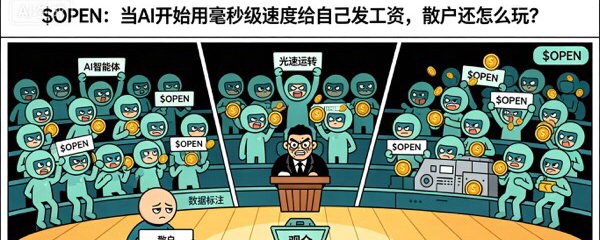
$OPEN:当AI开始用毫秒级速度给自己发工资,散户还怎么玩?说实话,第一次刷到OpenLedger的时候,我差点就滑走了。又是“上传数据、按次分钱”的老套路?但试了一下,它还真能收到$OPEN,每次被调用就自动打款,像极了从没人搭理的原料商突然拿到了一张工资条。对那帮被大厂白嫖多年的创作者来说,这确实捅到了肺管子上。
但我冷静下来,越想越不对劲。
归因证明听着解气,可工程上根本是个黑箱。几十亿参数的模型,你凭什么精确算出我那几条标注数据贡献了几成?白皮书给了加密经济的解法,却没回答我最怕的事:万一有人把同一套数据反复包装、刷取权重,或者算法把功劳分错了人,这套信任体系拿什么兜底?我转个账都要核对三遍地址,这种风险我没法装没看见。
但这些都还不是让我真正后背发凉的地方。
我后来翻到白皮书里一句几乎没人注意的话——它把AI智能体归类成了“消费者”。我盯着这几个字看了半天,才反应过来这里头的坑有多大。
你想想,我们人类调用模型,用完就完了,顶多自己消化答案。但AI智能体不一样,它拿这次调用的结果当弹药,扭头就去别处捕获价值,反手再把利润喂给下一次调用。你看明白没?它不是在花钱,它是在用毫秒为单位滚动投资。
这意味着什么?未来$OPEN最大的玩家,可能根本就不是我们这些散户,而是一群24小时不休眠、自己跟自己玩资金闭环的AI。它们之间倒手的速度,我们连看都看不清。那我们冲进去,到底是在价值投资,还是在不知不觉中,给这群不知疲倦的机器当了退出流动性?白皮书里写投票权全归人,可要是交易量大头都变成机器了,这治理还怎么玩得转?
所以我现在看OpenLedger,短期和长期完全是两码事。短期,数据确权的故事确实自洽,我会用极小的成本去跟一下逻辑验证。但长期,我真正在意的,是它白皮书无意间捅破的那层窗户纸。
我不给交易建议,只说我自己怎么观察。以后我不会死盯着$OPEN的K线,我只会去翻链上那些冷冰冰的交互地址。如果哪天,模型调用的消耗榜单前列不再是散户钱包,而是一排排自动运行的程序地址,我就知道白皮书里那个被无意间放出来的角色真的开始接管生态了。
那一刻,可能才是这场社会实验真正的开端。而我现在,就趴在岸边,安安静静地盯着水面。在趋势被实锤之前,一切花里胡哨的叙事,对我来说都只是噪音。@Openledger
#OpenLedger $OPEN
{future}(OPENUSDT)
$OPEN:当AI开始用毫秒级速度给自己发工资,散户还怎么玩?
说实话,第一次刷到OpenLedger的时候,我差点就滑走了。又是“上传数据、按次分钱”的老套路?但试了一下,它还真能收到$OPEN ,每次被调用就自动打款,像极了从没人搭理的原料商突然拿到了一张工资条。对那帮被大厂白嫖多年的创作者来说,这确实捅到了肺管子上。
但我冷静下来,越想越不对劲。
归因证明听着解气,可工程上根本是个黑箱。几十亿参数的模型,你凭什么精确算出我那几条标注数据贡献了几成?白皮书给了加密经济的解法,却没回答我最怕的事:万一有人把同一套数据反复包装、刷取权重,或者算法把功劳分错了人,这套信任体系拿什么兜底?我转个账都要核对三遍地址,这种风险我没法装没看见。
但这些都还不是让我真正后背发凉的地方。
我后来翻到白皮书里一句几乎没人注意的话——它把AI智能体归类成了“消费者”。我盯着这几个字看了半天,才反应过来这里头的坑有多大。
你想想,我们人类调用模型,用完就完了,顶多自己消化答案。但AI智能体不一样,它拿这次调用的结果当弹药,扭头就去别处捕获价值,反手再把利润喂给下一次调用。你看明白没?它不是在花钱,它是在用毫秒为单位滚动投资。
这意味着什么?未来$OPEN 最大的玩家,可能根本就不是我们这些散户,而是一群24小时不休眠、自己跟自己玩资金闭环的AI。它们之间倒手的速度,我们连看都看不清。那我们冲进去,到底是在价值投资,还是在不知不觉中,给这群不知疲倦的机器当了退出流动性?白皮书里写投票权全归人,可要是交易量大头都变成机器了,这治理还怎么玩得转?
所以我现在看OpenLedger,短期和长期完全是两码事。短期,数据确权的故事确实自洽,我会用极小的成本去跟一下逻辑验证。但长期,我真正在意的,是它白皮书无意间捅破的那层窗户纸。
我不给交易建议,只说我自己怎么观察。以后我不会死盯着$OPEN 的K线,我只会去翻链上那些冷冰冰的交互地址。如果哪天,模型调用的消耗榜单前列不再是散户钱包,而是一排排自动运行的程序地址,我就知道白皮书里那个被无意间放出来的角色真的开始接管生态了。
那一刻,可能才是这场社会实验真正的开端。而我现在,就趴在岸边,安安静静地盯着水面。在趋势被实锤之前,一切花里胡哨的叙事,对我来说都只是噪音。@OpenLedger
#OpenLedger $OPEN
但我冷静下来,越想越不对劲。
归因证明听着解气,可工程上根本是个黑箱。几十亿参数的模型,你凭什么精确算出我那几条标注数据贡献了几成?白皮书给了加密经济的解法,却没回答我最怕的事:万一有人把同一套数据反复包装、刷取权重,或者算法把功劳分错了人,这套信任体系拿什么兜底?我转个账都要核对三遍地址,这种风险我没法装没看见。
但这些都还不是让我真正后背发凉的地方。
我后来翻到白皮书里一句几乎没人注意的话——它把AI智能体归类成了“消费者”。我盯着这几个字看了半天,才反应过来这里头的坑有多大。
你想想,我们人类调用模型,用完就完了,顶多自己消化答案。但AI智能体不一样,它拿这次调用的结果当弹药,扭头就去别处捕获价值,反手再把利润喂给下一次调用。你看明白没?它不是在花钱,它是在用毫秒为单位滚动投资。
这意味着什么?未来$OPEN 最大的玩家,可能根本就不是我们这些散户,而是一群24小时不休眠、自己跟自己玩资金闭环的AI。它们之间倒手的速度,我们连看都看不清。那我们冲进去,到底是在价值投资,还是在不知不觉中,给这群不知疲倦的机器当了退出流动性?白皮书里写投票权全归人,可要是交易量大头都变成机器了,这治理还怎么玩得转?
所以我现在看OpenLedger,短期和长期完全是两码事。短期,数据确权的故事确实自洽,我会用极小的成本去跟一下逻辑验证。但长期,我真正在意的,是它白皮书无意间捅破的那层窗户纸。
我不给交易建议,只说我自己怎么观察。以后我不会死盯着$OPEN 的K线,我只会去翻链上那些冷冰冰的交互地址。如果哪天,模型调用的消耗榜单前列不再是散户钱包,而是一排排自动运行的程序地址,我就知道白皮书里那个被无意间放出来的角色真的开始接管生态了。
那一刻,可能才是这场社会实验真正的开端。而我现在,就趴在岸边,安安静静地盯着水面。在趋势被实锤之前,一切花里胡哨的叙事,对我来说都只是噪音。@OpenLedger
#OpenLedger $OPEN
1
146


The hidden mess I see in OpenLedger is the model name that stays clean while the checkpoint underneath changes.
A builder can train through Model Factory, test the output, connect it to an app, and call the model by the same saved name. Everything looks usable. The answer comes back. The integration does not break.
Then the hard part starts after the model already works.
Which exact checkpoint answered the user?
Not the model name. Not the workspace label. The checkpoint. If a newer run replaces the tested one behind the same endpoint, the builder may be looking at yesterday’s approval while today’s response came from a different model state.
The proof needs to stay close to the call. tested_checkpoint, deployed_checkpoint, endpoint_alias, response_hash. Without that, the app can behave normally while the audit trail is already split.
The visible consequence lands on the builder. They can approve one model, ship another by accident, then have no clean way to explain why a live answer changed after deployment.
That is where OPEN has pressure on it. Value should not attach to a friendly model label. It should attach to the checkpoint that actually served the response.
A saved model name is convenient. If it hides the checkpoint, it becomes the place a builder loses control. #OpenLedger $OPEN @Openledger $XEC $BOB
The hidden mess I see in OpenLedger is the model name that stays clean while the checkpoint underneath changes.
A builder can train through Model Factory, test the output, connect it to an app, and call the model by the same saved name. Everything looks usable. The answer comes back. The integration does not break.
Then the hard part starts after the model already works.
Which exact checkpoint answered the user?
Not the model name. Not the workspace label. The checkpoint. If a newer run replaces the tested one behind the same endpoint, the builder may be looking at yesterday’s approval while today’s response came from a different model state.
The proof needs to stay close to the call. tested_checkpoint, deployed_checkpoint, endpoint_alias, response_hash. Without that, the app can behave normally while the audit trail is already split.
The visible consequence lands on the builder. They can approve one model, ship another by accident, then have no clean way to explain why a live answer changed after deployment.
That is where OPEN has pressure on it. Value should not attach to a friendly model label. It should attach to the checkpoint that actually served the response.
A saved model name is convenient. If it hides the checkpoint, it becomes the place a builder loses control. #OpenLedger $OPEN @OpenLedger $XEC $BOB
A builder can train through Model Factory, test the output, connect it to an app, and call the model by the same saved name. Everything looks usable. The answer comes back. The integration does not break.
Then the hard part starts after the model already works.
Which exact checkpoint answered the user?
Not the model name. Not the workspace label. The checkpoint. If a newer run replaces the tested one behind the same endpoint, the builder may be looking at yesterday’s approval while today’s response came from a different model state.
The proof needs to stay close to the call. tested_checkpoint, deployed_checkpoint, endpoint_alias, response_hash. Without that, the app can behave normally while the audit trail is already split.
The visible consequence lands on the builder. They can approve one model, ship another by accident, then have no clean way to explain why a live answer changed after deployment.
That is where OPEN has pressure on it. Value should not attach to a friendly model label. It should attach to the checkpoint that actually served the response.
A saved model name is convenient. If it hides the checkpoint, it becomes the place a builder loses control. #OpenLedger $OPEN @OpenLedger $XEC $BOB
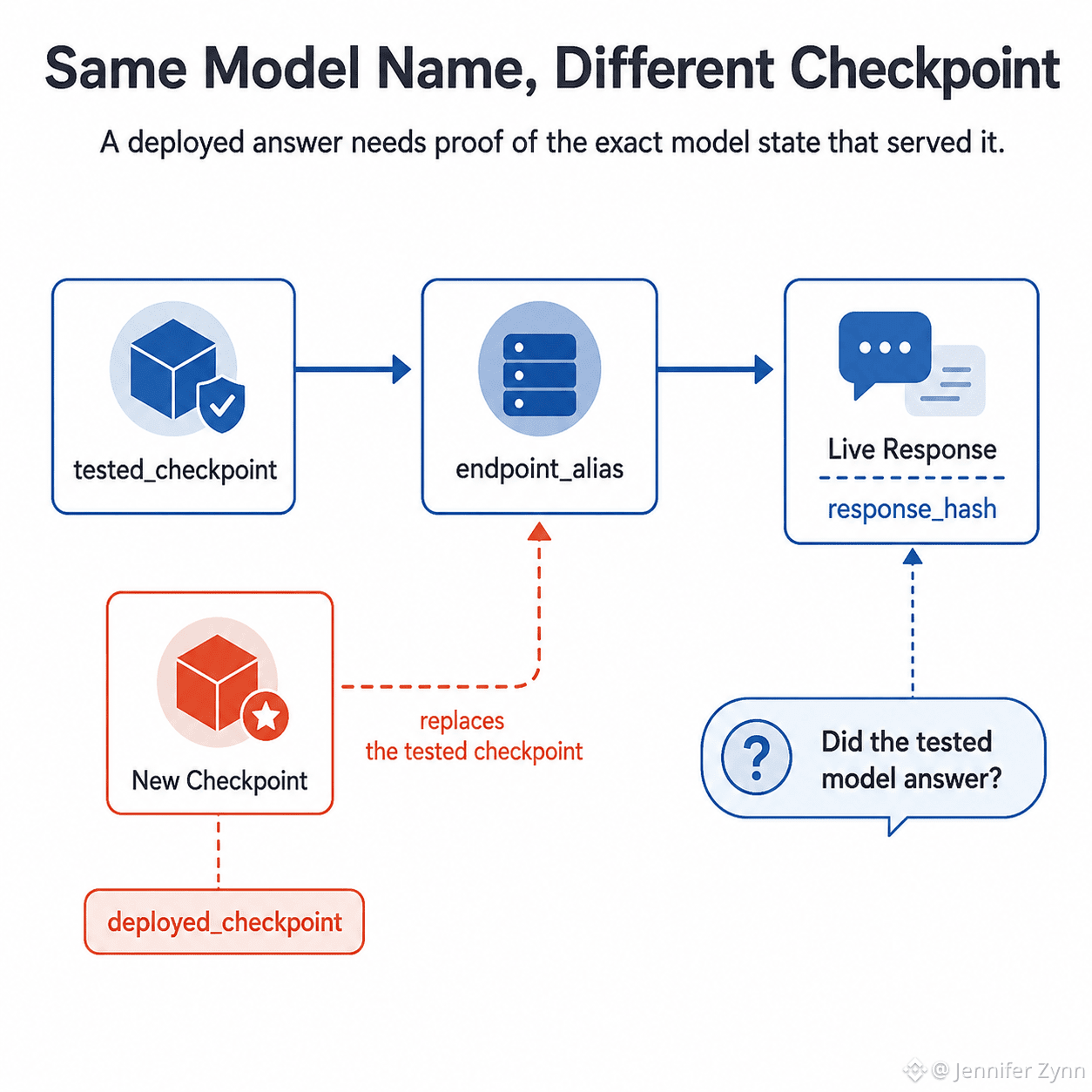
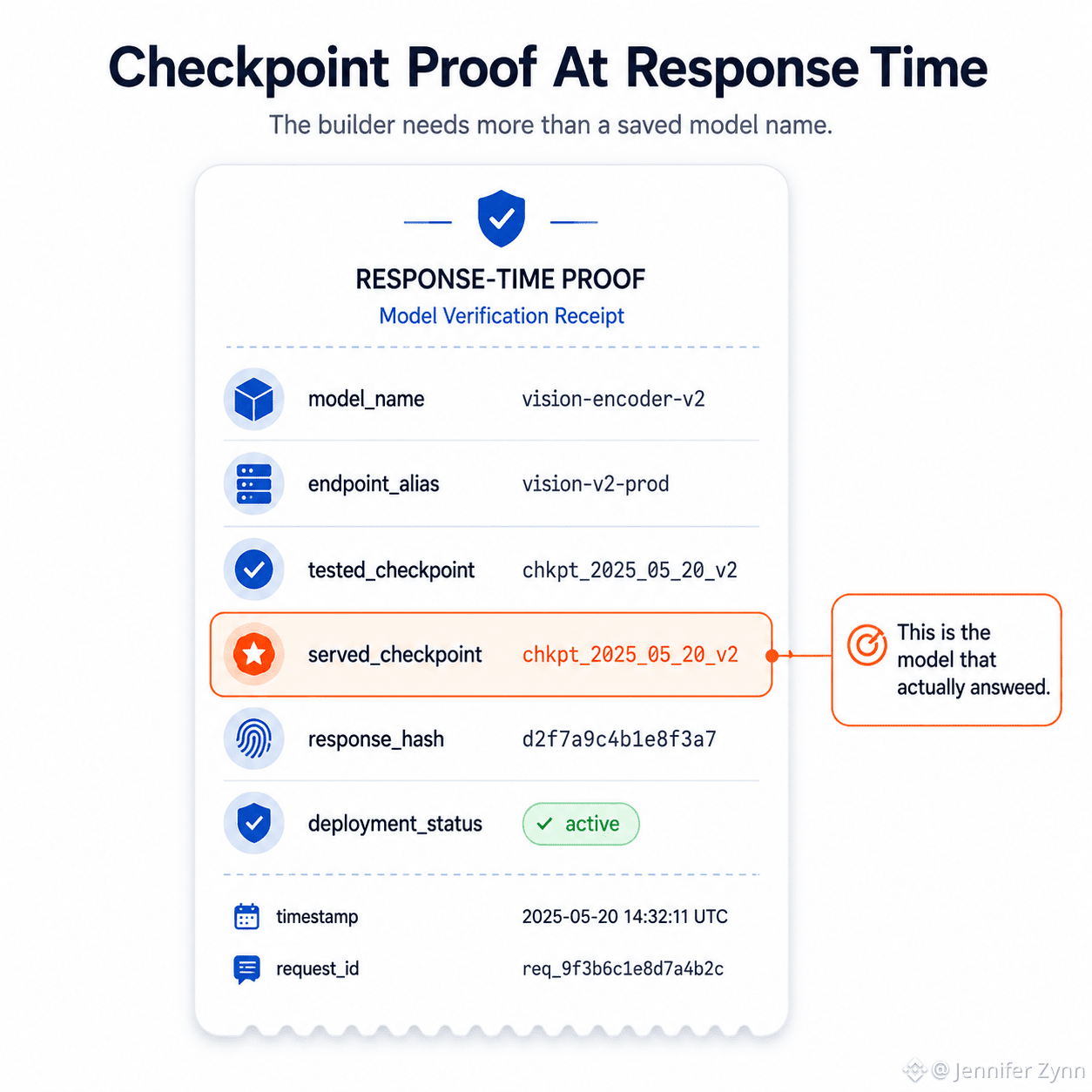
3
443

·
--
Data ownership in AI is often spoken about as if it is already clearly defined, but in practice it still feels unsettled. Attribution systems like OpenLedger bring structure to something that has historically been vague. They make contribution visible, they map where data flows, and they introduce a level of transparency that was missing for a long time.
But visibility alone does not fully translate into ownership. The legal and ethical meaning of control over data is still separate from the technical ability to trace it. Blockchain can record origin and movement with precision, yet it does not automatically resolve questions of permission, withdrawal, or long-term rights.
There is also a deeper mismatch between permanence and privacy frameworks. Systems built for immutable records do not easily align with expectations shaped by modern data protection laws. At the same time, most of the data powering current AI systems already exists outside any clean consent structure, which makes the challenge even harder to address in hindsight.
@Openledger #openledger $OPEN
{spot}(OPENUSDT)
Data ownership in AI is often spoken about as if it is already clearly defined, but in practice it still feels unsettled. Attribution systems like OpenLedger bring structure to something that has historically been vague. They make contribution visible, they map where data flows, and they introduce a level of transparency that was missing for a long time.
But visibility alone does not fully translate into ownership. The legal and ethical meaning of control over data is still separate from the technical ability to trace it. Blockchain can record origin and movement with precision, yet it does not automatically resolve questions of permission, withdrawal, or long-term rights.
There is also a deeper mismatch between permanence and privacy frameworks. Systems built for immutable records do not easily align with expectations shaped by modern data protection laws. At the same time, most of the data powering current AI systems already exists outside any clean consent structure, which makes the challenge even harder to address in hindsight.
@OpenLedger #openledger $OPEN
But visibility alone does not fully translate into ownership. The legal and ethical meaning of control over data is still separate from the technical ability to trace it. Blockchain can record origin and movement with precision, yet it does not automatically resolve questions of permission, withdrawal, or long-term rights.
There is also a deeper mismatch between permanence and privacy frameworks. Systems built for immutable records do not easily align with expectations shaped by modern data protection laws. At the same time, most of the data powering current AI systems already exists outside any clean consent structure, which makes the challenge even harder to address in hindsight.
@OpenLedger #openledger $OPEN
4
9
361

·
--
While working through CreatorPad, one thing became impossible to ignore: attribution becomes much harder the moment complexity increases.
OpenLedger aims to make every contribution measurable, yet the challenge isn't tracking influence—it's deciding how much influence truly matters. The deeper the chain of inputs, the easier it becomes for meaningful contributors to disappear behind simplified scoring models.
The real test for AI attribution isn't transparency. It's whether long-tail contributors can retain their share of value as networks scale.
@Openledger | #OpenLedger
$OPEN
{future}(OPENUSDT)
While working through CreatorPad, one thing became impossible to ignore: attribution becomes much harder the moment complexity increases.
OpenLedger aims to make every contribution measurable, yet the challenge isn't tracking influence—it's deciding how much influence truly matters. The deeper the chain of inputs, the easier it becomes for meaningful contributors to disappear behind simplified scoring models.
The real test for AI attribution isn't transparency. It's whether long-tail contributors can retain their share of value as networks scale.
@OpenLedger | #OpenLedger
$OPEN
OpenLedger aims to make every contribution measurable, yet the challenge isn't tracking influence—it's deciding how much influence truly matters. The deeper the chain of inputs, the easier it becomes for meaningful contributors to disappear behind simplified scoring models.
The real test for AI attribution isn't transparency. It's whether long-tail contributors can retain their share of value as networks scale.
@OpenLedger | #OpenLedger
$OPEN
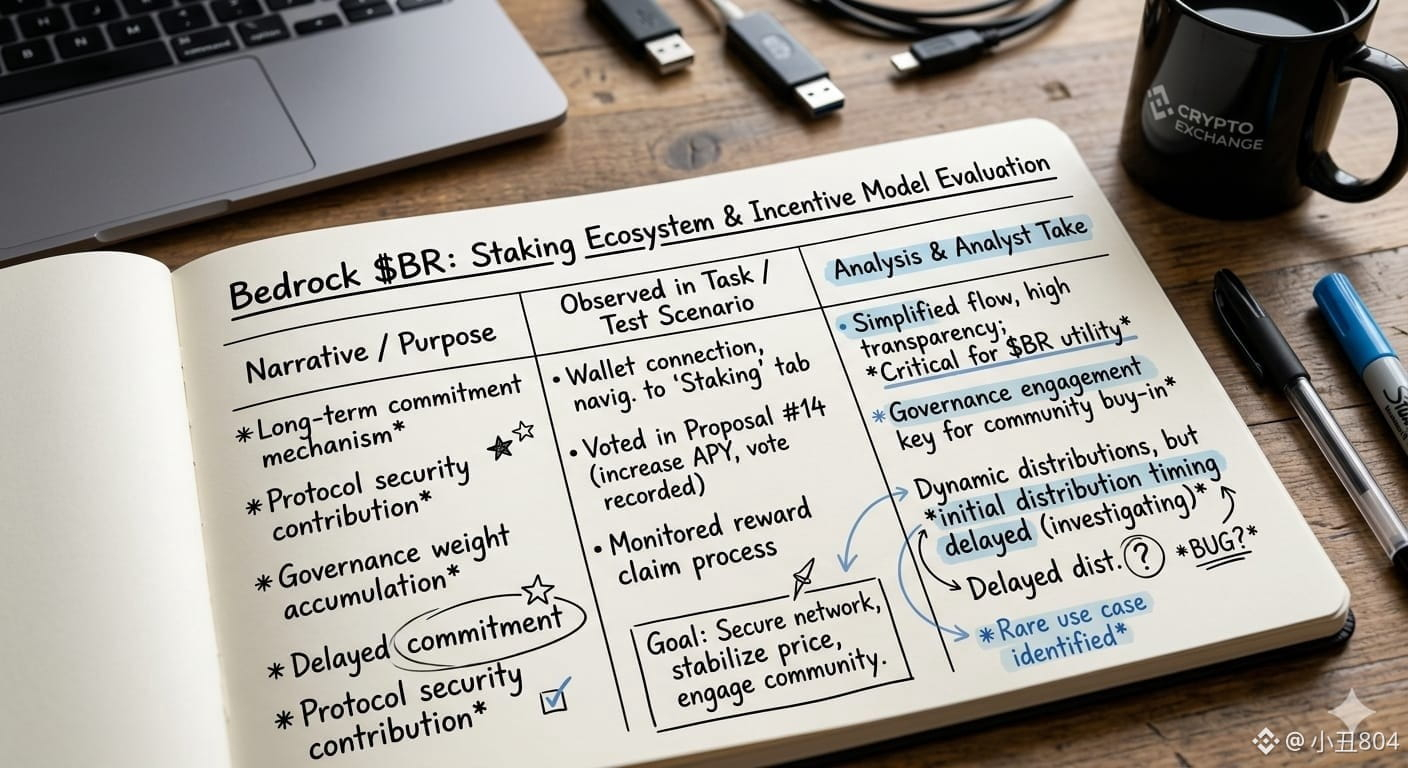
2
2
66

OPENLEDGER ($OPEN) feels like one of those ideas that shows up when the whole market is half tired but still pretending to be early
AI data… models… agents… all turned into something you can rent, trade, monetize. it sounds powerful, almost obvious, like yeah of course knowledge will become liquid someday… but then I sit there staring at it and think, why does everything in crypto always feel like it’s one step away from being real, and also one step away from just another story we keep repeating
I’ve seen this pattern before. new narrative, big words, charts start moving a bit, people start imagining a whole new internet being built overnight… and maybe something does get built, slowly, painfully, but most of it just fades into forgotten Discord servers and half-updated docs
OpenLedger sits right in that uncomfortable zone for me. not a scam vibe, not a guaranteed winner either. just… uncertain energy. like holding a phone with 3 percent battery and deciding whether to keep scrolling or accept reality and put it on charge
and I keep asking myself, who actually pays for rented AI knowledge in a way that sticks, not just experiments or incentives? if that answer becomes real, then yeah… this thing changes. if not, it’s just another beautiful idea floating in crypto space, waiting for gravity
for now I’m just watching it breathe, not touching, not ignoring either
@Openledger #OpenLedger $OPEN
{spot}(OPENUSDT)
OPENLEDGER ($OPEN ) feels like one of those ideas that shows up when the whole market is half tired but still pretending to be early
AI data… models… agents… all turned into something you can rent, trade, monetize. it sounds powerful, almost obvious, like yeah of course knowledge will become liquid someday… but then I sit there staring at it and think, why does everything in crypto always feel like it’s one step away from being real, and also one step away from just another story we keep repeating
I’ve seen this pattern before. new narrative, big words, charts start moving a bit, people start imagining a whole new internet being built overnight… and maybe something does get built, slowly, painfully, but most of it just fades into forgotten Discord servers and half-updated docs
OpenLedger sits right in that uncomfortable zone for me. not a scam vibe, not a guaranteed winner either. just… uncertain energy. like holding a phone with 3 percent battery and deciding whether to keep scrolling or accept reality and put it on charge
and I keep asking myself, who actually pays for rented AI knowledge in a way that sticks, not just experiments or incentives? if that answer becomes real, then yeah… this thing changes. if not, it’s just another beautiful idea floating in crypto space, waiting for gravity
for now I’m just watching it breathe, not touching, not ignoring either
@OpenLedger #OpenLedger $OPEN
AI data… models… agents… all turned into something you can rent, trade, monetize. it sounds powerful, almost obvious, like yeah of course knowledge will become liquid someday… but then I sit there staring at it and think, why does everything in crypto always feel like it’s one step away from being real, and also one step away from just another story we keep repeating
I’ve seen this pattern before. new narrative, big words, charts start moving a bit, people start imagining a whole new internet being built overnight… and maybe something does get built, slowly, painfully, but most of it just fades into forgotten Discord servers and half-updated docs
OpenLedger sits right in that uncomfortable zone for me. not a scam vibe, not a guaranteed winner either. just… uncertain energy. like holding a phone with 3 percent battery and deciding whether to keep scrolling or accept reality and put it on charge
and I keep asking myself, who actually pays for rented AI knowledge in a way that sticks, not just experiments or incentives? if that answer becomes real, then yeah… this thing changes. if not, it’s just another beautiful idea floating in crypto space, waiting for gravity
for now I’m just watching it breathe, not touching, not ignoring either
@OpenLedger #OpenLedger $OPEN
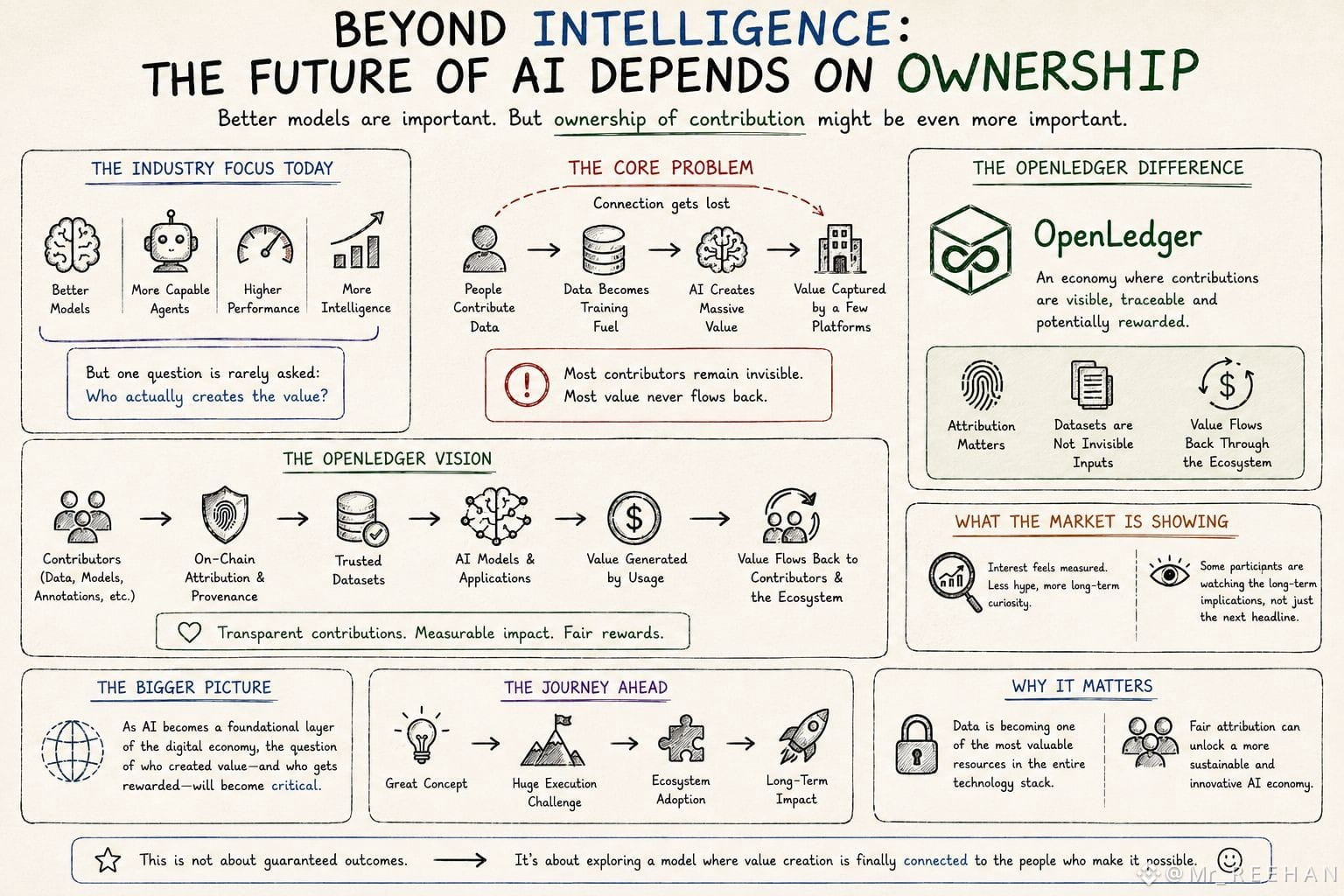
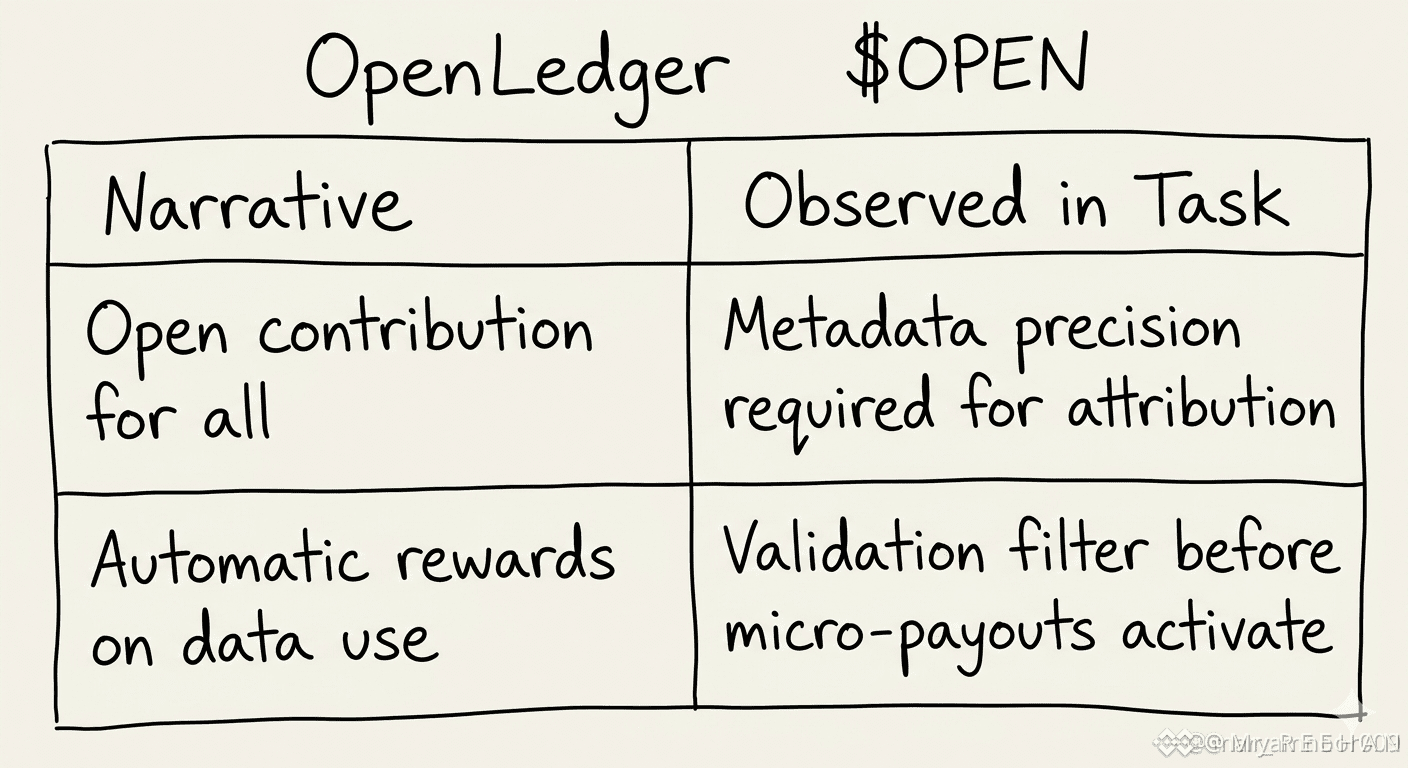
2
2
164

·
--
#openledger $OPEN 老实讲,“开源”这两个字我已经麻了。真正让我对 @Openledger 多停一秒的,不是他们说自己开源了,而是 vibecoding 这条线能不能长出那种“你写完不是扔掉,而是下一次还能直接接上去”的小零件。因为执行栈这种东西,最后拼出来靠的不是一个超级功能,而是一堆不起眼但能救命的组件:动作预览、缺项提示、格式纠错、步骤可视化、对照差异……这些才是让 research→action→execute 真能跑起来的地基。
我自己的体验也很现实:OctoClaw 吐 action 的那一刻,最容易翻车的往往不是策略逻辑,而是你没看清 action 里某一步的依赖、某个参数被默认值吞了、某个条件写得太模糊。你要是靠人眼盯,迟早漏;漏一次就够你难受一周。所以我更在意 vibecoding 能不能让这些“风险点”变成工具件,而不是每次重新靠脑子排雷。今天你补一个 action 预检器,明天补一个 action diff,对照两份动作稿到底哪一步变了;后天再补一个输入表单,把必填项和格式写死——这才叫执行栈在变强。
我今天只留一个验收点(也最能区分“热闹”和“生态”):有没有出现那种被很多人反复拿来用、还持续被改进的通用组件。不是我自己写着爽,而是别人也愿意 fork、愿意提改动、愿意把它接回自己的流程里用。只要这种复用链条跑起来,@Openledger 就不只是一个产品更新,而是在长出真正能沉淀的执行工具箱。
@Openledger $OPEN #OpenLedger
#openledger $OPEN 老实讲,“开源”这两个字我已经麻了。真正让我对 @OpenLedger 多停一秒的,不是他们说自己开源了,而是 vibecoding 这条线能不能长出那种“你写完不是扔掉,而是下一次还能直接接上去”的小零件。因为执行栈这种东西,最后拼出来靠的不是一个超级功能,而是一堆不起眼但能救命的组件:动作预览、缺项提示、格式纠错、步骤可视化、对照差异……这些才是让 research→action→execute 真能跑起来的地基。
我自己的体验也很现实:OctoClaw 吐 action 的那一刻,最容易翻车的往往不是策略逻辑,而是你没看清 action 里某一步的依赖、某个参数被默认值吞了、某个条件写得太模糊。你要是靠人眼盯,迟早漏;漏一次就够你难受一周。所以我更在意 vibecoding 能不能让这些“风险点”变成工具件,而不是每次重新靠脑子排雷。今天你补一个 action 预检器,明天补一个 action diff,对照两份动作稿到底哪一步变了;后天再补一个输入表单,把必填项和格式写死——这才叫执行栈在变强。
我今天只留一个验收点(也最能区分“热闹”和“生态”):有没有出现那种被很多人反复拿来用、还持续被改进的通用组件。不是我自己写着爽,而是别人也愿意 fork、愿意提改动、愿意把它接回自己的流程里用。只要这种复用链条跑起来,@OpenLedger 就不只是一个产品更新,而是在长出真正能沉淀的执行工具箱。
@OpenLedger $OPEN #OpenLedger
我自己的体验也很现实:OctoClaw 吐 action 的那一刻,最容易翻车的往往不是策略逻辑,而是你没看清 action 里某一步的依赖、某个参数被默认值吞了、某个条件写得太模糊。你要是靠人眼盯,迟早漏;漏一次就够你难受一周。所以我更在意 vibecoding 能不能让这些“风险点”变成工具件,而不是每次重新靠脑子排雷。今天你补一个 action 预检器,明天补一个 action diff,对照两份动作稿到底哪一步变了;后天再补一个输入表单,把必填项和格式写死——这才叫执行栈在变强。
我今天只留一个验收点(也最能区分“热闹”和“生态”):有没有出现那种被很多人反复拿来用、还持续被改进的通用组件。不是我自己写着爽,而是别人也愿意 fork、愿意提改动、愿意把它接回自己的流程里用。只要这种复用链条跑起来,@OpenLedger 就不只是一个产品更新,而是在长出真正能沉淀的执行工具箱。
@OpenLedger $OPEN #OpenLedger
71
තවත් අන්තර්ගතයන් ගවේෂණය කිරීමට ඇතුල් වන්න
Binance චතුරශ්රය හි ගෝලීය ක්රිප්ටෝ පරිශීලකයින් හා එක්වන්න
⚡️ ක්රිප්ටෝ පිළිබඳ නවතම සහ ප්රයෝජනවත් තොරතුරු ලබා ගන්න.
💬 ලොව විශාලතම ක්රිප්ටෝ හුවමාරුව මගින් විශ්වාස කෙරේ.
👍 සත්යායනය කරන ලද නිර්මාණකරුවන්ගෙන් සැබෑ විදසුන් සොයා ගන්න.
විද්යුත් තැපෑල / දුරකථන අංකය
නැගී එන මාතෘකා
1
#BinanceReopensWithdrawalsForMoreAssets
1.1M නැරඹීම්
5,735 සාකච්ඡා කරමින්
2
#$2TWipedOutHedgeFundsFaceLiquidation
237 නැරඹීම්
18 සාකච්ඡා කරමින්
3
#AnthropicIPOValuationDoubts
12,669 නැරඹීම්
362 සාකච්ඡා කරමින්
4
#SouthKoreaDelaysCryptoTaxationUntil2029
627 නැරඹීම්
33 සාකච්ඡා කරමින්
5
#HongKongPlansTaxIncentivesCoveringDigitalAssets
560 නැරඹීම්
20 සාකච්ඡා කරමින්
6
#ECBTargetsDigitalEuroIssuanceIn2029
553 නැරඹීම්
25 සාකච්ඡා කරමින්
7
#ChainalysisBreachExposedPasswordHashesAndLiveTokens
146 නැරඹීම්
4 සාකච්ඡා කරමින්
8
#UkraineCentralBankOpposesCurrentCryptoAssetBill
1,596 නැරඹීම්
51 සාකච්ඡා කරමින්
9
#CoreScientificExpectsToExitBitcoinMiningByYearEnd2026
333 නැරඹීම්
10 සාකච්ඡා කරමින්
10
#USStocksSlipandCryptoMarketUnderBroadPressure
127,502 නැරඹීම්
769 සාකච්ඡා කරමින්