
#bip110forksignalingexpectedthisweekend
bip110forksignalingexpectedthisweekend
358,153 නැරඹීම්
2,214 සාකච්ඡා කරමින්
උණුසුම්
නවතම

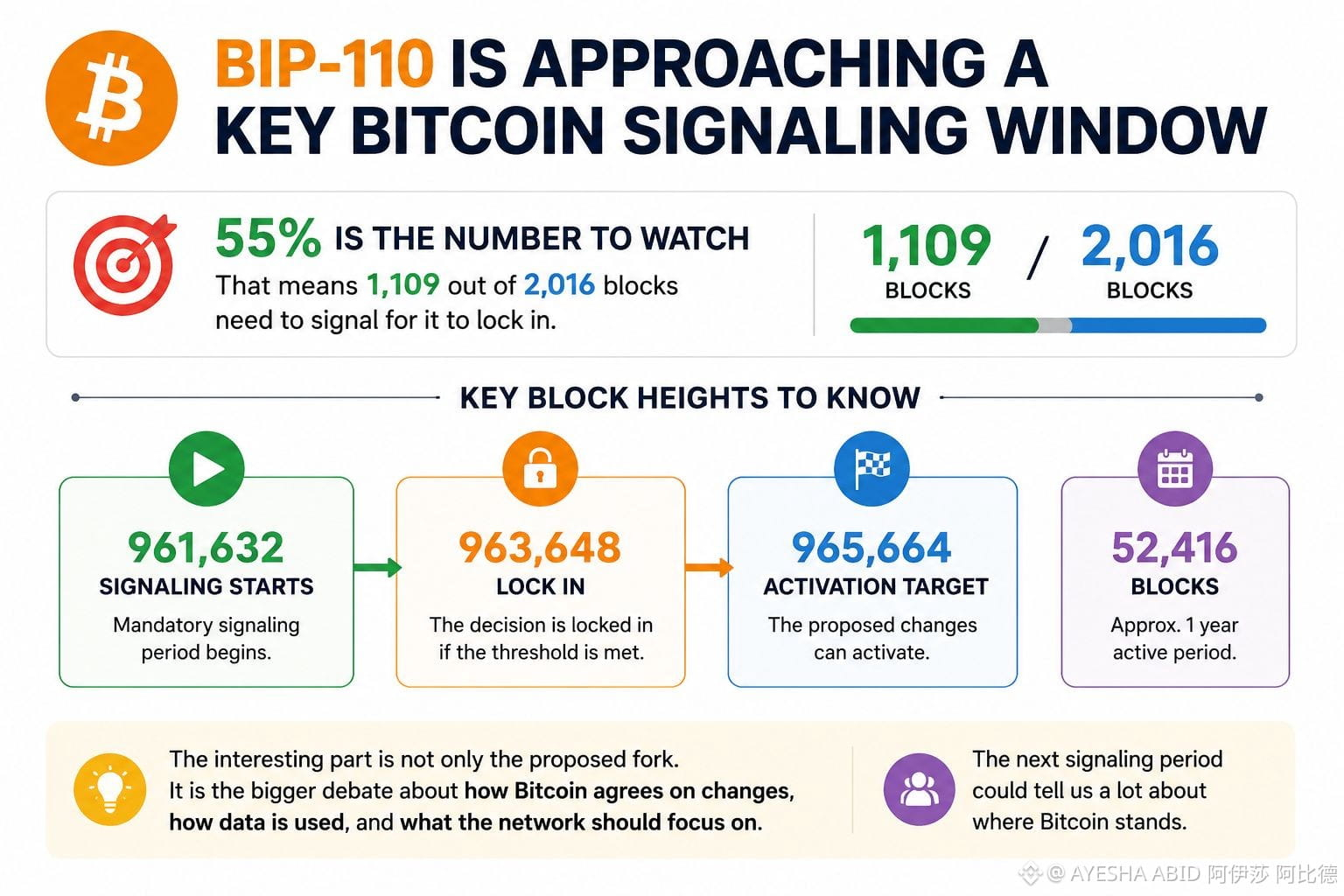
BIP 110 is coming to an important Bitcoin signaling stage, and 55% is the number to watch.
That means 1,109 out of 2,016 blocks need to signal for it to lock in.
Key block numbers:
• 961,632 signaling starts
• 963,648 lock in
• 965,664 activation target
The interesting part is not only the proposed fork. It is the bigger debate about how Bitcoin agrees on changes, how data is used, and what the network should focus on.
The next signaling period could tell us a lot about where Bitcoin stands.
$BTC #BIP110ForkSignalingExpectedThisWeekend
{future}(BTCUSDT)
BIP 110 is coming to an important Bitcoin signaling stage, and 55% is the number to watch.
That means 1,109 out of 2,016 blocks need to signal for it to lock in.
Key block numbers:
• 961,632 signaling starts
• 963,648 lock in
• 965,664 activation target
The interesting part is not only the proposed fork. It is the bigger debate about how Bitcoin agrees on changes, how data is used, and what the network should focus on.
The next signaling period could tell us a lot about where Bitcoin stands.
$BTC #BIP110ForkSignalingExpectedThisWeekend
3
5
576

#BIP110ForkSignalingExpectedThisWeekend
🚨 BIP-110 Update: Bitcoin Community Divided
BIP-110 has sparked a lot of debate across the Bitcoin community. 👀
Some believe it could help “clean up” Bitcoin, while others are concerned about what it could mean for decentralization.
Bitcoin’s biggest strength is its decentralized nature. If certain transactions start being treated as invalid based on specific rules, it could raise serious questions about Bitcoin’s core principles.
Miner support is reportedly still below 2.6%. That’s pretty low. 💀
For traders, there’s no need to panic. Stay calm, follow the latest developments, and do your own research before making any decisions. 📊
DYOR — This is not financial advice.
New to Binance? 👇
Referral Code: VINHTOCDO
#Bitcoin #BTC #BIP110 #BitcoinSoftFork #Decentralization #Crypto #$AAPL.US Binance
BTC-5.71%
AAPLUS+0.62%
89

⚡ تحديثات قوية في الأفق.. هل نبدأ إشارات الشوكة BIP-110 نهاية هذا الأسبوع؟ 📉📈
تتجه أنظار مجتمع البيتكوين نحو عطلة نهاية الأسبوع المرتقبة مع تصاعد الحديث حول توقعات بدء إشارات انقسام BIP-110! 🛡️ مثل هذه المحطات التنظيمية والتقنية تشكل علامات فارقة في مسار تطوير شبكات العملات الرقمية وأمانها.
💡 سؤال لكل المتداولين والمحللمين معنا:
برأيك، كيف ستتفاعل الأسواق مع هذه الإشارات التقنية الجديدة خلال الأيام القادمة، وهل نحن أمام تحولات كبرى في حركة السيولة؟
👇 شارِكنا برأيك وتحليلك في التعليقات، ولا تنسَ الضغط على زر المتابعة (Follow) لتكون دائماً في قلب الحدث وتتابع أحدث تحليلات السوق أولاً بأول! 🔔🚀
#BIP110ForkSignalingExpectedThisWeekend #Bitcoin #العملات_الرقمية #تداول #كريبتو #BIP110ForkSignalingExpectedThisWeekend
62
·
--
සත්යායනය කළ
ලිපිය
BIP-110 fork signaling expected this weekend#bip110forksignalingexpectedthisweekend
Bitcoin is heading into a high-stakes “test weekend” as BIP-110 approaches its mandatory signaling period, with observers watching whether enough of the ecosystem coordinates to make the proposal move forward. Reports frame this as a rare moment where a smaller set of nodes could choose to reject blocks produced by the vast majority of miners if BIP-110 activation proceeds on their view of the rules.
What BIP-110 is
BIP-110 (also described as the “Reduced Data Temporary Soft Fork”) is a soft fork proposal intended to temporarily restrict certain non-monetary data carried in transactions, with the stated goal of reducing blockchain bloat and re-emphasizing “monetary use cases.” The signaling mechanism uses miners setting a specific bit.
In the latest overview tied to the approach companies should take, BIP-110 is described as entering a key stage where it becomes mandatory to signal at a specific height, then locks in later if conditions are met, and then activates new transaction rules on a subsequent height—each with projections that place the first “consequential” boundary around Aug. 9, 2026.
Why the weekend matters
The crux is that signaling ≠ immediate activation, and even if signaling is far below what many observers associate with a smooth upgrade, the proposal is user/node-activated in practice: nodes independently enforce the rules they run. That means a disagreement can materialize as a chain split if enforcing nodes follow one branch while the rest of the network follows another.
One analysis emphasizes that BIP-110 supporters argue the story shouldn’t be treated like a “miner referendum,” because coordination by nodes and economic actors is what ultimately matters once the upgrade’s rules come into effect.
What to watch during the signaling window
Commentary pieces and monitors commonly focus on a few observable signals:
Signaling levels from mining pools (e.g., whether the network reaches the proposal’s threshold)Whether enforcement nodes separate (i.e., whether rejection shows up in practice)Ecosystem responses—exchanges, custodians, and node operators lengthening settlement/confirmation procedures if a split becomes plausible
A live “monitor” exists to track the current signaling status and period progress, though it relies on client-side loading for real-time numbers.
The two big takeaways
The immediate question is whether enough actors converge on enforcing the BIP-110 rules to make the change stick in practice.The main operational risk scenario isn’t “BIP-110 signaling alone,” but a chain split where some nodes reject the dominant chain.
That “monitor the possibility of a split and adjust operational behavior” framing shows up directly in guidance-style analysis aimed at corporate Bitcoin users and infrastructure operators.
#BIP110SoftForkAttemptBegins
#BTC
#TrendingTopic
#signaladvisor
BIP-110 fork signaling expected this weekend
#bip110forksignalingexpectedthisweekend
Bitcoin is heading into a high-stakes “test weekend” as BIP-110 approaches its mandatory signaling period, with observers watching whether enough of the ecosystem coordinates to make the proposal move forward. Reports frame this as a rare moment where a smaller set of nodes could choose to reject blocks produced by the vast majority of miners if BIP-110 activation proceeds on their view of the rules.
What BIP-110 is
BIP-110 (also described as the “Reduced Data Temporary Soft Fork”) is a soft fork proposal intended to temporarily restrict certain non-monetary data carried in transactions, with the stated goal of reducing blockchain bloat and re-emphasizing “monetary use cases.” The signaling mechanism uses miners setting a specific bit.
In the latest overview tied to the approach companies should take, BIP-110 is described as entering a key stage where it becomes mandatory to signal at a specific height, then locks in later if conditions are met, and then activates new transaction rules on a subsequent height—each with projections that place the first “consequential” boundary around Aug. 9, 2026.
Why the weekend matters
The crux is that signaling ≠ immediate activation, and even if signaling is far below what many observers associate with a smooth upgrade, the proposal is user/node-activated in practice: nodes independently enforce the rules they run. That means a disagreement can materialize as a chain split if enforcing nodes follow one branch while the rest of the network follows another.
One analysis emphasizes that BIP-110 supporters argue the story shouldn’t be treated like a “miner referendum,” because coordination by nodes and economic actors is what ultimately matters once the upgrade’s rules come into effect.
What to watch during the signaling window
Commentary pieces and monitors commonly focus on a few observable signals:
Signaling levels from mining pools (e.g., whether the network reaches the proposal’s threshold)Whether enforcement nodes separate (i.e., whether rejection shows up in practice)Ecosystem responses—exchanges, custodians, and node operators lengthening settlement/confirmation procedures if a split becomes plausible
A live “monitor” exists to track the current signaling status and period progress, though it relies on client-side loading for real-time numbers.
The two big takeaways
The immediate question is whether enough actors converge on enforcing the BIP-110 rules to make the change stick in practice.The main operational risk scenario isn’t “BIP-110 signaling alone,” but a chain split where some nodes reject the dominant chain.
That “monitor the possibility of a split and adjust operational behavior” framing shows up directly in guidance-style analysis aimed at corporate Bitcoin users and infrastructure operators.
#BIP110SoftForkAttemptBegins
#BTC
#TrendingTopic
#signaladvisor
4
1.3k

·
--
උසබ තත්ත්වය
සත්යායනය කළ
#bip110forksignalingexpectedthisweekend
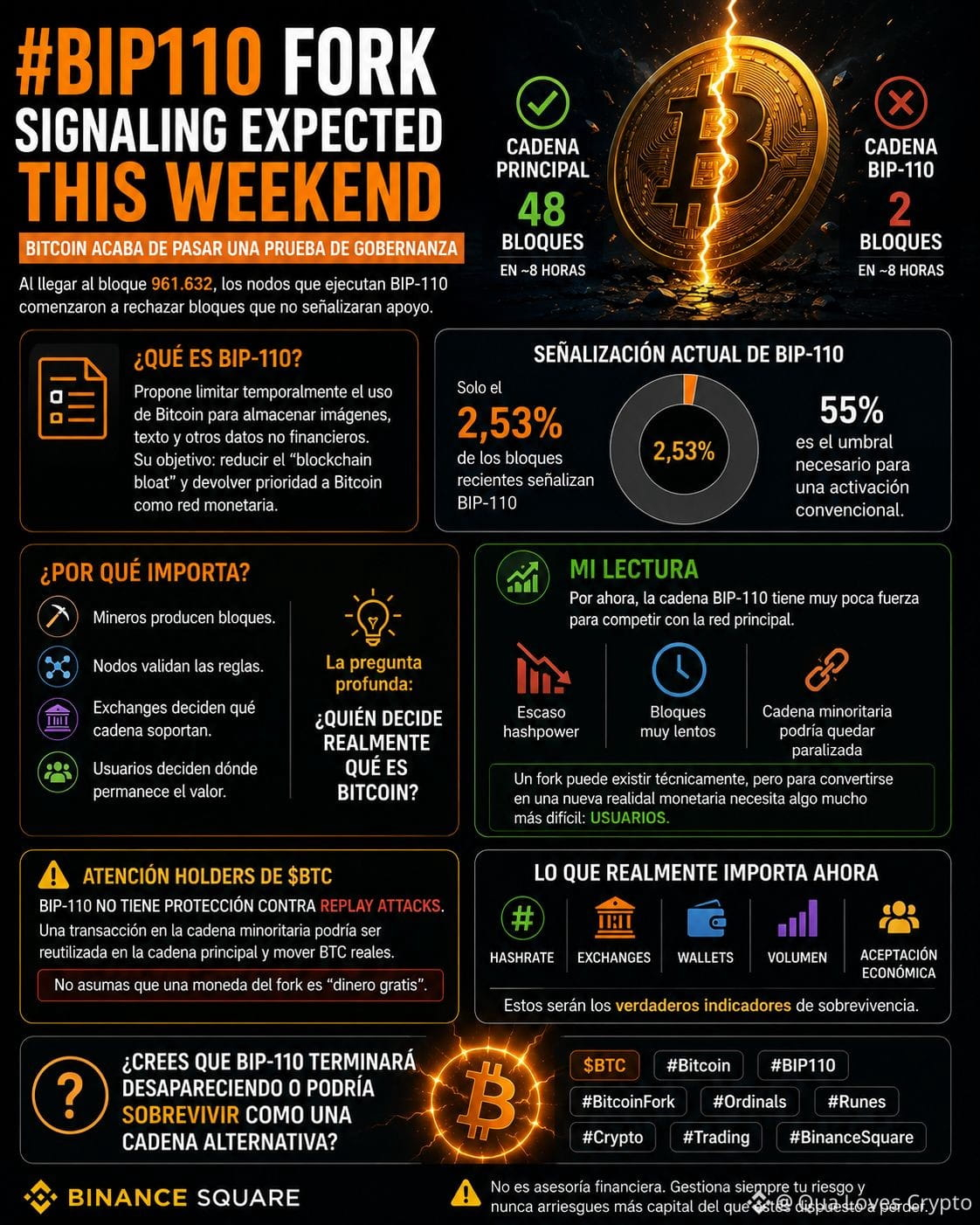
Lo que durante días parecía una posible bifurcación de Bitcoin ya ocurrió.
Al llegar al bloque 961.632, los nodos que ejecutan BIP-110 comenzaron a rechazar bloques que no señalizaran apoyo. El resultado hasta ahora es bastante contundente: la cadena minoritaria produjo apenas dos bloques en unas ocho horas, mientras la cadena principal avanzó 48.
¿Y por qué importa?
BIP-110 intenta limitar temporalmente el uso de Bitcoin para almacenar imágenes, texto y otros datos no financieros, buscando reducir el llamado blockchain bloat y devolver prioridad a Bitcoin como red monetaria. Sus críticos sostienen que el espacio de bloque debe asignarse mediante el mercado de comisiones, sin censurar qué tipo de transacción paga por utilizarlo.
Pero hay un dato que llama muchísimo la atención: solo alrededor del 2,53% de los bloques recientes señalizaban BIP-110, frente al 55% necesario para una activación convencional.
Y ahí está el verdadero experimento. No se trata únicamente de Ordinals vs. Bitcoiners. Se trata de una pregunta mucho más profunda: ¿Quién decide realmente qué es Bitcoin?
Los mineros producen bloques. Los nodos validan las reglas. Los exchanges deciden qué cadena soportan. Y los usuarios deciden dónde permanece el valor.
Por ahora, la cadena BIP-110 parece tener muy poca fuerza para competir con la red principal. Su escaso hashpower hace que los bloques lleguen extremadamente lento y la cadena minoritaria podría quedar prácticamente paralizada.
Pero hay algo mucho más importante para los holders de $BTC: la ausencia de protección contra replay attacks. Una transacción realizada en la cadena minoritaria podría, bajo determinadas condiciones, ser reutilizada en la cadena principal y mover BTC reales. Por eso, no trataría una eventual moneda del fork como un “airdrop gratis” para vender inmediatamente.
El verdadero indicador ahora no es el hashtag.
Es observar hashrate + exchanges + wallets + volumen + aceptación económica.
{future}(BTCUSDT)
#bip110forksignalingexpectedthisweekend
Lo que durante días parecía una posible bifurcación de Bitcoin ya ocurrió.
Al llegar al bloque 961.632, los nodos que ejecutan BIP-110 comenzaron a rechazar bloques que no señalizaran apoyo. El resultado hasta ahora es bastante contundente: la cadena minoritaria produjo apenas dos bloques en unas ocho horas, mientras la cadena principal avanzó 48.
¿Y por qué importa?
BIP-110 intenta limitar temporalmente el uso de Bitcoin para almacenar imágenes, texto y otros datos no financieros, buscando reducir el llamado blockchain bloat y devolver prioridad a Bitcoin como red monetaria. Sus críticos sostienen que el espacio de bloque debe asignarse mediante el mercado de comisiones, sin censurar qué tipo de transacción paga por utilizarlo.
Pero hay un dato que llama muchísimo la atención: solo alrededor del 2,53% de los bloques recientes señalizaban BIP-110, frente al 55% necesario para una activación convencional.
Y ahí está el verdadero experimento. No se trata únicamente de Ordinals vs. Bitcoiners. Se trata de una pregunta mucho más profunda: ¿Quién decide realmente qué es Bitcoin?
Los mineros producen bloques. Los nodos validan las reglas. Los exchanges deciden qué cadena soportan. Y los usuarios deciden dónde permanece el valor.
Por ahora, la cadena BIP-110 parece tener muy poca fuerza para competir con la red principal. Su escaso hashpower hace que los bloques lleguen extremadamente lento y la cadena minoritaria podría quedar prácticamente paralizada.
Pero hay algo mucho más importante para los holders de $BTC: la ausencia de protección contra replay attacks. Una transacción realizada en la cadena minoritaria podría, bajo determinadas condiciones, ser reutilizada en la cadena principal y mover BTC reales. Por eso, no trataría una eventual moneda del fork como un “airdrop gratis” para vender inmediatamente.
El verdadero indicador ahora no es el hashtag.
Es observar hashrate + exchanges + wallets + volumen + aceptación económica.
1.3k


·
--
සත්යායනය කළ
I’ve seen many Bitcoin proposals eventually get a green signal, but BIP-110 feels different.
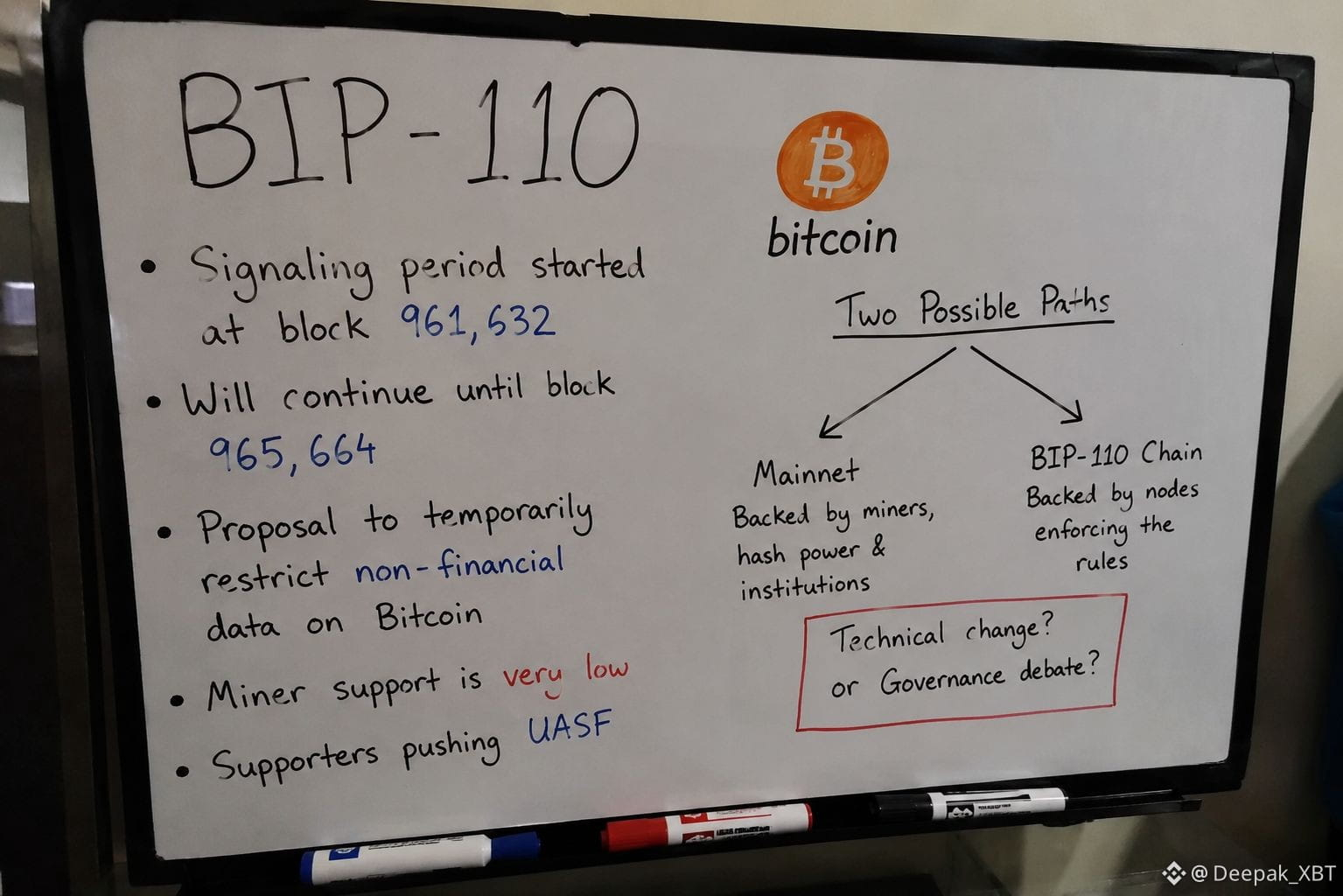
The signaling period has now started at block 961,632 and will continue until block 965,664. The proposal aims to temporarily restrict certain non-financial data on the network, but miner support has remained very low so far.
The interesting part is that supporters are advocating a user-activated soft fork (UASF) approach, meaning node operators could try to enforce the change even without miner approval.
For me, this is becoming more of a governance debate than a technical one.
#BIP110SoftForkAttemptBegins #BIP110ForkSignalingExpectedThisWeekend #BinanceSquareTalks #Binance
$BTC
{future}(BTCUSDT)
I’ve seen many Bitcoin proposals eventually get a green signal, but BIP-110 feels different.
The signaling period has now started at block 961,632 and will continue until block 965,664. The proposal aims to temporarily restrict certain non-financial data on the network, but miner support has remained very low so far.
The interesting part is that supporters are advocating a user-activated soft fork (UASF) approach, meaning node operators could try to enforce the change even without miner approval.
For me, this is becoming more of a governance debate than a technical one.
#BIP110SoftForkAttemptBegins #BIP110ForkSignalingExpectedThisWeekend #BinanceSquareTalks #Binance
$BTC
2
135

·
--
උසබ තත්ත්වය
#bip110forksignalingexpectedthisweekend
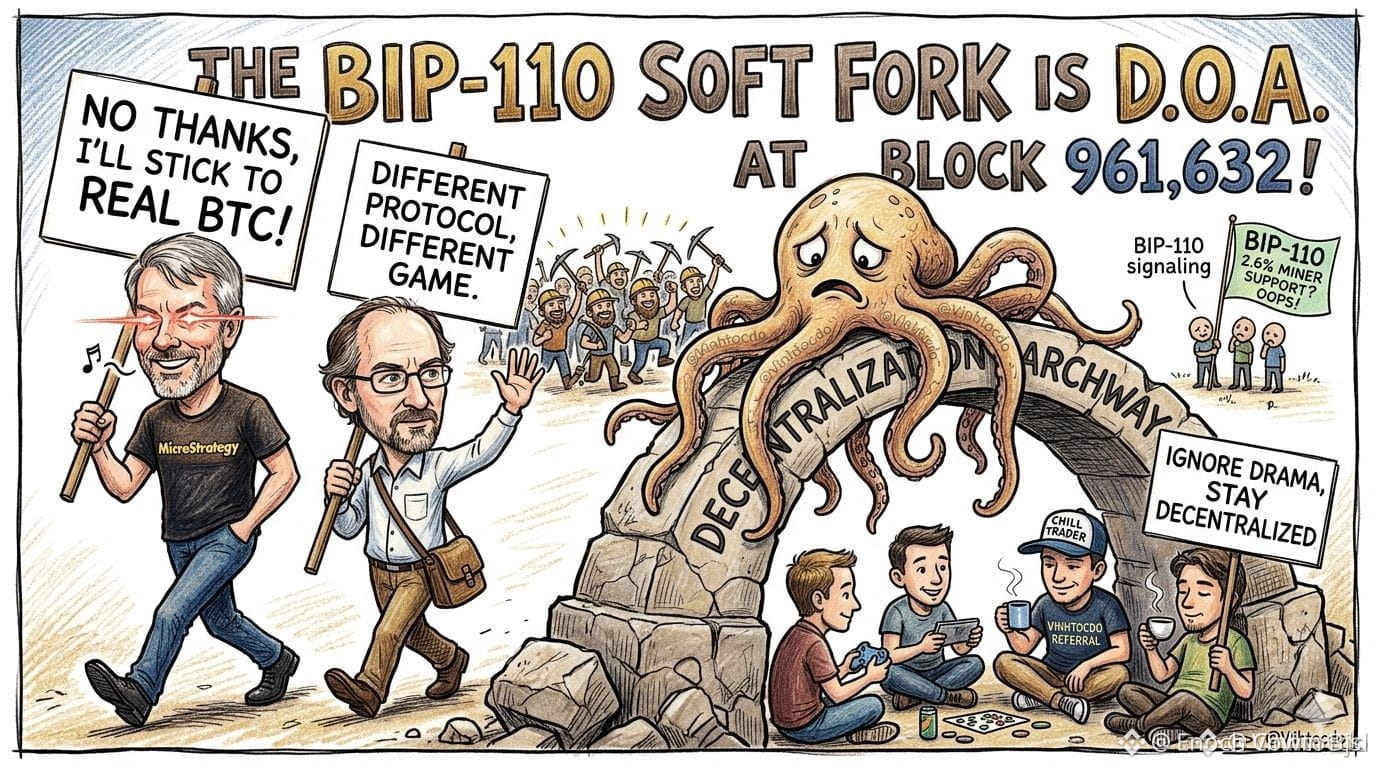
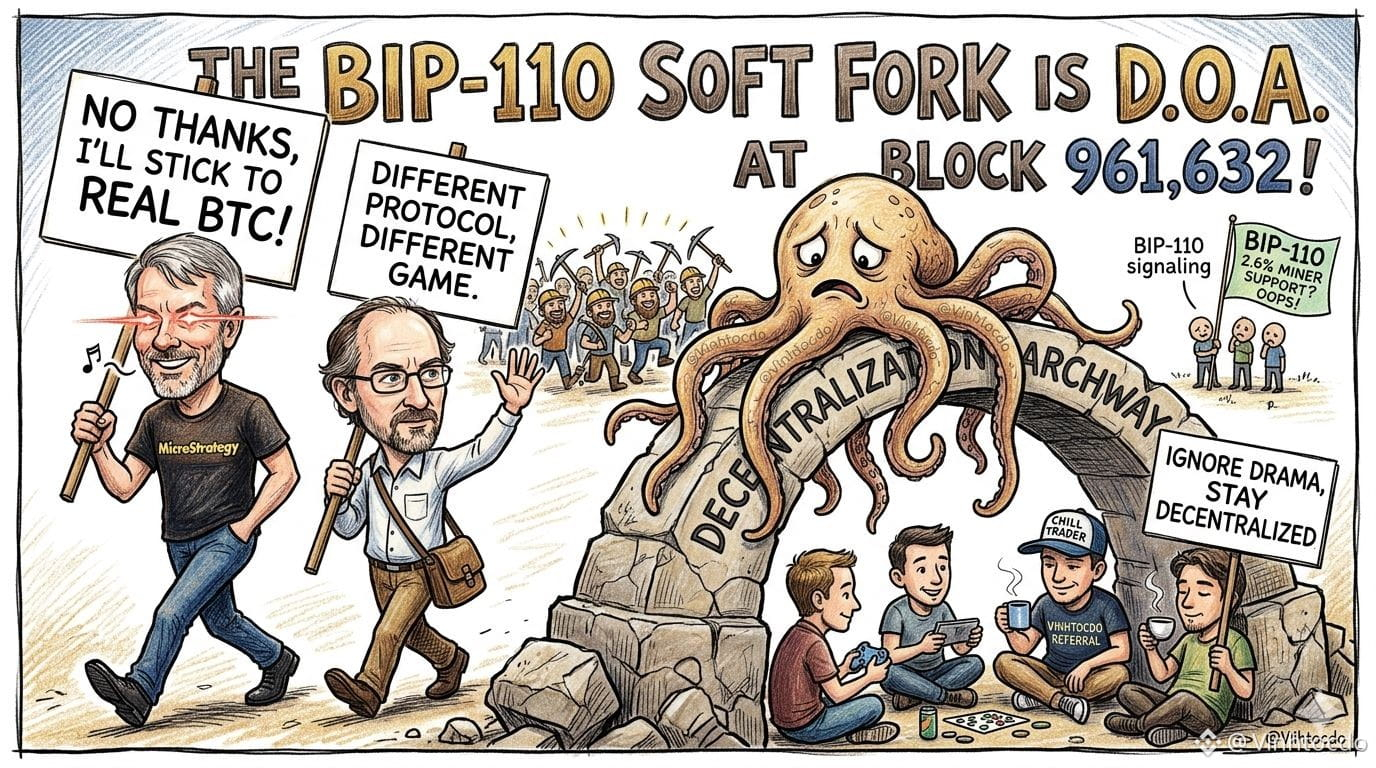
The controversial BIP-110 soft fork just hit block 961,632, but it’s completely dead on arrival. 💀
Some thought it would "clean up" BTC, but legends like Michael Saylor and Adam Back kopt out. Why? Because dictating what transactions are "valid" kills Bitcoin’s core superpower: decentralization! Miner support is sitting under 2.6%. Oops!
What should traders do? Chill, ignore the drama, and stay on the real decentralized chain. This is not financial advice! 🤫
New to Binance? Use my referral code VINHTOCDO to sign up.
#BitcoinSoftFork #Decentralization #BIP110 #VINHTOCDO
$BTC
{future}(BTCUSDT)
$ETH
{future}(ETHUSDT)
$BNB
{future}(BNBUSDT)
#bip110forksignalingexpectedthisweekend
The controversial BIP-110 soft fork just hit block 961,632, but it’s completely dead on arrival. 💀
Some thought it would "clean up" BTC, but legends like Michael Saylor and Adam Back kopt out. Why? Because dictating what transactions are "valid" kills Bitcoin’s core superpower: decentralization! Miner support is sitting under 2.6%. Oops!
What should traders do? Chill, ignore the drama, and stay on the real decentralized chain. This is not financial advice! 🤫
New to Binance? Use my referral code VINHTOCDO to sign up.
#BitcoinSoftFork #Decentralization #BIP110 #VINHTOCDO
$BTC
$ETH
$BNB
6
1.1k

ලිපිය
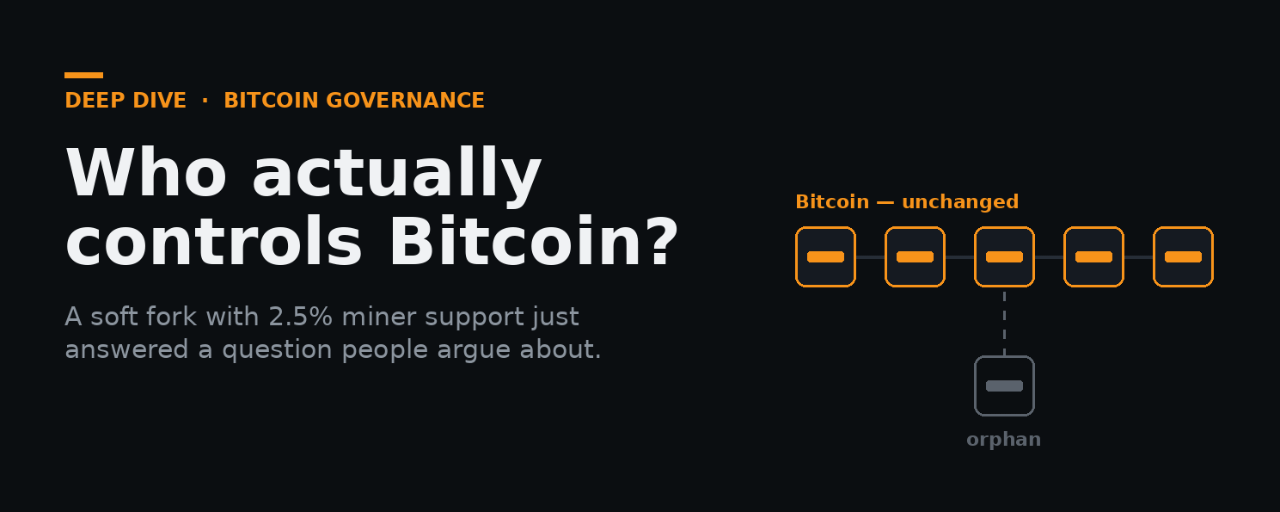
Who Actually Controls Bitcoin?A soft fork with 2.5% miner support just answered a question people argue about endlessly.
This weekend, a Bitcoin proposal most people had never heard of reached its activation block. It had the backing of roughly 2.5% of miners. By every headline metric, it should have been dead on arrival — and yet, technically, "it activated."
If that sounds contradictory, good. Untangling it tells you more about how Bitcoin actually works than any whitepaper will.
What BIP-110 was trying to do
BIP-110 — a temporary, data-limiting soft fork — set out to restrict the amount of non-financial data people can stuff into Bitcoin transactions: inscriptions, token protocols, oversized arbitrary data. The pitch from supporters is that a monetary network shouldn't slowly fill up with what they see as spam.
Two things matter here. First, it was controversial from the start: one camp calls the data bloat that degrades a payments network, the other calls filtering it censorship of otherwise-valid transactions — and a dangerous precedent. Second, it only ever shipped in one minority client, not in the reference software most of the network runs.
So before a single block was mined, this was already a proposal with narrow software reach and loud opposition.
The word doing all the work: "activation"
Here's where people get confused. At the activation height, nodes running the enforcing software begin rejecting blocks that don't signal for the new rule. That is real — but it's activation of the software, not activation of the network.
A rule only actually wins if the economic majority enforces it. Code running on a small fraction of nodes rejecting blocks doesn't change Bitcoin. It just means those specific nodes are now following a stricter rulebook than everyone else.
Who actually holds the power
It helps to separate three groups people constantly conflate:
Miners produce blocks and secure the chain — but they can't force a rule change. They follow whichever chain has value, because that's the chain that pays them. Their signaling is a preference, not a veto and not a mandate.
Nodes enforce the rules. Anyone can run one. They decide which blocks are valid by choosing which software to run.
The economic majority — exchanges, custodians, wallets, businesses, and ordinary users — decides which chain is worth anything. This is where real power lives.
Notice miners are not at the top of that list. A group of miners with no economic weight behind them doesn't fork Bitcoin. They just mine a chain nobody values.
Why 2.5% neither kills it nor saves it
This is the subtle part. BIP-110 was designed as a user-activated change, which means it was never trying to win miners in the first place. So the low signaling number isn't the failure people think it is — it's almost beside the point.
But that same design cuts the other way. Because it doesn't rely on miners, its fate rests entirely on the economic majority — and that's exactly where it's falling short. Node adoption is thin, no major exchange stands behind it, and several of the most prominent voices in the ecosystem are actively against it.
So the realistic outcome isn't "BIP-110 forks Bitcoin." It's that it either quietly fizzles, or it spins off a minority chain with almost no hashrate and no liquidity behind it. That's not a fork in any meaningful sense. It's an orphan.
This is the design working
It's worth sitting with what just happened: a change reached its activation moment, and the network simply kept producing blocks as if nothing occurred. No small group — not developers, not miners, not any foundation — could impose a rule the economic majority didn't want.
That's not a bug. That's the entire security model. Bitcoin's governance is deliberately slow, messy, and frustrating, because the friction is the point. Easy to change means easy to capture.
The honest counterpoint
I don't want to make this cleaner than it is. The data-limiting debate underneath BIP-110 is real and unresolved — the people worried about blockspace filling with non-financial data aren't cranks, and there are genuine costs to ignore on that side.
And user-activated mechanisms cut both ways. The same tool that lets ordinary users resist a bad change also lets a determined minority create real chaos, including temporary chain-split risk. "Working as designed" still leaves room for a period of genuine mess before things settle.
What to actually watch
If you take one practical thing from this: stop watching miner signaling. That's the loud number, not the deciding one.
Watch whether any real economic weight ever enforces this rule — a meaningful node share, a major exchange, a large custodian. If none does, the story is already over, no matter what any activation counter says.
The lesson that outlasts BIP-110 is simple. In Bitcoin, the metric everyone quotes is rarely the one that decides anything. Power sits with the people who assign value to the chain — and every few years, a proposal comes along to remind us of exactly that.
This was this year's reminder.
#SaylorHintsStrategyBitcoinBuy #BIP110SoftForkAttemptBegins #BIP110ForkSignalingExpectedThisWeekend $TUT $BMT
Who Actually Controls Bitcoin?
A soft fork with 2.5% miner support just answered a question people argue about endlessly.
This weekend, a Bitcoin proposal most people had never heard of reached its activation block. It had the backing of roughly 2.5% of miners. By every headline metric, it should have been dead on arrival — and yet, technically, "it activated."
If that sounds contradictory, good. Untangling it tells you more about how Bitcoin actually works than any whitepaper will.
What BIP-110 was trying to do
BIP-110 — a temporary, data-limiting soft fork — set out to restrict the amount of non-financial data people can stuff into Bitcoin transactions: inscriptions, token protocols, oversized arbitrary data. The pitch from supporters is that a monetary network shouldn't slowly fill up with what they see as spam.
Two things matter here. First, it was controversial from the start: one camp calls the data bloat that degrades a payments network, the other calls filtering it censorship of otherwise-valid transactions — and a dangerous precedent. Second, it only ever shipped in one minority client, not in the reference software most of the network runs.
So before a single block was mined, this was already a proposal with narrow software reach and loud opposition.
The word doing all the work: "activation"
Here's where people get confused. At the activation height, nodes running the enforcing software begin rejecting blocks that don't signal for the new rule. That is real — but it's activation of the software, not activation of the network.
A rule only actually wins if the economic majority enforces it. Code running on a small fraction of nodes rejecting blocks doesn't change Bitcoin. It just means those specific nodes are now following a stricter rulebook than everyone else.
Who actually holds the power
It helps to separate three groups people constantly conflate:
Miners produce blocks and secure the chain — but they can't force a rule change. They follow whichever chain has value, because that's the chain that pays them. Their signaling is a preference, not a veto and not a mandate.
Nodes enforce the rules. Anyone can run one. They decide which blocks are valid by choosing which software to run.
The economic majority — exchanges, custodians, wallets, businesses, and ordinary users — decides which chain is worth anything. This is where real power lives.
Notice miners are not at the top of that list. A group of miners with no economic weight behind them doesn't fork Bitcoin. They just mine a chain nobody values.
Why 2.5% neither kills it nor saves it
This is the subtle part. BIP-110 was designed as a user-activated change, which means it was never trying to win miners in the first place. So the low signaling number isn't the failure people think it is — it's almost beside the point.
But that same design cuts the other way. Because it doesn't rely on miners, its fate rests entirely on the economic majority — and that's exactly where it's falling short. Node adoption is thin, no major exchange stands behind it, and several of the most prominent voices in the ecosystem are actively against it.
So the realistic outcome isn't "BIP-110 forks Bitcoin." It's that it either quietly fizzles, or it spins off a minority chain with almost no hashrate and no liquidity behind it. That's not a fork in any meaningful sense. It's an orphan.
This is the design working
It's worth sitting with what just happened: a change reached its activation moment, and the network simply kept producing blocks as if nothing occurred. No small group — not developers, not miners, not any foundation — could impose a rule the economic majority didn't want.
That's not a bug. That's the entire security model. Bitcoin's governance is deliberately slow, messy, and frustrating, because the friction is the point. Easy to change means easy to capture.
The honest counterpoint
I don't want to make this cleaner than it is. The data-limiting debate underneath BIP-110 is real and unresolved — the people worried about blockspace filling with non-financial data aren't cranks, and there are genuine costs to ignore on that side.
And user-activated mechanisms cut both ways. The same tool that lets ordinary users resist a bad change also lets a determined minority create real chaos, including temporary chain-split risk. "Working as designed" still leaves room for a period of genuine mess before things settle.
What to actually watch
If you take one practical thing from this: stop watching miner signaling. That's the loud number, not the deciding one.
Watch whether any real economic weight ever enforces this rule — a meaningful node share, a major exchange, a large custodian. If none does, the story is already over, no matter what any activation counter says.
The lesson that outlasts BIP-110 is simple. In Bitcoin, the metric everyone quotes is rarely the one that decides anything. Power sits with the people who assign value to the chain — and every few years, a proposal comes along to remind us of exactly that.
This was this year's reminder.
#SaylorHintsStrategyBitcoinBuy #BIP110SoftForkAttemptBegins #BIP110ForkSignalingExpectedThisWeekend $TUT $BMT
1
175

·
--
Everyone thinks a blockchain fork means free coins and instant profits, but actually, the upcoming signaling phase is more like a construction zone that could trap your active transactions.
Many retail investors rush to move assets during network upgrades, only to get stuck with delayed transfers or lost gas fees when miners split their focus. It is easy to panic-sell into $USDT when the network seems temporarily congested.
Think of the BIP110 signaling like a vote on a new traffic law. Until the miners reach a consensus, the road rules are slightly confused. To protect your portfolio, keep these three warnings in mind. 1. Avoid sending large transactions during the peak signaling window because blocks might take longer to confirm if miners are divided. 2. Remember that soft forks do not create a new coin, so do not fall for scams promising free duplicate tokens. 3. Watch out for temporary price swings in $BTC as the market reacts to early voting data, which can trigger liquidations.
Are you planning to pause your on-chain activity until the signaling settles?
#BIP110ForkSignalingExpectedThisWeekend #BIP110SoftForkAttemptBegins
114

·
--
උසබ තත්ත්වය
සත්යායනය කළ
#bip110forksignalingexpectedthisweekend
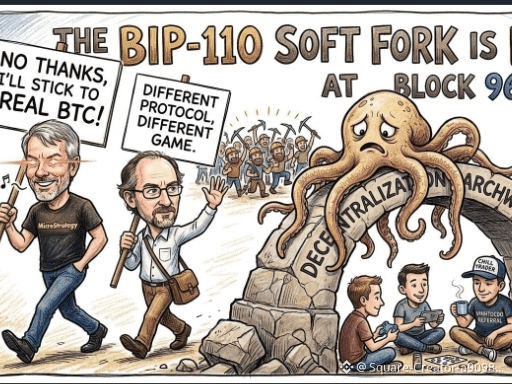
وصل الانقسام الناعم (soft fork) BIP-110 مثير للجدل للتو إلى البلوك 961,632، لكنّه ميّت تمامًا عند الوصول. 💀
بعضهم ظن أنه سيُحسّن/"ينظّف" BTC، لكن أساطير مثل مايكل سايلور وآدم باك تراجعوا/انسحبوا. لماذا؟ لأن فرض ما هي المعاملات "الصحيحة" يدمّر القوة الأساسية لبيتكوين: اللامركزية! دعم المعدّنين تحت 2.6% فقط. أوپس!
ماذا يجب أن يفعل المتداولون؟ هدوء، تجاهل الدراما، وتمسّك بالسلسلة اللامركزية الحقيقية. هذا ليس نصيحة مالية! 🤫
هل أنت جديد على Binance؟ استخدم رمز الإحالة الخاص بي VINHTOCDO للتسجيل.
#BitcoinSoftFork #Decentralization #BIP110 #VINHTOCDO
$BTC
{future}(BTCUSDT)
BTCUSDT
#bip110forksignalingexpectedthisweekend
وصل الانقسام الناعم (soft fork) BIP-110 مثير للجدل للتو إلى البلوك 961,632، لكنّه ميّت تمامًا عند الوصول. 💀
بعضهم ظن أنه سيُحسّن/"ينظّف" BTC، لكن أساطير مثل مايكل سايلور وآدم باك تراجعوا/انسحبوا. لماذا؟ لأن فرض ما هي المعاملات "الصحيحة" يدمّر القوة الأساسية لبيتكوين: اللامركزية! دعم المعدّنين تحت 2.6% فقط. أوپس!
ماذا يجب أن يفعل المتداولون؟ هدوء، تجاهل الدراما، وتمسّك بالسلسلة اللامركزية الحقيقية. هذا ليس نصيحة مالية! 🤫
هل أنت جديد على Binance؟ استخدم رمز الإحالة الخاص بي VINHTOCDO للتسجيل.
#BitcoinSoftFork #Decentralization #BIP110 #VINHTOCDO
$BTC
BTCUSDT
4
4.8k

·
--
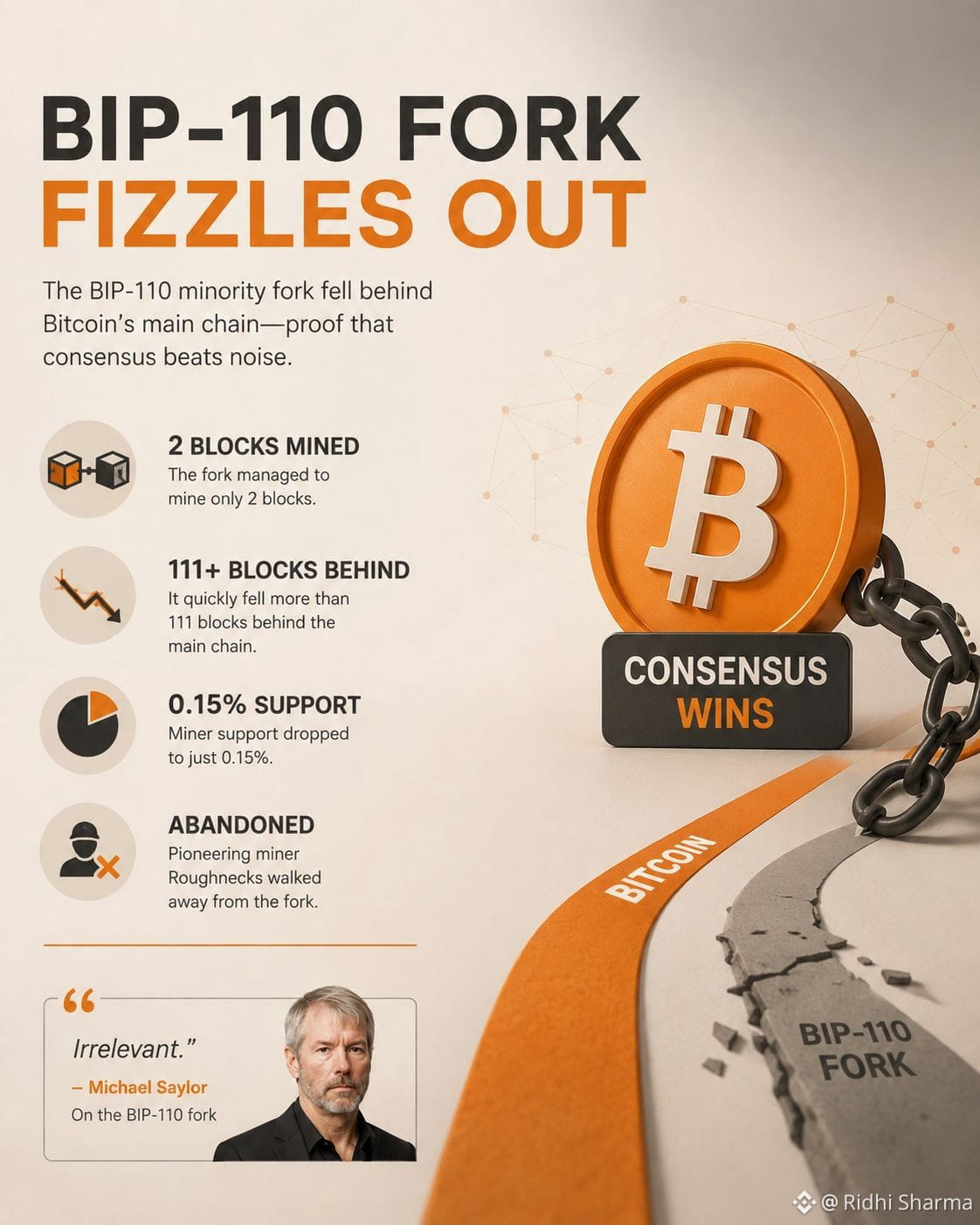
🟠 Bitcoin just got another reminder of why consensus matters.
The BIP-110 minority fork managed to mine only 2 blocks before falling more than 111 blocks behind the main Bitcoin chain. Its reported miner support dropped to just 0.15%, and the pioneering miner Roughnecks eventually abandoned the effort.
💭 What caught my attention is how little support the fork actually received. To me, this shows that changing Bitcoin isn't simply about proposing an idea—it requires broad network agreement.
Michael Saylor called the fork “irrelevant,” and the episode may ultimately reinforce confidence in Bitcoin's decentralized consensus. 🟠👀
#BIP110SoftForkAttemptBegins #BTCPayServerExploitDrainsLightningNodes #BIP110ForkSignalingExpectedThisWeekend #SaylorHintsStrategyBitcoinBuy
$BTC
{future}(BTCUSDT)
$TUT
{future}(TUTUSDT)
$BMT
{future}(BMTUSDT)
🟠 Bitcoin just got another reminder of why consensus matters.
The BIP-110 minority fork managed to mine only 2 blocks before falling more than 111 blocks behind the main Bitcoin chain. Its reported miner support dropped to just 0.15%, and the pioneering miner Roughnecks eventually abandoned the effort.
💭 What caught my attention is how little support the fork actually received. To me, this shows that changing Bitcoin isn't simply about proposing an idea—it requires broad network agreement.
Michael Saylor called the fork “irrelevant,” and the episode may ultimately reinforce confidence in Bitcoin's decentralized consensus. 🟠👀
#BIP110SoftForkAttemptBegins #BTCPayServerExploitDrainsLightningNodes #BIP110ForkSignalingExpectedThisWeekend #SaylorHintsStrategyBitcoinBuy
$BTC
$TUT
$BMT
2
240

·
--
🚨 #BIP110ForkSignalingExpectedThisWeekend
$BTC
{future}(BTCUSDT)
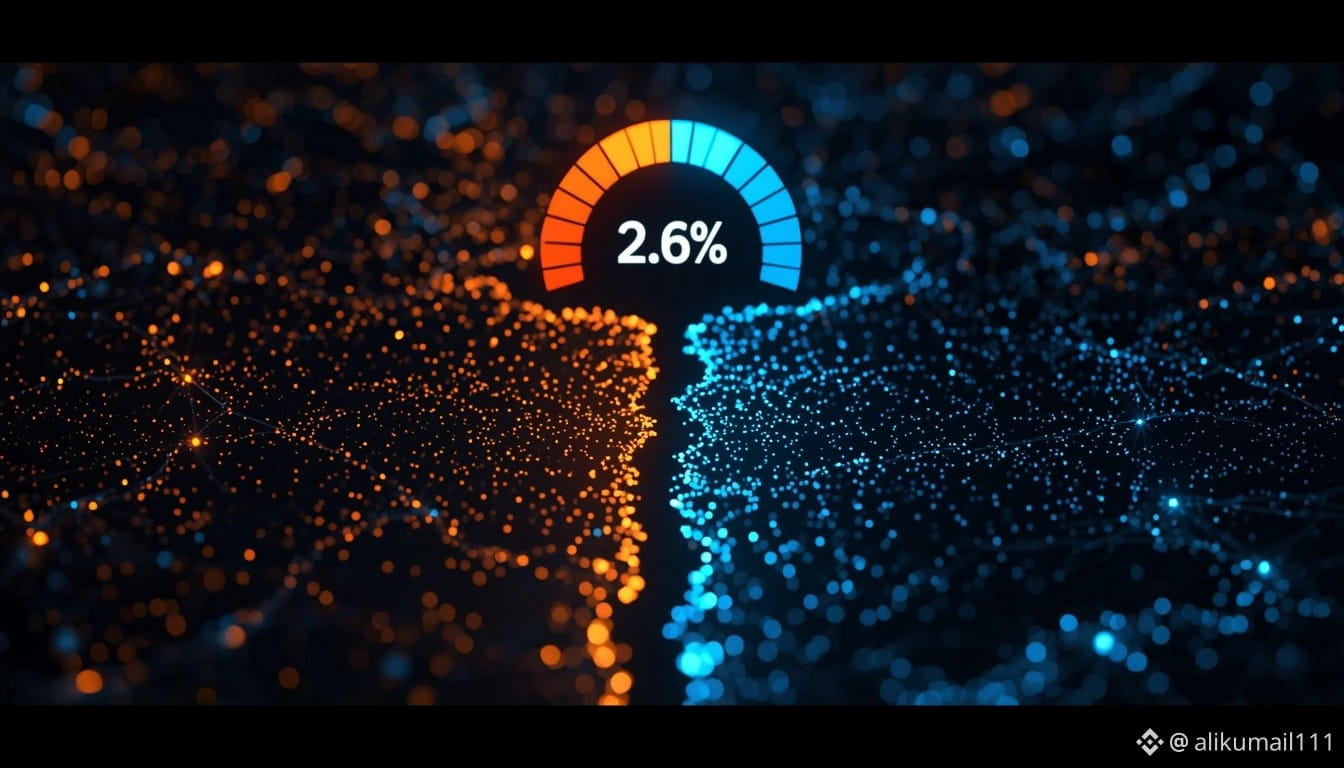
Bitcoin hasn't had a consensus rule change since Taproot (Nov 2021). That changes this weekend — BIP-110's mandatory signaling window opens at block 961,632, with miner support at just 2.6%.
🔍 What it does: Restricts arbitrary data (Ordinals, BRC-20, Runes) in Bitcoin transactions for ~1 year, capping data pushes at 256 bytes.
⚠️ Real chain-split risk: Critics like Adam Back and Jameson Lopp call it censorship. With signaling stuck at 2.6% (needs 55%), a small breakaway chain is the likelier outcome.
📊 For institutional holders: BlackRock's IBIT ETF ($44.95B) will NOT claim any forked assets — only self-custody holders get that option.
📌 My take: This is a genuine test of Bitcoin's governance process, regardless of the outcome.
⚠️ Not financial advice. DYOR.
📌 New to Binance? Join: https://www.binance.com/register?ref=779682229
#bitcoin #BTC #BIP110 #BinanceSquare
🚨 #BIP110ForkSignalingExpectedThisWeekend
$BTC
Bitcoin hasn't had a consensus rule change since Taproot (Nov 2021). That changes this weekend — BIP-110's mandatory signaling window opens at block 961,632, with miner support at just 2.6%.
🔍 What it does: Restricts arbitrary data (Ordinals, BRC-20, Runes) in Bitcoin transactions for ~1 year, capping data pushes at 256 bytes.
⚠️ Real chain-split risk: Critics like Adam Back and Jameson Lopp call it censorship. With signaling stuck at 2.6% (needs 55%), a small breakaway chain is the likelier outcome.
📊 For institutional holders: BlackRock's IBIT ETF ($44.95B) will NOT claim any forked assets — only self-custody holders get that option.
📌 My take: This is a genuine test of Bitcoin's governance process, regardless of the outcome.
⚠️ Not financial advice. DYOR.
📌 New to Binance? Join: https://www.binance.com/register?ref=779682229
#bitcoin #BTC #BIP110 #BinanceSquare
1
136

·
--
උසබ තත්ත්වය
සත්යායනය කළ
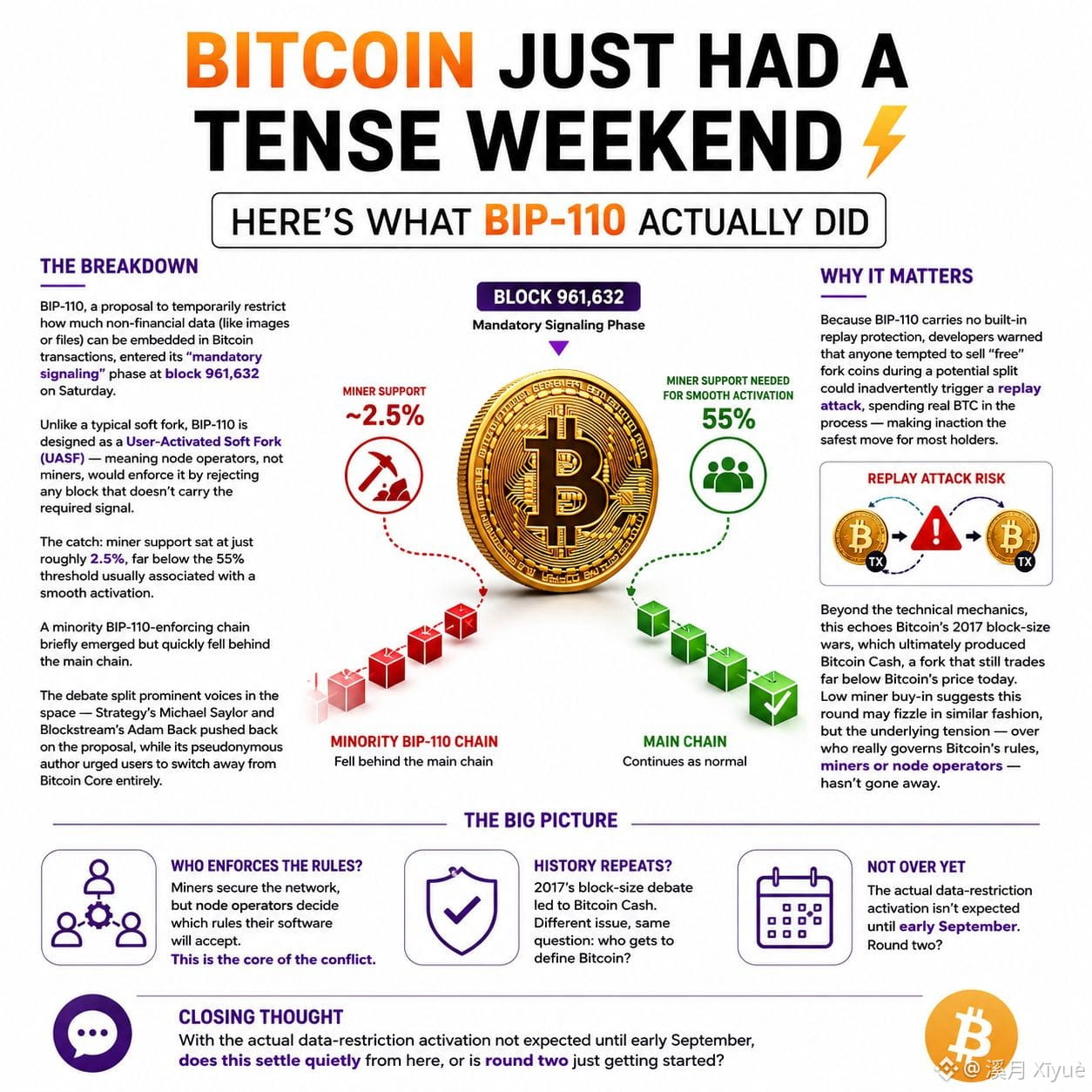
⚡ Bitcoin Just Had a Tense Weekend — Here's What BIP-110 Actually Did
Not every Bitcoin upgrade sparks warnings to abandon your node software. This one did.
The breakdown: BIP-110, a proposal to temporarily restrict how much non-financial data (like images or files) can be embedded in Bitcoin transactions, entered its "mandatory signaling" phase at block 961,632 on Saturday. Unlike a typical soft fork, BIP-110 is designed as a user-activated soft fork (UASF) — meaning node operators, not miners, would enforce it by rejecting any block that doesn't carry the required signal. The catch: miner support sat at just roughly 2.5%, far below the 55% threshold usually associated with a smooth activation. A minority BIP-110-enforcing chain briefly emerged but quickly fell behind the main chain. The debate split prominent voices in the space — Strategy's Michael Saylor and Blockstream's Adam Back pushed back on the proposal, while its pseudonymous author urged users to switch away from Bitcoin Core entirely.
Why it matters: Because BIP-110 carries no built-in replay protection, developers warned that anyone tempted to sell "free" fork coins during a potential split could inadvertently trigger a replay attack, spending real BTC in the process — making inaction the safest move for most holders. Beyond the technical mechanics, this echoes Bitcoin's 2017 block-size wars, which ultimately produced Bitcoin Cash, a fork that still trades far below Bitcoin's price today. Low miner buy-in suggests this round may fizzle in similar fashion, but the underlying tension — over who really governs Bitcoin's rules, miners or node operators — hasn't gone away.
Closing thought: With the actual data-restriction activation not expected until early September, does this settle quietly from here, or is round two just getting started?
$BTC
#bip110forksignalingexpectedthisweekend #BIP110SoftForkAttemptBegins
{future}(BTCUSDT)
⚡ Bitcoin Just Had a Tense Weekend — Here's What BIP-110 Actually Did
Not every Bitcoin upgrade sparks warnings to abandon your node software. This one did.
The breakdown: BIP-110, a proposal to temporarily restrict how much non-financial data (like images or files) can be embedded in Bitcoin transactions, entered its "mandatory signaling" phase at block 961,632 on Saturday. Unlike a typical soft fork, BIP-110 is designed as a user-activated soft fork (UASF) — meaning node operators, not miners, would enforce it by rejecting any block that doesn't carry the required signal. The catch: miner support sat at just roughly 2.5%, far below the 55% threshold usually associated with a smooth activation. A minority BIP-110-enforcing chain briefly emerged but quickly fell behind the main chain. The debate split prominent voices in the space — Strategy's Michael Saylor and Blockstream's Adam Back pushed back on the proposal, while its pseudonymous author urged users to switch away from Bitcoin Core entirely.
Why it matters: Because BIP-110 carries no built-in replay protection, developers warned that anyone tempted to sell "free" fork coins during a potential split could inadvertently trigger a replay attack, spending real BTC in the process — making inaction the safest move for most holders. Beyond the technical mechanics, this echoes Bitcoin's 2017 block-size wars, which ultimately produced Bitcoin Cash, a fork that still trades far below Bitcoin's price today. Low miner buy-in suggests this round may fizzle in similar fashion, but the underlying tension — over who really governs Bitcoin's rules, miners or node operators — hasn't gone away.
Closing thought: With the actual data-restriction activation not expected until early September, does this settle quietly from here, or is round two just getting started?
$BTC
#bip110forksignalingexpectedthisweekend #BIP110SoftForkAttemptBegins
1
3
3.4k

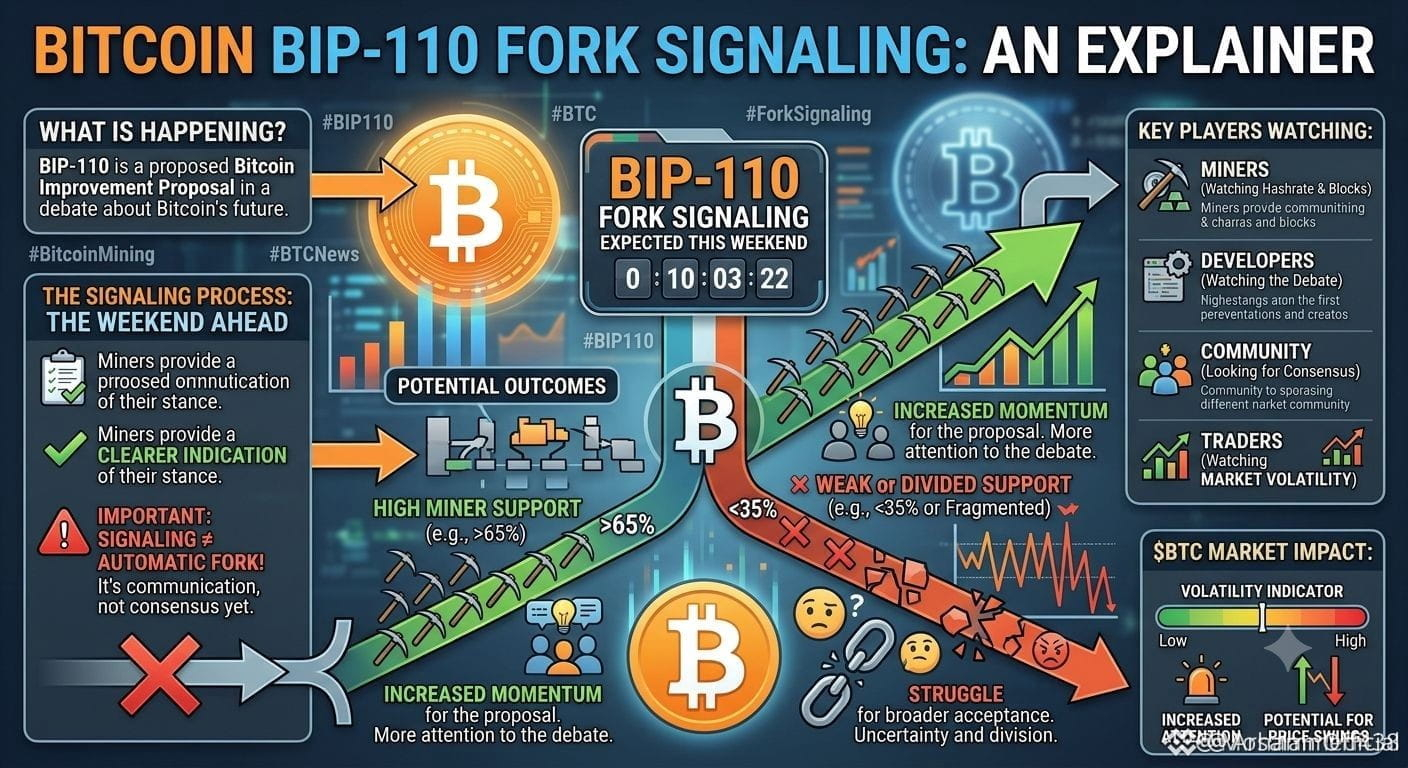
#BIP110ForkSignalingExpectedThisWeekend Yes — that hashtag matches the same BIP-110 event, but phrased from the pre-start expectation angle.
The key date detail is this: the “expected this weekend” wording was accurate before the trigger block was reached, but by Saturday, August 8, 2026 / Sunday, August 9, 2026, reporting says Bitcoin already hit block 961,632 and BIP-110 mandatory signaling has begun. So this is no longer just “expected” — it’s underway. (coindesk.com)
What that means in plain English:
BIP-110 is a disputed Bitcoin soft-fork proposal aimed at limiting arbitrary/non-financial data in transactions for a period of time. (en.cryptonomist.ch)
The network entered the mandatory signaling window at block 961,632, which multiple reports projected for this weekend and then confirmed had been reached. (coindesk.com)
Early support appears very low — under 3% miner signaling in the reporting I found — far below the level supporters were hoping for. (coindesk.com)
Because of that, the near-term story is less “clean upgrade activation” and more contention, possible minority-chain behavior, and replay-risk concerns if a split emerges. (coindesk.com)
So the concise read of #BIP110ForkSignalingExpectedThisWeekend is:
It refers to the weekend when BIP-110 signaling was supposed to start — and as of August 9, 2026, that signaling phase has already started, with miner backing still very weak. (coindesk.com)$BTC
{spot}(BTCUSDT)
$BIP.US
{stock_us}(BIP.US)
#BIP110ForkSignalingExpectedThisWeekend Yes — that hashtag matches the same BIP-110 event, but phrased from the pre-start expectation angle.
The key date detail is this: the “expected this weekend” wording was accurate before the trigger block was reached, but by Saturday, August 8, 2026 / Sunday, August 9, 2026, reporting says Bitcoin already hit block 961,632 and BIP-110 mandatory signaling has begun. So this is no longer just “expected” — it’s underway. (coindesk.com)
What that means in plain English:
BIP-110 is a disputed Bitcoin soft-fork proposal aimed at limiting arbitrary/non-financial data in transactions for a period of time. (en.cryptonomist.ch)
The network entered the mandatory signaling window at block 961,632, which multiple reports projected for this weekend and then confirmed had been reached. (coindesk.com)
Early support appears very low — under 3% miner signaling in the reporting I found — far below the level supporters were hoping for. (coindesk.com)
Because of that, the near-term story is less “clean upgrade activation” and more contention, possible minority-chain behavior, and replay-risk concerns if a split emerges. (coindesk.com)
So the concise read of #BIP110ForkSignalingExpectedThisWeekend is:
It refers to the weekend when BIP-110 signaling was supposed to start — and as of August 9, 2026, that signaling phase has already started, with miner backing still very weak. (coindesk.com)$BTC
$BIP.US
1
26

CASSURE 🚨
Le controversé fork Bitcoin BIP-110 a fait un mouvement surprenant : minage de seulement deux blocs avant de s’arrêter.
La chaîne dissidente a hérité de la difficulté de minage de Bitcoin avec une puissance de hachage minimale, ce qui a entraîné des blocs minés à plusieurs heures d’intervalle. Ce problème survient car les deux chaînes acceptent actuellement les mêmes transactions, ce qui crée une incertitude. La faible puissance de hachage est le principal obstacle pour le BIP-110.
{future}(BTCUSDT)
Restez à l’écoute pour les mises à jour ⚡️!
$BTC $TUT $BMT
#BIP110ForkSignalingExpectedThisWeekend
CASSURE 🚨
Le controversé fork Bitcoin BIP-110 a fait un mouvement surprenant : minage de seulement deux blocs avant de s’arrêter.
La chaîne dissidente a hérité de la difficulté de minage de Bitcoin avec une puissance de hachage minimale, ce qui a entraîné des blocs minés à plusieurs heures d’intervalle. Ce problème survient car les deux chaînes acceptent actuellement les mêmes transactions, ce qui crée une incertitude. La faible puissance de hachage est le principal obstacle pour le BIP-110.
Restez à l’écoute pour les mises à jour ⚡️!
$BTC $TUT $BMT
#BIP110ForkSignalingExpectedThisWeekend
64

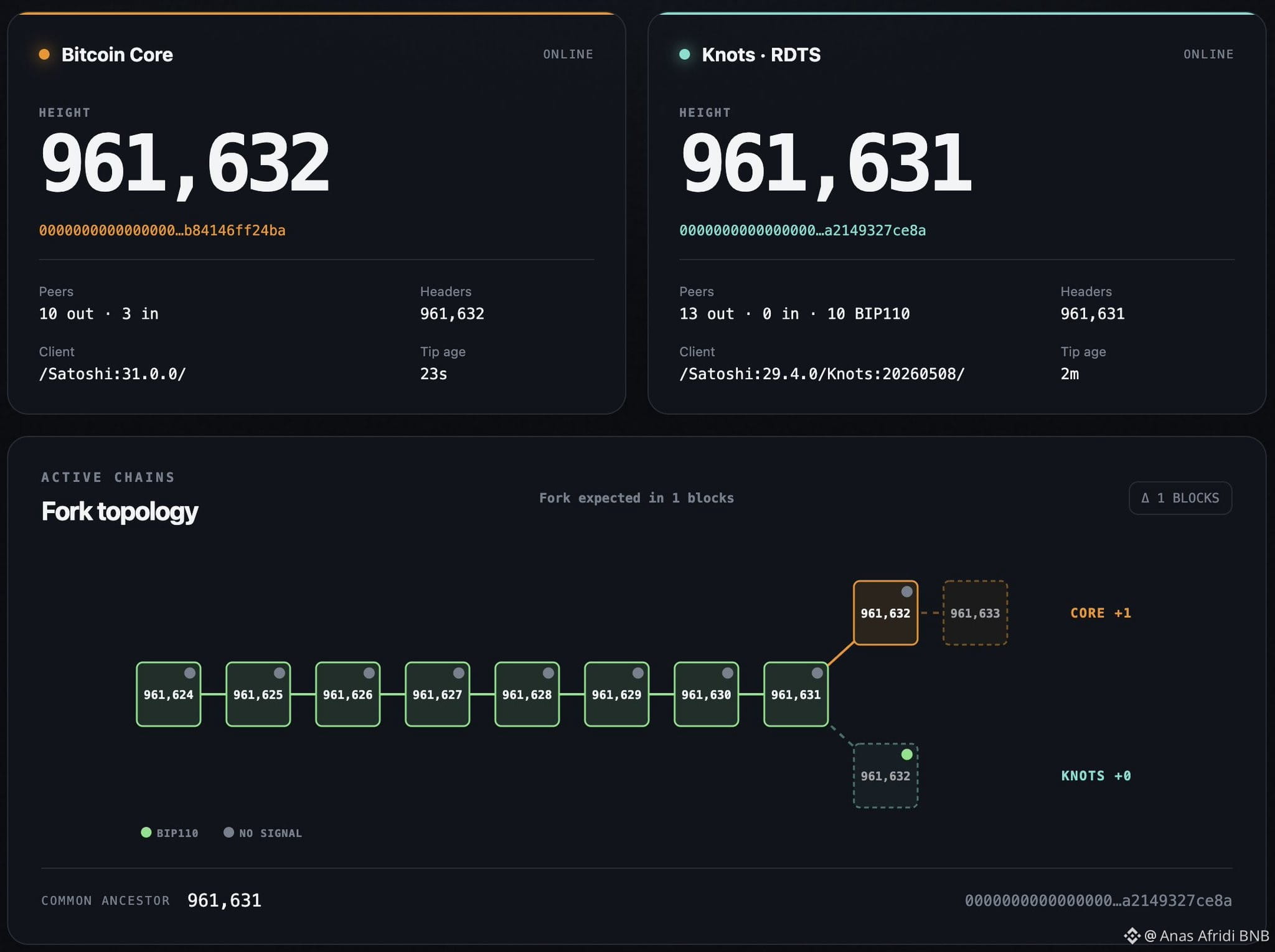
#BIP110ForkSignalingExpectedThisWeekend BIP-110 TLDR (for people who know nothing about it)
BIP-110 was a proposal to temporarily ban “spam” on Bitcoin (Ordinals, inscriptions, random data) for 1 year.
Mandatory signaling phase started yesterday (block 961,632).
Miner support? Only ~2.5%. Almost nothing.
What happened:
→ The main Bitcoin chain is running normally
→ The BIP-110-supporting nodes’ chain is stuck (frozen at 961,632)
No real chain split. The majority just ignored it.
Bitcoin is still the same Bitcoin.
This experiment is basically dead.
$BTC
{future}(BTCUSDT)
$TUT
{future}(TUTUSDT)
$4
{future}(4USDT)
#BIP110ForkSignalingExpectedThisWeekend BIP-110 TLDR (for people who know nothing about it)
BIP-110 was a proposal to temporarily ban “spam” on Bitcoin (Ordinals, inscriptions, random data) for 1 year.
Mandatory signaling phase started yesterday (block 961,632).
Miner support? Only ~2.5%. Almost nothing.
What happened:
→ The main Bitcoin chain is running normally
→ The BIP-110-supporting nodes’ chain is stuck (frozen at 961,632)
No real chain split. The majority just ignored it.
Bitcoin is still the same Bitcoin.
This experiment is basically dead.
$BTC
$TUT
$4
1
111
·
--
සත්යායනය කළ
#bip110forksignalingexpectedthisweekend
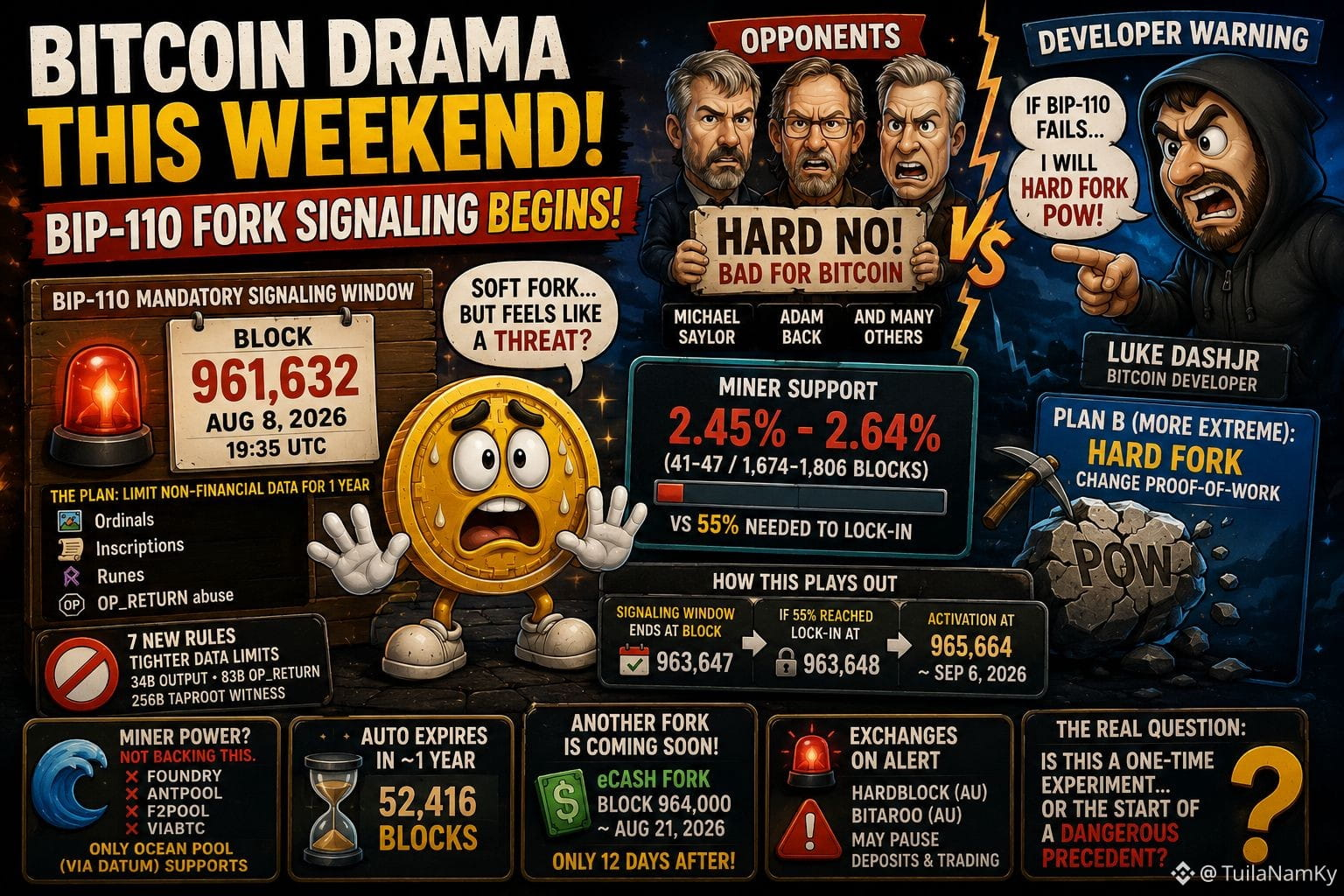
😂 BITCOIN HAS A FORK PROBLEM… BUT IT'S NOT WHAT YOU THINK.
BIP-110 just entered its mandatory signaling window at block 961,632 — and miner support is only around 2.6%.
The catch? It needs 55% to lock in early. 👀
So the headline sounds dramatic, but the numbers tell a different story.
BIP-110 wants to restrict certain types of non-financial data on Bitcoin, including Ordinals, inscriptions and other large data uses. Supporters call it a way to protect block space. Critics see it as an aggressive attempt to change Bitcoin without broad consensus.
📊 The numbers:
- Miner support: ~2.6%
- Lock-in threshold: 55%
- Signaling window ends: 963,647
- Activation target: 965,664
- New data limits: 34B / 83B / 256B
But here's the plot twist:
Signaling ≠ activation.
With support this low, full-network activation looks extremely unlikely right now. Yet BIP-110 nodes can still reject non-signaling blocks, creating a potential minority-chain risk.
And that's the bigger story.
👉 There's an even bigger threat quietly sitting behind this one. Developer Luke Dashjr has warned that if BIP-110 fails, his fallback isn't to walk away — it's a hard fork that changes Bitcoin's Proof-of-Work algorithm entirely. That's a different category of risk than a soft fork most people are focused on.
🧠 Square Insight: BIP-110 may fail as a soft fork — but succeed as a stress test for Bitcoin governance.
The real question isn't just "Will BIP-110 activate?"
It's: Who ultimately gets to decide what Bitcoin is allowed to become? 👀
#Bitcoin #BTC #Crypto #SquareInsight
$BTC
{future}(BTCUSDT)
#bip110forksignalingexpectedthisweekend
😂 BITCOIN HAS A FORK PROBLEM… BUT IT'S NOT WHAT YOU THINK.
BIP-110 just entered its mandatory signaling window at block 961,632 — and miner support is only around 2.6%.
The catch? It needs 55% to lock in early. 👀
So the headline sounds dramatic, but the numbers tell a different story.
BIP-110 wants to restrict certain types of non-financial data on Bitcoin, including Ordinals, inscriptions and other large data uses. Supporters call it a way to protect block space. Critics see it as an aggressive attempt to change Bitcoin without broad consensus.
📊 The numbers:
- Miner support: ~2.6%
- Lock-in threshold: 55%
- Signaling window ends: 963,647
- Activation target: 965,664
- New data limits: 34B / 83B / 256B
But here's the plot twist:
Signaling ≠ activation.
With support this low, full-network activation looks extremely unlikely right now. Yet BIP-110 nodes can still reject non-signaling blocks, creating a potential minority-chain risk.
And that's the bigger story.
👉 There's an even bigger threat quietly sitting behind this one. Developer Luke Dashjr has warned that if BIP-110 fails, his fallback isn't to walk away — it's a hard fork that changes Bitcoin's Proof-of-Work algorithm entirely. That's a different category of risk than a soft fork most people are focused on.
🧠 Square Insight: BIP-110 may fail as a soft fork — but succeed as a stress test for Bitcoin governance.
The real question isn't just "Will BIP-110 activate?"
It's: Who ultimately gets to decide what Bitcoin is allowed to become? 👀
#Bitcoin #BTC #Crypto #SquareInsight
$BTC
1
1
6
924

·
--
#BIP110ForkSignalingExpectedThisWeekend
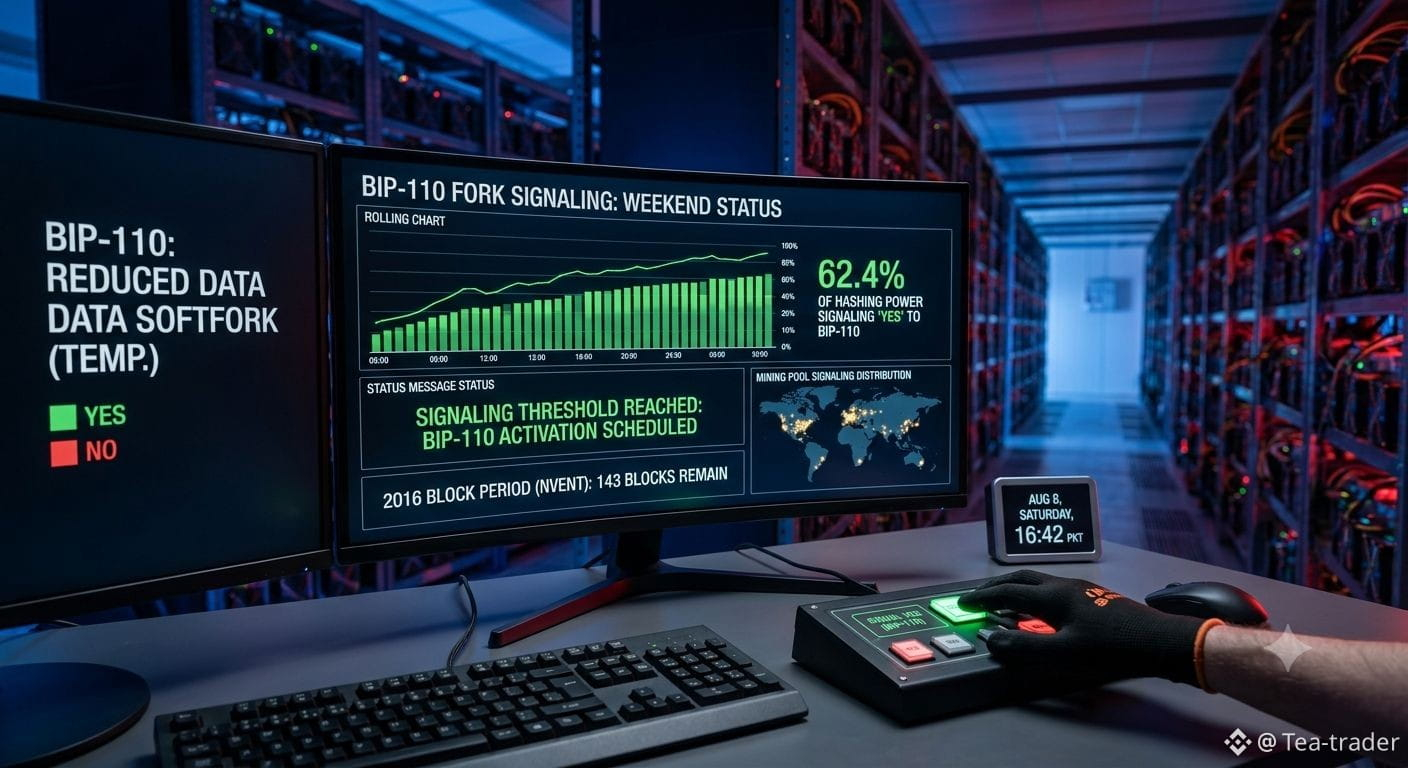
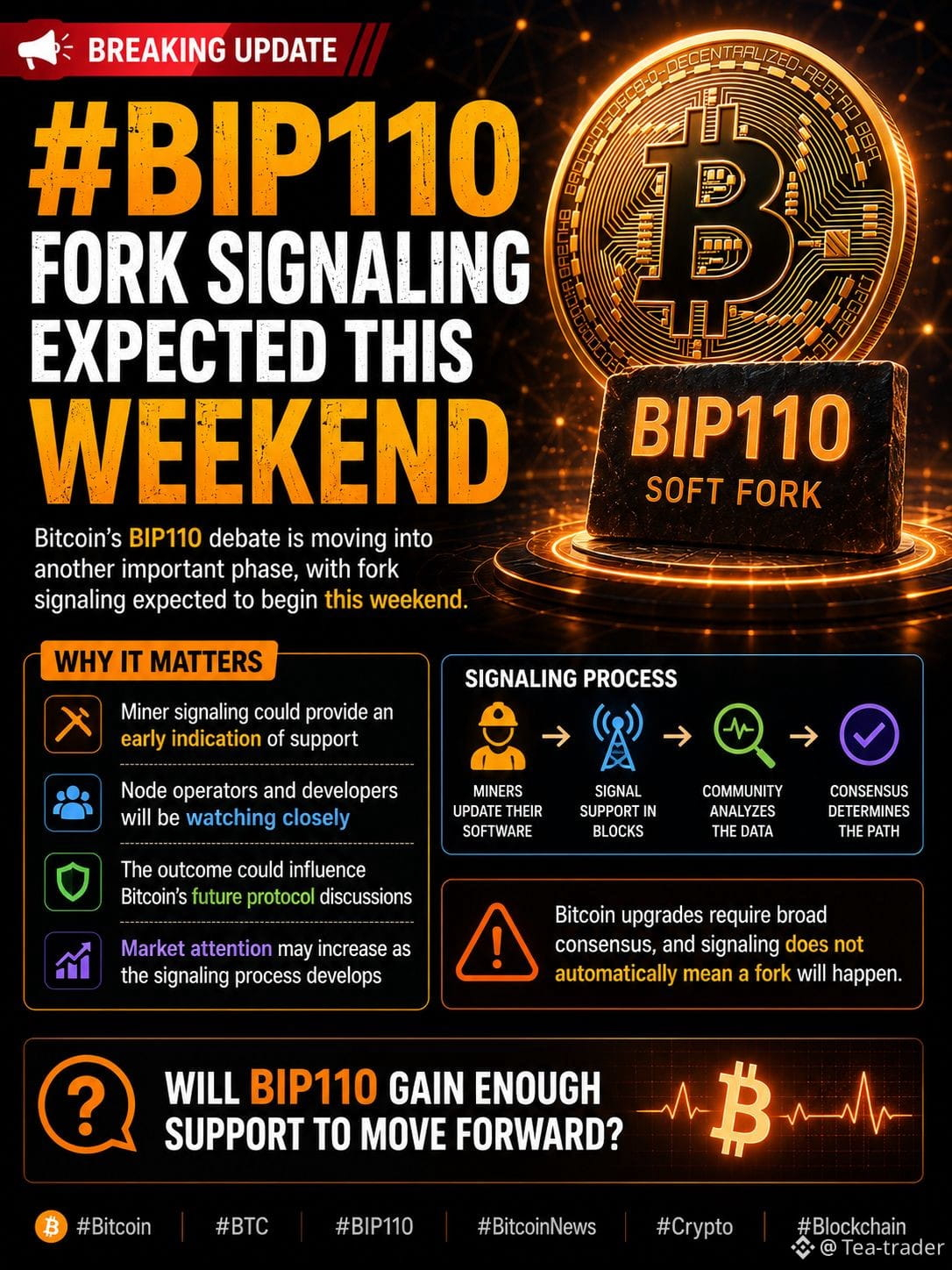
Bitcoin’s BIP110 debate is moving into another important phase, with fork signaling expected to begin this weekend. ⚡
🔹 Why it matters: • Miner signaling could provide an early indication of support
• Node operators and developers will be watching closely
• The outcome could influence Bitcoin’s future protocol discussions
• Market attention may increase as the signaling process develops
⚠️ Bitcoin upgrades require broad consensus, and signaling does not automatically mean a fork will happen.
👀 Will BIP110 gain enough support to move forward?
#Bitcoin #BTC #BIP110 #BitcoinNews #Crypto #Blockchain #SoftFork
49

·
--
#BIP110ForkSignalingExpectedThisWeekend
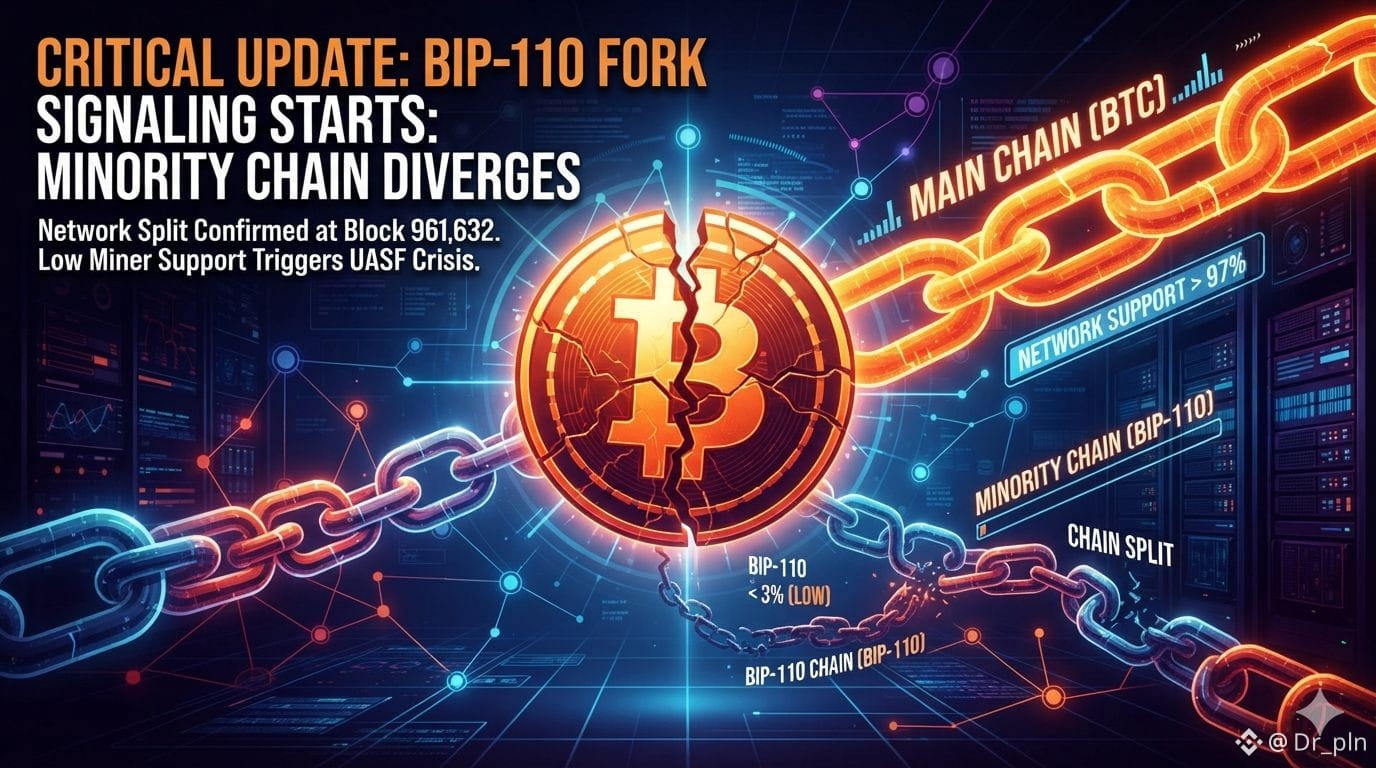
Fase signaling wajib BIP-110 resmi dimulai akhir pekan ini setelah Bitcoin mencapai block 961,632 pada Sabtu malam, 8 Agustus 2026. Peristiwa ini memicu ketegangan hebat di jaringan karena dukungan dari para miner (penambang) sangat rendah, yakni berada di bawah 3%. Angka ini sangat jauh dari ambang batas standar 55% yang diperlukan untuk aktivasi damai.
Akibat minimnya konsensus ini, jaringan Bitcoin telah mengalami chain split (perpecahan rantai) minor, di mana node-node yang menjalankan aturan BIP-110 memisahkan diri setelah menolak block non-signaling pertama yang diproduksi oleh mining pool raksasa
$BTC $BNB $ETH
52

El fork BIP-110 de Bitcoin acaba de señalizar activación este fin de semana, según los datos de hoy. Es el primer intento de soft fork desde Taproot en 2021, y la comunidad está dividida. BIP-110 propone cambios en la forma en que los nodos validan ciertas transacciones, buscando mejorar eficiencia sin romper compatibilidad. Pero acá está el detalle: un soft fork exitoso requiere consenso de mineros (95% de hashrate señalizando en un período de dificultad). Si no se alcanza ese umbral, el fork se aborta automáticamente. Históricamente, los intentos de fork han generado volatilidad de corto plazo en BTC, no por el cambio técnico en sí, sino por la incertidumbre sobre la cohesión de la red. En 2017, el debate SegWit/SegWit2x llevó a Bitcoin desde $2,500 a $20,000 en meses, pero con caídas brutales en el medio cada vez que el consenso parecía romperse. Hoy Bitcoin cotiza en $64,633, en rango entre $64,482 y $65,482. Si el fork avanza sin fricción, es neutral. Si genera controversia o split, mirá los soportes: $62,268 (PWL) es el siguiente imán de liquidez abajo. ¿Creés que BIP-110 va a pasar sin ruido o vamos a ver drama como en 2017? Dejá tu lectura en los comentarios.
#BIP110ForkSignalingExpectedThisWeekend
#BIP110ForkSignalingExpectedThisWeekend
98
තවත් අන්තර්ගතයන් ගවේෂණය කිරීමට ඇතුල් වන්න
Binance චතුරශ්රය හි ගෝලීය ක්රිප්ටෝ පරිශීලකයින් හා එක්වන්න
⚡️ ක්රිප්ටෝ පිළිබඳ නවතම සහ ප්රයෝජනවත් තොරතුරු ලබා ගන්න.
💬 ලොව විශාලතම ක්රිප්ටෝ හුවමාරුව මගින් විශ්වාස කෙරේ.
👍 සත්යායනය කරන ලද නිර්මාණකරුවන්ගෙන් සැබෑ විදසුන් සොයා ගන්න.
විද්යුත් තැපෑල / දුරකථන අංකය
නැගී එන මාතෘකා
1
#WhatWillDriveCryptoandStocks’NextRebound?
44,955 නැරඹීම්
640 සාකච්ඡා කරමින්
2
#Anthropic’s6xIPODemandSignalsPotentialRecordRaise
14,463 නැරඹීම්
308 සාකච්ඡා කරමින්
3
#KoreaDigitalAssetBasicActFinalDraftExpectedEarlyJanuary
0 නැරඹීම්
0 සාකච්ඡා කරමින්
4
#JaneStreetNearlyOctuplesFidelityBitcoinETFHoldings
1,428 නැරඹීම්
44 සාකච්ඡා කරමින්
5
#HuangExitNvidiaStrategyInFocus
191,013 නැරඹීම්
1,642 සාකච්ඡා කරමින්
6
#AnthropicRejectsIPODelayValuationinQuestion
814,629 නැරඹීම්
5,806 සාකච්ඡා කරමින්
7
#HedgeFundsCMEBitcoinNetShortsFall89%
18,329 නැරඹීම්
255 සාකච්ඡා කරමින්
8
#BitMineReports$6.3BNetLossForFiscal2026
27,131 නැරඹීම්
196 සාකච්ඡා කරමින්
9
#BitcoinETFOutflowsHit1.6B
3,377 නැරඹීම්
51 සාකච්ඡා කරමින්
10
#TradFiForBeginners
576,601 නැරඹීම්
4,001 සාකච්ඡා කරමින්