

JOSEPH DESOZE
16.8k Публикации

JOSEPH DESOZE
 Square Verified
Отправить жалобу
Заблокировать пользователя
Crypto Enthusiast, Market Analyst; Gem Hunter Blockchain Believer.
Открытая сделка
Трейдер с регулярными сделками
2 г
197 подписок(и/а)
30.1K+ подписчиков(а)
18.6K+ понравилось
Посты
Портфель
Все
Цитирования
Активно
·
--
Рост
Почему все вдруг называют HYPE дном?
$HYPE /USDT - LONG
Торговый план:
Вход: 88.884 – 89.522
SL: 86.140
TP1: 91.500
TP2: 93.032
TP3: 95.329
Почему это setup?
Дискуссия:
Достигаем ли мы TP2 на 93.032 или нас загонят в ловушку до аннулирования на 88.542?
⚠️ Только личный анализ рынка. NFA — контролируйте риски и DYOR.
Образовательный контент, не инвестиционный совет и не рекомендация покупать, продавать, вносить или выводить какие-либо активы. Нет платного продвижения или реферальных/партнерских ссылок.
{future}(HYPEUSDT)
Почему все вдруг называют HYPE дном?
$HYPE /USDT - LONG
Торговый план:
Вход: 88.884 – 89.522
SL: 86.140
TP1: 91.500
TP2: 93.032
TP3: 95.329
Почему это setup?
Дискуссия:
Достигаем ли мы TP2 на 93.032 или нас загонят в ловушку до аннулирования на 88.542?
⚠️ Только личный анализ рынка. NFA — контролируйте риски и DYOR.
Образовательный контент, не инвестиционный совет и не рекомендация покупать, продавать, вносить или выводить какие-либо активы. Нет платного продвижения или реферальных/партнерских ссылок.
$HYPE /USDT - LONG
Торговый план:
Вход: 88.884 – 89.522
SL: 86.140
TP1: 91.500
TP2: 93.032
TP3: 95.329
Почему это setup?
Дискуссия:
Достигаем ли мы TP2 на 93.032 или нас загонят в ловушку до аннулирования на 88.542?
⚠️ Только личный анализ рынка. NFA — контролируйте риски и DYOR.
Образовательный контент, не инвестиционный совет и не рекомендация покупать, продавать, вносить или выводить какие-либо активы. Нет платного продвижения или реферальных/партнерских ссылок.
186
#EarningsSeason
Это тот сегмент рынка, где график уже может перестать рассказывать всю историю.
Прогнозы по прибыли за 3-й квартал уже высоки. Последняя оценка FactSet предполагает рост прибыли S&P 500 примерно на 28,9% в годовом выражении — это будет третий подряд квартал с ростом выше 25%.
Но после внимательного наблюдения за сезонами отчетности главный показатель, который меня волнует больше всего, — это не EPS.
Это прогнозы.
Компания может превзойти ожидания, но все равно упасть в цене, если руководство понизит ориентиры. Другая может немного не дотянуть, но удержаться, если картина на будущее улучшится.
Вот почему этот сезон становится особенно интересным.
Выручка → маржи → прогнозы → capex.
В сфере ИИ и полупроводников особенно важны капитальные затраты (capex). Micron сообщит в среду, и рынок следит за тем, превращается ли спрос на память, обусловленный ИИ, в устойчивые цены и прибыль — а не просто в очередной сильный квартал.
И помимо технологий внимание стоит уделить и потребительскому сектору.
Более высокие расходы на энергию, доходности гособлигаций Казначейства и сохраняющаяся инфляция со временем могут отразиться на маржах и решениях о расходах.
Только на этой неделе запланированы отчеты Micron, Nike, Accenture, McCormick, Conagra и других — наряду с ключевыми макроэкономическими данными, включая ВВП, PCE и отчет по занятости за сентябрь.
Поэтому я не слежу за прибылью ради того, чтобы оценить превосходство в заголовках.
Я смотрю на то, что компании говорят после цифр.
Потому что рынок уже знает, что произошло в прошлом квартале.
Интересная информация — это то, как руководство считает, что будет дальше.
#EarningsSeason
Это тот сегмент рынка, где график уже может перестать рассказывать всю историю.
Прогнозы по прибыли за 3-й квартал уже высоки. Последняя оценка FactSet предполагает рост прибыли S&P 500 примерно на 28,9% в годовом выражении — это будет третий подряд квартал с ростом выше 25%.
Но после внимательного наблюдения за сезонами отчетности главный показатель, который меня волнует больше всего, — это не EPS.
Это прогнозы.
Компания может превзойти ожидания, но все равно упасть в цене, если руководство понизит ориентиры. Другая может немного не дотянуть, но удержаться, если картина на будущее улучшится.
Вот почему этот сезон становится особенно интересным.
Выручка → маржи → прогнозы → capex.
В сфере ИИ и полупроводников особенно важны капитальные затраты (capex). Micron сообщит в среду, и рынок следит за тем, превращается ли спрос на память, обусловленный ИИ, в устойчивые цены и прибыль — а не просто в очередной сильный квартал.
И помимо технологий внимание стоит уделить и потребительскому сектору.
Более высокие расходы на энергию, доходности гособлигаций Казначейства и сохраняющаяся инфляция со временем могут отразиться на маржах и решениях о расходах.
Только на этой неделе запланированы отчеты Micron, Nike, Accenture, McCormick, Conagra и других — наряду с ключевыми макроэкономическими данными, включая ВВП, PCE и отчет по занятости за сентябрь.
Поэтому я не слежу за прибылью ради того, чтобы оценить превосходство в заголовках.
Я смотрю на то, что компании говорят после цифр.
Потому что рынок уже знает, что произошло в прошлом квартале.
Интересная информация — это то, как руководство считает, что будет дальше.
Это тот сегмент рынка, где график уже может перестать рассказывать всю историю.
Прогнозы по прибыли за 3-й квартал уже высоки. Последняя оценка FactSet предполагает рост прибыли S&P 500 примерно на 28,9% в годовом выражении — это будет третий подряд квартал с ростом выше 25%.
Но после внимательного наблюдения за сезонами отчетности главный показатель, который меня волнует больше всего, — это не EPS.
Это прогнозы.
Компания может превзойти ожидания, но все равно упасть в цене, если руководство понизит ориентиры. Другая может немного не дотянуть, но удержаться, если картина на будущее улучшится.
Вот почему этот сезон становится особенно интересным.
Выручка → маржи → прогнозы → capex.
В сфере ИИ и полупроводников особенно важны капитальные затраты (capex). Micron сообщит в среду, и рынок следит за тем, превращается ли спрос на память, обусловленный ИИ, в устойчивые цены и прибыль — а не просто в очередной сильный квартал.
И помимо технологий внимание стоит уделить и потребительскому сектору.
Более высокие расходы на энергию, доходности гособлигаций Казначейства и сохраняющаяся инфляция со временем могут отразиться на маржах и решениях о расходах.
Только на этой неделе запланированы отчеты Micron, Nike, Accenture, McCormick, Conagra и других — наряду с ключевыми макроэкономическими данными, включая ВВП, PCE и отчет по занятости за сентябрь.
Поэтому я не слежу за прибылью ради того, чтобы оценить превосходство в заголовках.
Я смотрю на то, что компании говорят после цифр.
Потому что рынок уже знает, что произошло в прошлом квартале.
Интересная информация — это то, как руководство считает, что будет дальше.
411
#CircleMints500MUSDCOnSolana
Появилось $500M USDC в Solana.
На первый взгляд, это звучит как огромное событие по ликвидности.
Но если внимательно следить за потоками стейблкоинов, этому стоит уделить паузу.
Минт — это не то же самое, что капитал сразу устремляется в DeFi.
Собственное объяснение Circle довольно простое: когда соответствующее учреждение вносит доллары через Circle Mint, Circle выпускает эквивалентные USDC. Затем эти вновь созданные USDC можно распределить по кошелькам, биржам, маркет-мейкерам и приложениям.
И эта разница важна.
Мы уже видели это.
19 сентября Circle отчеканила еще $500M на Solana через две отдельные транзакции по 250M USDC. on-chain анализ показал, что большая часть этого баланса сначала оставалась на счете, помеченном как treasury, а не сразу превращалась в рыночную ликвидность.
Поэтому, когда я вижу еще один минт на $500M, меня меньше интересует заголовочная цифра.
Я слежу за тем, куда уходит USDC после минта.
Куда он попадает?
Биржевые кошельки?
Маркет-мейкеры?
Ликвидность DEX?
Кредитные протоколы?
Межчейн-инфраструктура?
Вот где сигнал становится по-настоящему интересным.
Есть и еще одна тихая деталь: USDC уже нативен для десятков сетей, и Circle говорит, что на 24 сентября у нее было около $75,2B в обращении, обеспеченных примерно $75,5B в резервах.
То есть минт в Solana может означать выпуск новой эмиссии, но кроссчейн-механики также могут перемещать то, где существует предложение USDC, не обязательно означая, что в крипто вошла равная сумма свежего глобального капитала.
Поэтому я бы не воспринимал $500M как «$500M просто вошли в Solana».
Я бы читал это так:
$500M потенциальной долларовой ликвидности были созданы в Solana.
Самое интересное начинается дальше.
Следите за кошельками.
Потому что реальная история обычно начинается после того, как транзакция минта исчезает из заголовков.
#CircleMints500MUSDCOnSolana
Появилось $500M USDC в Solana.
На первый взгляд, это звучит как огромное событие по ликвидности.
Но если внимательно следить за потоками стейблкоинов, этому стоит уделить паузу.
Минт — это не то же самое, что капитал сразу устремляется в DeFi.
Собственное объяснение Circle довольно простое: когда соответствующее учреждение вносит доллары через Circle Mint, Circle выпускает эквивалентные USDC. Затем эти вновь созданные USDC можно распределить по кошелькам, биржам, маркет-мейкерам и приложениям.
И эта разница важна.
Мы уже видели это.
19 сентября Circle отчеканила еще $500M на Solana через две отдельные транзакции по 250M USDC. on-chain анализ показал, что большая часть этого баланса сначала оставалась на счете, помеченном как treasury, а не сразу превращалась в рыночную ликвидность.
Поэтому, когда я вижу еще один минт на $500M, меня меньше интересует заголовочная цифра.
Я слежу за тем, куда уходит USDC после минта.
Куда он попадает?
Биржевые кошельки?
Маркет-мейкеры?
Ликвидность DEX?
Кредитные протоколы?
Межчейн-инфраструктура?
Вот где сигнал становится по-настоящему интересным.
Есть и еще одна тихая деталь: USDC уже нативен для десятков сетей, и Circle говорит, что на 24 сентября у нее было около $75,2B в обращении, обеспеченных примерно $75,5B в резервах.
То есть минт в Solana может означать выпуск новой эмиссии, но кроссчейн-механики также могут перемещать то, где существует предложение USDC, не обязательно означая, что в крипто вошла равная сумма свежего глобального капитала.
Поэтому я бы не воспринимал $500M как «$500M просто вошли в Solana».
Я бы читал это так:
$500M потенциальной долларовой ликвидности были созданы в Solana.
Самое интересное начинается дальше.
Следите за кошельками.
Потому что реальная история обычно начинается после того, как транзакция минта исчезает из заголовков.
Появилось $500M USDC в Solana.
На первый взгляд, это звучит как огромное событие по ликвидности.
Но если внимательно следить за потоками стейблкоинов, этому стоит уделить паузу.
Минт — это не то же самое, что капитал сразу устремляется в DeFi.
Собственное объяснение Circle довольно простое: когда соответствующее учреждение вносит доллары через Circle Mint, Circle выпускает эквивалентные USDC. Затем эти вновь созданные USDC можно распределить по кошелькам, биржам, маркет-мейкерам и приложениям.
И эта разница важна.
Мы уже видели это.
19 сентября Circle отчеканила еще $500M на Solana через две отдельные транзакции по 250M USDC. on-chain анализ показал, что большая часть этого баланса сначала оставалась на счете, помеченном как treasury, а не сразу превращалась в рыночную ликвидность.
Поэтому, когда я вижу еще один минт на $500M, меня меньше интересует заголовочная цифра.
Я слежу за тем, куда уходит USDC после минта.
Куда он попадает?
Биржевые кошельки?
Маркет-мейкеры?
Ликвидность DEX?
Кредитные протоколы?
Межчейн-инфраструктура?
Вот где сигнал становится по-настоящему интересным.
Есть и еще одна тихая деталь: USDC уже нативен для десятков сетей, и Circle говорит, что на 24 сентября у нее было около $75,2B в обращении, обеспеченных примерно $75,5B в резервах.
То есть минт в Solana может означать выпуск новой эмиссии, но кроссчейн-механики также могут перемещать то, где существует предложение USDC, не обязательно означая, что в крипто вошла равная сумма свежего глобального капитала.
Поэтому я бы не воспринимал $500M как «$500M просто вошли в Solana».
Я бы читал это так:
$500M потенциальной долларовой ликвидности были созданы в Solana.
Самое интересное начинается дальше.
Следите за кошельками.
Потому что реальная история обычно начинается после того, как транзакция минта исчезает из заголовков.
2
215
·
--
Рост
Большинство трейдеров прямо сейчас собираются быть застигнутыми врасплох SYMBOL.
$HYPE /USDT - LONG
Торговый план:
Вход: 92.404 – 92.922
SL: 90.177
TP1: 94.527
TP2: 95.770
TP3: 97.634
Почему эта схема?
Почему сейчас? Дневной тренд бычий, а цена на 1ч стоит ровно на уровне входа-ориентира 92.663. RSI на 15м на уровне 46.29 показывает, что актив еще не перекуплен, оставляя пространство для дальнейшего движения. ATR на 1ч равен 1.035698, и это говорит о том, что рынок достаточно волатилен, чтобы пройти путь от зоны входа 92.404 до 92.922 вплоть до TP1 94.527 и дальше до TP2 95.770. Уровень аннулирования на 90.147 — это жесткий стоп, который защищает эту сделку.
Дискуссия:
Мы пробиваем TP2 или нас загонит в ловушку на 95.770?
⚠️ Личный рыночный анализ. NFA — контролируйте риски и DYOR.
Образовательный контент, не инвестиционный совет и не рекомендация покупать, продавать, вносить или выводить любые активы. Нет платного продвижения или реферальных/партнерских ссылок.
{future}(HYPEUSDT)
Большинство трейдеров прямо сейчас собираются быть застигнутыми врасплох SYMBOL.
$HYPE /USDT - LONG
Торговый план:
Вход: 92.404 – 92.922
SL: 90.177
TP1: 94.527
TP2: 95.770
TP3: 97.634
Почему эта схема?
Почему сейчас? Дневной тренд бычий, а цена на 1ч стоит ровно на уровне входа-ориентира 92.663. RSI на 15м на уровне 46.29 показывает, что актив еще не перекуплен, оставляя пространство для дальнейшего движения. ATR на 1ч равен 1.035698, и это говорит о том, что рынок достаточно волатилен, чтобы пройти путь от зоны входа 92.404 до 92.922 вплоть до TP1 94.527 и дальше до TP2 95.770. Уровень аннулирования на 90.147 — это жесткий стоп, который защищает эту сделку.
Дискуссия:
Мы пробиваем TP2 или нас загонит в ловушку на 95.770?
⚠️ Личный рыночный анализ. NFA — контролируйте риски и DYOR.
Образовательный контент, не инвестиционный совет и не рекомендация покупать, продавать, вносить или выводить любые активы. Нет платного продвижения или реферальных/партнерских ссылок.
$HYPE /USDT - LONG
Торговый план:
Вход: 92.404 – 92.922
SL: 90.177
TP1: 94.527
TP2: 95.770
TP3: 97.634
Почему эта схема?
Почему сейчас? Дневной тренд бычий, а цена на 1ч стоит ровно на уровне входа-ориентира 92.663. RSI на 15м на уровне 46.29 показывает, что актив еще не перекуплен, оставляя пространство для дальнейшего движения. ATR на 1ч равен 1.035698, и это говорит о том, что рынок достаточно волатилен, чтобы пройти путь от зоны входа 92.404 до 92.922 вплоть до TP1 94.527 и дальше до TP2 95.770. Уровень аннулирования на 90.147 — это жесткий стоп, который защищает эту сделку.
Дискуссия:
Мы пробиваем TP2 или нас загонит в ловушку на 95.770?
⚠️ Личный рыночный анализ. NFA — контролируйте риски и DYOR.
Образовательный контент, не инвестиционный совет и не рекомендация покупать, продавать, вносить или выводить любые активы. Нет платного продвижения или реферальных/партнерских ссылок.
1
181
·
--
Падение
Все смотрят, как SYMBOL растёт, но одно число говорит об обратном.
$WLD /USDT - КОРОТКАЯ
Торговый план:
Вход: 0.4562 – 0.4602
SL: 0.4776
TP1: 0.4436
TP2: 0.4339
TP3: 0.4193
Почему эта схема?
Почему сейчас? Потому что дневной тренд всё ещё представляет собой диапазон: сторонники восходящего движения, возможно, сражаются с пустотой. RSI на 15м на уровне 73.23 показывает, что цена на 1ч уже «растянута» вверх, что часто предшествует откату, а не продолжению. При ATR на 1ч 0.008098 амплитуда достаточно активна, чтобы дать чистое движение от зоны входа 0.4562 к 0.4602 вниз к TP1 на 0.4436 и TP2 на 0.4339. Уровень аннулирования расположен на 0.4376 — это линия, за которой данная схема перестаёт работать.
Дискуссия:
Мы достигнем TP2 или нас «запрут»?
⚠️ Личный анализ рынка. NFA — контролируйте риск и DYOR.
Образовательный контент, а не инвестиционный совет или рекомендация покупать, продавать, вносить или выводить любые активы. Без платного продвижения или партнёрских/реферальных ссылок.
{future}(WLDUSDT)
Все смотрят, как SYMBOL растёт, но одно число говорит об обратном.
$WLD /USDT - КОРОТКАЯ
Торговый план:
Вход: 0.4562 – 0.4602
SL: 0.4776
TP1: 0.4436
TP2: 0.4339
TP3: 0.4193
Почему эта схема?
Почему сейчас? Потому что дневной тренд всё ещё представляет собой диапазон: сторонники восходящего движения, возможно, сражаются с пустотой. RSI на 15м на уровне 73.23 показывает, что цена на 1ч уже «растянута» вверх, что часто предшествует откату, а не продолжению. При ATR на 1ч 0.008098 амплитуда достаточно активна, чтобы дать чистое движение от зоны входа 0.4562 к 0.4602 вниз к TP1 на 0.4436 и TP2 на 0.4339. Уровень аннулирования расположен на 0.4376 — это линия, за которой данная схема перестаёт работать.
Дискуссия:
Мы достигнем TP2 или нас «запрут»?
⚠️ Личный анализ рынка. NFA — контролируйте риск и DYOR.
Образовательный контент, а не инвестиционный совет или рекомендация покупать, продавать, вносить или выводить любые активы. Без платного продвижения или партнёрских/реферальных ссылок.
$WLD /USDT - КОРОТКАЯ
Торговый план:
Вход: 0.4562 – 0.4602
SL: 0.4776
TP1: 0.4436
TP2: 0.4339
TP3: 0.4193
Почему эта схема?
Почему сейчас? Потому что дневной тренд всё ещё представляет собой диапазон: сторонники восходящего движения, возможно, сражаются с пустотой. RSI на 15м на уровне 73.23 показывает, что цена на 1ч уже «растянута» вверх, что часто предшествует откату, а не продолжению. При ATR на 1ч 0.008098 амплитуда достаточно активна, чтобы дать чистое движение от зоны входа 0.4562 к 0.4602 вниз к TP1 на 0.4436 и TP2 на 0.4339. Уровень аннулирования расположен на 0.4376 — это линия, за которой данная схема перестаёт работать.
Дискуссия:
Мы достигнем TP2 или нас «запрут»?
⚠️ Личный анализ рынка. NFA — контролируйте риск и DYOR.
Образовательный контент, а не инвестиционный совет или рекомендация покупать, продавать, вносить или выводить любые активы. Без платного продвижения или партнёрских/реферальных ссылок.
481
·
--
Рост
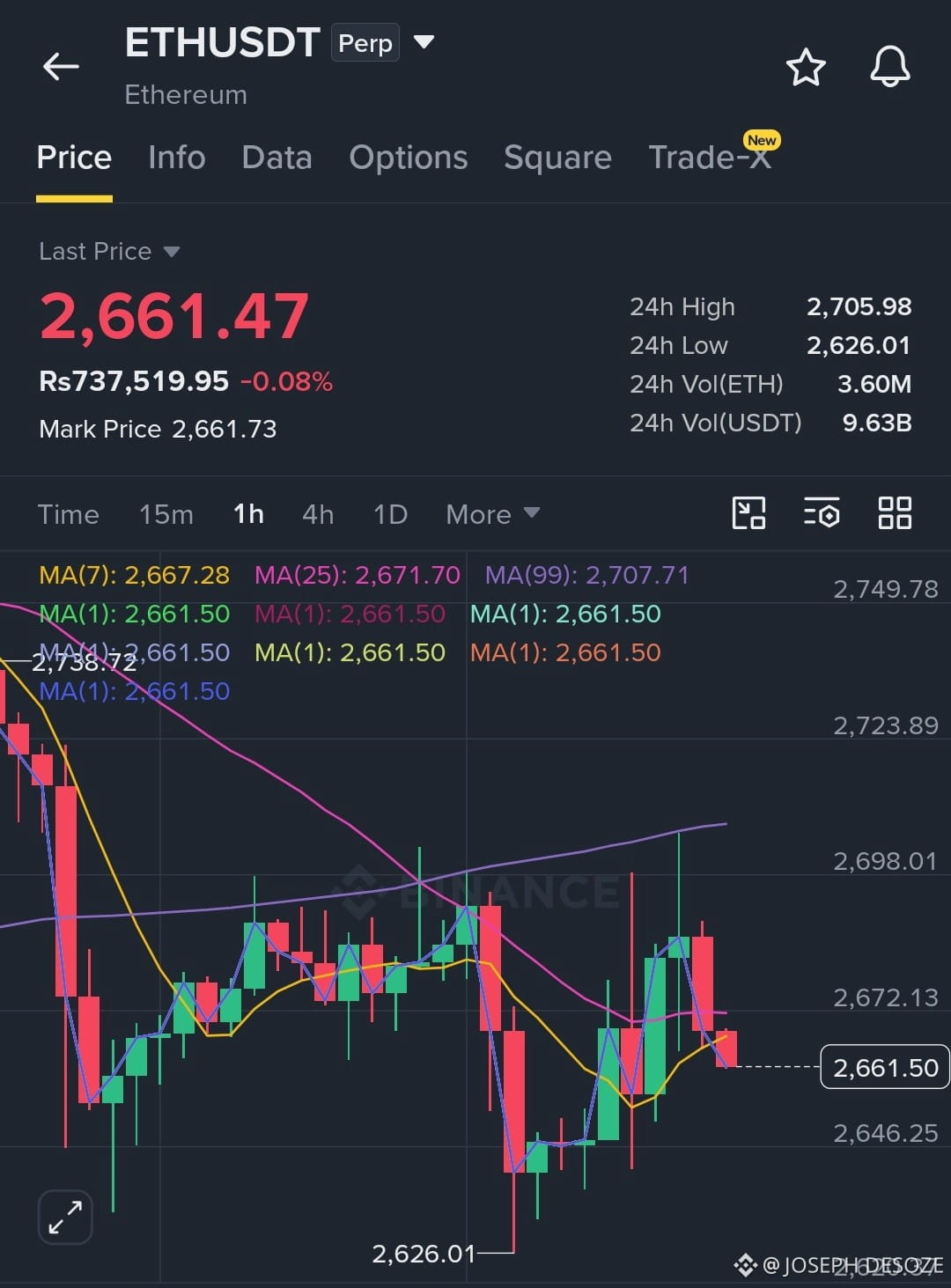
Никто не говорит об этом скрытом бычьем сетапе, который прямо сейчас формируется по $ETH/USDT.
$ETH /USDT - LONG
Торговый план:
Вход: 2662.48 – 2675.58
SL: 2606.18
TP1: 2716.17
TP2: 2747.60
TP3: 2794.74
Почему этот сетап?
Дискуссия:
Нас сейчас собираются подтолкнуть к TP2, или же уровень недействительности вот-вот раздавит лонги?
⚠️ Только личный анализ рынка. NFA — управляйте рисками и делайте DYOR.
Образовательный контент, не инвестиционный совет и не рекомендация покупать, продавать, вносить или выводить какие-либо активы. Нет платного продвижения или реферальных/партнёрских ссылок.
{future}(ETHUSDT)
#Ethereum
Никто не говорит об этом скрытом бычьем сетапе, который прямо сейчас формируется по $ETH /USDT.
$ETH /USDT - LONG
Торговый план:
Вход: 2662.48 – 2675.58
SL: 2606.18
TP1: 2716.17
TP2: 2747.60
TP3: 2794.74
Почему этот сетап?
Дискуссия:
Нас сейчас собираются подтолкнуть к TP2, или же уровень недействительности вот-вот раздавит лонги?
⚠️ Только личный анализ рынка. NFA — управляйте рисками и делайте DYOR.
Образовательный контент, не инвестиционный совет и не рекомендация покупать, продавать, вносить или выводить какие-либо активы. Нет платного продвижения или реферальных/партнёрских ссылок.
#Ethereum
$ETH /USDT - LONG
Торговый план:
Вход: 2662.48 – 2675.58
SL: 2606.18
TP1: 2716.17
TP2: 2747.60
TP3: 2794.74
Почему этот сетап?
Дискуссия:
Нас сейчас собираются подтолкнуть к TP2, или же уровень недействительности вот-вот раздавит лонги?
⚠️ Только личный анализ рынка. NFA — управляйте рисками и делайте DYOR.
Образовательный контент, не инвестиционный совет и не рекомендация покупать, продавать, вносить или выводить какие-либо активы. Нет платного продвижения или реферальных/партнёрских ссылок.
#Ethereum
320
Проверено
#binancewilllisthyperliquid(hype)
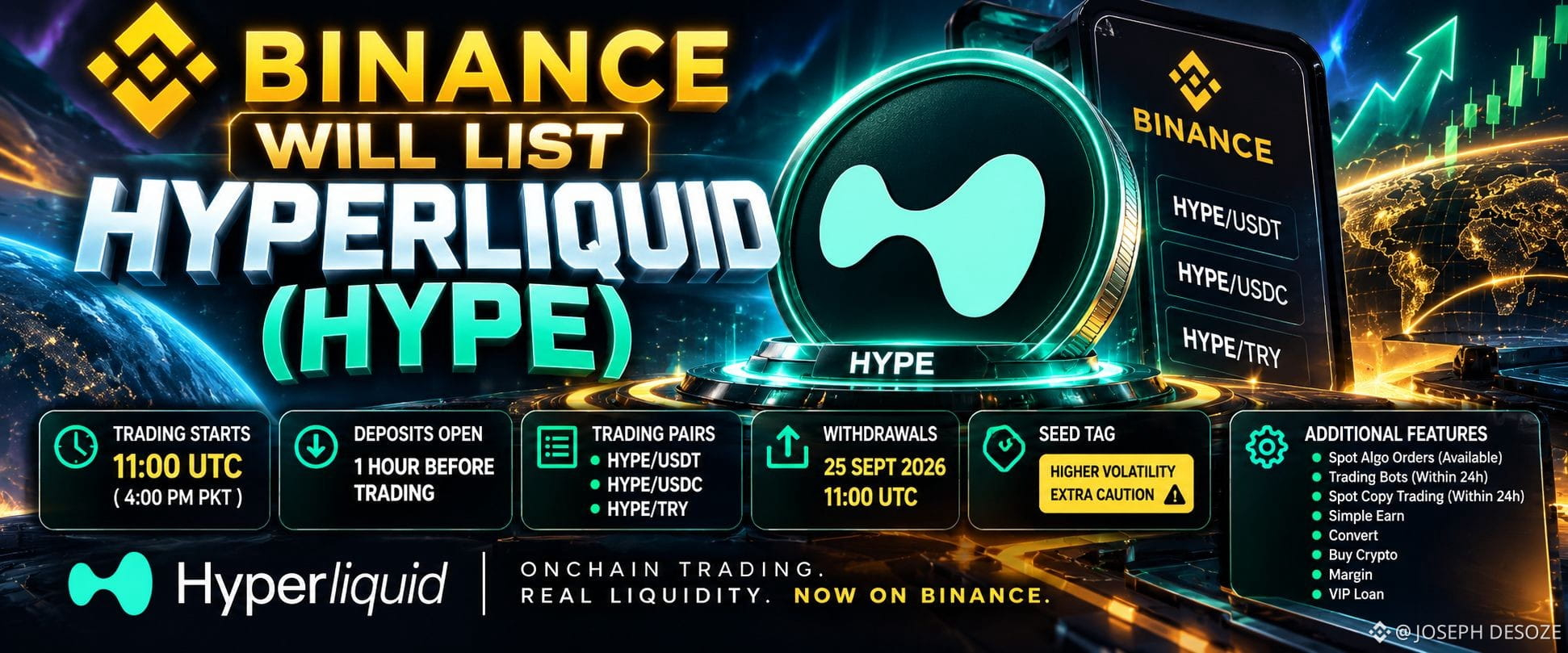
$HYPE на Binance ощущается больше, чем просто очередной листинг.
То, что привлекло мое внимание, — не то, что тикер появился на новой бирже.
А то, какой путь прошел HYPE, чтобы оказаться здесь.
Hyperliquid не начинала с попытки стать еще одной биржей-реестром токенов. Сначала появился продукт. Трейдеры пришли за исполнением, ликвидностью и onchain-перпами. А уже потом к этой экосистеме «прикрепился» HYPE.
Теперь Binance ставит этот актив перед совершенно другой аудиторией трейдеров.
HYPE/USDT.
HYPE/USDC.
HYPE/TRY.
И Binance присвоила ему Seed Tag — это небольшая деталь, на которую стоит обратить внимание. По сути, Binance говорит: это все еще актив, который требует дополнительной осторожности в отношении волатильности и рисков.
Это важно, потому что первая реакция, скорее всего, будет очевидной:
«Binance разместила HYPE».
Более интересный вопрос — что произойдет после того, как внимание первого дня исчезнет.
Станет ли ликвидность глубже?
Сохранится ли спрос на споте?
Продолжится ли активность вокруг Hyperliquid без необходимости в новом нарративе?
Именно там разница становится принципиальной.
Централизованная биржа может дать HYPE доступ к миллионам трейдеров.
Но она не может вечно «создавать» органичное использование на Hyperliquid.
Эта часть все равно должна прийти от самого продукта.
И после того, как некоторое время наблюдаешь за HYPE, именно эта деталь снова и снова возвращается в фокус.
Листинг на Binance меняет доступ.
Теперь посмотрим, что с этим сделает рынок.
#binancewilllisthyperliquid(hype)
$HYPE на Binance ощущается больше, чем просто очередной листинг.
То, что привлекло мое внимание, — не то, что тикер появился на новой бирже.
А то, какой путь прошел HYPE, чтобы оказаться здесь.
Hyperliquid не начинала с попытки стать еще одной биржей-реестром токенов. Сначала появился продукт. Трейдеры пришли за исполнением, ликвидностью и onchain-перпами. А уже потом к этой экосистеме «прикрепился» HYPE.
Теперь Binance ставит этот актив перед совершенно другой аудиторией трейдеров.
HYPE/USDT.
HYPE/USDC.
HYPE/TRY.
И Binance присвоила ему Seed Tag — это небольшая деталь, на которую стоит обратить внимание. По сути, Binance говорит: это все еще актив, который требует дополнительной осторожности в отношении волатильности и рисков.
Это важно, потому что первая реакция, скорее всего, будет очевидной:
«Binance разместила HYPE».
Более интересный вопрос — что произойдет после того, как внимание первого дня исчезнет.
Станет ли ликвидность глубже?
Сохранится ли спрос на споте?
Продолжится ли активность вокруг Hyperliquid без необходимости в новом нарративе?
Именно там разница становится принципиальной.
Централизованная биржа может дать HYPE доступ к миллионам трейдеров.
Но она не может вечно «создавать» органичное использование на Hyperliquid.
Эта часть все равно должна прийти от самого продукта.
И после того, как некоторое время наблюдаешь за HYPE, именно эта деталь снова и снова возвращается в фокус.
Листинг на Binance меняет доступ.
Теперь посмотрим, что с этим сделает рынок.
$HYPE на Binance ощущается больше, чем просто очередной листинг.
То, что привлекло мое внимание, — не то, что тикер появился на новой бирже.
А то, какой путь прошел HYPE, чтобы оказаться здесь.
Hyperliquid не начинала с попытки стать еще одной биржей-реестром токенов. Сначала появился продукт. Трейдеры пришли за исполнением, ликвидностью и onchain-перпами. А уже потом к этой экосистеме «прикрепился» HYPE.
Теперь Binance ставит этот актив перед совершенно другой аудиторией трейдеров.
HYPE/USDT.
HYPE/USDC.
HYPE/TRY.
И Binance присвоила ему Seed Tag — это небольшая деталь, на которую стоит обратить внимание. По сути, Binance говорит: это все еще актив, который требует дополнительной осторожности в отношении волатильности и рисков.
Это важно, потому что первая реакция, скорее всего, будет очевидной:
«Binance разместила HYPE».
Более интересный вопрос — что произойдет после того, как внимание первого дня исчезнет.
Станет ли ликвидность глубже?
Сохранится ли спрос на споте?
Продолжится ли активность вокруг Hyperliquid без необходимости в новом нарративе?
Именно там разница становится принципиальной.
Централизованная биржа может дать HYPE доступ к миллионам трейдеров.
Но она не может вечно «создавать» органичное использование на Hyperliquid.
Эта часть все равно должна прийти от самого продукта.
И после того, как некоторое время наблюдаешь за HYPE, именно эта деталь снова и снова возвращается в фокус.
Листинг на Binance меняет доступ.
Теперь посмотрим, что с этим сделает рынок.
1
1.1k
·
--
Рост
Все вот-вот упустят движение по BNB, которое уже прямо сейчас формируется.
$BNB /USDT - LONG
Торговый план:
Вход: 765.5 – 768.9
SL: 750.9
TP1: 779.4
TP2: 787.6
TP3: 799.8
Почему эта настройка?
Почему сейчас? Дневной тренд бычий, а цена на 1ч находится на уровне 767.2 — это также точная точка отсчёта для входа. RSI на 15м равен 43.91, то есть есть пространство для движения вверх до любой фазы истощения. ATR на 1ч составляет 6.801653, что показывает: каждой свече достаточно, чтобы дотянуться до первой цели 779.4 и второй цели 787.6. Зона входа между 765.5 и 768.9 достаточно узкая, чтобы дать чистую схему риск/прибыль. Уровень аннулирования — 756.9, и это жёсткая граница, которая защищает сделку.
Дискуссия:
Мы достигаем TP2 на 787.6 или уровень 756.9 уже собирается остановить движение?
⚠️ Личный анализ рынка. NFA — управляйте рисками и DYOR.
Образовательный контент, не является инвестиционной рекомендацией или призывом купить, продать, внести депозит или вывести любые активы. Нет платного продвижения или реферальных/партнёрских ссылок.
Все вот-вот упустят движение по BNB, которое уже прямо сейчас формируется.
$BNB /USDT - LONG
Торговый план:
Вход: 765.5 – 768.9
SL: 750.9
TP1: 779.4
TP2: 787.6
TP3: 799.8
Почему эта настройка?
Почему сейчас? Дневной тренд бычий, а цена на 1ч находится на уровне 767.2 — это также точная точка отсчёта для входа. RSI на 15м равен 43.91, то есть есть пространство для движения вверх до любой фазы истощения. ATR на 1ч составляет 6.801653, что показывает: каждой свече достаточно, чтобы дотянуться до первой цели 779.4 и второй цели 787.6. Зона входа между 765.5 и 768.9 достаточно узкая, чтобы дать чистую схему риск/прибыль. Уровень аннулирования — 756.9, и это жёсткая граница, которая защищает сделку.
Дискуссия:
Мы достигаем TP2 на 787.6 или уровень 756.9 уже собирается остановить движение?
⚠️ Личный анализ рынка. NFA — управляйте рисками и DYOR.
Образовательный контент, не является инвестиционной рекомендацией или призывом купить, продать, внести депозит или вывести любые активы. Нет платного продвижения или реферальных/партнёрских ссылок.
$BNB /USDT - LONG
Торговый план:
Вход: 765.5 – 768.9
SL: 750.9
TP1: 779.4
TP2: 787.6
TP3: 799.8
Почему эта настройка?
Почему сейчас? Дневной тренд бычий, а цена на 1ч находится на уровне 767.2 — это также точная точка отсчёта для входа. RSI на 15м равен 43.91, то есть есть пространство для движения вверх до любой фазы истощения. ATR на 1ч составляет 6.801653, что показывает: каждой свече достаточно, чтобы дотянуться до первой цели 779.4 и второй цели 787.6. Зона входа между 765.5 и 768.9 достаточно узкая, чтобы дать чистую схему риск/прибыль. Уровень аннулирования — 756.9, и это жёсткая граница, которая защищает сделку.
Дискуссия:
Мы достигаем TP2 на 787.6 или уровень 756.9 уже собирается остановить движение?
⚠️ Личный анализ рынка. NFA — управляйте рисками и DYOR.
Образовательный контент, не является инвестиционной рекомендацией или призывом купить, продать, внести депозит или вывести любые активы. Нет платного продвижения или реферальных/партнёрских ссылок.
81
·
--
Рост
Почему все игнорируют короткую формацию на $MU/USDT прямо сейчас?
$MU /USDT - ШОРТ
Торговый план:
Вход: 1069.6 – 1074.2
SL: 1094.3
TP1: 1055.1
TP2: 1043.9
TP3: 1027.1
Почему эта сетап-идея?
Дискуссия:
Мы достигнем TP2 на 1043.9 или нас выбьют до обесценивания/аннулирования на 1028.8?
⚠️ Только личный анализ рынка. NFA — управляйте рисками и проводите DYOR.
Образовательный контент, не инвестиционный совет и не рекомендация покупать, продавать, вносить депозит или выводить любые активы. Без платного продвижения или реферальных/партнёрских ссылок.
{future}(MUUSDT)
Почему все игнорируют короткую формацию на $MU /USDT прямо сейчас?
$MU /USDT - ШОРТ
Торговый план:
Вход: 1069.6 – 1074.2
SL: 1094.3
TP1: 1055.1
TP2: 1043.9
TP3: 1027.1
Почему эта сетап-идея?
Дискуссия:
Мы достигнем TP2 на 1043.9 или нас выбьют до обесценивания/аннулирования на 1028.8?
⚠️ Только личный анализ рынка. NFA — управляйте рисками и проводите DYOR.
Образовательный контент, не инвестиционный совет и не рекомендация покупать, продавать, вносить депозит или выводить любые активы. Без платного продвижения или реферальных/партнёрских ссылок.
$MU /USDT - ШОРТ
Торговый план:
Вход: 1069.6 – 1074.2
SL: 1094.3
TP1: 1055.1
TP2: 1043.9
TP3: 1027.1
Почему эта сетап-идея?
Дискуссия:
Мы достигнем TP2 на 1043.9 или нас выбьют до обесценивания/аннулирования на 1028.8?
⚠️ Только личный анализ рынка. NFA — управляйте рисками и проводите DYOR.
Образовательный контент, не инвестиционный совет и не рекомендация покупать, продавать, вносить депозит или выводить любые активы. Без платного продвижения или реферальных/партнёрских ссылок.
292
·
--
Рост
Почему $XAG/USDT удерживает зону входа так, будто это секрет, которого никто пока не заметил?
$XAG /USDT - LONG
Торговый план:
Вход: 64.37 – 64.57
SL: 63.22
TP1: 65.40
TP2: 66.03
TP3: 66.96
Почему эта настройка?
Почему сейчас? Цена на 1ч закреплена на уровне 64.47 внутри узкого дневного диапазона, а это значит, что рынок «сжат» и ждет катализатор. RSI на 15м находится на 39.43, что указывает на достаточно сильное медвежье истощение для вероятного разворота вверх, но без перекупленности. ATR на 1ч равен 0.39913, что подтверждает сжатую волатильность, поэтому пробой из этой зоны входа между 64.37 и 64.57 может быть взрывным. Цели TP1 на 65.40 и TP2 на 66.03 дают понятное измеренное движение, но линия «разворота» отменяется на 65.38, потому что любое движение выше разрушает всю схему.
Дискуссия:
Мы сейчас собираемся пробить TP2 на 66.03 или 65.38 отправит цену прямо в альт-сделку?
⚠️ Личный анализ рынка. NFA — управляйте рисками и DYOR.
Образовательный контент, не инвестиционный совет и не рекомендация покупать, продавать, вносить или выводить какие-либо активы. Без платного продвижения или партнерских/реферальных ссылок.
{future}(XAGUSDT)
Почему $XAG /USDT удерживает зону входа так, будто это секрет, которого никто пока не заметил?
$XAG /USDT - LONG
Торговый план:
Вход: 64.37 – 64.57
SL: 63.22
TP1: 65.40
TP2: 66.03
TP3: 66.96
Почему эта настройка?
Почему сейчас? Цена на 1ч закреплена на уровне 64.47 внутри узкого дневного диапазона, а это значит, что рынок «сжат» и ждет катализатор. RSI на 15м находится на 39.43, что указывает на достаточно сильное медвежье истощение для вероятного разворота вверх, но без перекупленности. ATR на 1ч равен 0.39913, что подтверждает сжатую волатильность, поэтому пробой из этой зоны входа между 64.37 и 64.57 может быть взрывным. Цели TP1 на 65.40 и TP2 на 66.03 дают понятное измеренное движение, но линия «разворота» отменяется на 65.38, потому что любое движение выше разрушает всю схему.
Дискуссия:
Мы сейчас собираемся пробить TP2 на 66.03 или 65.38 отправит цену прямо в альт-сделку?
⚠️ Личный анализ рынка. NFA — управляйте рисками и DYOR.
Образовательный контент, не инвестиционный совет и не рекомендация покупать, продавать, вносить или выводить какие-либо активы. Без платного продвижения или партнерских/реферальных ссылок.
$XAG /USDT - LONG
Торговый план:
Вход: 64.37 – 64.57
SL: 63.22
TP1: 65.40
TP2: 66.03
TP3: 66.96
Почему эта настройка?
Почему сейчас? Цена на 1ч закреплена на уровне 64.47 внутри узкого дневного диапазона, а это значит, что рынок «сжат» и ждет катализатор. RSI на 15м находится на 39.43, что указывает на достаточно сильное медвежье истощение для вероятного разворота вверх, но без перекупленности. ATR на 1ч равен 0.39913, что подтверждает сжатую волатильность, поэтому пробой из этой зоны входа между 64.37 и 64.57 может быть взрывным. Цели TP1 на 65.40 и TP2 на 66.03 дают понятное измеренное движение, но линия «разворота» отменяется на 65.38, потому что любое движение выше разрушает всю схему.
Дискуссия:
Мы сейчас собираемся пробить TP2 на 66.03 или 65.38 отправит цену прямо в альт-сделку?
⚠️ Личный анализ рынка. NFA — управляйте рисками и DYOR.
Образовательный контент, не инвестиционный совет и не рекомендация покупать, продавать, вносить или выводить какие-либо активы. Без платного продвижения или партнерских/реферальных ссылок.
246
·
--
Падение
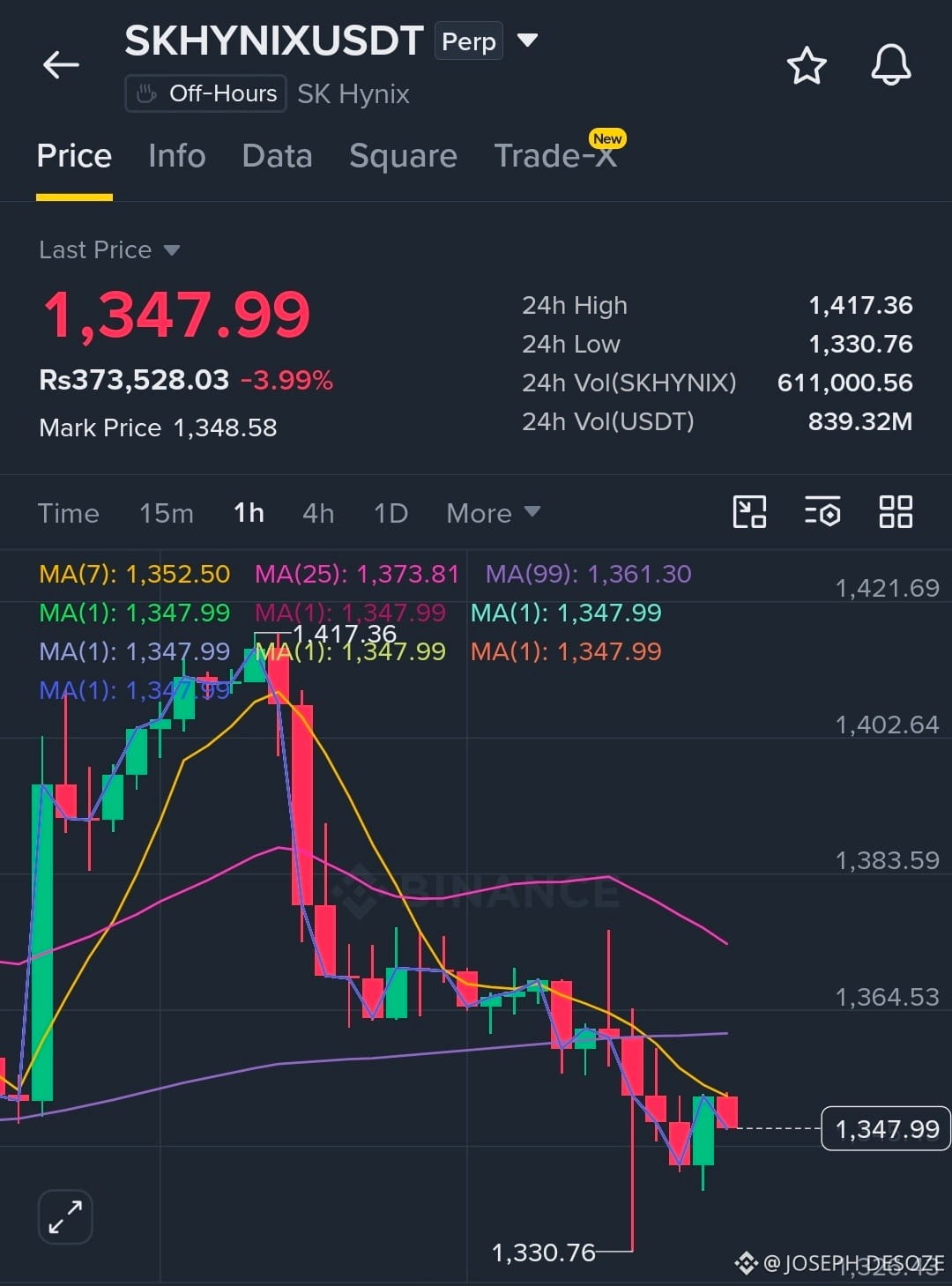
Все наблюдающие за $SKHYNIX/USDT в ожидании пробоя вот-вот получат неожиданный удар.
$SKHYNIX /USDT - SHORT
Торговый план:
Вход: 1346.79 – 1353.37
SL: 1381.63
TP1: 1326.42
TP2: 1310.64
TP3: 1286.98
Почему такая схема?
Почему сейчас? Дневной тренд — диапазон, который часто предшествует резкому движению, как только граница будет пробита. Цена на 1ч находится на 1350.08 — ровно на уровне, который указан как точка отсчёта для входа. RSI на 15м равен 46.83: это чуть-чуть медвежий уклон, достаточный для шорта, но без чрезмерной перепроданности. ATR на 1ч составляет 13.145382 — это подтверждает достаточно волатильности, чтобы дойти до первой цели 1326.42 и потенциально продвинуться ко второй цели 1310.64. Линия на песке — 1356.41; пробой ниже/выше этого уровня разрушает всю структуру сделки.
Дискуссия:
Мы достигнем TP2 или нас загонят в ловушку?
⚠️ Личный анализ рынка. NFA — управляйте рисками и проводите собственное исследование (DYOR).
Образовательный контент, не инвестиционный совет и не рекомендация покупать, продавать, вносить или выводить любые активы. Нет платного продвижения или реферальных/партнёрских ссылок.
{future}(SKHYNIXUSDT)
#AIStocksWhatNext #BCHJumps28%OnCMEFuturesListing #WallStreetEarningsRevisionsTurnBearish #DollarIndexReclaims101 #21SharesLaunchesEuropesFirstZcashETP
Все наблюдающие за $SKHYNIX /USDT в ожидании пробоя вот-вот получат неожиданный удар.
$SKHYNIX /USDT - SHORT
Торговый план:
Вход: 1346.79 – 1353.37
SL: 1381.63
TP1: 1326.42
TP2: 1310.64
TP3: 1286.98
Почему такая схема?
Почему сейчас? Дневной тренд — диапазон, который часто предшествует резкому движению, как только граница будет пробита. Цена на 1ч находится на 1350.08 — ровно на уровне, который указан как точка отсчёта для входа. RSI на 15м равен 46.83: это чуть-чуть медвежий уклон, достаточный для шорта, но без чрезмерной перепроданности. ATR на 1ч составляет 13.145382 — это подтверждает достаточно волатильности, чтобы дойти до первой цели 1326.42 и потенциально продвинуться ко второй цели 1310.64. Линия на песке — 1356.41; пробой ниже/выше этого уровня разрушает всю структуру сделки.
Дискуссия:
Мы достигнем TP2 или нас загонят в ловушку?
⚠️ Личный анализ рынка. NFA — управляйте рисками и проводите собственное исследование (DYOR).
Образовательный контент, не инвестиционный совет и не рекомендация покупать, продавать, вносить или выводить любые активы. Нет платного продвижения или реферальных/партнёрских ссылок.
#AIStocksWhatNext #BCHJumps28%OnCMEFuturesListing #WallStreetEarningsRevisionsTurnBearish #DollarIndexReclaims101 #21SharesLaunchesEuropesFirstZcashETP
$SKHYNIX /USDT - SHORT
Торговый план:
Вход: 1346.79 – 1353.37
SL: 1381.63
TP1: 1326.42
TP2: 1310.64
TP3: 1286.98
Почему такая схема?
Почему сейчас? Дневной тренд — диапазон, который часто предшествует резкому движению, как только граница будет пробита. Цена на 1ч находится на 1350.08 — ровно на уровне, который указан как точка отсчёта для входа. RSI на 15м равен 46.83: это чуть-чуть медвежий уклон, достаточный для шорта, но без чрезмерной перепроданности. ATR на 1ч составляет 13.145382 — это подтверждает достаточно волатильности, чтобы дойти до первой цели 1326.42 и потенциально продвинуться ко второй цели 1310.64. Линия на песке — 1356.41; пробой ниже/выше этого уровня разрушает всю структуру сделки.
Дискуссия:
Мы достигнем TP2 или нас загонят в ловушку?
⚠️ Личный анализ рынка. NFA — управляйте рисками и проводите собственное исследование (DYOR).
Образовательный контент, не инвестиционный совет и не рекомендация покупать, продавать, вносить или выводить любые активы. Нет платного продвижения или реферальных/партнёрских ссылок.
#AIStocksWhatNext #BCHJumps28%OnCMEFuturesListing #WallStreetEarningsRevisionsTurnBearish #DollarIndexReclaims101 #21SharesLaunchesEuropesFirstZcashETP
1
304
·
--
Рост
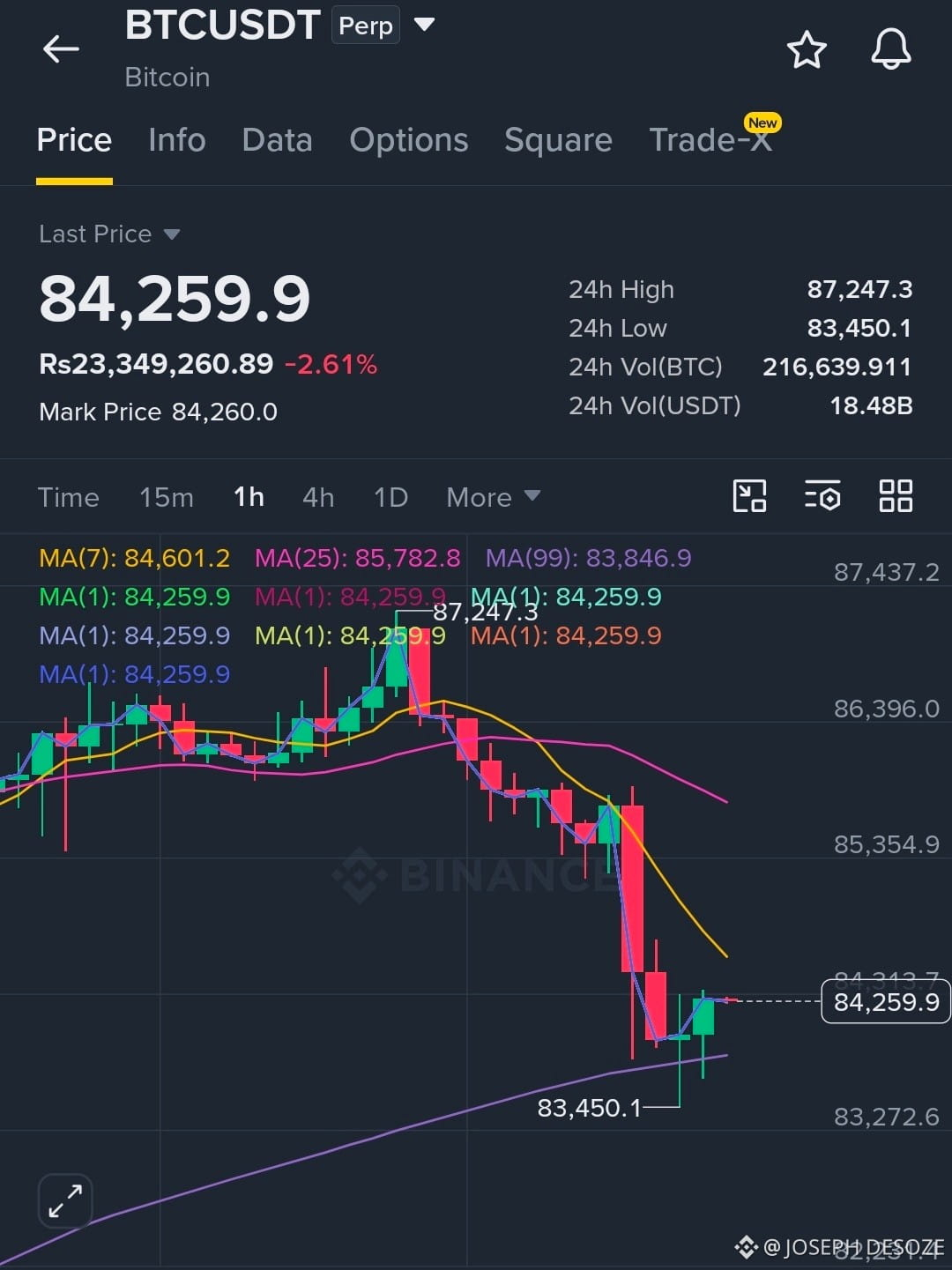
Никто не говорит об этой СХЕМЕ с SYMBOL, которая прячется на виду.
$BTC /USDT - LONG
Торговый план:
Вход: 84096.4 – 84398.4
SL: 82798.1
TP1: 85334.4
TP2: 86059.0
TP3: 87146.0
Почему эта схема?
Почему сейчас? 1d тренд бычий, а 15m RSI находится на уровне 35.97, то есть у краткосрочного отката есть пространство восстановиться, прежде чем импульс ослабнет. 1h ATR = 603.88 подтверждает расширение волатильности, давая сделке достаточно «воздуха». Зона входа вокруг 84247.4 находится на 1h ценовом движении: TP1 = 85334.4 и TP2 = 86059.0 дают «ступенчатые» цели, которые совпадают с движением старшего таймфрейма. Уровень аннулирования на 81396.0 — это абсолютная граница, защищающая позицию, если структура сломается.
Дискуссия:
Мы достигаем TP2 или нас выбросит у уровня аннулирования?
⚠️ Личный рыночный анализ. NFA — управляйте рисками и DYOR.
Образовательный контент, не инвестиционный совет и не рекомендация покупать, продавать, вносить или выводить любые активы. Нет платного продвижения или реферальных/партнёрских ссылок.
{future}(BTCUSDT)
#BTC
Никто не говорит об этой СХЕМЕ с SYMBOL, которая прячется на виду.
$BTC /USDT - LONG
Торговый план:
Вход: 84096.4 – 84398.4
SL: 82798.1
TP1: 85334.4
TP2: 86059.0
TP3: 87146.0
Почему эта схема?
Почему сейчас? 1d тренд бычий, а 15m RSI находится на уровне 35.97, то есть у краткосрочного отката есть пространство восстановиться, прежде чем импульс ослабнет. 1h ATR = 603.88 подтверждает расширение волатильности, давая сделке достаточно «воздуха». Зона входа вокруг 84247.4 находится на 1h ценовом движении: TP1 = 85334.4 и TP2 = 86059.0 дают «ступенчатые» цели, которые совпадают с движением старшего таймфрейма. Уровень аннулирования на 81396.0 — это абсолютная граница, защищающая позицию, если структура сломается.
Дискуссия:
Мы достигаем TP2 или нас выбросит у уровня аннулирования?
⚠️ Личный рыночный анализ. NFA — управляйте рисками и DYOR.
Образовательный контент, не инвестиционный совет и не рекомендация покупать, продавать, вносить или выводить любые активы. Нет платного продвижения или реферальных/партнёрских ссылок.
#BTC
$BTC /USDT - LONG
Торговый план:
Вход: 84096.4 – 84398.4
SL: 82798.1
TP1: 85334.4
TP2: 86059.0
TP3: 87146.0
Почему эта схема?
Почему сейчас? 1d тренд бычий, а 15m RSI находится на уровне 35.97, то есть у краткосрочного отката есть пространство восстановиться, прежде чем импульс ослабнет. 1h ATR = 603.88 подтверждает расширение волатильности, давая сделке достаточно «воздуха». Зона входа вокруг 84247.4 находится на 1h ценовом движении: TP1 = 85334.4 и TP2 = 86059.0 дают «ступенчатые» цели, которые совпадают с движением старшего таймфрейма. Уровень аннулирования на 81396.0 — это абсолютная граница, защищающая позицию, если структура сломается.
Дискуссия:
Мы достигаем TP2 или нас выбросит у уровня аннулирования?
⚠️ Личный рыночный анализ. NFA — управляйте рисками и DYOR.
Образовательный контент, не инвестиционный совет и не рекомендация покупать, продавать, вносить или выводить любые активы. Нет платного продвижения или реферальных/партнёрских ссылок.
#BTC
117
·
--
Рост
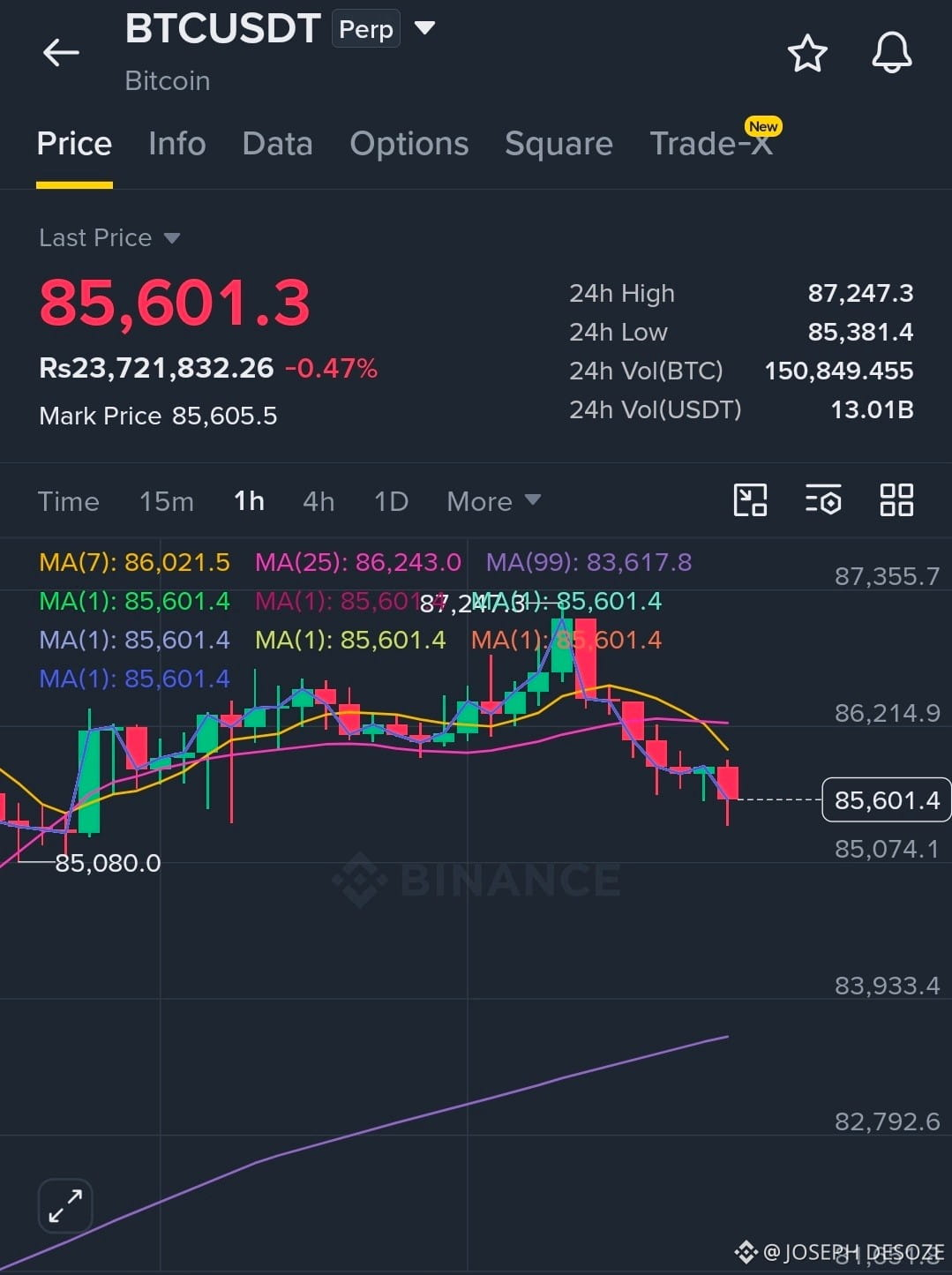
Большинство трейдеров вот-вот упустят редкую долгосрочную сделку на $BTC/USDT.
$BTC /USDT - LONG
Торговый план:
Вход: 85314.8 – 85555.8
SL: 84278.1
TP1: 86303.2
TP2: 86881.8
TP3: 87749.8
Почему эта сделка?
Почему сейчас? Дневной тренд бычий, цена на 1ч находится на 85435.3, а RSI на 15м упал до 29.31, сигнализируя о возможном развороте в лонг. ATR на 1ч равен 482.18 — текущая волатильность сжата достаточно, чтобы произошло решающее движение. Зона входа между 85314.8 и 85555.8 задаёт точное окно риска, а TP1 на 86303.2 и TP2 на 86881.8 дают два понятных целевых уровня прибыли. Уровень аннулирования на 81237.3 — это абсолютная линия, которая защищает сделку.
Дискуссия:
Мы пробиваем TP2 или нас загонит в ловушку дневная линия тренда?
⚠️ Личный рыночный анализ. NFA — управляйте рисками и DYOR.
Обучающий контент, не инвестиционный совет и не рекомендация покупать, продавать, вносить или выводить какие-либо активы. Без платного продвижения или реферальных/партнёрских ссылок.
{future}(BTCUSDT)
#BTC
Большинство трейдеров вот-вот упустят редкую долгосрочную сделку на $BTC /USDT.
$BTC /USDT - LONG
Торговый план:
Вход: 85314.8 – 85555.8
SL: 84278.1
TP1: 86303.2
TP2: 86881.8
TP3: 87749.8
Почему эта сделка?
Почему сейчас? Дневной тренд бычий, цена на 1ч находится на 85435.3, а RSI на 15м упал до 29.31, сигнализируя о возможном развороте в лонг. ATR на 1ч равен 482.18 — текущая волатильность сжата достаточно, чтобы произошло решающее движение. Зона входа между 85314.8 и 85555.8 задаёт точное окно риска, а TP1 на 86303.2 и TP2 на 86881.8 дают два понятных целевых уровня прибыли. Уровень аннулирования на 81237.3 — это абсолютная линия, которая защищает сделку.
Дискуссия:
Мы пробиваем TP2 или нас загонит в ловушку дневная линия тренда?
⚠️ Личный рыночный анализ. NFA — управляйте рисками и DYOR.
Обучающий контент, не инвестиционный совет и не рекомендация покупать, продавать, вносить или выводить какие-либо активы. Без платного продвижения или реферальных/партнёрских ссылок.
#BTC
$BTC /USDT - LONG
Торговый план:
Вход: 85314.8 – 85555.8
SL: 84278.1
TP1: 86303.2
TP2: 86881.8
TP3: 87749.8
Почему эта сделка?
Почему сейчас? Дневной тренд бычий, цена на 1ч находится на 85435.3, а RSI на 15м упал до 29.31, сигнализируя о возможном развороте в лонг. ATR на 1ч равен 482.18 — текущая волатильность сжата достаточно, чтобы произошло решающее движение. Зона входа между 85314.8 и 85555.8 задаёт точное окно риска, а TP1 на 86303.2 и TP2 на 86881.8 дают два понятных целевых уровня прибыли. Уровень аннулирования на 81237.3 — это абсолютная линия, которая защищает сделку.
Дискуссия:
Мы пробиваем TP2 или нас загонит в ловушку дневная линия тренда?
⚠️ Личный рыночный анализ. NFA — управляйте рисками и DYOR.
Обучающий контент, не инвестиционный совет и не рекомендация покупать, продавать, вносить или выводить какие-либо активы. Без платного продвижения или реферальных/партнёрских ссылок.
#BTC
116
·
--
Падение
Инсайдеры сейчас гасят отскок по SYMBOL.
$BCH /USDT - ШОРТ
Торговый план:
Вход: 348.1 – 353.7
SL: 385.4
TP1: 325.0
TP2: 307.8
TP3: 281.9
Почему это сработает?
Почему сейчас? Цена на 1ч находится на уровне 350.9 внутри узкой зоны входа, при этом дневной тренд остается в диапазоне, создавая низкорисковый шорт. RSI на 15м равен 49.89 — нет признаков ни перекупленности, ни перепроданности/истощения, а скорее нейтральный дрейф, который благоприятствует пробою. ATR на 1ч — 11.061712 — подтверждает достаточную волатильность, чтобы рынок ушел от зоны входа к первой цели 325.0 и второй цели 307.8. Уровень аннулирования стоит на 271.1 — это жесткая граница, ниже которой вся эта направленная концепция рушится.
Дискуссия:
Мы достигнем TP2 на 307.8 или нас выбьет до аннулирования на 271.1?
⚠️ Только личный анализ рынка. NFA — управляйте рисками и делайте DYOR.
Образовательный контент, не инвестиционный совет и не рекомендация покупать, продавать, вносить или выводить любые активы. Никакой платной рекламы или реферальных/партнерских ссылок.
{future}(BCHUSDT)
Инсайдеры сейчас гасят отскок по SYMBOL.
$BCH /USDT - ШОРТ
Торговый план:
Вход: 348.1 – 353.7
SL: 385.4
TP1: 325.0
TP2: 307.8
TP3: 281.9
Почему это сработает?
Почему сейчас? Цена на 1ч находится на уровне 350.9 внутри узкой зоны входа, при этом дневной тренд остается в диапазоне, создавая низкорисковый шорт. RSI на 15м равен 49.89 — нет признаков ни перекупленности, ни перепроданности/истощения, а скорее нейтральный дрейф, который благоприятствует пробою. ATR на 1ч — 11.061712 — подтверждает достаточную волатильность, чтобы рынок ушел от зоны входа к первой цели 325.0 и второй цели 307.8. Уровень аннулирования стоит на 271.1 — это жесткая граница, ниже которой вся эта направленная концепция рушится.
Дискуссия:
Мы достигнем TP2 на 307.8 или нас выбьет до аннулирования на 271.1?
⚠️ Только личный анализ рынка. NFA — управляйте рисками и делайте DYOR.
Образовательный контент, не инвестиционный совет и не рекомендация покупать, продавать, вносить или выводить любые активы. Никакой платной рекламы или реферальных/партнерских ссылок.
$BCH /USDT - ШОРТ
Торговый план:
Вход: 348.1 – 353.7
SL: 385.4
TP1: 325.0
TP2: 307.8
TP3: 281.9
Почему это сработает?
Почему сейчас? Цена на 1ч находится на уровне 350.9 внутри узкой зоны входа, при этом дневной тренд остается в диапазоне, создавая низкорисковый шорт. RSI на 15м равен 49.89 — нет признаков ни перекупленности, ни перепроданности/истощения, а скорее нейтральный дрейф, который благоприятствует пробою. ATR на 1ч — 11.061712 — подтверждает достаточную волатильность, чтобы рынок ушел от зоны входа к первой цели 325.0 и второй цели 307.8. Уровень аннулирования стоит на 271.1 — это жесткая граница, ниже которой вся эта направленная концепция рушится.
Дискуссия:
Мы достигнем TP2 на 307.8 или нас выбьет до аннулирования на 271.1?
⚠️ Только личный анализ рынка. NFA — управляйте рисками и делайте DYOR.
Образовательный контент, не инвестиционный совет и не рекомендация покупать, продавать, вносить или выводить любые активы. Никакой платной рекламы или реферальных/партнерских ссылок.
119
·
--
Рост
📊 *Обновление сигнала*
*Пара:* $PENGU USDT
*Направление:* LONG
*Плечо:* Cross 20X
*Вход:* 0.01068— 0.01046
🎯 *TP1:* 0.01091
🎯 *TP2:* 0.01117
🎯 *TP3:* 0.01180
🛡 *SL:* 0.09832
{future}(PENGUUSDT)
📊 *Обновление сигнала*
*Пара:* $PENGU USDT
*Направление:* LONG
*Плечо:* Cross 20X
*Вход:* 0.01068— 0.01046
🎯 *TP1:* 0.01091
🎯 *TP2:* 0.01117
🎯 *TP3:* 0.01180
🛡 *SL:* 0.09832
*Пара:* $PENGU USDT
*Направление:* LONG
*Плечо:* Cross 20X
*Вход:* 0.01068— 0.01046
🎯 *TP1:* 0.01091
🎯 *TP2:* 0.01117
🎯 *TP3:* 0.01180
🛡 *SL:* 0.09832
139
·
--
Рост
$ENA /USDT тихо накапливается перед пробоем, который большинство трейдеров пропустят.
$ENA/USDT - LONG
Торговый план:
Вход: 0.2059 – 0.2091
SL: 0.1925
TP1: 0.2187
TP2: 0.2262
TP3: 0.2374
Почему это сетап?
Почему сейчас? Дневной тренд бычий, а цена на 1ч находится на уровне 0.2073 — чуть ниже опорного входа 0.2075, формируя точный LONG. RSI на 15м на уровне 44.45 показывает потенциал для бычьего импульса до состояния перекупленности, а ATR на 1ч 0.006235 говорит, что следующий шаг легко может пройти TP1 0.2187. При TP2 0.2262 и TP3 0.2374 профиль прибыли «наслоен», но уровень аннулирования 0.1780 выступает как жесткая граница, защищающая сделку.
Дискуссия:
Мы достигнем TP2 или нас загонят?
⚠️ Только личный анализ рынка. NFA — управляйте рисками и проводите DYOR.
Образовательный контент, а не инвестиционный совет и не рекомендация покупать, продавать, вносить или выводить любые активы. Нет платного продвижения или реферальных/партнерских ссылок.
{future}(ENAUSDT)
$ENA /USDT тихо накапливается перед пробоем, который большинство трейдеров пропустят.
$ENA /USDT - LONG
Торговый план:
Вход: 0.2059 – 0.2091
SL: 0.1925
TP1: 0.2187
TP2: 0.2262
TP3: 0.2374
Почему это сетап?
Почему сейчас? Дневной тренд бычий, а цена на 1ч находится на уровне 0.2073 — чуть ниже опорного входа 0.2075, формируя точный LONG. RSI на 15м на уровне 44.45 показывает потенциал для бычьего импульса до состояния перекупленности, а ATR на 1ч 0.006235 говорит, что следующий шаг легко может пройти TP1 0.2187. При TP2 0.2262 и TP3 0.2374 профиль прибыли «наслоен», но уровень аннулирования 0.1780 выступает как жесткая граница, защищающая сделку.
Дискуссия:
Мы достигнем TP2 или нас загонят?
⚠️ Только личный анализ рынка. NFA — управляйте рисками и проводите DYOR.
Образовательный контент, а не инвестиционный совет и не рекомендация покупать, продавать, вносить или выводить любые активы. Нет платного продвижения или реферальных/партнерских ссылок.
$ENA /USDT - LONG
Торговый план:
Вход: 0.2059 – 0.2091
SL: 0.1925
TP1: 0.2187
TP2: 0.2262
TP3: 0.2374
Почему это сетап?
Почему сейчас? Дневной тренд бычий, а цена на 1ч находится на уровне 0.2073 — чуть ниже опорного входа 0.2075, формируя точный LONG. RSI на 15м на уровне 44.45 показывает потенциал для бычьего импульса до состояния перекупленности, а ATR на 1ч 0.006235 говорит, что следующий шаг легко может пройти TP1 0.2187. При TP2 0.2262 и TP3 0.2374 профиль прибыли «наслоен», но уровень аннулирования 0.1780 выступает как жесткая граница, защищающая сделку.
Дискуссия:
Мы достигнем TP2 или нас загонят?
⚠️ Только личный анализ рынка. NFA — управляйте рисками и проводите DYOR.
Образовательный контент, а не инвестиционный совет и не рекомендация покупать, продавать, вносить или выводить любые активы. Нет платного продвижения или реферальных/партнерских ссылок.
279
·
--
Рост
Инсайдеры тихо накапливают UNI, пока все остальные колеблются.
$UNI /USDT - LONG
Торговый план:
Вход: 8.70 – 8.80
SL: 8.27
TP1: 9.11
TP2: 9.35
TP3: 9.71
Почему эта схема?
Почему сейчас? Дневной тренд бычий, а 4h-смещение на лонг при 95% доверия указывает на высоковероятную сделку. Цена на 1h находится на уровне 8.75, идеально совпадая с зоной входа между 8.70 и 8.80. RSI на 15m равен 39.17 — это показывает, что актив приближается к зоне перепроданности, намекая на скорый отскок. ATR на 1h составляет 0.200908 — достаточно волатильности, чтобы пройти от входа к первой цели 9.11 и далее до 9.35, при этом уровень аннулирования 7.85 выступает как жесткая граница.
Дискуссия:
Нас сейчас вот-вот «выстрелит» до TP2 или это будет ложный пробой?
⚠️ Личный анализ рынка. NFA — управляйте рисками и DYOR.
Образовательный контент, не инвестиционный совет и не рекомендация покупать, продавать, вносить или выводить какие-либо активы. Нет платного продвижения или реферальных/партнерских ссылок.
{future}(UNIUSDT)
Инсайдеры тихо накапливают UNI, пока все остальные колеблются.
$UNI /USDT - LONG
Торговый план:
Вход: 8.70 – 8.80
SL: 8.27
TP1: 9.11
TP2: 9.35
TP3: 9.71
Почему эта схема?
Почему сейчас? Дневной тренд бычий, а 4h-смещение на лонг при 95% доверия указывает на высоковероятную сделку. Цена на 1h находится на уровне 8.75, идеально совпадая с зоной входа между 8.70 и 8.80. RSI на 15m равен 39.17 — это показывает, что актив приближается к зоне перепроданности, намекая на скорый отскок. ATR на 1h составляет 0.200908 — достаточно волатильности, чтобы пройти от входа к первой цели 9.11 и далее до 9.35, при этом уровень аннулирования 7.85 выступает как жесткая граница.
Дискуссия:
Нас сейчас вот-вот «выстрелит» до TP2 или это будет ложный пробой?
⚠️ Личный анализ рынка. NFA — управляйте рисками и DYOR.
Образовательный контент, не инвестиционный совет и не рекомендация покупать, продавать, вносить или выводить какие-либо активы. Нет платного продвижения или реферальных/партнерских ссылок.
$UNI /USDT - LONG
Торговый план:
Вход: 8.70 – 8.80
SL: 8.27
TP1: 9.11
TP2: 9.35
TP3: 9.71
Почему эта схема?
Почему сейчас? Дневной тренд бычий, а 4h-смещение на лонг при 95% доверия указывает на высоковероятную сделку. Цена на 1h находится на уровне 8.75, идеально совпадая с зоной входа между 8.70 и 8.80. RSI на 15m равен 39.17 — это показывает, что актив приближается к зоне перепроданности, намекая на скорый отскок. ATR на 1h составляет 0.200908 — достаточно волатильности, чтобы пройти от входа к первой цели 9.11 и далее до 9.35, при этом уровень аннулирования 7.85 выступает как жесткая граница.
Дискуссия:
Нас сейчас вот-вот «выстрелит» до TP2 или это будет ложный пробой?
⚠️ Личный анализ рынка. NFA — управляйте рисками и DYOR.
Образовательный контент, не инвестиционный совет и не рекомендация покупать, продавать, вносить или выводить какие-либо активы. Нет платного продвижения или реферальных/партнерских ссылок.
151
·
--
Рост
Все спят на HYPE, но 1ч ATR только что громко сказал обратное.
$HYPE /USDT - LONG
Торговый план:
Вход: 95.623 – 96.101
SL: 93.570
TP1: 97.581
TP2: 98.727
TP3: 100.445
Почему эта схема?
Почему сейчас? Дневной тренд бычий, а цена на 1ч находится на 95.845 — прямо внутри зоны входа между 95.623 и 96.101. RSI на 15м на уровне 65.64 показывает, что импульс здоровый, но пока не перегрет, оставляя пространство для движения к TP1 на 97.581, а затем к TP2 на 98.727. При значении 1ч ATR 0.95485 одно свечное движение может покрыть расстояние до TP1, делая риск-выгоду весьма привлекательной для лонга. Линия, на которой стоит “флаг”, — уровень отмены (инвалидации) 87.665; если HYPE пробьёт ниже, вся схема будет недействительна.
Дискуссия:
Мы уверенно доходим до TP2 на 98.727, или 1ч ATR вот-вот развернёт это движение?
⚠️ Личный анализ рынка. NFA — управляйте рисками и проводите DYOR.
Образовательный контент, не инвестиционный совет и не рекомендация купить, продать, внести или вывести какие-либо активы. Без платного продвижения или реферальных/партнёрских ссылок.
{future}(HYPEUSDT)
Все спят на HYPE, но 1ч ATR только что громко сказал обратное.
$HYPE /USDT - LONG
Торговый план:
Вход: 95.623 – 96.101
SL: 93.570
TP1: 97.581
TP2: 98.727
TP3: 100.445
Почему эта схема?
Почему сейчас? Дневной тренд бычий, а цена на 1ч находится на 95.845 — прямо внутри зоны входа между 95.623 и 96.101. RSI на 15м на уровне 65.64 показывает, что импульс здоровый, но пока не перегрет, оставляя пространство для движения к TP1 на 97.581, а затем к TP2 на 98.727. При значении 1ч ATR 0.95485 одно свечное движение может покрыть расстояние до TP1, делая риск-выгоду весьма привлекательной для лонга. Линия, на которой стоит “флаг”, — уровень отмены (инвалидации) 87.665; если HYPE пробьёт ниже, вся схема будет недействительна.
Дискуссия:
Мы уверенно доходим до TP2 на 98.727, или 1ч ATR вот-вот развернёт это движение?
⚠️ Личный анализ рынка. NFA — управляйте рисками и проводите DYOR.
Образовательный контент, не инвестиционный совет и не рекомендация купить, продать, внести или вывести какие-либо активы. Без платного продвижения или реферальных/партнёрских ссылок.
$HYPE /USDT - LONG
Торговый план:
Вход: 95.623 – 96.101
SL: 93.570
TP1: 97.581
TP2: 98.727
TP3: 100.445
Почему эта схема?
Почему сейчас? Дневной тренд бычий, а цена на 1ч находится на 95.845 — прямо внутри зоны входа между 95.623 и 96.101. RSI на 15м на уровне 65.64 показывает, что импульс здоровый, но пока не перегрет, оставляя пространство для движения к TP1 на 97.581, а затем к TP2 на 98.727. При значении 1ч ATR 0.95485 одно свечное движение может покрыть расстояние до TP1, делая риск-выгоду весьма привлекательной для лонга. Линия, на которой стоит “флаг”, — уровень отмены (инвалидации) 87.665; если HYPE пробьёт ниже, вся схема будет недействительна.
Дискуссия:
Мы уверенно доходим до TP2 на 98.727, или 1ч ATR вот-вот развернёт это движение?
⚠️ Личный анализ рынка. NFA — управляйте рисками и проводите DYOR.
Образовательный контент, не инвестиционный совет и не рекомендация купить, продать, внести или вывести какие-либо активы. Без платного продвижения или реферальных/партнёрских ссылок.
206
#AIStocksWhatNext
$NVDA $AMD $AVGO $MSFT $AMZN $META
Я всё время наблюдаю за тем, как торгуют на теме ИИ, и в последнее время меня меньше интересуют громкие заголовки.
Все говорят о моделях, GPU и о том, кто «побеждает» в ИИ.
А я смотрю на то, что находится под этим.
$NVDA недавно показала, насколько огромным стал спрос: $96,2B квартальной выручки и примерно $89B из сегмента Data Center.
Но самое интересное для меня — что будет дальше.
На обучение обращают внимание.
А вот инференс может стать повторяющимся бизнесом.
Ещё есть $AVGO. Её выручка от AI-полупроводников достигла $16,7B в Q3, рост на 221% год к году. Это говорит мне о том, что история становится больше, чем просто GPU. Гиперскейлеры всё чаще разрабатывают собственные чипы и контролируют всё больше своей инфраструктуры.
Microsoft и Amazon тоже тратят огромные деньги на дата-центры и вычисления.
И вот с этого места я начинаю задавать другие вопросы.
Кто на самом деле использует всю эту мощность?
Насколько эффективно?
Кто за это платит?
И когда эти расходы превратятся в устойчивый денежный поток?
Даже электричество становится частью истории. Проекты дата-центров конкурируют за доступную мощность энергосети в таких местах, как Техас.
Так что теперь я слежу за скучными вещами:
Электроэнергия. Охлаждение. Сети. Память. Использование.
Снаружи гонка ИИ может выглядеть как история про софт.
Но по сути всё чаще это выглядит как гонка за инфраструктуру.
Это то, за чем я наблюдаю.
#AIStocksWhatNext
$NVDA $AMD $AVGO $MSFT $AMZN $META
Я всё время наблюдаю за тем, как торгуют на теме ИИ, и в последнее время меня меньше интересуют громкие заголовки.
Все говорят о моделях, GPU и о том, кто «побеждает» в ИИ.
А я смотрю на то, что находится под этим.
$NVDA недавно показала, насколько огромным стал спрос: $96,2B квартальной выручки и примерно $89B из сегмента Data Center.
Но самое интересное для меня — что будет дальше.
На обучение обращают внимание.
А вот инференс может стать повторяющимся бизнесом.
Ещё есть $AVGO. Её выручка от AI-полупроводников достигла $16,7B в Q3, рост на 221% год к году. Это говорит мне о том, что история становится больше, чем просто GPU. Гиперскейлеры всё чаще разрабатывают собственные чипы и контролируют всё больше своей инфраструктуры.
Microsoft и Amazon тоже тратят огромные деньги на дата-центры и вычисления.
И вот с этого места я начинаю задавать другие вопросы.
Кто на самом деле использует всю эту мощность?
Насколько эффективно?
Кто за это платит?
И когда эти расходы превратятся в устойчивый денежный поток?
Даже электричество становится частью истории. Проекты дата-центров конкурируют за доступную мощность энергосети в таких местах, как Техас.
Так что теперь я слежу за скучными вещами:
Электроэнергия. Охлаждение. Сети. Память. Использование.
Снаружи гонка ИИ может выглядеть как история про софт.
Но по сути всё чаще это выглядит как гонка за инфраструктуру.
Это то, за чем я наблюдаю.
$NVDA $AMD $AVGO $MSFT $AMZN $META
Я всё время наблюдаю за тем, как торгуют на теме ИИ, и в последнее время меня меньше интересуют громкие заголовки.
Все говорят о моделях, GPU и о том, кто «побеждает» в ИИ.
А я смотрю на то, что находится под этим.
$NVDA недавно показала, насколько огромным стал спрос: $96,2B квартальной выручки и примерно $89B из сегмента Data Center.
Но самое интересное для меня — что будет дальше.
На обучение обращают внимание.
А вот инференс может стать повторяющимся бизнесом.
Ещё есть $AVGO. Её выручка от AI-полупроводников достигла $16,7B в Q3, рост на 221% год к году. Это говорит мне о том, что история становится больше, чем просто GPU. Гиперскейлеры всё чаще разрабатывают собственные чипы и контролируют всё больше своей инфраструктуры.
Microsoft и Amazon тоже тратят огромные деньги на дата-центры и вычисления.
И вот с этого места я начинаю задавать другие вопросы.
Кто на самом деле использует всю эту мощность?
Насколько эффективно?
Кто за это платит?
И когда эти расходы превратятся в устойчивый денежный поток?
Даже электричество становится частью истории. Проекты дата-центров конкурируют за доступную мощность энергосети в таких местах, как Техас.
Так что теперь я слежу за скучными вещами:
Электроэнергия. Охлаждение. Сети. Память. Использование.
Снаружи гонка ИИ может выглядеть как история про софт.
Но по сути всё чаще это выглядит как гонка за инфраструктуру.
Это то, за чем я наблюдаю.

2
1
399
·
--
Падение
Каждый, кто следил за AVAX в лонг, как раз только что пропустил настоящее движение, формирующееся ниже.
$AVAX /USDT - ШОРТ
Торговый план:
Вход: 10.643 – 10.759
SL: 11.261
TP1: 10.281
TP2: 10.001
TP3: 9.580
Почему эта схема?
Почему сейчас? Дневной тренд — это диапазон, который часто сжимается перед направленным пробоем, а 1h ATR 0.233467 указывает на достаточную волатильность для резкого падения от текущей 1h цены 10.701. При RSI на 15м 30.61 краткосрочный импульс уже исчерпан вверх, что соответствует ШОРТ-сценарию с уверенностью 55.4. Зона входа между 10.643 и 10.759 дает точный триггер, тогда как TP1 на 10.281 и TP2 на 10.001 задают первые две цели на пути к 9.580. Уровень аннулирования на 9.406 — это жесткая граница, которая отделяет контролируемый шорт от провалившегося сетапа.
Дискуссия:
Мы уверенно задеваем TP2 или диапазон вот-вот развернется против нас?
⚠️ Только личный анализ рынка. NFA — управляйте рисками и делайте DYOR.
Образовательный контент, не является инвестиционным советом и не рекомендацией покупать, продавать, вносить или выводить какие-либо активы. Без платного продвижения или реферальных/партнерских ссылок.
{future}(AVAXUSDT)
Каждый, кто следил за AVAX в лонг, как раз только что пропустил настоящее движение, формирующееся ниже.
$AVAX /USDT - ШОРТ
Торговый план:
Вход: 10.643 – 10.759
SL: 11.261
TP1: 10.281
TP2: 10.001
TP3: 9.580
Почему эта схема?
Почему сейчас? Дневной тренд — это диапазон, который часто сжимается перед направленным пробоем, а 1h ATR 0.233467 указывает на достаточную волатильность для резкого падения от текущей 1h цены 10.701. При RSI на 15м 30.61 краткосрочный импульс уже исчерпан вверх, что соответствует ШОРТ-сценарию с уверенностью 55.4. Зона входа между 10.643 и 10.759 дает точный триггер, тогда как TP1 на 10.281 и TP2 на 10.001 задают первые две цели на пути к 9.580. Уровень аннулирования на 9.406 — это жесткая граница, которая отделяет контролируемый шорт от провалившегося сетапа.
Дискуссия:
Мы уверенно задеваем TP2 или диапазон вот-вот развернется против нас?
⚠️ Только личный анализ рынка. NFA — управляйте рисками и делайте DYOR.
Образовательный контент, не является инвестиционным советом и не рекомендацией покупать, продавать, вносить или выводить какие-либо активы. Без платного продвижения или реферальных/партнерских ссылок.
$AVAX /USDT - ШОРТ
Торговый план:
Вход: 10.643 – 10.759
SL: 11.261
TP1: 10.281
TP2: 10.001
TP3: 9.580
Почему эта схема?
Почему сейчас? Дневной тренд — это диапазон, который часто сжимается перед направленным пробоем, а 1h ATR 0.233467 указывает на достаточную волатильность для резкого падения от текущей 1h цены 10.701. При RSI на 15м 30.61 краткосрочный импульс уже исчерпан вверх, что соответствует ШОРТ-сценарию с уверенностью 55.4. Зона входа между 10.643 и 10.759 дает точный триггер, тогда как TP1 на 10.281 и TP2 на 10.001 задают первые две цели на пути к 9.580. Уровень аннулирования на 9.406 — это жесткая граница, которая отделяет контролируемый шорт от провалившегося сетапа.
Дискуссия:
Мы уверенно задеваем TP2 или диапазон вот-вот развернется против нас?
⚠️ Только личный анализ рынка. NFA — управляйте рисками и делайте DYOR.
Образовательный контент, не является инвестиционным советом и не рекомендацией покупать, продавать, вносить или выводить какие-либо активы. Без платного продвижения или реферальных/партнерских ссылок.
188
Войдите, чтобы посмотреть больше материала
Присоединяйтесь к пользователям криптовалют по всему миру на Binance Square
⚡️ Получайте новейшую и полезную информацию о криптоактивах.
💬 Нам доверяет крупнейшая в мире криптобиржа.
👍 Получите достоверные аналитические данные от верифицированных создателей контента.
Эл. почта/номер телефона