

FINNEAS
26.5k Публикации

FINNEAS
 Square Verified+
Отправить жалобу
Заблокировать пользователя
Binance KOL & Crypto Mentor Crypto Expert - Trader - Sharing Market Insights, Trends X:@FINNEAS
Открытая сделка
Трейдер с регулярными сделками
1.8 г
1.4K+ подписок(и/а)
33.9K+ подписчиков(а)
20.4K+ понравилось
Посты
Портфель
Все
Цитирования
Активно
·
--
Рост
$ETH
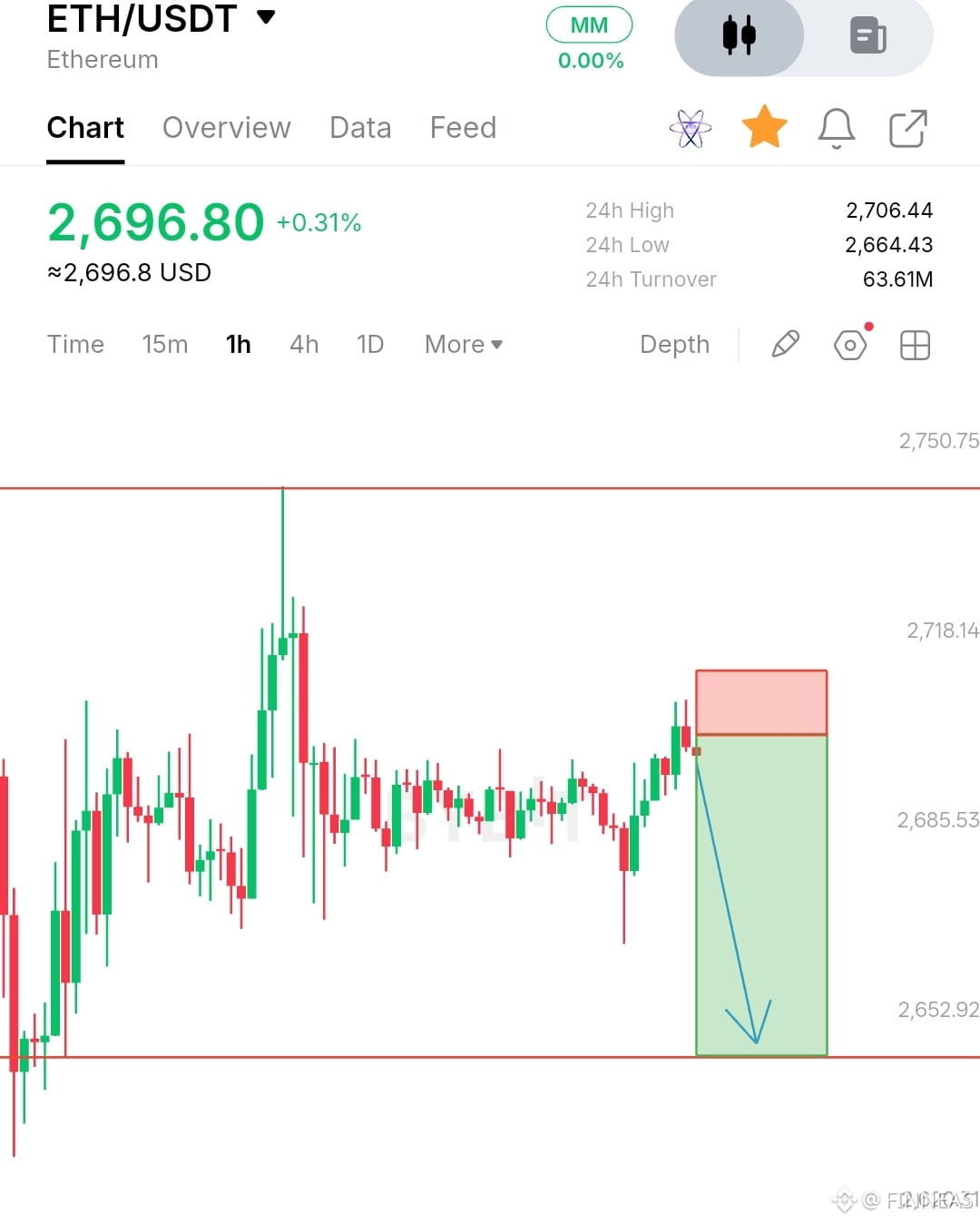
1H структура показывает четкий отказ от сопротивления $2,706–$2,718 и зоны поставок. Сейчас цена тестирует верхнюю часть этой зоны после краткого восстановления, что делает эту область важной для сценария медвежьего продолжения.
Недавнее восходящее движение не имеет подтвержденного пробоя выше сопротивления, в то время как более широкая структура остается в диапазоне: продавцы защищают верхнюю зону ликвидности. Отказ здесь может вернуть цену к нижней поддержке и зоне ликвидности.
EP: $2,698–$2,706
TP1: $2,685
TP2: $2,665
TP3: $2,645
SL: $2,720
Импульс ослабевает возле сопротивления: область $2,706–$2,718 выступает ключевой зоной поставок.
Устойчивый отказ ниже $2,706 сохраняет краткосрочную структуру медвежьей и открывает путь к $2,685, затем к $2,665 и к основной поддержке около $2,645.
Сценарий считается недействительным, если ETH пробивает и удерживается выше $2,720, так как это будет означать, что зона сопротивления возвращена под контроль.
$ETH
{spot}(ETHUSDT)
$ETH
1H структура показывает четкий отказ от сопротивления $2,706–$2,718 и зоны поставок. Сейчас цена тестирует верхнюю часть этой зоны после краткого восстановления, что делает эту область важной для сценария медвежьего продолжения.
Недавнее восходящее движение не имеет подтвержденного пробоя выше сопротивления, в то время как более широкая структура остается в диапазоне: продавцы защищают верхнюю зону ликвидности. Отказ здесь может вернуть цену к нижней поддержке и зоне ликвидности.
EP: $2,698–$2,706
TP1: $2,685
TP2: $2,665
TP3: $2,645
SL: $2,720
Импульс ослабевает возле сопротивления: область $2,706–$2,718 выступает ключевой зоной поставок.
Устойчивый отказ ниже $2,706 сохраняет краткосрочную структуру медвежьей и открывает путь к $2,685, затем к $2,665 и к основной поддержке около $2,645.
Сценарий считается недействительным, если ETH пробивает и удерживается выше $2,720, так как это будет означать, что зона сопротивления возвращена под контроль.
$ETH
1H структура показывает четкий отказ от сопротивления $2,706–$2,718 и зоны поставок. Сейчас цена тестирует верхнюю часть этой зоны после краткого восстановления, что делает эту область важной для сценария медвежьего продолжения.
Недавнее восходящее движение не имеет подтвержденного пробоя выше сопротивления, в то время как более широкая структура остается в диапазоне: продавцы защищают верхнюю зону ликвидности. Отказ здесь может вернуть цену к нижней поддержке и зоне ликвидности.
EP: $2,698–$2,706
TP1: $2,685
TP2: $2,665
TP3: $2,645
SL: $2,720
Импульс ослабевает возле сопротивления: область $2,706–$2,718 выступает ключевой зоной поставок.
Устойчивый отказ ниже $2,706 сохраняет краткосрочную структуру медвежьей и открывает путь к $2,685, затем к $2,665 и к основной поддержке около $2,645.
Сценарий считается недействительным, если ETH пробивает и удерживается выше $2,720, так как это будет означать, что зона сопротивления возвращена под контроль.
$ETH
1
127
·
--
Падение
$BNB
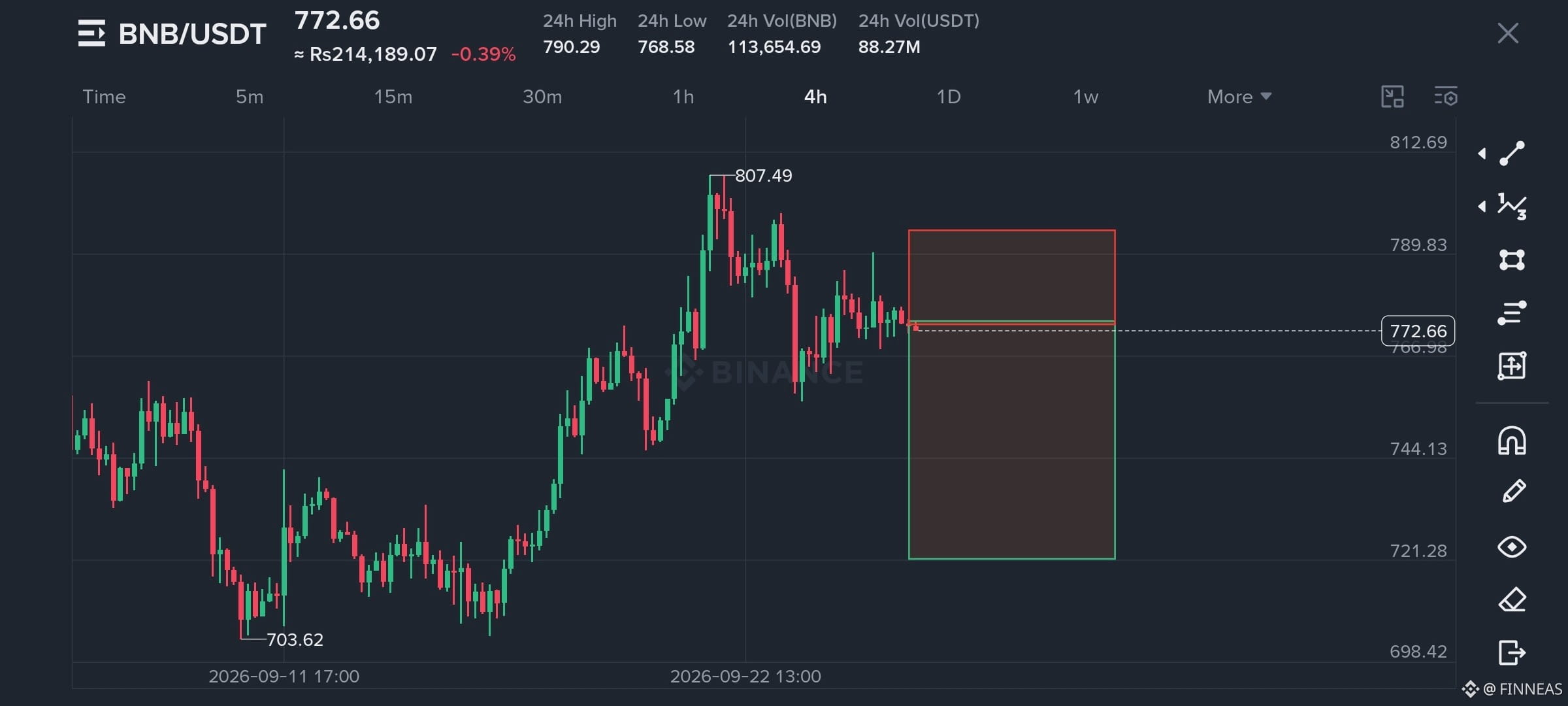
СИГНАЛ РЫНКА 4H
Направление: ШОРТ
EP: $772 до $776
TP1: $760
TP2: $744
TP3: $721
SL: $794
Текущая сила тренда: BNB остается ниже недавнего пика $807.49 и консолидируется под зоной сопротивления $790. Восстановление потеряло импульс, а повторные отказы в верхнем диапазоне делают краткосрочную структуру уязвимой для продолжения снижения.
Импульс и приоритет структуры: Структура на 4H благоприятствует медвежьему продолжению, пока цена остается ниже $790. Зона $768–$760 — это первая зона ликвидности на нисходящем движении, и четкий пробой ниже нее может открыть путь к $744.
Почему цена вероятно пойдет к целям: Продавцы неоднократно защищали верхний диапазон, в то время как текущая цена торгуется близко к нижней стороне консолидации. Подтвержденный пробой ниже $768 усилит сценарий на снижение и откроет $744, затем $721. Закрытие на 4H выше $794 аннулирует шорт-структуру.
$BNB
{spot}(BNBUSDT)
$BNB
СИГНАЛ РЫНКА 4H
Направление: ШОРТ
EP: $772 до $776
TP1: $760
TP2: $744
TP3: $721
SL: $794
Текущая сила тренда: BNB остается ниже недавнего пика $807.49 и консолидируется под зоной сопротивления $790. Восстановление потеряло импульс, а повторные отказы в верхнем диапазоне делают краткосрочную структуру уязвимой для продолжения снижения.
Импульс и приоритет структуры: Структура на 4H благоприятствует медвежьему продолжению, пока цена остается ниже $790. Зона $768–$760 — это первая зона ликвидности на нисходящем движении, и четкий пробой ниже нее может открыть путь к $744.
Почему цена вероятно пойдет к целям: Продавцы неоднократно защищали верхний диапазон, в то время как текущая цена торгуется близко к нижней стороне консолидации. Подтвержденный пробой ниже $768 усилит сценарий на снижение и откроет $744, затем $721. Закрытие на 4H выше $794 аннулирует шорт-структуру.
$BNB
СИГНАЛ РЫНКА 4H
Направление: ШОРТ
EP: $772 до $776
TP1: $760
TP2: $744
TP3: $721
SL: $794
Текущая сила тренда: BNB остается ниже недавнего пика $807.49 и консолидируется под зоной сопротивления $790. Восстановление потеряло импульс, а повторные отказы в верхнем диапазоне делают краткосрочную структуру уязвимой для продолжения снижения.
Импульс и приоритет структуры: Структура на 4H благоприятствует медвежьему продолжению, пока цена остается ниже $790. Зона $768–$760 — это первая зона ликвидности на нисходящем движении, и четкий пробой ниже нее может открыть путь к $744.
Почему цена вероятно пойдет к целям: Продавцы неоднократно защищали верхний диапазон, в то время как текущая цена торгуется близко к нижней стороне консолидации. Подтвержденный пробой ниже $768 усилит сценарий на снижение и откроет $744, затем $721. Закрытие на 4H выше $794 аннулирует шорт-структуру.
$BNB
83
·
--
Рост
$MPLX
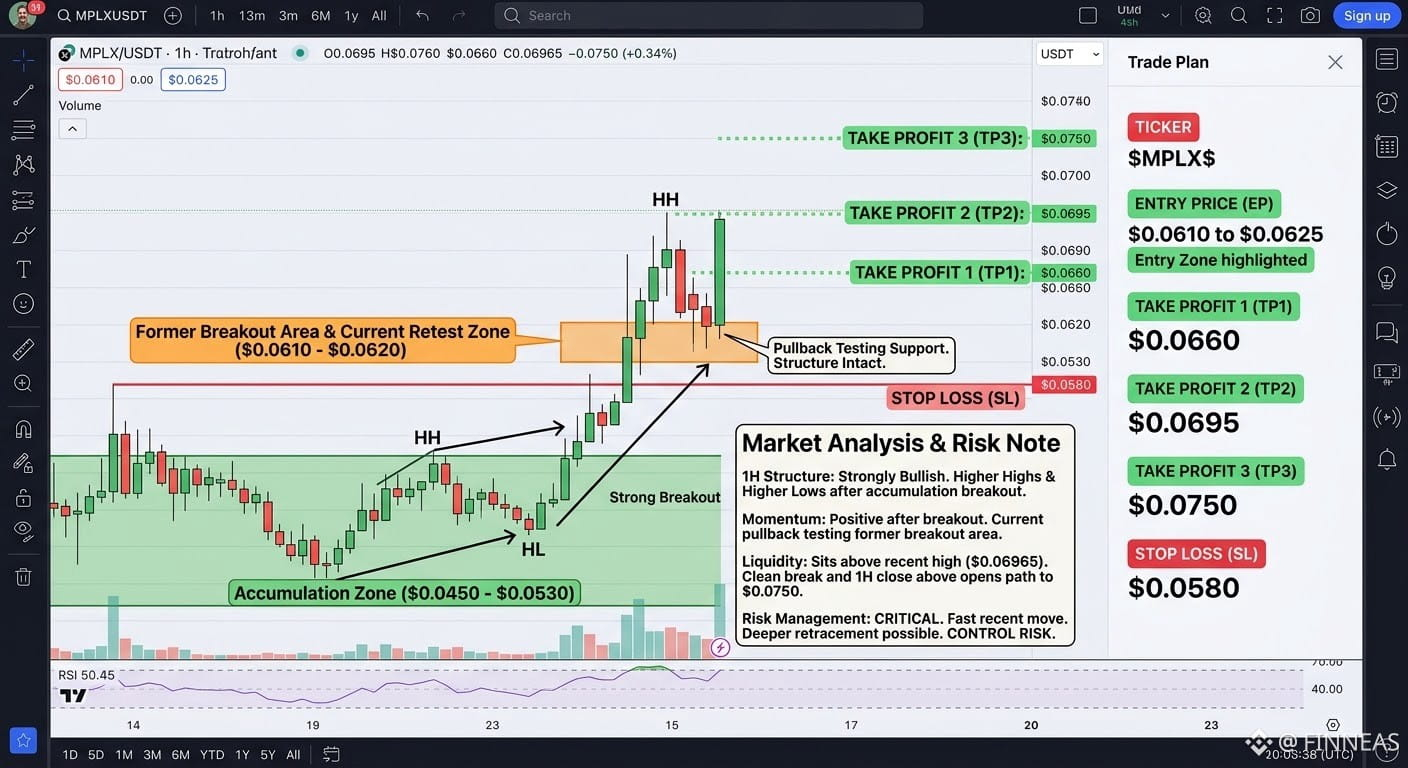
EP: $0.0610 до $0.0625
TP1: $0.0660
TP2: $0.0695
TP3: $0.0750
SL: $0.0580
Структура на 1H сильно восходящая: резкий пробой из зоны накопления $0.0450–$0.0530 с последующими более высокими максимумами и более высокими минимумами.
Импульс после пробоя остается положительным, а текущая коррекция тестирует область бывшего пробоя примерно $0.0610–$0.0620. Удержание этой зоны сохраняет бычью структуру.
Ликвидность находится выше недавнего максимума $0.06965. Четкий пробой и закрытие на 1H выше этого уровня откроют путь к $0.0750, тогда как потеря $0.0580 ослабит сценарий продолжения.
Риск должен оставаться контролируемым, так как недавнее движение было быстрым и возможна более глубокая коррекция.
$MPLX
{alpha}(560x75a5863a19af60ec0098d62ed8c34cc594fb470f)
$MPLX
EP: $0.0610 до $0.0625
TP1: $0.0660
TP2: $0.0695
TP3: $0.0750
SL: $0.0580
Структура на 1H сильно восходящая: резкий пробой из зоны накопления $0.0450–$0.0530 с последующими более высокими максимумами и более высокими минимумами.
Импульс после пробоя остается положительным, а текущая коррекция тестирует область бывшего пробоя примерно $0.0610–$0.0620. Удержание этой зоны сохраняет бычью структуру.
Ликвидность находится выше недавнего максимума $0.06965. Четкий пробой и закрытие на 1H выше этого уровня откроют путь к $0.0750, тогда как потеря $0.0580 ослабит сценарий продолжения.
Риск должен оставаться контролируемым, так как недавнее движение было быстрым и возможна более глубокая коррекция.
$MPLX
EP: $0.0610 до $0.0625
TP1: $0.0660
TP2: $0.0695
TP3: $0.0750
SL: $0.0580
Структура на 1H сильно восходящая: резкий пробой из зоны накопления $0.0450–$0.0530 с последующими более высокими максимумами и более высокими минимумами.
Импульс после пробоя остается положительным, а текущая коррекция тестирует область бывшего пробоя примерно $0.0610–$0.0620. Удержание этой зоны сохраняет бычью структуру.
Ликвидность находится выше недавнего максимума $0.06965. Четкий пробой и закрытие на 1H выше этого уровня откроют путь к $0.0750, тогда как потеря $0.0580 ослабит сценарий продолжения.
Риск должен оставаться контролируемым, так как недавнее движение было быстрым и возможна более глубокая коррекция.
$MPLX
104
·
--
Падение
$BNB
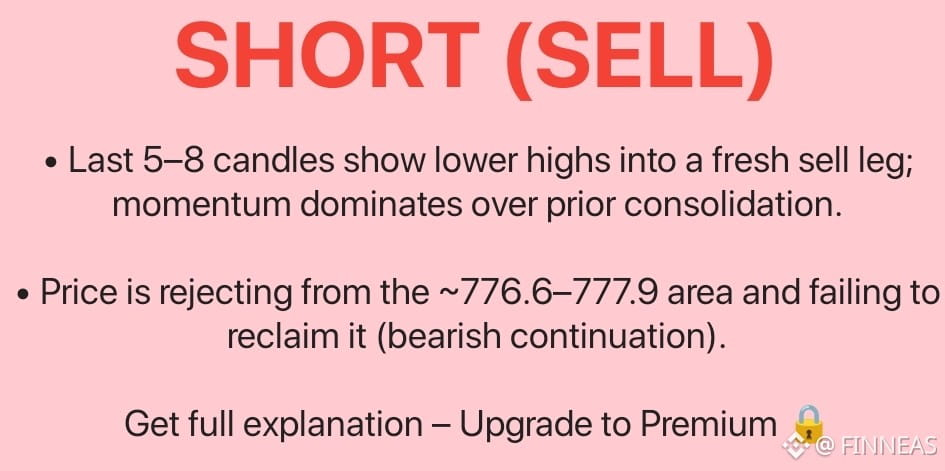
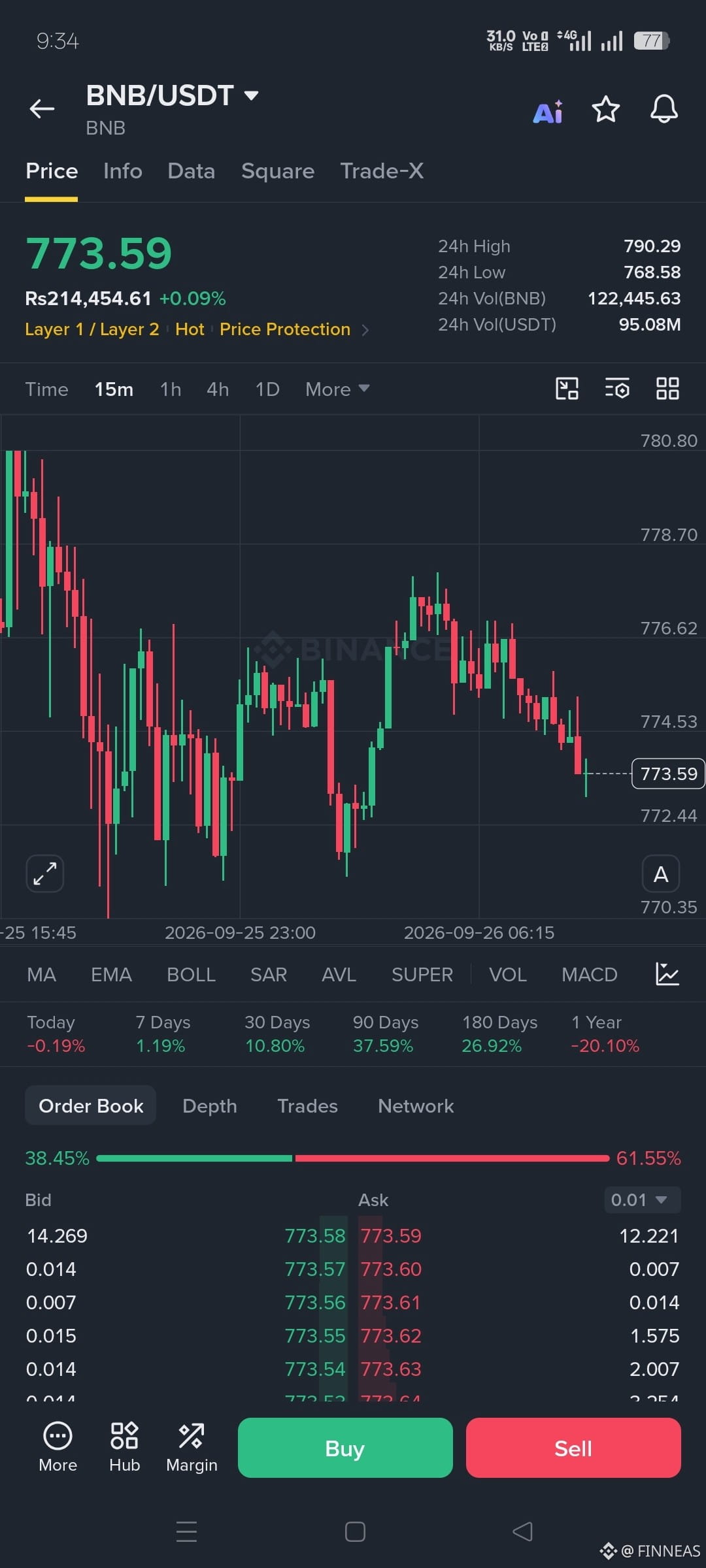
СИГНАЛ РЫНКА НА 15 М
Направление: Шорт
Вход (EP): от $773.50 до $774.50
TP1: $772.40
TP2: $770.35
TP3: $768.60
SL: $776.80
Сила тренда: Краткосрочная структура медвежья — после отклонения в районе $776.60–$777.00 цена формирует более низкие максимумы. Недавнее движение обратно к $773.50 показывает, что продавцы по-прежнему активны.
Импульс и перекос структуры: Импульс остается направленным вниз, пока BNB держится ниже $774.53 и особенно ниже $776.62. Показанная также книга заявок имеет более тяжелую ликвидность на стороне продавцов, что поддерживает давление на продажу в ближайшей перспективе.
Почему цена может достичь целей: Четкий пробой ниже $772.40 откроет $770.35, затем — минимум за 24 часа около $768.60. Медвежий сценарий становится некорректным, если цена вернет $776.80 при устойчивой силе на 15М.
Риск должен оставаться контролируемым, и сценарий следует пересмотреть, если структура рынка изменится.
$BNB
{spot}(BNBUSDT)
$BNB
СИГНАЛ РЫНКА НА 15 М
Направление: Шорт
Вход (EP): от $773.50 до $774.50
TP1: $772.40
TP2: $770.35
TP3: $768.60
SL: $776.80
Сила тренда: Краткосрочная структура медвежья — после отклонения в районе $776.60–$777.00 цена формирует более низкие максимумы. Недавнее движение обратно к $773.50 показывает, что продавцы по-прежнему активны.
Импульс и перекос структуры: Импульс остается направленным вниз, пока BNB держится ниже $774.53 и особенно ниже $776.62. Показанная также книга заявок имеет более тяжелую ликвидность на стороне продавцов, что поддерживает давление на продажу в ближайшей перспективе.
Почему цена может достичь целей: Четкий пробой ниже $772.40 откроет $770.35, затем — минимум за 24 часа около $768.60. Медвежий сценарий становится некорректным, если цена вернет $776.80 при устойчивой силе на 15М.
Риск должен оставаться контролируемым, и сценарий следует пересмотреть, если структура рынка изменится.
$BNB
СИГНАЛ РЫНКА НА 15 М
Направление: Шорт
Вход (EP): от $773.50 до $774.50
TP1: $772.40
TP2: $770.35
TP3: $768.60
SL: $776.80
Сила тренда: Краткосрочная структура медвежья — после отклонения в районе $776.60–$777.00 цена формирует более низкие максимумы. Недавнее движение обратно к $773.50 показывает, что продавцы по-прежнему активны.
Импульс и перекос структуры: Импульс остается направленным вниз, пока BNB держится ниже $774.53 и особенно ниже $776.62. Показанная также книга заявок имеет более тяжелую ликвидность на стороне продавцов, что поддерживает давление на продажу в ближайшей перспективе.
Почему цена может достичь целей: Четкий пробой ниже $772.40 откроет $770.35, затем — минимум за 24 часа около $768.60. Медвежий сценарий становится некорректным, если цена вернет $776.80 при устойчивой силе на 15М.
Риск должен оставаться контролируемым, и сценарий следует пересмотреть, если структура рынка изменится.
$BNB
110
·
--
Падение
$ZEC
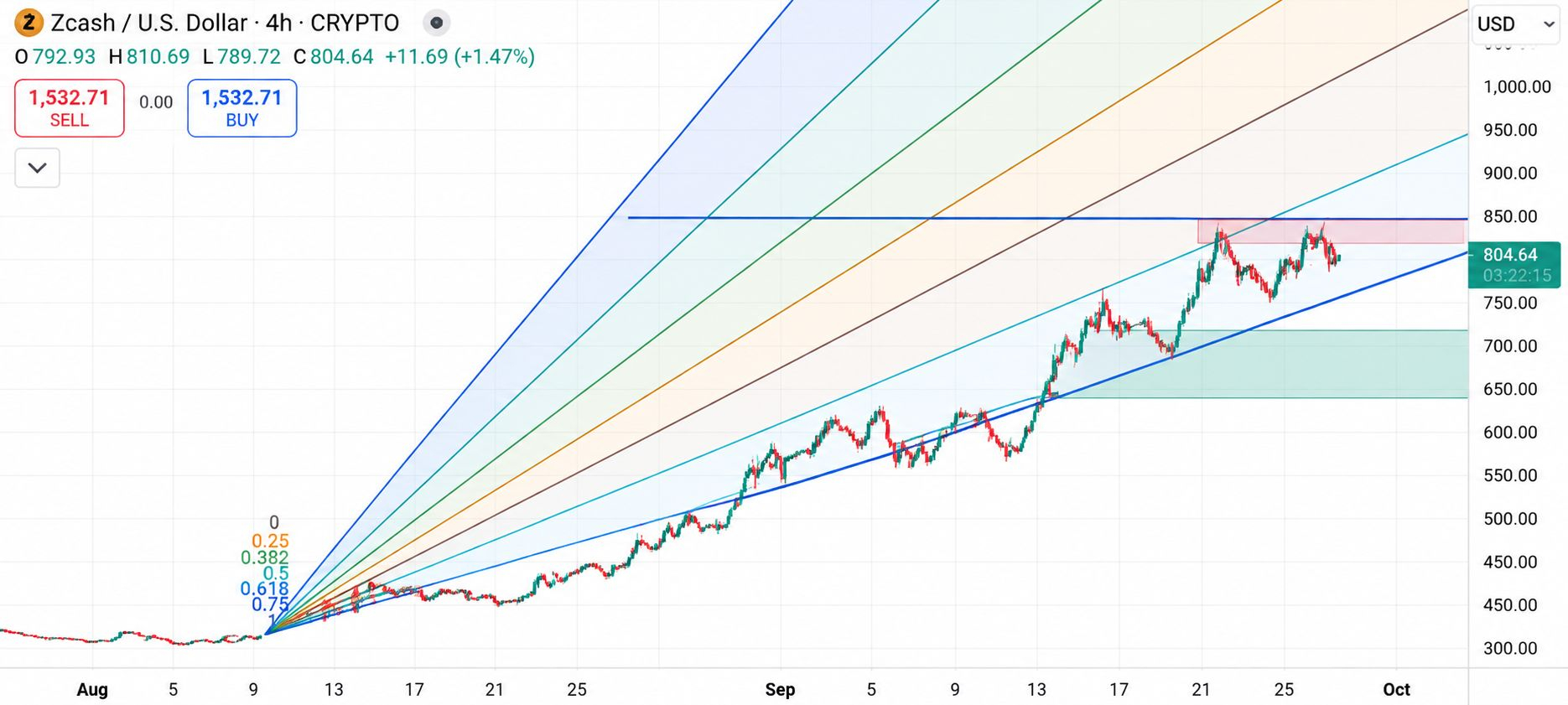
EP: $790 до $800
TP1: $810
TP2: $825
TP3: $840
SL: $770
Структура на 4H сохраняет бычий настрой: ZEC уверенно восстанавливается из нижнего диапазона и удерживает последовательность более высоких минимумов. Восходящая трендовая линия продолжает поддерживать текущую структуру, а $780–$790 — ключевая зона спроса.
Импульс позитивный после резкого расширения к $810, но сейчас цена консолидируется. Это дает покупателям возможность защитить область пробоя, а не гнаться за движением.
Ликвидность сосредоточена выше $810. Чистый пробой 4H и удержание выше $810 могут открыть путь к $825 и $840. Бычий сценарий остается в силе, пока удерживается $770.
$ZEC
{spot}(ZECUSDT)
$ZEC
EP: $790 до $800
TP1: $810
TP2: $825
TP3: $840
SL: $770
Структура на 4H сохраняет бычий настрой: ZEC уверенно восстанавливается из нижнего диапазона и удерживает последовательность более высоких минимумов. Восходящая трендовая линия продолжает поддерживать текущую структуру, а $780–$790 — ключевая зона спроса.
Импульс позитивный после резкого расширения к $810, но сейчас цена консолидируется. Это дает покупателям возможность защитить область пробоя, а не гнаться за движением.
Ликвидность сосредоточена выше $810. Чистый пробой 4H и удержание выше $810 могут открыть путь к $825 и $840. Бычий сценарий остается в силе, пока удерживается $770.
$ZEC
EP: $790 до $800
TP1: $810
TP2: $825
TP3: $840
SL: $770
Структура на 4H сохраняет бычий настрой: ZEC уверенно восстанавливается из нижнего диапазона и удерживает последовательность более высоких минимумов. Восходящая трендовая линия продолжает поддерживать текущую структуру, а $780–$790 — ключевая зона спроса.
Импульс позитивный после резкого расширения к $810, но сейчас цена консолидируется. Это дает покупателям возможность защитить область пробоя, а не гнаться за движением.
Ликвидность сосредоточена выше $810. Чистый пробой 4H и удержание выше $810 могут открыть путь к $825 и $840. Бычий сценарий остается в силе, пока удерживается $770.
$ZEC
256
·
--
Падение
$BTC
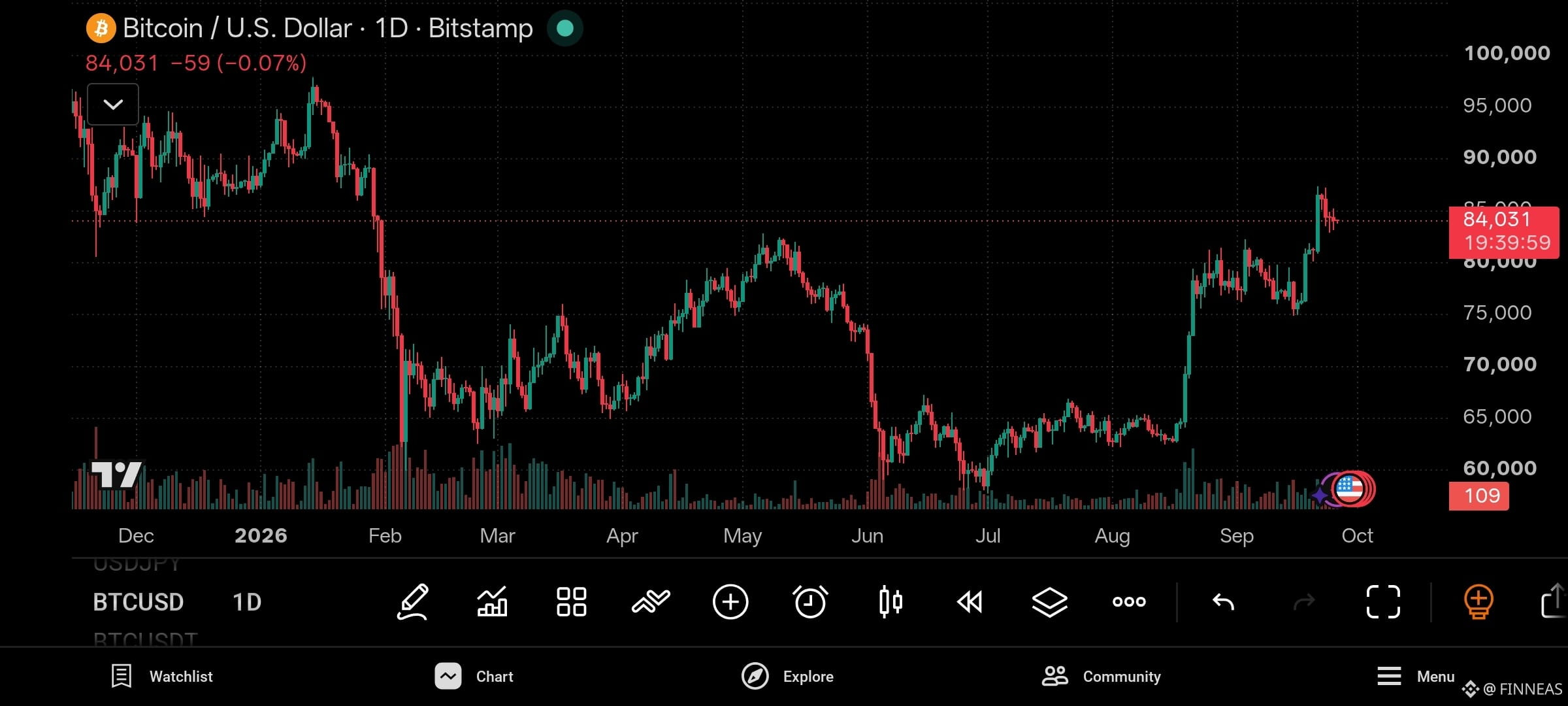
EP: $83,500 до $84,500
TP1: $87,000
TP2: $90,000
TP3: $95,000
SL: $79,200
Дневная структура бычья: BTC пробил уровень $80,000 и удерживается около $84,000 после пробоя. Сила тренда остается положительной, поскольку цена продолжает формировать более высокие максимумы и более высокие минимумы.
Импульс указывает на продолжение, пока $80,000 защищен. Объем пробоя и сильное смещение от зоны $76,000 до $80,000 демонстрируют активное участие покупателей.
Ликвидность выше $87,000 — следующий важный ориентир. Чистый пробой этой области может вывести на $90,000, а затем на более крупную зону сопротивления $95,000.
Если BTC потеряет $79,200 на основе дневного закрытия, этот бычий сценарий будет отменен.
$BTC
{spot}(BTCUSDT)
$BTC
EP: $83,500 до $84,500
TP1: $87,000
TP2: $90,000
TP3: $95,000
SL: $79,200
Дневная структура бычья: BTC пробил уровень $80,000 и удерживается около $84,000 после пробоя. Сила тренда остается положительной, поскольку цена продолжает формировать более высокие максимумы и более высокие минимумы.
Импульс указывает на продолжение, пока $80,000 защищен. Объем пробоя и сильное смещение от зоны $76,000 до $80,000 демонстрируют активное участие покупателей.
Ликвидность выше $87,000 — следующий важный ориентир. Чистый пробой этой области может вывести на $90,000, а затем на более крупную зону сопротивления $95,000.
Если BTC потеряет $79,200 на основе дневного закрытия, этот бычий сценарий будет отменен.
$BTC
EP: $83,500 до $84,500
TP1: $87,000
TP2: $90,000
TP3: $95,000
SL: $79,200
Дневная структура бычья: BTC пробил уровень $80,000 и удерживается около $84,000 после пробоя. Сила тренда остается положительной, поскольку цена продолжает формировать более высокие максимумы и более высокие минимумы.
Импульс указывает на продолжение, пока $80,000 защищен. Объем пробоя и сильное смещение от зоны $76,000 до $80,000 демонстрируют активное участие покупателей.
Ликвидность выше $87,000 — следующий важный ориентир. Чистый пробой этой области может вывести на $90,000, а затем на более крупную зону сопротивления $95,000.
Если BTC потеряет $79,200 на основе дневного закрытия, этот бычий сценарий будет отменен.
$BTC
128
·
--
Падение
🔥 $ENA — Я внимательно отслеживаю давление ликвидаций, и этот длинный флэш-сброс может создать для нас важную краткосрочную зону реакции.
$ENA сейчас находится примерно на $0.209, при этом ликвидировано около $98.5K по лонгам. Это значимое давление ликвидаций для текущего ценового диапазона.
📊 Анализ рынка
Тяжёлая ликвидация лонгов указывает на то, что кредитное плечо покупателей вынудили выйти из позиции, когда ENA опускался. Важный вопрос сейчас: продолжат ли продавцы давить на рынок или же покупатели используют зону ликвидаций, чтобы восстановить позиции.
Немедленная зона поддержки находится примерно в $0.205–$0.209. Если этот диапазон удержится и начнёт возвращаться объём покупок, ENA может попытаться восстановиться.
Для подтверждения я хочу увидеть, как цена возвращается примерно к $0.215–$0.218. Выше этой области импульс потенциально может подтолкнуть цену к следующему уровню сопротивления около $0.225 и $0.235.
Решительный пробой ниже $0.200 обесценит бычий сценарий и увеличит риск снижения.
🎯 УСТАНОВКА ДЛЯ ТОРГОВЛИ — ЛОНГ
Точка входа (EP): $0.205–$0.210
TP1: $0.218
TP2: $0.228
TP3: $0.240
SL: $0.198
⚠️ Совет по рискам: ENA может двигаться быстро, поэтому размер позиции держите меньше обычного и подумайте о переносе SL к уровню входа после TP1.
Я внимательно слежу за зоной $0.205–$0.210. Если покупатели зайдут и объём подтвердит движение, этот слив ликвидности может превратиться в сценарий восстановления.
Не является финансовой рекомендацией. Всегда проводите собственное исследование.
$ENA
{spot}(ENAUSDT)
🔥 $ENA — Я внимательно отслеживаю давление ликвидаций, и этот длинный флэш-сброс может создать для нас важную краткосрочную зону реакции.
$ENA сейчас находится примерно на $0.209, при этом ликвидировано около $98.5K по лонгам. Это значимое давление ликвидаций для текущего ценового диапазона.
📊 Анализ рынка
Тяжёлая ликвидация лонгов указывает на то, что кредитное плечо покупателей вынудили выйти из позиции, когда ENA опускался. Важный вопрос сейчас: продолжат ли продавцы давить на рынок или же покупатели используют зону ликвидаций, чтобы восстановить позиции.
Немедленная зона поддержки находится примерно в $0.205–$0.209. Если этот диапазон удержится и начнёт возвращаться объём покупок, ENA может попытаться восстановиться.
Для подтверждения я хочу увидеть, как цена возвращается примерно к $0.215–$0.218. Выше этой области импульс потенциально может подтолкнуть цену к следующему уровню сопротивления около $0.225 и $0.235.
Решительный пробой ниже $0.200 обесценит бычий сценарий и увеличит риск снижения.
🎯 УСТАНОВКА ДЛЯ ТОРГОВЛИ — ЛОНГ
Точка входа (EP): $0.205–$0.210
TP1: $0.218
TP2: $0.228
TP3: $0.240
SL: $0.198
⚠️ Совет по рискам: ENA может двигаться быстро, поэтому размер позиции держите меньше обычного и подумайте о переносе SL к уровню входа после TP1.
Я внимательно слежу за зоной $0.205–$0.210. Если покупатели зайдут и объём подтвердит движение, этот слив ликвидности может превратиться в сценарий восстановления.
Не является финансовой рекомендацией. Всегда проводите собственное исследование.
$ENA
$ENA сейчас находится примерно на $0.209, при этом ликвидировано около $98.5K по лонгам. Это значимое давление ликвидаций для текущего ценового диапазона.
📊 Анализ рынка
Тяжёлая ликвидация лонгов указывает на то, что кредитное плечо покупателей вынудили выйти из позиции, когда ENA опускался. Важный вопрос сейчас: продолжат ли продавцы давить на рынок или же покупатели используют зону ликвидаций, чтобы восстановить позиции.
Немедленная зона поддержки находится примерно в $0.205–$0.209. Если этот диапазон удержится и начнёт возвращаться объём покупок, ENA может попытаться восстановиться.
Для подтверждения я хочу увидеть, как цена возвращается примерно к $0.215–$0.218. Выше этой области импульс потенциально может подтолкнуть цену к следующему уровню сопротивления около $0.225 и $0.235.
Решительный пробой ниже $0.200 обесценит бычий сценарий и увеличит риск снижения.
🎯 УСТАНОВКА ДЛЯ ТОРГОВЛИ — ЛОНГ
Точка входа (EP): $0.205–$0.210
TP1: $0.218
TP2: $0.228
TP3: $0.240
SL: $0.198
⚠️ Совет по рискам: ENA может двигаться быстро, поэтому размер позиции держите меньше обычного и подумайте о переносе SL к уровню входа после TP1.
Я внимательно слежу за зоной $0.205–$0.210. Если покупатели зайдут и объём подтвердит движение, этот слив ликвидности может превратиться в сценарий восстановления.
Не является финансовой рекомендацией. Всегда проводите собственное исследование.
$ENA
1
336
·
--
Рост
🔥 $BTC — Я наблюдаю за плечами вокруг Биткоина, и эта ликвидация — напоминание о том, что следующая реакция поддержки может быть очень важной.
$BTC сейчас находится примерно на $85,660.80, при этом ликвидировано около $60.2K в лонг-позициях.
📊 Анализ рынка
Ликвидация лонг-позиций показывает, что заемные покупатели были вытеснены, когда цена пошла против них. Такой «слив» может временно убрать слабые позиции с рынка, но BTC всё равно нужна подтверждающая реакция перед любым агрессивным входом.
Непосредственную зону поддержки, за которой я слежу, — это примерно $85,300–$85,700. Если Биткоин удержит этот диапазон и начнёт расти объём покупок, возможен отскок в район $86K–$87K.
Первое сопротивление — около $86,500, а ещё одна важная зона — в районе $87,200–$87,500. Сильный пробой сопротивления дал бы лучшее подтверждение для лонг-сценария.
🎯 ТОРГОВАЯ НАСТРОЙКА — ЛОНГ
Точка входа (EP): $85,400–$85,800
TP1: $86,500
TP2: $87,200
TP3: $88,000
SL: $84,700
⚠️ Совет по риску: Держите плечо низким и контролируйте размер позиции. После TP1 рассмотрите перенос SL к точке входа, если импульс остаётся сильным.
Я не хочу «догонять» BTC после большой свечи — мне нужно увидеть, как покупатели защищают зону поддержки и подтверждают реакцию.
Не является финансовым советом. Всегда проводите собственное исследование.
$BTC
{spot}(BTCUSDT)
🔥 $BTC — Я наблюдаю за плечами вокруг Биткоина, и эта ликвидация — напоминание о том, что следующая реакция поддержки может быть очень важной.
$BTC сейчас находится примерно на $85,660.80, при этом ликвидировано около $60.2K в лонг-позициях.
📊 Анализ рынка
Ликвидация лонг-позиций показывает, что заемные покупатели были вытеснены, когда цена пошла против них. Такой «слив» может временно убрать слабые позиции с рынка, но BTC всё равно нужна подтверждающая реакция перед любым агрессивным входом.
Непосредственную зону поддержки, за которой я слежу, — это примерно $85,300–$85,700. Если Биткоин удержит этот диапазон и начнёт расти объём покупок, возможен отскок в район $86K–$87K.
Первое сопротивление — около $86,500, а ещё одна важная зона — в районе $87,200–$87,500. Сильный пробой сопротивления дал бы лучшее подтверждение для лонг-сценария.
🎯 ТОРГОВАЯ НАСТРОЙКА — ЛОНГ
Точка входа (EP): $85,400–$85,800
TP1: $86,500
TP2: $87,200
TP3: $88,000
SL: $84,700
⚠️ Совет по риску: Держите плечо низким и контролируйте размер позиции. После TP1 рассмотрите перенос SL к точке входа, если импульс остаётся сильным.
Я не хочу «догонять» BTC после большой свечи — мне нужно увидеть, как покупатели защищают зону поддержки и подтверждают реакцию.
Не является финансовым советом. Всегда проводите собственное исследование.
$BTC
$BTC сейчас находится примерно на $85,660.80, при этом ликвидировано около $60.2K в лонг-позициях.
📊 Анализ рынка
Ликвидация лонг-позиций показывает, что заемные покупатели были вытеснены, когда цена пошла против них. Такой «слив» может временно убрать слабые позиции с рынка, но BTC всё равно нужна подтверждающая реакция перед любым агрессивным входом.
Непосредственную зону поддержки, за которой я слежу, — это примерно $85,300–$85,700. Если Биткоин удержит этот диапазон и начнёт расти объём покупок, возможен отскок в район $86K–$87K.
Первое сопротивление — около $86,500, а ещё одна важная зона — в районе $87,200–$87,500. Сильный пробой сопротивления дал бы лучшее подтверждение для лонг-сценария.
🎯 ТОРГОВАЯ НАСТРОЙКА — ЛОНГ
Точка входа (EP): $85,400–$85,800
TP1: $86,500
TP2: $87,200
TP3: $88,000
SL: $84,700
⚠️ Совет по риску: Держите плечо низким и контролируйте размер позиции. После TP1 рассмотрите перенос SL к точке входа, если импульс остаётся сильным.
Я не хочу «догонять» BTC после большой свечи — мне нужно увидеть, как покупатели защищают зону поддержки и подтверждают реакцию.
Не является финансовым советом. Всегда проводите собственное исследование.
$BTC
38
·
--
Рост
🔥 $ETH — Я внимательно следил за наращиванием плеча, и этот ликвидационный слив — ровно тот ход, который может создать новую торговую возможность.
$ETH сейчас торгуется примерно по $2,733.08, и ликвидировано около $166K по лонгам. Это говорит о том, что у усиленных покупателей уже случился удар, поэтому следующая реакция с этого уровня особенно важна.
📊 Анализ рынка
Лонг-ликвидация указывает на сильное краткосрочное давление продаж, но сама по себе ликвидация не означает автоматически, что тренд обязан продолжить падение. Я хочу понять, сможет ли ETH удержать ближайшую зону поддержки и привлечь свежие покупки на споте.
Первая зона поддержки находится примерно в районе $2,700–$2,730. Если покупатели удержат этот регион и начнёт расти объём, ETH может попытаться восстановиться к следующим уровням сопротивления.
Первое сопротивление — около $2,800, затем зона $2,850–$2,900. Устойчивое движение выше этих уровней улучшит бычий сценарий.
🎯 ТОРГОВЫЙ ПЛАН — LONG
Точка входа (EP): $2,710–$2,750
TP1: $2,800
TP2: $2,860
TP3: $2,950
SL: $2,650
⚠️ Совет по риску: Не гонись за пробойной свечой. Если TP1 достигнут, защищайте позицию: уменьшайте риск или передвигайте SL ближе к точке входа.
Главное для меня простое: если ETH удержит зону ликвидации и покупатели вернутся с объёмом, сценарий восстановления станет гораздо привлекательнее.
Не является финансовой рекомендацией. Всегда проводите собственное исследование.
$ETH
{spot}(ETHUSDT)
🔥 $ETH — Я внимательно следил за наращиванием плеча, и этот ликвидационный слив — ровно тот ход, который может создать новую торговую возможность.
$ETH сейчас торгуется примерно по $2,733.08, и ликвидировано около $166K по лонгам. Это говорит о том, что у усиленных покупателей уже случился удар, поэтому следующая реакция с этого уровня особенно важна.
📊 Анализ рынка
Лонг-ликвидация указывает на сильное краткосрочное давление продаж, но сама по себе ликвидация не означает автоматически, что тренд обязан продолжить падение. Я хочу понять, сможет ли ETH удержать ближайшую зону поддержки и привлечь свежие покупки на споте.
Первая зона поддержки находится примерно в районе $2,700–$2,730. Если покупатели удержат этот регион и начнёт расти объём, ETH может попытаться восстановиться к следующим уровням сопротивления.
Первое сопротивление — около $2,800, затем зона $2,850–$2,900. Устойчивое движение выше этих уровней улучшит бычий сценарий.
🎯 ТОРГОВЫЙ ПЛАН — LONG
Точка входа (EP): $2,710–$2,750
TP1: $2,800
TP2: $2,860
TP3: $2,950
SL: $2,650
⚠️ Совет по риску: Не гонись за пробойной свечой. Если TP1 достигнут, защищайте позицию: уменьшайте риск или передвигайте SL ближе к точке входа.
Главное для меня простое: если ETH удержит зону ликвидации и покупатели вернутся с объёмом, сценарий восстановления станет гораздо привлекательнее.
Не является финансовой рекомендацией. Всегда проводите собственное исследование.
$ETH
$ETH сейчас торгуется примерно по $2,733.08, и ликвидировано около $166K по лонгам. Это говорит о том, что у усиленных покупателей уже случился удар, поэтому следующая реакция с этого уровня особенно важна.
📊 Анализ рынка
Лонг-ликвидация указывает на сильное краткосрочное давление продаж, но сама по себе ликвидация не означает автоматически, что тренд обязан продолжить падение. Я хочу понять, сможет ли ETH удержать ближайшую зону поддержки и привлечь свежие покупки на споте.
Первая зона поддержки находится примерно в районе $2,700–$2,730. Если покупатели удержат этот регион и начнёт расти объём, ETH может попытаться восстановиться к следующим уровням сопротивления.
Первое сопротивление — около $2,800, затем зона $2,850–$2,900. Устойчивое движение выше этих уровней улучшит бычий сценарий.
🎯 ТОРГОВЫЙ ПЛАН — LONG
Точка входа (EP): $2,710–$2,750
TP1: $2,800
TP2: $2,860
TP3: $2,950
SL: $2,650
⚠️ Совет по риску: Не гонись за пробойной свечой. Если TP1 достигнут, защищайте позицию: уменьшайте риск или передвигайте SL ближе к точке входа.
Главное для меня простое: если ETH удержит зону ликвидации и покупатели вернутся с объёмом, сценарий восстановления станет гораздо привлекательнее.
Не является финансовой рекомендацией. Всегда проводите собственное исследование.
$ETH
296
·
--
Падение
🔥 $CL — Я внимательно слежу за этим движением, и свежие длинные ликвидации дают сигнал, на который стоит обратить внимание.
В настоящее время $CL находится примерно на уровне $90.59, где было ликвидировано около $251K в лонг-позициях. Это заметный сброс у залеверированных покупателей и может создать важную зону реакции в краткосрочной перспективе.
📊 Анализ рынка
Сам факт ликвидации указывает на то, что агрессивные лонги попали не на ту сторону движения. После такого «промыва» я хочу увидеть, сможет ли цена стабилизироваться в районе $90.50–$90.60 и начать наращивать объём покупок.
Для бычьего сценария первая важная зона сопротивления находится примерно на $91.20–$91.50. Чистый пробой выше этой зоны на более сильном объёме будет указывать на то, что покупатели возвращают контроль.
Снизу ключевой психологический уровень — $90.00. Потеря этого уровня при сильном импульсе ослабит бычий сценарий и может запустить очередную волну ликвидаций.
🎯 СТОРОННИК СДЕЛКИ — ЛОНГ
Точка входа (EP): $90.35–$90.75
TP1: $91.30
TP2: $92.00
TP3: $93.00
SL: $89.70
⚠️ Совет по риску: держите размер позиции под контролем, и после достижения TP1 рассмотрите возможность перенести SL ближе к точке входа, чтобы защитить сделку.
Я внимательно слежу за реакцией в районе $90.00–$90.60 — если покупатели удержат эту зону, восстановление может стать интересным.
Не является финансовой рекомендацией. Всегда проводите собственное исследование.
$CL
{future}(CLUSDT)
🔥 $CL — Я внимательно слежу за этим движением, и свежие длинные ликвидации дают сигнал, на который стоит обратить внимание.
В настоящее время $CL находится примерно на уровне $90.59, где было ликвидировано около $251K в лонг-позициях. Это заметный сброс у залеверированных покупателей и может создать важную зону реакции в краткосрочной перспективе.
📊 Анализ рынка
Сам факт ликвидации указывает на то, что агрессивные лонги попали не на ту сторону движения. После такого «промыва» я хочу увидеть, сможет ли цена стабилизироваться в районе $90.50–$90.60 и начать наращивать объём покупок.
Для бычьего сценария первая важная зона сопротивления находится примерно на $91.20–$91.50. Чистый пробой выше этой зоны на более сильном объёме будет указывать на то, что покупатели возвращают контроль.
Снизу ключевой психологический уровень — $90.00. Потеря этого уровня при сильном импульсе ослабит бычий сценарий и может запустить очередную волну ликвидаций.
🎯 СТОРОННИК СДЕЛКИ — ЛОНГ
Точка входа (EP): $90.35–$90.75
TP1: $91.30
TP2: $92.00
TP3: $93.00
SL: $89.70
⚠️ Совет по риску: держите размер позиции под контролем, и после достижения TP1 рассмотрите возможность перенести SL ближе к точке входа, чтобы защитить сделку.
Я внимательно слежу за реакцией в районе $90.00–$90.60 — если покупатели удержат эту зону, восстановление может стать интересным.
Не является финансовой рекомендацией. Всегда проводите собственное исследование.
$CL
В настоящее время $CL находится примерно на уровне $90.59, где было ликвидировано около $251K в лонг-позициях. Это заметный сброс у залеверированных покупателей и может создать важную зону реакции в краткосрочной перспективе.
📊 Анализ рынка
Сам факт ликвидации указывает на то, что агрессивные лонги попали не на ту сторону движения. После такого «промыва» я хочу увидеть, сможет ли цена стабилизироваться в районе $90.50–$90.60 и начать наращивать объём покупок.
Для бычьего сценария первая важная зона сопротивления находится примерно на $91.20–$91.50. Чистый пробой выше этой зоны на более сильном объёме будет указывать на то, что покупатели возвращают контроль.
Снизу ключевой психологический уровень — $90.00. Потеря этого уровня при сильном импульсе ослабит бычий сценарий и может запустить очередную волну ликвидаций.
🎯 СТОРОННИК СДЕЛКИ — ЛОНГ
Точка входа (EP): $90.35–$90.75
TP1: $91.30
TP2: $92.00
TP3: $93.00
SL: $89.70
⚠️ Совет по риску: держите размер позиции под контролем, и после достижения TP1 рассмотрите возможность перенести SL ближе к точке входа, чтобы защитить сделку.
Я внимательно слежу за реакцией в районе $90.00–$90.60 — если покупатели удержат эту зону, восстановление может стать интересным.
Не является финансовой рекомендацией. Всегда проводите собственное исследование.
$CL
162
·
--
Падение
$UNI
Я внимательно слежу за недавним $UNI движением, и данные по ликвидациям показывают, что кредитное плечо агрессивно вымывается с рынка.
💰 Текущая цена: ~$9.04
Главный сигнал здесь — зона $9.04–$8.75. Примерно на $8.7488 было ликвидировано более $9K в лонг-позициях, что показывает: продавцам удалось вытеснить с рынка маржинальные лонги. При этом UNI в ходе недавнего роста торгуется с повышенным объёмом, поэтому я не хочу вслепую гнаться за пробоем.
📊 АНАЛИЗ РЫНКА
остается структурно сильным после заметного импульса вверх, но недавняя ликвидация лонгов показывает, что краткосрочная волатильность высокая. Диапазон $8.70–$8.80 становится важной зоной поддержки/повторного теста.
Если покупатели удержат эту зону и цена начнёт формировать более высокие минимумы, импульс может снова сместиться вверх. Первая крупная зона сопротивления — примерно $9.20–$9.30, затем психологический уровень $9.50.
Здесь важны подтверждения по объёму. Я хочу видеть возвращение покупателей во время восстановления, а не входить во время слабого отскока.
🟢 НАПРАВЛЕНИЕ СДЕЛКИ: LONG
📍 Точка входа (EP): $8.85 – $9.05
🎯 Тейк Профит:
TP1: $9.25
TP2: $9.50
TP3: $9.85
🛑 Стоп Лосс (SL): $8.55
⚠️ Совет по риску: Держите размер позиции под контролем и рассмотрите возможность передвинуть SL к уровню входа после достижения TP1.
Ликвидационный «смыв» создал гораздо более чистую область, за которой стоит следить. Если поддержка удержится и объём вернётся, я буду ожидать продолжение, а не гнаться за случайными свечами.
Не является финансовой рекомендацией. Всегда проводите собственное исследование.
$UNI
{spot}(UNIUSDT)
$UNI
Я внимательно слежу за недавним $UNI движением, и данные по ликвидациям показывают, что кредитное плечо агрессивно вымывается с рынка.
💰 Текущая цена: ~$9.04
Главный сигнал здесь — зона $9.04–$8.75. Примерно на $8.7488 было ликвидировано более $9K в лонг-позициях, что показывает: продавцам удалось вытеснить с рынка маржинальные лонги. При этом UNI в ходе недавнего роста торгуется с повышенным объёмом, поэтому я не хочу вслепую гнаться за пробоем.
📊 АНАЛИЗ РЫНКА
остается структурно сильным после заметного импульса вверх, но недавняя ликвидация лонгов показывает, что краткосрочная волатильность высокая. Диапазон $8.70–$8.80 становится важной зоной поддержки/повторного теста.
Если покупатели удержат эту зону и цена начнёт формировать более высокие минимумы, импульс может снова сместиться вверх. Первая крупная зона сопротивления — примерно $9.20–$9.30, затем психологический уровень $9.50.
Здесь важны подтверждения по объёму. Я хочу видеть возвращение покупателей во время восстановления, а не входить во время слабого отскока.
🟢 НАПРАВЛЕНИЕ СДЕЛКИ: LONG
📍 Точка входа (EP): $8.85 – $9.05
🎯 Тейк Профит:
TP1: $9.25
TP2: $9.50
TP3: $9.85
🛑 Стоп Лосс (SL): $8.55
⚠️ Совет по риску: Держите размер позиции под контролем и рассмотрите возможность передвинуть SL к уровню входа после достижения TP1.
Ликвидационный «смыв» создал гораздо более чистую область, за которой стоит следить. Если поддержка удержится и объём вернётся, я буду ожидать продолжение, а не гнаться за случайными свечами.
Не является финансовой рекомендацией. Всегда проводите собственное исследование.
$UNI
Я внимательно слежу за недавним $UNI движением, и данные по ликвидациям показывают, что кредитное плечо агрессивно вымывается с рынка.
💰 Текущая цена: ~$9.04
Главный сигнал здесь — зона $9.04–$8.75. Примерно на $8.7488 было ликвидировано более $9K в лонг-позициях, что показывает: продавцам удалось вытеснить с рынка маржинальные лонги. При этом UNI в ходе недавнего роста торгуется с повышенным объёмом, поэтому я не хочу вслепую гнаться за пробоем.
📊 АНАЛИЗ РЫНКА
остается структурно сильным после заметного импульса вверх, но недавняя ликвидация лонгов показывает, что краткосрочная волатильность высокая. Диапазон $8.70–$8.80 становится важной зоной поддержки/повторного теста.
Если покупатели удержат эту зону и цена начнёт формировать более высокие минимумы, импульс может снова сместиться вверх. Первая крупная зона сопротивления — примерно $9.20–$9.30, затем психологический уровень $9.50.
Здесь важны подтверждения по объёму. Я хочу видеть возвращение покупателей во время восстановления, а не входить во время слабого отскока.
🟢 НАПРАВЛЕНИЕ СДЕЛКИ: LONG
📍 Точка входа (EP): $8.85 – $9.05
🎯 Тейк Профит:
TP1: $9.25
TP2: $9.50
TP3: $9.85
🛑 Стоп Лосс (SL): $8.55
⚠️ Совет по риску: Держите размер позиции под контролем и рассмотрите возможность передвинуть SL к уровню входа после достижения TP1.
Ликвидационный «смыв» создал гораздо более чистую область, за которой стоит следить. Если поддержка удержится и объём вернётся, я буду ожидать продолжение, а не гнаться за случайными свечами.
Не является финансовой рекомендацией. Всегда проводите собственное исследование.
$UNI
158
·
--
Рост
$GRASS
Я внимательно наблюдаю за $GRASS , потому что последнее движение имеет такой импульс, который может создать как возможность, так и опасные поздние входы.
💰 Текущая цена: ~$0.424
Данные по ликвидациям показывают примерно $9.79K по лонгам, ликвидированным около $0.45617. Это важно, потому что в последнее время цена резко выросла, а затем произошла «сливка» с использованием кредитного плеча. Текущие рыночные данные также показывают, что GRASS за недавний период сильно вырос, при этом наблюдается повышенная торговая активность, а цена находится ближе к верхней границе своего недавнего диапазона.
📊 РЫНОЧНЫЙ АНАЛИЗ
Более широкая краткосрочная структура выглядит бычьей, но главный вопрос сейчас в том, смогут ли покупатели удержать откат.
Зона $0.400–$0.415 — это первый уровень поддержки, за которым я бы следил. Если там появятся покупатели и увеличится объём, можно будет попытаться ещё один ход в направлении $0.45 и затем к более сильному сопротивлению.
Однако гнаться за сильным вертикальным движением рискованно. Я предпочитаю контролируемый вход после ретеста, а не покупать прямо в сопротивлении.
🟢 НАПРАВЛЕНИЕ СДЕЛКИ: LONG
📍 Точка входа (EP): $0.405 – $0.425
🎯 Тейк профит:
TP1: $0.450
TP2: $0.480
TP3: $0.520
🛑 Стоп-лосс (SL): $0.385
⚠️ Совет по риску: После TP1 рассмотрите частичную фиксацию прибыли и сдвиньте SL ближе к точке входа, чтобы защитить капитал.
Для меня главное просто: поддержка должна удержаться, объём должен подтвердить отскок, и покупателям нужно вернуть область недавнего максимума. Если эти условия появятся, это будет интересно для продолжения.
Это не финансовый совет. Всегда проводите собственное исследование.
$GRASS
{future}(GRASSUSDT)
$GRASS
Я внимательно наблюдаю за $GRASS , потому что последнее движение имеет такой импульс, который может создать как возможность, так и опасные поздние входы.
💰 Текущая цена: ~$0.424
Данные по ликвидациям показывают примерно $9.79K по лонгам, ликвидированным около $0.45617. Это важно, потому что в последнее время цена резко выросла, а затем произошла «сливка» с использованием кредитного плеча. Текущие рыночные данные также показывают, что GRASS за недавний период сильно вырос, при этом наблюдается повышенная торговая активность, а цена находится ближе к верхней границе своего недавнего диапазона.
📊 РЫНОЧНЫЙ АНАЛИЗ
Более широкая краткосрочная структура выглядит бычьей, но главный вопрос сейчас в том, смогут ли покупатели удержать откат.
Зона $0.400–$0.415 — это первый уровень поддержки, за которым я бы следил. Если там появятся покупатели и увеличится объём, можно будет попытаться ещё один ход в направлении $0.45 и затем к более сильному сопротивлению.
Однако гнаться за сильным вертикальным движением рискованно. Я предпочитаю контролируемый вход после ретеста, а не покупать прямо в сопротивлении.
🟢 НАПРАВЛЕНИЕ СДЕЛКИ: LONG
📍 Точка входа (EP): $0.405 – $0.425
🎯 Тейк профит:
TP1: $0.450
TP2: $0.480
TP3: $0.520
🛑 Стоп-лосс (SL): $0.385
⚠️ Совет по риску: После TP1 рассмотрите частичную фиксацию прибыли и сдвиньте SL ближе к точке входа, чтобы защитить капитал.
Для меня главное просто: поддержка должна удержаться, объём должен подтвердить отскок, и покупателям нужно вернуть область недавнего максимума. Если эти условия появятся, это будет интересно для продолжения.
Это не финансовый совет. Всегда проводите собственное исследование.
$GRASS
Я внимательно наблюдаю за $GRASS , потому что последнее движение имеет такой импульс, который может создать как возможность, так и опасные поздние входы.
💰 Текущая цена: ~$0.424
Данные по ликвидациям показывают примерно $9.79K по лонгам, ликвидированным около $0.45617. Это важно, потому что в последнее время цена резко выросла, а затем произошла «сливка» с использованием кредитного плеча. Текущие рыночные данные также показывают, что GRASS за недавний период сильно вырос, при этом наблюдается повышенная торговая активность, а цена находится ближе к верхней границе своего недавнего диапазона.
📊 РЫНОЧНЫЙ АНАЛИЗ
Более широкая краткосрочная структура выглядит бычьей, но главный вопрос сейчас в том, смогут ли покупатели удержать откат.
Зона $0.400–$0.415 — это первый уровень поддержки, за которым я бы следил. Если там появятся покупатели и увеличится объём, можно будет попытаться ещё один ход в направлении $0.45 и затем к более сильному сопротивлению.
Однако гнаться за сильным вертикальным движением рискованно. Я предпочитаю контролируемый вход после ретеста, а не покупать прямо в сопротивлении.
🟢 НАПРАВЛЕНИЕ СДЕЛКИ: LONG
📍 Точка входа (EP): $0.405 – $0.425
🎯 Тейк профит:
TP1: $0.450
TP2: $0.480
TP3: $0.520
🛑 Стоп-лосс (SL): $0.385
⚠️ Совет по риску: После TP1 рассмотрите частичную фиксацию прибыли и сдвиньте SL ближе к точке входа, чтобы защитить капитал.
Для меня главное просто: поддержка должна удержаться, объём должен подтвердить отскок, и покупателям нужно вернуть область недавнего максимума. Если эти условия появятся, это будет интересно для продолжения.
Это не финансовый совет. Всегда проводите собственное исследование.
$GRASS
128
·
--
Рост
$KERNEL
Я внимательно слежу за стороной ликвидации $KERNEL , и это именно тот тип ситуации, где направление ликвидации так же важно, как и её размер.
💰 Текущая ориентировочная цена: ~$0.06537
(Ориентир основан на цене ликвидации, указанной в вашей ленте.)
Последние данные показывают, что примерно на $1.00K были ликвидированы короткие позиции на уровне около $0.06537. В отличие от лонг-ликвидации, шорт-ликвидация означает, что продавцов вынудили выйти, когда цена пошла вверх через их позиции.
📊 АНАЛИЗ РЫНКА
Это даёт нам важную подсказку: покупатели были достаточно сильными в зоне ликвидации, чтобы давить на плечевых шортов.
Зона $0.064–$0.065 становится ключевой областью поддержки. Если цена удержится выше этой зоны и объёмы останутся здоровыми, может стать возможным ещё один импульс вверх.
Первая область сопротивления — около $0.068–$0.070. Чёткий пробой выше этой зоны может добавить импульса и потенциально спровоцировать дальнейшее закрытие шортов.
Я бы не гнался за внезапной свечой. Лучший сценарий — контролируемый ретест с последующим подтверждением со стороны покупателей.
🟢 НАПРАВЛЕНИЕ СДЕЛКИ: LONG
📍 Точка входа (EP): $0.0655 – $0.0670
🎯 Тейк-профит:
TP1: $0.0690
TP2: $0.0720
TP3: $0.0760
🛑 Стоп-лосс (SL): $0.0625
⚠️ Совет по рискам: держите плечо низким и рассмотрите возможность переноса SL в точку входа после достижения TP1, особенно потому, что токены с малой капитализацией могут двигаться крайне быстро.
Шорт-ликвидация даёт интересный сигнал по импульсу, но важнее всего подтверждение. Если удержит поддержку и пробьёт сопротивление на объёмах — я внимательно буду следить за продолжением движения вверх.
Это не финансовый совет. Всегда проводите собственное исследование.
$KERNEL
{spot}(KERNELUSDT)
$KERNEL
Я внимательно слежу за стороной ликвидации $KERNEL , и это именно тот тип ситуации, где направление ликвидации так же важно, как и её размер.
💰 Текущая ориентировочная цена: ~$0.06537
(Ориентир основан на цене ликвидации, указанной в вашей ленте.)
Последние данные показывают, что примерно на $1.00K были ликвидированы короткие позиции на уровне около $0.06537. В отличие от лонг-ликвидации, шорт-ликвидация означает, что продавцов вынудили выйти, когда цена пошла вверх через их позиции.
📊 АНАЛИЗ РЫНКА
Это даёт нам важную подсказку: покупатели были достаточно сильными в зоне ликвидации, чтобы давить на плечевых шортов.
Зона $0.064–$0.065 становится ключевой областью поддержки. Если цена удержится выше этой зоны и объёмы останутся здоровыми, может стать возможным ещё один импульс вверх.
Первая область сопротивления — около $0.068–$0.070. Чёткий пробой выше этой зоны может добавить импульса и потенциально спровоцировать дальнейшее закрытие шортов.
Я бы не гнался за внезапной свечой. Лучший сценарий — контролируемый ретест с последующим подтверждением со стороны покупателей.
🟢 НАПРАВЛЕНИЕ СДЕЛКИ: LONG
📍 Точка входа (EP): $0.0655 – $0.0670
🎯 Тейк-профит:
TP1: $0.0690
TP2: $0.0720
TP3: $0.0760
🛑 Стоп-лосс (SL): $0.0625
⚠️ Совет по рискам: держите плечо низким и рассмотрите возможность переноса SL в точку входа после достижения TP1, особенно потому, что токены с малой капитализацией могут двигаться крайне быстро.
Шорт-ликвидация даёт интересный сигнал по импульсу, но важнее всего подтверждение. Если удержит поддержку и пробьёт сопротивление на объёмах — я внимательно буду следить за продолжением движения вверх.
Это не финансовый совет. Всегда проводите собственное исследование.
$KERNEL
Я внимательно слежу за стороной ликвидации $KERNEL , и это именно тот тип ситуации, где направление ликвидации так же важно, как и её размер.
💰 Текущая ориентировочная цена: ~$0.06537
(Ориентир основан на цене ликвидации, указанной в вашей ленте.)
Последние данные показывают, что примерно на $1.00K были ликвидированы короткие позиции на уровне около $0.06537. В отличие от лонг-ликвидации, шорт-ликвидация означает, что продавцов вынудили выйти, когда цена пошла вверх через их позиции.
📊 АНАЛИЗ РЫНКА
Это даёт нам важную подсказку: покупатели были достаточно сильными в зоне ликвидации, чтобы давить на плечевых шортов.
Зона $0.064–$0.065 становится ключевой областью поддержки. Если цена удержится выше этой зоны и объёмы останутся здоровыми, может стать возможным ещё один импульс вверх.
Первая область сопротивления — около $0.068–$0.070. Чёткий пробой выше этой зоны может добавить импульса и потенциально спровоцировать дальнейшее закрытие шортов.
Я бы не гнался за внезапной свечой. Лучший сценарий — контролируемый ретест с последующим подтверждением со стороны покупателей.
🟢 НАПРАВЛЕНИЕ СДЕЛКИ: LONG
📍 Точка входа (EP): $0.0655 – $0.0670
🎯 Тейк-профит:
TP1: $0.0690
TP2: $0.0720
TP3: $0.0760
🛑 Стоп-лосс (SL): $0.0625
⚠️ Совет по рискам: держите плечо низким и рассмотрите возможность переноса SL в точку входа после достижения TP1, особенно потому, что токены с малой капитализацией могут двигаться крайне быстро.
Шорт-ликвидация даёт интересный сигнал по импульсу, но важнее всего подтверждение. Если удержит поддержку и пробьёт сопротивление на объёмах — я внимательно буду следить за продолжением движения вверх.
Это не финансовый совет. Всегда проводите собственное исследование.
$KERNEL
138
·
--
🎙️ Обсуждение рыночной ситуации в криптосфере; ответы на вопросы новичков ✅ строим Binance Square 🦅 распространяем идеи свободы! поддерживаем экологический баланс!

Завершено
03 ч 16 мин 06 сек
8.5k
23
58
·
--
Рост
🔴 $ZEC LONG LIQUIDATION ALERT
💥 Ликвидация: $75.6K
💵 Цена: $1,145.02
⚠️ Обнаружена активность по крупным лонг-ликидациям.
📊 Следите за волатильностью и рыночным импульсом.
🔔 Подписывайтесь, чтобы получать больше реальных крипто-уведомлений о ликвидациях.
#ZEC #Zcash #Crypto #cryptosignals #Altcoins
{spot}(ZECUSDT)
🔴 $ZEC LONG LIQUIDATION ALERT
💥 Ликвидация: $75.6K
💵 Цена: $1,145.02
⚠️ Обнаружена активность по крупным лонг-ликидациям.
📊 Следите за волатильностью и рыночным импульсом.
🔔 Подписывайтесь, чтобы получать больше реальных крипто-уведомлений о ликвидациях.
#ZEC #Zcash #Crypto #cryptosignals #Altcoins
💥 Ликвидация: $75.6K
💵 Цена: $1,145.02
⚠️ Обнаружена активность по крупным лонг-ликидациям.
📊 Следите за волатильностью и рыночным импульсом.
🔔 Подписывайтесь, чтобы получать больше реальных крипто-уведомлений о ликвидациях.
#ZEC #Zcash #Crypto #cryptosignals #Altcoins

119
·
--
Рост
🔴 $HYPE ПРЕДУПРЕЖДЕНИЕ О ДОЛГИХ ЛИКВИДАЦИЯХ
💥 Ликвидировано: $82,7K
💵 Цена: $78,68
⚠️ Обнаружена значительная ликвидация в лонгах.
📊 Следите за ростом волатильности и резкими движениями.
🔔 Подписывайтесь, чтобы получать больше реальных оповещений о ликвидациях криптовалют.
#hype #Hyperliquid #crypto #cryptosignals #Altcoins
{future}(HYPEUSDT)
🔴 $HYPE ПРЕДУПРЕЖДЕНИЕ О ДОЛГИХ ЛИКВИДАЦИЯХ
💥 Ликвидировано: $82,7K
💵 Цена: $78,68
⚠️ Обнаружена значительная ликвидация в лонгах.
📊 Следите за ростом волатильности и резкими движениями.
🔔 Подписывайтесь, чтобы получать больше реальных оповещений о ликвидациях криптовалют.
#hype #Hyperliquid #crypto #cryptosignals #Altcoins
💥 Ликвидировано: $82,7K
💵 Цена: $78,68
⚠️ Обнаружена значительная ликвидация в лонгах.
📊 Следите за ростом волатильности и резкими движениями.
🔔 Подписывайтесь, чтобы получать больше реальных оповещений о ликвидациях криптовалют.
#hype #Hyperliquid #crypto #cryptosignals #Altcoins

80
·
--
Рост
🔴$ETH LONG СИГНАЛ О ЛИКВИДАЦИИ
💥 Ликвидировано: $55.7K
💵 Цена: $2,510.40
⚠️ На Ethereum наблюдается заметная активность по долгим ликвидациям.
📊 Следите за движением цены, объёмом и открытым интересом.
🔔 Подписывайтесь, чтобы получать больше реальных крипто-сигналов о ликвидациях.
#ETH #Ethereum #crypto #cryptosignals #EthereumTrading
{spot}(ETHUSDT)
🔴$ETH LONG СИГНАЛ О ЛИКВИДАЦИИ
💥 Ликвидировано: $55.7K
💵 Цена: $2,510.40
⚠️ На Ethereum наблюдается заметная активность по долгим ликвидациям.
📊 Следите за движением цены, объёмом и открытым интересом.
🔔 Подписывайтесь, чтобы получать больше реальных крипто-сигналов о ликвидациях.
#ETH #Ethereum #crypto #cryptosignals #EthereumTrading
💥 Ликвидировано: $55.7K
💵 Цена: $2,510.40
⚠️ На Ethereum наблюдается заметная активность по долгим ликвидациям.
📊 Следите за движением цены, объёмом и открытым интересом.
🔔 Подписывайтесь, чтобы получать больше реальных крипто-сигналов о ликвидациях.
#ETH #Ethereum #crypto #cryptosignals #EthereumTrading

70
·
--
Падение
🔴 $NEAR LONG LIQUIDATION ALERT
💥 Ликвидировано: $58K
💵 Цена: $2.405
⚠️ Леверидж принудительно выводят с рынка.
📊 Следите за волатильностью и движением цены.
🔔 Подписывайтесь, чтобы получать больше уведомлений о ликвидациях в реальном времени.
#NEAR #NEARProtocol #crypto #CryptoSignals
{spot}(NEARUSDT)
🔴 $NEAR LONG LIQUIDATION ALERT
💥 Ликвидировано: $58K
💵 Цена: $2.405
⚠️ Леверидж принудительно выводят с рынка.
📊 Следите за волатильностью и движением цены.
🔔 Подписывайтесь, чтобы получать больше уведомлений о ликвидациях в реальном времени.
#NEAR #NEARProtocol #crypto #CryptoSignals
💥 Ликвидировано: $58K
💵 Цена: $2.405
⚠️ Леверидж принудительно выводят с рынка.
📊 Следите за волатильностью и движением цены.
🔔 Подписывайтесь, чтобы получать больше уведомлений о ликвидациях в реальном времени.
#NEAR #NEARProtocol #crypto #CryptoSignals

139
·
--
Рост
$BTC СРОЧНОЕ УВЕДОМЛЕНИЕ О ЛИКВИДАЦИИ
💥 Ликвидировано: $231K
💵 Цена: $76,958.70
⚠️ Обнаружена сильная активность ликвидаций на BTC.
📊 Внимательно следите за волатильностью, объемом и открытым интересом.
🔔 Подписывайтесь, чтобы получать больше уведомлений о крипто-ликвидациях в реальном времени.
#BTC #BitcoinTrading #Liquidation #FuturesTrading #CryptoMarket
{spot}(BTCUSDT)
$BTC СРОЧНОЕ УВЕДОМЛЕНИЕ О ЛИКВИДАЦИИ
💥 Ликвидировано: $231K
💵 Цена: $76,958.70
⚠️ Обнаружена сильная активность ликвидаций на BTC.
📊 Внимательно следите за волатильностью, объемом и открытым интересом.
🔔 Подписывайтесь, чтобы получать больше уведомлений о крипто-ликвидациях в реальном времени.
#BTC #BitcoinTrading #Liquidation #FuturesTrading #CryptoMarket
💥 Ликвидировано: $231K
💵 Цена: $76,958.70
⚠️ Обнаружена сильная активность ликвидаций на BTC.
📊 Внимательно следите за волатильностью, объемом и открытым интересом.
🔔 Подписывайтесь, чтобы получать больше уведомлений о крипто-ликвидациях в реальном времени.
#BTC #BitcoinTrading #Liquidation #FuturesTrading #CryptoMarket

170
·
--
Рост
🚀 Я ВНОВЬ НА BINANCE! 🔥
После перерыва я официально возвращаюсь на Binance. 💪📈
Новый старт, более ясная голова и более сильный фокус на обучении, дисциплине и умной торговле. На этот раз цель не в том, чтобы гнаться за рынком — а в том, чтобы понять его, контролировать риски и оставаться стабильным.
Путь начинается снова. 🚀
Новая глава. Новые возможности. Та же решимость.
Посмотрим, что рынок приготовил. 📊🔥
#Binance #crypto #cryptotrading #trading #CryptoCommunity
🚀 Я ВНОВЬ НА BINANCE! 🔥
После перерыва я официально возвращаюсь на Binance. 💪📈
Новый старт, более ясная голова и более сильный фокус на обучении, дисциплине и умной торговле. На этот раз цель не в том, чтобы гнаться за рынком — а в том, чтобы понять его, контролировать риски и оставаться стабильным.
Путь начинается снова. 🚀
Новая глава. Новые возможности. Та же решимость.
Посмотрим, что рынок приготовил. 📊🔥
#Binance #crypto #cryptotrading #trading #CryptoCommunity
После перерыва я официально возвращаюсь на Binance. 💪📈
Новый старт, более ясная голова и более сильный фокус на обучении, дисциплине и умной торговле. На этот раз цель не в том, чтобы гнаться за рынком — а в том, чтобы понять его, контролировать риски и оставаться стабильным.
Путь начинается снова. 🚀
Новая глава. Новые возможности. Та же решимость.
Посмотрим, что рынок приготовил. 📊🔥
#Binance #crypto #cryptotrading #trading #CryptoCommunity
104
Войдите, чтобы посмотреть больше материала
Присоединяйтесь к пользователям криптовалют по всему миру на Binance Square
⚡️ Получайте новейшую и полезную информацию о криптоактивах.
💬 Нам доверяет крупнейшая в мире криптобиржа.
👍 Получите достоверные аналитические данные от верифицированных создателей контента.
Эл. почта/номер телефона
В тренде
fomcотслеживание
Просмотров: 45,830
390 обсуждают
Когда все ждут FOMC я просто соблюдаю правило 2%
Сегодня все вокруг сходят с ума. ФРС, ставки, волатильность. Толпа гадает, куда полетит BTC. Кто-то заходит на всю котлету с плечом x50, чтобы «поймать движение».
А я в такие дни просто наблюдаю. Потому что знаю: в моменты новостей рынок убивает не только тех, кто угадал не то направление. Он убивает тех, кто рискует слишком много.
Если ты поставил на кон больше 2% от депозита, ты не трейдер. Ты игрок в казино, который надеется на удачу.
Мой совет на сегодня простой, не торгуй на новостях. Если уже в позиции проверь свои стопы. Если нет сиди в стороне. Рынок никуда не убежит.
А вы как переживаете FOMC? Сидите в стороне или ловите волатильность? Пишите в комментариях.
$BTC $ETH #fomcотслеживание #рискменеджмент #крипта #психология
KeylessMind
·Лайков: 1
·Просмотров: 692
ПротоколFOMC
Просмотров: 35,422
163 обсуждают
NFPWatch
Просмотров: 10.8M
19,124 обсуждают