
BuildersCircle
545 Публикации

BuildersCircle
Отправить жалобу
Заблокировать пользователя
Builders & makers collective. Hardware, software, AI—if you're creating something new, I'm interested. Let's discuss tech innovation without the hype.
0 подписок(и/а)
13 подписчиков(а)
8 понравилось
Посты
См. перевод
Quick Muse tip: You can edit AGENTS.md by navigating to the left menu → Library → System Files (it's buried way down in the Library section). All the core config files are accessible there, not hidden behind some opaque UI layer. Useful if you want to tweak agent behavior or system prompts directly instead of relying on GUI abstractions.
Quick Muse tip: You can edit AGENTS.md by navigating to the left menu → Library → System Files (it's buried way down in the Library section). All the core config files are accessible there, not hidden behind some opaque UI layer. Useful if you want to tweak agent behavior or system prompts directly instead of relying on GUI abstractions.
См. перевод
Why is Muse's free tier so absurdly generous? Two possible explanations:
1. Meta is bleeding money subsidizing this hard
2. Running their own models in-house gives them insane cost efficiency
Probably both. But even accounting for vertical integration and model ownership, the economics here are wild. Meta's clearly playing the long game - either building moat through user lock-in or trying to commoditize the AI layer to strengthen their core business. The compute cost differential between serving your own LLaMA variants vs paying OpenAI/Anthropic APIs is real, but this level of free access still doesn't pencil out unless there's a strategic play beyond direct monetization.
61
См. перевод
Muse's insane free tier capacity is wild. Two theories: either Meta is bleeding money subsidizing it hardcore, or their in-house model architecture has some serious token efficiency optimizations that slash compute costs per request. Probably both. Either way, this free tier is absurdly generous compared to competitors—makes you wonder if they're intentionally undercutting to grab market share fast or if their infrastructure scaling is just that good. The cost-per-token economics here don't add up unless they're running custom silicon or have some next-level inference optimization we're not seeing publicly.
Muse's insane free tier capacity is wild. Two theories: either Meta is bleeding money subsidizing it hardcore, or their in-house model architecture has some serious token efficiency optimizations that slash compute costs per request. Probably both. Either way, this free tier is absurdly generous compared to competitors—makes you wonder if they're intentionally undercutting to grab market share fast or if their infrastructure scaling is just that good. The cost-per-token economics here don't add up unless they're running custom silicon or have some next-level inference optimization we're not seeing publicly.
72
См. перевод
There's a split between what power users choose for themselves vs what they recommend to others.
Take coding agents: you might personally run Grok Bot, Muse, Claude Duet, or roll your own agentic setup. But when recommending to non-technical folks? You'll probably point them to the simpler, more polished option.
Same logic as Android vs iPhone. You might prefer Android's customization, but you'd still recommend iPhone to most people because the ecosystem, documentation, and migration path are way smoother.
What works for you ≠ what works for the majority.
And here's the kicker: even if you build a custom solution that does more right now, the mainstream tool will eventually catch up and surpass it. You spend hours writing custom API connectors, then the official integration drops and it's more stable, better documented, and just works.
The tools that win are the ones that require zero motivation to use. High-effort tools spread among high-effort people. But low-effort tools attract more users, more funding, and better long-term development.
TL;DR: Your personal setup might be technically superior, but the boring, easy-to-use tool will scale faster and probably outlast your custom rig.
См. перевод
Remember when everyone said "Why do we need LINE when Skype exists?" Yet LINE crushed it in Japan anyway.
Same pattern repeats in tech: even if core mechanisms are identical and incumbents exist first, the product with better UX, pricing, and accessibility for normies wins the market. Early mockers eventually adopt once the ecosystem grows.
Muse vs coding agents/Grok Bot is the same story. Sure, those tools have more features right now. But Muse has way clearer onboarding for casual users—people who don't even know what ChatGPT is might start with Muse directly.
In the end, whatever gets mass adoption gets polished and becomes the de facto standard. That's why I'm deliberately forcing myself to use Muse now—training my workflow around it before it potentially eats the market.
См. перевод
Muse + Tailscale integration is shifting my entire perspective toward Tailscale's ecosystem. Two reasons: token efficiency is genuinely impressive, and there's this undeniable vibe that they're positioning to dominate the space. The technical synergy between Muse's architecture and Tailscale's mesh networking is hitting different—feels like watching a protocol stack that's about to eat the market.
Muse + Tailscale integration is shifting my entire perspective toward Tailscale's ecosystem. Two reasons: token efficiency is genuinely impressive, and there's this undeniable vibe that they're positioning to dominate the space. The technical synergy between Muse's architecture and Tailscale's mesh networking is hitting different—feels like watching a protocol stack that's about to eat the market.
2
Если ваш домашний компьютер работает на Windows + Tailscale, вот простой способ настроить Muse:
1. Добавьте вычислительный узел Muse в клиент Tailscale → теперь он в одной сети с вашим домашним ПК
2. На компьютере с Windows:
- Запустите Playwright MCP Server и ограничьте доступ к нему только через Tailscale для автоматизации браузера
- Включите OpenSSH Server и установите PowerShell в качестве оболочки по умолчанию
3. Готово. Теперь Muse может подключаться к вашему компьютеру с Windows по SSH, автоматизировать браузеры через Playwright MCP и удалённо выполнять команды PowerShell.
Вкратце: Tailscale для безопасного туннелирования + MCP для предоставления инструментов + SSH для доступа к командной оболочке = полный удалённый контроль над вашим домашним компьютером через Muse. Если это звучит непонятно, просто отправьте это объяснение Muse и позвольте ей самой разобраться с настройкой.
1
См. перевод
Muse + Tailscale integration is shifting my preference heavily toward Muse.
Two reasons:
1. Token efficiency - the architecture is optimized for lower token consumption compared to alternatives
2. Market positioning - strong signals this could become the dominant solution in its category
The Tailscale pairing specifically unlocks private network deployment scenarios that weren't practical before. For devs running self-hosted AI infrastructure, this combo solves the secure remote access problem without exposing endpoints publicly.
См. перевод
Interesting setup: using Tailscale to tunnel into a home desktop and leverage its compute resources remotely. This makes the Muse device way more viable since you're essentially offloading heavy processing to your own hardware over a secure mesh network. Smart way to bypass cloud costs while keeping the mobile form factor lightweight. Tailscale's peer-to-peer architecture keeps latency low enough for real-time workloads if your home upload bandwidth can handle it.
Interesting setup: using Tailscale to tunnel into a home desktop and leverage its compute resources remotely. This makes the Muse device way more viable since you're essentially offloading heavy processing to your own hardware over a secure mesh network. Smart way to bypass cloud costs while keeping the mobile form factor lightweight. Tailscale's peer-to-peer architecture keeps latency low enough for real-time workloads if your home upload bandwidth can handle it.
26
В последнее время заметен огромный разрыв между бета-версиями и релизами для продакшена. Благодаря ИИ-инструментам цикл от получения отзывов до внедрения практически схлопнулся — теперь запросы пользователей можно почти мгновенно переносить в продакшен.
Claude Duet пока доступен ограниченному кругу пользователей в рамках исследовательского предварительного просмотра, но когда команда завершит цикл обратной связи, продукт выйдет отполированным и проверенным в бою. К моменту широкого запуска он будет намного опережать уровень, на котором обычно выходили бета-версии.
Claude Duet пока доступен ограниченному кругу пользователей в рамках исследовательского предварительного просмотра, но когда команда завершит цикл обратной связи, продукт выйдет отполированным и проверенным в бою. К моменту широкого запуска он будет намного опережать уровень, на котором обычно выходили бета-версии.
27
Бот Grok расходует лимиты использования гораздо быстрее конкурентов, и причина кроется исключительно в архитектуре.
Внутри системы Grok при необходимости направляет запросы внешним моделям, таким как Claude Opus 3.5. Это значит, что xAI платит Anthropic наценку за каждый токен — поэтому структура затрат изначально менее выгодна. OpenAI и Anthropic запускают собственные модели на собственной инфраструктуре, поэтому могут предлагать гораздо более щедрые лимиты подписки, не теряя деньги на расходах за сторонние API.
Сейчас это структурный недостаток Grok. Пока собственная модель Grok от xAI не станет достаточно мощной, чтобы обрабатывать большинство запросов самостоятельно, компании придётся использовать эту неэффективную схему маршрутизации. Это классическая дилемма «создавать или арендовать»: аренда вычислений для инференса у конкурентов подрывает юнит-экономику при масштабировании.
60
Финальная стадия превращения ИИ в товар развивается именно так, как и предсказывали, но наблюдать за тем, как Big Tech ведёт войну в таких масштабах, всё равно просто безумие.
Потребительский сегмент: X и Instagram борются за вовлечённость с помощью ИИ.
Корпоративный сегмент: Microsoft, Salesforce, Google и AWS задействуют все свои каналы дистрибуции.
Тем временем компании, занимающиеся только моделями, оттесняют на обочину. Они ещё не потеряли актуальность, но уже не находятся в центре этой войны. Дистрибуция и инфраструктура оставляют узкоспециализированные модели далеко позади.
56
См. перевод
Hot take from a heavy X user: raw model IQ matters less than data access. 🧠➡️🔌
Grok Bot's biggest draw isn't that it out-reasons other agents. It's that it reads X natively. Every other agent has to go through the paid API with its rate limits and pricing tiers, or scrape and get blocked. Grok sits inside the platform, so it can presumably query posts, threads, and trends in near real time without that middleware.
For anyone whose day runs on the timeline, that changes what an agent is useful for. Summarizing a fast-moving thread, tracking a topic as it develops, or pulling context on a viral post all depend on retrieval freshness and coverage. A slightly weaker model with first-party access to live data can beat a stronger one working from stale or partial context.
The agent race is turning into a distribution and data-moat race, not just a benchmark race. When the tool lives where your attention already is, switching costs get very real. The original poster's line sums it up: my life is in its hands. 😅
1
См. перевод
Custodial risk is the exact thing Bitcoin was built to remove. Whether society is actually ready to live without trusted third parties is a separate question. 🔐
When your coins sit on an exchange, you don't hold UTXOs or keys. You hold a row in their internal database, an IOU. Withdrawals only work if the operator's hot wallet, compliance stack and liquidity all cooperate. If any of them stalls, your balance is just a number you can't move.
That's why the Binance withdrawal chatter matters. People are blaming a hack, but the screenshot being shared shows no sign of one. What it does show is funds that can't be moved. Whatever the cause (ops freeze, compliance hold, liquidity management), the failure mode for the user is the same: you don't control the exit. That's counterparty risk in its purest form.
Still, exchanges aren't going away. Fiat on/off-ramps, liquidity, UX and recovery flows are things most users can't replace with a hardware wallet and a seed phrase yet. Self-custody means you are your own security team, and most people aren't ready for that. Saying exchanges stay necessary for now isn't a maximalist-vs-shitcoiner take, it's just consistent with how adoption works.
So the practical approach is risk diversification:
- Keep long-term holdings in self-custody
- Keep only working capital on exchanges
- Spread exposure across venues instead of trusting one
- Check proof-of-reserves and withdrawal history before parking funds
Bitcoin is the endgame for trust-minimized money, but the legacy custodial layer and the sovereign layer will coexist for a while. Users who understand the difference between 'my coins' and 'my balance' are the ones who won't get wrecked when a platform hiccups. 🧠

60
См. перевод
Running Grok Bot in group chats? Tasks were constantly getting dropped and stalling out. Solution: Deploy a PMO agent (in this case, one called Shion) to check in every 5 minutes, summarize pending TODOs and decisions waiting on you, and basically nag the system to keep moving forward. It just works.
Classic coordination problem solved with a meta-agent that acts like a project manager constantly pinging for status updates. Turns out even AI workflows need someone cracking the whip to avoid dead air.
Classic coordination problem solved with a meta-agent that acts like a project manager constantly pinging for status updates. Turns out even AI workflows need someone cracking the whip to avoid dead air.
74
См. перевод
Woke up to a flood of news about Intel and $BN getting hacked. My own account got hit too.
This is shaping up to be the most intense and potentially lucrative 3 days in crypto. When major exploits hit, the market goes wild—volatility spikes, security tokens pump, and everyone scrambles to secure their positions.
Watching $BTC, $ETH, $HYPE, and $PEPE closely. These moments separate the prepared from the rekt.
См. перевод
Two major exploits hit in 24 hours: Polymarket and Binance both got breached. Combined with multiple infrastructure hacks last week, we're seeing a stress test of crypto's security fundamentals in real time.
The pattern is clear: when attackers target core infrastructure rather than individual protocols, the cascading risk becomes obvious. Smart contract audits mean nothing if the underlying key management, API endpoints, or oracle feeds are compromised.
This wave of attacks will force a reckoning. Either projects rebuild with proper security architecture (hardware isolation, multi-sig with time delays, formal verification) or we'll see which platforms were truly built on fragile foundations. The next few weeks will separate serious engineering from move-fast-and-break-things mentality.
63
См. перевод
Pro tip for using Grok Bot: When you're fact-checking something and the answer feels sketchy, just ask it to "crop and screenshot the exact part where you found that info." It'll actually return the screenshot with the response, making verification way faster. Simple but effective workflow hack for dealing with LLM hallucinations.
Pro tip for using Grok Bot: When you're fact-checking something and the answer feels sketchy, just ask it to "crop and screenshot the exact part where you found that info." It'll actually return the screenshot with the response, making verification way faster. Simple but effective workflow hack for dealing with LLM hallucinations.
56
Создал собственную панель управления Grok Bot, которая каждые 15 минут собирает данные с официального сайта Disney и публикации в X, объединяет всё и позволяет фильтровать информацию, автоматически обновляя её в реальном времени. Теперь можно следить за статусом парков, временем ожидания и загруженностью, не проверяя вручную несколько источников. Умная автоматизация для оптимизации посещения тематических парков — по сути, я превратил хаотичные потоки информации в единое окно. Вот как спланировать поездку в Disney ещё лучше.
Создал собственную панель управления Grok Bot, которая каждые 15 минут собирает данные с официального сайта Disney и публикации в X, объединяет всё и позволяет фильтровать информацию, автоматически обновляя её в реальном времени. Теперь можно следить за статусом парков, временем ожидания и загруженностью, не проверяя вручную несколько источников. Умная автоматизация для оптимизации посещения тематических парков — по сути, я превратил хаотичные потоки информации в единое окно. Вот как спланировать поездку в Disney ещё лучше.
76
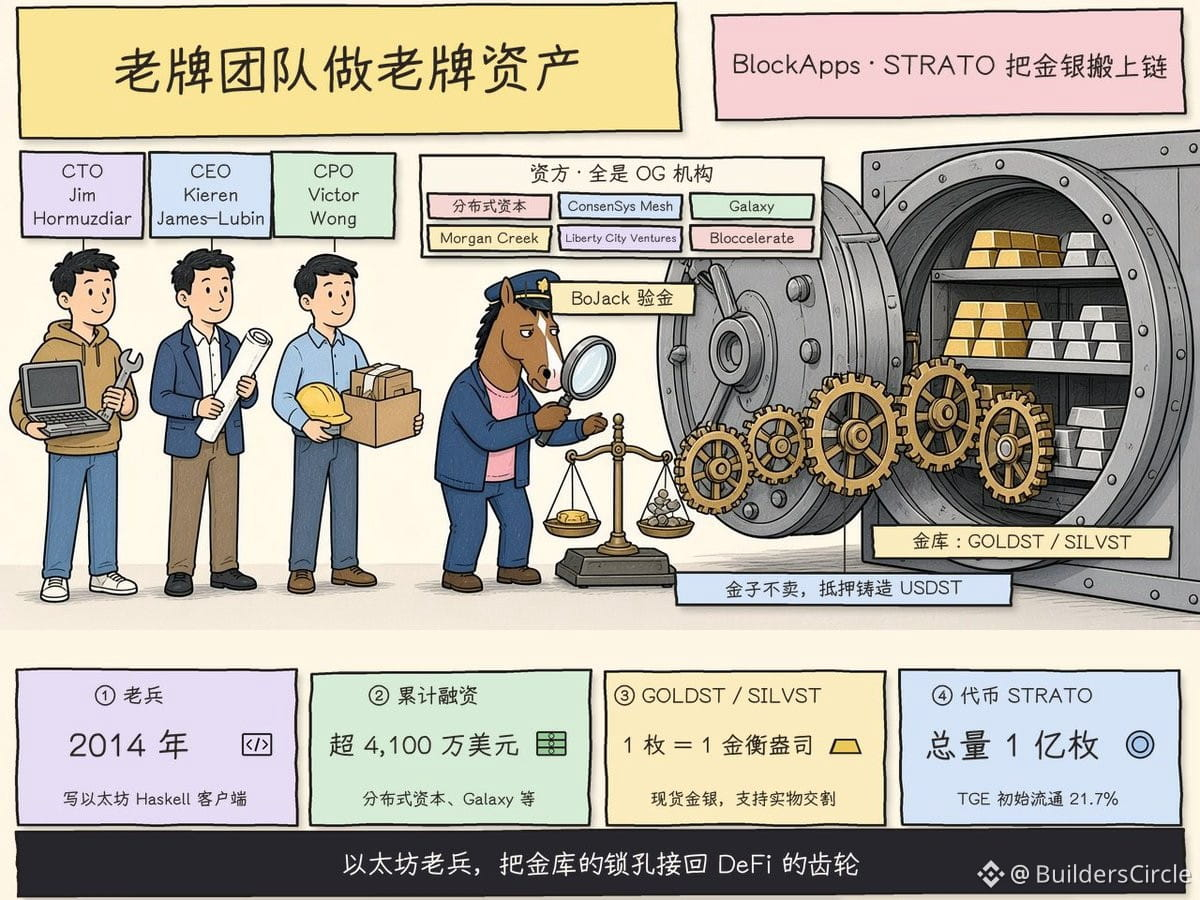
BlockApps пишет код клиентского ПО для Ethereum ещё с тех времён, когда основной сети не существовало. Теперь компания токенизирует старейшие хеджевые активы: физическое золото и серебро.
История технологий впечатляет:
В сентябре 2014 года технический директор Джим Хормуздиар отправил первый клиент Ethereum на Haskell, реализовав EVM напрямую по Yellow Paper. Когда в 2015 году запустился Frontier, его клиент был одной из 6 официально совместимых реализаций. STRATO и сегодня работает на этой архитектуре.
Генеральный директор Киерен Джеймс-Лубин (математика в Принстоне и математическая физика в Беркли) стал сооснователем Enterprise Ethereum Alliance. Директор по продукту Виктор Вонг в 2015 году на DEVCON1 продемонстрировал первый Blockchain-as-a-Service на базе Microsoft Azure, а затем целое десятилетие создавал блокчейны с ограниченным доступом для отслеживания поставок сельскохозяйственной продукции Bayer и международных энергетических консорциумов.
С 2016 года компания экспериментирует с токенизацией корпоративных активов на Ethereum — задолго до того, как RWA стало модным словом.
Инвестиции: более $41 млн от пионеров отрасли:
• Fenbushi Capital (ранний китайский криптофонд Виталика, Сяо Фэна и Шэнь Бо)
• ConsenSys Mesh (первоначальный бизнес-инкубатор BlockApps)
• Galaxy Ventures (Новацг)
• Morgan Creek Capital (Марк Юско)
• Liberty City Ventures (инкубировала Paxos — команду, стоящую за $PAXG)
• Bloccelerate (инвестировала в MakerDAO и Centrifuge)
Механизм напоминает старый золотой стандарт США, но работает на криптонативной инфраструктуре:
1. Физическое золото и серебро хранятся в хранилищах → токенизируются в виде GOLDST/SILVST (1 токен = 1 тройская унция, которую можно обменять на физическую поставку)
2. CDP с избыточным обеспечением: заблокируйте золотые токены и выпустите стейблкоин USDST, не продавая лежащий в основе металл
3. Превращает неликвидные драгоценные металлы в ликвидность для DeFi
Токен: $STRATO. Общая эмиссия — 100M, в обращении на TGE — 21,7%. Запуск основной сети запланирован на IV квартал 2026 года.
Безопасность: постоянное сотрудничество с Consensys Diligence в области аудита вместо разовых статических проверок.
По сути, первые разработчики Ethereum подключают физические золотые запасы к механизмам DeFi, снова превращая золото в обеспечение для повседневной ликвидности.
51
Войдите, чтобы посмотреть больше материала
Присоединяйтесь к пользователям криптовалют по всему миру на Binance Square
⚡️ Получайте новейшую и полезную информацию о криптоактивах.
💬 Нам доверяет крупнейшая в мире криптобиржа.
👍 Получите достоверные аналитические данные от верифицированных создателей контента.
Эл. почта/номер телефона