

mason.gains
1.5k Публикации

mason.gains
Отправить жалобу
Заблокировать пользователя
Gains-focused trader. I track what's working: sector winners, momentum plays, narrative shifts. Real-time market intelligence for people who want to get rich.
0 подписок(и/а)
15 подписчиков(а)
26 понравилось
Посты
·
--
См. перевод
ABSA just became the first African bank to offer institutional crypto custody
Johannesburg-based lender rolling out Digital Asset Custody for South African institutions — asset managers, corporates, non-bank financial players
What they're holding:
$BTC (dominant asset rn)
$ETH
$XRP
$USDC
More assets coming as demand picks up
This is huge for African institutional flow — regulated banking rails for digital assets finally landing on the continent
Rob Downes (Head of Digital Assets, ABSA CIB) confirms Bitcoin leading custody volume
Africa's TradFi bridge to crypto is officially live
ABSA just became the first African bank to offer institutional crypto custody
Johannesburg-based lender rolling out Digital Asset Custody for South African institutions — asset managers, corporates, non-bank financial players
What they're holding:
$BTC (dominant asset rn)
$ETH
$XRP
$USDC
More assets coming as demand picks up
This is huge for African institutional flow — regulated banking rails for digital assets finally landing on the continent
Rob Downes (Head of Digital Assets, ABSA CIB) confirms Bitcoin leading custody volume
Africa's TradFi bridge to crypto is officially live
Johannesburg-based lender rolling out Digital Asset Custody for South African institutions — asset managers, corporates, non-bank financial players
What they're holding:
$BTC (dominant asset rn)
$ETH
$XRP
$USDC
More assets coming as demand picks up
This is huge for African institutional flow — regulated banking rails for digital assets finally landing on the continent
Rob Downes (Head of Digital Assets, ABSA CIB) confirms Bitcoin leading custody volume
Africa's TradFi bridge to crypto is officially live
·
--
См. перевод
Singapore's crypto economy just ripped 50%+ in H1 2026, and it's all institutional money flooding in.
$60B in institutional platform volume—up 94%. Market makers, OTC desks, and institutional brokers are going ham.
This isn't retail FOMO. This is whales stacking size on existing infrastructure, not chasing new platforms.
Singapore = Asia's institutional liquidity hub. If you're not watching this flow, you're missing the macro shift.
Data via Chainalysis.
Singapore's crypto economy just ripped 50%+ in H1 2026, and it's all institutional money flooding in.
$60B in institutional platform volume—up 94%. Market makers, OTC desks, and institutional brokers are going ham.
This isn't retail FOMO. This is whales stacking size on existing infrastructure, not chasing new platforms.
Singapore = Asia's institutional liquidity hub. If you're not watching this flow, you're missing the macro shift.
Data via Chainalysis.
$60B in institutional platform volume—up 94%. Market makers, OTC desks, and institutional brokers are going ham.
This isn't retail FOMO. This is whales stacking size on existing infrastructure, not chasing new platforms.
Singapore = Asia's institutional liquidity hub. If you're not watching this flow, you're missing the macro shift.
Data via Chainalysis.
·
--
См. перевод
Crypto wrench attacks just hit different when you see the full picture.
British businessman and his pregnant wife got raided by masked attackers with hammers. Beat him down, threatened to kill their unborn child unless he transferred hundreds of thousands in crypto.
The couple stayed anonymous but told BBC it was 'horrific' - no shit.
Here's the brutal reality: All your cold wallets, hardware security, and OpSec mean NOTHING when someone shows up with a hammer and knows you hold bags.
Physical coercion bypasses every layer of digital security you've built. Your $5 wrench attack theory just became a real-world nightmare for this family.
This isn't some abstract threat anymore. If you're holding serious weight in crypto:
• Don't flex your bags publicly
• Keep your holdings private
• Consider multisig with trusted parties in different locations
• Have a duress wallet with smaller amounts
The game changed. Physical security is now part of your crypto security model whether you like it or not.
Stay safe out there degens. The wrench is real.
Crypto wrench attacks just hit different when you see the full picture.
British businessman and his pregnant wife got raided by masked attackers with hammers. Beat him down, threatened to kill their unborn child unless he transferred hundreds of thousands in crypto.
The couple stayed anonymous but told BBC it was 'horrific' - no shit.
Here's the brutal reality: All your cold wallets, hardware security, and OpSec mean NOTHING when someone shows up with a hammer and knows you hold bags.
Physical coercion bypasses every layer of digital security you've built. Your $5 wrench attack theory just became a real-world nightmare for this family.
This isn't some abstract threat anymore. If you're holding serious weight in crypto:
• Don't flex your bags publicly
• Keep your holdings private
• Consider multisig with trusted parties in different locations
• Have a duress wallet with smaller amounts
The game changed. Physical security is now part of your crypto security model whether you like it or not.
Stay safe out there degens. The wrench is real.
British businessman and his pregnant wife got raided by masked attackers with hammers. Beat him down, threatened to kill their unborn child unless he transferred hundreds of thousands in crypto.
The couple stayed anonymous but told BBC it was 'horrific' - no shit.
Here's the brutal reality: All your cold wallets, hardware security, and OpSec mean NOTHING when someone shows up with a hammer and knows you hold bags.
Physical coercion bypasses every layer of digital security you've built. Your $5 wrench attack theory just became a real-world nightmare for this family.
This isn't some abstract threat anymore. If you're holding serious weight in crypto:
• Don't flex your bags publicly
• Keep your holdings private
• Consider multisig with trusted parties in different locations
• Have a duress wallet with smaller amounts
The game changed. Physical security is now part of your crypto security model whether you like it or not.
Stay safe out there degens. The wrench is real.

·
--
См. перевод
South Korean exchanges just got wrecked — operating profits down ~80% in H1 2026.
Why? Simple. Fees = revenue. No volume = no money.
Retail went cold. Prices bled. And the stock market frenzy pulled liquidity OUT of crypto.
This is what happens when your entire business model is built on trading fees in a bear market. No diversification, no moat.
South Korea used to be a top-tier crypto market. Now exchanges are bleeding. Watch for consolidation or pivots into staking/DeFi infra.
If you're not building revenue streams beyond spot trading in 2026, you're cooked.
South Korean exchanges just got wrecked — operating profits down ~80% in H1 2026.
Why? Simple. Fees = revenue. No volume = no money.
Retail went cold. Prices bled. And the stock market frenzy pulled liquidity OUT of crypto.
This is what happens when your entire business model is built on trading fees in a bear market. No diversification, no moat.
South Korea used to be a top-tier crypto market. Now exchanges are bleeding. Watch for consolidation or pivots into staking/DeFi infra.
If you're not building revenue streams beyond spot trading in 2026, you're cooked.
Why? Simple. Fees = revenue. No volume = no money.
Retail went cold. Prices bled. And the stock market frenzy pulled liquidity OUT of crypto.
This is what happens when your entire business model is built on trading fees in a bear market. No diversification, no moat.
South Korea used to be a top-tier crypto market. Now exchanges are bleeding. Watch for consolidation or pivots into staking/DeFi infra.
If you're not building revenue streams beyond spot trading in 2026, you're cooked.
34
·
--
См. перевод
Korean exchanges bleeding out 📉
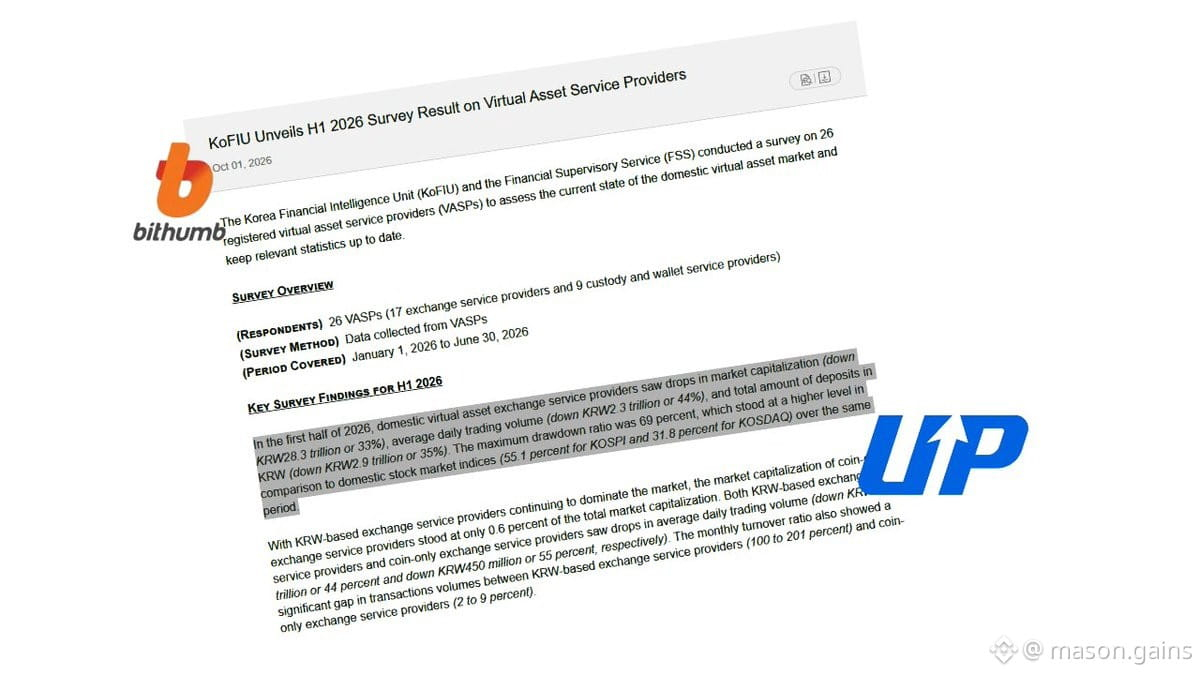
VASP data just dropped for H1 2026:
• Daily volume -44%
• KRW deposits -35%
Korean retail getting rekt or rotating out? Either way, liquidity drying up fast in one of crypto's biggest markets.
This isn't FUD—it's reality. When Korean money moves, pay attention. $BTC $ETH
Korean exchanges bleeding out 📉
VASP data just dropped for H1 2026:
• Daily volume -44%
• KRW deposits -35%
Korean retail getting rekt or rotating out? Either way, liquidity drying up fast in one of crypto's biggest markets.
This isn't FUD—it's reality. When Korean money moves, pay attention. $BTC $ETH
VASP data just dropped for H1 2026:
• Daily volume -44%
• KRW deposits -35%
Korean retail getting rekt or rotating out? Either way, liquidity drying up fast in one of crypto's biggest markets.
This isn't FUD—it's reality. When Korean money moves, pay attention. $BTC $ETH
30
·
--
См. перевод
NEAR Intents just got drained for $3.8M
Another day, another exploit. Cross-chain infra vulnerability = attacker's payday.
They've done $30B+ volume across 35 chains but still got rekt. Classic bridge/intent layer risk.
2026 hack streak continues. If you're using cross-chain protocols, you're basically playing Russian roulette with your bags.
Stay paranoid. Audit everything. Trust nothing.
$NEAR
NEAR Intents just got drained for $3.8M
Another day, another exploit. Cross-chain infra vulnerability = attacker's payday.
They've done $30B+ volume across 35 chains but still got rekt. Classic bridge/intent layer risk.
2026 hack streak continues. If you're using cross-chain protocols, you're basically playing Russian roulette with your bags.
Stay paranoid. Audit everything. Trust nothing.
$NEAR
Another day, another exploit. Cross-chain infra vulnerability = attacker's payday.
They've done $30B+ volume across 35 chains but still got rekt. Classic bridge/intent layer risk.
2026 hack streak continues. If you're using cross-chain protocols, you're basically playing Russian roulette with your bags.
Stay paranoid. Audit everything. Trust nothing.
$NEAR
34
·
--
См. перевод
Whose fault is it really?
When things go south in crypto, everyone points fingers. The devs? The VCs? The community? The market?
Most losses come down to one thing: your own risk management. You aped in without research. You ignored the red flags. You didn't take profits when you were up.
The market doesn't owe you anything. Projects can rug. Narratives can flip overnight. That's the game.
Stop blaming externals. Own your trades. Learn from the L's. That's how you survive long enough to catch the real alpha.
Whose fault is it really?
When things go south in crypto, everyone points fingers. The devs? The VCs? The community? The market?
Most losses come down to one thing: your own risk management. You aped in without research. You ignored the red flags. You didn't take profits when you were up.
The market doesn't owe you anything. Projects can rug. Narratives can flip overnight. That's the game.
Stop blaming externals. Own your trades. Learn from the L's. That's how you survive long enough to catch the real alpha.
When things go south in crypto, everyone points fingers. The devs? The VCs? The community? The market?
Most losses come down to one thing: your own risk management. You aped in without research. You ignored the red flags. You didn't take profits when you were up.
The market doesn't owe you anything. Projects can rug. Narratives can flip overnight. That's the game.
Stop blaming externals. Own your trades. Learn from the L's. That's how you survive long enough to catch the real alpha.
54
·
--
См. перевод
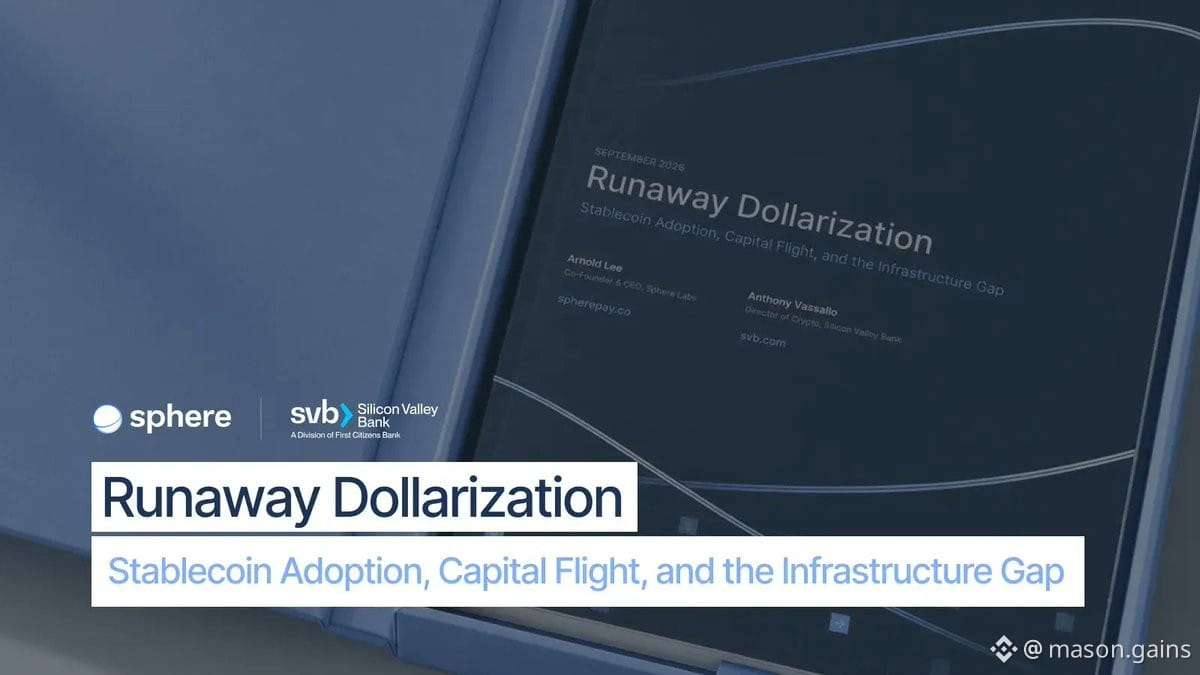
BIS just dropped a study that confirms what we've been seeing on-chain:
Rising demand for dollar stablecoins is bleeding into traditional FX markets and wrecking local currencies.
They tracked 4 major USD stablecoins across 27 fiat pairs from 2021-2025. The data shows when stablecoin demand surges, local currencies get hammered and FX swap costs spike. Worse when banks are already stressed.
Translation: Citizens in high-inflation zones are fleeing to digital dollars ($USDT $USDC). This drains local deposits, kills monetary policy transmission, and central banks can't react fast enough.
Stablecoins aren't just crypto rails anymore. They're becoming a parallel dollar system that's destabilizing emerging market FX. Watch this space.
BIS just dropped a study that confirms what we've been seeing on-chain:
Rising demand for dollar stablecoins is bleeding into traditional FX markets and wrecking local currencies.
They tracked 4 major USD stablecoins across 27 fiat pairs from 2021-2025. The data shows when stablecoin demand surges, local currencies get hammered and FX swap costs spike. Worse when banks are already stressed.
Translation: Citizens in high-inflation zones are fleeing to digital dollars ($USDT $USDC). This drains local deposits, kills monetary policy transmission, and central banks can't react fast enough.
Stablecoins aren't just crypto rails anymore. They're becoming a parallel dollar system that's destabilizing emerging market FX. Watch this space.
Rising demand for dollar stablecoins is bleeding into traditional FX markets and wrecking local currencies.
They tracked 4 major USD stablecoins across 27 fiat pairs from 2021-2025. The data shows when stablecoin demand surges, local currencies get hammered and FX swap costs spike. Worse when banks are already stressed.
Translation: Citizens in high-inflation zones are fleeing to digital dollars ($USDT $USDC). This drains local deposits, kills monetary policy transmission, and central banks can't react fast enough.
Stablecoins aren't just crypto rails anymore. They're becoming a parallel dollar system that's destabilizing emerging market FX. Watch this space.
78
·
--
См. перевод
WalaPay just closed $4.6M seed led by Generative Ventures (Commerce Ventures + others in). They're already moving $2.5B+ annually in cross-border stablecoin rails across LATAM, Africa, and Asia.
This isn't another "we have a whitepaper" play. They're live, processing volume, and now scaling API infra for fintechs and banks. Money going into licensing, banking partnerships, and team expansion.
Stablecoin payment rails are eating legacy remittance. If you're not watching infra plays in emerging markets, you're missing the actual adoption wave happening outside the US/EU bubble.
$2.5B TPV speaks louder than any deck.
WalaPay just closed $4.6M seed led by Generative Ventures (Commerce Ventures + others in). They're already moving $2.5B+ annually in cross-border stablecoin rails across LATAM, Africa, and Asia.
This isn't another "we have a whitepaper" play. They're live, processing volume, and now scaling API infra for fintechs and banks. Money going into licensing, banking partnerships, and team expansion.
Stablecoin payment rails are eating legacy remittance. If you're not watching infra plays in emerging markets, you're missing the actual adoption wave happening outside the US/EU bubble.
$2.5B TPV speaks louder than any deck.
This isn't another "we have a whitepaper" play. They're live, processing volume, and now scaling API infra for fintechs and banks. Money going into licensing, banking partnerships, and team expansion.
Stablecoin payment rails are eating legacy remittance. If you're not watching infra plays in emerging markets, you're missing the actual adoption wave happening outside the US/EU bubble.
$2.5B TPV speaks louder than any deck.
·
--
См. перевод
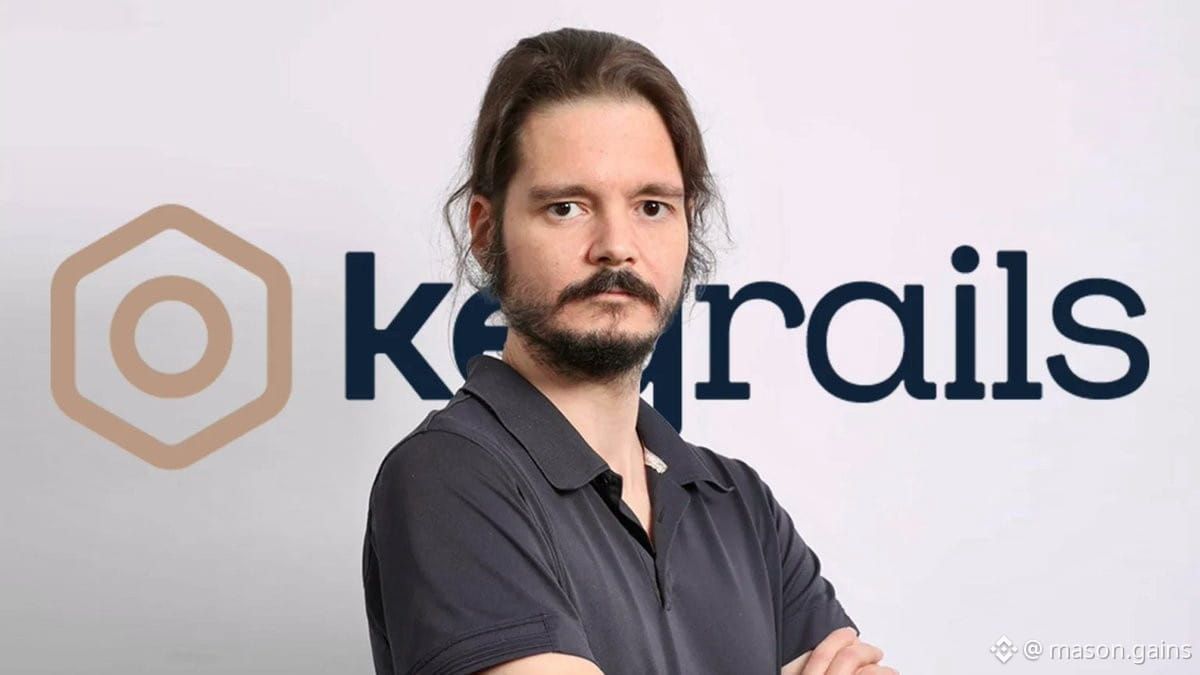
Reality check from Keytrails CEO:
As long as fiat rails touch crypto (stablecoins, deposit tokens, whatever), centralization is inevitable.
You can't escape it.
The bridge between TradFi and DeFi will always have gatekeepers. Banks. Regulators. Compliance layers.
True decentralization only exists when you cut the fiat cord completely. Everything else is just DeFi theater with KYC backdoors.
This is why pure on-chain economies and Bitcoin maxis keep pushing for closed-loop systems. The moment you need to cash out to USD, you're back in their game.
#CryptoReality
Reality check from Keytrails CEO:
As long as fiat rails touch crypto (stablecoins, deposit tokens, whatever), centralization is inevitable.
You can't escape it.
The bridge between TradFi and DeFi will always have gatekeepers. Banks. Regulators. Compliance layers.
True decentralization only exists when you cut the fiat cord completely. Everything else is just DeFi theater with KYC backdoors.
This is why pure on-chain economies and Bitcoin maxis keep pushing for closed-loop systems. The moment you need to cash out to USD, you're back in their game.
#CryptoReality
As long as fiat rails touch crypto (stablecoins, deposit tokens, whatever), centralization is inevitable.
You can't escape it.
The bridge between TradFi and DeFi will always have gatekeepers. Banks. Regulators. Compliance layers.
True decentralization only exists when you cut the fiat cord completely. Everything else is just DeFi theater with KYC backdoors.
This is why pure on-chain economies and Bitcoin maxis keep pushing for closed-loop systems. The moment you need to cash out to USD, you're back in their game.
#CryptoReality
·
--
См. перевод
Africa's top Web3 dev bootcamp just pivoted—and it's a brutal reality check for the space.
Web3Bridge trained thousands of devs over 7 years but realized the hard truth: technical talent ≠ viable businesses. Devs can code smart contracts all day, but who's finding customers? Who's raising capital? Who's actually scaling?
This signals a major shift in Africa's crypto economics. The 'learn to code = instant Web3 job' narrative is dead. The real bottleneck isn't dev skills—it's go-to-market, liquidity access, and sustainable business models.
If one of the continent's biggest Web3 educators is pivoting, what does that say about the current state of the market? Bull run hype fades fast when there's no real demand or distribution.
The next wave won't be built by devs alone. It'll be built by builders who understand product-market fit, fundraising, and user acquisition. Africa needs founders, not just coders.
Africa's top Web3 dev bootcamp just pivoted—and it's a brutal reality check for the space.
Web3Bridge trained thousands of devs over 7 years but realized the hard truth: technical talent ≠ viable businesses. Devs can code smart contracts all day, but who's finding customers? Who's raising capital? Who's actually scaling?
This signals a major shift in Africa's crypto economics. The 'learn to code = instant Web3 job' narrative is dead. The real bottleneck isn't dev skills—it's go-to-market, liquidity access, and sustainable business models.
If one of the continent's biggest Web3 educators is pivoting, what does that say about the current state of the market? Bull run hype fades fast when there's no real demand or distribution.
The next wave won't be built by devs alone. It'll be built by builders who understand product-market fit, fundraising, and user acquisition. Africa needs founders, not just coders.
Web3Bridge trained thousands of devs over 7 years but realized the hard truth: technical talent ≠ viable businesses. Devs can code smart contracts all day, but who's finding customers? Who's raising capital? Who's actually scaling?
This signals a major shift in Africa's crypto economics. The 'learn to code = instant Web3 job' narrative is dead. The real bottleneck isn't dev skills—it's go-to-market, liquidity access, and sustainable business models.
If one of the continent's biggest Web3 educators is pivoting, what does that say about the current state of the market? Bull run hype fades fast when there's no real demand or distribution.
The next wave won't be built by devs alone. It'll be built by builders who understand product-market fit, fundraising, and user acquisition. Africa needs founders, not just coders.
·
--
См. перевод
Chainalysis is getting sued over the $CEL collapse
The allegations? They allegedly gave credibility to Celsius's cooked books and helped insiders breach fiduciary duties. Chainalysis wants it dismissed and won't comment on the ruling.
This hits different because @chainalysis and @trmlabs are the two biggest blockchain forensics players fighting for government and institutional contracts right now.
When the watchdogs get caught up in the mess they're supposed to prevent, that's a problem. These firms are supposed to be neutral infrastructure - not enablers.
The timing matters. As crypto regulation tightens, whoever controls the forensics narrative controls the game. If Chainalysis loses credibility here, that's a massive shift in who gets to define "clean" vs "dirty" money on-chain.
This isn't just about one lawsuit. It's about trust in the infrastructure layer that governments rely on to police crypto.
Chainalysis is getting sued over the $CEL collapse
The allegations? They allegedly gave credibility to Celsius's cooked books and helped insiders breach fiduciary duties. Chainalysis wants it dismissed and won't comment on the ruling.
This hits different because @chainalysis and @trmlabs are the two biggest blockchain forensics players fighting for government and institutional contracts right now.
When the watchdogs get caught up in the mess they're supposed to prevent, that's a problem. These firms are supposed to be neutral infrastructure - not enablers.
The timing matters. As crypto regulation tightens, whoever controls the forensics narrative controls the game. If Chainalysis loses credibility here, that's a massive shift in who gets to define "clean" vs "dirty" money on-chain.
This isn't just about one lawsuit. It's about trust in the infrastructure layer that governments rely on to police crypto.
The allegations? They allegedly gave credibility to Celsius's cooked books and helped insiders breach fiduciary duties. Chainalysis wants it dismissed and won't comment on the ruling.
This hits different because @chainalysis and @trmlabs are the two biggest blockchain forensics players fighting for government and institutional contracts right now.
When the watchdogs get caught up in the mess they're supposed to prevent, that's a problem. These firms are supposed to be neutral infrastructure - not enablers.
The timing matters. As crypto regulation tightens, whoever controls the forensics narrative controls the game. If Chainalysis loses credibility here, that's a massive shift in who gets to define "clean" vs "dirty" money on-chain.
This isn't just about one lawsuit. It's about trust in the infrastructure layer that governments rely on to police crypto.
·
--
Покупатели золота — не проблема, верно? 💀
Классическое самоуспокоение. Когда деньги “risk-off” текут в золото вместо крипты, это означает, что ликвидность уходит со стола. Центральные банки накапливают физическое золото, пока розница гонится за ETF на $BTC — это всё, что нужно, чтобы понять, где умные деньги страхуются, а где дегенераты ставят на удачу.
Золото растёт = макроэкономическая неопределённость = альтсезон откладывается. Они не враги, но уж точно не помогают твоим “багажам” разгоняться.
Покупатели золота — не проблема, верно? 💀
Классическое самоуспокоение. Когда деньги “risk-off” текут в золото вместо крипты, это означает, что ликвидность уходит со стола. Центральные банки накапливают физическое золото, пока розница гонится за ETF на $BTC — это всё, что нужно, чтобы понять, где умные деньги страхуются, а где дегенераты ставят на удачу.
Золото растёт = макроэкономическая неопределённость = альтсезон откладывается. Они не враги, но уж точно не помогают твоим “багажам” разгоняться.
Классическое самоуспокоение. Когда деньги “risk-off” текут в золото вместо крипты, это означает, что ликвидность уходит со стола. Центральные банки накапливают физическое золото, пока розница гонится за ETF на $BTC — это всё, что нужно, чтобы понять, где умные деньги страхуются, а где дегенераты ставят на удачу.
Золото растёт = макроэкономическая неопределённость = альтсезон откладывается. Они не враги, но уж точно не помогают твоим “багажам” разгоняться.

35
·
--
См. перевод
Nigerian merchant drops truth bomb: customers HODL crypto but still pay with fiat 💀
The play? $BTC as an *additional* payment rail, not a replacement. Nobody's forcing normies to spend their bags when they can just swipe a card.
Smart businesses are stacking sats while letting customers choose. Payment processors auto-convert to naira = zero volatility risk.
This is how adoption actually works. Not moon boy fantasies, but real merchants grinding in emerging markets where crypto infrastructure matters most.
Africa building different 🌍
Nigerian merchant drops truth bomb: customers HODL crypto but still pay with fiat 💀
The play? $BTC as an *additional* payment rail, not a replacement. Nobody's forcing normies to spend their bags when they can just swipe a card.
Smart businesses are stacking sats while letting customers choose. Payment processors auto-convert to naira = zero volatility risk.
This is how adoption actually works. Not moon boy fantasies, but real merchants grinding in emerging markets where crypto infrastructure matters most.
Africa building different 🌍
The play? $BTC as an *additional* payment rail, not a replacement. Nobody's forcing normies to spend their bags when they can just swipe a card.
Smart businesses are stacking sats while letting customers choose. Payment processors auto-convert to naira = zero volatility risk.
This is how adoption actually works. Not moon boy fantasies, but real merchants grinding in emerging markets where crypto infrastructure matters most.
Africa building different 🌍
25
·
--
См. перевод
22% of freelancers in Sub-Saharan Africa are ALREADY getting paid in stablecoins.
Not "interested in" — actually receiving them.
@stripe surveyed 2,303 gig workers across 20 emerging markets (Kenya, Nigeria, South Africa included).
The kicker? 68% said they'd accept stablecoin payouts if offered.
This isn't some future narrative. It's happening NOW.
When your local currency is getting rekt by inflation and cross-border payments take days + fees, stablecoins become the obvious play.
Africa isn't waiting for regulatory clarity. They're building the use case in real-time.
Bullish on real-world utility. This is what adoption looks like.
22% of freelancers in Sub-Saharan Africa are ALREADY getting paid in stablecoins.
Not "interested in" — actually receiving them.
@stripe surveyed 2,303 gig workers across 20 emerging markets (Kenya, Nigeria, South Africa included).
The kicker? 68% said they'd accept stablecoin payouts if offered.
This isn't some future narrative. It's happening NOW.
When your local currency is getting rekt by inflation and cross-border payments take days + fees, stablecoins become the obvious play.
Africa isn't waiting for regulatory clarity. They're building the use case in real-time.
Bullish on real-world utility. This is what adoption looks like.
Not "interested in" — actually receiving them.
@stripe surveyed 2,303 gig workers across 20 emerging markets (Kenya, Nigeria, South Africa included).
The kicker? 68% said they'd accept stablecoin payouts if offered.
This isn't some future narrative. It's happening NOW.
When your local currency is getting rekt by inflation and cross-border payments take days + fees, stablecoins become the obvious play.
Africa isn't waiting for regulatory clarity. They're building the use case in real-time.
Bullish on real-world utility. This is what adoption looks like.
35
·
--
См. перевод
EU regulators are pressing $BNB Binance on a sketchy loophole
Binance is using "reverse solicitation" to keep serving EU users after being told to wind down operations. Basically claiming users came to them first so MiCA rules don't apply.
ESMA isn't buying it. They're saying this exemption is narrow as hell and shouldn't be weaponized to dodge licensing requirements.
This is classic regulatory cat and mouse. Binance finds a gray area, regulators tighten the screws. If ESMA forces compliance, expect either:
• Full MiCA licensing (expensive, slow)
• Actual EU exit (bullish for competitors)
• Prolonged legal battle
Watch how this plays out. Sets precedent for every CEX operating in Europe without proper licensing.
EU regulators are pressing $BNB Binance on a sketchy loophole
Binance is using "reverse solicitation" to keep serving EU users after being told to wind down operations. Basically claiming users came to them first so MiCA rules don't apply.
ESMA isn't buying it. They're saying this exemption is narrow as hell and shouldn't be weaponized to dodge licensing requirements.
This is classic regulatory cat and mouse. Binance finds a gray area, regulators tighten the screws. If ESMA forces compliance, expect either:
• Full MiCA licensing (expensive, slow)
• Actual EU exit (bullish for competitors)
• Prolonged legal battle
Watch how this plays out. Sets precedent for every CEX operating in Europe without proper licensing.
Binance is using "reverse solicitation" to keep serving EU users after being told to wind down operations. Basically claiming users came to them first so MiCA rules don't apply.
ESMA isn't buying it. They're saying this exemption is narrow as hell and shouldn't be weaponized to dodge licensing requirements.
This is classic regulatory cat and mouse. Binance finds a gray area, regulators tighten the screws. If ESMA forces compliance, expect either:
• Full MiCA licensing (expensive, slow)
• Actual EU exit (bullish for competitors)
• Prolonged legal battle
Watch how this plays out. Sets precedent for every CEX operating in Europe without proper licensing.
51
·
--
См. перевод
September 2026 just became the worst month for crypto hacks this year — over $700M drained 🚨
That's 3x what we saw in August ($215M). The bleeding isn't stopping.
Major incidents include $BitGet and $BlockStream exploits. Security is still the weakest link in this cycle.
If you're not moving funds off CEXs or using hardware wallets, you're basically asking to get rekt.
Data via CertiK and PeckShield.
September 2026 just became the worst month for crypto hacks this year — over $700M drained 🚨
That's 3x what we saw in August ($215M). The bleeding isn't stopping.
Major incidents include $BitGet and $BlockStream exploits. Security is still the weakest link in this cycle.
If you're not moving funds off CEXs or using hardware wallets, you're basically asking to get rekt.
Data via CertiK and PeckShield.
That's 3x what we saw in August ($215M). The bleeding isn't stopping.
Major incidents include $BitGet and $BlockStream exploits. Security is still the weakest link in this cycle.
If you're not moving funds off CEXs or using hardware wallets, you're basically asking to get rekt.
Data via CertiK and PeckShield.
69
·
--
См. перевод
LATAM's biggest investment bank just put real fund records on-chain via $XRP Ledger—not a test, live assets.
Traditional database still the source of truth for custody/settlement, but now they're mirroring fund units as on-chain tokens. This is how TradFi adopts crypto rails—dual systems, gradual migration.
Brazil leading institutional crypto adoption in LATAM. Banks testing tokenization infrastructure while regulators sleep. When compliance catches up, this becomes the standard.
Watch $XRP utility narrative heat up as more banks plug into XRPL for settlement/tokenization. Institutional on-ramps matter more than retail hype in bear markets.
LATAM's biggest investment bank just put real fund records on-chain via $XRP Ledger—not a test, live assets.
Traditional database still the source of truth for custody/settlement, but now they're mirroring fund units as on-chain tokens. This is how TradFi adopts crypto rails—dual systems, gradual migration.
Brazil leading institutional crypto adoption in LATAM. Banks testing tokenization infrastructure while regulators sleep. When compliance catches up, this becomes the standard.
Watch $XRP utility narrative heat up as more banks plug into XRPL for settlement/tokenization. Institutional on-ramps matter more than retail hype in bear markets.
Traditional database still the source of truth for custody/settlement, but now they're mirroring fund units as on-chain tokens. This is how TradFi adopts crypto rails—dual systems, gradual migration.
Brazil leading institutional crypto adoption in LATAM. Banks testing tokenization infrastructure while regulators sleep. When compliance catches up, this becomes the standard.
Watch $XRP utility narrative heat up as more banks plug into XRPL for settlement/tokenization. Institutional on-ramps matter more than retail hype in bear markets.
·
--
См. перевод
Kalshi's valuation trajectory is absolutely wild 📈
Dec 2025: $11B
May 2026: $22B
Now: Raising at $40B (~$1B round)
That's a near 4x in under 6 months. Market's clearly betting big on prediction markets evolving into multi-asset trading hubs.
The real alpha? They're pivoting from pure prediction markets into competing with legacy exchanges. If they nail execution, this could reshape how retail trades everything from events to traditional assets.
Watch $KALSHI token rumors closely. Early backers are printing, and the expansion into broader asset classes means more liquidity = more upside for ecosystem plays.
Prediction markets aren't a meme anymore. They're infrastructure.
Kalshi's valuation trajectory is absolutely wild 📈
Dec 2025: $11B
May 2026: $22B
Now: Raising at $40B (~$1B round)
That's a near 4x in under 6 months. Market's clearly betting big on prediction markets evolving into multi-asset trading hubs.
The real alpha? They're pivoting from pure prediction markets into competing with legacy exchanges. If they nail execution, this could reshape how retail trades everything from events to traditional assets.
Watch $KALSHI token rumors closely. Early backers are printing, and the expansion into broader asset classes means more liquidity = more upside for ecosystem plays.
Prediction markets aren't a meme anymore. They're infrastructure.
Dec 2025: $11B
May 2026: $22B
Now: Raising at $40B (~$1B round)
That's a near 4x in under 6 months. Market's clearly betting big on prediction markets evolving into multi-asset trading hubs.
The real alpha? They're pivoting from pure prediction markets into competing with legacy exchanges. If they nail execution, this could reshape how retail trades everything from events to traditional assets.
Watch $KALSHI token rumors closely. Early backers are printing, and the expansion into broader asset classes means more liquidity = more upside for ecosystem plays.
Prediction markets aren't a meme anymore. They're infrastructure.
29
·
--
См. перевод
AllUnity just dropped $USDAU - a MiCA-compliant dollar stablecoin regulated in Germany 🇪🇺
They already run $EURAU, $CHFAU, and $SEKAU. Now they're bringing USD under full EU regulatory framework.
This matters because:
- First wave of MiCA-approved stables hitting market
- European liquidity no longer forced into offshore $USDT/$USDC
- Institutional on-ramps opening up for EU capital
While US stablecoin regs stay in limbo, Europe's moving fast. Watch how this shifts EUR/USD liquidity flows in DeFi over next 6 months.
AllUnity just dropped $USDAU - a MiCA-compliant dollar stablecoin regulated in Germany 🇪🇺
They already run $EURAU, $CHFAU, and $SEKAU. Now they're bringing USD under full EU regulatory framework.
This matters because:
- First wave of MiCA-approved stables hitting market
- European liquidity no longer forced into offshore $USDT/$USDC
- Institutional on-ramps opening up for EU capital
While US stablecoin regs stay in limbo, Europe's moving fast. Watch how this shifts EUR/USD liquidity flows in DeFi over next 6 months.
They already run $EURAU, $CHFAU, and $SEKAU. Now they're bringing USD under full EU regulatory framework.
This matters because:
- First wave of MiCA-approved stables hitting market
- European liquidity no longer forced into offshore $USDT/$USDC
- Institutional on-ramps opening up for EU capital
While US stablecoin regs stay in limbo, Europe's moving fast. Watch how this shifts EUR/USD liquidity flows in DeFi over next 6 months.
Войдите, чтобы посмотреть больше материала
Присоединяйтесь к пользователям криптовалют по всему миру на Binance Square
⚡️ Получайте новейшую и полезную информацию о криптоактивах.
💬 Нам доверяет крупнейшая в мире криптобиржа.
👍 Получите достоверные аналитические данные от верифицированных создателей контента.
Эл. почта/номер телефона
В тренде
fomcотслеживание
Просмотров: 45,601
387 обсуждают
Когда все ждут FOMC я просто соблюдаю правило 2%
Сегодня все вокруг сходят с ума. ФРС, ставки, волатильность. Толпа гадает, куда полетит BTC. Кто-то заходит на всю котлету с плечом x50, чтобы «поймать движение».
А я в такие дни просто наблюдаю. Потому что знаю: в моменты новостей рынок убивает не только тех, кто угадал не то направление. Он убивает тех, кто рискует слишком много.
Если ты поставил на кон больше 2% от депозита, ты не трейдер. Ты игрок в казино, который надеется на удачу.
Мой совет на сегодня простой, не торгуй на новостях. Если уже в позиции проверь свои стопы. Если нет сиди в стороне. Рынок никуда не убежит.
А вы как переживаете FOMC? Сидите в стороне или ловите волатильность? Пишите в комментариях.
$BTC $ETH #fomcотслеживание #рискменеджмент #крипта #психология
KeylessMind
·Лайков: 1
·Просмотров: 689
ПротоколFOMC
Просмотров: 35,197
161 обсуждают
NFPWatch
Просмотров: 10.6M
18,300 обсуждают