BUILDING MULTI-TOKEN APPS ON TRON: HOW TRC-6909 & OPENZEPPELIN SIMPLIFY PER-TOKEN PERMISSIONS
Managing multiple asset types—like currencies, reward points, and in-game items—usually forces builders to deploy separate contracts or rely on all-or-nothing approvals.
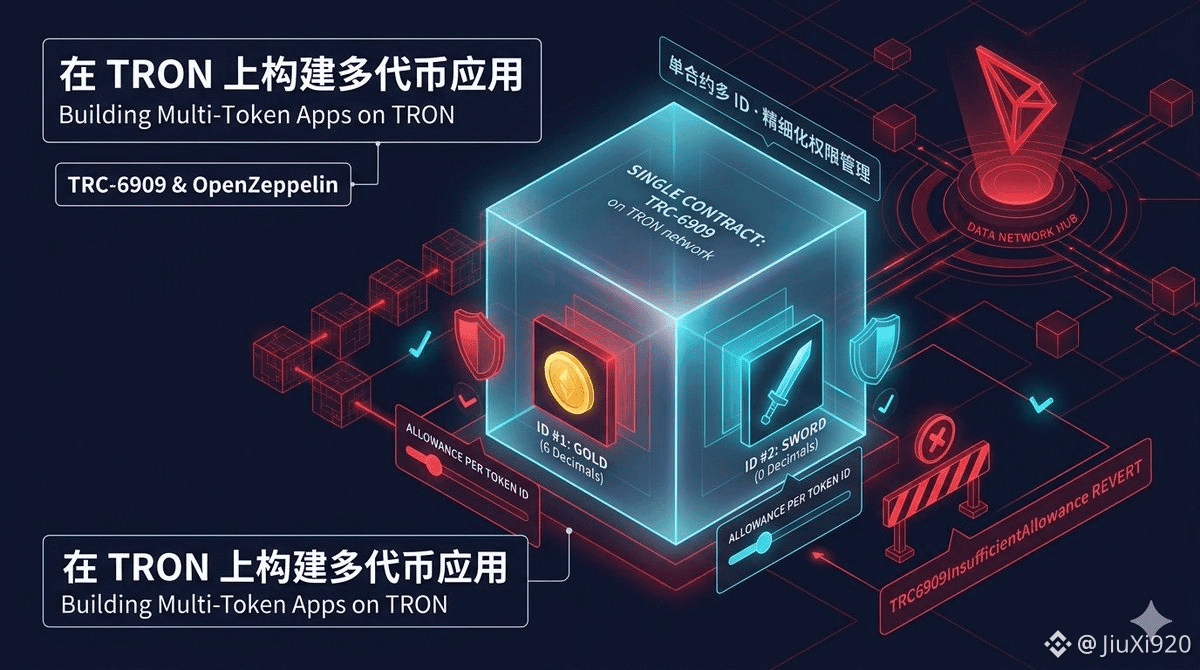
A new developer walkthrough demonstrates how TRC-6909 and OpenZeppelin Contracts for TRON bring multiple token IDs into one contract, using Gold (6 decimals) and Sword (0 decimals) on the Nile testnet to test direct transfers, per-token allowances, and revert checks when spending exceeds approved limits.
By isolating allowances per token ID instead of granting blanket access, applications gain finer control and lower deployment overhead.
TRON is dedicated to building the infrastructure for a decentralized internet.
With standardized contract libraries like OpenZeppelin Contracts for TRON, developers can build modular multi-asset applications on high-throughput rails without reinventing core permission logic.
A few practical highlights from the TRC-6909 Nile testnet walkthrough:
Multiple token types live under a single contract address, differentiated by token ID with independent decimal configurations.
Per-token allowances let a holder approve a spender for a specific token ID and capped amount without exposing other balances.
Live Nile testnet verification confirms transfers, partial allowance consumption, and expected TRC6909InsufficientAllowance reverts on overspend attempts.
Cleaner multi-token standards make it easier for builders to ship secure, flexible onchain economies on TRON.
If you are building with multi-token standards on TRON, which feature saves you the most complexity—single-contract multi-ID management, per-token allowances, or built-in OpenZeppelin metadata extensions?
@TRON DAO @Justin Sun孙宇晨 #TRONEcoStar