𝗙𝗥𝗢𝗠 𝗢𝗡𝗘-𝗢𝗙𝗙 𝗙𝗜𝗥𝗘𝗪𝗢𝗥𝗞𝗦 𝗧𝗢 𝗔 𝗣𝗘𝗥𝗠𝗔𝗡𝗘𝗡𝗧 𝗘𝗡𝗚𝗜𝗡𝗘: 𝗪𝗛𝗬 𝗨𝗣𝗚𝗥𝗔𝗗𝗜𝗡𝗚 𝗧𝗛𝗘 𝗝𝗦𝗧 𝗕𝗨𝗬𝗕𝗔𝗖𝗞 & 𝗕𝗨𝗥𝗡 𝗠𝗔𝗞𝗘𝗦 𝗦𝗘𝗡𝗦𝗘
Plenty of crypto projects treat token buybacks like birthday fireworks—they blow their entire savings account in one loud weekend, enjoy forty-eight hours of feed applause, and leave the treasury completely empty on Monday morning.
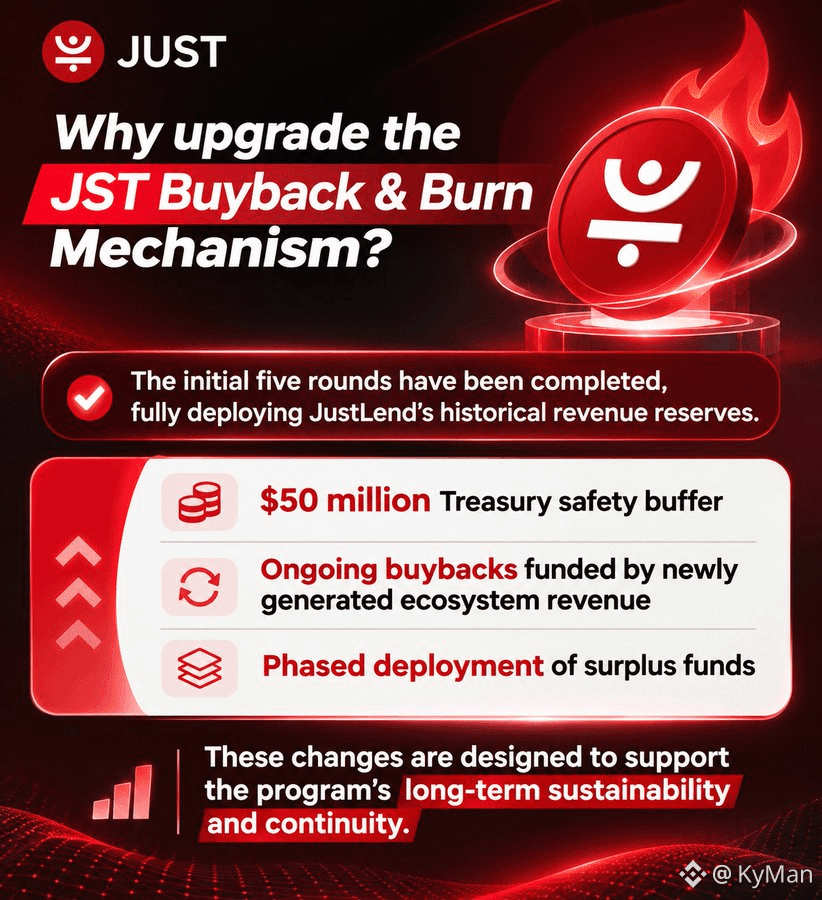
After completing five initial buyback rounds and fully deploying JustLend's historical revenue reserves, the protocol had a clear choice: coast on past headlines or redesign the system so it runs for years instead of weeks.
Upgrading the $JST Buyback & Burn mechanism turns a finite reserve sprint into a disciplined, self-sustaining economic flywheel.
𝗧𝗵𝗿𝗲𝗲 𝗨𝗽𝗴𝗿𝗮𝗱𝗲𝘀 𝗧𝗵𝗮𝘁 𝗧𝘂𝗿𝗻 𝗝𝗦𝗧 𝗕𝘂𝘆𝗯𝗮𝗰𝗸𝘀 𝗜𝗻𝘁𝗼 𝗟𝗼𝗻𝗴-𝗧𝗲𝗿𝗺 𝗜𝗻𝗳𝗿𝗮𝘀𝘁𝗿𝘂𝗰𝘁𝘂𝗿𝗲
Real financial maturity means balancing aggressive value accrual with rock-solid balance sheet protection:
➞ A 50 Million USD Treasury Safety Buffer: Locking in a $50M reserve cushion ensures the protocol stays resilient through rough market winters without ever compromising core operations
➞ Ongoing Buybacks From Fresh Revenue: Instead of draining old savings, future JST buybacks are fueled continuously by newly generated ecosystem revenue as users lend and borrow
➞ Phased Surplus Deployment: Excess capital above the buffer rolls out in structured stages rather than chaotic lump sums, creating steady, predictable execution
5 historical rounds complete → $50M Treasury buffer + Live revenue buybacks → Sustainable JST deflation
𝗦𝘂𝘀𝘁𝗮𝗶𝗻𝗮𝗯𝗹𝗲 𝗧𝗼𝗸𝗲𝗻𝗼𝗺𝗶𝗰𝘀 𝗕𝗲𝗮𝘁 𝗦𝗵𝗼𝗿𝘁-𝗧𝗲𝗿𝗺 𝗦𝘂𝗴𝗮𝗿 𝗥𝘂𝘀𝗵𝗲𝘀
Anyone can burn a pile of old reserves once, yet building a mechanism that protects a 50 million USD safety net while recycling live protocol revenue requires genuine long-term discipline.
This upgrade proves JustLend is designing JST around endurance rather than fleeting hype.
When evaluating token buyback programs, do you prefer aggressive one-time burns or a slower, revenue-backed engine protected by a 50M USD treasury buffer?
@Justin Sun孙宇晨 @JUST DAO #TRONEcoStar