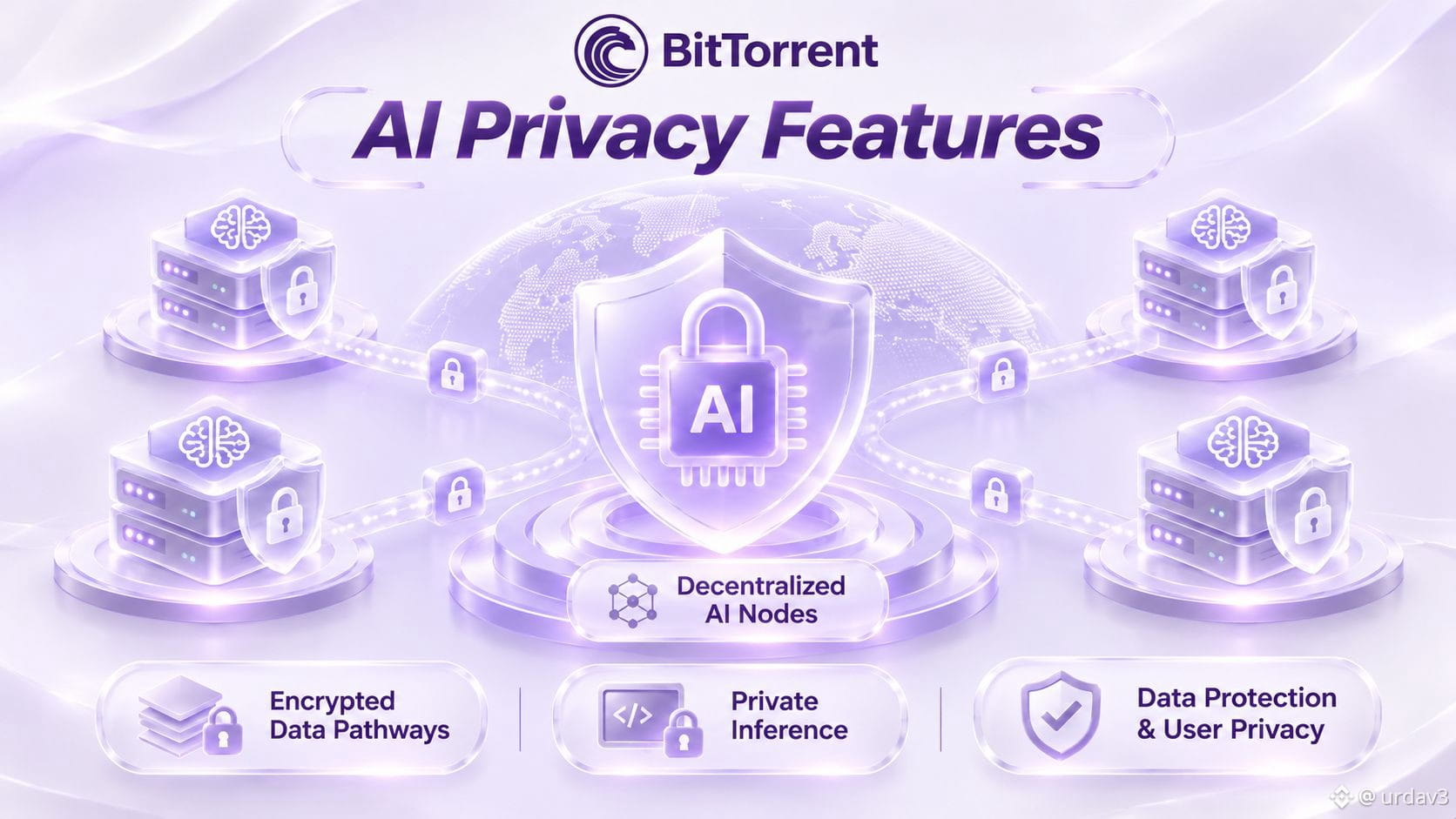
𝗕𝗜𝗧𝗧𝗢𝗥𝗥𝗘𝗡𝗧 𝗔𝗜 𝗣𝗥𝗜𝗩𝗔𝗖𝗬 𝗙𝗘𝗔𝗧𝗨𝗥𝗘𝗦: 𝗧𝗛𝗘 𝗡𝗘𝗫𝗧 𝗙𝗥𝗢𝗡𝗧𝗜𝗘𝗥 𝗜𝗦 𝗣𝗥𝗜𝗩𝗔𝗧𝗘 𝗜𝗡𝗧𝗘𝗟𝗟𝗜𝗚𝗘𝗡𝗖𝗘
𝗔𝗜 𝗣𝗿𝗶𝘃𝗮𝗰𝘆 𝗜𝘀 𝗕𝗲𝗰𝗼𝗺𝗶𝗻𝗴 𝗮 𝗙𝘂𝗻𝗱𝗮𝗺𝗲𝗻𝘁𝗮𝗹 𝗥𝗲𝗾𝘂𝗶𝗿𝗲𝗺𝗲𝗻𝘁
The more useful AI becomes, the more information people are willing to share with it.
That creates an interesting contradiction. AI applications become more valuable when they can work with relevant context, but the information behind that context may also be sensitive.
For businesses, this could include internal documents or proprietary data. For individuals, it could involve personal information and private conversations.
As decentralized AI infrastructure develops, privacy must become part of the conversation from the beginning.
𝗪𝗵𝗮𝘁 𝗣𝗿𝗶𝘃𝗮𝗰𝘆-𝗙𝗼𝗰𝘂𝘀𝗲𝗱 𝗔𝗜 𝗦𝗵𝗼𝘂𝗹𝗱 𝗔𝗱𝗱𝗿𝗲𝘀𝘀
A privacy-conscious AI system needs to consider several different layers.
First is data protection. Information should be handled through appropriate security measures during transmission and storage.
Second is inference privacy. When a user submits information to an AI model, the system should consider how to prevent unauthorized access to the input and processing environment.
Third is access control. Not every participant involved in a distributed infrastructure should automatically have permission to inspect sensitive information.
These requirements become particularly important when AI workloads are executed across multiple computing environments.
𝗠𝘆 𝗣𝗲𝗿𝘀𝗽𝗲𝗰𝘁𝗶𝘃𝗲: 𝗣𝗿𝗶𝘃𝗮𝗰𝘆 𝗖𝗮𝗻𝗻𝗼𝘁 𝗕𝗲 𝗔𝗻 𝗔𝗳𝘁𝗲𝗿𝘁𝗵𝗼𝘂𝗴𝗵𝘁
The BitTorrent ecosystem has an interesting opportunity to explore how decentralized distribution and computing can coexist with stronger privacy protections.
Potential approaches include encrypted data handling, secure execution environments, confidential computing, and privacy-preserving inference techniques.
However, these are technical directions rather than features that should automatically be assumed to exist in BitTorrent's current infrastructure.
I think this distinction is important. When discussing upcoming privacy capabilities, transparency about what is already implemented and what remains planned is essential for building trust.
A decentralized network should be evaluated not only by where computation happens, but also by who can access the information being processed.
𝗧𝗵𝗲 𝗙𝘂𝘁𝘂𝗿𝗲 𝗢𝗳 𝗔𝗜 𝗦𝗵𝗼𝘂𝗹𝗱 𝗕𝗲 𝗠𝗼𝗿𝗲 𝗣𝗿𝗶𝘃𝗮𝘁𝗲
I see privacy as one of the factors that could determine whether decentralized AI becomes suitable for more demanding real-world applications.
Performance and affordability may attract developers initially, but reliable privacy protections will be essential when applications begin handling sensitive information.
The opportunity is to build AI infrastructure where distributed resources do not come at the expense of user confidentiality.
For me, the most important measure of future AI privacy features will be verifiable protection rather than marketing promises.
Would you be more comfortable using decentralized AI if it offered independently verifiable privacy protections for both input data and inference execution?