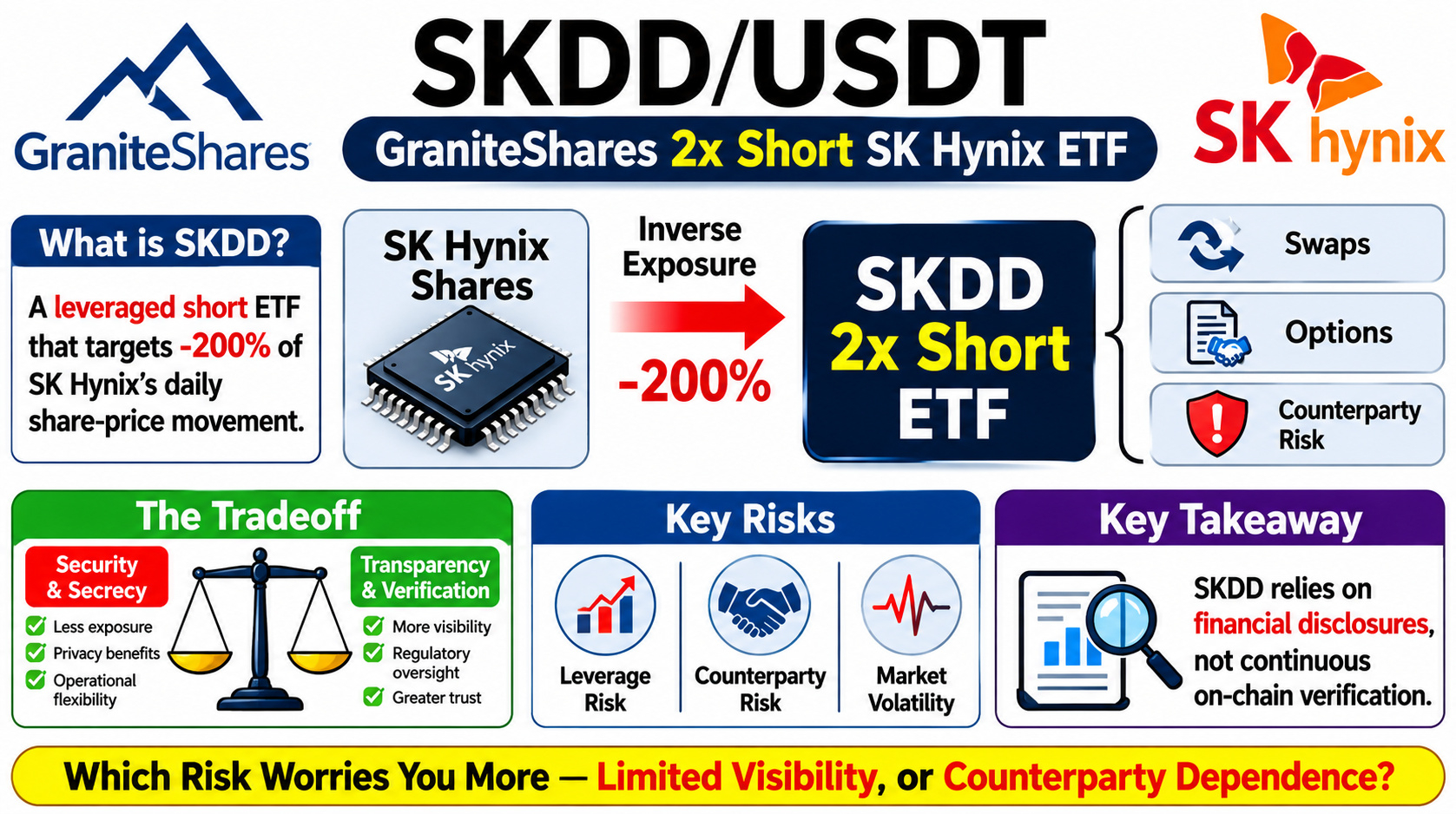
The asset shown is SKDDB/USDT (GraniteShares 2x Short SK Hynix). It is a leveraged short product linked to SK Hynix shares, not a conventional cryptocurrency with its own blockchain or token reserves.
SKDDB represents a different kind of market exposure. GraniteShares 2x Short SK Hynix Daily ETF targets -200% of SK Hynix's daily share-price movement. But investors are not holding SK Hynix shares directly. That's a structural choice, not an oversight.
The fund uses financial derivatives, including swap agreements and options, to create inverse exposure. This structure allows leveraged short positioning without directly borrowing the underlying shares. However, investors take on risks linked to derivative counterparties, pricing and liquidity.
What can holders verify? GraniteShares publishes the fund's investment objective, NAV information, expense ratio and regulatory documents. Its July 2026 prospectus explains the derivative strategy and counterparty risks. However, these disclosures are not continuous independent verification of every transaction. The prospectus does not establish an on-chain proof system or continuous audit of swap exposure.
Compare this with Leverage Shares 2X Short SK Hynix Daily ETF (SKHQ). Its September 2026 SEC prospectus also publicly describes its inverse strategy and derivative exposure. More disclosed structure means more information to scrutinise, but it does not eliminate financial counterparty risk.
Neither approach removes counterparty risk. Derivative-based exposure depends on financial institutions honouring their agreements. Public regulatory disclosures improve scrutiny, but do not guarantee performance.
SKDDB chooses regulated financial infrastructure over blockchain-based verifiability. Its trust model leans on fund disclosures, financial counterparties and daily portfolio management.
Which risk worries you more — limited real-time visibility into derivative exposure, or dependence on financial institutions to honour th