Korea's biggest exchange is quietly a memecoin warehouse. What that says about retail matters more than the number.
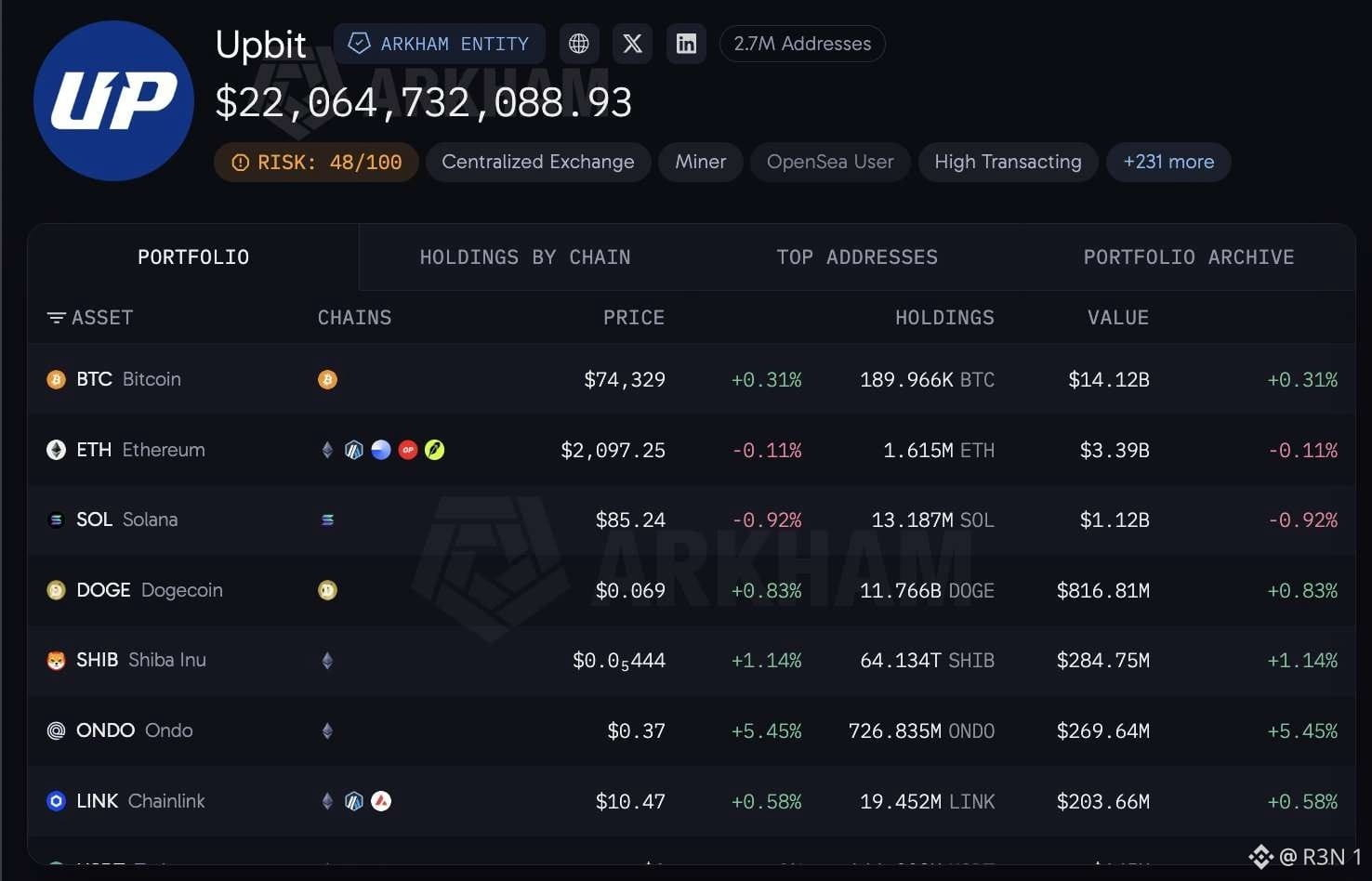
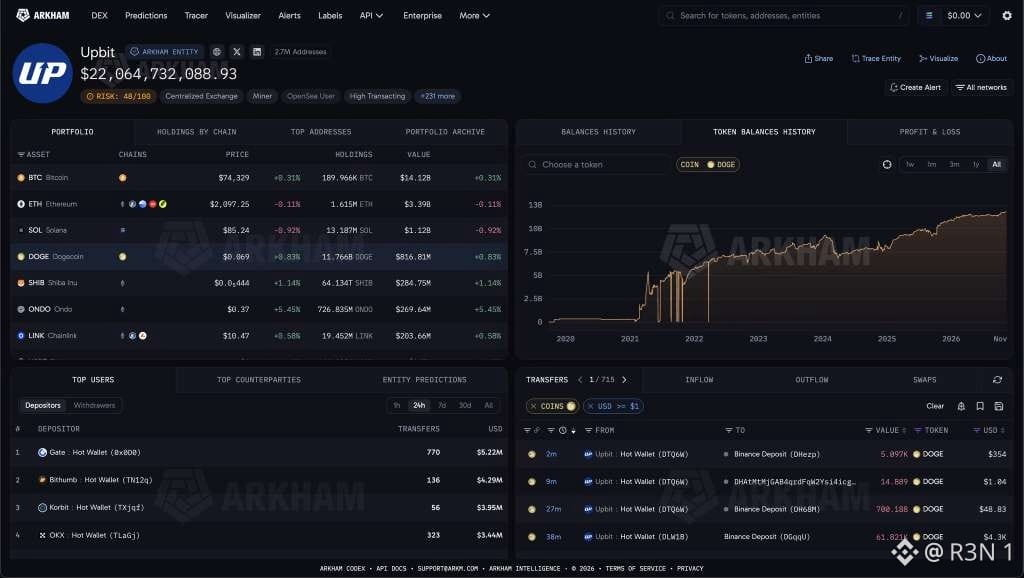
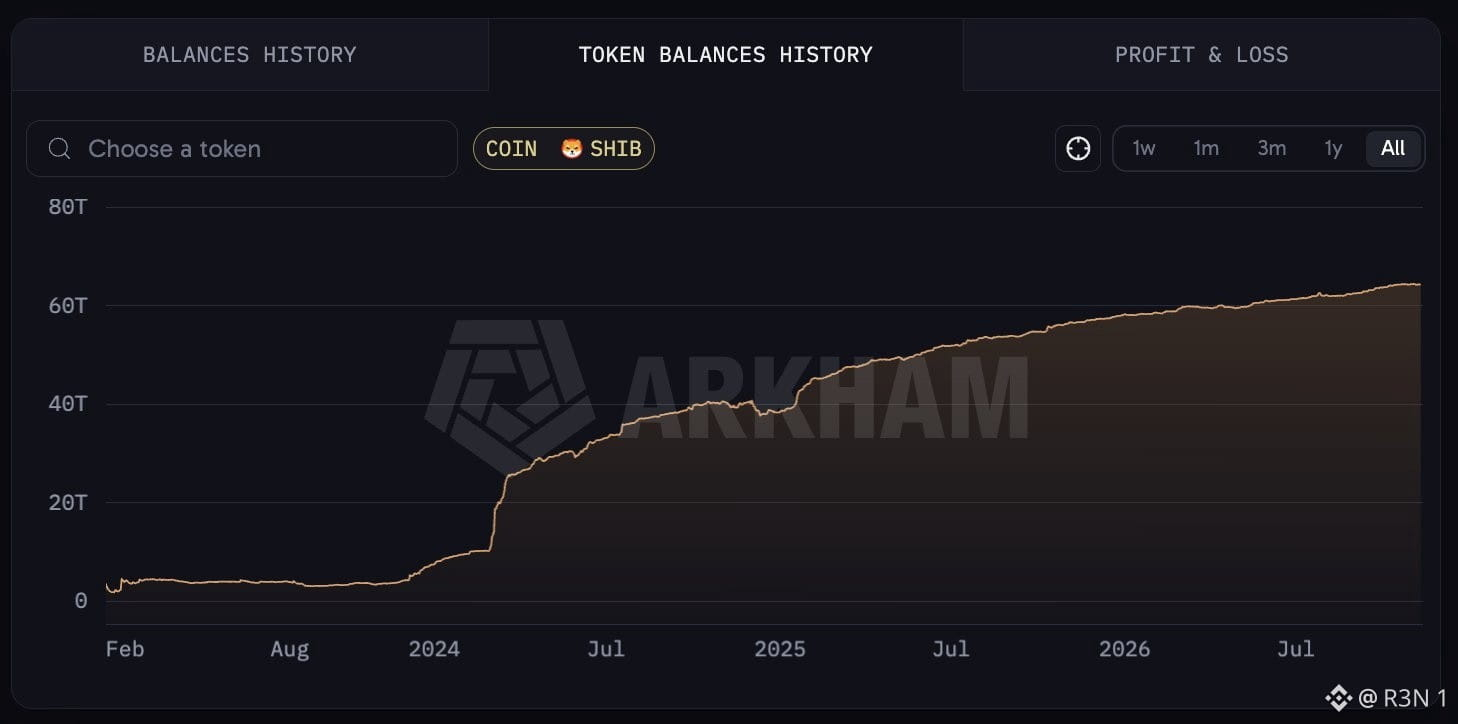
Arkham-based figures show Upbit holding $819.80M of DOGE and $284.15M of SHIB, about $1.1B combined and its largest positions after BTC, ETH and SOL. Its full on-chain book is $22.17B across 13 chains, which puts memecoins at roughly 5% of the total.
The reason is who trades there. Upbit is where Korean retail concentrates, and retail leans toward cheap, familiar tickers. In July, Upbit's SHIB/KRW pair was the single largest SHIB market at about $62M, more than a tenth of global volume, and it traded at a slight premium.
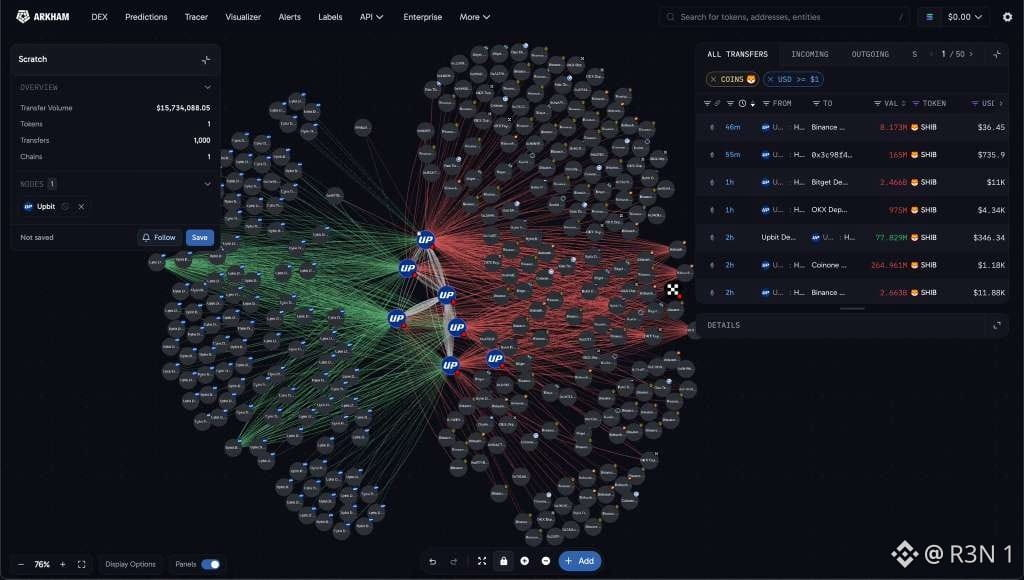
But a balance is a stock, not a flow. It tells you what customers already hold, not what they'll buy next. Exchange balances also reflect operations. Upbit recently moved 864 billion SHIB between its own wallets in what looks like rebalancing, not a selloff.
The better question is which tokens are seeing net deposits and which are seeing withdrawals. Earlier this year, DOGE and SHIB showed sizeable exchange outflows, which normally point to accumulation, while derivatives interest fell and neither token showed convincing evidence of a durable reversal. The signals were mixed.
The narrative around memes has also cooled. CoinDesk argued in July that crypto's institutional influx had hurt memecoins. Retail demand in Korea may be steadier than the global story suggests, but that's an inference, not a finding.
The risk is treating one exchange's balances as a forecast. The supportive case is a loyal retail base that keeps these tokens liquid.
A balance sheet shows what people held. Flows show what they believe next.
#BTC Price Analysis# $DOGE #Altcoin Season# $SHIB