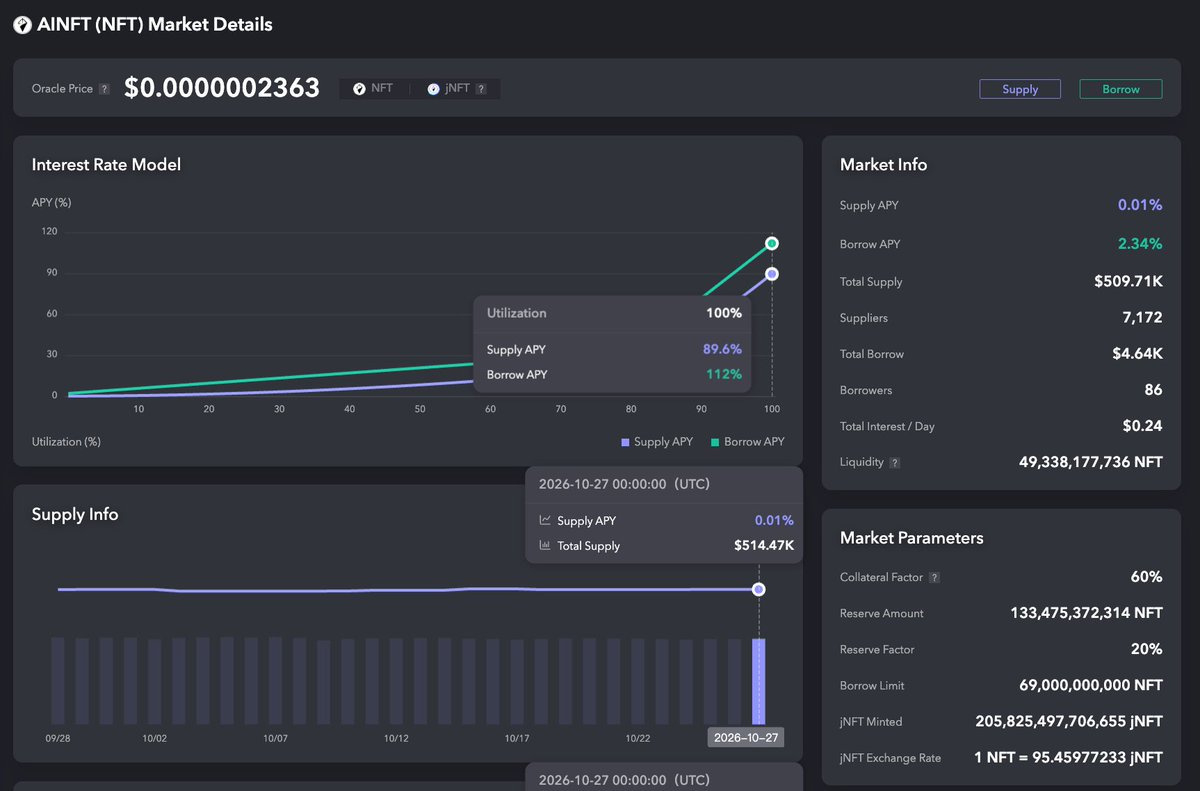
AINFT's updated JustLend snapshot reports $509.71K in total NFT token supply and a borrowing APY of 2.34%.
An earlier snapshot showed $500.15K in supply.
That represents an increase of approximately $9,560 in the reported dollar value.
At first glance, it may look like more participants are supplying tokens.
But the numbers alone don't establish that conclusion.
Deposited value can change without new deposits
Imagine someone supplies a fixed number of tokens to a lending market.
If the token's market price rises, the dollar value of that position may increase.
The reported supply can therefore grow even without additional tokens entering the market.
To identify actual deposit growth, we would need token-denominated balances.
Confidence is difficult to measure directly
People may supply assets for different reasons.
Some may seek potential yield.
Others may use lending markets as part of broader financial strategies.
A higher supplied value doesn't necessarily prove that participants have become more optimistic about the token.
The borrowing rate stayed at 2.34%
This is another interesting detail.
The displayed borrowing APY remained unchanged between the two snapshots.
However, that doesn't mean borrowing demand was identical.
Interest rates depend on the protocol's model and relevant market conditions.
What should potential participants check?
Before supplying assets, users should understand the applicable supply yield, withdrawal conditions, and protocol risks.
Borrowers need to consider collateral requirements, repayment obligations, and possible liquidation.
The announcement doesn't provide enough information to evaluate every aspect of the market.
A lending market is not a savings account
DeFi can offer useful financial mechanisms.
But participants remain exposed to smart-contract and asset-related risks.
A familiar-looking percentage shouldn't create the impression of guaranteed returns.
My perspective
AINFT's increase in reported JustLend supply is worth monitoring.
It shows a change in the market's dollar-denominated balance.
But understanding the reason behind that change matters more than assigning an optimistic interpretation immediately.
Would you evaluate a lending market primarily through its total supply, borrowing demand, or available liquidity?