
On 29 October, hackers drained about $6.3 billion from Binance in roughly 20 minutes. And I still use it.
Most people don’t lose money on a bad trade first. They lose it because they trusted the wrong platform. If you live in Pakistan, this question hits harder. So let me answer it the way I see it.
What is an exchange?
An exchange is a platform where you can buy and sell crypto whenever you want. Some people call it a broker. For a beginner, they are the same thing.
Think of it like a bank.
Pakistan has many banks
You pick the one with better online banking and better service
You open an account and keep your money there
Crypto works the same way. There are many exchanges online. You compare them, pick one, and open an account.
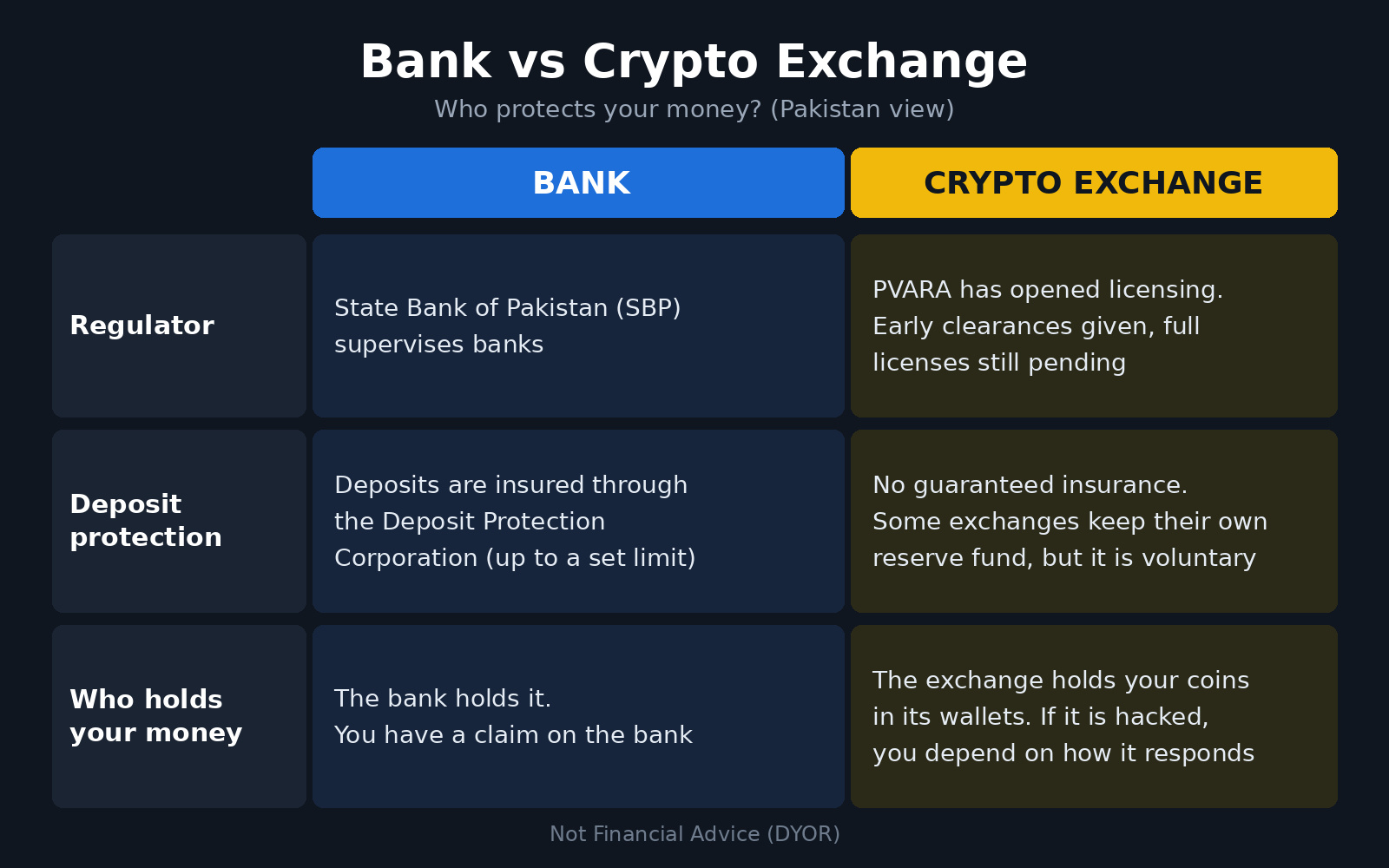
The big difference is the safety net. If a bank fails, there are rules and a regulator behind it. With crypto exchanges, that backing has been missing for a long time. That is why the fear is real.
The big fear: will the exchange run away with my money?
Every beginner thinks this. And honestly, you should.
For a long time, crypto in Pakistan was in a grey zone. It was not illegal, but it was not clearly legal either. So if something went wrong, you had no local support to fall back on.
That is now changing, and it is moving faster than many people think.
The Government of Pakistan has set up an authority called PVARA (Pakistan Virtual Assets Regulatory Authority). PVARA has opened its licensing process and has already given early clearances to some platforms, including Binance.
Those clearances are not full licenses yet, but it is a big step, because licensed platforms will have to follow rules instead of asking you to just trust them.
Here is my skeptical note, though.
A license is a good sign, not a guarantee
Not every exchange you see online is licensed in Pakistan
Check the current license status yourself before you move serious money
Rules are catching up. Your own homework still matters.
My experience with exchanges
I have traded crypto for around five to six years. Six of the world’s top 10 exchanges are ones I have used myself.
For most of that time, I had no problem with:
Deposits
Withdrawals
Placing trades
But I want to be honest about something. “No problem for me” does not mean “these exchanges were never attacked.”
Both Bybit and Binance have been hit by big cyber attacks.
Bybit (February 2025)
Bybit lost about $1.5 billion in assets in February 2025, and about 400,000 Ethereum was stolen. At that time, it was the biggest exchange hack ever.
Binance (29 October 2026)
This one is very recent, and it is much bigger.
Binance said about $6.3 billion in client assets was impacted, with around $3 billion frozen on-chain. It is now the largest crypto hack on record.
The money moved out of Binance wallets across 10 blockchains, and most of it went within about 20 minutes.
The attackers went after the hot wallet signing setup. Early reports pointed to a compromised engineer's laptop.
The FBI confirmed that North Korea was behind it.
$BTC fell more than 4% to about $78,000 when the news broke.
Binance also had hacks in 2019 and 2022, so this is not the first time.
This was not one person’s bad luck. Every user on the platform was exposed because the target was the exchange itself.
Here is what I noticed in how they handled it:
Binance suspended deposits and withdrawals and promised to cover all losses.
It said it would absorb the loss itself instead of passing it on to users.
Most customers could withdraw again within days.
So even my clean withdrawal record has a small asterisk now. For a few days, nobody could withdraw. I’m not saying Binance is unsafe.
I’m saying a smooth record does not mean zero risk. Even the biggest names can get hacked, and how they respond is what shows if you can trust them.
This is my personal order, based only on my own use:
Binance
MEXC
Bybit
Bitget
KuCoin
OKX
This is not a rule. You can reorder the list based on your own experience.
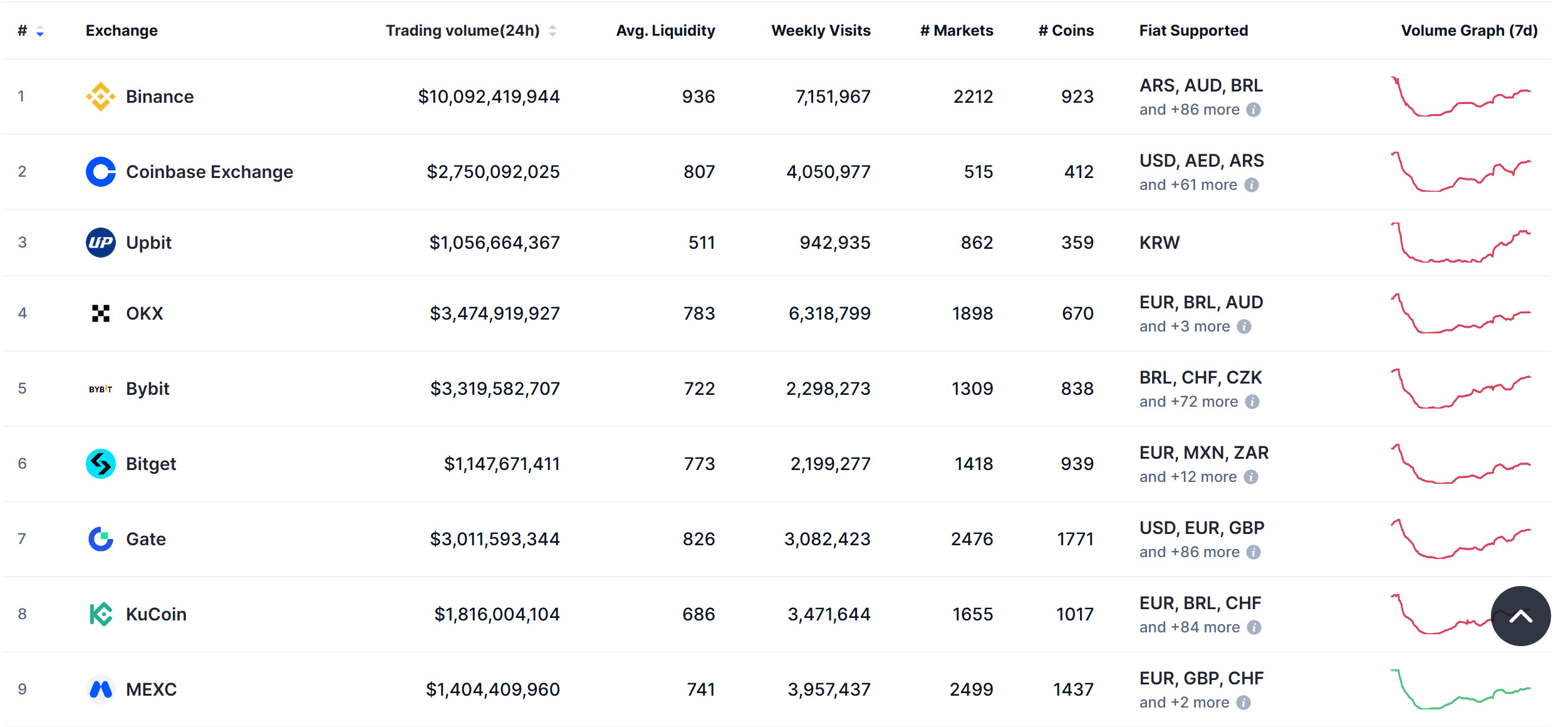
You can also check these exchanges on CoinMarketCap and compare their rankings yourself. All six sit in the top 10 there.
One thing I want you to think about
My good experience does not mean yours will be the same. Past safety is not future safety.
Here is how I look at it:
Keep on the exchange only what you actively trade with
Don’t leave your whole stack sitting there for months
If you hold long-term$BTC , ask yourself if it needs to live on an exchange at all
An exchange that has worked well for five years is still a company. Companies can fail. Hacks happen. Rules change.
How to pick an exchange without getting burned
Before you open an account, check these:
How long has the exchange been running?
Does it rank in the top 10 on CoinMarketCap?
Do other traders report smooth withdrawals, not just easy deposits?
Is it licensed or moving toward a license under PVARA?
Deposits are always easy. Withdrawals are where trust is tested.
What comes next
Once you pick an exchange, the next steps are:
Creating the account
Verifying it
Avoiding the common mistakes people make during setup and verification
Making your first buy and sell
Those matter more than people think, because small mistakes during account setup can cause big trouble later when you try to withdraw.
My bottom line
Regulation in Pakistan is finally moving. That is good news, and I’m glad to see it.
But good news is not a reason to switch your brain off. Use big, well-known platforms, check the license status, and never put more on an exchange than you are ready to watch closely.
If PVARA licenses become the standard in Pakistan, should traders move everything to licensed local exchanges, or do global top-10 platforms still deserve a place in your portfolio?
Not Financial Advice (DYOR)