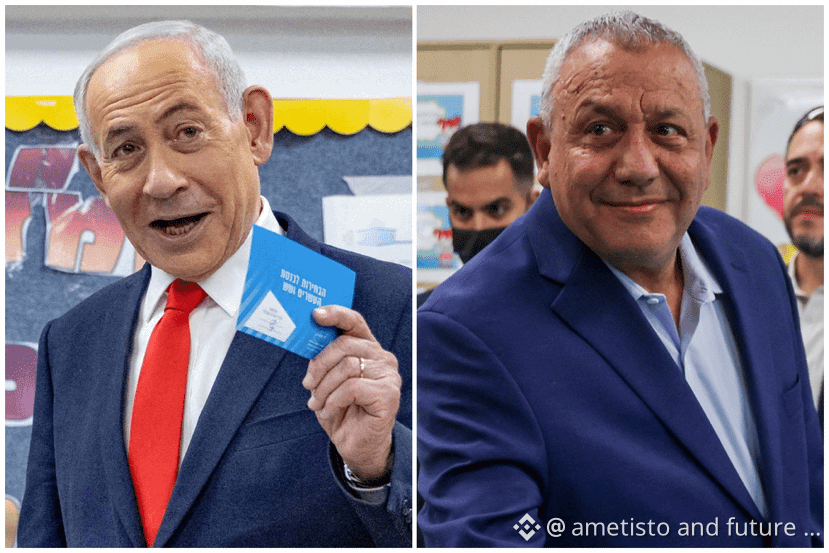
NETANYAHU LOSES PARLIAMENTARY MAJORITY! ISRAEL FACES POLITICAL EARTHQUAKE AS OPPOSITION RACES TO FORM A NEW GOVERNMENT
Israel is entering a new period of political uncertainty after Prime Minister Benjamin Netanyahu’s coalition failed to secure a parliamentary majority in the October 2026 elections.
The final results have reshaped the country’s political landscape, creating a complicated battle over who will govern Israel next.
📊 THE NUMBERS BEHIND THE POLITICAL CRISIS
The 120-seat Knesset is divided as follows:
* Netanyahu’s coalition: 53 seats.
* Main opposition bloc: 48 seats.
* Arab-led parties: 19 seats.
* Majority required to govern: 61 seats.
Netanyahu’s Likud party emerged as the largest individual party, winning 27 seats. However, this was not enough to guarantee his political survival.
🇮🇱 THE ARAB PARTIES HOLD THE KEY
The 19 seats secured by Arab-led parties could become decisive in determining the next government.
Opposition leader Gadi Eisenkot faces a difficult strategic choice: negotiate with Arab political parties to build a majority or risk allowing Netanyahu to remain in power.
The challenge is that several opposition parties have already rejected cooperation with Arab-led groups.
⚖️ WHAT HAPPENS NEXT?
President Isaac Herzog will oversee the process of forming a new government once the election results are formally certified.
Political negotiations could produce three possible scenarios:
1. A new opposition-led coalition supported by Arab parties.
2. A national unity government involving political rivals.
3. A prolonged deadlock that could eventually trigger another election.
The new Knesset is expected to convene on November 10.