

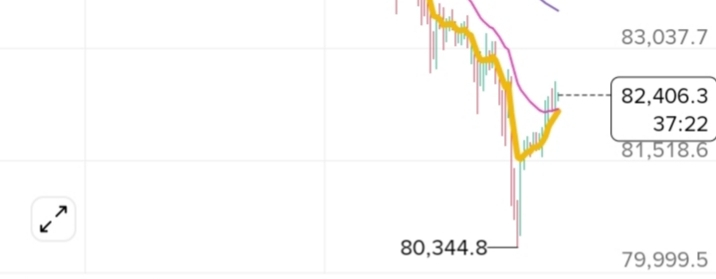

Bitcoin’s drop into the low 80,000s triggered roughly one billion dollars of mostly-long crypto liquidations across derivatives markets in a single day.
Around 1.1 to 1.2 billion dollars in 24 hour crypto liquidations were recorded, with Ether and Bitcoin leading the wipeout.
The move hit heavily leveraged bullish positions as hawkish Federal Reserve minutes, high oil prices and rising yields pressured risk assets at the same time.
Leverage remains elevated, so volatility may persist, with funding rates, open interest and key Bitcoin levels around 81,000 and 75,000 plus upcoming US inflation data in focus.
Deep Dive
1. Size And Distribution Of Liquidations
Several reports show a similar picture of a one billion dollar scale flush. CoinGlass data showed about 1.1 billion in liquidations, with roughly 1.05 billion from long positions.
24 hour totals were near 1.19 billion dollars and 1.19 billion in crypto liquidations, respectively, again mostly longs. Across these snapshots, Ether liquidations cluster around 320 to 360 million dollars and Bitcoin around 270 to 300 million, with roughly 170,000 to 190,000 traders liquidated. Another report described a bloodbath above one billion dollars, noting nearly 700 million dollars liquidated in just four hours.
Compared with the October 2025 crash, when around 19 billion dollars was wiped out, this is a large but not historic event. Market overview data show BTC specific liquidations of 257.89 M over 24 hours, consistent with those news estimates.
What this means: The headline figure is broadly supported; this was a major derivatives event, but far smaller than the biggest past cascades.
2. How Macro And Leverage Interacted
News coverage frames the selloff as crowded bullish leverage colliding with a macro risk off backdrop. Traders lost more than 1 billion to forced liquidations as Bitcoin fell to around 80,393 dollars while Fed minutes signaled another rate hike was “likely appropriate,” 10 year yields hovered near 5.3 percent and Brent crude neared 105 dollars.
Short term holders sent over 45,000 BTC to exchanges at a loss, while Glassnode data show large spot bids around 81,000 withdrawing support when price broke that level. Market overview metrics show derivatives volume up more than 60 percent in 24 hours and perpetual open interest only slightly lower, with average funding still positive, meaning longs are still paying shorts.
What this means: The move looks like a sharp leverage flush driven by macro stress rather than a full deleveraging; bullish positioning remains significant.
3. Signals To Watch After The Flush
Despite the liquidations, total perpetual open interest sits around the mid 400 billion dollar range and has only dipped modestly, according to the leverage bundle in the market overview. That suggests there is still plenty of leverage that could amplify future moves.
Glassnode’s order book analysis points to clusters of leveraged bets and potential liquidation levels near 81,000 to 83,000 dollars and around 75,000 dollars. The same piece flags US September inflation data on October 14 as the next major macro test, with Bitcoin trading between downside levels near 75,000 and the 82,500 area bulls want to reclaim.
What this means: If high leverage persists into upcoming macro releases, another wave of forced liquidations is possible; monitoring open interest, funding, and how BTC trades around the 81,000 and 75,000 zones can help gauge risk.
Conclusion
The BTC slide did not crash spot markets outright, but it triggered a roughly one billion dollar liquidation wave that fell mostly on leveraged longs, especially in Ether and Bitcoin. Macro headwinds and crowded bullish positioning made the system fragile, and with derivatives leverage still high, the key question is whether this was a one off flush or the start of a longer, more volatile correction driven by rates, oil and upcoming data.
