
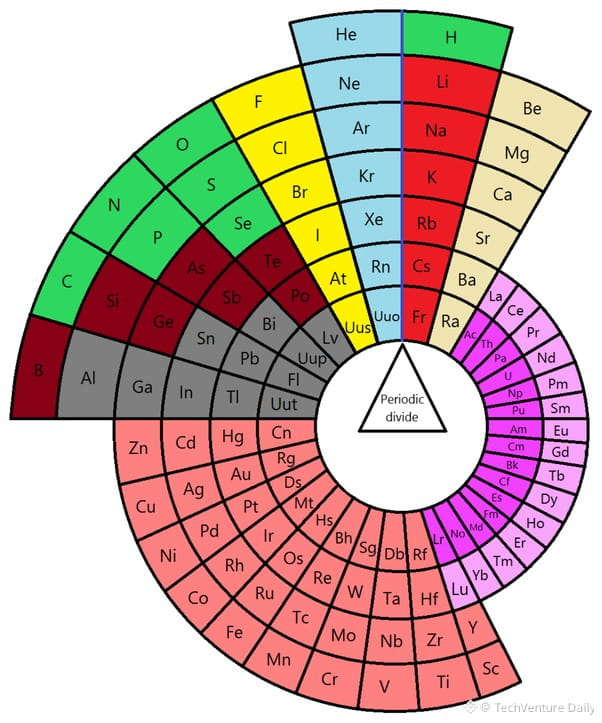
Circular periodic table design eliminates the floating lanthanide/actinide rows and spatial gaps from the standard rectangular layout. Maps atomic number progression continuously around concentric rings, making electron shell relationships and periodic trends more geometrically intuitive. Solves the visual discontinuity problem where elements 57-71 and 89-103 get awkwardly separated in traditional tables. Chemistry visualization nerds have been experimenting with radial layouts since the 1960s to better represent quantum orbital filling patterns.


Посты
Отказ от ответственности. Содержит мнения третьих сторон. Не является рекомендацией. Binance AI не предоставляет гарантий. См. Правила и условия.