



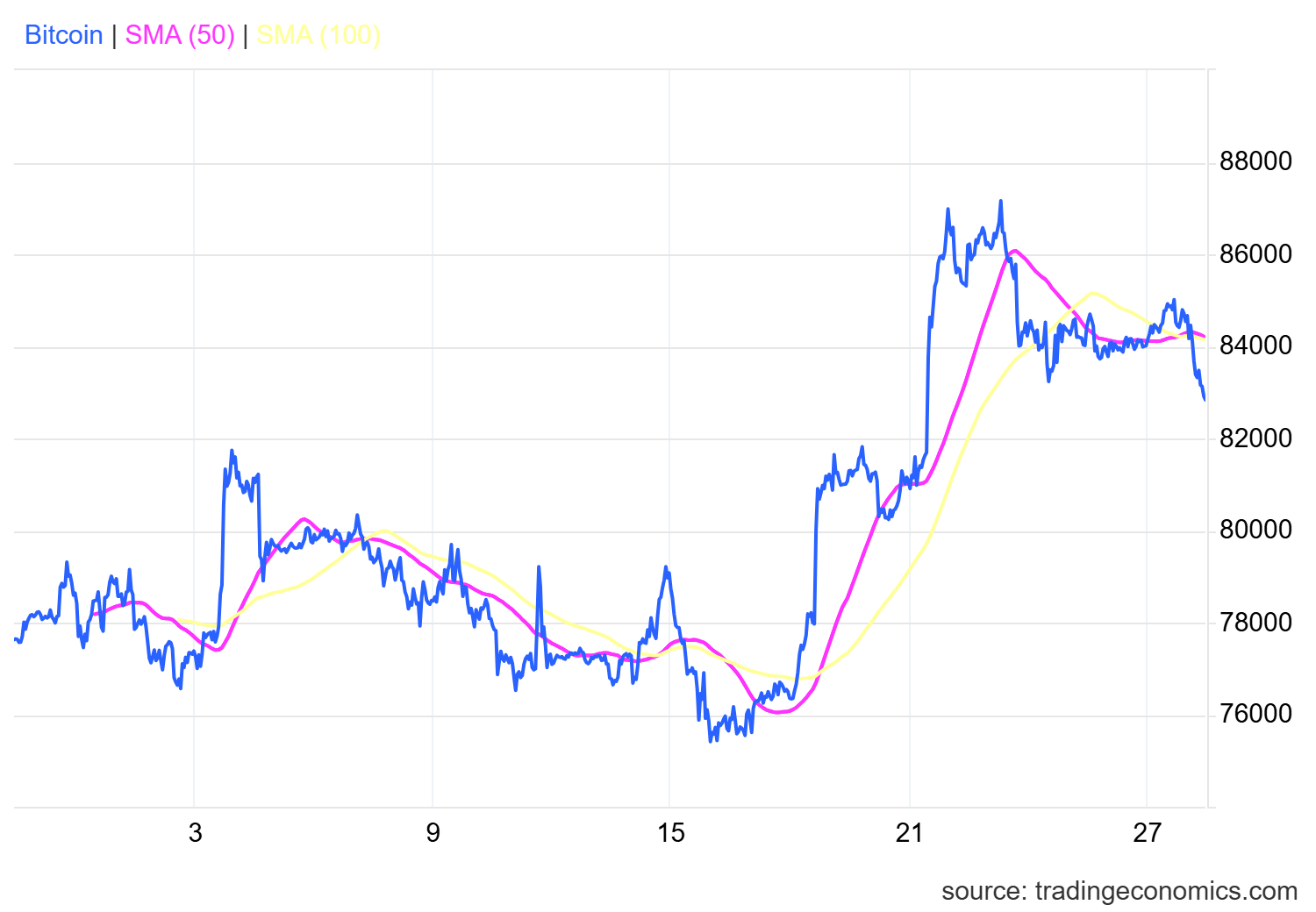
Bitcoin needs to gain about 50% to revisit its October 2025 record near $126,000, and Monday moved it the wrong way. The token traded around $82,900, down more than 1% on the session, after slipping under $83,000.
Oil is climbing again following President Donald Trump's rejection of Iran's latest proposal on the Strait of Hormuz. In European trading, West Texas Intermediate (WTI) stood at $95.00 a barrel, up nearly 3%, while Brent crude, the international benchmark, was at $107.67, up more than 3%. According to Trump, Tehran wants a deal, just not the kind he is willing to make, and what it is offering resembles something Washington might have accepted a year ago. "They overplayed their hand," Trump said.
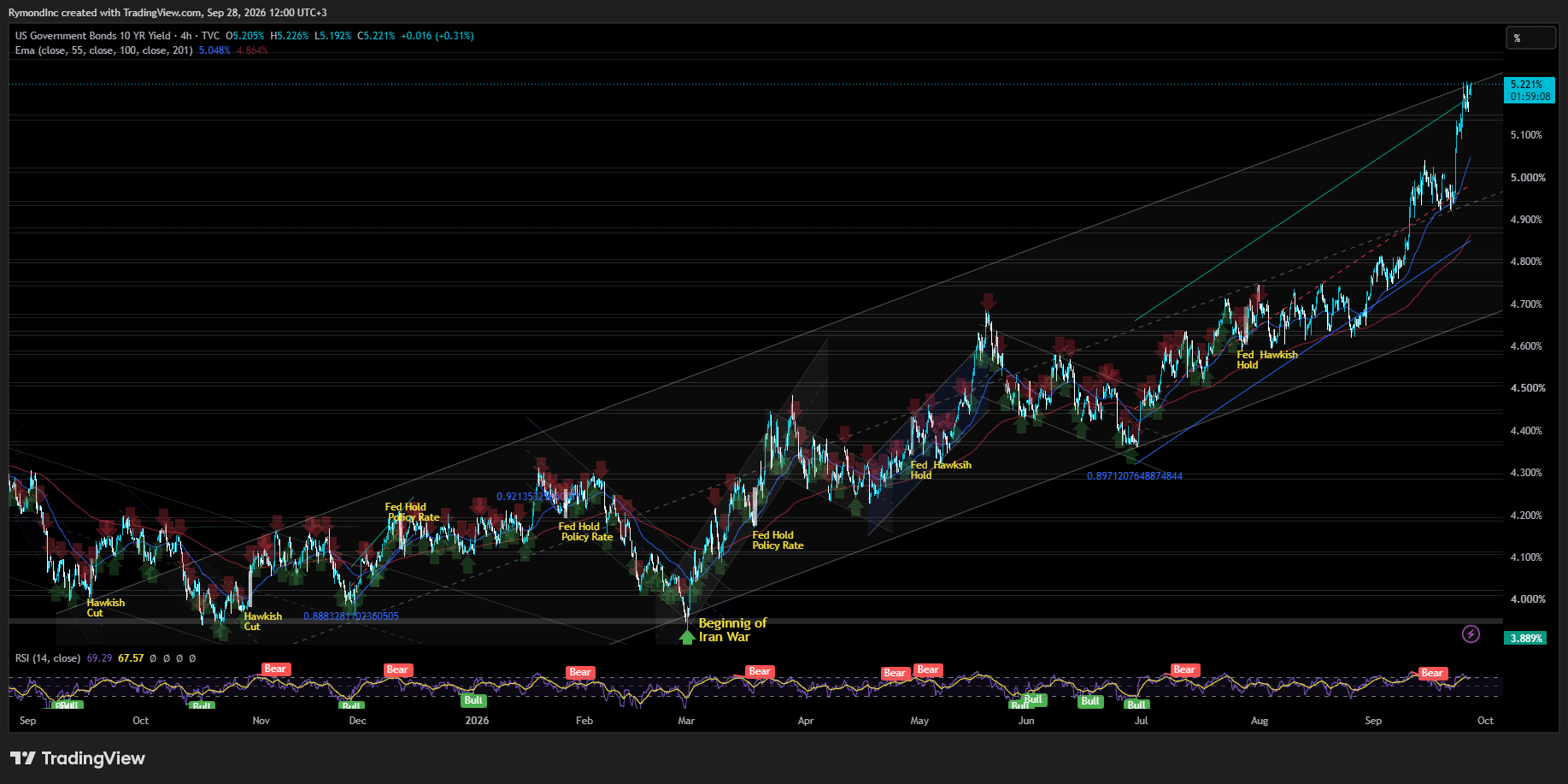
Treasury yields touched their highest levels since 2007 last week, and the dollar has firmed. The yield on the 10-year US Treasury note rose to around 5.2% on Monday, staying at its highest level since July 2007 as expectations strengthened that the Federal Reserve will tighten monetary policy further to contain inflation.
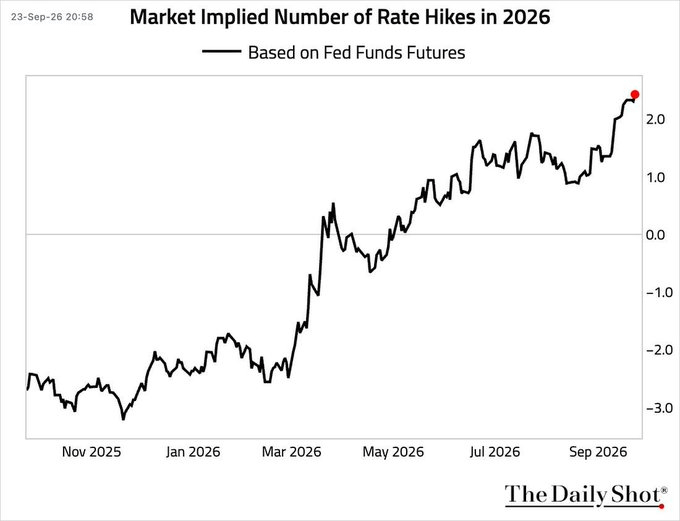
Data released Friday showed new orders for key US manufactured capital goods rose more than anticipated in August, pointing to another quarter of solid growth in business spending. The University of Michigan’s consumer sentiment survey also confirmed a sharp increase in inflation expectations in September. Markets are currently pricing in roughly a 70% probability of a Fed rate hike in October. Strong PMI data and rising oil prices have fueled bets on further Fed tightening, with markets now pricing around 2.4 rate hikes in 2026, the highest implied number this year.
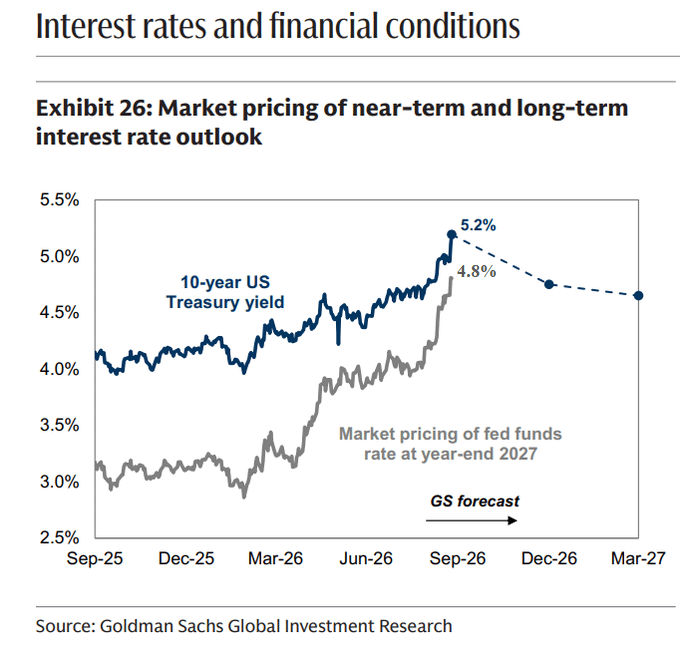
Goldman Sachs now sees the Fed’s year-end policy rate near 4.8%, up sharply from 3.62% before this month’s hike, reflecting a significant repricing toward further tightening.
Those developments helped drag Bitcoin off a rally that could not hold above $87,000 as it is a non-yielding asset and therefore doesn't benefit from high interest rates. The pullback interrupts a strong stretch. September is shaping up as Bitcoin's third straight monthly gain, extending a recovery from a collapse of about 20% in June that left the price near $58,600.
July added about 7% and August about 25%, to roughly $78,600. September has tacked on nearly 6% more, to just over $83,000, despite swinging between a low near $75,000 and a high around $87,400. Measured from June's close, that is a gain of about 42%.
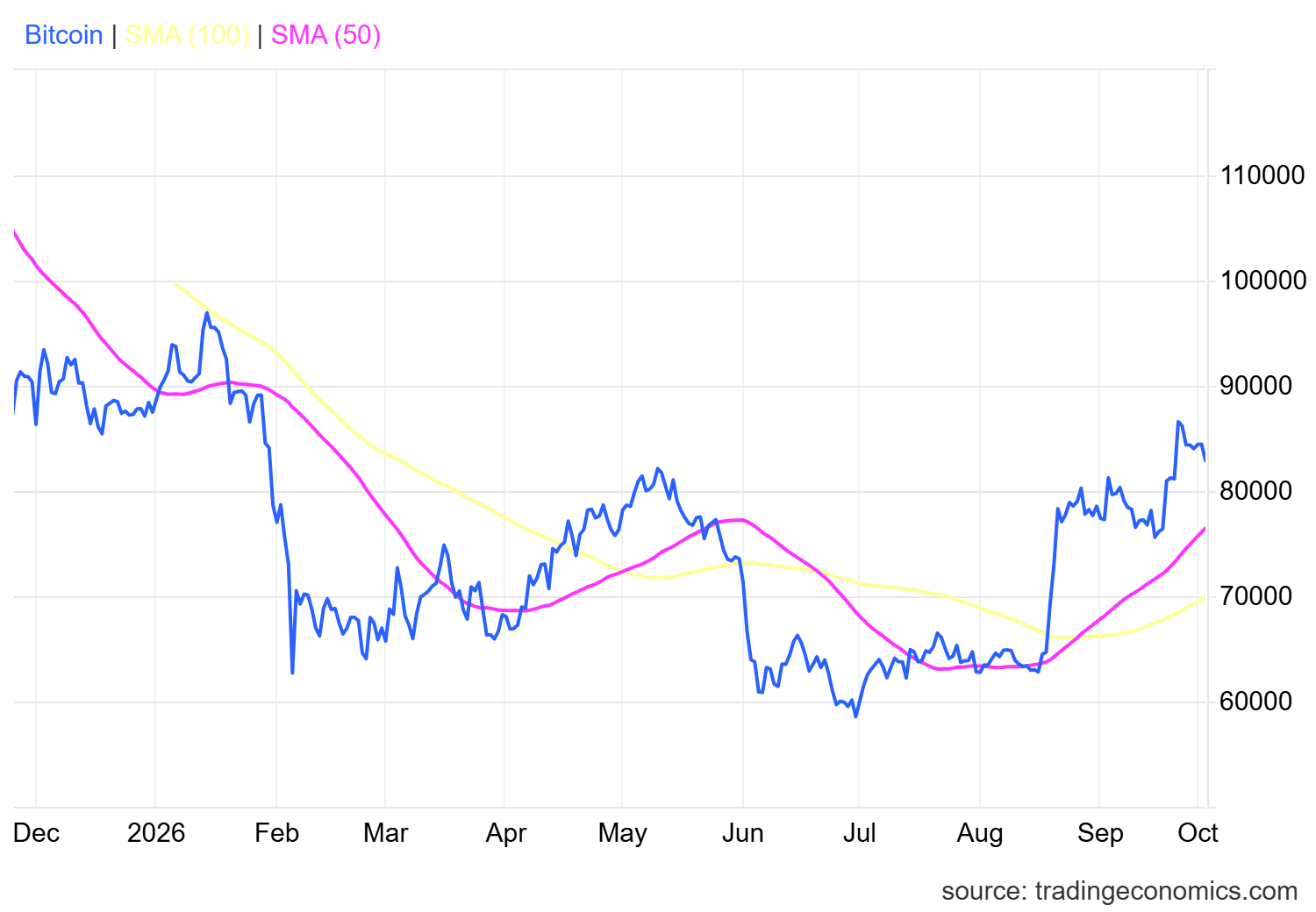
Zoom out and 2026 looks less cheerful. Bitcoin opened the year at $87,720 and still sits about 5% below it. January cost it about 10% and February nearly 15% more, before March added about 2% and April roughly 12%. May gave back about 3%, and then June did its damage.
ETF Buyers Haven't Blinked, but They're Buying Less
Fund buyers, at least, have not been scared off. U.S. spot Bitcoin ETFs took in about $2.39 billion over the five sessions through Sept. 25, according to SoSoValue: $999 million on Sept. 21, $714.7 million on Sept. 22, $347 million on Sept. 23, $190.6 million on Sept. 24 and $134.5 million on Sept. 25. Friday made it seven straight sessions of net inflows, worth close to $3 billion in all, and that money helped soften the retreat from the September high.
Look inside the streak, though, and the slope runs downhill. Inflows have shrunk in every session since Sept. 21's intake, which suggests ETF buying momentum has cooled even as the funds keep collecting money. The fading ETF inflows hint at a market catching its breath beneath the September high instead of pressing higher.
Sellers got some help from the derivatives market. The price was pushed back under $86,000 soon after the peak, and the drop through $84,000 forced out some traders who were trading on borrowed money. Derivatives data showed long positions being liquidated between about $83,200 and $83,500, including an $844,000 position on Hyperliquid near $83,479. Individual liquidations stayed small next to the wipeouts that come with sharper moves.
What Getting Back to the Record Would Take
Recovering the record is a bigger job than the summer's rebound suggests. Anyone who bought near the peak needs Bitcoin back at that level just to break even, and how quickly that could happen is the open question.
The scale shows up in market value. Bitcoin's market cap is about $1.7 trillion. At the record price, it would be roughly $2.5 trillion, so the market has to add more than $800 billion, with buyers paying more at every step.
The lows are not far behind. Bitcoin hovered around $60,000 through June and July, then buyers pushed it on Sept. 21 to its highest level since January. If the next three months matched the pace of the past quarter, the price would land near $118,000, still about 7% short of the record.
Momentum has slowed, though. Bitcoin gained about 32% across August and September combined, yet the September leg has been a fraction of August's, a hint that the steepest part of the climb may already be behind it.
Holders Are Selling, but Not Like 2025
Some holders are cashing out. Sam Daodu of 24/7 Wall St. argues that this month's profit-taking looks little like earlier peaks. CryptoQuant data put the average gain for long-term holders at about 72%, against roughly 350% in December 2024, so the investors who sold hardest at the last peak have much less reason to sell now.
Santiment, meanwhile, shows wallets holding 100 to 1,000 bitcoin adding 113,950 coins since July 15, a 2.2% increase to about 5.24 million bitcoin by late September.
Wallet sizes can mislead, though. One fund may spread its coins across many addresses, and an exchange can hold huge customer balances in a single one. The increase could reflect fresh buying, coins moving between wallets, or both. Most trading also happens inside exchange order books, out of view of the blockchain, so growth in mid-sized wallets does not prove new money has arrived.
Why the 2025 Tops Look Different
History explains why the selling looks light. In earlier cycles, the heaviest sellers were long-term holders, meaning investors who had held coins for at least five months. They typically own at the lowest prices and show the biggest profits, so when they sold into rallies, newer buyers picked up coins at peak prices until demand ran out.
Glassnode measures that selling with its sell-side risk ratio, which compares the profits and losses holders realize with the total value of all coins. The ratio spiked to 35 basis points a day at the July 2025 height and stood at 23 at the October 2025 peak. By early September 2026, it had fallen to 7.
The mix has shifted too. Long-term holders made up only 47% of realized profits in early September, down from 88% at the August peak. The investors most likely to cash out are selling less, and the ETF demand that arrived on Sept. 21 gave any remaining sellers a ready buyer.
A French Treasury Company Added Another 13 Coins
On the corporate side, one buyer stayed busy. Capital B, the Paris-listed bitcoin treasury company (ticker ALCPB), wrapped up a set of at-the-market capital increases with asset manager TOBAM. It issued 172,978 new shares at an average of 5.68 euros, raising about 980,000 euros, and spent about 970,000 euros of it on 13 more bitcoins. The shares were sold at a 3.8% premium to the prior closing price, with shareholders' preferential subscription rights waived, which dilutes existing holders slightly and expands TOBAM's position.
Capital B and its Luxembourg subsidiary now hold 3,538 bitcoin, bought for 310.6 million euros at an average cost of 87,805 euros a coin. The company reports a BTC Yield of 2.20% and a BTC Gain of 62.1 BTC since the start of the year, measures it defines itself. Swissquote Bank Europe acts as sole custodian, a choice that fits the company's pitch to investors seeking stock exposure to a large bitcoin reserve through regulated custody.
Thirteen coins will not move a market. What might is whether ETF buyers keep coming while oil, yields and the dollar push the other way.