
#trumprejectsiranhormuzreopening
Trump Rejects Iran’s 7-Day Hormuz Plan as Oil Markets Watch $95 Crude
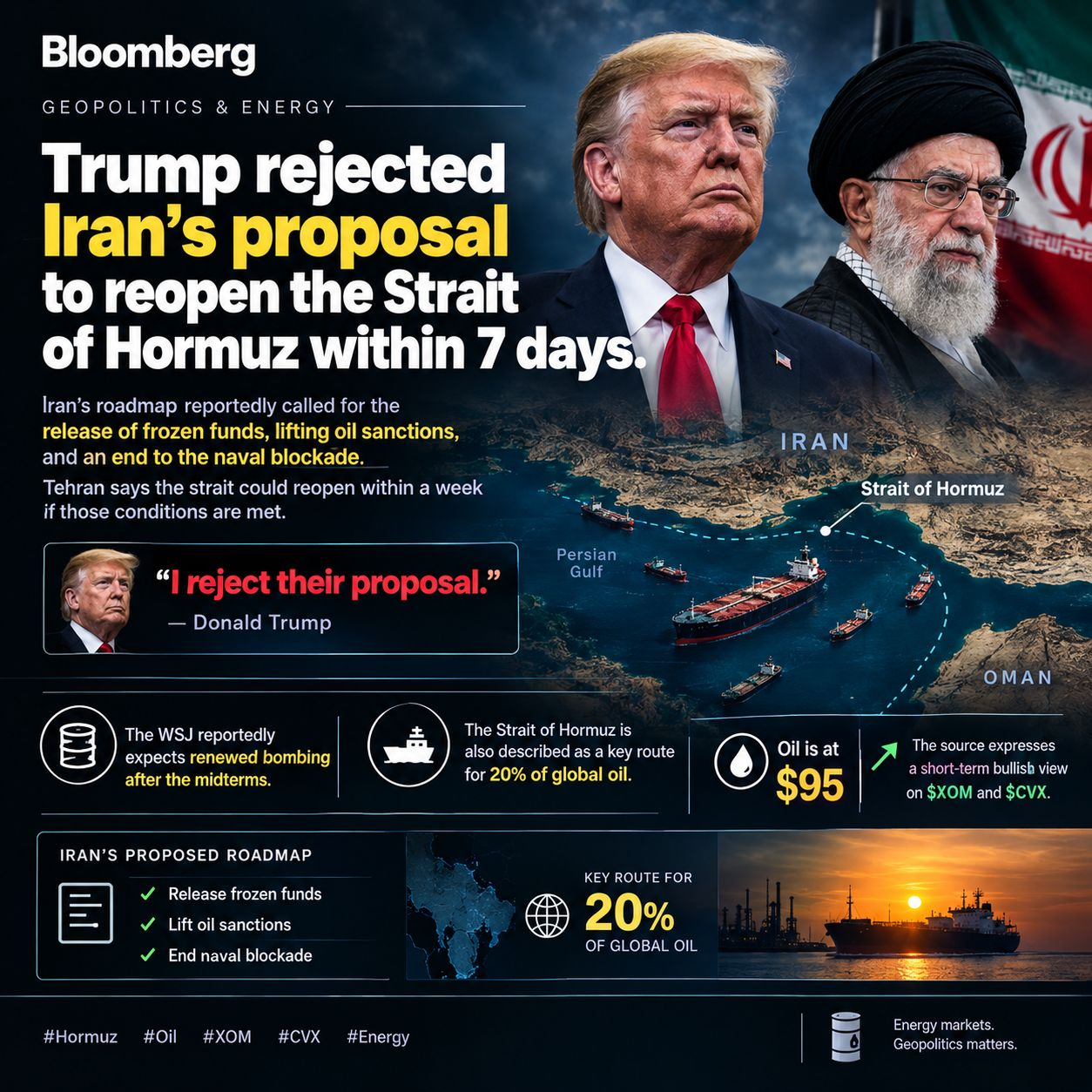
The Strait of Hormuz is back at the center of global energy markets after President Donald Trump rejected an Iranian proposal that Tehran said could reopen the strategic waterway within seven days.
Iran’s proposal, delivered through mediators, called for several conditions from Washington, including lifting the naval blockade on Iranian ports, easing sanctions on Iranian oil sales, releasing roughly $12 billion in frozen Iranian assets, and observing a regional ceasefire. Iranian Foreign Minister Abbas Araghchi said the Strait could return to normal maritime traffic within seven days if those conditions were accepted.
Trump confirmed his position on September 26, telling reporters: “I reject their proposal.”
Why the Strait of Hormuz matters
Hormuz is one of the world's most important energy chokepoints. During normal conditions, roughly one-fifth to one-quarter of global oil flows through the waterway, making disruptions there particularly significant for crude markets and energy companies.
The current disruption has already affected global energy flows and contributed to higher oil prices.
Brent crude recently moved below $100 after Iran signaled that it could reopen the Strait within a week, while WTI was around $94.80 in the market reaction reported at the time.
What happens next?
The immediate question for energy markets is whether the diplomatic deadlock continues or whether further negotiations can produce an agreement.
The Wall Street Journal, citing unnamed U.S. officials, has reported that Trump expects renewed bombing after the November midterm elections. That remains a reported expectation rather than a confirmed future event, and the diplomatic process is still developing.
For energy traders, the Strait's status remains a key variable.
A sustained reopening could ease some of the supply pressure surrounding crude transportation. Continued disruption, meanwhile, could keep geopolitical risk elevated across oil markets.
That makes companies such as Exxon Mobil ($XOM) and Chevron ($CVX) worth watching alongside crude prices—but the direction of their shares will depend on more than Hormuz alone, including oil prices, production, refining margins and broader equity-market conditions.
The bigger market question is simple:
Does Hormuz reopen through diplomacy, or does the disruption continue into the next phase of the conflict?