


There’s something satisfying about seeing a story we’ve been following for weeks reach the point where the wider community can get a proper look at it. Last week, we followed Arthur Breitman’s early link to an experimental post-quantum DAL network and explored what was happening behind its rather technical dashboard. This week, the official announcement of Quantumnet gives us the fuller picture, and it’s worth returning to.
Quantumnet brings several of the core pieces of a post-quantum Tezos into one experimental network, giving engineers a place to test how they work together. We’ll take a closer look at what’s running, why the changes go well beyond introducing a new type of account, and what this first iteration tells us about the work still ahead.
There’s plenty happening elsewhere in the ecosystem too. Baking Bad is teasing xtzkt, an explorer intended to bring activity across Tezos L1, Tezos X, Michelson, and EVM into one place. We’re also looking ahead to Arthur’s appearance at Merkle Science Meet Singapore on October 6, where he’ll join a discussion about the compliance questions facing institutions bringing real-world assets onchain.
And before we wrap up, we’ll reach back into the TezTalks archive for Arthur’s conversation about TzEL and the future of private payments on Tezos. It’s a particularly fitting episode to revisit this week, because it brings the post-quantum discussion down to a question that matters well beyond protocol engineering: how do you protect the privacy of a transaction when its data may remain accessible for decades?
There’s a lot to unpack this week, so welcome to this week;s edition of The Baking Sheet.
 Tezos Quantumnet Is Live: Let’s Talk About It More
If you read last week’s Baking Sheet, you might remember Arthur Breitman sharing a link to a post-quantum DAL shownet with the wonderfully understated announcement, “Here it is.” We took a look around the dashboard, explained what all those network metrics and technical resources were doing there, and talked about why testing a quantum-resistant Data Availability Layer matters for Tezos. Well, the official announcement arrived this week, and it turns out the DAL shownet was an early glimpse of a much bigger experiment.
Meet Quantumnet, the first experimental post-quantum testnet for Tezos. Developed by engineers at Nomadic Labs, Trilitech, and other ecosystem contributors, it brings several of the core pieces needed for a quantum-resistant Tezos Layer 1 into one shared environment. Last week, we were looking at one particularly important part of the puzzle. This week, we have a clearer picture of how that work fits together with changes to accounts, baking rights, and consensus.
The reason for tackling all of those pieces together goes back to Arthur’s Why post-quantum, why now?, which we covered in Issue #323. Blockchains rely on cryptography for far more than authorizing transactions. It also helps determine who gets to produce blocks, how the network agrees on those blocks, and how data is made available. Preparing Tezos for a future with sufficiently powerful quantum computers means revisiting each of those systems, then making sure their replacements can operate together. No known quantum computer can break the public-key cryptography widely used by blockchains today, and the timeline remains uncertain, but testing a transition of this size is work that benefits from an early start.
So what is actually different inside Quantumnet? The official announcement gives us a much fuller view of what engineers are experimenting with:
Accounts: Quantumnet enables
tz5
accounts, introduced as a testnet-only capability with Ushuaia, using the post-quantum signature scheme ML-DSA-44.
Baking rights: Smooth Weighted Round Robin replaces the current randomness-based lottery, removing the need for a Verifiable Delay Function.
Consensus: Hash-based XMSS signatures and a post-quantum STARK aggregation system take the place of the BLS signature approach used on Mainnet.
Data availability: ZODA replaces the DAL’s current KZG commitments and proofs. This is the part of the experiment we got an early look at last week.
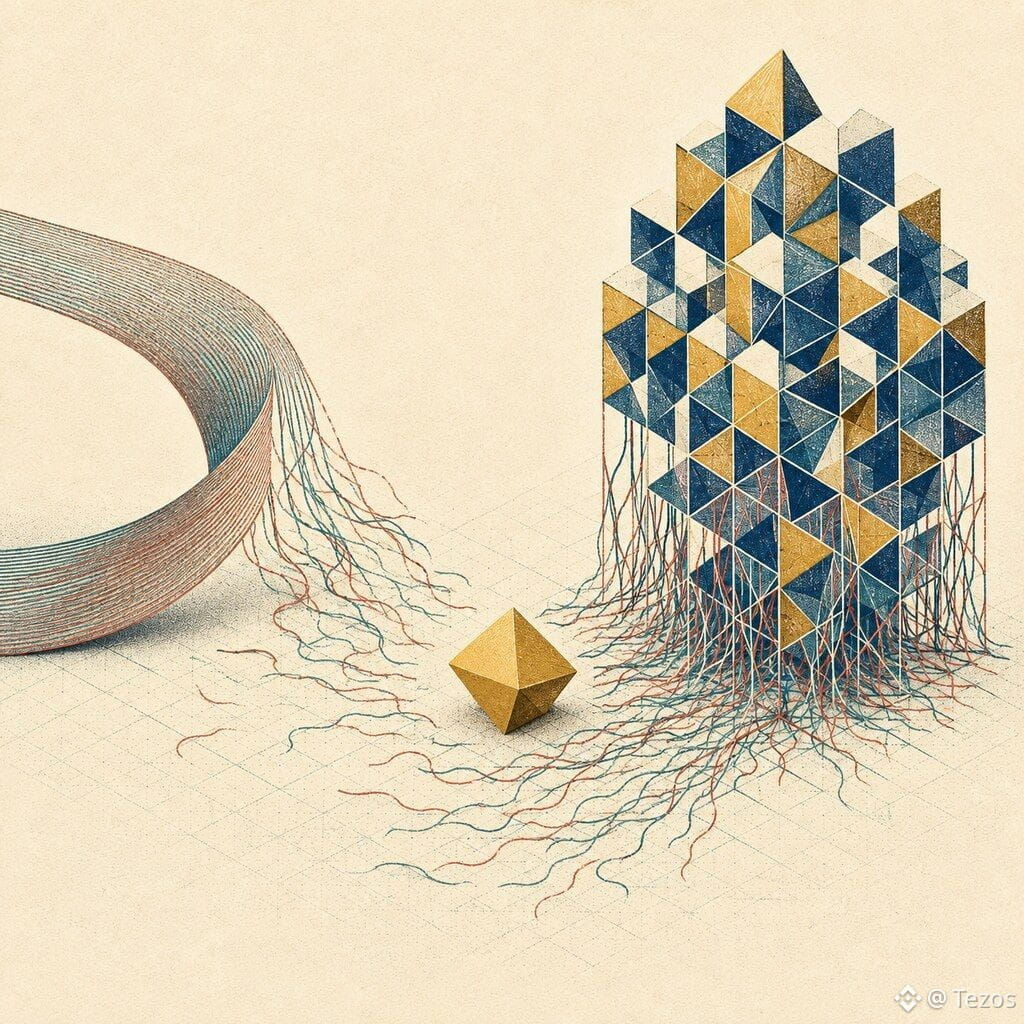
Seeing those changes together helps explain why Quantumnet is a bigger milestone than introducing a new account type. Each replacement has to do its own job while continuing to work with the rest of the protocol. Engineers need to understand how the pieces behave as a network, what they cost to run, and where the design still needs work. Quantumnet gives them a place to find those answers in the open.
There are limits to this first iteration, and the team is clear about them. Quantumnet is an engineering playground, not a network intended for production use. Its tooling and user experience are still limited, hardware requirements are being evaluated, and two Michelson features, Sapling and timelock puzzles, have been left out because their current cryptography is quantum-vulnerable. Further security analysis, performance improvements, and additional functionality are expected as the experiment develops. For now, the public dashboard gives the rest of us a way to follow along, even if we aren't running a node ourselves.
What I find particularly fitting about this announcement is how closely it connects to the Tezos story we revisited on the white paper’s twelfth anniversary. The ability to change the protocol was part of Tezos’ design from the beginning, and its on-chain governance has since carried the network through 21 protocol amendments. Quantumnet is still experimental, and there is a great deal to test before any of these changes could be considered for Mainnet. But we can now watch the proposed post-quantum components being tested together on a live network, rather than only reading about how they might work.
So consider this our follow-up to last week’s early look. Arthur gave us a link, we went exploring, and now the official announcement has filled in the rest of the picture. If you missed that first glimpse, the Quantumnet public dashboard is a good place to start.
This Week in the Tezos Ecosystem
Baking Bad Teases xtzkt, One Explorer for All of Tezos
We’ve spent quite a bit of time in recent editions talking about the changes happening underneath Tezos, from the first cross-runtime transaction on Etherlink to this week’s closer look at Quantumnet. As the network evolves, there’s another question worth asking: how will we actually see and follow what’s happening across all these different parts of Tezos? Baking Bad has been working on something that could help answer that.
The team behind TzKT has shared an early teaser for xtzkt, a new explorer intended to bring the entire Tezos ecosystem into one place. According to Baking Bad, it will cover Layer 1 and Tezos X, with visibility across both Michelson and EVM runtimes. The announcement is brief, but the idea is easy to appreciate. As applications begin interacting across environments, having a single place to follow their activity could make understanding what’s happening on Tezos much easier.
That’s particularly interesting in light of the Tezos X developments we’ve been following. Ganesha introduced the Michelson interface and native atomic composability on Etherlink, and we subsequently saw the first cross-runtime transaction connecting Michelson and EVM. Those are important steps toward making different application environments work together, but people still need tools that help them make sense of the activity taking place. An explorer designed around the wider Tezos ecosystem could make that activity easier to trace, whether you’re developing an application or simply curious about what’s happening on the network.
For now, Baking Bad has only given us the broad outline, with xtzkt.io accompanied by a simple “Soon.” We’ll have to wait to see the interface, which features arrive first, and how activity across the different environments will be presented. Given how useful TzKT has become for following Tezos over the years, though, this is one we’ll be looking forward to exploring when it arrives.
Tezos Fall Events
Arthur Breitman to Speak at Merkle Science Meet Singapore
Last week, we covered Anchorage Digital adding support for Etherlink, giving institutional clients a new custody option for assets such as tokenized uranium. It was a reminder that getting real-world assets onto a blockchain is only part of the work. Financial institutions also need to consider how those assets are held, who can access them, and which regulatory requirements apply. Those questions will be part of the conversation in Singapore next month, with Arthur Breitman joining a panel at Merkle Science Meet.
Taking place on Tuesday, October 6, during TOKEN2049, the event brings together leaders from digital assets, payments, compliance, regulation, and financial services. Arthur will represent Tezos on a panel titled Real-World Asset Tokenization: Compliance at the Intersection of TradFi & Blockchain, alongside speakers from Sumsub, 1exchange, Midnight Foundation, Zenith, and Spartan Group.
The discussion will look at what institutions need as tokenized funds, bonds, real estate, and private credit move from pilot programs toward live issuance. The agenda covers several practical questions that become increasingly important as these assets reach more investors:
How issuers verify investor identities and determine who is eligible to hold an asset.
How institutions monitor activity once tokenized assets begin trading on secondary markets.
How compliance requirements can be coordinated when assets and investors operate across different jurisdictions.
It's a timely conversation for Tezos, We've seen much of this year the growth of tokenized commodities through Uranium.io and Metals.io, along with developments that make those assets more accessible to different kinds of investors. Arthur's participation offers an opportunity to bring the Tezos perspective into a discussion about the requirements institutions face when deciding how to issue, hold, and trade assets onchain.
Merkle Science Meet Singapore runs from 1:30 PM to 6:30 PM Singapore time on October 6. If you're attending TOKEN2049 or will be in Singapore that week, you can request a place at the event
 Inside TzEL and the Future of Private Payments on Tezos
We started this week’s Baking Sheet with Quantumnet, taking a closer look at the experimental network bringing several pieces of post-quantum Tezos together for testing. Before we wrap up, there’s a conversation from the TezTalks archive worth revisiting, particularly if you’ve been wondering what all this work could eventually mean for the people using Tezos.
Back in May, Arthur Breitman joined TezTalks Radio to discuss TzEL, an experimental project exploring private, post-quantum payments on Tezos testnet. The episode begins with a question that’s easy to overlook when talking about blockchain privacy: if transaction data can remain publicly accessible indefinitely, what happens when the cryptography protecting that data is no longer considered secure? A payment that is private today may still leave behind encrypted information that someone could attempt to decrypt years from now.
Arthur explores why that long-term concern matters for private payments and how TzEL approaches it through post-quantum cryptography. The conversation also takes us through rollups, the Data Availability Layer, and the engineering work involved in turning cryptographic research into a functioning system. It’s a useful companion to this week’s Quantumnet story because it shows how the same long-term questions extend beyond the core protocol and into applications people may eventually use.
When this episode first aired on May 19, Quantumnet had yet to be introduced publicly. Listening back now, with an experimental post-quantum Tezos network up and running, gives Arthur’s discussion a little more context. We’ve spent this issue looking at the infrastructure being developed for the years ahead, and TzEL offers a glimpse of why that preparation matters at the level of an individual transaction.
Now streaming on YouTube.
Powered by beehiiv