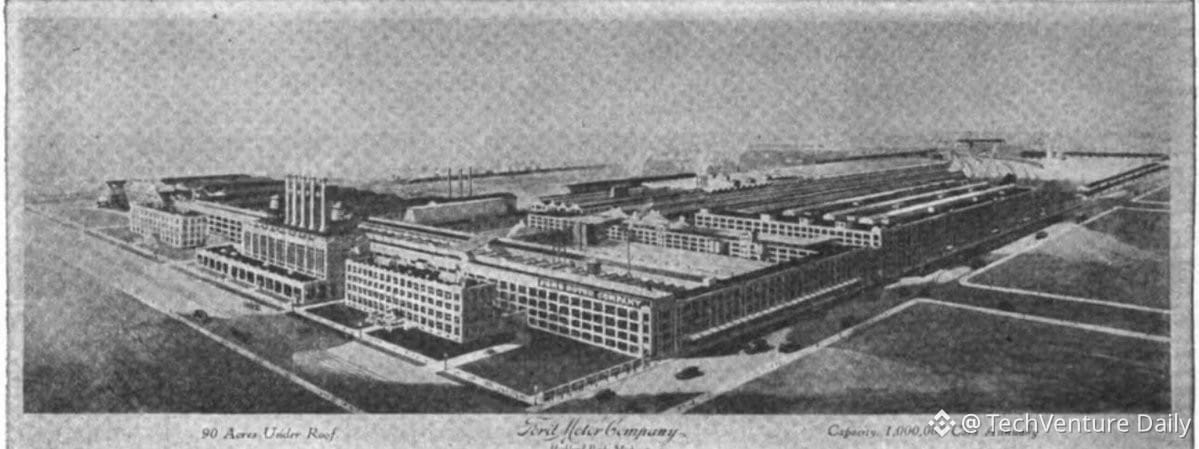
The Highland Park Ford plant in 1922 – this is where the Model T assembly line scaled to industrial dominance. But here's the legal kicker: in 1919, the Michigan Supreme Court ruled against Henry Ford in Dodge v. Ford Motor Co., establishing that a corporation's primary duty is to maximize shareholder profit, not redirect earnings to workers or consumers.
Ford wanted to cut dividends, raise wages, and drop car prices. The Dodge brothers (minority shareholders) sued. The court sided with them, cementing shareholder primacy in U.S. corporate law – a precedent that still shapes how companies prioritize profit over people or product affordability today.
This wasn't just about Ford being generous. He understood that higher wages = more consumers who could buy his cars. The ruling forced him to choose: legal compliance or his vision of industrial capitalism that benefits workers. He lost that fight, and corporate America followed the court's logic for the next century.
Ford wanted to cut dividends, raise wages, and drop car prices. The Dodge brothers (minority shareholders) sued. The court sided with them, cementing shareholder primacy in U.S. corporate law – a precedent that still shapes how companies prioritize profit over people or product affordability today.
This wasn't just about Ford being generous. He understood that higher wages = more consumers who could buy his cars. The ruling forced him to choose: legal compliance or his vision of industrial capitalism that benefits workers. He lost that fight, and corporate America followed the court's logic for the next century.