

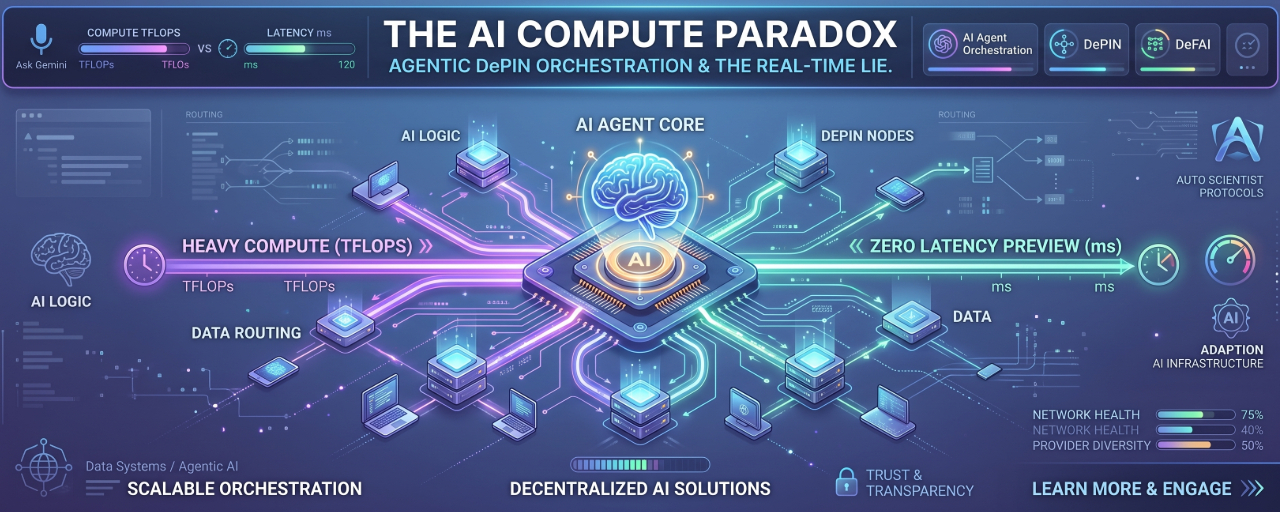

Все хотят, чтобы их ИИ-агенты обладали огромной вычислительной мощностью и мгновенным временем отклика. Но если вы строите «в окопах», вы знаете физический парадокс: нельзя протолкнуть массивный, не квантованный PyTorch-батч и при этом ожидать задержку менее 50 мс на одном edge-узле.
Секрет реального масштабирования ИИ — это не просто бросать в задачу всё больше централизованных GPU. Это DeFAI (децентрализованная ИИ-оркестрация) над сетями DePIN.
Когда вы упираетесь в узкое место ресурсов, самые умные архитектуры не «падают»; они адаптируются. Используя ИИ-агентов для динамической маршрутизации нагрузок по децентрализованной сети, мы можем решить противоречие между вычислениями и задержками.
Вот как следующее поколение инфраструктуры с этим справляется:
Горячий путь: направляйте немедленный, чувствительный к задержкам запрос на лёгкую квантованную модель (например, Ollama) на edge-узле, чтобы получить мгновенный ответ.
Тяжёлый путь: параллельно направляйте задачи сложного рассуждения в фоне на кластер с высокой вычислительной мощностью на PyTorch.
Слияние: пользователь воспринимает нулевую задержку, в то время как тяжёлая работа выполняется асинхронно.
Создание высококачественных синтетических датасетов для обучения агентов именно на такой сложной, противоречивой маршрутизации инфраструктуры — это то, что отделит обычные обёртки для ИИ от настоящих DeFAI-протоколов. Будущее за децентрализованными агентными операциями.
Какое у вас мнение о сближении ИИ-агентов и сетей DePIN? Вы настроены оптимистично по поводу децентрализованных вычислений? Напишите в комментариях ниже! 👇