
WAZ-Crypto
3.2k Публикации
WAZ-Crypto
I am Market Analyst ,Trader & Binance content Creator..No hype just precision, charts & results.. @wasee708
Трейдер с частыми сделками
2.9 г
387 подписок(и/а)
1.0K+ подписчиков(а)
2.8K+ понравилось
Посты
См. перевод
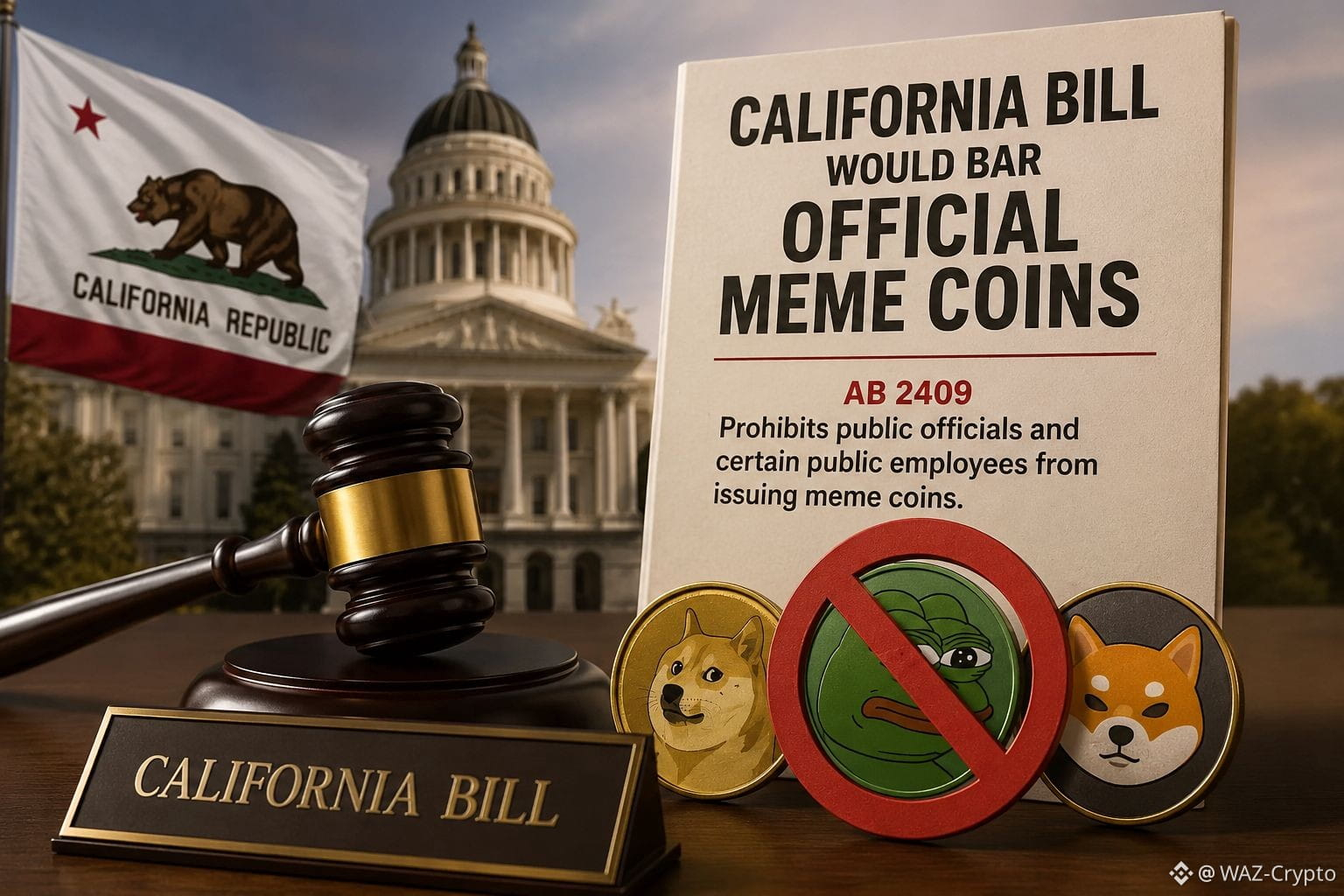
#CaliforniaBillWouldBarOfficialMemeCoins
California is taking a serious look at where public office and crypto should meet.
AB 2409 would prohibit public officials and certain public employees from issuing meme coins. It would also restrict platforms from listing qualifying official-linked meme coins for California residents from January 1, 2027.
The reasoning is pretty straightforward: public influence shouldn’t easily become a direct financial opportunity.
Meme coins themselves aren’t being banned. The focus is specifically on the connection between public officials, political influence, and speculative tokens.
The bill has cleared both chambers and now awaits the governor’s action.
Whether you support or oppose it, the bigger question is worth asking:
Should public officials be allowed to personally profit from tokens tied to their public identity?
California is taking a serious look at where public office and crypto should meet.
AB 2409 would prohibit public officials and certain public employees from issuing meme coins. It would also restrict platforms from listing qualifying official-linked meme coins for California residents from January 1, 2027.
The reasoning is pretty straightforward: public influence shouldn’t easily become a direct financial opportunity.
Meme coins themselves aren’t being banned. The focus is specifically on the connection between public officials, political influence, and speculative tokens.
The bill has cleared both chambers and now awaits the governor’s action.
Whether you support or oppose it, the bigger question is worth asking:
Should public officials be allowed to personally profit from tokens tied to their public identity?
См. перевод
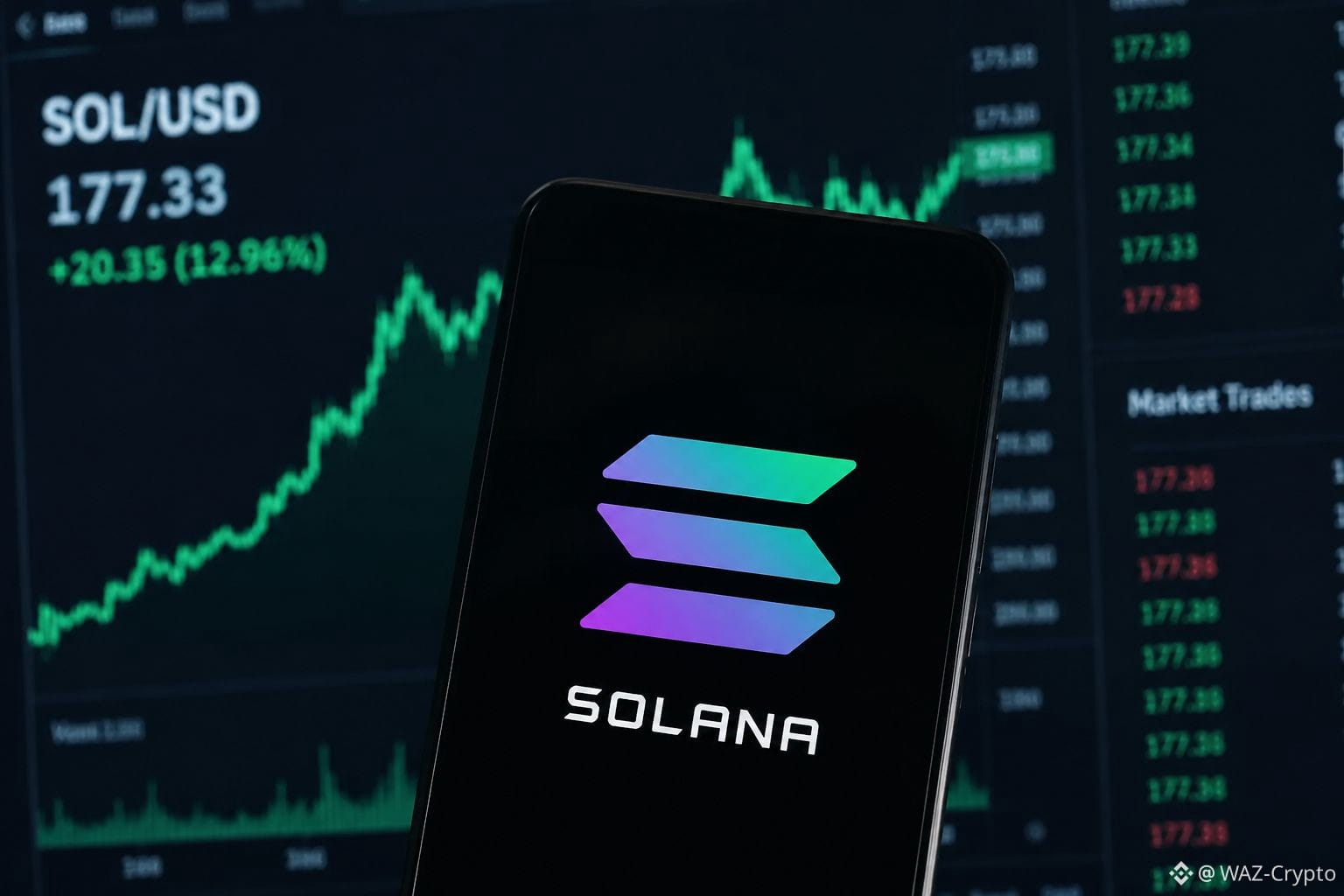
#SOLJumps20%OnTheWeek
SOL is up around 20% on the week, and the move is worth watching beyond the headline.
A weekly gain like this usually reflects more than short-term excitement. Momentum is building, liquidity is returning, and traders are paying attention to whether SOL can hold these higher levels.
The important part now isn’t chasing the pump. It’s watching what happens after the move.
If SOL holds the breakout and volume remains strong, the trend could have room to continue. But if momentum fades quickly, this could simply be another sharp crypto rally followed by consolidation.
For me, the next few days matter more than the 20% number itself.
Strong moves attract attention.
Holding those gains is what confirms strength.
$SOL
$BNB
$XRP
SOL is up around 20% on the week, and the move is worth watching beyond the headline.
A weekly gain like this usually reflects more than short-term excitement. Momentum is building, liquidity is returning, and traders are paying attention to whether SOL can hold these higher levels.
The important part now isn’t chasing the pump. It’s watching what happens after the move.
If SOL holds the breakout and volume remains strong, the trend could have room to continue. But if momentum fades quickly, this could simply be another sharp crypto rally followed by consolidation.
For me, the next few days matter more than the 20% number itself.
Strong moves attract attention.
Holding those gains is what confirms strength.
$SOL
$BNB
$XRP
Проверено
См. перевод
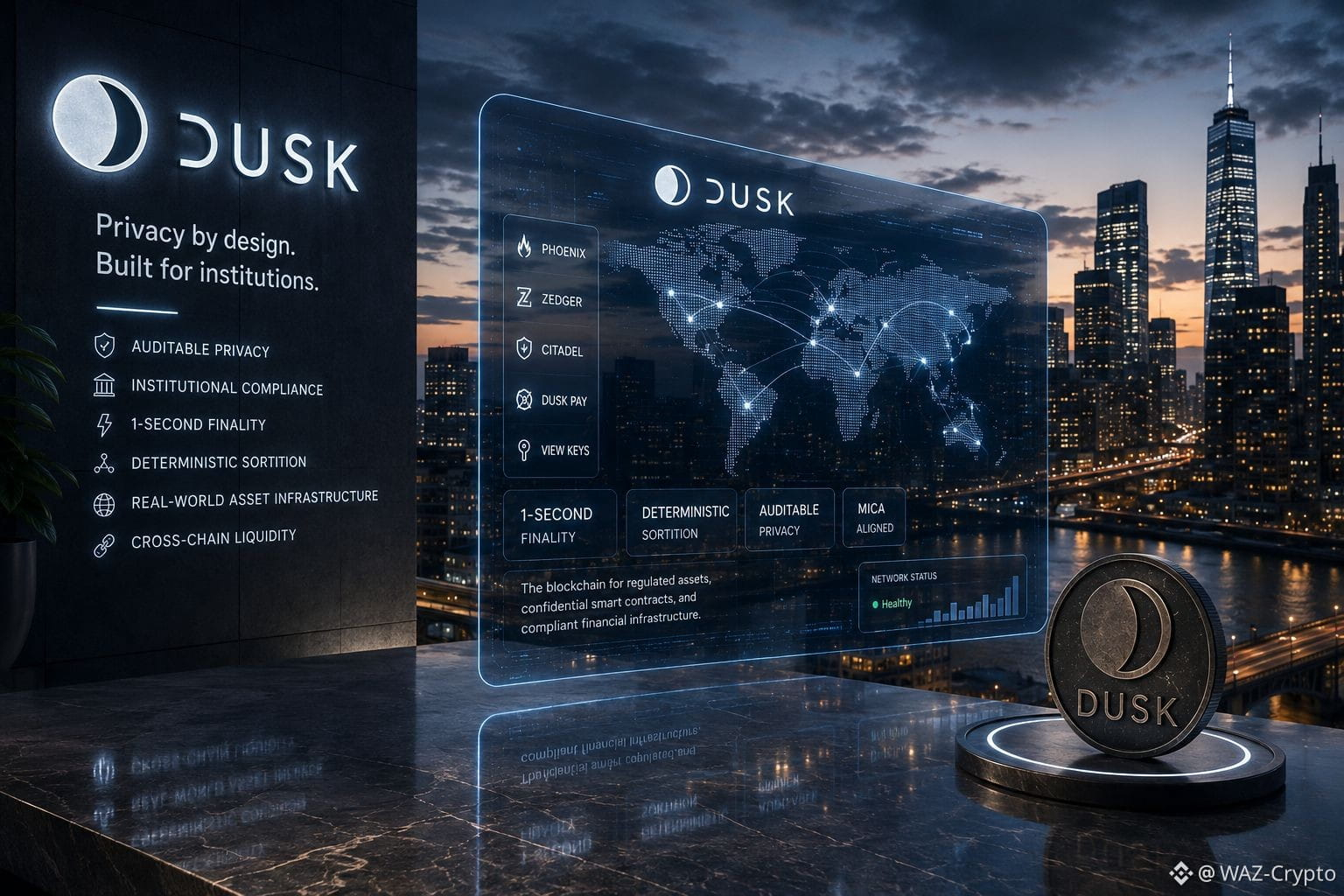
Closed my laptop tonight, then opened it again ten minutes later because I couldn't stop thinking about the bigger picture with @Dusk .Not one feature this time the whole architecture, stacked together.
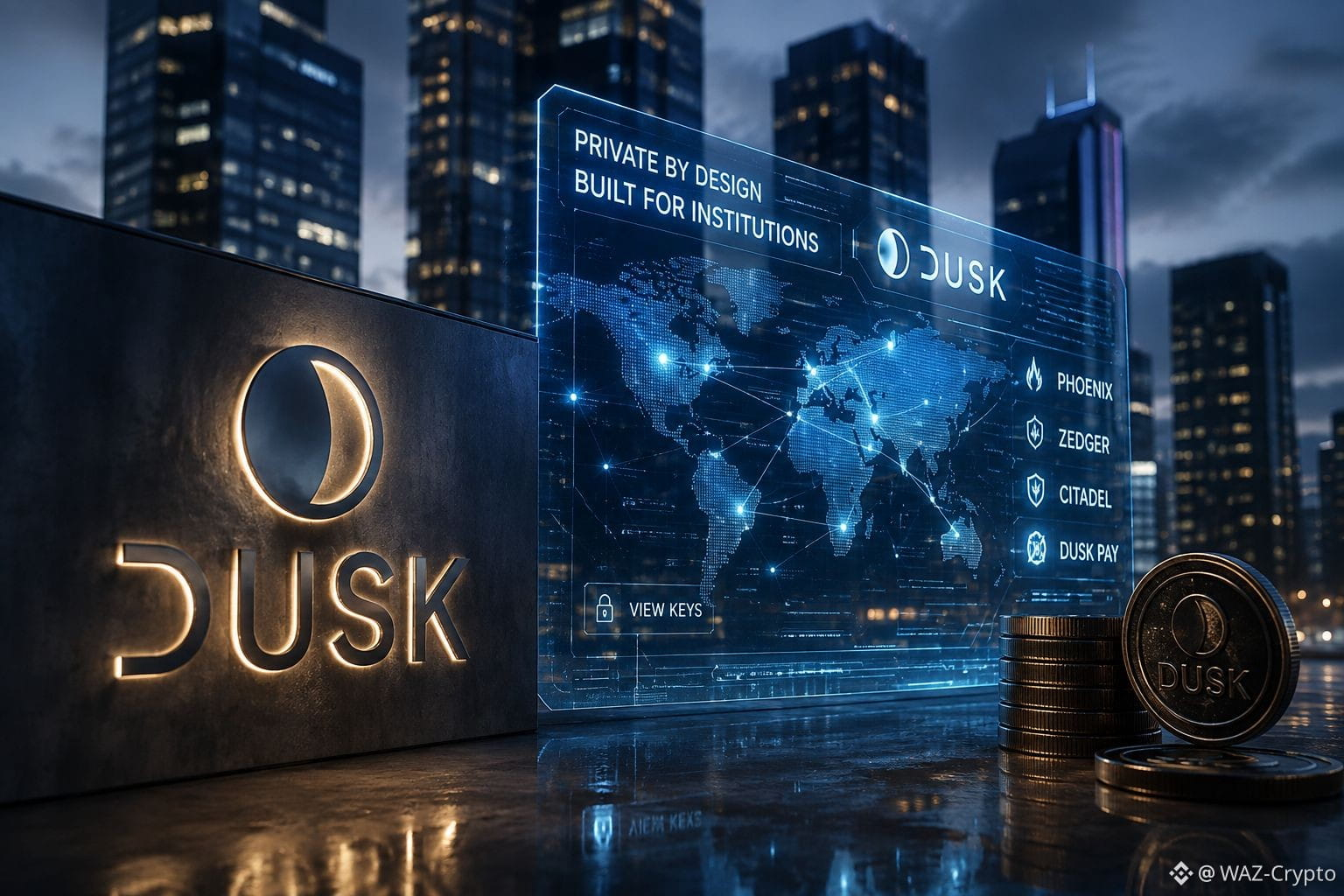
Over $100 trillion sits on legacy settlement rails because public chains lack privacy and private chains lack liquidity. #dusk doesn't patch that gap with an external dApp. It hardcodes Phoenix and Zedger directly into the L1 itself.
Piecrust and Kadcast reinforced something I'd been missing real scaling isn't just raising gas limits, it's rebuilding execution and message propagation from the ground up. Add deterministic sortition, 1-second finality, $DUSK Pay, and Citadel, and you get infrastructure that actually maps onto what MiCA demands.
NPEX's €300M pipeline isn't theoretical anymore. That's institutions genuinely stepping away from paper clearinghouses.
What separates @Dusk from first-generation privacy coins is View Keys auditable privacy instead of a dark pool that gets delisted everywhere.
This stopped feeling like "another L1" to me. It feels like a bet on whether decentralized ledgers can actually replace Wall Street's backend.
Can it, though? That's still unproven.
$BMT
$STAR
Over $100 trillion sits on legacy settlement rails because public chains lack privacy and private chains lack liquidity. #dusk doesn't patch that gap with an external dApp. It hardcodes Phoenix and Zedger directly into the L1 itself.
Piecrust and Kadcast reinforced something I'd been missing real scaling isn't just raising gas limits, it's rebuilding execution and message propagation from the ground up. Add deterministic sortition, 1-second finality, $DUSK Pay, and Citadel, and you get infrastructure that actually maps onto what MiCA demands.
NPEX's €300M pipeline isn't theoretical anymore. That's institutions genuinely stepping away from paper clearinghouses.
What separates @Dusk from first-generation privacy coins is View Keys auditable privacy instead of a dark pool that gets delisted everywhere.
This stopped feeling like "another L1" to me. It feels like a bet on whether decentralized ledgers can actually replace Wall Street's backend.
Can it, though? That's still unproven.
$BMT
$STAR
Проверено
См. перевод
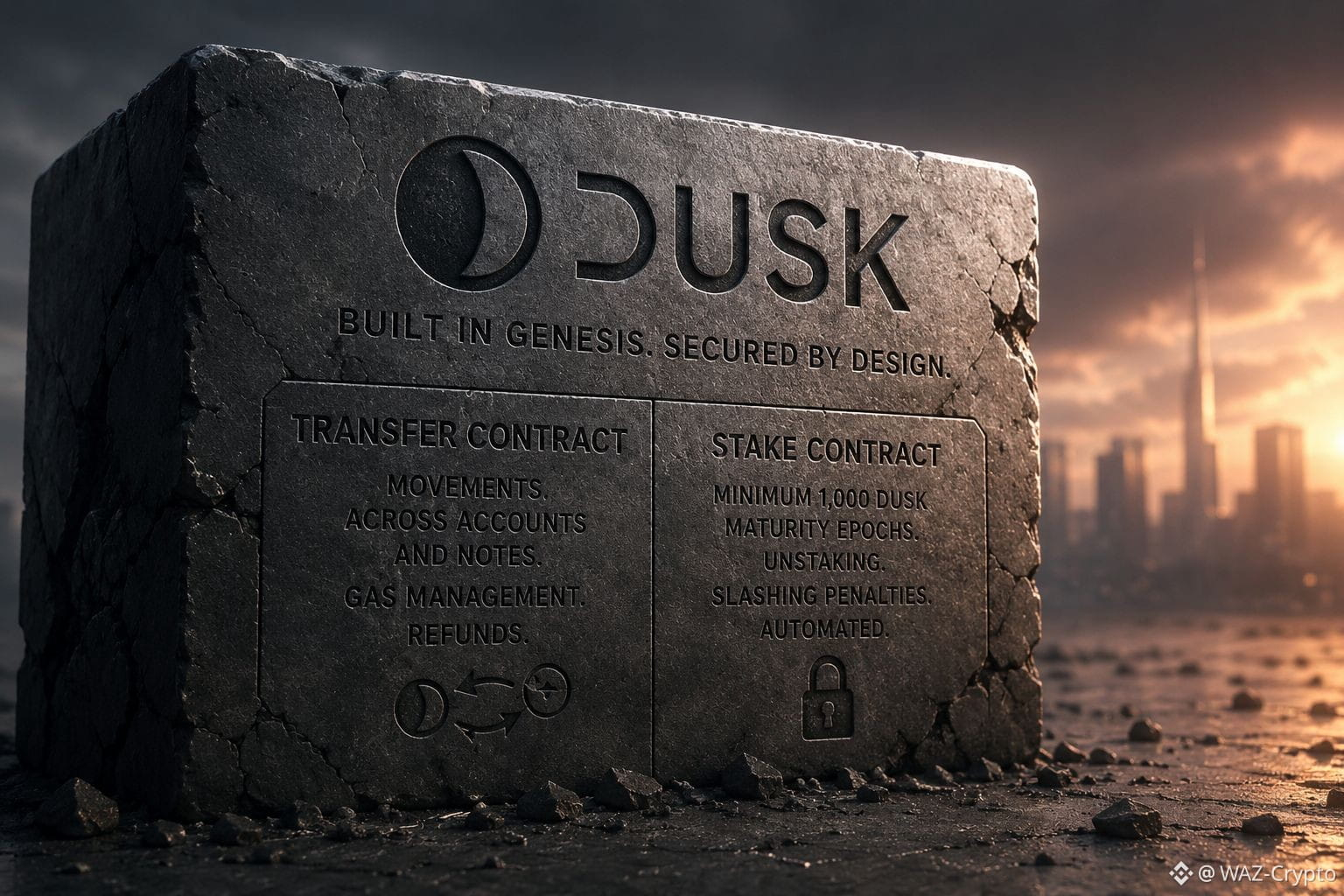
Kept coming back to one small detail while reading@Dusk architecture tonight — the fact that staking and transfers aren't dApps here. They're baked into block zero itself. That stopped me for a second.
Most chains treat these as things you deploy later, upgrade freely, patch when needed. #dusk hardcodes them straight into Genesis Contracts at launch. The Transfer Contract handles every @Dusk movement, across both Moonlight accounts and Phoenix notes, managing gas deductions and refunding whatever's unused.
The Stake Contract is where it gets stricter enforcing the 1,000 $DUSK minimum, tracking maturity epochs, processing unstaking, all automatically through Piecrust during block validation. Slashing penalties too, soft and hard, run programmatically with no manual override.
There's real security in that rigidity. Nothing critical depends on some upgradeable contract someone forgot to audit properly.
But rigidity cuts both ways. If core logic ever needs changing, it's not a quiet patch it's a full hard fork, needing stakers aligned.
Is that trade-off worth it long-term?
$PROM
$TAC
Most chains treat these as things you deploy later, upgrade freely, patch when needed. #dusk hardcodes them straight into Genesis Contracts at launch. The Transfer Contract handles every @Dusk movement, across both Moonlight accounts and Phoenix notes, managing gas deductions and refunding whatever's unused.
The Stake Contract is where it gets stricter enforcing the 1,000 $DUSK minimum, tracking maturity epochs, processing unstaking, all automatically through Piecrust during block validation. Slashing penalties too, soft and hard, run programmatically with no manual override.
There's real security in that rigidity. Nothing critical depends on some upgradeable contract someone forgot to audit properly.
But rigidity cuts both ways. If core logic ever needs changing, it's not a quiet patch it's a full hard fork, needing stakers aligned.
Is that trade-off worth it long-term?
$PROM
$TAC
См. перевод
@Dusk
Saw a headline about another privacy coin getting delisted somewhere and just sat there for a minute, thinking about why that keeps happening over and over. Opened @Dusk docs after, trying to understand what they're doing differently.
Monero and Zcash built genuinely impressive privacy ring signatures, ZK proofs, senders and amounts completely hidden. But that same strength is exactly why regulators keep pushing them off exchanges. Institutions legally can't touch systems that block AML and tax auditing entirely.
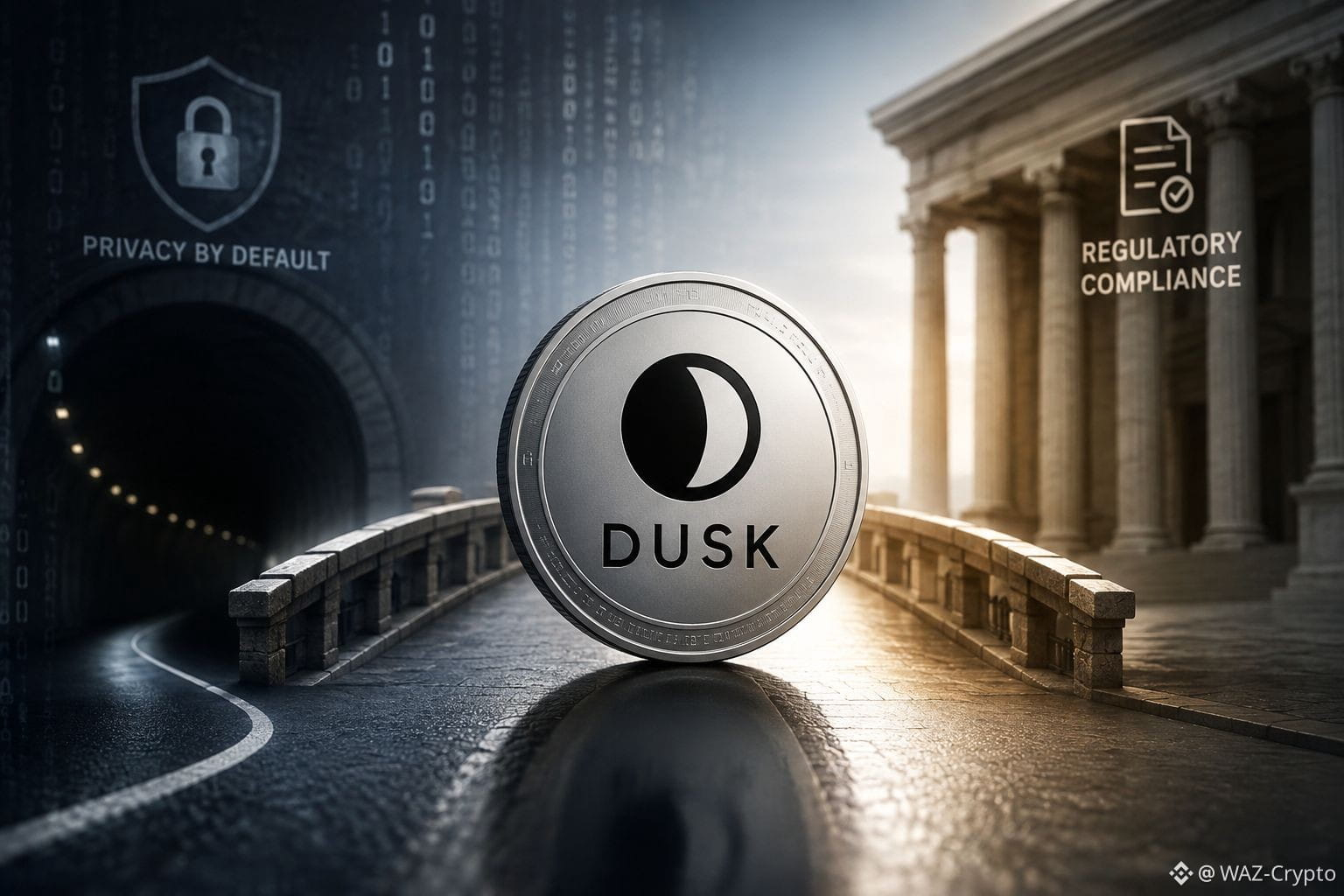
@Dusk takes a different angle. Privacy stays default through Phoenix, but Zedger contracts allow selective disclosure to certified regulators when needed. Nothing's forced open to the public, but nothing's permanently sealed either.
What stood out most is smart contract support. First-generation privacy coins barely offer that, while #dusk runs full execution through Piecrust.
This puts $DUSK in a strange middle ground not quite what privacy purists want, not quite what strict regulators are used to either.
Can it actually satisfy both sides, or does trying to please everyone end up pleasing no one?
$UAI
$PROM
Saw a headline about another privacy coin getting delisted somewhere and just sat there for a minute, thinking about why that keeps happening over and over. Opened @Dusk docs after, trying to understand what they're doing differently.
Monero and Zcash built genuinely impressive privacy ring signatures, ZK proofs, senders and amounts completely hidden. But that same strength is exactly why regulators keep pushing them off exchanges. Institutions legally can't touch systems that block AML and tax auditing entirely.
@Dusk takes a different angle. Privacy stays default through Phoenix, but Zedger contracts allow selective disclosure to certified regulators when needed. Nothing's forced open to the public, but nothing's permanently sealed either.
What stood out most is smart contract support. First-generation privacy coins barely offer that, while #dusk runs full execution through Piecrust.
This puts $DUSK in a strange middle ground not quite what privacy purists want, not quite what strict regulators are used to either.
Can it actually satisfy both sides, or does trying to please everyone end up pleasing no one?
$UAI
$PROM
См. перевод
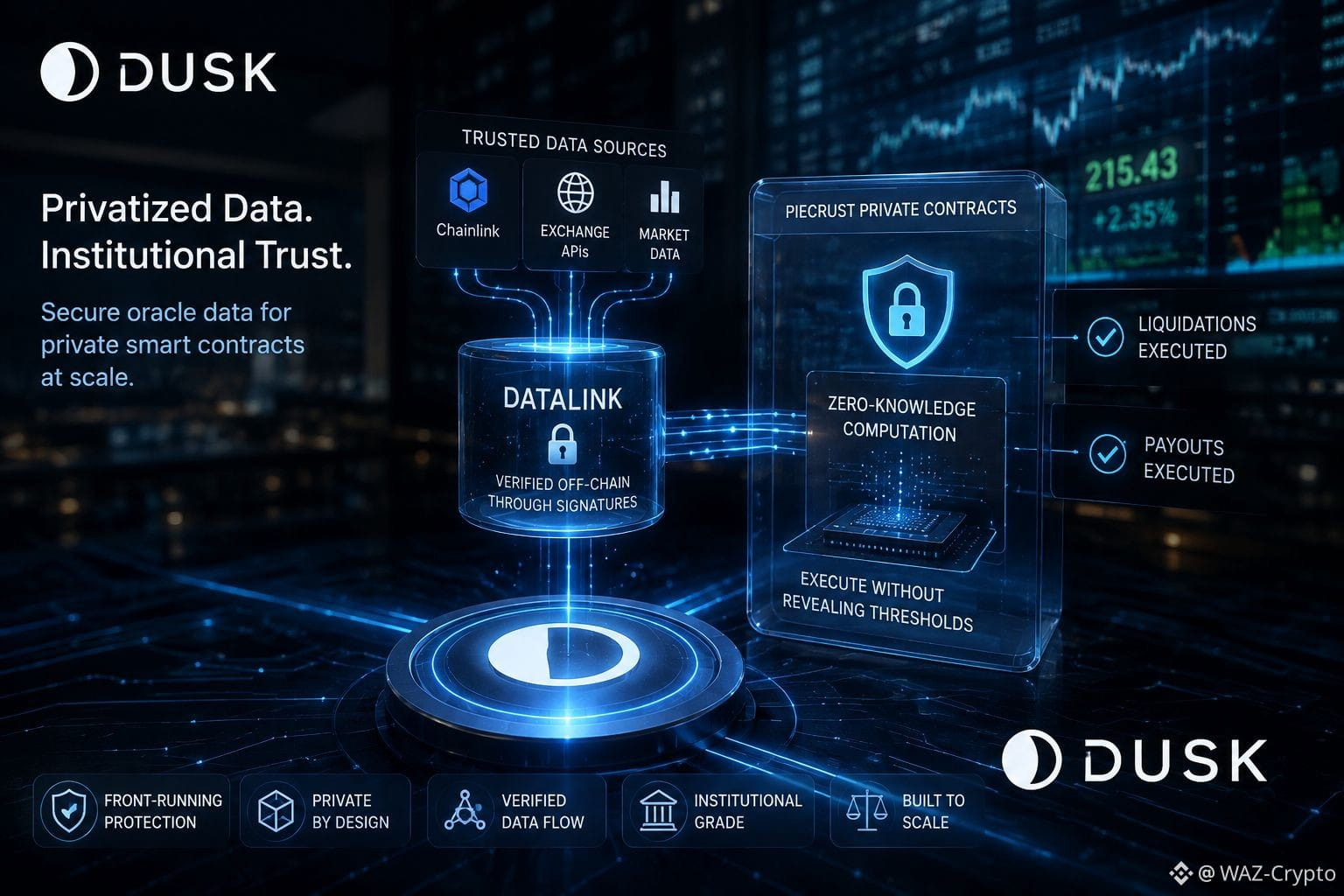
Kept thinking about front-running today, of all things. Read a thread about MEV bots, closed it, then found myself pulling up Dusk's oracle documentation instead — curious how private contracts even get their data.
The problem is obvious once you sit with it. A dividend payout or margin call needs real price data to execute. But most oracles broadcast that data publicly, which means the exact trigger points and timing of institutional trades leak right there on-chain.
Dusk uses DataLink alongside standard oracle networks to fix this. Data gets verified off-chain through signatures from trusted exchange partners, then flows securely into Piecrust contracts. From there, contracts run zero-knowledge computations against that data — liquidations and payouts execute without ever revealing the threshold values that triggered them.
It's a clean solution for front-running protection. But it creates a new dependency: if oracle feeds go down, automated settlements just freeze.
Can this scale to hundreds of live equity feeds without gas fees quietly spiraling?
#dusk $DUSK @Dusk
$TUT
$TRUMP
The problem is obvious once you sit with it. A dividend payout or margin call needs real price data to execute. But most oracles broadcast that data publicly, which means the exact trigger points and timing of institutional trades leak right there on-chain.
Dusk uses DataLink alongside standard oracle networks to fix this. Data gets verified off-chain through signatures from trusted exchange partners, then flows securely into Piecrust contracts. From there, contracts run zero-knowledge computations against that data — liquidations and payouts execute without ever revealing the threshold values that triggered them.
It's a clean solution for front-running protection. But it creates a new dependency: if oracle feeds go down, automated settlements just freeze.
Can this scale to hundreds of live equity feeds without gas fees quietly spiraling?
#dusk $DUSK @Dusk
$TUT
$TRUMP
См. перевод
#dusk $DUSK
Couldn't focus on anything else tonight after reading about a strange incentive flaw buried in deterministic consensus design. Sat with it quietly, no music, just the docs open.
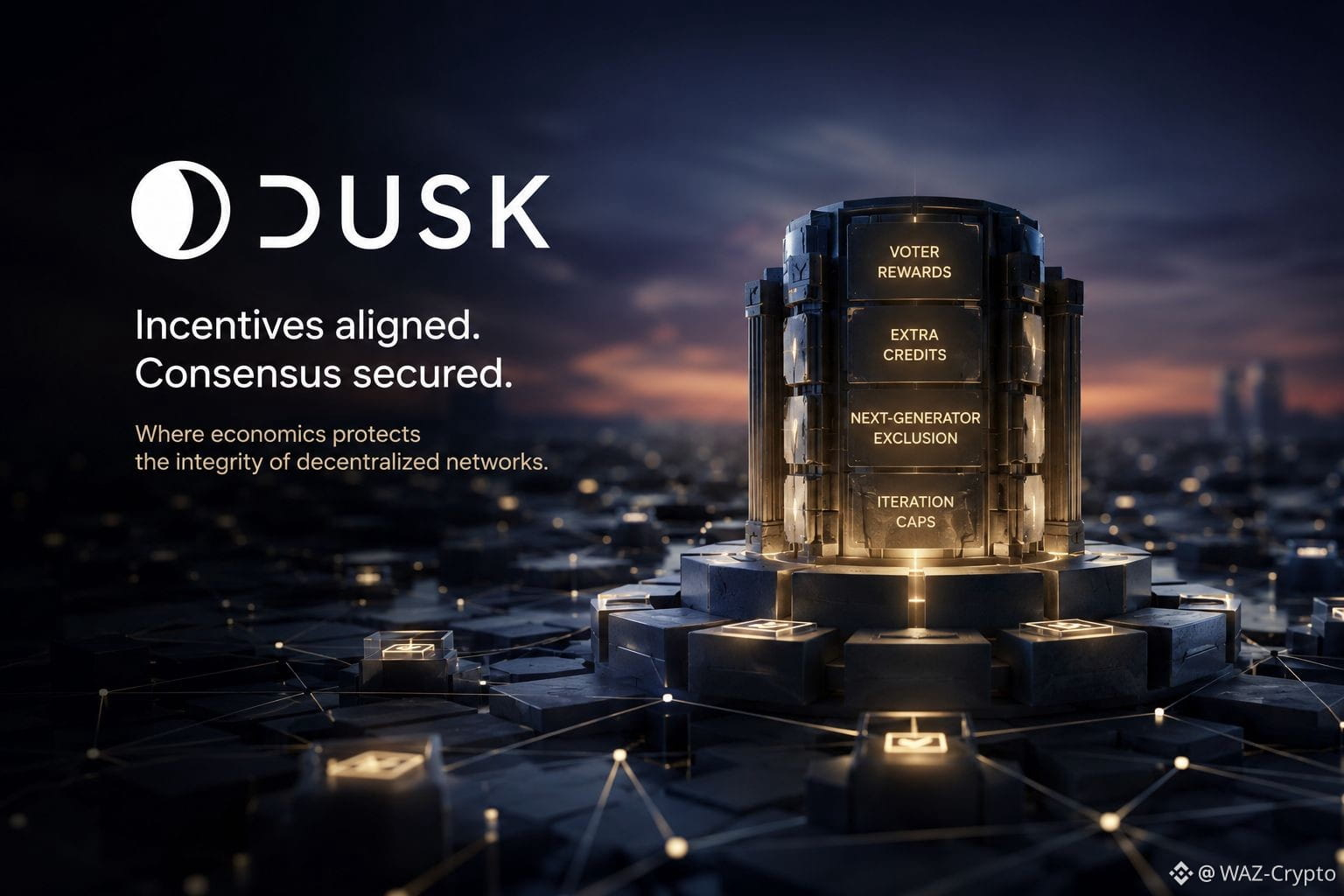
Here's the problem: if you know in advance you're scheduled to generate the next block, why would you want the current one to succeed? A validator picked for iteration 2 could just stay silent in iteration 1, let it fail, and collect the full reward themselves.
@Dusk closes this loophole with four rules working together. Voter rewards make participating now more attractive than gambling on a future slot. Extra credits punish generators who exclude valid votes to game payouts. Next-generator exclusion is the clever one the validator scheduled next simply can't vote in the current iteration, removing their motive entirely. And iteration caps limit how far this visibility problem can even stretch.
What struck me is this isn't cryptography solving the problem. It's economics.
Makes me wonder how many other consensus systems ignore human incentives while obsessing over math.
$ENS
$GALA
Couldn't focus on anything else tonight after reading about a strange incentive flaw buried in deterministic consensus design. Sat with it quietly, no music, just the docs open.
Here's the problem: if you know in advance you're scheduled to generate the next block, why would you want the current one to succeed? A validator picked for iteration 2 could just stay silent in iteration 1, let it fail, and collect the full reward themselves.
@Dusk closes this loophole with four rules working together. Voter rewards make participating now more attractive than gambling on a future slot. Extra credits punish generators who exclude valid votes to game payouts. Next-generator exclusion is the clever one the validator scheduled next simply can't vote in the current iteration, removing their motive entirely. And iteration caps limit how far this visibility problem can even stretch.
What struck me is this isn't cryptography solving the problem. It's economics.
Makes me wonder how many other consensus systems ignore human incentives while obsessing over math.
$ENS
$GALA
См. перевод
Woke up early today and instead of checking price charts, I found myself thinking about something less exciting but more important: liquidity. Specifically, what actually happens after an asset gets tokenized.
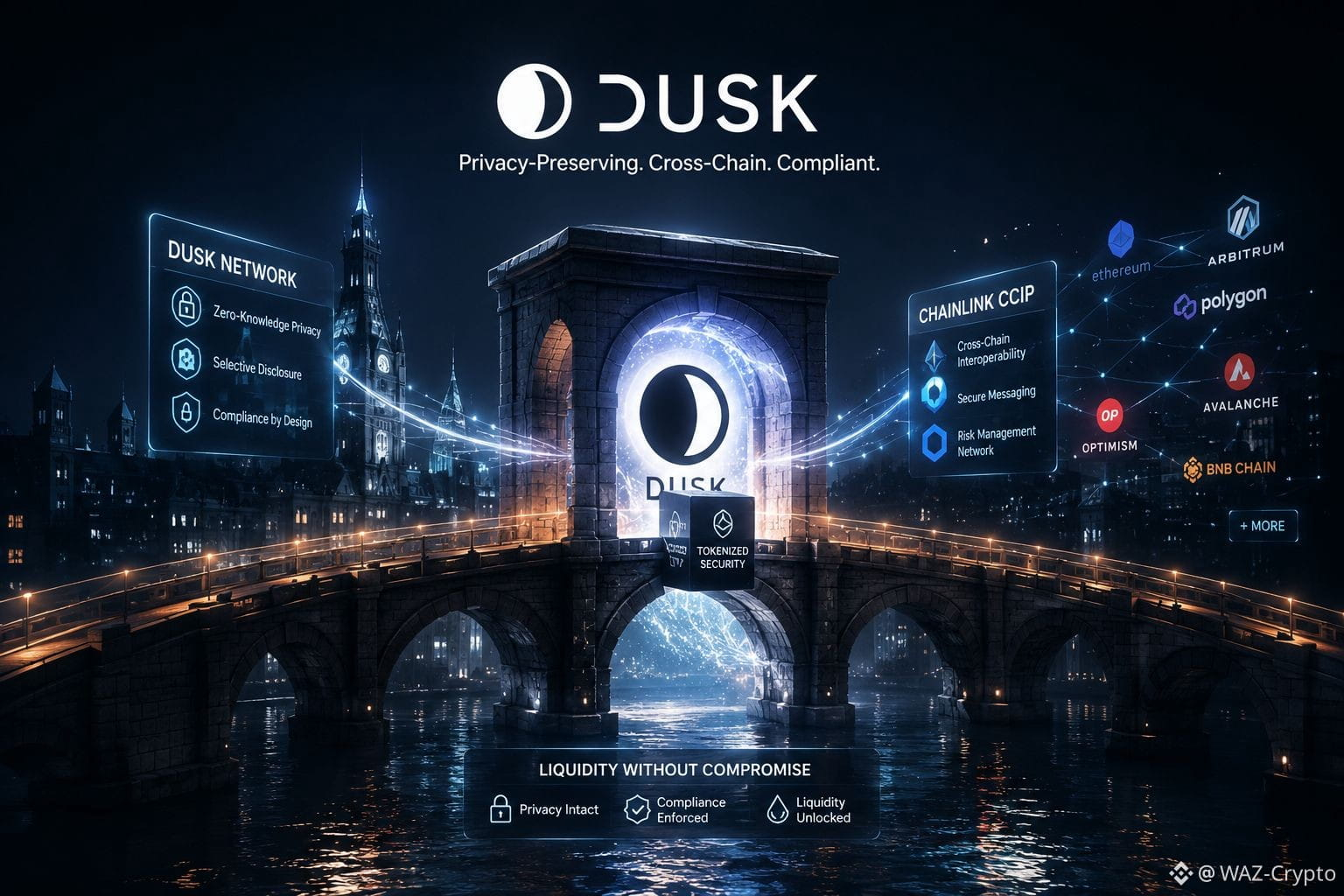
You can build the most compliant, most private RWA infrastructure in the world, but if that tokenized security just sits alone on its own chain, nothing about it. It's an island with no bridge.
That's what pulled me into reading about Dusk's Chainlink CCIP integration. CCIP lets Dusk-native securities move and communicate across major EVM chains, tapping into liquidity Dusk alone couldn't offer. Chainlink's Risk Management Network watches these cross-chain movements independently, flagging anomalies before they become problems.
What caught me off guard was the compliance angle — dApps on other chains can trigger contract changes on Dusk, checking compliance status remotely before completing a transfer.
But here's what I keep circling back to: once an asset crosses onto a fully transparent chain, does Dusk's zero-knowledge privacy survive the trip, or does it just dissolve at the bridge?
#dusk $DUSK @Dusk
$SOL
$XRP
You can build the most compliant, most private RWA infrastructure in the world, but if that tokenized security just sits alone on its own chain, nothing about it. It's an island with no bridge.
That's what pulled me into reading about Dusk's Chainlink CCIP integration. CCIP lets Dusk-native securities move and communicate across major EVM chains, tapping into liquidity Dusk alone couldn't offer. Chainlink's Risk Management Network watches these cross-chain movements independently, flagging anomalies before they become problems.
What caught me off guard was the compliance angle — dApps on other chains can trigger contract changes on Dusk, checking compliance status remotely before completing a transfer.
But here's what I keep circling back to: once an asset crosses onto a fully transparent chain, does Dusk's zero-knowledge privacy survive the trip, or does it just dissolve at the bridge?
#dusk $DUSK @Dusk
$SOL
$XRP
Частичная правда
См. перевод
Last night I couldn't sleep, so instead of scrolling I opened Dusk's docs and just sat with the networking section. Calmly, without any agenda.
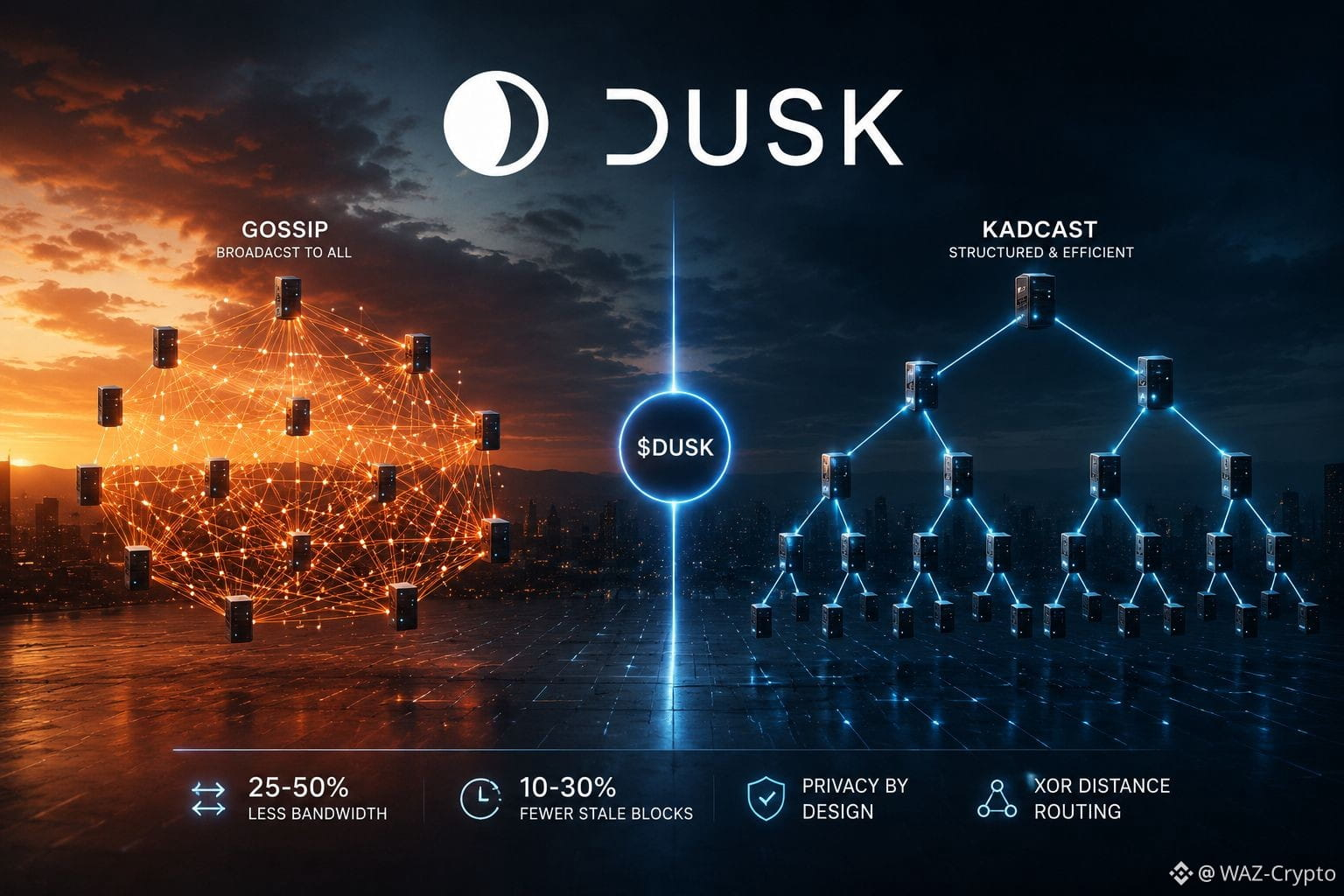
Everyone argues about block size and gas limits, but almost nobody talks about how messages actually travel between nodes. Most chains use Gossip basically shouting into a crowded room, hoping everyone hears. Every peer broadcasts to every neighbor, redundant and noisy.
Dusk uses Kadcast instead. Nodes are organized by XOR distance, like a structured tree instead of chaos. Messages cascade through calculated paths, not blind broadcasts. The result: 25-50% less bandwidth, and stale blocks drop 10-30%.
What surprised me is the privacy side-effect since messages hop through distance buckets, origin points naturally blur.
But here's my doubt. Structure has a cost. If nodes drop suddenly in clusters, does the DHT rebalance fast enough, or do routing paths fragment right when the network needs speed most?
Is Kadcast's efficiency worth that fragility risk?
#dusk $DUSK @Dusk
$BOME
$NEIRO
Everyone argues about block size and gas limits, but almost nobody talks about how messages actually travel between nodes. Most chains use Gossip basically shouting into a crowded room, hoping everyone hears. Every peer broadcasts to every neighbor, redundant and noisy.
Dusk uses Kadcast instead. Nodes are organized by XOR distance, like a structured tree instead of chaos. Messages cascade through calculated paths, not blind broadcasts. The result: 25-50% less bandwidth, and stale blocks drop 10-30%.
What surprised me is the privacy side-effect since messages hop through distance buckets, origin points naturally blur.
But here's my doubt. Structure has a cost. If nodes drop suddenly in clusters, does the DHT rebalance fast enough, or do routing paths fragment right when the network needs speed most?
Is Kadcast's efficiency worth that fragility risk?
#dusk $DUSK @Dusk
$BOME
$NEIRO
Проверено
См. перевод
The more I look into @Dusk the more I notice that its security model isn't built around treating every mistake the same.
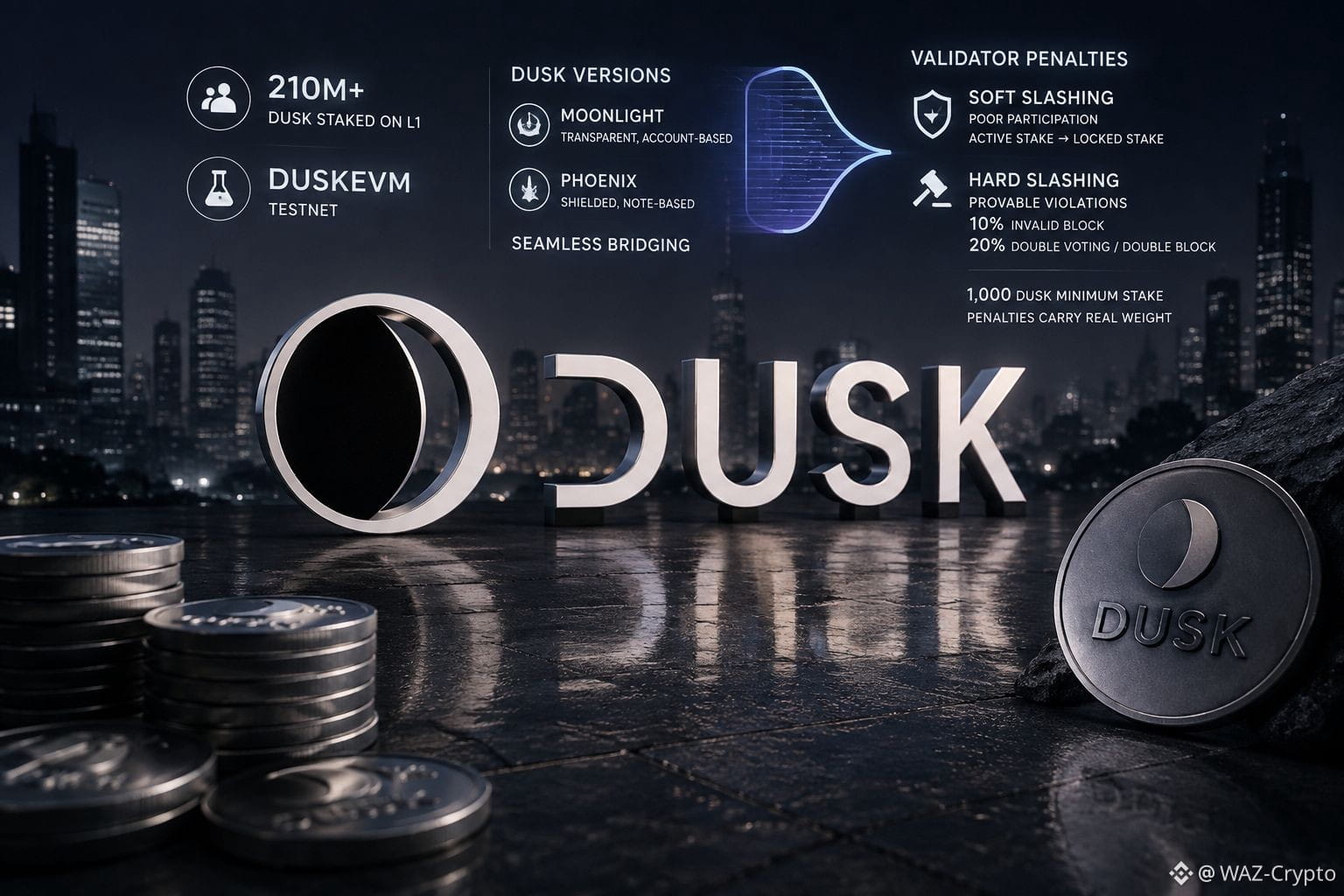
On the user side, DUSK currently shows 210M+ staked on L1, while DuskEVM is still tagged Testnet. DUSK also exists in different representations, Moonlight is transparent and account-based, Phoenix is shielded and note-based. Bridging between them is technically seamless, but users still need to know which version they're actually holding, since that choice affects staking, privacy, and what they can do next.
On the validator side, #dusk splits penalties into soft and hard slashing. Soft slashing handles poor participation, moving active stake into locked stake instead of burning it. Hard slashing targets provable violations, 10% for an invalid block, 20% for double voting or double block production, with a 1,000 $DUSK minimum stake giving these penalties real weight.
Both sides seem built around context, not blanket punishment.
Can that stay clear for users and strict for attackers without softening on honest operators?
$BTW
$VELVET
On the user side, DUSK currently shows 210M+ staked on L1, while DuskEVM is still tagged Testnet. DUSK also exists in different representations, Moonlight is transparent and account-based, Phoenix is shielded and note-based. Bridging between them is technically seamless, but users still need to know which version they're actually holding, since that choice affects staking, privacy, and what they can do next.
On the validator side, #dusk splits penalties into soft and hard slashing. Soft slashing handles poor participation, moving active stake into locked stake instead of burning it. Hard slashing targets provable violations, 10% for an invalid block, 20% for double voting or double block production, with a 1,000 $DUSK minimum stake giving these penalties real weight.
Both sides seem built around context, not blanket punishment.
Can that stay clear for users and strict for attackers without softening on honest operators?
$BTW
$VELVET
См. перевод
#dusk $DUSK @Dusk
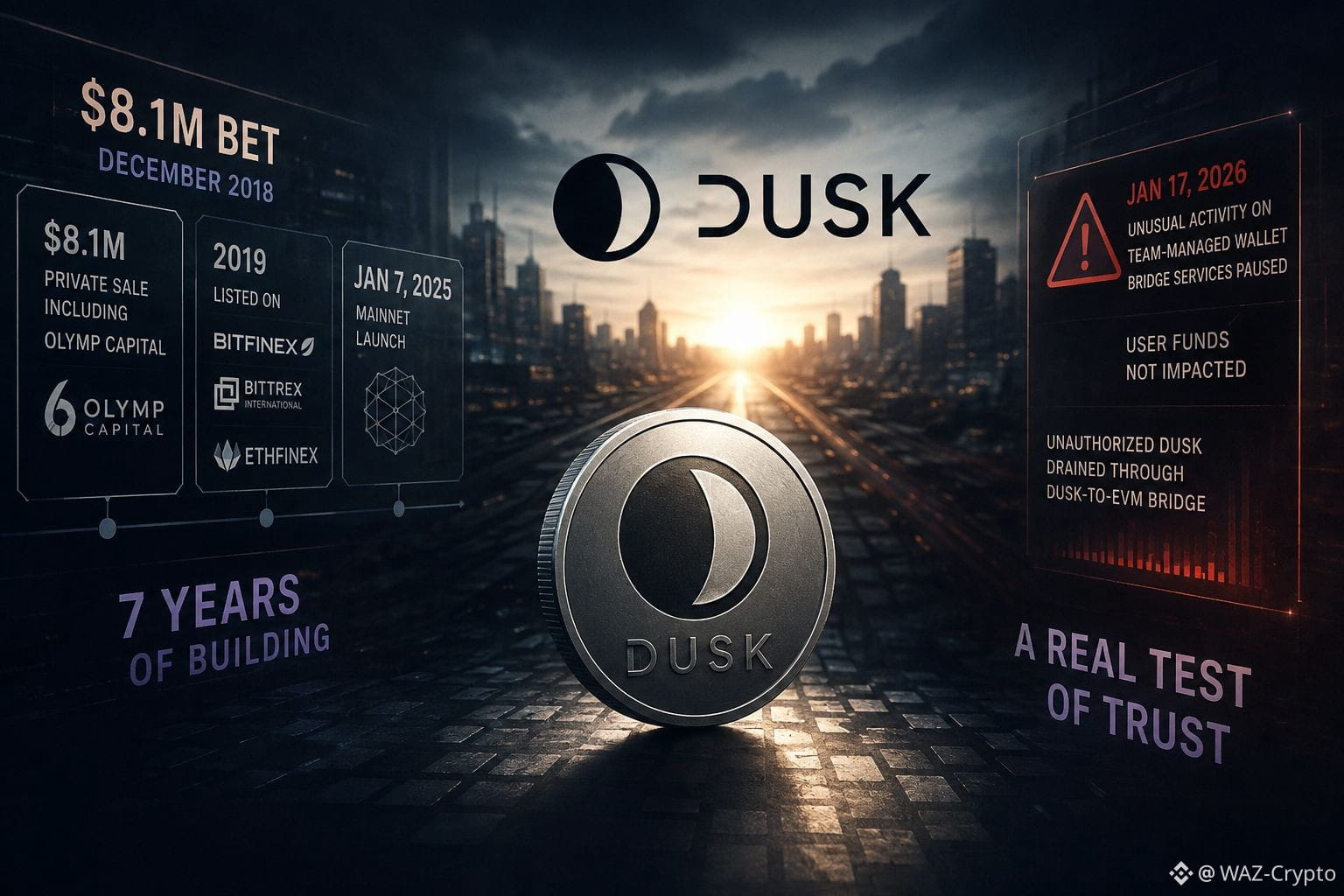
The more I look into Dusk, the more I think its real story isn't just what it built, but how that early bet holds up when the infrastructure gets tested.
December 2018: Dusk raised $8.1M in a private sale, including backing from Olymp Capital. That was years before mainnet, before Phoenix, before most of what people talk about today. By 2019 DUSK was already trading on Bitfinex, Bittrex International and Ethfinex. The original thesis was oddly specific for that era: privacy, compliance, and digital securities, together.
Mainnet finally launched January 7, 2025. Seven years from raise to launch.
Then, January 17, 2026: Dusk reported unusual activity on a team-managed wallet and paused bridge services. Dusk said user funds were not impacted. External trackers described unauthorized DUSK drained through the Dusk-to-EVM bridge.
Was the bridge compromised? Maybe. But the bigger question is how a compliance-focused network communicates uncertainty when something goes wrong.
Investors trusted Dusk with $8.1M early. Users now have to trust how it handles this.
$ALPINE $ACE
The more I look into Dusk, the more I think its real story isn't just what it built, but how that early bet holds up when the infrastructure gets tested.
December 2018: Dusk raised $8.1M in a private sale, including backing from Olymp Capital. That was years before mainnet, before Phoenix, before most of what people talk about today. By 2019 DUSK was already trading on Bitfinex, Bittrex International and Ethfinex. The original thesis was oddly specific for that era: privacy, compliance, and digital securities, together.
Mainnet finally launched January 7, 2025. Seven years from raise to launch.
Then, January 17, 2026: Dusk reported unusual activity on a team-managed wallet and paused bridge services. Dusk said user funds were not impacted. External trackers described unauthorized DUSK drained through the Dusk-to-EVM bridge.
Was the bridge compromised? Maybe. But the bigger question is how a compliance-focused network communicates uncertainty when something goes wrong.
Investors trusted Dusk with $8.1M early. Users now have to trust how it handles this.
$ALPINE $ACE
Проверено
См. перевод
#dusk $DUSK @Dusk
I initially treated Dusk as two separate problems, how blocks move across the network, and how real-world assets move through financial infrastructure. Digging into Kadcast and Dusk's SME tokenization model, the two started looking like the same idea applied twice.
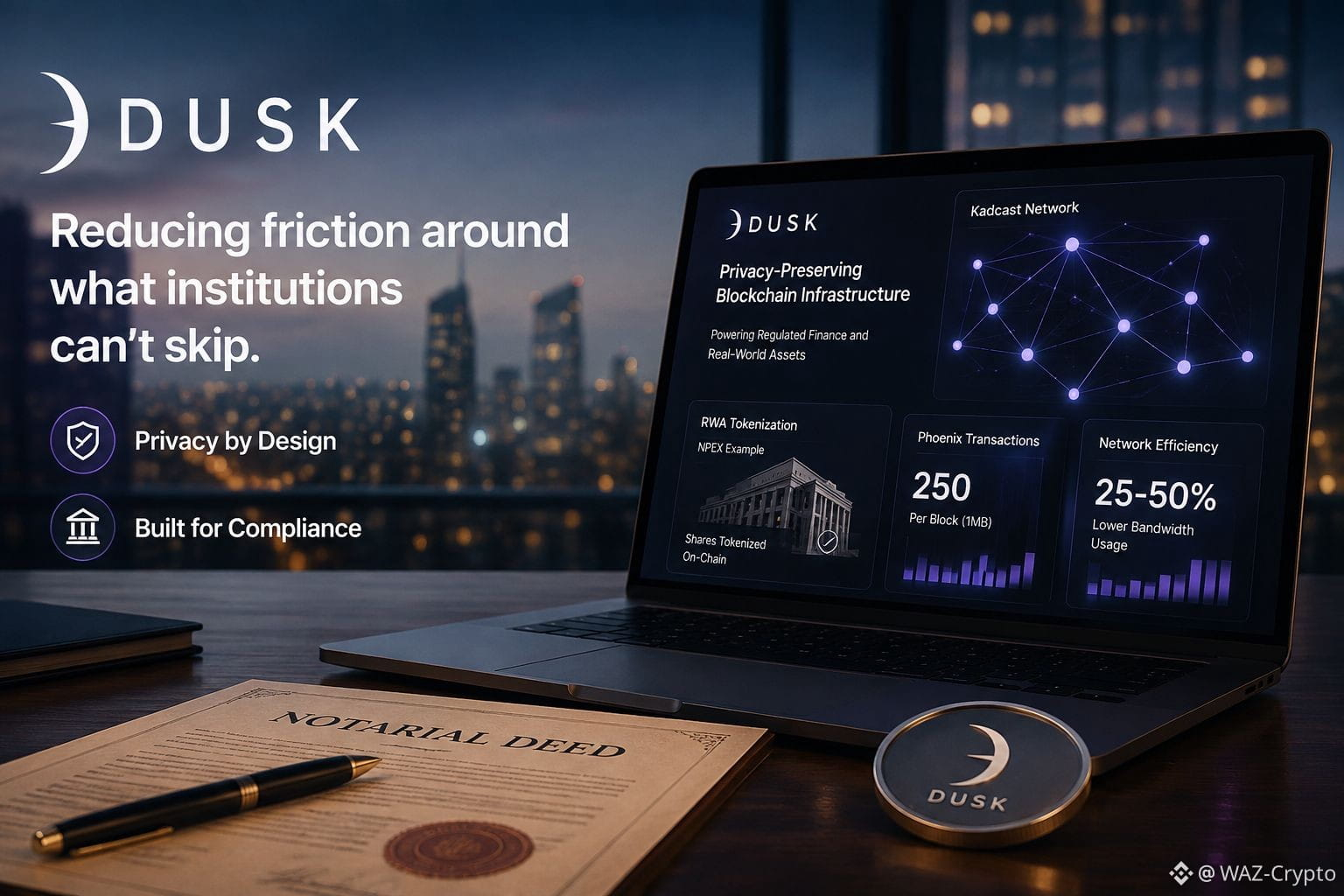
Kadcast doesn't trust a single path. Block chunks propagate across multiple delegates, with β = 3 built into the implementation, and FEC absorbs packet loss instead of assuming clean delivery. With blocks capped at 1MB, roughly 250 Phoenix transactions, that redundancy is what keeps bandwidth usage 25–50% lower than typical gossip approaches as activity scales.
The RWA side mirrors this. Tokenization through Dusk doesn't erase existing legal process, corporate approvals, notaries, and tax decisions can all still remain. The NPEX example makes that explicit: putting shares on-chain doesn't remove the need for a notarial deed.
So the pattern isn't replacement, it's redundancy layered around systems that still have to function underneath.
Is Dusk's real thesis less about disruption, and more about reducing friction around what institutions can't actually skip?
$PORTAL
$TUT
I initially treated Dusk as two separate problems, how blocks move across the network, and how real-world assets move through financial infrastructure. Digging into Kadcast and Dusk's SME tokenization model, the two started looking like the same idea applied twice.
Kadcast doesn't trust a single path. Block chunks propagate across multiple delegates, with β = 3 built into the implementation, and FEC absorbs packet loss instead of assuming clean delivery. With blocks capped at 1MB, roughly 250 Phoenix transactions, that redundancy is what keeps bandwidth usage 25–50% lower than typical gossip approaches as activity scales.
The RWA side mirrors this. Tokenization through Dusk doesn't erase existing legal process, corporate approvals, notaries, and tax decisions can all still remain. The NPEX example makes that explicit: putting shares on-chain doesn't remove the need for a notarial deed.
So the pattern isn't replacement, it's redundancy layered around systems that still have to function underneath.
Is Dusk's real thesis less about disruption, and more about reducing friction around what institutions can't actually skip?
$PORTAL
$TUT
Проверено
См. перевод
#dusk $DUSK @Dusk
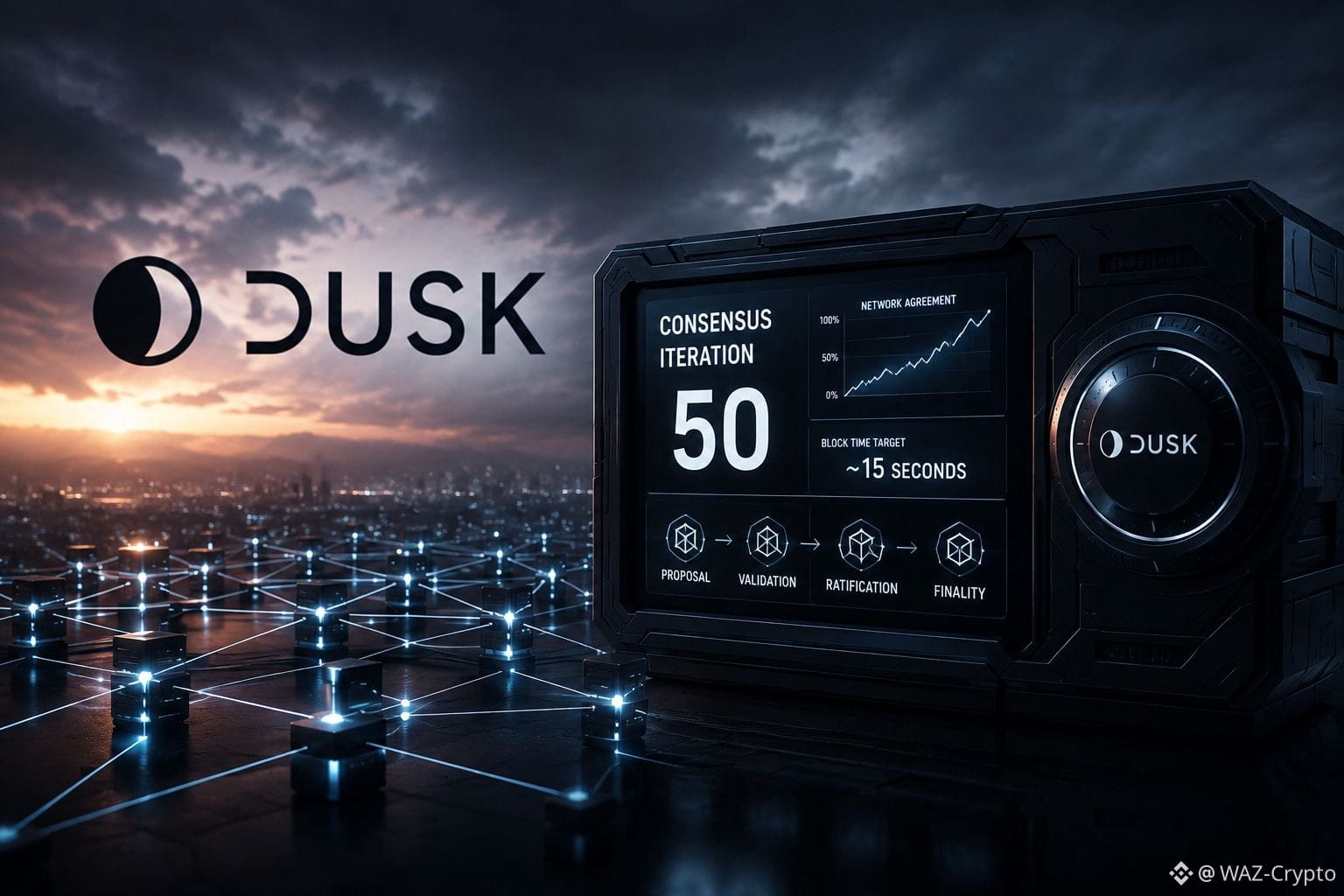
I used to think Dusk's 50-iteration limit was just a technical ceiling, a safety valve that rarely gets touched. Looking closer, it reads more like a boundary for how long consensus is willing to keep fighting through disagreement.
Each round moves through proposal, validation, ratification, and finality, with provisioners chosen by deterministic sortition at every step. Under normal conditions that sequence resolves fast, targeting somewhere around 15 seconds per block. But delayed messages, offline provisioners, or adversarial conditions push consensus into further iterations, and older Dusk material openly acknowledged that difficult networks would need more of them.
What stood out to me is the recovery work underneath, short-circuiting iterations that have already timed out, and repropagating messages from past or future iterations so the network can catch back up.
That reframes the counter entirely. It is not just tracking attempts, it is managing recovery.
So the real question isn't why 50. It's how much disagreement Dusk can absorb before speed has to yield to certainty.
$PORTAL
$ONG
I used to think Dusk's 50-iteration limit was just a technical ceiling, a safety valve that rarely gets touched. Looking closer, it reads more like a boundary for how long consensus is willing to keep fighting through disagreement.
Each round moves through proposal, validation, ratification, and finality, with provisioners chosen by deterministic sortition at every step. Under normal conditions that sequence resolves fast, targeting somewhere around 15 seconds per block. But delayed messages, offline provisioners, or adversarial conditions push consensus into further iterations, and older Dusk material openly acknowledged that difficult networks would need more of them.
What stood out to me is the recovery work underneath, short-circuiting iterations that have already timed out, and repropagating messages from past or future iterations so the network can catch back up.
That reframes the counter entirely. It is not just tracking attempts, it is managing recovery.
So the real question isn't why 50. It's how much disagreement Dusk can absorb before speed has to yield to certainty.
$PORTAL
$ONG
См. перевод
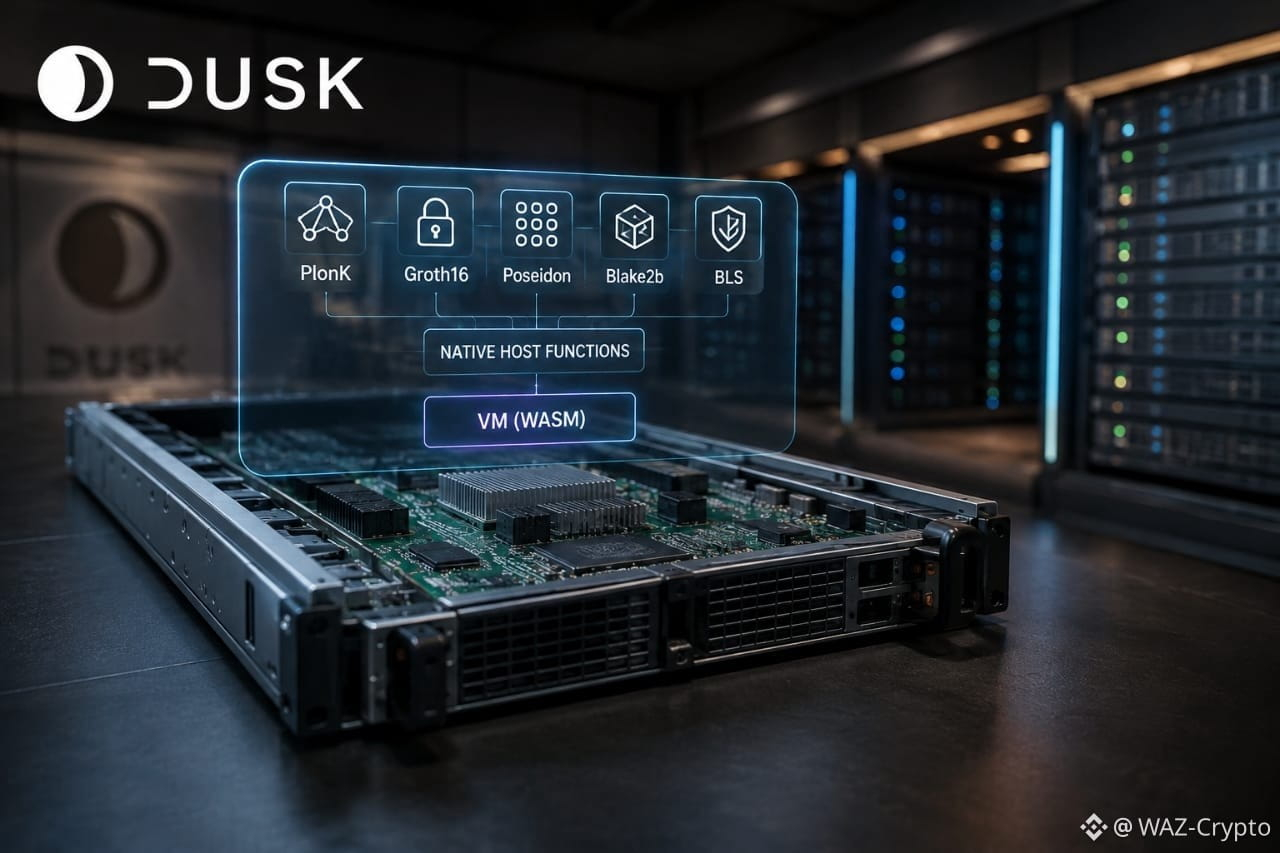
I used to assume ZK verification speed was mostly a proving-system problem, better curves, better circuits. Piecrust made me reconsider that.
Running proof verification inside standard WASM can cost 45% to 255% in slowdown, mostly virtualized memory overhead. Dusk's answer is to not run it in WASM at all. PlonK, Groth16, Poseidon, Blake2b, BLS, all execute as native host functions instead, sidestepping the sandbox entirely.
That part makes sense as an engineering fix. What's more interesting is the network layer feeding it. Kadcast's structured propagation cuts bandwidth 25–50% versus gossip, and stale block rates drop 10–30%, meaning less validator compute wasted on blocks that never get accepted.
Together that's latency solved on two fronts, execution and propagation.
But native host functions assume capable host hardware. Push more crypto work to the host, and node requirements creep upward.
Does offloading to native code trade one bottleneck for a quieter one, hardware access instead of software lag?
@Dusk #dusk $DUSK
Running proof verification inside standard WASM can cost 45% to 255% in slowdown, mostly virtualized memory overhead. Dusk's answer is to not run it in WASM at all. PlonK, Groth16, Poseidon, Blake2b, BLS, all execute as native host functions instead, sidestepping the sandbox entirely.
That part makes sense as an engineering fix. What's more interesting is the network layer feeding it. Kadcast's structured propagation cuts bandwidth 25–50% versus gossip, and stale block rates drop 10–30%, meaning less validator compute wasted on blocks that never get accepted.
Together that's latency solved on two fronts, execution and propagation.
But native host functions assume capable host hardware. Push more crypto work to the host, and node requirements creep upward.
Does offloading to native code trade one bottleneck for a quieter one, hardware access instead of software lag?
@Dusk #dusk $DUSK
См. перевод
#dusk $DUSK @Dusk
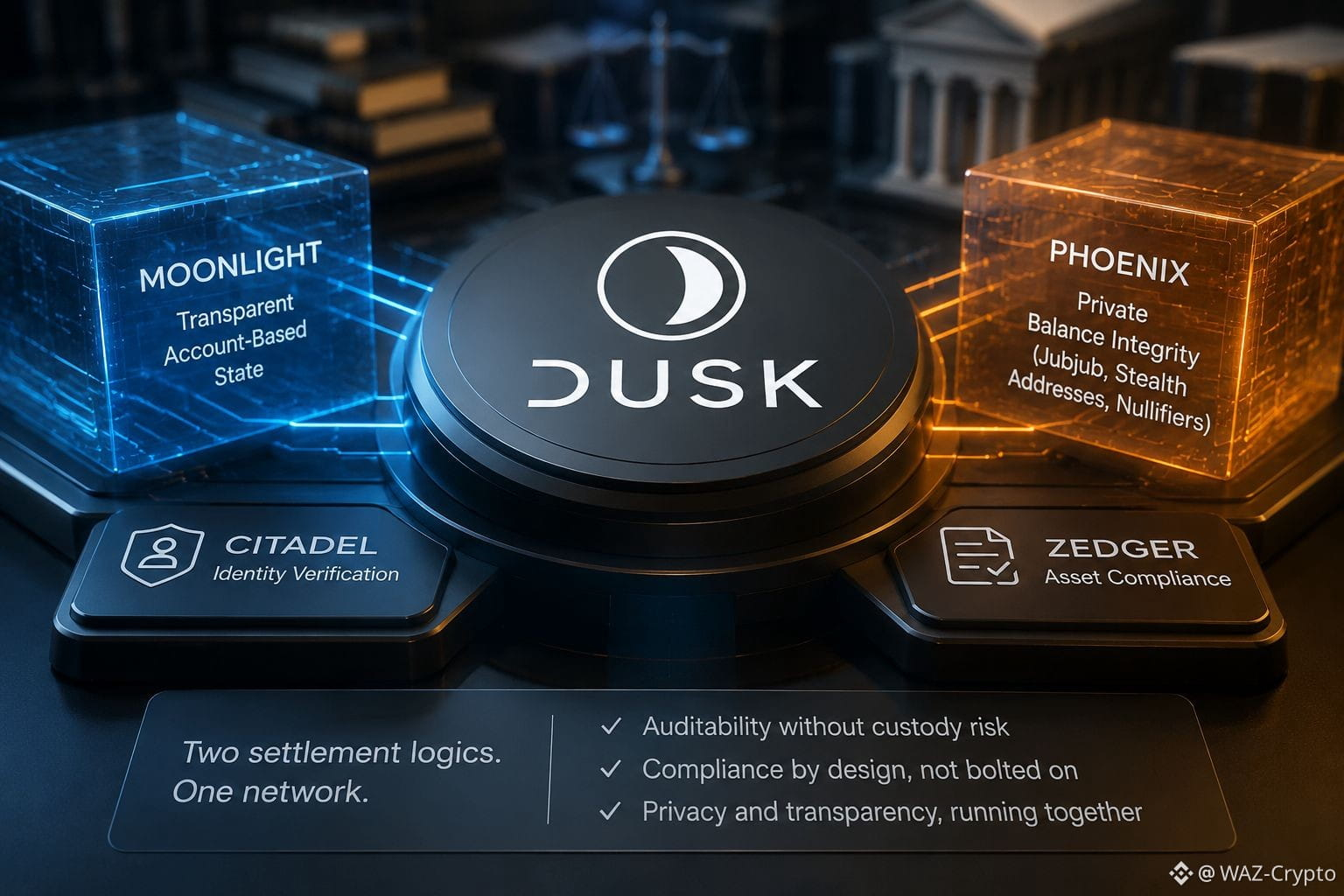
I used to assume privacy chains and compliant chains were just opposite ends of a spectrum, pick one and accept the cost.
Dusk's answer is to not pick. Moonlight handles transparent, account-based state, the kind regulators can read directly. Phoenix runs alongside it, using Jubjub curve signatures, stealth addresses, and nullifiers to verify balance integrity without exposing sender, receiver, or amount. Same network, two settlement logics, running at once.
What changed my read on this was view keys. Institutions can delegate transaction scanning to a third party without ever handing over spending access. That is auditability without custody risk, which is not something MiCA-style transparency rules usually get offered.
Layer Citadel and Zedger on top, identity verification and asset compliance built into the protocol itself, and the pattern is consistent: compliance is not bolted on afterward, it is structural.
Does embedding compliance at the protocol level actually satisfy regulators, or does it just relocate the trust question to whoever writes the rules?
$ACE
$EDEN
I used to assume privacy chains and compliant chains were just opposite ends of a spectrum, pick one and accept the cost.
Dusk's answer is to not pick. Moonlight handles transparent, account-based state, the kind regulators can read directly. Phoenix runs alongside it, using Jubjub curve signatures, stealth addresses, and nullifiers to verify balance integrity without exposing sender, receiver, or amount. Same network, two settlement logics, running at once.
What changed my read on this was view keys. Institutions can delegate transaction scanning to a third party without ever handing over spending access. That is auditability without custody risk, which is not something MiCA-style transparency rules usually get offered.
Layer Citadel and Zedger on top, identity verification and asset compliance built into the protocol itself, and the pattern is consistent: compliance is not bolted on afterward, it is structural.
Does embedding compliance at the protocol level actually satisfy regulators, or does it just relocate the trust question to whoever writes the rules?
$ACE
$EDEN
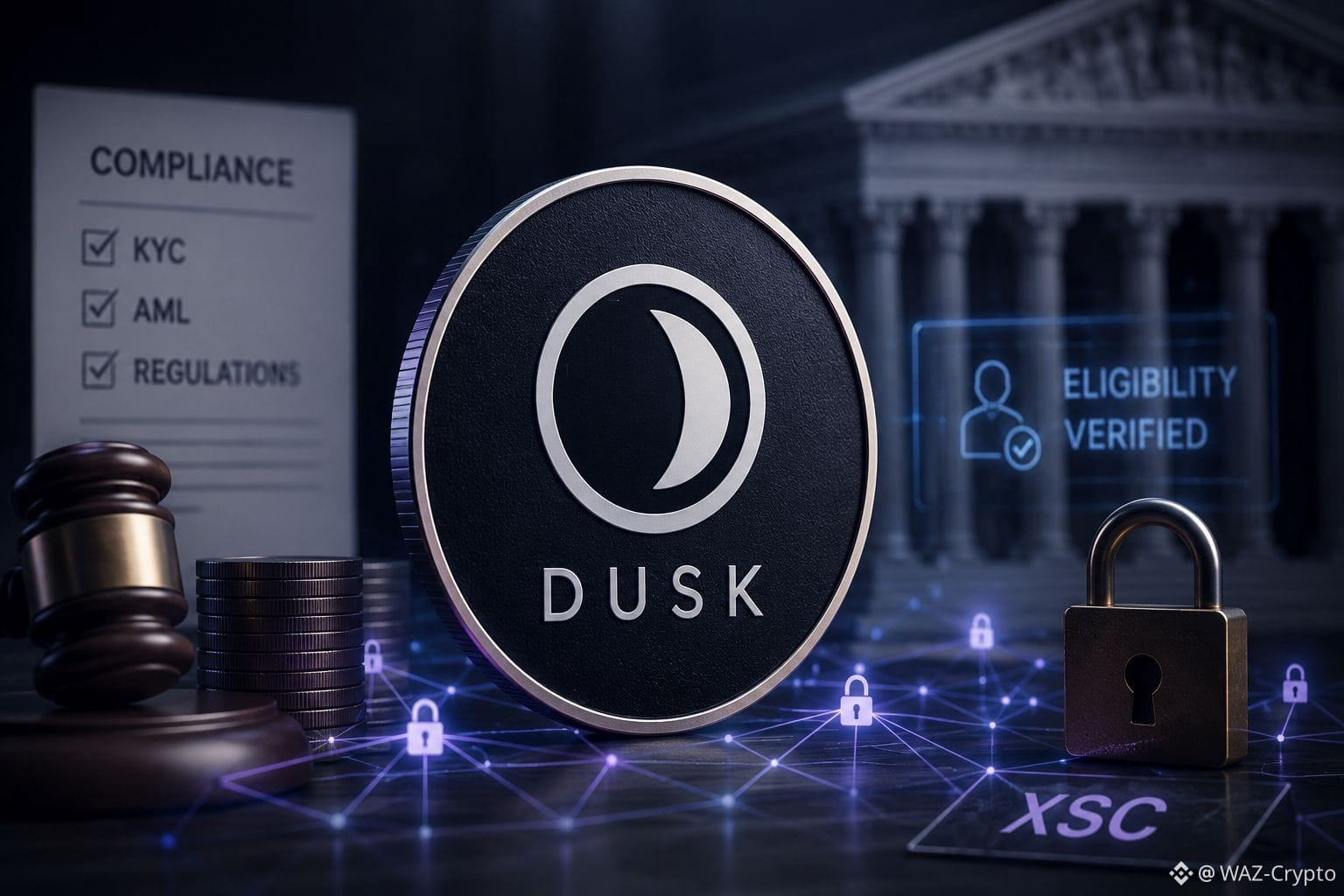
#dusk $DUSK История о приватности, возможно, на самом деле о комплаенсе
Сначала я думал, что XSC в основном про скрытие деталей транзакций — обычный питч приватности, просто упакованный в более институциональный язык. Но когда я копнул глубже, такая рамка начала казаться неверной.
То, что бросилось в глаза, — это белый список. Переводы XSC проходят только если участник соответствует условиям приемлемости, то есть приватность здесь не отменяет регуляторный онбординг, а «надстраивается» над ним. KYC/AML не исчезает — он просто перестаёт быть видимым в ончейне.
Вот с каким противоречием действительно стоит разобраться. Конфиденциальность и аудируемость сосуществуют: детали транзакций остаются защищёнными, но при этом eligibility и записи по комплаенсу всё ещё можно проверять. Приемлемость — это не разовый «входной билет»: её может потребоваться поддерживать в силе по мере изменения обстоятельств.
Ничто из этого не похоже на анонимность. Это похоже на инфраструктуру для регулируемых активов и security-токенов, где сложная задача никогда не заключалась в том, чтобы скрыть балансы — задача была в том, чтобы доказать соответствие требованиям, не раскрывая контрагентов.
Рынок оценивает @Dusk за приватность или за приватность, с которой регуляторы всё ещё могут работать?
Сначала я думал, что XSC в основном про скрытие деталей транзакций — обычный питч приватности, просто упакованный в более институциональный язык. Но когда я копнул глубже, такая рамка начала казаться неверной.
То, что бросилось в глаза, — это белый список. Переводы XSC проходят только если участник соответствует условиям приемлемости, то есть приватность здесь не отменяет регуляторный онбординг, а «надстраивается» над ним. KYC/AML не исчезает — он просто перестаёт быть видимым в ончейне.
Вот с каким противоречием действительно стоит разобраться. Конфиденциальность и аудируемость сосуществуют: детали транзакций остаются защищёнными, но при этом eligibility и записи по комплаенсу всё ещё можно проверять. Приемлемость — это не разовый «входной билет»: её может потребоваться поддерживать в силе по мере изменения обстоятельств.
Ничто из этого не похоже на анонимность. Это похоже на инфраструктуру для регулируемых активов и security-токенов, где сложная задача никогда не заключалась в том, чтобы скрыть балансы — задача была в том, чтобы доказать соответствие требованиям, не раскрывая контрагентов.
Рынок оценивает @Dusk за приватность или за приватность, с которой регуляторы всё ещё могут работать?
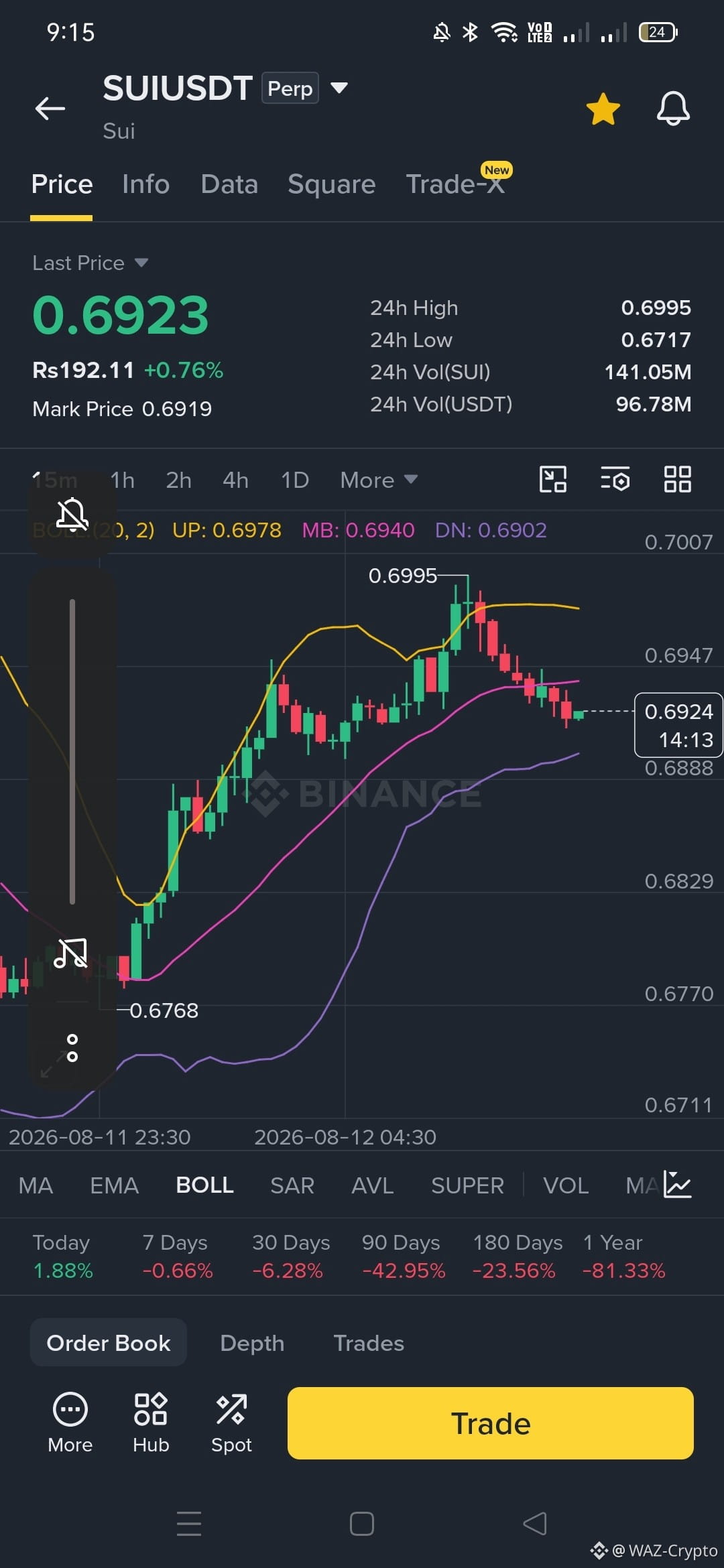
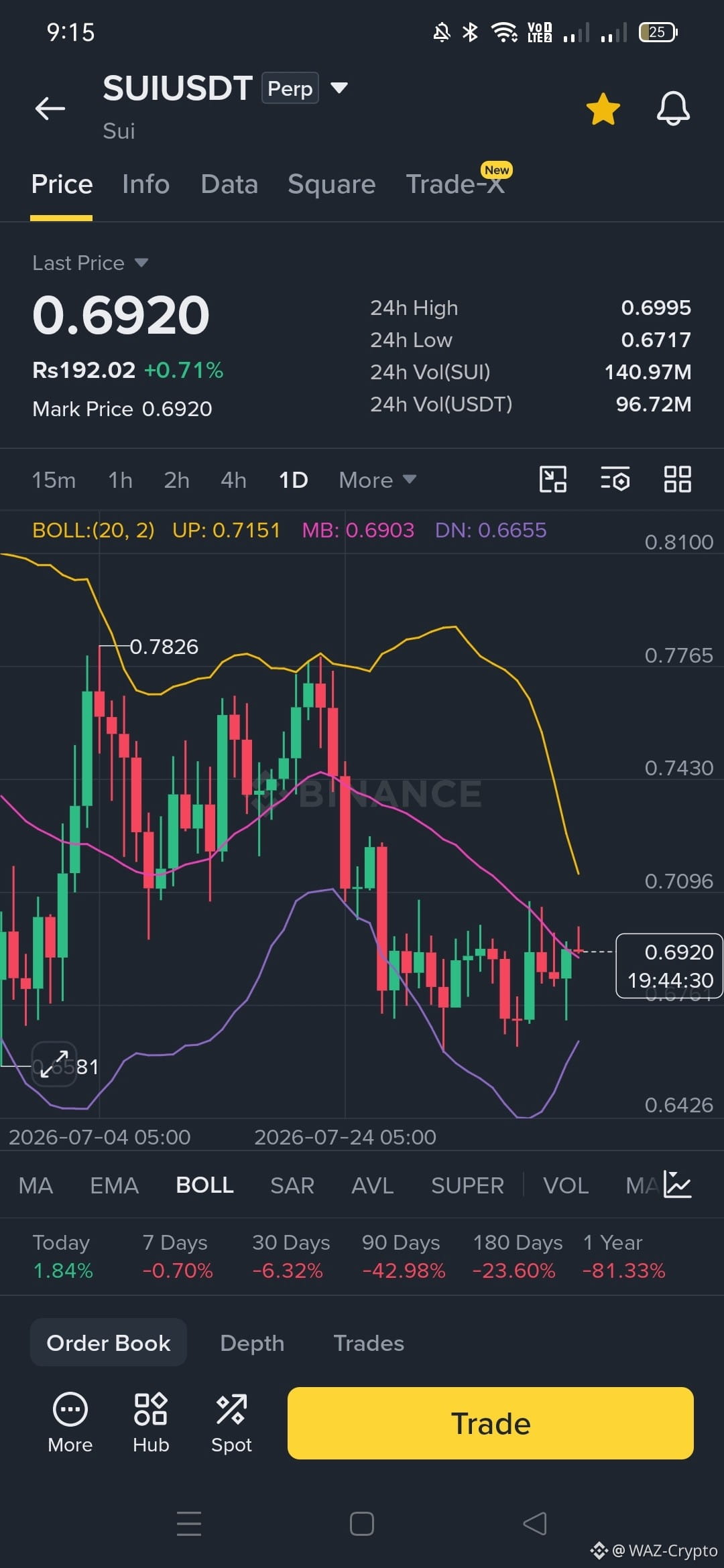
📊 Сигнал SUIUSDT
Текущая цена: ~0.6920
🟢 Длинная (LONG) установка — дождитесь подтверждения
Вход: 0.7005–0.7030 после подтверждённого пробоя 1H/4H и удержания
TP1: 0.7095
TP2: 0.7150
TP3: 0.7250
SL: 0.6920
🔴 Короткая (SHORT) установка — если произойдёт отклонение от сопротивления
Вход: 0.6980–0.7010 при появлении сильного отклонения
TP1: 0.6875
TP2: 0.6795
TP3: 0.6717
SL: 0.7055
🔥 Мой взгляд
0.700–0.702 = ключевое сопротивление.
0.687–0.690 = ключевая поддержка/пивот.
Не входите в слепой LONG прямо сейчас. Подтверждённый пробой выше 0.700–0.702 сделает LONG установку более чистой. Если цену там отклонит, SHORT установка станет сильнее.
Ожидание: Нейтрально → ждите подтверждения пробоя/отклонения.
Торговля фьючерсами с плечом несёт высокий риск. Всегда используйте стоп-лосс.
$SUI
#SheinToStartHKIPOBookbuildingAsSoonAsNextWeek #MoneyGramExpandsCashCryptoServiceToSolana #SenateDelaysCLARITYActVoteToSeptember
Текущая цена: ~0.6920
🟢 Длинная (LONG) установка — дождитесь подтверждения
Вход: 0.7005–0.7030 после подтверждённого пробоя 1H/4H и удержания
TP1: 0.7095
TP2: 0.7150
TP3: 0.7250
SL: 0.6920
🔴 Короткая (SHORT) установка — если произойдёт отклонение от сопротивления
Вход: 0.6980–0.7010 при появлении сильного отклонения
TP1: 0.6875
TP2: 0.6795
TP3: 0.6717
SL: 0.7055
🔥 Мой взгляд
0.700–0.702 = ключевое сопротивление.
0.687–0.690 = ключевая поддержка/пивот.
Не входите в слепой LONG прямо сейчас. Подтверждённый пробой выше 0.700–0.702 сделает LONG установку более чистой. Если цену там отклонит, SHORT установка станет сильнее.
Ожидание: Нейтрально → ждите подтверждения пробоя/отклонения.
Торговля фьючерсами с плечом несёт высокий риск. Всегда используйте стоп-лосс.
$SUI
#SheinToStartHKIPOBookbuildingAsSoonAsNextWeek #MoneyGramExpandsCashCryptoServiceToSolana #SenateDelaysCLARITYActVoteToSeptember
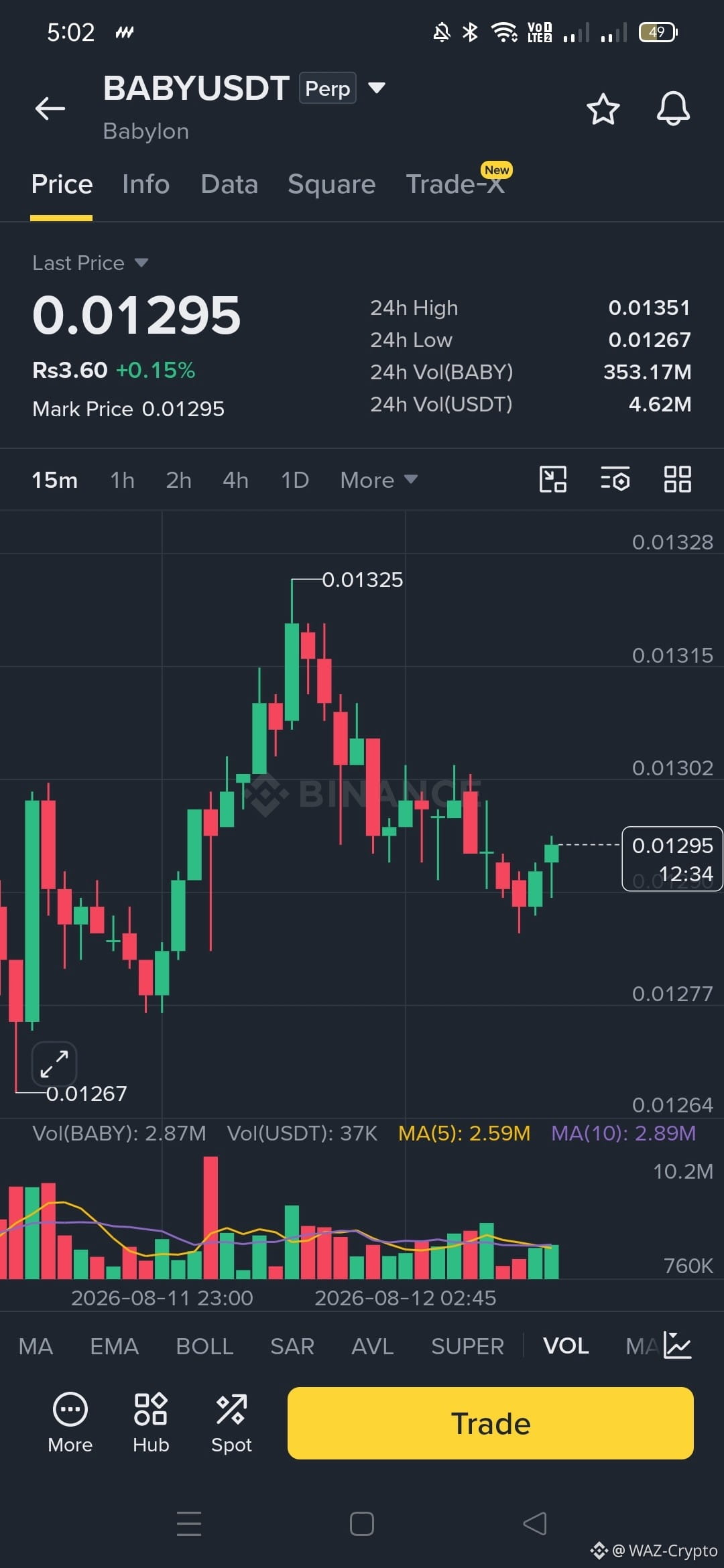
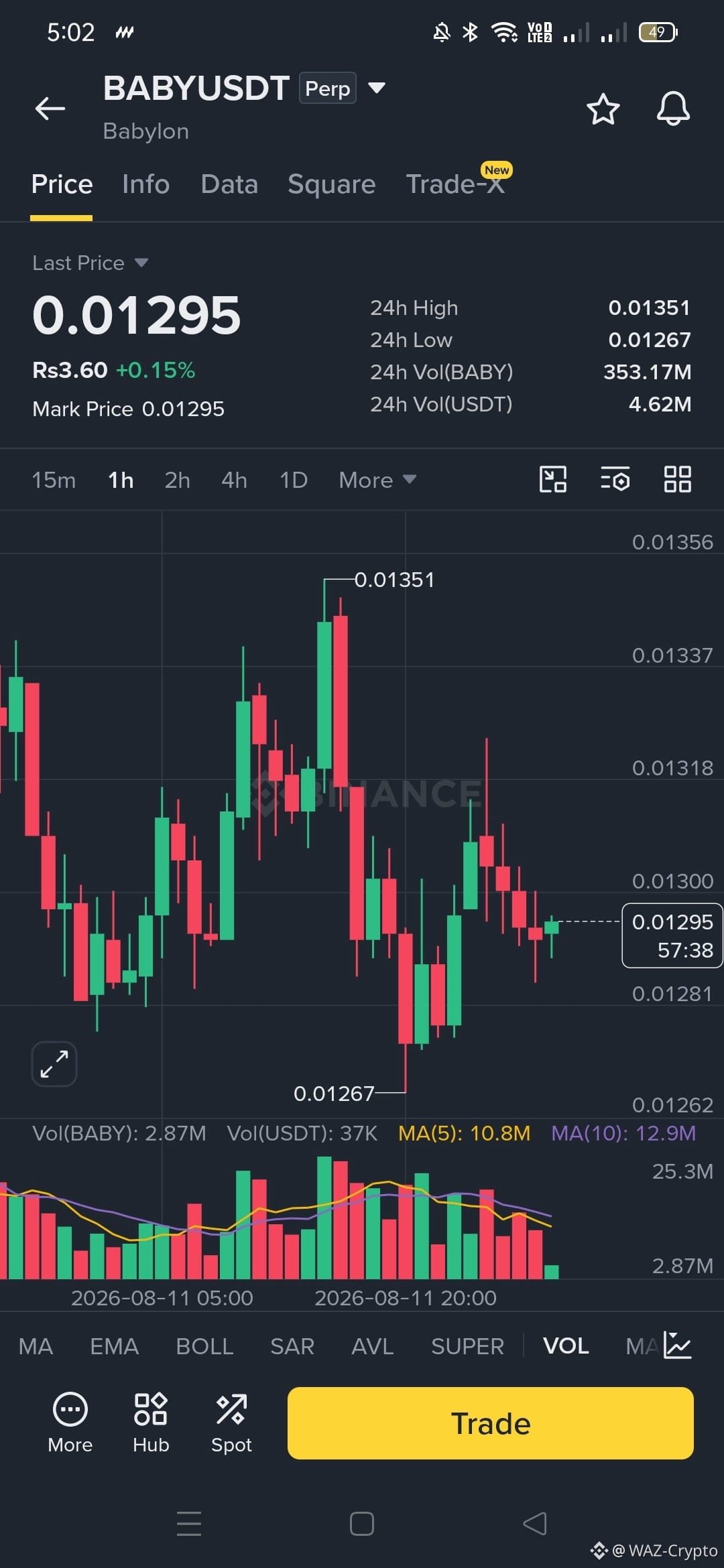
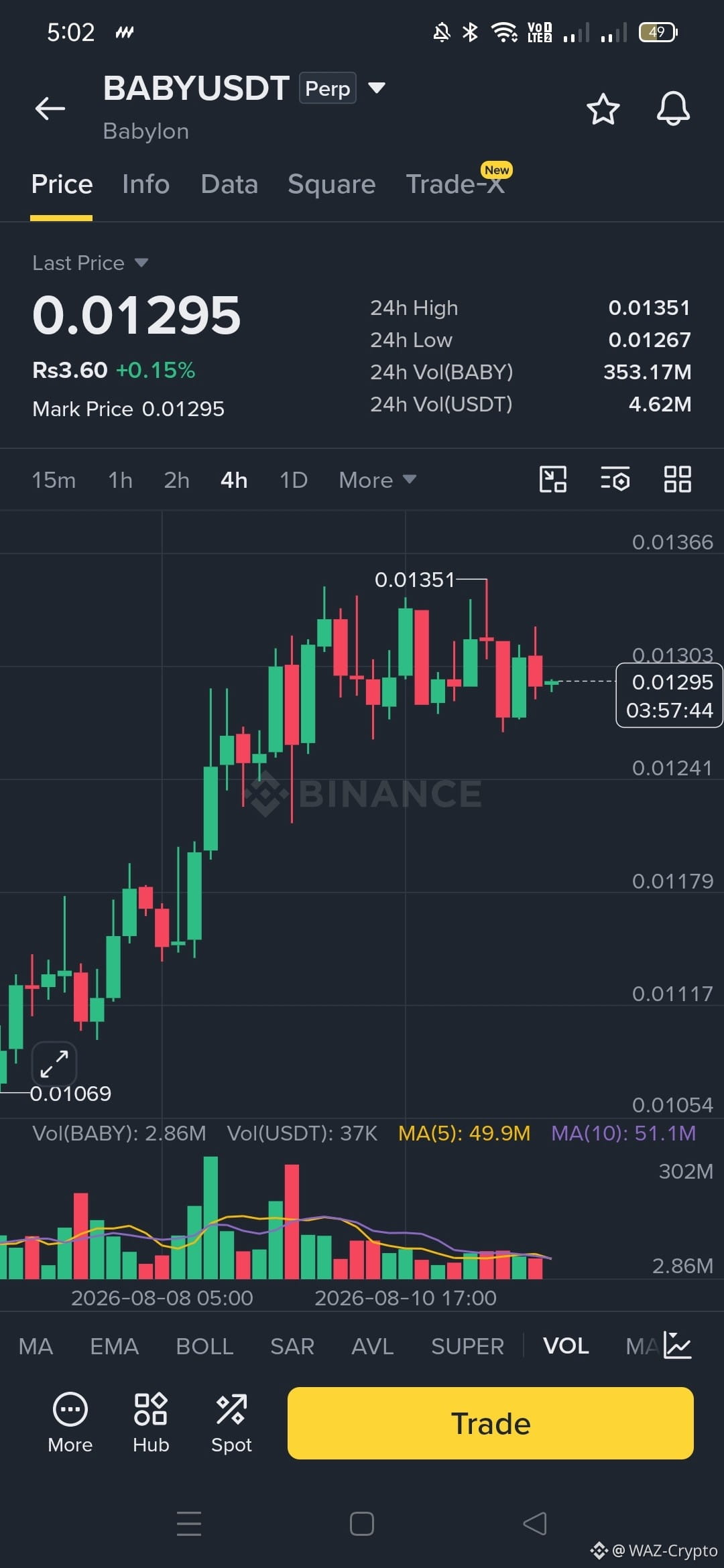
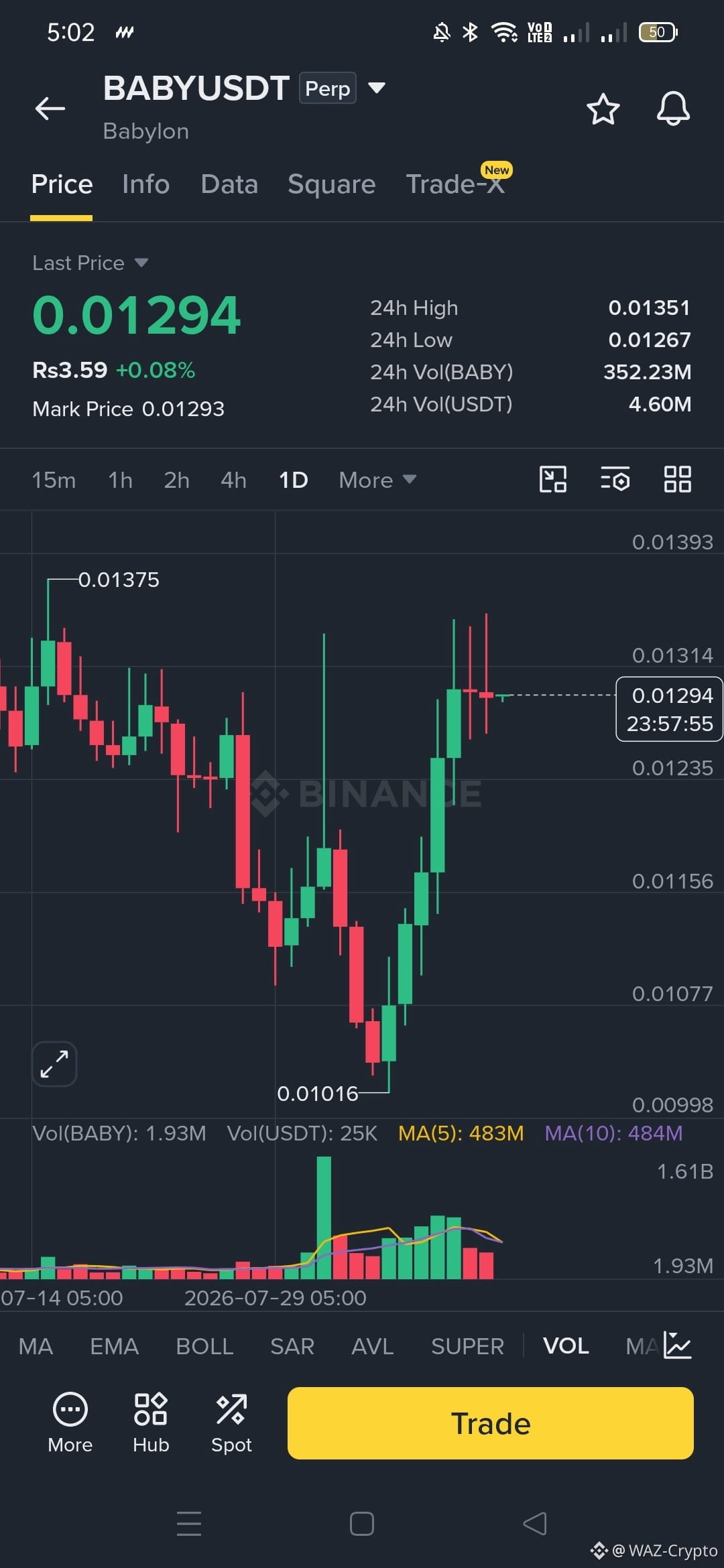
$BABYUSDT по графикам (15м/1ч/4ч/1D) посмотрев, кажется, лучше подождать дополнительного подтверждения, прежде чем делать немедленный вход.
📊 BABY Signal
🟢 LONG setup
Вход: 0.01303–0.01308 (закрытие 15м свечи выше)
SL: 0.01280
TP1: 0.01318
TP2: 0.01335
TP3: 0.01350–0.01355
🔴 SHORT setup
Вход: ниже 0.01278 (15м close)
SL: 0.01305
TP1: 0.01267
TP2: 0.01250
TP3: 0.01235
Текущая: ~0.01294 → ЖДАТЬ / НЕТ СДЕЛКИ
Структура на 4H и 1D сейчас относительно бычья, но зона сопротивления 0.01303–0.01318 важна. Если пробой придёт вместе с объёмом, лонг будет намного сильнее.
⚠️ Нельзя гарантировать 100% сигнал. Не рискуйте более ~1% капитала на сделку.
$BABY #baby
📊 BABY Signal
🟢 LONG setup
Вход: 0.01303–0.01308 (закрытие 15м свечи выше)
SL: 0.01280
TP1: 0.01318
TP2: 0.01335
TP3: 0.01350–0.01355
🔴 SHORT setup
Вход: ниже 0.01278 (15м close)
SL: 0.01305
TP1: 0.01267
TP2: 0.01250
TP3: 0.01235
Текущая: ~0.01294 → ЖДАТЬ / НЕТ СДЕЛКИ
Структура на 4H и 1D сейчас относительно бычья, но зона сопротивления 0.01303–0.01318 важна. Если пробой придёт вместе с объёмом, лонг будет намного сильнее.
⚠️ Нельзя гарантировать 100% сигнал. Не рискуйте более ~1% капитала на сделку.
$BABY #baby
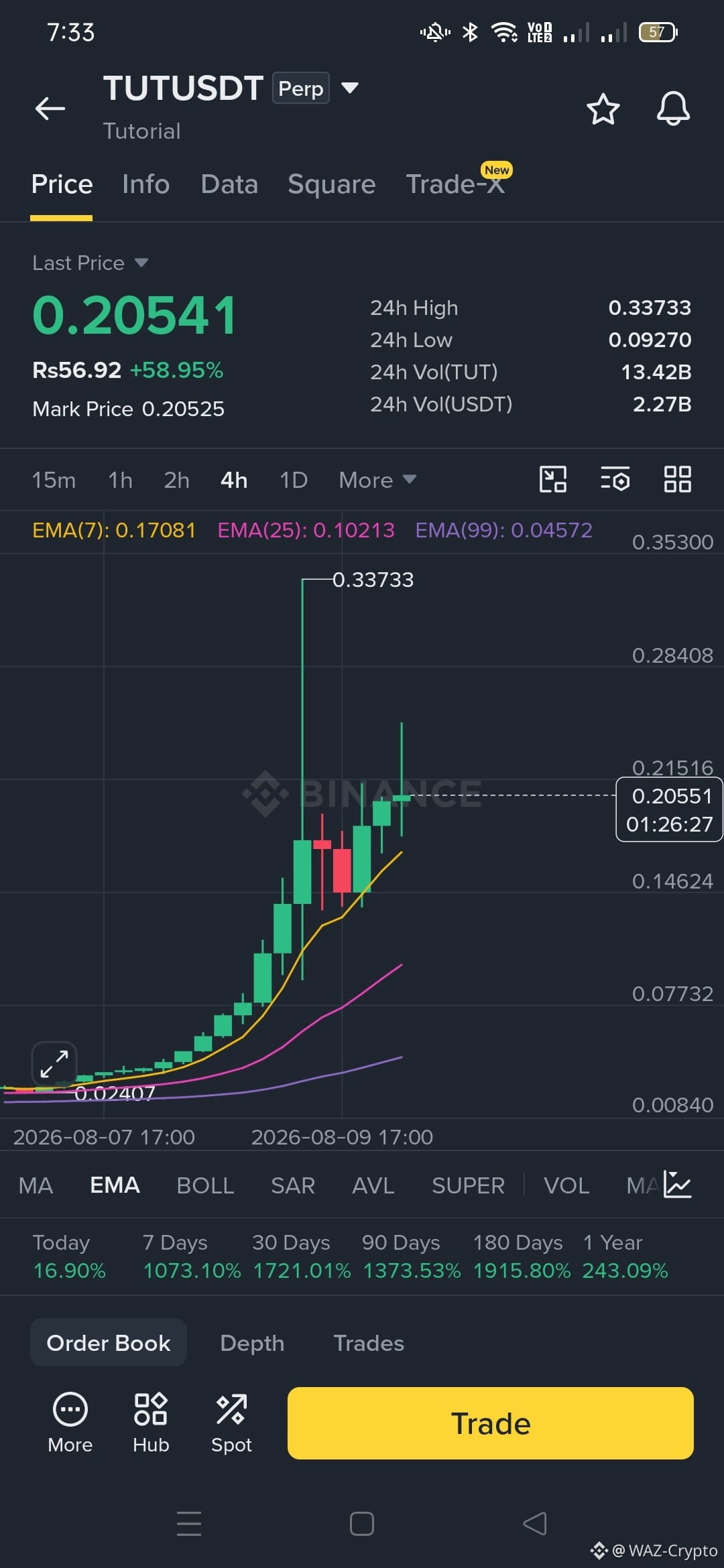
Вход: $0.175–0.185 на откате
Цели: $0.215 → $0.24 → $0.28
Сценарий пробоя:
Надёжный дневной (4H) закрытие выше $0.215–0.220 + сильный объём могут открыть путь к $0.24–0.28, при этом $0.337 — основная цель расширения.
Уровень риска:
Если TUT теряет $0.146 на основе дневного закрытия (4H), текущая бычья структура заметно ослабевает.
⚠️ Самая большая опасность здесь — коррекция в формате «вертикального насоса». Ваш график уже показывает огромный хвост (wick) в сторону $0.337, значит волатильность экстремальная.
**Сигнал: 🟢 Бычий | Лучший вход = откат или подтверждённый пробой $0.22 | Избегайте FOMO по текущей цене.
$TUT
#SouthKoreaLawmakerToDelayCryptoTaxTo2030 #SaylorHintsStrategyBitcoinBuy #BIP110SoftForkAttemptBegins
Цели: $0.215 → $0.24 → $0.28
Сценарий пробоя:
Надёжный дневной (4H) закрытие выше $0.215–0.220 + сильный объём могут открыть путь к $0.24–0.28, при этом $0.337 — основная цель расширения.
Уровень риска:
Если TUT теряет $0.146 на основе дневного закрытия (4H), текущая бычья структура заметно ослабевает.
⚠️ Самая большая опасность здесь — коррекция в формате «вертикального насоса». Ваш график уже показывает огромный хвост (wick) в сторону $0.337, значит волатильность экстремальная.
**Сигнал: 🟢 Бычий | Лучший вход = откат или подтверждённый пробой $0.22 | Избегайте FOMO по текущей цене.
$TUT
#SouthKoreaLawmakerToDelayCryptoTaxTo2030 #SaylorHintsStrategyBitcoinBuy #BIP110SoftForkAttemptBegins
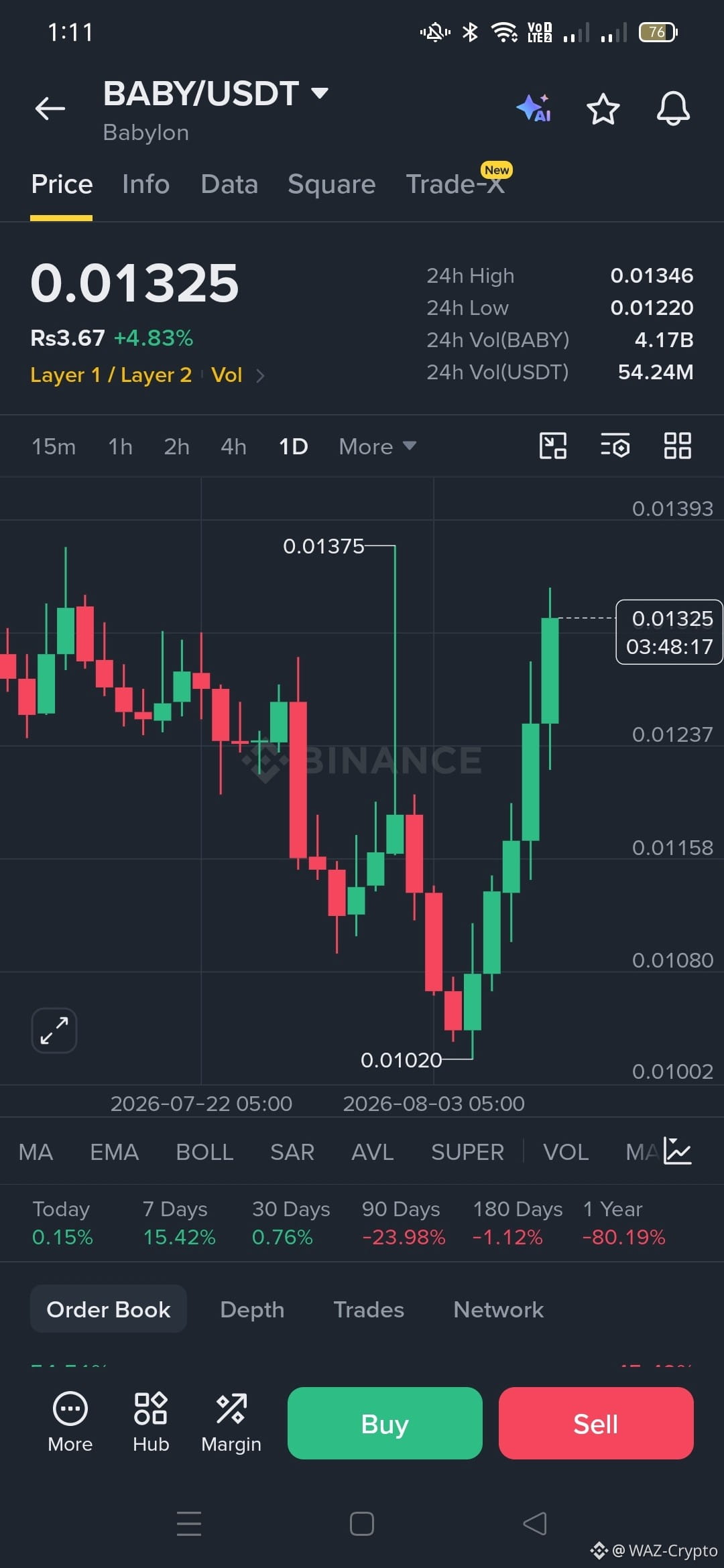
📊 $BABY Сигнал
Смещение: 🟢 Бычий
Текущее: 0.01325
Немедленное сопротивление: 0.01346
Крупное сопротивление: 0.01375
Поддержка: 0.01237
Сильная поддержка: 0.01158
Последний минимум: 0.01020
Самое важное — сильное восстановление от 0.01020 → 0.01325. Покупатели явно взяли контроль в краткосрочной перспективе.
🎯 Моя схема
Агрессивный LONG:
Вход: 0.01300–0.01325
SL: 0.01230
TP1: 0.01375
TP2: 0.01450
TP3: 0.01520
Более безопасный LONG:
Дождитесь дневного закрытия выше 0.01375, затем ищите повторную проверку в районе 0.01360–0.01375.
⚠️ Я бы не гнался за входом на 0.01325, потому что вы подходите к зоне сопротивления 0.01346–0.01375.
Аннулирование: Дневное закрытие ниже 0.01237 существенно ослабит эту бычью идею.
Сигнал: LONG на пробой/ретест ✅ | Не догоняйте сопротивление ⚠️
$BABY #baby
#BIP110SoftForkAttemptBegins #SaylorHintsStrategyBitcoinBuy #BTCPayServerExploitDrainsLightningNodes
Смещение: 🟢 Бычий
Текущее: 0.01325
Немедленное сопротивление: 0.01346
Крупное сопротивление: 0.01375
Поддержка: 0.01237
Сильная поддержка: 0.01158
Последний минимум: 0.01020
Самое важное — сильное восстановление от 0.01020 → 0.01325. Покупатели явно взяли контроль в краткосрочной перспективе.
🎯 Моя схема
Агрессивный LONG:
Вход: 0.01300–0.01325
SL: 0.01230
TP1: 0.01375
TP2: 0.01450
TP3: 0.01520
Более безопасный LONG:
Дождитесь дневного закрытия выше 0.01375, затем ищите повторную проверку в районе 0.01360–0.01375.
⚠️ Я бы не гнался за входом на 0.01325, потому что вы подходите к зоне сопротивления 0.01346–0.01375.
Аннулирование: Дневное закрытие ниже 0.01237 существенно ослабит эту бычью идею.
Сигнал: LONG на пробой/ретест ✅ | Не догоняйте сопротивление ⚠️
$BABY #baby
#BIP110SoftForkAttemptBegins #SaylorHintsStrategyBitcoinBuy #BTCPayServerExploitDrainsLightningNodes
Войдите, чтобы посмотреть больше материала