


Однохоповый vs многохоповый свопы на STON.fi: почему самый короткий маршрут не всегда лучший
В децентрализованной торговле легко предположить, что самый короткий маршрут также должен быть самым эффективным. Прямой обмен токена A на токен C кажется проще, чем сначала пройти через токен B. Меньше конверсий звучит как меньше комиссий, меньше сложности и лучшее исполнение.
Но в DeFi простота не означает автоматически эффективность.
На STON.fi однохоповый маршрут иногда может быть лучшим вариантом, в то время как многохоповый маршрут может дать более лучший конечный результат, когда ликвидность распределена неравномерно между пулами. Самый важный вопрос — не «Сколько хопов использует этот своп?», а «Сколько токенов назначения я фактически получу после всех релевантных затрат?»
Понимание этого различия помогает пользователям оценивать маршруты более разумно и избегать выбора пути просто потому, что он выглядит короче.
Что такое переход (Hop)?
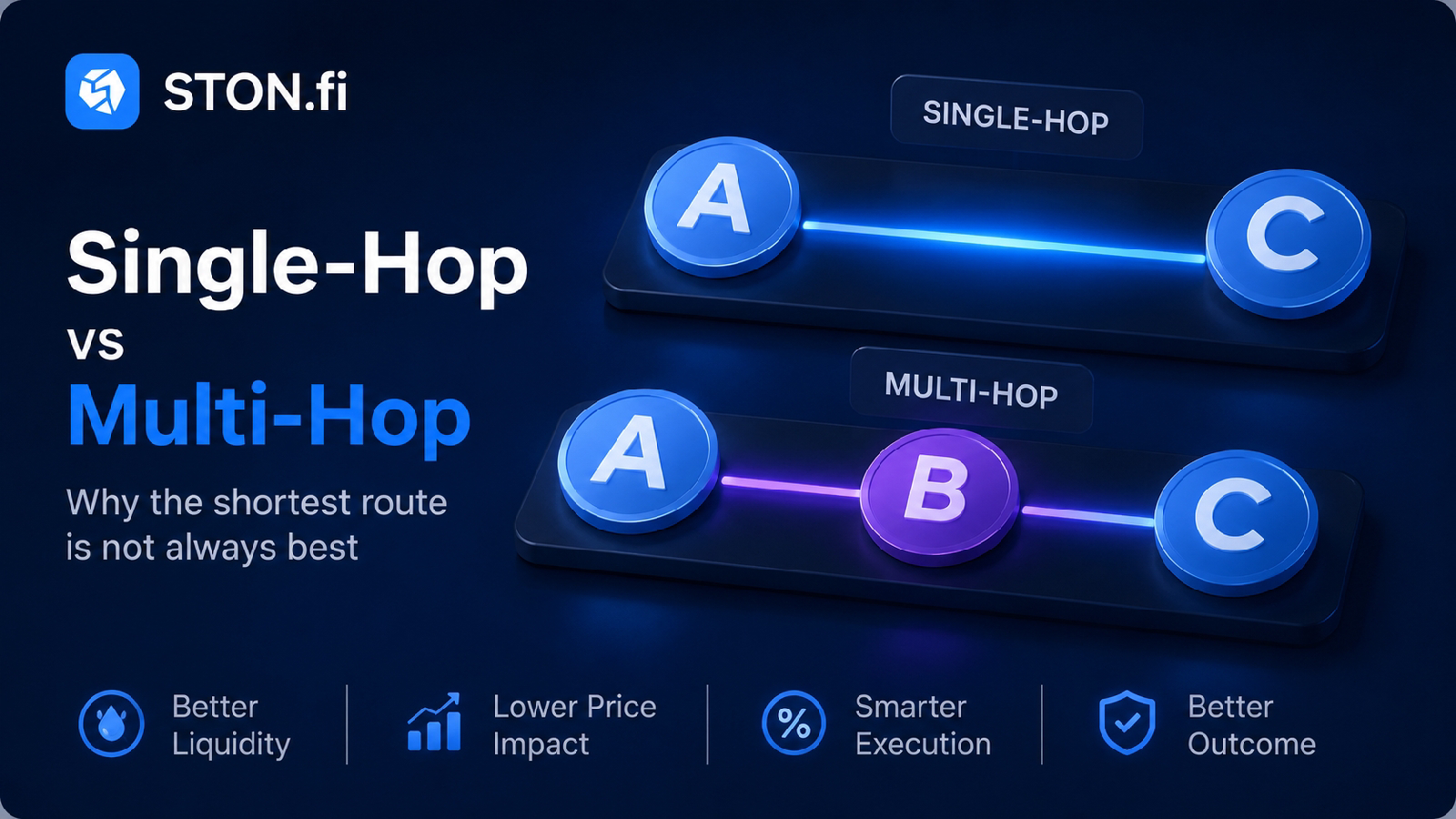
Один переход (hop) представляет одну конверсию «актив-актив» в маршруте свопа.
Своп с одним переходом напрямую переводит токен A в токен C:
Токен A → Токен C
Многоходовый (multi-hop) своп достигает того же назначения через один или несколько промежуточных активов:
Токен A → Токен B → Токен C
Маршрут может включать ещё больше конверсий, если это даёт более сильную исполнимую цену.
Важно: количество переходов относится к числу конверсий активов. Это не означает количество подтверждений кошелька или отдельные действия пользователя. Пользователь может подписать одну транзакцию через подключённый интерфейс кошелька, пока протокол выполняет многошаговый маршрут on-chain.
Это различие важно, потому что маршрут, который выглядит сложным с точки зрения торговли, всё равно может быть представлен как единый цельный опыт свопа.
Почему прямой маршрут может быть хуже
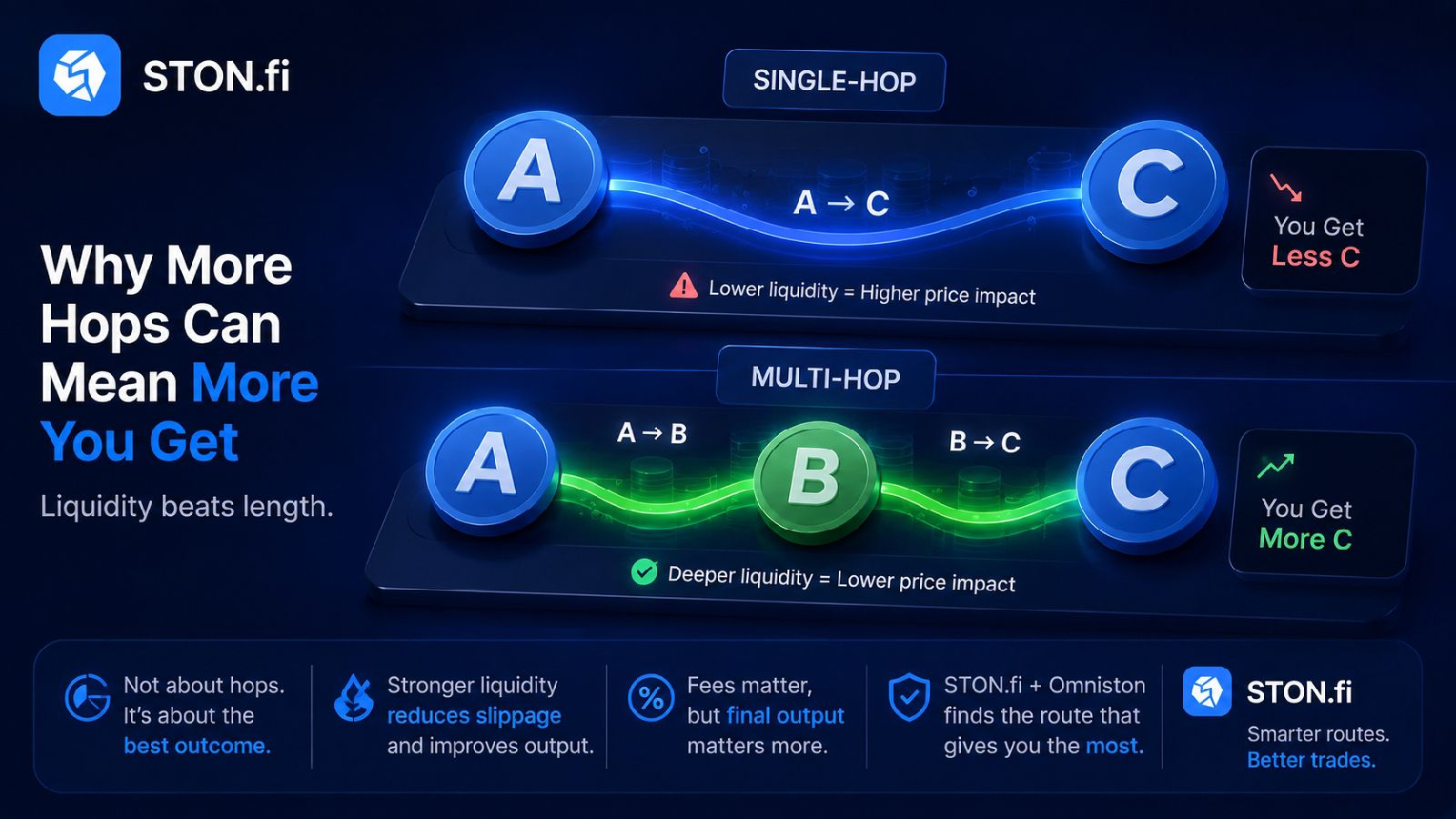
Главная причина, почему маршрут с несколькими переходами может обойти маршрут с одним переходом, — ликвидность.
Представьте прямой пул A/C с ограниченной ликвидностью. Относительно крупная сделка против этого пула может значительно сдвинуть цену, создавая существенное влияние цены. Хотя маршрут содержит только один переход, пользователь может получить меньше токенов назначения, чем ожидалось.
Теперь представьте, что пулы A/B и B/C намного глубже.
Маршрут:
A → B → C
может потребовать дополнительной конверсии, но более сильная ликвидность на каждом этапе может уменьшить количество движения цены, вызванного сделкой. После учёта комиссий и затрат на исполнение обоих пулов многоходовый путь всё ещё может дать большее итоговое количество токена C.
Это и есть ключевой принцип:
Меньшее число переходов не означает автоматически более низкую общую стоимость.
Экономическое качество маршрута зависит от его полного исполнения, а не просто от длины.
Роль ликвидности и влияния цены
Ликвидность определяет, насколько эффективно пул может поглотить сделку.
Когда ликвидность глубокая относительно размера свопа, сделки обычно могут выполняться с меньшим движением цены. Когда ликвидность тонкая, даже умеренная транзакция может заметно повлиять на эффективный курс обмена.
Это создаёт важный компромисс.
Прямой маршрут может включать:
Один переход
Один пул
Меньше отдельных комиссий за своп
Но это могло бы также:
Низкая ликвидность
Большее влияние цены
Более худшее исполнение для больших ордеров
Маршрут с несколькими переходами может добавить ещё одну комиссию пула, но это может быть компенсировано более сильной ликвидностью и лучшими ценами на каждом этапе.
Поэтому релевантное сравнение — не просто комиссия, взимаемая каждым пулом. Пользователям следует учитывать итоговый результат после выполнения маршрута.
Почему одних комиссий недостаточно
Заманчиво отклонить маршрут с несколькими переходами, потому что он содержит больше конверсий и потенциально больше комиссий пулов. Такой подход может вводить в заблуждение.
Предположим, что прямой своп экономит немного на комиссиях, но имеет существенное влияние цены. Маршрут с несколькими переходами может понести дополнительные комиссии, но при этом всё равно дать большее количество токенов назначения.
Например, прямой маршрут теоретически может брать меньше комиссий, но дать 98.5 единиц токена назначения, тогда как маршрут с двумя переходами может стоить чуть больше по комиссиям, но дать 99.2 единиц.
С точки зрения пользователя второй маршрут экономически лучше.
Цель роутинга — не минимизировать одну изолированную стоимость. Цель — максимизировать качество полного исполнения всей сделки.
Это включает ликвидность, комиссии, влияние цены и другие затраты на исполнение.
Как STON.fi выбирает маршрут
STON.fi поддерживает больше, чем просто поиск прямого пула между двумя активами.
Его архитектура DEX v2 поддерживает цепочечные свопы: маршруты могут проходить через промежуточные активы и работать с разными v2 Routers, когда это применимо.
Именно здесь Omniston становится важным.
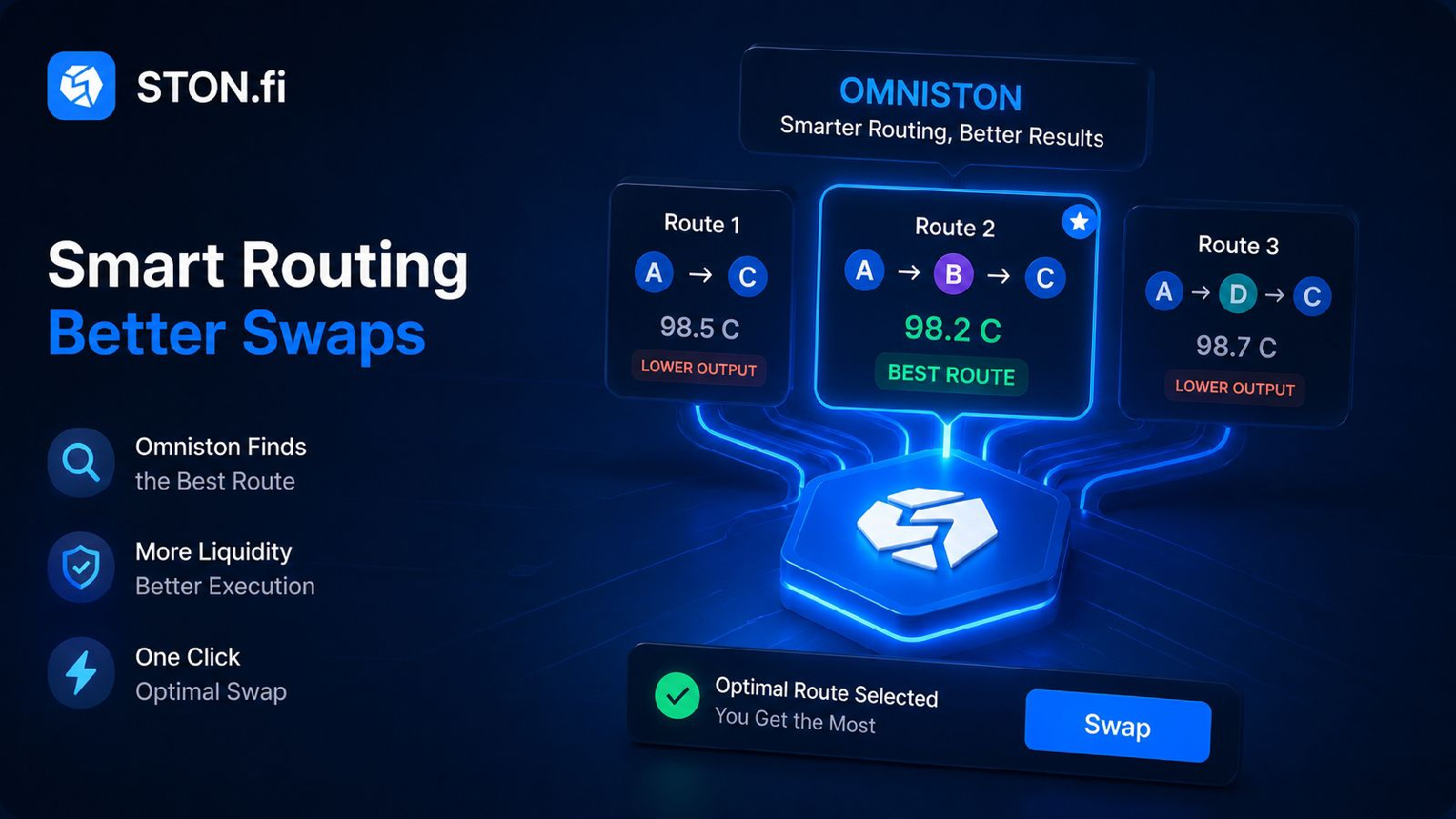
Omniston включён по умолчанию в STON.fi dApp и оценивает доступные источники ликвидности, чтобы выявлять исполнимые возможности. Вместо того чтобы заставлять пользователей вручную определять, что лучше — A/C, A/B/C или другой маршрут, система роутинга может сравнить доступные пути и выбрать более сильный результат.
Ключевая идея в том, что роутинг — это задача оптимизации.
Система не обязательно ищет маршрут с минимальным числом переходов. Она ищет маршрут, который может дать наиболее сильный исполнимый результат при доступных рыночных условиях.
Количество переходов и источники ликвидности — это разные вещи
Ещё один важный момент: количество переходов и количество источников ликвидности — не одно и то же.
Маршрут может содержать несколько переходов, привлекая ликвидность из разных пулов или источников ликвидности. И наоборот: маршрут с меньшим числом переходов всё равно может опираться на пул с плохой ликвидностью для конкретного размера сделки.
Это различие предотвращает распространённое заблуждение: короткий маршрут не обязательно простой или эффективный, а более длинный маршрут не обязательно неэффективный.
Главный вопрос в том, насколько эффективно доступная ликвидность используется для исполнения задуманной сделки.
DEX v2 и цепочечные свопы
STON.fi DEX v2 поддерживает цепочечные свопы в рамках того же Router, а также роутинг между разными v2 Routers.
Эта гибкость значима, потому что ликвидность почти никогда не распределена идеально по каждой возможной паре токенов.
Для некоторых активов прямой рынок может быть глубоким и конкурентным. Для других ликвидность может быть сосредоточена вокруг общего промежуточного актива.
Система роутинга может использовать эту структуру.
Вместо того чтобы предполагать, что каждая пара должна торговаться напрямую, система может рассмотреть, создаёт ли промежуточный актив более выгодный путь к конечному назначению.
Это одно из фундаментальных преимуществ интеллектуального роутинга децентрализованного обмена.
Что пользователи должны проверять на самом деле
При оценке свопа в STON.fi пользователям стоит обращать внимание на финальную котировку, а не только на визуальную простоту маршрута.
Есть несколько деталей, которые особенно важны.
Ожидаемый результат
Заявленный выход показывает, сколько токенов назначения маршрут, как ожидается, произведёт.
Это одно из самых полезных чисел для сравнения альтернатив.
Минимум получено
Сумма «минимум получено» важна, потому что рыночные условия могут измениться между котировкой и исполнением. Она даёт более ясную картину защиты, применяемой к сделке в выбранных настройках допустимого проскальзывания.
Влияние цены
Влияние цены помогает понять, насколько сама сделка сильно влияет на цену пула.
Высокое влияние цены может сигнализировать о том, что доступная ликвидность относительно тонкая для объёма вашей транзакции.
Структура маршрута
Проверьте, является ли своп прямым или использует один либо несколько промежуточных активов.
Наличие нескольких переходов не является автоматически предупреждающим признаком. Важно, даёт ли маршрут более сильный итоговый результат.
Сетевые затраты на выполнение
Пользователям также следует иметь достаточно нативной сетевой валюты, чтобы покрыть требования к выполнению транзакций.
Сильно привлекательная котировка не полезна, если транзакцию нельзя успешно выполнить из‑за недостаточного баланса для сетевых затрат.
Почему важен размер сделки
Качество маршрута не фиксировано.
Та же пара токенов может давать разные оптимальные маршруты для разных размеров сделок.
Небольшой своп может удобно размещаться в прямом пуле с минимальным влиянием цены. Намного более крупная транзакция может значительно сдвинуть цену в том же пуле и сделать маршрут с несколькими переходами более привлекательным.
Это означает, что не существует универсального правила, будто токен A всегда нужно обменивать на токен B.
Оптимальный маршрут зависит от текущих условий ликвидности, доступных пулов, комиссий, требований к исполнению и размера ордера.
Практический пример
Представьте пользователя, который меняет токен A на токен C.
Прямой маршрут:
A → C
Альтернативный маршрут:
A → B → C
На первый взгляд прямой маршрут кажется превосходящим, потому что содержит только один переход.
Однако допустим, что пул A/C относительно мелкий. Транзакция пользователя создаёт существенное влияние цены, уменьшая количество получаемого токена C.
Тем временем пулы A/B и B/C оба глубже. Дополнительная конверсия добавляет ещё одну комиссию, но более сильная ликвидность позволяет транзакции исполняться более эффективно.
Результат может быть:
Прямой маршрут: меньше переходов, но более низкий итоговый вывод.
Маршрут с несколькими переходами: больше переходов, но более высокий итоговый вывод.
В этой ситуации выбор прямого маршрута только потому, что он короче, будет экономической ошибкой.
Главный вывод о роутинге в DeFi
Эта концепция выходит за рамки STON.fi.
Децентрализованные рынки фрагментированы. Ликвидность может существовать на множестве пулов, среди разных активов и в разных структурах роутинга. Поэтому трейдеру нужно больше, чем просто модель «прямая пара».
Интеллектуальный роутинг существует, потому что лучший рыночный путь не всегда очевиден по числу конверсий.
Цель маршрутизирующего движка — просмотреть доступную ликвидность и определить, как можно исполнить сделку максимально эффективно.
Для пользователей это означает, что длину маршрута следует воспринимать как информацию, а не как оценку качества.
Маршрут из двух или трёх переходов не обязательно хуже маршрута с одним переходом. Правильная оценка зависит от того, что именно даёт полный маршрут.
Итоговое заключение
Свопы с одним переходом прямые, их легко понять, и они могут быть весьма эффективными, когда соответствующий пул имеет достаточную ликвидность.
Свопы с несколькими переходами добавляют конверсии, но эти конверсии могут открыть более глубокую ликвидность и снизить влияние цены настолько, что в итоге исполнение будет лучше.
На STON.fi поэтому самый сильный маршрут не обязательно самый короткий. Благодаря поддержке DEX v2 цепочечных свопов и тому, что Omniston оценивает доступные возможности ликвидности, выбор маршрута может фокусироваться на экономическом результате, а не только на числе переходов.
Перед подтверждением сделки сосредоточьтесь на числах, которые важнее всего:
Ожидаемый результат. Минимум получено. Влияние цены. Структура маршрута. Сетевые затраты на выполнение.
Практическое правило простое:
Не спрашивайте, у какого маршрута меньше всего переходов. Спросите, какой маршрут оставит вам больше токенов назначения после всех релевантных затрат.
В децентрализованной торговле самый короткий путь может выглядеть лучше на экране. Лучший путь — тот, который лучше исполняет именно ту сделку, которую вы фактически совершаете.
УЗНАЙТЕ БОЛЬШЕ НА STON.FI