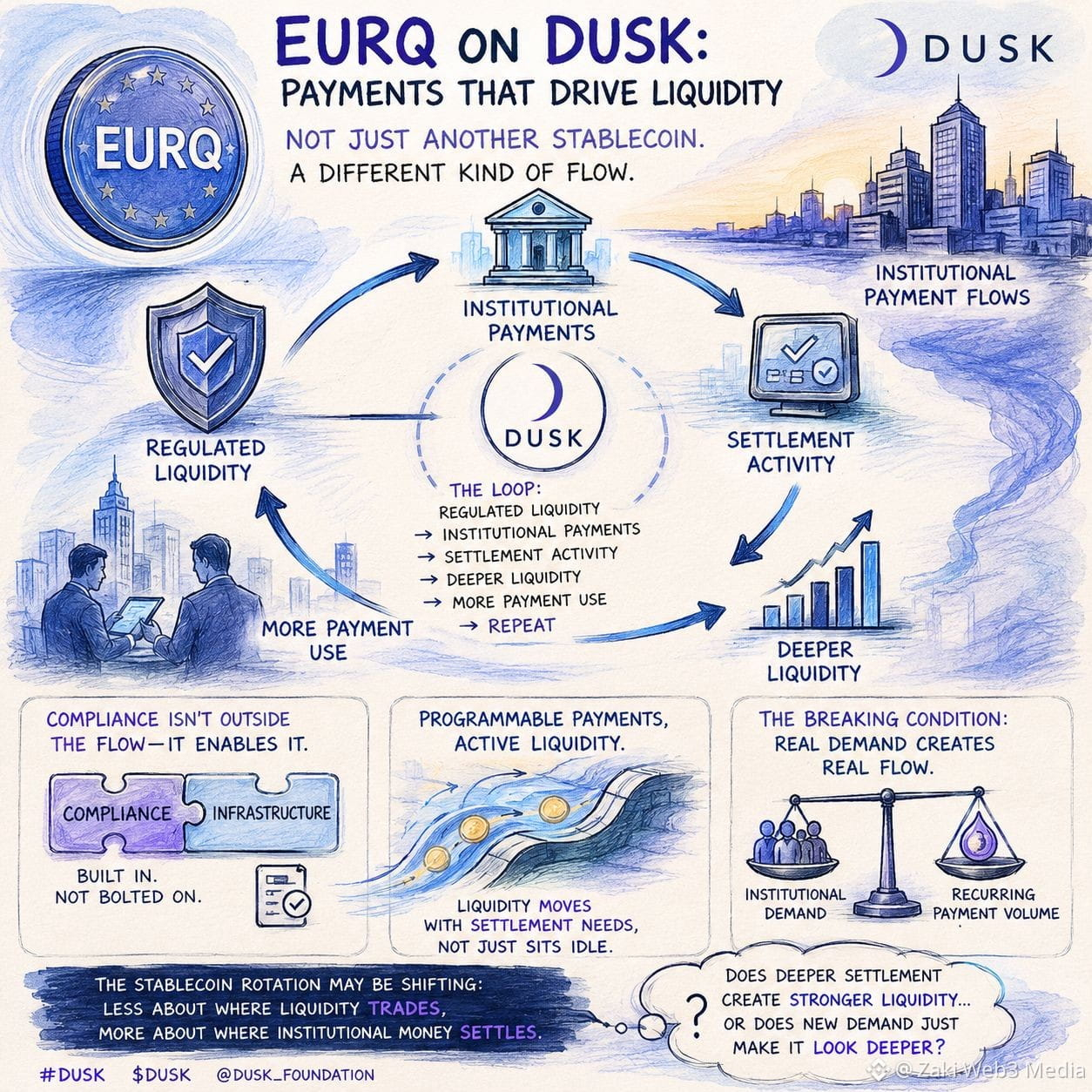
Сначала EURQ на Dusk выглядел как очередная интеграция со стейблкоином… но что-то ощущается слегка не так.
Думаю, интереснее всего не сам стейблкоин. Важнее то, что происходит, когда регулируемые деньги начинают проходить через институциональные платежные потоки, не заставляя всех участников работать в одном и том же операционном режиме.
Этот цикл больше похож на:
регулируемая ликвидность → институциональные платежи → активность расчётов → более глубокая ликвидность → больше платежного использования → повтор.
Из-за этого я начинаю иначе на него смотреть.
Вместо того чтобы воспринимать комплаенс как нечто, лежащее за пределами процесса сделки, он начинает выглядеть как часть инфраструктуры, которая позволяет этому потоку вообще существовать. Возможно, это важнее, чем ещё один заголовок про стейблкоин.
И есть второй эффект, о котором я постоянно думаю: когда платёжная активность становится программируемой, ликвидности не обязательно оставаться бездействующей между транзакциями. Она может перемещаться в соответствии с реальными потребностями расчётов.
Это работает только если институциональный спрос достаточно силён, чтобы создавать реальный устойчивый объём платежей, а не ликвидность, которая просто появляется on-chain и ждёт.
Может быть, и «ротация» стейблкоина тоже меняется — меньше про то, где торгуется ликвидность, больше про то, где на самом деле оседают институциональные деньги при расчётах.
Я всё время задаюсь вопросом: более глубокая расчётная активность действительно создаёт более сильную ликвидность… или же новый спрос просто делает ликвидность визуально глубже, чем она есть на самом деле.
#dusk $DUSK @Dusk
Думаю, интереснее всего не сам стейблкоин. Важнее то, что происходит, когда регулируемые деньги начинают проходить через институциональные платежные потоки, не заставляя всех участников работать в одном и том же операционном режиме.
Этот цикл больше похож на:
регулируемая ликвидность → институциональные платежи → активность расчётов → более глубокая ликвидность → больше платежного использования → повтор.
Из-за этого я начинаю иначе на него смотреть.
Вместо того чтобы воспринимать комплаенс как нечто, лежащее за пределами процесса сделки, он начинает выглядеть как часть инфраструктуры, которая позволяет этому потоку вообще существовать. Возможно, это важнее, чем ещё один заголовок про стейблкоин.
И есть второй эффект, о котором я постоянно думаю: когда платёжная активность становится программируемой, ликвидности не обязательно оставаться бездействующей между транзакциями. Она может перемещаться в соответствии с реальными потребностями расчётов.
Это работает только если институциональный спрос достаточно силён, чтобы создавать реальный устойчивый объём платежей, а не ликвидность, которая просто появляется on-chain и ждёт.
Может быть, и «ротация» стейблкоина тоже меняется — меньше про то, где торгуется ликвидность, больше про то, где на самом деле оседают институциональные деньги при расчётах.
Я всё время задаюсь вопросом: более глубокая расчётная активность действительно создаёт более сильную ликвидность… или же новый спрос просто делает ликвидность визуально глубже, чем она есть на самом деле.
#dusk $DUSK @Dusk