@Dusk — один из тех проектов, о которых я в последнее время думаю чаще, потому что обычный разговор о крипто-приватности кажется немного слишком бинарным. Его часто подают как «приватное» против «публичного», хотя более сложная задача — заставить обе стороны работать вместе.
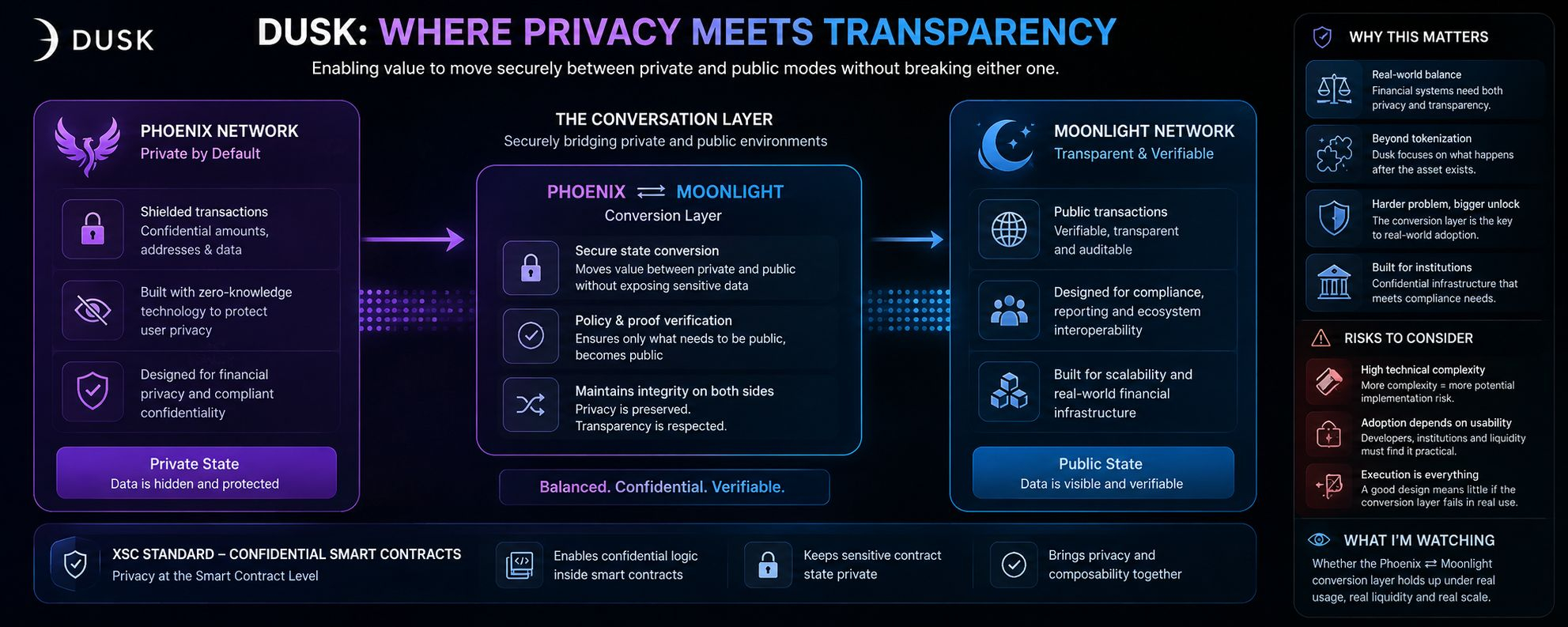
Что меня интересует в Dusk, так это то, насколько значимая часть архитектуры, похоже, спроектирована именно для этого среднего положения. Я особенно слежу за взаимодействием Phoenix и Moonlight, потому что именно там теория начинает становиться практикой. Перемещение ценности между приватными и публичными средами звучит просто, пока не задумаешься о том, что должно оставаться конфиденциальным, что в итоге должно быть видимым и как всё это влияет на реальную рыночную активность.
Конфиденциальная сторона смарт-контрактов — вероятно, та часть, которая мне кажется самой интересной. Стандарт XSC рассматривает приватность не просто как дополнительный слой поверх токенизации. Он пытается сделать конфиденциальность частью самой инфраструктуры смарт-контрактов.
Это важно, потому что создание приватного актива — лишь одна задача. Другая — построить вокруг него полезные рынки.
Ещё много вещей я бы хотел увидеть, чтобы их доказали на практике. Более развитая инфраструктура может означать и большую сложность, а принятие в итоге зависит от того, считают ли разработчики, институциональные участники и поставщики ликвидности систему достаточно надёжной, чтобы ей пользоваться.
Для меня монета Dusk — вторична по отношению к этому вопросу.
Я наблюдаю, выдержит ли архитектура реальную проверку, когда на конверсионный слой начнут оказывать давление реальные пользователи и реальная ликвидность.
@Dusk #dusk $DUSK
Что меня интересует в Dusk, так это то, насколько значимая часть архитектуры, похоже, спроектирована именно для этого среднего положения. Я особенно слежу за взаимодействием Phoenix и Moonlight, потому что именно там теория начинает становиться практикой. Перемещение ценности между приватными и публичными средами звучит просто, пока не задумаешься о том, что должно оставаться конфиденциальным, что в итоге должно быть видимым и как всё это влияет на реальную рыночную активность.
Конфиденциальная сторона смарт-контрактов — вероятно, та часть, которая мне кажется самой интересной. Стандарт XSC рассматривает приватность не просто как дополнительный слой поверх токенизации. Он пытается сделать конфиденциальность частью самой инфраструктуры смарт-контрактов.
Это важно, потому что создание приватного актива — лишь одна задача. Другая — построить вокруг него полезные рынки.
Ещё много вещей я бы хотел увидеть, чтобы их доказали на практике. Более развитая инфраструктура может означать и большую сложность, а принятие в итоге зависит от того, считают ли разработчики, институциональные участники и поставщики ликвидности систему достаточно надёжной, чтобы ей пользоваться.
Для меня монета Dusk — вторична по отношению к этому вопросу.
Я наблюдаю, выдержит ли архитектура реальную проверку, когда на конверсионный слой начнут оказывать давление реальные пользователи и реальная ликвидность.
@Dusk #dusk $DUSK