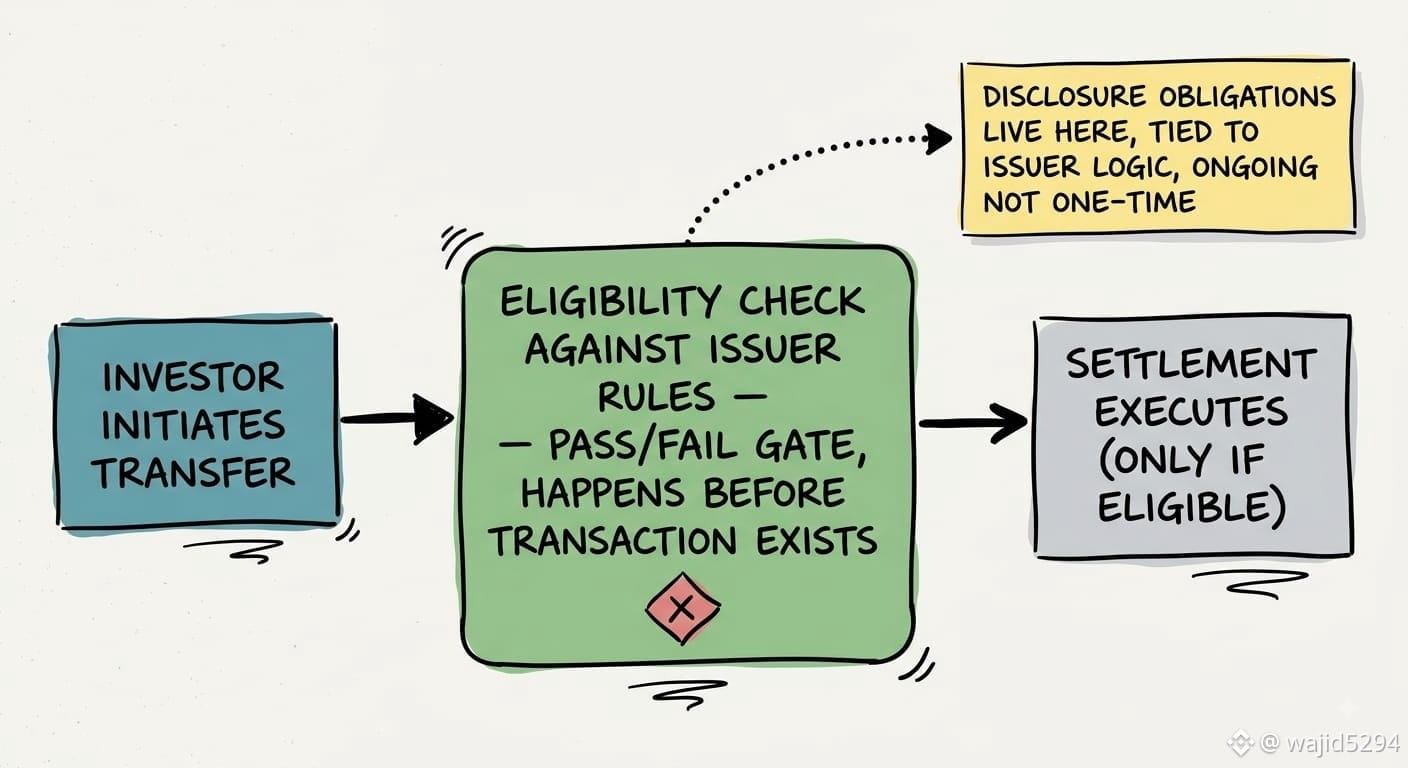
#dusk @Dusk $DUSK Что меня поразило, когда я смотрел на соответствие (eligibility) на Dusk, — это не слой приватности, а то, насколько обычной кажется эта «трение». Dusk подает конфиденциальные переводы как главный акцент, но именно то, что формирует поведение, тише: проверки на соответствие выполняются до того, как перевод вообще предпринят, а не как отказ постфактум. Это не маркетинговый слоган, а дизайнерское решение. На практике это означает, что комплаенс-статус инвестора сверяют с правилами эмитента в момент намерения, поэтому цепочка никогда не удерживает транзакцию, которой не должно быть, вместо того чтобы отменять уже случившуюся. Второе, что я заметил: обязанности по раскрытию информации расположены ближе к логике эмитента, чем к самому уровню расчётов (settlement). Поэтому расчёты могут оставаться чистыми и быстрыми, а комплаенс — чьей-то постоянной работой, а не разовым «пропускным пунктом». Такое разделение вполне разумно, но оно также означает, что то самое «settlement», о котором говорят люди, на деле является последним, самым простым шагом в более длинной цепочке разрешений, которую большинство пользователей даже не видит. Я всё время думаю, как это выдерживается, когда правила соответствия меняются по ходу жизненного цикла — после того, как токены уже удерживаются.


Посты
Отказ от ответственности. Содержит мнения третьих сторон. Не является рекомендацией. Binance AI не предоставляет гарантий. См. Правила и условия.