

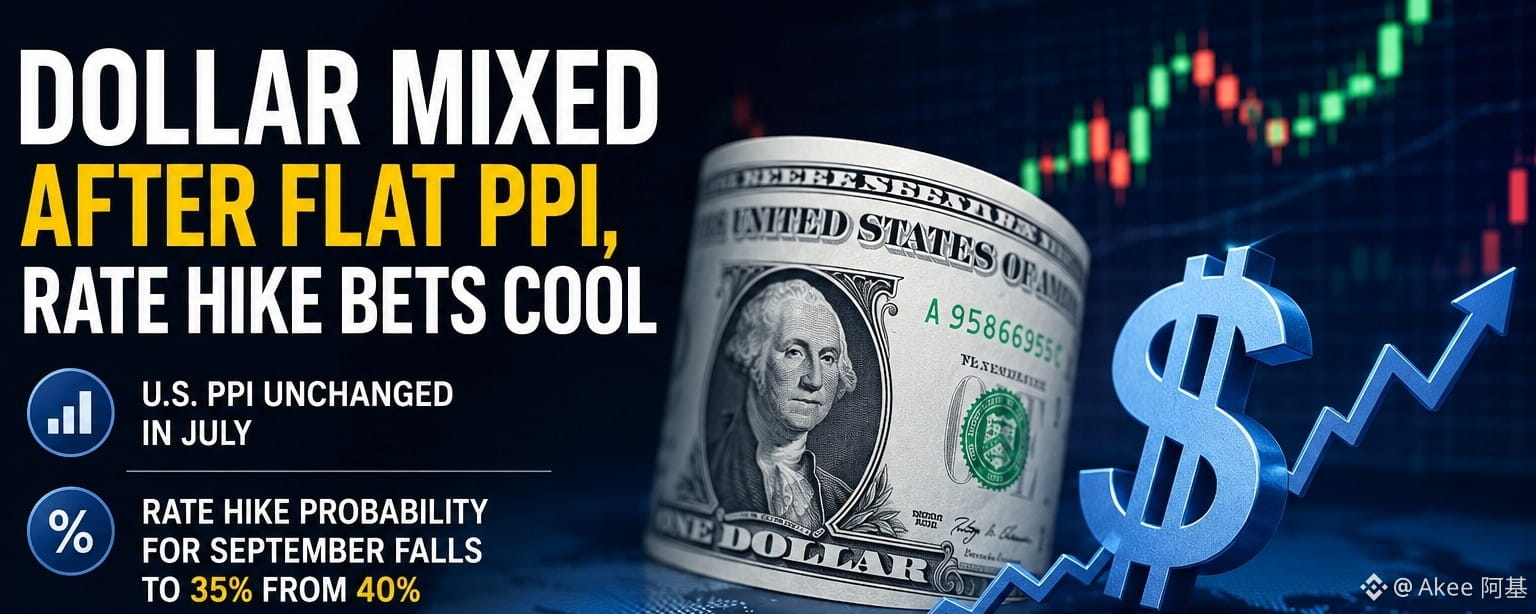

Доллар разнонаправленно: стабильный PPI США охлаждает ставки на повышение ФРС в сентябре
НЬЮ-ЙОРК — В четверг курс доллара США торговался разнонаправленно после того, как данные по инфляции производителей оказались слабее ожиданий. Это побудило инвесторов снизить ожидания того, что Федеральная резервная система повысит ставки на своем сентябрьском заседании.
Индекс цен производителей (PPI) в США не изменился в июле по сравнению с ожиданиями экономистов роста на 0,2%. Показатель последовал после пересмотренного снижения на 0,1% в июне и после того, как данные по инфляции для потребителей показали относительно ограниченное давление цен в июле.
После публикации данных фьючерсы на ставку по федеральным фондам указывали примерно на 35%-ную вероятность повышения ставки в сентябре — ниже, чем 40% днем ранее и 55% неделей ранее.
Индекс доллара США практически не изменился около 99,96 после того, как ненадолго опустился до 99,80 после публикации данных по PPI. Евро немного вырос до примерно $1,1528, а британский фунт снизился примерно до $1,3481.
Иена слабеет в сторону ¥160
Японская иена оставалась под давлением: она ослабла примерно до ¥159,48 за доллар. Валюта отыграла часть прироста, достигнутого в результате совместного интервенционного вмешательства США и Японии в прошлом месяце.
Инвесторы все чаще сосредотачиваются на том, повысит ли Банк Японии ставки на своем сентябрьском заседании. Если не будет более жесткого денежно-кредитного ужесточения или более ястребиной риторики, трейдеры могут продолжить проверять слабость иены в направлении психологически важного уровня ¥160.
Нефть и инфляция остаются ключевыми рисками
Несмотря на более слабые данные по инфляции в США, рынки остаются осторожными, поскольку цены на нефть и геополитическая напряженность могут вновь усилить инфляционное давление. Сбои вокруг пролива Ормуз и новые опасения по поводу энергетической инфраструктуры на Ближнем Востоке продолжают удерживать энергетические рынки в условиях высокой волатильности.
Тем временем число первичных заявок на пособие по безработице в США увеличилось умеренно, что предполагает относительную стабильность рынка труда, несмотря на недавнюю слабость занятости.
Теперь внимание переключается на данные по розничным продажам в США, которые могут дать следующий важный сигнал о силе экономики и повлиять на ожидания относительно решения ФРС по сентябрю.
Что касается валютных рынков, то перспектива остается крайне чувствительной к поступающим данным по инфляции, ожиданиям по политике ФРС и следующим шагам Банка Японии.