Раньше я думал, что приватность в блокчейне означает одну простую вещь: скрыть транзакцию и сделать так, чтобы её невозможно было отследить.
Но чтение @Dusk изменило моё мнение.
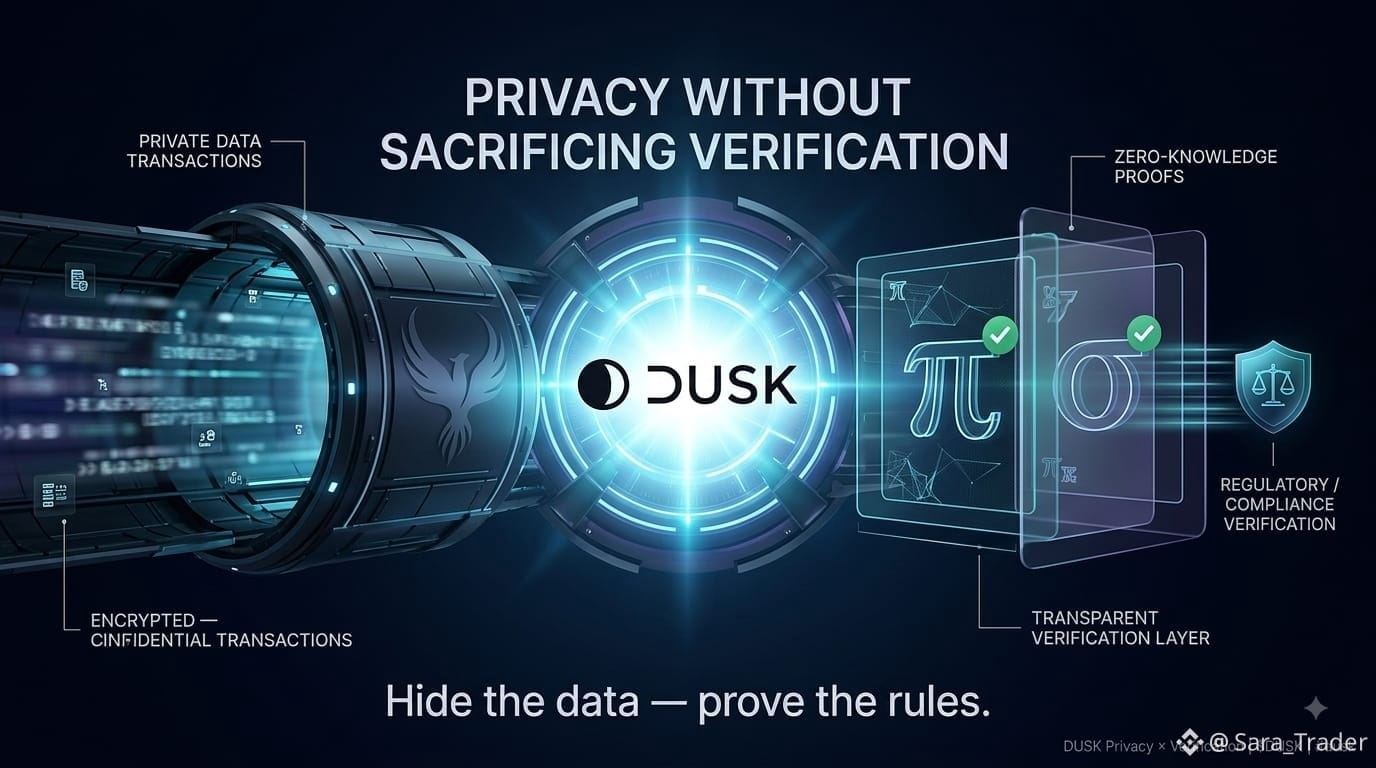
Мне показалось интересным, как Dusk разделяет приватность и верификацию. С Phoenix детали транзакций могут оставаться скрытыми, в то время как сеть всё равно может проверить, что правила были соблюдены, с помощью доказательств с нулевым разглашением.
Вам не нужно раскрывать всё, чтобы доказать, что что-то действительно корректно.
И это различие кажется важным, если блокчейн когда-нибудь собирается обрабатывать серьёзные финансовые операции. Приватность для пользователя, но достаточно проверяемости для сети и регулируемой среды.
Чем больше я смотрю на Dusk, тем меньше словосочетание «приватный блокчейн» кажется полным описанием. Скорее это попытка сделать конфиденциальность и соответствие требованиям совместимыми на одной инфраструктуре.
Именно за этим я сейчас и наблюдаю.
Может ли приватность стать функцией по умолчанию финансовой инфраструктуры без ущерба для доверия и подотчётности?
@Dusk #dusk $DUSK
Но чтение @Dusk изменило моё мнение.
Мне показалось интересным, как Dusk разделяет приватность и верификацию. С Phoenix детали транзакций могут оставаться скрытыми, в то время как сеть всё равно может проверить, что правила были соблюдены, с помощью доказательств с нулевым разглашением.
Вам не нужно раскрывать всё, чтобы доказать, что что-то действительно корректно.
И это различие кажется важным, если блокчейн когда-нибудь собирается обрабатывать серьёзные финансовые операции. Приватность для пользователя, но достаточно проверяемости для сети и регулируемой среды.
Чем больше я смотрю на Dusk, тем меньше словосочетание «приватный блокчейн» кажется полным описанием. Скорее это попытка сделать конфиденциальность и соответствие требованиям совместимыми на одной инфраструктуре.
Именно за этим я сейчас и наблюдаю.
Может ли приватность стать функцией по умолчанию финансовой инфраструктуры без ущерба для доверия и подотчётности?
@Dusk #dusk $DUSK