Провёл вечер за тем, что действительно прочитал whitepaper Dusk, а не просто пробежался по маркетинговым тезисам, и кое-что бросилось в глаза: я почти не видел, чтобы это подробно обсуждали. Они запускают две полностью отдельные модели транзакций бок о бок, а не одну.
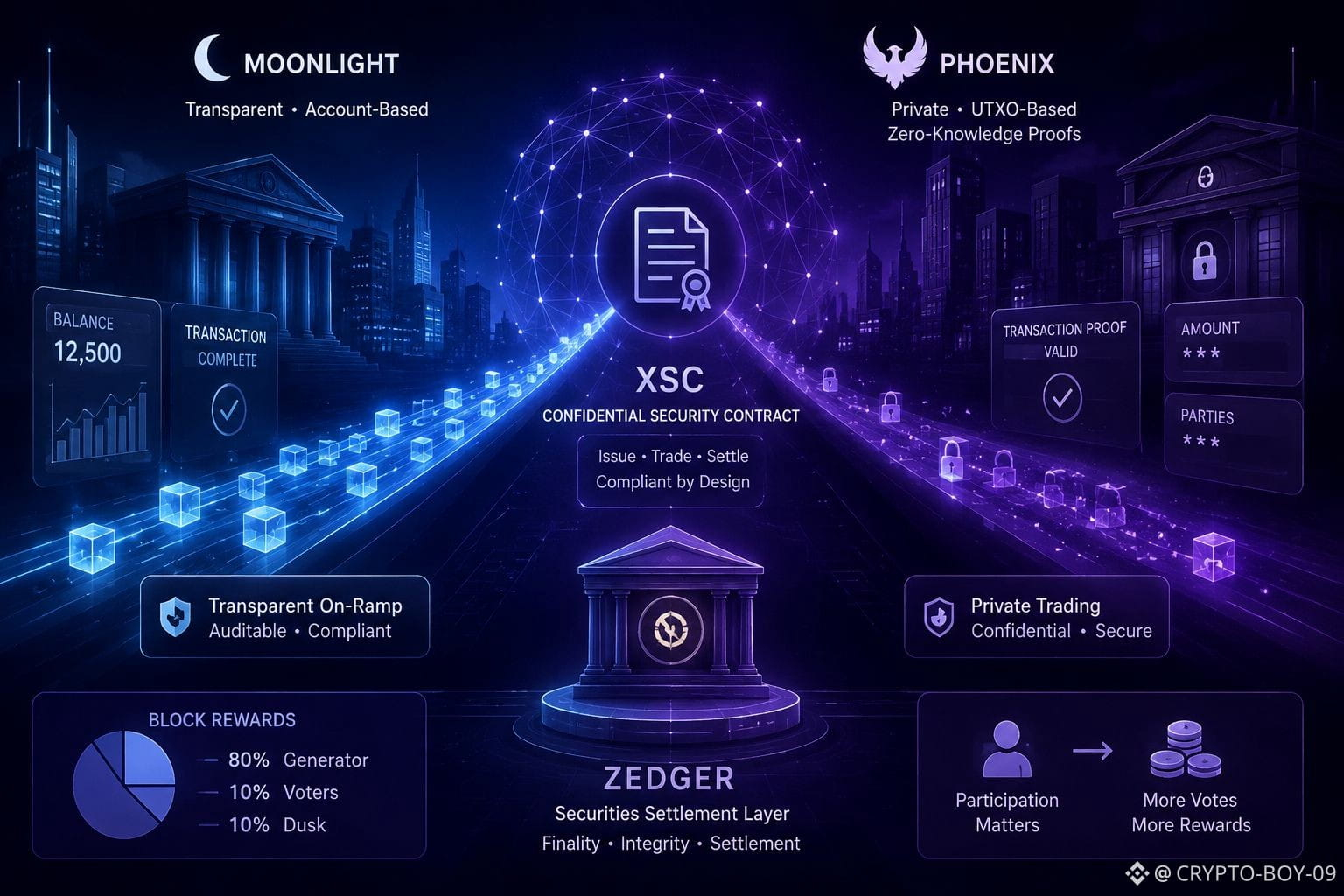
Moonlight прозрачен и работает на основе аккаунтов — по сути, как Ethereum: балансы публичны и их легко проверять. Phoenix — приватный: он построен на UTXO, как Bitcoin, но обёрнут в доказательства с нулевым разглашением, поэтому сеть может подтвердить валидность транзакции, не видя ни суммы, ни участников.
Меня заставило задуматься вот что: зачем создавать обе модели вместо того, чтобы пойти в полную приватность, как Monero или Zcash. Мой вывод после чтения такой: регуляторам нужен «он-рамп», который полностью видим, а реальная торговая активность может оставаться приватной в Phoenix. Именно эта двуxмодельная схема и делает возможным стандарт XSC (Confidential Security Contract) — слой, который позволяет выпускать и проводить расчёты по security-токенам и RWAs, при этом оставаясь в рамках требований аудита.
Есть ещё одна деталь с мотивацией, которой я не ожидал: блоковые награды распределяются так — 80% генератору, 10% голосующим и 10% самому Dusk, а выплата генератора масштабируется в зависимости от того, сколько голосов они вообще включают. По сути, система сделана так, что пропуск участия обходится вам в деньги.
И всё ещё не до конца уверен, как Zedger (их слой расчётов по ценным бумагам) связан с контрактами XSC в реальном торговом процессе. Если кто-то уже тестировал это на testnet, интересно, как на практике ощущается переключение между прозрачным и скрытым режимом.
@Dusk $DUSK #dusk
Moonlight прозрачен и работает на основе аккаунтов — по сути, как Ethereum: балансы публичны и их легко проверять. Phoenix — приватный: он построен на UTXO, как Bitcoin, но обёрнут в доказательства с нулевым разглашением, поэтому сеть может подтвердить валидность транзакции, не видя ни суммы, ни участников.
Меня заставило задуматься вот что: зачем создавать обе модели вместо того, чтобы пойти в полную приватность, как Monero или Zcash. Мой вывод после чтения такой: регуляторам нужен «он-рамп», который полностью видим, а реальная торговая активность может оставаться приватной в Phoenix. Именно эта двуxмодельная схема и делает возможным стандарт XSC (Confidential Security Contract) — слой, который позволяет выпускать и проводить расчёты по security-токенам и RWAs, при этом оставаясь в рамках требований аудита.
Есть ещё одна деталь с мотивацией, которой я не ожидал: блоковые награды распределяются так — 80% генератору, 10% голосующим и 10% самому Dusk, а выплата генератора масштабируется в зависимости от того, сколько голосов они вообще включают. По сути, система сделана так, что пропуск участия обходится вам в деньги.
И всё ещё не до конца уверен, как Zedger (их слой расчётов по ценным бумагам) связан с контрактами XSC в реальном торговом процессе. Если кто-то уже тестировал это на testnet, интересно, как на практике ощущается переключение между прозрачным и скрытым режимом.
@Dusk $DUSK #dusk