


The Web3 industry has never lacked innovation.
Every day, new blockchain protocols, DeFi platforms, AI-powered Web3 applications, gaming ecosystems, infrastructure projects, and decentralized networks are launched with ambitious visions.
Yet despite all this innovation, one challenge remains constant:
Trust.
Unlike traditional industries, Web3 operates in an environment where skepticism is the default.
Investors have seen projects disappear overnight.
Users have experienced hacks, rug pulls, and broken promises.
Partners evaluate hundreds of projects before deciding who deserves their attention.
Exchanges carefully assess credibility before listing tokens.
Journalists receive countless pitches every single day.
In this environment, building an exceptional product is only half the battle.
The other half is convincing the market that your project deserves attention and trust.
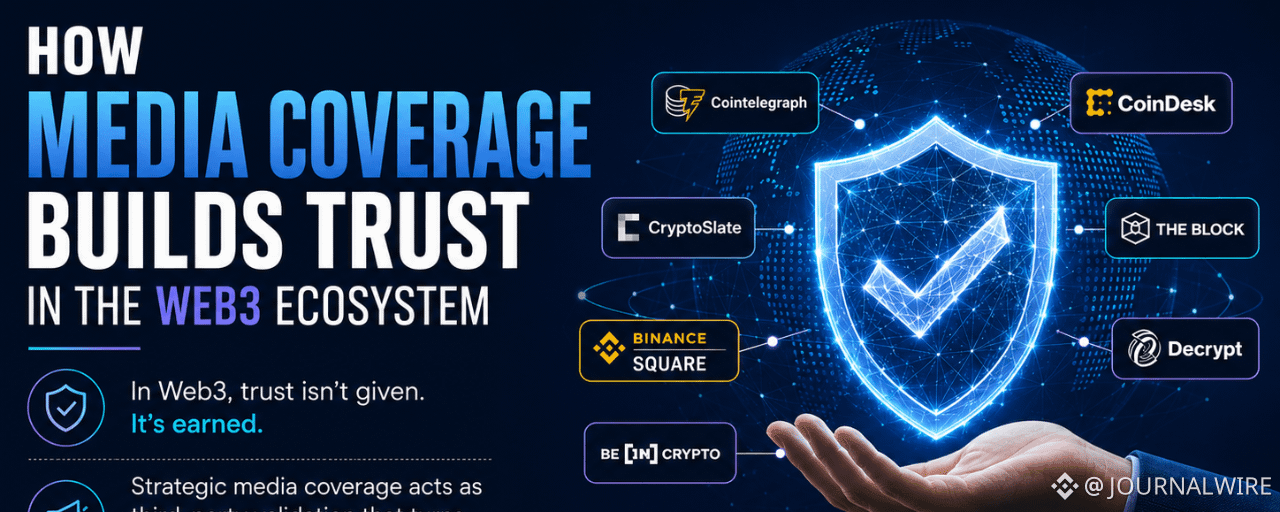
This is where strategic media coverage becomes one of the most valuable assets a Web3 company can invest in.
Trust Is the Currency of Web3
In traditional businesses, reputation is often built over decades.
In Web3, projects are expected to establish credibility within months—or sometimes even weeks.
When someone discovers a blockchain project, their first instinct isn't usually to read the whitepaper.
Instead, they search for answers.
They ask questions like:
Has this project been covered by respected publications?
Are reputable journalists writing about it?
Have investors or industry experts acknowledged it?
Does the team appear trustworthy?
Is this project actually legitimate?
Media coverage helps answer these questions before your sales team, community managers, or founders ever have the opportunity to.
Third-Party Validation Matters More Than Self-Promotion
Every company says they are innovative.
Every founder believes their technology is revolutionary.
Every startup claims to be building the future.
But audiences have learned to treat self-promotion with caution.
Editorial coverage changes the conversation.
When an independent publication features your company, readers naturally perceive your project differently.
Instead of saying:
"We are building something important."
The market sees:
"An established industry publication believes this story is worth covering."
That subtle shift creates a powerful psychological effect.
It transforms marketing claims into external validation.
Media Coverage Creates Social Proof
People trust what others already trust.
This principle applies everywhere—from restaurants and online shopping to enterprise software and blockchain.
Imagine two Web3 startups with similar technology.
Startup A has an active website, a whitepaper, and social media accounts.
Startup B has all of those, plus media coverage in respected industry publications discussing its product launch, funding announcement, or technological innovation.
Which one appears more credible?
Most people would naturally gravitate toward Startup B.
Not because the technology is necessarily better.
Because visibility creates confidence.
Investors Notice More Than Founders Realize
Investors don't evaluate projects based on hype alone.
They evaluate momentum.
Media coverage often becomes one of the signals that indicates a company is gaining traction.
Consistent coverage can demonstrate:
Product progress
Market interest
Industry relevance
Team execution
Ecosystem participation
Community growth
While media coverage alone won't secure funding, it often strengthens the overall narrative surrounding a project.
Strong narratives attract attention.
Attention creates conversations.
Conversations create opportunities.
Partnerships Become Easier
Strategic partnerships rarely happen by chance.
Before collaborating, potential partners usually research your company.
What they discover shapes their perception.
If they find:
Interviews with your leadership
Coverage of successful product launches
Thought leadership articles
Industry commentary
Conference participation
Independent news stories
They're far more likely to see your organization as an established participant in the ecosystem rather than another anonymous startup.
Credibility reduces perceived risk.
Reduced risk accelerates business decisions.
Community Confidence Grows
Communities don't just buy tokens.
They buy into stories.
People want to know they're supporting projects that have long-term potential.
Regular media coverage helps reinforce that confidence by showing that the project continues to achieve meaningful milestones.
Instead of disappearing after launch, the company continues communicating its journey through trusted industry publications.
That consistency strengthens community belief.
SEO Benefits Compound Over Time
Media coverage offers another advantage that's often overlooked.
Search visibility.
When someone Googles your company months after launch, what appears?
Ideally, they should find more than your own website.
Independent articles, interviews, announcements, and industry commentary create a stronger digital footprint.
This improves discoverability while reinforcing legitimacy.
Every quality publication becomes another trusted signal in your online reputation.
Media Is More Than Press Releases
One common misconception is that PR simply means distributing press releases.
Modern Web3 communications go much further.
Great media strategies include:
Founder interviews
Expert commentary
Industry analysis
Opinion articles
Product launches
Funding announcements
Partnership news
Research reports
Ecosystem insights
Technical breakthroughs
Each piece contributes to a larger narrative about who you are and why your company matters.
Consistency Beats One Viral Announcement
Many startups expect one major article to change everything.
In reality, trust is built through consistency.
One article creates awareness.
Several articles establish recognition.
Consistent coverage builds reputation.
Reputation builds trust.
And trust creates long-term growth.
The strongest brands in Web3 didn't become recognizable because of one headline.
They earned attention repeatedly by consistently sharing meaningful milestones and insights.
Final Thoughts
The Web3 ecosystem moves incredibly fast.
New projects emerge every day.
Competition grows stronger every month.
Technology alone is no longer enough.
The projects that stand out are the ones that communicate effectively, educate the market, and consistently build credibility through trusted voices.
Media coverage doesn't replace a strong product.
It amplifies it.
It helps transform innovation into recognition, recognition into credibility, and credibility into lasting trust.
In an industry where trust is the foundation of every investment, partnership, and community decision, strategic media coverage is no longer optional.
It's part of building a sustainable Web3 brand.