


Fabric Foundation is positioning itself at the intersection of two of the most transformative technologies today: artificial intelligence and decentralized infrastructure. While most Web3 projects still operate within the limits of static smart contracts and user driven interactions, @Fabric Foundation is pushing toward a model where autonomous agents become first class participants in the ecosystem. This isn’t just an upgrade in tooling, it’s a structural shift in how blockchain networks function.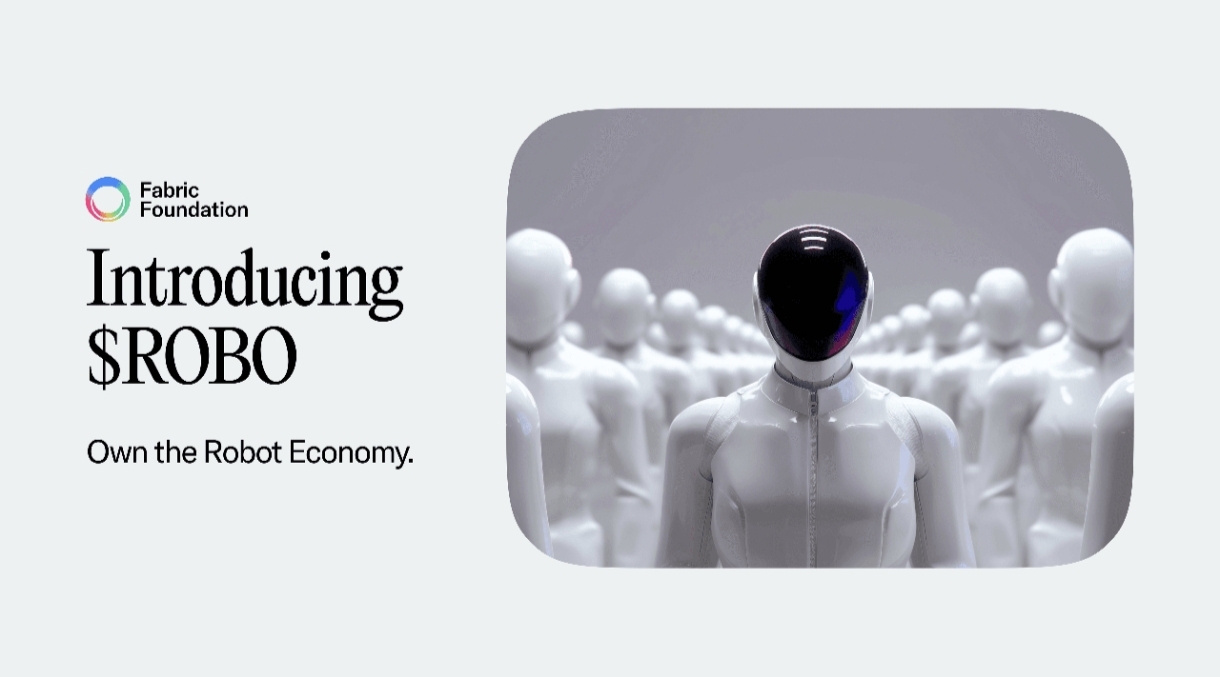
At the core of this system lies, which acts as the coordination layer for machine driven economies. Instead of being just another speculative token, $ROBO enables identity, execution, and value exchange between intelligent agents operating onchain. This creates a framework where AI systems can transact, collaborate, and even compete in decentralized environments without constant human oversight. In simple terms, it’s moving Web3 from “users using apps” to “systems interacting with systems.”
The implications of this are massive. Imagine decentralized marketplaces where AI agents negotiate services in real time, or autonomous protocols that adjust liquidity, pricing, and risk parameters dynamically based on live data. With ROBO powering these interactions, Fabric Foundation is effectively laying the groundwork for programmable economies where efficiency is driven by intelligence, not manual input.
Another key layer is identity and trust. In a world where machines act independently, verifying behavior and maintaining integrity becomes critical. Fabric’s architecture suggests a future where onchain identities are not limited to humans, but extended to AI entities with trackable performance, reputation, and accountability. This could unlock entirely new categories of applications, from autonomous DAOs to machine operated financial systems.
From an infrastructure perspective, @Fabric Foundation is also addressing scalability and coordination challenges. Traditional blockchains struggle when complexity increases, especially when realtime decision making is involved. By integrating AI logic directly into decentralized workflows, Fabric introduces a more adaptive system capable of handling dynamic conditions without breaking efficiency. This is where $ROBO transitions from a utility token into a core operational asset within the network.
Looking ahead, the broader Web3 landscape could evolve into an environment where humans set high level goals, and AI agents execute them across decentralized systems. In such a scenario, Fabric Foundation’s model becomes extremely relevant, acting as the backbone for interactions between intelligent entities. Industries like DeFi, gaming, supply chains, and digital identity could all benefit from this shift toward automation and decentralized intelligence.
Of course, execution is everything. Many projects promise innovation but fail to deliver real adoption. However, the direction @Fabric Foundation FND is taking aligns with a clear gap in the current ecosystem: the lack of intelligent, autonomous participation in blockchain networks. If Fabric successfully scales its vision, $ROBO could represent more than just a token, it could become a fundamental layer for machine to machine economies in Web3.
This is not just another narrative cycle. It’s a potential transition from static decentralized systems to adaptive, intelligent networks where value creation is continuous, automated, and significantly more efficient. #ROBO