

ilmeaalim
525 Публикации

ilmeaalim
Отправить жалобу
Заблокировать пользователя
-
2 подписок(и/а)
272 подписчиков(а)
1.1K+ понравилось
Посты
Все
Видео
·
--
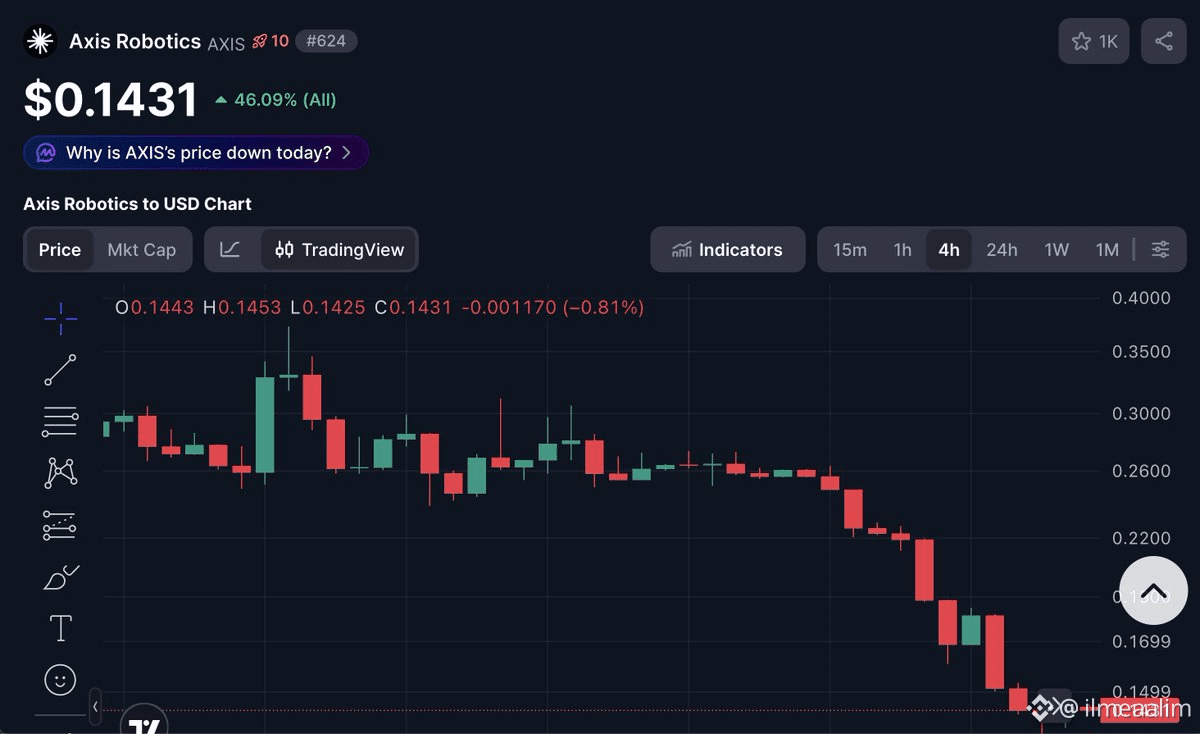
AXIS ROBOTICS ($AXIS) CRASHES 40% AFTER $12M WALLET DUMP 🚨📉
🤖 Axis Robotics on Base (backed by $12M from Hack VC) lets users control virtual robot arms in a browser to train real robots. After a $0.10 presale, $AXIS opened above $0.31 on 21 Oct 2026 and hit $0.37 on 24 Oct 💰📈
{alpha}(84530x5be75e3b0aff5d1a042a5363ae36acb1d6d755ea)
🕵️♂️ On 28 and 29 Oct, ZachXBT revealed over 76M AXIS left a team-linked shared wallet, and one address dumped 42M coins for 5.04M USDC, crashing price to $0.135 💥
📋 On-chain facts vs what went wrong:
🔹 835M team and investor coins (83.5% of supply) stay 100% locked with Binance until Oct 2027.
🔸 Sold coins came from the 165M unlocked launch supply.
🔷 An outside broker broke its written lockup deal and sold them.
🔶 Remaining partner coins will now use on-chain vesting locks.
⚠️ Two things to keep in mind:
1️⃣ Trusting a paper promise over a smart contract lock was a huge mistake, and critics want the broker named.
2️⃣ Near $0.144, AXIS still trades 44% above its $0.10 presale price.
Are you holding $AXIS or buying it now? 👇
#AXIS #Crypto #Base #AI
AXIS ROBOTICS ($AXIS ) CRASHES 40% AFTER $12M WALLET DUMP 🚨📉
🤖 Axis Robotics on Base (backed by $12M from Hack VC) lets users control virtual robot arms in a browser to train real robots. After a $0.10 presale, $AXIS opened above $0.31 on 21 Oct 2026 and hit $0.37 on 24 Oct 💰📈
🕵️♂️ On 28 and 29 Oct, ZachXBT revealed over 76M AXIS left a team-linked shared wallet, and one address dumped 42M coins for 5.04M USDC, crashing price to $0.135 💥
📋 On-chain facts vs what went wrong:
🔹 835M team and investor coins (83.5% of supply) stay 100% locked with Binance until Oct 2027.
🔸 Sold coins came from the 165M unlocked launch supply.
🔷 An outside broker broke its written lockup deal and sold them.
🔶 Remaining partner coins will now use on-chain vesting locks.
⚠️ Two things to keep in mind:
1️⃣ Trusting a paper promise over a smart contract lock was a huge mistake, and critics want the broker named.
2️⃣ Near $0.144, AXIS still trades 44% above its $0.10 presale price.
Are you holding $AXIS or buying it now? 👇
#AXIS #Crypto #Base #AI
309
·
--
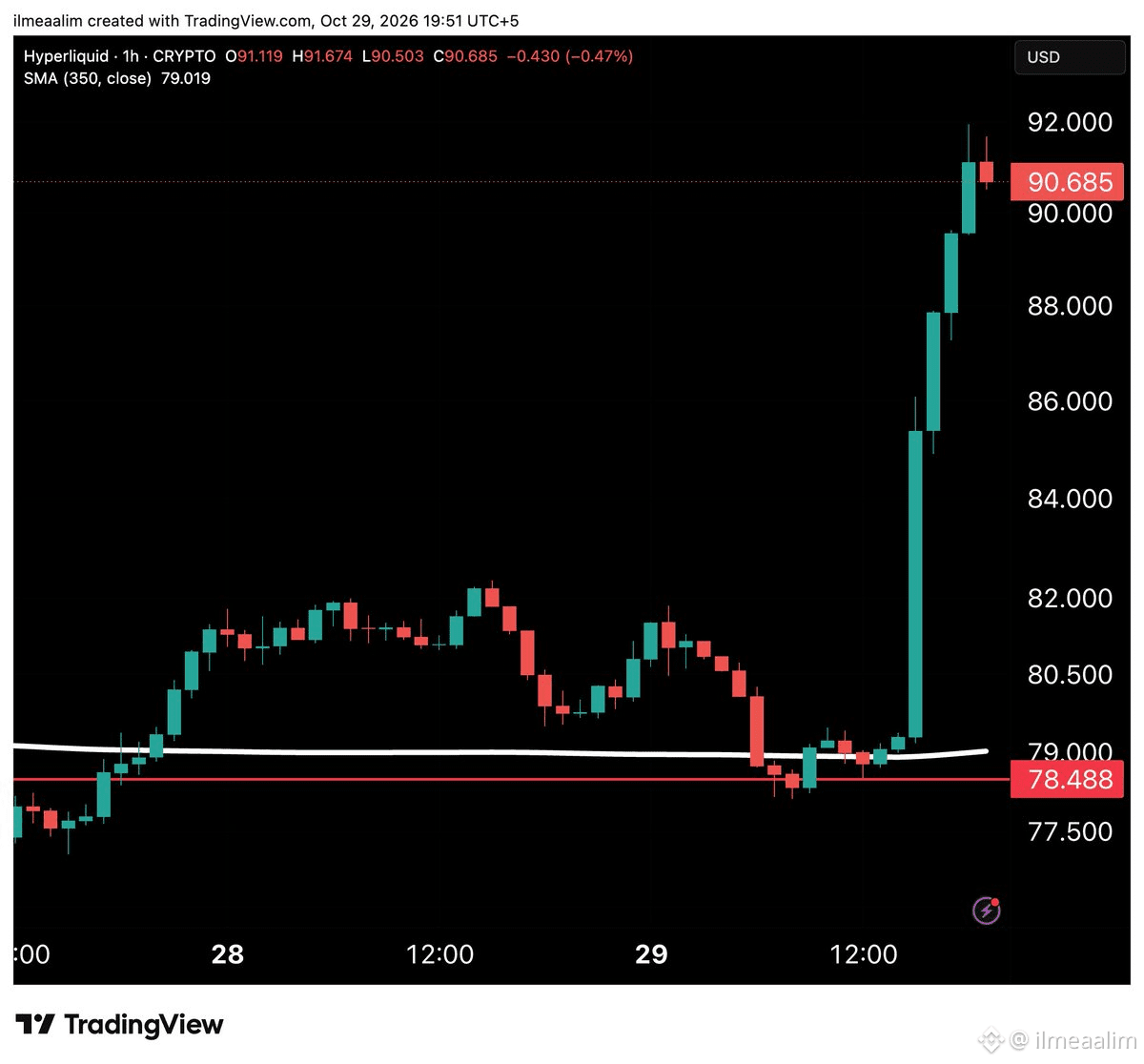
Wall Street Giant ICE Brings 24/7 Stock Perps to Hyperliquid 🏛️🚀
{future}(HYPEUSDT)
The parent company of the New York Stock Exchange, Intercontinental Exchange (ICE), is partnering with trade[XYZ] to launch regulated perpetual futures for US traders powered by Hyperliquid infrastructure.
{future}(NVDAUSDT)
Hyperliquid native token $HYPE jumped from $79 to $89 in two hours as the market connected the dots:
🔹 ICE provides the regulated clearing house and institutional trust.
🔹 trade[XYZ], with over $650B in volume, designs around-the-clock contracts for stocks, commodities, and crypto.
🔹 Global exchange OKX is pushing retail rollout through its 50-50 joint venture with ICE.
{future}(SPCXUSDT)
Instead of building a closed private system, Wall Street is using an open onchain network for trade settlement, backed by billionaire macro investor Stan Druckenmiller.
If approved by the US CFTC, OKX brings retail volume, ICE provides legal clearing, and Hyperliquid captures onchain fees.
Would you trade Wall Street stocks 24/7 onchain? 👇
#Hyperliquid #HYPE #OKX #DeFi #CryptoNews
Wall Street Giant ICE Brings 24/7 Stock Perps to Hyperliquid 🏛️🚀
The parent company of the New York Stock Exchange, Intercontinental Exchange (ICE), is partnering with trade[XYZ] to launch regulated perpetual futures for US traders powered by Hyperliquid infrastructure.
Hyperliquid native token $HYPE jumped from $79 to $89 in two hours as the market connected the dots:
🔹 ICE provides the regulated clearing house and institutional trust.
🔹 trade[XYZ], with over $650B in volume, designs around-the-clock contracts for stocks, commodities, and crypto.
🔹 Global exchange OKX is pushing retail rollout through its 50-50 joint venture with ICE.
Instead of building a closed private system, Wall Street is using an open onchain network for trade settlement, backed by billionaire macro investor Stan Druckenmiller.
If approved by the US CFTC, OKX brings retail volume, ICE provides legal clearing, and Hyperliquid captures onchain fees.
Would you trade Wall Street stocks 24/7 onchain? 👇
#Hyperliquid #HYPE #OKX #DeFi #CryptoNews
266
·
--
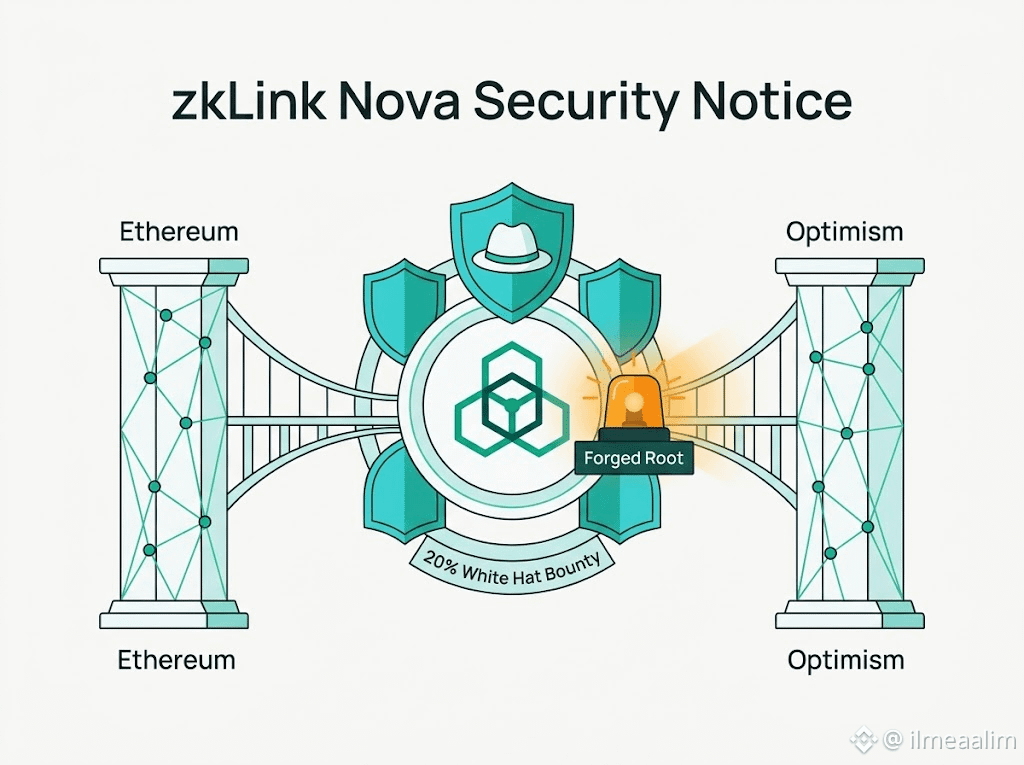
zkLink Nova Suffers $786,000 Bridge Exploit: What History Teaches Us About Cross-Chain Security 🚨🛡️
{future}(ZKUSDT)
Cross-chain Layer 3 network zkLink Nova has confirmed an active exploit targeting its Arbitrator contracts on Ethereum and Optimism, offering a 20% white hat bounty to recover the assets.
{future}(ETHUSDT)
Investigators at Blockaid revealed that the hacker injected a forged batch root through a public relayer. This bypassed verification checks and fooled the Layer 1 escrow contracts into releasing about $786,000 in $ETH and stablecoins.
{future}(OPUSDT)
How this connects to crypto's biggest bridge exploits:
🔹 Different from messaging rails like LayerZero, zkLink Nova holds custody of deposits directly in host-chain escrow vaults to power its Layer 3 network.
🔸 Attackers targeted the verification proof itself. This is the exact same concept seen in the $586M BNB Token Hub exploit and Wormhole's $326M fake signature hack.
🔹 In 2026, bridge and infrastructure exploits like the ~$293M KelpDAO incident have accounted for over 76% of all stolen crypto capital ($1.315B+ lost in H1 2026 alone).
Do you keep funds parked in cross-chain bridges? 👇
#zkLink #Ethereum #DeFi #CryptoSecurity #Layer2
zkLink Nova Suffers $786,000 Bridge Exploit: What History Teaches Us About Cross-Chain Security 🚨🛡️
Cross-chain Layer 3 network zkLink Nova has confirmed an active exploit targeting its Arbitrator contracts on Ethereum and Optimism, offering a 20% white hat bounty to recover the assets.
Investigators at Blockaid revealed that the hacker injected a forged batch root through a public relayer. This bypassed verification checks and fooled the Layer 1 escrow contracts into releasing about $786,000 in $ETH and stablecoins.
How this connects to crypto's biggest bridge exploits:
🔹 Different from messaging rails like LayerZero, zkLink Nova holds custody of deposits directly in host-chain escrow vaults to power its Layer 3 network.
🔸 Attackers targeted the verification proof itself. This is the exact same concept seen in the $586M BNB Token Hub exploit and Wormhole's $326M fake signature hack.
🔹 In 2026, bridge and infrastructure exploits like the ~$293M KelpDAO incident have accounted for over 76% of all stolen crypto capital ($1.315B+ lost in H1 2026 alone).
Do you keep funds parked in cross-chain bridges? 👇
#zkLink #Ethereum #DeFi #CryptoSecurity #Layer2
190
·
--
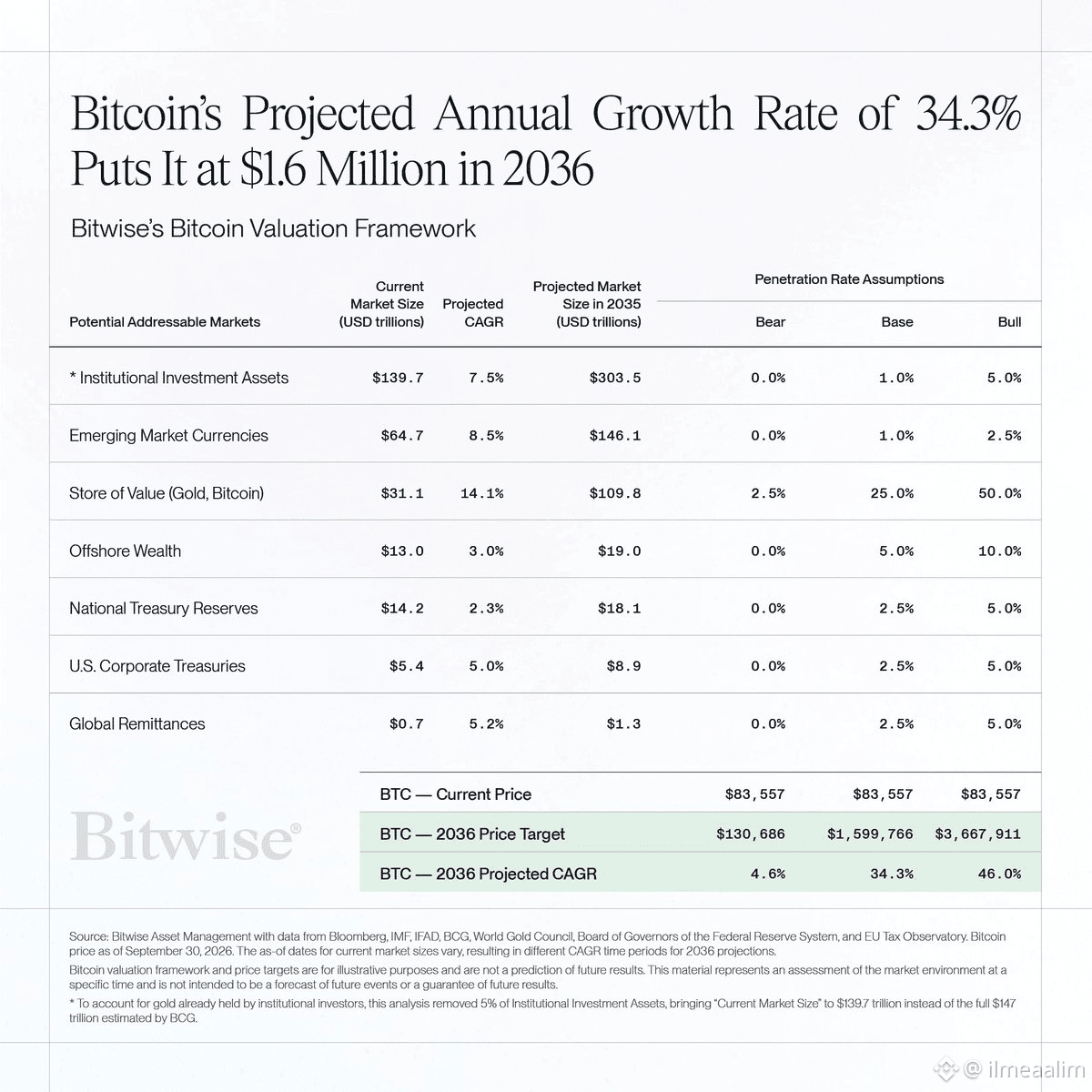
BITWISE RAISES 2036 $BTC TARGET TO $1.6 MILLION DESPITE 2026 CRASH 🚨📈💰
{future}(BTCUSDT)
Even after $BTC dropped 53.4% from $126,080 to $58,717 in 2026, Wall Street manager Bitwise raised its 10-year target from $1.3 million to $1.6 million:
🟩 $3,667,911 in the best case (46% yearly growth)
🟦 $1,599,766 in the main case (34.3% yearly growth, beating JPMorgan and BlackRock stock forecasts of 6.7% by 5 times)
🟥 $130,686 in the worst case (4.6% yearly growth)
Why Bitwise raised its forecast 🔄🏦
🔶 Gold surged, pushing the 2036 store-of-value market (gold plus Bitcoin) to $109.8 trillion, with Bitcoin taking 25%.
🔷 Big institutional funds reach $303.5 trillion by 2036 and put 1% to 5% into Bitcoin, while US debt hit $40.2 trillion ($1.1 trillion yearly interest).
Important flaws to keep in mind ⚠️🛑
1️⃣ Bitwise missed its $200,000 call for 2025 and said the 4-year cycle was dead right before 2026's 53.4% drop.
2️⃣ They cut their 2036 US company cash target in half from 5% to 2.5% and warned of quantum and AI risks to old wallets.
Do you think $BTC will reach $1.6 million by 2036? 👇
#Bitcoin #BTC #Crypto #MarketUpdate
BITWISE RAISES 2036 $BTC TARGET TO $1.6 MILLION DESPITE 2026 CRASH 🚨📈💰
Even after $BTC dropped 53.4% from $126,080 to $58,717 in 2026, Wall Street manager Bitwise raised its 10-year target from $1.3 million to $1.6 million:
🟩 $3,667,911 in the best case (46% yearly growth)
🟦 $1,599,766 in the main case (34.3% yearly growth, beating JPMorgan and BlackRock stock forecasts of 6.7% by 5 times)
🟥 $130,686 in the worst case (4.6% yearly growth)
Why Bitwise raised its forecast 🔄🏦
🔶 Gold surged, pushing the 2036 store-of-value market (gold plus Bitcoin) to $109.8 trillion, with Bitcoin taking 25%.
🔷 Big institutional funds reach $303.5 trillion by 2036 and put 1% to 5% into Bitcoin, while US debt hit $40.2 trillion ($1.1 trillion yearly interest).
Important flaws to keep in mind ⚠️🛑
1️⃣ Bitwise missed its $200,000 call for 2025 and said the 4-year cycle was dead right before 2026's 53.4% drop.
2️⃣ They cut their 2036 US company cash target in half from 5% to 2.5% and warned of quantum and AI risks to old wallets.
Do you think $BTC will reach $1.6 million by 2036? 👇
#Bitcoin #BTC #Crypto #MarketUpdate
91
·
--
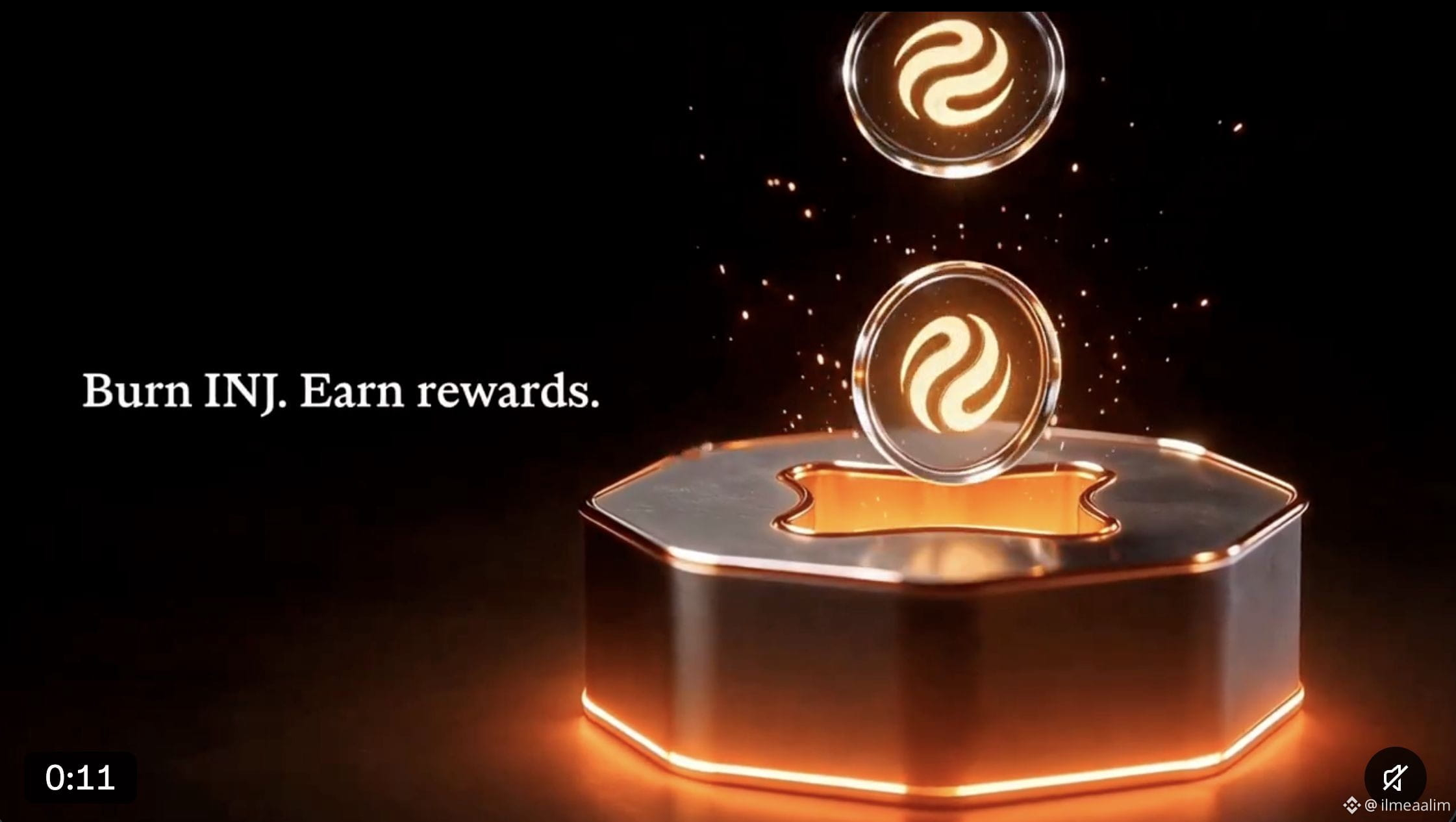
🔥 Injective Burned 7.3M INJ, So Why Did It Launch Its Stock Tokens on Solana? 📉🏛️
{future}(INJUSDT)
🚀 Injective finished its latest buyback, crossing nearly 7.3M $INJ burned, while launching Stockdrop to give users Nvidia and Tesla digital shares on Solana.
{future}(SOLUSDT)
🏦 Injective claims to be built for trading real-world stocks, using 60% of trading fees from Helix to buy back and destroy $INJ forever.
📊 Yet DefiLlama data shows the network makes very little money:
🔶 Injective earns only $10,600 a day in fees ($258,000 a month) with $15.9M deposits.
🔷 At $8 per token, that monthly revenue only buys back 32,000 INJ. Burning 7.3M tokens from real fees would take over 200 years.
🔶 Past burns came from early team reserves, while Hyperliquid makes $2.1M daily and Raydium on Solana makes $398,000 in one afternoon.
⚠️ Giving out stock tokens on $SOL ($5.75B deposits) instead of its own chain quietly admits Injective lacks enough active daily traders.
If Injective cannot host its own stock tokens, why does it need its own chain? 👇
#Injective #INJ #Solana #RWA
🔥 Injective Burned 7.3M INJ, So Why Did It Launch Its Stock Tokens on Solana? 📉🏛️
🚀 Injective finished its latest buyback, crossing nearly 7.3M $INJ burned, while launching Stockdrop to give users Nvidia and Tesla digital shares on Solana.
🏦 Injective claims to be built for trading real-world stocks, using 60% of trading fees from Helix to buy back and destroy $INJ forever.
📊 Yet DefiLlama data shows the network makes very little money:
🔶 Injective earns only $10,600 a day in fees ($258,000 a month) with $15.9M deposits.
🔷 At $8 per token, that monthly revenue only buys back 32,000 INJ. Burning 7.3M tokens from real fees would take over 200 years.
🔶 Past burns came from early team reserves, while Hyperliquid makes $2.1M daily and Raydium on Solana makes $398,000 in one afternoon.
⚠️ Giving out stock tokens on $SOL ($5.75B deposits) instead of its own chain quietly admits Injective lacks enough active daily traders.
If Injective cannot host its own stock tokens, why does it need its own chain? 👇
#Injective #INJ #Solana #RWA
1
248
·
--
Why ENSv2 on Ethereum Changes Web3 Usernames Forever 🏷️✨
{future}(ENSUSDT)
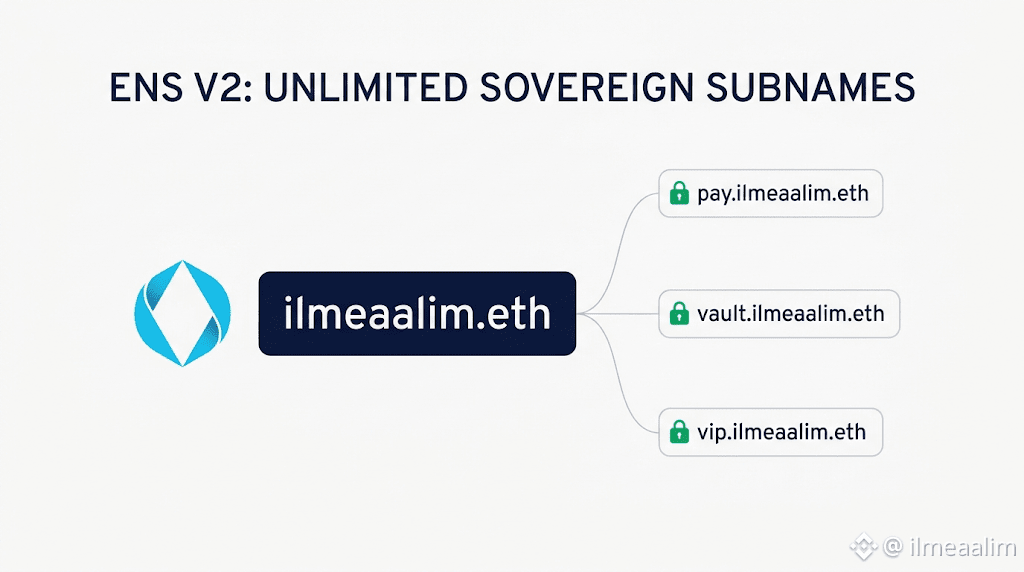
Many think an ENS name like sarah.eth is just a way to replace a 42-letter wallet address, but it works like owning your own digital building with unlimited free rooms.
Paying the standard $5 yearly renewal for a main name lets owners create unlimited sub-names (like pay.sarah.eth or vault.sarah.eth) with zero yearly subscription fees to ENS.
On 27 October 2026, ENS officially rolled out ENSv2 on Ethereum mainnet:
🔹 Every name functions as an independent mini-registry, letting creators, clubs, and projects issue sub-names with permanent ownership rules.
🔸 Owners can safely split permissions with team members, allowing helpers to update bio links or social records without risking domain theft.
🔹 Creating and updating records costs just pennies in gas due to cheaper $ETH execution.
A redesigned app also makes setting up profile photos, bios, and multi-chain records seamless.
What ENS name are you using? Mine is ilmeaalim.eth 👇
#ENS #Ethereum #Web3 #Crypto #Identity
Why ENSv2 on Ethereum Changes Web3 Usernames Forever 🏷️✨
Many think an ENS name like sarah.eth is just a way to replace a 42-letter wallet address, but it works like owning your own digital building with unlimited free rooms.
Paying the standard $5 yearly renewal for a main name lets owners create unlimited sub-names (like pay.sarah.eth or vault.sarah.eth) with zero yearly subscription fees to ENS.
On 27 October 2026, ENS officially rolled out ENSv2 on Ethereum mainnet:
🔹 Every name functions as an independent mini-registry, letting creators, clubs, and projects issue sub-names with permanent ownership rules.
🔸 Owners can safely split permissions with team members, allowing helpers to update bio links or social records without risking domain theft.
🔹 Creating and updating records costs just pennies in gas due to cheaper $ETH execution.
A redesigned app also makes setting up profile photos, bios, and multi-chain records seamless.
What ENS name are you using? Mine is ilmeaalim.eth 👇
#ENS #Ethereum #Web3 #Crypto #Identity
159
·
--
Can AI Compute Become the Next Traded Market? 🤖⚡
{spot}(PEPEUSDT)
Every time you use AI, computer chips work behind the scenes, making computing power one of the world's most valuable resources 💻
On 26 October 2026, BitMEX co-founder Arthur Hayes released his essay, "The Trifecta," outlining his plan to turn AI compute into a globally traded market via Flop Labs 📄
{future}(BTCUSDT)
This marks his third major crypto blueprint:
🔹 In 2016, his team at BitMEX created perpetual contracts, crypto's top product.
🔸 In 2023, his research inspired synthetic dollars like USDe from Ethena.
🔹 In 2026, he is building a spot market for AI computing power.
{future}(ETHUSDT)
How his proposed network works in simple terms:
🖥️ Autonomous AI agents need processing power to operate, just like cars need fuel.
⚡ Miners supply real GPU chips to run AI tasks and earn network tokens.
📊 The network token creates an open benchmark price for computing speed.
📈 AI firms can use financial contracts to hedge future processing costs.
Would you trade computing power like a stock? 👇
#Crypto #AI #ArthurHayes #Web3
Can AI Compute Become the Next Traded Market? 🤖⚡
Every time you use AI, computer chips work behind the scenes, making computing power one of the world's most valuable resources 💻
On 26 October 2026, BitMEX co-founder Arthur Hayes released his essay, "The Trifecta," outlining his plan to turn AI compute into a globally traded market via Flop Labs 📄
This marks his third major crypto blueprint:
🔹 In 2016, his team at BitMEX created perpetual contracts, crypto's top product.
🔸 In 2023, his research inspired synthetic dollars like USDe from Ethena.
🔹 In 2026, he is building a spot market for AI computing power.
How his proposed network works in simple terms:
🖥️ Autonomous AI agents need processing power to operate, just like cars need fuel.
⚡ Miners supply real GPU chips to run AI tasks and earn network tokens.
📊 The network token creates an open benchmark price for computing speed.
📈 AI firms can use financial contracts to hedge future processing costs.
Would you trade computing power like a stock? 👇
#Crypto #AI #ArthurHayes #Web3
99
·
--
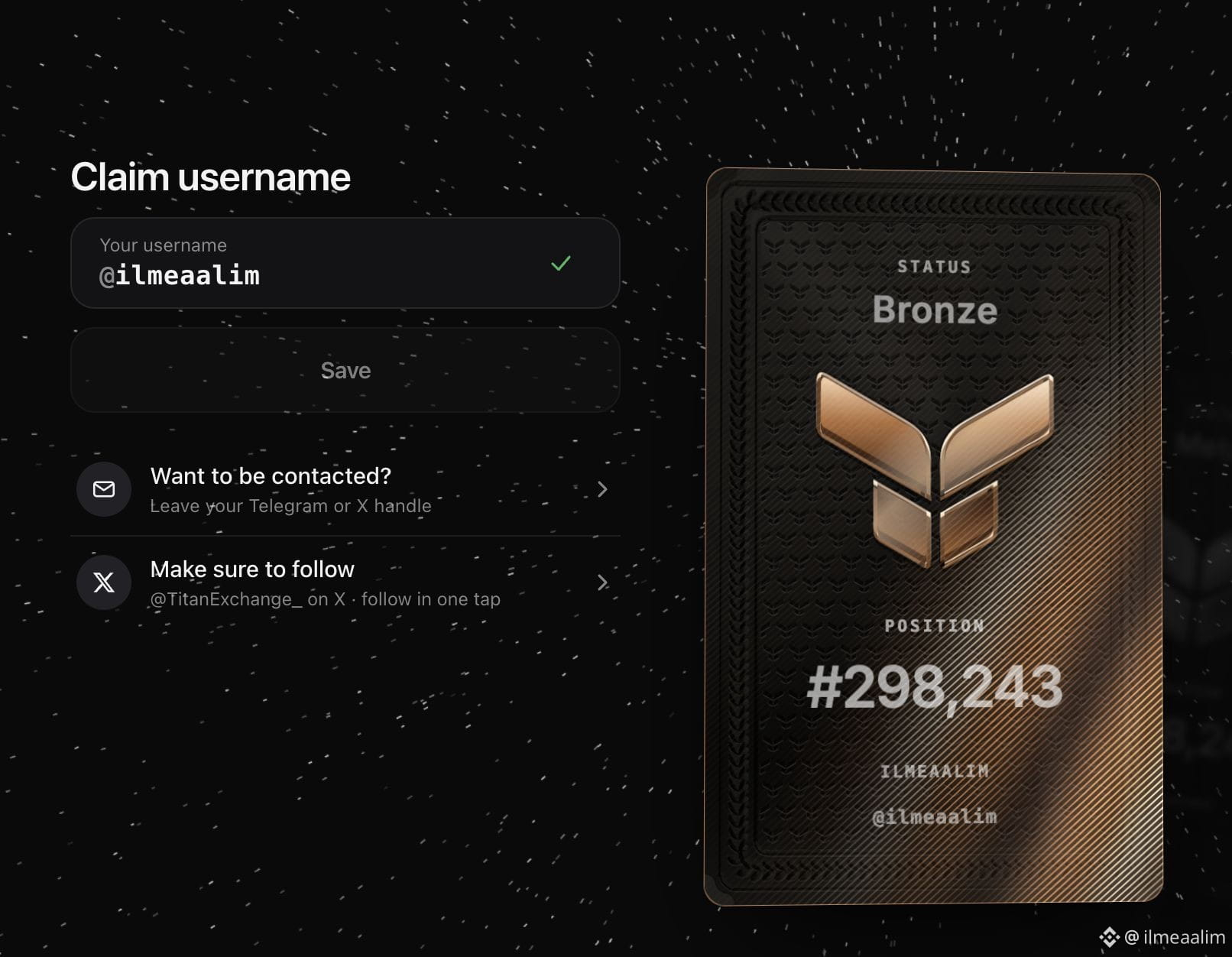
Titan Exchange Tests Private Perpetual Trading on Canton Network ⚡📈
{future}(CCUSDT)
Trading perpetual contracts on public blockchains usually lets fast trading bots spy on your pending transactions, pushing prices against you before execution (known as front-running) 🤖⚠️
Titan Exchange is testing a privacy-first perpetual DEX built on Canton Network, an institutional blockchain backed by Digital Asset, which raised over $300M from institutions like Goldman Sachs, BNP Paribas, and DTCC 🏦🌐
Unlike traditional decentralized exchanges where every order is visible to the entire public, Titan keeps order books and trade matching completely private between the buyer and seller 🛡️🔍
An incentivized testnet is now live with zero real funds needed. Traders claim free testnet tokens from the faucet, execute perpetual trades, and earn weekly leaderboard points 🔥💎
Join the testnet here:
https://testnet.titanx.cc/?ref=ILMEAALIM
Share your referral links down below? 👇
#CantonNetwork #CryptoTrading #Perpetuals #DeFi #Web3
Titan Exchange Tests Private Perpetual Trading on Canton Network ⚡📈
Trading perpetual contracts on public blockchains usually lets fast trading bots spy on your pending transactions, pushing prices against you before execution (known as front-running) 🤖⚠️
Titan Exchange is testing a privacy-first perpetual DEX built on Canton Network, an institutional blockchain backed by Digital Asset, which raised over $300M from institutions like Goldman Sachs, BNP Paribas, and DTCC 🏦🌐
Unlike traditional decentralized exchanges where every order is visible to the entire public, Titan keeps order books and trade matching completely private between the buyer and seller 🛡️🔍
An incentivized testnet is now live with zero real funds needed. Traders claim free testnet tokens from the faucet, execute perpetual trades, and earn weekly leaderboard points 🔥💎
Join the testnet here:
https://testnet.titanx.cc/?ref=ILMEAALIM
Share your referral links down below? 👇
#CantonNetwork #CryptoTrading #Perpetuals #DeFi #Web3
1
172
·
--
Built an original English anthem for the @BNBCHAIN ecosystem: "BNB Keeps the Fire Bright" 🎧🔥
Every lyric walks through the history, 2017 roots, dual chains merging, fee discounts, quarterly burns, and real-time gas burns.
@cz_binance here is the English track you asked about!
@binance turn the volume up and let me know what you think 💛
Every lyric walks through the history, 2017 roots, dual chains merging, fee discounts, quarterly burns, and real-time gas burns.
@cz_binance here is the English track you asked about!
@binance turn the volume up and let me know what you think 💛
63
·
--
WHY TOP CRYPTO APPS EARN BILLIONS WHILE TRADERS LOSE 📉💸
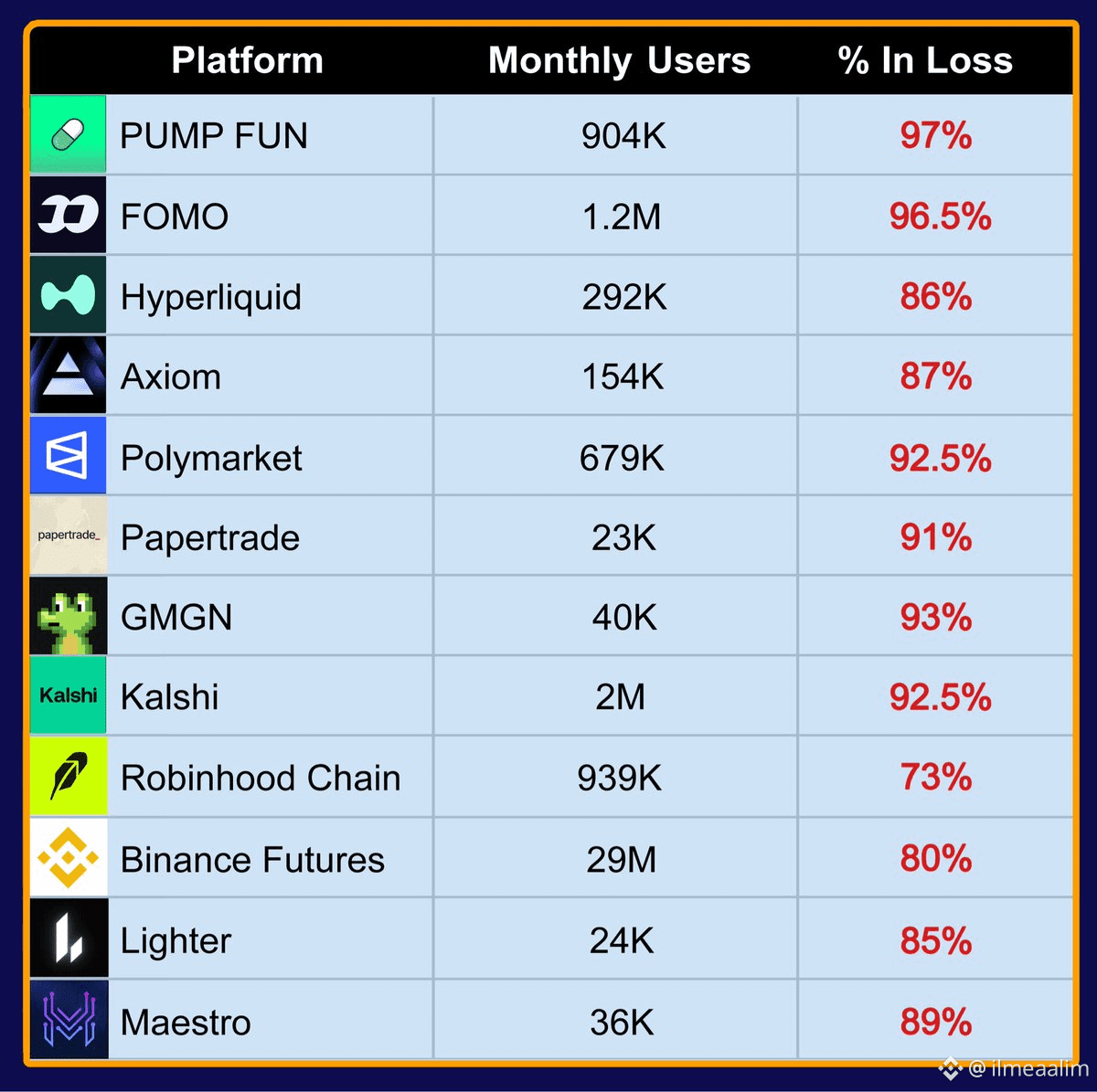
Data across 12 major apps with 35.1M monthly users shows 73% to 97% of retail traders lose money across 3 main sectors: ⏳
{future}(PUMPUSDT)
🚀 Memecoins (73% to 97% lose): Platforms like Pump.fun, FOMO, Axiom, GMGN, and Maestro take 0.6% to 1% fees on every swap while most coins drop to zero.
{future}(HYPEUSDT)
⚡ Perpetual Futures (80% to 91% lose): Binance Futures, Hyperliquid, Lighter, and Papertrade charge maker, taker, and liquidation fees on leveraged bets.
{future}(GMXUSDT)
🎯 Prediction Markets (84% to 92.5% lose): Kalshi and Polymarket collect dynamic taker fees on every bet as emotional market orders lose to math bots.
How they survive:
Like casino houses, these platforms take their fee cut upfront the second a trade opens. Even if 9 out of 10 traders lose, a viral 1% winner brings in millions of fresh beginners to replace burned wallets. 🎰🔄
Which of these apps do you use, and what is your win rate? 👇
#Crypto #Trading #Binance #DeFi #Futures
WHY TOP CRYPTO APPS EARN BILLIONS WHILE TRADERS LOSE 📉💸
Data across 12 major apps with 35.1M monthly users shows 73% to 97% of retail traders lose money across 3 main sectors: ⏳
🚀 Memecoins (73% to 97% lose): Platforms like Pump.fun, FOMO, Axiom, GMGN, and Maestro take 0.6% to 1% fees on every swap while most coins drop to zero.
⚡ Perpetual Futures (80% to 91% lose): Binance Futures, Hyperliquid, Lighter, and Papertrade charge maker, taker, and liquidation fees on leveraged bets.
🎯 Prediction Markets (84% to 92.5% lose): Kalshi and Polymarket collect dynamic taker fees on every bet as emotional market orders lose to math bots.
How they survive:
Like casino houses, these platforms take their fee cut upfront the second a trade opens. Even if 9 out of 10 traders lose, a viral 1% winner brings in millions of fresh beginners to replace burned wallets. 🎰🔄
Which of these apps do you use, and what is your win rate? 👇
#Crypto #Trading #Binance #DeFi #Futures
1
884
·
--
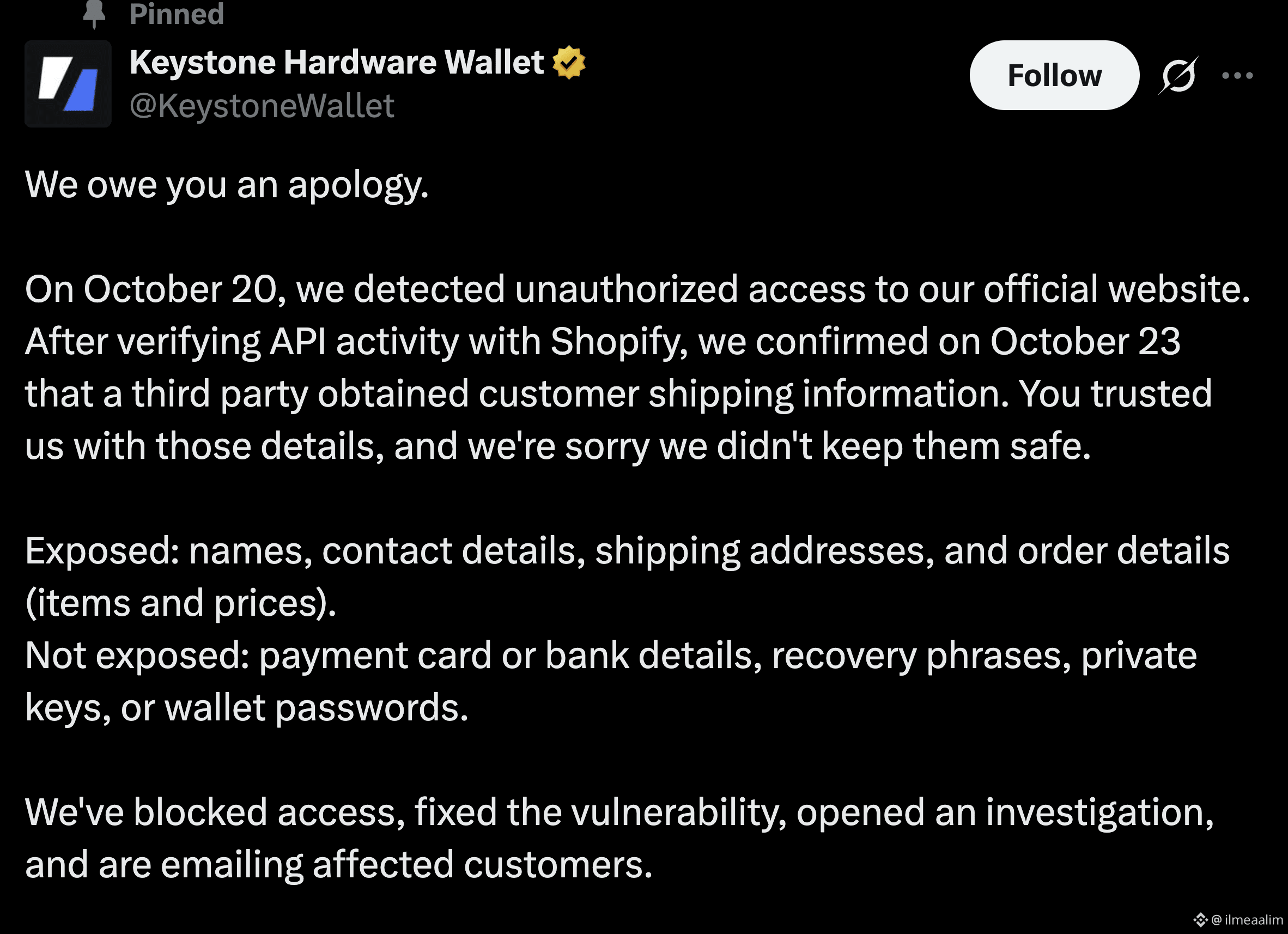
📦🔐 2026 Is the Worst Year on Record for Hardware Wallet Privacy
🚨💻 On 24 October 2026, Keystone disclosed a Shopify API breach on 20-23 October, leaking buyer names, phones, emails, orders, and home addresses.
📉🗂️ Major 2026 and past hardware wallet leaks
🟧 Aug-Sep 2026, Trezor partner ShipMonk leaked addresses and phones for 80,000+ buyers.
🟦 Aug 2026, SafePal bug exposed names, phones, and addresses for 39,798 buyers.
🟨 Jan 2026, Ledger partner Global-e leaked buyer names, addresses, and orders.
🔹 Jul 2025, BitBox saw 20,000+ orders, emails, and IPs leaked.
🔸 Dec 2024, Tangem app bug included seed phrases in support email logs.
🔷 Jan 2024, Trezor support breach exposed contacts for 66,000 users.
🔶 Jul 2020, Ledger breach leaked 272,000 addresses and 1M+ emails.
🛡️🏠 Except for the 2024 Tangem bug, hardware chips keep keys offline. Criminals instead hack stores to mail fake infected wallets and phish 24 recovery words.
How do you deal with this if you bought a hardware wallet? 👇
#CryptoSecurity #HardwareWallet #SelfCustody
156
·
--
Why Courts Cleared President Milei Despite $99M in Evidence 🏛️⚖️
{future}(SOLUSDT)
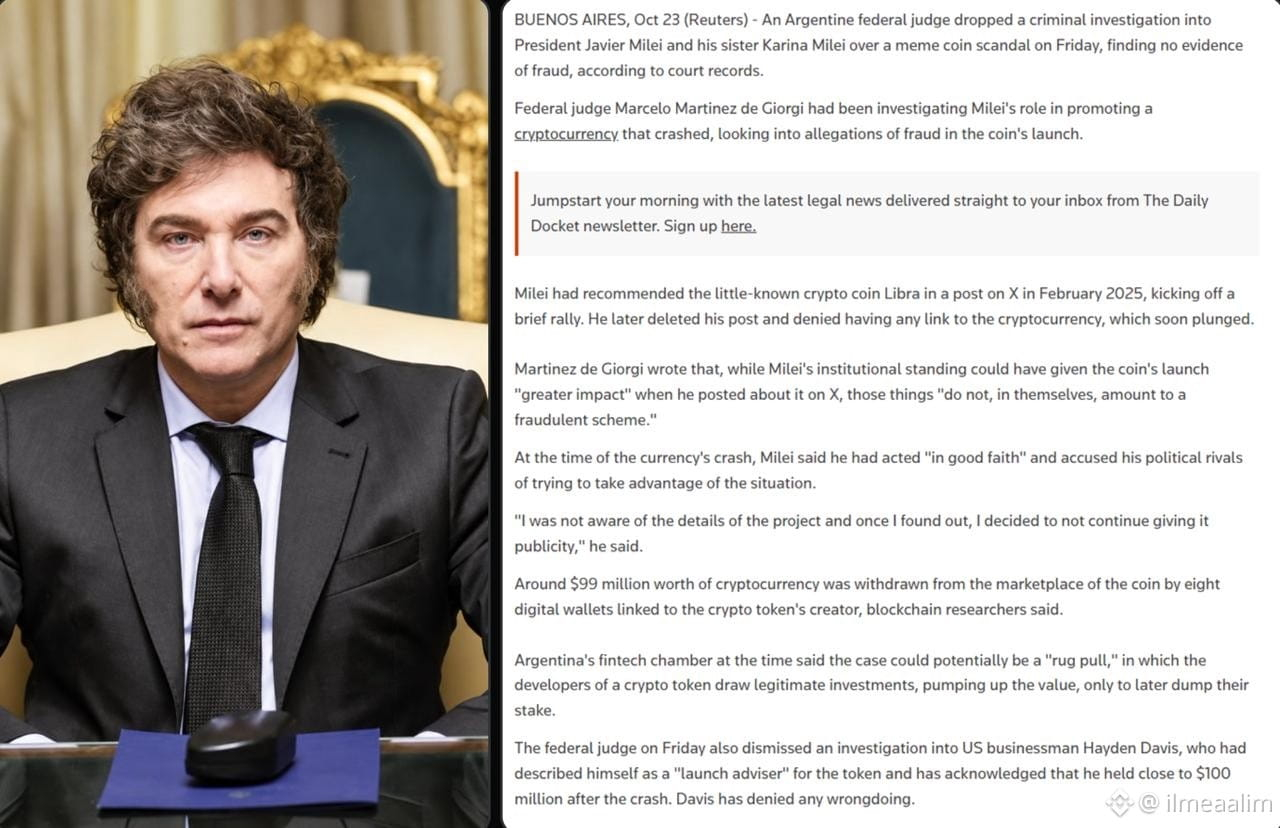
An Argentine court has officially dismissed the criminal fraud case against President Javier Milei, Karina Milei, and US businessman Hayden Davis over the $LIBRA collapse.
{future}(PUMPUSDT)
On-chain evidence appeared overwhelming:
🔹 Insiders controlled about 82% of the supply before public trading opened.
🔸 Eight connected wallets extracted roughly $99 million directly from trading pools.
🔹 Milei promoted the token to millions on social media, then deleted the post as prices tanked.
Yet, the judge ruled no crime occurred. Under old criminal codes, fraud requires proving deliberate deceit and direct personal profit. Because meme coins carry no guaranteed returns, the court treated the collapse as normal speculative volatility rather than theft.
The judge acknowledged Milei's endorsement amplified the launch, but decided political influence is not legal fraud.
Even with evidence Milei is innocent. Does the same protect Trump? 👇
#Crypto #Milei #Solana #Regulation #Memecoins
Why Courts Cleared President Milei Despite $99M in Evidence 🏛️⚖️
An Argentine court has officially dismissed the criminal fraud case against President Javier Milei, Karina Milei, and US businessman Hayden Davis over the $LIBRA collapse.
On-chain evidence appeared overwhelming:
🔹 Insiders controlled about 82% of the supply before public trading opened.
🔸 Eight connected wallets extracted roughly $99 million directly from trading pools.
🔹 Milei promoted the token to millions on social media, then deleted the post as prices tanked.
Yet, the judge ruled no crime occurred. Under old criminal codes, fraud requires proving deliberate deceit and direct personal profit. Because meme coins carry no guaranteed returns, the court treated the collapse as normal speculative volatility rather than theft.
The judge acknowledged Milei's endorsement amplified the launch, but decided political influence is not legal fraud.
Even with evidence Milei is innocent. Does the same protect Trump? 👇
#Crypto #Milei #Solana #Regulation #Memecoins
1
413
·
--
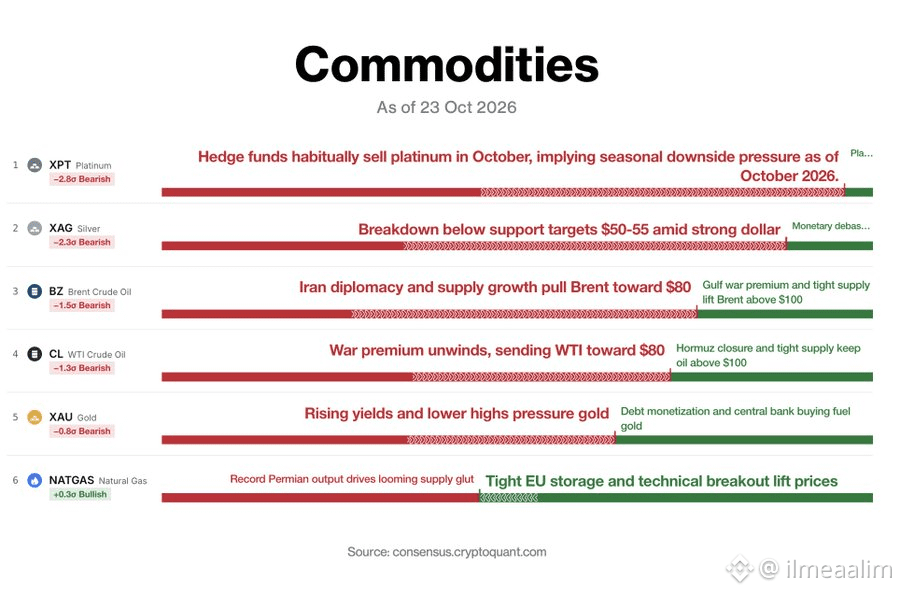
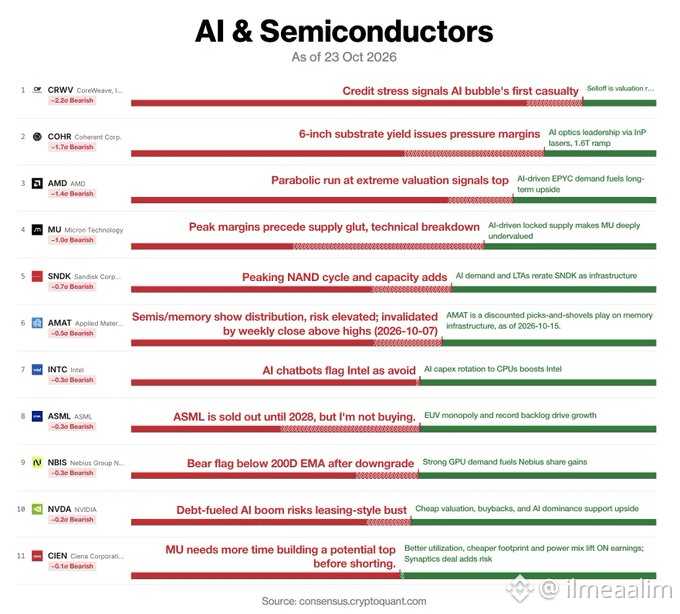
Wall Street Forecasters Turn Bearish as Bitcoin Beckons 📉🔄
CryptoQuant CEO Ki Young Ju shared data revealing that market analysts have turned heavily negative on major US stocks and commodities 📊
{future}(BTCUSDT)
Analyst consensus simply tracks whether most institutional researchers expect an asset to rise or drop.
{future}(XAUTUSDT)
Where forecasters see danger ahead:
🔹 Tech giants like Oracle, CrowdStrike, and Meta face heavy debt from building expensive AI infrastructure 💻⚠️
🔸 Crude oil faces sell calls, with analysts forecasting that prices could slide from above $104 back toward $80 as war premiums fade 🛢️📉
🔹 Consumer brands like Nike and Starbucks face margin pressure as spending tightens 🏠☕
Ju suggests that as traditional stocks face heavy debt and slowing growth, money exiting weakening equities and commodities can rotate into $BTC as an independent asset 🏦⚡
Do you think Bitcoin is a better alternative to US stocks? 👇
#Bitcoin #BTC #Crypto #StockMarket #CryptoQuant
Wall Street Forecasters Turn Bearish as Bitcoin Beckons 📉🔄
CryptoQuant CEO Ki Young Ju shared data revealing that market analysts have turned heavily negative on major US stocks and commodities 📊
Analyst consensus simply tracks whether most institutional researchers expect an asset to rise or drop.
Where forecasters see danger ahead:
🔹 Tech giants like Oracle, CrowdStrike, and Meta face heavy debt from building expensive AI infrastructure 💻⚠️
🔸 Crude oil faces sell calls, with analysts forecasting that prices could slide from above $104 back toward $80 as war premiums fade 🛢️📉
🔹 Consumer brands like Nike and Starbucks face margin pressure as spending tightens 🏠☕
Ju suggests that as traditional stocks face heavy debt and slowing growth, money exiting weakening equities and commodities can rotate into $BTC as an independent asset 🏦⚡
Do you think Bitcoin is a better alternative to US stocks? 👇
#Bitcoin #BTC #Crypto #StockMarket #CryptoQuant
484
·
--
**OpenSea Adds Trade Reason Notes to Its Mobile App 📱✨**
OpenSea introduced a new social feature called Signals inside its mobile app. When buying tokens or NFTs across 25+ blockchains, users can now attach short notes explaining why they bought 📝🔍
These notes show up on an open social feed so followers can see if a trade was made for a long-term plan, quick flip, or curiosity, rather than copying moves blindly 👥💡
Keep in mind that anyone can write anything, and large traders could hype a coin right before selling ⚠️
Do you do copy trading from other smart traders? 👇
50
·
--
**Pump.fun Launches $2,500,000 Squads Trading Contest! 🏆🔥**
Pump.fun, Solana's popular memecoin trading platform, has rolled out its biggest competition yet with a $2,500,000 prize pool for trading teams 💰
The top 3 squads with the highest profits after 2 weeks take home $1,500,000 for 1st place, $750,000 for 2nd, and $250,000 for 3rd place 🥇🥈🥉
🔹 Create or join a squad on the Pump.fun app
🔹 Trade together and sign up by 26 October 2026
Check full contest rules and enter here:
https://x.com/Pumpfun/status/2113647400057237848
@ilmeaalimofficial
1
94
·
--
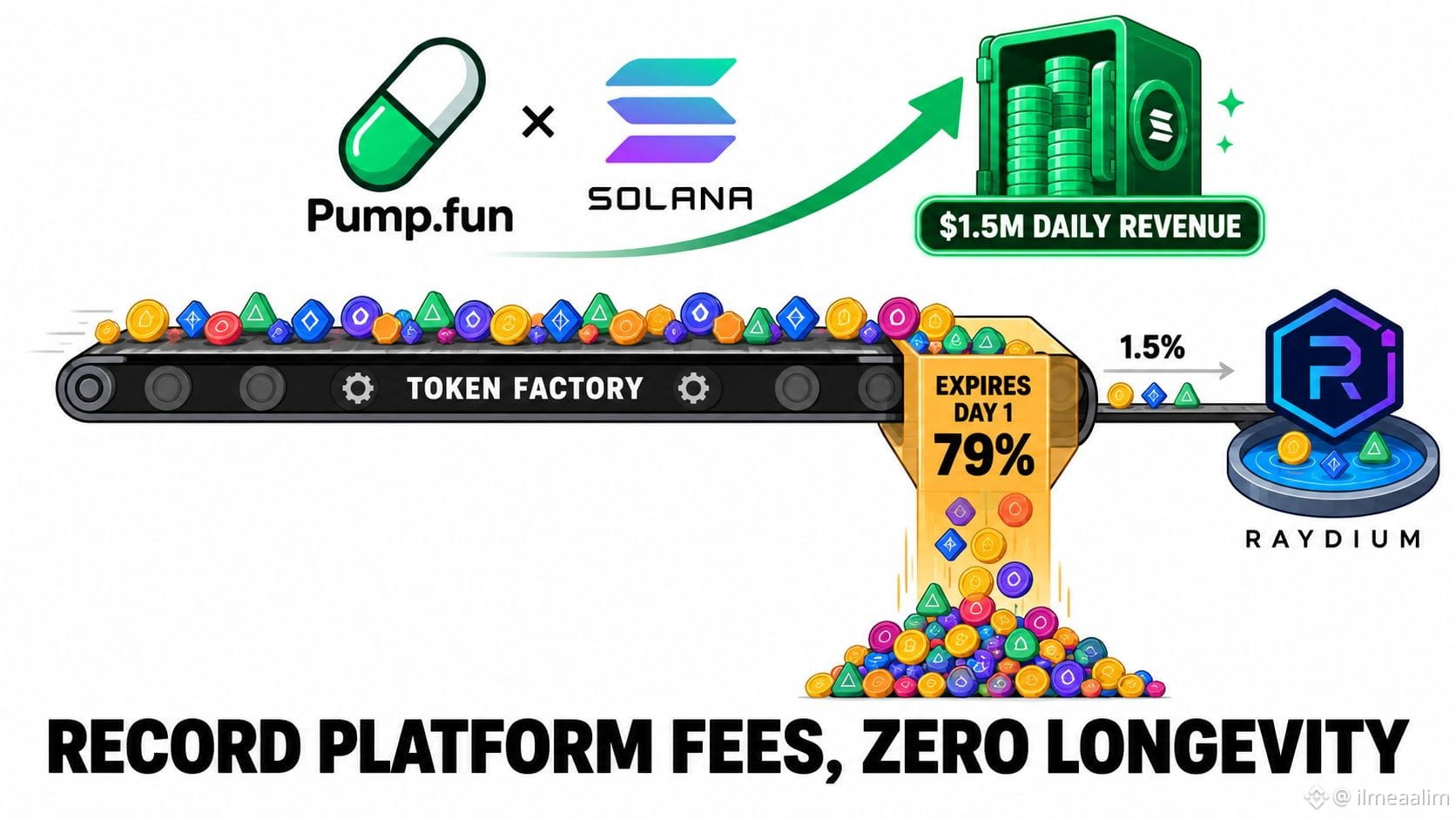
Traders Accuse Pump.fun of Favoring Quick Hype Over Lasting Memecoins 🎰📉
Solana launchpad Pump.fun faces heavy backlash after partnering with trader Kimchi. A promotional token spiked to tens of millions within hours before collapsing, sparking outrage over insider favoritism.
{future}(DOGEUSDT)
On-chain data reveals the reality for everyday buyers:
🔹 About 79% of tokens see their last trade on their launch day.
🔸 Under 1.5% ever graduate to external trading pools on Raydium.
🔷 Past winners like $DOGE reached $80 billion and $SHIB reached $40 billion, but today holding above $1 million for 24 hours is treated as a major win.
{future}(PUMPUSDT)
Why the debate splits the market:
💰 Even when tokens crash, Pump.fun collects between $1.3 million and $1.5 million in daily fees.
🗣️ Defenders say the platform gives everyone open access to trade without VC gatekeepers.
🚫 Fatigued traders are deploying protest tokens like $PUMPDONE, warning that endless churn drains retail liquidity.
{future}(SOLUSDT)
Are memecoin launchpads hurting crypto? 👇
#Pumpfun #Solana #Memecoins #CryptoTrading
Traders Accuse Pump.fun of Favoring Quick Hype Over Lasting Memecoins 🎰📉
Solana launchpad Pump.fun faces heavy backlash after partnering with trader Kimchi. A promotional token spiked to tens of millions within hours before collapsing, sparking outrage over insider favoritism.
On-chain data reveals the reality for everyday buyers:
🔹 About 79% of tokens see their last trade on their launch day.
🔸 Under 1.5% ever graduate to external trading pools on Raydium.
🔷 Past winners like $DOGE reached $80 billion and $SHIB reached $40 billion, but today holding above $1 million for 24 hours is treated as a major win.
Why the debate splits the market:
💰 Even when tokens crash, Pump.fun collects between $1 .3 million and $1 .5 million in daily fees.
🗣️ Defenders say the platform gives everyone open access to trade without VC gatekeepers.
🚫 Fatigued traders are deploying protest tokens like $PUMPDONE, warning that endless churn drains retail liquidity.
Are memecoin launchpads hurting crypto? 👇
#Pumpfun #Solana #Memecoins #CryptoTrading
180
·
--
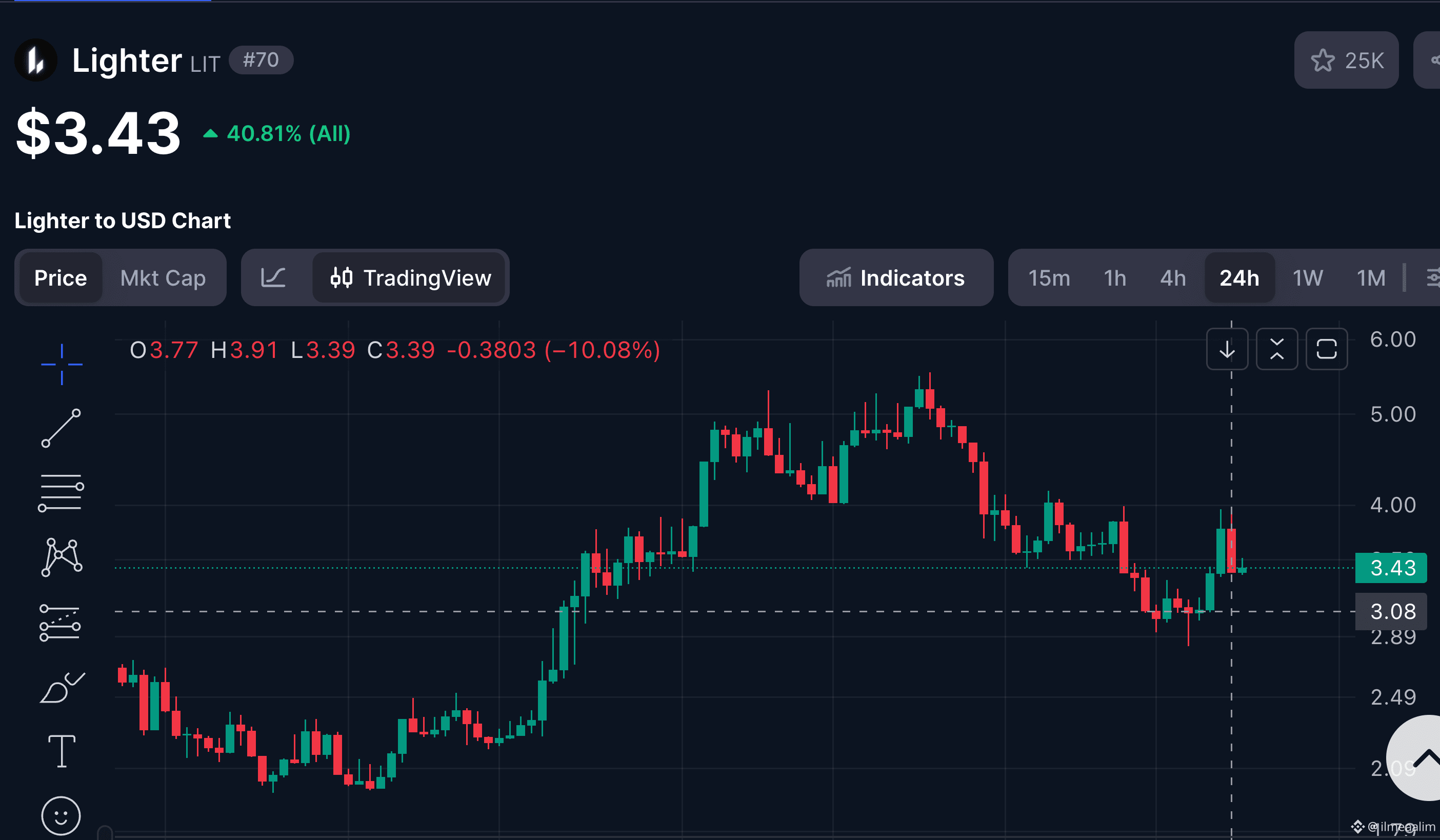
Can On-Chain Futures Challenge Coinbase in the US? 🏛️🇺🇸
{future}(LITUSDT)
Lighter announced it will apply for key derivatives licenses with the US CFTC in November 2026.
Once cleared, Lighter plans to integrate into retail broker Robinhood, bringing on-chain crypto futures to American users 📱⚡
This marks the first big push by on-chain exchanges to challenge centralized giants dominating US derivatives:
🔹 Coinbase offers crypto futures through regulated broker Coinbase Financial Markets.
🔸 Kraken provides licensed crypto derivatives through Kraken Derivatives US.
🔹 Brokers route contracts through exchanges like CME Group.
Until now, zero on-chain perpetual exchanges had US clearance, forcing platforms to block American users.
Now, top decentralized exchanges are racing to break that monopoly:
🏛️ Lighter pursues direct government licenses with Robinhood distribution.
⚡ Hyperliquid explores US entry using policy filings and licensed partners.
If a DEX requires KYC, would you still use it over Coinbase? 👇
#Crypto #DeFi #Futures #Coinbase #Web3
Can On-Chain Futures Challenge Coinbase in the US? 🏛️🇺🇸
Lighter announced it will apply for key derivatives licenses with the US CFTC in November 2026.
Once cleared, Lighter plans to integrate into retail broker Robinhood, bringing on-chain crypto futures to American users 📱⚡
This marks the first big push by on-chain exchanges to challenge centralized giants dominating US derivatives:
🔹 Coinbase offers crypto futures through regulated broker Coinbase Financial Markets.
🔸 Kraken provides licensed crypto derivatives through Kraken Derivatives US.
🔹 Brokers route contracts through exchanges like CME Group.
Until now, zero on-chain perpetual exchanges had US clearance, forcing platforms to block American users.
Now, top decentralized exchanges are racing to break that monopoly:
🏛️ Lighter pursues direct government licenses with Robinhood distribution.
⚡ Hyperliquid explores US entry using policy filings and licensed partners.
If a DEX requires KYC, would you still use it over Coinbase? 👇
#Crypto #DeFi #Futures #Coinbase #Web3
204
·
--
**Pump.fun Launches EVM Limit Orders 🎯⚡**
Meme coin platform Pump.fun just rolled out automated take-profit and stop-loss orders across 6 EVM networks, including Base, BSC, and Robinhood ⚙️📱
Traders can now set automatic exit targets directly inside the app:
🔹 Profit targets sell tokens automatically when prices spike.
🔸 Stop-loss orders protect capital if prices drop suddenly.
No more watching charts 24/7 or sharing private keys with outside trading bots 🔐✨
Do you use stop-loss orders for meme coins? 👇
@ilmeaalimofficial
125
·
--
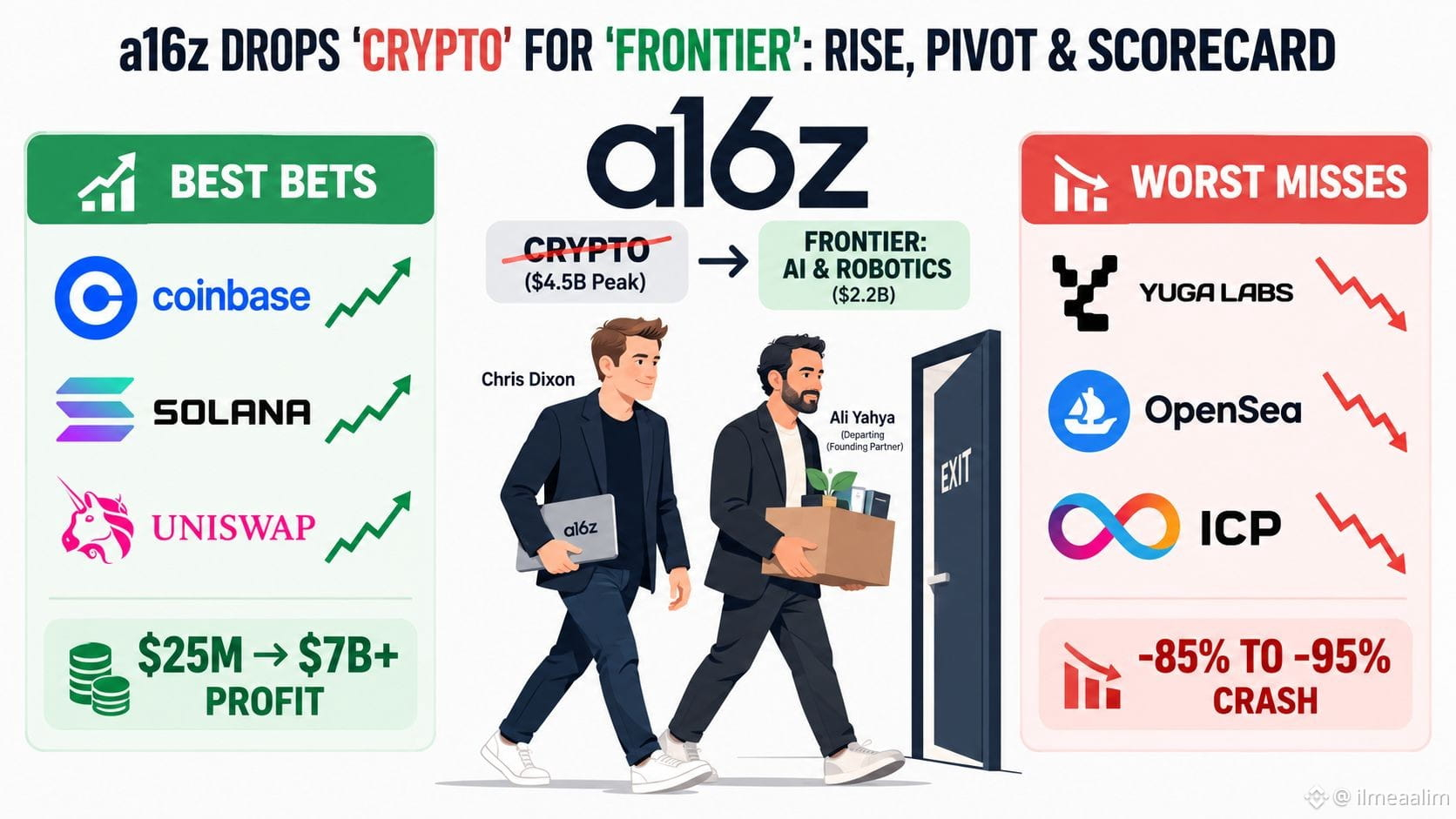
🚨 Why a16z Just Dropped "Crypto" From Its Flagship Fund Name: Best vs Worst Bets 🔄🏛️
On 22 October 2026, venture capital giant a16z officially removed the word "Crypto" from its flagship blockchain division, renaming it a16z Frontier to invest in AI and robotics. At the same time, its first 2017 crypto team member, Ali Yahya, announced he is leaving to start his own company.
📈 The Rise and Pullback:
🔹 Launched in 2018 with a $300M fund, peaking in May 2022 with a record $4.5B crypto fund (raising nearly $10B across 5 funds).
🔸 By May 2026, its 5th fund shrank by more than half to $2.2B as big investors shifted focus toward fast-growing AI startups.
🏆 Best Investments:
🟢 Coinbase: Led a $25M round in 2013 and made over $7B in profit after the 2021 US stock listing.
{future}(COINUSDT)
🟢 Solana ($SOL) and Uniswap ($UNI): Bought in early during 2020 and 2021, locking in massive gains.
{future}(SOLUSDT)
🛑 Worst Valuation Misses:
🔴 Yuga Labs and OpenSea: Led a $450M round in Bored Ape creator Yuga Labs ($4B valuation) and put $123M into OpenSea before NFT values fell 85% to 90%.
🔴 $ICP and $FLOW: Backed both before they launched at huge 2021 valuations and crashed over 95%.
{future}(ICPUSDT)
Do you think big venture funds are giving up on crypto for AI? 👇
#a16z #CryptoNews #VentureCapital #Solana #AI
🚨 Why a16z Just Dropped "Crypto" From Its Flagship Fund Name: Best vs Worst Bets 🔄🏛️
On 22 October 2026, venture capital giant a16z officially removed the word "Crypto" from its flagship blockchain division, renaming it a16z Frontier to invest in AI and robotics. At the same time, its first 2017 crypto team member, Ali Yahya, announced he is leaving to start his own company.
📈 The Rise and Pullback:
🔹 Launched in 2018 with a $300M fund, peaking in May 2022 with a record $4.5B crypto fund (raising nearly $10B across 5 funds).
🔸 By May 2026, its 5th fund shrank by more than half to $2.2B as big investors shifted focus toward fast-growing AI startups.
🏆 Best Investments:
🟢 Coinbase: Led a $25M round in 2013 and made over $7B in profit after the 2021 US stock listing.
🟢 Solana ($SOL) and Uniswap ($UNI): Bought in early during 2020 and 2021, locking in massive gains.
🛑 Worst Valuation Misses:
🔴 Yuga Labs and OpenSea: Led a $450M round in Bored Ape creator Yuga Labs ($4B valuation) and put $123M into OpenSea before NFT values fell 85% to 90%.
🔴 $ICP and $FLOW: Backed both before they launched at huge 2021 valuations and crashed over 95%.
Do you think big venture funds are giving up on crypto for AI? 👇
#a16z #CryptoNews #VentureCapital #Solana #AI
270
·
--
Проверено
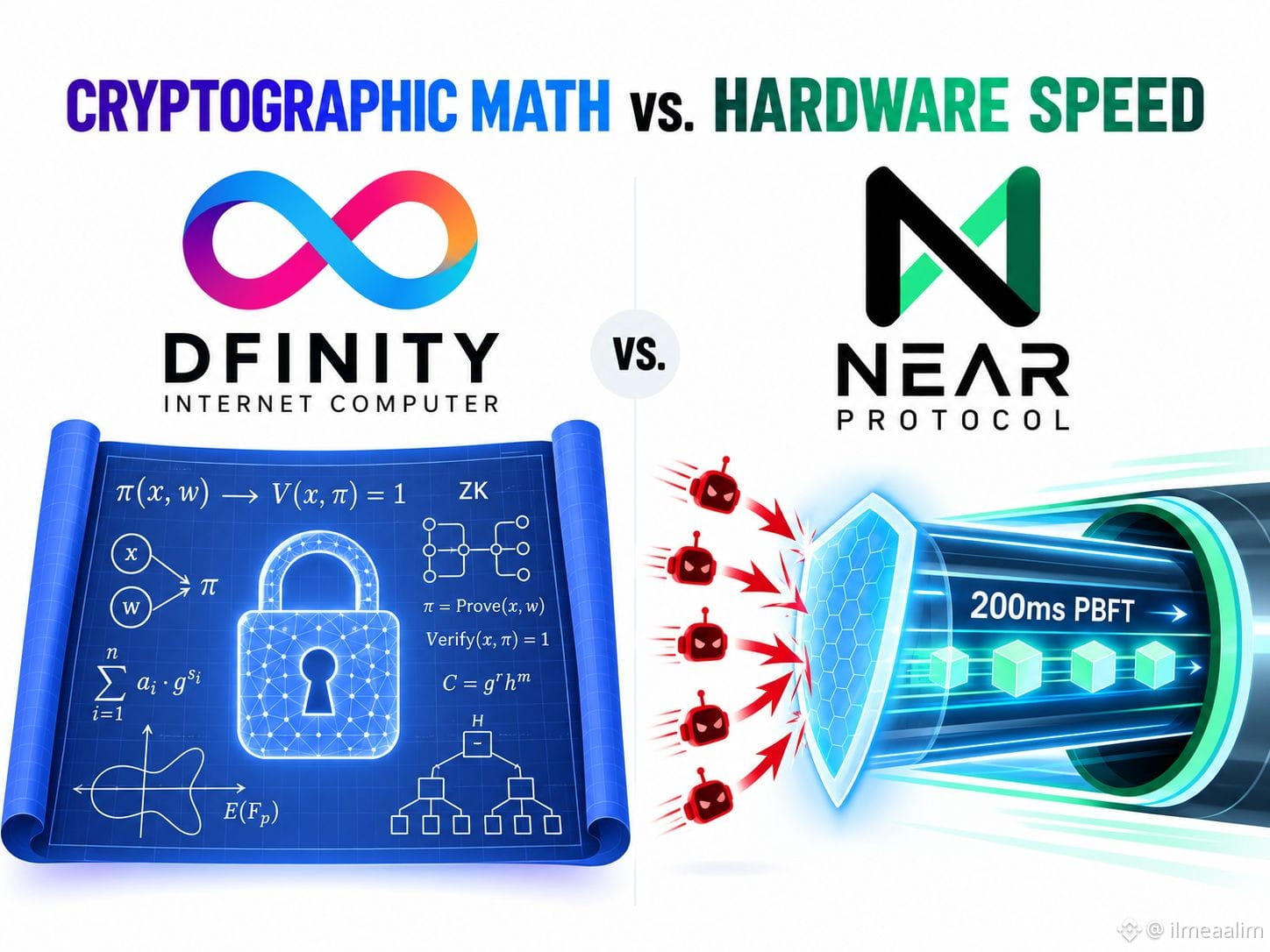
Privacy vs Speed: ICP Founder Calls Out NEAR's Secret Chain 🤫⚡
{future}(ICPUSDT)
When crypto projects promise private transactions, users expect unbreakable math, but a clash between two top blockchain founders reveals a big split over what privacy means in Web3 ⚔️
Dominic Williams, founder of DFINITY ($ICP), shared a review from his lead engineer examining the Confidential Intents feature on NEAR Protocol ($NEAR).
The engineer claimed that NEAR does not use open-source cryptography:
🔹 It runs on a separate private network (FAR) operated by a closed group of private computers.
🔸 Privacy relies on trusting that this undisclosed group keeps transaction details secret, rather than code proving it.
{future}(NEARUSDT)
How NEAR defends this architecture:
⚡ Heavy zero-knowledge math is slow on mobile devices, while private validator networks confirm trades in roughly 200 milliseconds.
🛡️ The goal was a fast shield to stop front-running bots from stealing trader profits using secure hardware chips (TEEs).
Which version do you agree with? 👇
#NEAR #ICP #CryptoPrivacy #Web3 #DeFi
Privacy vs Speed: ICP Founder Calls Out NEAR's Secret Chain 🤫⚡
When crypto projects promise private transactions, users expect unbreakable math, but a clash between two top blockchain founders reveals a big split over what privacy means in Web3 ⚔️
Dominic Williams, founder of DFINITY ($ICP), shared a review from his lead engineer examining the Confidential Intents feature on NEAR Protocol ($NEAR).
The engineer claimed that NEAR does not use open-source cryptography:
🔹 It runs on a separate private network (FAR) operated by a closed group of private computers.
🔸 Privacy relies on trusting that this undisclosed group keeps transaction details secret, rather than code proving it.
How NEAR defends this architecture:
⚡ Heavy zero-knowledge math is slow on mobile devices, while private validator networks confirm trades in roughly 200 milliseconds.
🛡️ The goal was a fast shield to stop front-running bots from stealing trader profits using secure hardware chips (TEEs).
Which version do you agree with? 👇
#NEAR #ICP #CryptoPrivacy #Web3 #DeFi
1.1k
Войдите, чтобы посмотреть больше материала
Присоединяйтесь к пользователям криптовалют по всему миру на Binance Square
⚡️ Получайте новейшую и полезную информацию о криптоактивах.
💬 Нам доверяет крупнейшая в мире криптобиржа.
👍 Получите достоверные аналитические данные от верифицированных создателей контента.
Эл. почта/номер телефона
В тренде
FedWatch
Просмотров: 16.4M
39,665 обсуждают
🚨 🇺🇸 PETER SCHIFF JUST THREW A BIG WARNING AT THE FED!
Peter Schiff is calling Kevin Warsh’s tough talk on inflation a “bluff,” and his prediction could have major implications for the markets.
Schiff believes the Fed could eventually return to money printing through quantitative easing (QE) and even cut interest rates next year, despite inflation continuing to rise.
Think about that for a moment.
🔥 Inflation could remain a problem. 🔥 The Fed could still move toward easier monetary policy. 🔥 More liquidity could flow into financial markets.
If this scenario plays out, it could create a very different market environment for stocks, gold, Bitcoin, and the wider crypto market.
But there’s a catch: if inflation stays high, the Fed could face a difficult choice between fighting rising prices and supporting the economy.
Will Warsh stick to a tough inflation policy, or will the Fed eventually change direction?
The next move could matter a lot for investors.
#FedWatch #EarningsSeason #USMidtermElections #BrazilCryptoExchangesMustApplyForLicensesByFriday #StanDruckenmillerBecomesInvestorInTradeXYZ
Jackson Liam
·Лайков: 4
·Просмотров: 8.8k
EarningsSeason
Просмотров: 6.5M
32,390 обсуждают
USMidtermElections
Просмотров: 59,227
759 обсуждают